RSS

Tag Archives: Abhinavagupta

Kavya and Indian Poetics – Part Ten

Continued from Part Nine

[I could not arrange the topics in a sequential order (krama). You may take these as random collection of discussions; and, read it for whatever it is worth. Thank you.]

Kavyasya Atma – the Soul of Poetry


Another line of speculation that is unique to Indian Poetics is to muse about the soul (Atman) of Poetry. Every literary endeavour was regarded a relentless quest to grasp or realize the enigmatic essence that inhabits the Kavya body.

As Prof Vinayak Krishna Gokak explains in his An Integral View of Poetry: an India Perspective:  Poetry in its manifestation resembles the series of descending arches in a cave. It is dim lit, leaving behind the garish light of the day, as we walk into it. And as we begin to feel our way, we detect another passage, leading to yet another. But, we do know that there is light at the other end. And, when we have passed through the archways, we stand face-to-face with the ultimate mystery itself. This seems to the inner core, the essence and the fulfillment of poetry. It is the Darshana, perception, of Reality

Then he goes on to say:  When we say the poet is inspired, we mean that he had a glimpse of Reality, its luminous perception. It is this perception that elevated him into a state of creative excitement. Such vision is the intuitive perception. It reveals the many-splendored reality that is clouded by the apparent. It is the integral experience in which the intuitive and instinctive responses are in harmony.

But, this intuitive perception in poetry is rarely experienced in its pristine purity. It is colored, to an extent, by the attitudes, the experiences and the expressions of the poet. The attitude seeps into the structure of words, phrases, rhythms that give form to poetry. The attitude forms the general framework of the poetic experience.

The soul of the Kavya is truly the poet’s vision (Darshana) without which its other constituents cannot come together.


Thus, the inquiry into the appeal of the Poetry was meant to suggest a sort of a probe delving deep into the depths of Kavya to seize its essence. It was an exploration to reach into the innermost core of the Kavya.  The term used to denote that core or the fundamental element or the principle which defines the very essence of Kavya was Atma, the soul.

In the context of Kavya, the concept of Atma, inspired by Indian Philosophy, was adopted to characterize it as the in-dweller (Antaryamin), its life-breath (Prana), its life (Jivita) , consciousness (Chetana) ; and to differentiate it from the  exterior or the body (Sarira) formed out of the words. That is to say; while structure provided by the words is the physical aspect of Kavya, at its heart is the aesthetic sensitivity that is very subtle and indeterminate.

In the Indian Poetics, the term Atma stands for that most elusive factor which is the highly essential, extensive factor illumining the internal beauty of Kavya. Though one can talk about it endlessly, one cannot precisely define it. One could even say, it is like a child trying to clasp the moonbeams with its little palms.   It is akin to consciousness that energizes all living beings (Chaitanya-atma). Its presence can be felt and experienced; but one cannot see its form; and, one cannot also define it in technical terms

^*^*^

In the Kavya-shastra, generally, two types of texts are recognized: Lakhshya grantha and Lakshana grantha.

The texts that describe the characteristics of good poetry and define the technical terms of Kavvya shastra are the Lakshana granthas. These outline and define the concepts ;and, illustrate them with the aid of citations from  recognized and time-honored works of poetry or drama, composed by  poets of great repute. Sometimes, the author of a Lakshana grantha would himself compose illustrative model pieces,  as examples.

Lakshya Grantha is  a creative work of  art , the Kavya , in the form of a poem or a drama , generally, following the prescriptions of the Lashana granthas.

Various thinkers and writers of the Lakshana granthas, over a long period, have put forward several theories based on their concept of the essential core , the heart or the soul of the  Kavya (kavyasya Atma). While the authors like Bhamaha, Dandin, Udbhata and Rudrata focused on Alamkara; Vamana emphasized the concept of Riti. However, it was Anandavardhana who changed the entire course of discussion by introducing the concept of Dhvani.  But, , Dhananjaya the author of Dasharupaka and its commentator Dhanika , as also  Mahimabhatta the author of Vyaktiviveka , firmly opposed the concept of Dhvani.

Let’s see some of these in a summary form before we get into a discussion:

Author Lakshana Grantha Atma
Bharata Natyashastra Rasa
Bhamaha Kaavya-alamkara Alamkara
Dhandi Kaavya-adarsha Dasha (ten ) Gunas
Vamana Kaavya-alankara-sutra Reeti
Anandavardhana Dhvanya-loka Dhvani
Kshemendra Auchitya-vicharachara Auchitya 
Mammata Kavya-prakasha Dhvani
Kuntaka Vakrokti Jivitam Vakrokti

kavya lakshana

Traditionally, the Kavya was defined by Bhamaha as Sabda-Artha sahitau Kavyam (KA.1.15) – the combination or a complex of words and their meanings. His explanation also implied that word and sense in a Kavya must be free from blemishes (nirdosa) .  Bhamaha then extended his explanation to bring in the element of Alamkara; and, said: Kavya is the happy fusion of Sabda and Artha which expresses Alamkaras relating to them

Sabda-abhideya-alamkara-bhedadhistam dvayam tu nah I Sabda-Artha sahitau Kavyam (KA.1.15).

Dandin also said the body of Kavya is a group of sounds which indicates the desired effect or the desired import of the poet

Sariram tavad ista-artha vyvachinna padavali (KA 1.10b).

But, the later Schools pointed out that Bhamaha and Dandin seemed to be talking about the body of Kavya, but not about the Kavya itself. And, their   definition of Kavya is centred on the external element or the body of Kavya; but, it misses the spirit or the soul of the Kavya.  The basic idea of the critics, here, was that Kavya is much more than a collection of words; it is about the vision of the poet and the aesthetic delight it presents to the reader.

It was argued that if the structure of words (Pada-rachana or Padavali) could be taken as the body (Sarira) of the Kavya, then it is separate or different from its soul (Atma) which is its   inner–being. Further, Padavali – the group of words – by itself and not accompanied by sense is not of great merit.

Thus, a clear distinction was sought to be made between the body of the Kavya and the spirit or the soul which resides within it. And from here,  began a quest for the soul of Kavya (Kavyasya Atma).

As regards the meaning (Artha) conveyed by words in the Poetry, it was also examined in terms of its external and internal forms. It was said :

the language and its structural form lead us to meaning in its dual forms. Thought in poetry manifests itself in two ways: as the outer and the inner meaning. The Outer meaning dominates poetry through its narration. Yet, it permits inner meaning to come into its own seeping through its narrative patterns or poetic excellence. The Outer meaning plays a somewhat semi transparent role in poetry.  It achieves its fulfillment when it becomes fully transparent revealing what lies beneath it.

The inner meaning of poetry is embodied in it’s suggestive, figurative or expressions evoking Visions.  It reveals the moods, the attitudes and the vision of the poet expressed with the aid of imagery and rhythm. Such vision is the intuitive perception. It reveals the many-splendored reality that is clouded by the apparent”.

^*^*^

It was perhaps Vamana the author of Kavyalankara-sutra-vritti  who initiated the speculation about the Atman or the soul of poetry. He declared – Ritir Atma kavyasya – // VKal_1,2.6 // (Riti is the soul of Poetry). Vamana’s pithy epithet soon became trendy ; and, ignited the imagination of the champions of other Schools of poetics. Each one re-coined Vamana’s phrase by inserting into it (in place of Riti) that Kavya-guna (poetic virtue) which in his view was the fundamental virtue or the soul of poetry.

For instance; Anandavardhana idealized Dhvani as the Atma of Kavya; Visvanatha said Rasa is the Atma of Kavya; while Kuntaka asserted that Vakrokti as the Jivita – the life of Kavya. Besides, Rajasekhara (9th century) who visualized literature, as a whole, in a symbolic human form (Kavya Purusha) treated Rasa as its soul (Atma).

**

Although Vamana was the first to use the term Atma explicitly, the notions of the spirit or the inner-being of Kavya were mentioned by the earlier scholars too, though rather vaguely. They generally talked in terms Prana (life-breath) or Chetana (consciousness) and such other vital factors in the absence of which the body ceases to function or ceases to live. But, such concepts were not crystallized. 

[Nevertheless, those epithets, somehow, seemed to suggest something that is essential, but not quite inevitable.]

For instance; Dandin had earlier used the term Prana (life-breath) of the body of poetry which he said was the Padavali (string of words or phrases) – Sariram tavad istartha vyavachhina padavali (KA-1.10). He also used Prana in the sense of vital force or vital factor (say for instance: iti vadarbhi –margasya pranah).

Udbhata who generally followed Dandin, in his Alamkara-samgraha, a synopsis of Alamkara, stated that Rasa was the essence or the soul of Kavya.

While Dandin and his followers focused on Sabda Alamkara, Vamana (Ca.8th century) raised questions about the true nature of Kavya; and said Ritiratma Kavyasya – the soul of the poetry abides in its style – excellence of diction.

Anandavardhana said: all good poetry has two modes of expression – one that is expressed by words embellished by Alamkara; and the other that is implied or concealed – what is inferred by the listener or the reader.  And , this implied one or the suggested sense, designated as Dhvani (resonance or tone or suggestion) , is indeed  the soul of Kavya: Kavyasya Atma Dhvanih.

A little later than Anandavardhana, Kuntaka (early tenth century) said that indirect or deflected speech (Vakrokti) – figurative speech depending upon wit, turns , twists and word-play is the soul of Kavya. He said that such poetry showcases the inventive genius of the poet at work (Kavi-karman).

[The complex web of words (Sabda) and meanings (Artha) capable of being transformed into aesthetic experience (Rasa) is said to have certain characteristic features. These are said to be Gunas and Alamkara-s. These – words and meanings; Alamkara; Gunas; and, Rasa – though seem separable are, in fact , fused into the structure of the poetry. The Poetics, thus,  accounts for the nature of these features and their inter-relations

All theories, one way or the other, are interrelated; and, illumine each other. The various aspects of Kavya starting from making of poetry (kavya-kriya-dharma) up to the critique of poetry (kavya-mimamsa)  and how human mind perceives and reacts to it, was the main concern for each theory. ]

^*^*^

Alamkara

Alamkara denotes an extraordinary turn given to an ordinary expression; which makes ordinary speech into poetic speech (Sabartha sahitya) ; and , which indicates the entire range of rhetorical ornaments as a means of poetic expression. In other words, Alamkara connotes the underlying principle of embellishment itself as also the means for embellishment.

According to Bhamaha, Dandin and Udbhata the essential element of Kavya was in Alamkara. The Alamkara School did not say explicitly that Alamkara is the soul of Poetry. Yet, they regarded Alamkara as the very important element of Kavya. They said just as the ornaments enhance the charm of a beautiful woman so do the Alamkaras to Kavya: shobha-karan dharman alamkaran prakshate (KA -2.1). The Alamkara School, in general, regarded all those elements that contribute towards or that enhance the beauty and brilliance of Kavya as Alamkaras. Accordingly, the merits of Guna, Rasa, and Dhvani as also the various figures of speech were all clubbed under the general principle of Alamkara.

Though Vamana advocates Riti, he also states that Alamkara (Soundarya-alamkara) enhances the beauty of Kavya. Vamana said Kavya is the union of sound and sense which is free from poetic flaws (Dosha) and is adorned with Gunas (excellence) and Alamkaras (ornamentation or figures of speech).

According to Mammata, Alamkara though is a very important aspect of Kavya , is not absolutely essential. He said; Kavya is that which is constructed by word and sentence which are (a) faultless (A-doshau) (b) possessed of excellence (Sugunau) , and, (c) in which rarely a distinct figure of speech  (Alamkriti) may be absent.

Riti

Vamana called the first section (Adhikarana) of his work as Sarira-adhikaranam – reflexions on the body of Kavya. After discussing the components of the Kavya-body, Vamana looks into those aspects that cannot be reduced to physical elements. For Vamana, that formless, indeterminate essence of Kavya is Riti.

Then, Vamana said; the essence of Kavya is Riti (Ritir Atma Kavyasya – VKal_1,2.6 ); just as every body has Atma, so does every Kavya has its Riti. And, Riti is the very mode or the act of being Kavya. Thus for Vamana, while Riti is the essence of Kavya, the Gunas are the essential elements of the Riti. The explanation offered by Vamana meant that the verbal structure having certain Gunas is the body of Kavya, while its essence (soul) is, Riti.

Riti represents for Vamana the particular structure of sounds (Vishista-pada-rachana Ritihi) combined with poetic excellence (Vishesho Gunatma) . According to Vamana, Riti is the going or the flowing together of the elements of a poem

Rinati gacchati asyam guna iti riyate ksaraty asyam vanmaddhu-dhareti va ritih (Vamana KSS). 

The language and its structural form lead us to the inner core of poetry. And, when that language becomes style (Riti), it absorbs into itself all the other constituent elements of poetry. It allows them, as also the poetic vision, to shine through it.

Vamana, therefore, accorded Riti a very high position by designating Riti as the Soul of Kavya – rītirnāmeyam ātmā kāvyasya / śarīrasyeveti vākyaśeṣaḥ  (I.2.6) – Riti is to the Kavya what Atman is to the Sarira (body). Here, it is explained that in his definition of Riti, Pada-rachana   represents the structure or the body while Riti is its inner essence. Through this medium of Visista Pada-rachana  (viśiṣṭā padaracanā rītiḥ viśeṣo guṇātmā – 1,2.7the Gunas become manifest and reveal the presence of Riti, the Atman.

Auchitya

Kshemendra – wrote a critical work Auchitya-alamkara or Auchitya-vichara-charcha (discussions or the critical research on proprieties in poetry), and a practical handbook for poets Kavi-katnta-abharana (ornamental necklace for poets) – calls Auchitya the appropriateness or that which makes right sense in the given context as the very life-breath of Rasa – Rasajivi-bhootasya.

He said Auchitya is the very life of Kavya (Kavyasya jivitam) that is endowed with Rasa (Aucityam rasa siddhasya sthiram kavyasya jivitam).

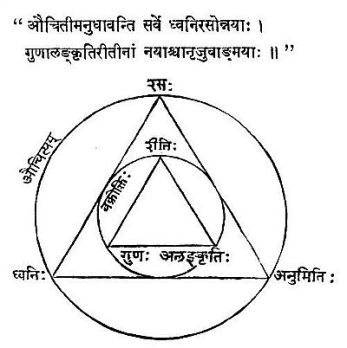
Abhinavagupta avers that the life principle (jivitatvam) of Kavya could said to be  the harmony that exists among the three : Rasa, Dhvani and Auchitya –  Uchita-sabdena  Rasa-vishaya-auchityam bhavatithi darshayan Rasa-Dhvane jivitatvam   suchayati.  Thus, Auchitya is entwined with Rasa and Dhvani

He asserts that Auchitya implies , presupposes and stands for ‘suggestion of Rasa’ – Rasa-dhvani – the principles of Rasa and Dhvani. 

The most essential element of Rasa , he said, is Auchitya.  The test of Auchitya is the harmony between the expressed sounds and the suggested Rasa. And , he described  Auchitya as that laudable virtue (Guna) which embalms the poetry with delight  (aucityaṃ stutyānāṃ guṇa rāgaś ca andanādi lepānām – 10.31)

According to Kshemendra, all components of Kavya perform their function ideally only when they are applied appropriately and treated properly. “When one thing befits another or matches perfectly, it is said to be appropriate, Auchitya”:

(Aucityam prahuracarya sadrasham kila; Aucitasya ka vo bhava stadaucityam pracaksate).

The concept of Auchitya could , perhaps, be understood as the sense of  proportion  between the whole (Angin) and the part (Anga) and harmony on one side; and, appropriateness and adaptation on the other.

It said; be it Alamkara or Guna, it will be beautiful and relishing if it is appropriate (Uchita) from the point of view of Rasa; and, they would be rejected if they are in- appropriate . And, what is normally considered a Dosha (flaw) might well turn into Guna (virtue) when it is appropriate to the Rasa

But, many are hesitant to accept Auchitya as the Atma of the Kavya. They point out that Auchitya by its very nature is something that attempts to bring refinement into to text; but, it is not an independent factor. And, it does not also form the essence of Kavya. Auchitya is also not a recognized School of Poetics.

[Please click here for a detailed discussion on Auchitya. Please also read the research paper : ‘A critical survey of the poetic concept Aucitya in theory and practice’ produced by Dr. Mahesh M Adkoli

Please also read Dr.V. Raghavan’s article: The History of Auchitya in Sanskrit Literature ]

maze

Vakrokti

Kuntaka defined Kavya on the basis of Vakrokti, a concept which he developed   over the idea earlier mentioned by Bhamaha and others.  According to him, Kavya is the union of sound, sense and arranged in a composition which consists Vakrokti (oblique expressions of the poet), delighting its sensible reader or listener –

(Sabda-Artha sahitau vakra Kavi vakya vyapara shalini I bandhe vyavasthitau Kavya tat ahlada karini:  VJ 1.7).

Kuntaka also said that  the word and sense, blended like two friends, pleasing  each other, make Kavya  delightful

Sama-sarva gunau santau sahhrudaveva sangathi I parasparasya shobhayai sabdartau bhavato thatha  II 1.18.II

Kuntaka, declared Vakrokti as jivitam or soul of poetry. By Vakrokti, he meant the artistic turn of speech (vaidagdhyam bhangi) or the deviated from or distinct from the common mode of speech.

abhāvetāv alaṅkāryau tayoḥ punar alaṅkṛtiḥ / vakroktir eva vaidagdhya bhaṅgī bhaṇitir ucyate – Vjiv_1.10

Vakratva is primarily used in the sense of poetic beauty. It is striking, and is marked by the peculiar turn imparted by the creative imagination of the poet. It stands for charming, attractive and suggestive utterances that characterize poetry. The notion of Vakrata (deviation) covers both the word (Sabda) and meaning (Artha). The ways of Vakrokti are, indeed, countless.

Vakrokti is the index of a poet’s virtuosity–kavi kaushala. Kuntaka describes the creativity of a poet as Vakra-kavi–vyapara or Kavi–vyapara–vakratva (art in the poetic process).  This according to Kuntaka , is the primary source of poetry; and, has the potential to create aesthetic elegance that brings joy to   the cultured reader with refined taste (Sahrudaya).

According to Kuntaka, Vakrokti is the essence of poetic speech (Kavyokti); the very life (Jivita) of poetry; the title of his work itself indicates this.

Rasa

Rasa (the poetic delight) though it is generally regarded as the object of Kavya providing joy to the reader rather than as the means or an element of Kavya , is treated  by some as the very essence of Kavya.

Yet; Indian Aesthetics considers that among the various poetic theories (Kavya-agama), Rasa is of prime importance in Kavya. And, very involved discussions go into ways and processes of   producing Rasa, the ultimate aesthetic experience that delights the Sahrudya, the connoisseurs of Kavya.

The Rasa was described as the state that arises out of the emotion evoked by a poem through suggestive means, through the depiction of appropriate characters and situations and through rhetorical devices. The production of Rasa or aesthetic delight was therefore regarded the highest mark of poetry.  It was said – The life breath (Prana) of Kavya is Rasa.

Further, Poetry itself came to be understood as an extraordinary kind of delightful experience called Rasa. It was exclaimed: Again, what is poetry if it does not produce Rasa or give the reader an experience of aesthetic delight?

Rasa is thus regarded as the cardinal principle of Indian aesthetics.  The theory of Rasa (Rasa Siddhanta) and its importance is discussed in almost all the works on Alamkara Shastra in one way or the other. The importance of the Rasa is highlighted by calling it the Atman (the soul), Angin (the principle element), Pradhana-Pratipadya (main substance to be conveyed), Svarupadhyaka (that which makes a Kavya), and Alamkara (ornamentation) etc.

Mammata carrying forward the argument that Rasa is the principle substance and the object of poetry, stated ‘vakyatha rasatmakarth kavyam’, establishing the correlation between Rasa and poetry.

Vishwanatha defined Kavya as Vakyam rasathmakam Kavyam – Kavya is sentences whose essence is Rasa.

Jagannatha Pandita defined Kavya as: Ramaniya-artha prathipadakah sabdam kavyam ; poetry is the  combination of words that provides delight (Rasa) . Here, Ramaniyata denotes not only poetic delight Rasa, pertaining to the main variety of Dhvani-kavya, but also to all the ingredients of Kavya like Vastu-Dhvani Kavya; Alamkara-Dhvani –Kavya, Guni-bhutha –vyangmaya-kavya; Riti; Guna, Alamkara, Vakrokti etc.

**

[While talking about Rasa, we may take a look at the discussions on Bhakthi Rasa.

Natyashastra mentions  four main Rasas and their four derivatives, thus in all eight Rasas (not nine). These Rasas were basically related to dramatic performance; and Bhakthi was not one of those. Thereafter, Udbhata (9th century) introduced Shantha Rasa. After prolonged debates spread over several texts across two centuries Shantha was accepted as an addition to the original eight.

But, it was Abhinavagupta (11th century) who established Shantha  as the Sthayi-bhava the basic and the abiding or the enduring Bhava form which all Rasas emerge and into which they all recede. His stand was: one cannot be perpetually angry or ferocious or sad or exited or erotic, at all the time. These eight other Rasas are the passing waves of emotions, the colors of life. But, Shantha, tranquility, is the essential nature of man; and it is its disturbance or its variations that give rise to shades of other emotions. And, when each of that passes over, it again subsides in the Shantha  that ever prevails.

During the times of by Abhinavagupta and Dhanajaya, Bhakthi and Priti were referred to as Bhavas (dispositions or attitudes); but, not as Rasas. Even the later scholars like Dandin, Bhanudatta and Jagannatha Pandita continued to treat Bhakthi as a Bhava.

[Later, each system of Philosophy or of Poetics (Kavya-shastra) applied its own norms to interpret the Rasa-doctrine (Rasa Siddantha) ; and in due course several Rasa theories came up. Many other sentiments, such as Sneha, Vatsalya; or states of mind (say even Karpanya – wretchedness) were reckoned as Rasa. With that, Rasas were as many as you one could identify or craft (not just nine).]

It was however the Gaudiya School of Vaishnavas that treated Bhakthi as a Rasa. Rupa Goswami in his Bhakthi-Rasa-amrita–Sindhu; and the Advatin Madhusudana Sarasvathi in his Bhagavad-Bhakthi Rasayana asserted that Bhakthi is indeed the very fundamental Rasa. Just as Abhinavagupta treated Shantha as the Sthayi Bhava, the Vaishnava Scholars treated Bhakthi as the Sthayi, the most important , enduring  or  the abiding Bhava  that  gives rise to Bhakthi Rasa.

Their texts described twelve forms of Bhakthi Rasas – nine of the original and three new ones. Instead of calling each Rasa by its original name, they inserted Bhakthi element into each, such as: Shantha-Bhakthi-Rasa, Vira-Bhakthi-Rasa, Karuna-Bhakthi-Rasa and so on. They tried to establish that Bhakthi was not one among the many Rasas; but, it was the fundamental Rasa, the other Rasa being only the varied forms of it. The devotee may assume any attitude of devotion like a child, mother, master, Guru or even an intimate fiend. It was said “Bhakthi encompasses all the Nava-rasas”.

Bhakthi, they said, is the Sthayi (abiding) Bhava; and it is the original form of Parama-Prema (highest form of Love) as described in Narada Bhakthi Sutra. What constitutes this Love is its essence of Maduhrya (sweetness) and Ujjvalata (radiance).

Although, an element of individualized love is involved in Bhakthi, it is not confined to worship of a chosen deity (ista Devatha). The Vedanta Schools treat Bhakthi as a companion of Jnana in pursuit of the Brahman. They hold that Bhakthi guides both the Nirguna and the Saguna traditions. Just as Ananda is the ultimate bliss transcending the subject-object limitation, Bhakthi in its pristine form is free from the limitations of ‘ego centric predicament’ of mind. And, both are not to be treated as mere Rasas.

Bhakthi is that total pure unconditional love, accepting everything in absolute faith (Prapatthi).

Now, all Schools generally agree that Bhakthi should not be confined to theistic pursuits alone; as it pervades and motivates all aspects human persuasions including studies, arts and literature. In the field of art, it would be better if the plethora of Rasa-theories is set aside; because, the purpose of Art, the practice of Bhakthi and the goal of Moksha are intertwined.

Therefore, it is said, it is not appropriate (an-auchitya) to narrow down Bhakthi to a mere Rasa which is only a partial aspect. Bhakthi is much larger; and it is prime mover of all meaningful pursuits in life.]

maze

Dhvani and Rasa-Dhvani

With the rise of the Dhvani School, the elements of Rasa and Dhvani gained prominence; and, superseded the earlier notions of poetry. And, all poetry was defined and classified in terms of these two elements.

Anandavardhana said: all good poetry has two modes of expression – one that is expressed by words embellished by Alamkara; and the other, that is implied or concealed – what is inferred by the listener or the reader.

The suggested or the implied   sense of the word designated as Dhvani (resonance or tone or suggestion) through its suggestive power brings forth proper Rasa. Abhinavagupta   qualified it by saying:   Dhvani is not any and every sort of suggestion, but only that sort which yields Rasa or the characteristic aesthetics delight.

For Anandavardhana, Dhvani (lit. The sounding-resonance) is the enigmatic alterity (otherness) of the Kavya-body- Sarirasye va Atma ….Kavyatmeti vyavasthitah (as the body has Atma, so does Dhvani resides as Atma in the Kavya)

yo ‘rthaḥ sahṛdaya-ślāghyaḥ kāvyātmeti vyavasthitaḥ / vācya-pratīyamānākhyau tasya bhedāv ubhau smṛtau –DhvK. 1.2

Anandavardhana regarded Dhvani – the suggestive power of the Kavya, as its highest virtue. The Alamkara, figurative ornamental language, according to him, came next. In both these types of Kavya-agama, there is a close association between the word and its sound, and between speech (vak) and meaning (artha). The word is that which , when articulated, gives out meaning; and,the  meaning is what a word gives us to understand. Therefore, in these two types of Kavya there is a unity or composition (sahitya) of word (sabda-lankara) and its meaning (artha-lankara).

Anandavardhana‘s definition of Kavya involves two statements: Sabda-Artha sariram tavath vakyam; and, Dhvanir Atma Kavyasa – the body of poetry is the combination of words and sounds; and; Dhavni, the suggestive power is the soul of the poetry. Here, Anandavardhana talks about poetry in terms of the body (Sabda–artha sariram tavath vakyam) and soul of the Kavya (Dhvanir atma Kavyasa). And he also refers to the internal beauty of a meaningful construction of words in the Kavya. And, he declares Dhvani as the Atma, the soul of poetry.

kāvyasyātmā dhvanir iti budhair yaḥ samāmnāta-pūrvas tasyābhāvaṃ jagadur apare bhāktam āhus tam anye / kecid vācām sthitam aviṣaye tattvam ūcus tadīyaṃ tena brūmaḥ sahṛdaya-manaḥ-prītaye tat-svarūpam // DhvK_1.1 //

The Dhvani theory introduced a new wave of thought into the Indian Poetics. According to this school, the Kavya that suggests Rasa is excellent. In Kavya, it said, neither Alamkara nor Rasa , but Dhvani which suggest Rasa, the poetic sentiment, is the essence, the soul (Kavyasya-atma sa  eva arthaa Dhv.1.5). He cites the instance of the  of the sorrow (Soka) separation (viyoga) of two birds  (krauñca-dvandva) that gave rise to poetry (Sloka) of great eminence.

kāvyasyātmā sa evārthas tathā cādikaveḥ purā / krauñca-dvandva-viyogotthaḥ śokaḥ ślokatvam āgataḥ  – DhvK_1.5

Anandavardhana maintained that experience of Rasa comes through the unravelling of the suggested sense (Dhvani). It is through Dhvani that Rasa arises (Rasa-dhavani).  The experience of the poetic beauty (Rasa) though elusive, by which the reader is delighted, comes through the understanding heart.

Then, Anandavardhana expanded on the object (phala) of poetry and on the means of its achievement  (vyapara). The Rasa which is the object of poetry, he said, is not made; but, it is revealed. And, that is why words and meanings must be transformed to suggestions of Rasa (Rasa Dhvani).

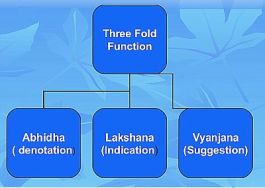
The Rasa Dhvani, the most important type of Dhvani, consists in suggesting Bhava, the feelings or sentiments. In Rasa Dhvani, emotion is conveyed through Vyanjaka, suggestion. Rasa is the subject of Vyanjaka, as differentiated from Abhidha and Lakshana.

Anandavardhana, in some instances, considers Rasa as the Angi (soul) of poetry. Its Anga-s (elements) such as Alamkara, Guna and Riti seem to be dependent on this Angi.

Thus, the principle of Rasa Dhvani is the most significant aspect of the Kavya dharma, understanding Kavya. And, the Rasa experience derived from its inner essence is the ultimate aim of Kavya. Hence, the epithet Kavyasya Atma Dhvani resonates with Kavyasya Atma Rasah.

Anandavardhana regarded Rasa-Dhvani as the principal or the ideal concept in appreciation of poetry. He said that such suggested sense is not apprehended (na vidyate) by mere knowledge of Grammar (Sabda-artha-shasana-jnana) and dictionary. It is apprehended only (Vidyate, kevalam) by those who know how to recognize the essence of poetic meaning (Kavya-artha-tattva-jnana) – Dhv.1.7

śabdārtha-śāsana-jñāna-mātreṇaiva na vedyate / vedyate sa tu kāvyārtha-tattvajñair eva kevalam – Dhv.1.7

The confusion and chaos that prevailed in the literary circles at that time prompted Mammata to write Kavyaprakasa , to defend and  to establish the Dhvani theory on a firm footing ; and, also to  refute the arguments of its  opponents.

Abhinavagupta accepted Rasa-Dhvani ; and expanded on the concept by adding an explanation to it.  He said, the pratīyamānā or implied sense which is two-fold:  one is Laukika or the one that we use in ordinary life; and the other is Kavya vyapara gocara  or one  which is used only in poetry – pratipādyasya ca viṣayasya liṅgitve tad-viṣayāṇāṃ vipratipattīnāṃ laukikair eva kriyamāṇānām abhāvaḥ prasajyeteti.

He also termed the latter type of Rasa-Dhvani as Aloukika, the out-of–the world experience. It is an experience that is shared by the poet and the reader (Sahrudaya). In that, the reader, somehow, touches the very core of his being. And, that Aloukika is subjective ultimate aesthetic experience (ananda); and, it is not a logical construct. As Abhinavagupta says, it is a wondrous flower; and, its mystery cannot really be unraveled.

As regards the Drama , Abhinavagupta and Dhananjaya  both agree that Rasa is always pleasurable (Ananadatmaka); and Bhattanayaka compares such Rasa – Anubhava (experience of Rasa) to Brahma-svada, the relish of the sublime Brahman.  

[However, the scholars , Ramachandra and Gunachandra , the authors of Natya Darpana (12th century), sharply disagreed and argued against such ‘impractical’ suppositions.  They pointed out that Rasa, in a drama,  is after-all  Laukika (worldly, day-to-day experience); it is  a mixture of pain and pleasure (sukha-dukka-atmaka); and , it is NOT always pleasurable (Ananadatmaka) . They argued, such every-day experience  cannot in any manner be Chamatkara or A-laukika (out of the world) ecstasy comparable to Brahmananda etc., But, their views did not find favor with the scholars of the Alamkara School ; and, it  was eventually, overshadowed  by the writings of the stalwarts like Abhinavagupta, Anandavardhana, Mammata, Hemachandra , Visvanatha and Jagannatha Pandita.]

In any case, one can hardly disagree with Abhinavagupta. The concept of Kavyasya-Atma, the soul of Poetry is indeed a sublime concept; and, one can take delight is exploring layers and layers of its variations. Yet, it seems, one can, at best, only become aware of its presence, amorphously; but, not pin point it. Kavyasya-Atma, is perhaps best enjoyed when it is left undefined.

Happiness is such a fragile thing!! Very thought of it disturbs it.
march_of_elephants_wj35

Continued 

in the

Next Part

Sources and References


An Integral View of Poetry: an India Perspective by Prof Vinayak Krishna Gokak

Glimpses of Indian Poetics by  Dr. Satya Deva Caudharī
 
4 Comments

Posted by on September 5, 2015 in Kavya, Sanskrit


Tags: , , , , , , , , , , , , , , , , , ,

Kavya and Indian Poetics – Part Four

Continued from Part Three

[I could not arrange the topics in a sequential order (krama). You may take these as random collection of discussions; and, read it for whatever it is worth. Thank you.]

Dhvani – Rasa Dhvani

Poetry is basically a verbal icon or a verbal structure; and, as such, there cannot be any poetry without words. Therefore, any discussion on poetry necessarily  involves discussion on words. The poetry also invokes emotional response. And, that is followed by the understanding of it’s  emotive language ; and, the appreciation by the reader of the true import of the poet. All these elements are , therefore, highly essential for enjoyment of poetry.\

Thus, the success of a good Kavya fundamentally involves three aspects:  the poet’s creative inspiration (Prathibha); its  form  by way  of the words (Sabda) and meaning (Artha), i.e. body (Sarira) of the Kavya ;  and , the aesthetic  effect it has  upon the reader (Rasa

Kavih karoti kvyam; Rasam jananthi panditah.

Abhinavagupta, citing his teacher Bhattatauta, says: the poet and an appreciative cultured listener/reader share a common experience of delight (kavaye shrotruh samanau anubhavas-tatah). And, both are partners in poetic experience; each is inspired in his own manner.

While the poet is blessed with creative genius (karayatri), which is an unfettered faculty (Prakhya-purna); the good-hearted reader (sahrudaya) is endowed with the receptive power (Bhavayatri), which lets her/him enjoy good poetry with delight (Asvadana). He empathizes with the poet (Upakhya); and, recreates , for his relish, the poet’s  creative experience (Anu-sristi) ; just as the moon reflects the glow of the Sun.

Abhinavagupta says: If the poet has Prathibha, the creative genius ; the listener has its reflection or counterpart Prathibhana (Adhikari chatra vimala prathibhana sahrudayah). Yaska remarks that the poet and the listener , each in his own manner , could even be called a Rishi, a seer. The poet has direct experience (sakshath rishi) ; and, the listener derives the same delight by listening to the poet (shruth rishi).  

sākṣāt.kṛta dharmāṇa ṛṣayo babhūvuḥ / te avarebhyo asākṣāt kṛta dharmabhya upadeśena mantrānt samprāduḥ //Nir. 1.20//

The ultimate object of Kavya is Rasa, the aesthetic delight. As Taittiriya Upanishad remarks in another context: rasam hi evaayam labhvaanandi bhavati- on experiencing Rasa , one becomes truly blissful.

Let’s, therefore, briefly talk about words, meanings and Rasa.

shabdartha

As mentioned earlier in the series, a word has three functions: it signifies or denotes (abhida); it indicates (lakshana); and, it suggests (vyanjana). 

The meaning that is comprehended immediately after the word is uttered is its primary meaning (mukhya-artha). The meaning thus conveyed; its relation to the next word ; and, its own meaning is a mutual relation of the signifier and the signified (vachya-vachaka). The power that creates the relationship among words is Abhida-vyapara, the power of denotation or sense. The suggestive power of the word is through Vyanjana-artha.

Of these, the Vyanjana-artha, which is the suggested sense or the essence of the word is most interesting; and, is much debated. This is based in the principle that   the meaning of word is not limited to its literal sense; the word has the power to reach far beyond the obvious.

In poetry, the word acquires another power Vyanjana-vritti the suggestive function. It is the    power which activates the potential hidden in the word. And, the word acquires a new glow. Through the suggestive function of the word; a new meaning or plurality of meanings emerges transcending the obvious literal sense, far more beautiful and sensitive.

The suggestive word, the suggested meaning, the power of suggestion; and, their mutual relationship are virtually the lifeblood of Indian poetics.  In fact, this is what that distinguishes poetry from other forms of literature.

The suggested sense Vyanjana-artha, which (though not explicit) becomes the object of awareness, is regarded as the essence of poetry. The Dhvani School put forward by Anandavardhana (Ca. 850 AD) through his Dhvanyaloka (also called Kavyaloka and Sahridayaloka), brought focus on the potential power of the word in a Kavya. Here, the word (Sabda), together with its literal sense (Vakyartha) is said to form the body (Sarira) of Kavya, it is the cloak of its soul.  But, the essence of poetry is elsewhere; it is not directly visible; and, that essence is the suggested sense of the word (Vyanjana-artha).

Which is to say : it is not the direct literal and obvious meaning that is explicit in poetry, but it is the suggested, indirect (paroksha-artha) and emotive meaning that matters. It does not mean that words and primary meanings are unimportant.

What is suggested here is that:  though the words of a Kavya and their literal sense must be given their due importance, they are but a medium for emotive and indirect meaning to flash forth. In good poetry, this suggested meaning dominates over the words and their literal meaning. As Anandavardhana puts it, the latter are compared to a woman’s body ; and, the former to her grace and beauty, which is a subtler manifestation and a more profound meaning of the womanhood.

The primary meaning can be understood by all. But, the suggested meaning is understood only by those who are gifted with some imagination and a sort of intuition. Here, the mere knowledge of the word alone is not enough to understand and enjoy the poetic import or the essence of the Kavya. It needs intuition or Prathibha.  

Mammatacharya calls Prathibha as – nava-navaonvesha-shalini prajna – the ever inventive and resourceful intellect. Prathibha is also called, at times, as Vasana.  Only those endowed with Prathibha can truly enjoy the essence and beauty of Kavya.

That is why, it is remarked, that the Grammarians (unlike the goodhearted cultured reader the Sahrudaya) cannot truly appreciate and enjoy the Rasa of good poetry. They are incapable of looking beyond what appears obvious.

[One of the hymns of the Rig-Veda  makes a distinction between a person who merely learns the literal meaning of a verse ; and , a person who  goes beyond the ordinary meaning of the words, and  tries to understand  and grasp its inner significance. It says :

the former sees , but , does not see; and, he hears , but does not hear. It is only to the latter that Vac (speech) reveals herself completely, just as a loving wife to her husband.

uta tvaḥ paśyan na dadarśa vācam uta tvaḥ śṛṇvan na śṛṇoty enām |  uto tvasmai tanvaṃ vi sasre jāyeva patya uśatī suvāsāḥ |RV_10,071.04|

In another passage of the Rig-Veda , it is said that the great poets select their words by ‘winnowing away the chaff from the grain’; and, only the persons of equal learning and refinement can truly appreciate their poems, fully.

saktum iva titaunā punanto yatra dhīrā manasā vācam akrata | atrā sakhāyaḥ  sakhyāni jānate bhadraiṣāṃ lakṣmīr nihitādhi vāci |RV_10,071.02

Yaska , the Niruktakara, remarks : a person, who merely recites the Vedas, without comprehending its meaning, is like a pillar (sthaanu) or a mere load-bearer (bhara-haara). And, it is only he who fully grasps and appreciates the meaning of what he is reciting (arthajña) that will attain the good both here and hereafter (bhadram-aśnute-nākam); having been purged of all impurities by the power of knowledge (jñāna vidhūta pāpmā).

sthāur ayam bhāra-hāra kila abhūd adhītya vedam na vijānāti yo artham  / yo arthajña it sakalam bhadram aśnute nākam eti jñāna vidhūta pāpmā (Nir.1. 18)  ]

rangoli

It is said; in the highest class of Kavya, the denoted meaning (Vakyartha)  and  the denoting meaning (Lakshyartha)  is subservient to  revealing the suggested sense word (Vyanjana-artha); and , it is  called Dhvani by the scholars – dhvanir iti sūribhiḥ kathitaḥ  – Dhv.1.13

yatrārthaḥ śabdo vā tam artham upasarjanīkṛta-svārthau / vyaṅktaḥ kāvya-viśeṣaḥ sa dhvanir iti sūribhiḥ kathitaḥ // DhvK_1.13 //

The suggested sense of the word, designated as Dhvani (resonance or tone or suggestion), is regarded by Anandavardhana as the soul of a Kavya:  Kavyasya Atma Dhvanih.

Mammata   (Kavyaprakasa 1.4-5) seems to suggest  that Anandavardhana graded the entire body of Kavya into three classes (some dispute Mammata’s statement and point out that Anandavardhana did not say any such thing ) :  

(a) Dhvani-kavya (the poetry that suggests) as the true Kavya, the best (Uttama), where Dhvani the unspoken suggestive element is dominant;

(b) the second, Gunibhuta-vamgmaya-kavya (well endowed descriptive poetry, as the middle (Madhyama) where Dhvani is secondary to Alamkara, and serves as a decoration for the spoken or expressed meaning; and ,

(c) and Chitra Kavya (poetry that structured into various patterns or drawings) as the least (Adhama) which depends entirely on verbal play for its elegance and elaboration, and where Dhvani the suggestive power of poetry is absent.

tadadoṣau śabdārthau saguṇāvan-alaṅkṛtī punaḥ kvāpi / idam-uttamam-atiśayini vyaṅgye vācyāddhvanirbudhaiḥ kathitaḥ // MKpr-K_4 //

atādṛśi guṇībhūta-vyaṅgyaṃ vyaṅgye tu madhyamam / śabdacitraṃ vācya citram avyaṅgyaṃ tvavaraṃ smṛtam // MKpr-K_5 

[Anandavardhana (9th century) and his theory of Dhvani mark the beginning of a new-phase (Navina) in Indian Poetics.   The Dhvanyaloka of Anandavardhana marks a departure from the old ways of understanding Kavya. It makes an attempt to study Poetics from aesthetic point of view, assimilating all the essentials of various other schools. By giving prominence to Rasa, he lends a new explanation to all the problems of Poetics. According to that, Alamkara, Riti and Guna have their importance only in the context of Dhvani the suggestion which is the soul of Kavya.

The older School (Prachina) – of Bhamaha, Dandin Vamana and others – that belonged to about the 7th century dealt with natural or human situation idealized by the poet , for its own sake. The attention of the Prachina School was focused on ornamented figures of speech (Alamkara) and the beauty (sobha, carutva) of the expression or on the ‘body’ of poetry. Their Rasa theory generally was based in dramatic art .Therefore it did not come under Poetic proper.

The Navina School pointed out that the reader should not stop at  the expression but should go further into the meaning that is suggested, or hinted, by it. This suggested sense is the essence of Kavya. It differs from the expressed and the indicated sense. The Navina School laid more importance on the emotional content (Bhava) of the Kavya. But, here, the emotive element was not directly expressed in words (Vachya) ; but , had to be grasped by  the reader indirectly (Parokshya ) through suggestions. Yet, through the description of the situation the reader understands the emotion and derives that exalted delight, Rasa.

Anandavardhana, in his Dhvanyaloka , says that Vynjaartha (the un-expressed or the suggested meaning) is Dhvani – perhaps, inspired by Bhartrhari’s theory of Sphota . It is the essence of poetry. It sheds light on the function of suggestion in poetry. It is Vyanjana (revealing) and Dhvanana (echoing) or gamana (implication) or pratyayana (acquainting) of poetry which is superior to Vachya (expressed meaning)

Here, the words (Sabda), explicit mean (Vakyartha) the body (Sarira) of the Kavya. The subtle, suggested essence of the Kavya that resides within and is extracted with delight by the cultured reader (Sahrudaya) is the Dhavni.

The Dhvani theory introduced a new wave of thought in Indian Poetics. According to this school the Kavya that suggests Rasa is excellent. In Kavya, they said, neither Alamkara nor Rasa but Dhvani which suggest Rasa, the poetic sentiment, is the essence, the soul ( Kavyasya-atma sa eva arthas –  Dhv.1.5).

While stating that Dhvani is superior, Navina also establishes the status of Rasa. In this scheme the relative positions of Rasa, Guna, Alamkara and Dosa get fixed. It gives due credit to poet’s imagination and his sense of propriety.

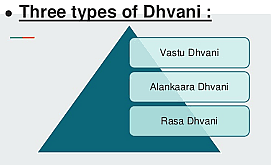
Though Dhvani was regarded the soul of poetry, the Navina did not lose sight of Rasa. It divided Dhvani into three kinds – Vastu (matter), Alamkara (figures of speech) and Rasa (emotion) .

Thus the evolution of the Navina School marks a transition from the ‘outer’ element to the ‘inner’ one, in regard to the method, the content and appreciation of the Kavya. The criteria, here, is not whether the expression sounds beautiful; but, whether its qualities (Guna) are adequate (Auchitya) to lead the reader to the inner core of the poetry.]

It is said; the concept of Dhvani was inspired by the ancient doctrine of Sphota, that which flashes or bursts forth the meaning. The term Sphota signifies:  bursting; opening; expansion; disclosure; the eternal and imperceptible element of sound and words; and, is the real vehicle of the idea which bursts or flashes on the mind when a sound is uttered.

Nagesha Bhatta (author of Manjusha and Shpota-vada) identifies Sage Sphotayana, mentioned by Panini in one of his rule, as the originator of the Sphota concept.  Bhartrihari quotes Yaska as mentioning that another ancient authority, the sage Audumbarayana together with Varttaksa held views similar to the Sphota theory. Yaska had mentioned (Nirukta: 1-2) about a theory suggested by Audumbarayana that a sentence or an utterance is primary and is a whole,  an indivisible unit of language. Audumbarayana, it appears, had also mentioned that the four-fold classification of words into : noun, verb, upasarga and nipata does not hold good. And therefore, Bhartrhari claimed that the views of these ancients support his own theory –Sphota-vada.

Clipboard01

[But, Yaska himself had not agreed with Audumbarayana; but, had gone on to talk about Bhava – the being and becoming of  verbs from their roots and about their transformations (Vikara) ]

 In any case, the original idea of Sphota seems to go back to the Vedic age when Vak or speech was considered to be a manifestation of the all – pervading Brahman , and Pranava (Aum) was regarded as the primordial speech sound from which all forms of Vak were supposed to have evolved.  Perhaps, this claim provided the model upon which the Vyakarana philosophers based their concept of Sphota. Indeed Sphota is often identified with Pranava.

It was Bhartrhari (around 485 AD) in his great work Vakyapadiya (all about sentence and word) elaborated and established the Sphota doctrine in the realm of Grammar and in Philosophy.

According to Bhartrhari, the perfect perception is that in which there is identity between the object (namely, the Sphota) and the form of its cognition (namely, words or the letters of sounds). This special kind of perception is held to be function of mind, rather than of the external senses.

flower3

Abhinavagupta (10th -11th century) who wrote a great commentary, titled Dhvanya-Lochana or Lochana, on Anandavardhana’s Dhvanyaloka, explains the concept of Dhavni in two ways:

As  Sabda Shakthi moola based in the sound of the expression  ; and as Artha-Shakthi rnoola based in the implied meaning of the expression. He says, Dhvani, in poetics, is so termed because it sounds, rings, or reverberates (Dhvanat iti Dhvani);

And, in the second, he says Dhvanyate iti Dhvani that meaning which is implied is Dhvani. The second, suggesting the implied meaning is the more appropriate one.

Thus, the faculty of indicating something which it is not is the distinguishing character of Dhvani. In other words, in a verbal expression abhidha and lakshana form the body; and, Vyanjana or Dhvani is in the nature of its  contents. Dhvani is the essence or soul of poetry.

While expanding on the concept of Dhvani, Anandavardhana did not confine himself to the words and sentences, but went on to include all contextual factors such as: the tone and gestures, the sound effect produced, the rhythm, the metere as well as the literal sense.

But at the same time, Anandavardhana did not get involved in the comprehensive linguistic phenomenon, the Vyanjana and its suggestive power. Similarly, he did not venture into the philosophical and grammatical world of Sphota as Bhartrhari did.  Anandavardhana confined his attention to the poetic language and to the suggestion of meanings of aesthetic value. His theory of Dhvani, to put it simply, is Vyanjana or suggestion as applied to poetry. In the process, Anandavardhana chose to align his theory of Dhvani with Rasa as initially outlined by Bharata. It is these two concepts – Dhvani and Rasa – that are the building blocks of Anandavardhana’s  theory of Poetics.

According to Anandavardhana, the element of Rasa has to reside in the poet, in his creation Kavya and in the reader, the enjoyer. The poet has to be inspired, charged with emotion to create a poetry that comes alive with suggestions (Dhvani). The poet is the first reader of his Kavya; and the first one to experience Rasa from its Dhvani sensitivities. For instance, Adi Kavi Valmiki was so intensely hurt and saddened by the wailing of curlew bird whose mate was shot down by a hunter in the woods, that his grief (Shoka) poured out into a verse (Shloka) filled with pathos that became the Rasa of Ramayana.

Anandavardhana maintained that experience of Rasa comes through the unravelling of the suggested sense (Dhavani). It is through Dhvani that Rasa arises (Rasa-dhavani).  The experience of the poetic beauty (Rasa) though elusive, by which the reader is delighted, comes through the understanding heart.

Thus, the principle of Dhvani is the most important of the Kavya dharma, understanding Kavya. And, the Rasa experience derived from its  inner essence is the ultimate aim of Kavya. Hence, the epithet Kavyasya Atma Dhvani resonates with Kavyasya Atma Rasah.

Although it decaled that the soul of Kavya is verily the Rasa, the Dhvani School did not abandon the concepts of the  earlier (Prachina)  Schools : Alamkara, Riti and Auchitya etc . It assimilated within it all their essences. It said; the Gunas really qualify the Rasa; hence a Kavya should employ Gunas that are relevant to its dominant Rasa. As regards the Alamkaras that decorate the body of Kavya   with beauteous and sparkling expressions and render it more attractive, they do nourish the Rasa. Thus, The Dhvani School accorded each element of Kavya its appropriate position.

And then there is the element or principle of Auchitya (propriety). Be it Alamkara or Guna, it would  be beautiful and relishing only so long it is  appropriate from the point of view of Rasa . And, they would be rejected if they are not appropriate to the main Rasa (Angirasa) of the Kavya. In the same vein, what is normally considered a Dosha (flaw) might turn into Guna (virtue) when it is appropriate to the Rasa. That again means, the beauty or the delight of a Kavya resides in its experience, Rasa.

Dhvani principle can be said, briefly, in statements: Rasa (aesthetic experience) is the soul of poetry; the mode in which the body of the poetry reveals it is Dhvani (suggestion); and, the harmonious accordance of the body and the soul is Auchitya (propriety) . Rasa, Dhvani and Auchitya are the Prastha traya, the three fundamental principles of Kavya Shastra.

rangoli

As I understand it ; the basic position of Anandavardhana is that an emotion cannot be evoked in a reader by mere mention of a name or a term and its bare description. It has to be suggested by describing the situation and the contextual factors. These include the literary meaning as also the suggestive possibilities of the expression such as: intonation , stress, the sound echoing the sense, rhythm, indicative imagery (bodhaka) , and expressive symbols (vachaka).

According to Anandavardhana, all these devices are to be used for helping to evoke the right response in the mind and the heart of the reader. With that, the same utterance may convey different suggestions to different people depending upon their level of understanding and receptivity. He thus brought the emotional response or enjoyment of the listener or the reader (Rasa) within the ambit of ‘meaning’. Thus, language acquires a limitless suggestive power. The object of such power is to provide unalloyed pleasure (Ananda) to the reader by evoking the Rasa.

Anandavardhana introduced a sort of new norm into Kavya.  He said there should be one predominant Rasa (which he called Angirasa) in a Kavya which includes Drama, Epic, lyric etc. According to him, in a Kavya, all other Rasas that are either mutually conflicting or supportive   should be subordinate to its Angirasa. But, Bharata who was mainly concerned with the successful productions of Drama that has to please varieties of people with different   or varied tastes, did not seem to considered it from that angle. And, therefore, Bharata, though he stressed on the structural unity of the plot did not, perhaps, consider it necessary for a Drama (as a whole) to portray a particular single Rasa of its own. In a Drama, each character would evoke a rasa that is peculiar to it.

aṅgirasa-viruddhānāṃ vyabhicāriṇāṃ prācuryeṇāniveśanam, niveśane vā kṣipram evāṅgirasa-vyabhicāry-anuvṛttir iti dvitīyaḥ / aṅgatvena punaḥ punaḥ pratyavekṣā paripoṣaṃ nīyamānasyāpy aṅga-bhūtasya rasasyeti tṛtīyaḥ / anayā diśānye ‘pi prakārā utprekṣaṇīyāḥ / virodhinas tu rasasyāṅgirasāpekṣayā kasyacin nyūnatā sampādanīyā / yathā śānte ‘ṅgini śṛṅgārasya śṛṅgāre vā śāntasya / paripoṣa-rahitasya rasasya kathaṃ rasatvam iti cet-uktam atrāṅgirasāpekṣayeti /

The later writers of Kavya had adopted the idea of a predominant Rasa for the work as a whole. And, therefore, Anandavardhana stated that even the construction of a plot must be made in such a way that there is scope for highlighting a chosen predominant Rasa. According to him, events and descriptions, figures of speech etc not directly relevant to the development of the theme and its main Rasa should be avoided in a good Kavya.

Another point stressed by Anandavardhana is that the imaginative sensibility necessary for proper appreciation of a Kavya can be acquired only by close study of classical works and by constant practice of response to works of art. According to him, the most important element in the import of a Kavya is the emotion (Rasa) suggested; and that can be appreciated and enjoyed by persons of refined sensibilities (Sahrudaya). What is important is the harmony between the heart and mind of the reader and that of the poet (atrā sakhāyaḥ sakhyāni jānate bhadraiṣāṃ lakṣmīr nihitādhi vāci || Rig-Veda 10.71.2).

Anandavardhana remarks that not all scholars, Grammarians and logicians get to fully appreciate and enjoy a Kavya. Only those who rise above the confines of rules, petty prejudices and individual fixations can truly appreciate the poet’s point of view. 

Anandavardhana, therefore, says that Dhvani, the  suggested sense is not apprehended (na vidyate) by mere knowledge of Grammar (Sabda-artha-shasana-jnana) and dictionary. Poetic beauty is apprehended (Vidyate, kevalam) only  by those who know how to recognize the essence of poetic meaning (Kavya-artha-tattva-jnana) – Dhv.1.7

śabdārtha-śāsana-jñāna-mātreṇaiva na vidyate / vidyate sa tu kāvyārtha-tattvajñair eva kevalam // DhvK_1.7 //

Abhinavagupta, in his Lochana, explains the literary sensitivity (Sahrudayatva) as the faculty of entering into the heart of the poet. He says that the more a person is attuned to aesthetic impressions from literature by constant exposure to literary works, the more mirror- like becomes his heart.  The constant relishing (char­vana) of poetry refines his sensibility to an extent that suggestions (Dhvani) ignite in his heart the aesthetic experience. Such, aesthetic delight   (Rasa) has no end outside of itself. Abhinavagupta names such out-of-the-world poetic relish enjoyed by a Sahrudaya as Chamatkara (Chitta-vistara) .

dvitīyasmiṃs tu pakṣe rasa-jñataiva sahṛdayatvam iti / tathā-vidhaiḥ sahṛdayaiḥ saṃvedyo rasādi-samarpaṇa-sāmarthyam eva naisargikaṃ śabdānāṃ viśeṣa iti vyañjakatvāśrayy eva teṣāṃ mukhyaṃ cārutvam /vācakatvāśrayāṇāṃ tu prasāda evārthāpekṣāyāṃ teṣāṃ viśeṣaḥ / arthānapekṣāyāṃ tv anuprāsādir eva || DhvA_3.15-16 ||

Anandavardhana exalts the poetic-freedom of a creative writer which, according to him, transcends the powers of nature. He says in the world (Samsara) of poetry the Poet rules supreme, the whole world transforms according to his wishes. As Abhinavagupta explained, good poet through his intuitive power (Prathibha) can bring to life even the inanimate.

In the later times, the unalloyed aesthetic pleasure (Ananda) that a reader derives from the Kavya by evoking its Rasa was compared by Bhattanayaka (10th century) to Absolute Bliss (Brahmananda); and placed it even above Yogic experience. Abhinavagupta (11th century) however moderated Bhattanayaka’s claim by explaining that Yogic experience is Absolute and beyond subject-object relation. And, aesthetic experience, he said, gives bliss for short periods; and, therefore cannot be considered supreme, though it is superior to worldly pleasures.  This explanation was in line with Anandavardhana’s own views.

divider1

Ananadavardhana classifies Dhvani in various ways.The scheme of his   classification is detailed and complicated; there are in fact as many as fifty-one varieties of Dhvani.  One can, at best, attempt to give only the brief outlines of a few of it here.

Broadly, the Dhvani is classified in three ways:

1.According to the ways the suggested meaning is related to the literal or the prima facie meaning. This is divided into two types:

A (i), the first type where the literal sense is not intended or not meant (avivaksita – va­cya)

This is again subdivided into two:

: – the type where the literal sense is completely set aside (atyantatiraskita-vacya);

:and, the type where the literal meaning is shifted or deflected (arthantarasamkramita – va­cya); 

A (ii) The second type where the literal sense is in fact intended, but it sub-serves the implied sense (vivaksi­tanyapara – vacya);

2.the second type ac­cording to the element in the text which effects the suggestion of Dhvani;

3.and, the third principle of classification is based on the nature of Dhvani per se. Here,the suggested meaning may be of three kinds.

C(i) :-  It may be a thing (Vastu Dhvani), some rare fact or idea or an event or occur­rence is implied.

C (ii) : –  It may be some Alankaara or figure of speech that is suggested (Alamkara Dhvani) .

C (iii): – The third type of Dhvani is the most important type of Dhvani. It is called Rasa – Dhvani where in Rasa or flavour or emotion or mood or sentiment of poetry is evoked. Rasa is an ideal and impersonalised form of joy. Rasa can only be suggested but not described.

dhvani types

Both Vastu Dhvani and Alamkara Dhvani can be expressed by direct meaning (Vacyaartha) or by suggestion (Vyangyanartha). But the third variety of implicit sense of Rasa Dhvani cannot be expressed through the direct meaning of words, nor in words commonly used in day-to-day life (loka vyavahaara).

The Rasa Dhvani, the most important type of Dhvani, consists in suggesting Bhava, the feelings or sentiments. In Rasa Dhvani, emotion is conveyed through Vyanjaka, suggestion. Rasa is the subject of Vyanjaka, as differentiated from Abhidha and Lakshana. .

Anandavardhana regarded Rasa Dhvani as the principal one.  Abhinavagupta accepted that; and expanded on the concept by adding an explanation to it. He added the Pratiiyamana or implied sense which is two-fold :  one is Loukika or the one that we use  in ordinary life;  and the other is Kavya vyapara gocara  or one  which is used only in poetry.

The Loukika Dhvani in poetry is again two-fold:  the one that suggests Vastu or some matter (Vastu Dhvani); and, the other which suggests a figure of speech (Alamkara Dhvani) .

In Abhinavagupta’s classification, the Vastu Dhavani and Alamkara Dhavani are merely parts of poetry; but, are superior to direct designation. The real essence of poetry is , of course, the Rasa Dhavani.

Abhinavagupta differed from Anandavardhana over the issues of the emotion of the poet. Anandavardhana viewed the melting of experience in the poet and out flowing of this empathy as inspired poetic form solidified in words. Abhinavagupta, however, explained it as the generalized state of creative medium, where the poet is an impersonal observer expressing human experience in poetry, as an intermediary.

Ananadavardhana classification is generally accepted and has come to stay. But, what has changed is the types of discussions around it. The later discussions are more pointed and specific.

***

Ananadavardhana claims, it is the Dhvani that allows new poetry to come into being. Here, speech (Vani) that is adorned (vibhusita) by Dhvani attains a freshness (navatvam), even where the words are arranged to show apparent conventional meaning (pūrvārthā-anvayavaty api) – (Dhl.4.2). Though the relation between the word and its meaning might, at times, be fixed; the suggestions they evoke (Dhvani), in the context, are not conditioned by the conventional denotative meaning of those words.  

ato hy anyatamenāpi  prakārea vibhūitā / vāī navatvam āyāti pūrvārthānvayavaty api // DhvK_4.2 //

While commenting on this verse, Abhinavagupta explains that because of the wonders of the speech (ukti-vaichitryam), these poetic expressions take on countless meanings; and, still have scope for further innovations.  He asks : what is this ukti-vaichitryam (kimidam-uktivaicitryam ?); and ; responds by saying : it is the ever renewing (nava-navonvesha) wonder in speech that arises not only from the novelty of descriptions , but also , indeed, from the novelty of the object of utterance as well – uktirhi vācya-viśea-pratipādi vacanam / tad vaicitrye katha na vācya vaicitryam /

 In other words; it indicates a new description and a new object. Here, the speech or the language (Vacya) and that which is described (Vacaka), are intricately related to each other. Each poetic work has its own locale and objects. No new poet can merely borrow from earlier poets; and, yet be able to compose a credible new work. The unique perspective that each poet brings to the objects, enables the object to appear new and be described with awe and wonder. That ensures limitlessness of the poetic utterances.  That is why, he remarks, the poetry did not end with the first poet, Adi Kavi Valmiki. And, poetry can never come to an end.

yadyanvīyate anyaiḥ kavibhiḥ tattarhi ityarthaḥ / anyeṣāṃ vālmīkivyatiriktānām 

img-thing

Many scholars did not entirely agree with Anandavardhana’s exposition of Dhvani. Those who criticized his views include: Bhattanayaka, Kuntaka, Mahimabhatta, Dhananjaya, Bhoja, Rajasekhra, Vishwanatha and few others. The questions raised were : If Guna and Alamkara are left out , what else is there to lend beauty to Kavya? If it is argued that Guna and Alamkara are different from Dhvani , how can they be said to produce beauty? Many seemed to accept Dhvani ; but as a secondary  function.  Mammata carried forward the argument that Rasa is the principle substance and the object of poetry. He stated vakyatha Rasatmakarth kavyam establishing the correlation between Rasa and poetry; and pushing down the Dhvani. Mahimabhatta included all types of Dhvani under the head Anumana, the inference, since Dhvani has no independent or cognizable existence

Bhatta Nayaka (8th-9th centuries) who wrote Hridayadarpana to refute  Anandavardhana’s theory , pointed out that Rasa can be experienced; but not suggested.  He also introduced the concept of Sadharanikarana, the generalization of the art experience. And, as apart of that experience he mentioned that  Bhaavana generalizes  the content ; and; Bhoga brings about the aesthetic relish. 

Bhatta Nayaka states that poetic experience is never narrow nor is it limited only to the incidents relating to an individual; it is always universal. The emotional experiences portrayed in Kavya are freed from personal limitations; they no longer are the pains and pleasures of a particular hero or heroine; but, are transformed and elevated into aesthetic experiences enjoyed by all the receptive, sensitive readers and spectators (Sahrudaya).

Thus, freed from the limitations of space and time, the poetic experiences (Rasa) attain a universal form, bringing delight to all, across the varied classes, regions and generations. Bhatta Nayaka names such a phenomenon as Bhavakatva or Sadharanikarana (universalized form) – Bhavakatva vyaparena bhavyamano Raso bhogena param bhujyate.

In order to illustrate his concept, Bhatta Nayaka , observes : a  spectator cannot have Rati -bhava in respect of a heroine, say Shakuntala, because he knows that she is wife of Dushyanta. Hence, she cannot be the cause of  his emotional experience  of love (alambana-vibhava). Then , he asks, how can the spectator relish Sringara -rasa? To overcome this,  Bhatta Nayaka suggested Sadharanikarana , by the function of Bhavakatva. By this, the  sentiment based in a character (say, Shakuntalatva etc) is forgotten for a moment ; and , she is visualized just as a Nayika, any lovely looking heroine . This helps, he says,  in enjoying Srngara-rasa, in a generalized way .

However , Abhinavagupta rejected Bhattanayaka’s hypothesis  , because ” it is a burden to accept two  separate functions like Bhavana and Bhoga”.

*

Dr. Kunjunni Raja concludes (page 315) : many of criticisms against the Dhvani theory are due to the fact that the poets and literary critics did not confine themselves to a relatively small portion of language behavior, which is definite; but, tried to extend it to the totality of human experience, including the emotional. 

Eventually, Ananadavardhana, Abhinavagupta , Mammata and others stoutly  defended  the Dhvani and Rasa Dhvani ; and, successfully deflected most of the criticisms.

lotus-buds

Continued in

The Next Part

Sources and References

Glimpses of Indian Poetics by Satya Deva Caudharī

Indian Poetics (Bharathiya Kavya Mimamse) by Dr. T N Sreekantaiyya

Sahityashastra, the Indian Poetics by Dr. Ganesh Tryambak Deshpande

History of Indian Literature by Maurice Winternitz, Moriz Winternitz

A History of Classical Poetry: Sanskrit, Pali, Prakrit by Siegfried Lienhard

Literary Cultures in History by Sheldon Pollock

The Philosophy of the Grammarians, Volume 5 By Harold G. Coward

 
4 Comments

Posted by on July 24, 2015 in Kavya, Sanskrit


Tags: , , , , , , , , , , , , , ,

Music of India – a brief outline – Part seven

Continued from Part six – Gandharva

Part Seven ( of 22 ) – Music in Natyashastra

music in natya

Gandharva and Gana

1.1. Gandharva and Gana were two major Musical genres of the ancient times.  The Gandharva, as we saw in the previous segment, was the type of songs that were sung during the worship of gods. And, the music performed in the course of play (Natya) was termed as Gana by Abhinavagupta.

In the Natyashastra, the term Gana is employed to denote any song; but, in particular to Dhruva songs performed during the play. In other words, broadly, Gitikas were considered Gandharva and Dhruva as Gana.

1.2. Abhinavagupta said; Gandharva and Gana flourished side by side even during later times. And he also pointed out that during the time of Bharatha, the Gana adopted regional tunes for its Dhruva songs. In support of his argument, Abhinavagupta quotes another authority Vriddha (Senior) Kashyapa to show that changes in the Sruti scheme of Bharatha were freely made in Desi ragas.

(kiyad vā rāga-bhāā-deśī-mārgādi-gatānā svarāā śruti vaicitrya brūmah |)

1.3. In the later times, Sarangadeva (13th century) classified Prabandha and other Musical forms of Desi–samgita also under Gana. He speaks of Gana as being of two kinds: Nibaddha (structured) and A-nibaddha (unstructured).

Nibaddha refers to compositions governed by rules, say as in a Prabandha. And, the A-nibaddha is free flowing improvised music, say as in Aalapti (Aalap).

But, both the modes had to work within the accepted ambit of Music (Samgita).

[Let’s talk of Prabandha in the next segment of this series.]

2.1. The Gana of Natyashastra had its roots in Gandharva. And Gandharva songs were also used before the play proper. For instance; in the Purvanga, that is during the preliminaries before the commencement of the Drama per se, the Gandharva songs of the type Nirgita were sung, to the accompaniment of instruments, offering prayers to Shiva. This was followed by a song in Gitaka format; and by a Tandava dance of Shiva or a Lasya of Shiva and Devi to another Gitaka-song.

Thereafter, the Sutradhara (a sort of compère) and his troupe enter the stage, move in a rhythmic dance like steps   and sing Gandharva-songs ( Gitikas)  to delight the gods; bowing to Sakra i.e. Indra (in the East), Yama in the South, Varuna in the West, and to Kubera in the North ; and  praying to gods for successful enactment and completion of the play. However, during the course of the play the Gana was used.

2.2. Though Gana owed much to the Gandharva, the two differed in a number of ways.

The Gandharva was regulated Music (niyata), while Gana was relatively free, improvised or incidental Music.

Gandharva songs were sung to invite the blessing of gods before the commencement of the play.

And, Gana music was tailored to the various dramatic requirements of the performance. And, since Gana was meant for entertainment, it was molded, largely, by the taste of the spectators at the play.

2.3. In his commentary on the 33rd chapter of Natyashastra, Abhinavagupta draws a four-fold distinction between Gandharva and Gana Music-s.

According to Abhinavagupta , the two differ in their :

in Svarupa –  structure and ways of employing Svara, Taala and Pada;

in Phala –  the  benefits or the objectives ;  the one is in praise of Shiva and pleasing gods  while the other strives to gladden the hearts of  the audience in a theatrical performance; 

in Kaala – the context or the occasions of their rendering , one is for worship and the other is for entertainment;

and , in Dharma – in their distinctive nature and functions.

Let see this in a little more detail:

Svara, Taala, Pada and Phala

Svara

3.1. As regards the Musical aspects, in Gandharva , the Svaras were employed at fixed intervals (Sruti); and the Sruti intervals were well defined. For instance; in the Shadja Grama, Ri was on the third Sruti above Sa; Ga was on the second Sruti above Ri and so on.

Such rigidity was not needed in Gana –

Kim ca antarāla-niyamo….gāndharve’vaśya-samvedha | na tv eva gāne

Abhinavagupta while explaining this aspect says that he is elaborating what was in actual practice (pratiti) during those times (uktam api pratītam anucitrīyate).

Taala

3.2. In Gāndharva, the Taala, which measured time through a fixed number of demarcations, was also governed by rigid rules. Its main aim was to establish Saamya or equipoise. Taala occupied a secondary position (angāngibhāva) to Svara.

 In the case of Gana, the Taala enjoyed more flexibility. The Taala in a play could aesthetically be improvised to suit the dramatic situations and also to provide entertainment through colorful rhythmic play.

Pada

3.3. The importance of Pada also varied in the two types of Music.

In Gandharva, the Svara and Taala had predominance over Pada.

In Gana, the text of the songs, the Pada, needed much attention as its words were of importance.

The role of Pada is, thus, different in Gana and Gāndharva.

Phala

3.4. The Gandharva is pleasant and it also bestows merit (punya).

But Gana is used only for its effect and not for its intrinsic merit. ‘It is, therefore, unjust to identify the two.’

(anāditvād dṛṣṭādṛṣṭa-phalatvāc ca pradhāna gāndharvam… | gāna hi prīti-kārye vartate | tena tādātmya tāvad ayuktam)

3.4. As regards the context (Kaala) in which Gandharva and Gana are used ,

Gandharva could be used only in the Purvanga (ritual prologue to the play) .

But , during the course of the play Dhruva songs were sung in Grama-jaatis .

Thus, the function or the nature (Dharma) of the Gandharva and Gana differed: Gandharva to please the gods and Gana to entertain humans.

Shakuntala_201211_18

Natyashastra

Before we speak of its Samgita a few words about Natyashastra

4.1. Natya-Shastra is a detailed compendium of more than about five thousand verses spread over thirty-six chapters dealing with all aspects of play production. The text was meant as practical manual imparting technical instructions about the performing arts; and, for production of   successful theatrical performances. It is said that the text which we now know as Natya-Shastra was based on an earlier text that was much larger (Adi-Bharata or Dwadasha-sahasri, because it contained twelve thousand verses). There are also frequent references to the writers of the earlier time and other views.

4.2. Natya-Shastra describes itself as Natyaveda, the fifth Veda that would be accessible to all the four castes (1:12). It claims that the text imbibes in itself the articulated – spoken word or text (patya) from Rig-Veda; the ritual and the body-language (abhinaya) from Yajur Veda; musical sound, the song-notes from Sama Veda; and, Sattvika (understanding of the relation between mind and body-expressions) – for conveying various bhavas through expressions exuding grace and charm – from Atharva Veda (Natya-Shastra – 1:17-19) .

4.3. The text is permeated with the Vedic symbolism and the imagery. The theatrical production is compared to Yajna; with the stage being the vedika,   the altar. The dramatic spectacle, just as Yajna, is said to have a moral and ethical purpose.  The object of the drama was to show men the proper way, a way in which one could live and behave, so that one might become a ‘ better person’.

4.4. The text reveres and worships Vedic gods such as Indra, Varuna and Vayu (not the gods celebrated in Puranas); talks mainly in terms of the symbolism and imagery of the Vedic Yajna following the Vedic ethos; and it consistently projects the world-view cherished by the Rig-Veda: of the one formless or unformed (Arupa) evolving in to multiple forms (rupa prati rupa) and then on to the form beyond (Para rupa),

4.5. It is, therefore, generally believed that the text was articulated at a time when the Vedic life-style tempered by the somber contemplative speculation of the Upanishad, was still alive.

The mention of the Buddhist Bhiksus and Jain Samanas indicate that Natya-Shastra was of post – Buddha and Mahavira period.  And, its Dhruva songs are in a form of Prakrit, which predates the great poet Ashvaghosha’s play (first century).

For these reasons, the scholars generally believe that Natya-Shastra might have been composed sometime around the first or second century BCE, but not later.

5.1. The compiler of Natya-Shastra calls it a prayoga Shastra – a framework of principles of praxis or practice. Bharata makes a significant opening statement: “I am creating a theory and text of performance; of practice and experimentation” . He also underlines the fact that the efficacy of its formulation lies in practice (prayoga).

5.2. There is a certain flexibility built in to the structure of the text. It provides for varied interpretations and readings. The author himself encourages innovations and experimentation in production and presentation of plays. He even permits modification of his injunctions; and states the rules “can be changed according to the needs of time (kaala) and place (desha)” . The text accordingly makes room for fluidity of interpretation and multiple ways of understanding it. The intellectual freedom that Bharata provided to his readers/listeners ensured both continuity and change in Indian arts over the centuries.

6.1. The term Natya is derived from the root Nat (= to act); and the one who acts is a Nata. And, Natya is the art of the Nata, which is the dramatic art. The actor re-lives the ‘life’ of the character he plays; and , presents before the spectators his interpretation of that character, by means of dramatic-art.

Bharatha explains: when the nature of the world possessing pleasure and pain both is depicted by means of representations through speech, songs, gestures , music and other (such as, costume, makeup, ornaments etc) it is called Natya. (NS 1.119)

Yo’yaṃ svabhāvo lokasya sukha dukha samanvita som gādya abhinaya ityopeto nātyam ity abhidhīyate 119

Natyashastra (6.10) provides a comprehensive framework of the Natya-veda, in a pellet form, as the harmonious  combination  (sagraha) of the  various essential components that contribute towards the  successful production of a play.

Rasā bhāvāhya abhinayā dharmī vtti pravttaya siddhi svarās tathā atodya gāna ragaśca sagraha 6.10

The successful production (Siddhi) of a play enacted on the stage (Ranga) with the object of arousing joy (Rasa) in the hearts of the spectators involves various  elements of the components of  the actors’ gestures, actions (bhava) and speech; bringing forth (abhinaya) their intent, through the medium of theatrical (natya dharmi) and common (Loka dharmi) practices; in four styles of representations (Vritti-s) in their four regional variations (pravrttis) ; with the aid of  melodious songs  accompanied by  instrumental music (svara-gana-adyota).

6.2. The text employs Natya as a generic term, which broadly covers drama, dance and music. At the time the Nataya-shastra was compiled, the arts of poetry, dance, music and drama; and even painting, and sculpture were not viewed as separate and individualized streams of art forms. It was an integral vision of art, which blossomed in multiplicity. All art expressions were viewed as vehicles of beauty providing both pleasure and education, through refinement of senses and sense perceptions. The reason that theatre-arts were discussed specifically was that, in the ancient Indian context, drama was considered the most comprehensive form of art-expressions.

7.1. The compiler of the Natyashastra, whoever he might be, comes across as a person of great learning, culture and rooted in good tradition (sampradaya, parampara). He was well grounded not merely in Vedic learning and its ethos  , but also  in  kavya (literature) , fine arts,  Ayurveda (medicine),  jyothisha  (astrology), ganitha  (mathematics), vastu-shilpa (architecture) and hatha-yoga,  His understanding of the human anatomy – particularly the motor and sensory systems and the joints; the relation between the physical stimulus and psychic response; as also the relation between psychic states and expressions through physical movements ; were truly remarkable.

7.2. Natya-Shastra has provided a sustainable foundation and framework for development of theory and practice of arts in India. It also touches on the related areas of cultural life of India. It is the foundation on which Indian philosophical thinking squarely rests.  Just as Panini standardized the classical form of Sanskrit, Bharata standardized the classical form of drama. He gave it status and dignity; a form and an objective; a vision and finally a technique. His brilliant intuition and intellect has inspired generations of artists over several centuries.

[The attempt to explain Bharata as an acronym for three syllables Bha (Bhava), Ra (Raga) and Ta (Taala) somehow does not seem convincing. At the time Natya-Shastra was composed, music was discussed in terms of pada (words), svara (notes) and tala (time-unit) which formed the components of Gandharva music. The term Raga (in the sense we understand it now) did not come into circulation until Matanga’s Brihaddesi,   (about sixth century).]

[For more on Natyashastra please click here.]

Abhinavabharati

8.1. Natyashastra is composed in a cryptic Sutra form; and is not easy to read or to understand. As Shri Adya Rangacharya remarked, the text is rather rambling and repetitive; and the word-to-word translation would not be of much use since its terms could be interpreted in more than one way. One does, therefore, need the guidance of a commentary to wade through Natyashastra. The earliest commentary on Natyashastra that has survived and that which is most celebrated is the Abhinavabharati of Abhinavagupta (11th century).

8.2. Abhinavagupta was a visionary and a philosopher who combined in himself the experiences of a mystic and a Tantric. He was gifted with extraordinary incisive intellectual powers of a logician, as also the skills of a commentator and an art critic. He illumines and interprets the text of the Bharata at many levels: conceptual, structural and technical. In addition, he summed up the views of his predecessors (that is, the scholars who earlier commented on Natyashastra), before presenting his own arguments. Abhinavagupta brought fresh perspectives to the concepts of Bharata, particularly on aesthetic experience (Rasa) and art creation. Although Abhinavabharati is a commentary, it is for all purposes an independent treatise on aesthetics in Indian dance, poetry, music and art.

[For more on Abhinavabharati please click here.]

Samgita

f_23026898108m_fd054f2

9.1. Natyashastra was mainly concerned with Drama. And, the role of Music in it, in conjunction with other components, was primarily to heighten the dramatic effects of the acts and scenes in the play. Music, in that context, was another beautiful, artistic, effective device to articulate the moods of various theatrical situations through appropriate thematic tunes and songs. Therefore, Natyashastra was more interested in applied-music than in Music per se (Samgita-shastra).

9.2. The ‘Music’ that the Natyashastra talks about is indeed the Samgita. The term Samgita in the early Indian context denoted a composite art-form comprising vocal (Gitam) and instrumental (Vadyam) music; as also Nrttam the dance movements or dance (Gitam, Vadyam tatha Nrttam trayam Samgitam uccyate)The last one, Nrttam, the dance, is composed of all those three elements (Tauryatrico nama – NS.35.26)). –

[ Dr.R. Satyanarayana surmises that what came to be known as Samgita was, perhaps, at one time called as Tauryatica. Panini’s Ashtadhyayi calls a of group of musicians as Turya, in which the Veena-players were prominent . The Indian Lexicon Amarakosa also names the combination of Gita, Vadya and Nrtta as Tauryatricam :

tauryatrikaṃ nṛtta-gīta-vādyaṃ natyamidaṃ trayam – 1.7.428 

Hemachandra (12th century) also says :

Gita, Vadya, Nrttam trayam Natyam Tauryatricam ca tat. ].

Gitam, Ganam, Vadyam, atodyam, lasyam, Tandavakyam, nrtyam / Gitadi tritayam samgitam tam Natyabhumiyakkum Rangam – Nagavarma, Kannada poet, 12th century

[The Gitam, the song format, is a fusion of Nada (sounds) and Akshara (composition made of words). Its musical element is named Dhathu; while its composition made of words is called Mathu. Lohana Pandita, in his Raga-tarangini, says:

Dhatu-matu-samayauktam Gitam iti uccyate budhaih; tatra nadatmako dhatur matur akshara sambhavah’.

Gitam, going by its traditional definition, strictly belongs to the Salaga Suda class of Prabandha, which is composed two Angas (elements) – Pada (words) and Taala (time-beats); and, having three components or Dhatus (Tri-dhatuka Prabandha) :  Udgraha, Dhruva and Abhoga. For more on that, please click here. But, in common practice, anything that is sung goes by the name of Gita (Giyata iti Gitam).

The term Vadyam, covers a wide variety of musical instruments, such as : the varied string instruments; different types of Drums; bell-metal cymbals ; and a host of wind instruments including  flutes, pipes , conch,  trumpets etc.

The third component of Samgita involves three forms

Nrtta: the display of smart looking (shobhahetu) limb movements in  tune with attractive and catchy Taala (rhythm) and Laya (tempo) – Nrttam Taala Laya ashrayam (DR.I. 9). But, in itself, it is devoid of meaningful content; and, is valued for its mere visual beauty of body movements (gatrasya viksepaha).

Nrtya: the means of putting forth different aesthetic moods or bhava (bhavahetu orbhavashraya) or giving expression to individual words of the song through appropriate gestures, facial expressions,expressing emotions through Abhinaya-pada-artha-abhinayatmaka. The key ingredient in this is the elaborate gesture-language. Abhinaya (lit. To bring near, that is to present before the eyes), is a harmonious combination of striking pose, eloquent gestures, lucid facial expressions, various glances,  and meaningful movements of the feet, hands, fingers and feet.

Thus, Nrtta is pure dance movements, without emotions; Nrtya is that which brings forth the emotional content of the song or the dance theme.

Nandikeshvara (Abhinayadarpana. 1. 15-16) distinguished Nrtya from Nritta, thus:

Bhavabhinaya-hinam tu nrittamitya-abhidhyate | Rasabhava-vyanjana adi yuktam nrityam ity uchyate

And, Sarangadeva said that Nrtya and Nrtta can both be of two kinds –Tandava and Lasya (SR. 7. 28); and, while Tandava is uddhata (vigorous), the Lasya is of Lalita (delicate) movements (SR. 7. 29- 30).

*

And, the third, the Natya: the art form gives forth Rasa (ultimate aesthetic enjoyment) ; and, is based in Rasa – Natyam rasam-ashrayam (DR.I. 9). It gives expressions to the inner or true meaning of the lyrics through dance gestures –vakyartha-abhinayatmaka.

Thus, Natya, the dance, delightfully brings together and presents in a very highly expressive, attractive visual and auditory form, the import of the lyrics (sahitya), the nuances of its emotional content to the accompaniment of soulful music and rhythmic patterns (tala-laya).

*

Later, Pundarika Vittala  his work (Nartana-nirnaya), uses the term  Nartana, generally, to mean ‘Dance’, Pundarika said that by Nartana he meant it to be a general class name for Dance. And, that the term Natrana would cover the three forms of Dance: NatyaNrtya and Nrtta. The last (Nrtta) would again be subdivided into three other types: visama (acrobatic), vikata (ludicrous) and laghu (light and graceful), identified respectively as rope-dancing, a comic dance, and a dance based on easy karanas.

Thus, it seems, in the later times, while Nartana stood for the general class name; the other three were its sub-divisions.

Please also read the highly educative introduction written by the renowned scholar  Shri T R Srinivasa Ayyangar to Sangraha Chudamani of Govindaedited by Pandit Sri S .Subrahmanya Sastry; published by The Adyar Library, 1938.]

In the latter times, the scope of the term Samgita narrowed down to what we now call ‘music’. Dance became a separate art form. And, within Music the vocal remained the more dominant aspect. The instrumental music follows what is rendered vocally.

**

10.1. Natyashastra pays considerable importance to aspects of Music. It devotes eight of its (chapters 27-34) to Music in the play and Music in general. In fact, chapters 28-36 offer one of the earliest sources of Indian music theory.

10.2. The chapter twenty seven deals with music employed in theatre. The next five Chapters 28-33 are devoted to Gandharva Music and its applications. Of these:

:- Chapter twenty eight covers Jaati (melodic types), Sruti (micro-intervals), Svara (notes), Grama (scales), Murcchana (arrangement of the Svaras) and Sthanas (registers).

:-  Chapter twenty nine describes the techniques of plying stringed instruments like the Veena; and distinctions between vocal and instrumental music, further dividing vocal into two types, Varna (colour or syllables) and Giti (‘song’ with lyrics).

:-  Chapter thirty which has only thirteen verses describes wind instruments like the Vamsa (flute) and ways of playing it.

:-  Chapter thirty-one deals with Taala (time-units or rhythm), Laya (three types of tempo), Yati (three types of movements), Pani (three ways of beginning), Ghana (cymbals),  and Chhandas (metrical cycles).

:-  Chapter thirty two   ( which pertains directly to this  post) defines Dhruva songs, their specific employment, forms, and illustrations; definition of song form (Gana); qualities of singer (guna); defects (dosha) of a singer; qualities of a Veena player; qualities of a flute player; qualities of male and female voices; and, qualities of teacher and pupil.

: – Chapter thirty-three deals with Avanaddha – various types of rhythmic instruments – Mrdanga, Pavana and Dardura – their techniques and their application in Drama. Its next, the Chapter thirty-four relates the origin and nature of drums.

: – And, the last three chapters of the treatise, 34 ; 35 ; and 36 (as also  37) provide details regarding the different characters, varieties of costumes and popularization of the art of histrionics. The concluding two chapters lay down the principles for distributing roles and the qualifications for members of the troupe.

[Natyashastra provided rules not merely for singing but also for speech delivery (Vachika) . It mentions that in order to bring out the right effects the speech should be well articulated and should respect the virtues (Dharma) of: Svara (notes), Sthana (voice registers), Varna (pitch of the vowel), Kaku (intonation), and Laya (tempo) – NS.19.43-59.

It specifies that the scenes involving humor (Hasya) and erotic or love (Srungara) the speech should be modulated by Madhyama and Panchama Svaras (notes); acute pitch (Udatta and Svarita); and , medium tempo (Madhya Laya). Where as in the scenes depicting heroics (Vira) and wonder (Adbhuta ) the speech should be in Shadja and Rishabha Svaras; acute and trembling pitch (Udatta and Kampita) ; and , quick tempo (Druta Laya). And, in the scenes of pathos (Karuna) the speech should in slow tempo (vilamba).

As regards the voice registers (Sthana), they vary according to the space (distance) on the stage between the characters.  It is said:  to call a character that is at a distance, the voice should proceed from the top register (Siras); to call one who is a short distance the voice register should emanate from chest (Uras); and, to speak to one who is standing next the voice register should be from the throat (Kanta). ]


Music

11.1. For the limited purpose of this article, let’s assume that Music here refers to singing and the playing of wind and stringed instruments that produce a melody; and to the percussion instruments.

11.2. Music was an essential part of the Indian dramatic art. Natyashastra mentions groups of music-makers or Kutapa-s who brighten (ujjvala-yati) the stage (ranga). These were: Tata, the singers and players of stringed instruments; Susira players of wind-blown instruments; Avadhana, players of percussion instruments such as Mrudanga, Pavana, Dardura and Ghana (cymbals); and the Natyakrta, the group of actors who took part in the play.  During the play, Dhruva songs were sung by the actors on the stage as also the singers in the wings, to the accompaniment of musical instruments.

The Gita (song), Vadya (instruments) and Natya (enactment of play) should, ideally, coordinate and perform harmoniously – supporting and strengthening each other with great relish. And, the three Kutapa-s, in combination should suggest a seamless movement like a circle of fire (Alaata chakra); and should brighten (Ujjvalayati) the stage.

Let’s talk about Dhruva Gana in the next Part.

Yakshagana_bhima

Continued in Part Eight

Dhruva Gana

Sources and References

Studies in the Nāyaśāstra: With Special Reference to the Sanskrit Drama…

By Ganesh Hari Tarlekar

Sonic Liturgy: Ritual and Music in Hindu Tradition

By Guy L. Beck

Poetics of performance by TM Krishna

Language of Sanskrit Drama Language of Sanskrit Drama by Saroja Bhate

http://www.sanskrit.nic.in/svimarsha/v6/c10.pdf

Dattilam: A Compendium of Ancient Indian Music edited by Emmie te Nijenhuis

Pictures are from Internet

 
4 Comments

Posted by on April 24, 2015 in Music, Sangita


Tags: , , , , , , , , , , ,

Music of India – a brief outline – Part Six

Continued from Part Five  – Akhyana – Ramayana

 Part Six ( of 22)-  Gandharva or Marga Music

8240b7b2c1f23d80fab238c9c54f9b19

Gandharva – Svara, Taala and Pada

After Saman and Akhyana, let’s take a look at the Gandharva or Marga Music.

1.1. The term Gandharva by itself means Music in general (Gandharva-shastra) and the Gandharva form of Music in particular. Gandharva Music regarded as Marga signifies something that which is chaste or classical. Marga, by its very nature, is rather sombre and not quite flexible.  Gandharva was said to be the Music performed for worship of gods since the ancient times. It is both sacred and well regulated (Niyata).

The early Gandharva songs were in praise of Shiva (Shiva-stuti). And, Shiva himself is said to have taught this Marga Music, on his Veena, in his Sri Dakshinamurthy form, to the sages sitting around him.

Chandogya Upanishad (7.1.2) calls the Gandharva-vidya as Devajana -vidya ( the art of the Devas). And, it is said : Ganat parataram na hi – nothing is higher than that music. 

[According to Naradiya-shiksha, the term Gandharva is composed of three elements: Ga (Gayana-singing); Dha (Dhatu, words/lyrics); and, Va (Vadhya – instrumental accompaniment)

When Gandharva-s are referred to as bards or the singers of praise-songs (Stuthi),  the Taittiriya Pratishakha classifies Gandharva-s into two broad classes: Deva-Gandharva and Manushya-Gandharva.

The former, residing in the skies or in water , in company of the Apsaras; being divine, graceful and extremely handsome demi-gods. Some of them were musicians in the court of Indra, the King of gods.

And, the latter, the Manushya-Gandharva, being human in form and approach; characterized by devotion.

Gandharva

As regards the Deva-Gandharva-s, some of the famed Gandharva-s were: Vishvavasu, Parvat, Narada and Tumburu. It is said; Narada played Vallari and Mahathi type of Veenas.  And, of the two, he used to hang around his neck the Mahati-Veena while he wandered around the three worlds.

The Gandharva figures are depicted in the Buddhist tradition also. The pairs of Gandharvas are shown as playing Veena, standing on either side of the Buddha; as can be seen from the paintings in the Ajanta; and in the sculptures at Mathura, Amaravati and Nagarjuna-Konda]

Gabdhara Buddha

Design Pieter Weltevrede

1.2.  Gandharva or Marga is a sort of counterpart to Saman; and yet, the two are different types of Music. The Svaras in the early Saman were arranged in descending order (Avaroha); and, the concept of Grama –Vibagha (classification as per Gramas) was also not there.

The Gandharva Music, in contrast, is based in Gramas and in the ascending and descending order of Svaras (Aroha-Avaroha).

In fact, the term Gandharva, either as a class of Music or of musicians, does not appear in Rig-Veda. Similarly, plying of cymbals and marking of Taala also does not appear in conduct of Yajna or in Sama singing. 

Further, while the Saman singing was in the context of a Yajna; the Gandharva, on the other hand, seemed to be the singing by trained singers on other worship-occasions (Puja). Taittiriya Aranyaka (1.9.30) mentions a group of eleven Gandharva-singers (eti ekadasha gandharva-ganah) who sang songs in praise of gods.

1.3. Abhinavagupta, commenting on Natyashastra , strikes a conciliatory note; and, remarks : Although there is no structural similarity between Saman and Gandharva, the fruit (Phala) of rendering the two is indeed the same – bestowing bliss and leading towards Moksha. Such Music is a worthy offering to gods.  And, the gods would be delighted with sublime Music than with reading Puranas or lecturing on Yoga exercises.

In support of his observation, Abhinavagupta quotes verses (26,27 and 28 of Chapter 36) of the Naytashastra :

The recital of poetry, performance of dance (drama) along with songs and instrumental music are equal in merit to the recitation of Vedic hymns.

pāṭhyaṃ nāṭyaṃ tathā geyaṃ citravā aditrameva ca । veda-mantrārtha-va-canaiḥ samaṃ hyatad bhaviṣyati ॥ 26॥

I have heard from the god of gods (Indra) and even from Shankara (Shiva) that music (vocal and instrumental) is indeed purer and superior to taking a ceremonial dip in a river and repeating a mantra (Japa) a thousand times.

śrutaṃ mayā devadevāt tattvataḥ śaṅkarāb-ddhitam । snāna japya saha srebhyaḥ pavitraṃ gīta vāditam ॥ 27॥

Whichever places that reverberate with the auspicious sounds of songs and music of Natya will forever be free from inauspicious happenings.

yasmin nātodya nāṭyasya gīta pāṭhya dhvaniḥ śubhaḥ । bhaviṣyatya śubhaṃ deśe naiva tasmin kadācana ॥ 28॥

***

 2.1. Historically, Gandharva occupies an important position in the Music of India. It acts as a bridge between the Music of Saman and the Music of the later generations that has come down to us through series of transformations. In the Gandharva, the original descending Sama Veda scales were recast into new ascending and descending seven Svara (note) structures. 

These seven notes of the Gandharva – Sa, Ri, Ga, Ma, Pa, Dha, and Ni –  were adopted in Natyashastra and in Dattilam  (Svara-saptaka); and ,more importantly, they  are in use even today.

[The Gandharva music is significant, in another way too; because, it moved away from Yajna (offering havis to Agni, the fire); and, adopted the approach of prayers and Puja – worship, adoration. It became a counterpart to Sama  which was chanted at the Yajna. Since then, worship through or with music has remained at the center of most Puja or Seva activities, with flower and other offerings.]

Therefore, getting to know Gandharva might help to gain a historical perspective of our Music.

3.1. Bharatha explains the term Gandharva as the Music dear to gods (atyartham iṣṭa devānā), giving great pleasure to Gandharvas; and, therefore it is called Gandharva.

(atyartham iṣṭa devānā tathā prīti-kara puna | gandharvāā ca yasmād dhi tasmād gāndharvam ucyate || (NS Ch. 28, 9).

3.2. Following Bharata who said : Gandharvam trividham vidyath Svara-tala-padat-makam (NS.28.11), in Verse three of the Dattilam , its author  Dattila explains Gandharva as a collection of notes (Svara) which is based in words (Pada- thatha–Svara sanghtah); which is  measured by  time-units (Taala) ; and, which is  performed with diligence (prayukthas savadhenena) is known by the name of Gandharva .(Gandharvam abhijayate) .

Pada – thatha- Svara sanghtah Talena sumitas thatha  I Prayukthas savadhenena Gandharvam  abhijayate  II

Another ancient scholar Vishakilacharya (?) also describes  Gandharva in  similar terms; as that which is the confluence of Svara, Pada and Tala (Svara-pada-Tala samavaye tu Gandharvam)

And, Naradiyashiksha (1.4.12) gives the etymology of the term Gandharva by splitting it into three parts. It explains Gandharva as made of: Ga – the song (giti geyam vidhuhu); Dha – playing on the Veena by skilful use of fingers (karupya vadanam); and , Va – other instruments and gestures (veti vadhyasya sanjnya)  ; and says ‘ this indicates Gandharva (ye Gandharvasya nirochanam).

3.3. Abhinavagupta , in his Abhinava-bharathi (a commentary on Natyashastra), remarks that Gandharva which is sung from time immemorial bestows both evident or seen (Drsta) and not-evident or unseen (A-Drsta) benefits (Phala).  It is pleasant to the ears and to the mind; and, it also brings merit paving way towards liberation .

(anāditvād dṛṣṭā-adṛṣṭa-phalatvāc ca pradhāna gāndharvam… | gāna hi prīti-kārye vartate | tena tādātmya tāvad ayuktam |).

Music Dhrupad

3.4. The terms and concepts of the Gandharva musical tradition were described, mainly, in Bharatha’s Natyashastra and in the Dattilam of Dattila.  Natyashastra devotes about nine chapters to Gandharva Music – vocal and instrumental.

And, a major part of 243 verses of Dattilam is about Gandharva. The Verse Six of Dattilam mentions that the text aims to discuss, mainly: Sruti (micro tone intervals), Svara (notes) , Grama (systems), Murchana (scales) consisting series of notes (Tana) , Sthana (voice registers) , Vritti (styles) , Suska or A-gita (playing on Veena following vocal style but without singing) and Sadharana (two ways of over lapping).

Svara, Taala and Pada

4.1. Gandharva is said to be governed by the combination of Svara (tonal structure); Taala (time-units); and, Pada (text), in association with various musical instruments (Gaandharvam trividham vidhaat svara-tala-pada-atmakam).

Thus, song, Veena and flute all contributed to Gandharva. Dattilam explains it in a similar manner, calling it Avadhana, conscious (samyag baddha) melodic employment of Svara, Taala and Pada. And yet, the scholars reckon the Gandharva Samgita was essentially vocal. The objective of the Gandharva songs (Stuti pada-s) was to praise of Shiva (Shiva-stutau prayojani) and to please the gods (atyartham iṣṭa devānā).

4.2. In Gandharva, the Svara, Taala and Pada had hierarchical positions

– (Gāndharva yan mayā prokta svara-tāla-padātmakam).

Svara and Taala enjoyed prominence.  However, Svara and Taala do need the substance (vastu) or the form of Pada – the text – as their base.  Bharata, therefore, says that Pada serves as an aid to Svara and Taala (Pada tasya bhaved vastu svara-tālānubhāvakam).  Padas were, perhaps, modified to suit Svara and Taala. In other words, lyrics of a song were subject to Svara (melody) and Taala patterns.

Specific examples of modifications of Pada are listed in Dattilam: changing Agne to Ognayi; disjoining syllables – Viyate to Vo Yi to Ya Yi; stretching a syllable – Ye to Ayi; repetition of words – Ya YiYa Yi; unwarranted break in Pada – Gunano havyadataye to GunanohaVyadataye; and insertion of meaningless sounds – Au, Ho, Va, Ha, U, Eha, Aho-i, Oha-i etc. These were the practices carried forward from Saman singing.

4.3. However, between Svara and Taala, Gandharva assigned a secondary position (angāngi-bhāva) to Taala; and the prime position to Svara. Taala was governed by rigid rules measured by time-units (matra), having a fixed number of delineations, by the strikes of hand-held cymbals (Ghana).  In Gandharva, no deviation was allowed from the set pattern. The main task of Taala was to provide fixed measurement of time to the notes; and, to maintain Saamya (coming together) a point of resolution that provides a sense of balance. (It could perhaps be akin to Sam of Hindustani Music..!)

5.1. According to Matanga, Svara is the sound which has musical quality that creates melody. When the interval between the notes (Sruti) is raised or lowered, the musical quality gets altered. And, such musical sound is different from other sounds. Thus, Sruti and Svara-s are vital elements of a song. The difference between the two is that the former has no resonance, while the latter has it.

5.2. Abhinavagupta explains the term Svara as derived from the root Sva of the expression Svabhavadi-gana. And, Svara has both Sabda (sound) and Upa-taapa (warmth of feeling) – śabdopa-tāpayo. He goes on to say; the mind ordinarily grasps plain sounds. But, a Svara has the power to infuse various emotions into the sounds and to influence the mind. And, thus, the Svara has resilience to assert itself over mundane noises and stray thoughts.

5.3. Dattilam , as in Natyashastra (28.24) , says Svaras are seven starting with Shadja (Dattilam .11) ; and they are  of four types:  Vadi (sonant); Samvadi (consonant); Anuvadi (assonant) and Vivadi (dissonant).

chaturvidha tva meteṣāṃ vijñeyaṃ gānayoktṛbhiḥ । vādī caivātha saṃvādī vivādī cā anuvādyapi ॥ NS.88. 22॥

Vadin is the note that produces the melody. As Vadin is repeated often, the other notes are used in relation to it . For instance; the two Svara-s,  with an interval of eight or twelve Sruti-s between them, are called Samvadi of each other. Ni and Ga are Vivadi (discordant) to other Svaras. The Svara following a Vadi Svara is called Anuvadi.

Svarah shadja adayah sapta gramau dvau shadja madhyamau / kechid gandharam apy ahuh sa tu nehopalabhate //  (Dattilam .11) //

Dattila explains these terms: “Vadin is the king (Swamin); Samvadin is the minister who follows him (Amatya); Vivadin is like the enemy who disrupts (Satru), and should be sparingly employed; and, Anuvadi denotes the retinue of follower (Parijana).”

Abhinavagupta adds a word of caution; and remarks that Dattila’s analogy just as any other analogy is rather brittle; and, should not be pressed very hard.

design

Sruti

6.1. Before going into the other elements of Gandhara Music we may talk a bit about its concept of Sruti.

Bharata refers to Sruti in his statement: Jatibhih Srutibhiscaiva svara gramatva-amagatah (NS 18, 5-6) – through Jaatis and Sruti-s the Svara attains the state of Grama.

6.2. Dattilam (9) mentions that the notes in the higher register (Tara) are on the upper end of the Veena (Uttarottara-taras tu venayam); and the notes in lower register are on its lower end (adharottarah). The difference in sounds (dvani visesha) so produced is understood as Sruti (Sruti samjnitah); and, that difference can be perceived only through practiced listening (iti dvani visesas te sravanah). ‘And, with these Sruti-s one sings all the songs’ (Dattilam.10)

Uttarottara-taras tu venayam adharottarah / iti dhvani visesa te  svara varna ca chrutisamjnitah//9// te bhyah kamscid upadaya giyante  svara giti su / adriyante ca ye tesu svaratvam upalabhya te //10//

6.3. Prof. Dr. Ramanathan explains that Sruti, here, is the unit of measure (pramana) of Svara-s, and also the basis on which Svara-s were classified into Gramas. Thus, what is important in a Grama is the number of Sruti-s that link the Svara.

6.4. Abhinavagupta points out :  In fact it is for the very purpose of classifying the Gramas that the concept of Sruti was formulated (Grama-vibhagarthm eva Sruti-kirtanam); else, it had no existence in performance .

(evam gramadvayam tadupayoge ca Sruti; sadbhave svaranam Sruti niyama pramanya bhidhaya)

6.5. Dr. Ramanathan explains: In the ancient system, Svara was conceived not merely as a sound of fixed pitch position, but also as comprehending the entire tonal range between itself and its previous svara.  The interval which separated one Svara from another was measured in terms of Sruti-s.

6.6. Sruti is, thus, a distinctly cognizable, audible sound-interval (not a precise mathematical or physical measure) that separates one Svara from its next. The listening acumen of the musician is the sole guide to measure the rise or fall in Sruti. And, this is achieved only by diligent practice (Sad-abhyasa) , as  Abhinavagupta says –  Sruteh Sabdasya Srotragr -Ahyasya utka.

[Naradiyashiksha remarks: one who is not able to distinguish between the Srutis cannot be called a teacher – Srutinam yo visheshajno na sa acharya uchyate – (Nar,Shi 1.7.9) ]

6.6. According to Bharatha, Sruti is basically an interval. And, Svara is measured in terms of Sruti. When you call a Svara as Dvi-srutika, it means that two Sruti-s are separating a Svara from its previous Svara. Similarly, the terms Tri-srutika and Chatus-srutika mean that there are three and four Sruti intervals, respectively, between a Svara and the previous Svara. Let’s say; when one speaks of Tri-srutika in relation to Ri  it would mean that it is the third distinctive sound from Sa ; and also that it is three Srutis away from Sa.

Bharatha adds that the lowering or raising could be done by loosening or tightening of the strings in the case of stringed instruments.

[Dr. Ramanthan comments : While Bharatha explains Sruti as the unit of interval, Dattila (9-10) understands it as the pitch positions or sounds that can be distinguished from one another.]

6.7. Abhinavagupta explains the term Sruti, in his unique manner, as the sound (sabda) produced (prabhavita) when struck at appropriate position (śruti-sthāna-abhighāta) on the Veena. And, the note produced afterwards continuously by resonance is Svara. And says, when the Sruti is exact (anuraana) it transforms into resonant sweet flow of sound pleasing to the ears and to the heart (snigdha-madhura). Here, Anuraana is the physical aspect of Sruti; while snigdha-madhura is its aesthetic beauty.

Gandharva depivtion in art

***

Gandharva – Music elements – Jaati, Murchana and Grama

Jaati

8.1. The Gandharva songs were rendered in melody-forms or modes called Jaatis, which perhaps, did not allow much scope for elaboration.

The Jaati-s were formed by Svaras which in turn were made of measurable units of intervals (Sruti).

8.2. Natyashastra mentions eighteen Jaati-s. Of these, seven are called Shuddha Jaati-s. These are the Jaati-s which have the Svaras (notes) after which they are named, such as: Graha, Amsa and Nyasa. To this, Dattila adds Apa-nyasa. The Nyasa of Shuddha Jaati is Mandra.

The Shuddha–Jaati had all the seven Svaras. When any one or more of these were dropped, excepting the Nyasa (final note),  the Shuddha Jaati would become Vikrta (modified).

śuddhā vikṛtāścaiva hi samavāyājjātayastu jāyante । punarevāśuddhakṛtā bhavantyathaikādaśānyāstu ॥ 46॥

[It is also said: When a Svara leaves its own place and or the Sruti-s specified for it assumes another place or contains other Sruti-s, it becomes Vikrta. For instance; When Rsbha assumes the four Sruti-s of Shadja it becomes Vikrta.]

By the combination of the two or more Jaatis the eleven Samsargaja–Vikrta would be formed.

(In Ramayana only seven Jaatis were mentioned .They, perhaps, were derived from Ga Grama).

8.3. Natyashastra (28.66) lists ten characteristics of a Jaati:

: – Graha – It is the initial note –Adi-Svara– used at the beginning of a song;

: – Amsa – It is the prominent note (key note ) in the song ( According to some, it is another name for Vivadi Svara). The melodic expression of the song depends on it;

: – Tara – It is the high register; the upper limit of the notes to be used. It is the fourth note from Amsa which belongs to middle sthana;

:- Mandra –It is the low register; the lower limit of the note to be used;

: – Nyasa – It is the note with which the song ends;

:- Apa-nyasa– It is before the final note (penultimate) . It is note with which a section of the song ends –Vidari;

:- Alpatva – It is the use of a note or notes in small measure. It is twofold: by skipping over the particular note or notes; and by non-repetition;

:- Bahutva – It is of two kinds: by using the notes fully or by repeating it often;

:- Sadavita –Six notes are used omitting one;

:- and, Audavita -Five note are used dropping two.

daśakaṃ jātilakṣaṇam – grahā aṃśau tāra mandrau ca nyāso’ apanyāsa eva ca । alpatvaṃ ca bahutvaṃ ca ṣāḍava auḍuvite tathā ॥ 66॥

*

[Dattilam (55) also lists the ten characteristic of Jaati as: Graha, Amsa, Tara, Mandra, Sadava, Audavita, Aplatva, Bahutva, Apa-Nyasa and Nyasa

Graha amsau tara mandarau ca sabda baudubite kramat / alpatvam ca bahutvam ca nyaso apanyasa eva ca //55//]

**

[Later, Sangita-ratnakara (1.7.29-53) adds three more lakshana-s : Samnyasa, Vinyasa and Antara-marga.

Samnyasa the final note of the first part (Vidari) of a song is described as ‘a note which is not dissonant (Vivadi) with the dominant note (Amsa); and, which concludes (samapti-krt) the first part (Vidari) of a song.

Vinyasa, the final note of the pada (a division of a song) is explained as a note that is not dissonant (Vivadin) with regard to the dominant note (Amsa). And, it stands at the end of the verbal-theme (Vidari-bhaga-pada-pranthe).

Antara-marga is an intermediate note which occurs in the midst of the notes practiced rarely (madhye-madhye alpatva yujam). It brings in variety (vichitratva-kariny) and is practiced without repetition and with isolated omissions. And, as a rule it occurs in the modified (Vikrta) Jaati (krta sa antara-margah syat prayo vikrta Jaatishu).]

The Amsa being the prominent (key) note in the Jaati was often used in combination with its Samvadi (consonant) and Anuvadi (assonant) Svaras.

[In the later times, the music of the Jaatis with its many varieties gave rise to the Raga system.]

Murchana and Grama

9.1. Murchana is described as the ordered or the sequential arrangement of the seven Svaras. The term Murchana is derived from Murch – to increase or to pervade. Natyashastra says that Murchanas are so called because seven notes are used in order (kramayutah) in their fixed positions. Narada in his  Shiksha  said: tana-raga-svara-grama- murcchana tu lakshanam- (II. 1) – Murcchana  is that which comprises – tana, raga,svara and grama

Later, in Gandharva, Murchana came to be understood as an arrangement having a gradual Aroha (ascent) and Avaroha (descent) of the seven Svaras (notes). Different musical expressions were derived from the Murchanas by permuting the seven Svaras in any number of ways. Of such rearrangements, the one where the seven Svaras were placed in their sequential order was called Krama. And, the one where the Svara-sequence was not in the order was called Kutatana. The logical method of computing Krama and Kutatana was called Prastara.

9.2. As said earlier; it was on the basis of Sruti-s that the intervals of the Svaras in a Jaati were measured. Abhinavagupta explains Grama as jaati-samudaya (collection of Jaatis). Jaati, again, refers to class of melodic types, which were constructed out of Murchanas.

It is also said that Grama is the resort  in which the Murchana-s reside.

9.3. A scale of notes starting on a particular note is said to be Grama Gramaha swara samuhaha syaath.

In the Gandharva, the Murchana arrangement was under two parent scales or Gramas: Madhyama (Ma) and Shadja (Sa) – Jatibhih Srutibhis chaiva Svara-Gramatvam agatah- NS.28.24-26. ‘Here there are 22 Sruti intervals’.

The Jaati-s were, initially, grouped under three Grama-s (group or cluster) known as Gandhara (Ga); Madhyama (Ma) and Shadja (Sa).  The Ga Grama, it appears, went out of use quite early. And, out of the other two Gramas (Sa and Ma), fourteen Jaatis were formed.

Natyashastra also talks about two Gramas : Shadja Grama or Sa-grama ; and , Madhyama Grama or Ma-grama.

9.4. The term Shadja means ‘giving birth to six’. And, it refers to the first defining note of the Grama – Sa. Once this note is fixed, the placement of other six notes is determined. The Shadja Grama is the collection of the seven Svara-s namely:  Shadja (Sa), Rsabha (Ri), Gandhara (Ga), Madhyama (Ma), Panchama (Pa), Dhaivata (Dh) and Nishadha (Ni).

Desiya Ragas were  said to be a result of Sa-grama: Deshee ragascha sakalaha shadja grama samud-bhavaha . The notes in Sa-grama were called Shuddha swaras .

*

The Madhyama Grama also has seven Svaras (Sa, Ri, Ga, Ma, Pa, Dha, and Ni) ; but , the sequence or the order of the two Gramas differ.

Under each Grama, the intervals between two consecutive Svaras (measured by Sruti) also differ.  For instance ; Sa Grama has Srutis as : Sa (4), Ri (3), Ga (2) , Pa(4) , Dha (3) and Ni(2). And, the  Ma Grama has :  Sa(4) , Ri(3) , Ga (2), Ma (4) , Pa (3), Dha (4) and Ni(2).  And, therefore the Murchana obtained from one Grama differs from that of the other.

[You may notice: the Pa note of Ma Grama is one Sruti lower. Therefore, the interval between Pa and Dha of Ma-Grama becomes longer, that is four Srutis. ]

As can be seen; the interval of two Srutis is the smallest; then, there are intervals of three Srutis and four Srutis. Natyashastra gives the number of Srutis in the Grama as 22. But, they were not named. Dr. Ramanathan remarks: Though the number of Sruti-s is said to be 22; this number has no sanctity attached to it. What is important in the Grama system is the number of Sruti-s within a Svara.

Murchanas

10.1. It is said; there were four types of Murchanas: Purna (full), the heptatonic with all the seven Svaras; Shadava (hexatonic) with six Svaras; Audava (Pentatonic) with five Svaras; and, Tanas or Sadharani-krta (including overlapping notes, like Kakili Nishada).

kramayuktā svarā sapta mūrcchanetyabhisajñitā apañ ca svara kāstānāḥ, āavau uvitāśrayā 28.32 sādhāraaktāś caiva kākalī samalak antara svara sayuktā mūrcchanā grāmayordvayo NS.28.33

Natyashastra mentions: The variety of Tanas and Murchanas, thus arising, provide enjoyment to the listeners and to the musicians, as well. They do help the singer in improving his voice registers (sthana-prapti).

As said earlier; the Svaras of the Murchanas of the Shadja Grama are seven (Sa, Ri, Ga, Ma, Pa, Dha, and Ni). If the commencing Svara (initial note – Graha) is changed, but the intervals between the Svara (Sruti)  is kept unchanged, it then is called Graha–Bedha. It was through this method, it is said, Murchanas were derived from Gramas.

Each of the seven Murchanas of the Shadja Grama is called by a name. They are:(Uttaramandra; Rajani; Uttara-ayata; Shuddha-Shadja; Matsarikruta; Ashvakranta ;  and, Abhirudgata).

aje cottaramandrā syādṛṣabhe cābhirudgatā aśvakrāntā tu gāndhāre madhyame matsarīk 28.29

Sa-Ri-Ga-Ma-Pa-Dha-Ni Uttaramandra
Ri-Ga-Ma-Pa-Dha-Ni-Sa Rajani
Ga-Ma-Pa-Dha-Ni-Sa-Ri Uttarayata
Ma-Pa-Dha-Ni-Sa-Ri-Ga Shuddha-Shadja
Pa-Dha-Ni-Sa-Ri-Ga-Ma Ashvakrantha
Dha-Ni-Sa-Ri-Ga-Ma-Pa Matsyakrantha
Ni-Sa-Ri-Ga-Ma-Pa-Dha Abhirudgata

The Murchanas of the Madhyama Grama were also seven (Sauviri; Harinasva; Kalopanata; Shuddha-madhyama; Margi; Pauravi; and, Hrsyaka).

atha madhyamagrāme -sauvīrī hariāśvā ca syātkalopanatā tathā śuddhamadhyā tathā mārgī pauravī hṛṣyakā tathā madhyamagrāmajā hyetā vijñeyā saptamūrcchanā 28.31
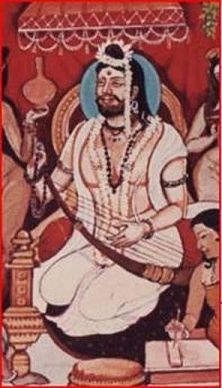
Ma-Pa-Dha-Ni- Sa-Ri-Ga Sauviri
Pa-Dha-Ni-Sa- Ri-Ga-Ma Harinasva
Dha-Ni-Sa-Ri- Ga-Ma-Pa Kalopanata
Ni-Sa-Ri-Ga- Ma-Pa-Dha Shuddha-Madhya
Sa-Ri-Ga-Ma- Pa-Dha-Ni Margavi
Ri-Ga-Ma-Pa- Dha-Ni-Sa Pauravi
Ga-Ma-Pa-Dha- Ni-Sa-Ri Hrsyaka

The Murchanas of the two Gramas add up to fourteen.

The Gandhara Grama also gave rise to seven Murchanas. However, it was obsolete by the time of Natyashastra.

**

[The explanations by about the seventh century seemed to be slightly different.

Matanga (7th century), in his Brhaddeshi, described   Murcchana as  the elaboration of ‘the seed form of the raga’ (murcchamoha-samucchrayayoh) . And, he said , such elaboration is  possible when the seven Svara-s  of a Raga manifest in the processes of  ascent (aroha) and descent (avaroha).

The Murcchana-s , according to Matanga,  evolved from the Gramas as their base. And, twenty-one Murcchana-s evolved from the three main Gramas-Shadja, Madhyma and Gandharva. Each Murcchana possessed a special unit of aesthetic sentiment.

Matanga said: Murcchana were of two kinds: one, having seven Svaras and the other having fourteen Svaras (sa-Murcchana dvi-vidha; sapta-svara-Murchanat  dvadasha-svara-Murchana cheti).

The Murcchana with Seven Svaras  was divided into four parts: Purna, Shadava, Audava, and Sadharana, The Purna contained  Svaras (hexatone ) ; Shadava , six Svaras (heptatone ) ; Audava , five  Svaras (pentatonic ) ; and the Sadharana , two displaced (vikrita} Svaras :  antara-gandhara and kakali-nishada.

The Murcchana with Twelve Svaras manifest in three registers (Sthana): low, medium and high (Mandra, Madhya and Tara).]

*

[As regards the Gandharva Grama which went out of use quite early, Naradiyashiksha and Sangitaratnakara mention the names of its seven Murchanas as: Nandi, Visala, Sumukhi, Chitra, Chitravati, Sukha and Aalapa.

According to Shri KV Ramachandran the noted music-critic of yester years, the high pitched Ga Grama was used for gods and heavenly beings, Narada, Urvashi etc. That perhaps explains why Ga Grama came to be associated with heaven in the later works.

And, in a similar manner the Jaati, Grama, Murcchana etc system of Music based in two Gramas (Sa and Ma) came to an end by the time of Sarangadeva (13th century). Thereafter,  the scholar-composers derived the Ragas only from Sa Grama ; and discarded the Ma Grama . It was said; Ma Grama had become defunct as its Panchama was but a mere variety of Madhyama.

For instance; Ramamatya (16th century) derived all the Desi Ragas from Sa Grama.  Pundarika Vittala (16th century) also said that all Ragas are derived from Shadja-Grama . And, Venkatamakhin (17th century) who followed him said that Ma Grama does not seem to exist. And, he recognized only the Sa Grama. According to Venkatamakhin, all the Desi Ragas originate from Sa Grama.]

10.2. In the Gandharva Music, it is said, the Murchana of one Grama could be derived from the other. Thus, if the Panchama (Pa) of the Shadja Grama is lowered by one Sruti, it would result in Madhyama Grama. In a similar manner, Murchana of Madhyama Grama could be converted into Shadja Grama by lowering its Daivata (Dha) by two Srutis.

[The Daivata that is so lowered is now named Gandhara (Ga). Then Nishadha (Ni) and Shadja (Sa) would be called Madhyama (Ma) and Panchama (Pa), respectively.]

Abhinavagupta comments: In Gandharva, dropping of notes in two Gramas, as also on the basis of Amsa notes, was governed by definite rules. For instance; Daivata (Dha) was indispensible in Shadja Grama; and, in Madhyama Grama, Panchama (Pa) could never be dropped from any Jaati.

10.3. In addition, there was also the practice of using one or two Svaras more (in addition to the seven) in a Murchanas. Such additional (overlapping) Svaras were called Sadharana Svaras.

[It’s too cold in winter and too hot in summer. But, there is also a comfortable season which is neither cold nor hot; it is neither summer nor winter.  It is between the two seasons. And, this is the Sadharana Kaala – the common season. And, so are the Sadharana Svaras.]

In the Murchana, the additional Svaras between two Svaras – (Sadharana Svara) are not separate individual Svaras, but are chosen from among the seven. They are resorted to only when the respective Grama-Svaras are weak. And, Sadharana-Svara is weaker than the Grama-Svara, and therefore it cannot become the commencing Svara of a Murchana.

[It is said; there would also be Murchanas with Sadharana Svaras (with Antara Ga and Kakili Ni) of two scales.]

Taana

11.1. Apart from the Seven-Svara Murchanas and Murchanas with Sadharana Svaras, there were also some Murchanas which had only six Svaras (Shadava) or five Svaras (Audava). And, these were called Taanas (from the root tan = to spread out), which formed the basis for various musical forms.

For instance; Sa Grama will have four Taanas when Sa, Ri, Pa and Ni are dropped successively. Similarly, there will be three Taanas in Ma Grama when Sa, Ri and Ga are dropped successively.

As regards Audava Taanas, Sa-Pa, Ri-Pa and Ga-Ni are dropped in Sa Grama; and Ga-Mi and Ri-Dha are dropped in Ma Grama.

Matanga says that the five-note Audava Taana could be obtained generally by omitting the Samvadi (consonant) Svara; and, in some cases it may be obtained by omitting the Anuvadi (assonant) Svara also.

In all, the Murchanas of the two scales would be 35.

[Taana-s are said to be twofold: Shuddha and Kuta. when Svaras are sung in a regular order it is Shuddha; and. when sung in an irregular order it is Kuta.

Matanga explains the difference between Murchana and Taana as the difference in the order (karma): the former has an ascending order while the latter has descending order. The purpose of both the Murchanas and the Taanas are was to provide pleasure to the listener as also to the performer. Perhaps, I think, these (Murchana and Taana) variations related to Veena plying than to human voice. ]

11.2. How the notes are to be omitted for the sake of Taana is given in Taana-kriya on the Veena (Dattilam. 36). The Taana-kriya, the technique is twofold (Taana-kriya dvidha tantryam) – Pravesika and Nigraha.  Pravesika (entering) is raising the lower note or lowering the higher note. Nigraha (abstaining) is not touching the string (asamsparka tu nigrahat) , i.e.  , not producing the middle note as the middle note would denote Murchana. The Ma-note of the Veena may never be omitted as it was essential for indication of Murchana-s of the two Grama-s.

(Taana-kriya dvidha tantryam praveshena nigrahat tatha I tatra pravesho dhvanyaikyam asamsparka tu nigrahat II)

Veena

[The scanty information posted here about Murchanas, Gramas and Jaatis was, roughly, according to Natyashastra and Dattilam. In the later centuries, just before  the time of Matanga‘s Brihad-desi ( 6th  to 8th century) , the concept and the method of deriving Murchana, as also the  connotation of Jaati and its further evolution  had changed much.

And, by the time of Brihad-desi, the concepts of Grama, Murchana and Jaati had all but gone. After this period, the Ragas came to be regarded as the melodic-base of the songs. Initially, the Ragas were treated as janya-s (derivatives) of the Jaatis. But, in due course the relation between Ragas and Jaatis tapered out, and then ceased. Similarly, the Svaras that gave form to Ragas came to be described in terms of Shuddha or Vikrta Svaras; and, the relation between Svaras and Gramas of the past was also lost.]

gobo(1)

Gandharva – Music forms

12.1. The following were said to be the song- formats of the Gandharva Music (Giti): Gitaka; Nirgita; Jaati-gita; Kapala-gana; and, Kambala-gana. Of course, all these forms vanished long ago. And, even historically, the scholars are not sure of their origins. Each of the four forms seemed to have come from a different tradition. The relation or the link between the forms is also rather hazy or uncertain.

12.2. Among these, Gitaka and Nirgita type were said to be songs with definite structure. The Jaati-gita, on the other hand, was said to be a song-type with no specified format. Kapala-gana and Kambala-gana were said to be simpler songs.

[In another context, it is said: the relationship between the Gana and the Veena playing is called Giti (when Veena playing is not accompanied by singing, it is A-giti). Abhinavagupta explains: every type of Giti can be played on Veena, And, there are three types of Giti:   Tatva , Anugata and Ogha. When the Gana is prominent and the Veena follows Gana completely , it is Tatva; When the Veena follows Gana in some part and then shows its own craftsmanship , it becomes Anugata; and , when the playing techniques becomes A-nibaddha and the Karanas become more prominent  and the Gana becomes secondary then the Giti becomes Ogha . Thus in the rendering of the Giti, Veena performs an important role.]

Gitaka

13.1. As said; Gitaka is a well structured song format. There were major divisions or groups of Gitaka-s, each group having seven song-forms. The seven forms of the first Division were (Sapta-rupa): Madraka; Aparantaka; Ullopyaka; Prakari; Ovenaka; Rovindaka; and, Uttara. And, the seven forms under the second Division were: Asarita; Vardhamana; Chandaka; Panika; Rik; Gatha; and, Sama.

13.2. Every Gitaka, in turn, had two sections: Vastu and Anga. The different forms of Gitaka were classified according to the variations of their Vastu (section of the text) and Anga (styles of rendering the texts). The other distinguishing features were: Svara; Taala; and, Pada.

13.3. The ways of rendering the Gitaka had components (Anga) such as: Upavartana:– the end portion of a section of the text rendered in double speed; Prastara :- the concluding portion of one  section is repeated as the opening of the following section; and, Shakha-Pratishaka:-  certain sections are to be rendered twice – each in a different style- the first rendering is called Shakha and the other was called  Prati-shakha.

14.1. In the Gitaka, the terms such as Svara; Taala; and, Pada have their own connotation. And, they do not carry the meaning that we now associate with those terms.

For instance; Taala in a Gitaka does not mean rhythmic patterns or beats; but, it is the measure of time-span (duration) of the Gitaka. The sections of the Gitaka were divided into smaller time-units, marked by specific action by hands (kriya), either by making sound (Sa-sabda) or without sound (Ni-sabda). These were said to be four-fold, each.

Nishabda: (a) Avapa: contracting fingers with the palm turned upwards; (b) Niskrama: spreading the fingers with the palm turned downwards; (c) Viksepa: moving hands swiftly as in Niskrama; and, (d) Pravesha: taking back the hand pointing downwards.

Sa-sabda: (a) Samaya: clapping by the right hand; (b) Taala: clapping by the left hand; (c): Sannipata: clapping with both hands together; and, (d) Dhruva : movement of the hand with the snapping of the fingers according to threefold Kaala.

[It is said; cymbal plying with its neutral yet audible sound, usually, accompanied the hand gestures during Gandharva, for attainment of Saamya (the moment of precise coordination of Taala, Svara and Pada).]

14.2. Similarly, Svara was not mere notes. It is, here, related to Taala (as explained above). The melodic-lines of the song were broken into segments to match the Taala (time-units) or the duration assigned to that section..

14.3. Pada, the verbal elements of the song were also important. The object of the songs was to praise Shiva (Shiva-stutau prayojani). The duration of each section of the Gitaka and that of the meaningless syllables (jham, tum, tha, ka etc) employed were also prescribed.

Nirgita

15.1. Nirgita, also called Bahirgita or Shska, too had elements of Svara, Taala and Pada.  The Nirgita was a song form (Gita) suitable for dance (Nrtta) consisting vocal part (Dhruva) and instrumental part (Vadya). The instrumental part of the song (Veena- vadya-prayoga) was more prominent as compared to the verbal part (Dhruva-prayoga).The Vadya part was characterized by specific strokes (Karana) on the Veena.  According to Abhinavagupta, the Svaras that are produced by striking (praharavishesha janyah) the strings of Veena in a specific manner is called Dhatu.

15.2. The Dhatu-s had four elements: Vistara (high pitched), Karana (low pitched), Aviddha (duration of the note) and Vyanjana (different ways of employing each finger), each of which had its variations. Such variations depended on whether the stroke was made on the upper end (uttaramukha) or lower end (adhara) of the Veena; the number of strokes made on the strings; the time span (guru and laghu); and, their sequences.

Pada, here, meant both the verbal text (Dhruva-prayoga) and the passages of instrumental play (Vadya-prayoga).

15.3. As regards Taala in Nirgita, it has the same connotation as in Gitaka. The entire time-span of the verbal composition (Dhruva) is broken into smaller segments; and each is measured in time –units (kaala pramana). The instrumental part of Nirgita was, however, free from restrictions of Taala.

Jaati-gita

16.1. Jaati-gita seemed to be simple songs with no marked division or refrain ( in contrast to Gitaka) . Jaati-gita songs were based in one or the other Jaati, class of melodies. They were perhaps illustrative representation of a Jaati group.  For instance; a Gita based in Shadja-jaati represented the Shuddha variety of the Jaati.

Jaati-gita too had elements of Svara, Taala and Pada.

16.2. The Svara aspect of Jaati-gita-s exhibited the characteristics of the jaati-s to which they pertained. The Tala organisation (time-management) of the Jaati-gita was not as complex as that of the Gitaka and Nirgita. The Pada aspect of the Jati-gita-s was also fairly simple. The text consisted of Stuti pada-s addressed to Siva.

Kapala-ganas

17.1. Kapala-ganas were simple songs just as the Jaati-gitas, without any sectional organisation. They were based on melodic structures called Kapala-s. The seven Kapala-s were derived from Shuddha variety of seven Jaati-s.

The Pada of Kapala-ganas were all in praise of Shiva, particularly the Kapala adorned form of Shiva; and were interspersed with loud Hoonkara and sounds such as : Hum, Ha, Hu , Avu etc.

The Kambala–gana

18.1. The Kambala–gana, just as the Kapala-gana, was based in derivatives of Jaati known as Kambala. The Kambala-gana were said to be derived from Panchami-jaati. And, in their structure they resembled the Kapala-ganas.

 rangoli

19.1. The Gana of the Natyashastra had its roots in Gandharva Music. Several of the Gandharva – songs were adopted into Drama. For instance; in the Purvanga, that is during the preliminaries before the commencement of the Drama per se, the Gandharva songs of the type Nirgita were sung , to the accomniment of instruments, offering prayers to Shiva. This was flowed by a song in Gitaka format ; and by a Tandava dance of Shiva or a Lasya of Shiva and Devi to another Gitaka-song. Thereafter, the Sutradhara (Director and Stage-Manager) and his troupe enter the stage move in a rhythmic  dance like steps   and sing Gandharva-songs praying to the gods for successful enactment and completion of the play. However, during the entry and exit or at important junctures Dhruva  songs were sung.

Tandava2 lasya

Some say that Gandharva or the sacred Music Marga performed during worship, in due course, gave place to Gana, the songs that were not so rigidly bound and were meant to entertain.

But, Abhinavagupta strongly refutes such a view; and, asserts that Gandharva and Gana flourished side by side even during later times. Though Gana owed to the Gandharva, there were differences between the two. In his commentary on the 33rd chapter of Natyashastra, Abhinavagupta draws a four-fold distinction between Gandharva and Gana Music-s.

According to Abhinavagupta , the two differ in their : in Svarupa –  structure and ways of employing Svara, Taala and Pada; in Phala –  the  benefits or the objectives ;  the one is in praise of Shiva and pleasing gods  while the other strives to gladden the hearts of  the audience in a theatrical performance;  in Kaala – the context or the occasions of their rendering , one is for worship and the other is for entertainment; and , in Dharma – in their distinctive nature and functions.

[Gāndharvasya ki lakaam? uktam adhyāyacatuṣṭayeu muninā |tathāpy anusandhāna-vandhyam mahā-bhāgam bodhayitum anusandhīyate |svara- tāla-pada-viśeātmaka pravtti-nivtti-pradhāna-dṛṣṭādṛṣṭa-phala-sāma-veda-prabhavam anādi-kālavttim anyonyoparañjanā-guatā-vihīna gāndharvam iti svarūpa-phalāt kālād dharmāc ca bhidyamānam avaśyam gāna-vailakaya bhedaika-sampādanam]

lotus

In the next part of this series,

Let’s talk of Gana with particular reference to

 The Music of Natyashastra.


References and Sources:

I gratefully acknowledge the following

Wonderfully well researched works:

Grama – Murchana – Jaati by Dr. Premalatha Nagarajan

Gandharva Form by Prof. Dr. N. Ramanathan

Abhinavagupta’s contribution to the solution of some problems in Indian Musicology by Shri Jaideva Singh

And

Dattilam: A Compendium of Ancient Indian Music edited by Emmie te Nijenhuis

Studies in the Nāyaśāstra: With Special Reference to the Sanskrit Drama in performance By Ganesh Hari Tarlekar

Sonic Liturgy: Ritual and Music in Hindu Tradition by Guy L. Beck

Sruti in Ancient, Medieval and Modern Contexts by Prof. Dr. N. Ramanathan

http://carnatic2000.tripod.com/sruthi.htm

Dattilam: A Compendium of Ancient Indian Music  edited by Emmie te Nijenhuis

 Pictures are from Internet

Next

… Music in Natyashastra

 
Leave a comment

Posted by on April 24, 2015 in Music, Sangita


Tags: , , , , , , , , , , , , , , , ,

Bharata’s Natya-Shastra – some reflections

Nayana dutta2

1. Natya-Shastra is a detailed compendium of technical instructions about the performing arts. It was meant as a practical manual for  production of successful theatrical performances, which included music and dance as well as acting. It was also intended as a guide to the poet and to the performer, alike. 

As Prof. Adya Rangacharya stated in his The Natyasastra: English Translation with Critical Notes

The eminence of the Natyasastra lies not merely in the fact that it was the first book on the subject on theatrical art; but that, it was the first comprehensive treatise on Dance, Drama and Music;  and , it marks  the origin of our dramatic tradition. It laid down the essentials of the Drama as a representation of the ways of the world; the nature and attitudes of the people; their ways of behavior and manners of speech. It also provided a framework for the Drama by highlighting its essential ingredients: 

(1) a playwright who has vision to the grasp of things and has the capacity to articulate that in an interesting way, through speech and action;

(2) the story that holds the attention of the audience;

(3) a virtuoso director  who can transform a script into a dramatic performance;

(4) the set of  skilled artists with clarity of speech and endowed with talent to give form and substance to the dream of the playwright and the vision of the director;  and , not the least ,

(5) the perceptive ,  intelligent  and   cultured spectators  who appreciate and enjoy a good  performance.

1.1. The text is in the form of elaborate dialogues between the author and a group of Munis , sages who wished to know about Natya-Veda, the knowledge of the performing arts such as dance, music and dramaThe author, in response, presents a detailed inquiry in to the various facets of drama including its nature; its origin; its theories; techniques of the theater with all its components of speech, body-language, gestures, costumes, décor and the state of mind of the performers, apart from rituals, architecture of theater etc.

Written in archaic form of Sanskrit, the text consists about six thousand (5,569 – to be exact) sutras or verse-stanzas spread over thirty-six chapters. Some passages are in prose.

Because the Natyasastra has about 6,000 verses, the text is also known as Sat-sahasri. The later authors and commentators (Dhanika, Abhinavagupta and Sarada-tanaya) refer to the text as Sat-sahari; and, its author as Sat-sahasri-kara.

But, the text having 6,000 verses is said to be a condensed version of an earlier and a larger text having about 12,000 verses (dwadasha_sahasri). It is said; the larger version was known as Natya- agama and the shorter as Natya-shastra.

Please click here for The Natyasatra – A treatise on Hindu Dramaturgy and Histrionics Ascribed to Bharata Muni; Translated into English by Manmohan Ghosh;  Published by Asiatic Society of Bengal, Calcutta – 1951]

2. Though the  Natya-Shastra speaks of theater (natya), it actually encompasses all forms of art expressions. The text, in fact, claims that there is no knowledge, no craft, no lore, no art, no technique and no activity that is not found in Natya-Shastra (1.116).

न तज्ज्ञानं न तच्छिल्पं न सा विद्या न सा कला । नासौ योगो न तत्कर्म नाट्येऽस्मिन् यन्न दृश्यते ॥ ११६॥

The reason that theater-arts were discussed specifically, is that, in the ancient Indian context, drama was considered the most comprehensive form of art-expressions. Further, at the time the Nataya Shastra was compiled, the arts of poetry, dance, music and drama; and even painting, sculpture and architecture were not viewed as separate and individualized streams of art forms. Natyashastra presented  an integral vision of art, which blossomed in multiplicity.

It was only during the later periods these art-forms developed into independent art-expressions. Similarly, even the other minor forms of Drama , such as: Opera, Poetic-drama, realistic plays and so on, later evolved and grew apart, assuming independent identities.

[Vishnudharmottara (Ca. sixth century) asserted that painting and sculpture without the knowledge of the Drama and the Dance would not have much depth; and, that Drama and Dance, in turn, do require a knowledge of music and of the songs, which again is dependent on mastery over languages – both Sanskrit and Prakrit – with a thorough understanding of the elements of prose, poetry, grammar, meter, prosody etc. It thus underlines the interdependence of the arts.]

All art expressions were viewed as vehicles of beauty, providing both pleasure and education, through refinement of senses and sense perceptions. The object of the drama was to show men and women the proper way to live, a way in which one could live and behave, so that one might be a still better person.

“A play shows your actions and emotions. Neither gods nor demons are depicted as always good or always evil. Actually, the ways of the world as represented here are not only of the gods but also of yours. It gives you good advice; it gives you enlightenment and also entertainment. It provides peace of mind to those who afflicted with miseries, sorrow, grief or fatigue. There is no art, no knowledge, no yoga, and no action that is not found in Natya .”- (Natya-Shastra 1: 106=07; 112-16)

na taj jñānaṃ na tacchilpaṃ na sā vidyā na sā kalā । nāsau yogo na tatkarma nāṭye’smin yanna dṛśyate ॥ 116॥

[ Kalidasa remarked : ‘Drama, verily, is a feast that is greatly enjoyed by a variety of people of different tastes

– Natyam bhinnaruchir janasya bahuda-apekshym samaradhanam. ]

Bharatha explains: when the nature of the world possessing pleasure and pain both is depicted by means of representations through speech, songs, gestures , music and other (such as, costume, makeup, ornaments etc ) it is called Natya. (NS 1.119)

yo’ya  svabhāvo lokasya sukha dukha samanvita som gādya abhinaya ityopeto nātyam ity abhidhīyate 119

Thus, according to Bharata, the Drama is but a reflection or a representation of the actions of Men and women of various natures (Prakrti) – avastha-anikrtir natyam . That is to say; the Drama, in its various forms of art, poetry etc , strives to depict the infinite variety of human characters .

That is the reason; Bharata says, one should study the various human habits and natures (Prakrti) on which the art of Drama is based.  And, for which the world, the society we live in is the most authoritative source of knowledge (Pramana) . All those involved with the Drama should realize this truth – (NS: 25.123)

Nana-sheelah prakutyah  sheele natyam pratihitam / tasma-loka-pramane hi vigneyam natya yo krubhihi // (NS: 25.123)

Having said that; the theater was conventional; yet, imaginative. The costumes and make up were stylized and symbolic; and, not what is commonly seen on the city-streets. In any case, Natyashastra requires a performer to present much more than an external representation of the character, such as correct speech, gesture etc.  His/ her stage performance will have to go far beyond technical skill, in order to be believable and accepted by the spectators.

There is, however, not much discussion about scenery; perhaps because scenery was used sparingly.

Theater had a sacred significance. Prayers and rituals were conducted and the stage was consecrated before the commencement of the play ( Purvanga) .

*

Natyashastra (6.10) provides a comprehensive framework of the Natya-veda, in a pellet form, as the harmonious combination (sagraha) of the various essential components that contribute towards the successful production of a play.

Rasā bhāvāhya abhinayā dharmī vtti pravttaya siddhi svarās tathā atodya gāna ragaśca sagraha 6.10

Bharata also mentions the five elements of the plot (artha-prakrti) of the Drama as :

  1. the seed (Bija);
  2. the expansion or the intermediate point which links to the next (Bindu);
  3. the episode (Pataka);
  4. the incident in the episode (Prakari) and
  5. the dramatic outcome (Karya).

These are to be used according to the main Rasa of the play and the prescriptions of the Shastra.(NS: 19.21)

Bijah Bindu Pataka cha Prakari  karyameva cha / Artha-prakrutyah pancha tatva yojya tata vidihi // (NS:19.21)

As regards the success of the play (Siddhi), it is said,  the successful production (Siddhi) of a play enacted on the stage (Ranga) with the object of arousing joy (Rasa) in the hearts of the spectators involves  various  elements of the components of  the actors’ gestures, actions (Anubhava) and speech (vachika); bringing forth (abhinaya) their intent, through the medium of  theatrical (natya-dharmi) and common (Loka-dharmi) practices; in four styles of representations (Vritti-s) in their four regional variations (pravrttis) ; with the aid of  melodious songs  accompanied by  instrumental music (svara-gana-adyota).

The assembly of spectators with different tastes and levels of appreciation should all be able to enjoy the play. Therefore, Bharata instructs that a play should be such that it caters to the interests and dispositions of varied class of men and women; the young and the old, with each class looking for its own favorite type of entertainment . And, it is upon such versatile ability that the success of a play depends. The play-production, thus, was aimed to satisfy the happy, responsive spectators and enthuse them to visit the theater more often. 

Bharata, in a way, sums up the virtues and merits of Nataka , a dramatic work, that captivates the hearts of the spectators and brings glory to its playwright , producer and the actors .

The work of art that satisfies all classes of spectators ; and is a happy and enjoyable composition, which is graceful on account of being  adorned with sweet and elegant words; free from obsolete and obscure meaningless verbose ; easily grasped and understood by the common people ; skillfully arranged ; interspersed with delightful songs and dances; and,  systematically  displaying varied types of sentiments  in its plot devised into Acts, scenes, junctures etc.

mdu-lalita-padārthaha-śabdārtha-hīna ;   budha jana sukha bhogya,  yuktiman – ntta-yogyam bahu rasa kta mārga , sandhi-sandhāna-yukta  bhavati  jagati  yogya  nāaka  prekakāām 16.130

***

Bharata elaborates (NS.27.57-61) :

The young are keen on the portrayal of love; and, those after money relish scenes depicting acquisition of wealth. And, the ones who love adventure delight in the terrible and odious acts of battle and combats; whereas the old and pious always praise the enactment of well known tales and legends from the Puranas  (epics) lauding the virtues and good deeds ; the devout look for philosophical and religious aspects ; and, those disinterested in the mundane seek liberation (moksha) .  The common folks, the women, children and the dimwitted lap up with relish comic situations evoking laughter and fun, attractive costumes and make up.

Apart from these types, Bharata also mentions an elite class of appreciative spectators with refined tastes and deep interest in the technical aspects of production. Such connoisseurs were also aware of the theatrical traditions and conventions of performance on the stage. These were the well-informed class who cared more about the aptness of the techniques of performance, critically evaluated the merits (guna) , the defects (dosha)  and the success of the theatrical performance as a whole.

Then, there were also the artists specialized in different branches of music and dance; the scholars who relished subtle nuances in the rendering of speech and the lyrics of the songs; and, there were the accomplished courtesans who were experts in presenting alluring and  delectable performances .

All such elite class were the cream of spectators, for whose approval and appreciation the whole of theatrical group collectively and individually looked forward with great hope and fear.

The producer of the Drama had also the onus to please the patron who sponsored and financed the play –production and display.

Nānāśīlāḥ praktaya śīle nāya vinirmitam uttamā-adhama madhyānā vddha bāliśayo itām 57

Tuṣyanti taruā kāme vidagdhā samayātvite arthevarthaparā ścaiva moke cātha virāgia 58

Śūrāstu vīra raudreu niyuddhevāhaveu ca dharmā akhyāne  purāeu vddhā stuyanti nityaśa 59

Na śakyamadhamairjñātumuttamānā viceṣṭitam tattva bhāveu sarveu tuyanti satata budhā 60

Bālā mūrkhā striyaścaiva hāsyanaipathyayo sadā yastuṣṭo tuṣṭimāyāti śoke śokamupaiti ca 61

Abhinavagupta observes Drishta-phala [visible fruits] like banners (pataka) or material rewards do not indicate success of a play production. Real success is achieved when the play is performed with skilled precision, devoted faith and pure concentration. To succeed, the artist must immerse the spectator with pure joy of Rasa experience. The spectator’s concentrated absorption  appreciation and enjoyment is indeed the success.

Dhananjaya in his Dasarupaka remarks that responsive spectators, fired by enthusiasm and imagination, contribute to the success of the play in the manner of ‘children playing with clay elephants ‘. ” When children play with clay-elephants, etc., the source of their joy is their own utsaha (enthusiasm). The same is true of spectators watching  and almost sharing  the heroic deeds of  characters , say  like, Arjuna and other heroes on the stage.”…… 

Kridatam mrnrnayair yadvad balanam dviradadibhih / svotsahah svadate tadvac chrotrnam Arjunadibhih.

**

2.1. The text employs Natya as a generic term, which broadly covers drama, dance and  music. It does not treat dance as a separate category of art form. Bharata while dealing with Angika-abhinaya (body-language) speaks of nrtta, pure movements that carry no meaning- as compared to Abhinaya (literally meaning that which carries the meaning forward towards the audiencei. e. gestures that convey specific meaning. Nrtta was, in fact, meant to provide beauty, grace and a certain luster to the performance. The postures of the nrtta (called karanas) were classified by Bharata as tandava and sukumara, to convey vigor and grace.

[ Nandikeshwara (perhaps a later author who, for some reason, assumed the name of an ancient figure/person ?), author of Abhinaya_darpana, is believed to be the first to recognize dance as an independent art. He called it natanam; and classified it into nrtta (Pure dance), nrtya (abhinaya – expression- aspectand natya (combination of nritta and nrtya with a dramatic element to it).

Dhananjaya in his Dasarupa, while drawing a  distinction  between nrtta and nrtya , explains the term  nrtta as that which  depends on rhythm and tempo – nrttam tala-layam ashrayam (DR. 1. 13) ; and,  nrtya as  that which is dependent on emotion – Bhava-ashrayam nrtyam (DR. 1. 12).

As mentioned earlier, Nandikeshwara explained Natya as the combination of nrtta and nrtya .]

3.1. It is said that the text which we know as Natya-Shastra was based on an earlier text that was much larger. And, many views presented in Natya-Shastra are believed to be based on the works of other scholars. There are frequent references to other writers and other views; there are repetitions; there are contradictory passages; there are technical terms, which are not supported by the tradition.

[ It appears there were texts on Drama even much prior to Natyashastra. Panini (Ca.500 BCE) the great Grammarian, in his Astadhyayi (4.3.110-11), mentions two ancient Schools  –  of Krsava and Silalin – that were in existence during  his time – 

Parasarya Silalibhyam bhikshu nata-sutreyoh  (4.3.110); karmanda krushas shvadinihi  (4.3.111).

It appears that Parasara , Silalin , karmanda and Krsava were the authors of Bhikshu Sutras and Nata Sutras. Of these , Silalin and Krsava  were said to have prepared the Sutras (codes) for the Nata (actors or dancers). At times, Natyashastra refers to the performers (Nata) as Sailalaka -s  . The assumption is that the Silalin-school , at one time,  might have been a prominent theatrical tradition. Some scholars opine that the Nata-sutras of Silalin (coming under the Amnaya tradition) might have influenced the preliminary part (Purvanga)  of Natyashastra , with its elements of worship (Puja).

However, in the preface to his great work Natya-shastra of Bharatamuni (Volume I, Second Edition , 1956) Pundit M. Ramakrishna Kavi mentions that  in the Natyavarga of Amara-kosha (2.10.12) there is reference to three  schools of Nata-sutra-kara : Silalin ; Krasava; and,  Bharata .

 Amarakosha

It appears that in the later times,  the former two Schools (Silali and Krasava) , which flourished earlier to Bharata , went out of existence or merged with the School of Bharata; and, nothing much has come down to us  about these older Schools. And, it is also  said, the Bharata himself was  preceded  by  Adi-Bharata, the originator and Vriddha (senior) Bharata.  And, all the actors of whatever earlier Schools, later came to be known as Bharata-s. ]

3.2. These factors lend support to the view that Natya-Shastra might have been the work of not one single author but of several authors, spread over a long period of time.

Ms. Kapila Vatsyayan, a well known scholar, however, observes that the text projects an integrated vision and   a unity of purpose. She points out many instances of reference to later chapters in the text, and says they are indicative of the coherent and well knit organic nature of the work. 

For those reasons, she concludes, Natya-Shastra might well be considered as the work of a single author or of a single tradition.

4.1. Rasa, as discussed in Natyashastra, meant aesthetic appreciation or the joy that the spectator experiences.  As Bharata says , Rasa  should be relished  as an emotional or intellectual  experience : na rasanāvyāpāra āsvādanam,api tu mānasa eva (NS.6,31) .

The yashāstra states that the goal of any art form is to invoke  such Rasa.

[Bharata explains Rasa  as an experience that can be relished – like the taste of food – Rasyate anena iti rasaha (asvadayatva), which is associated with palate (ability to distinguish between and appreciate different flavors) . Yet ; the aesthetic senses that are primarily engaged with a theatrical presentation  are only the eye and the ear. The senses of taste, touch and smell are not , generally, associated with   the type of ones experience that Bharta talks about  while witnessing a Drama. These are personal or individual experiences. But, Rasa, the aesthetic experience enjoyed by all the spectators , in a play, in common, is mainly through two senses : the eye and the ear. That , perhaps , is the reason why Bharata says that the Rasa in a play should be relished only as an emotional or intellectual experience.]

Bharata’s theory of Rasa was crafted mainly in the context of the Drama.    After naming the eight Rasas, he says ‘these are the Rasas recognized in Drama’nāṭye rasāḥ smṛtāḥ – (N.S 6.15).  

śṛṅgāra-hāsy-akaruā raudra-vīra-bhayānakā bībhatsa-ādbhuta-sajñau cetyaṣṭau nāye rasā sm 15

In the prose-passage following the verse thirty-one of Chapter six, Bharata commences his exposition of Rasa, saying: I shall first explain Rasa; and, no sense or meaning proceeds without Rasa (Na hi rasa-adrate kaschid-arthah pravartate).

tatra rasāneva tāvadādāvabhivyākhyāsyāma na hi rasādte kaścid artha pravartate

He , then  focused on the dancer’s or actor’s performance and effort to convey the   psychological  state , which the character is experiencing , to the spectator, in order to create  Rasa – the aesthetic appreciation or enjoyment of the art – in the heart and mind of the spectator.

The famous Rasa-sutra or basic “formula”, in the Nāyashāstra, for evoking Rasa, states that   the vibhāva, anubhāva, and vyabhicāri bhāvas  together produce Rasa:  tatra vibhāvā-anubhāva vyabhicāri sayogād rasa nipatti 

Bharata elaborated the process of producing  Rasa in terms of eight Sthayi Bhavas – the principle emotional state of the character expressed by the performer  with the aid of Vibhava (the cause) and Anubhava (the enactment)  ; thirty-three Vyabhicāri (Sanchari) bhāvās – the transient emotions; and, eight  Sattivika-bhavas – the involuntary physical reactions.

Among these Bhavasthe more important  ones are said to be vibhāva and anubhāva , which  invoke the Sthāyi bhāva, or the principle emotion at the moment. Such elements that are employed to convey the psychological state of the character, thus, in all, amounted to forty-nine or more. 

[The Sattvika , the involuntary–reflexes (such as being stunned, going pale , stammering, shedding tears etc.,)  were perhaps meant to introduce a realistic style of acting – suited to the situation as also to the nature, psychological state and the social standing of the character , as compared to the purely conventional style .]

It is explained; they are called Bhavas because they happen (Bhavanti); they cause or bring about (Bhavitam); and, are felt (bhava-vanti). Bharata explains that  Bhavas  effectively bring out the dominant sentiment of the play – that is the Sthāyibhāvā – with the aid of various Bhavas , such as words (Vachika), gestures Angika), costumes ( Aharya) and bodily reflexes (Sattva) – for the enjoyment of the good-hearted spectator (sumanasaḥ prekṣakāḥ) . Then it is called the Rasa of the scene (tasmān nāṭya rasā ity abhivyākhyātāḥ).

Nānā bhāvā abhinaya vyañjitān vāg aṅga sattopetān / Sthāyibhāvān āsvādayanti sumanasaḥ prekṣakāḥ / harṣādīṃś cā adhigacchanti tasmān nāṭya rasā ity abhivyākhyātāḥ //6.31//

In brief; Abhinaya is the art of communicating bhāva (emotion) to produce Rasa (aesthetic enjoyment). In other words, it is the Bhavas that produce Rasa; and, it is not the other way.

The Rasa theory of the yashāstra is considered one of its most important contributions, with several scholars over the centuries , until today, discussing and analyzing it extensively.

Thus, Bharata’s concept and derivation of Rasa was mainly in the context of the Drama. They all are related to concrete and tangible emotions, based upon human experiences. There is no mysticism whatsoever here. That concept-of the enjoyment by the recipient spectator – as also his views on the Gunas and Dosha, relating to the  scripting and enacting the play, were later  enlarged , transported  and adopted into Kavya as well. In either case, the human element was never lost sight of ; and, the spectator or the avid reader remained  at the center of art-experience. 

*

Bharata, initially, names four Rasas (Srngara, Raudra, Vira and Bhibhatsa) as primary; and, the other four as being  dependent upon them . That is to say ; the primary Rasas, which represent the dominant mental states of humans, are the cause or the source for the production of the other four Rasas.

Bharata explains that Hasya (mirth) arises from Srngara (delightful); Karuna (pathos) from Raudra (furious); Adbhuta (wonder or marvel) from the Vira  (heroic); and, Bhayanaka (fearsome or terrible) from Bhibhatsa ( odious).

śṛṅgārāddhi bhavedd-hāsyo raudrācca karuṇo rasaḥ vīrāccaiv-ādbhuto-utpattir-bībhatsācca  bhayānakaḥ 6.39

But, effectively, the eight Rasas listed in yashāstra are well accepted. Some scholars remark that the   distinction of four basic Rasas ; and , their associate four Rasas is a mere technical detail that the spectators may not be interested in.

śṛṅgāra hāsya karuā raudra vīra bhayānakā bībhatsā adbhutasajñau cetyaṣṭau nāye rasā sm  6.15

Later, by the time of Abinavagupta Shanta rasa came into discussion; and, eventually was  recognized . Thus , concept of Navarasasa was accepted. (for more on  discussion about Shantha Rasa , please click here). Later on Vatsalya , Bhakthi and such others were also named as Rasas. Thus the number of Rasas is not mere nine or eleven , it could be more. 

**

4.2. Bharata gave a definite structure to the drama; and said every play must portray and convey a  dominant Rasa; and , each of the eight rasas providing enjoyment to the audience. A Rasa depends on the type of the story and sort of the hero. According to Dhananjaya, hero (neta), story (vastu) and rasa (artistic enjoyment) constitute the essential ingredients of a drama – Vastu neta rasas tesam bhedako .

Natya-Shastra strives with a single pointed devotion to bestow an artistic form and content to what was still then a vulgar source of entertainment. Bharata could say with pride “parents could watch a dramatic performance in company of their sons and daughters-in-law.”(Natya-Shastra24.297)

5.1. That leads us to the question who was this author? Was Bharata his name   ? Was Bharata the name of his tribe? Or, was it a clever acronym?

There are, of course, no clear answers to these questions. The author made no attempt to reveal his identity. The book, as I mentioned earlier, is in the form of dialogue between Bharata and the sages.  The author was explaining the broad parameters, the basic principles and techniques of theatrical art as they then existed. He was not expounding the text as if it were his discovery or as his personal position. He was lucidly and systematically explaining a tradition that was alive and vibrant. These factors lead us to believe that Bharata, whoever he was, might have been a practicing- well informed-leading performer of his time,  belonging to a certain tradition . Bharata perhaps   belonged to a community of artists, actors, dancers, poets, musicians who shared a common heritage and common aspirations. 

5.2. From the prologue, couched in mythological language and imagery, it appears, Bharata was also a teacher and a preceptor of a school or an academy. He had a number (100?) of sons and pupils each of them being an accomplished performer or a learned theoretician. He produced plays with their assistance; by assigning each one a specific role.

It is very unlikely there were ‘theatrical Companies’, as such . Perhaps the family of Bharatas – producers, directors  (Sutradhara) and actors, as also their disciples of various talents and ranks, managed the theater as a group, under the leadership of the senior Bharata being in charge. It does, also, appear that the actors of various ranks of importance, dancers, musicians, assistants and minor functionaries did receive a systematic training in their  craft.

Such a troupe leader (Bharata) might also have been the one who assigned roles in a play; and, taught the rules of  the art/craft to the actors and actresses. His chief function seems to have been mostly supervisory. He might also have been involved in the design and structure of the theater hall (Natya-shala)

Thus, the Bharata, whoever he might be, should have been one capable of performing all those diverse and difficult tasks, with a sense of responsibility and commitment. Besides, he should have been one  who was sensitive to human frailty; and, also conversant with the language  customs  and nature of people of different classes and regions,

The term Bharata perhaps initially referred to  such a multi-talented virtuoso; and also, a producer / director of plays. The author of the Natya-Shastra was perhaps one such “Bharata”.

5.3. Incidentally, the text – in its chapter 35 – Bhumika vikalpa – provides a sort of elaborate explanation of the term Bharata, as : one who conducts as the responsible leader of a performance – as producer , director and stage manager  – who is required to be an expert not only in acting but  also in all those arts which together constitute a performance – by acting in many roles, by playing many instruments and by providing many accessories – is called Bharata – (Natya-Shastra 35: 63-68, 69-71).

[ In this connection, I shall speak of the qualities of a Director. An enumeration of his qualities will constitute these characteristics; they are: First of all, he should possess knowledge of characteristics of everything concerning the theater, desirable refinement of speech, knowledge about the Tala, rules for timing of songs, and of the theory relating to musical notes and to the playing of musical instruments.

63-68. One who is an expert in playing the four kinds of musical instrument, well-trained in rites prescribed in the Sastras, conversant witli the practices of different religious sects and with polity and the science of wealth, expert in the manners of courtezans (kama-shastra), and in poetics(kavya-shastra) , knows the various conventional Gaits  and movements (gati-prakara), throughly appreciates all the States (bhava) and the Sentiments (rasa), is an expert in producing plays, acquainted with various arts and crafts, conversant with the rules of prosody and the metrical feet (chhandas shastra), and is clever in studying the different Sastras, acquainted with the science of stars and planets and with the working of the human body, knows the extent and customs of the earth, its continents and divisions, mountains and people, and the descendants of different royal lines (prasutivit) , is fit to attend to the Sastras relating to his works, capable of understanding them and of giving instruction [on the subjects]; should be made a teacher {acharya) and a Director (Sutradhara)

69-71. Now listen to me speaking about the natural qualities of a Director. He should be possessed of memory , intelligence and judgement; should be patient, liberal, firm in his words, poetical, free from any -disease, sweet [in his manners], forbearing, self-possessed, sweet-tongued, free from anger, truthful, impartial, honest, resourceful (pratimanta) and free from greed for praise.

– The Natyashastra –  translation by Manmohan Ghosh – 1950 – (page 546) – Chapter 35. Bhumika vikalpa – Verses 63 to 71 ]

5.4. The author of the Natya-Shastra is also often addressed, in later times, as Bharata­muni. Shri Adya Rangacharya, a noted scholar, remarks.  “The usual trappings of a muni (sage) are nowhere mentioned”. On the other hand, his sons misused their knowledge and ridiculed the sages (ṛṣīṇāṃ vyaṅgya-karaṇaṃ); and the enraged sages promptly cursed them “as due to pride  ( madonmattā ) in your knowledge you have taken to arrogance (a-vinayam) ; your corrupt-knowledge (ku-jnana) will be destroyed (nāśameṣyati )” — (Natya-Shastra 36: 32 – 38).

yasmājjñāna-madonmattā na vetthā vinayāśritāḥ । tasmād etaddhi bhavatāṃ kujñānaṃ nāśameṣyati ॥ 38

5.5. Bharata recounting this sad episode, cautions the community of artists not to overreach themselves, in arrogance, just because the art had bestowed upon them a special position in the society . The art that empowered them, he counsels, derives its strength from the society; and, the artists, therefore, have a special responsibility to cultivate discipline, self-restraint and humility (Natya-Shastra 36: 29 – 38).

5.6. Bharata refers, repeatedly, to the power that creative art is capable of wielding; and to the responses – both subtle and intense – they can evoke in the hearts of men and women. He asks his sons and disciples not to destroy drama which has its origins in the hoary past of the Vedas and their upangas (supplementary texts). He implores them to preserve the dramatic art by teaching it to their disciples ( siṣyebhyaśca tadanyebhyaḥ); and to spread the art by practicing it (prayacchāmaḥ  prayogataḥ ).

jānīdhvaṃ tattathā nāṭyaṃ brahmaṇā sampravartitam । śiṣyebhyaśca tadanyebhyaḥ prayacchāmaḥ  prayogataḥ ॥ 36.49

mā vai praṇaśyatāmetan nāṭyaṃ duḥkha-pravartitam । mahāśrayaṃ mahāpuṇyaṃ vedāṅgo-upāṅga -sambhavam ॥ 36.50

5.7. [The attempt to explain Bharata as an acronym for three syllables Bha (bhava), Ra (raga) and Ta (tala) , somehow, does  not seem convincing at all.  At the time Natya-Shastra was composed, music was discussed in terms of pada (words), svara (notes) and tala (rhythm) forming components of a certain style of music called gandharva said to have been derived from Sama. Bharata talks about structured and unstructured music: bhaddha (structured like a verse or a stanza; and with rhythm) and anibhaddha (unstructured – without rhythm, analogues to the present-day aalap). The term raga did not come to prominence  until Matanga (about sixth century), in his Brihaddesi, elucidated the categories of muchchhanas and jatis; and introduced the term raga and outlined its concept.]

5.8. Thus, the author of the Natya-Shastra, whoever he might be, comes across as a multi-talented virtuoso, a person of great learning, culture and rooted in good tradition (sampradaya, parampara). He was well grounded not merely in Vedic learning and its ethos, but also in kavya (literature) , fine arts, Ayurveda (medicine), jyothisha (astrology), ganitha (mathematics), vastu-shilpa (architecture) and  hathayoga. His understanding of the human anatomy- particularly the motor and sensory systems and the joints; the relation between the physical stimulus and psychic response; as also the relation between psychic states and expressions through physical movements  were truly remarkable.

6.1. As regards its date, it is not clear when the Natya-Shastra was initially articulated. There are, of course, a host of debates concerning the date of composition of the text. I however tend to go along with the argument that Natya-Shastra was a post Upanishad text; but, it was prior to the age of the Puranas; and certainly much earlier to the age of classic Sanskrit drama. The following, briefly, are some of the reasons:

*. Natya-Shastra describes itself as Natyaveda, the fifth Veda that would be accessible to all the four castes (1:12). It claims that the text imbibes in itself the articulated- spoken word (paatya) from Rig-Veda ; the ritual and the body-language (abhinaya) from Yajur Veda; musical sound , the sung-note, from Sama Veda; and Sattvika (understanding of the relation between mind and body-expressions) – for conveying various bhavas through expressions exuding grace and charm – from Atharva Veda . (Natya-Shastra – 1:17-19)

jagrāha pāṭhyamṛgvedātsāmabhyo gītameva ca । yajurvedādabhinayān rasānātharvaṇādapi ॥ 17॥

vedopavedaiḥ sambaddho nāṭyavedo mahātmanā । evaṃ bhagavatā sṛṣṭo brahmaṇā sarvavedinā ॥ 18॥

utpādya nāṭyavedaṃ tu brahmovāca sureśvaram । itihāso mayā sṛṣṭaḥ sa sureṣu niyujyatām ॥ 19॥

*. The text is permeated with the Vedic symbolism and the imagery. The theatrical production is compared to yajna; with the stage being the vedika,   the altar. The dramatic spectacle, just as yajna, is said to have a moral and ethical purpose.

The text might have, therefore, arisen at a time when the Vedas were not a remote theoretical fountain head, but a living-immediate experience. 

*. The text strongly recommends that puja, worship, be offered to the stage before commencement of the show. It however recognizes puja as distinct from yajna. There is, however, no reference to “image” worship.

*. The gods revered and worshiped in the text are the Vedic gods; and not the gods celebrated in the puranas. For instance, Natya-Shastra begins with a salutation to Pitamaha (Brahma) and Maheshwara. There is no specific reference to Shiva. There is no mention of Nataraja even while discussing karanas and angaharas. Ganesha and the avataras of Vishnu are conspicuously absent. There are no references either to Krishna or to the celestial raasa dance. 

*.The gifts showered by the gods on successful performance of the play are similar to the gifts received by the performer at the conclusion of the yajna.

“Indra (Sakra) gave his auspicious banner (dhwaja) , then Brahma a kutilaka (a crooked stick) and Varuna a golden pitcher (bhringara) , Surya an umbrella, Shiva success (siddhi) and Vayu a fan , Vishnu a throne (simhasana), Kubera a crown  and Saraswathi –visibility and audibility.” (Natya-Shastra-1.60-61)

brahmā kuṭilakaṃ caiva bhṛṅgāraṃ varuṇaḥ śubham । sūryaśchatraṃ śivassiddhiṃ vāyurvyajanameva ca ॥ 60॥

viṣṇuḥ siṃhāsanaṃ caiva kubero mukuṭaṃ tathā । śrāvyatvaṃ prekṣaṇīyasya dadau devī sarasvatī ॥ 61॥

*. It therefore appears; during the time Natya-Shastra was compiled the prominent gods were the Vedic gods such as Indra, Varuna and Vayu; and not the gods of the Puranas that came in to prominence centuries later.

*.The mention of the Buddhist bhiksus and Jain samanas indicate that Natya-Shastra was post –Buddha and Mahavira.

*. Natya-Shastra employs a form of Prakrit, which predates the great poet Ashvaghosha’s play (first century).

For these reasons, the scholars generally agree that Natya-Shastra might have been composed sometime between second century BCE and second century AD, but not later.

indian_aesthetic

7. 1.The questions whether or not the Natya-Shastra was compiled in a particular year by a particular person are not  very important. Whatever are the answers to those questions, the importance of the work would not be diminished nor its wisdom distracted. What is of great importance is that Natya-Shastra has provided a sustainable foundation and framework for development of theory and practice of arts in India. Just as Panini standardized the classical form of Sanskrit, Bharata standardized the classical form of drama. He gave it status and dignity; a form and an objective; a vision and finally a technique.

7.2. Bharata ensured that drama and dramatic performance is first a work of art before it is literature – drsya kavya a form of literature that could be seen and heard.

7.3. His brilliant intuition and intellect has inspired generations of artists over several centuries. It is immaterial whether or not Bharata was an individual or when he lived.

flower2

8.1. The Natyashastra consists of 36 chapters. The outer and spatial aspects, such as the stage, the theater building etc. are discussed in Chapters 1–5. Chapters 6–7 discuss the theory of rasa, i.e. the crucial question as to how to evoke a mood, while Chapters 8–13 focus on the physical acting technique. The verbal aspect, such as speech and sound, is dealt with in Chapters 14–19, while Chapters 20–21 discuss the types and structure of drama. The outer aspects of acting, such as the costume and the make-up types, are dealt with in Chapters 22–26. More general aspects are touched upon in several chapters, while Chapters 28–33 focus on music. Aspects of the theater troupe and the distribution of roles are then discussed, after which the focus returns to the very beginning, i.e. to the question of the divine origin of the art of the theater. ( Kapila Vatsyayan : Bharata, The Natyashastra, New Delhi, 1996).

*

It could be said that the Natya-shastra is broadly modeled into four sections, based on Abhinaya or modes of conveying theatrical expressions which bring pleasure, pure delight (Rasa) to the cultured spectators (sahrudaya). Such Abhinaya-s are: Sattvika (conveyed through expressions which delight the mind); Angika (natural and appropriate movements of body, limbs and face); Vachika (delivery through speech and songs); and Aharya (costume, decoration, make-up and such others to heighten the beauty or the effectiveness of the dramatic presentation).

natyashastra-4-638

The author of the Natya-shastra seems to have assigned greater importance to Sattvika elements, the expressions of which are conveyed through the aid of movements, gestures (Angika) and speech (Vachika).

Angika relates to the movement of the parts of the body, which is classified into three major parts – the Anga, Patyanga and Upānga  . Angika relates to how the emotion, thoughts and the thing  are to be expressed or represented through the  movement of the Anga (limbs), which include facial expressions. There are two types of basic Abhinayas as Pada-artha abhinaya (when the artist delineates each word of the lyrics with gestures and expressions); and, Vākyā-rtha abhinaya (where the dancer acts out an entire stanza or sentence). Āngika abhinaya uses the total body to express certain meaning. Hasta (hand) Abhinaya is an important aspect of Āngika.

Vachika abhinaya is the expression through speech. It is done with the help of speech and songs. Bharatha  deals in detail with the different meters in poetry, strong and weak points of poetic writing and diction. He  also talks about Figures of speech (Alamkara) . Nātyasāstra says that words spoken during Nātya should be full of suggested meaning.

yasāstra in its 15th -19th Chapters explains vocal movements. It recognizes the importance of expressions through the medium of voice in the presentation of a Drama; they are its   basic features; and, form the very substance of the Dramas. Other movements depend on and follow vocal movements.

Bharatha mentions three kinds of voice expressions-: 1) Mandra; 2) Madhya; and, 3) Tāra.

The sound which origins from the heart , having a quality of bass is called Mandra. The sound originating from the throat, in the normal manner is named Madhya.  And, Tāra is the high-pitched sound originating  from the head.

According to yasāstra, the vācikā-bhinayas divided into seven parts .

    • 1) Prakāsa-bhāsana– loud and clear speech;
    • 2) Ātmagata-bhāsaa– talking to self;
    • 3) Apavārita-bhāsaa (asides);
    • 4) Janāntika-bhāsaa (audiable to others);
    • 5) Sāmūhika-bhāsana – group expressions (simultaneous talk);
    • 6) Ekala- bhāsana – single expressions (monologue);
    •  7) Ākāsa- bhāsana – talking to the sky (talking to no one in particular); and,
    • 8) Rahasyakathana – stage-whisper

8.2. The Sattvika aspects are dealt in Chapters 6 and 7; followed by Angika in Chapters 8 to 13; and, Vachika in Chapters 14 to 20.  The Aharya which deals with costume, scenic presentation, movement on the stage along with music from the wings etc follow in the later Chapters.

The 23rd Chapter of  yasāstra  details the Āhārya abhinaya, which covers several aspects , such as  the make-up (Angaracanā ); costumes and ornaments  (Alankāra prasādhana); use of specific colors; hair styles;  as well as costumes suitable for particular characters. The Aharya also covers the background sceneries (Pusta), stage props and décor.

The four-fold core Chapters are supported by information and descriptions about the origin and greatness of the theatrics; different forms of the stage and the norms for construction; qualifications and desirable modes of behavior of the actors; and the rituals and prayers before and after the play etc.

Thus, the core of the theatrical art and science is dealt in 29 Chapters  – from 6 to 34.

flower2

9.1.  A question that is often asked is: why were the ancient Indian scholars and seers reluctant to disclose, in their works, details of themselves and of their times? Did they lack a sense of history? 

There is, of course, an array of explanations, in answer to that.

But, I think it had a lot to do with the way the ancients defined their relation to a school of thought, and the position, they thought, their text occupied in the tradition of that school. They always viewed themselves as a part of an ongoing tradition – parampara. Invariably, even the best known of our thinkers (say, the Buddha, Badarayana or Sri Sankara) did not claim that they propounded an absolutely new idea that was totally unknown hitherto. They always said, they were interpreting or elucidating the truth in the light of eternal pristine principles.  They did not lay claim to novelty or uniqueness. They placed their work in relation to the larger and broader river or stream of the tradition. Within that tradition, individual styles, innovative ideas or enterprising leaps of thought were surely discerned; but, they were always placed and viewed in context of the overall ongoing tradition.

9.2. As regards Natya-Shastra, as Kapila Vatsyayan  summed up beautifully:

“ it was analogous to the Gomukh demarcating the glaciers above and the rivers which flow with streams of the Alakananda and the Mandakini , the Bhagirathi and others with their manifold confluences and some divergences , but all of which we recognize as the Ganga. The analogy of streams, confluences (prayaga) and the continuous flowing and yet unchanging nature of the river is the closest approximation in which the parampara of the Natya-Shastra, the text and dramatics of inflow confluences, outflow and ultimate inflows in to the ocean, can be explained.”

9.3. The individual biological identity in terms of the physical events of the birth and the personal life of the author did not, therefore, seem to be a psychical concern. Individual effort and contribution in furthering a school of thought was, no doubt, important; but, it was viewed as an integral part of the dynamics of the flow and course of the river called parampara, characterized with its nature of continuity and change.

The attitude signified being alive to a sense of tradition rather than lack of a sense of history.

flower2

1 0. Why  was the text called a Shastra?

The term Shastra does not always carry connotations of ritual or religion. Nor does it always mean classical, as in shastriya sangeeth

The Sanskrit- English dictionary of Sir Monier-Williams describes the term as an order, a command, a rule, teaching, and instruction manual relating to religious precepts. But,  Shastra, in fact, means much more than that.

10.1.In the Indian context , Shastra is a very extensive term that takes in almost all human activities – right from cooking to horse and elephant breeding; love making to social conduct; economics to waging wars; justice system to thievery ; and of course all the arts- from archery to poetry. There  is a  Shastra – a way of doing and rationalizing — for almost everything. A Shastra binds together the theory that provides a framework for rationalizing the practice; and the practice that illustrates the theory. Shastra is, at once, the theory of practice and practice of a theory- enriching each other.

10.2. The author of Natya-Shastra prefers to call it a prayoga Shastra – a framework of principles of praxis or practice. Bharata makes a significant opening statement: “I am creating a theory and text of performance; of practice and experimentation” . He also underlines the fact that the efficacy of its formulation lies in practice (prayoga) – vibhāvayati yasmācca nānārthān hi prayogataḥNS.8.7

10.3. There is a certain flexibility built in to the structure of the text. It provides for varied interpretations and readings. The author himself encourages innovations and experimentation in production and presentation of plays. He even permits modification of his injunctions; and states the rules “can be changed according to the needs of time (kaala) and place (desha)” . The text accordingly makes room for fluidity of interpretation and multiple ways of understanding it. The intellectual freedom that Bharata provided to his readers/listeners ensured both continuity and change in Indian arts over the centuries.

tree of life

11. 1.Natya-Shastra,throughout, talks in  terms of the metaphor of the seed (bija) and the tree. It talks of the organic inter-relatedness of the parts and the whole; each branch of the text being distinct and yet inspired by the unitary source. Introduction of the core theme is the seed (bija) and its outer manifestation is like a drop of liquid or a point (bindu) that spreads and enlarges (vistara) to fill the structured space. That denotes both the process and the structure.

11.2. Bharata also explains the relationship between the structure of the drama, its plot, bhava and rasa through the imagery of a tree. The text grows like a tree and gives out shoots like the proverbial Asvattha tree.” Just as a tree grows from a seed and flowers and fruits… So the emotional experiences (rasa) are the source (root) of all the modes of expressions (bhava). The Bhavas, in turn, are transformed to rasa.”(Natya-Shastra: 6-38)

yathā bījād bhaved vṛkṣo vṛkṣāt puṣpaṃ phalaṃ yathā । tathā mūlaṃ rasāḥ sarve tebhyo bhāvā vyavasthitāḥ ॥ NS.6.38

11.3. This idea of multiplicity springing out of a unity is derived from the worldview nourished by the ancient Indians. Bhartrhari (Vakyapadiya), for instance, observes that diversity essentially pre-supposes an underlying unity (abedha-purvaka hi bhedah).  In other words, he says, where there is difference or division there must be a fundamental identity underneath it ; else, each cannot relate to the other; and , each object in the world would be independent of , or unconnected to  every other thing in existence.

Such holistic view  treats the world as a living organism, a whole with each part interrelated and inter dependent. The expanding universe is viewed as a process of sprouting from the primordial source (bija), blooming, decaying and withering away, at some time; but only to revive and burst forth with renewed vigor. The seed (Bija) is the source / origin of the tree; and, Bija is also its end product. The relationship between the universe and the human; between nature and man, too, has to be understood within the cyclical framework of the Bija– and – the tree concept.

Bharata seems to suggest that theater is an organism, just as life is an organism that re-invents itself.


flower2

12 . Let me end this in the way Bharata concluded his Natya-Shastra:

He who hears the reading of this Shastra , which is auspicious, sportful, originating from the mouth of Brahman , very holy , pure good, destructive of sins; and he who puts in to practice and witnesses carefully the performance of drama will attain  the same blessed goal which masters of Vedic knowledge and performers of yajna – attain.” (Natya-Shastra-37:26-28 )

ya idaṃ śruṇuyān nityaṃ proktaṃ cedaṃ svayambhuvā । kuryāt prayogaṃ yaścaivamathavā’dhītavān naraḥ 26

yā gatirvedaviduṣāṃ yā gatiryajñakāriṇām । yā gatirdānaśīlānāṃ tāṃ gatiṃ prāpnuyāddhi saḥ 27

 dānadharmeṣu sarveṣu kīrtyate tu mahat phalam । prekṣaṇīyapradānaṃ hi sarvadāneṣu śasyate 28

 [ http://sanskritdocuments.org/doc_z_misc_major_works/natya37.html?lang=iast]

golden-bodhi-tree-symbol-thai-style-isolate-background-vector-illustration-54289542

Please also read Abhinavabharati – an interpretation of Bharata’s Natya-Shastra


Sources and references

Bharatamuniya Natya-Shastra by prof.SKR Rao

Bharata: The Natya-Shastra by Kapila Vatsyayan

Introduction to Bharata’s Natya-Shastra by Adya  Rangacharya

An introduction to natya shastra – gesture in aesthetic arts  by  M. S. Thirumalai, Ph.D.

Translation of the Natya-Shastra verses from the Natya-Shastra by Man Mohan Ghosh

http://sanskritdocuments.org/doc_z_misc_major_works/natya36.html?lang=iast

Images are from Internet

 
12 Comments

Posted by on September 13, 2012 in Abhinavagupta, Music, Natya, Sanskrit


Tags: , , ,

Abhinavagupta

Though Hinduism has now virtually been rooted out of Kashmir, the region, at onetime, was a renowned center of learning. And,  its erudite and enlightened scholars such as Abhinavagupta (10th century), Augusta (8th century), Somananda (9th century), Utpaladeva (9th century), Anandavardhana (9th century) and others made immense contribution to the development of Indian Philosophies, literature and art.

The most outstanding of them was Abhinavagupta Acharya (c. 950 to c. 1020 C.E) a great philosopher, intellectual and a spiritual descendant of Somananda the founder of the Pratyabhijna, the “recognition” metaphysics school of Kashmiri Saivite monism. Abhinavagupta was a many sided genius and a prolific writer on Shaivism, Tantra, aesthetics, Natya, music and a variety of other subjects. Among his most notable philosophic works are the Isvara-pratyabhijña-vimarshini and the more detailed Isvara-pratyabhijña-vivrti-vimarsini, both commentaries on Isvara-pratyabhijña (Recognition of God) by Utpaladeva , an earlier philosopher of the pratyabhijna school .

Abhinavagupta’s  works on poetry , drama, and dance, include the Lochana a commentary on the Dhvanyaloka by Anandavardhana; and, the Abhinavabharati a detailed commentary on Bharata Muni’s Natyasastra covering almost every important aspect of Indian aesthetic and poetics . His theory of Rasa is a land mark in Sanskrit art and literature.

Abhinavagupta was born in Kashmir, probably around 950 A.D. The tradition has it that after his 70th year Abhinavagupta entered the Bhairava cave near the village Bhiruva, along with his 1200 disciples;  and , was never seen again.

*

Abhinavagupta opens his work Tantrasàra, with the Verse :

Vimalakalà-asrayà-abhinavasrsti-maha janani/bharitatanus ca pancamukha-guptarucir janakah /

tadubhaya-yàmala-sphurita-bhàva-visargamayam/Dhrdayam-anuttaràmr-takulam-mama samsphuratàt //

May my heart shine forth, embodying the bliss of the ultimate, for it is  one with the state of absolute potential made manifest in the fusion of these two, the `Mother’ grounded in pure representation, radiant in ever new genesis, and the `Father,’ all-enfolding [Bhairava], who maintains the light [of consciousness] through his five faces  {formed from the emissions produced through the fusion of these two, my mother Vimalà, whose greatest joy was in my birth, and my father [Nara]Simhagupta, [when both were] all-embracing  in their union. Translation by Alexis Sanderson

*

What little is known of him comes from his works; and, in his own words. At the end of Ishwar Pratyabhijna Vimarshini, a commentary on Kashmir Shaivism text ascribed to  Utpaladeva, Abhinavagupta states that his remote ancestor Attrigupta, a great Shaiva teacher, who lived in Antarvedi – a tract of land lying between the Ganga and the Yamuna – migrated to Kashmir at the invitation of the King Lalitaditya (700-736 A.D) . He was followed, many generations later, by  Varahagupta another great scholar of Shaiva philosophy. His son, Narasimha Gupta, a great Shaiva teacher , was the father of Abhinavagupta. And Vimla or Vimalkala was the mother of Abhinavagupta (vimalakalāśray ābhinavasṛṣṭi mahā janan. His father’s maternal grandfather, Yashoraja, was a man of great learning and wrote a commentary on Paratrinshika . a dialogue between Bhairava (Shiva) and Bhairavi (Shakti) .

abhinavagupta parent


*

Abhinavagupta always described himself as kashmirika, as one hailing  from the land of Kashmira.

It is believed that Abhinava was a Yoginibhu, i.e. born of a Siddha and  Yogini. The Kaula system believes that a progeny of parents who are sincere devotees of Lord Shiva is endowed with exceptional spiritual and intellectual prowess; and ,will be a depository of knowledge.

Abhinava might not have been his real name, but one assigned to him by his teachers, because of his brilliance. He describes his work Tantraloka (1.20) : ‘This is the work written by Abhinavagupta, who was so named by his Gurus”- abhinavaguptasya kṛtiḥ seyaṃ yasyoditā gurubhirākhyā. The name Abhinava suggests the virtue of being “ever-new and ever creative, progressively innovating oneself”.And, it also suggests competence and authoritativeness. Abhinavagupta was, in fact, all these and more.

He was also referred to as Abhinavagupta-pada. The suffix pada signifies a reverential form of address (say, just as in Sri Shankara Bhagavat-pada) .  There is also a clever explanation of the term “gupta_pada” which translates to “one with hidden limbs” , a poetic synonym for snake. Thus, Abhinava was also regarded as an incarnation of Sesha , the legendary serpent.

Abhinava lost his mother Vimalakala when he was just two years of age. The pain of separation and the longing for his mother haunted him all his life. He, later in his works, frequently referred to his mother with love and reverence. The relation between the mother and the child, he said, is the closest that nature can forge. The bond of love and friendship between the mother and the child is the strongest; and, is the most enduring bond in the world.

While ruing the loss of his mother early in his childhood, Abhinavagupta reconciled to the fact , saying : It is the will of God , who prepares men  for the future work to be accomplished through them – Mata vyayu-yujadamum kils balya eva / Devo hi bhavi-parikramani samskaroti//

His father Narasimha-gupta (aka. Cukhulaka), after the death of his wife Vimalakala, assumed an ascetic way of life; and yet continued to bring up his three children (two sons : Abhinava, Manorata and the daughter Amba). He became more focused on his spiritual endeavor. He was Abhinava’s first teacher. Abhinava, later, recalled his father with gratitude for the training he received from him in Grammar (pitra sa sabda-gahane-krta-sampravesah), logic, literature and music (geya vidya).

Abhinava was a diligent pupil ; and, put his heart and soul in to his studies. By one account, Abhinava had as many as fifteen teachers; Narasimha Gupta, his father being his first teacher.  His other teachers were said to be : Vamanatha; Bhutiraja; Bhutiraja-tanaya; Laksmanagupta; Induraja; and Bhatta-Tota. These teachers taught the boy Abhinavagupta  varied subjects , such as : Tantras; Brahmavidya; monistic Saivism; Krama ; Trika; Dhvani; and Dramaturgy 

Among his teachers.  Lakshmana Gupta was the son and a direct disciple of Somananda, in the lineage of TryambakaHe taught Abhinavagupta the monastic subjects:  Krama,  Trika  and  Pratyabhijna   (except Kula).

His  two other teachers on these subjects were Bhutiraja and his son Helaraja, both of whom were adepts in Prathyabhijnana and Karma systems

The most prominent of his teachers was , of course, Shambhu Natha of Jalandhara (in the present-day Punjab). Guru Shambhu Natha, who preached monistic shaivism, initiated Abhinava in to Ardha_thrayambaka , a doctrine of Kaula school of Tantric tradition. It is said that Shambhu Natha asked his wife to act as a conduit (dauti) for transmitting the initiation through Kaula process (having sexual connotations). It was at the instance of Shambhu Natha that Abhinava authored his monumental Tantraloka, in which he compared Shambhu Natha to the sun in his power to dispel the darkness of ignorance; and to the moon shining over the ocean of Trika knowledge.

śrī śambhunātha bhāskara caraṇa nipāta prabhā pagata saṃkocam abhinavagupta hṛdambuja metad vicinuta maheśa pūjana hetoḥ //1. 21

[While on the topic of teachers, let me suggest to you , a  very scholarly dissertation submitted by Benjamin Luke Williams to the Harvard University during December 1917-Abhinavagupta’s Portrait of a Guru: Revelation and Religious Authority in Kashmir. Mr.Williams observes, among other things, : The conception of an ideal guru in the writings of Abhinavagupta lays stress on the guru’s capacity to awaken their disciple to an all-encompassing grasp of reality. It also exceeds this requirement through an implicit argument – modeled by Abhinavagupta’s narration of his own religious education – that the guru should be scholastically trained; and, be sensitive to the beauty of Sanskrit literature….the ideal guru should not only be a fully-enlightened master; but, should also be schooled in the finer points of Indian scholastic discourse and a connoisseur of Sanskrit poetry; in short, a multi-cultural Siddha. ]

*

As regards his immediate family, it is said, Abhinava had a younger brother Manoratha and an elder sister Amba. Manoratha was one among Abhinava’s earlier batch of disciples. And, one of his fellow students was Karna married Amba. Karna and Amba had a son Yogeshwardatta , who was precociously talented in Yoga. After the death of her husband, Amba too devoted herself entirely to Yoga and to the worship of Shiva. Later, Amba’s in-laws too became devote followers of Abhinava.

A cousin of Abhinava was Kshema who later became renowned as his illustrious disciple Kshemaraja. Mandra, the cousin and childhood friend of Karna, too became Abhinava’s disciple. Vatasika, Mandra’s aunt, took exceptional care of Abhinava and offered him support to carry on his life’s work. It was while staying in her suburban house at Pravapura (eastern district of the present-day Srinagar) that Abhinava wrote and completed his Tantraloka, in which he recorded his gratitude towards Vatasika for her concern, dedication and support. Abhinavagupta also mentioned his disciple Rāmadeva as being  faithfully devoted to scriptural studies and for serving his master.

He also mentions that while writing this text, he recollected all the shastras he had earlier learnt from all his Gurus

Ittham grhe Vatsalika-avartane sthitah samadhyaya matim/  bahuni purva-srutanya-kalayan svabhuddhya shashtrani tebhyah samavapya saaram

*

Abhinava did not become a wandering monk nor did he take on Brahmanical persuasions. He did not marry  (Dara-suta-prahrti-bandhakatham-naptaha); he followed an ascetic way of life; and yet, he lived in his ancestral home surrounded by the members of his family, loving friends and disciples. He lived the life of a scholar, a teacher and a Yogi immersed in Shiva. Referring to the atmosphere in his family, Abhinava said,” All the members of the family regarded material wealth as a straw and they set their hearts on the contemplation of Shiva”- Ye sampadam truna-mamamsata Shambh-seva –sampuritah svahrudayam hrdi bhavayantah (Tantraloka 12.)

He lived in a nurturing and a caring environment. An epoch pen-painting depicts him  seated in Virasana, surrounded by devoted disciples and family, performing on Veena while dictating verses of  Tantrāloka to one of his attendees, as  two dauti (women yogi) wait on him. He was ever surrounded by his friends and disciples.

Madhu raja , a disciple of Abhinavagupta, in his stotra praising his Guru,  calls him  ‘Abhinava Dakshinamurthi Devah’ – an incarnate of Sri Dakshinamurthi. The following is the gist of the Dhyanasloka composed by Madhuraja in honor of his Guru, as  translated by Dr. K . C. Pandey.

May that Supreme Being Sri Dakshinamurthi in the form of my Guru Abhinavagupta , who is an incarnation of Shiva Srikantha  ; and ,who has come to Kashmir ; may he protect us all.

His eyes are glowing with spiritual bliss. The center of his forehead is clearly marked with tri-pundraka, three lines drawn with the sacred ash (Bhasma). His ears adorned with Rudraksha are beautiful. His luxurious hair (Shikha) is tied with garland of flowers. His beard is long. His body shining like roses. His neck appears black, because of its being smeared with paste of camphor , musk , sandal, saffron etc., indeed looks splendid.

Abhinavagupta

His long Yajnopavita is left loose. He is attired in silk cloth, white like the moon-beams. He is sitting majestically in Virasana, on a soft cushion placed over a throne of gold, over which is a canopy decked with strings of pearls . His right hand wearing the rosary of Rudraksha is resting on his right thigh; with his fingers gesturing Jnana-mudra . He, with his lotus-like delicate fingers of the left hand is also playing upon the Veena  spreading melodious and enchanting Music  (Nada) all around.

 He is seated in an open hall decorated with beautiful eye-catching paintings . And, the hall looks superb with rows of lamps and sweet-smelling garlands, colourful  flowers . And, the entire area is pervaded by the fragrance of incense and sandal etc. The hall is resounding with melodious songs and music on various instruments. There are also dancers displaying their skills joyfully. His assembly was also honoured by the presence of Yoginis and Siddhas who attained a high status.

The Great Guru Abhinavagupta is attended by all his pupils, such as Kshemaraja who devotedly sits at the foot of his master and studiously writing down the utterances of the Master. There are also two female messengers (Dutis) standing beside the Guru ; and, serving him with whisks. They also hold a jar full of water distilled from the grain kept soaked in water for three nights (Shiva –rasa). They also carry a box of betel-leaves, a basket of citron and lotus.

No wonder that about 1,200 of his friends and disciples faithfully followed Abhinavagupta, as he marched in to the Bhairava cave, reciting loudly his Bhairara_stava, never to be seen again.

[ Please click here for

Kāśmīrīya Mahāmāheśvara Ācārya Abhinavagupta (A biographical docu-feature on his life & works)

And

Here for Abhinavagupta’s Unique Contribution to Indian Tradition by Dr. N C Panda ]

Svacchanda Bhairava

A prolific writer on a wide ranging subjects , Abhinava  authored more than about 40 works, some of which survive to the present day.

Abhinavagupta’s works are sometimes classified according the branches of his triad (trika) will (icchā) – knowledge (jnana) – action (kriya).

But according to another classification, Abhinavagupta’s works fall into four broad groups.

The first group of his works deals with Tantra. His monumental encyclopedic work the Tantraloka or Light on the Tantras is an authoritative text. It explores doctrine and the inner meaning of rituals in the Shaiva and Shakta Agamas.

The text is named as Tantraloka; because, it is said to light up the path of the ardent followers of the Tantra (Alokamasadya yadiyamesha lokah sukham sancharita kriyashu)

The work came to be written at the request of  Manoratha  , his cousin and his pupils Mandra and others.The actual writing took place, while Abhinavagupta was staying in the house of Mandra , located in Pravarapura ( eastern district of the present-day Srinagar)

The text enumerates the Tantrik Agamas and the three methods of realizing the Ultimate Reality: SambhavopayaSaktopaya and Anovapaya. The Tantraloka , apart from being a philosophical work, is also a practical guide to the arnent students of Tantra-vidya.

iti samadhikamenam trimsatam yah sada budhah / ahnikanam samabhyasyetsa saksadbhairavo bhavet

Tantraloka is a detailed work divided into thirty-seven Ahnikas (Chapters).  It has been published with commentary of Jayaratha.  The topics discussed therein are : (1) the cause of bondage;(2) the way to freedom;(3)knowledge as distinct from ignorance;(4) the concept of Moksha ;(5) what is the ultimate reality ; (6) manifestation of the universe ;(7) Bimba-Pratibimba Vada; (8) Shaiva Agama; and,(9) Biographical notes.

*

Tantrasara is a summarized version of Tantraloka. The Tantrasara containing twenty-two Ahnikas deals with a variety of topics which have a  bearing on varied spiritual disciplines. It gives prominence to the various modes of spiritual disciplines prescribed for different classes of spiritual aspirants. It also explains the ancillary topics such as the concept of Divine Grace; different kinds of initiatory rites (Diksha); and, the modes of Shaiva worship etc. Besides, it also discusses the abstract aspects of   Trika School of philosophy. The entire text is replete with mystic symbols and description of esoteric practices.

Tantra-Vata-Dhanika is a small work in verse form, which aims to teach the principles of Shaiva Tantras in a nutshell.  Basically, this text is a brief summary of Tantraloka. It is like a seed, dhanika of the huge banyan tree, vata of Tantra ideology.

Paramartha-sara is text containing 105 karikas. It is called   Paramartha-sara,  because it encapsulates the essence (Sara) or the hidden (ati-gudham) principles of the Trika Philosophy, as explained by Abhinavagupta – aryasatena  tadidam samksiptam  sastra-saram-atigudham. This text is said to be an adaptation of the Adhara-karikas of the revered sage Sesha Muni, who is also referred to as Adhara  Bhagavan. The Paramartha-sara of Abhinavagupta, mainly, deals with subjects such as: metaphysical reality; ontology of Shaiva Siddantha; theories concerning creation; manifestation of thirty-six Tattvas; causes for human bondage;  and, the ways leading towards liberation etc. Yogaraja,one of  the  disciples  of Ksemaraja wrote a detailed  commentary on Paramartha-sara.

The other important work of this group is Malini-Vijaya Vivrti , a commentary. It is a voluminous work, composed in simple Sanskrit verse on the philosophic principles and doctrines of practice of Kashmir Shaiva Siddantha The alternate title of this text is Sripurva-shastra. It was, initially, addressed to two of his pupils: Karna and Mandra – sacchisya-karna-mandrabhyam codito‘ham punah.

*

The second group consists few small treatises like Bodh-Punch Dashika;  and  Stotras  or hymns in praise of deities such as Bhairava. The text is made of sixteen Sanskrit verses. It is called Bodha-panca-dasika, because,  in fifteen verses, it teaches  the basic principles of monistic Shaiva doctrine . It speaks of the Shaiva conception of Shiva and Shakthi; their relation; and, the consequent emanation of the universe etc .The last  and the sixteenth verse ,briefly  states  the object of the composition- sukumara-matin sisyan-prabodhay-itumanjasa / ime Abhinava-guptena slokah pancadasoditah// 

The Bhagavadgitartha-sangraha is a short commentary on Bhagavad-Gita, where Abhinavagupta gives the traditional interpretation from the Shaiva point of view.

*

A third group includes his works on art of the theater and art of writing plays; poetics; aesthetics and the rhetoric. The great scholar Prof. P.V. Kane remarked “his two works, i.e. Lochana and Abhinavabharati are monuments of learning, critical insight, literary grace and style.” Lochana, his commentary on  Dhvanyaloka of Anandavardhana is a highly regarded work in aesthetics. Abhinavabharati is an extensive commentary on Natyasastra of Bharata Muni. His analysis of Rasa is very appealing and distinguishable from other interpretations. For example, Bharata talks about eight types of Rasa, while distinguishing it from sthaayibhaava.

The Abhinavabharati and Lochana suggest that bhoga (pleasure) is produced not only by the senses but also by the removal of moha (ignorance). They also suggest that art and literature are not mere vinoda (entertainment) but are outpourings of the ananda arising of knowledge.

The Abhinavabharati is the earliest available, the most famous and celebrated commentary on the Natyashastra of Bharata, expounding , among other things , on the theory Rasa.

***

Abhinavagupta emphasized that intuition (prathibha), inner experience was the lifeblood of good poetry. He said , creativity (karaka) was the hallmark of poetry as it brings into the world a new art experience. Poetry need not aim to remind (jnapaka) what is already present; that , he said , was the function of sastras. A poet need not seek justification or approval of scriptural authority. He is the lord of his domain. He is the creator. Abhinava  recommend, the poet need not allow himself to be bound by logic, propriety and such other restrictions.

Abhinavagupta , in his Lochana, says prathibha the intuition might be essential for creation of good poetry . But , that flash of enlightenment alone is not sufficient . He explains , what sustains that vision is the “unmeelana_shakthi” which is something that charges the mind, opens up or awakens the potent faculties.

Abhinavagupta clarifies that prathibha is inspirational in nature and it does not, by itself , transform automatically, into a work of art or poetry. It needs a medium to  harness it, bring it forth through lively , delightful or forceful expression . And , that medium has to be cultivated, honed and refined diligently over a period to produce a work of class.

In this context, Abhinavagupta mentions three essentials that a poet has to keep in view. They are Rasa (rasa_vesha), Vaishadya and Soundarya.

The rasa concept is well known ; and,  is expounded by Bharata muni.

The second one refers to clarity in thought, lucidity in expression and comfortable communication with the reader.

The third is the sense of poetic beauty . A good poetry can manifest, according to him, only when the delightful combination of these three essentials are charged or supported by prathibha.

He cites Valmiki and kalidasa as classic examples; and, states it is the wonderful combination of those poetic virtues and prathibha that sets them apart from the rest of the tribe.

[Abhinavagupta , it appears had a special regard for Kalidasa. In his Locana, while commenting on Anandavardhana’s Dhvanyaloka, Uddyota-1 – DhvK_1.6and speaking of pratibhā-viśeṣam , the creative genius,  Abhinavagupta  ponders :

In this wonderful   stream of literature,  flowing  since the time immemorial, there have been varied types and class of poets . And, there have been some gifted  poets in each generation . But, tell me; how may of those can even be compared to the matchless , Sovereign (prabhṛtayo) Kalidasa. You might be able to name a very few , say, two , three or , at best, five; but, surely never  more than that.

pratibhā-viśeṣaṃ pari-sphurantam abhivyanakti / yenāsminnati vicitra kavi paramparā vāhini saṃsāre kālidāsa prabhṛtayo dvitrāḥ pañcaṣā vā mahākavaya iti gaṇyante / ]

*

The fulfillment of poetry is Ananda, joy. It therefore needs a good reader (Sah_hrudaya) who can understand, appreciate, empathize and enjoy the beauty of the poetry. He is an integral part of poetic experience.

Subash kak remarks “Abhinava emphasized the fact that all human creativity reveals aspects of the seed consciousness. This explains his interest in drama, poetry, and aesthetics.”

Nineplanets Navagraha 2

The last group constitutes his work on the Pratyabhijnyasastra, the monistic philosophy of Kashmir Shaivism. In this group , we have his matchless contributions to this system. Among his most notable works in this category are the Isvara-pratyabhijña-vimarsini and the concise Isvara-pratyabhijña-vivrti-vimarsini, both commentaries on Isvarapratyabhijna (“Recognition of God”) by Utpaladeva, an earlier philosopher of the pratyabhijna school.

The Para-trisika-vivarana on the Trika system of yoga is very profound text detailing minute ideas regarding the esoteric principles and doctrines of the Trika system of Shaiva-yoga in its highest aspect. The text deals with Ultimate Reality, Para Tattva;  and the path to its realization, centered above on  the theory and practice of  mantra Yoga.

[ Abhinavagupta dedicates this monumental work to his Parama Guru Somananda saying : I have written this work after reflecting and meditating on the thoughts of Sri Somananda that have spontaneously entered my heart ; enabling me to realize the same pure state of Truth.

Tat-tattva-nirmala-sthithi-vibhaghi-hrdaye svayam pravistamiva / Sri Somananda-matham vimarshya  maya nibaddamidam// ]

*

Abhinavagupta was a devotee of Lord Shiva ; and, he led a celibate life. He is considered the greatest exponent of the Kashmiri Saivite monism. This school viewed Shiva (the manifestation of ultimate reality), the individual soul, and the universe as essentially one. The philosophy of pratyabhijna refers to the way of realizing this identity.

Kashmir Shaivism is intensely monistic. It is not much concerned with worshiping a personal god ; its emphasis is upon meditation , reflection and guidance by a guru. It aims at attaining the transcendental state of Shiva consciousness.

It explains the creation as Shiva’s abhasa, shining forth of himself in his dynamic aspect of Shakti. Abhasavada is therefore another name of the system . Shiva the Supreme Self is immanent and transcendent; and performs , through Shakthi , the five actions of creation, preservation, destruction, revealing and concealing. During this process , Shiva as the Universe Vishwanatha, on his own will creates , expands, flourishes , retracts in to a most minute form till the next cycle of creation and expansion.

Kashmir Shaivism is called Trika philosophy because all its interpretations are three fold. Trika stands for threefold science of the individual, the energy and the universal consciousness. It also represents three modes of knowledge of Reality, viz. non-dual (abheda), nondual-cum-dual (bhedabheda), and dual (bheda). The Trika School also argued that reality is represented by three categories : transcendental (para), material (apara), and a combination of these two (para_apara) . This three-fold division is again reflected in the principles of  Shiva, Shakti, anu or pashu. The Trika is also known as Svatantrya vadaSvatantrya and Spanda expressing the same concepts.

The purpose of Trika is to show how an individual rises to the state of universal consciousness through Shakthi. Shiva represents pure consciousness, Shakti its energy, and anu the material world. Pashu is the individual who acts according to his conditioning, almost like an animal; pashas are the bonds that tie him to his behavior; and pathi or pashupathi (Lord of the Flock) is Shiva personified whose knowledge liberates the pashu and makes it possible for him to reach his potential.

Abhinavagupta classified Trika philosophy into four systems : Krama  system,  Spanda  system,  Kula system and Pratyabhijna  system.

The mind is viewed as a hierarchical (krama) collection of agents (kula) that perceives its true self spontaneously (pratyabhijna) with a creative power that is vibrating  or pulsating (spanda)

Explaining the Spanda system, Abhinavagupta says whatever that appears to be moving is actually established in the unmoved point. Although everything seems to be moving , actually, they are not moving at all.

As for the Kula system, he says that Kula means the science of totality. In each and every part of the universe totality shines . Take an infinitesimally small object, in that you will find the universal energy. A macrocosm resides in microcosm .

The fourth, the Pratyabijnya system deals with the school of recognition. The Pratyabhijnya School, initiated by Sri Somananda; and developed by Utpaladeva, reached its culmination in Abhinavagupta. This School conceived Shiva (the manifestation of ultimate reality), the individual soul, and the universe as essentially one; Pratyabhijna refers to the way of realizing this identity.

Abhinavagupta, while explaining this school of recognition, says, man is not a mere speck of dust; but, is an immense force, comprising a comprehensive consciousness and capable of manifesting through his mind and body limitless powers of knowledge and action (Jnana Shakti and Kriya Shakti). The state of Shiva-consciousness is already there, you have to realize that and nothing else.

His non-dual philosophy, in essence, is similar to the one expounded by Sri Shankara. He considers the universe completely real, filled with infinite diversity and not different from Shiva , the supreme consciousness. He expands on this concept and shows that the various levels of creation, from the subtlest to the grossest, are all the same and Shiva.

He conceived Shiva, the I or Consciousness (Aham) , as an expression of the supreme freedom This concept of freedom (Svatrantya) is one of the principal achievements of Kashmiri Shaivism .

Abhinavagupta explains that Shiva brings about the manifestation of the world by the means of His svatantrya –shakthi or absolute autonomy by which he effects all changes without undergoing any change in Himself. The world is abhasa, pratibimba projected or reflected in the mirror of cosmic consciousness. Abhinavagupta  illustrates this  position  with  the aid  of  analogy of the reflection in  a mirror : just as earth,  water etc. are  reflected  in a clean mirror without being contaminated, so also the entire world of objects appears together in the one Lord consciousness- nirmale mukure yadvadbhanti bhumi-jala- dayah.. visvavrttayah.

Abhinavagupta asserts that Shiva, the Ultimate Reality, manifests himself as the world – asthasyadekarupena vapusa canmahesvara! Ghatadivat. He says;  in reality,  the jiva, the individual soul, is none other than the Lord Shiva Himself, having taken up the form of the bounded being – Shiva eva grhita pasu bhavah. The whole of this existence, according to Abhinavagupta, is indeed the manifestation of that Absolute Reality Shiva – Bharupam..paratattvam tasmin vibhati sat trimsad-atma jagat 

*

But, the basic difference between the Sri Shankara and Abhinavagupta is that the philosophy of Abhinavagupta is theistic absolutism.  It is similar to Vishitadvaita.  Abhinavagupta accepts the monistic and absolute  pure  consciousness   as  the  only  eternal reality; but, at the same time establishes Shakthi as the very essential nature of such monistic Reality. Hence, the aspect of the pure and perfect I-consciousness is His static aspect in which He is known as Shiva; and, the aspect of His phenomenal manifestation through the five divine activities is His dynamic aspect in which He is known as Shakthi.  Thus, Shiva is the basic eternal Reality and Shakthi is the divine nature of such Absolute Reality. Shiva and Shakthi are also said to be identical; the difference being just in nameittham nanavidhaih rupaih! kridaya prasruto nityameka-eva sivah prabhuh.

Abhinavagupta 3

Abhinavagupta was a mystic and a Sadhaka par excellence. According to him; one’s body is indeed a worthy place of worship. All the devatas , vidyas, cakras, trisulas, mandalas  etc. are present in the body.

Beyond this there is no other Dhama  , a place, which is more   suitable for true worship – deha-eva-param-lingam  sarvata tat-vatmakam  shivam.. Atraiva  devata cakram  bahirantah sada yajet .

Abhinavagupta advises that a serious seeker should  obtain proper initiation , Diksha , from a worthy Guru, who  has the immense power of grace. The Sadhaka through relentless practice of Mantra, Japa and Bhavana (contemplation), should strive to attain true realization – tat svarupam japah prokto Bhava –bhavapada-cyutah.

He categorized such means of achievement (Upaya) into:  Anavopaya; Saktopaya and Sambhavopaya.. These Upayas are hierarchical; and, are meant for different levels of  Sadhakas.

Abhinavagupta asserts  that Moksha is nothing else  but  the  awareness   of  one’s  true  nature –  Moksha hi nama naivanyah sva-rupa-prathanam hi sah . He assures,  an  aspirant  who  meditates on that Great Brahman, will truly realize Shiva in his heart.

***

Kashmir Shaivism, reached its culmination in the philosophy of Abhinavagupta and Kshemaraja (10th century) ; and,  in the theory of Recognition , Shaivite philosophy found its full flowering .

Together with Somananda’s disciple Utpaladeva, Abhinavagupta is the most important representative of the School . Many believe Shiva himself appeared in Kashmir in the form of Abhinavagupta to enlighten the people. In any case , Abhinavagupta is a precious jewel of our heritage . His works and teachings continue to influence our thoughts.

Abhinavagupta talks about Shadanga_yoga, a system of yoga comprised of six aspects. According to him, prana (life force) and manas (mind) are interdependent. The Yoga consists in harnessing these two together. The disciplines of yama, niyama and aasana prescribed by Patanjali are meant for conditioning the body; they are the indirect methods.

Whereas, the methods that help directly are  dhyana  (meditation),  dharana (contemplation),  tarka (reasoning) and  Samadhi (absolute identity with the ideal). Contemplating on the identity of self and the Shiva  is essential; and it can be achieved through divine grace. It leads to emancipation and freedom from ignorance; and roots out the sense of duality. This he called it Pratyabhijnathe new method  (margo navaha).

guru charana

flordeloto


References:
http://www.koausa.org/Shaivism/index.html
http://www.koausa.org/Saints/Abhinavagupta/article3.html
http://www.thenewyoga.org/guru_abhinavagupta.htm
http://en.wikipedia.org/wiki/Abhinavagupta

https://www.academia.edu/24993006/Abhinavagupta?email_work_card=interaction_paper

https://www.academia.edu/24993006/Abhinavagupta?email_work_card=view-paper

Images are from Internet


Tags: ,