RSS

Tag Archives: Natyashastra

The texts of the Indian Dance traditions – Part Six

Continued from Part Five

natyashstra

Lakshana-granthas

Over the centuries, a considerable body of literature has been created detailing the theories, techniques, terminologies and practices of Dance in its various forms. In some of the texts of the later period, many technical terms and concepts that appeared in Natyashastra were redefined and provided an altogether fresh interpretation in the light of the contemporary cultural practices prevailing in the region. And, in many cases, the traditional dance formats were given a new form; and, infused with new techniques. Thus, Dance traditions in India, at each stage, were given a fresh lease of life, bringing into its movement a new vigor; and, rendering it relevant to its time. It is its enduring quality of moving on with the times, without compromising with its basic principles that has kept the classical dances of India alive and thriving even to this day.

It could be said; the longevity of the traditional Dances of India is, to an extent, facilitated by a series of  texts and manuals, which have, over a period, protected, guided and regulated the chaste practice and performance of the various dance forms in their classical formats; and, at the same time introduced new concepts and techniques.

But, above all, more importantly, it is the dedicated, selfless devotion and perseverance of the generations of teachers, students and practitioners that has kept alive the unbroken Dance traditions of India. It is an act of boundless Love for the Art.  We owe   a deep debt of gratitude to all  those savants. 

*

In most of these texts, the principal subject matter is either Drama (Natya) or Music (Samgita); and often, along with the main theme, Dance is also discussed as an allied form of Art. But, there are also some texts or manuals which are exclusively devoted to the study of Dance (Nrtta, Nrtya), its theories, its practices; and, more importantly to its performance techniques.

The texts of both the genre are of great importance; because they mark the stages in the evolution and development of this Art-form. They record the changes that took place in the flow of Indian Dance, in terms of theories, concepts and the varied influences – cultural, regional and foreign – that shaped its course.

An attempt is made to list some texts concerning Indian classical Dance in their chronological sequence.

Work Approximate

period

Author
Natyashastra 2/3rd BCE Bharata
Vishnudharmottata 5-6th century CE Purana?
Abhinavabharati 10-11th century Abhinavagupta
Dasarupaka 11th century Dhananjaya
Srngara-prakasa 11th century Raja Bhoja
Natya-darpana 12th century Ramachandra and

Gunachandra

Manasollasa 12th century King Somesvara
Nataka-lakshana-ratnakosa 12-13th century Sagaranandin
Bhava-prakasana Ca.13th century Saradatanaya
Sangita-samarasya Ca.13th century Parsvadeva
Sangita-ratnakara 13th century Sarangadeva
Nrtta-ratnavali 13th century Jaya Senapati
Abhinaya-Darpana Ca.13th century Nandikesvara
Sangita-makaranda 13-14th century Narada
Sahitya –darpana 14th century Visvanatha
Sangitopanisadsaroddara 14th century Sudhakalasa
Sangita-chandra 14-15th century Vipradasa
Sangita-damodara 15th century Subhankara
Hasta-muktavali 15th century Subhankara
Natyadhyaya 15th century Asokamalla
Nrtya-ratna-kosa 15th century Maharana Kumbha
Bharatarnava 16th century Nandikesvara
Nartananirnaya 16-17th century Pundarika Vitthala
Raskaumudi 17th century Srikantha
Sangita-darpana 17th century Damodara
Sangita-narayana 17th century Purushottama Misra
Sangita-makaranda 17th century Vedasuri
Siva-tattva-ratnakara 18th century Basavaraja
Sangita-sara-samgraha 19th century Ghana shyama dasa

(Source: Dr.Mandakranta Bose)

It is needless to mention that it is impossible, impractical and also far beyond my ken, to present here a systematic and detailed study of all the texts enumerated above. We may, at best, attempt to gain familiarity with few of those texts. We may briefly discuss their structure, particular features, their underlying principles and their relevance or contribution to the growth of Indian Dance systems. We may also get to know the concepts and techniques they developed in the context of their cultural and regional ethos.

The series, hopefully, might, at least to a limited extent, help in getting to know a bit about the textual traditions of Dancing in India; and, in understanding the concepts behind certain technical terms and some of its essential features.

Shiva tandava -Shri SRajam

  1. Natyashastra

As always, we may commence with the Natyashastra. In the previous posts, we have talked about the various aspects of its text, such as:  its history, its versions, and its importance as the source material for study of all the Art-forms of India.

Now, let’s focus on the theoretical and technical features of Dance, as described in the Natyashastra.

Of the thirty-seven Chapters in the Natyashastra; about twelve Chapters are related to Dance. Those are the Chapter numbers: 4, 5, 8-13, 19, 21, 22, 25 and 31.

[It is said that Natyashastra is structured in such a way as to answer the five questions raised by the sages.

In Chapter One, named as Natyotpatti, the sages Atreya and others request Bharata to explain the circumstances leading to the creation of Natya and Natyaveda; and its related issues. In that context , the sages frame five questions:

    • (1) how was the Natyaveda created?
    • (2) For whom it was meant?
    • (3) What are the parts of it?
    • (4) What is its extent; and ,
    • (5) how is it to be applied?

Please speak to us in detail about all these. 

yaveda katha utpannaḥ? Kasya vā kte? katyagaḥ? kipramāaśca?  and, Prayogaścāsya kīdśa?

Sarva-metad-ayathātattvam bhagavan-vaktumarhasi 5

But the answers to these questions are not given in an ordered sequence;  but , are  spread all over the text of Natyashastra. This is one of the many problems involved  in the study of Natyashastra.]

*

[It is also said; Bharata structures his work mainly based on four types of Abhinayas, the modes of theatrical expressions for conveying aesthetic pleasure (Rasa) to the cultured spectators (Sahrudaya).

These four are: Sattavika (conveyed by efforts of the mind); Angika (by natural movements of the body parts); Vachika (through speech); and, Aharya (costume, makeup and stage accessories).

Bharata attaches greater importance to Sattavika the first of the  four modes; and discusses them, in detail, in Chapters Six and Seven.

The Angika-abhinaya, expressions through gestures and movements of body-parts, comes next. And, this is dealt in Chapters Eight to Thirteen.

The Vachika, expressions through speech is taken up next in Chapters Fourteen to Twenty.

And, then comes Aharya – the dress, makeup and scenic appliances; along with the music from the wings to enhance the effect of the scenes. This is done in Chapter Twenty-one.]

*

To this four-fold division of the subject of Abhinayas , are added the Chapters narrating the origin and greatness of the theatrics; the forms of the stage; the rules for their construction; and, the related auspicious rituals for inauguration etc.

Before all this, in the initial Chapters – the Fourth and the Fifth Chapters, Bharata details the Purvaranga preliminaries; the dances and rituals to be conducted before the commencement of the play. These specify the music and dance that are to be played to please the gods; and, to pray for the successful staging and completion of the play.

While detailing the Purvaranga, Bharata describes the two kinds of NrttasTandava and Sukumara prayoga – to be performed therein. And, thereafter, he speaks of the basic units of composite movements (Karanas) ; oscillating limb movements (Recakas); and, the choreographic sequences (Angaharas) composed by the combination of those dance elements. The Fifth Chapter gives details about these preliminaries.

The Chapter that come towards the end – Chapters 35 and 36,   are supplementary; and, these deal with matters such as the qualifications and conduct of the actors and actresses on the stage.

*

Thus, when you take an overview, you will find that excluding preliminary (4 and 5) and supplementary Chapters (35 and 36), the subject of theatrics is actually dealt in 29 chapters (from Chapter Six to Thirty-four). ]

Nataraja 004

Now , as regards the Chapter-wise outline :

The Fourth Chapter Tandava-lakshanam ,in its 320 Slokas, is, mainly, about the rules of Dance (Tandava-vidhi). It starts with a narration about the first play written by Brahma and its enactment.

Then the focus shifts to Nrtta, the pure dance form that delights the eye; but, not intent on conveying a meaning. Here, it goes on to describe two kinds of Nrttas – Tandava and Sukumara – performed during the preliminaries (Purvaranga). And, thereafter, speaks of the basic units of composite movements (Karanas); oscillating limb movements (Recakas); and, the choreographic sequences (Angaharas) composed by the combination of those dance elements. But, it is not clear how these movements were combined and utilized.

In addition, it describes group dances (Pindi).

Apart from defining the Karanas, Angaharas, Recakas and Pindibandhas, the Chapter Four gives the descriptions of 108 types of Karanas (verses 62 to 169) ; 32 types of Angaharas (verses 170-245) and the names of the Pindis associated with various gods and goddesses (verses 257-263).

In this chapter Bharata details five concepts – Nrtta, Tandava, Sukumara-prayoga, Pindlbandha and Abhinaya – that are fundamental to the Art of dancing. Therefore, Chapter Four is of great importance to the theory and practice  of Dance.

*

The Fifth Chapter of the Natyashastra (in 134 Slokas) continues the discussion of the components of the preliminaries (Purvaranga). Here, it is with particular reference to the details of the sequences (Purva Ranga vidhana)to be followed during the performance of the Purvaranga ceremonies (verses 8-30).

*

The Chapters 8 to 12 are essential to understand the nature of the Nrtta, its elements as also of the movements of the major and minor limbs (Angas and the Upangas). Bharata explains how the different movements are combined into composite movements known as Caris, Mandalas, and Sthanas, which , in turn , are combined to form  Karanas, which again are put together to create Angaharas.

The Eighth Chapter is devoted to the movements of the head, eyelids, eyebrows, pupils, the nose, cheeks, lips, the chin, the mouth and the neck. All these are said to be the components of Abhinaya, the art of illustrating the meaning of different things. The Abhinaya is of four kinds: Angika (gestures); Vachika (words); Aharya (costumes, makeup and supporting aids) ; and Sattvika ( emotional).

It goes into enormous details of the Angika Abhinaya , under its three broad categories : limbs (Sarira); face (Mukhaja) and the entire body (kshetra) including the six major limbs (Anga) – head, hands, chest, sides, waist and feet; and six minor limbs (Upanga) – eyes, eyebrows , nose, lower lip and chin. Further, under each of those sub-divisions it goes into exhaustive and meticulous details.

 The Ninth Chapter is given to the movements of the important elements of the hand gestures (hastha) and its uses (viniyoga) in the Abhinaya.  It its elaboration,in 283 Slokas,  a major portion of the text describes sixty-seven kinds of hand- gestures (Hastha) and their uses in Dance , Drama in various situations (verses 4 to 211); ten types of movements of arms (verses 212 to 213)

This Chapter also deals with the movements of other parts, such as: the chest, sides, belly, waist, thighs, shanks and the feet.  In the case of these other parts of the body, the movement of the particular part is described first ; and, it is followed by its viniyoga, which constitutes a part of the Abhinaya technique.

Both chapters – 8 and 9 – describe the use of these movements in conveying meaning (Artha). And, the hand-gestures meant for abstract dancing (Nrtta) and also for acting are described in great detail.

The Chapter Ten is in continuation of the previous Chapter. According one version, it is a short chapter having only 54 verses (the longer version has 103 verses) . The shorter version (see pages from 191 to 196) deals mainly with the movements of the chest, belly, waist, sides, thigh, shanks and feet; and, their applications in Dance and Drama (verses 1-51).  And, it ends with an introduction to Caris (verses 52 to 54)

The Chapter Eleven of the shorter version (from pages 197 to 206) is devoted to Cari, the most important single unit of movement in the Nrtta technique as enunciated by Bharata. The Caris are movements using one foot; and, are used both in Dance and Drama. Thirty two kinds of Caris are defined; of these sixteen are termed Bhaumi (ground) – verses 13 to 28; and, the other sixteen are called Akasiki (aerial) – verses 29 to 49.

The six types Sthanas or standing postures and their applications are described in verses 50 to 64.

In addition to describing these movements, Bharata speaks of the general principles of effective exercise, Vyayama, as well as aesthetic discipline of Sausthava (keeping different limbs in their proper position- verses 89 to 91) and Chaturasrya (square composition of the body posture, mainly in relation to the chest- verses 89 to 91).

In Chapter Twelve (see pages 207 to 212) Bharata then goes on to describe Mandalas, which are more complicated movements of the legs involving combinations of Caris. The Mandalas are, again, classified into two categories: Akasiki (aerial)-10 types (verses 6-41); and, Bhaumi (ground)- 8types (verses 42-68).

*

The Chapter 13 (see pages from 213-228) describes Gatis or gaits, suitable for different types of characters, such as the Kings and superior characters as also for middling characters. Walking styles for women of various classes are also described. The gaits suitable for each type of character in each of the Bhavas (sentiments) are described in verses 25 to 75. Similarly, the sitting postures (Sthana) for men and women of different types and classes, in their different moods are described in verses 195 to 220. And, the lying-down postures (Shayana) for different types of characters are described in verses 221 to 227.
*

The Chapter 19 (verses 119 to 135)  considers the constituents of Lasya, a dramatic form that is created from delicate body movements is common to both  the Dance and the Drama.

*

The Chapter 21  deals with Aharyabhinaya, that is, the use of costumes, stage properties and other external aids which are essential both to dance and drama.

This Chapter also discusses the distinction between the Lokadharmi and Natyadharmi modes of presentation, corresponding to natural and stylized modes.

*

In Chapter 22 , Bharata takes up the general technique of expression in acting, calling it Samanya-abhinaya (basic or general representation), and gives directions for expressing states of mind and responses to sensory experience, such as touching or smelling.

śiro hasta-kaī-vako-jagho-uru karaeu tu sama karmavibhāgo ya sāmānyā-abhinayastu sa 22.73

These movements are considered to be usually self-explanatory, so that although they are codified into a discipline, they are not seen as stylized, with special, symbolic meanings attached to them. The hand-gestures in this category, for instance, are formed with the purpose of imitating objects.

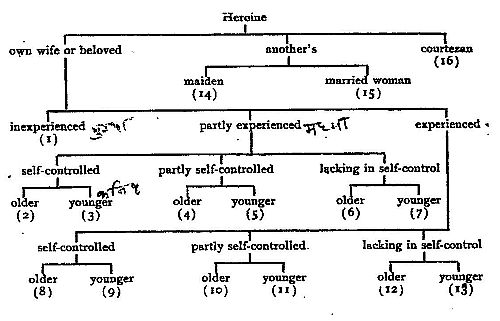
In that context; the physical, natural, involuntary graces in women, men, twelve forms of voice expression,  8 varieties of heroines in love (Astavidha Nayikas), general exclusions on the stage are also  discussed.

*

The Chapter 25, in contrast, describes the special (viśea) mode of Citra-abhinaya, in which each movement carries a particular meaning specific to it.

agā-abhinayasyaiva yo viśea kvacit kvacit anukta ucyate citra citrābhinayassmta 25.1

The four types of Abhinaya and its various elements and technique of Samanya-abhinaya (general representation), generally, indicate external objects (bahya) that are commonly seen. But, certain other objects, phenomenon in nature, feelings etc., need special techniques.

Bharata, therefore, says those other internal (abhyantara) more subtle or abstract elements in nature, inner feelings etc., need to be indicated by special (viśea) modes of representations Citra-abhinaya.

The Chapter 25 gives detailed instructions how to represent through gestures the nature and its various elements such as : day, night, air , sun, moon, stars , lightning,  shooting stars, seasons, dust, smoke, hot wind etc. There are also indications how to represent through gestures, the audible and visible objects, sharp objects, ornaments, flowers etc. Instructions are also given how to express emotions such as: happiness, deep and exalted feelings etc., as to indicate the states of mind and responses to sensory experience, such as touching or smelling. The hand-gestures (hastha) in the category of Citra, for instance, are formed with the purpose of simulating the objects or feelings.

For instance; Bharata mentions that to indicate morning and evening; day and night; seasons; extreme darkness; wide expanse of water; directions; planets; stars; and anything that is not fixed ; one can employ the following gestures : two hands raised with Pathaka and Swastika gestures; Urdhva head – looking upward with various eye movements that are appropriate to the context.

uttānau tu karau ktvā svastikau pārśva-sasthitau udvāhitena śirasā tathā urdhva-nirīkaāt 25.2

prabhāta gagana rātri pradoa divasa tathā tūn ghanān vanāntāśca vistīrāśca jalāśayān 25.3 diśo grahān sanakatrān kiñcit svastha ca yadbhavet tasya tva abhinaya kāryo nānā dṛṣṭi samanvita 25.4

*

The Chapter 35 is partly on Taala, or rhythm, but it also touches the subject of Lasya, describing the movements and the music that are required for each of its several varieties.

design2

One of the problems in the study of the Natyashastra is that the subjects therein are not arranged systematically as per an order; but, are scattered. For instance; to understand and get a clear picture of the nature of Nrtta, which is introduced in Chapter 4, we have to go further and refer to Chapters 8 and 9 which analyse the movements of major and minor limbs; and, thereafter refer to Chapters 12, 13 and 4 for gaining an understanding of the scheme of combining the primary movements such as Cari, Mandala, Karana, Angahara etc.

Similarly, Karanas are introduced in Chapter 4; and, Caris in chapter 10.  We have study the Chapters 9, 10 and 11, together, in order to understand the concept and execution of the Karanas.

pindi1

A note on Pindibandhas

The Pindibandhas, group formations and group dances are discussed in Chapter Four. According to Bharata, the Tandava Nrtta, during Purvaranga, iperformed to accompaniment of appropriate songs and drums. And, it is composed of RecakasAngaharas and the Pindibandhas

– (Recakā-Agahārāśca-Piṇḍībandhā tatha -iva ca – NS. 4. 259-61).

The Pindibandhas are thus a form of Nrtta, pure dance movements. According to Bharata, the Pindlbandhas were patterned after the dance (Nrtta) performed by Shiva along with his Ganas and disciples such as Nandi and Bhadramukha.

In the context of a play, the Pindlbandhas were performed during the preliminaries (Purvaranga); that is before the commencement of the play proper. Its object was to please the gods; and, to invoke their blessings. As regards the sequence of occurrence in the Purvaranga, the Pindibandhas followed soon after the exit of the dancer who performed the Pushpanjali (flower offering to gods). The Pindis are then danced, by another set of women, to the accompaniment of songs and instrumental music

–  anyāścā anukrameātha piṇḍī badhnanti yā striya– ॥ 279॥

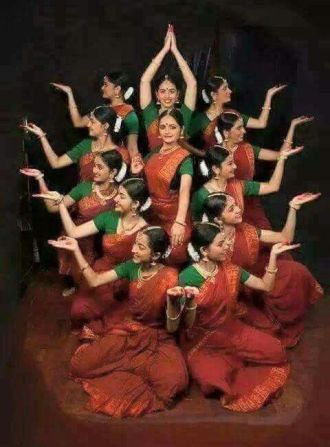
The term Pindibandha is understood as weaving or forming of patterns by  the clusters or groups of dancers. Thus, the Pindibandha is the technique of group formations; and, weaving patterns.  It is said; each variation of a cluster-formation (Pindi) was dedicated to and named after a god or a goddess, who was denoted by the weapons, vehicles, insignia or emblems associated with that deity; and, her/his glory was celebrated through the formation created by the dancers. For instance: Īśvara piṇḍī for Īśvara; Sihavāhinī for Caṇḍikā; Śikhī piṇḍī for Kumar and so on.

Bharata mentions four types of Pindibandhas that were performed during his time: 

  • Pindi (Gulma-lump-like formation); 
  • Latha (entwined creeper or net like formation, where dancers put their arms around each other); 
  • Srinkhalika (chain like formation by holding each other’s hands); and, 
  • Bhedyaka (where the dancers break away from the group and perform individual numbers).

Abhinavagupta describes it as ‘piṇḍī ādhāra agādi saghāta,’- a collection of all those basic elements which make a composite whole. It is called Pindibandha, because it draws in all other aspects; and, ties them together. He also states that Agahāras form the core of the Pindibandhas.

Abhinavagupta explains that in the Pindibandha, the  dancers coming together, can combine in two ways : as  Sajatiya , in which the two dancers would appear as two lotuses from a common stalk;  or as Vijatiya,  in which one dancer will remain in one pose like the swan and the other will be in a different pose to give the effect of lotus with stalk, held by the swan-lady. And, in the gulma-srnkhalika formation, three women would combine; and in the Latha, creeper like formation, four women would combine.

Bharata provides a list of various Pindis in verses 253-258 of Chapter Four. He states that in order to be able to create such auspicious diagrams/formations (citra), in an appropriate manner, the dancers need to undergo systematic training

(śikāyogas tathā caiva prayoktavya prayoktbhi – NS.4.291)

bindi2

In the next Part we shall dwell on the Abhinaya and Angika-abhinaya, in particular, with the descriptions of its various elements such as: Mukhaja (parts of the face); Hastha (the hands, fingers); Pada (feet); Sarira (major limbs, arms, chest, waist, sides, thighs, shanks, etc); Sthana (standing, sitting and laying-down postures); and Gati ( gaits) so on.

pindi6

Continued

In

Part Seven

References and Sources

  1. Movement and Mimesis: The Idea of Dance in the Sanskritic Tradition

 By Dr Mandakranta Bose

  1. Theory and Technique by Dr. Sunil Kothari

ALL PICTURES ARE FROM INTERNET

 
2 Comments

Posted by on October 11, 2018 in Art, Natya


Tags: , , , , , , , , , , , , , , , , , , , , , ,

The texts of the Indian Dance traditions – Part Five

Continued from Part Four

Dance forms of India

ashtalakshmi2 (1)

Uparupakas

Bharata, in his Natyashastra, discussed, in main, the Rupakas, the major forms of the Drama; and, the two genre of Dance formats – Tandava and Sukumara. His concern seemed to be, primarily, with the forms and styles that were dominant in the art-tradition of his time; and, particularly those that had the potential to display various modes of representations and to evoke Rasas. For him, the aspect of Rasa was central to the Drama.

Of the eleven essential elements of the Drama that he names, Rasa is of paramount importance; and deriving that Rasa is the objective of a theatrical performance. The other ten elements – from Bhava to Ranga – are the contributing factors for the production of the Rasa

rasā bhāvā hy abhinayā dharmī vtti pravttaya / siddhi svarā astathātodya gāna ragaś ca sagraha // BhN_6.10 //

Bharata, similarly, even in regard to Dance, described only those dance forms that he considered to be artistically well cultivated; leaving out the regional and popular varieties. In the process, Bharata did not deal with the many peripheral styles.

Rupaka2

The Drama, a Drshya-Kavya, was formally known as Rupaka. Abhinavagupta explains Rupam as that which is seen; and, therefore, the works containing such matter is Rupani or Rupaka-s. And, Dhananjaya in his Dasa-rupaka (ten forms of Drama)  explains :  it is called a Rupaka or a representation, because of the acts put on by the actors (abhinaya)  by assuming (rupakam tat samaropad)  the forms of various characters  such as gods or kings  and men and women. And, it is called a show, because of the fact it is seen (rupam drsyatayocyate). 

Thus, Drama is the reproduction of a situation (Avastha-anikrtir natyam), in a visible form (rupa),  in the person of the actors. Dhanika , in his commentary , explains that the terms Natyam, Rupam and Rupakam can be treated as synonymous.

The Drama was classified into two types : Major (Rupaka) and Minor (Upa-Rupaka).

Under the Rupakas (major types of Drama) , Bharata mentioned ten of its forms (Dasadhaiva). Of the ten, he discussed, in fair detail, only two forms –Nataka and Prakarana. Because, he considered that these two alone fulfilled all those requirements that were necessary for a Rupaka (major type). According to Bharata, these two major forms alone depict varieties of situations, made up of all the four modes or styles (Vrttis) and representations. And, they alone could lend enough scope for display of Rasas (Rasapradhana or Rasabhinaya or vakya-artha-abhinaya). In contrast, the other eight forms of Rupakas deal with limited themes and rather narrow subjects; and, are also incapable of presenting a spectrum of Rasas. 

In the process, Bharata did not also discuss about the minor forms of the drama, the Uparupakas or Natyabhedas. These were a minor class of dramatic works, distinct from the major works; and, did not satisfy all the classic, dramatic requirements prescribed for a Rupaka or Nataka proper. Such minor class of plays (Uparupakas) handled only a segment of a theme or story (Vastu); and, not its full extent. It did not also, perhaps, employ all the four Abhinayas, in their entirety.

*

By the time of Abhinavagupta (Ca.11th century), the Dance had diversified into many more forms than were known during the time of Bharata. However, he mentions that even those innovative forms, indeed, continued to be rooted in the basic concepts laid down in the Natyashastra. And, in fact, he often cites idioms of dancing from such new categories, in order to illustrate Bharata’s concepts.

For instance; Abhinavagupta explains the nature of the delicate Sukumara Prayoga and of the gentle Kaisiki Vrtti, with reference to examples taken from Nrtta-kavya or Nrtya-prabandhas or Ragakavyas – musical compositions or narrative plays (classified under Uparupakas) beautified with  the elements of dance and music; and, which could be presented through expressive Abhinaya.

Abhinavagupta remarks; though the concept of minor dramas is absent in the Natyashastra, it is those minor classes of plays – Uparupakas, par excellence – in their varied forms, adorned with rich, melodious music, as also with graceful and delicate dance movements, which grew into becoming the main stay of the contemporary dance- scene.

Thus, Abhinavagupta, in his commentary, did mention the Upa-rupakas; but, he did neither define its essentials nor did he explain its features. He merely called them as Nrtta-kavya and Raga-kavya; meaning, the type of plays that are rendered through song, dance and interpreted through Abhinaya. In that context, Abhinavagupta mentions some plays of Uparupaka variety. He names them as: Dombika, Bhana, Prasthana, Sidgaka, Bhinika, Ramakrida, Hallisaka, Sattaka and Rasaka. These minor dramatic works were of the nature of dance-drama, where the elements of music and dance were dominant.  But, Abhinavagupta had not discussed about those musical varieties.

[Though the Natyashastra had not specified  the varieties of Uparupakas, in the later times their numbers varied according to the whim of each author. For instance; Abhinavagupta refers to nine types of Uparupakas; Dhanika mentions seven types as being Natya-bheda (varieties of dance forms) ; Sahityadarpana mentions eighteen types; Natyadarpana recognizes only thirteen of these eighteen types, because they were said to be the only ones that were mentioned by the Vruddhas (the elders) or Chirantanas (ancient ones) ; Raja Bhoja refers to twelve types; but, the largest number seems to have been listed in Bhavaprakasana , which mentions as many as twenty Uparupakas , including Natika, Prakaranika, Sattaka, Trotaka etc., which are almost as good as the Nataka .

The fact that there was no unanimity among various authors either in the numbers or in the definition of the Uparupakas, merely suggests that this from of Rupaka was evolving all the time; improving; and, continuously  undergoing changes and modifications in their nature and form, aiming to attain a near-perfect musical dance format. 

It is explained the prefix ‘Upa’ should not be taken to mean ‘minor’ ; but, it should be understood as referring to the types that are ‘very near’ to the Rupakas, but, having a preponderance of dance and music.]

Uparupaka

Perhaps, the earliest reference to Uparupaka occurs in the Kama-sutras of Vatsyayana (earlier to second century BCE), which presents a guide to a virtuous and gracious living. Here, Vatsyayana mentions Uparupaka type of plays, such as Hallisaka, Natyarasaka and Preksanaka, which were watched by men and women of taste.

Rajashekara (8th-9th century) calls his Prakrit play Karpuramanjari, as a Sattaka type of Uparupaka. He explains that the play in question was not a Nataka, but resembled a Natika (a minor form of Drama). It was a single-Act play (ekankika or Javanika); and, it did not contain the usual theatrical scenes such as: the pravesakas (entry-scenes) and viskambhakas (intermediary or connecting scenes). Here, in the Sattaka type of Uparupaka, music and dance were the principal mediums of expression. It is composed in the graceful Kaisiki Vrtti; and, has an abundance of Adbhuta Rasa (wonder and amazement). Even a major part of its spoken dialogues (Vachika) was rendered in musical form. And, the story of the play was composed by stringing together series narrative songs.

Bharata had also mentioned that  in a well rendered play, the song, dance,  action and. word follow one another in an unbroken flow; presenting a seamless spectacle as if there is neither an end nor a beginning , just as wheel of fire  (Alata chakra).

eva gāna ca vādya ca nāya ca vividhā aśrayam / alāta-cakra pratima kartavyayayoktbhi // BhN_28.7 //

That, in a way, sums up the characteristic nature of the dance-drama type of Uparupakas. Here, the stylized Natya-dharmi mode of depiction is dominant. And, even when Vachikabinaya is used, the emphasis is more on the Abhinaya rendered through gestures to the accompaniment of song and music; than on speech.

Such Uparupakas, while narrating an episode or a story, did use the elements of the Nrtta (abstract dance movements) along with the Abhinaya of the Nrtya. They were, thus, a specific form of Natya–  (Natyabheda) . They also provided ample scope for display of Bhavas and for evoking Rasa.

[ As Dr. Sunil Kothari observes in his research paper :

The technical distinction which Natyashastra makes between Rupakas and Uparupakas is that while the former presents a full profile of a Rasa with other Rasas as its accessories.  Further, in the Rupaka a full story was presented through all the dramatic requirements and resources fully employed. But in the Uparupaka only a fragment was depicted. And, even when a full theme was handled all the complements of the stage were not present; the Uparupaka lacked one or  the other or more of the four Abhinayas; thus, minimizing the scope for naturalistic features Lokadharmi and resorting increasingly to the resources of Natyadharmi.

Whereas this is true of several other forms of Uparupakas, it is not true of the dance-drama forms. They used all the elements of the Abhinayas; and,also  provided scope for display of Bhavas and for evoking Rasa.]

madhubani

Coming together of the Marga and Desi traditions

By about the twelfth century, the classic Sanskrit Drama, in its major format, the Nataka, began to gradually decline. And, over a period, it almost faded away.

Though the Sanskrit theatrical tradition was tapering out, it did continue in the forms of minor or one-act plays – Uparupakas – mainly in regional languages, with a major input of dance and songs; but, with just an adequate stress on Abhinaya (acting) and Sahitya (script). These forms of dance-dramas were gaining ground.

The texts of the later period commenting on Natya and Alankara-shastra (poetics) could hardly afford to ignore the Uparupakas which were steadily gaining popularity. And, many scholars did formally recognize the Uparupaka class of dramatic works; codified their features; and assigned them a place within the framework of theory , as Nrtya-prabandhas.

By about the twelfth century, the differences as also the relationship between the Nrtta (pure dance) and Nrtya (Nrtta with Abhinaya) were clearly established. And, those dance formats, in combination with music, were suitably applied and integrated into the performance of the dance dramas.

Among the authors of the later period, Raja Bhoja ((10-11th century), Saradatanaya (12-13th century) and Vishvanatha (14-15th century) dealt at length with the Uparupakas. Raja Bhoja in his Srngaraprakasa discusses twelve types of Uparupakas; Saradatanaya in his Bhavaprakasa describes twenty-one forms of Uparupakas and also provides a gist of several definitions as given by the previous authorities ; and, Vishvanatha in his Sahityadarpana discusses in detail eighteen types of Uparupakas, with examples

For a detailed discussion on  the types of Uparupakas: please click here. And, go to pages 189 and onward for descriptions of those forms.

fine-arts1

Such staged dramatic texts (Nrtta-kavya or Raga-kavya), narrating a story, composed of songs, set to music with instrumental accompaniment; and, choreographed with dance movements, came to be known by different names such as: Natyabheda (in Avaloka of Dhanika); Geyarupaka (in Kavyanusasana of Hemacandra): Nrtyarupakas or, simply as the ‘other plays’ anyani rupakani (as by Ramacandra and Gunacandra), in which music and dance dominate.

The period between the eleventh and the fifteenth centuries was a very highly significant phase in the evolution and development of Art in its varied dimensions. It was during this period that Dance, as Nrtya, gained recognition as an independent Art-form. And, Dance was no longer treated as a mere adjunct to drama. Similarly, vocal (Gita) and instrumental (Vadya) also began to flourish on their own.

The Dancing in India evolved by assimilating new forms and techniques; and, by moving away from its early dependence on Drama. In the process, it also widened its aesthetic scope beyond decorative grace; and, enlarged its content or repertoire to encompass depiction of emotional narrative themes. Now, the beauty of form walked hand-in-hand with the richness of the lyrics and, with the depth of its emotional content; resulting in the growth of a complex art form.

During the period , which spans the eleventh to the sixteenth century, many excellent works on Dance and music were written; and, new trends in Dancing were set. Now, many texts, exclusively devoted to Dance came into being (Say, Sangitaratnakara of Sarangadeva – Chapter seven;  the Nrtya-ratna-kosa of Maharana Kumbha ; the Nrttaratnavali of Jaya Senapati; Nartananirnaya of Pundarika Vittala).

The texts of this period , though rooted in the principles of Natyashastra, did recognize and discuss Dance-forms and styles whose technique and structure differed from the Marga class described by Bharata- During this period, the emphasis of the texts shifted away from Natyashastra’s Marga tradition ; and, moved towards the styles known , generically, as Desi , regional or improvised.

It was during this period that Uparupakas developed into a common ground where the classical Natya of the Shastra (Marga) met the regional (Desi) forms of Dance of easy movements; allowing more freedom and greater degree of improvisation, within the given framework. It was here that the sophisticated fused with the folk forms.

The noted scholar Dr. Raghavan, therefore, described the Uparupaka as the golden link (svarna-setu) or common ground where the classical met the popular; and, where the sophisticated took the folk forms. It was also here that the folk forms sublimated into classical form.

This period was also marked by the efforts to codify the less acknowledged, but popular forms; and, assign them a place within the framework of theory.

In the process, the theories of Dance adopted the terms and principles that were prevalent in the Kavya, poetics. Those dance forms which adhered to the established regulations and conventions; and, which had a definite structure were termed and classified as Nibaddha. And, those free-flowing dance forms, which were spontaneous, unregulated, unstructured and not bound by any rules, were treated as Anibaddha. Such unfettered dance-forms were not restricted by the requirements of Taala and such other disciplinesand, it did not also need the support of compositions woven with meaningful words (Pada or Sahitya). Sarangadeva defines Anibaddha as that which is not bound or as that which lacks rules (bandha-hinatva).

The Anibaddha also meant allowing the dancer considerable latitude in devising body movements that best suited the aesthetic and emotional content of the theme.; And , it also  made room for enterprise to come up with fresh idioms of expressions.

At the same time, the texts, such as the Sangita-samayasara, the Sangitaratnakara and the Nartananirnaya, suggested body movements as that of  simulating the quiver of a drop of water on a lotus leaf, or the trembling of a flame etc.

Such process of reorganization  and innovation covered not only the well regulated dance forms ; but, it  also  extended even to  the individual and   the group dances like Daṇḍaras, Raslīlā and other folk dances of similar nature, some of which have survived as dramatic group presentations.

Dance_theatre_7

Dr. Mandakranta Bose in her Movement and Mimesis concludes : Our study of technique also shows that present day classical dancing in India is grounded more directly in the tradition recorded in the later dance manuals, especially the Nartananirnaya , than in the older tradition of the Natyashastra. This suggests that those styles which had marginal existence in Bharata’s time not only came to be admitted into the mainstream of dancing, but eventually became the dominant current. The evolutionary process is therefore one of dynamic growth rather than a static survival. Through the comparative analysis of the concepts and technique of dancing the present study attempts to mark the milestones of that process

As Dr. Sunil Kothari also observes in Part One of his research Paper  : the minor forms that were not specifically described by Bharata came into fore during the later periods. And, they have contributed greatly in the evolution of the dance concepts; and, in shaping and enriching the various dance forms, in their distinct regional milieu; as we see in contemporary India.

Dance-Drama

Dance-dramas

Dance and music have always formed an integral part of Sanskrit drama. But, it was the Uparupakas – minor class of drama- based in music and dance movements that eventually gave rise to the now living traditions such as KuchipudiBhagavata-Mela-Natakas, Yaksha-gana and Kuravanji    dance dramas.  Such forms of  Uparupakas  are very attractive formats, with the elements of the music and dance being predominant. And, most of them are based in dances accompanied by soulful songs, interpreting the emotional contents of the song through Abhinaya or gestures.

The Uparupakas also marked the emergence of dance-drama along with the solo exposition as a credible format of Dancing. Since then, dance-drama has come to stay and flourish side by side with the solo dance forms.

*

The key element of the musical dramas was delighting in the spectacle of presentation and the emotions displayed by the characters on display. Their themes were crafted around Raga and Kavya elements, which dealt with the characters, themes, plots, emotional situations rooted mainly in Srngara (lovely and graceful) and Bhakthi (devotion) Rasas. The Uparupakas were, therefore, said to be Bhavatmaka or dependent on emotions.

The Uparupakas were broadly classified according to the dance-situations that were involved and the Rasas, the emotions, they projected. Among the Uparupakas, the Rasaka, Hallisaka, Narttanaka, Chalika and Samyalasya gave importance to Nrtta, the pure dance movements, in their performance. And, Natika, Sattaka, Prakaranika and Trotaka (Totaka) gave prominence to emotional aspects and to Abhinaya.

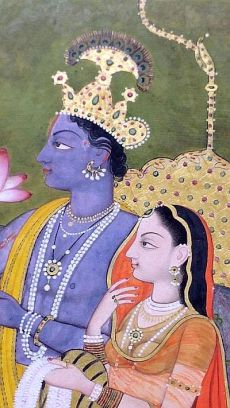
‘The Lovers Radha and Krishna in a Palm Grove’; miniature painting from the ‘Tehri Garhwal’ <i>Gita ­Govinda</i> (Song of the Cowherds), Punjab Hills, kingdom of Kangra or Guler, circa 1775–1780

Gita-Govinda

The most celebrated of the Raga-kavyas, Chitra-kavyas or Nrtya-prabandhas is the Gita-Govinda composed by Sri Jayadeva Goswami (about 1150 A.D), who was a court poet of the King Lakshmana of the Bengal region (12th century). It is the most renowned and the best loved among all the Raga-kavyas of the Prabandha class. Gita-Govinda occupies a preeminent position in the history of both the Indian music and dance.

The Gita-Govinda is a Khanda-Kavya, confined to description of some episodes. It comes under the Prabandha class of Kavyas. Jayadeva at the commencement of his Khanda-kavya states that he is composing a Prabandha Kavya (Etam karoti Jayadeva kavih prabandham). The Ashtapadi (eight footed) is a  Dvi-dhatu  Prabandha,  i.e. consisting two sections (Dhatu):  Udgraha and Dhruva.

from the Gita Govinda

This sublime Sringara-mahakavya, lovingly describes the emotive sports of Sri Radha, the Mahabhava – highly idealized personification Love and Beauty; and, Krishna the eternal lover (Sri Radha-Krishna-Lila).

Gita Govinda is the most enchanting collection of twelve chapters (Sarga). And, each Sarga commences with soulful a Sloka followed by one or two songs arranged in couplets. These songs are known as Giti, Prabandha or Ashtapadi, since twenty-four of such (but not all) employ eight couplets. Sri Jayadeva himself calls them as sweet and delicate Padavali-s (Madhura komala padavalim).

The Gita Govinda, permeated with intensely devotional and delicate Madhura Bhakthi, was one of the inspirations of Sri Chaitanya Mahaprbhu who was steeped in Krishna-bhakthi; and, it is now the primary text of the Gaudiya Vaishnava School of Bengal.

The popularity enjoyed by Gita Govinda is amazing. Each region and each language of India embraced it to its heart, with love and devotion; adopted it as its own; sang in its own chosen Raga; and, interpreted it in its own dance form.

The Gita Govinda also served as an inspiration or as a model for creation of dance-dramas, elaborating on parallel themes, in different parts of the country, in different languages. For instance; the dance sequences composed in the traditions of Kuchipudi of Andhra; the compositions of Sri Sankaradeva of Assam; Umapati of Bihar; Bhagavata Mela Natakas of the South; Yaksaganas of Karnataka ; and, Krsnattam and Kathakali of the Malayalam areas – were all inspired by the Gita-Govinda.

icx064 (1)

Nauka Charitam

And, Sri Thyagaraja (1767- 1847) is said to have composed three musical dramas  (Geya-Nataka). Of these, only two namely: Prahlada-Bhakti-Vijayam and Nauka Charitam are available. But, the third – Sita Rama Vijayam – is sadly lost.

Nauka Charitam, mostly a product of Sri Thyagaraja’s imagination, improvising on an incident briefly mentioned in Srimad Bhagavatam, comprises twenty-one Daru songs set in thirteen Ragas (some of which follow folk tunes) . Its theme extols the virtue of absolute surrender to the Lord with Love and devotion. Nauka Charitam lends itself beautifully well for production of a Dance-drama.

Dances

Regional Dance forms

By about the sixteenth century, the Nrtya-prabandhas, set free from the confines of the Drama, began to flourish and to evolve further, by assimilating new forms, more creative modes of expression and techniques. In the process, their aesthetic scope grew beyond mere decorative postures. They refined their skills to communicate the emotive content of the lyrics, more effectively. Beauty of form was blended with meaningful expressions (Abhinaya). The Uparupakas having developed into a complex Dance-form came to occupy a central position within the contemporary world of Art.

Even in this format, the dance element continued to be divided into Nrtta and Natya on the one hand; and, into Tandava and Lasya on the other. Another significant factor was that even though the Dance was mainly based in the theoretical principles of the Natyashastra; yet, in practice, it inculcated styles and techniques that were peculiar to each region. In each of those regions, the Dance practitioners also developed their own local vocabulary. These gave rise to distinctive dance forms and technical terms.

Each of such derivative forms formulated a tradition of its own; such as Kathak, Odissi, Manipuri, and Kuchipudi and so on. And, each of those eminent dance forms rooted in its own regional and cultural background; anchored in its own philosophy and outlook, developed its own idioms of expressions.

There are also certain factors that are common to all those diverse types of dance forms. These, in brief, are :

:- the prominence accorded to the narration of the theme; 

:- the dominance of Natya-dharmi;

:- performing to  the appropriate music, Laya (tempo) and Taala (time-units, beats) ;

:- employment of all the four Abhinayas in varying degrees, in an appropriate manner ;

:- in making a distinction between the  Nrtta and the Nrtya, and maintaining their distinctive features while executing  the respective elements in the performance;

:- taking care to see that the Nrtta aspect, particularly the individual dance movements and postures, are  governed by the special techniques developed by each school of Dance; and,

:- recognition of both the  Ekaharya (solo – where a single dancer enacts the role of several characters) and Anekaharya (where several actors participate  to enact their respective role)  modes of presentation.

Yet, these Dance-forms have successfully retained their identity; and, have carried it forward to the present time.

kathak4

Kathak

As regards Kathak, its history as a performing art has to be viewed in the larger context of the history of the Dance forms of the North India. Kathak, in its earlier form had a long association with temple-dance. But, with the advent of Mughal rule; and with the influence it exerted on Indian life and culture, Kathak dance was remodeled into a different form.

For instance; it is said, by the time of Akbar (16th century), the Persian art and music had vastly influenced the cultural life of India, particularly the milieu surrounding the Mughal court. According to Pundarika Vitthala (Nartana-nirnaya), who had the opportunity to watch, appreciate and enjoy excellent presentations of the Persian oriented dance and music, the restructured Dance form of Kathak, was born out of the fusion of classical Natya with the dance of the Yavanas, (meaning, the Persians), which took place in the context of the cultural life of the Mughal inner court, during the time of Akbar.

Kathak, in its early period, had not only a special, unique manner of dancing, with its own phrases of Nrtta and Abhinaya; but it also had its own distinct structure of performance and philosophy. But, During the Mughal period, it became a source of recreation for those seeking escape from the day-to-day annoyances. Its purpose, then, was to provide sheer pleasure, entertainment and amusement. Thus with the advent of the Mughal rule there was a definite shift in its content as also in its emphasis. And, the elements of devotion, worship etc., that were there in its traditional form went into background. It acquired the epithet of Nautch.

Thereafter, with the fall of the Mughals, Kathak, somehow, managed to survive by shaping itself into a fine expression of a dance form aiming to please its newly acquired patrons, the rulers of small native states. It then branched into Gharanas named after the court that supported it ; like Lucknow Gharana , Jaipur GharanaRampur Gharana etc. (For more, please do refer to Kathak, Indian Classical Dance Art by Sunil Kothari )

*

Kathak , which follows Nartanasarvasva , has a unique feature of taal-prastuti (a systematic elaboration of a time-cycle of a chosen number of beats) that is not found in any other classical Indian dance-forms. It has also a distinct way of presenting the syllables and Bols used in the text of the songs. The variations of these Dance-forms are also recognized by their nature, even in case their style is classical, folk, or modern.

And since the post-Independence days, happily, the classical Kathak is rediscovering itself. It is liberated from the confines of the past feudalistic court associations. The framework and outlook of the present-day classical Kathak is chaste – aesthetically and spiritually.

**

Katarzyna Skiba (Jagiellonian University, Kraków) in her paper:  Cultural Geography of Kathak Dance, writes, among other things:

Kathak is commonly described as elegant, graceful, rhythmical and relatively naturalistic dance, associated with Vaishnavism, but also impacted by Mughal Court. The two leading Kathak Gharānās seem to represent the modalities of the showcased national features:  Rajput’s’ valor and Mughal’s finesse.

Artists and critics tend to talk about Nazākat (Ur. “delicacy”) and khūbsūratī (Ur. “beauty”) as essential characteristic of Kathak, emerging from Lakhnavi culture and Mughal court etiquette.

Jaipur style is considered as more vigorous, fast and focused on technical excellence: its exponents are praised for their speed, agility, or ability to render a series of multiple fast turns (Chakkars). Mythological stories are provided mainly through the medium of Kavitts and Tukās—short compositions consisting of semi-abstract, rhythmical melo-recitation.

Here, Kathak is primarily associated with the Braj region; hence the traditional repertoire is dominated by Krishna-Lila themes (set in Braj-Bhoomi); and, often illustrated through the songs, or melo-recitations in Braj-bhāā

In comparison, Lucknow masters pay more attention to the depiction of feelings (bhāv) through gestures and mime. The dance is often slower, subtle, sensual, limited in demonstration of footwork and focused on presenting a story. The dancers primarily elaborate lyrical compositions (Thumris and Gazals), improvising on their content and filling their performance with emotional depth

*

As Kathak expands on global stages and in schools, its exposure causes the influx of Western ideas and practices into the tradition, that together with performers overflow into the Indian market. Therefore, the young generation of Kathak dancers transgress the borders of tradition in various ways and redefine its parameters, in an attempt to find their own place in the increasingly transcultural community of dance professionals

The author considers the impact of regional culture, economic conditions as important factors in reshaping Kathak art and influencing practice and systems of knowledge transmission. ]

***

Odissi

Odissi

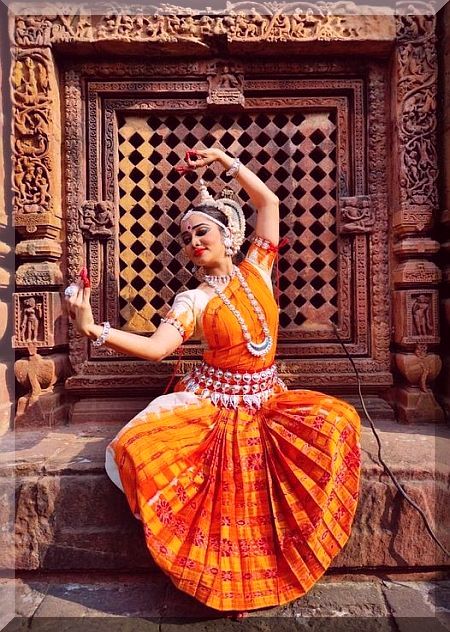
In contrast; the classic Odissi was, essentially, a temple-dance, enacting a devotional poem. It is steeped in devotion; and, in the concepts of spirituality of the Vaishnava tradition. It is performed as a way of submitting ones service (seva) to Lord Jagannath. Odissi is a lyrical form of dance with subtlety as its keynote. It is known for its fluidity and grace. Its sculpture-like poses are executed with harmony of line and movement. Odissi has developed its own vocabulary of foot positions, head movements, eye movements, body positions, hand gestures, rhythmic footwork, turns and spins.

Odissi, again, is based in the principles of the Natyashastra. It also follows other texts such as Abhinaya Chandrika of Mahesvara Mahapatra and Abhinaya Darpana of Nandlkesvara. Dr. Mandakranta Bose opines that the techniques of Odissi are also derived from the Nartananirnaya of Pundarika Vittala.

The Odissi also observes the traditional formats of Nrtta, Nrtya and Natya, in their distinct forms.

The initial items, following soon after the invocation , the Mangalacharana, and Pushpanjali, are in the fast-paced, rhythmic pure dance movements of Nrtta class, known as Battu or Battu Nrtta. That is followed by Pallavi rendering in varied tempos.

The Nrtya segment of the Odissi is more elaborate. It consists narration of a theme; the interpretation of the words and sentences of the lyrics of the song; illustrating with grace Abhinaya articulated through elegant Bhavas, gestures and facial and eye expressions. Odissi is renowned for fluid, eloquent and gracefully charming movements and postures. The songs of Nrtya are, generally, in adoration of Vishnu, as Lord Jagannath. Apart from that, the Astapadis selected from Jayadeva Kavi’s Gita Govinda are the most popular numbers in it’s Nrtya repertoire. These soulful dance recitals celebrate the divine Love of Sri Radha and the eternal Lover Sri Krishna.

The Natya segment of a Odissi performance relates narration of a theme selected from the mythology, epic or a celebrated Kavya.

Kuchipudi

Kuchipudi

Similarly, Kuchipudi, the dance-drama  of the coastal Andhra Pradesh, is regarded as a religious art of the Vaishnava tradition, devoted to Lord Krishna (Bhama kalapam), where the dancer-actor narrates a story, conveying a spiritual message through expressive gestures, graceful body-movements and rhythmic footwork. In fact, a Kuchipudi performance commences with the recitation of the auspicious slokas extracted from Vedic texts; consecration of the stage with sprinkling of holy water (punyavachana); and , offering Puja to the Ranga Adidevata , the chief deity on the stage. That is followed by dance-offering to Ganapathi; prayers submitted to Goddess Tripurasundari, and to the Guru; and Naandi-stotra by the Sutradhara, the stage manager. The Kuchipudi Natyam is usually performed by a group or in some cases by a solo dancer who enacts, through dance movements, the roles of several characters.  The performance concludes with Mangalam, the benedictory verses; and, offering Aarati to gods.

The repertoire of Kuchipudi also follows three performance categories of dance forms; namely, Nrtta (Nrutham), Nrtya (Nruthiyam) and Natya (Natyam).  Here, ‘Nrtta’ is a technical performance where the dancer presents pure dance movements with stress on speed, form, pattern, range and rhythmic aspects without interpretive aspects. In ‘Nrtya’ the dancer-actor communicates a story, spiritual themes particularly on Lord Krishna through expressive gestures and slower body movements harmonized with musical notes thus engrossing the audience with the emotions and themes of the act. ‘Natyam’ is usually performed by a group or in some cases by a solo dancer who maintains certain body movements for specific characters of the play which is communicated through dance-acting.

(For more, please check Indian Classical Dances : Kuchipudi Dance)

manipuri4

Manipuri

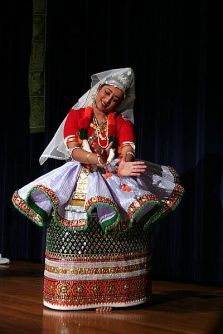
Manipuri , of Eastern India, is a classical dance form narrating themes rooted in the Vaishnava Bhakthi tradition, depicting the Love between Sri Radha and Lord Krishna  , mainly through the re-enactment of the sublime  ‘Raas Lila’. It is also fused with the pre-Vaishnava tradition of Lai Haraoba and Thang-ta, which add variety and vibrancy to its repertoire of movements. Here, again, dance and music are interwoven with rituals and religious practices.

It is said; the repertoire and basic play of this dance form revolves around different seasons. The traditional style of this art form incorporates graceful, gentle and lyrical movements. The fundamental dance movement of Raas dances of Manipur is Chari or Chali.

Manipuri dances are performed thrice in autumn from August to November; and, once in spring sometime around March-April, all on full moon nights. While Vasanta Raas is scheduled in spring when Holi, the festival of colours is celebrated, the other dances are scheduled around post-harvest festivals like Diwali.

The themes of the songs and plays comprise of Love and association of Radha and Krishna in company of the Gopis namely, Sudevi, Rangadevi, Lalita, Indurekha, Tungavidya, Vishakha, Champaklata and Chitra. One composition and dance sequence is dedicated for each of the Gopis; while the longest sequence is devoted to Radha and Krishna.

The dance drama is performed through excellent display of expressions, hand gestures and body language. Acrobatic and vigorous dance movements are also displayed by Manipuri dancers in certain plays.

Mohiniattam2

Mohiniattam

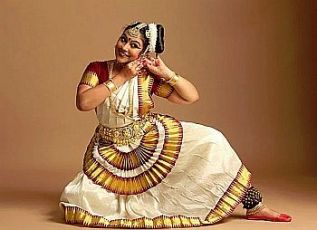
The Mohiniattam, a classical dance form that evolved in Kerala, is said to have been derived from the dance performed by Mohini, a female Avatar of Vishnu. It, again, is a temple-dance; but, with a predominance of graceful and gentle Lasya movements. The Mohiniattam dancers follow- among other manuals – the Balarama -bharatam as their guidebook.

Mohiniattam also comprises all the three elements of Nrtta (pure dance movements); Nrtya (narrating a theme with Abhinaya); and, Natya (enacting a play, usually by a group).

A performance of a Mohiniattam includes sequences commencing with invocation or Cholkettu; and then on to Jatisvaram, Varnam, Padam, Tillana, Shlokam and Saptam. Thus, Mohiniattam is aligned to what came to be known as Bharatanatya.

Its songs are composed with mixture (Manipravala) of Sanskrit and Malayalam words.

Traditionally, Mohiniattam is performed by a single dancer who enacts the roles of the other characters that feature in the lyrics of the song (Ekaharya Abhinaya). Of late, Mohiniattam is also performed as group dance.

dance forms333

Dance forms

All these dance-forms, including Kathak, though they are basically individual performances, they are also enacted as group dances.

What is common to all these classical dances is that their roots are in religion, mythology and devotional stories. Central to these dances is the Nayika, the gentle heroine, who symbolizes the soul of the devotee. The spirit of Bhakthi permeates these dance forms. And, their traditions have been carried forward under the Guru-shishya –parampara, with each generation passing on to the next, with earnestness,  the knowledge, skill and the philosophy of its School.

 *

The Dance forms, such as, Kathak, Odissi or Kuchipudi narrate a story or an episode  chosen from an Epic or mythology. Etymologically, the term Kathak is related to Katha, the art of storytelling. The Western ballet also tells a story. But there are some significant differences between these Dance forms, with regard to their nature and the manners in which they are danced. For example; classical Ballet is performed as a group dance , where different dancers play different roles or characters to build a story. This story is performed as a dance-drama, where various scenes unfold one after the other.

And, another is that unlike in the western dance, the Indian Dances are not set to leaps and gliding movements in the air. It strives to achieve a perfect pose that can be frozen in time. Its technique depends on the skillful management of time (Taala), in order to achieve a series of perfect poses.

In contrast to ballet; the Kathak and other classical dance forms are, traditionally, solo dance-performances. Its dancer enacts all the roles or characters involved in the story (Ekaharya). Here, the story is presented mainly with the help of Abhinaya that involves facial expressions and meaningful hand-gestures. Apart from telling a story, the dancer will have to meticulously follow the rhythmic patterns (Taal) as required by the lyrics and also the sol-fa and other dance syllables rendered in varying speeds (Laya).

Similarly, the Varnams and Padams in the Bharata Natyam are, usually, presented as solo performances.  While presenting the theme of the song that is to be interpreted, the dancer skillfully assumes (Natyadharmi) the role of  several characters (ekaharya) that figure in the lyrics, with appropriate Sancari- bhavas; say, the roles of the Nayika (heroine), her friend/assistant (Sakhi) or of the Nayaka (hero)’. This is achieved through a series of  variations of Angikabhinaya, in which each word of the poetry is interpreted in as many different innovative ways as possible.

*

Another significant point is that the present-day dance forms like Kathak, Odissi etc., are more related to medieval texts like Nartananirnaya than to the ancient manuals. This, in another way, could be taken to mean that certain dance-forms, which were marginalized in the Natyashastra, found a new life and due recognition as one among classical Dances of India. This again emphasizes the dynamic nature of Art, which rejuvenates and re-invents itself all the time.

*

Influence of Nartana-nirnaya

Now, as regards the historical significance of Nartana-nirnaya; many scholars, after a deep study of the text, have observed that there is enough evidence to conclude that the text marks the origin of two major styles of India today, namely, Kathak and Odissi. Dr.   Mandakranta Bose, the much respected scholar and authority on the principles and practices of the performing arts of India, also concurs that such connection seems highly plausible. The text was part of the same cultural world of the Mughal court that nurtured Kathak.

Dr. Bose, in her work, Movement and Mimesis: the Idea of Dance in the Sanskritic Tradition , points out that several technical terms used in Nartana-nirnaya match those used in Kathak today. And she goes on to say:

When we look closely at the technique of the dance described under the Anibandha category, we begin to see certain striking similarities with the technique of Kathak. One cannot say that the style described in the Nartana-nirnaya matches Kathak in every detail.  But one may certainly view that style as the precursor to Kathak; but the descriptions and the similarities in their techniques clearly show it to be the same as what we know today as Kathak.

The Nartana-nirnaya seems, thus, to be the proper textual source for Kathak. This claim becomes stronger still on examining points of technique.

*

As regards Odissi, Dr. Bose observes :

The Bandha-nrtta as practiced in the Odissi style is very similar to the descriptions given in the Nartana-nirnaya.And, the basic standing postures prescribed in the Odissi style: Chauka and Tribhangi are the two main basic stances in Odissi. Chauka is a stable-wide stance, with weight of the body distributed equally on both the sides; and, the heels facing the centre. It is said to be a masculine posture. Tribanghi, is a graceful feminine posture, with the body bent in three-ways). These are comparable to vaisakha-sthana and Agra-tala-sanchara-pada of the Nartana-nirnaya.  Further, some acrobatic postures still in use are: danda-paksam, lalata-tilakam and nisumbhitam (the foot raised up to the level of forehead), and several others are found both in Odissi and in Chau dance of Mayurbhanj region of OrissaFurther, there is in the Nartana-nirnaya, the description of a dance called Batu involving difficult poses; and it is very similar to the Batunrtta, a particularly difficult dance in the repertory of Odissi.

Nayana dutta

Bharatanatya

The School of Nrtya that is prevalent in South India is Bharata-natya. It has gained ground through the efforts of some dedicated stalwarts.

During the period of national movement for attaining India’s independence, there was a revival and resurgence of Dance forms; and re-assertion of its values.

With the advent of the Maestro Uday Shankar; and with the efforts of the aesthetes like Rabindranath Tagore, Poet Vallathol of Kerala ; as also Rukmini Devi and E. Krishna lyer of Kalakshetra at Adyar, the ancient form of dance (Marga), as in Bharata’s  Natyashastra, was re-established, by renaming it as Bharata-Natyam.

Along with that, the other classical dance forms like, Kathak, Odissi, Mohiniattam and Manipuri were also revived.

fine-arts3

Dance – Today and Tomorrow

Till about the 18th Century, the temple; its architecture; and, the Dance were closely related. Up till that period, the association between architecture and dance culture was quite explicit. But, during the present-day, particularly in the modern temple architecture, the link between temple-layout and Dance has virtually snapped. The temples designed and constructed during the recent times hardly provide for a Ranga-mantapa; perhaps because , it is deemed either needless or out-of-place.

Unfortunately, this  resulted in a break in the continuity and, in the evolution of dance and its requisite architecture.

Now, the Classical Dance-forms, including Bharatanatyam, have since transformed into symbols of Art-Culture; and, are no longer meaningfully associated with either the temple or its architecture. In this aspect, the tradition and modernity have drifted apart.

Temple Architecture 2

Moving from temple to theater was a huge, a gigantic leap. During the last seventy-five years there have been tremendous changes in the arena of Dance, in terms of structure, content, theme, presentation techniques, teaching methods and so on. As it stepped into the open society and reached out to larger numbers of spectators, the well equipped huge auditoriums and theaters having excellent lighting and sound facilities and other means of technical support etc., also came up. With this, the reach of the Art expanded significantly. Now, not merely the well informed connoisseurs, but also the uninitiated audience began to have access to witness and enjoy Art performances. This has  been a very healthy and a robust development.

Up to the early 20th century, the songs to which dances were composed were exclusively those rich in Srngara bhava. In the post-independence India, the dance themes were diversified to depict subjects other than the usual mythological and religious themes and of a heroine pining for her hero.

This shift played an important role in prompting the dancers to re-think and seek new directions in Indian dance and its thematic content. The Dancers with imagination and with the ability to reflect upon the present-day issues, began to experiment; to innovate dance-expressions; to create new movements using space, different levels; and, to develop an impressive array of dance vocabulary.

In India, Dance has always been an activity associated with socially, culturally and ritually sanctioned practices. And, the present period is the age of resurgence of the Indian classical dancing, freed from its past associations. The youth who pursue classical dance are the educated middle class, both in India and elsewhere. Today, Indian dances have crossed national borders; and, the exponents of Dancing in the Indian Diaspora have been  extending their dance horizons,  wherever they are.

In today’s world, the classical dance is an icon of high-art. It is also the representation of India’s preserved history, tradition and culture. It is a part of understanding our cultural heritage. The classical Dance as a specialized performing art draws fewer males than females. It, somehow, is essentially the domain of the females . It is, therefore, the women who, mostly, have carried forward this form of traditional art.

*

Dr. Kavitha Jaya Krishnan in her Doctoral Thesis “Dancing Architecture: The parallel evolution of Bharatanatyam and South Indian Architecture” (2011)– writes : 

The shift from Gurukulas, to sampradaya patronage, to today’s global accessibility of the dance leaves the dance without an overseeing central body or alternatively with numerous institutions claiming authenticity. While this fragmentation affords the dance the opportunity for stylistic versatility and innovation, it also needs to address issues of artistic continuity and quality of teaching and performance.

The selectivity of 19th and 20th century artists revived a floundering dance tradition, but in the process, created a significant break in the narrative of the dance. Its alignment with a western notion of ‘neo-classicism’ aesthetic bears heavily on choreography and design, challenging Indian artists to maintain an important cultural identity across artistic, religious, political and geographic boundaries.

Bharatanatyam has developed into an iconographic representation of ‘Indian-ness’, linking and rooting communities and families back to a homeland overseas or back to a local ancestral village. There is an un-questionable interest in the dance as seen through its public popularity and financial investment. Middle-class Indian families happily send their daughters (and sons!) to dance class, considering it an important ‘cultural education’.

There are those however, financially and artistically inclined, who further their dance career professionally and/or academically. Unfortunately, this number remains small. The rich historical context of the dance is easily overlooked in a ‘pay-per-class environment and overly simplifies many controversial issues surrounding affected communities

The result is that now a dancer performs in a cultural void, isolated from the philosophical and religious context that gave her definition as a cultural nexus. The implication however, is not to force every dance student to an in-depth history les-son but a broader vehicle for ‘cultural education’ should be employed .

Bharatanatyam

There is a dichotomy here. Fueled by the cross-currents of theory , practice and the ongoing innovations  in the other  contemporary  fields of art ,  the artist in a zeal  to create one’s  own meaning, restructures and extends her/his little world , in order  to evoke, to fathom, and to effectively represent varied human emotions and experiences.   So long as the power of  such created-language of art is rooted in the basic principles and is within the structure of the classic-tradition, the Indian dance forms such as, the Bharatanatya etc., retain their identity and authenticity.  What is important in such shared aesthetic sensibilities, is retaining a sense of balance between the old and the new, which is continuity while still being rooted in one’s own tradition.

These are interesting and vibrant days for Indian classical Dance in its varied forms. With that, it has to face new challenges; and, has to address itself to new questions. It has to look within to review the techniques, the structural principles and to reassess the internal strength of its traditional forms. And, it has also to look forward and project its future path; to explore new horizons. It has to gain power and strength to carry forward the various Dance forms; and, at the same time have the tenacity to preserve the purity of the essential principles of the classical Dance. It has to find resilient ways to reflect the contemporary progressive values; and, continue to be relevant to the society and the world we live in. And, at the same time, it has to devise safeguards to protect the Art against the dangers of the rampant commercialization, which might affect the standards and the quality of the classical dance forms. It is the shared responsibility of the Gurus, the learners and the art connoisseurs.

And, that , indeed, is a very tall order.

Dance poses

Commencing from the next part, we shall briefly discuss each of the significant texts that defined the nature and practice of Dancing in India. We may, as always, start with Natyashastra; and, thereafter go to other texts, following their chronological order.

Nataraja big

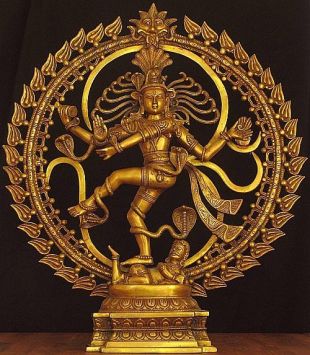
Smt. Sharada Srinivasan , in her research paper Shiva as cosmic dancer” , writes :  The Nataraja bronze in the sanctum at Chidambaram temple, depicting Shiva’s Ananda-Tandava or cosmic dance of creation and destruction, which is also the dance of bliss after annihilating the ego-was a Pallava innovation (seventh to mid-ninth century), rather than of tenth-century Chola period , as widely believed. 

In this form, the four-armed Nataraja exhibits five primordial acts or Pancha-kritya: creation-symbolized by the drum in the rear right hand; protection- by the front right arm; dispelling of ignorance and ego – by trampling the demon Apasmara with his right foot; granting of solace- by the crossed left arm; destruction-by the fire in the rear left arm; while the  encircling ring of fire  symbolizes perpetual cosmic cycles

lotus 44

Continued

In

Part Six

References and sources

All images are from the Internet

 
3 Comments

Posted by on October 4, 2018 in Art, Natya


Tags: , , , , , , , , , , , , , , , , , , , , , , , , , , , , , , , , ,

The texts of the Indian Dance traditions – Part Four

Continued from Part Three

 Nrtta, Natya and Nrtya

B. During the Post- Bharata period

Bharata Natyam

Intro…

The commentators of the middle period (say, around the tenth century and thereafter) interpreted some of the fundamental terms of the Natyashastra in a manner that was considerably different from perhaps what Bharata meant. They also brought in many concepts that were not envisaged by Bharata.

Just to recapitulate:

As per Natyashastra,

: – the Nrtta was pure dance. It was not a subsidiary or an auxiliary to Natya. It was an independent Art-form, which was performed mainly in the Purvaranga, before the commencement of the play proper, as praise offering to gods (Deva-stuti).

: – The Tandava was described as Nrtta (pure dance); and, it was not necessarily aggressive; nor was it performed only by men.

[The Tandava in the Natyashastra did not convey the sense of Uddhata (Vigorous). Further, the Tandava or Nrtta of the Natyashastra was in no way related to what later came to be known as Tandava-nrtta.]

: – The graceful dance (Sukumara-prayoga) with delicate, graceful (Madhura) movements (Angaharas) performed by Devi Parvathi (which Abhinavagupta named as Lasya) was not in contrast to Shiva’s Tandava. It was her own Dance.

[Sukumara-prayoga (or Lasya) did not mean a feminine style of dancing, as was interpreted later. Such distinctions, as between masculine and feminine dances, were not made in the Natyashastra.]

: – During the time of Bharata, there was no clear theoretical division of Dance into Tandava and what, later, came to be known as Lasya. They merely referred to the nature of the physical movements. And, the term Lasya, per se , does not also appear in Natyashastra, though the concept of the element of grace and beauty did exist; and, was named as Sukumara or Madhura.

Shiva performing celestial dance

But, during the Post-Bharata period, especially in the medieval times:

: – Nrtta was classified into Tandava and Lasya types. And, here, Tandava was described as forceful (Uddhata Angaharas), the fast paced furious Tandava Nrtta.

And Tandava Nrtta came to be idealized as an extremely angry and destructive type of dance.

: – Sukumara Prayoga was renamed as Lasya, the soft or delicate (Lalita) form of dance.

: – And, the two, were said to be related to masculine and feminine dancers; saying that Tandava is for men, while Lasya is for women.

[But, the Natyashastra had not made such distinctions. There, the dance movements were guided by mental and emotional states of the character. The principle for classification of dance movements was Guna, the quality and the nature of the feeling of the character (not gender).]

: – Although Bharata created a new and more expressive form of Dance form by combining the dance elements of the Nrtta with the Abhinayas, he had not assigned it a name. He did not also define the newly crafted Art-form.

But, in the later periods, it came to be known and celebrated as Nrtya. (The term Nrtya, as such, does not appear in the Natyashastra, though its conceptual essence was very much there.)

: – Further, certain new concepts which, of course could not have been there during the time of Bharata, also came into the vocabulary of Dance. Now the Dance and its forms came to be classified into categories, such as: Marga (pure or classical) and Desi (regional or improvised); and, as Nibaddha (structured) and Anibaddha (unstructured or free-flowing).

: – Another significant development was the steady drift away from the dance that Bharata talked about. Number of regional elements and techniques entered into the stream. And, that gave rise to many Dance –forms, in different regions of the country; each with its own ethos and techniques of presentation.

*

With this background, let’s take a look the statements made by some authors and commentators of the Post –Bharata period.

dance poses

Nrtta in the medieval period

Abhinavagupta

Abhinavagupta (11th century) in his Abhinavabharati, a detailed commentary on the Natyashastra, brought in many concepts and practices that were not present during the time of Bharata.  He also discussed matters related to the Art of Dancing, keeping in view the practices prevailing during his time.  He also tried to interpret the Natyashastra in the light of his own experience and knowledge; as also according to the principles of his philosophical School.

And, many times, he differed from Bharata. And, in addition, he introduced many new factors. Abhinavagupta provided the details of dance forms that were not mentioned in the Natyasastra. For instance, Abhinavagupta speaks of minor categories of drama (uparupakas), such as nrtta-kavya and raga-kavya – the plays based mainly in dance or in music. The nature of such minor dramas was not specifically  discussed in the  Natyashastra

Abhinavagupta provided his own interpretations to such fundamental terms as Nrtta, Abhinaya etc.

Though Nrtta was later described by Dhananjaya and Dhanika, as one that is bereft of meaning or emotion (Bhava and Rasa) or even of Abhinaya; and, that it can only be a decorative Angikabhinaya element that beautifies the dance presentation (Shobahetu), Abhinavagupta asserted that Nrtta is capable of expressing meaning (Artha). His view prevailed in the subsequent periods.

Further, Abhinavagupta asserted that Nrtta is an integral part of the Drama (Natya). The Nrtta elements can be used both in the Purvaranga (preliminaries before the commencement of the play) and in the sequences within the Drama. He cites some instances where Karanas (the basic units of the Nrtta) are employed.

He mentions: In Bhaṭṭa Nārāyaa’s Veī Samhāra, the actor playing the role of Aśvatthāman enters with the Sūci Viddha (needle-pierced) and Ūrdhvajānu (uplifted foot) Karaas. In Kalidāsa’s Vikramorvaśīyam, the hero Purūravas enters with the Alapallava and Sūci Karaas. Garua enters with Garua-plutam; Rāvaa’s entry is with Vaiśākha Recitam. In Svapna Vāsavadatta, Vatsarāja enters with Sambhrānta karana.

And, certain situations (say, those involving Srngara or Raudra) do need appropriate postures (Karanas) to illustrate the emotional states of the character.

Abhinavagupta’s influence has been profound and pervasive. Succeeding generations of writers on Natya were guided by his concepts and theories of Rasa, Bhava, aesthetics and dramaturgy.

*

Abhinavagupta, in a very elaborate manner, classifies Nrtta into two groups. The First group has three varieties; and, the Second has four. Thus, there are, in all, seven classifications.

In his rather complicated classifications and their protracted explanations of the Nrtta, Abhinavagupta brings in the elements Abhinayas, in its varying degrees.

The Nrtta types in his First Group have no Abhinaya. The Nrttas in the Second Group involve some element of Abhinaya (therefore, are aligned to what could be called as Nrtya). Here, the Abhinaya is classified into two types.

*

Dr. KM Varma in his highly scholarly and very  well researched work ‘Natya, Nrtta and Nrtya: their meaning and relation (pages 17-19) analyzes these seven classifications of Nrtta, in the light of Abhinavagupta’s hypothesis of two types of Abhinaya. And, he builds up the relationships among Nrtta (dance), Gana (song) and Vadya (musical instruments).

*

Abhinavagupta explains Abhinaya , broadly, as a process where the performer brings into his mind the meaning and the sentiment of the words of the song; and, puts it forth through facial expressions, movement of the limbs and such other means.

And, he classifies the Abhinaya into two distinct types.

Of the two types of Abhinayas; in the First one, the performer follows the general trend, without going into details; and, in the Second type, the performer interprets every word and every sentence of the song.

Here, in his classifications of the Nrtta, Abhinavagupta introduces into Nrtta many new factors that were not there earlier. For instance; he brings into the definition of Nrtta the elements of  Artha and Abhinaya (in varying degrees); the variations of Tandava (vigorous) and Lasya (soft) ; the concept of male and female forms of Nrtta ; and Rasas , the sentiments or emotions they express.

Thus, the concept and the content of the Nrtta, as in the Natyashastra, is almost entirely abandoned; thoroughly overhauled; and, given a totally new perspective and disposition.  In short; the Nrtta, here, is far faraway from its ancestor in the Natyashastra.  It is not the same.

[The First Group belongs to the pure Nrtta type ; whereas, the Second Group relates to of what came to be known as Nrtya. Abhinavagupta, in his explanations, did not, however, use the term Nrtya.]

The First Group of Nrtta that Abhinavagupta formulated has the three types: (1) Shudda-Nrtta; (2) Gitakad-abhinayaonmukha –Nrtta; and, (3) Gana-Vadya –Talanusaii Nrtta.

Of these, the First one, Shuddha Nrtta, which consists Angaharas and Recakas, is the sort of Nrtta that is related to the Purvaranga, as in the Natyashastra.

The Second in this Group is Gitakad-abhinayaonmukha- Nrtta. Here, the performer’s physical movements are guided by the general trend or the broad sense of the song. But, she/he does not pay attention to the specific details of the song; such as, the meaning of each words and sentence of the song.

The Third in this Group; the Gana-Vadya –Talanusari Nrtta is similar to the earlier one; but, here the instruments (Vadya), songs (Gitam) and rhythm (Taala) are the leading factors. Here also, the performer follows the general trend of the song without going into its details.

*

The Second Group has four types: (1) Uddhata Nrtta ;(2) Masrana-Nrtta; (3) Misra Uddhata Nrtta; and,(4)  Misar-Masarna Nrtta.

All these four types do require Abhinaya (as in the Nrtya). Here in the Second Group, the Abhinaya, according to Abhinavagupta, is the action of the performer in sending forth (abhi) or  bringing the meaning of the song into his own mind and expressing it through the movement of  limbs , conveying  the sense of every word and every detail of the song or the  composition.

The First type in this Second Group, the Uddhata Nrtta is a furious dance with display of vigorous movements (Tandava) ; it is associated with Veera and Roudra Rasas. This is a masculine type of dance.

The Second type in this Group, Masrana-Nrtta is the softer type of dance (Lasya) aligned with Srngara, Karuna and so on. This is the feminine type of dance

The Third type Misra Uddhata Nrtta, in the main, is same as Uddhata; but, is mixed with the movements of the Masrana (Lasya) variety

And, the Fourth type in the Second Group, Misar- Masarna Nrtta is again a Masarna Nrtta, with emphasis on lighter; but, mixed with some elements of Uddhata

jupiterfig5

Dhananjaya

Dhananjaya perhaps belonged to the same region and to the same period in which Abhinavagupta lived.  By the time of Dhananjaya (Ca. eleventh Century), the meaning and the application of the terms Nrtta, Tandava and Lasya had all changed a great deal. Further, by then, the Natya and Nrtya had taken the center stage.

Dhananjaya, in his Dasarupaka, treats Nrtta, mainly, in its comparison with Nrtya.

Dhananjaya explains Nrtta, as dance, with emphasis on smart looking (shobhahetu) limb-movements, in tune with rhythm and tempo (nrttam tala-laya-asrayam). But, in itself, it is devoid of meaningful content; and, is valued for its mere visual beauty of body movements (gatrasya viksepaha). Nrtta is not an interpretive or expressive dance (though the dancer might perhaps wear pleasant smile on her face).

The Nrtta, according to Dhananjaya, does not also involve the elements of meaning or emotion (Bhava and Rasa) or Abhinaya (Abhinaya-sunya); nor does it evoke a mood or a sentiment (Rasa). It is one of the specific technical elements (Angikabhinaya) that beautify the dance presentation.

[Bharata had used the term Nrtta to denote dancing, in general. But, in the medieval period, the meaning of Nrtta was narrowed down to mean a mere decorative aid. It was just an aspect of the whole body of Dancing.]

As compared to Nrtta, Dhananjaya says, the Nrtya, principally, is the display of various aesthetic moods (Bhava) or emotional states (Bhava-asrayam nrtyam). The Angavikshepa, the throwing of limbs is, however, common to both Nrtta and Nrtya.

But, Nrtya, through its appropriate gestures, facial expressions and limb-movements, gives life and form to the meaning and the sensitivity of the individual words and the sentences of the song (Abhinaya-pada-artha-abhinayatmaka).

[Nandikeshvara (Abhinayadarpana.1-56) similarly distinguished Nrtya from Nrtta, thus: Bhava-abhinaya-hinam tu nrittamitya-abhidhyate;| Rasabhava-vyanjana adi yuktam nrityam ity uchyate]

*

Of these two, the Nrtya having emotional content is classified by Dhananjaya under Marga (the classic or pristine form of dance), a representation of the classic form of dance; while, Nrtta, with its stress, mainly, on rhythm and tempo, is classified under Desi, perhaps representing the popular regional or improvised dance form – (Adyam padartha-abhinayo Margo Desi tatha param).

Under each of these (Nrtya and Nrtta), Dhananjaya, again makes a two-fold division, as: Lasya, the graceful, gentle fluid and pleasing dance; and, Tandava, the vigorous, energetic, brisk and invigorating movements (lasya-tandava-rupena natakad-dyupa-karakam).

These are the dance-types that are performed during the course of the play, depending upon the nature/need of a sequence in the play.

Thus, Tandava, unlike in Natyashastra, is not necessarily a dance performed as a praise-offering to gods, in the Purvaranga, the preliminaries, before the commencement of the play. On the other hand, it is used in the play to depict aggressive tendencies (Uddhata) and their manifestations. Similar is the case with Lasya, the gentle dance (Lalita).

The distinction between Uddhata and Lalita also suggests a difference  between the masculine and feminine modes of expression; because of their physical characteristics, and also because of their association with a male and a female deity. In due course, the term Lasya came to mean a feminine style of dancing, which lends grace to stage actions.

[Following Dhananjaya, Sarangadeva also mentions that Nrtta and Nrtya can both be of two kinds: Tandava and Lasya (SR.7.28). Tandava requires Uddhata (forceful); and, Lasya requires  Lalita (delicate) movements (SR. 7. 29-30). He identifies Tandava as Shiva’s dance; and, Lasya as Parvati’s.]

**

According to Dhananjaya, Natya comprises both Nrtta and Nrtya. It is mentioned; that in Natya, the Nrtya is sometimes useful in expressing the Bhava introduced through the topic (Avantara-padartha), while Nrtta is useful as a beautifying factor that pleases the eye (Shobha-hetuvena)

Dhananjaya explains Natya as an Art-form that is based in Rasa- Natyam rasam-ashrayam (DR.I. 9). It gives expressions to the inner or true meaning of the lyrics through dance gestures – vakyartha-abhinayatmaka.

Thus, Natya delightfully brings together and presents in a very highly expressive, attractive visual and auditory form, the import of the lyrics (sahitya), the nuances of its emotional content to the accompaniment of soulful music and rhythmic patterns (tala-laya), along with attractive postures and stances.

[Later, Pundarika Vittala (sixteenth century), in his work (Nartana-nirnaya), following Sarangadeva, uses the term Nartana, generally, to mean ‘Dance’, Pundarika said that by Nartana he meant it to be a general class-name for Dance. And, the term Nartana would cover the three forms of Dance: NatyaNrtya and Nrtta. The last (Nrtta) would again be subdivided into three other types: visama (acrobatic); vikata (absurd); and, Laghu (light), identified respectively as rope-dancing, a comic dance, and a dance based on easy Karanas.]

**

Dhanika says that Nrtya is Pada-artha-abhinayatmaka; and, Natya is Vakya-artha-abhinayatmaka

It is explained that the terms Pada (word) and Vakya (sentence) should not be taken in their ordinary sense. These have to be seen in relation that the words have with the sentence, of which they are a part.

Here, Pada-artha, word-meanings, is to be taken as Bhavas. And, Vakya-artha is to be understood as Rasa, which is produced by the combination of the Bhavas; just as a sentence is made up of several words.

In other words; the relation between Bhava and Rasa was said to be similar to that which exists between the word and the sentence.   It was said; Vakyartha stands for Rasa, which is similar to the sentence; and, Padartha stands for Bhava, which is similar to the word.

*

Following that, attempts were made to differentiate Nrtya and Natya on the basis of Bhava and Rasa.

In the process, Nrtya was equated with Padartha-abhinaya; and, Natya with Vakhyartha-abhinaya. And, in effect, according to Dhananjaya, it meant that Nrtya is rooted in Bhava (Nrtyam bhavashrayam); and, Natya in the Rasa (Rasashrayam Natyam). Thus, Nrtya is related to Bhava alone; and, Natya is related to Rasa alone.

Even in the later times, the authorities like Vipradasa (Ca. fourteenth century).  Rana Kumbha (fifteenth century) continued to go by the definitions provided by Dhananjaya/Dhanika; but, with slight modifications.

For instance; Rana Kumbha in his Nrtya-ratna-kosa explains Nrtta as made up of combination of Karanas and Angaharas (Karanam angaharani caiva Nrttam); Nrtya as Rasa (Nrtya sabdena ca Rasam punaha); and, Natya as Abhinaya (Natyena abhinayam). The Nrtya is classified as Marga; and, Nrtta as Desi.

**

Thus, according the medieval theories, Nrtta is all about beauty of form perceived by the eye; Nrtya expresses Bhava; and, Natya expresses Rasa.

But, such definitions and their import do not seem to be quite correct, at least in certain vital aspects.

Bhava and Rasa, even according to Bharata are intimately related. As Bharata had said; there cannot be Rasa without Bhavas; and vice versa – Na Bhavahino iti Raso; Na Bhavao Rasavargitah.

Na bhāvahīno’sti Raso; Na Bhāvo rasavarjita parasparaktā siddhi-stayor abhinaye bhavet NS.6.36

Apart from textual references, it is common experience that Rasa, the aesthetic pleasure, is evoked by both the Nrtya and the Natya. And, Bhava and Rasa are essential to both the Nrtya and the Natya.

And, therefore, to say that Nrtya is only about Bhava; and Natya is only about Rasa would be incorrect. The aim of both Nrtya and Natya is to provide Rasa; and, for which Bahavas are essential.  The expressions of Bhava are crucial to all the Art forms; as they contribute to the creation of Rasa enjoyed by the viewers, both in a general and auxiliary way (Samanya-guna-yogena).  Abhinavagupta argued on similar lines (though he did not use the term Nrtya, in particular).

**

And, similarly, Dhananjaya’s views on Nrtta and other issues were criticized by the later scholars.

To start with, it was mentioned that the concepts of the Natyashastra have to be understood in the light of the theoretical principles in which they are based. And, Dhananjaya’s view of Nrtta was restrictive, since it did not take many of its aspects into consideration.

Dismissing Dhananjaya’s classification of Nrtta as Desi, it was argued: the Nrtta as defined by Bharata is a proper art; a pure dance form, where the dancers need to be trained under competent Masters. Nrtta was meant to be performed during the Purvaranga as a prayer offering (Deva stuti). It was dear to gods (atyartham iṣṭa devānā).

Further, it was pointed out that Bharata’s phrase sobham janayati merely suggests that Nrtta is a beautifying factor; and, that does not mean Nrtta is auxiliary to Natya. The Nrtta is  independent, chaste and classical.

Marga, by Dhananjaya’s own definition, is an Art that is created by the Masters; while, Desi is that which is practiced by people of different regions, according to their taste.  And, therefore, to designate Nrtta as Desi is illogical; because, Nrtta  created by Shiva himself; and,  taught by Tandu to  Bharata was in indeed of the Marga class.

It was argued by the  scholars of the later period  that Dhananjaya’s statements do not project a fair view; because: Nrtta, which precedes Natya, in reality, is an art par excellence, which  can suggest meaning and evoke Rasa.

It was, therefore, indicated that it makes more sense to go by the concepts themselves, than be led only by the etymological explanations of the terms.

It was also said that Dhananjaya could have made a distinction between the Nrtta of the Purvaranga; and, the Nrtta type of group dances performed on happy cultural and social occasions. The dancers, here, do not need much training. And, there are also no restrictions with regard either to the mode of its dance or to the place of its performance. Only, such latter type of regional dances could have been classified as the popular Desi; and, not the entire Nrtta, as a class.

*

It was pointed out that Dhananjaya’s interpretation of Tandava as made of vigorous (Uddhata) Angaharas ; and Lasya as made of soft (Sukumara or Madhura) Angaharas , was not in accordance with the tenets of the Natyashastra.

Further, under, the interpretation provided by Dhananjaya, Nrtta was classified depending on the nature of the physical movements. It seemed that vigorous Tandava and soft Lasya were related to masculine and feminine dancers, respectively; suggesting that Tandava is for men, while Lasya is for women. But, the Nrtta in the Natyashastra did not envisage such discrimination.

Again, such an interpretation also suggests a distinction and between masculine and feminine modes of expression. And, that led to mistaking the term Lasya to mean a feminine style of dancing, which lends grace to stage actions.

It was argued that the dissimilarity of vigorous or soft is purely relative.  And, they are mere assumptions. It doesn’t make much sense to insist that women should be soft and gentle, even when they are angry or furious; and, men should be aggressive even when they are in grief or in love. It is also wrong to state that Lasya should be performed only by women; and Tandava is exclusively for men. The real principle for classification should be Guna, the quality and the nature of the feeling (but, not gender).

*

Next;   Dhananjaya’s  statements asserting that Nrtta is devoid of Bhava and Rasa (Rasa Bhava vihinam tu Nrttam itya abhijayate); and, Nrtta is only a technical element (Angikabhinaya) that helps to smarten the dance presentation; and it lacks the element of Abhinaya (laya tala matrapekso angaviksepo abhinaya sunyayh), were also refuted. And, downgrading Nrtta to an inferior (Adhama) position was also rejected.

Saradatanaya (1175 -1250 AD) in his Bhavaprakasana, disagreed with the views of Dhananjaya; and asserted that   Nrtta, the pure dance, is rooted in Rasa (Nrttam rasa-ahrayam). Saradatanaya’s definition meant that Nrtta not only beautifies a presentation, but is also capable of generating Rasa.

Further, Abhinavagupta, while dealing with Karanas, which are the basic units of Dance and classified under the Nrtta, emphasized that Karanas are capable of suggesting meanings.

Abhinavagupta opined that Kaisiki-vrtti, which is the medium or the style to depict Srngara, essentially requires Nrtta. Because, he says, Nrtta is the source that provides Valana, Vartana and other movements or stances. Further, he says that Nrtta as a beautifying factor helps to fill or cover up the gaps in the physical movements (chidra-chadana); and, to maintain continuity in action (alata-chakra-pratimata). And, therefore, Nrtta, like Nrtya and Natya, is capable of giving forth Rasa, although it is non representational.

Further, the statements such as ‘Nrtta is devoid of Bhava and Rasa’ (rasabhava-vihinam tu Nrttam itya abhijayate) were dismissed as being   rather harsh and unimaginative. That is because; Nrtta is an Art-form that provides the idioms and metaphors of beauty to  Nrtya , Natya and Shilpa.

And, over the centuries, the Karanas of the Nrtta have inspired creation of wondrous sculptures with their visual beauty (Shobha), their distinctive poses and geometrical constructions. And, they do invoke certain admiration and pleasure (Rasa) in the hearts of the viewers. Same thing can be said about the basic dance poses and dynamic postures.

Dancing (Nrtta) and sculpture (Shilpa)   have much in common. They both share same system of measures and proportions in presenting human forms, as symbols capable of evoking states of being (Bhava).

Thus every figure of Indian sculpture is, like every pose and gesture in Indian dancing, highly symbolic; and, each figure has a particular evocative quality. The technique by which the artist can present the soul or the spirit of subject in a visible form, are guided by the same set of principles.

Just as the Indian dancer aims at attaining the perfect pose, the moment of perfect balance(Sama), after a series of movement in time, so too, does the Indian sculptor try to capture the movement of the figure through the perfection of rhythm and line.

The fundamental principles of Tala (measure) and Bhanga (posture) based on the concept of the Sutra (median) and (proportions) in Dance are similar to the ones in sculpture.

Further, the division of the human form into the various Anga and the Upanga in both the arts is made on the basis of the bone structure, the joints of the body rather than on the muscles of the human body:

It is said; indeed, the Nrtta technique can be better understood if one understands the concept of the Sutras and Mana of the Shilpa. .

[As compared to the restricted understanding of Nrtta by the medieval authors, the present-day acceptance and application of Nrtta is more comprehensive and highly useful. In the Bharatanatya and other classical dances of India, Nrtta forms an essential part of the dance performance, its structure; as also, in its training methods. That is because; Nrtta as per Bharata and also Nandikeshvara, is built of wide-ranging varieties of Karanas (Angavikshepa), which are the basic units. These are rooted in well thought out logical principles and geometric forms. And, they do invoke aesthetic pleasure (Rasa). Therefore, Karanas are ingrained into Nrtya.

Karanas are, thus, essential to the Grammar and structure of Nrtya in Bharatanatya and in other forms.  Going further back; Caris , which could be called as well knit ‘steps’ , is an alphabet of the Nrtta as also of  Natya. And, therefore, Nrtta is more relevant today, than it was in the days of Bharata. It has  received a special treatment from the point of view of choreography.]

natya22

Natya

The Natyashastra employs Natya as a generic term, which broadly covers drama, dance and music. Bharata’s Natya could also be understood as drama. And Ntta and other dance elements was one of the constituents that provided elegance to the theatrical presentations. It does not treat dance as a separate category of Art-form.

The Natyashastra (6.10) provides a comprehensive framework of the Natya, in a pellet form, as the harmonious combination (sagraha) of the various essential components that contribute towards the successful production of a play.

He mentions the eleven elements that constitute the Natya (Drama). These are: Rasa (sentiment); Bhava (states); Abhinaya (representation or acting); Dharmi (styles of presentation);Vrtti (styles of depiction); Siddhi (attainment of the purpose); Svara (musical notes); Atodya (orchestra or instrumental music); Gana (songs); and Ranga ( stage) .

Bharata later explains, of the eleven, Rasa is of paramount importance; and deriving that Rasa is the objective of a theatrical performance. The other ten elements – from Bhava to Ranga – are the contributing factors for the production of the Rasa,.

Rasā bhāvā hya abhinayā dharmī vtti pravttaya  siddhi svarās tathā atodyaṃ gāna ragaś ca sagraha  6.10

At another place, Bharata, in a nutshell, provides a sort of definition of Natya, which could be understood as Drama (Rupaka).

Bharata explains: when the experiences of the everyday world, mingled with pleasure and pain both, are conveyed through different Abhinayas such as, speech, gestures, costume, makeup, ornaments etc – (Angika, Sattvika, Vachika, and Aharya Abhinayas) –   it is called Natya. (NS 1.119)

yo’ya  svabhāvo lokasya sukha dukha samanvita  som gādya abhinaya ityopeto nātyam ity abhidhīyate  NS.4. 119

Bharata explained that object of the Natya  was to show men and women the proper way to live, a way in which one could live and behave, so that one might become a still better person.

“A play shows your actions and emotions. Neither gods nor demons are depicted as always good or always evil. Actually, the ways of the world as represented here are not only of the gods but also of yours. It teaches you good advice (upadisati); it gives you enlightenment and also entertainment. It provides peace of mind to those who afflicted with miseries, sorrow, grief or fatigue. There is no art, no knowledge, no yoga, and no action that is not found in Natya.”  (Natya-Shastra 1: 106-07; 112-16)

na tajjñāna na tacchilpa na sā vidyā na sā kalā  nāsau yogo na tatkarma nāye’smin yanna dśyate Ns.1. 116

*

Generally speaking, Bharata not only takes the experience of the individual human beings, but that of the world as a whole; and, considers Natya as the effective means of communicating those experiences. Included in this, are the elements of speech, poetry, music, dance and all those factors that lend beauty and grace to a theatrical performance. For Bharata, Natya is the very epitome of life.

According to Bharata, Natya is the experiences of the world when it is represented on the stage, in order to provide enjoyment and instruction, by means of acts of communication, which a person does not normally employ in the everyday life. The presentation of the play is dominated by the stylized modes of presentation (NatyaDharmi).

In other words, just the fact of one’s experiences in the world, as ordinarily noted or observed during the course of life, is not Natya.  It becomes Natya only when it is communicated through the means of Abhinayas and representation; and, presented on the stage.

The Abhinaya, on the stage, is expressed through Mano-vak-kaya (mind, voice and body), in terms of Sattvika, Vachika and Angika abhinaya-s. These are supported by Aharya (the costumes and stage props), the fourth element. Thus Abhinaya covers not only the movements of face and limbs; but, it also encompasses all the other elements and modes of supportive expressions.

The successful production (Siddhi) of a play  (Natya) enacted on the stage (Ranga) involves various  elements of the components of  the actors’ gestures, actions (bhava) and speech ; bringing forth (abhinaya) their intent (Artha), through the medium of theatrical (Natya-dharmi) and common (Loka-dharmi) practices; in four styles of representations (Vritti-s) in their four regional variations (pravrttis) ; with the aid of  captivating dances and melodious songs  accompanied by instrumental music (svara-gana-adyota).

Such well enacted Abhinayas induce in the minds and hearts of the Sahrudaya the sense (Artha) that is conducive for evoking proper Rasa. Without Abhinaya there is no drama; and, no Natya without representation

Bharata’s definition of Natya covers all these factors; and holds good even in the present day.

[Abhinavagupta also makes a distinction between the world of drama (Nātyadharmī) and the real but ordinary life (Lokadharmī). In the artistic process, where presentations are made with the aid of various kinds of dramatic features such as Abhinayas and synthetic creationswe are moving from the gross  and un-stylized movements of  daily life to more subtle forms of expressions and experiences; we move from individualized experiences to general representations (sadharanikarana) ; and, from multiplicity to unity.]

Abhinavagupta , in the context of Dance, explains Abhinaya as a process , where the performer brings into his mind the meaning and the sentiment of the words of the song; and, puts it forth through facial expressions, movement of the limbs and such other means. And, Abhinaya is the act of communication of an idea, a thought or the phase of an emotion or sentiment that one is experiencing.

 [It is explained that acting, in a sense, means to behave like someone else. And, it is not reality; because, it is not related to the actual life of the person who is acting. But, at the same time, it is not mimicry or imitation. Abhinaya should be understood as the actor’s effort to communicate and to convey the mental and emotional states of the character; and, its experiences. Abhinaya is bringing forth the Artha, the sense of the things, into the minds of the Sahrudayas. ]

abhinaya454

Nrtya

Bharata used the term Nrtta to denote dance; and, the term Nrtya does not appear in the Natyashastra. Abhinavagupta also, adhering to the terminologies of the Natyashastra, avoids using the term Nrtya , as such.  He consistently uses the term Nrtta, while referring to Dance. Similar was the case with the authors earlier to his period. They also had not used the term Nrtya.

Further, in some editions of Natyashastra where the word Nrtya crept in, it is taken as a later insertion (unintended or otherwise) by the manuscript-copier (scribes).

That does not mean that the essence of Dance (with which we are now familiar as Nrtya) did not exist; or, was not yet created in the epoch of Natyashastra.

It only means that the specific term Nrtya was not then in currency.  According to some scholars, the term Nrtta along with Abhinaya covered what we now call Nrtya, as evidenced from some verses of the Abhinavabharati.

According to Abhinavagupta, it was Bharata who designed and created an Art form, which would adorn the Natya, by combining the dance element of the Nrtta and the Abhinayas. But, for some reason, Bharata did not see a need to assign a name to the resultant art form.

And, Bharata, in his characteristic way, puts it as if the suggestion came to him from Shiva, who had advised Brahma the ways to utilize the Nrtta in the Natya. Here, Shiva had said : you can very well communicate (Abhinayasi), by use of Nrtta (made beautiful by Angaharas consisting different Karanas), the things (Artha) out of which the songs are composed; the songs that are sung in the Purvaranga.

mayāpīda smta ntya sandhyākāleu ntyatā nānā karaa sayuktair agahārair vibhūitam4.13 pūrvaraga vidhā vasmistvayā samyak prayojyatām vardhamāna akayogeu gītevāsāriteu ca 4.14 mahāgīteu caivā arthān samyagevā abhineyasi yaścāya pūrvaragastu tvayā śuddha prayojita NS. 4. 15

**

That is to say; on taking the hint from Shiva’s statement, Bharata worked out the details of combining Nrtta with Abhinaya; and, that led to the birth of a new Art form – the Nrtya. The term Abhinaya, here, stands for the act of communication.

Sarangadeva in his Sangitaratnakara, says that by combining the Angikabhinaya of Nrtta with the Abhinayas (Satttvica, Angika, Vachika and Aharya abhinayas) the Nrtya was created – Angikabhinayai reva Bhavaneva vyanakti, yat, tan Nrtyam.

*

The statement that the combination of Nrtta and Abhinaya resulted in Nrtya, at the suggestion of Shiva, was supported by Abhinavagupta through two verses, which he ascribes to Kohala.

The quoted verses say:  In the past, on one evening (Sandhya), Narada was dancing in front of Shiva. And Narada then sang a song celebrating the victory of Shiva over the demon Tripura. And, Shiva, having been pleased with the song, began to dance; enacting (Abhinaya) the theme of the song. Later, Shiva asked Tandu to combine (yojana) the Tandava (meaning, Nrtta) with Abhinaya used in that dance.

Sandhyayam nrtyaha Shamboh bhakty-agre, Naradah pura gaavan Triporonmatham taccita stavata gitake cakra abhinayam pritas tatas Tandum ca so abravit natyokta abhinayenedam vats yojya Tandavam

Shiva’s Nrtta included Karanas and Angaharas. Yet; Shiva said that one can communicate through Nrtta when used in Natya.

Now, what does that mean?   It might perhaps mean that if Nrtta is performed with a given intention, following a method, then it might convey a meaning.

*

Dr. KM Varma in his scholarly and highly analytical work Natya, Nrtta and Nrtya: their meaning and relation’, argues (page 32) that Nrtta came first; then Natya. And later, when Abhinaya was added to Nrtta, the idea of Nrtya emerged.

Thus, he says, Nrtta and Nrtya came into being at the suggestion of Shiva. But, both these forms were propagated by Tandu.

Though Bharata is responsible for the emergence of Nrtya, it did not receive special nomenclature or individual treatment in the Natyashastra. Bharata continued to treat it as Nrtta.

Although it developed to full extent soon after the time of Bharata,  the theoreticians and commentators until about the tenth century continued to follow Bharata; and, avoided using the term Nrtya, though they did describe its essential features, nature and techniques by use of other terms.

But, when the combination of Nrtta and Abhinaya, evolved, developed and prospered as an independent, well recognized, dance form; and, became so popular (prasiddha) , the latter authors could not afford to avoid the term Nrtya. And, Nrtya, eventually, became a part of the Grammar of the Dance.

The hypothetical question since when the term came into popular use is much debated. Many point out that though the term Nrtya was not employed by the commentators of the medieval period, it somehow, was in popular usage as early as in the fifth century.

That argument is supported by the fact that Amarasimha (fifth century), in his lexicon Amarakosa, while defining Nartana, included within its meaning, Nrtya as a synonym:

ṇḍava naanaya lāsya ntya ca nartane (1.7.427). 

That suggests; as early as in the fifth century Nrtya was well known; and, was in common use. And, the lexicographer could not avoid including the term Nrtya in his work. But, it is not clear when it actually acquired its name.

abhinaya555

Sarangadeva explains Nrtya as a means of putting forth different aesthetic moods or bhava (bhavahetu orbhavashraya) or giving expression to individual words of the song through appropriate gestures and/or facial expressions – pada-artha-abhinayatmaka.

The key ingredient in the Nrtya is the elaborate gesture-language, Abhinaya (lit., to bring near; that is, to present before the eyes), the meaning (Artha) and the emotion (Bhava) of the lyrics. It is the harmonious combination of striking poses, eloquent gestures, lucid facial expressions, various glances, and meaningful movements of the hands, fingers and feet.

Though the performance of an Nrtya is tied with the interpretation of a lyric (sahitya) depicting a theme (prasanga), it combines in itself the expressive Abhinaya; and the stances, poses, postures and movements, of the pure Dance (Nrtta).  The Nrtya is regarded as the soul of any Dance-style. The Abhinaya and Nrtta elements it portrays demand the skill, grace and ingenuity of a well trained talented Dancer.

[The Abhinaya Darpana describing the qualities of a good dancer says: A dancer must have the inherent sensibility which can be enhanced by training. Agility, steadiness, sense of line, practice in circular movement, a sharp and steady eye, effortlessness, memory, devotion, clarity of speech, sense of music – these ten are the essential qualities of a dancer.

Javaha Sthiratwam Rekha cha /27/ Bhramari Drishti Shramaha; Medha Shraddha Vacho Geetham; Paatra pranaa Dasa Smruthaha/Ab. Da.28/ ]

3N 

Nrtta, Nrtya and Natya – their mutual relations

Sarangadeva remarks, when you take a broader view, Ntta is not distant from Nrtya; and, both of these are essential to Natya.  Thus, Dance, in both of its aspects (Nrtya and Natya), was a vital presence of Nrtta. All the three are interrelated.

The Āgika abhinaya or physical expressions, in both Nrtya and Natya, includes the  Ntta elements. But, Āgika abhinaya is of greater importance in the Nrtya.

The Nrtta is an integral part of the Nrtya; but, it also has its presence in the Natya. Thus, Nrtta has constructive relations with Nrtya as also with Natya. The three, in some measures, are bound together.

*

Nrtta and Natya

Bharata defines Nrtta and Natya on the basis of their techniques; and, their relevance. And, the two Art-forms were discussed independent of each other.

As between Nrtta and Natya, the former was said to be older. And Nrtta, which earlier was a pure dance performed in the Purvaranga as Deva stuti, later became a part of the Natya. The influence of Nrtta on Natya is more delicate.

Nrtta and Nrtya

And, when the dance elements of the Nrtta were combined with the Abhinayas – with its dance movements interpreting the meaning and sentiments of the words in the lyrics – it was transformed into a most delightful art form – the Nrtya. With this, the dance, in general, came to be known as Nrtya.

Though some texts continued to carry on theoretical discussions on Nrtta (pure dance-like movements) and Nrtya (the dance proper) as if they were two totally distinct dance-idioms; the two, in fact, are very intimately related. And, the defining characteristics (lakhaa) of Nrtta and Nrtya are the same.

But, Pundarika Vitthala, in his Nartana-nirnaya, throughout, uses the terms  Nrtta  and Nrtya  interchangeably, perhaps, because, both those dance forms involved, in some measure, the elements of Abhinaya or interpretative movements conveying a meaning (Artha). He was following the explanations put forth by Abhinavagupta. 

As Dr Kapila Vatsyayan observes, in the contemporary Indian dance scene, with the exploration of geometrical space at floor level and choreographic patterns, the elements of Nrtta, pure dance and Abhinaya, expression-full dance (Nrtya) are close-knit, cohesive.

The Indian classical dance of today, has, over a period, evolved its own Grammar and constructed its own devices. The Nrtta element too has changed greatly from what it meant during the days of Bharata. Its structure and style which are based in different units of Nrtta movements are well adopted into Bharatanatya in the form of Adavus etc.

Thus, in the later periods, particularly in the modern period, Nrtta became an essential ingredient of the Nrtya, in displaying its various stances, postures and movements.

*

Natya and Nrtya

As regards, Natya and Nrtya; the Natya is a deliberate art; and, Nrtya is representational art. The object of both the forms is to provide Rasa.  

[ The Vishnudharmottara also asserts that the  prime objective of Dance performance (Nrtta) is Rasa. There cannot be an enjoyable Dance without Rasa.  For that reason, the experienced dancers should aim to bring out the apt Rasas.

Natyasya-mulam tu Rasa-pradisto / Rasena-hinam  na hi Nrutta asti / tasmat yatnena Rasa-ashrayasya Nruttasya yatnaha purushena karyam / 3.30.28/ ]

The principles which govern the techniques of both the Natya (Sanskrit Drama) and the classical Nrtya are the same. Their ways of stylized modes of presentation (NatyaDharmi); and, the manners of depiction (Vrtti); the techniques of acting (Abhinaya); and, appearances in costumes and make-up (Aharya) are regulated by the same set of principles of the dramaturgy and its stage –presentation.

Even after Nrtya emerged as an independent Art-form, the later writers on the treatise dealing with the Nrtya and its varied forms, (either exclusively or otherwise), adopted the same set of norms and principles that once governed the Natya of the Natyashastra. The techniques of Dance continued to be discussed in terms of the various elements of Dharmis, the Vrittis and Abhinaya as prescribed by Bharata.

The tya-dharmi mode of dance was woven into the play-presentation. The sequences in the Drama were staged through the actors singing, speaking and dancing in their roles. The static and dynamic Ntta karaas were utilized as idioms to portray various emotional states. The Natya , in its production, made use of the  four-fold Dance phrases of body-movements (āgika); speech delivery (vācika); studied involuntary reaction (sāttvika); as also of costumes, make-up and scenery (āhārya).

Thus, in a way of speaking, the two – the Nrtya (Dance proper along with its Nrtta element) and Natya (Sanskrit Drama) – continue to be bound together, in one way or the other.

*

Both Nrtya and Natya make use of all the four kinds of Abhinayas. And, difference between Natya and Nrtya, is in their modes of using the different degrees of the elements of the Abhinayas.

The entire sphere of presentation in an Nrtya is predominated by Natya-dharmi, graceful gesticulations, stylized aesthetic suggestive expressions. There is no attempt to present things as they actually are. And, in the Nrtya that we know, those principles and conventions are being followed, even to this day, in their pristine form.

In Nrtya, its every movement should follow the Laya and Tala. It is said; the Nrtya inherits this quality from the Angika-abhinaya of the Nrtta. The Nrtya involves Gatra-vikshepa ‘throwing’ or movement of the limbs, to dance. And, almost throughout its performance, Nrtya is accompanied by music, the most enchanting of the art forms.

Nrtya is basically Drshya or Prekshya, a spectacle mainly having visual appeal. Though the performer follows the lyrics of the song, she does not actually sing; but, only provides the lip-movement while interpreting its words and sentences.

Many elements of Nrtta and Natya were absorbed into Natya. And, Nrtya, for a period, became a parallel form of Drama. But, in the Natya, the elements of Nrtya are incidental to its dance sequences. Dance as a part of dramaturgy was employed as an ornamental overlay upon a theatrical presentation.

In contrast to the Nrtya, the facial and body movements in Natya are slight or subtle – Kincit-chalana. Here, the speech (Vachika) is dominant; and, therefore, the need for Sattvikabhinaya  and the vrttis (styles of dialouge delivery) is greater, for communicating the mental and emotional states of the characters in the play. Further, unlike in Nrtya, the actors on the stage do actually sing.  Thus, in the Natya, both the visual and the audio are highly essential.

Thus, the Natya or Drama has an advantage over poetry, music and dance. Apart from bringing in the embellishment of spectacular the visual effects (Rupaka or Drishya-kavya), it has the power of music and speech.

*

In the later periods, Natya became rather stagnant; but, the Nrtya made rapid strides. While Natya was fading ; and, losing its universal appeal,  the Nrtya and its forms were evolving and developing swiftly as the most delightful and most engaging Art forms, popular among  all sections of the society.

In the process of its growth, Nrtya widened its scope and content by innovating and assimilating a range of stylistic variations; and, by moving away from its early dependence on Drama. Now, Nrtya is no longer an adjunct or accessory to Natya. It has also widened its aesthetic scope, beyond decorative grace to encompass emotive communication (Rasa) and narrative variations. It has evolved into a full-fledged system, a self-governing complex Art form; and, has established its identity. And, it has continued as highly popular classical dance form.

lasya (1)

Bharatanatya

The School of Nrtya that is prevalent in South India is termed  as  Bharata-natya.

In the initial years, there were debates raising questions concerning the name assigned to this Dance form, which, basically, is Nrtya. Many asked, why should it be called Bharata-natya; and, why not Bharata-nrtya.

In reply; explanations were offered to clarify that the suffix ‘Natya’ also stands for ‘Nrtya’, in its technical sense.  The arguments made out said  that as per the past authorities like Kumbha Rana and Vipradasa (fifteenth century), the term ‘Natya’ could also be used to denote ‘Nrtya’. Later, Pundarika Vittala (sixteenth century), in his work (Nartana-nirnaya), following the lead given by Sarangadeva, said that Nartana, a general class-name for Dance, covered the three forms of Dance: NatyaNrtya and Nrtta. And, much before that Amarasimha, as early as in the fifth century, had equated ‘Natya’, among other terms, with ‘Nrtya’.

But, there are no explanations anywhere as to when and why that equation was arrived at. The only other plausible explanation is that it might have come about by way of popular usage. But, in any case, since this form of dancing was created by Bharata, to name it as Bharatanatya, is truly justifiable.  As per Dr. Ananada Coomaraswamy,’ Indian acting and dancing, is a deliberate art; and, the same word, Natya, covers both those ideas. ‘

Thus, the Nrtya, known now as Bharatanatya is surely a continuation of the form and tradition of the Marga class of dance that was promoted by Bharata; although over the period, some elements have entered into it. Yet; no other School of Nrtya has a closer relationship with Natyashastra than Bharatanatya.

Nataraja 005

The Bharatanatya of today is such a refined form of Dance which has brought within its ambit the formats of Nrtta, Nrtya and Natya. This School of Art can be explained in almost every respect by Bharata’s theories. And, it follows Bharata’s techniques to a large extent.  It also contains the beauty of form as in the Nrtta. It excels in the aesthetic presentation of form and geometrical beauty; and in the richness of in variety of movements as no other dance form does. It has the gentle power of expression to communicate ideas and emotions through Abhinaya, as in Nrtya. It can also present a narrative theme as in Natya, where the dancer enacts the roles of varieties of characters (Ekaharya Abhinaya or Ekaharya Lasyanga)

Depending upon the nature of the dance item that is being presented, its balance in terms of Nrtta, Nrtya and Natya varies. But, in general, the dominant aspect of Bharatanatya is Nrtya.

As regards its practice, Bharatanatya draws upon its tradition persevered and passed on from generation to generation in orally transmitted and highly codified manuals (Shastra). Though it is, essentially, rooted in the principles of Natyashastra, it has also adopted many features and techniques from the regional dance traditions; and, has thus enlarged its repertoire and acquired many dimensions.

Though the emphasis is on the adherence to and to preserving the purity of the tradition; and, its continuation, it also has brought in some innovative techniques and refreshing modes of expression, in tune with the advancing times. These could be called as ‘context-sensitive interactions’

The difference between Bharatanatya and other Dance forms like Kathakali, Manipuri and others is mainly in the use of their Abhinayas and techniques. They all belong to the Nrtya class. Each has its own stylized manner of bringing out the essential meaning of the song. Each is delightful in its own way. The coexistence of multiple streams of Dance forms has surely enriched the Indian Art scene.

[Smt. Tanjore Balasaraswati, also known as T. Balasaraswati (1918-1984), the celebrated exponent of Bharata-natyam, who expanded the performance of this dance form beyond the precincts of the temples where it was traditionally performed; re-established it; and, made it famous in different parts of India and many parts of the world, writes:

The greatest blessing of Bharata-natyam is its ability to control the mind. Most of us are incapable of single-minded contemplation even when actions are abandoned. On the other hand, in Bharata-natyam , actions are not avoided; there is much to do but it is the harmony of various actions that results in the concentration we seek.

The burden of action is forgotten in the pleasant charm of the art. The feet keeping to time, hands expressing gesture, the eye following the hand with expression, the ear listening to the dance master’s music, and the dancer’s own singing-by harmonizing these five elements the mind achieves concentration and attains clarity in the very richness of participation.

The inner feeling of the dancer is the sixth sense which harnesses these five mental and mechanical elements to create the experience and enjoyment of beauty.

It is the spark which gives the dancer her sense of spiritual freedom in the midst of the constraints and discipline of the dance. The yogi achieves serenity through concentration that comes from discipline. The dancer brings together her feet, hands, eyes, ears and singing into a fusion which transforms the serenity of the yogi into a torrent of beauty.

The spectator, who is absorbed in intently watching this, has his mind freed of distractions and feels a great sense of clarity. In their shared involvement, the dancer and the spectator are both released from the weight of worldly life, and experience the divine joy of the art with a sense of total freedom.

To experience this rare rapture, a dancer has only to submit herself willingly to discipline. It will be difficult in the beginning to conform to the demands and discipline of rhythm and melody and to the norms and codes of the tradition. But if she humbly submits to the greatness of this art, soon enough she will find joy in that discipline; and she will realize that discipline makes her free in the joyful realm of the art.]

abhinaya

The way ahead…

Having said that; let me add that Bharatanatya, as an art, is a dynamic process. It needs to be rejuvenating and reinventing itself all the time. And, it should not stagnate. Though its theories are rooted in the Natyashastra of Bharata, in its practice, it derives its curriculum from several other texts. Most of those texts were written before the seventeenth century.  And, that makes it essential for Bharatanatya to innovate and look for newer modes and idioms of expressions; and, also try to move away, at least for a limited extent, from the traditional mythological themes.

All the Art forms that are practiced today cannot be explained only on the basis of Natyashastra; nor is it necessary to do so. Art need not always be confined to Bharata’s techniques. Even in the case of Bharatanatya, the theory as detailed in Natyashastra needs to be studied in the light of the current practices. And, that might, hopefully provide us an insight; and, suggest improved techniques, in order to rationalize and bring it closer to today’s environment.

If the dance forms that are practiced today have to come into their own, these should be explained on a rational basis.  It seems much attention is paid to the literal interpretation of the old texts. And, too much philosophizing is another factor. But, Art has its own philosophy, outlook and appeal; although many try to inject their own pet philosophy into the Arts.

If the Art has to be alive it has to be relevant to the times we live in; and, has to reach further levels of the society.

We are in the age of reconstruction. There are many inevitable problems and issues – old and new-,  including commercialization, that need to be resolved. The ancient theories would not do for all our present needs and problems. A detailed study of present practices without always being tied down to the ancient theoretical works seems advisable.  What is needed is continuity with change. Both the ancient and the modern Art-forms and techniques need to be studied with equal earnestness.

kadagola

In the next part, we shall briefly talk about various classical Dance forms of India, such as Kathak, Odissi, kathakali and Manipuri.

dance forms

Continued

 In

Part Five

References and sources

All images are from the Internet

 
Leave a comment

Posted by on October 1, 2018 in Art, Natya


Tags: , , , , , , , , , , , , , , , , , , , , , , , , , ,

The texts of the Indian Dance traditions – Part One

Natya Sastra (1)

Lakshana-granthas – texts concerning the Performing Arts of India

Some time back – as a part of the series on the Music of India  – I had posted brief profiles of some of the well known texts on Samgita-shastra (Musicology), which established a sound theoretical basis (Lakshana) for the structural framework of the classical Music traditions; and, their practice (Lakshya). Those texts, produced over a long period of time, described, in precise terms, the concepts of   Music; its concerns; how it should be taught, learnt and performed; and, how it should be experienced and enjoyed.  It was an evolutionary process cascading towards greater sophistication.

Those Lakshana-granthas projected their vision of how the Music should develop and prosper in future, at the same time taking care to ensure  retaining the pristine purity of the time-honored tradition. In the process, those texts, produced over the centuries, defined and protected the principles; as also, guided and regulated the performance of the chaste Music of India.

Some friends and readers inquired whether I could write, on similar lines, about the texts concerning the evolution of the principles and techniques of the performing arts of India; and, particularly , about Dance , which  is the most enchanting form of them all; rich in elegance and beauty ; comprehensive; and highly challenging.

Various thinkers and writers of the Lakshana granthas, over a long period, have put forward several theories based on their concept of the essential core, the heart or the soul of the art of Dance (Natyasya Atma).

In the series of articles that are to follow, I have attempted to trace the unfolding of the principles and practice of the performing arts of India, as discussed in various texts spread over several centuries.

In the present installment of the series, let’s take an overview of the texts of the Indian Dancing traditions. In the subsequent parts, we may discuss each of the selected texts, in fair detail.

This may also be treated as a sort of General Introduction to the theories of Indian Dancing.

Shiva dance 2

The Natyashastra

It is customary to commence with Natyashastra, when it comes to any discussion related to the art-forms of India. To start with, we shall, briefly, talk about the text of the Natyashastra, in general; and, then move on to Natyashastra in the context of Dance.

The Natyashastra of Bharata is regarded as the seminal and the earliest text extant text, represents the first stage of Indian arts where the diverse elements of arts, literature, music, dance, stage management and cosmetics etc., combined harmoniously in order to produce an enjoyable play. It is the source book for all art forms of India. The yaśāstra, surely, is a work of great antiquity. Yet; the scholars opine that looking at the way the text has been compiled and structured; it appears to be based on earlier works.

It is said that the text which we know as Natya-Shastra was based on an earlier text that was much larger. That seems very likely; because, the Natyasastra, as we know, which has about 6,000  karikas (verses), is also known as Sat-sahasri. The later authors and commentators (Dhanika, Abhinavagupta and Sarada-tanaya) refer to the text as Sat-sahari; and, its author as Sat-sahasri-kara. But, the text having 6,000 verses is said to be a condensed version of an earlier and larger text having about 12,000 verses (dwadasha-sahasri). It is said; the larger version was known as Natya- agama and the shorter as Natya-shastra.

*

And, again, According to Prof. KM Varma, there were three types of works which preceded the Natyashastra that we know:

  • (1) Sutra – a work on Natya;
  • (2) Bhashya – a commentary on it; and
  • (3) Anuvamsya – a collection of verses , from which Bharata often quotes.

He also points out that Bharata mentions in the Samgraha (the table of contents to Natyashastra) that the subjects to be discussed in the text have reference to what is stated in the Sutra and the Bhashya. That leads to the conclusion that a comprehensive theory of Natya existed much before the time of Bharata; and that he incorporated some of that into his work – the Natyashastra.

*

Further, from what Panini  suggests, it appears  there were texts on Natya even  prior to his time; which means such texts were in existence much  before the Natyashastra.

Panini (Ca.500 BCE) the great Grammarian, in his Astadhyayi (4.3.110-11), mentions two ancient Schools  –  of  Krsava and Silalin – that were in existence during  his time

Parasarya Silalibhyam bhikshu nata-sutreyoh  (4.3.110); karmanda krushas shvadinihi  (4.3.111)

It appears that Parasara, Silalin, karmanda and Krsava were the authors of Bhikshu Sutras and Nata Sutras. Of these, Silalin and Krsava were said to have prepared the Sutras (codes) for the Nata (actors or dancers).

At times, Natyashastra refers to the performers (Nata) as Sailalaka-s. The assumption is that the Silalin-school, at one time, might have been a prominent theatrical tradition. Some scholars opine that the Nata-sutras of Silalin (coming under the Amnaya tradition) might have influenced the preliminary part (Purvanga) of the Natyashastra, with its elements of worship (Puja).

However, in the preface to his great work Natya-shastra of Bharatamuni (Volume I, Second Edition, 1956) Pundit M. Ramakrishna Kavi mentions that in the Natyavarga of Amara-kosha (2.8.1419-20) there is reference to three schools of Nata-sutra-kara: Silalin; Krasava; and, Bharata.

Śailālinas tu śailūā jāyājīvā kśāśvina bharatā   ityapi naāś cāraās tu kuśīlavā

It appears that in the later times,  the former two Schools (Silali and Krasava) , which flourished earlier to Bharata , went out of existence or merged with the School of Bharata; and, nothing much has come down to us  about these older Schools. And, it is also said, the Bharata himself was preceded by Adi-Bharata, the originator and Vriddha (senior) Bharata. And, all the actors, of whatever earlier Schools, later came to be known as Bharata-s.

All these suggest that there were texts on Natya even before the time of Bharata; and, by his time Natya was already a well established Art.

[The ancient texts such as Ramayana, Mahabharata and Satapatha Brahmana, use the term Śailūṣa (शैलूष) – (śilūṣasya apatyam) to refer to an actor, dancer or a performer

– avāpya śailūṣa ivaiṣa bhūmikām  (अवाप्य शैलूष इवैष भूमिकाम्)]

*

The Natyasastra, that we know, is dated around about the second century BCE . The scholars surmise that the text was in circulation for a very long period of time, in its oral form; and, it was reduced to writing several centuries after it was articulated. Until then, the text was preserved and transmitted in oral form.

The written text facilitated its reach to different parts of the country; and, to the neighboring states as well. In the process, each region, where the text became popular, produced its own version of Natyasastra; in its own script. 

For instance, Natyasastra spread to Nepal, Almora to Ujjain, Darbhanga and also to the Southern states. The earliest known manuscripts which come from Nepal were in Newari script. The text also became available in many other scripts – Devanagari, Grantha, and several regional languages. It became rather difficult for the later-day scholars, to evolve criteria for determining the authenticity and purity of the text, particularly with grammatical mistakes and scribes errors that crept in during the protracted process of transliterations.

Therefore, written texts as they have come down to us through manuscripts , merely represent the residual record or an approximation to the original; but, not the exact communication of the oral tradition that originated from Bharata.

It is the general contention that the text of the Natyashastra, as it is available today, was not written at one point of time. Its form, as it has come down to us, includes several additions and alterations. It is also said; many views presented in Natya-Shastra might possibly have been adopted from the works of other scholars. That seems quite likely; because, there are frequent references to other writers and other views; there are repetitions; there are contradictory passages; there are technical terms, which are not supported by the tradition.

And, in regard to Dance, in particular, the Chapter Four (Tandava-lakshanam) is the most important portion, as it details the dance-techniques. The editor of  ya Śāstra, Sri. Ramaswami Sastri, however remarks  that ‘this section of ya Śāstra dealing with Karaas, being of a highly technical nature, was less understood and was rendered more difficult by numerous errors committed by the scribes as well as by the omissions of large portions in the manuscripts’.

Though such additions, deletions and alterations have not been pinpointed precisely, some scholars, particularly Prof. KM Varma, surmise that the verses of a long portion of the Fourth Chapter beginning from Sloka number 274 and ending with the chapter seem to be interpolated.  These verses do not also fit into the context. Abhinavagupta also admits the possibility of their insertions.

Further, Prof. KM Varma also mentions that the portion from the Samanya-abhinaya chapter (Chapter 22) to the beginning of the chapter on Siddhi; as also the portions beginning after the chapter on Avanaddha to the end of the present text, are the later additions.

And, by about the tenth century, two recessions of the yaśāstra were in circulation. One was the longer version; and, the other the shorter. There have been long drawn out debates arguing which of the two is the authentic version. Abhinavagupta in his commentary of the yaśāstra used the shorter recession as the basis of his work; while some authors of the medieval period like Raja Bhoja used the longer version.

However, Pandit Ramakrishna Kavi, who examined as many as about forty Manuscripts of the text, opined that the longer recession seemed to be ancient, although it contains some interpolation. But, in any case, now, both the versions are treated as ‘authentic’; and, are used depending upon the choice of the commentator.

Ramakrishna kavi

( For a note on the Life and Works of Manavalli Ramakrishna Kavi, please click here.)

design

Natyashastra in the context of Dance

Natyashastra was mainly concerned with successful play-production. And, the role of Music and Dance, in conjunction with other components, was primarily to beautify and to heighten the dramatic effects of the acts and scenes in the play. These were treated as enchanting artistic devices that articulate the moods of various theatrical situations in the Drama. The Dance, at that stage, was an ancillary part (Anga) or one of the ingredients that lent elegance and grace to theatrical performance. That is to say; though Music and Dance were very essential to Drama, neither of the two, at that stage, was considered as an independent Art-form.

Further, for a considerable length of time, say up to the middle period, both music and dance were covered by a single term Samgita.  The term Samgita in the early Indian context meant a composite art-form comprising Gita (vocal singing), Vadya (instrumental accompaniments) and Nrtta the limb movement or dance (Gitam, Vadyam, Nrttam Samgita-mucchyate).  The third component of Samgita, viz., Nrtta, involved the use of other two components (Gita and Vadya).

Thus, the term Samgita combined in itself all the different phases of music, including dance. For Dance (Nrtta), just as in the case of vocal (Gita) and instrumental (Vadya) music, the rhythm (Laya) is very vital. The Dance too was regarded as a kind of music. This is analogous to human body where its different limbs function in harmony with the body’s rhythm.

It was said; all the three elements should, ideally, coordinate and perform harmoniously – supporting and strengthening each other with great relish. And, the three Kutapa-s, in combination should suggest a seamless movement like a circle of fire (Alaata chakra); and, should brighten (Ujjvalayati) the stage.

Thus, till about the middle periods, Dance was regarded as a supporting decorative factor; but, not an independent Art form.

Shiva dancing Halebidu

Coming back to Natyashastra, the Dance that it deals in fair detail is, indeed, Nrtta, the pure dance movements – with its Tandava and Sukumara variations – that carry no particular meaning.  The Nrtta was described as pure dancing or limb movements (agavikepa), not associated with any particular emotion, Bhava. And, it was performed during the preliminaries (Purvaranga), before the commencement of the play proper. The Nrtta was meant as a praise offering (Deva-stuti) to the gods.

And, later Bharata did try to combine the pure dance movements of Nrtta (involving poses, gestures, foot-work etc.) with Abhinaya (lit., to bring near, to present before the eyes), to create an expressive dance-form that was adorned with elegant, evocative and graceful body-movements, performed in unison with attractive rhythm and enthralling music, in order to effectively interpret and illustrate the lyrics of a song; and, also to depict the emotional content of a dramatic sequence.

But, for some reason, Bharata did not see the need to assign a name or a title to this newly created amalgam of Nrtta and Abhinaya. (This art-form in the later period came to be celebrated as Nrtya).

Even at this stage, Dance was not an independent art-form; and, it continued to be treated as one of the beautifying factors of the Drama.

Bharata had not discussed, in detail, about Dance; nor had he put forward any theories to explain his concepts about Dance. The reason for that might be, as the scholars explain, Bharata had left that task to his disciple Kohala; asking him to come up with a treatise on dancing, explaining whatever details he could not mention in the Natyashastra. In fact, Bharata, towards the end of his work says: ‘the rest will be done by Kohala through a supplementary treatise’

śeam-uttara-tantrea kohalastu kariyati (NS.37.18.)

But, unfortunately, that work of Kohala did not survive for long. And, by the time of Abhinavagupta (10-11th century), it was already lost.
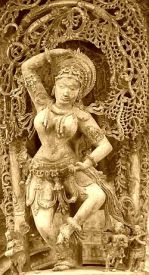
lasya

Texts concerning dance

When it comes to the texts concerning dance , there are certain issues or limiting factors.

There is reason to believe that many works on dancing were written during the period following that of Bharata. But most of those works were lost.

For instance; the ancient writers such as Dattila or Dantila (perhaps belonging to the period just after that of Bharata) and Matanga or Matanga Muni (sixth or the seventh century) who wrote authoritatively on Music, it appears, had also commented on Dance. But again, the verses pertaining to Dance in their works, have not come down to us entirely. Some of those verses have survived as fragments quoted by the commentators of the later periods; say , for example, the references pertaining to Taala and Dance from the Brihaddeshi  of Matanga .

Similarly, between the time of Natyashastra (Ca. 200 BCE) and the Abhinavabharati of Abhinavagupta (10-11th century), several commentaries were said to have been produced on the subject of Drama, Music, Dance and related subjects. Some of such ancient authorities mentioned by Abhinavagupta are:

Kohala, Nandi, Rahula, Dattila, Narada, Matanga, Shandilya, Kirtidhara, Matrigupta, Udbhata, Sri Sanuka, Lottata, Bhattanayaka and his Guru Bhatta Tauta and others.

But, sadly the works of those Masters are lost to us; and, they survive in fragments as cited by the later authors.

Abhinavagupta, states that much of the older traditions had faded out of practice. And he says that one of the reasons, which prompted him to write his work, was to save the tradition from further erosion.

design

Texts on Music etc., which also dealt with Dance

There are not many ancient texts that are particularly devoted to discussions on Dance, its theories and techniques.

In the earlier texts on Dance, the techniques of Dancing are seldom discussed in isolation. It invariably is discussed along with music and literature (Kavya). Similarly, the treatise on sculpture (Shilpa) , Drama(Natya), music (Gitam) and painting (Chitra) , do devote a portion , either to Dance itself or to discuss certain technical elements of these art forms in terms of the technique of Dance (Nrtya or Nrtta).

For instance; the  treatises on painting discuss the Rasa-drsti in terms of the glances (Drsti) of the Natyashastra; and, the  treatises on sculpture enumerate in great detail the Nrtta-murti (dancing aspects) of the various gods and goddesses(prathima-lakshanam) , and discuss the symbolism of the hasta-mudra in terms of the hasta-abhinaya of the Natyashastra.

The Vishnudharmottara emphasizes the inter relation between the various art forms.  Sage Markandeya instructs :

One who does not know the laws of painting (Chitra) can never understand the laws of image-making (Shilpa); and, it is difficult to understand the laws of painting (Chitra) without any knowledge of the technique of dancing (Nrtya); and, that, in turn, is difficult to understand without a thorough knowledge of the laws of instrumental music (vadya); But, the laws of instrumental music cannot be learnt without a deep knowledge of the art of vocal music (gana).

*

Therefore, most of the texts and treatise which dealt with Music, primarily, also talked about dance, in comparatively briefly manner, towards the end. For instance:

[Here, in this portion, I have followed Dr. Mandakranta Bose, as in her very well researched paper (The Evolution of Classical Indian Dance Literature: A Study of the Sanskritic Tradition )  . I gratefully acknowledge her help and guidance.]

(1)  Visnudharmottara Purana (Ca. fifth or sixth century) a   text encyclopedic in nature.  Apart from painting, image-making, Dancing and dramaturgy, it also deals with varied subjects such as astronomy, astrology, politics, war strategies, treatment of diseases etc. The text, which is divided into three khandas (parts), has in all 570 Adhyayas (chapters). It deals with dance, in its third segment – chapters twenty to thirty-four.

The author follows the Natyasastra in describing the abstract dance form, Nrtta; and, in defining its function as one of beautifying a dramatic presentation. The focus of the text is on Nrtta, defining its vital elements such as Karanas, Cari etc., required in dancing. In addition, the author briefly touches upon the Pindibandhas or group dances mentioned by Bharata; and, goes on to describe VrttiPravrtti and Siddhi; that is – the style, the means of application and the nature of competence.

*

(2) The Abhinavabharati of   Abhinavagupta (11th century) though famed as a commentary on Bharata’s Natyasastra, is, for all purposes, an independent treatise on aesthetics in Indian dance, music, poetry, poetics (alakāra-śhāstra), art , Tantra, Pratyabhijnana School of Shaiva Siddanta etc.   Abhinavabharati is considered a landmark work; and is regarded important for the study of Natyasastra.

Abhinavabharati is the oldest commentary available on Natyasastra. All the other previous commentaries are now totally lost. The fact such commentaries once existed came to light only because Abhinavagupta referred to them in his work; and, discussed their views. Further, Abhinavagupta also brought to light and breathed life into ancient and forgotten scholarship of fine rhetoricians Bhamaha, Dandin and Rajashekhara.

Abhinavagupta also drew upon the later authors to explain the application of the rules and principles of Dance. As Prof. Mandakranta Bose observes : One of the most illuminating features of Abhinavagupta’s work is his practice of citing  and drawing upon the older authorities critically , presenting their views to elucidate Bharata’s views ; and , often rejecting their views , putting forth  his own observations to  provide evidence to the contrary.

Abhinavagupta, thus, not only expands on Bharata’s cryptic statements and concepts; but also interprets them in the light of his own experience and knowledge, in the context of the contemporary practices. And, therefore, the importance of Abhinavagupta’s work can hardly be overstated.

He also discusses, in detail, the Rasa-sutra of Bharata in the light of theories Dhvani (aesthetic suggestion) and Abhivyakti (expression). And, Dance is one of the subjects that Abhinavabharati deals with. As regards Dance, Abhinavabharati is particularly known for the explanations it offers on Angikabhinaya and Karanas. The later authors and commentators followed the lead given by Abhinavagupta.

*

(3) The Dasarupaka of Dhananjaya (10-11th century), is a work on dramaturgy; and, basically is a summary or compilation of rules concerning Drama (Rupaka), extracted from the Natyashastra of Bharata. As regards Dance, Dhananjaya, in Book One of his work, which provides lists of definitions, mentions the broad categories of Dance-forms as: the Marga (the pure or pristine); and, the Desi (the regional or improvised). And, under each class, he makes a two-fold division: Lasya, the graceful, gentle and fluid pleasing dance; and, Tandava, the vigorous, energetic and brisk invigorating movements (lasya-tandava-rupena natakad-dyupakarakam) . The rest of his work is devoted to discussion on ten forms of Drama (Dasarupaka)

*

(4) The Srngaraprakasa of Raja Bhoja (10-11th century) is again a work; spread over thirty-six chapters, which deal principally with poetics (Alamkara shastra) and dramaturgy. In so far as Dance is concerned, it is relevant for the discussion carried out in its Eleventh Chapter on minor types of plays (Uparupakas) or musical Dance-dramas.

mandala4

(5) The Natya-darpana of Ramacandra and Gunacandra (twelfth century) is also a treatise, having four chapters, devoted mainly to dramaturgy; discussing characteristics of Drama.

The Natyadarpana   by Ramachandra and Gunachandra, two Jain authors, is an important work in the field of Sanskrit dramaturgy, the science of Drama. The text presents a clear picture of the chief principles of dramaturgy, its critical points and problems.

The Natyadarpana   is composed in two segments: (1) Karika-s (verses); and, (2) Vritti-s (prose).

(1) The Karika-s, in the form of Sutras set to Anustubh Chhandas; give an outline of the topics to be dealt with in the text; and, also define the important principles in a nutshell.

The Karika-s, 207 in number, are spread over Four Chapters (Viveka-s).

The First Chapter, titled Nataka-nirnaya, discusses the nature and the form of Nataka, the most important form of Drama (Rupaka). It enumerates and defines the structures of the Nataka:  Plot (Vastu); the five stages (Avastha) of its depiction: Arambha, Yatna, Praptyasa, Niyatapti and Phalagama. It also details the five alternate stages of plot development – Arthaprakrti (Bija, Bindu etc).Then; it goes on to mention the five junctures – Sandhi-s (Mukha, Prathimukha, Garbha, Avamarsa and Nirvahana);  five Arthopakshepa-s; ( five ways of suggesting to the spectators the scenes and incidents yet to come);  and 64 Sandhyanga elements.

The Second Chapter Prakarana-adya-ekadasa-rupa-nirnaya) discusses the nature and structure of other types of Dramas (Rupakas): Prakarana, Vyayoga, Samavakara, Bhana, Prahasana, Dhima, Utsrstikanka, Ihamrga, and Vithi. In addition, it also discusses the other minor forms of Drama: the Natika and Praranika. Thus, the forms of Drama mentioned here are twelve (as compared to ten enumerated by Dhananjaya).

The Third Chapter (Vrtti-Rasa-Bhava-Abhinaya-Vicara) discusses the details of Theatrical presentations; such as: styles of acting and speaking; portrayal of sentiments; exhibiting the states of being; and, gesticulations (Abhinaya).

The Fourth Chapter (Sarva-Rupaka-Sadharana-Lakshana-Nirnaya) covers general topics and miscellaneous elements of a Theatrical production. These cover topics that are common to all the twelve types of Dramas. These cover issues such as : the desired qualities of the hero and heroine ( of all types) and other characters ; the rules regarding the language and dialogue delivery suitable to each type of character; and the , details of the preliminaries , such as Naandi ( prayers) , Prarochana ( introductions) etc.

*

(2) The Vrtti-s (or the Gloss) commenting, in detail, on the subjects briefly covered in the Karika-s, form the most important part of the Text. Apart from commenting on the various issues covered by the Karika-s, the authors also provide the views of other theoreticians, along with illustrations, examples etc. Here, they often criticize the opposing views,

Of the Four Chapters (Viveka-s), the commentary on the First is most elaborate; and, it forms almost half the size of the whole text.

*

The text is useful to Dance, because in its third chapter while discussing Anigikabhinaya, it lists the names of the movements of the different parts of the body, as well as extended sequences and compositions. The text  enumerates 13 types of head movements(Shiro-bedha); 36 types of eye-glances (Dristi-bedha);  7 types of eye-brow movements; many types of eye-lid movements; 6 types of nose –movements; 6 types of cheek movements;  6 types of movements of the lower-lip; many types of chin-movements; and nine types of neck-movements.

mandala4

(6) Another text of great interest from the twelfth century is the  Manasollasa ( also called Abhjilashitarta Chintamani) ascribed to the Kalyana Chalukya King Someshwara III (1127-1139 AD). It  is an encyclopedic work, divided into one hundred chapters, clustered under  five sections, covering a wide variety of subjects, ranging from the means of acquiring a kingdom, methods of establishing it, to medicine, magic, veterinary science, valuation of precious stones, fortifications, painting , art, games ,  amusements , culinary art and so on . 

As regards Dance, the Manasollasa deals with the subject in the sixteenth chapter, having in 457 verses, titled Nrtya-vinoda, coming under the Fourth Section of the text – the Vinoda vimsathi- dealing with types of amusements.

Manasollasa is also the earliest extant work having a thorough and sustained discussion on dancing. It is also the earliest work, which laid emphasis on the Desi aspect for which later writers on this subject are indebted. Another important contribution of Nrtya Vinoda is that it serves as a source material for reconstruction of the dance styles that were prevalent in medieval India. For these and other reasons, the Nrtya Vinoda of Manasollasa, occupies a significant place in the body of dance literature. 

Someshwara introduces the subject of dancing by saying that dances should be performed at every festive occasion, to celebrate conquests, success in competitions and examinations as well as occasions of joy, passion, pleasure and renouncement. He names six varieties of dancing and six types of Nartakas. The term Nartaka, here, stands for performers in general; and, includes Nartaki (danseuse), Nata (actor), Nartaka (dancer), Vaitalika (bard), Carana (wandering performer) and kollatika (acrobat).

Manasollasa is also significant to the theory of Dance, because it classified the whole of dancing into two major classes:  the Marga (that which adheres to codified rules) and Desi (types of unregulated dance forms with their regional variations).  Manasollasa also introduced four-fold categories of dance forms: Nrtya, Lasya, Marga and Desi.

At another place, Someshwara uses the term Nartana to denote Dancing, in general, covering six types: Natya (dance), Lasya (delicate), Tandava (vigorous), Visama (acrobatic), Vikata (comical) and Laghu (light and graceful).

The other authors, such as Sarangadeva, Pundarika Vittala and others followed the classifications given Manasollasa.

In regard to Dance-movements, Someshwara classifies them into  six Angas, eight Upangas and six Pratyangas. The last mentioned sub-division viz. Pratyanga is an introduction made by Someshwara into Natya terminology; the Natyashastra had not mentioned this minor sub-category.

The other important contribution of Someshwara is the introduction of eighteen Desi karanas, (dance poses) that were not mentioned in other texts.

*

(7) A work from this period, but not dated with certainty, which deal with drama is the Nataka-laksana-ratna-kosa of Sagaranandin. The text, as the name suggests, discusses, in detail, the nature and characteristics of Nataka as well as other varieties of drama. This work is of interest to Dance insofar as it lists and describes ten types of Lasyanga that are used in the Lasya variety of dance.

*

(8) The Bhavaprakasana of Saradatanaya (1175 -1250 A.D.) containing ten Adhikaras or chapters, is a compendium of poetics and dramaturgy based on the critical works written right from the period of Natyashastra. Its relevance to dance is in its discussions on glances that express Bhavas, as given at the end of the fifth chapter. And, the tenth and final chapter explains the distinction between Nrtta and Nrtya; and, between Marga and Desi.

He contradicts Dhananjaya; and, asserts that   Nrtta, the pure dance, is rooted in Rasa (Nrttam rasa-ahrayam). Saradatanaya’s definition meant that Nrtta not only beautifies a presentation, but is also capable of generating Rasa. This, during his time, was, indeed, a novel view.

*

(9) The Sangita Samayasara of Parsvadeva ( a Jain Acharya of 12th or early 13thcentury) is an important work, which is devoted to musicology. It is its seventh chapter that is of interest to Dance.  It is not until the Sangita Samayasara that we find any description of a complete dance.

The Sangita Samayasara, though it deals, mainly, with Music, is of great relevance to Dance. The Seventh Chapter is devoted entirely to Desi dance (referred to as Nrtta); its definition; and, the Angas or body movements (Angika), the features of Desi dances (Desiya-Angani).

This text not only describes specific Nrtta dance pieces (such as: Perana, Pekkhana, Gundali and Dandarasa), but also adds a number of new movements of the Cari, the Sthanas and the Karanas of the Desi variety, all of which involving complicated leaping movements. Here, Parsvadeva describes the utplatti-karanas, needed for the Desi dances; eleven Desi karanas with different Desi-sthanas; and, five Bhramaris.

Towards the end of the Seventh Chapter, Parsvadeva describes the requirements of a good dancer; her physical appearance; and, the way she should be dressed etc.

mandala4

(10) By about the 13th century, dance had gained its own existence; and, was no longer an ancillary to drama, as it was during the time of Natyashastra. The concept of Nrtta was still present; Nritya as a delightful art form was fully established; and, the two forms retained their individual identity. And, both were discussed along with Natya.  This is reflected in the appearance of numerous works on the art of Music, Dance and Drama, the most significant of which was the Samgita Ratnakara of Sarangadeva 

The Sarangadeva’s Sangita-ratnakara (first half of 13th century) is one of the most influential works on music and dance. The Sangita-ratnakara is a great compilation, not an original work, which ably brings together various strands of the past music traditions found in earlier works like Nāţyashastra, Dattilam, Bŗhaddēśī, and Sarasvatī-hŗdayālańkāra-hāra. It is greatly influenced by Abhinavagupta’s    Abhinavabharati. But for Samgita-ratnakara, it might have been more difficult to understand Natyasastra, Brhaddesi and other ancient texts. But, while dealing with Desi class of Dance, Sarangadeva follows Manasollasa of Someshwara.

The text of Sangita-ratnakara has 1678 verses spread over seven chapters (Saptaadhyayi) covering the aspects of GitaVadya and NrttaSvaragat-adhyaya; Ragavivek-adhyaya; Prakirnaka-adhyayaPrabandh-adhyayaTaala-adhyaya; Vadya-adhyaya and   Nartana-adhyaya. The first six chapters deal with various facets of music and music-instruments; and, the last chapter deals with Dance. Sangita-ratnakara’s contribution to dance is very significant.

Chapter Seven– Nartana: The seventh and the last chapter, is in two parts; the first one deals with Nartana.  Sarangadeva, following Someshwara, uses a common term Nartana to denote the arts of Nŗtta, Nŗtya and Nāţya.  In describing the Marga tradition of Dance, Sarangadeva follows Natyashastra. As regards the Desi class of Dance he improves upon the explanations offered in Manasollasa of King Someshwara and Sangita Samayasara of Parsvadeva.

According to Sarangadeva, the Nrtya covers rhythmic limb movements (Nrtta) as also eloquent gestures expressing emotions through Abhinaya. It is a harmonious combination of facial expressions, various glances, poses and meaningful movements of the hands, fingers and feet. Nrtyam, the dance, delightfully brings together and presents in a very highly expressive, attractive visual and auditory form, the import of the lyrics (sahitya), the nuances of its emotional content to the accompaniment of soulful music and rhythmic patterns (tala-laya).

Although he follows Bharata in describing the movements of the body, he differs from Bharata in dividing the limbs into three categories, Anga, Upanga and Pratyanga.

He also differs from Natyashastra which identifies Tandava as Shiva’s dance and Sukumara (Lasya) as Parvati’s. According to Sarangadeva, Tandava requires Uddhata (forceful) and Lasya requires Lalita (delicate) movements.

Sarangadeva’s description of Cari, Sthana, Karana and Angaharas of the Marga type are the same as in the Natyashastra. But the Desi Caris, Sthanas and Utputikaranas are according to Manasollasa of Someshwara.

Sarangadeva explains the importance of aesthetic beauty; and also lays down the rules of exercise. He also describes the qualities and faults of a performer (including a description of her make-up and costume); and, those of the teacher and the group of supporting performers. Then he describes the sequential process of a performance, including the musical accompaniment, in the pure mode or suddha-paddhati.

mandala4

(11) The Sangita Upanishad Saroddhara  is a treatise on music and dance written in the fourteenth century (1350 A.D.) by the Jaina writer Sudhakalasa. The work is in six chapters, the first four of which are on Gita (vocal music), Vadya (musical instruments) and on Taala (rhythm). The fifth and the sixth chapters are related to dancing.

The term he uses to denote dance is Nrtya. His understanding of the terms Nrtta, Nrtya and Natya varied from that of his predecessors. According to him, Nrtta is danced by men, Nrtya by women, while Natya is Nataka, performed by both men and women.

And, his treatment of the movements of the feet (pada-karmas) and the postures (Sthanas and Sthanakas) differs from that of other texts. According to him, Sthanas are postures meant for women; while, Sthanakas are postures meant for men. Karanas, according to Sudhakalasa, are components of Lasyangas and Nrtya. Obviously, he was recording the contemporary practice, without specific reference to the earlier texts and traditions.

*

(12) The Sangitacandra is a work containing 2168 verses by Suklapandita, also known as Vipradasa (Ca. fourteenth century). He explains the procedures of the Purvaranga; and classifies its dance Nrtta into three categories:  Visama (heavy), Vikata (deviated) and Laghu (light). Such classification of Nrtta and such terms to describe Nrtta had not been used earlier by any author.

He then, initially, divides Nrtya, the dance, into two classes: Marga-nrtya which expresses Rasa; and, Natya-nrtya, which expresses Bhava. And, then, brings in the third variety of Nrtya, the Desiya Nrtya, the regional types. Thereafter, he divides each of the three varieties of Nrtya into Tandava and Lasya.

Again, Vipradasa‘s understanding of the terms and concepts of Dance and their treatment; and, emphasis on the Desi dances, reflect the contemporary practices of the medieval period.

*

(13) A major work of the medieval period is the Sangita-damodara by Subhankara (ca. Fifteenth century).  Although the Sangita-damodara is principally a work on music and dance, it includes substantial discussions on drama as well. Of its Five Chapters, the Fourth one relates to Dance. Here, dancing is discussed under two broad heads:  Angahara (Angaviksepa, movements of the body) and Nrtya (the dance proper).

Under Angahara, the author includes Angikabhinaya, as related to Drama, because it means acting by using the movements of the limbs. As regards Nrtya, he treats it, mostly, as Desi Nrtya, the regional dances. Nrtya is divided into two types: Tandava, the Purusha-nrtya, danced by men; and, Lasya, the Stri-nrtya, danced by women.

Under Natya, Subhankara includes twenty-seven major type of Dramas (Rupaka) and minor types of Drama (Uparupaka). He classifies them under the heading Nrtye naksatramala, the garland of stars in Nrtya.

Thus, by then , the concept of dance in terms of its male and female forms  and movements had crept in. Further, the Dance-drama, based in music, was treated as a form of Nrtya. The Nrtya was generally understood as Desi Nrtya.

*

(14) Another important work from this period is the Nrtyadhyaya of Asokamalla (Ca. fourteenth century). The Nrtyadhyaya consisting of 1611 verses follows the Desi tradition of dance, as in Sangita-ratnakara and the Nrtta-ratna-vali.

The text describes, in detail, the hand gestures followed by the movements of the major and minor limbs, that is, Anga, Upanga and Pratyanga.

It also describes Vicitra-abhinaya (various ways of acting), dividing it into elements of Bhava-abhinaya (expressions displaying emotions); and, Indriya-abhinaya (gestures through use of limbs), resembling the Samanya-abhinaya and Citra-abhinaya, as in Natyashastra. The author also describes one hundred and eight Karanas of Bharata. The text ends with descriptions of Kalasas, generally understood as dance movements with which a performance concludes.

*

(15) The Rasakaumudi of Srlkantha (a contemporary and student of Pundarika Vitthala – 16th-17th century) is again a work of general nature that deals with vocal music (Gana), instrumental music (Vadya), Dance (Natya) , Drama (Rupaka) and aesthetics (Rasa) etc. The text is of interest to Dance, mainly because of the contemporary scene of dancing it portrays.  It mentions ten divisions of Natya as: Natya, Nrtya, Nrtta, Tandava, Lasya, Visama, Vikata, Laghu, Perani and Gaundali. But, he calls only the first variety Natya as being authentic.

But, the main contribution of Rasakaumudi is the introduction of the concept of ‘Prana’ or the essential elements of the performance; the summation of what a dancer should aim at, while performing. The ten Pranas listed are : the line (Rekha); the steadiness (Sthirata); the swiftness (Vega); the pirouettes (Bhramari), the glance (Dristi); the desirous smile (Smita); the pleasing appearance (Priti); the intellect (Medha); the speech (Vachya); and , the song (Gitam) – RK. 5. 162.

*

(16) The Sangltadarpana of Chatura Damodara (a poet at Jahangir’s court, which places him in the seventeenth century) is, again, a work on music and dance. Its seventh, the final chapter, is related to dancing; and, it generally follows Nartananirnaya of Pundarika Vittala. It also adopts Nartana as the general name for dancing; and, mentions Nrtta, Nrtya, Natya, Tandava and Lasya as the types of Nartana. It then divides Nrtya into five sub-divisions: Visama, Vikata, Laghu, Perani and Gaundali, all of which are Desi forms.

There is greater emphasis on Desi forms, in its discussions. And, the authors of this period followed and adopted the views of the Nartananirnaya; and, there was a steady drift taking the discussions away from the concepts and terminologies of the Natyashastra.

*

(17) Sangitanarayana by Purusottama Misra, a poet at the court of Gajapati Narayanadeva of Orissa (seventeenth century), in its four chapters deals with music and dance. For a greater part, it reproduces the concepts and terms of dancing as in the other texts, particularly Nartananirnaya.  The new information it provides relates to the enumeration of the names of twelve varieties of Desi-Nrttas; five varieties of Prakara-Natya of the Desi type; eleven varieties of Marga Natyas and sixteen varieties of Desi Natyas – dramatic presentations ; and, names of thirty-two Kalasa-karanas

*

(18) The Sangita-makaranda of Vedasuri (early seventeenth century) follows Nartananirnaya of Pundarika Vitthala. The new information it provides is with regard to the Gatis. He treats each Gati like a dance sequence; and, describes each Gati with all its components of movements. For instance; while describing the Marga-gati, the author gives all the movements necessary for its presentation, such as the appropriate Karana, Sthanas, Cari, the hand-gestures, the head movements and glances.

He seems to have been interested mainly in the structure of dance compositions as combinations of smaller movements. He describes these movements step by step; and, includes with each movement the appropriate rhythm and tempo that it should go with.

design

Texts dealing mainly with the theory and practice of Dance

There were also texts and treatise, which were wholly devoted to the discussions on the theory, practice and techniques of Dance. The numbers of such texts are not many; but, are relevant to the contemporary Dance training and learning. The following are the more significant ones, among them:

 (1) The date of the Abhinaya Darpana of Nandikeshvara is rather uncertain. The scholars tend to place it in or close to the medieval period; because, it divides dance into three branches: Natya, Nrtta and Nrtya. But, such distinctions did not come about until the time of Sangita-ratnakara (13th century). Also, the Abhinaya Darpana views Tandava and Lasya as forms of masculine and feminine dancing, which again was an approach adopted during the medieval times.

Abhinaya Darpana deals predominantly with the Angikabhinaya (body movements) of the Nrtta class; and, is a text that is used extensively by the Bharatanatya dancers. It describes Angikabhinaya, composed by the combination of the movements of Angas (major limbs- the head, neck, torso and the waist), Upangas (minor limbs – the eyes, the eyebrows, the nose, the lower lip, the cheeks and the chin), Pratayangas (neck, stomach, thighs, knees back and shoulders, etc) and the expressions on the countenance. When the Anga moves, Pratyanga and Upanga also move accordingly. The text also specifies how such movements and expressions should be put to use in a dance sequence.

According to the text, the perfect posture that is, Anga-sausthava, which helps in balancing the inter relationship between the body and the mind, is the central component for dance; and, is most important for ease in the execution and carriage. For instance; the Anga-sausthava awareness demands that the performer hold her head steady; look straight ahead with a level gaze; with shoulders pushed back (not raised artificially); and, to open out the chest so that back is erect. The arms are spread out parallel to the ground; and, the stomach with the pelvic bone is pushed in.

The techniques of dance, body movements, postures etc. described in this text, is a part of the curriculum of the present-day performing arts.

The emphasis on Angikabhinaya in Nrtta requires the dancer to be in a fit physical condition, in order to be able to execute all the dance movements with grace and agility, especially during the sparkling Nrtta items according to the Laya (tempo) and Taala (beat).

[Another text Bharatarnava is often discussed along with the Abhinavadarpana. There is a School of thought, which holds the view that the two texts relating to the practice of Dancing – Abhinaya Darpana and Bharatarnava – were both composed by Nandikesvara. It also asserts that the Abhinaya Darpana is, in fact, an abridged edition or a summary of the Bharatarnava; literally, the Ocean of Bharata’s Art. But,  identity of Nandikesvara who is said to have authored the Abhinaya Darpana is not clearly established

But the authorship and the Date of the Bharatarnava is much disputed. Now, it is generally taken that the two texts –Abhinaya Darpana and Bharatarnava – were composed by two different authors, who lived during different periods.]

mandala4

(2) Closely following upon the Sangita-ratnakara, the Nrtta-ratnavali by Jaya Senapati was written in the thirteenth century A.D. This is the only work of that period, which deals exclusively with dance, in such detail. Nrtta-ratnavali devotes all its eight chapters to dance; and, discusses vocal or instrumental music only in the context of dance.

The first four chapters of the text discuss the Marga tradition, following the Natyashastra; and, the other four discuss the Desi.

The Marga, according to Jaya Senapati, is that which is faithful to the tradition of Bharata; and, is precise and systematic. While dealing with the Marga, although he broadly follows the Bharata, Jaya Senapati provides specific details of the execution of the Karanas and Caris.  He also quotes the views of earlier writers, in order to trace the evolution of Dance and its forms.

The First Chapter describes the four modes of Abhinaya, i.e., Angika, Vachika, Aharya and Sattvika; as also the six forms of dancing – Nrtta, Nrtya, Marga, Desi, Tandava and Lasya.  The Chapter Two deals with Abhinaya, describing in detail the movements of the major and minor limbs: six Angas, six Pratyangas and six Upangas. The Third Chapter is on Caris (movements of one leg); Sthanas (postures); Nyaya (rules of performance); Vyayama (exercise); Sausthava (grace); more Sthanas and Mandalas (combinations of Caris). The Fourth Chapter describes Karanas (dance-units) and Angaharas (sequences of dance-units); and, ends with Recakas (extending movements of the neck, the hands, the waist and the feet) mainly following their descriptions as given in the Natyasastra.

The second half of the text is devoted to the Desi tradition.  The more significant contribution of Nrttaratnavali is in its detailed descriptions of the Desi Karanas, Angaharas and Desi Caris. And, of particular interest is its enumeration and description of Desi dance pieces.

The Fifth Chapter defines the term Desi; and, goes on to describe the Desi sthanas, Utpati-karanas (Desi karanas) and Bhramaris (spin and turns). The sixth chapter deals with movements of the feet, Desi Caris. Jaya Senapati then describes forty-six varieties of Desi Lasyangas, which include the Desi Angas, following the Sangita-samaya-sara. The Gatis or gaits are described next. The Seventh Chapter mainly deals with individual Desi dance pieces, Desi-nrtta. These include Perani, Pekkhana, Suda, Rasaka, Carcari, Natyarasaka, Sivapriya, Cintu, Kanduka, Bhandika, Ghatisani, Carana, Bahurupa, Kollata and Gaundali.

The Eighth and Final Chapter , provides information regarding presentation in general, the recital, the appropriate time for its presentation, the arrival of the chief guest and the welcome accorded the king, other members of the audience, the qualities required in a dancer, her costume, the orchestra, the sitting arrangements, the entrance of a dancer,  the use of three curtains on the stage and their removal. The Chapter ends with advice on honoring the dancer, the musicians and the poet.

mandala4

(3) The Nrtya-ratna-kosa of Maharana Kumbha (a scholar king of the fifteenth century), is part of a larger work, the Sangita-raja, which closely follows the Sangita-ratnakara of Sarangadeva. It is the Fourth Chapter of Sangita-raja; and, deals with Nrtya. The Nrtya-ratna-kosa is divided into four ullasas or parts; each consisting of four pariksanas or sections. It is mostly a compilation of the concepts, definitions, theories and practices concerning Dance – both Marga and Desi– culled out from earlier texts, particularly from Sangita-ratnakara. While describing various types of dance-movements, the emphasis is more on the Desi types.

The first section of the first part describes the origin of the theories of Natya (shastra); the rules of building the performance-hall; the qualifications of the person presiding; and, of the audience. It also offers definitions of certain fundamental terms.

Raja Kumbha defines the terms Nrtta, Nrtya and Natya. According to him, Nrtta is made up of combination of Karanas and Angaharas (Karanam angaharani caiva Nrttam); Nrtya is Rasa (Nrtya sabdena ca Rasam punaha); and, Natya is Abhinaya (Natyena abhinayam).

The Nrtya is classified as Marga; and, Nrtta as Desi. The Pindibandhas or group dances, performed by sixteen female dancers as part of the preliminaries are included under Nrtta.

The rest of the verses are devoted to Angikabhinaya or the movements of the body. The text discusses, in detail, about limb movements like Pratyangas, Upangas etc.; and, also about Aharya-bhinaya or costume, make-up and stage properties.

There are also descriptions of Marga and Desi Caris, Shanakas or postures, meant for men and women, for sitting and reclining. Similarly, the Karanas are classified as Shuddha karanas (pure) of the Marga class; and, as Desi Karanas.

That is followed description of four Vrttis or styles and six kalasas (dance movements with which a performance concludes), with its twenty-two sub-varieties.

Towards the end, it enumerates the qualities and faults of a performer.  It discusses make-up; different schools of performing artists; their qualities and faults; the Shuddha-paddhati or the pure way of presentation; and, states the ways of imparting instructions to performers.

mandala4

(4) The Nartana-nirnaya of Pundarika Vitthala (16th-17th centuries) is a very significant work in the history of Indian Dancing. Till about the time of Raja Kumbha, the Dance was discussed mainly in terms of Marga and Desi. Pundarika Vitthala introduces a novel feature (hitherto not tried by anyone else), which is the principles of Bhaddha (structured) and Anibhaddha (neither bound nor structured) for stratifying the dance forms into two separate classes. Even though the later texts on dancing generally followed the Sangita-ratnakara, they did take into consideration Nartana-nirnaya’s classification of Bhaddha and Anibaddha, as a part of their conceptual framework. His classification of Dance forms into Baddha and Anibaddha was a significant theoretical development.

The Nartana-nirnaya was written in the sixteenth century, while Pundarika Vitthala  (or Pandari Vitthala) was in the service of the Mughal Court. It comes  about five hundred years after Sangitaratnakara. This period between these two texts was marked by several interesting and rather radical changes and transformations that were taking place in India , in the field of Arts.

The Nartananirnaya was composed in an altogether different ambiance.  The courts of Raja Man Singh, Raja Madhav Singh and Akbar provided the forum for interaction between the North and South Indian traditions on one hand; and between Indian and Persian practices on the other. This was an interesting period when diverse streams of Art came together.

Pundarika Vittala mentions that he wrote the Nartananirnaya, concerning music and dance, at the suggestion of Akbar, to cater to his taste – Akbara-nrupa rucyartham

The subject matter central to Nartana-nirnaya is dancing. The technical details of dance as detailed in the Nartananirnaya are an important source for reconstructing the history of Indian music and dance during the middle period. This was also the time when the old practices were fading out and new concepts were stepping in. For instance, by the time of Pundarika Vittala, the 108 Karanas were reduced to sixteen. At the same time , dance formats such as Jakkini, Raasa nrtya were finding place among traditional type of Dances.

In his work, Pundarika Vitthala does not confine only to the traditional dances of India and Persia; but, he also describes the various dance traditions of the different regions of India that were practiced during his time. The information he provides on regional dance forms is quite specific, in the sense that he points to the part/s of India from where the particular style originated, the language of the accompanying songs and the modes its presentation. The Nartana-nirnaya is, therefore, an invaluable treasure house on the state of regional dance forms as they existed in the sixteenth century IndiaThus, Nartana-nirnaya serves as a bridge between the older and present-day traditions of classical Indian dancing.

The chapter titled Nartana-prakarana, dealing with Nrtta and Nartana, is relevant to Dancing. The Nrtta deals with the abstract aesthetic movements and configuration of various body parts. And, Nartana is about the representational art of dancing, giving expression to emotions through Abhinaya. The Nartana employs the Nrtta as a communicative instrument to give a form to its expressions.

Another chapter, Nrttadhikarana is virtually about the Grammar of Dance. It describes the Nrtta element of Dancing with reference to the special configuration of the static and moving elements of the Dance, such as: Sthanaka, Karana, Angahara, Cari, Hasta, Angri, Recaka, Vartana etc.

Then the text goes on to enumerate the items of the dance recital: entry of the dancer (Mukhacali, including Pushpanjali); Nanadi Slokas invoking the blessings of the gods; the kinds of Urupa, Dhavada, Kvada, Laga and Bhramari. It also mentions the dance forms originating from various regions: Sabda, Svarabhinaya, Svaramantha, Gita, Cindu, Dharu, Dhruvapada, Jakkadi and Raasa.

Some of these are classified under Bandhanrtta, the group dances with complex configurations and formations. These are also of the Anibaddha type, the graceful, simple dances, not restricted by the regimen of the rules etc.

The Nartana-nirnaya is indeed a major work that throws light on the origins of some of the dance forms – particularly Kathak and Odissi – that are prevalent today

[We shall discuss many of the texts enumerated above, individually and in fair detail, later in the series.]
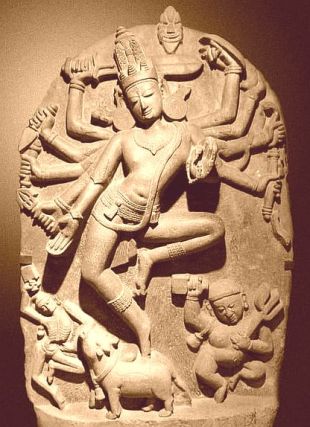
Nataraja3

Overview

All the texts enumerated above deal with the subject of dance in some detail; exclusively or along with music, drama and poetics.

When you take an over view, you will notice that three texts stand out as landmarks, defining the nature and treatment of dance in the corresponding period. These three are: Natyashastra of Bharata (Ca. 200 BCE); Abhinavabharati of Abhinavagupta (10-11th century) and Sangita-ratnakara of Sarangadeva (13th century).

Natyashastra is, of course, the seminal text that not only enunciated the principles of Dancing, but also brought them into practice. Though the emphasis of Natyashastra was on the production and presentation of the play, it successfully brought together the arts of poetry, music, dance and other decorative elements, all of which contributed to the elegance of the theater.

The Dance that Bharata specifically refers to is Nrtta, pure dance, which was primarily performed before the commencement of the play proper (Purvaranga) as a prayer offered to gods. The elements of the Nrtta were also brought into Drama by fusing it with Abhinnaya. Though the resultant art-form was not assigned a name by Bharata, its essence was very much a part of the theatrical performance. And, this delightful art form came to be celebrated as Nrtya, during the later periods. And, in its early stages, Dance was not considered as an independent Art-form.

Several commentaries on the Natyashastra that were produced between the period of Bharata and Abhinavagupta are lost. And, the Abhinavabhatarati is the earliest available commentary on the Natyashastra; and, is, therefore, highly valuable. Abhinavagupta followed Bharata, in general; and, adhered to his terminologies. For instance, while discussing on Dance, Abhinava consistently uses the term Nrtta; and, avoids the term Nrtya (perhaps because it does not appear in Natyashastra). During his time, dance, music and dramatics were continued to be treated as integral to each other, as in the times of Natyashastra.

Yet; Abhinavagupta, brought in fresh perspective to the Natyashastra; and, interpreted it in the light of his own experience and knowledge. His commentary, therefore, presents the dynamic and evolving state of the art of his time, rather than a description of Dancing   as was frozen in Bharata’s time.  As it has often been said; Abhinavabharati is a bridge between the world of the ancient and forgotten wisdom and the scholarship of the succeeding generations.

Abhinavagupta’s influence has been profound and pervasive. Succeeding generations of writers on Natya were guided by his concepts and theories of Rasa, Bhava, aesthetics and dramaturgy. No writer or commentator of a later period could afford to ignore Abhinavagupta.

The commentaries written during the period following that of Abhinavagupta continued to employ the terminologies of the Natyashastra. But, the treatment of its basic terms such as, Nrtta, Natya, Tandava and Lasya was highly inconsistent. These terms were interpreted variously, in any number of ways, depending upon the understanding and disposition of the author; as also according to contemporary usage of those terms and the application of their concepts. Standardisation was conspicuous by its absence.

A significant development during this period was assigning greater importance to the regional types of Dances. Though based on the Natyashastra, these texts recognized and paid greater attention to the dance forms that were popular among the people of different geographic regions and of different cultural groups. In the process, the concepts of Marga, which signified the chaste, traditional form of Dance as per the rules of Natyashastra, came to be distinguished from the regional, popular, free flowing types of Dance, termed as Desi.

By about the 13th century, dance came into its own; and, was no longer an ancillary to drama, as was the case during the time of Natyashastra. Yet; the Dance, in this period, continued to be discussed along with the main subjects such as Music and Drama.

The concept of Nrtta continued to exist and Nritya was established; each with its own individual identity. The term Natya which signified the combination of Nrtta (pure dance) and Abhinaya (meaningful expressions) had come into wide use.

The Sangita-ratnakara of Sarangadeva marks the beginning of the period when Dance began to be discussed in its own right, rather than as an adjunct to Drama. It was during this period, the Desi types of Dance along with its individual forms were discussed in detail.  And, the other significant development was the fusing of the special techniques of Angikabhinayas of both the Nrtta and the Desi types into the graceful Natya form. And, new trends in Dance were recognized.

Though the ancient terms Nrtta, Tandava, Lasya and Natya continued to be interpreted in various ways, the term Nartana came to be accepted as the general class name of Dance, comprising its three sub-divisions: NatyaNrtya and Nrtta.

In the period beginning with the sixteenth century, Pundarika Vittala introduced the new concept of classifying dance forms into two separate classes, as the Bhaddha (structured) and Anibhaddha (neither bound nor structured). The later texts, while discussing Dance, apart from following Marga and Desi classification, also took into consideration Nartana-nirnaya’s classification of Bhaddha and Anibaddha, as a part of their conceptual framework.

It was during this period, the Persian influence, through the Mughal Court , entered into Indian dancing, giving rise to a new style of  Dance form, the Kathak.  This period was also marked by the emergence of the Dance forms that were not specifically mentioned in the Natyashastra – the Uparupakas. This genre of musical dance dramas not only came to be admitted into the mainstream of dancing, but eventually became the dominant type of performing art, giving rise dance forms such as Odissi, Kuchipudi etc.

The emphasis of the later texts shifted away from the Marga of the Natyashastra; but, leaned towards the newer forms of Desi Dances with their improvised techniques and structural principles. Apart from increase in the varieties of regional dance forms, a number of manuals in regional languages began to appear. These regional texts provide a glimpse of the state of Dance as was practiced in different regions.

nanjanagudu

Dr. Mandakranta Bose observes:

Bharata’s account represented only a small part of the total body of dance styles of the time. When new styles became prominent in the medieval period they had to be included in the descriptions of dancing. Such a widening of frontiers meant a great increment of technical description in the texts.

The distinction between the Natyashastra and the later texts is not merely one of detail. Of greater significance is the fact that unlike the Natyashastra, the later texts recognize different styles. These are distinct from the one described by Bharata, the main path or Marga tradition of dancing. The later texts concern themselves more and more with other styles, known, generically, as Desi, whose technique and structural principles are sufficiently different from the style described by Bharata..

mandala4

Further, the principle of Anibaddha allowed the dancer a considerable degree of freedom, encouraging her to search far and to create, through her ingenuity, novel aesthetic expressions. This was a major departure from the regimen that required the dancer to rigorously follow the prescriptions of the texts. The opportunities to come up with artistic innovations, within the framework of the tradition, helped to infuse enterprise and vitality into dance performances. The dance became more alive.

At the same time, the Natyashastra continues to be the authoritative source book, which lays down the basic principles of the performing arts; and, identifies the range of body movements that constitute dancing.

The Bharatanatya of today represents such a dynamic phase of the traditional Indian Dancing.  It does not, specifically, have a text of its own; its roots are in the principles, practices and techniques that are detailed in Natyashastra, Abhinava Darpana and such other ancient texts. Though it is basically ingrained in the principles of Natyashastra, it delightfully combines in itself the Angikabhinaya of the Nrtta; the four Abhinayas of the Natya (Angika, Vachika, Aharya and Sattvika); the interpretative musical narrative element of the Uparupakas, for enacting a theme; and the improved techniques of the later times.

Besides, the Bharatanatya developed its own Grammar through Dance idioms such as: Adavus (combination of postures – Sthana, foot movement – Chari, and hand gestures-Hasta); Jati (feet movement in tune with the Sollakattu syllables); Tirmanam (brilliant bursts of complicated dance rhythms towards the ‘end’ section of the dance). Besides, the Bharatanatya, in the context of its time, enriched its repertoire of the Nrtta by items such as Alaripu, Jatiswara and Tillana.

Thus, the evolution of Indian Dance system is a dynamic process that absorbed new elements and techniques without compromising its basic tenets. It, thus, demonstrates the time-honored Indian principle of growth: continuity along with change.

mandala4

Before we discuss Dance and its forms, let’s take a look at the Art and Art-forms, in general.

nayana88

Continued

In

Part Two

References and sources

1.Movements and Mimesis: The Idea of Dance in the Sanskritic Tradition  by Dr.Mandakranta Bose

2 . Literature used in Dance/ Dance Sahitva

3. Natyashastra

4.https://etd.ohiolink.edu/!etd.send_file%3Faccession%3Dosu1079459926%26disposition%3Dinline

The images are from Internet


4 Comments

Posted by on September 23, 2018 in Art, Natya


Tags: , , , , , , , , , , , , , , , , , , , , , , , , , , , , , ,

Concerning the Dasarupa of Dhananjaya – Part Eight

Continued from Part Seven

Dasarupa of Dhananjaya

Book Four

Rasa and Bhava

kalakshetra-737x425

Introduction

The Book Four of the Dasarupa is devoted to the discussion on Rasa. Here, Dhananjaya broadly follows the concepts and definitions as provided in the Natyashastra, except in minor details such as where he creates additional divisions in the Srngara, Adbhuta and Bhibhatsa Rasas.

The Fourth Book on Rasa (Rasadhyaya), in its 87 verses, describes, in fair detail, the eight types of Rasas; the Bhavas along with their causes (Vibhāva), manifestations (Anubhāva), their transitory states (Vyabhicāri-bhāva) and the involuntary reactions (Sāttvika-bhāva),  all combining effectively to picturesquely  portray  and give expression to the intended dominant Bhava (Sthāyi-bhāva).

Dhananjaya accepts the eight Sthāyi-bhāvas and the eight Rasas described by Bharata; though he does not catalogue the Rasas.  Of the eight Rasas enumerated by Bharata, Dhananjaya discusses the Srngara Rasa and its subdivisions in much detail. The Hasya Rasa is described in two passages; while the rest are covered in one verse each.

Dhananjaya also discusses the definitions, the details, the divisions and sub-divisions of the various elements of each of the Bhavas that harmoniously unite in order to give expression to the principal emotion (Sthayin) that the performer is attempting to project. And, the resultant (Rasavant) delectable joy (Rasa) is experienced with relish by the cultured aesthete (Rasika).

*

Dhananjaya commences his exposition by stating that Rasa, a pleasurable sensation, is produced by the combination of the various the elements of the Bhavas, when it’s dominant mood or sentiment (Sthayin) harmonizes within itself its cause (Vibhava), its consequents (Anubhava), the associated transitory states (Vyabhicharin) stirring up varied sorts of involuntary bodily reactions (Sattavika).

Vibhavair anubhavais ca sattvikair vyabhicaribhih aniyamanah svadyatvam sthayi bhavo rasah smrtah//

Then, Dhananjaya straightaway proceeds to define and explain various technical terms involved in the process of bringing about (Bhavitam) the Bhavas in order to convey (abhi-vyākhyātā) it’s Rasa.  It is said; these sections were meant to serve as a prelude or an introduction to the ensuing discussions elucidating the principles and practices that are related to the subject of Rasa. After this section, Dhananjaya moves on to the descriptions of Rasas and their subdivisions.

But, in this post let’s commence with Rasa and Bhava; and, then take a look at the subdivisions of each of the elements, as enumerated by Dhananjaya; and, at the end let’s come back to Rasa.

Let’s briefly go over the concepts related to Bhavas and Rasa, as described in the Natyashastra and as presented in the Dasarupa.

lotus-flower-and-bud

Rasa

In the Sixth Chapter of Natyashastra , Bharata introduces the subject of Rasa after discussing the five kinds of the Dhruva songs that are sung during the course of a play  i.e.,  while entering (praveśa), casual (ākepa), going out (niskrama), pleasing (prāsādika) and intermediate (āntara).

He then remarks, “No sense proceeds without Rasa – Na hi rasadrte kascid-arthah pravartate.” He was implying that the entire object of a well rendered Dramatic performances, poetry, music or art is to provide delight, which is enjoyed by the spectator (Rasika). And, without providing that experience of beauty, anything said or done is a futile exercise.  And, that gratification of pleasure or delight is called Rasa. Such a wonder (Camatkara) and rare delight (lokottara-ananda), which we love to enjoy, is indeed the essence and also the purpose of any work of art.

Bharata had introduced the concept of Rasa in the context of Drama. He meant Rasa as an aesthetic appreciation or joy that the spectator experiences.  As Bharata says, Rasa should be relished as an emotional or intellectual experience: na rasanāvyāpāra āsvādanam, api tu mānasa eva (NS.6.31) .The yashāstra states that the goal of any art form is to invoke such Rasa.

Bharata does not, however, put forward any theories about the Rasa concept. He does not also give a direct definition of Rasa or its essence. But, he straight away delves into explanations of how a well structured combination of certain objective factors produce subjective reactions in the spectators.

He comes up with the statement that Rasa is produced (rasa nispattih) by the combination (samyogād) of the VibhāvaAnubhāva and Sanchari (Vyabhicāri) Bhāvas. : Vibhāva anubhāva vyabbhicāri samyogāt rasa nispattih. This statement later, gained fame as the Rasa Sutra, the formula to invoke Rasa.

Here, briefly, the term Vibhāva represents the causes, while Anubhāva is the manifestation or the performance of its effect as communicated through the abhinaya, and the vyabbhicāri Bhava, the transitory states.

Then, while explaining the concept of Rasa, Bharata attempts to illustrate it through an analogy.  Bharata poses the question: What is an example, one may ask? In reply, he describes Rasa in terms of taste, with the analogy of cooking a tasty meal. He states, just as the taste emerges from the mixing of various seasonings, herbs and other components, so also does the Rasa emerges from a combination of the various Bhāvas. As the six tastes (shad-rasa) are produced by ingredients such as, raw sugar or spices or vegetables, so also the Sthāyibhāva, the dominant mood, combining in itself the other Bhavas, puts forth its characteristic Rasa. Bharata, eventually, says that which can be relished – like the taste of food – is Rasa –Rasyate anena iti rasaha (asvadayatva).  Thus, Rasa is an experience which is relished.

The Natyashastra does not directly equate Rasa to taste. It merely, employs the taste as analogy or a parallel to explain the process involved in the generation of Rasa, since it had no precise definitions for the essence of Rasa.That might be because, Rasa is a subjective experience; and , it can only be enjoyed experientially. It can , at best, only be obliquely suggested through explanations.

Tatra vibhāvā-anubhāva-vyabhicāri-sayogād-rasa-nipatti ko dṛṣṭānta atrāha – yathā hi, nānā-vyañjana-uadhi-dravya-sayogād-rasanipatti tathā, nānā-bhāvo-pagamād-rasa-nipatti yathā hi -guādi-bhirdravyair-vyañjanair-auadhibhiśca āavādayo rasā, nirvartyante, tathā nānā-bhāvopagatā api sthāyino bhāvā rasatvamā-apnuvantīti atrāha – rasa iti ka padārtha ucyate – āsvādyatvāt

*

The next question that arises is, how is Rasa relished? The reply is — just as well-disposed persons, while eating food cooked with many kinds of spices , relish (āsvādayanti)  its tastes and derive pleasure, similarly the cultured spectators with refined outlook relish and derive pleasure from the Sthāyibhāva  expressed through various Bhavas aided by words, gestures and other pleasant feelings (Sattva) .

How is Rasa produced?

The terms Samyoga and Nispatti, which occur in the Rasa Sutra, are at the centre of all discussions concerning Rasa. Bharata used the term Samyoga in his Rasa sutra (tatra vibhāvā-anubhāva vyabhicāri sayogād rasa nipatti), to point out the need to combine these Bhavas properly. It is explained; what is meant here is not the combination of the Bhavas among themselves; but, it is their alignment with the Sthayibhava, the dominant emotion at that juncture. It is only when the Vibhava (cause or Hetu), Anubhava (manifestation or expressionand Sancharibhava (transitory moods) as also the Sattvas (reflexes)   meaningfully unite with the Sthayibhava, that the right, pleasurable, Rasa is projected (Rasapurna). 

[Bharata omitted to mention Sthayin, the dominant Bhava, in his Rasa-sutra. But, he asserted that only the Sthayins attain the state of Rasa. He made a distinction between Rasa and Sthayin. And in the discussion on the Sthayins, Bharata elaborated how these durable mental states attain Rasatva. He discussed eight Rasas and eight Sthayins separately in his text.]

The Sthayi bhava and Sanchari bhava cannot be realized without a credible cause i.e., Vibhava, and its due representations i.e., Anubhava. The Vibhavas and Anubhavas as also the Sattva, on their own, have no relevance unless they are properly combined with the dominant Sthayibhava and the transient Sanchari bhava. The analogy that is given in this context is that spices, sugar etc., are not related to each other. But, when they are properly mixed and cooked with the main dish, they combine well and give forth a delicious flavour.

That is to say; undoubtedly the partaking or savouring of Rasa gives pleasure; but, such pleasure is not derived directly. It is only when the Sthayi bhava combines all the other related Bhavas  (Vibhavair anubhavais ca sattvikair vyabhicaribhih) and transforms them through natural Abhinaya that the Rasa is eventually produced, gladdening the hearts of the spectators.   Bharata uses the term Nispatthi (rendering) for realization of the Rasa in the heart and mind (manas) of the Sahardya.

Vibhavair anubhavais ca sattvikair vyabhicaribhih aniyamanah svadyatvam sthayi bhavo rasah smrtah//

Dhananjaya also defines Rasa in exactly the same words as Bharata did. And, in addition, he explains Rasa as the pleasure (svada) given forth (prakhyatam)  by the Sthayi Bhava, which is produced from a poem having elements (padartha) in the form of (svarupa) moonlight (indu) , disinterest (nirveda) , excitement (romacha) etc., which serve as  Vibhava (cause), Sanchari (transitory mood) and  Anubhava (consequent expression).

Padarthair indu-nirveda-romancadi-svarupakaih kavyad vibhava-sarmcary anubhava prakhyatam gataih bhavitah svadate sthayi rasah sa parikirtitah

Bharata envisages absolute continuity of the artistic process, beginning with the creative experience of the artist through his performance or his poetry, to the aesthetic experience of the spectator or the reader.Along with that, he also explains the relationship between Rasa and Bhava.

He illustrates this process with the seed-tree-flower-fruit analogy (Bija-shakthi). Just as a tree grows from a seed ;and, just as the tree puts forth  flowers and fruits, so also the emotional experiences (Rasa) are the source (root) of all the modes of expressions (bhava). The Bhavas, in turn, are transformed to Rasa.”(Natya-Shastra: 6-38)

yathā bījād-bhaved-vko vkāt-pupa phala yathā tathā mūla rasā sarvete bhyo bhāvā vyavasthitā 38

lotus-flower-and-bud

Bhava-s

As regards the Bhavas, Bharata explains they are called  Bhavas , because they effectively bring out the dominant sentiment of the play – that is the Sthāyibhāvā – with the aid of various supporting expressions , such as words (Vachika),  gestures (Angika), costumes (Aharya) and bodily reflexes (Sattva) – for the enjoyment of the good-hearted spectator (sumanasa prekakā) . Then it is called the Rasa of the scene (tasmān nāya rasā ity abhivyākhyātā).

It is also explained; they are called Bhavas because they happen (Bhavanti), they cause or bring about (Bhavitam); and, are felt (bhava-vanti). Bhava is the cause, the hetu; this and the other terms such as bhavitam, vasitam, krtam are synonyms. The term suggests the meaning of ‘to cause or to pervade’. The Bhavas help to bring about (Bhavayanti) the Rasas to the state of enjoyment. That is to say : the Bhavas manifest  or give expression  to the states of emotions – such as pain or pleasure- being experienced by the character – Sukha duhkha dikair bhavalr bhavas tad bhava bhavanam //4.5//

Thus, Bhava could be understood as a process through which the import or the inner idea of a dramatic situation is expressed and transformed, with the aid of four-fold Abhinaya,  into Natya-rasa for the delight of the discerning spectators.

Nānā bhāvā abhinaya vyañjitān vāg aga sattopetān / Sthāyibhāvān āsvādayanti sumanasa prekakā / harādīś cā adhigacchanti  tasmān nāya rasā ity abhivyākhyātā //6.31//

***

It is said; the eight Sthāyi-bhavās, thirty-three Vyabhicāri-bhāvās together with eight Sātvika-bhāvas, amount to forty-nine psychological states, excluding Vibhava   and Anubhava.

Within this format; and , in  the context of the Drama and Poetry, the terms Vibhava, Anubhava, Sanchari, Sattvika and Sthayi are explained thus:

Vibhava

Vibhava, Vibhavah, Nimittam, and Hetu all are synonyms; they provide a cause to manifest the intent (vibhava-yante); and, the term Vibhavitam also stands for Vijnatam – to know vividly. The Vibhavas are said to be of two kinds: Alambana, the primary cause (kaarana) or the stimulant for the dominant emotion; and, Uddipana that which inflames and enhances the emotion caused by that stimulant.

jnayamanataya tatra vibhavo bhavaposakrt alambana-uddipanatva prabhedena sa ca dvidha.

Anubhava

Anu’ is that which follows; and, Anubhava is the representation, manifestation or the effect giving expression (bhava-sam-suchanatmakah) to the internal state (vikara) caused by the Vibhava. It is Anubhava because it makes the spectators feel (anubhavyate) or experience the effect of the acting (Abhinaya) brought forth by means of words, gestures, representations and the Sattva. Thus, the psychological states (Bhavas) combined with Vibhavas (cause) and  Anubhavas  (portrayal or manifestations) have been stated – Anubhavo vikaras tu bhava sam-sucanat-makah

Dhanika, the commentator, explains these Anubhavas as follows-:

These Bhavas are expressed by the performer with the help of speech (Vachika); gestures and actions (Angika), and costumes etc., (Aharya). The Āngika-abhinaya (facial expressions, gestures/movement of the limbs) is of great importance, particularly in the dance. There are two types of basic Abhinayas:  Padārtha-abhinaya (when the artist delineates each word of the lyrics with gestures and expressions); and, the Vākyārtha-abhinaya (where the dancer acts out an entire stanza or sentence). In either case, though the hands (hastha) play an important part, the Āngika-abhinaya involves other body-parts, as well, to express meaning of the lyrics, in full.

Here, the body is divided into three major parts – the Anga, Pratyanga and Upānga

The six Angās -: Siras (head); Hasta (hand); Vakshas (chest); Pārshva (sides); Kati-tata (hips); and, Pāda (foot). Some consider Grivā (neck) to be the seventh

2) The six Pratyangās -: Skandha (shoulders);  Bāhu (arms);  Prusta  (back); Udara (stomach); Uru (thighs); Janghā (shanks).Some consider Manibandha   (wrist);  Kurpara (elbows) ; and, Jānu (knees) also as  Pratyanga

3) The twelve Upāngās or minor parts of the head or face which are important for facial expression.-: Druṣṭi (eyes) ; Bhrū (eye-brows);  Puta (pupil); Kapota (cheek); Nāsikā (nose); Adhara (lower-lip); Ostya (upper lip); Danta (teeth); Jihva (tongue) etc.

bhava

Source : Laws practice Sanskrit drama by Prof. S N Shastri

Vybhichari bhava 

Vybhichari-bhava or Sanchari-Bhavas are the complimentary or transitory psychological states. Bharata mentions as many as thirty-three transitory psychological states that accompany the Sthayi Bhava, the dominant Bhava, which causes Rasa.

Dhananjaya explains that the transitory states (vyabhicharin) are those that especially accompany the Permanent State (Sthayin) emerging from it and again receding back into it, like the waves in the ocean.

visesad abhimukhyena caranto vyabhicarinah sthayiny unmagna-nirmagnah kallola iva varidhau

The Sanchari-bhavas or Vybhichari-bhavas are enumerated as thirty in numbers; but, there is scope a few more. They are Nirveda (indifference); Glani (weakness or confusion); Shanka (apprehension or doubt) ; Asuya (envy or jealousy);  Mada  (haughtiness, pride); Shrama  (fatigue); Alasya (tiredness or indolence),  Dainya  (meek, submissive); Chinta (worry, anxiety); Moha (excessive attachment, delusion); Smriti (awareness, recollection); Dhrti (steadfast); Vrida (shame); Chapalata (Greed , inconsistency); Harsha (joy); Avega (thoughtless response, flurry); Garva (arrogance, haughtiness); Jadata (stupor, inaction); Vishada (sorrow, despair);  Autsuka   (longing); Nidra (sleepiness); Apsamra (Epilepsy); Supta (dreaming); Vibodh (awakening); Amasara (indignation); Avahitta(dissimulation);  Ugrata (ferocity); Mati (resolve); Vyadhi (sickness); Unmada (insanity); Marana (death); Trasa (terror); and, Vitarka (trepidation)

 **

Thus, Vibhāva indicates the cause, while Anubhāva is the performance of the bhāva as communicated through the Abhinaya. The more important Vibhāva and Anubhāva are those that invoke the Sthāyi bhāva, or the principle emotion at the moment. Thus, the Rasa-sutra states that the Vibhāva, Anubhāva, and Vyabhicāri bhāva together produce Rasa.

A complete understanding of the Vibhava (Hetu, cause) and Anubhava (karya, effect) can be had only experience of dealing (vyavahara-atah) with them – Hetu-karyat-manoh siddhis tayoh sam-vyavahara-atah

**

Sattvika Bhavas 

The Sattvika Bhavas are reflex actions or involuntary bodily reactions to strong feelings or agitations that take place in one’s mind. Sattvas are of eight kinds.

The Eight Sattivika-bhavas are; Stambhana (stunned into inaction);  Sveda (sweating);  Romancha (hair-standing on end in excitement); Svara-bheda (change of the voice or breaking of the voice); Vepathu (trembling); Vairarnya (change of colour, pallor); Ashru (shedding tears); and, Pralaya  (fainting) . These do help to enhance the effect of the intended expression or state of mind (Bhava). 

stambha svedo’tha romāñca svarabhedo’tha vepathu vaivaryam-aśru pralaya ityaṣṭau sātvikā sm 6.22

Dhananjaya and Dhanika explain the Sattvika Bhavas, the involuntary states (bhava sattvika = sattva- bhava) though they also are the effects, they are altogether separate from the other Bhavas, because they arise by themselves as the reflex actions or reactions to the emotional state of the person.

prthag bhava bhavanty anye anubhavatve api sattvikah sattvad eva samutpattes tac ca tadbhavabhavanam

Sātvika abhinaya are the expressions of the feelings created in the mind that are extremely projected by Āṅgika and Vācika.

satvam nāma manah prabhavam.etadeva samāhitanmanastvādutpadyate iti bharatah.etadevasya satvam yat duhkhitena praharsitena vā asru romanchadayo nivartyante.tena satvena nirvruttā bhāvāh.sātvikāh kāh bhāvāh.tadbhāva bhāvanam ca bhāvah-iti dhanikah.pruthag bhāvā bhavantyannyenubhavatvepi sātvikāh.satvādeva samutpattestastacca tadbhāva bhāvanam iti dhanikah

**

Sthayi Bhavas

The Sthayi Bhavas, the dominant Bhavas, which are most commonly found in all humans, are said to be eight. Bharata lists these eight  Sthayibhavas  as:  Rati (love); Hasaa (mirth); Shoka (grief);  Krodha  (anger); Utsaha (enthusiasm or exuberance); Bhaya  (fear);  Jigupsa  (disgust)   ; and Vismaya (astonishment ).

rati-hāsaśca śokaśca krodho-utsāhau bhaya tathā jugupsā vismayaśceti sthāyibhāvā prakīrtitā  6. 17

Dhananjaya deviates from Bharata in defining Sthayibhava. In his view Sthayin (a permanent state), the source of delight, is one which is not interfered with by other psychological states whether consistent with it or inconsistent, but which brings the others into harmony with itself.

viruddhair aviruddhair va bhavair vicchidyate na yah atmabhavam nayaty anyan sa sthayi lavanakarah

Dhananjaya also lists Rati (Love); Uthsasa (exuberance); Jigupsa (disgust) ;Krodha (anger); Haasa (mirth); Vismaya (astonishment) ; Bhaya (fear) ; and, Shoka (sorrow) as the eight permanent states (Sthayi Bhavas)-Rati-utsaha-jugupsah-krodho-hasah-smayo-bhayam-sokah

And then he adds a line saying that some authorities include in this list Sama or Shanata (tranquillity); but, it cannot be developed in the Drama- Samam api ke cit prahuh pustir natyesu naitasya

Explaining the importance of Sthayi Bhava, Dhananjaya states that just as a  verb (Kriya)  when combined with a noun (Karaka)  is an essential part of a sentence, so also Sthayi Bhava, combined with other Bhavas, is indeed the essence of the play.

Vacya prakaranadibhyo buddhistha va yatha kriya vakyarthah karakair yukta sthSyi bhavas tathetaraih

The same idea is vividly expressed in the Natyashastra (7.8). Just as the king is superior to other mortals; and just as the Guru is superior to the students, so also the Sthayi, which is the shelter of others,  is superior to all other Bhavas in this world.

yatha naranatn nrpatih, sisyanam ca yaths guruh, evam hi sarvabhuvanam bhavah sthiyi mahan iha

Dhananjaya further explains: this very Sthayin becomes Rasa as the spectator (Rasika) views and absorbs it – rasah sa eva svadyatvad rasikasyaiva vartanat.

And, each of these Sthayibhavas gives rise to a RasaRati  to Srngara Rasa; Haasa – Hasya; ShokhaKaruna; KrodhaRaudra ; Utsaha – Vira; Bhaya– Bhayanaka; Jigupsa  – Bhibhatsa; and, Vismaya Adbhuta. Thus, the eight Sthāyi-bhāvas closely correspond to the eight Rasas.

śṛṅgāra-hāsya-karuṇā-raudra-vīra-bhayānakāḥ।bībhatsā-adbhuta saṃjñau cetyaṣṭau nāṭye rasāḥ smṛtāḥ ॥ 6.15

Dhananjaya remarks that responsive spectators, fired by enthusiasm and imagination, contribute to the success of the play in the manner of ‘children playing with clay elephants ‘. ” When children play with clay-elephants, etc., the source of their joy is their own utsaha (enthusiasm). The same is true of spectators watching and almost sharing the heroic deeds of characters, say like, Arjuna and other heroes on the stage.”

Kridatam mrnrnayair yadvad balanam dviradadibhih / svotsahah svadate tadvac chrotrnam Arjunadibhih.

The Sthayins are transformed into Rasa. And, it is called Rasa when their Vibhava, Anubhava and Vyabhicarins combine harmoniously with the Sthayin.  And, the Rasa is enjoyed by the spectators, who are cultured and aesthete. Such Rasa is not manufactured from concrete objects. But, it is the bliss of one’s own consciousness. In the enjoyment of the Rasa, both the subject (the spectator) and the object (Vibhava, Anubhava etc.,) are generalized (sadharanikarana). Our aesthetic identification (tanmayībhavana) with the character is a generalized experience (sadharanikarana), freed from the individual’s own identifications. And, in their universalised form, the Rasas evoked, are beyond the limitations of time and place disappear.

That is to say; while enjoying the aesthetic experience, the mind of the spectator is liberated from the obstacles caused by the ego and other disturbances. Thus transported from the limited to the realm of the general and universal, the spectators are capable of experiencing Nirvada, or blissfulness. In such aesthetic process, they are transported to a trans-personal level. This is a process of de-individual or universalization – the Sadharanikarana.

[ Ven. Dr. Lenagala Siriniwasa Thero explains :

If the principle emotion or sthāyi bhāva is anger (krodha), let us say, the cause of anger, vibhava, is betrayal by a friend. The anger will be more potent if the vibhāva is strongly established. If the sthāyibhāva is deeply felt, then it will result in the physical manifestation of anger such as burning eyes and heaving chest, which is the anubhava. But in anger, one can make fun of and laugh sarcastically at the object of one’s anger. One can feel sorrow when thinking of the happy times spent together earlier. One can feel disgust for the other person’s behaviour or be amazed at the change in him now. Through all this, the fundamental thread of anger must be maintained. But the transient emotions-the vyabhicāri bhāvas of laughter, sorrow, disgust and amazement – enhance the present angry state. If performed with appropriate āgika, vācika, ahārya and above all, true sātvika abhinaya, it will invoke the rasa of raudra or anger in the spectator whose mind is completely in accordance with the performer.]

lotus-flower-and-bud

In regard to the Rasas, Bharata, initially, names four Rasas (Srngara, Raudra, Vira and Bhibhatsa) as primary; and, the other four as being dependent upon them. That is to say ; the primary Rasas, which represent the dominant mental states of humans, are the cause or the source for the production of the other four Rasas.

Bharata had explained that Hasya (mirth) arises from Srngara (delightful); Karuna (pathos) from Raudra (furious); Adbhuta (wonder or marvel) from the Vira (heroic); and, Bhayanaka (fearsome or terrible) from Bhibhatsa (odious).

śṛṅgārādhi bhaved hāsyo raudrā cca karuo rasa vīrā ccaivā adbhuto utpattir bībhatsā cca bhayānaka  6.39

Bharata , however, does not offer  theoretical explanations to say why he chose to highlight this particular set of eight Rasas. It likely that he was following a tradition that he inherited from his predecessors. Some scholars have , however, tried to explain Bhara’s scheme as representations of the basic instincts, tendencies  or genetic memories (Vasana) inherent in all human beings, as Sthayi-bhavas or Chitta vrttis

The other explanation is that Bharata’s scheme reflects the basic instinct in all living beings, which  is to seek pleasure and to move away from pain. The instincts of pleasure , in short, could be identified as the need for Love, laughter, enthusiasm, vigour  and amazement . And, one is , ordinarily, repelled by rather painful and tense emotions , such as anger, disgust, sorrow and fear.  These instincts and their related responses seem to be embedded in the consciousness of all beings.

And, when this reality of the inner working of the human experiences is organized systematically following a  design or a scheme of the Bhava -Rasas,  and presented through the medium of the technically perfect  Abhinaya of the stimuli (cause), responses ( effects) and the complimentary transitory states , the performance comes alive reaching forth to the minds and hearts of the spectators.

*

Dhananjaya, in his Dasarupa, followed the concepts and definitions provided by Bharata in the Natyashastra, with regard to the Bhavas, such as: the cause (Vibhava); consequents (Anubhava); and the transitory states (Vyabhicharibhava). He also agrees that the Rasa is produced through the integration of these Bhavas into the Sthayibhava.

Further, Dhananjaya accepts the four primary Rasas that Bharata identified i.e. śṛṅgāra (erotic); raudra (furious); vīra (heroic); and bibhatsa (odious). He also accepts the four other Rasas as being dependent on them. That is to say; the primary Rasas, which represent the dominant mental states of humans, are the cause or the source for the production of the other four Rasas.

According to Dhananjaya, as the Sthayin and other Bhavas pervade the mind of the spectator, the innate joy in him (atmananda) manifests as the Svada or the aesthetic enjoyment. And again, Dhananjaya says, the same kinds of charm (Svada) are also related to Hasya, Adbhuta, Bhayanaka and Karuna Rasas.

And therefore, Dhananjaya concludes that it could be said the four (Hasya, Adbhuta, Bhayanaka and Karuna) arise from the other four (Srngara, Vira, Bhibhatsa and Raudra) Rasas, respectively

Thus, Dhananjaya recognizes the eight forms of Rasas that Bharata had mentioned; but, he does not enumerate them again.  He merely sums up saying that the charm (Svada) in a poetic composition (Kavya), which one enjoys greatly (atmananda) is of four kinds (caturvidhah).  These give rise in the mind of the reader: Vikasa (cheerfulness); Vistara (exaltation); Kshoba (agitation); and, Vikshepa (perturbation). These four, in turn, are related to Srngara, Vira, Bhibhatsa and Raudra Rasas, respectively (kramat).

svadah kavyartha-sambhedad atmananda-samudbhavah vikasa-vistara-ksobha-viksepaih sa caturvidhah srhgara-vira-bibhatsa-raudresu manasah kramat – hasya-adbhuta-bhaya-utkarsa – karunanam ta eva hi atas tajjanyata tesam ata eva va adharanam.

krishnaradha-3

The Eight Rasas

As mentioned earlier, Dhananjaya discusses the Srngara rasa in fair detail;  and the rest in a comparatively brief manner.

Srngara rasa

Love (Rati) is essentially the delight marked by desire for lovely places, arts, occasions, garments, pleasures, and the like. That feeling on the part of two young persons, smitten with love, immersed in its sheer joy, when it is   manifested by tender gestures, constitutes the Srngara.

Ramya-desa-kala-kalavesa-bhogadi-sevanaih pramodatma ratih saiva yunor anyonya-raktayoh prahrsyamana srngaro madhura-anga-vicestitaih

However, the natures and functions of the Srngara Rasa are explained differently, by Bharata and Dhanañjaya. For instance; Bharata had said that the states like indolence (ālasya), cruelty (craurya) and disgust (jigupsā) are not applicable (bhāvaistu varjitā) to the erotic (śṛṅgāra) Rasa (NŚ.7.109).  But, Dhanañjaya mentions that though the states like indolence (ālasya), cruelty (ugrata), death (maraa) and disgust (jigupsā) are not independently applicable to the śṛṅgāra; yet, they are related to it indirectly, in one way or the other.

Referring to these tendencies of Alasya etc., Dhananjaya says that with skilful management of the eight Sattivika-bhavas, eight Sthayins and thirty-three Sancharins (a total of forty-nine states), these can be brought out in the Srangara rasa also.

Ye sattvajah sthayina eva castau triansat trayo ye vyabhicarinas ca, ekonapanc?§ad ami hi bhava yuktya nibaddhah pariposayanti alasyam augryam maranam jugupsa tasyasrayadvaitaviruddham istam.

Bharata had divided the Sṛṅgāra-rasa into two categories, i.e. Sambhoga (union) and vipralambha (separation). But, Dhanañjaya classifies the Srngara-rasa under three types, i.e. pain of separation before the union(Ayoga), separation after the union (Viprayoga) and union (Sambhoga)- Ayogo viprayogas ca sambhogas ceti sa tridha.

Of these three, Dhananjaya explains the Ayoga as the pain or the suffering that the lovers have to endure when they realize that there is hardly any prospect of being united, because of the intervention of others or by fate. 

tatrayogo ‘nurage ‘pi navayor ekacittayoh paratantryena daivad va viprakarsad asarrigamah

Viprayoga, is the forcible separation or asunder of the lovers, between whom a close intimacy has developed – Viprayogas tu visleso rudha-visram-ubhayor.

And, Sambhoga, the union, is that blissful state when the two playful lovers, in complete agreement come together, enjoy seeing each other, touching each other, and the like

anukulau nisevete yatranyonyam vilasinau darsanasparsanadini sa sambhogo mudanvitah

Under this section, Dhananjaya lists the subdivisions of the Ayoga, Viprayoga and Sambhoga.

: – The Ayoga, the separation, has ten stages. At first, there occurs in it longing (abhilasa); then anxiety (cintana); recollection (smrti); enumeration of the loved one’s merits (gunakatha); distress (udvega); raving (pralapa); insanity (unmada); fever (samjvara); stupor (jadata); and death (marana) .  These are its unfortunate stages, in due order. Then Dhananjaya gives the explanations for each of these ten stages of Ayoga.

: – The Viprayoga, the other kind of separation, is of two varieties: one brought about by resentment; and, the other by absence of the Lover.

The resentment between the two can take place because of fondness, when the lovers determine to be angry with each other. And, resentment can also take place because of jealousy, when the Lady Love is angry as she finds out that her lover is involved with another woman. Dhananjaya lists three possibilities for arousal of jealousy.

As regards the separation caused by the absence of the Lover, it could be because he is travelling (pravasa) on business; or because of misunderstanding or a curse. In such a case there is weeping, sighing, emaciation, letting the hair hang down, and the like.

: – The Sambhoga is the most delightful union of the lovers.It is said; although the two can create countless ways of enjoyment , those modes can be classified according to their degree. For instance ; (1) Sankshipta or brief: when the lovers meet at the end of purva-raga the mode of enjoyment is brief and tinged with initial reserve; (2) Sankirna or mixed: when they meet to reconcile their differences , it is an amalgam of sorrow, regret , great oy and immense  relief; (3) Sampurna or rich or full: when the lovers come together after being seperated for some time or being apart in distant places; and (4) Samruddha or exuberant : it is the joy when the come together after going through harrowing experiences or when when the lover returns safe and sound from a hard fought battle. All such pleasures are real (murta) as compared to the ones in dreams or in imagination (gauna-somboga).

Dhananjaya describes ten playful (Lila) and other actions of the Lady Love, according to her kindness, gentleness, and devotion to her lover.

Prabhas Milan

Vira Rasa

The Vira Rasa is induced by  power (pratapa), good conduct (vinaya), determination (dhyavasaya), courage, (sattva) infatuation (moha), cheerfulness (avisada), polity (naya), astonishment (vismaya), might (vikrama), and the like (as Vibhava, the cause), and is based on the Sthayi Bhava of  enthusiasm (Uthsaha).

Vira, the heroic Rasa is of three kinds, having benevolence, fighting, or liberality – Daya-ranad-anayogat tredha kilatra (as Anubhava). In it, there occur assurance, arrogance, contentment, and Joy (as Sanchari Bhava) – mati garva-dhrti-praharsah.

Virah pratapa-vinaya-dhyavasaya – sattva –moha-avisada-naya-vismaya-vikrama-dyaih  utsaha – bhuh sa ca daya –rana-danayogat tredha kilatra mati garva-dhrti-praharsah.

The Vira is broadly classified into four types : (1) Dana-vira ( generosity in giving away or bequeathing   gifts) ; (2) Daya -vira ( having boundless compassion to other beings); (3) Yuddha – vira (heroism or valour in the battle) ; and, (4) Dharma -vira (righteousness  and adherence to Dharma  and truthfulness (Satya)  , or  fulfilling ones word or promise , even while under great stress ).

But, this fourfold classification is considered rather arbitrary ; and, it can be extended to any number, to include Kshama ( forgiveness) , Prema (love ), Dhrti   ( courage) , Mati (reasoning ) and such other virtues.

**

Bibhatsa

The Bibhatsa Rasa, the odious, has the Sthayi Bhava of disgust (jugupsa) as its sole basis; it causes distress (udvega) chiefly by means of worms, stinking matter, and nausea. it causes horror by means of blood, entrails, bones, marrow, flesh, and the like. And, it causes unmixed aversion in the case of the hips, breasts, and so forth of women. It is accompanied by contraction of the nose, mouth, and so on as Anubhava. In it there occur agitation, sickness, apprehension, and the like (as Sanchari Bhava).

bibhatsah krmi-putigandhi-vamath-uprayair jugupsaikabhur udvega rudhira-antraki-kasavasa –mamsa-dibhih ksobhanah vairagyaj jaghana-stana-disu ghrna-suddho anubhavair vrto nasavaktra-vikunanadibhir ihavega -rtisank-adayah

According to Dhananjaya , Bibhatsa could be of three kinds : Kshobana (related to blood, intestines,marrow and such other ghastly substances); Udvegi (related to loathsome , repulsive scenes, putrid sights) ; and, Ghrna-suddha  (disgust, revulsion caused by anything ugly and horrific).

**

Raudra

The Sthayi Bhava of Anger (krodha) is caused by feelings such as: indignation and aversion to an enemy (as Vibhava); its Alambana is is the unforgivable wrong or treachery ; its Uddipana is the arrogance of the wrong-doer .  And , the resulting development of it is the Furious Raudra Rasa, a state of agitation accompanied by biting one’s lip, trembling, frowning, sweating, redness of the face, and also by drawing of weapons, holding the shoulders boastfully, striking the earth, vowing, and imprisonment (as Anubhava). In it , there occur the Sanchari Bhavas , such as: indignation, intoxication, recollection, inconstancy, envy, cruelty, agitation, and the like.

krodho matsara-  vairi-vaikrta-mayaih poso asya raudro anujah ksobhah svadharadamsa-kampa-bhrukuti-sveda-syarlgair yutah sastrollasa-  vikatthanamsadharanlghatapratijnagrahair atrama-rsamadau smrtis capala-tasuyaugrya-vegadayah   

   **

Hasya rasa

Mirth (haasa) is caused by one’s own  or another’s  strange actions, words, or attire; the development of this is said to be the Hasya rasa, which is of threefold origin.

vikrtakrtivagvesair atmano ‘tha parasya va hasah syat pariposo ‘sya hasyas triprakrtih smrtah

Mirth is of two kinds, since it may be provoked by some characteristic of the person amused (atmasta) or of another person (paratha) ; in either case , the mirthful individual may be one of the higher, middling, or lower characters in the play (hence the ‘threefold origin’ mentioned in the text). There are consequently six possible varieties of the Hasya Rasa.

The Sanchari Bhavas related to Hasya rasa are sleeping, indolence, weariness, weakness, and stupor –nidra –alasya-sramaglani-murchas ca sahacarinah.

In this connection, different kinds of smiles and laughter are described.

A gentle smile (smita) is opening the eyes wide; a smile (hasita) is showing the teeth to some extent; laughing (vihasita) is making a soft sound; laughter (upahasita) is the same, accompanied by shaking of the head; uproarious laughter (apahasita) is laughter accompanied by tears; and convulsive laughter (atlhasita—atihasita) is laughter with shaking of the body. Two of these varieties of laughter are characteristic of the higher; two of the middling; and, two of the lower characters, in the order named.

smitam iha vikasi-nayanam kirn cil laksya-dvijam tu hasitam syat madhura-svaram vihasitam sasirah-kampam idam upahasitam

apahasitarn sasraksarn vikasiptangam bhavaty atihasitam dve dve hasite caisam jyesthe madhye ‘dhame kraraasah.

**

Adbhuta

The Adbhuta rasa whose essence is the Sthayi Bhava of Vismaya (astonishment) is  the marvel , wonder and joy caused by supernatural things (as Vibhavas) ; it has as its result (karma) [i. e. As Anubhava] exclamations of surprise, weeping, trembling, sweating, and stammering; the Sanchari Bhavas , occurring in connection with it,  are generally joy, agitation, and contentment.

Atilokaih padarthaih syad vismayatma raso adbhutah karmasya sadhu-vad asru-vepathusveda-gadgadah harsa-avega-dhrtipraya bhavanti vyabhicarinah

**

Bhayanaka

The Bhayanaka, with fear, (bhaya) as its [Sthayi Bhava results  from change of voice, loss of courage, and the like (as Vibhava) ; it is characterized by trembling of all the limbs, sweating, being parched, and fainting [as Anubhava] ; its associated transitory states, the Sanchari Bhavas are:  depression, agitation, distraction, fright, and the like.

Vikrta-svara-sattvader bhaya-bhavo bhayanakah sarvanga-vepa-thus vedasosa-vaicittya-laksanah dainya –sambhrama-sammoha-trasadis tatsahodarah.

**

Karuna

The Karuna Rasa, the pathos, with the Sthayi Bhava of Sorrow (soka) as its essence, results from loss of something cherished ; or loss of a friend  or a dear one ; and when slapped with something undesired. In consequence of it there occur heaving of sighs, drawing of sighs, weeping, paralysis, lamentation, and the like (as Anubhava) ; the Sanchari Bhava , occurring in connection with it, are sleeping, epilepsy, depression, sickness, death, indolence, agitation, despair, stupor, insanity, anxiety, and so forth

istanliad anistapteh sokatma karuno anu tam nihsvas-ucchvasa-rudita- stambha     -pralapita-dayah sva-papa-smara-dainya-dhi-marana-alasya-sambhramah visada-jada-tonmada-cintadya -vyabhicarinah

Rasa according to Bharata

Shanta rasa

Bharata had not mentioned Shanta or Sama or Nirveda (tranquillity) as one among the eight Rasas. But, later, the commentators such as Abhinavagupta and Ānandavardhana have accepted the Shanta as a Rasa.

Dhananjaya also accepts the Sama as a Rasa (Sama-prakarsa, Shanta-rasa) , which arises from happiness and the like; and, it  is to be defined as a state having happiness (mudita) as its essential nature – samaprakarso nirvacyo muditades tadatmata. But, he does not discuss it in detail.

Dhanañjaya, however, remarks that though some have accepted the Sama (tranquillity) as an independent Rasa, it can be applied only in the poetry (Sravya kāvya); but, it cannot be developed in the drama (śamamapi kecitprāhu puṣṭir nāyeu na tasya –4.35).

In this respect, Dhananjaya differs from his predecessors like Ānandavardhana and Abhinavagupta. Jagannatha also believed that scenic art could inspire Shanta Rasa.

lotus-flower-and-bud

Conclusion

Dhananjaya concludes Book Four with a very well balanced comprehensive statement:

Whether one takes a subject that is delightful or disgusting; exalted or lowly; cruel or kindly; obscure  or adapted ; or whether one take a subject created by the imagination of a poet, there is no subject that cannot succeed in conveying the Rasa among mankind.

ramyam jugupsitam udaram athapi ntcam ugram prasadi gahanam vikrtam ca vastu yad va apya vastu kavi-bhavaka-bhavya-manam tan nasti yan na Rasabhavam upaiti loke

ashtalakshmi2 (1)

Sources and References

The Dasarupa a treatise on Hindu dramaturgy by George C. O. Haas, Columbia University press / 1912

 A Study of Abhinavabharati on Bharata’s Natyasastra and Avaloka on Dhananjaya’s Dasarupaka – by Manjul Gupta

Sahityadarpanah of Viswanathakavirajah

The Theory of the Samdhis and the Samdhyangas in Natya Shastra by T.G. Mainkar

Sanskrit Dramaturgy

http://shodhganga.inflibnet.ac.in/bitstream/10603/48454/21/21_chapter%2021.pdf

http://shodhganga.inflibnet.ac.in/handle/10603/106901

http://shodhganga.inflibnet.ac.in/bitstream/10603/122/18/09_chapter1.pdf

http://shodhganga.inflibnet.ac.in/bitstream/10603/22886/6/06_chapter%202.pdf

http://www.jstor.org/stable/25220898?seq=1#page_scan_tab_contents

http://shodhganga.inflibnet.ac.in/bitstream/10603/29228/11/11_chapter%202.pdf

The Structure of a Sanskrit Drama by Ven. Dr. Lenagala Siriniwasa Thero

All images are from Internet
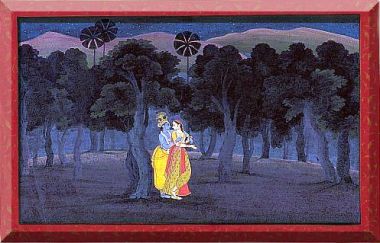


2 Comments

Posted by on December 27, 2017 in Dasarupa, Natya


Tags: , , , , , , , , , , , , , , , , , , , , , , , , , , , , , , , , , , , , , , , , , , , , , , , , , , , , , , , ,

Concerning the Dasarupa of Dhananjaya – Part Seven

Continued from Part Six

Dasarupa of Dhananjaya

BOOK THREE – continued

Dima, Vyayoga, Samavakara , Ihamrga and Utsrstikanka

Mahabharata war by Giampaolo Tomassetti

In the earlier parts we have discussed about the two major forms of Rupakas – Nataka and Prakarana – which assimilated into their own features many elements taken from the other forms; and, emerged as genre of authentic works of theatrical art.

Following that, we also talked about three other forms of Rupaka, which perhaps belonged to pre-classical times, viz., Bhana, Vithi and Prahasana, depicted in the eloquent Bharati Vritti and the pleasing Kaisiki Vrtti; and , having shades of Srngara , Hasya and Vira Rasas. These are, generally, characterized by their gentler (Sukumara) mode of presentation, which is closer to the popular theatre.

The remaining categories are shorter and more narrowly focused.  The Samavakara and Ihamrga, for instance, use fewer than five Acts; and, are exclusively about divine characters.  Furthermore, in the Ihamrga type of plays, the overwhelming concern and contest is for, somehow, winning a woman’s love.

The Vyayoga and Utsrstikanka are one-Act plays, depicting only the events that take place within the course of a single day.  The Anka or Utsrstikanka is soaked in tears, sorrow and lamentation of women over their men slain in the battle.

All these five types of plays also seem to be related to one other, in some ways. Abhinavagupta says that Vyayoga is a sort of an extension of the Dima, since both have certain similar features.  And, Ihamrga follows Samavakara, because like the latter, the characters in it are also divine beings. The Rupakas that follow Ihamrga, all have, in the main, male celestial characters.

The Samavakara, the Dima, the Ihamrga and the Vyayoga are very similar to each other. Bharata refers to the other two while describing each of this. Further, he treats the Ihamrga as similar to the Vyayoga; and, the Vyayoga as similar to Samavakara.

 Further, while all those types of Rupakas depict conflict, battle and violence, the Anka vividly demonstrates the dismay and the disastrous consequences that war and cruelty brings upon women in particular and the society , in general.

17_02_2018-17del112-c-2

In the present post, we shall, mainly, look at four kinds of plays – Dima, Vyayoga, Samavakara and Ihamrga – involving aggressive and violent actions; and, therefore classified as Aviddha (aggressive) types. And, in the end , we shall also touch upon the Anka.

According to Bharata: ‘the plays which require energetic, aggressive (Sattava-viddha) gestures (Angahara) and vigorous dance movements (Tandava), do involve such violent representations as: challenging, cutting, piercing, wounding and smashing etc.

At times, the elements of magic, sorcery etc may also be introduced to heighten the effects of mystery, supernatural and revulsion.

In order to provide a suitable setting for such dark actions, the props, the background (pusta), the costumes and make-up (Aharya) may also be devised and modified, as required.

The plays of the Aviddha type which are built around themes depicting duels, combats, fights etc., are, naturally, dominated by male characters that portray heroic gods or kings and their foes. Both the rivals need to be haughty and strong, as also be endowed with courage and vitality. 

The heroes (Nayaka), usually, are the gods or noble humans; and, the anti-heroes (Prathi-nayaka) are the Asuras, Danavas and Rakshasas.   And, there are very few female characters in such action-oriented plays.

Further, women do not get involved in the fights; although, the fight, in most cases, is about ’who gets her’.  But, in end, it is the women who have to bear and suffer the consequences of such hostility and violence.

The battles that were fought were usually  between gods and demons. And, the battle scenes occupied most of the Aviddha type of plays.

Shiva fighting demons

Another notable feature of the Aviddha type of plays is their style of presentation and dialogue-delivery (Vrtti), which, it could be said, is the blend of Sattavati and Arabhatti.

The Sattvati Vrtti is described as a rather flamboyant style of expressing ones agitated emotions with excessive body-movement; exuberant expressions of joy; and, underplaying mellow or sorrow moods.  It is associated with the ViraAdbhuta and Rauidra Rasas (vire sattvaty), where the contestants rise up to the conflict with excitement (Uttpatha) passionately hurling torrent of abuses and challenge at each other (Samlapaka) with contempt.

And, the battle proper was fought in the Arabhati-vrtti, which is described as a loud, rather noisy and energetic spectacular style. It is a powerful exhibition of one’s anger, valour, bordering on false-pride, by screaming, shouting, particularly, in tumultuous scenes with overwhelming tension, disturbance and violence. It is associated with Raudra (furious) and Bhibhatsa (odious) Rasas (arabhati punah rase raudre ca bibhatse). The Arabhati is also attended with feats of jugglery, conjunction and conflicting situations, where bodily actions are prominent.

  DFRMOHEPIYA1

***

Now, from the general characteristics of the Aviddha performances, let’s move on to their  particular varieties. And, let’s commence with the Dima.

6 The Dima

Dime vastu prasiddham syad vrttayah kaisikim vina / netaro deva gandharva yaksa rakso mahoragah / bhuta preta pisacadyah sodasa-tyantam uddhatah /  rasair ahasya-srngaraih sadbhir diptaih samanvitah / rnaye indrajala sarngrama krodho-dbhrantadi cestitaih / candra suryo-paragais ca nyayye raudra rase angini / caturahkas catuhsa rndhir  nirvimarso dimah smrtah

destroyer of cities of Asuras

The Dima along with Samavakara, Ihamrga and Vyayoga belongs to the variety of the vigorous style of plays (action-oriented), which are connected with themes of battles. The Dima too involves causing injury (samghata). It is related to battles and violent actions , where the hero inflicts injury on his foes. Bharata refers to the episode of the Burning of the Tripura (Tripura Dahana) – where Shiva as Tripurantaka burns down three cities – as being a suitable subject for a  Dima kind of play (idam Tripura ; tatas  Tripura) . The Dima, perhaps, belonged to an earlier stage in the development of the Sanskrit Drama.

Shiva Tripurantaka

The theme of the Dima is based (kāvyayoni) on any mythological event or a celebrated historical person. The hero is well-known; and, is noble. The story is complex. There are sixteen heroes and subsidiary heroes; and, they are shown at different stages of the play. The heroic Nayaka is the leading character in the play. But, such types as gods, serpent kings, angels, Yaksha etc., also figure in the play.

Dhananjaya says: ‘In the Dima, the subject must be well-known (vastu prasiddham); all the Vrttis (styles) may be employed in it; but, not the Kaisiki Vrtti (graceful).  Its exalted (Udatta) Heroes who fight for justice (Dharma), six-teen in number, should be gods, Gandharvas, Yaksas, Raksasas, Mahoragas, Bhutas, Pretas, Pisacas, and the like. All of such are of the violent type known as Raudra.

The Dima contains the six exciting Rasas (sentiments); but, not the Hasya (comic) and the Srngara (erotic). The principal exciting (dīpta) Rasa of the Dima is Raudra (the furious).

Abhinavagupta says that the Dima has all elements that are in the Nataka; the difference being that in the Dima, the Samdhis and Rasas are incomplete, having neither the introduction nor the pause. A Dima cannot have graceful and pleasing Rasas like Srngara and Hasya (though there might be a possibility of Shanta at the end) … (Some texts mention of the presence of Dipta-rasa a combination of love and humour, in the Dima plays,)

The theme of the Dima would be about dissention (bheda) among the contestants, battles, angry conflicts and furious personal combats. There is much shouting, screaming and hurling curses (Arabhati and Sattavati vrttis) in great pride and anger.

The Dima abounds in such the elements as magic, sorcery, deceit, jugglery, wrath, excitement and the like. There may also be occurrences of the earthquakes, eclipses of the sun and moon. The Dima is structured in four Acts and four Samdhis (junctures); and, there would be no introductory scene (Pravesika), and no pause (Amavarsa) between the junctures.

Abhinavagupta treats the terms Dima, Dimba and Vidrava (intense agitation) as synonyms; because they all are related to conflict, combat and violence. He observes that the Dima type of plays which provide , in plenty, the excitement of furious action; passionately screaming and shouting; and, strong determination to vanquish the foe , are truly fascinating in their own manner. Many, particularly the young, would love watching such powerful, spectacular scenes of furious energetic activity.  Further, the Dima kind of plays lends ample scope for display of wide range of psychological states (Bhavas).

And yet, the ima did not seem to have been a popular type of drama, in ancient times or in medieval period.

Tripura Dahana by Vatsaraja is cited as a good example of the Dima. Further, Kṛṣṇavijaya and Manmathon-mathanam by Veṅkaṭavarada and Rāma are also cited as examples of the Dima.

For more on Dima, please click here.

tripura Tripurasura samharam

  1. The Vyayoga

Khyateti-vrtto vyayogah khyato-uddhata-narairayah / hino garbha-vimarsabhyarn diptah syur dirnavad rasah / astri-nimitta-samgramo jamadagnyajaye yatha / ekaha-caritaika-anko vyayogo bahubhir naraih //

Madhyama Vyayogam”

This kind of drama is called Vyāyoga because many men disagree with one another (Vyayujyante); and, fight among themselves. The battle, personal combat, duel, challenge and angry conflict etc., form the theme of a Vyayoga.  The Vyayoga is a martial spectacle in which the hero is a well-known sage-like king, Rajarsi (but not a god), or army chiefs or ministers. And, they are not Udattas (exalted); but, are proud and haughty (uddhata) men fighting, wrestling, quarreling, pushing and pulling to defeat the foe. The main part of the plot must relate to a battle or a duel or a challenge thrown by a warrior to another, to prove his excellence. And, the entire action should have taken place within the course of a day.

As in the case of the Victory of Parasurama (Jamadagnya) – an example for this category – the battle that is fought is neither for a woman, nor was it caused by a woman (astri-nimitta-samgramo). The Vyayoga features many men (as many as twelve); but, has very few women characters. The intervention of women in the battle is also ruled out.

Dhananjaya mentions that a Vyayoga should have a well-known subject (Khyateti-vrtto); and, its principal characters, taken from the epics, should be heroic men, well-known and vehement (khyato-uddhata-narairayah). Dhananjaya deviates from Bharata in mentioning its characters to be vehement.

A Vyayoga should be composed with a plot having exciting events exuding the combination (diptarasas) of the exciting heroic (Vira) and the furious (Raudra) sentiments. There is no place here for the tender and mirthful Rasas like Srngara and Hasya. And, in a similar manner, there is no scope here for the graceful Kaisiki Vrtti. The two Vrttis employed in the Vyayoga are the Sattvati Vrtti (flamboyant style) and the Arabhati-vrtti (loud, rather noisy and energetic style).

As regards the structure of a Vyayoga, the single incident of strife and struggle depicted in it should take place within the duration of only one day. It is a one-Act play. A Vyayoga is constructed with three Samdhis (junctures): the first two (Mukha-the opening; and Pratimukha- the progression) and the last one (Upasamhrti-the conclusion). It does not have the other two Samdhis: the Garbha (Development) and Avamarsa (pause).

The Madhyama-vyayoga by Bhasa is cited as the best example of a Vyayoga, along with Duta Ghatotkacha and Duta Vakyam.

 [For more on Vyayoga, please click here.]

battle

  1. The Samavakara

karyam samavakare api amukham natakadivat / khyatam devasuram vastu nirvimarsas tu samdhayah / vrttayo mandakaisikyo netaro devadanavah / dvadasodattavikhyatah phalam tesam prthak prthak / bahuvirarasah sarve yadvad ambhodhimanthane/ankais tribhis trikapatas trisrngaras trividravah/dvisamdhif arikah prathamah karyo dvadasanalikah / caturdvinalikav antyau nalika ghatikadvayam / vastusvabhavadaivarikrtah syuh kapatas trayah / nagaroparodhayuddhe vatagnyadikavidravah / dharmarthakamaih srngaro natra bindupravesakau / vlthyangani yathalabham kuryat prahasane yatha //

deva asura

This kind of drama is called Samavakara because , various themes are scattered about (samavakiryante) in it. Abhinavagupta explains Samavakara (sam-ava-kra) as a play where the various themes are scattered and loosely connected (samavakīryante’-asminnarthā iti samavakāra). But, its Acts are not well interrelated to each other. It is a unique type of drama.

The theme of the Samavakara is concerned with the means of obtaining the desired objective, worthy of gods and Asuras. It portrays one famous (Prakhyata) and noble (Udatta) hero of the exalted (dhīrodātta) type amongst the twelve subsidiary heroes (Pathaka Nayaka), including gods, demons, and the like. The ends attained by these are separate and quite distinct; as, for example, in the episode of Churning of the Ocean (Samudra- manthana), Vishnu gets Lakshmi, while other gods get different things; and, the Asuras get, virtually, nothing. Bharata mentions Amrta-manthana, as an example of Samavakara.

The subject of Samavakara is partly derived from mythical lore, and partly created by the poet’s imagination (kalpita-vastu). The events that caused (Bija) discord and brewed distress between the clans of the Devas and Asuras, leading to their strives, quarrel and battles, form the part of the story. The Samavakara falls under the category of vigorous action-oriented plays (Aviddha prayoga), because it is a variety of supernatural Drama abounding in fights, combats , disturbances  and excitement etc., along with depiction of floods, storm, fire or siege of a city.

It is believed that the well-known tales narrating the battles among gods, demons and humans that might have taken place in the bygone Vedic era served as inspiration for Samavakara type of Dramas. The first Drama staged by Bharata and his sons depicting the battles between Devas and the Asuras bears a striking resemblance to the Samavakara type of play (NS.1.59). The next play of Bharata titled as Samudra-manthana was, in fact, specifically cited as a Samavakara. And, Bharata mentions that he preformed that Drama in the interest of attaining Dharma, Kama and Artha (NS.4.3)., the three  primary pursuits of human life – Trivarga. That suggests, this genre was among the earliest forms of Drama.

yo’ya samavakārastu dharma-kāmā-artha-sādhaka mayā prāggrathito vidvansa prayoga prayujyatām 4.3

The characters in a Samavakara are highly charged and are of haughty temperament. The dominant Rasa is the combination (dipta) of Vira and Raudra; although, at times, the shades of Srngara Rasa may be touched upon, as, for instance, Srngara of Dharma, of Artha and of Kama. The contestants fight bitterly with valour and hostility. Tempests, combats, and the storming of towns, are also represented; and, all the pride and pomp of war, horses, elephants, and chariots also add to the spectacle of Samavakara

The Samavakara, featuring a well-known story shows (apart from the exploits of gods and Asuras) the means to attain the three goals of life, namely Dharma (merit), Artha (material prosperity) and Kama (pleasure)-(trivarga-updya- pradartanat). It is constructed in three Acts; with four Samdhis (junctures) – Mukha, Pratimukha, Garbha and Nirvahana; but, does not have the pause (Amavarsa). It employs all the Vrittis (styles), but with just a passing shade of the gentle Kaisiki Vritti, because there is no scope here for songs, dances etc. The Samavakara do not have either the introductory scene ((Bija) or its expansion (Bindu). Therefore, one may employ the subdivisions of the Vithi type (street-play) in it, according to one’s requirements. As regards its Rasa, the heroic (Vira) and the furious (Raudra) are the dominant Rasas, with just a suggestion of Srngara. It is said; in the Samavakāra, the playwright should make proper use of metres (Chhandas) other than Uṣṇik and Gāyatrī etc., which are complex.

A significant feature of the Samavakara type is that its plot in the three Acts need not be a connected whole.  All three acts have specific order; but, are not strictly related to each other. The different Acts have different topics. They are, practically, three isolated parts of a whole. Each Act has its own theme; and, each could be an independent Drama. The Samavakara, in each of its three Acts, works at three different levels.

The Samavakara could also be viewed as a trilogy of one-Act plays united by being enacted one after another. But, the uniqueness of this multi-act Drama is that though its plot is divided into three distinct parts, as it evolves, it manages to retain unity of action throughout the play. Samavakara, is therefore, is explained as such a kind of a play where many scattered themes, finally, connects to each other (sagatair avakīraiśca arthai kriyate iti samavakāra). That appears to be the reason why the Samavakara is considered as a three-Act play.

The whole of Samavakara is structured in triads. It has three Acts. In its three Acts, it presents three kinds of deception, three kinds of love, and three kinds of excitement. Each of those three elements, in turn, gives rise to three sets of events, causes, and effects. The Samavakara also speaks of Trivarga, the three major concerns of human existence (Dharma, Artha and Kama). Perhaps, such triple composition of the Samavakara had some symbolism built into it. I am not sure.

Another interesting feature of the Samavakara is that the total duration of the play and each of its Acts is specified in Natyashastra. It is said; the three Acts of a Samavakara, played in succession, should take about 18 units of Nadikas. And, a Nadika is half of a Mahurta; and a Mahurta equates to a 48-minute-period. Thus, a Nadika would be 24 minutes long. And, the total duration of a Samavakara play would be 432 minutes or 7 hours and 20 minutes.

The Act One, which is the longest, with twelve Nadikas, takes about five hours. The Act two, with four, Nadikas, takes slightly over an hour and a half. And, that leaves less than an hour to the Act Three which has two Nadikas, to conclude the play. The Samavakara is, thus, structured to resemble a cow’s tail (Gau-puccha) growing narrower and pointed towards the end.

**

According to Natyashastra, the Samavakara shall be composed of the events which served as the seed (bija) of discontent between Devas and Asuras. It shall be glorious , sublime and devoid of sadness (prakhyatodattanka); and, shall comprise three parts for presenting three kinds of deception (Kapata), three kinds of agitation or excitements (Vidrava) and three kinds of Love (Srngara) .

Devā-asura-bījakta prakhyātodāttanāyaka-ścaiva tryakas-tathā tri-kapaas-trividrava syāt-tri-śṛṅgāra 18. 63

Further, the Natyashastra prescribes that the First Act of the Samavakāra shall contain three elements: Prahasana (laughter); Vidrava (excitement); and, Kapata (deception) or a Vīthi (the subdivisions of the Vithi type, according to one’s requirements, as in Prahasana).

Then follows the Second Act, containing the same elements as in the first; but, limited to four Nadikas.

And, the Third Act of two Nadikas, shall contain elements according to the requirements of the plot (Vastu)

It should be ensured that the topic of one Act shall differ from the topics of the other two Acts; but in some way be related (prati-sandhana) to the others.

ako’kastvanyārtha kartavya kāvyabandhamāsādya artha hi samavakāre hya pratisambandham-icchanti 18.69

Further, the Natyashastra says that the three elements-Kapata (deception); Vidrava (agitation or excitement); and Srngara (love) – shall each, in turn, consist three parts.

Thus, Vidrava, the disturbances, agitation or excitement may be caused by three types of circumstances due to : (1) battle and water (yuddha jala); (2) wind, fire and big elephant (vayavya-Agni-gajendra-sambhrama); or,(3) the siege of the city (nagaroparodha)  (NS. 18.70)

yuddhajalasambhavo vā vāyvagnigajendrasabhramakto vā nagaroparodhajo vā vijñeyo vidravastrividha 70

The Kapata (deceit) of three kinds may be due to:  (1) one’s own schemes or plans, bad-luck or accident; or (2) divine will (devavasa) ; or (3) stratagem of the enemy causing happiness or misery (NS.20,71)

Vastugata-krama-vihito devavaśādvā paraprayukto vā sukha-dukho utpatti-ktas-trividha kapao ‘tra vijñeya 71

As regards the third, the Srngara, the Love, it could also be of three kinds ,  as prescribed by the sages in three ways , shall have three kinds –  (1) that which is born by virtue , adhering to one’s duty,  desiring for  well-being of all  is  Dharma- Dharma samgraha; (2) indulging in various activities merely for love of  money or acquiring  objects is   ArthaArtha samgraha ; and,  (2) a loveless seduction of a maiden , having an affair with another woman  for mere satisfaction of passion or physical urge  is  KamaKama samgraha (NS.18.72)

trividhaścātra vidhijñai pthakpthakkāryavihitārtha śṛṅgāra kartavyo dharme cārthe ca kāme ca 72

To sum up:  The three kinds of deception could be those caused by (i) the nature of the subject; (ii) supernatural action; and by (iii) enemies;  the three kinds of excitement could be those resulting from  (i) the besieging of a city; (ii) a battle; and (iii) violent winds, fires, and the like ; and,   the three kinds of love could be triggered or motivated by (i) virtue or merit; (ii) greed or the love to gain money and objects; and  (iii)  unrestrained passion.

[Abhinavagupta adds one more dimension to the issue.  While interpreting the three kinds of Vidrava, he says, it could also be taken as tumult caused by the animate (humans, elephants etc); inanimate (wind, fire , water etc); and by both (strategic siege of the city by elephants , chariots and humans) agencies.  He extends similar interpretations to the other two elements: Kapata and Srngara.]

Mahabharata war-games strategy by Giampaolo Tomassetti

It is explained; performing ones duty with diligence, observing vows and practicing austerities for the purpose of attaining the desired state of well-being is to be known as love in performing ones duty (Dharma-śṛṅgāra).

When one acts with a desire to secure financial benefit , or to gain some material gain or is simulated by  passion for merely seeking pleasure with a woman, it is to be known as ones  love for  possessing or acquiring  (Artha- Srngara).

And, when one seduces a woman or takes advantage of her or enjoys a woman stealthily with unbridled passion, without love or concern for her, it is to be known the desire to quench ones passionate impulses (Kama-Srngara).

**

The Samavakara appears to be an earlier form of Drama. But, over a period it lost its appeal; and, it no longer was popular. After the ancient Amrta-manthana, the play of Vatsarāja (Samudra-manthana) is the most well known Samavakara class of play. No other plays of such class seemed to have been composed in the later times.

Abhinavagupta does not seem to think very highly of the Samavakara. Before concluding his commentary on Samavakara, he says: persons of devout nature; and the devotees of gods get delight out of this type of production; while,   women, children and the ignorant get enraptured by the  exciting  spectacle of deception , tumult, fighting  etc.

Though the Samavakara is not rated as high as the Nataka and the Prakarana, it is still important, not only because it represents a significant phase in the history of the development of Sanskrit Drama ; but also, because of the technique that is involved in its construction.

{For more on Samavakara , please click here.]

***

  1. The Ihāmrga

Misram Ihamrge vrttam caturahkam trisamdhimat / Nara-divyav aniyaman nayaka-pratinayakau/ khyatau dhiroddhatav antyo viparyasad ayukta-krt / divya-striyam anicchantim apaharadin-ecchatah/ srngarabhasam apy asya kimcit pradarsayet samrambham param aniya yuddham vyajan nivarayet vadhapraptasya kurvita vadham naiva mahatmanah //

rukminiharanam

It is said; this kind of a play is called Ihamrga, because in it, the hero relentlessly pursues (Ihate) a woman who is as elusive as a swiftly flying gazelle (mrga); and, it is very difficult to get her.

The Ihāmrga is a play of intrigue in four Acts (caturahkam), having three junctures (trisamdhimat). Its story might partly be based on a well-known episode in mythology; and, partly be made up or created by the playwright (Itivrttam). Its hero (Nayaka) and subsidiary-hero (Prati-nayaka) could either be human (Nara) or Divine (Nara-divyav aniyaman nayaka-pratinayakau). Both should be outstanding, prominent (khyatau) vehement (uddhata) persons of the Dhiroddhata type. The adversary is as capable as the hero; but, commits improper acts by mistake or foolishness (viparyasad ayukta-krt).

The heroine is a celestial beauty (divya-stri). The principal male characters in the play fight bitterly over the woman. Either or both the rivals might attempt to secure her, against her will (anicchantim apaharadin-ecchatah), by abducting her or by some such means. Such hostile acts make the heroine get very angry. The verses in the play depict the anger (avega) of women.  The struggles (saphea) that ensues between the rivals gives rise to much confusion, commotion (sakobha) excitement (vidrava) and furious battle.

Though hostile wrath is provoked and there is intense hostility, which reaches up to the point of killing, the playwright should ensure that it does not lead to death of either of the great opponents. Even in case someone dies in the original story, based on which the plot of the play was created, the playwright should avoid showing incidence of  the impending battle and death in the play, on one pretext or the other- yuddham vyajan nivarayet vadhapraptasya kurvita vadham naiva mahatmanah.

Bharata instructs that the play should be constructed with a well-arranged and a convincing plot (Vipratyayakarahah).

Dhananjaya says: “All that are to be made available in the Vyāyoga—its male characters, styles and sentiments—should be brought in the Īhāmga also, except that the latter is to include only the divine female characters”.

The Ihamrga is to be structured in four Acts, with three junctures (Samdhi)- Mukha ( opening), Prathi-mukha ( expansion) and Nirvahana ( conclusion).

Its styles of presentation are the Sattavati and Arabhatti Vrttis, which are the characteristics of the aggressive Aviddha type of plays. The gentle Kaisiki Vrtti should strictly be avoided.

So far as its actions are concerned, the Vira, Raudra and Bhayanaka are prominent Rasas, though there are three other Rasas. And, in Dhananjaya’ s view , only a slight semblance of love  (Srngara) should be shown on the part of one who tries to obtain a woman against her will by carrying her off or some such means.

The Rukmini-haranam by Vatsyaraja is said to be a good example of the Ihamrga type of Rupaka.

 [For a detailed discussion on Ihamrga, please click here.]

***

  1. Utsrstikanka

utsrstikanke prakhyatam vrttam buddhya prapancayet rasas tu karunah sthayi netarah prakrta narah bhanavat samdhivrttyahgair yuktah striparidevitaih vaca yuddham vidhatavyam tatha jayaparajayau.

horrors-of-war

It is said; this type of Rupaka is called Utsrstikanka merely for the purpose of clearly distinguishing it from Anka (or an Act), which term denotes a division in a play.

The Utsrstikanka is a sort of an epilogue which follows the end of a battle. It is a pathetic depiction of the wailing widows and other women weeping over their husbands, lovers and sons who were slain in the battle. Its main theme is lamentation and despondent cries, shrieks and utterances (nirveditabhāṣitaḥ); and, the bewildered movements of the mourners, in shock and grief,   in the aftermath of a violent battle that just ended.

Abhinavagupta says the Utsrstikanka does, in fact, strongly brings home the disastrous consequences of violence and war. And, in that, it should serve as an object lesson for all those who believe that war alone is the means to resolve all disputes.

Abhinavagupta, therefore, says that the Utsṛṣṭikāka should follow, as a sequel to Samavakāra, Ihāmga, ima and Vyāyoga, which depict the horror and violence of battle scenes – (utkramaīyā sṛṣṭirjīvitam prāā yāsām tā utsṛṣṭikā śocantya striyast aābhir-akita iti tathoktā )

War

A well known (prakhyāta) episode from a mythological source or , as suggested by Dhananjaya, a story-line created (utpādya) by the playwright could be the plot of an Utsṛṣṭikāka type of play. Its principal character should be a male, human or someone other than a divine being (divya), because the Utsṛṣṭikāka it is full of pathos, the Karuna Rasa (karua-rasa-bāhulyā). Therefore, Karuna is the principal Rasa of the Utsṛṣṭikāka. And, according to Abhinavagupta, only in case it has elements of Raudra (furious), Bhibhatsa (odious) or Bhayanaka (fearsome) Rasas, it can have divine characters in the leading roles – (iha ca karua-rasa-bāhulyā-deva devair-viyoga raudra-bībhatsa-bhayānaka sabandho- divyayoge -na bhavatyapi tu karuay-oga ).

Dhananjaya, however, suggests that in the Utsṛṣṭikāka, could even the ordinary men could be the heroes.

The Utsṛṣṭikāka, which is constructed as a one-Act play (ekanka) with two junctures (Samdhi) – the opening (Mukha) and the conclusion (nirvahaa) – , does not depict actions such as battles etc. Its mode of narration is based almost entirely in speech; and, it follows the verbal style (Bhāratī-vtti). Dhanañjaya states that the events like fights, battles or victory or defeat etc., should merely be suggested by means of descriptive speeches.

The treatment of the subject in Utsṛṣṭikāka in natural and realistic (Loka-dharmī), just in the way the common people behave, ordinarily,   in their lives. The speech in the scenes depicting the anxiety, despair, stupor and lamentation of the sobbing women should convey the sense of deep sorrow, disgust and despair.  There is no place in the Utsṛṣṭikāka for the kind of speech such as the aggressive Arabhaī-vtti, the grand Sāttvatī-vtti or for the pleasing Kaiśikī-vtti.

The dominant Bhavas in the Utsṛṣṭikāka are said to be Shoka (sorrow) and Jigupsa (disgust), which, in turn, give rise to Rasas such as the Karuna (pathos) and Bhibhatsa (odium) .

It is explained; the death of valiant men is the main cause of action (Alambana Vibhava); the mourners falling on the ground, weeping, howling  and heaving is the manifestation of that sorrow and despair (Anubhava); the denunciation of fate, cursing the enemy, recalling with fondness the dead heroes etc., are the transitory expressions of their grief (Sanchari Bhava); and , falling sick , shedding tears, swooning, trembling,  going pale  etc., are the involuntary reactions to the misery, anguish and grief they are suffering (Sattvika Bhava).

The Bhibhatsa Rasa of horror or loathing is manifested in disgust; and, its associated states of agitation, sickness, apprehension, and the like.

The Ūrubhaga by Bhāsa, which followed almost all the rules of theyaśāstra, is said to be the best example of the Utsṛṣṭikāka type of Rupaka.

For a detailed study of Utsṛṣṭikāka, please click here

p1140060

Dhananjaya concludes the Third Book with the statement :  if a playwright, having gained the proper understanding or the essence of Natyashastra,  diligently applies to his work the series of definitions of the ten forms of drama (Dasarupa) as prescribed in the Natyashastra; and, if he also studies the works of great poets, he would undoubtedly be able to produce, without effort, a literary work of great merit that is adorned with rhetorical embellishments (Alamkara), sweetness (Madhurya), clarity (Prasada), loveliness (Lavanya) and eloquence (Abhijata) , composed in leisurely paced (Manda-kranta) metres.

Ittham vicintya dasarupaka-laksma-margam / alokya vastu paribhavya kavi-prabandhan / kuryad ayatnavad alamkrtibhih prabandham / vakyair udara madhuraih sphuta manda vrttaih //

***

In the next Part, we shall, at last, move on to the Fourth and the Final Book of the Dasarupa.

Cover_of_a_Shakta_Manuscript_with_Uma-Maheshvara_

Continued

In

The Next Part

Sources and References

The Dasarupa a treatise on Hindu dramaturgy by George C. O. Haas, Columbia University press / 1912

 A Study of Abhinavabharati on Bharata’s Natyasastra and Avaloka on Dhananjaya’s Dasarupaka – by Manjul Gupta

Sahityadarpanah of Viswanathakavirajah

The Theory of the Samdhis and the Samdhyangas in Natya Shastra by T.G. Mainkar

Sanskrit Dramaturgy

http://shodhganga.inflibnet.ac.in/bitstream/10603/48454/21/21_chapter%2021.pdf

http://shodhganga.inflibnet.ac.in/handle/10603/106901

http://shodhganga.inflibnet.ac.in/bitstream/10603/122/18/09_chapter1.pdf

http://shodhganga.inflibnet.ac.in/bitstream/10603/22886/6/06_chapter%202.pdf

http://www.jstor.org/stable/25220898?seq=1#page_scan_tab_contents

http://shodhganga.inflibnet.ac.in/bitstream/10603/127505/9/chapter%208.pdf

All images are from Internet

 
Leave a comment

Posted by on December 20, 2017 in Dasarupa, Natya


Tags: , , , , , , , , , , , , , , , , , , , , , , , , , , , , , , , , , , , , , , , , , , , , , , , ,

Concerning the Dasarupa of Dhananjaya – Part Six

Continued from Part Five

Dasarupaka of Dhananjaya

BOOK THREE – continued

 Bhana, Vithi and Prahasana

NKN-09

Of the ten forms of Sanskrit Drama (Rupakas), we have in the last two Parts, discussed about Nataka and Prakarana, the two major forms in the group of Dasarupa.

In this Part, let’s briefly talk about – Bhana, Vithi and Prahasana.

***

  1. The Bhana

Bhānavastu dhurta-Càritam sua-anubhutam parena vä/ yathâ-pa Varnayedeko nipunah pandito vitah//

Sambodhana-ukti-prayikti kuryat-ākaša-bhāSitäih/ Sucayet-vira-sringārau saurya-Saubhagya-samstävaih//

Bhuyasa bharati vrttir ekankam vastu kalpitam/ mukha-nirvahane sange lasyangani dasapi ca //

It is said; the term Bhana is derived from the root ‘Bhan‘, which means ‘to speak’. Abhinavagupta explains Bhana as:

’Eka mukhenaiva bhahtante ukthi-manthah kriyante apravista api patriyavinesa yatra iti Banah ‘–

It is Bhana (lit. speaking) because the characters that do not enter the stage are heard indirectly through the mouth of the actor who is out on the stage’.

ātmānubhūtaśasī parasaśrayavaranāviśeastu vividhāśrayo hi bhāo vijñeyastvekahāryaśca 108

paravacanamātmasastha prativacanairuttamottamagrathitai ākāśapuruakathitairagavikārairabhinayaiścaiva 109

 dhūrtaviasamprayojyo nānāvasthāntarātmakaścaiva ekāko bahuceṣṭa satata kāryo budhairbhāa 110

Bhana, for all purposes, is a single Act presentation (ekankam); though, technically, it has two junctures – the opening (Mukha) and the conclusion (Nirvaha), each preceded by songs of gentle graceful style (Lasya). And during the course of the Bhana, musical effects are provided from the background to enliven the show.

Bharata explains Bhana as a monologue narrated by a single actor; and, yet its theme is full of various characters and situations – vividhā-aśrayo hi bhāo vijñeya stva ekaharya-sca NS.18.108

Abhinavagupta also explained Bhana as a satirical performance put on by a single actor, talking to himself, making conversation with the imaginary persons, imitating the other characters and chastening the high-class by lampooning their licentious ways. He considers that Bhana has affinity (samana-yoga-kshema) with Prahasana

The Bhana type of Rupaka (bhanyate iti bhanah) is described as a monologue enacted by a single actor who plays the role of experienced, clever rouge (dhurta) or a sharp-witted amiable (dakshina) parasite , skilled  in amorous ways (nipunah pandito vitah) who goes on an errand to please a courtesan or the lady-love of his noble friend. He narrates, dramatically, his own roguish exploits or describes that of someone else –

ātmā-anubhūtaśasī parasaśraya-varanā-viśeastu

He carries on conversation (Sambodhana-ukti-prayikti kuryat) with imaginary persons (akasha-bhasita), asking questions and replying them himself. He imitates other characters, their voice and their expressions. He acts and narrates employing ingenious techniques of Ekaharya abhinaya (abhinaya, without the aropana of the aharya, i.e., adopting or assuming the roles of various characters, without changing either the costume or the make-up).

Bharata says that the Vita, in a Bhana, need not be a ‘Hero’, as in the other types of Dramas, but as the only character that fills the stage. He says the Bhana, after all, is for the Vita; it is a Dhurta- vita –samprayojya. The Vita as a character is generally neglected in Sanskrit Drama. But, he makes his appearance in Mrcchakatika.

*

The Bhana is altogether different from the elegant Sanskrit court-plays.  It deals with the common place and the trivial. It ridicules and exposes the seamy side of urban life and of the court officials, in particular; and, debunks the hypocrites moving under the guise of the virtuous. The subjects such as love, betrayal, rivalry or battles, mischief, fraud, intrigue and nuisance form the meat of its theme.

In short, Bhana is akin to one-man-stand-up comedy shows, which have become a regular feature on most of the TV channels. In a way of speaking, Bhana which had almost faded away in the middle era, enjoyed a sort of resurrection in the twentieth century.

About Bhana, Sylvain Levi, in his The Theatre of India, writes: the monologue, the Bhana, is most remote from the Drama proper.  It is most popular today as it was in the past. Actors and writers love it. It abounds in descriptions and gives ample scope to poetical ingenuity, while its imaginary dialogues offer to the actor the opportunity to display his virtuosity.

 **

The theme in a Bhana is improvised (vastu kalpitam); and, is rendered in  Bharati Vrtti, the  eloquent style (bharati-vrtti Pradhana tvad bhanah).  

It is said; the Srngara and Vira are to be its dominant Rasas, depicted by fortune-in love (Saubhagya) and heroism.

[It is rather surprising that Hasya was not considered by the ancients as one among the appropriate Rasas for the Bhana, particularly since it is allied to Prahasana, a farce.  Abhinavagupta also speaks of its character, the Vita as – hasyochita.

Similarly, Bharata had specified the Bharati Vrtti as the suitable Vrtti for the Bhana ( Bhuyasa bharati vrttir ). And at the same time , he had ruled out  Kaisiki Vritti for Bhana.

But later, Visvanatha modified the ancient stipulations set by Bharata; and, said that Srngara and Hasya Rasas as also  the Kaisiki Vrtti could also be treated as suitable for Bhana. He argued that such modification is justified, since there is scope in the Bhana for display of ‘love, gallantry, coquetry, pleasantry (narman) and jesting, along with comic in speech, dress and movement’.

Thereafter, in the later periods, the Srngara-rasa (aesthetic pleasure of the erotic variety), Hasya rasa (of  humour)  and Kaisiki-vrtti (graceful style) which  characterized  the Lasyangas  became the standard parts of the Bhana. ]

**

Not many of the ancient Bhana scripts have survived. It is said that in the early years of the 20th century, the scholars Sri M Ramakrishna Kavi and Sri S K Ramanatha Shastri discovered the MSS, edited and published four Bhana plays: Ubhaya-abhisarika of Vararuchi; Padma-prabhrthaka of Sudraka; Dhurta-Vita-samvada of Isvaradatta; and Pada-taditaka of Syamalika. These were published together under the title Caturbhani, during 1922.

The Dhurta- vita-samvada presents an interesting picture of a seemingly clever, experienced, but worn-out Vita, who finding the rainy season too depressing, comes out seeking some amusement. He has no money either for a game of dice or for a drink – even his clothing is reduced to one garment.  He, then, winds his way towards the street where courtesans live, transacting with their clients of various kinds. He, sadly, cannot afford a courtesan, either.  At the end, dragging his feet, he reaches the house of the roguish couple Visvalaka and Sunanda, who were then busily engaged in a discussion on certain awkward problems of sex-act. The Vita gleefully joins the discussion.

rose-SG

 Prof. S. K. De in his article A Note on the Sanskrit Monologue-Play (Bhana), with Special Reference to the Caturbhani , pulished in The Journal of the Royal Asiatic Society of Great Britain and Ireland ; No. 1 (Jan., 1926), pp. 63-90 , gives a detailed review of these four ancient works and  of a few other.

Prof.SK De in his review observes:

Indeed, one of the outstanding features of all the Bhanas is their want of variety; and, the monotonous on the erotic sentiment tends to become cloying. This, combined with their hopeless but vigorous vulgarity, must have been responsible, to some extent, for the comparative oblivion to which they have been confined.

There is no doubt that in the later times they became mere literary exercises and subsided into a conventional and life-less form of art.

There is a monotonous sameness of style and treatment, inevitably suggesting a sense of artificiality. We meet over and over again the same  theme, the same types of characters ,the same elaborate descriptions , the same tricks of expression , the same strings of nouns and adjectives, the same set of situations, the same group of conceits, and the same system of morals or want of morals.

The depressing atmosphere of ‘low’ characters, none of whom rise above the middle-class, is bound to be dull, unless diversified by comic effects or individual traits or variety of incidents and situations.

 It is not, therefore, surprising that the Bhana as literature, though always popular, never made a permanent appeal and was forgotten in the later times.

**

However, on the same subject of Chaturbhani, FW Thomson took a totally different view; and wrote:

It will , I think, it will be admitted that the Bhana compositions , in spite of the unedifying character of their general subject and even in spite of the occasional vulgarities, have real literary quality . They display a natural humour and polite, intensely Indian, irony with need not fear comparison with that of Ben Jonson or a Moliere. The language is veritable ambrosia of Sanskrit speech. – [Centenary Supplement of the Journal of the Royal Asiatic Society, October 1924]

Comedy Choodamani

4.Vithi

vithi tu kaisikivrttau samdhyangankais tu bhanavat / rasah sucyas tu srngarah sprsed api rasantaram / yukta prastavanakhyatair ahgair udghatyakadibhih / evam vithi vidhatavya dvyekapatraprayojita  //

The Vīthi is reckoned among the earliest forms of Sanskrit Drama. The episodes culled out of mythologies and popular tales were narrated by use of clever and inventive witty dialogues. It is also said that Vithi which is chiefly of  conversational  style might have originated from the ancient Samvada Suktas of the Rig-veda. 

The term ‘Vithi’ generally stands for ‘marga’- path.  As its name suggests, it is likely that the Vithis were, initially, played at the street-corners. And, in the later times they came to be presented on the stage. The term Vithi is also interpreted as denoting a series,  string of sequences, Maala ( garland). 

It is said; Vithi had two varieties; the earlier one of which was closely related to Bhana where a single actor delivered a monologue. And, in the other, which came later, two actors engaged in varieties of dialogues, impersonating several characters

vīthī syādekākā tathai-ekahāryā dvihāryā vā .

The heroine in a Vithi can be a chaste woman (kulapālikā) , a common woman (sāmānyā) or of the other type (parakīyā).

Rasair-bhavaisca sakalaih yukta Vithi prarikrita Ekaharya Dviharya va kartavya kavibhis sada //20.135//

According to Bharata, the Vithi is a single-Act play, to be enacted by one or two persons. It includes characters of the superior (Uttama), middling (Madhyamā) or inferior (Adhama) class. The Vithi is rich in all the Rasas; and consists of thirteen sub-divisions (angas) – Sarva-rasa-lakaā-ahyā yuktā hy agais trayodaśabhi.

Dhananjaya describes Vithi as a one-Act play, which resembles the Bhana, in that it includes frequent speeches in the air; and, has only two junctures (Samdhi) – the beginning (Mukha) and the conclusion (Nirvaha). It may have one or two actors. It has thirteen sub-divisions.

As regards its Vritti, the style of presentation, Bharata had earlier treated it as a class of play, which is akin to Bhana and Prahasana; and, which does not have the graceful Kaisiki Vrtti (kaiśikī-vtti-hīnāni). And, he had, earlier, indicated the Vithi as being related to the eloquent Bharati Vrtti. Abhinavagupta followed Bharata.

Vīthī caiva hi bhāaśca tathā prahasana puna kaiśikī-vtti-hīnāni kāryāi kavibhi sadā 19.48

That might be because the eloquent speech delivery is the major strength of the Vithi. The techniques of ingenious employment of different manners of dialogue delivery and styles of conversations are the characteristic features of the Vithi. Eventually, even after the Vithi type of Rupaka faded away, its style of witty exchange of dialogues walked into the prologue (Prasthavana) of the more evolved varieties of the Rupakas. 

Dhananjaya had initially accepted the Vithi as a part (anga) of the Bharathi Vrtti. But later, he classified it under Kaisiki Vrtti (Vithi tu kaisikivrttau). That was perhaps because; the Vithi, endowed with all the Rasas (Sarva-rasa-lakaāahyā yuktā), with its thirteen subdivisions (agais trayodaśabhi) has the beauty of the monologue (Ekaharya akasha-bhasita, speech in the void) as also the beauty of a amusing conversation (Dviharya).

Sarva-rasa-lakaā-ahyā yuktā hy agais trayodaśabhi Vīthī syādekākā tathai-ekahāryā dvihāryā vā   NS.18. 112

Apart from that, Dhananjaya followed Bharata in regard to other aspects of the Vithi.

As regards the Rasa (sentiment)the Nāṭyaśāstra states that Vīthī can use all the Rasas; and one may just touch the Srngara RasaHowever, the Daśarūpaka states that Vīthī should have erotic (Sṛṅgāra) Rasa  as the main; and,  the others as subordinates.

rose-SG

Vithyanga

It is said; the term Vithi also stands for ‘pankthi of angas’, series of  elements or the sub-divisions. The chief purpose of  Vithi , is said, to provide effective speeches  or witty dialogues . The enumeration of the thirteen subdivisions of the Vithi, with their elements (Vithyanga), is one of the important features of the Vithi Rupaka. In that context, Dhananjaya had treated the Vithyangas as a division of the Bharathi Vrtti, while he was discussing the Amukha, prologue or introduction to the play.

[The Bharati-vrtti is mainly related to scenes where the speech or dialogue delivery is its prominent feature.  But, even otherwise, the Bharati vrtti, related to eloquence, is of much importance in all the situations (vrttih sarvatra bharati).  It is devoid of Srngara, Karuna and Nirveda   (dispassion).  

The Bharati-Vrtti has four varieties: Parochana (introducing the play and playwright to the spectators); Amukha or Prastavana (where the Sutradhara strikes a conversation with the Nati or Vidushaka, as a prologue to the play); Vithi (sort of monologue the Sutradhara carries on before the play proper); and, Prahasana (hilarious conversations between minor actors). All these take place, mostly, in the Purvanga, the preliminary to the play proper.]

Bharata enumerates the thirteen subdivisions of the Vithi (Vithyanga)  (Natyashastra -Chapter 18.113-114). According to Bharata, the Vithi should include characters of the superior, the middling or the inferior type (Adhamo-uttama-madhyābhir-yuktā); and, it may contain any of the thirteen types of speech.

The thirteen subdivisions of the Vithi are:

  1. Abrupt Interpretation (udghātyaka);
  2. Transference (avalagita);
  3. Ominous Significance (avaspandita);
  4. Incoherent Chatter (asat-pralāpa);
  5. Compliment (prapañca);
  6. Enigma (nāli or nālikā);
  7. Repartee (vākkeli);
  8. Outvying (adhivala);
  9. Deception (chala);
  10. Declaration (vyāhāra);
  11. Crushing (mdava);
  12. Three Men’s Talk (trigata); and
  13. Undue Combination of Words (gaṇḍa).

Adhamo-uttama-madhyābhir-yuktā syātpraktibhistisbhi uddhātyakā avalagitā-avaspanditanālyasatpralāpāśca 113

 vākkelyatha prapañco mdavādhibale chala trigatam । vyāhāro -gaṇḍaśca trayodaśā-agānyudāhtā-nyasyā 114

Thereafter, Bharata says ‘Any of these thirteen types is always to be attached to the Vīthi. I shall now speak of their characteristics in due order’

Udghatyaka: – it is when a person uses obscure terms to explain a given word; and, that leads to a meaning that was not quite intended by the speaker.

Avalagita: – It is when a different purpose is achieved (inadvertently) along with the intended one.

Avaspandita: – It is when a misinterpretation of a word, which might either be auspicious or inauspicious (Subha-asubha), leads to the exactly opposite of the true meaning of the word.

Asat-Pralapa: – It is when a learned person advises a fool, asking him to do the right thing; but, the latter (the fool) chooses to ignore the good advise.

Asat-Pralapa also happens when an irrelevant question is followed by an equally irrelevant answer.

Prapañca: – it is a way of mocking, when two persons praise and complement each other by using false but funny sounding words

Nalika: – It is an enigmatical remark that gives rise to laughter.

Vākkeli: – It is a repartee or a counter speech. It is a series of questions followed by witty replies producing comic effect,.

Adhivala: – It is when, during the course of an argument, both the parties are forced to modify or revise their statements. Thus, each tries to outdo the other.

Chala: – It is a type of deceit, when, during the course of an argument, one party tries to mislead the opponent by  making worthless and nonsensical statements, in order to frustrate, ridicule and mock at him.

Vyāhāra: – it is a fearless declaration made in presence of the hero ; and , it is made to happen.

Mdava: – It is when one ridicules, dements and crushes the opponent by mocking at the opponent’s merits and make it look worthless and a blemish too.

Trigata: – It is a dignified discussion, with humour (Hasya) carried on by three characters. According to Dhanajaya, it is a discussion among three actors, as in the Purva-ranga (preliminary scene)

Ganda: – It is when in the heat of the situation; and due to excitement, confusion and agitation   , one bursts out with disjointed statements, wrong words and hurling abuses at the opponent.

Bharata remarks, if any or most of these thirteen divisions of Vithi, are employed, in a series, it would then result in a Vithi type of Rupaka.

Abhinavagupta explains that these thirteen Angas of the Vithi are quite different from the Lakshanas and Alamkaras (embellishments, figures of speech). The Vithi, according to him, is a series of eloquent and clever statements and counter statements (Vākkeli) made with wit and alacrity. The scope of Vithi is, thus, not limited to a single utterance or to an expression of beauty. It gives rise to series of diverse varieties of skilful, imaginative, innovative statements (ukti-vaichitrya) – (Vithiyantu bahuvidha vakrokthi visesa utpadayante).

Dhananjaya observes that if a playwright, having gained the proper understanding or the essence of Natyashastra,  diligently applies to his work the series of definitions of the ten forms of drama (Dasarupa) as prescribed in the Natyashastra; and, if he also studies the works of great poets, he would undoubtedly be able to produce, without effort, a literary work of great merit that is adorned with rhetorical embellishments (Alamkara), sweetness (Madhurya), clarity (Prasada), loveliness (Lavanya) and eloquence (Abhijata) , composed in leisurely paced (Manda-kranta) metres.

rose-SG

Lasyanga

The description of the thirteen varieties of Vithyanga is followed by the descriptions of the ten Varieties of Lasyanga.

Bharata says, there is a form of entertainment called Lasya, which is closer to Bhana and Vithi. And, like in Bhana, it is done by one actor (Bhana iva eka-prayoga ni / Bhana-kritiva-Laasyam), displaying various aesthetic expressions (vividha-bhāvam) .

bhāṇā-kṛtiva-llāsyaṃ vijñeyaṃ tva-eka-pātra-hāryaṃ prakaraṇa-vadūhya kāryā-saṃsta-vayuktaṃ vividha-bhāvam ॥ 19.118॥

Bharata again says, the Lasya is related to Srngara rasa, portraying love and other softer, graceful aspects. And, Lasya is present in Vithi, which enters into Prahasana. And, Vithi and Prahasana also enter the first of the three parts of the Samavakara. Further, all of these together with Lasya and its Angas enter into Nataka (Anyāni ca Lasya vividha-angani tu Natake prayuktani).

The emotional theme in the Lasya is a product (utpadya-vastu) of the poet’s imagination, Uhya. In that respect, it is similar to the Prakarana, a play with a created story, uhya-karya (or kavya) – Utpadya-vastu Prakarana vad uhya-karyam.

The Natyashastra does not clearly define Lasya; but, it gives a list of ten Lasyangas, the subdivisions of Lasya (as below), soon after concluding the discussing on Bhana. It also says that the Lasyangas are to be presented by a single character as in the case of a Bhana; and, not by a group of characters.

Geya-pada: – It is a joyful song sung by the heroine, for the pleasure of the hero, while she is seated. She is surrounded with stringed instruments and drums; and, yet, she prefers to sing without accompaniment of any of these. It is a simple rendering of a song, based in melody.

Sthita-pathya: – it is a sad song in Prakrit (regional language) sung by the love-stricken heroine pining for her lover, while resting (sthitha) in her seat.

Asina-pathya: – The lonely, forlorn heroine who is separated from her lover sits (Asina) alone – depressed and pondering over her situation, throwing oblique glances. And, she is not even listening to any sort of music.

Pushp-agandika: – it is a song and dance, with music, performed by a woman who is in the guise of a man, for the pleasure of her female friends

Pracchedaka: – It is dance performed by a separated woman afflicted by moonlight and overcome with passion, clinging to her lover, even though he had been unfaithful to her.

Trimudhaka: – It is when the heroine dances, naturally, to a song composed with soft and sweet sounding words, set in easy, even metre.

Saindhavaka: – As the heroine anxiously awaits her for lover , who has failed to keep his tryst, she sings ,with grief, a song in Prakrit, and dances displaying various Karanas, to the music on Veena and other instruments.

Dvimudhaka:– In it a song of the Caturasra type (chaturasra-pada) set in four kaalas (rhythm, tempo); with a proper beginning (Mukha) and elaboration (Prathi-mukha); and full of emotive feelings and expressions of love , that is sung by the heroine. She dances gracefully, in circular movements, accompanied by melodious vocal and instrumental music.

Uttamottamaka: – It is a dance full of playful and joyous movements, accompanied by exciting songs (adorned with various kinds of Ślokas) and instrumental music .

Ukta-pratyukta: It is a dance performed, as a duet, to a lyric which is composed by weaving into it interesting speeches and counter-speeches (repartee) full of flirtation, dalliance and sarcasm. The song set to playful music, sometimes, contains words of censure and mock-anger.

**

[Bharata had specifically mentioned ten kinds (Dasa-vidha) of Lasyanga. For that reason, Abhinavagupta recognizes only the above ten forms of Lasyanga.  He did not accept the two other forms – Chitrapada and Bhavita – for, he thought that they might have been inserted into the text at a later time.

Citra-pada: It is a dance performed by lovelorn person who amuses herself / himself by looking at the portrait of her/his beloved.

Bhavika: It is a dance in which the heroine dreams about her lover and expresses diverse feelings in a rather pensive mood.]

slider1

  1. The Prahasana

Pakhandi–vipra-prabhrti-cetaceti-vita-kulam cestitam vesa-bhasa-bhih suddham hasya vaco-nvitarn

Kamukadi vaco vesaih sandha kancuki tapasaih vikrtam, samkiram vithya samkirnam dhurta- samkulam

It is called Prahasana, because it generates lots of laughter (Hasa). Bharata considers that humour (Hāsya) is related to erotic (Sṛṅgāra) – (Sṛṅgārāddhi bhavedd-Hāsya).  He said amusement or humour (hāsya) as a Rasa is born out of the dominant mood (Sthayi-bhava) called mirth (hāsa) – (hāsyo nāma hāsa-sthāyi-bhāvātmaka). However, Abhinavagupta states that shades of humour can be brought in and experienced in any Rasa (etena sarve rasā hāsye antarhitā iti darśitam).

Prahasana is a farcical or comic satire, created (utpadya) by a playwright, with a view to provoke laughter. It is a burlesque, one or two-Act-skit, littered with caustic humour, flippantly deriding the so-called respectful figures in the society (who, in fact, are worthless people – Kapurusha); and, their corrupt practices.  The rumours that are in circulation among the common people (Loko-pacara-yakta-varta), about the deceitful contrivances of the roguish rich and influential are brought out on the stage, without hatred or rancour. Hasya, humour or laughter is its main Rasa.

Bharata had earlier divided the Prahasana  into two types: pure (Shuddha) and mixed (Samkirna). Dhananjaya made that into three subdivisions.

Dhananjaya mentions that Prahasana which is similar to Bhāa (tadvat) in plot (Vastu) , juncture (Samdhi), gentle dance (Lasya), and style (Vrtti) has three types: Shuddha (pure); Vikrta (modified); and, Samkirna (mixed) – tadvat prahasanam tredha; shuddha, vaikrta, samkaraih.

The Shuddha (the pure) Prahasana is that in which the leading characters are heretics, hypocrites (Pakhandi), Brahmins (Vipra), ascetics, (tapasaih) men (Dasa) and maid-servants (kancuki). It contains conversation of ascetics and gods provoking humour; but, it is devoid of obscenity and falsehood.  Its language and conduct are studied and learned (Adighata). The Shuddha Prahasana is performed with appropriate costumes and language; and, is full of (anvita) comic speeches (hasya vaco-nvitarn). It is also said; when the plot focuses on the personality of only one person, whose conduct is improper, only then he should be laughed at.

‘The second is the modified Prahasana (vikrta) where the characters are of vulgar type, such as:  eunuchs, prostitutes, rouges (Dhurta) and parasites (Vita). It deals essentially with the, hypocrisy, tricks, squabbling, and mean streak of every kind. The characters, their appearance and flashy costume, are uncouth, garish and loud.

The third, the mixed Prahasana (Samkirna) is similar to the Vikrta type; but, in addition, it is an admixture of elements taken from the street-play or the Vithi type of Rupaka; and, it is filled with rouges (Dhurta).

Apart from providing amusement, the hilarious Prahasana is useful, in the sense that it cautions the good folks to be on guard against the possible exploitation by the unscrupulous elements in the society.

Bharata said that Prahasana was the most popular form of Drama: sarva-loka-prahasanair abādhante hāsya-saśrayai NS.36.8). It is not surprising that Prahasana, which had its origin in the pains, disgust and laughter of the common people, was a much sought-after popular form of comic relief, in an otherwise dreary existence.

Dhananjaya names six types of laughter: smile (smita); smile just about to break into gentle laughter (hasita); gentle laughter (vihasita); laughter of ridicule (upahasita); vulgar laughter (apahasita); and, excessive laughter (atihasita).

Clever, slick, and captivating eloquence (Bharati-vritti) is the very lifeblood of Prahasana; and, it is essential that the actor ensures that there is never a dull movement in his presentation. He should start off briskly; and, ingeniously employ with alacrity every element of Amukha, the opening section: catch the attention of the audience (udghātyaka), introduce the theme quickly (kathodghāta), and develop it with imagination (avalagita), if need be, by resorting to exaggeration (prayogātiśaya) and other smart and entertaining means.

In its structure, the Prahasana has two Samdhis (junctures): Mukha, the opening; and, Nirvaha, the conclusion.  Its style is eloquent (Bharati Vritti); and, its predominant Rasa is Hasya (Mirth). Prahasana lends abundant scope for use of song and dance.

Sylvain Levi in the first volume of his work The Theatre of India writes: “The farce or the Prahasana, among all dramatic types, comes nearest to the popular theatre or, rather, to popular taste. In contrast to the Nataka and the Natika with their conventional setting, the Prahasana moves more freely in a natural atmosphere of joy and human imperfection.”

rose-SG

Bhagavadajjukam of Bodhayana (6th -7th century AD) is one of the earliest Prahasanas; and, it is often clubbed with the Mattavilasa-prahasana of the Pallava King Mahendravarman (7th century). And, both these works are mentioned in the Mamandur inscription of the Pallava ruler.

The satirical comedy Bhagavadajjukam (The saint-courtesan) hilariously pictures the confusions and absurd situations that follow when the souls of a hermit and a courtesan get interchanged. The monk and his transformation as a courtesan by the exchange of souls give enough scope for amusement as also to ridicule the hypocrisy  and to  puncture the vanity that shrouds the ‘high society’. The work also exposes the practices of sham mendicants; and, lampoons the degeneration of the contemporary society.

Mattavilāsa-prahasana, a parody in one Act, is built around the confusion when the drunken antics of a Kapalika,  and the lives of his fiancee and  of  Buddhist monk get entangled in mess over a begging-bowl that went missing, of all the places, at the local liquor shop. Please click here for a detailed study of Mattavilāsa-prahasana.

In the Next Part , let us talk about the Dima, Vyayoga and Samavakara forms of the Rupakas.

traditional-art-phad-painting-vivek-joshi

Continued

in

The Next Part

Sources and References

The Dasarupa a treatise on Hindu dramaturgy by George C. O. Haas, Columbia University press / 1912

 A Study of Abhinavabharati on Bharata’s Natyasastra and Avaloka on Dhananjaya’s Dasarupaka – by Manjul Gupta

Sahityadarpanah of Viswanathakavirajah

The Theory of the Samdhis and the Samdhyangas in Natya Shastra by T.G. Mainkar

Sanskrit Dramaturgy

http://shodhganga.inflibnet.ac.in/bitstream/10603/48454/21/21_chapter%2021.pdf

http://shodhganga.inflibnet.ac.in/handle/10603/106901

http://shodhganga.inflibnet.ac.in/bitstream/10603/122/18/09_chapter1.pdf

http://shodhganga.inflibnet.ac.in/bitstream/10603/22886/6/06_chapter%202.pdf

http://www.jstor.org/stable/25220898?seq=1#page_scan_tab_contents

All images are from Internet

 
Leave a comment

Posted by on December 17, 2017 in Dasarupa, Natya


Tags: , , , , , , , , , , , , , , , , , , , , , , , , , , , , , , , , , , , , ,

Concerning the Dasarupa of Dhananjaya – Part Five

Continued from Part Four

Dasarupaka of Dhananjaya

BOOK THREE – continued

 Nataka and Prakarana

DSC_0302

As mentioned earlier, Bharata in his Natyashastra enumerates, and discusses ten forms of plays or Natya or Rupakas: 

NāṭakaPrakarana; Anka (Utsṛṣṭikāṅka); Vyāyoga; Bhāṇa; Samavakāra; Vīthi; PrahasanaḌima; and, Ihāmṛga

aka sa Prakaraam Ako Vyāyoga eva ca  Bhāa Samavakāraś ca Vīthī Prahasanaṃ Dima  20.2

Ihāmgaś ca vijñeyā daśeme nāya lakaeteā lakaamaha vyākhyāsyāmya anupūrvaśa  20.3

Dhananjaya lists the same set of plays as 

nāṭakaṃ sa prakaraṇaṃ bhāṇaḥ prahasanaṃ ḍimaḥ / vyāyoga samavakārau vīthyaṅkehā mṛgā iti // DhDaś_1.8 //

Bharata divided the ten types of plays into two broad categories.

One; the class of plays like Nataka and Prakarana: having a range of characters; portraying all the four Vrittis (styles of presentation) – Purna-vrtti-rupakas – in five or more Acts; displaying their psychological states; and, exuding the Srngara and Vira Rasas. 

And, the other eight which fall under the class which has less than five Acts; and, where all the Vrttis etc., are not present.

Therefore, of the ten forms of Rupakas, the Nataka and the Prakarana are considered more complete.

jupiterfig5

The Nataka

The Nataka is constructed as per the classic format, in accordance with all the rules prescribed and established by the tradition. The hero and the heroine are highly idealized, almost celestial, descending from a distinguished Royal lineage. Its story-line would usually be about a noble hero who resolutely overcomes many challenging obstacles; and, finally succeeds in achieving his desired objective. The message of a Nataka is that the good and the virtuous should never be defeated; and, eventually the love, truth and justice (Dharma) must triumph over untruth. And, harmony and peace should prevail over chaos and disturbance.

The Nataka is a powerful means for the moral upliftment of the society, holding out hope and faith in the goodness of life, with  illustrations of how the virtuous men and women of the past dealt with the sorrows, disappointments, trials and tribulations in their life ; how they  fought against the   confronting miseries that mounted upon them , with bravery and honesty ; and, how they eventually emerged out of the difficult situations with success , glory and dignity.

The other types of plays

The other types of plays, in contrast, tried to represent life in its varied colours, nearer to the real-life, portraying characters from lower order of the society. These types of plays depicted the good as also the not-so-good aspects of life, built around characters of varied nature: the virtuous, vagrant, weak, comic and so on. This was particularly true in the case of Dramatic forms such as Bhana, Vithi and Prahasana. The object of these other nine types was, mainly, to provide entertainment.  

Nataka – Prakarana

In short: The Nataka celebrates the accomplishments of the kings; and, how they find their fulfilment in establishing the Dharma (nāṭakān nāyako nṛpaḥ / prakhyāto dhīralalitaḥ śṛṅgāro’ṅgī salakṣaṇaḥ) . The Prakarana, as compared to Nataka, deals with the affairs of the social classes coming from a mixed milieu, such as a Brahmin, a minister, a soldier, a merchant or even a social parasite (Vita)- prakaraṇaṃ tredhā saṅkīrṇaṃ dhūrtasaṅkulam. A courtesan could also be the heroine of a Prakarana. Its story must be a fictitious one , invented by the poet. Prakarana tends to be realistic in its approach.  It attempts to depict the conditions in the society, as they are .

The Srngara, the love, and its victory, in true fashion, are the main sentiment in Prakarana. And Prakarana has in it, some elements from Bhana, Vithi and Prahasana.

While the idealism of the Ramayana and the Mahabharata are the resort of the Nataka, the social life depicted in the Brhatkatha is, generally, the source of the Prakarana.

Dr.Raghavan explains : The ideals that lie at the base of these two types, the Nataka and the Prakarana, are different; the two are distinct in a substantial manner; the aim of the poet in the Nataka is to present what has been conceived as the highest type of human personality, the sublime type, called the Dhirodatta; this is a heroic ideal. On the other hand, in the Prakarana, the poet is out to hold up the mirror to the world, to depict society as it is in its rank and file

Another important difference between Nataka and Prakarana is in regard to the extent of the Kaisiki-vrtti. In the Nataka, the Kaisiki-vrtti enjoys full scope, while in the Prakarana its scope is rather restricted.   The explanation provided for this is : too much display of Kaisiki would be out of place in the Prakarana, which is a realistic social play.

Other types

The Bhana which is a one-act monologue presented by a stand-up comedian, the  Vita , a depraved parasite,  ridiculing the so-called respectable figures in the society, and the Prahasana, the satirical comic skit, have affinity with Vithi . The Vithi is a one-act street-play, having a series of witty exchanges presented by one or two characters of mixed type. It has scope for all the Rasas; but, its distinguishing feature seems to be its resourcefulness and rich varieties of clever repartees. In fact , whenever clever repartees are found in other Rupakas, they are supposed to have been adopted from one or other of the thirteen Vithyangas, the diverse constituents of the Vithi.

The Vyayoga, Samavakara and Dima have their characters from varied class of gods, demi-gods, demons etc.; with some heroic characters taken from Mahabharata and other Puranas. The Utsṛṣṭikāka (Anka) is something like an epilogue to the heroic types of plays. It starts near about the end of action in a major play (say, depicting the consequences of a battle that just ended). The Ihamrga is all about the enticing and captivating a lovely damsel. At the end, the hero wins the lady-love; the villain loses out; but, no one dies.

These Rupakas differ from one another (rupaka bheda) according to the nature of the hero and other characters (Neta), the plot (Vastu) in both of its aspects: main (Mukhya) and subsidiary (Prasangika).There also differences in the number of Acts (Anka or Samdhi); and, in regard to sentiments (Rasa) that are displayed.

Though the lesser types of Rupakas were composed principally for providing pleasure, many of them do instruct and impart the norms of good conduct. They also reflect the contemporary social life, its pleasures and pains.  These different types of dramas provide an opportunity for the dramatists to choose their characters from among a wide range of men and women in the society.

[ We shall talk about these types of plays, in fair detail,  in the next part]

jupiterfig5

Nataka and its evolution

In the previous Part we discussed about the Nataka. In the present post let’s talk about Prakarana type of plays.

Before we go into the specifics of each of the nine forms plays (other than Nataka), let’s take a general view , just to see if there is a rationale in identifying these ten as the major types of Drama (Rupaka) ; and, whether they are related to each other , one way or the other.

When we compare the constituents of the ten types of Rupaka, a question arises, naturally, whether these are interrelated. Whether the minor varieties were evolved or derived from the two major types; or, whether the major types were created by combining elements taken from the minor ones. Some scholars, notably Dr. Raghavan and Prof. D.R. Mankad, did attempt to address these questions.

It is said; when Bharata in his Natyashastra codified the Dramatic compositions of his time, the ten kinds of dramatic performances were already in existence. However, not all of them were or could be considered as fully mature. According to Bharata, the only two drama-types, out of the ten, included in the scheme of Dasarupaka, that could be considered as well-structured and complete were: Nataka and Prakarana.

As regards the question how a more complete form like Nataka was arrived at; and what was its relation with the nine other types, the common view taken in that regard , appears to be that the Nataka  is the culmination or the final result of the  process of  growth  and development  of various  Dramatic forms.

Prof. Mankad in his ’Types of Sanskrit Drama’ while tracing the evolution of the Rupakas and the Uparupakas said that these grew from their simple to complex forms by resorting to measures, such as: additions, replication, joining various threads etc. The simple one-Act plays, in stages, over a period, developed into plays with multiple Acts. Following such growth pattern, Bhana and Vtthi would be the earliest types. Then Prahasana would come, in two Acts. Then we might have Vyayoga in three Acts.  Further, the Ihamrga and Dima reached four Acts. Thereafter, came Nataka and Prakarana with more elaborate settings, requiring more number of Acts, reaching up to five or ten. Accordingly, Nataka combined in itself and sublimated the elements seen in Vyayoga, Anka, Dima, Ihamrga and Samavakara; and, in addition, it added on its own distinctiveness, with, Srngara or Vira as a predominant Rasa.  Thus, a common thread runs through all these types.  The Nataka and Prakarana have blossomed out from the earlier types.

[The hitch in this argument appears to be the position of the Samavakara, which, considered by some as the earliest form of Drama, is constructed in three Acts, with number of special features.]

**

Dr. V Raghavan in his article ‘A note on the name Dasarupa’ (Journal of Oriental Research, Vol. VII, part III, July-Sept.1933) expressed similar views. To summarize his position:

The tendency to depict men of society, their habits and absurdities, tendencies etc., began with small if imperfect types like Bhana and Vithi; it grew into Prahasana; and, later achieved perfection as Prakarana, a social Drama.

The Bhana is a type of Rupaka in which only one character appears and carries on an imaginary dialogue through Akahabhasita. It is a monologue, narrated by one actor, though its narration refers to various characters – vividhāśrayo hi bhāo vijñeyast vekahārya śca (NS.18.108). The monologue Bhana had erotic and comic elements, lampooning the so-called respectable persons in the King’s court and in the society. The Vithi – a street play, with a sprinkling of all the sentiments , reaching the masses directly – in its initial form, was done by one actor; and, then, it adopted a display by two actors — vīthī syādekākā tathaikahāryā dvihāryā vā  (NS.18.112) . The Bhana and Vithi were related in their styles of presentation and their subject-matter.  From the Vithi rose the Prahasana, a parody in one or two Acts, with many players, ridiculing the corrupt practices of the high-and-mighty in the society.

Though the main feature of Bhana also merged into the build of the Nataka and the Prakarana, it could live separately, just like the Prahasana. The Misra or the mixed variety of the Prahasana contained, in addition, the Vithi (NS. 20.111). And the Vithi and the Prahasana were made part of the first of the three acts of the Samavakara, with various themes scattered about (samavaklryante) in it; and, having as many as twelve actors of the middling class (NS.20. 70). The remaining type in the Dasarupaka is the Utsraritikanka or simply Anka, a sort of epilogue. And, Prakarana and Nataka, in the process of gaining their full stature, assimilated various features taken from the lesser forms.  The Prakarana was not much different from Nataka, except that its hero was not a king of puranic glory, Prakhyata. And, the Nataka, in turn, got such features as the Vidusaka, for comic relief.

It could, perhaps, be said that Bhana was the earliest form to evolve amongst the Rupakas; and, it seems to fit in well with the whole scheme.

Having said this, let me add, these issues are debatable.

**

Dr. Raghavan illustrates his opinions through examples:

 “The Vithi and the Anka certainly do not represent major varieties. The Vithi is the predecessor of the Prahasana. And, the Prahasana is an independent form of drama, even though its characters and features appear, to an extent, in the Nataka; and, amply in the Prakarana. The Vithi, of course, died early; and, none of the old specimens of the Vithi has survived. Bharata’s Natyashastra actually gives, at many places, the evidences for the disappearance of the Vithi into the body of the Prahasana, the Prakarana and the Nataka, both as part of the Prastavana and of the Drama, in general.

The Anka is, so to say, an epilogue or a sequel to a Samavakara, Ihamrga, Dima or Vyayoga. These four  types of plays depict fights among gods and other Prakhyata heroes; while the Anka depicts the result of those fights, i.e., opens with the close of the fights and the wailings of the wife or wives , and of the relatives of those killed in the battle. Thus, this one-act Karuna piece called Anka also goes with the heroic class or represents the heroic dramatic thread woven into the body of Dasarupaka.

 [But, during Bharata’s time, Anka was drifting away from its theme of the after-effects of war; and, was moving towards the more popular themes.]

The Samavakara, the Ihamrga, the Dima and the Vyayoga represent the Uddhata or Aviddha types of drama, which have heroic elements in their theme. They are the early specimens of dramatic performances depicting fights amongst Devas and Asuras. The Asura Vijaya (NS.3.1.59) and the Amrta-Manthana (NS.4.2.4), described as a Samavakara, were the first dramatic performances, when Brahma took Bharata’s troupe to Shiva’s abode; and, where the theme of Tripura-dahana described as a Dima was enacted (N.S.4.10). The Samavakara, the Dima, the Ihamrga and the Vyayoga are very similar to each other. Bharata refers to the other two while describing each of this. Further, he treats the Ihamrga as similar to the Vyayoga; and, the Vyayoga as similar to Samavakara.

Dr. Raghavan further says, “The Vyayoga is also described as a one-Act Samavakara, with its hero as an epic king and not as a God (NS.20.95-96). These, by the influence of the Mahakavyas and the growing mythological legends, gradually perfected themselves into the heroic type Nataka.

**

The importance of the Vrttis

Dr. Raghavan also brings in the role and relevance of Vrttis (styles of presentation) in the process of the growth and development of Dramatic forms. In that context, he says: “Just as the dance forms, on the basis of Lalitya and Auddhatya, are differentiated into Lasya and Tandava; similarly, the Rupakas numbering ten, get divided into Lalita (delicate, refined) and Uddhata (loud, vigorous) classes.

He explains; the Arabhati-vrtti, a loud, rather noisy and energetic style, fit for exhibition of one’s anger, valour, bordering on false-pride, by screaming, shouting etc., portrays the haughty Uddhata or the vigorous Tandava aspect. Such forceful (Uddhata or Aviddha) types are more dominant in the types of Rupakas, such as Ihamrga, Dima, Vyayoga and Samavakara, depicting fights amongst Devas and Asuras

And, the Kaisiki-vrtti (graceful-style) – characterizing the tender expressions of love with graceful dances, melodious songs as also charming costumes and delicate actions  – which  is most suited to Srngara-rasa , is a representation of the Lasya aspect. Such Lasyanga is a distinguishing attribute of the advanced types of plays such as: Nataka and Prakarana.

According to Dr. Raghavan, Bharata divides the Dasarupa, the ten forms of Dramas, into two broad groups, classified on the basis of the nature of the Vrittis they portray:  either Kaisiki or Arabhati. Such two types of dramas are also called Sukumara (subtle, gentle) and Uddhata or Aviddha (haughty, loud).

In short, Dr.Raghavan seems to opine: the logical, well structured and sophisticated forms of Drama (Nataka and Prakarana) were evolved through a process of refining or eliminating the rough and uncouth elements found in the other forms of Dramas. Thus, Nataka is the hallmark of the Sukumara class; while the rest is of the Aviddha type.

**

 In any case, the ten forms of Rupakas do pre-suppose the existence of simpler types of presentations (gramya dharma), such as mimicry and mirth during local festivals or amidst friends gathered, at night, around a campfire on a river-bank. Over a long period of time, such simpler plays by their assimilations and refinements might have evolved into Rupakas, as we know them. It is, perhaps, because of this reason that we find in the Natyashastra numerous overlapping in the case of certain types of Dramas.

[There is also a view which suggests that Rupakas might have evolved out of the dance forms, the Natya, when the playwrights transplanted their themes and modes of presentations into Dramatic forms.]

It is not clear on what basis or rationale these ten forms of Drama came to be grouped together under one common head, the Dasarupa. Even this process of weeding out other forms of Drama and arriving at a set of ten varied forms, each with its own well defined and recognizable features, might have been spread over a considerably long time. It is, perhaps, because of such reasons that some earlier dramaturgical traditions refer to more than ten types of Dramas. For instance; the Natyadarpana mentions twelve forms; the Bhavaprakasa  of Saradatanaya (a work on Rasa and dramaturgy) lists as many as thirty; and, the earlier versions of Natyashastra describe eleven forms of dramas (including Natika).

It is reasonable to assume that the genre of plays included under the Dasarupa, with their individual dominant styles, had evolved from out of the varied cultural and social environments; and, were nurtured by patrons according to their tastes and inclinations. Naturally, the choice and the mode of presentation of the three cardinal factors – Vastu, Neta and Rasa – differed from one type of play to another.

*

There is also another way of looking at the issue.

At different stages, a particular variety  of drama had come into being , developed and got absorbed into a more popular or a more mature form ; or , it disappeared altogether, because , by then, it had lost its appeal and/or the other varieties of plays had taken over. There was thus much overlapping, with the different varieties running into each other. In the process, the more mature forms like Nataka and Prakarana absorbed the interesting features of the other varieties of plays.

For instance; the Nataka and Prakarana adopted the one-man-show (ekaharya abhinaya) and soliloquies (Akasha-bhasha) from Bhana; the witty dialogues and quick repartee from Vithi; illogical and ludicrous comic scenes from Prahasana; vigorous action, fighting etc., from Dima, Vyayoga and Samavakara; and, similarly, they acquired patterns and techniques of conversation (Vithyanga)  like abrupt speech (udghatya), enigma (nalika), three-way discussion (trigata) and eloquent repartee (vakakeli) etc., from others. Similarly, ten or twelve varieties of Lasyanga  related to Srngara rasa, portraying love and other softer, graceful aspects, as in Vithi and Prahasana , all walked into Nataka

Thus, over a period, all such attractive techniques and embellishments were grafted and integrated into Nataka and Prakarana.These forms grew more stylized and systematic. 

The Nataka, in turn, though it retained the traditional framework of Vastu, Neta and Rasa, its modes and styles of presentation of either the delicate (Lasya) or the vigorous (Tandava) elements of the play were influenced  not only by the features it had borrowed from other sources, but also by the changing trends and tastes. Eventually, while the Nataka got richer, more inventive, and diverse; the lesser forms of drama gradually faded out. And, that led to production of more complex varieties of Natakas.

Thus the processes of evolution and absorption were both instrumental in the growth and development of the Nataka.

**

And at the end, it  can also be said that such theories tracing the growth and development  of drama and dramatic performances are no doubt fascinating; but, there is not much  historical evidence to support these hypotheses, bordering on speculation.

jupiterfig5

Now, after having taken a broad look at the growth and the structure of the Dasarupas; lets us briefly talk about Prakarana and eight other forms of Drama.

We may start with Prakarana.

David Cooper Photography 2008

2.The Prakaraa

Atha prakarane vrttam utpadyam lokasamsrayam /amatya-vipra-vanijam ekarn kuryac ca nayakam /dhiraprasantam sapayam dharma-kama-artha tatparam/ sesam natakavat samdhi-pravesaka-rasadikam

The Prakarana is a play of the principal category, in five to ten Acts. It is similar to Nataka, in regard to the numbers of Acts and the Samdhis.  The Prakarana consists of five Sandhis: Mukha, Pratinukha, Garba, Vimarsa and Samhriti. Its principal sentiment is Srngara.  

But, it differs from Nataka in a couple of  other aspects, apart from those  mentioned earlier.  The main points of departure are with regard to the story-line (which is created); the hero (not a god or a king. but a person outside the royal palace environment); and, its objective, which is to provide enjoyment to the common people. In addition, Abhinavagupta listing out the differences between Nataka and Prakarana mentions: ‘there is a slave in lieu of Kancuki (chamber maid); Vita (rouge) in place of Vidusaka (jester); and, Sresthi (merchant) instead of Amatya (minister)’.  The rest of its features are as in NatakaSesam natakavat.

Prakarana is mainly based on the story created or concocted by the playwright (Prakurute). It can also be drawn from sources like Brhatkatha and similar works of earlier poets; but, not from the Puranas. Its theme concerns the middle-class characters. And, therefore, offers a larger variety of characters to choose from. The Hero (Nayaka) or the leading character may be a Brahmin, a minister, an officer of the court, leader of a caravan or a merchant. And, sometimes, a Vita is also added to this list of heroes. Generally, the hero would be a self-controlled, calm, Dhira-prashantha type, following dharma-kama-artha. The heroine (Nayika) may be a house wife (kulastri) or could even be a courtesan (ganika).

The Prakarana is classified in three ways (prakaranam tredha) depending upon the type of heroine: ShuddhaPrakarana (where the heroine is from a noble family); Misra or Vikrta Prakarana (where a courtesan is the heroine); and Sammishra Prakarana (where both the types of heroines are figured).

Nayika tu dvidha netuh kulastri ganika tatha / kva cid ekaiva kulaja vesya kvapi dvayarn kva cit / kulaja ‘bhyantara bahya vesya natikramo ‘nayoh/ abhih prakaranam tredha samkirnam dhurtasamkulam //

The stories take place outside of the palaces and the royal circles, in the lanes and houses of the town; and, are concerned with common interests such as acquisition of money, love, legal justice, and bourgeois honour and so on.  At the same time, purity of character and chastity are respected; and, held up as noble virtues. The Prakaranas affirm the identities of the middle-class heroes, and, pay due recognition to their position in sustaining a healthy social order. 

The narration, in a Prakarana, is rendered more interesting by introducing complications of mistaken identities, petty revenge, theft, and political intrigue etc. The Prakarana plays end on a happy note, with the victory of true Love. Srngara is the predominant Rasa.

The earliest extant specimen of Prakarana is Asvaghosa’s Sariputra Prakarana.  And, Shudraka’s Mrcchakatika (Little Clay Cart) and Malatimadhava by Bhavabhuti are the well-known examples of the Prakarana class.

We shall continue in the next Part ; and, talk about the Bhana, Vithi and the Prahasana varieties of the Drama.

wayang_wong_bharata_pandawa

Continued 

In 

The Next Part

Sources and References

The Dasarupa a treatise on Hindu dramaturgy by George C. O. Haas, Columbia University press / 1912

 A Study of Abhinavabharati on Bharata’s Natyasastra and Avaloka on Dhananjaya’s Dasarupaka – by Manjul Gupta

Sahityadarpanah of Viswanathakavirajah

The Theory of the Samdhis and the Samdhyangas in Natya Shastra by T.G. Mainkar

Sanskrit Dramaturgy

http://shodhganga.inflibnet.ac.in/bitstream/10603/48454/21/21_chapter%2021.pdf

http://shodhganga.inflibnet.ac.in/handle/10603/106901

All images are from Internet
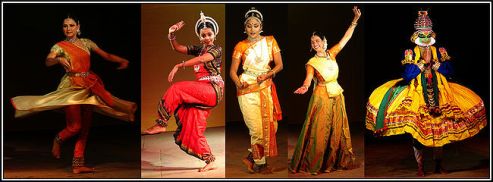
 
Leave a comment

Posted by on December 15, 2017 in Dasarupa, Natya


Tags: , , , , , , , , , , , , , , , , , , , , , , , , , , , , , , , , , ,

Concerning the Dasarupa of Dhananjaya – Part Four

Continued from Part Three

Dasarupaka of Dhananjaya

BOOK THREE

Shakuntala_201211_17 (1)

The Third Book or the Third Chapter of the Dasarupa, in its 72 verses, deals, mainly, with the ten (Dasa) varieties of Rupakas or plays. Dhananjaya’s work derives its title from the subject-matter of this Book. Obviously, Dhananjaya considered the discussion on the ten varieties of Dramas as the cream or the ultimate purpose of his work.  Of the 65 Sections in Book Three, as many as 43 Sections are devoted to Nataka, regarded as the best and the most complete form of Drama, exemplifying the rules prescribed for such class of dramatic compositions. The other nine varieties of Drama are briefly defined (in sections 44-64), mainly, by listing the points of their divergence from the Nataka. And, their other common features are simply clubbed under a single phrase – ‘the rest, as in the case of the Nataka’ (sesham natakavat).

When one looks at the structure of the text from this angle, one will appreciate that Book Three is the main purpose of the text (Dasarupa); and, within the Book Three, the Nataka, around which the entire body of discussions revolve, is the central or the pivotal point. The concepts, the definitions and the explanations of the technical terms that occupied Book One (68verses) and Book Two (72 verses) , or discussions concerning the Avastha, Samdhi, Arthaprakrti Vrttis, Vastu and Neta etc., all seem to serve as  the background material or  the preparatory work needed to arrive at the very heart or the soul of the text , the Nataka . Thus, one could say, the Nataka is the summum bonum, in which all the values of a Dramatic composition are included or from which they are derived.

*

The impetus for the Dasarupa comes mainly  from  : Chapter 20 (Dasarupa – the enumeration and descriptions of the ten kinds of play); Chapter  21 (Sandhi or segments of the plot- itivtta);  and, Chapter  22 (Vrtti or styles of presentation) of the Natyashastra .

The Chapter Twenty of Natyashastra commences with the passage:

I shall now describe the division of plays into ten classes with their names, functions and modes of production.

These ten forms of plays are known as aka, Prakaraa, Aka (Utsṛṣṭikāka), Vyāyoga, Bhāa, Samavakāra, Vīthi, Prahasana, ima, and Īhāmga. I shall describe their characteristics in detail.

aka sa prakaraam ako vyāyoga eva ca bhāa samavakāraś ca vīthī prahasana ima 2

Ihāmgaś ca vijñeyā daśeme nāya lakae eteā lakaamaha vyākhyāsyāmya anupūrvaśa 3

 I shall describe hereafter the different methods of constructing plays.

*

The Natyashastra identifies ten major types of plays: aka, Prakaraa, Aka (Utsṛṣṭikāka), Vyāyoga, Bhāa, Samavakāra, Vīthi, Prahasana, ima, and Īhāmga.

All these ten forms of Drama (Dasadhaiva) are traditionally associated with certain modes or styles (Vrtti) of representations, which are the constituent elements of all dramatic works.  Such Vrttis are said to be of four kinds (vrttis caturdha) : Kaisiki; Sattvati; Arabhati; and, Bharati.  The Vrttis are the ways of rendering a scene; or, the acting styles and the use of language, diction that different characters adopt in a play, depending upon the nature or the Bhava that relates to the character.[ For more on Vrttis please read Part Three in the series]

According to Bharata, the ten forms of Drama are classified based on the number and the types of Vrttis that are involved with it. Of the ten mentioned by him , only the two major forms – the aka and the Prakaraa – present all the variety of styles (Vrttis), for depicting different types of diverse situations. However, the other eight forms of Drama – the Bhāa, the Samavakāra, the Vīthi, the Īhāmga, the Utsṛṣṭikāka (Aka), the Vyāyoga, the ima, and the Prahasana – would not include kaiśikī-vttihī , the graceful Style.

Vīthī samavakāraśca tathehāmga eva ca utsṛṣṭikāko vyāyogo bhāa prahasana ima 8

Kaiśikīvttihīnāni rūpāyetāni kārayet ata ūrdhva pravakyāmi kāvyabandhavikalpanam 9

Bharata regards the Vrttis as the mother of all poetic works (kāvyānā mātkā vttaya), from which the ten kinds of compositions are evolved. He explains; just as the musical notes (Svara) constitute scales (Gramas) because of the Srutis coming together with their Jatis, so the varieties of plays come into existence due to combination of varied of styles (Vrttis). It is the number of Vrttis present in a play that assigns it a distinct class.

Sarveāmeva kāvyānā mātkā vttaya sm ābhyo vinista hyetaddaśarūpa prayogata

[Abhinavagupta took a dissenting view on this issue. He pointed out that though the Gramas (collection of Jaatis or melodic types), in music, might have common Svaras; yet, they differ from each other because of their internal order of arrangement (Aroha-Avaroha); the combination; and, the mutual relations of the Svaras. And, in a Jaati, within a Grama, a certain Svara might be prominent (amsa), or initial (graha) or final (nyasa), depending upon the type of the Jaati. It is because of such variations that each melodic-type gains its distinguishing character and flavour. Therefore, in all those cases, it is not the mere number of Svaras that truly matters.

In a similar manner, in a play, it is not the number of Vrttis, alone, that is significant. In certain types of plays one form of Vritti might be prominent or otherwise. The combination, the treatment and the variations of the Vrittis differs from one type of play to the other. Thus, the classification of the Rupakas is based on the treatment of the Vrttis, which might either be complete with all its angas (elements) or be lacking in some of them.]

While Bharata and Abhinavagupta laid stress on Vrtti, which, in their view, is the factor that defines the unique character of a Drama; Dhananjaya and Dhanika held Vastu (subject-matter), Neta (Hero) and Rasa (sentiment) as the elements which distinguish one form of drama from its other forms.

*

Though Bharata lists ten types of Dramas (Rupakas), which, apparently, is not exhaustive, the other ancient writers talk about, in addition, certain minor types of dramatic works (Upa-rupaka).

Perhaps, the earliest reference to Uparupaka occurs in the Kama-sutras of Vatsyayana who mentions plays such as  Hallisaka, latyarasaka and Preksanaka of the Uparupaka type, watched by men and women of taste. Ahhinavagupta’s commentary on the Natyashastra occasionally mentions Upa-rupakas; but, without defining the class. Rajashekara calls his Prakrit play Sattaka as not being a Nataka, but resembling a Natika, excepting that pravesakas (preliminary scenes), viskambhakas (intermediary or connecting scenes) and ankas (Acts) do not occur.

[Though Natyashastra enumerates, and discusses Rupakas it does not mention minor forms like Uparupakas.  However, Abhinavagupta speaks of minor categories of drama, which he terms them as Nrtta-kavya and Raga-kavya; meaning, the type of  plays that  are rendered through dance and the  plays that are sung.  Yet, it was such  Uparupakas – minor  class of drama-   based in music and dance movements  that eventually gave rise to  the now living traditions such as Kuchipudi , Bhagavata Mela Natakas and Kuravanji dance-dramas. Such forms of Uparupakas are very attractive formats, with the elements  of the music and dance  being predominant. And, most of them are based in dances accompanied by soulful songs, interpreting  the emotional contents of the song through Abhinaya or gestures.

Natyashastra does not mention all the different types of dramas. Kohala, another ancient writer, whose material is said to have got mixed up with the present version of the Natyashastra, mentions a number of minor  varieties of dramas that are lyrical in their character; and,  in which music and dance predominate. Abhinavagupta names some drama-types under these varieties as: Dombika, Bhana, Prasthana, Sidgaka, Bhinika, Ramakrida, Hallisaka and Rasaka. But, nothing much is known about these musical varieties. ]

natya-shastra2

While Rupaka seemed to be the general term used for Sanskrit Dramas, the nomenclature Upa-rupaka indicated a minor type of dramatic composition (within the general class); technically, not satisfying all the classic, dramatic requirements, even when a full theme was handled. Vishvanatha in his Sahityadarpana lists as many as eighteen minor types (Upa-Rupaka), with examples. Among these, he regards the Natika (e.g., Sri Harsha’s Ratnavali, Priyadarsika) and Trotaka (e.g., Kalidasa’s Vikramorvasiya) as more important.

[ As its name suggests; Natika is a diminutive form of Nataka.  In case, Natika is counted along with the other forms of Drama, then it would amount to eleven varieties. Bharata, however, explains that Natika is not an independent form; but, is a fusion, combining in itself (antarbhāvagatā) certain features of the Nataka and the Prakarana. And, therefore, the Rupas are only ten (ata eva daśaitāni rūpāī).

Antarbhāvagatā hyeā bhāvayorubhayoryata ata eva daśaitāni rūpāī tyuditāni vai ॥18. 61

Dhananjaya, following Bharata, also says that the pure forms of Rupas are indeed only ten (Dasadhaiva); as Natika is but a blend of two forms. Here, in Natika, the subject (vastu) is taken from the Prakarana type.  The types of principle characters are as in the Nataka (Natahavat). The hero (Nayaka), a prince, of the illustrious Dhiralalitah class, is taken from a well-known source or is newly created; and, the innocent, beautiful and exceedingly charming (mugdha divya ca ati – manohara) heroine (Nayika) is either a princess or a celestial nymph. And, the Rasa (mostly the Srngara-rasa) is also as that in the Nataka. The Natika containing an abundance of female characters is depicted in the graceful style, Kaisiki-vrtti; and, has four Acts (less than that in Nataka or Prakarana). Most of the action takes place within the Queen’s court or in the adjoining gardens – (DR.3. 46-52).

Tatra vastu prakaranan, natakan nayako nipah prakhyato dhiralalitah srngaro angi salaksanah– DR.3.47. ]

[The Natyadarpana of Ramachandra and Gunachandra offers a similar explanation about the characteristics of the Natika. The Natyadarpana says that the Angas of Srngara depicting song, dance, hum our etc., should be prominent in a Natika. And, it should have all the five Sandhis.  Here, the Natika is classified into eight types, depending upon whether the Nayika , the heroine , is well know or otherwise.]

**

[According to the renowned scholar Dr. V Raghavan, the mere number of Rupaka – either ten or eleven – is not of much significance. In his view, the number ten is symbolic; indicating ten tendencies. He points out that all the ten varieties from Nataka to Ihamrga embody these ten tendencies in various degrees.]

lotus-design

Of the ten, the Nataka is regarded as the best, most important and complete form of Rupa. Dhananjaya regards Nataka as the root (Prakrti) of other dramatic forms. Bharata, in his Natyashastra paid greater attention to Nataka and to Prakarana, than to the rest eight forms ; because, these two forms, according to him, lend abundant scope for presenting  all the four varieties of styles (Vrttis); in alluring Rasas; and, for  portraying  range of characters in diverse  types of situations.

Because of these reasons, the Nataka is spoken of  or discussed first (purvam natakam ucyate).

Prakrtitvad athanyesam bhuyo rasaparigrahat sampurna-laksanat vac ca purvam natakam ucyate   DR.3. 1

 Let’s, therefore, begin with Nataka.

texasshakuntala

  1. Nataka

[ Dr. Schroder, a German scholar, opines that Natya, also known as Rupaka is of ten types; of which, the Nataka is most important. He says: In Sanskrit literature Nataka is very ancient. Even in Vedic literature we can find descriptions about Nataka. There are also references in Ramayana and Mahabharata of actors, dancers, singers and anchors. And, therefore, many theories have been put up by the scholars while discussing the origin of drama.

Dr. Schroder thinks that Samvada-suktas that occur in the Rg-Veda are the origin of the Drama.

There are about fifteen Samvada-Suktas in the Rig Veda, which were written in the form of dialogues. For instance; the Pururava-Urvasi Sukta (RV.10.95); Yama-Yami Sukta (RV.10.10); Sarama-Pani Sukta (RV.10.108); Indrani-Indra-Vrsakapisukta (RV.10.86); Agastya-Lopamudra Samvadasukta (RV.1.170) etc. are some instances .

Some German scholars like Oldenburg, Windish, and Pishel think that initially these Samvada-suktas were the mixture of poetry and prose.  Poetry remained because it was interesting and melodious; while the prose part slowly vanished because it was descriptive.

It is also said;  that these Samvada-suktas used to be sung by a group of Udgatrus, in the Saman ; and,  enacted during specific Yajnas, to the accompaniment of  music.

Drama exactly follows this form of ancient Samvada-suktas, as they are also a mixture of prose and poetry.

Bharata in the first chapter of the Natyashastra mentions that in order to alleviate the sorrow of common people, Brahma created a Veda for Dramatics (Natya-Veda) by taking prose from  Rig-Veda; music from Samaveda; acting from Yajurveda; and , emotions from Atharvaveda.]

**

Bharata, in a passage of six verses (from 19.144 to149) virtually offers his definition of Nataka. He explains that in a Drama (ya), the wide-ranging shades of human nature (lokasya nānā-avasthā-antarātmaka) with its joys and sorrows (lokasya sukha-dukha-samudbhavā) are demonstrated through a variety of representations and actions (nānā-purua-sacārā).

Those who take part in the Drama try to present the past exploits of the gods, sages and human beings (devatānām –ṛṣīnā ca rājñāṃ), by assuming their roles. The actors enact (abhinayate) or interpret, the roles assigned to them through speech, expressions, actions, gestures and other representations. While so acting on the stage, the actors try to give up or suppress their own individual identities and nature (yasmāt-svabhāva saṃ-tyajya);and, systematically, diligently assume the nature, behaviour, gestures and the emotions of the character that they are portraying (gopāga-gati-kramaiḥ).

Bharata then remarks, the art of emulating the psychological, mental and physical state of a character calls for an exceptional and a truly dedicated effort. One should realize this truth; and, strive to achieve near-perfection.

The varieties of dramatic actions; the ways to bringing to life the essence of a character; and, the modes of presentation of actions on the stage, in an attractive manner (rūpāi kartavyāni prayoktbhiḥ), are all indeed countless (aneka-śilpa-jātāni naika-karma-kriayāi ca).

It  is essential that all those involved either in writing, producing or presenting a Drama should observe and study the ways of the common people of the world (Lokasvabhāva saprekya narāāṃ ) – their nature, their modes of behaviour (kāryaṃ) , speech patterns and modes of dress ; their strengths and weaknesses (balābalam); and, their ways of enjoyment and reasoning (sabhoga caiva yuktiṃ).

Yo’ya svabhāvo lokasya nānā-avasthāntarātmaka so’gādy abhinayairyukto nāya mity-abhidhīyate 19.144

Yasmāt-svabhāva satyajya sāgopāga-gati-kramai prayujyate jñāyate ca tasmādvai nāaka smtam 19.146

Sarvabhāvai sarvarasai sarva-karma-pravttibhinānā-avasthā antaropetaaka savidhīyate 19.147

Anekaśilpajātāni naikakarmakriayāi ca tānyaśeāi rūpāi kartavyāni prayoktbhi ॥ 19.148

Lokasvabhāva saprekya narāā ca balābalam sabhoga caiva yukti ca tata kārya tu nāakam 19.149

*

At another place, Bharata, in a way, sums up the virtues and merits of Nataka , as a dramatic work, that captivates the hearts of the spectators and brings glory to its playwright , producer and the actors .

The work of art that satisfies all classes of spectators ; and is a happy and enjoyable composition, which is graceful on account of being  adorned with sweet and elegant words; free from obsolete and obscure meaningless verbose ; easily grasped and understood by the common people ; skillfully arranged ; interspersed with delightful songs and dances; and,  systematically  displaying varied types of sentiments  in its plot devised into Acts, scenes, junctures etc.

mdu-lalita-padārtha gūha-śabdārtha-hīna ;   budha jana sukha bhogya,  yuktiman – ntta-yogyam  bahu rasa kta mārga , sandhi-sandhāna-yukta  bhavati  jagati  yogya  nāaka  prekakāām  16.130

**

Bharata, after describing Lasyangas, the graceful, fluid and charming movements; lists the four characteristics of an ideal Nataka.

He says, the playwright (kavi kuryāttu) while attempting a well constructed (suprayoga) Nataka with aptly chosen happy sounding words  (sukhāśrayam mdu-śabdā ) should ensure that it is composed of five Samdhis (pañcasandhi); four Vrttis (caturvtti); sixty-four Angas, elements  (catuḥṣaṣṭya-agasayutam); and, thirty-six Lakshanas , characteristics  (atriṃ-śallakaopetaṃ)adorned with Gunas, Alamkaras (guā-alakāra-abhūitam), many Rasas (mahārasaṃ); as also with topics concerning noble persons of sublime virtues (mahāpurua-sacāraṃ), exalted speeches (udātta-vacanā-nvitam) providing inspiration and great enjoyment (mahābhogam).

Apart from that, the Drama should also portray the lives of common people, their happiness and miseries (sukha-dukha-samudbhavā) arising out of their interactions with their fellow-beings and their multifarious deeds in the world (avasthā yā tu lokasya, nānā-purua-sacārā.) Please also see.

Pañcasandhi caturvtti catuḥṣaṣṭyagasayutam atriśallakaopeta guālakārabhūitam 139

Mahārasa mahābhogam-udāttavacanānvitam mahāpuruasacāra sādhvācārajanapriyam 140

Suśliṣṭa-sandhi-sayoga suprayoga sukhāśrayammduśabdābhidhāna ca kavi kuryāttu nāakam 141

Avasthā yā tu lokasya sukha-dukha-samudbhavā nānā-purua-sacārā nāake’sau vidhīyate 142

Viswanatha in his Sâhitya-Darpana also described Rupaka (Nataka) as the most logical and perfect theatrical composition. He says that it progresses in a systematic manner and concludes successfully, bringing joy to all. 

He mentions that according to the Dasarupa, the structure of the Rupaka consists:

five elements of the plot (Arthaprakrti), matching with the five stages of the action (KaryaAvastha), from which arise five structural divisions or sequence of events (Samdhi) of the drama;

twenty-one subdivisions (Samdhyantara), having sixty-four Samdhyanga , adorned with thirty-six Abhushanas ;

ninety numbers of music; and

four kinds of Vrttisall of  which corresponding with the elements of the plot and the actions associated with the stages in the hero’s attempts to successfully realize his purpose or objects

Yattu pancachatuh–sastiscatuh–pancaikavisatih / sattrinsatravtisca tat-Natakam.

As Dr. Sunil Kothari observes in his research paperThe principle of the two modes (dharmi) of presentation, Natya (the stylized) or Loka (the realistic) the different types of Vrittis (style), namely Kaisiki (the graceful), Sattvati (the grand), Arabhati (the energetic) and Bharati (the verbal); the full play of the four types of Abhinaya (acting) namely : Angika (gestures or movement), Vacika (the spoken word), Aharya (costume, make-up, stage props etc.) and Sattvika (relating to state of emotion) are the broad principles which govern the structure of Indian drama and its  presentations.

It is these principles, along with other related ones such as the concept of Bahya (external) and Abhyantara (inner) acting, of Pravrtti (local usage), of Samanya-abhinaya (basic representation) and Citra-abhinaya (special representation), which also govern the technique of  Drama.

[To put it simply, In Sanskrit, Nataka is the most complete form of Drama. Its structure is logical. And, its construction is also quite detailed, being composed of five or more Acts, each of which comprising number of episodes depicting various scenes of action. It also employs intermediary scenes that connect its subdivisions. The Dramatic contents of a play find their expressions, through speech, gesture, songs, dance and other representations, in highly refined and attractive forms. In its modes of depictions, the Nataka employs varied types of embellishments, sentiments, psychological states and actions. And, in case there are such matters, as are not presentable on the stage, they are suggested, indirectly, through explanatory devices.

The heroes in Nataka are generally exalted, descending from noble lineage, known far and wide, for their bravery, generosity and other good qualities. But there may also be other kinds of heroes. The heroines are beautiful; loving; pure in heart; sweet and cheerful; cultured; and, gifted with aesthetic sensibilities. The action in the play ends on an auspicious note, with the good overcoming  the evil ; and , celebrating the victory of the virtuous.  The major aim of Sanskrit Drama is to provide an unsullied and wholesome enjoyment to the spectators. And, at the same time, it is conducive to Dharma. ]

lotus-design

The three broad heads under which Dhanajaya discusses the subject of Drama are: Vastu (theme), Neta (the leading characters) and Rasa (the aesthetic sentiment it portrays).  Let’s briefly take a look at each form of Drama, with particular reference to these three criteria.

Vastu

As regards the story of a play, it could either be adopted (itivrttam) from the incidents that occur in the well-known (Prakhyatha) legends of the past; or, could be a story invented (Uthpadya) by the poet; or else, it could be a mixture (Misra) of the two.  The story could also be about gods (Divya), humans (Marthya) and the like (Divyadivya).

prakhyatam itihasader utpadyam ; kavi-kalpitam;  misram ca samkarat tabhyam divya-martyadi-bhedatah.

Whatever might be the original story, if it is not suitable for the hero or is inconsistent with the sentiment (Rasa) he represents, then the story can be modified or re-arranged in some other way. After determining the beginning and end of the play in this manner; and, after dividing it into five parts, the author should then break it up into small interrelated divisions (Samdhi).

Yat tatra-anucitam Kim cin nayakasya rasasya va viruddham tat parityajyam anyatha va prakalpayet.

The purpose of such reshaping of the story and characters by the playwright is to achieve a harmony between the theme and its main character, in order to serve the ultimate purpose of the drama , which is to provide a delightful theatrical experience (within the framework of the Dharma) for  the  enjoyment  to the cultured spectators –  the   Rasa .

There should be a sense of balance in the treatment of the subject.  The subject-matter should neither be isolated by its excessive coverage; nor, should it be cluttered or swamped with unrelated matters and needless elaborations.  

The plot should be simple, the incidents should be  consistent; and, the progression of the events should spring directly  from the story.

*

The technical divisions of a drama and the development of the plot follow a set of carefully elaborated rules.

The Natyashastra mentions that there could be between five to ten Acts (Anka) in a Nataka. A regular Nataka will have five Acts. And, a Nataka with ten Acts is called Maha-nataka – (pancankam etad avaram dasankam natakam param). An interlude (Pravesaka) must always be made been the Acts.

[ Later, there were , however, some Natakas with more than five Acts , such as : Bhaṭṭa Nārāyaṇa’s Venisamhara and Bhasa’s Avimaraka with six Acts; Rajasekhara’s Bala Ramayana and Mahadeva’s Adbhuta Darpana with ten Acts; and, Hanumant’s Maha-Nataka with fourteen Acts.]

An Act (Anka) is generally understood as a cohesive dramatization of events that occur within the course of a day.  However, the Natyashastra does not demand that these events run contiguously.  Normally, the action in a play depicts the events that occurred during the course of that day (or night). But, there are some noted exceptions where the events in the first the Act and the second Act are separated by long years. In such cases, an intermediate scene (Vishkambha) is introduced as a link and also to explain/narrate the occurrences that took place subsequent to the previous Act. (E.g. Uttararamacharita, Shakuntalam et al)

Further, there might be certain types of actions or objects that should not or cannot be presented on the stage. As per the conventions followed in the Sanskrit Drama, one should avoid showing such events as: long travel; murder; war; loss of kingdom; siege of a city; violent over throw; bloodshed; eating; taking bath; un-dressing; sex act etc.

Further, it is said; a chariot, an elephant or a horse should not be brought on the stage. Similar is the case with palaces, hills or lakes. Such animals and geographical features might be suggested or indicated through models made of cheap materials. And, in case an army has to be introduced on the stage, that should be symbolically represented by the movement (gati-vīcāra) of four to six persons dressed as soldiers.

*

In a Nataka, the number of characters that really matter to the main story should not be too many. Similarly, the supplementary or the supporting characters, such as the attenders   etc., should at most be four or five.

As the play gathers momentum, in stages, its focus of attention should, progressively, be confined to characters and actions that are directly related to the main purpose of the story.  The play is structured in such a manner that it steadily moves from the general or the diffused towards the purposeful and pointed.  Its initial Acts might, comparatively, be lengthy; but, as the action moves towards the finale the Acts should get brief and pithy. As Dhanajaya says, the Nataka, in its structure, should resemble the tip of a cow’s tail (gopuccha).

gopuccha

All the exalted situations should be placed in the concluding segment (Nirvahana), awe-inspiring (Adbhuta), and radiating joy in celebration of Dharma – the victory of the Love over loveless; the triumph of  the good over the evil.

*

The concepts of tragic catharsis or tragedy are not present in the Sanskrit Drama. The Nataka, generally, starts on a happy note (Adi-mangala); and through the trials and tribulations of the hero, a happy incident occurs in the middle (Madhya-mangala); and, the play concludes on an auspicious note (Antya-mangala). And, the whole proceeding comes to an end with the Bharatavakya , praying for the welfare and happiness of the King (Raja), his subjects (Praja) and the State (Rajya) ; and , for the peace and prosperity  (Shanthi , Samruddhi) of all the beings in the  three worlds (Trilokye) . 

nirvahana

Neta

Rama

The hero (Nayaka) the leading character of the Nātaka should be an ideal person, a worthy and exalted (Udatta) icon of virtue; descending from the noble lineage of royal seers (rājarsih) . He should be  : resolute, young, endowed with intelligence, energy, memory, and wisdom; brave, firm, graceful, charming, sweet-tempered, soft-spoken, liberal, clever, affable, popular, upright, and eloquent.

Prakhyāta-vamso rājarsih-divyo-vā yatra näyakah/ tat prakhyātam vidhātavyam vrttam-atra-adhikārikam//

The Hero should be  one endowed with noble qualities of the type known as self-controlled, and exalted (Dhirodatta) , glorious , eager for fame, of great energy , a preserver of three Vedas (Trayi) , a ruler of the world , of renowned linage , a royal seer or a god . It is, basically, his story that forms the the principal subject (Adhikarana) of the Nataka.

mahasattvo ‘tigambhirah ksamavan avikatthanah sthiro nigudhahamkaro dhirodatto drdhavratah

The noble hero  has control over his senses; does not let emotions override his actions; maintains his composure even under dire circumstances; shelters the weak and those under threat ; always wishes and strives to do good for/to others; is also wise, well versed in Shastras and is skilled in arts.

The eight virtuous qualities of an ideal hero are: nobility of character (sobha), liveliness (vilasa), sweet-temper (madhurya), poise (gambhirya), firmness (sthairya), sense of honour or brightness (tejas), grace (lalita), and magnanimity (audarya).

 Sobha vilaso madhuryam gambhiryam sthairya tejasi lalita udaryam ity astau sattvajah paurusa gunah

sri Sita Ram

Nayika

sita

Dhananjaya initially mentions and describes three kinds of Heroines (Nayika tridha) : the hero’s own (Sva) wife; another person’s (Anya) wife; and, the common-woman (Sadharana-stri) – sva anya sadharanastri ‘ti tadguna nayika tridha.

However, Bharata had presented a different classification:  divya (celestial); nrpapatni (queen); kulastri (modest house-wife); and ganika (courtesan).

The Nayika of a Nataka is usually of the first type. She would the Hero’s wife (svaya) . And, she would be either be a princess of renowned royal-heritage or a celestial beauty – virtuous (mugdha), dignified (gambhira, manini), charming (manohara) of loving-nature and devoted to her husband. (Nayika tadrsi mugdha divya catimanohara)

devi tatra bhavej jyestha pragalbha nrpavamsaja/ gambhlra maninl krcchrat tadvasan netrsamgamah

ramasita

Rasa

As regards its style of narration and depiction, Nātaka should adopt either the graceful Kaušiki Vrtti associated with the Srngara Rasa (suited for display of expressions of love, dance, song as also charming costumes and delicate actions ) ; or, the  exuberant Sattvati Vrtti  associated with  heroic Vira Rasa .

Dhananjaya, in his Dasarupaka said : a Nataka should principally portray one Rasa – either the Srngara or the  Vira; and,  in the concluding part  the Adbhuta Rasa becomes prominent

Eko rasa – angi -kartavyo virah srngara eva va / angamanye rasah sarve kuryan nivahane –adbhutam

 [But, Abhinavagupta, preferred not to lay any such restrictions. Instead, he argued that a play could be a judicious mix of several Rasas, with a major Rasa defining the tone and texture of the play. He cited Nagananda of Sri Harsha, which in its initial stages display Srngara; but , towards the end,  it is the Shantha Rasa that pervades atmosphere of  the play.  And, he explained though the play had to deal with the horrific killing of the hapless Nagas, it underplays scenes of violence; and, exemplifies the virtues of peaceful coexistence and compassion towards all beings. It is that aesthetic experience of Shanta – peace and compassion towards the fellow beings – which the spectator carries home]

***

In the next part let’s talk about Prakarana and eight other forms of the Rupaka.

nayana6

Continued

In

Part Five

Sources and References

The Dasarupa a treatise on Hindu dramaturgy by George C. O. Haas, Columbia University press / 1912

 A Study of Abhinavabharati on Bharata’s Natyasastra and Avaloka on Dhananjaya’s Dasarupaka – by Manjul Gupta

Sahityadarpanah of Viswanathakavirajah

The Theory of the Samdhis and the Samdhyangas in Natya Shastra by T.G. Mainkar

Sanskrit Dramaturgy

All images are from Internet

 
4 Comments

Posted by on December 9, 2017 in Dasarupa, Natya


Tags: , , , , , , , , , , , , , , , , , , , , , , , , , , , , , ,

Concerning the Dasarupa of Dhananjaya – Part Three

Continued from Part Two

Dasarupaka of Dhananjaya

BOOK TWO

David Cooper Photography 2008

The Second Chapter of the Dasarupa , in its 72 verses, classifies, sub-classifies and describes, in great detail, the types of characters in a play, especially the four types of Heroes (bhedais caturdha); three Kinds of Heroines (tadguna nayika tridha) with their twenty variations (strinam alamkaras tu virnsatih) according to their relations with the Hero; the opponent of the hero (Pratinayaka); the companions and those devoted to the hero; messengers of the Heroine and so on.

Hero

The term Nayaka (Hero) is derived from the root Ni, meaning to carry. The concept of Nayaka or Neta comprised not merely the hero but several other characters as well that appear in the play. Unlike Dhananjaya, Bharata did not regard Nayaka as the distinguishing element on the basis of which the ten forms of the Rupaka are classified. Bharata’s approach was broader as it covered a wide range of character-types of all classes.

Sri Rama

As per the  concept presented by Dhananjaya, the hero (Neta) the leading character of the Nātaka should be an ideal person, a worthy and exalted person of virtue; of noble lineage; resolute, young, endowed with intelligence, energy, memory, and wisdom; brave, firm, graceful, charming, sweet-tempered, soft-spoken, liberal, clever, affable, popular, upright, and eloquent. It is , basically, his story that forms the main theme of the Drama.

Prakhyāta-vamso rājarsih-divyo-vā yatra näyakah/ tat prakhyātam vidhātavyam vrttam-atra-adhikārikam//

The noble hero  has control over his senses; does not let emotions override his actions; maintains his composure even under dire circumstances; shelters the weak and threatened; always wishes and strives to do good to others; is also wise, well versed in Shastras and is skilled in arts;

netā vinīto madhuras tyāgī dakṣaḥ priyagvadaḥ / raktalokaḥ śucir vāṅmī rūḍha vaṃśaḥ sthiro yuvā // DhDaś_2.1 //

The eight qualities of an ideal hero are: nobility of character (sobha), liveliness (vilasa), sweet-temper (madhurya), poise (gambhirya), firmness (sthairya), sense of honour or brightness (tejas), grace (lalita), and magnanimity (audarya).

 Sobha vilaso madhuryam gambhiryam sthairya tejasi lalita udaryam ity astau sattvajah paurusa gunah// DhDaś_2.9 /

Dhananjaya mentions four kinds of heroes- bhedais caturdha lalita santo udatto -ddhatair ayam. :

(1) Dhira-lalita, the light-hearted hero, fond of arts, happy, gentle, free from stress – niscinto dhiralalitah kalasaktah sukhi mrduh;

(2) Dhira-shantha, the self-controlled and calm hero , possessed of generic merits of a hero – samanya-guna-yuktas tu dhirasanto dvijadikah;

(3) Dhirodatta, the self-controlled and exalted hero of great excellence , exceedingly earnest, forbearing, not boastful, resolute with self-assertion  suppressed, and firm of purpose-mahasattvo ‘tigambhirah ksamavan avikatthanah sthiro nigudhahamkaro dhirodatto drdhavratah; and,

(4) Dhiroddhata, the vehement hero, altogether dominated by pride and jealousy, wholly devoted to magic practices, and deceitful, self-assertive, fickle, irascible and boastful – darpa-matsarya-bhuyistho maya-chadma-parayanah dhiroddhatas tv ahamkarl calas cando vikatthanah..

In a play in which a Hero is endowed with noble qualities of the type known as self-control, and exalted (Dhirodatta) , glorious , eager for fame, of great energy , a preserver of three Vedas (Trayi) , a ruler of the world , of renowned linage , a royal seer or a god – in that , his characterization is to be made the principal subject (Adhikarana).

Sita Ram

 Heroine

Dhananjaya initially mentions and describes three kinds of Heroines (Nayika tridha) : the hero’s own (Sva) wife; another person’s (Anya) wife; and, the common-woman (Sadharana-stri). These , again , are classified as Mugdha (modest , shy and inexperienced) ;Madhya (between adolescence and full womanhood, enthusiastic and enterprising); and, Pragalbha (mature and well conversant with the art)

svā anyā sādhāraṇastrīti  tadguṇā nāyikā tridhā / mugdhā madhyā pragalbh eti svīyā śīlārjavādiyuk // DhDaś_2.14 //

Bharata had presented a different classification: divya (celestial); nrpa patni (queen); kulastri (modest house-wife); and ganika (courtesan). And, each one of these four types is associated with a trait : Dhira (patient); Lalitha (delicate) ; Udatta (gallant) and Nibhrta ( fearless).

*

There is also an eight-fold classification of the Heroines (Ashta Nayika), depending upon their relations with the Hero:

One who loves to dominate her husband (svadhina- bhartrka or svadhina-patika);

svadhina-patikavasaka-sajja

One who loves to dress well and to adorn herself, as she joyfully waits for her lover (vasaka-sajja);

*

One who cannot tolerate her lover being away from her (viraha-utkanthita) and is disturbed (unmanas) when he delays meeting her;

viraha-utkanthita2Khandita_Nayika

One who gets very angry (khandita) when she discovers that her lover is having an affair with another woman;

*

One who after a quarrel with her lover moves out (kalaha-antarita), and later upset with herself in righteous anger and remorse ;

lover quarrelvipralabdha

One who feels deceived and is deeply hurt (vipralabdha) when her lover fails to show up on-time at the rendezvous agreed upon;

*

One who is lonely (prosita-priya) when her lover is in a distant land because of war or business;   

lover seperationAbhisarika nayika

 And, one who, deeply in love, sets out in great hurry and anxiety to meet her lover  (abhi-sarika).

praṇayā yogayorutkā pravāse proṣitapriyā / kalahānta riterṣyāyāṃ vipralavdhā ca khaṇḍitā // DhDaś_4.62 //

[Dhanika, further divides the eight into two classes; and, by permutation comes up with 128 varieties of heroines.]

shringarbodh_navgeet indian_beauty

Dhananjaya lists as many as twenty natural graces of women in the prime of youth. These are again made into three groups.

The first three are related to expressions or manifestation of love: emotions or feeling (bhava); bodily gestures (hava); and passion (hela).

 yauvane sattvajāḥ strīṇāmalaṅkārāstu viṃśatiḥ / bhāvo hāvaśca helā ca trayastatra śarīrajāḥ // DhDaś_2.28 //

The second group of seven components are related to the inherent characteristics of the heroine: graceful beauty (sobha); lustrous loveliness (kanthi); endearing sweetness (madhurya); poise and courage (pragalbhata); generosity (audarya); and steadfastness (dhairya).

śobhā kāntiśca dīptiśca mādhuryaṃ ca pragalbhatā / audāryaṃ dhairyamityete sapta bhāvā ayatnajāḥ // DhDaś_2.29 /

The third group of ten virtues relate to her attitude and dispositions: sportive attitude (Lila); charmingly delightful (vilasa); good-taste (vicchitti); a bit of confusion (vibhrama), easily excitable (kila-kinchita); very affectionate (mottayita); pretending to be angry , in jest (kuttamita); mock-indifference (bibboka); a bit laid-back or relaxed (lalita); and, bashful (vihrta).

līlā vilāso vicchittir vibhramaḥ kilakiñcitam / moṭṭāyitaṃ kuṭṭamitaṃ bibboko lalitaṃ tathā / vihṛtaṃ ceti vijñeyā daśa bhāvāḥ svabhāvajāḥ // DhDaś_2.30 //

 [These twenty qualities are again discussed, in detail, later in the text.)

Kalamkari

The Sanskrit Drama carefully classifies and sub-classifies the Heroine into as many as sixteen types.

 heroine b-w

Astanayika

Such fondness , bordering on obsession, for minute sub-division of almost every element of the Drama into as many theoretically possible numbers of types as possible   is a defect in the Sanskrit dramaturgy. Such stereotyped threadbare manipulation of characters, actions, styles is rather futile.  Apart from being of no practical use, they rob the playwright of his initiative and enterprise. Every aspect of Drama is typecast and pigeonholed. It is not therefore surprising that over a period, the Sanskrit Drama lost freshness ,  became too conventional and eventually losing their appeal.

jupiterfig5

[ Before proceeding further with the treatise of Dhananjaya , it would be worth reproducing ( in a summarized form) the views of Abhinavagupta  on the participation  played by the Hero , heroine and the spectators , as well.

According to Abhinavagupta, a true connoisseur of arts has to learn to detach the work of art from its surroundings and happenings; and view it independently.

He asserts, the “willful suspension of disbelief” is a pre-requisite for enjoying any art expression. The moment one starts questioning it or doubting it and looking at it objectively; the experience loses its aesthetic charm; and, it becomes same as a mundane object.

One enjoys a play only when one can identify the character as character from the drama and not as ones friend or associate. The spectator should also learn to disassociate the actor from the character he portrays.

The Hero and Heroine  in a play are just portraying the roles assigned  to them, as best as they can. In other words; they are trying to convey certain states of emotions and the sate of being of the character-roles they are playing . They are like a pot (patra) or receptacle, which carries the emotional state of primary (real) role to the spectator. The actor merely  serves as a vessel or  a receptacle or a means of serving relish (Asvadana) ; and, that is the reason, a role is called a Patra. The characters on the stage represent the role ; but , are not the real ones; and, they do not completely identify themselves with the original. Hence, the Vibhava is like a cause; but, not an exact cause. The performance, the acting by the hero, heroine and other characters in a play is Anubhava, one of the several ways of bringing out the emotional states of the characters they are playing out on the stageSuch Anubhava could be called as ensuing responses.

The hero or heroines in a play don’t become the lover and beloved in real life. They understand and accept here  , what their their roles are; and, try to show what might be the emotional experiences of the character , and its reactions to the given situation  . The actors  try to  resemble the character , for few hours of the play ; and, act on the stage accordingly, through which the spectators understand , grasp and enjoy  the emotional states in the play.

Abhinava makes a distinction between the world of drama  (Nātyadharmī) and the real but ordinary life (Lokadharmī). In the artistic process, where presentations are  made with the aid of various kinds of dramatic features such as Abhinayas and  synthetic creations  ,  we are moving from the gross  and un-stylized movements of  daily life to more subtle forms of expressions and experiences; we move from individualized experiences to general representations; and from multiplicity to unity.

He says that the feeling that might cause pain in real life is capable of providing pleasure in an art form. He explains, while viewing a performance on stage one might appreciate and enjoy the display of sorrow, separation, cruelty, violence and even the grotesque; and one may even relish it as aesthetic experience. But, in real life no one would  ever like to be associated with such experiences.

Abhinavagupta , therefore,  observes that the theatrical experience is quite unlike the experience in the mundane and the real world; it is Alaukika – out of the world.

In summary; he draws a theory that the artistic creation is the expression of a feeling that is freed from localized distinctions; it is the generalization (sadharanikarana)  of a particular feeling. It comes into being through the creative genius (prathibha) of the artist. It finally bears fruit in the spectator who derives Ananda, the joy of aesthetic experience. That, he says, is Rasa – the ultimate emotional experience created in the heart of the Sahrudaya. 

Abhinavgupta talks about Sadharanikarana, the generalization. He points out that while enjoying the aesthetic experience, the mind of the spectator is liberated from the obstacles caused by the ego and other disturbances. Thus transported from the limited to the realm of the general and universal, we are capable of experiencing Nirvada, or blissfulness. In such aesthetic process, we are transported to a trans-personal level. This is a process of de-individual or universalization – the Sadharanikarana.\

According to Abhinavagupta a real work of art, in addition to possessing emotive charge carries a strong sense of suggestion and the potential to produce various meanings. It can communicate through suggestions and evoke layers of meanings and emotions.

He illustrates his position through the analogy of a tree and its fruit. Here, the play is the tree; performance is the flower; and spectator’s experience .

Rasa, the relish (Asvada) by the spectator, is the ultimate product (phala) of a dramatic performance, as that of a fruit borne by a tree :  “the play is born in the heart of the poet; it flowers as it were in the actor; and, it bears fruit in the delight (ananda) experienced by the spectator.” .. ”And, if the artist or poet has inner force of creative intuition (prathibha)…that should elevate the spectator to blissful state of pure joy Ananda.”

At another place, Abhinava declares, a true aesthetic object,  not merely stimulates the senses but also ignites the imagination of the viewer. With that, the spectator is transported to a world of his own creation. That experience sets the individual free from the confines of place, time and ego (self); and elevates him to the level of universal experience.  It is liberating experience. Thus art is not mundane; it is Alaukika in its nature

According to Abhinavagupta, the object of the entire exercise is to provide pure  aesthetic  joy to the spectator. Without his participation , all art expressions are pointless.

Thus, he brought the spectator from the edge of the stage into the very heart of the dramatic  performance and its experience. ]

friends

Supporting characters

The section on Neta, apart from the Hero and the Heroine, includes the supporting characters, such as the companions of the hero; the  maids and messengers in service of the heroine ; and , the opponents of the Hero as well. Just mention about these briefly:

The companions of the Hero, i.e., those assisting and attending (pithamarda) and devoted to him are, usually, possessed of qualities similar to that of the Hero, though in a lesser degree. In addition, there would a fun and food loving, good-natured, but a rather incompetent jester (Vidushaka); and another, a sort of parasite (Vita).

The Heroine, usually, has in her service a set of maidens, who attend on her as maid-servant (dasi), and also serve as messengers (dutyo).  The Heroine might use any of those women, as also a foster-sister (dhatreyi), a woman skilled in crafts (silpini), a neighbour (prativesika), and a female ascetic (lingini) to pass on private messages to her lover. Some of these are also her friends (sakhi), confidants and advisors – (dutyo dasi sakhi karur dhatreyi prativesika lingini silpini svam ca netr mitra gunanvitah.)

The opponent of the hero (prati-nayaka), falling under the fourth type of the Hero (Dhiroddhata) is often depicted as avariciousness, vehement, stubborn, criminal and vicious (lubdho dhiroddhatah stabdhah papakrd vyasani ripuh)

queen and friends


Vrtti

Bharata had mentioned:  Vrttis or Styles are traditionally known as the constituent elements of all dramatic works (lit. poems).  It is said; the Vrttis have been so named because of the element or the action that is predominant in them.  the ten kinds of play are considered to have proceeded from these Vrittis.

sarveāmeva kāvyānā mātkā vttaya sm ābhyo vinista hyetad-daśarūpa prayogata 18.4

Another important element of the Drama that is discussed in Book  Two  of the Dasarupa is the concept of Vrtti  (which Bharata considered as the mother of all poetic works – kāvyānā mātkā vttaya sm), the ways of rendering a scene; or , the acting styles and the use of language , diction that different characters adopt in a play, depending upon the nature or the Bhava that relates to the character. Thus, the Vrttis get related to the four types of heroes and four kinds of representations. And, since Vrttis are also related with Rasas, they set the mood or ambiance on the stage by their distinct style of dramatic representation. In other words; the Vrttis call for the excellence of the mental, physical and vocal efforts of the actors portraying their characters.

Some other associations are also mentioned with regard to the Vrttis. For instance with : Angikam,Vacikam,Sathvikam and Aharyam. Further, Bharati with Rigveda; Sattavati with Yajurveda; Kaisiki with Samaveda; and, Arabhati with Atharva Veda.

Vrttis are said to be of four kinds (vrttis caturdha): Kaisiki; Sattvati; Arabhati; and, Bharati.

The Kaisiki-vrtti (graceful style) which characterizes the tender Lasyanga associated with expressions of love, dance, song as also charming costumes and delicate actions portrayed with care, mostly by women,   is most suited to Srngara-rasa (tatra kaisiki gita-nrtya-vilasadyair mrduh srngara-cestitaih). Kaisiki has four varieties (Bhedas): Narma (good-natured small-talk); Narmaspinja (pleasure blooms at the first meeting of lovers); Narmasphota (the lovers delighting in each other company); and, Narma-garbha (covert pleasure; incognito). The prefix Narma indicates cheer or laughter.  Kaisiki is the most charming and delightful combination of Srngara and Hasya, playful expression one’s affection or longing for union with the lover.

Sattvati Vrtti (flamboyant style) is a rather gaudy style of expressing ones emotions with excessive body-movement; exuberant expressions of joy; and, underplaying mellow or sorrow moods. It is a way of expressing ones emotions through words (mano-vyapara).  It is associated with the Vira , Adbhuta and Rauidra Rasas (vire sattvaty) – arabhati punah rase raudre ca bibhatse vrttih sarvatra bharati. The Sattvati Vritti has four varieties: Uttpatha (raising up to the conflict); Sallapaka or Samlapaka ( heroic and passionate words or challenge); Sanghatya (breach of alliance or that which breaches alliance; and, Parivartaka ( when a character abruptly changes a course of his actions).

Arabhati-vrtti is a loud, rather noisy and energetic style. It is a powerful exhibition of one’s anger, valour, bordering on false-pride, by screaming, shouting, particularly, in tumultuous scenes with overwhelming tension, disturbance and violence.  It involves furious physical movements (kaya-vyapara). It is associated with Raudra (furious) and Bhibhatsa (odious) Rasas (arabhati punah rase raudre ca bibhatse). The Arabhati has four varieties: : Sanskipta (brief, elaboration , condensed representation of the plot); Avapata ( commotion, fear, jubilation , panic, fall, puzzled behaviour, quick entrance and exit of characters); Vastu Uttahapanam (elevation of the plot, combination of all other Vrttis); and , Sampheta (conflict, fights, combats, betrayal, excitement). Arabhati is also attended with feats of jugglery, conjunction and conflicting situations, where bodily actions are prominent.

And, Bharati-vrtti is mainly related to a scene where the speech or dialogue delivery is its prominent featureBut, generally, the Bharati-vrtti, related to eloquence, is of importance in all the situations (vrttih sarvatra bharati). It is devoid of Srngara, Karuna and Nirveda (dispassion).  The Bharati-Vrtti has four varieties: Parochana (introducing the play and playwright to the spectators); Amukha or Prastavana (where the Sutradhara strikes a conversation with the Nati or Vidushaka, as a prologue to the play); Vithi (sort of monologue the Sutradhara carries on before the play proper); and, Prahasana (hilarious conversations between minor actors). Abhinavagupta suggested the terms: Kathodghata (which consists in some characters catching up with the words or intent of the Sutradhara); Pravartakam (introducing the subject), Prayogatishaya (where the director mentions the entry of a character of the drama), in place of Parochana, Amukha and Vithi. All these take place, mostly, in the Purvanga, the preliminary to the play proper.

[There is much confusion about the terms Vithi and Prahasana. They are used in different contexts carrying different meanings. The Vithi and Prahasana mentioned by Bharata as the Bhedas of Bharati Vrtti refer to the Angas of Vithi and also the two kinds of dramas. 

And, similarly , Vritti which denotes diction or style   is also used in three other senses: (1) verbal-force (Shabda-shakti), like Abhidha, Lakshana and others; (2) Alliteration, Anuprasa Alamkara; and, (3) grammatical formatives like Samasa and Taddhita  ]

vrtti

Source : Laws practice Sanskrit drama by Prof. S N Shastri

Before concluding on the Vrttis, Dhananjaya mentions : the actions that take place in a play should be an authentic portrayal of the language, the gestures, the costumes and the characteristics (Desa-bhasa-kriya-vesa-laksanah) of the people of the region, to which the plot of the play belongs. The playwright should promptly adopt such suitable details (yatha-ucityam prayojayet), as are in practice – Pravrtti (pravrttayah) among the common people (lokad) of that region. It is a way of depicting the details of a particular character (viseha- vesa-vinyasa-krama) ; to render it authentic.

 Desa-bhasa-kriya-vesa-laksanah syuh pravrttayah lokad ava-vagamyaita yatha-ucityam prayojayet.

Here, Dhananjaya introduces another division among these four Vrttis. He creates two other sub-classes: Artha-vrtti and Sabda-vritti. According to Dhananjaya, the first three (Kaisiki; Sattvati; Arabhati) which deal mainly with action fall under Artha-vrtti; while, Bharati, where language and the presentation of the speech is of importance, is brought under Sabda-vritti.

But, neither Bharata nor anyone else had made such a distinction.  Many scholars opine the sub-classification made by Dhananjaya was rather needless.

According to Bharata, of the ten forms of Drama, Nātakas and Prakaranās should contain all the four Vrttis; hence, they are called Pūrna-vrtti Rūpakas (NS.17.7). And, the other eight Rūpakas should be represented without giving prominence to Kaisiki-vrtti (NS.18.8-9).They may contain one of the other three Vrttis as the prominent one, and the three others to a lesser degree.

However, Abhinavagupta had pointed out:  it is not the number of Vrttis, alone, that is important. In certain types of plays one form of Vritti might be prominent or otherwise. The combination, the treatment and the variations of the Vrittis differs from one type of play to the other. Thus, the classification of the Rupakas is based on the treatment of the Vrttis, which might either be complete with all its Angas (elements) or be lacking in some of them. Thus, the mere number of Vrttis in a play, by itself, is not very significant.

[ The critics point out: though Bharata mentioned ten types of Drama, he discussed mainly about its two forms – Nataka and Prakarana, perhaps because these two alone fulfilled all those requirements that were necessary for Rupaka (Major type). Further, Bharata had also explained :  ‘as these two major forms alone depict varieties of situations , made up all the styles (Vrttis) and representations,  they lend  enough scope for display of Rasas (Rasapradhana or Rasabhinaya or vakya-artha-abhinaya); while the other eight forms are incomplete , as they are not presented in the graceful style, the kaisikivrtti’.

Thus, while Bharata and Abhinavagupta stressed Vrtti as the distinguishing character of a Drama; Dhananjaya and Dhanika held Vastu (subject-matter), Neta (Hero) and Rasa (sentiment) as the elements which distinguish one form of drama (Rupaka)  from its other forms  (vastu neta rasas tesam bhedako) .

For Dhananjaya, these three were pivotal points; and, he went about constructing his work, analyzing the whole of dramaturgy around these three parameters (pradhāna, netà and rasa). Therefore, while conducting a study of each class of the Drama, he does it with reference to : (1) their subject-matter or the plot (Vastu), the main theme (adhikarika), the episodes (angam) and the incidental events (prasangika);  (2) the types of characters they portray (Neta), such as the class of the hero, heroine and other supporting roles;  (3) the structural divisions of the play , the stages in their  corresponding with the elements of the plot (avastha), the actions essential for attaining the object of the play (Arthaprakrti) ,  the  sequence of  episodes (in the development of the play (Samdhi); and, (4) the Rasa , the  principal or the  dominant  sentiment of the play.]

rama sita

Dhananjaya concludes the Second Book of Dasarupa, which covered a number of essential ingredients of the Drama, with homage to Bharata and to Lord Shiva:

Who but Bharata or the crescent-crested god Shiva would have been able to enumerate , without omission, all the varieties of action (Vrttis) , the qualities (Guna) , the utterances (Vak) , and the involuntary States (sattvabhava) that are inseparable from (a-vibhinna) the ten (four types of heroes and six types of heroines) varieties of leading character (netara-dasa-vibhinnan) ?’

Cesta-guno-dahrti sattvabhavan / asesato netara-dasa-vibhinnan / ko vaktum Iso Bharato na yo va /  yo va na devah Sasi khandamaulih //

shiva

In the next Part, we shall talk about the ten forms of Drama which is the main theme of Dhananjaya’s work; and about Rasa as discussed in Book Three and Book Four of the Dasarupa.

Nayana4 crop

Continued

In

Part Four

Sources and References

The Dasarupa a treatise on Hindu dramaturgy by George C. O. Haas, Columbia University press / 1912

 A Study of Abhinavabharati on Bharata’s Natyasastra and Avaloka on Dhananjaya’s Dasarupaka – by Manjul Gupta

Sahityadarpanah of Viswanathakavirajah

The Theory of the Samdhis and the Samdhyangas in Natya Shastra by T.G. Mainkar

Sanskrit Dramaturgy

All images are from Internet
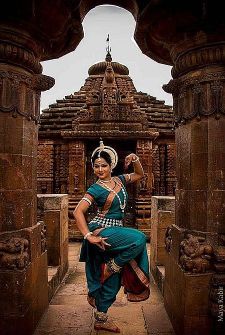
 
Leave a comment
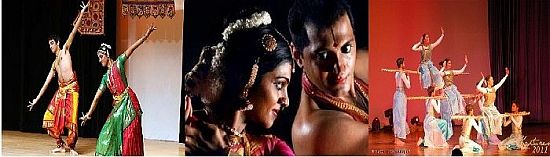
Posted by on December 5, 2017 in Dasarupa, Natya


Tags: , , , , , , , , , , , , , , , , , , , , , , , , , , , , , ,