RSS

Category Archives: Natya

Concerning the Dasarupa of Dhananjaya – Part Five

Continued from Part Four

Dasarupaka of Dhananjaya

BOOK THREE – continued

 Nataka and Prakarana

DSC_0302

As mentioned earlier, Bharata in his Natyashastra enumerates, and discusses ten forms of plays or Natya or Rupakas: 

NāṭakaPrakarana; Anka (Utsṛṣṭikāṅka); Vyāyoga; Bhāṇa; Samavakāra; Vīthi; PrahasanaḌima; and, Ihāmṛga

aka sa Prakaraam Ako Vyāyoga eva ca  Bhāa Samavakāraś ca Vīthī Prahasanaṃ Dima  20.2

Ihāmgaś ca vijñeyā daśeme nāya lakaeteā lakaamaha vyākhyāsyāmya anupūrvaśa  20.3

Dhananjaya lists the same set of plays as 

nāṭakaṃ sa prakaraṇaṃ bhāṇaḥ prahasanaṃ ḍimaḥ / vyāyoga samavakārau vīthyaṅkehā mṛgā iti // DhDaś_1.8 //

Bharata divided the ten types of plays into two broad categories.

One; the class of plays like Nataka and Prakarana: having a range of characters; portraying all the four Vrittis (styles of presentation) – Purna-vrtti-rupakas – in five or more Acts; displaying their psychological states; and, exuding the Srngara and Vira Rasas. 

And, the other eight which fall under the class which has less than five Acts; and, where all the Vrttis etc., are not present.

Therefore, of the ten forms of Rupakas, the Nataka and the Prakarana are considered more complete.

jupiterfig5

The Nataka

The Nataka is constructed as per the classic format, in accordance with all the rules prescribed and established by the tradition. The hero and the heroine are highly idealized, almost celestial, descending from a distinguished Royal lineage. Its story-line would usually be about a noble hero who resolutely overcomes many challenging obstacles; and, finally succeeds in achieving his desired objective. The message of a Nataka is that the good and the virtuous should never be defeated; and, eventually the love, truth and justice (Dharma) must triumph over untruth. And, harmony and peace should prevail over chaos and disturbance.

The Nataka is a powerful means for the moral upliftment of the society, holding out hope and faith in the goodness of life, with  illustrations of how the virtuous men and women of the past dealt with the sorrows, disappointments, trials and tribulations in their life ; how they  fought against the   confronting miseries that mounted upon them , with bravery and honesty ; and, how they eventually emerged out of the difficult situations with success , glory and dignity.

The other types of plays

The other types of plays, in contrast, tried to represent life in its varied colours, nearer to the real-life, portraying characters from lower order of the society. These types of plays depicted the good as also the not-so-good aspects of life, built around characters of varied nature: the virtuous, vagrant, weak, comic and so on. This was particularly true in the case of Dramatic forms such as Bhana, Vithi and Prahasana. The object of these other nine types was, mainly, to provide entertainment.  

Nataka – Prakarana

In short: The Nataka celebrates the accomplishments of the kings; and, how they find their fulfilment in establishing the Dharma (nāṭakān nāyako nṛpaḥ / prakhyāto dhīralalitaḥ śṛṅgāro’ṅgī salakṣaṇaḥ) . The Prakarana, as compared to Nataka, deals with the affairs of the social classes coming from a mixed milieu, such as a Brahmin, a minister, a soldier, a merchant or even a social parasite (Vita)- prakaraṇaṃ tredhā saṅkīrṇaṃ dhūrtasaṅkulam. A courtesan could also be the heroine of a Prakarana. Its story must be a fictitious one , invented by the poet. Prakarana tends to be realistic in its approach.  It attempts to depict the conditions in the society, as they are .

The Srngara, the love, and its victory, in true fashion, are the main sentiment in Prakarana. And Prakarana has in it, some elements from Bhana, Vithi and Prahasana.

While the idealism of the Ramayana and the Mahabharata are the resort of the Nataka, the social life depicted in the Brhatkatha is, generally, the source of the Prakarana.

Dr.Raghavan explains : The ideals that lie at the base of these two types, the Nataka and the Prakarana, are different; the two are distinct in a substantial manner; the aim of the poet in the Nataka is to present what has been conceived as the highest type of human personality, the sublime type, called the Dhirodatta; this is a heroic ideal. On the other hand, in the Prakarana, the poet is out to hold up the mirror to the world, to depict society as it is in its rank and file

Another important difference between Nataka and Prakarana is in regard to the extent of the Kaisiki-vrtti. In the Nataka, the Kaisiki-vrtti enjoys full scope, while in the Prakarana its scope is rather restricted.   The explanation provided for this is : too much display of Kaisiki would be out of place in the Prakarana, which is a realistic social play.

Other types

The Bhana which is a one-act monologue presented by a stand-up comedian, the  Vita , a depraved parasite,  ridiculing the so-called respectable figures in the society, and the Prahasana, the satirical comic skit, have affinity with Vithi . The Vithi is a one-act street-play, having a series of witty exchanges presented by one or two characters of mixed type. It has scope for all the Rasas; but, its distinguishing feature seems to be its resourcefulness and rich varieties of clever repartees. In fact , whenever clever repartees are found in other Rupakas, they are supposed to have been adopted from one or other of the thirteen Vithyangas, the diverse constituents of the Vithi.

The Vyayoga, Samavakara and Dima have their characters from varied class of gods, demi-gods, demons etc.; with some heroic characters taken from Mahabharata and other Puranas. The Utsṛṣṭikāka (Anka) is something like an epilogue to the heroic types of plays. It starts near about the end of action in a major play (say, depicting the consequences of a battle that just ended). The Ihamrga is all about the enticing and captivating a lovely damsel. At the end, the hero wins the lady-love; the villain loses out; but, no one dies.

These Rupakas differ from one another (rupaka bheda) according to the nature of the hero and other characters (Neta), the plot (Vastu) in both of its aspects: main (Mukhya) and subsidiary (Prasangika).There also differences in the number of Acts (Anka or Samdhi); and, in regard to sentiments (Rasa) that are displayed.

Though the lesser types of Rupakas were composed principally for providing pleasure, many of them do instruct and impart the norms of good conduct. They also reflect the contemporary social life, its pleasures and pains.  These different types of dramas provide an opportunity for the dramatists to choose their characters from among a wide range of men and women in the society.

[ We shall talk about these types of plays, in fair detail,  in the next part]

jupiterfig5

Nataka and its evolution

In the previous Part we discussed about the Nataka. In the present post let’s talk about Prakarana type of plays.

Before we go into the specifics of each of the nine forms plays (other than Nataka), let’s take a general view , just to see if there is a rationale in identifying these ten as the major types of Drama (Rupaka) ; and, whether they are related to each other , one way or the other.

When we compare the constituents of the ten types of Rupaka, a question arises, naturally, whether these are interrelated. Whether the minor varieties were evolved or derived from the two major types; or, whether the major types were created by combining elements taken from the minor ones. Some scholars, notably Dr. Raghavan and Prof. D.R. Mankad, did attempt to address these questions.

It is said; when Bharata in his Natyashastra codified the Dramatic compositions of his time, the ten kinds of dramatic performances were already in existence. However, not all of them were or could be considered as fully mature. According to Bharata, the only two drama-types, out of the ten, included in the scheme of Dasarupaka, that could be considered as well-structured and complete were: Nataka and Prakarana.

As regards the question how a more complete form like Nataka was arrived at; and what was its relation with the nine other types, the common view taken in that regard , appears to be that the Nataka  is the culmination or the final result of the  process of  growth  and development  of various  Dramatic forms.

Prof. Mankad in his ’Types of Sanskrit Drama’ while tracing the evolution of the Rupakas and the Uparupakas said that these grew from their simple to complex forms by resorting to measures, such as: additions, replication, joining various threads etc. The simple one-Act plays, in stages, over a period, developed into plays with multiple Acts. Following such growth pattern, Bhana and Vtthi would be the earliest types. Then Prahasana would come, in two Acts. Then we might have Vyayoga in three Acts.  Further, the Ihamrga and Dima reached four Acts. Thereafter, came Nataka and Prakarana with more elaborate settings, requiring more number of Acts, reaching up to five or ten. Accordingly, Nataka combined in itself and sublimated the elements seen in Vyayoga, Anka, Dima, Ihamrga and Samavakara; and, in addition, it added on its own distinctiveness, with, Srngara or Vira as a predominant Rasa.  Thus, a common thread runs through all these types.  The Nataka and Prakarana have blossomed out from the earlier types.

[The hitch in this argument appears to be the position of the Samavakara, which, considered by some as the earliest form of Drama, is constructed in three Acts, with number of special features.]

**

Dr. V Raghavan in his article ‘A note on the name Dasarupa’ (Journal of Oriental Research, Vol. VII, part III, July-Sept.1933) expressed similar views. To summarize his position:

The tendency to depict men of society, their habits and absurdities, tendencies etc., began with small if imperfect types like Bhana and Vithi; it grew into Prahasana; and, later achieved perfection as Prakarana, a social Drama.

The Bhana is a type of Rupaka in which only one character appears and carries on an imaginary dialogue through Akahabhasita. It is a monologue, narrated by one actor, though its narration refers to various characters – vividhāśrayo hi bhāo vijñeyast vekahārya śca (NS.18.108). The monologue Bhana had erotic and comic elements, lampooning the so-called respectable persons in the King’s court and in the society. The Vithi – a street play, with a sprinkling of all the sentiments , reaching the masses directly – in its initial form, was done by one actor; and, then, it adopted a display by two actors — vīthī syādekākā tathaikahāryā dvihāryā vā  (NS.18.112) . The Bhana and Vithi were related in their styles of presentation and their subject-matter.  From the Vithi rose the Prahasana, a parody in one or two Acts, with many players, ridiculing the corrupt practices of the high-and-mighty in the society.

Though the main feature of Bhana also merged into the build of the Nataka and the Prakarana, it could live separately, just like the Prahasana. The Misra or the mixed variety of the Prahasana contained, in addition, the Vithi (NS. 20.111). And the Vithi and the Prahasana were made part of the first of the three acts of the Samavakara, with various themes scattered about (samavaklryante) in it; and, having as many as twelve actors of the middling class (NS.20. 70). The remaining type in the Dasarupaka is the Utsraritikanka or simply Anka, a sort of epilogue. And, Prakarana and Nataka, in the process of gaining their full stature, assimilated various features taken from the lesser forms.  The Prakarana was not much different from Nataka, except that its hero was not a king of puranic glory, Prakhyata. And, the Nataka, in turn, got such features as the Vidusaka, for comic relief.

It could, perhaps, be said that Bhana was the earliest form to evolve amongst the Rupakas; and, it seems to fit in well with the whole scheme.

Having said this, let me add, these issues are debatable.

**

Dr. Raghavan illustrates his opinions through examples:

 “The Vithi and the Anka certainly do not represent major varieties. The Vithi is the predecessor of the Prahasana. And, the Prahasana is an independent form of drama, even though its characters and features appear, to an extent, in the Nataka; and, amply in the Prakarana. The Vithi, of course, died early; and, none of the old specimens of the Vithi has survived. Bharata’s Natyashastra actually gives, at many places, the evidences for the disappearance of the Vithi into the body of the Prahasana, the Prakarana and the Nataka, both as part of the Prastavana and of the Drama, in general.

The Anka is, so to say, an epilogue or a sequel to a Samavakara, Ihamrga, Dima or Vyayoga. These four  types of plays depict fights among gods and other Prakhyata heroes; while the Anka depicts the result of those fights, i.e., opens with the close of the fights and the wailings of the wife or wives , and of the relatives of those killed in the battle. Thus, this one-act Karuna piece called Anka also goes with the heroic class or represents the heroic dramatic thread woven into the body of Dasarupaka.

 [But, during Bharata’s time, Anka was drifting away from its theme of the after-effects of war; and, was moving towards the more popular themes.]

The Samavakara, the Ihamrga, the Dima and the Vyayoga represent the Uddhata or Aviddha types of drama, which have heroic elements in their theme. They are the early specimens of dramatic performances depicting fights amongst Devas and Asuras. The Asura Vijaya (NS.3.1.59) and the Amrta-Manthana (NS.4.2.4), described as a Samavakara, were the first dramatic performances, when Brahma took Bharata’s troupe to Shiva’s abode; and, where the theme of Tripura-dahana described as a Dima was enacted (N.S.4.10). The Samavakara, the Dima, the Ihamrga and the Vyayoga are very similar to each other. Bharata refers to the other two while describing each of this. Further, he treats the Ihamrga as similar to the Vyayoga; and, the Vyayoga as similar to Samavakara.

Dr. Raghavan further says, “The Vyayoga is also described as a one-Act Samavakara, with its hero as an epic king and not as a God (NS.20.95-96). These, by the influence of the Mahakavyas and the growing mythological legends, gradually perfected themselves into the heroic type Nataka.

**

The importance of the Vrttis

Dr. Raghavan also brings in the role and relevance of Vrttis (styles of presentation) in the process of the growth and development of Dramatic forms. In that context, he says: “Just as the dance forms, on the basis of Lalitya and Auddhatya, are differentiated into Lasya and Tandava; similarly, the Rupakas numbering ten, get divided into Lalita (delicate, refined) and Uddhata (loud, vigorous) classes.

He explains; the Arabhati-vrtti, a loud, rather noisy and energetic style, fit for exhibition of one’s anger, valour, bordering on false-pride, by screaming, shouting etc., portrays the haughty Uddhata or the vigorous Tandava aspect. Such forceful (Uddhata or Aviddha) types are more dominant in the types of Rupakas, such as Ihamrga, Dima, Vyayoga and Samavakara, depicting fights amongst Devas and Asuras

And, the Kaisiki-vrtti (graceful-style) – characterizing the tender expressions of love with graceful dances, melodious songs as also charming costumes and delicate actions  – which  is most suited to Srngara-rasa , is a representation of the Lasya aspect. Such Lasyanga is a distinguishing attribute of the advanced types of plays such as: Nataka and Prakarana.

According to Dr. Raghavan, Bharata divides the Dasarupa, the ten forms of Dramas, into two broad groups, classified on the basis of the nature of the Vrittis they portray:  either Kaisiki or Arabhati. Such two types of dramas are also called Sukumara (subtle, gentle) and Uddhata or Aviddha (haughty, loud).

In short, Dr.Raghavan seems to opine: the logical, well structured and sophisticated forms of Drama (Nataka and Prakarana) were evolved through a process of refining or eliminating the rough and uncouth elements found in the other forms of Dramas. Thus, Nataka is the hallmark of the Sukumara class; while the rest is of the Aviddha type.

**

 In any case, the ten forms of Rupakas do pre-suppose the existence of simpler types of presentations (gramya dharma), such as mimicry and mirth during local festivals or amidst friends gathered, at night, around a campfire on a river-bank. Over a long period of time, such simpler plays by their assimilations and refinements might have evolved into Rupakas, as we know them. It is, perhaps, because of this reason that we find in the Natyashastra numerous overlapping in the case of certain types of Dramas.

[There is also a view which suggests that Rupakas might have evolved out of the dance forms, the Natya, when the playwrights transplanted their themes and modes of presentations into Dramatic forms.]

It is not clear on what basis or rationale these ten forms of Drama came to be grouped together under one common head, the Dasarupa. Even this process of weeding out other forms of Drama and arriving at a set of ten varied forms, each with its own well defined and recognizable features, might have been spread over a considerably long time. It is, perhaps, because of such reasons that some earlier dramaturgical traditions refer to more than ten types of Dramas. For instance; the Natyadarpana mentions twelve forms; the Bhavaprakasa  of Saradatanaya (a work on Rasa and dramaturgy) lists as many as thirty; and, the earlier versions of Natyashastra describe eleven forms of dramas (including Natika).

It is reasonable to assume that the genre of plays included under the Dasarupa, with their individual dominant styles, had evolved from out of the varied cultural and social environments; and, were nurtured by patrons according to their tastes and inclinations. Naturally, the choice and the mode of presentation of the three cardinal factors – Vastu, Neta and Rasa – differed from one type of play to another.

*

There is also another way of looking at the issue.

At different stages, a particular variety  of drama had come into being , developed and got absorbed into a more popular or a more mature form ; or , it disappeared altogether, because , by then, it had lost its appeal and/or the other varieties of plays had taken over. There was thus much overlapping, with the different varieties running into each other. In the process, the more mature forms like Nataka and Prakarana absorbed the interesting features of the other varieties of plays.

For instance; the Nataka and Prakarana adopted the one-man-show (ekaharya abhinaya) and soliloquies (Akasha-bhasha) from Bhana; the witty dialogues and quick repartee from Vithi; illogical and ludicrous comic scenes from Prahasana; vigorous action, fighting etc., from Dima, Vyayoga and Samavakara; and, similarly, they acquired patterns and techniques of conversation (Vithyanga)  like abrupt speech (udghatya), enigma (nalika), three-way discussion (trigata) and eloquent repartee (vakakeli) etc., from others. Similarly, ten or twelve varieties of Lasyanga  related to Srngara rasa, portraying love and other softer, graceful aspects, as in Vithi and Prahasana , all walked into Nataka

Thus, over a period, all such attractive techniques and embellishments were grafted and integrated into Nataka and Prakarana.These forms grew more stylized and systematic. 

The Nataka, in turn, though it retained the traditional framework of Vastu, Neta and Rasa, its modes and styles of presentation of either the delicate (Lasya) or the vigorous (Tandava) elements of the play were influenced  not only by the features it had borrowed from other sources, but also by the changing trends and tastes. Eventually, while the Nataka got richer, more inventive, and diverse; the lesser forms of drama gradually faded out. And, that led to production of more complex varieties of Natakas.

Thus the processes of evolution and absorption were both instrumental in the growth and development of the Nataka.

**

And at the end, it  can also be said that such theories tracing the growth and development  of drama and dramatic performances are no doubt fascinating; but, there is not much  historical evidence to support these hypotheses, bordering on speculation.

jupiterfig5

Now, after having taken a broad look at the growth and the structure of the Dasarupas; lets us briefly talk about Prakarana and eight other forms of Drama.

We may start with Prakarana.

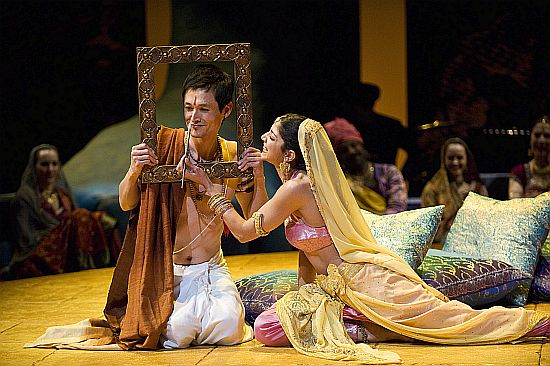
David Cooper Photography 2008

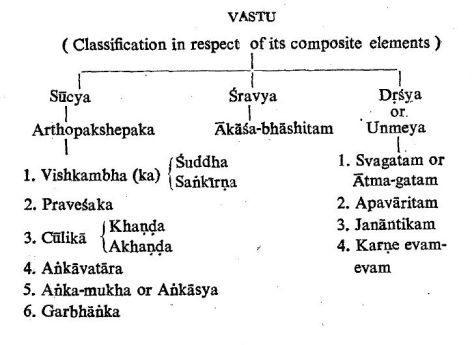
2.The Prakaraa

Atha prakarane vrttam utpadyam lokasamsrayam /amatya-vipra-vanijam ekarn kuryac ca nayakam /dhiraprasantam sapayam dharma-kama-artha tatparam/ sesam natakavat samdhi-pravesaka-rasadikam

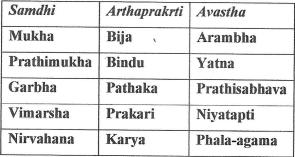
The Prakarana is a play of the principal category, in five to ten Acts. It is similar to Nataka, in regard to the numbers of Acts and the Samdhis.  The Prakarana consists of five Sandhis: Mukha, Pratinukha, Garba, Vimarsa and Samhriti. Its principal sentiment is Srngara.  

But, it differs from Nataka in a couple of  other aspects, apart from those  mentioned earlier.  The main points of departure are with regard to the story-line (which is created); the hero (not a god or a king. but a person outside the royal palace environment); and, its objective, which is to provide enjoyment to the common people. In addition, Abhinavagupta listing out the differences between Nataka and Prakarana mentions: ‘there is a slave in lieu of Kancuki (chamber maid); Vita (rouge) in place of Vidusaka (jester); and, Sresthi (merchant) instead of Amatya (minister)’.  The rest of its features are as in NatakaSesam natakavat.

Prakarana is mainly based on the story created or concocted by the playwright (Prakurute). It can also be drawn from sources like Brhatkatha and similar works of earlier poets; but, not from the Puranas. Its theme concerns the middle-class characters. And, therefore, offers a larger variety of characters to choose from. The Hero (Nayaka) or the leading character may be a Brahmin, a minister, an officer of the court, leader of a caravan or a merchant. And, sometimes, a Vita is also added to this list of heroes. Generally, the hero would be a self-controlled, calm, Dhira-prashantha type, following dharma-kama-artha. The heroine (Nayika) may be a house wife (kulastri) or could even be a courtesan (ganika).

The Prakarana is classified in three ways (prakaranam tredha) depending upon the type of heroine: ShuddhaPrakarana (where the heroine is from a noble family); Misra or Vikrta Prakarana (where a courtesan is the heroine); and Sammishra Prakarana (where both the types of heroines are figured).

Nayika tu dvidha netuh kulastri ganika tatha / kva cid ekaiva kulaja vesya kvapi dvayarn kva cit / kulaja ‘bhyantara bahya vesya natikramo ‘nayoh/ abhih prakaranam tredha samkirnam dhurtasamkulam //

The stories take place outside of the palaces and the royal circles, in the lanes and houses of the town; and, are concerned with common interests such as acquisition of money, love, legal justice, and bourgeois honour and so on.  At the same time, purity of character and chastity are respected; and, held up as noble virtues. The Prakaranas affirm the identities of the middle-class heroes, and, pay due recognition to their position in sustaining a healthy social order. 

The narration, in a Prakarana, is rendered more interesting by introducing complications of mistaken identities, petty revenge, theft, and political intrigue etc. The Prakarana plays end on a happy note, with the victory of true Love. Srngara is the predominant Rasa.

The earliest extant specimen of Prakarana is Asvaghosa’s Sariputra Prakarana.  And, Shudraka’s Mrcchakatika (Little Clay Cart) and Malatimadhava by Bhavabhuti are the well-known examples of the Prakarana class.

We shall continue in the next Part ; and, talk about the Bhana, Vithi and the Prahasana varieties of the Drama.

wayang_wong_bharata_pandawa

Continued 

In 

The Next Part

Sources and References

The Dasarupa a treatise on Hindu dramaturgy by George C. O. Haas, Columbia University press / 1912

 A Study of Abhinavabharati on Bharata’s Natyasastra and Avaloka on Dhananjaya’s Dasarupaka – by Manjul Gupta

Sahityadarpanah of Viswanathakavirajah

The Theory of the Samdhis and the Samdhyangas in Natya Shastra by T.G. Mainkar

Sanskrit Dramaturgy

http://shodhganga.inflibnet.ac.in/bitstream/10603/48454/21/21_chapter%2021.pdf

http://shodhganga.inflibnet.ac.in/handle/10603/106901

All images are from Internet

 
Leave a comment

Posted by on December 15, 2017 in Dasarupa, Natya


Tags: , , , , , , , , , , , , , , , , , , , , , , , , , , , , , , , , , ,

Concerning the Dasarupa of Dhananjaya – Part Four

Continued from Part Three

Dasarupaka of Dhananjaya

BOOK THREE

Shakuntala_201211_17 (1)

The Third Book or the Third Chapter of the Dasarupa, in its 72 verses, deals, mainly, with the ten (Dasa) varieties of Rupakas or plays. Dhananjaya’s work derives its title from the subject-matter of this Book. Obviously, Dhananjaya considered the discussion on the ten varieties of Dramas as the cream or the ultimate purpose of his work.  Of the 65 Sections in Book Three, as many as 43 Sections are devoted to Nataka, regarded as the best and the most complete form of Drama, exemplifying the rules prescribed for such class of dramatic compositions. The other nine varieties of Drama are briefly defined (in sections 44-64), mainly, by listing the points of their divergence from the Nataka. And, their other common features are simply clubbed under a single phrase – ‘the rest, as in the case of the Nataka’ (sesham natakavat).

When one looks at the structure of the text from this angle, one will appreciate that Book Three is the main purpose of the text (Dasarupa); and, within the Book Three, the Nataka, around which the entire body of discussions revolve, is the central or the pivotal point. The concepts, the definitions and the explanations of the technical terms that occupied Book One (68verses) and Book Two (72 verses) , or discussions concerning the Avastha, Samdhi, Arthaprakrti Vrttis, Vastu and Neta etc., all seem to serve as  the background material or  the preparatory work needed to arrive at the very heart or the soul of the text , the Nataka . Thus, one could say, the Nataka is the summum bonum, in which all the values of a Dramatic composition are included or from which they are derived.

*

The impetus for the Dasarupa comes mainly  from  : Chapter 20 (Dasarupa – the enumeration and descriptions of the ten kinds of play); Chapter  21 (Sandhi or segments of the plot- itivtta);  and, Chapter  22 (Vrtti or styles of presentation) of the Natyashastra .

The Chapter Twenty of Natyashastra commences with the passage:

I shall now describe the division of plays into ten classes with their names, functions and modes of production.

These ten forms of plays are known as aka, Prakaraa, Aka (Utsṛṣṭikāka), Vyāyoga, Bhāa, Samavakāra, Vīthi, Prahasana, ima, and Īhāmga. I shall describe their characteristics in detail.

aka sa prakaraam ako vyāyoga eva ca bhāa samavakāraś ca vīthī prahasana ima 2

Ihāmgaś ca vijñeyā daśeme nāya lakae eteā lakaamaha vyākhyāsyāmya anupūrvaśa 3

 I shall describe hereafter the different methods of constructing plays.

*

The Natyashastra identifies ten major types of plays: aka, Prakaraa, Aka (Utsṛṣṭikāka), Vyāyoga, Bhāa, Samavakāra, Vīthi, Prahasana, ima, and Īhāmga.

All these ten forms of Drama (Dasadhaiva) are traditionally associated with certain modes or styles (Vrtti) of representations, which are the constituent elements of all dramatic works.  Such Vrttis are said to be of four kinds (vrttis caturdha) : Kaisiki; Sattvati; Arabhati; and, Bharati.  The Vrttis are the ways of rendering a scene; or, the acting styles and the use of language, diction that different characters adopt in a play, depending upon the nature or the Bhava that relates to the character.[ For more on Vrttis please read Part Three in the series]

According to Bharata, the ten forms of Drama are classified based on the number and the types of Vrttis that are involved with it. Of the ten mentioned by him , only the two major forms – the aka and the Prakaraa – present all the variety of styles (Vrttis), for depicting different types of diverse situations. However, the other eight forms of Drama – the Bhāa, the Samavakāra, the Vīthi, the Īhāmga, the Utsṛṣṭikāka (Aka), the Vyāyoga, the ima, and the Prahasana – would not include kaiśikī-vttihī , the graceful Style.

Vīthī samavakāraśca tathehāmga eva ca utsṛṣṭikāko vyāyogo bhāa prahasana ima 8

Kaiśikīvttihīnāni rūpāyetāni kārayet ata ūrdhva pravakyāmi kāvyabandhavikalpanam 9

Bharata regards the Vrttis as the mother of all poetic works (kāvyānā mātkā vttaya), from which the ten kinds of compositions are evolved. He explains; just as the musical notes (Svara) constitute scales (Gramas) because of the Srutis coming together with their Jatis, so the varieties of plays come into existence due to combination of varied of styles (Vrttis). It is the number of Vrttis present in a play that assigns it a distinct class.

Sarveāmeva kāvyānā mātkā vttaya sm ābhyo vinista hyetaddaśarūpa prayogata

[Abhinavagupta took a dissenting view on this issue. He pointed out that though the Gramas (collection of Jaatis or melodic types), in music, might have common Svaras; yet, they differ from each other because of their internal order of arrangement (Aroha-Avaroha); the combination; and, the mutual relations of the Svaras. And, in a Jaati, within a Grama, a certain Svara might be prominent (amsa), or initial (graha) or final (nyasa), depending upon the type of the Jaati. It is because of such variations that each melodic-type gains its distinguishing character and flavour. Therefore, in all those cases, it is not the mere number of Svaras that truly matters.

In a similar manner, in a play, it is not the number of Vrttis, alone, that is significant. In certain types of plays one form of Vritti might be prominent or otherwise. The combination, the treatment and the variations of the Vrittis differs from one type of play to the other. Thus, the classification of the Rupakas is based on the treatment of the Vrttis, which might either be complete with all its angas (elements) or be lacking in some of them.]

While Bharata and Abhinavagupta laid stress on Vrtti, which, in their view, is the factor that defines the unique character of a Drama; Dhananjaya and Dhanika held Vastu (subject-matter), Neta (Hero) and Rasa (sentiment) as the elements which distinguish one form of drama from its other forms.

*

Though Bharata lists ten types of Dramas (Rupakas), which, apparently, is not exhaustive, the other ancient writers talk about, in addition, certain minor types of dramatic works (Upa-rupaka).

Perhaps, the earliest reference to Uparupaka occurs in the Kama-sutras of Vatsyayana who mentions plays such as  Hallisaka, latyarasaka and Preksanaka of the Uparupaka type, watched by men and women of taste. Ahhinavagupta’s commentary on the Natyashastra occasionally mentions Upa-rupakas; but, without defining the class. Rajashekara calls his Prakrit play Sattaka as not being a Nataka, but resembling a Natika, excepting that pravesakas (preliminary scenes), viskambhakas (intermediary or connecting scenes) and ankas (Acts) do not occur.

[Though Natyashastra enumerates, and discusses Rupakas it does not mention minor forms like Uparupakas.  However, Abhinavagupta speaks of minor categories of drama, which he terms them as Nrtta-kavya and Raga-kavya; meaning, the type of  plays that  are rendered through dance and the  plays that are sung.  Yet, it was such  Uparupakas – minor  class of drama-   based in music and dance movements  that eventually gave rise to  the now living traditions such as Kuchipudi , Bhagavata Mela Natakas and Kuravanji dance-dramas. Such forms of Uparupakas are very attractive formats, with the elements  of the music and dance  being predominant. And, most of them are based in dances accompanied by soulful songs, interpreting  the emotional contents of the song through Abhinaya or gestures.

Natyashastra does not mention all the different types of dramas. Kohala, another ancient writer, whose material is said to have got mixed up with the present version of the Natyashastra, mentions a number of minor  varieties of dramas that are lyrical in their character; and,  in which music and dance predominate. Abhinavagupta names some drama-types under these varieties as: Dombika, Bhana, Prasthana, Sidgaka, Bhinika, Ramakrida, Hallisaka and Rasaka. But, nothing much is known about these musical varieties. ]

natya-shastra2

While Rupaka seemed to be the general term used for Sanskrit Dramas, the nomenclature Upa-rupaka indicated a minor type of dramatic composition (within the general class); technically, not satisfying all the classic, dramatic requirements, even when a full theme was handled. Vishvanatha in his Sahityadarpana lists as many as eighteen minor types (Upa-Rupaka), with examples. Among these, he regards the Natika (e.g., Sri Harsha’s Ratnavali, Priyadarsika) and Trotaka (e.g., Kalidasa’s Vikramorvasiya) as more important.

[ As its name suggests; Natika is a diminutive form of Nataka.  In case, Natika is counted along with the other forms of Drama, then it would amount to eleven varieties. Bharata, however, explains that Natika is not an independent form; but, is a fusion, combining in itself (antarbhāvagatā) certain features of the Nataka and the Prakarana. And, therefore, the Rupas are only ten (ata eva daśaitāni rūpāī).

Antarbhāvagatā hyeā bhāvayorubhayoryata ata eva daśaitāni rūpāī tyuditāni vai ॥18. 61

Dhananjaya, following Bharata, also says that the pure forms of Rupas are indeed only ten (Dasadhaiva); as Natika is but a blend of two forms. Here, in Natika, the subject (vastu) is taken from the Prakarana type.  The types of principle characters are as in the Nataka (Natahavat). The hero (Nayaka), a prince, of the illustrious Dhiralalitah class, is taken from a well-known source or is newly created; and, the innocent, beautiful and exceedingly charming (mugdha divya ca ati – manohara) heroine (Nayika) is either a princess or a celestial nymph. And, the Rasa (mostly the Srngara-rasa) is also as that in the Nataka. The Natika containing an abundance of female characters is depicted in the graceful style, Kaisiki-vrtti; and, has four Acts (less than that in Nataka or Prakarana). Most of the action takes place within the Queen’s court or in the adjoining gardens – (DR.3. 46-52).

Tatra vastu prakaranan, natakan nayako nipah prakhyato dhiralalitah srngaro angi salaksanah– DR.3.47. ]

[The Natyadarpana of Ramachandra and Gunachandra offers a similar explanation about the characteristics of the Natika. The Natyadarpana says that the Angas of Srngara depicting song, dance, hum our etc., should be prominent in a Natika. And, it should have all the five Sandhis.  Here, the Natika is classified into eight types, depending upon whether the Nayika , the heroine , is well know or otherwise.]

**

[According to the renowned scholar Dr. V Raghavan, the mere number of Rupaka – either ten or eleven – is not of much significance. In his view, the number ten is symbolic; indicating ten tendencies. He points out that all the ten varieties from Nataka to Ihamrga embody these ten tendencies in various degrees.]

lotus-design

Of the ten, the Nataka is regarded as the best, most important and complete form of Rupa. Dhananjaya regards Nataka as the root (Prakrti) of other dramatic forms. Bharata, in his Natyashastra paid greater attention to Nataka and to Prakarana, than to the rest eight forms ; because, these two forms, according to him, lend abundant scope for presenting  all the four varieties of styles (Vrttis); in alluring Rasas; and, for  portraying  range of characters in diverse  types of situations.

Because of these reasons, the Nataka is spoken of  or discussed first (purvam natakam ucyate).

Prakrtitvad athanyesam bhuyo rasaparigrahat sampurna-laksanat vac ca purvam natakam ucyate   DR.3. 1

 Let’s, therefore, begin with Nataka.

texasshakuntala

  1. Nataka

[ Dr. Schroder, a German scholar, opines that Natya, also known as Rupaka is of ten types; of which, the Nataka is most important. He says: In Sanskrit literature Nataka is very ancient. Even in Vedic literature we can find descriptions about Nataka. There are also references in Ramayana and Mahabharata of actors, dancers, singers and anchors. And, therefore, many theories have been put up by the scholars while discussing the origin of drama.

Dr. Schroder thinks that Samvada-suktas that occur in the Rg-Veda are the origin of the Drama.

There are about fifteen Samvada-Suktas in the Rig Veda, which were written in the form of dialogues. For instance; the Pururava-Urvasi Sukta (RV.10.95); Yama-Yami Sukta (RV.10.10); Sarama-Pani Sukta (RV.10.108); Indrani-Indra-Vrsakapisukta (RV.10.86); Agastya-Lopamudra Samvadasukta (RV.1.170) etc. are some instances .

Some German scholars like Oldenburg, Windish, and Pishel think that initially these Samvada-suktas were the mixture of poetry and prose.  Poetry remained because it was interesting and melodious; while the prose part slowly vanished because it was descriptive.

It is also said;  that these Samvada-suktas used to be sung by a group of Udgatrus, in the Saman ; and,  enacted during specific Yajnas, to the accompaniment of  music.

Drama exactly follows this form of ancient Samvada-suktas, as they are also a mixture of prose and poetry.

Bharata in the first chapter of the Natyashastra mentions that in order to alleviate the sorrow of common people, Brahma created a Veda for Dramatics (Natya-Veda) by taking prose from  Rig-Veda; music from Samaveda; acting from Yajurveda; and , emotions from Atharvaveda.]

**

Bharata, in a passage of six verses (from 19.144 to149) virtually offers his definition of Nataka. He explains that in a Drama (ya), the wide-ranging shades of human nature (lokasya nānā-avasthā-antarātmaka) with its joys and sorrows (lokasya sukha-dukha-samudbhavā) are demonstrated through a variety of representations and actions (nānā-purua-sacārā).

Those who take part in the Drama try to present the past exploits of the gods, sages and human beings (devatānām –ṛṣīnā ca rājñāṃ), by assuming their roles. The actors enact (abhinayate) or interpret, the roles assigned to them through speech, expressions, actions, gestures and other representations. While so acting on the stage, the actors try to give up or suppress their own individual identities and nature (yasmāt-svabhāva saṃ-tyajya);and, systematically, diligently assume the nature, behaviour, gestures and the emotions of the character that they are portraying (gopāga-gati-kramaiḥ).

Bharata then remarks, the art of emulating the psychological, mental and physical state of a character calls for an exceptional and a truly dedicated effort. One should realize this truth; and, strive to achieve near-perfection.

The varieties of dramatic actions; the ways to bringing to life the essence of a character; and, the modes of presentation of actions on the stage, in an attractive manner (rūpāi kartavyāni prayoktbhiḥ), are all indeed countless (aneka-śilpa-jātāni naika-karma-kriayāi ca).

It  is essential that all those involved either in writing, producing or presenting a Drama should observe and study the ways of the common people of the world (Lokasvabhāva saprekya narāāṃ ) – their nature, their modes of behaviour (kāryaṃ) , speech patterns and modes of dress ; their strengths and weaknesses (balābalam); and, their ways of enjoyment and reasoning (sabhoga caiva yuktiṃ).

Yo’ya svabhāvo lokasya nānā-avasthāntarātmaka so’gādy abhinayairyukto nāya mity-abhidhīyate 19.144

Yasmāt-svabhāva satyajya sāgopāga-gati-kramai prayujyate jñāyate ca tasmādvai nāaka smtam 19.146

Sarvabhāvai sarvarasai sarva-karma-pravttibhinānā-avasthā antaropetaaka savidhīyate 19.147

Anekaśilpajātāni naikakarmakriayāi ca tānyaśeāi rūpāi kartavyāni prayoktbhi ॥ 19.148

Lokasvabhāva saprekya narāā ca balābalam sabhoga caiva yukti ca tata kārya tu nāakam 19.149

*

At another place, Bharata, in a way, sums up the virtues and merits of Nataka , as a dramatic work, that captivates the hearts of the spectators and brings glory to its playwright , producer and the actors .

The work of art that satisfies all classes of spectators ; and is a happy and enjoyable composition, which is graceful on account of being  adorned with sweet and elegant words; free from obsolete and obscure meaningless verbose ; easily grasped and understood by the common people ; skillfully arranged ; interspersed with delightful songs and dances; and,  systematically  displaying varied types of sentiments  in its plot devised into Acts, scenes, junctures etc.

mdu-lalita-padārtha gūha-śabdārtha-hīna ;   budha jana sukha bhogya,  yuktiman – ntta-yogyam  bahu rasa kta mārga , sandhi-sandhāna-yukta  bhavati  jagati  yogya  nāaka  prekakāām  16.130

**

Bharata, after describing Lasyangas, the graceful, fluid and charming movements; lists the four characteristics of an ideal Nataka.

He says, the playwright (kavi kuryāttu) while attempting a well constructed (suprayoga) Nataka with aptly chosen happy sounding words  (sukhāśrayam mdu-śabdā ) should ensure that it is composed of five Samdhis (pañcasandhi); four Vrttis (caturvtti); sixty-four Angas, elements  (catuḥṣaṣṭya-agasayutam); and, thirty-six Lakshanas , characteristics  (atriṃ-śallakaopetaṃ)adorned with Gunas, Alamkaras (guā-alakāra-abhūitam), many Rasas (mahārasaṃ); as also with topics concerning noble persons of sublime virtues (mahāpurua-sacāraṃ), exalted speeches (udātta-vacanā-nvitam) providing inspiration and great enjoyment (mahābhogam).

Apart from that, the Drama should also portray the lives of common people, their happiness and miseries (sukha-dukha-samudbhavā) arising out of their interactions with their fellow-beings and their multifarious deeds in the world (avasthā yā tu lokasya, nānā-purua-sacārā.) Please also see.

Pañcasandhi caturvtti catuḥṣaṣṭyagasayutam atriśallakaopeta guālakārabhūitam 139

Mahārasa mahābhogam-udāttavacanānvitam mahāpuruasacāra sādhvācārajanapriyam 140

Suśliṣṭa-sandhi-sayoga suprayoga sukhāśrayammduśabdābhidhāna ca kavi kuryāttu nāakam 141

Avasthā yā tu lokasya sukha-dukha-samudbhavā nānā-purua-sacārā nāake’sau vidhīyate 142

Viswanatha in his Sâhitya-Darpana also described Rupaka (Nataka) as the most logical and perfect theatrical composition. He says that it progresses in a systematic manner and concludes successfully, bringing joy to all. 

He mentions that according to the Dasarupa, the structure of the Rupaka consists:

five elements of the plot (Arthaprakrti), matching with the five stages of the action (KaryaAvastha), from which arise five structural divisions or sequence of events (Samdhi) of the drama;

twenty-one subdivisions (Samdhyantara), having sixty-four Samdhyanga , adorned with thirty-six Abhushanas ;

ninety numbers of music; and

four kinds of Vrttisall of  which corresponding with the elements of the plot and the actions associated with the stages in the hero’s attempts to successfully realize his purpose or objects

Yattu pancachatuh–sastiscatuh–pancaikavisatih / sattrinsatravtisca tat-Natakam.

As Dr. Sunil Kothari observes in his research paperThe principle of the two modes (dharmi) of presentation, Natya (the stylized) or Loka (the realistic) the different types of Vrittis (style), namely Kaisiki (the graceful), Sattvati (the grand), Arabhati (the energetic) and Bharati (the verbal); the full play of the four types of Abhinaya (acting) namely : Angika (gestures or movement), Vacika (the spoken word), Aharya (costume, make-up, stage props etc.) and Sattvika (relating to state of emotion) are the broad principles which govern the structure of Indian drama and its  presentations.

It is these principles, along with other related ones such as the concept of Bahya (external) and Abhyantara (inner) acting, of Pravrtti (local usage), of Samanya-abhinaya (basic representation) and Citra-abhinaya (special representation), which also govern the technique of  Drama.

[To put it simply, In Sanskrit, Nataka is the most complete form of Drama. Its structure is logical. And, its construction is also quite detailed, being composed of five or more Acts, each of which comprising number of episodes depicting various scenes of action. It also employs intermediary scenes that connect its subdivisions. The Dramatic contents of a play find their expressions, through speech, gesture, songs, dance and other representations, in highly refined and attractive forms. In its modes of depictions, the Nataka employs varied types of embellishments, sentiments, psychological states and actions. And, in case there are such matters, as are not presentable on the stage, they are suggested, indirectly, through explanatory devices.

The heroes in Nataka are generally exalted, descending from noble lineage, known far and wide, for their bravery, generosity and other good qualities. But there may also be other kinds of heroes. The heroines are beautiful; loving; pure in heart; sweet and cheerful; cultured; and, gifted with aesthetic sensibilities. The action in the play ends on an auspicious note, with the good overcoming  the evil ; and , celebrating the victory of the virtuous.  The major aim of Sanskrit Drama is to provide an unsullied and wholesome enjoyment to the spectators. And, at the same time, it is conducive to Dharma. ]

lotus-design

The three broad heads under which Dhanajaya discusses the subject of Drama are: Vastu (theme), Neta (the leading characters) and Rasa (the aesthetic sentiment it portrays).  Let’s briefly take a look at each form of Drama, with particular reference to these three criteria.

Vastu

As regards the story of a play, it could either be adopted (itivrttam) from the incidents that occur in the well-known (Prakhyatha) legends of the past; or, could be a story invented (Uthpadya) by the poet; or else, it could be a mixture (Misra) of the two.  The story could also be about gods (Divya), humans (Marthya) and the like (Divyadivya).

prakhyatam itihasader utpadyam ; kavi-kalpitam;  misram ca samkarat tabhyam divya-martyadi-bhedatah.

Whatever might be the original story, if it is not suitable for the hero or is inconsistent with the sentiment (Rasa) he represents, then the story can be modified or re-arranged in some other way. After determining the beginning and end of the play in this manner; and, after dividing it into five parts, the author should then break it up into small interrelated divisions (Samdhi).

Yat tatra-anucitam Kim cin nayakasya rasasya va viruddham tat parityajyam anyatha va prakalpayet.

The purpose of such reshaping of the story and characters by the playwright is to achieve a harmony between the theme and its main character, in order to serve the ultimate purpose of the drama , which is to provide a delightful theatrical experience (within the framework of the Dharma) for  the  enjoyment  to the cultured spectators –  the   Rasa .

There should be a sense of balance in the treatment of the subject.  The subject-matter should neither be isolated by its excessive coverage; nor, should it be cluttered or swamped with unrelated matters and needless elaborations.  

The plot should be simple, the incidents should be  consistent; and, the progression of the events should spring directly  from the story.

*

The technical divisions of a drama and the development of the plot follow a set of carefully elaborated rules.

The Natyashastra mentions that there could be between five to ten Acts (Anka) in a Nataka. A regular Nataka will have five Acts. And, a Nataka with ten Acts is called Maha-nataka – (pancankam etad avaram dasankam natakam param). An interlude (Pravesaka) must always be made been the Acts.

[ Later, there were , however, some Natakas with more than five Acts , such as : Bhaṭṭa Nārāyaṇa’s Venisamhara and Bhasa’s Avimaraka with six Acts; Rajasekhara’s Bala Ramayana and Mahadeva’s Adbhuta Darpana with ten Acts; and, Hanumant’s Maha-Nataka with fourteen Acts.]

An Act (Anka) is generally understood as a cohesive dramatization of events that occur within the course of a day.  However, the Natyashastra does not demand that these events run contiguously.  Normally, the action in a play depicts the events that occurred during the course of that day (or night). But, there are some noted exceptions where the events in the first the Act and the second Act are separated by long years. In such cases, an intermediate scene (Vishkambha) is introduced as a link and also to explain/narrate the occurrences that took place subsequent to the previous Act. (E.g. Uttararamacharita, Shakuntalam et al)

Further, there might be certain types of actions or objects that should not or cannot be presented on the stage. As per the conventions followed in the Sanskrit Drama, one should avoid showing such events as: long travel; murder; war; loss of kingdom; siege of a city; violent over throw; bloodshed; eating; taking bath; un-dressing; sex act etc.

Further, it is said; a chariot, an elephant or a horse should not be brought on the stage. Similar is the case with palaces, hills or lakes. Such animals and geographical features might be suggested or indicated through models made of cheap materials. And, in case an army has to be introduced on the stage, that should be symbolically represented by the movement (gati-vīcāra) of four to six persons dressed as soldiers.

*

In a Nataka, the number of characters that really matter to the main story should not be too many. Similarly, the supplementary or the supporting characters, such as the attenders   etc., should at most be four or five.

As the play gathers momentum, in stages, its focus of attention should, progressively, be confined to characters and actions that are directly related to the main purpose of the story.  The play is structured in such a manner that it steadily moves from the general or the diffused towards the purposeful and pointed.  Its initial Acts might, comparatively, be lengthy; but, as the action moves towards the finale the Acts should get brief and pithy. As Dhanajaya says, the Nataka, in its structure, should resemble the tip of a cow’s tail (gopuccha).

gopuccha

All the exalted situations should be placed in the concluding segment (Nirvahana), awe-inspiring (Adbhuta), and radiating joy in celebration of Dharma – the victory of the Love over loveless; the triumph of  the good over the evil.

*

The concepts of tragic catharsis or tragedy are not present in the Sanskrit Drama. The Nataka, generally, starts on a happy note (Adi-mangala); and through the trials and tribulations of the hero, a happy incident occurs in the middle (Madhya-mangala); and, the play concludes on an auspicious note (Antya-mangala). And, the whole proceeding comes to an end with the Bharatavakya , praying for the welfare and happiness of the King (Raja), his subjects (Praja) and the State (Rajya) ; and , for the peace and prosperity  (Shanthi , Samruddhi) of all the beings in the  three worlds (Trilokye) . 

nirvahana

Neta

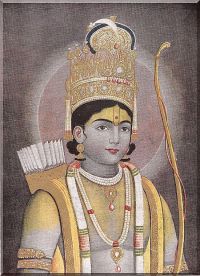
Rama

The hero (Nayaka) the leading character of the Nātaka should be an ideal person, a worthy and exalted (Udatta) icon of virtue; descending from the noble lineage of royal seers (rājarsih) . He should be  : resolute, young, endowed with intelligence, energy, memory, and wisdom; brave, firm, graceful, charming, sweet-tempered, soft-spoken, liberal, clever, affable, popular, upright, and eloquent.

Prakhyāta-vamso rājarsih-divyo-vā yatra näyakah/ tat prakhyātam vidhātavyam vrttam-atra-adhikārikam//

The Hero should be  one endowed with noble qualities of the type known as self-controlled, and exalted (Dhirodatta) , glorious , eager for fame, of great energy , a preserver of three Vedas (Trayi) , a ruler of the world , of renowned linage , a royal seer or a god . It is, basically, his story that forms the the principal subject (Adhikarana) of the Nataka.

mahasattvo ‘tigambhirah ksamavan avikatthanah sthiro nigudhahamkaro dhirodatto drdhavratah

The noble hero  has control over his senses; does not let emotions override his actions; maintains his composure even under dire circumstances; shelters the weak and those under threat ; always wishes and strives to do good for/to others; is also wise, well versed in Shastras and is skilled in arts.

The eight virtuous qualities of an ideal hero are: nobility of character (sobha), liveliness (vilasa), sweet-temper (madhurya), poise (gambhirya), firmness (sthairya), sense of honour or brightness (tejas), grace (lalita), and magnanimity (audarya).

 Sobha vilaso madhuryam gambhiryam sthairya tejasi lalita udaryam ity astau sattvajah paurusa gunah

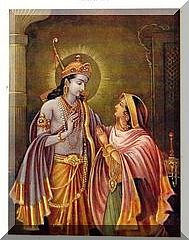
sri Sita Ram

Nayika

sita

Dhananjaya initially mentions and describes three kinds of Heroines (Nayika tridha) : the hero’s own (Sva) wife; another person’s (Anya) wife; and, the common-woman (Sadharana-stri) – sva anya sadharanastri ‘ti tadguna nayika tridha.

However, Bharata had presented a different classification:  divya (celestial); nrpapatni (queen); kulastri (modest house-wife); and ganika (courtesan).

The Nayika of a Nataka is usually of the first type. She would the Hero’s wife (svaya) . And, she would be either be a princess of renowned royal-heritage or a celestial beauty – virtuous (mugdha), dignified (gambhira, manini), charming (manohara) of loving-nature and devoted to her husband. (Nayika tadrsi mugdha divya catimanohara)

devi tatra bhavej jyestha pragalbha nrpavamsaja/ gambhlra maninl krcchrat tadvasan netrsamgamah

ramasita

Rasa

As regards its style of narration and depiction, Nātaka should adopt either the graceful Kaušiki Vrtti associated with the Srngara Rasa (suited for display of expressions of love, dance, song as also charming costumes and delicate actions ) ; or, the  exuberant Sattvati Vrtti  associated with  heroic Vira Rasa .

Dhananjaya, in his Dasarupaka said : a Nataka should principally portray one Rasa – either the Srngara or the  Vira; and,  in the concluding part  the Adbhuta Rasa becomes prominent

Eko rasa – angi -kartavyo virah srngara eva va / angamanye rasah sarve kuryan nivahane –adbhutam

 [But, Abhinavagupta, preferred not to lay any such restrictions. Instead, he argued that a play could be a judicious mix of several Rasas, with a major Rasa defining the tone and texture of the play. He cited Nagananda of Sri Harsha, which in its initial stages display Srngara; but , towards the end,  it is the Shantha Rasa that pervades atmosphere of  the play.  And, he explained though the play had to deal with the horrific killing of the hapless Nagas, it underplays scenes of violence; and, exemplifies the virtues of peaceful coexistence and compassion towards all beings. It is that aesthetic experience of Shanta – peace and compassion towards the fellow beings – which the spectator carries home]

***

In the next part let’s talk about Prakarana and eight other forms of the Rupaka.

nayana6

Continued

In

Part Five

Sources and References

The Dasarupa a treatise on Hindu dramaturgy by George C. O. Haas, Columbia University press / 1912

 A Study of Abhinavabharati on Bharata’s Natyasastra and Avaloka on Dhananjaya’s Dasarupaka – by Manjul Gupta

Sahityadarpanah of Viswanathakavirajah

The Theory of the Samdhis and the Samdhyangas in Natya Shastra by T.G. Mainkar

Sanskrit Dramaturgy

All images are from Internet

 
4 Comments

Posted by on December 9, 2017 in Dasarupa, Natya


Tags: , , , , , , , , , , , , , , , , , , , , , , , , , , , , , ,

Concerning the Dasarupa of Dhananjaya – Part Three

Continued from Part Two

Dasarupaka of Dhananjaya

BOOK TWO

David Cooper Photography 2008

The Second Chapter of the Dasarupa , in its 72 verses, classifies, sub-classifies and describes, in great detail, the types of characters in a play, especially the four types of Heroes (bhedais caturdha); three Kinds of Heroines (tadguna nayika tridha) with their twenty variations (strinam alamkaras tu virnsatih) according to their relations with the Hero; the opponent of the hero (Pratinayaka); the companions and those devoted to the hero; messengers of the Heroine and so on.

Hero

The term Nayaka (Hero) is derived from the root Ni, meaning to carry. The concept of Nayaka or Neta comprised not merely the hero but several other characters as well that appear in the play. Unlike Dhananjaya, Bharata did not regard Nayaka as the distinguishing element on the basis of which the ten forms of the Rupaka are classified. Bharata’s approach was broader as it covered a wide range of character-types of all classes.

Sri Rama

As per the  concept presented by Dhananjaya, the hero (Neta) the leading character of the Nātaka should be an ideal person, a worthy and exalted person of virtue; of noble lineage; resolute, young, endowed with intelligence, energy, memory, and wisdom; brave, firm, graceful, charming, sweet-tempered, soft-spoken, liberal, clever, affable, popular, upright, and eloquent. It is , basically, his story that forms the main theme of the Drama.

Prakhyāta-vamso rājarsih-divyo-vā yatra näyakah/ tat prakhyātam vidhātavyam vrttam-atra-adhikārikam//

The noble hero  has control over his senses; does not let emotions override his actions; maintains his composure even under dire circumstances; shelters the weak and threatened; always wishes and strives to do good to others; is also wise, well versed in Shastras and is skilled in arts;

netā vinīto madhuras tyāgī dakṣaḥ priyagvadaḥ / raktalokaḥ śucir vāṅmī rūḍha vaṃśaḥ sthiro yuvā // DhDaś_2.1 //

The eight qualities of an ideal hero are: nobility of character (sobha), liveliness (vilasa), sweet-temper (madhurya), poise (gambhirya), firmness (sthairya), sense of honour or brightness (tejas), grace (lalita), and magnanimity (audarya).

 Sobha vilaso madhuryam gambhiryam sthairya tejasi lalita udaryam ity astau sattvajah paurusa gunah// DhDaś_2.9 /

Dhananjaya mentions four kinds of heroes- bhedais caturdha lalita santo udatto -ddhatair ayam. :

(1) Dhira-lalita, the light-hearted hero, fond of arts, happy, gentle, free from stress – niscinto dhiralalitah kalasaktah sukhi mrduh;

(2) Dhira-shantha, the self-controlled and calm hero , possessed of generic merits of a hero – samanya-guna-yuktas tu dhirasanto dvijadikah;

(3) Dhirodatta, the self-controlled and exalted hero of great excellence , exceedingly earnest, forbearing, not boastful, resolute with self-assertion  suppressed, and firm of purpose-mahasattvo ‘tigambhirah ksamavan avikatthanah sthiro nigudhahamkaro dhirodatto drdhavratah; and,

(4) Dhiroddhata, the vehement hero, altogether dominated by pride and jealousy, wholly devoted to magic practices, and deceitful, self-assertive, fickle, irascible and boastful – darpa-matsarya-bhuyistho maya-chadma-parayanah dhiroddhatas tv ahamkarl calas cando vikatthanah..

In a play in which a Hero is endowed with noble qualities of the type known as self-control, and exalted (Dhirodatta) , glorious , eager for fame, of great energy , a preserver of three Vedas (Trayi) , a ruler of the world , of renowned linage , a royal seer or a god – in that , his characterization is to be made the principal subject (Adhikarana).

Sita Ram

 Heroine

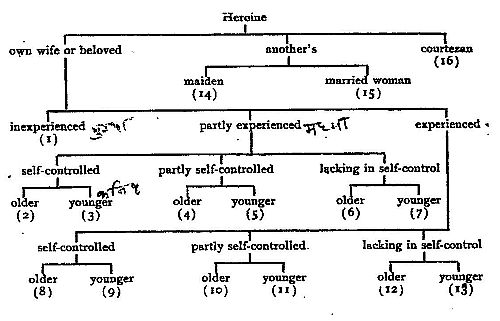
Dhananjaya initially mentions and describes three kinds of Heroines (Nayika tridha) : the hero’s own (Sva) wife; another person’s (Anya) wife; and, the common-woman (Sadharana-stri). These , again , are classified as Mugdha (modest , shy and inexperienced) ;Madhya (between adolescence and full womanhood, enthusiastic and enterprising); and, Pragalbha (mature and well conversant with the art)

svā anyā sādhāraṇastrīti  tadguṇā nāyikā tridhā / mugdhā madhyā pragalbh eti svīyā śīlārjavādiyuk // DhDaś_2.14 //

Bharata had presented a different classification: divya (celestial); nrpa patni (queen); kulastri (modest house-wife); and ganika (courtesan). And, each one of these four types is associated with a trait : Dhira (patient); Lalitha (delicate) ; Udatta (gallant) and Nibhrta ( fearless).

*

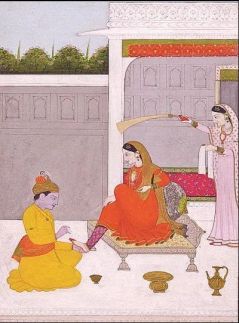
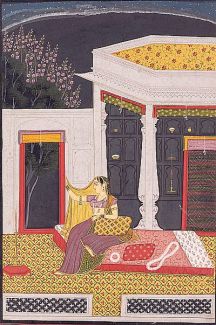
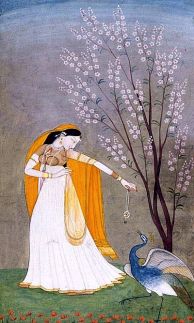
There is also an eight-fold classification of the Heroines (Ashta Nayika), depending upon their relations with the Hero:

One who loves to dominate her husband (svadhina- bhartrka or svadhina-patika);

svadhina-patikavasaka-sajja

One who loves to dress well and to adorn herself, as she joyfully waits for her lover (vasaka-sajja);

*

One who cannot tolerate her lover being away from her (viraha-utkanthita) and is disturbed (unmanas) when he delays meeting her;

viraha-utkanthita2Khandita_Nayika

One who gets very angry (khandita) when she discovers that her lover is having an affair with another woman;

*

One who after a quarrel with her lover moves out (kalaha-antarita), and later upset with herself in righteous anger and remorse ;

lover quarrelvipralabdha

One who feels deceived and is deeply hurt (vipralabdha) when her lover fails to show up on-time at the rendezvous agreed upon;

*

One who is lonely (prosita-priya) when her lover is in a distant land because of war or business;   

lover seperationAbhisarika nayika

 And, one who, deeply in love, sets out in great hurry and anxiety to meet her lover  (abhi-sarika).

praṇayā yogayorutkā pravāse proṣitapriyā / kalahānta riterṣyāyāṃ vipralavdhā ca khaṇḍitā // DhDaś_4.62 //

[Dhanika, further divides the eight into two classes; and, by permutation comes up with 128 varieties of heroines.]

shringarbodh_navgeet indian_beauty

Dhananjaya lists as many as twenty natural graces of women in the prime of youth. These are again made into three groups.

The first three are related to expressions or manifestation of love: emotions or feeling (bhava); bodily gestures (hava); and passion (hela).

 yauvane sattvajāḥ strīṇāmalaṅkārāstu viṃśatiḥ / bhāvo hāvaśca helā ca trayastatra śarīrajāḥ // DhDaś_2.28 //

The second group of seven components are related to the inherent characteristics of the heroine: graceful beauty (sobha); lustrous loveliness (kanthi); endearing sweetness (madhurya); poise and courage (pragalbhata); generosity (audarya); and steadfastness (dhairya).

śobhā kāntiśca dīptiśca mādhuryaṃ ca pragalbhatā / audāryaṃ dhairyamityete sapta bhāvā ayatnajāḥ // DhDaś_2.29 /

The third group of ten virtues relate to her attitude and dispositions: sportive attitude (Lila); charmingly delightful (vilasa); good-taste (vicchitti); a bit of confusion (vibhrama), easily excitable (kila-kinchita); very affectionate (mottayita); pretending to be angry , in jest (kuttamita); mock-indifference (bibboka); a bit laid-back or relaxed (lalita); and, bashful (vihrta).

līlā vilāso vicchittir vibhramaḥ kilakiñcitam / moṭṭāyitaṃ kuṭṭamitaṃ bibboko lalitaṃ tathā / vihṛtaṃ ceti vijñeyā daśa bhāvāḥ svabhāvajāḥ // DhDaś_2.30 //

 [These twenty qualities are again discussed, in detail, later in the text.)

Kalamkari

The Sanskrit Drama carefully classifies and sub-classifies the Heroine into as many as sixteen types.

 heroine b-w

Astanayika

Such fondness , bordering on obsession, for minute sub-division of almost every element of the Drama into as many theoretically possible numbers of types as possible   is a defect in the Sanskrit dramaturgy. Such stereotyped threadbare manipulation of characters, actions, styles is rather futile.  Apart from being of no practical use, they rob the playwright of his initiative and enterprise. Every aspect of Drama is typecast and pigeonholed. It is not therefore surprising that over a period, the Sanskrit Drama lost freshness ,  became too conventional and eventually losing their appeal.

jupiterfig5

[ Before proceeding further with the treatise of Dhananjaya , it would be worth reproducing ( in a summarized form) the views of Abhinavagupta  on the participation  played by the Hero , heroine and the spectators , as well.

According to Abhinavagupta, a true connoisseur of arts has to learn to detach the work of art from its surroundings and happenings; and view it independently.

He asserts, the “willful suspension of disbelief” is a pre-requisite for enjoying any art expression. The moment one starts questioning it or doubting it and looking at it objectively; the experience loses its aesthetic charm; and, it becomes same as a mundane object.

One enjoys a play only when one can identify the character as character from the drama and not as ones friend or associate. The spectator should also learn to disassociate the actor from the character he portrays.

The Hero and Heroine  in a play are just portraying the roles assigned  to them, as best as they can. In other words; they are trying to convey certain states of emotions and the sate of being of the character-roles they are playing . They are like a pot (patra) or receptacle, which carries the emotional state of primary (real) role to the spectator. The actor merely  serves as a vessel or  a receptacle or a means of serving relish (Asvadana) ; and, that is the reason, a role is called a Patra. The characters on the stage represent the role ; but , are not the real ones; and, they do not completely identify themselves with the original. Hence, the Vibhava is like a cause; but, not an exact cause. The performance, the acting by the hero, heroine and other characters in a play is Anubhava, one of the several ways of bringing out the emotional states of the characters they are playing out on the stageSuch Anubhava could be called as ensuing responses.

The hero or heroines in a play don’t become the lover and beloved in real life. They understand and accept here  , what their their roles are; and, try to show what might be the emotional experiences of the character , and its reactions to the given situation  . The actors  try to  resemble the character , for few hours of the play ; and, act on the stage accordingly, through which the spectators understand , grasp and enjoy  the emotional states in the play.

Abhinava makes a distinction between the world of drama  (Nātyadharmī) and the real but ordinary life (Lokadharmī). In the artistic process, where presentations are  made with the aid of various kinds of dramatic features such as Abhinayas and  synthetic creations  ,  we are moving from the gross  and un-stylized movements of  daily life to more subtle forms of expressions and experiences; we move from individualized experiences to general representations; and from multiplicity to unity.

He says that the feeling that might cause pain in real life is capable of providing pleasure in an art form. He explains, while viewing a performance on stage one might appreciate and enjoy the display of sorrow, separation, cruelty, violence and even the grotesque; and one may even relish it as aesthetic experience. But, in real life no one would  ever like to be associated with such experiences.

Abhinavagupta , therefore,  observes that the theatrical experience is quite unlike the experience in the mundane and the real world; it is Alaukika – out of the world.

In summary; he draws a theory that the artistic creation is the expression of a feeling that is freed from localized distinctions; it is the generalization (sadharanikarana)  of a particular feeling. It comes into being through the creative genius (prathibha) of the artist. It finally bears fruit in the spectator who derives Ananda, the joy of aesthetic experience. That, he says, is Rasa – the ultimate emotional experience created in the heart of the Sahrudaya. 

Abhinavgupta talks about Sadharanikarana, the generalization. He points out that while enjoying the aesthetic experience, the mind of the spectator is liberated from the obstacles caused by the ego and other disturbances. Thus transported from the limited to the realm of the general and universal, we are capable of experiencing Nirvada, or blissfulness. In such aesthetic process, we are transported to a trans-personal level. This is a process of de-individual or universalization – the Sadharanikarana.\

According to Abhinavagupta a real work of art, in addition to possessing emotive charge carries a strong sense of suggestion and the potential to produce various meanings. It can communicate through suggestions and evoke layers of meanings and emotions.

He illustrates his position through the analogy of a tree and its fruit. Here, the play is the tree; performance is the flower; and spectator’s experience .

Rasa, the relish (Asvada) by the spectator, is the ultimate product (phala) of a dramatic performance, as that of a fruit borne by a tree :  “the play is born in the heart of the poet; it flowers as it were in the actor; and, it bears fruit in the delight (ananda) experienced by the spectator.” .. ”And, if the artist or poet has inner force of creative intuition (prathibha)…that should elevate the spectator to blissful state of pure joy Ananda.”

At another place, Abhinava declares, a true aesthetic object,  not merely stimulates the senses but also ignites the imagination of the viewer. With that, the spectator is transported to a world of his own creation. That experience sets the individual free from the confines of place, time and ego (self); and elevates him to the level of universal experience.  It is liberating experience. Thus art is not mundane; it is Alaukika in its nature

According to Abhinavagupta, the object of the entire exercise is to provide pure  aesthetic  joy to the spectator. Without his participation , all art expressions are pointless.

Thus, he brought the spectator from the edge of the stage into the very heart of the dramatic  performance and its experience. ]

friends

Supporting characters

The section on Neta, apart from the Hero and the Heroine, includes the supporting characters, such as the companions of the hero; the  maids and messengers in service of the heroine ; and , the opponents of the Hero as well. Just mention about these briefly:

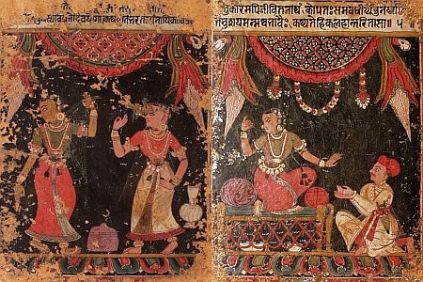
The companions of the Hero, i.e., those assisting and attending (pithamarda) and devoted to him are, usually, possessed of qualities similar to that of the Hero, though in a lesser degree. In addition, there would a fun and food loving, good-natured, but a rather incompetent jester (Vidushaka); and another, a sort of parasite (Vita).

The Heroine, usually, has in her service a set of maidens, who attend on her as maid-servant (dasi), and also serve as messengers (dutyo).  The Heroine might use any of those women, as also a foster-sister (dhatreyi), a woman skilled in crafts (silpini), a neighbour (prativesika), and a female ascetic (lingini) to pass on private messages to her lover. Some of these are also her friends (sakhi), confidants and advisors – (dutyo dasi sakhi karur dhatreyi prativesika lingini silpini svam ca netr mitra gunanvitah.)

The opponent of the hero (prati-nayaka), falling under the fourth type of the Hero (Dhiroddhata) is often depicted as avariciousness, vehement, stubborn, criminal and vicious (lubdho dhiroddhatah stabdhah papakrd vyasani ripuh)

queen and friends


Vrtti

Bharata had mentioned:  Vrttis or Styles are traditionally known as the constituent elements of all dramatic works (lit. poems).  It is said; the Vrttis have been so named because of the element or the action that is predominant in them.  the ten kinds of play are considered to have proceeded from these Vrittis.

sarveāmeva kāvyānā mātkā vttaya sm ābhyo vinista hyetad-daśarūpa prayogata 18.4

Another important element of the Drama that is discussed in Book  Two  of the Dasarupa is the concept of Vrtti  (which Bharata considered as the mother of all poetic works – kāvyānā mātkā vttaya sm), the ways of rendering a scene; or , the acting styles and the use of language , diction that different characters adopt in a play, depending upon the nature or the Bhava that relates to the character. Thus, the Vrttis get related to the four types of heroes and four kinds of representations. And, since Vrttis are also related with Rasas, they set the mood or ambiance on the stage by their distinct style of dramatic representation. In other words; the Vrttis call for the excellence of the mental, physical and vocal efforts of the actors portraying their characters.

Some other associations are also mentioned with regard to the Vrttis. For instance with : Angikam,Vacikam,Sathvikam and Aharyam. Further, Bharati with Rigveda; Sattavati with Yajurveda; Kaisiki with Samaveda; and, Arabhati with Atharva Veda.

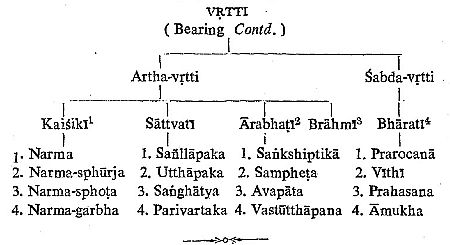
Vrttis are said to be of four kinds (vrttis caturdha): Kaisiki; Sattvati; Arabhati; and, Bharati.

The Kaisiki-vrtti (graceful style) which characterizes the tender Lasyanga associated with expressions of love, dance, song as also charming costumes and delicate actions portrayed with care, mostly by women,   is most suited to Srngara-rasa (tatra kaisiki gita-nrtya-vilasadyair mrduh srngara-cestitaih). Kaisiki has four varieties (Bhedas): Narma (good-natured small-talk); Narmaspinja (pleasure blooms at the first meeting of lovers); Narmasphota (the lovers delighting in each other company); and, Narma-garbha (covert pleasure; incognito). The prefix Narma indicates cheer or laughter.  Kaisiki is the most charming and delightful combination of Srngara and Hasya, playful expression one’s affection or longing for union with the lover.

Sattvati Vrtti (flamboyant style) is a rather gaudy style of expressing ones emotions with excessive body-movement; exuberant expressions of joy; and, underplaying mellow or sorrow moods. It is a way of expressing ones emotions through words (mano-vyapara).  It is associated with the Vira , Adbhuta and Rauidra Rasas (vire sattvaty) – arabhati punah rase raudre ca bibhatse vrttih sarvatra bharati. The Sattvati Vritti has four varieties: Uttpatha (raising up to the conflict); Sallapaka or Samlapaka ( heroic and passionate words or challenge); Sanghatya (breach of alliance or that which breaches alliance; and, Parivartaka ( when a character abruptly changes a course of his actions).

Arabhati-vrtti is a loud, rather noisy and energetic style. It is a powerful exhibition of one’s anger, valour, bordering on false-pride, by screaming, shouting, particularly, in tumultuous scenes with overwhelming tension, disturbance and violence.  It involves furious physical movements (kaya-vyapara). It is associated with Raudra (furious) and Bhibhatsa (odious) Rasas (arabhati punah rase raudre ca bibhatse). The Arabhati has four varieties: : Sanskipta (brief, elaboration , condensed representation of the plot); Avapata ( commotion, fear, jubilation , panic, fall, puzzled behaviour, quick entrance and exit of characters); Vastu Uttahapanam (elevation of the plot, combination of all other Vrttis); and , Sampheta (conflict, fights, combats, betrayal, excitement). Arabhati is also attended with feats of jugglery, conjunction and conflicting situations, where bodily actions are prominent.

And, Bharati-vrtti is mainly related to a scene where the speech or dialogue delivery is its prominent featureBut, generally, the Bharati-vrtti, related to eloquence, is of importance in all the situations (vrttih sarvatra bharati). It is devoid of Srngara, Karuna and Nirveda (dispassion).  The Bharati-Vrtti has four varieties: Parochana (introducing the play and playwright to the spectators); Amukha or Prastavana (where the Sutradhara strikes a conversation with the Nati or Vidushaka, as a prologue to the play); Vithi (sort of monologue the Sutradhara carries on before the play proper); and, Prahasana (hilarious conversations between minor actors). Abhinavagupta suggested the terms: Kathodghata (which consists in some characters catching up with the words or intent of the Sutradhara); Pravartakam (introducing the subject), Prayogatishaya (where the director mentions the entry of a character of the drama), in place of Parochana, Amukha and Vithi. All these take place, mostly, in the Purvanga, the preliminary to the play proper.

[There is much confusion about the terms Vithi and Prahasana. They are used in different contexts carrying different meanings. The Vithi and Prahasana mentioned by Bharata as the Bhedas of Bharati Vrtti refer to the Angas of Vithi and also the two kinds of dramas. 

And, similarly , Vritti which denotes diction or style   is also used in three other senses: (1) verbal-force (Shabda-shakti), like Abhidha, Lakshana and others; (2) Alliteration, Anuprasa Alamkara; and, (3) grammatical formatives like Samasa and Taddhita  ]

vrtti

Source : Laws practice Sanskrit drama by Prof. S N Shastri

Before concluding on the Vrttis, Dhananjaya mentions : the actions that take place in a play should be an authentic portrayal of the language, the gestures, the costumes and the characteristics (Desa-bhasa-kriya-vesa-laksanah) of the people of the region, to which the plot of the play belongs. The playwright should promptly adopt such suitable details (yatha-ucityam prayojayet), as are in practice – Pravrtti (pravrttayah) among the common people (lokad) of that region. It is a way of depicting the details of a particular character (viseha- vesa-vinyasa-krama) ; to render it authentic.

 Desa-bhasa-kriya-vesa-laksanah syuh pravrttayah lokad ava-vagamyaita yatha-ucityam prayojayet.

Here, Dhananjaya introduces another division among these four Vrttis. He creates two other sub-classes: Artha-vrtti and Sabda-vritti. According to Dhananjaya, the first three (Kaisiki; Sattvati; Arabhati) which deal mainly with action fall under Artha-vrtti; while, Bharati, where language and the presentation of the speech is of importance, is brought under Sabda-vritti.

But, neither Bharata nor anyone else had made such a distinction.  Many scholars opine the sub-classification made by Dhananjaya was rather needless.

According to Bharata, of the ten forms of Drama, Nātakas and Prakaranās should contain all the four Vrttis; hence, they are called Pūrna-vrtti Rūpakas (NS.17.7). And, the other eight Rūpakas should be represented without giving prominence to Kaisiki-vrtti (NS.18.8-9).They may contain one of the other three Vrttis as the prominent one, and the three others to a lesser degree.

However, Abhinavagupta had pointed out:  it is not the number of Vrttis, alone, that is important. In certain types of plays one form of Vritti might be prominent or otherwise. The combination, the treatment and the variations of the Vrittis differs from one type of play to the other. Thus, the classification of the Rupakas is based on the treatment of the Vrttis, which might either be complete with all its Angas (elements) or be lacking in some of them. Thus, the mere number of Vrttis in a play, by itself, is not very significant.

[ The critics point out: though Bharata mentioned ten types of Drama, he discussed mainly about its two forms – Nataka and Prakarana, perhaps because these two alone fulfilled all those requirements that were necessary for Rupaka (Major type). Further, Bharata had also explained :  ‘as these two major forms alone depict varieties of situations , made up all the styles (Vrttis) and representations,  they lend  enough scope for display of Rasas (Rasapradhana or Rasabhinaya or vakya-artha-abhinaya); while the other eight forms are incomplete , as they are not presented in the graceful style, the kaisikivrtti’.

Thus, while Bharata and Abhinavagupta stressed Vrtti as the distinguishing character of a Drama; Dhananjaya and Dhanika held Vastu (subject-matter), Neta (Hero) and Rasa (sentiment) as the elements which distinguish one form of drama (Rupaka)  from its other forms  (vastu neta rasas tesam bhedako) .

For Dhananjaya, these three were pivotal points; and, he went about constructing his work, analyzing the whole of dramaturgy around these three parameters (pradhāna, netà and rasa). Therefore, while conducting a study of each class of the Drama, he does it with reference to : (1) their subject-matter or the plot (Vastu), the main theme (adhikarika), the episodes (angam) and the incidental events (prasangika);  (2) the types of characters they portray (Neta), such as the class of the hero, heroine and other supporting roles;  (3) the structural divisions of the play , the stages in their  corresponding with the elements of the plot (avastha), the actions essential for attaining the object of the play (Arthaprakrti) ,  the  sequence of  episodes (in the development of the play (Samdhi); and, (4) the Rasa , the  principal or the  dominant  sentiment of the play.]

rama sita

Dhananjaya concludes the Second Book of Dasarupa, which covered a number of essential ingredients of the Drama, with homage to Bharata and to Lord Shiva:

Who but Bharata or the crescent-crested god Shiva would have been able to enumerate , without omission, all the varieties of action (Vrttis) , the qualities (Guna) , the utterances (Vak) , and the involuntary States (sattvabhava) that are inseparable from (a-vibhinna) the ten (four types of heroes and six types of heroines) varieties of leading character (netara-dasa-vibhinnan) ?’

Cesta-guno-dahrti sattvabhavan / asesato netara-dasa-vibhinnan / ko vaktum Iso Bharato na yo va /  yo va na devah Sasi khandamaulih //

shiva

In the next Part, we shall talk about the ten forms of Drama which is the main theme of Dhananjaya’s work; and about Rasa as discussed in Book Three and Book Four of the Dasarupa.

Nayana4 crop

Continued

In

Part Four

Sources and References

The Dasarupa a treatise on Hindu dramaturgy by George C. O. Haas, Columbia University press / 1912

 A Study of Abhinavabharati on Bharata’s Natyasastra and Avaloka on Dhananjaya’s Dasarupaka – by Manjul Gupta

Sahityadarpanah of Viswanathakavirajah

The Theory of the Samdhis and the Samdhyangas in Natya Shastra by T.G. Mainkar

Sanskrit Dramaturgy

All images are from Internet

 
Leave a comment

Posted by on December 5, 2017 in Dasarupa, Natya


Tags: , , , , , , , , , , , , , , , , , , , , , , , , , , , , , ,

Concerning the Dasarupa of Dhananjaya – Part Two

Continued from Part One

Dance-Drama

As mentioned earlier, the Dasarupa of Dhananjaya is a compilation of the extracts taken from the Natyashastra of Bharata.

Dhananjaya’s work is , essentially, a collection of the rules, the terminologies, their definitions and the elements pertaining to Drama, as extracted from the Natyashastra; and, arranged under certain broad heads. The Dasarupa is a compact work, intended to serve as a manual for the use of those interested in the subject of Drama.

As its name suggests, the text is focused on the ten types or classes of Drama that were mentioned in the Natyashastra; and, on the presentation and analysis of their technical features, plot constructions along with their distinguishing characteristics.

[Let me mention, at the outset, what I have posted below is but a brief summary of the few of the selected topics described in the Dasarupa. I have tried to avoid going into various sub-classifications and too many details enumerated in the text. For the complete text, with its translation in English, please click here.]

**

Before we discuss the main subjects covered by the Dasarupa, let’s briefly take a broad look at its structure and the arrangement of its theme and topics. .

The Dasarupa which commences with a prayer submitted to Lord Ganesha has four Prakashas or sections, containing, in all, about three hundred Karika (verses).

Namas tasmai Ganesaya yatkanthah puskarayate / mada-abhoga-ghana-dhvano nilakanthasya tandave //

Homage to that Ganesha whose throat, deeply resonant in his excessive frenzy (mada-abhoga), serves as a drum in the vibrant  dance of Shiva, just as the sound of the wildly expanding thundercloud at the dance of the peacock

ganesha puja

BOOK ONE

The First Book or the First Chapter consists of 68 verses.  After paying homage to Lord Vishnu who displayed ten incarnations (Dasa-Avatara); and, to Bharata who enunciated the ten forms of Drama (Dasarupa), Dhananjaya seeks the blessings of Sarasvathi the Goddess of wisdom, arts and all learning. He says : the goddess Sarasvati graciously provides themes for literary works to persons of intelligence; and , through those works culture is spread among others.

kasya cid eva kada cid dayaya visayam Sarasvati vidusah / ghatayati kam api tam anyo vrajati jano yena vaidagdhim.

He then states the objective of his work as to give concisely and directly the import of the rules pertaining to Drama, as set down in Natyashastra, in its own words (tasyarthas tatpadais tena samksipya kriyate anjasa)

Dhananjaya then goes on to list (pratipadam laksma) the definitions of some of the fundamental technical terms that appear in the Natyashastra – (pratipadam aparam laksma kah kartum iste)

He commences by stating that Drama is an imitation of situations in life (Avastha-anikrtir natyam); and, it is called a Rupa (form), because it is, basically, a visual presentation (rupam drsyatayocyate), made by actors who assume the forms of various characters that are assigned to them (rupakam tat samaropad), such as gods, kings, men or women of various sorts.  It is said; Rupa refers to delineation, giving a concrete form to an idea. Then, he just lists the names of the ten chief varieties of Drama that are based in different Rasas (dasadhaiva rasasrayam)

natakam ca prakaranam bhanah prahasanarn dimah vyayoga samavakarau vlthyankeha imrga iti

[The phrase Avastha-anikrtir natyam, as quoted by Dhananjaya might give an  impression as though the Drama is the art of reproduction by imitation (anukriti), But, Abhinavagupta had  earlier objected to such a banal view, saying that mere imitation of other’s movements would produce the ludicrous; and, the imitation of other’s feelings and emotions is impossible.

He held the view that Drama is an artistic creation, where music, dance, acting as also the dress, colours, and the stage environment etc., all unite harmoniously in an effort to create a delightful dramatic performance. According to him, such a presentation becomes an art when its narration in the form of dialogues associated with suitable gestures, postures, movement, dance, dress and music etc., succeeds in giving expressions to sentiments and passions so as to rouse similar sentiments in the minds of the audience. Thus, Drama is an entirely a new art that aims to enliven the hearts and minds of the audience; generates in them an aesthetic joy; and, it is not an imitation in the ordinary sense of the term. ]

rose-SG

 Marga- Desi

Dhananjaya mentions the broad categories of Dance-forms as: the Marga (the pure or pristine); and, the Desi (the regional or improvised)

adyam padartha-abhinayo Margo Desi tatha param.

As regards the particular Dance forms, Dhananjaya says: the Nrtya, which, principally, is display of various emotional states (bhava-asrayam nrtyam), is a representation of the traditional Marga class. While, Nrtta, with emphasis on limb-movements, in tune with rhythm and timing (nrttam tala-laya-asrayam), belongs to the popular Desi style.

Under each of these (Nrtya and Nrtta) there is again a two-fold division: Lasya, the graceful, gentle and fluid pleasing dance; and, Tandava, the vigorous, energetic and brisk invigorating movements (lasya-tandava-rupena natakad-dyupakarakam.)

[ Here, Dhananjaya markedly deviated from Bharata . To start with, Bharata had not  classified Tandava and Lasya  as either vigorous or gentle dances . In fact , the term Lasya does not appear in the Natyashastra. Bharata had merely mentioned of these two (Tandava and Sukumara) as the types of dances  that are performed in the Purvaranga, before the commencement of the play.

And , Dhanajaya’s attempt to classify Nrtta as Desi (regional) and Nrtya as Marga (pure and traditional) was criticized as  being illogical. It was pointed out that Nrtta was the dance that Shiva taught to his disciple Tandu ; and , it was pure and pristine. And, Nrtta is indeed of the Marga class.]

*

After offering short definitions of these terms, which  are auxiliaries to Nataka and to the other varieties of Drama,  Dhananjaya moves on to the definition of such terms as are directly connected with the major theme of his work –  the Drama (Rupa).

He broadly follows Bharata , who had said : A Nātaka is having five Arthaprakrti; five kâryāvasthās; five Samdhis; four Vrittis;   sixty-four Sandhyaga; twenty-one Sandhyantārā, thirty-six Abhusanas; and, ninety music..

Yattu pancachatuh –sastiscatuh –pancaikavisatih / sattrinsatravtisca tat-Natakam

rose-SG

Vastu -Neta -Rasa

The rest of the First Chapter is devoted to the discussion of Vastu, the subject-matter, in detail, about its sub-divisions; and, also of the structural components or the elements of the plot.

He states that the three essential elements , on which the  Dramas are based and  classified,  are :

  • the Vastu (subject-matter) ;
  • the Neta (the leading character- the Hero) ; and ,
  • the Rasa (the sentiment it portrays ) . ‘

It is on the basis of these three criteria that Dramas are categorized into different types – Vastu Neta Rasas tesam bhedako.

The plot should be simple; the incidents should be consistent; and, the progression of the events should spring direct from the story. It should make an interesting presentation on the stage; and, should provide entertainment to varied class of spectator. That is the basic purpose of the Drama. The ability to please the spectators, to capture their imagination and to make them visit the theatre more often is a major indicator of the success of the play.

The Subject-matter (vastu) can be of two-folds (Vastu ca dvidha) :  the main theme  known as the principal subject (adhikarika); and,  the subordinate (angam)  as the  incidental events (prasangika)

– Tatra adhikarikam mukhyam angam prasahgikam viduh.

The major theme (Vrttam) of a Drama would, usually, be about the intense desire or the objective (Adhikara) of the principal character of the play (i.e., the Hero, the Adhikarin); and, how he goes about to realize that goal. The sequence of incidents or actions that follow during the course of the Hero’s attempts, mainly, to achieve his objective or the desired result would be its principal subject (Adhikarika); and, the related minor ones would form the incidental the subject (prasangika).

[For instance; in Ramayana, the story of Rama and Sita is Adhikarika. The stories of Sugriva and Vibhishana are Prasangika, supplementary to the main story.]

vastu2

Source : Laws practice Sanskrit drama by Prof. S N Shastri

Arthaprakrti

The action of the play expands in manifold ways (vistary anekadha), just as a seed (Bija) very small at the beginning, grows, in stages, and expands into a tree.

The process of unfolding of the story could be marked by five stages or elements of action (Arthaprakrti or Karyalakshana):

:- (1) the beginning (Bija) or the cause (hetu) giving rise to various types of actions;

:- (2) the expansion (Bindu), which like the drop of oil in water, spreads and joins the broken ends, expands and maintains the continuity (accheda-karana), till the very end of the play, in all the Acts;

:- (3) the episodes of  considerable length (Pathaka), which  carry forward  and support the main cause of the  action ;

:- (4) the incidents within the episode (Prakari), of limited duration and of minor importance , yet, serving the principal plot; 

:- (5) and, finally, the conclusion (Karya), which also sums up the whole action, starting  from the beginning  and leading up  to the ultimate gainful result  (Phala).

Bija-bidu-patakakhya prakari-karya-laksanah arthaprakrtayah panca ta etah parikirtitah.

Following the analogy of the seed and the tree, it is explained, in Arthaprakrti also, the Bija, the germinal-idea, just like a seed, is the origin. And, it goes through several stages namely:

  • appearance (Utpatti);
  • opening up (Udgnatana);
  • going forth or sprouting (Udbheda); and,
  • coming out distinctly (Nirbedha).

And, just as the seed develops gradually into a tree and bears fruit, here too the Bija develops, in stages, and finally concludes in Karya. And, thus, it succeeds in bringing the whole series of actions in the play to  a happy (mangala) desired finale  (Phala) .

Bīja bindu patākā ca prakarī kāryameva ca arthapraktaya pañca jñātvā yojyā yathāvidhi NS.19.21

 [The charge levelled against Dhananjaya and Dhanika is that they just state the Arthaprakrti and fail to discuss its importance in the play or its relation with the Avastha, another format of plot-construction.]

**

Avastha

The plot could also be structured in another manner so as to depict the successive, ordered (Yathasamkhya) stages of action (Avastha) in the Hero’s (Neta) attempts to accomplish his purpose. The actions involved in the hero’s way to success are structured into five distinct segments or stages :

:- (1) beginning of the action (Arambha) with eagerness to attain the result;

:- (2) the efforts made by the hero to move resolutely, with great haste, towards his objective, despite the odds and resistance he has to contend with (Yatna or Prayathna);

:- (3) actions leading him nearer to the objective, with hope of success mixed with fear of failure (Prathi-sambhava);

:- (4) actions or incidents that ensure certainty of realizing his goal,  as by then the dangers and risks  would have been bypassed or  eliminated (Niyatapti) ; 

(5) and, finally, the crowning glory, the complete and satisfactory achievement of his desired objective (Phala-agama or Phala-prapti or Phala-yoga)

Avasthah panca karyasya prarabdhasya phalarthibhih ararnbha-yatna-praptyasa-niyatapti-phalagamah.

The Avastha, with its five stages, is a comprehensive model which begins with eagerness and zeal; resolutely passes through strenuous efforts, overcoming several obstacles, mixed with anxiety, hope and fear; and, finally ends happily  in the total acquisition of the desired object.  Its elements, taken together, portray the physical, mental and psychological states of the hero (Neta) throughout the action of the play. 

These five stages, in their successive order (Yathasamkhya), form the essential, classic features of any type of human endeavour; not merely Drama.

The Brihadaranyaka Upanishad calls upon:

‘You are what your deep, driving desire is; as your desire is, so is your will (sa yathā-kāmo bhavati tat-kratur-bhavati); as your will is, so is your deed (yat-kratur-bhavati tat-karma kurute) ; as your deed is, so is your destiny (yat-karma kurute tad-abhi-sapadyate”- (Brhu. Up. 4.4.5).

sa yathā-kāmo bhavati tatkratur bhavati | yatkratur bhavati tat karma kurute |  yat karma kurute tad abhi-saṃpadyate || BrhUp_4,4.5 ||

 ***

Samdhi

Another way of structuring the plot (the body, the Sarira of the play) is by creating links, for connecting one scene with the other. These are the Samdhis, the segments of the plot (Artnavayavah), joined mutually or with the limbs (angaih) of the otherantaraika-artha-sambandhah samdhir ekanvaye sati. These Samdhis (junctures) are meant to knit together the various structural divisions of the Drama, consistent with the elements of the plot, and with the stages in the Hero’s struggle on his way to achieving his purpose, right from the beginning up to the successful conclusion.

The five stages of  the developments or the progressions in the action of the play in that regard are :  

:- (1) Mukha (lit. face) , the section where the action originates in a seed-form (Bija) giving rise to various purposes and sentiments (mukham bijasamutpattir nana-artha-rasa-sambhava );

:- (2) Prathimukha ,  the development of the seed – sometimes visible  and sometimes not ; but, there all the while and progressing (laksya-alaksya atayodbhedas tasya pratimukham bhavet);

:- (3) Garbha, the section of the play where the seed springs up and strives to grow despite the difficulties and challenges it is confronted with (garbhas tu drstanastasya bijasya-anvesanam muhuh);

:- (4) Vimarsa or Avamarsa, a crucial or rather testing time in the development of the seed which has now  grown into Garbha , facing troubles; and, when  one stops to reflect (avamrsed) because of getting embroiled in entanglements (aslesa), snared in temptations (vilobana), doubts, anger , or following a misleading clue, thus temporarily arresting its development (krodh en avamrsed yatra vyasanad va vilobhanat); 

(5) and, finally, the Nirvahana  or the Upasamhrti, when the scattered threads are harmonized and knit together;  when all the main incidents of the play are  meaningfully interwoven ; and , the play is brought to a successful conclusion – (bijavanto mukhadyartha viprakirna yathayatham aikarthyam uparuyante yatra nirvahanam hi tat).

Mukha-pratimukhe garbhah sa vamarsa upasarnhrtih.

 [For an exhaustive study of the Samdhis, please click here.[

gse_multipart51466

These three – Arthaprakrti, Avastha and Samdhi – could be treated as parallel methods of structuring the divisions of the play.  It is also said; they are not mutually exclusive. The five elements, that mark the stages of action, in each of these, correspond with the five elements of the other two, in an ordered sequence – Krama (yathasamkhyena jayante).

Arthaprakrtayah panca panca-avastha-samanvitah yathasamkhyena jayante mukhadyah panca samdhayah.

The structural divisions or sequence of events of the drama – Avastha; Arthaprakrti; and, Samdhi – each in its own manner,   corresponds with the elements of the plot and the actions associated with the progressive stages in the hero’s attempts to successfully realize his purpose or object.

:- Avastha are the stages of action in the progression of the events in the play

:- Arthaprakrtis are in effect, the means for attaining the desired result or success (Phala). These, again, are said to be sequenced in five stages of action (Avastha)

:- The Samdhis are junctures or the sequence of events in the development of the play; and, associated with the actions or the stages in the hero’s realization of his purpose (Phala-siddhi).

[It seems that Bharata had suggested just two parallel methods or principles of classification for projecting the development of the plot – Avastha and Samdhi – each having five steps. The Samdhi was again divided into 64 sub-sections –Samdhyangas. And, Bharata had not discussed or even suggested inter-relation between these two models.

The schemes of the Avastha (stages) and the Samdhi (junctures), both having five phases, are related to the structure of the play, the dramatic incidents, the development of the theme, and the movement of the plot. While Avastha attempts to delineate or mark the successive stages in the action of the play through various sub-divisions; the Samdhi, following the analogy of the seed and its growth, tries to combine the various types of action into meaningful whole.

When taken together, you find that the Avastha and Samdhi are closely related, with each stage of the Avastha corresponding with each juncture of the Samdhi. Both mark the divisions in the development of the plot, in five stages. Bharata had said: the Samdhis depend on the Avasthas (Samdhyo hi Avastha paratantrah)

Dr. Manjul Gupta explains: Looking at the position, we may finally say that Samdhis are the important parts of a plot. A plot is divided into five parts marking different phases of the main aim. These five Samdhis are related to each other, ‘to their limbs’. .. and, somehow or other, with the five Avasthas of the action.

Thus, the Arambha of Avastha corresponds with Mukha of Samdhi; and similarly, the Prayathna with the Prathimukha; the Prathisambhava with the Garbha; the Niyatapi with the Vimarsa; and, the Phalayoga with the Nirvahana.

 *

Dhananjaya goes further and inserts Arthaprakrti, the constituent elements in a plot, mentioned by Bharata (NS.19.21) as the third format (besides Avastha and Samdhi) for outlining the structure of the plot. And, he had said, they are found in the Itivrtta, just as the five Avasthas do.

bījaṃ binduḥ patākā ca prakarī kāryameva ca / arthaprakṛtayaḥ pañca jñātvā yojyā yathāvidhi // BhN_19.21 //

Dhananjaya suggested that the five elements of the Arthaprakrti (viz., Bija; Bimdu; Pathaka; Prakari; and Karya), corresponded with the five stages  of action as described under Avastha ; and , from these arise five junctures , the Samdhi , beginning with Mukha , the opening.

arthaprakrtayah panca panca-avastha-samanvitah yathasamkhyena jayante mukhadyah panca samdhayah // DR.1.21//

The difference between Avastha and Arthaprakrti seems to be that while the former (Avastha) pertains to the principal plot; the latter (Arthaprakrti) covers the subsidiary plots also. And, while the action of every play consists of five Avasthas, but, in the case of five Arthaprakrtis, it is not necessary that all should be present. The other difference appears to be that in the Avastha, its stages follow an ordered sequence. But, Arthaprakrti is not bound by such regulations; the sequence and the prominence of its elements might be altered to suit the needs of the plot. 

However, Bharata had not said anything about the inter-relations that might exist among the three formats of the play, viz., the Avastha, the Samdhi and the Arthaprakrti.

But the later writers (e.g. Katayavema and Dhundiraja) accepted the suggestion made by Dhananjaya for treating Avastha, Samdhi and Arthaprakrti as parallel ways of dividing or demarcating the structure of the Drama into successive ordered segments (yathasamkhyena jayante).

It could, therefore, be said that each element of Samdhi identifies; and, also leads to the corresponding elements of the Arthaprakrti and Avastha.

Arthaprakrti, Samdhi , Agama0004

It has been suggested that these three sets of five each, Pentad (panchayatam), could be taken as three ways of analyzing the structure of the plot of a Sanskrit Drama (Rupaka) from three different angles.

Summing up, Viswanatha in his Sâhitya-Darpana described Rupaka (Nataka) as the most logical and perfect theatrical composition. It progresses in a systematic manner and concludes successfully, bringing joy to all.  He says, according to the Dasarupa, the structure of the Rupaka consists: five elements of the plot (Arthaprakrti), matching with the five stages (Avastha) of the action, from which arise five structural divisions or sequence of events (Samdhi) of the drama, which correspond with the elements of the plot and the actions associated with the stages in the hero’s attempts to successfully realize his purpose or objects.

Please also read the brief study of the Dasarupaka of Viswanatha by Dr. Leena Chandra K ]

shakuntala333

[The Shakuntalam of Kalidasa  (check here for an English translation) is hailed as a classic play  that epitomizes all the virtues and characteristics of the hoary Sanskrit theatrical traditions.

We may take a look at the structure of the play in terms of the three modes of Samdhi , Arthapaprakrti and Avastha.

Kalidasa’s celebrated  play  Abhijnana Shakuntalam has seven Acts; and, the action is spread over six years. The plot is structured into series of actions , each leading to the next.

The progression of the plot of the Shakuntalam can be analyzed according to dramatic conventions set out in the Natyasastra. This may be done taking into account all the three axes : Arthaprakrti ; Avastha-s ( states of action); and, Sandhi-s (joints of action) .

Act I features the Mukha-Sandhi, in which the King Dushyanta comes upon the beautiful lass Shakuntala; it gives rise to cause (hetu) for the begining of action (Bija – Arthaprakrti), which is the King deeply falling in love with Shakuntala; and, that  opening sets the  stage for action in the play (Arambha-Avastha).

shakuntalam5shakuntalam2

Act II and Act III explore the expansion (ArthaprakrtiBindu), when the King makes effort (AvasthaYatna or Prayathna) to moves towards his objective ; and that develops into their wedding (Pratimukha-Sandhi),

But the King  and Shakuntala must urgently separate; and, they  are filled with hope of success mixed with fear of failure (Prathi-sambhava Avastha); and their love  strives to grow despite the difficulties and challenges it is confronted with (Garbha Sandhi). That gives reason to  carry forward  and support the main cause of the  action (Pathaka Arthaprakrti ) .

shakuntalam3

Acts IV and V relate to the period of separation, wherein hope of reunion is affirmed , despite absence; and this section is a continuation of the Garbha-Sandhi. This occurs when Shakuntala leaves the hermitage and also when she and the king are separated, after his rejection of her;  serving the principal plot (Prakari Arthaprakrti).

This state of uncertainty also marks  Vimarsa or Avamarsa Sandhi , when the King actually does reject Shakuntala , a crucial or rather testing time in the development of the seed (Bija) which has now  grown into Garbha , facing troubles; and, when  the charecters  stops to reflect (avamrsed) because of getting embroiled in entanglements (aslesa), snared in temptations (vilobana), doubts, anger , or following a misleading clue, thus temporarily arresting its development.

Acts V and VI bring hope of realizing the  goal (Niyatapti-Avastha), when Indra calls upon Dushyanta to join him in heaven; and, the audience knows that the King will  eventually reunite with Shakuntala.  It is followed by actions or incidents that ensure certainty of realizing the Lovers’ goal,  as by then the dangers and risks  are likely to be  bypassed or  eliminated .

The final Act VII celebrates the reunion of Shakuntala and Dushyanta; it marks the Nirvahana  or the Upasamhrti Sandhi, when all the scattered threads are harmonized and knit together;and, all the main incidents of the play are  meaningfully interwoven ; and , when the play is brought to a successful conclusion.

This final Arthaprakrti (Karya) also sums up the whole action, starting  from the beginning  and leading up  to the ultimate gainful result  (Phala). This Avastha (Phala-agama or Phala-prapti or Phala-yoga) is indeed  the crowning glory, the complete and satisfactory achievement of the desired objective  of the hero and the Leading Lady  as they joyfully reunite with their son Bharata.]

shakuntalam4

p1140060

Itivrtta

As regards the story of a play, it could either be adopted (itivrttam) from the incidents that occur in the well-known (Prakhyatha) legends of the past; or, could be a story invented (Uthpadya) by the poet; or else, it could be a mixture (Misra) of the two.  The story could also be about gods (Divya), humans (Marthya) and the like (Divyadivya).

prakhyatam itihasader utpadyam ; kavi-kalpitam;  misram ca samkarat tabhyam divya-martyadi-bhedatah.

It is also said; whatever be the original story, if it is not suitable for the hero or is inconsistent with the sentiment (Rasa) he represents, then the story can be modified or re-arranged in some other way. After determining the beginning and end of the play in this manner; and, after dividing it into five parts, the author should then break it up into small sections; the divisions called junctures (Samdhi).

[Surprisingly,even in the case of historical narrations (akhyayika), Anandavardhana (Ca.850) counseled poets to alter any received historical account that conflicted with the emotional impact they sought to achieve. Thus, according to him, one can and should change fact to suit the dominant Rasa of the work.]

The purpose of such reshaping of the story and characters by the playwright is to achieve a harmony of theme and character in order to serve the ultimate purpose of the drama ,  the Rasa – the  enjoyment by the cultured spectators concept of

 Yat tatra-anucitam Kim cin nayakasya rasasya va viruddham tat parityajyam anyatha va prakalpayet.

[The best example of this is Kalidasa’s reworking of Abijnana-shakuntalam and Vikramorvasiya, the former from the Mahabharata and the latter from the Vedas, Epics, and Puranas.]

Dhanika the commentator mentions that the Vastu is initially classified as the principal (Adhikarana) and subsidiary (Prasangika); and, each of these two are again sub-divided in three ways (Prakhyatha, Uthpadya and Misra), keeping in view of the source of the story, the characters, the portrayal and the dramatic conventions.

[But, Bharata had divided the plot (Itivrtta) into only two classes – the principal and the subsidiary; and, had not attempted their further sub-divisions. 

tivṛttaṃ tu nāṭyasya śarīraṃ parikīrtitam / pañcabhiḥ sandhibhistasya vibhāgaḥ samprakalpitaḥ // BhN_19.1 /

itivtta dvidhā caiva budhastu parikalpayet ādhikarikameka syāt prāsagikam-athāparam 19. 2

The explanation provided is that Bharata did not attempt to divide the dramatic components into tight compartments, because:  he was more concerned with the successful production of a play.  He was focused on coming up with an interesting presentation that would provide wholesome entertainment to the spectators ; and , at the same time he had to pay attention to the  playwright , the actors and the very process of production.

But, the later commentators like Abhinavagupta and Dhananjaya were basically theoreticians who relished offering  scholarly interpretations of the vast variety of technical terms , principles and concepts etc., together with illustrations of their applications by citing passages from the  great plays that preceded their times (such as the plays of Bhasa, kalidasa, Bhavabuthi, Sriharsha and others). These scholars were, however, not much concerned with the nutty gritty or practical details of play-production or the structure and management of the playhouse.]

Dhananjaya says that the chosen subject could be arranged in six ways: showing what needs to be put forth; displaying emotion; the element of surprise; representations for sustaining interest in the story; and concealing what needs to be concealed,

The task of dramatization of the underlying story (Itivrtta) calls for selection, omission and meaningful arrangement of the incidents. Some types of actions should be presented on the stage; while certain other types that are unsuitable for display might either be indicated by words or not shown at all.

There might be incidents in the play which have happened either in the past or in the distant lands; and, there might also be certain types of actions which might neither be possible nor advisable to show on stage. All such matters have to be suggested or indicated by various other clever devices (Arthopaksepaka).

[Normally, the action in a play depicts the events that occurred during the course of that day (or night). But, there are some noted exceptions to such conventions. For instance: in the Uttara-rama-charita of Bhavabhuthi, the events in the first  Act and the second Act are separated by as many as twelve years. Similarly, several years elapse between the last two Acts of the Abhijnana-shakuntalam . In such cases, an intermediate scene (Vishkambha) is introduced as a link; and, also to explain / narrate the occurrences that took place  subsequent to  the previous Act.

Further, it is said; a chariot, an elephant or a horse should not be brought on the stage. Similar is the case with palaces, hills or lakes. Such animals and geographical features might be suggested or indicated through models made of cheap materials. And, in case an army has to be introduced on the stage, that should be symbolically represented by the movement (gati-vīcāra) of four to six persons dressed as soldiers.

But, in many cases, the unity of place is not strictly observed; and, travels are undertaken, often, by aerial routes, riding the celestial rathas]

In regard to the continuity of action taking place after a lapse of time , that is achieved through  suggestions or indications   made in  one oe more of the five ways  : (1) Vishkambha, an interlude; (2) Pravesaka confined to lesser characters, which use Prakrit; (3) Culika, suggestions from behind the curtain; (4) Ankamukha, anticipatory scene, at the close of an Act a character alludes to the subject of the following Act; and, (5) Ankavatara , the seed of the subject-matter of an Act in the previous Act before it has drawn to its close, so that the following is a continuation of the one preceding it. 

arthopakṣepakaiḥ sūcyaṃ pañcabhiḥ  pratipādayet / viṣkambha cūlikā aṅgāsy āṅkāvatāra praveśakaiḥ // DhDaś_1.52 //

It is only that part of the action which is fit to be exhibited is divided into Acts and presented on the stage in an ingenious and a highly interesting manner.

[Natyashastra prescribes that in the presentation of the play , one should avoid showing such events as: long travel; murder; war; violent overthrow; bloodshed; eating; taking bath; undressing; sex act etc.

Dura-dhavanam; vadham; yuddham; rajya-dessadiviplavan/ samrodham; bhojanam; snanam ; suratam; ca-anulepanam/ amvara-grahanadini pratyakshani na nirdiset na-adhikaraivadham kvapi tyajyam – avasyakam na ca // ]

vastu

Source : Laws practice Sanskrit drama by Prof. S N Shastri

[The classical Sanskrit Drama, in its presentation, followed a traditional format.

Plays were usually presented at the spring festival. The Srngara and Vira are the usual dominant Rasas of the play. The dialogues are interspersed with lyrical stanzas and songs; and, often with dance movements. Tragedy, in the Western sense of the term, was not there, for every drama must have a happy ending.

A drama always opened with Naandi, or benediction, submitted by the well accomplished Sutradhara, stage-manager or director, to Lord Shiva, praying for successful completion of the play , for the joy (nanda) and the prosperity of the audience. It is said; the Sutradhara enters singing  in  Bhinna-panchama, the Raga that belongs to the Madhyama-grama, having Dha as its Amsha; and, Panchama as its end-note (the Nyasa).

It is said; it is called Naandi , because it pleases (Nanda) the gods –Nandati devata asyam  iti  Naandi ; and, also because , it pleases the spectators and confers blessings on them. 

Right after the Naandi, the Sutradhara  , appears in a section , preliminary to the play, called  Prarochana ,  where he would praise the literary merit and scholarship of the playwright;   laud the high quality of his play that the audience is about to watch; and, compliment the audience for their wisdom in choosing to witness such an excellent play (unmukhī karaṇaṃ tatra praśaṃsātaḥ prarocanā) .

The Prarochana would be followed by Prastavana, the prelude to  the play-proper, where the Sutradhara would strike a light-hearted conversation with a Nati , Vidusaka or a minor character regarding the play that is just about to be presented. All these take place in the Purvanga, the preliminary , before the commencement of the play .

sūtradhāro naṭīṃ brūte mārṣaṃ vātha vidūṣakam / svakāryaṃ prastutākṣepi citroktyā yat tadāmukham // DhDaś_3.7 // prastāvanā vā tatra syuḥ kathādghātaḥ pravṛttakam / prayogā tiśayaścātha vīthyaṅgāni trayodaśa // DhDaś_3.8 //

The initial scenes are always auspicious, spreading a happy–feeling (adi-mangala); and, as the story unfolds, unbearable miseries are unjustly mounted  on the virtuous hero , by the crafty villain. In the midst of all the troubles that the hero is facing, near about the mid-point of the story, something good happens to the hero (madhya-mangala).  Somewhere in the second-half of the story, amidst the trials and tribulations of the lovers,  a sort of relief  arrives  through the  clumsy attempts of the usually inept, food and fun loving sidekick, the vidushaka . 

And, after a hard fought and suspenseful struggle (in which the gentle heroine, for no fault of her, is somehow drawn in), the anti-hero falls; eventually the Good, the Love and the Dharma triumphs; and, all ends well (antya-mangala).

The play concludes with a Bharatavakya, praying for the welfare of the king with good governance, the happiness of his subjects ; and, the peace and  prosperity of all beings in all the three worlds.]

lotus offering

Numerous subdivisions

The Dasarupa goes into lot of details, enumerating the subdivisions of the various elements of action (much of it not being quite significant). For instance:

  • 12 subdivisions of the opening scene (Mukha);
  • 13 subdivisions of the progression (Prathimukha);
  • 12 subdivisions of the development (Garbha); 
  • 13 subdivisions of the pause (avamarsa) ,
  • 5 kinds of intermediate scenes (arthopaksepaka) ;
  • 14 subdivisions of the conclusion ( Nirvahana )
  • 64 types of Samdhyangas (Divisions or Limbs of Samdhis)
  • 12 limbs of Garbha
  • 13 types of Avamarsa
  • 72 types of Sandnyantaras which act as inter-links
  • And so on

 **

The First Book of Dasarupa concludes with the advice:  after examining the entire body of divisions of the subject matter presented in these and the following sections, as well as in the works like the Ramayana and Brhatkatha, one should thereupon compose a story expanded with the appropriate selection of Hero (Neta) and sentiments (Rasa) , bound together with appropriate and pleasing words (ucita-caru-vacah).’

ityady asesam iha vastu-vibhedajatam / Ramayanadi ca vibhavya Brhatkatham ca / asutrayet tad anu netrra-sanugunyac / citram katham ucita-caru-vacah-prapancaih //DhDaś_1.61 //

***

In the next part we shall talk about the types of Heroes , Heroines and the supporting charecters ; and, also about the Vrttis , which Bharata regarded as the mother of all poetic works.

Nayana5 crop


Continued

In

Part Three

Sources and References

The Dasarupa a treatise on Hindu dramaturgy by George C. O. Haas, Columbia University press / 1912

 A Study of Abhinavabharati on Bharata’s Natyasastra and Avaloka on Dhananjaya’s Dasarupaka – by Manjul Gupta

Sahityadarpanah of Viswanathakavirajah

The Theory of the Samdhis and the Samdhyangas in Natya Shastra by T.G. Mainkar

Sanskrit Dramaturgy

https://open.library.ubc.ca/media/download/pdf/831/1.0094658/2

All images are from Internet

 
Leave a comment

Posted by on December 4, 2017 in Dasarupa, Natya


Tags: , , , , , , , , , , , , , , , , , , , , , , , , , , , , , ,

Concerning the Dasarupa of Dhananjaya

6495

Part One – Introduction

As it is often mentioned, the Natyashastra of Bharata is an encyclopaedic work. Though its main subject is the Theatre, the text actually encompasses all forms of art expressions. Bharata  presents a detailed inquiry into the various facets of drama,  including its origin; its nature; its theories; the theatrical techniques  with all their components of speech, body-language, gestures, costumes, décor as also the state of mind of the performers, apart from rituals, architecture of theater etc.

Apart from Drama per se, the Natyashastra covers a wide range of subjects such as the mythological origins of the Drama, the rituals (Purva-ranga-vidhi), music, dance, prosody, painting, sculpture, architecture of theatre etc. Its author, in fact, claims that there is no knowledge, no craft, no lore, no art, no technique and no activity that is not found in Natya-Shastra (NS. 1.116).

Na tajjñāna na tacchilpa na sā vidyā na sā kalā  nāsau yogo na tatkarma nāye’smin yanna dśyate NS.1.116

Therefore, over the centuries, Natyashastra has come to be regarded as the earliest available authentic source material for the study of  varieties of  subjects , under diverse disciplines , related to  ancient India: such as:

    • theories of music (sruti, svara , murchana etc.,);
    • chaste classical music (gandharva);
    • improvised music (gana); stage–music (dhruva gana);
    • other vocal music (gitam); various types of instrumental music (vadyam);
    • dance (nrtyam);
    • costumes and makeup (aharya);
    • poetry (kavya);
    • prosody (alamkara shastra) ;
    • meter (chhandas);
    • aesthetics (rasa);
    • stage craft (ranga-abhinaya );
    • design and construction of theatre (natya-mantapa , natya-griha) ;
    • architecture (shilpa);
    • painting (lekhya) ; and,  so on .

It is not therefore surprising that Natyashastra, revered as the classic text on performance, arts and culture, was, in due course, elevated to the status of Veda, the fifth Veda called Natya-veda. And, its author came to be described as a Muni, a sage.

But, over a period, this monumental authoritative work, of great antiquity, invested with an almost of semi-divine character, was getting inaccessible to the practitioners of the Art, who, generally, were not scholars. Therefore, progressively, the yawning gap between the theory and practice did seem to further widen.  The reasons for such a state were many.

To start with, Natyashastra is a considerably huge work, consisting about six thousand Granthas or verse-stanzas spread over thirty-six or thirty-seven chapters.

The arrangement of the subject-matter was somewhat unsystematic. The text was rather too elaborate and cumbersome for ordinary use.The myths, rituals and practices were all seemed to be mixed up.  And, some passages were repeated without valid  reason. For instance; the passages discussing the Prakrit dialects occur two times. Similarly, the portions discussing the explanatory/ intermediary scenes such as Viskambhaka etc., also appear twice, at chapters 18 and 19. Besides, some verses are repeated; but, out of context. There was also some confusion about terms such as Vithi and Prahasana , which were mentioned among the forms of Vrtti and also among the  types of Rupakas

Natyashastra was written in archaic Sanskrit, employing rather a too brief Sutra format. Its method of exposition was : classification, definition and analysis of technical terms with a brief explanation of the concept behind them. But, many times , a term  was just stated, without a clear explanation or without providing illustrations. As a result, in certain cases, it becomes  difficult to clearly ascertain what Bharata ‘really’ meant. 

Another factor is that the Natyashastra belongs to a distant past; and, the concepts and terminologies that were mentioned in its own context were far removed from later times (say, 11th century). And, therefore, it was left to the ingenuity and enterprise of each reader to come up with his/her own interpretation of Bharata’s true intent. . 

For a general reader or even for a practicing Artist, Natyashastra tended to be inscrutable without the aid of a well written, lucid commentary. And, such commentaries, which were also handy, were rare. At times, a commentary, itself, needed another sub-commentary to explain what it was attempting to say.

It is said; there was a commentary on Natyashastra written by Kohala, believed to have been a disciple or a contemporary of Bharata. And, Bharata himself had said that the subjects or the material he did not cover in the Natyashastra would be dealt with by Kohala in his study –

śeam-uttaratantrea kohalastu kariyati NS.37.18

But, sadly, Kohala’s commentary is lost.

Dattila and Matanga who wrote authoritative works on Music are believed to have written on dancing, as well. And again, the portions of their works relating to Natya have not survived.

Bharata’s Natyashastra is dated between second century BCE and second century CE. Since the time of Bharata, for over a period of say a thousand years, up to about the tenth century – as mentioned by Sarangadeva (11th century) in his Sangita-ratnakara – numerous treaties on the Natyashastra were produced, from to time, by various scholars like Shandilya, Kirtidhara, Drauhini, Rahula and Harsha.

Even thereafter, many more commentaries were written, especially by those from the Kashmir region, such as: Sankuka and his predecessors Lollata and Udbhata; Bhattodbhata, Matrgupta, Srisankuka, Bhattanayaka, Visakhila, Rudrata and others.

But, sadly, by about the eleventh century, almost all commentaries written by the ancient savants on Natyashastra had been lost. Few of those survived only as fragments by way of citations made by Abhinavagupta and other authors.

Further, there is the complication of many recessions of the text, with no two MS being alike in regard to the number of Chapters as also the number of Slokas in each Chapter.

gse_multipart51466

With all the other previous commentaries having been lost, Abhinavagupta’s work Abhinavabharati (by about the close of the tenth century) is the earliest known and available commentary on Natyashastra; and, it is also the best. It serves as a bridge between the world of the ancient,forgotten wisdom; and the scholarship of the succeeding generations. And, Abhinavagupta himself said that he wrote the commentary in order to save and perpetuate the ancient tradition

Evam anyad api ūhyam iti an-upayogyāt samastaṁ na likhitam āgama-bhraṁsa-rakṣanāya tu diṅ nirupitā

But, the Abhinavabharati, though basically a commentary on and a companion volume to Bharata’s Natyashastra, is , for all purposes, an independent work in its own right. It, again, is a detailed exposition on various subjects such as: drama, dance, poetry, music, art, prosody and also aesthetics with reference to Anandavardhana’s Dhvanyaloka (820-890).

Abhinavagupta comments on a range of subjects, at different levels: conceptual, structural and technical. He cites and discusses the views of many ancient authorities who wrote on drama, dance, music etc. He illustrates the principles and its application in Natya, through examples taken from well-known Dramatic works.

Abhinavagupta not only expands on Bharata but also interprets him in the light of his own experience and knowledge; and, also with references to the then current practices. And, at many places, he differs from Bharata; and, introduces concepts and practices that were not present during Bharata’s time.

Abhinavagupta, thus, comments, practically, on its every aspect; further, he brings in the concepts of his School pratyabhijna, while interpreting Bharata’s text.

However, because of its encyclopedic character and the exhaustive scholarly treatment of the subjects, the monumental Abhinavabharathi is not an easy text that could be read and understood by the general readers. It again needs the aid of a commentary or explanations provided by other scholars.

For instance; authors like Mammata, Hemachandra, Visvanatha and Jagannatha who supported the views of Abhinavagupta provided explanations of his concepts. And those who did not agree with Abhinavagupa, such as Ramachandra and Gunachandra (1100-1175) the authors of Natyadarpana; Siddhichandragrahi, author of Kavya-prakasha-khandana;  as also Rudrabhatta, author of Rasakalika , analysed the text and criticized the Rasa – theory (Rasa-vada or Rasa-siddantha) as enunciated  by Abhinavagupta.

All those critics pointed out that the experience of Rasa is not always entirely pleasurable (alukika, chamatkara) as claimed by Abhinavagupta; instead, it would, in fact, depending on the context, be pleasurable or be painful (sukha-dhukkatmako rasah).

The commentaries on the Natyashastra and on the Abhinavabharati, up to about 12th century, were concerned mainly with the poetics (kavya, alamkara) in general, and, on the theories of Rasa (Rasa-vada or siddantha),  in particular. They touched upon Drama and Dramaturgy in passing, without much discussion.  Therefore, from the point of view of those interested in Drama, particularly, such commentaries were not of much help.  Further, they were far removed, in time, from their principal texts. And, because of their stylized writing, such commentaries were also not easily accessible to the general readers.

And, in the mean time, the performing-art, the tradition of Drama, had declined over a period; and, it had almost faded away by about the eleventh century. The Drama, as an art, was tapering out; and, was lingering on merely in the form of minor one-act plays (Uparupakas), mainly in the regional languages, with a heavy input of dance and songs; but, with barely adequate emphasis on Abhinaya (acting) and Sahitya (script).

e3ff95faa3

It was in such a context that the compilation of the principal elements of Drama made by Dhananjaya (11th century) variously known as Dasarupa or Dasarupaka or Dasarupakam, gained great significance. It brought a breath fresh life into the theories and practices of the performing art of the Drama that were fading out.

Dhananjaya, in his brief work, containing just about 300 Karikas (verses) spread over four Prakashas (chapters or sections), focused mainly on the aspects of Drama, its various forms and their essentials. He, for the most part, followed Bharata closely ; and, compiled the rules pertaining to Drama, in the form of a brief manual. At the commencement of his work, Dhananjaya , in all modesty , admits that since Bharata had adequately covered all aspects  concerning Drama, there is very little scope to say anything new or to add anything substantial

– Pratipadam aparam lakshma  kah kartum ishte – DR.1.4 

Dhananjaya, therefore, states that in his work, he would be restating the principles of Natya-veda (dramaturgy), its terminologies and definitions as were laid down in the great compendium Natyashastra, in a more concise and systematic form, in Bharata-muni’s own words

kim cit pragunaracanaya laksanam samksipami .

And, Dhananjaya indicates that his brief compilation (samksipya) is mainly for the benefit of those ‘slow-wit’ (manda-buddhinam) who are likely to get confused (mati-vibhramah) by the diffused and elaborate treatise.

 Vyakirne mandabuddhinam jayate mativibhramah / tasyarthas tatpadais tena samksipya kriyate nyasa //

And , at the same time , Dhananjaya , following the lead given by Bharata [who had said that he devised the dramas to give , among other things, relief to those unlucky ones afflicted with sorrow and grief or over-work

dukhārtānā śramārtānā śokārtānā– NS.1.114 

And makes it abundantly clear that the prime objective of a Drama is to provide entertainment (ananda).

Dhananjaya taunts; and mocks at one who naively believes that Drama, like history (itihasa), is there only to give knowledge.

He wryly remarks ‘ I salute  (tasmai namah) that simpleton  (alpabuddhih) who has averted his face from what is delightful ..!’

anandanisyandisu rupakesu/ vyutpattimatram phalam alpabuddhih/ yo ‘pitihasadivad aha sadhus/  tasmai namah svaduparahmukhaya//DR.1.6//

natya ganapthi

Dhananjaya’s work is mostly a collection of extracts taken from the Natyashastra; and, arranged under certain subjects.  In its style, the Dasarupa is extremely condensed. The first part of his work is entirely a listing of definitions on certain technical terms and concepts that figure in the Natyashastra. Here, at times, Dhananjaya offers brief explanation on the etymology, the meaning and the application of the term. The Dasarupa is thus a highly compressed manual, avoiding lengthy descriptions or justifications.

Because of its compact and brief mode of presentation; the simple  arrangement of the material; convenience of reference; and, because it is handy (not being too lengthy or elaborate), the Dasarupaka of Dhananjaya soon gained wide  popularity among the scholars, playwrights, critics and commentators, as also among the general readers.

For the later writers on prosody and Dramaturgy, Dhananjaya’s compilation turned into a comprehensive useful reference-book or a source material. They made frequent use of the text by citing the rules and definitions listed in it.

And, in fact, the Sahityadarpana of Viswanatha Kaviraja (14th century), recognized as one of the most comprehensive a compilation on Indian aesthetics, in its Chapter Six  (Drsya-sravya-kävya-nirüpanah) which deals with Drsya aspect (dramaturgy) makes extensive use of citations from Dasarupaka.

As the great scholar and Spiritualist George Christian Otto Haas, (1883-1964), observes in his Treatise on Dasarupa ; “A similar dependence on the Dasarupa and recognition of its value is found also in other dramaturgic treatises”. He said; “The excellence of Dhananjaya’s presentation and its convenient form gave the Dasarupaka a prominence that it has retained to the present day”.

[ Another work of similar nature and of equal eminence ; but , much  more detailed  studded with comments and illustrations, is the Natya Darpana of Ramachandra and Gunachandra]

gse_multipart51466

But, there was also a flip side to Dhananjaya’s work.

Its drawback was mainly with regard to the inconsistency in the treatment of its subjects. On the one hand, Dhananjaya carried too far the work of his abridgment; and, left out quite a number of important matters; and, on the other, he went into needless, minute classifications and sub classifications where it was not called for. C O Haas reminds the words of Bhamaha – dhikhedayaiva vistarah – too much elaboration wearies the mind; and, remarks – ‘it may not be untrue’.

As George C O Haas observed; in many instances, brevity was achieved at the cost of clarity. In several cases, Dhananjaya tried to reduce definitions or the meaning of certain technical terms, into a single word, without offering any further explanation. In such cases, the intent of Dhananjaya has to be construed by referring to parallel passages in the Natyashastra or other related text.

Because of such shortcomings and the absence of even-handed treatment, Dhananjaya’s work (just as either Natyashastra or Abhinavabharati) is unintelligible without the aid of a commentary.

Fortunately, that lacuna was made good by a commentary titled Dasarupavaloka (meaning the examination of the Dasarupa) or, in short, Avaloka written by Dhanika, a contemporary of Dhananjaya (in fact, believed to be Dhananjaya’s younger brother). Avaloka of Dhanika, is a supplement; and, is of immense help in understanding the Dasarupa. And, therefore, Avaloka has come to be regarded as an essential and an inseparable part of the main text – the Dasarupa.

In his commentary and explanations, Dhanika closely follows the views put forward by Dhananjaya.  And, in addition, he himself composed about twenty-four stanzas – twenty in Sanskrit and four in Prakrit – in order to illustrate certain concepts and definitions cited by Dhananjaya in his Dasarupa. It is said; Dhanika, in his own right, was a reputed scholar and a poet. And, it appears,  he had composed a treatise on poetics, titled Kavyanirnaya, from which he frequently quoted. But, sadly that work is not extant.

Dr. Manjul Gupta, in Part Two of Chapter Two of her detailed treatise A Study of Abhinavabharati on Bharata’s Natyasastra and Avaloka on Dhananjaya’s Dasarupaka – writes:

Dhanika’s commentary is indispensable and it helps us a lot in understanding the meaning of Dhananjaya’s otherwise short and pithy sentences.  Sometimes, we could not even guess the meaning of Dhananjaya if Dhanika would not have offered us help. The real merit of Dhanika’s Avaloka lies in the occasionally lengthy discussions  of disputed and obscure points as in the Book four on sentiments and in his collection of illustrative quotations, many of which are valuable in obtaining a clear conception of the principles of Sanskrit Dramaturgy.

In his explanation of rules, stated by Dhananjaya, Dhanika not only refers to the scenes and situations of the principal Sanskrit dramas but also quotes such passages as would serve to illustrate the matters under discussion. He quotes not only from dramatic works but also from other fields of literature, particularly from the sententious poetry and  Kavyas of Magha and Kalidasa. Occasionally, he corroborates his statements by an excerpt from the Bharatiya Natyasastra or some other technical work.

LotusEmerging

Since Abhinavagupta, Dhananjaya and Dhanika were believed to be almost contemporaries; living in Kashmir; writing and commenting on similar subjects, there has, often, been a tendency among the scholars to compare and evaluate their works.

At the outset, Dasarupa and Avaloka were not so much concerned with poetics as did the works of Anandavadhana, Abhinavagupta or Mammata. Instead, their concern was mainly with dramatic representations; and, classification and sub-classification of the elements of the Drama, in detail. Dhananjaya’s focus was on the exposition of the ten types of Drama; and, he kept his text short and simple, as a collection of major principles pertaining to Drama that were expounded in Bharata’s Natyashastra.

The scholarly opinion, across the board, is that as compared to Dasarupa, which mainly confines itself to compiling certain extracts and explanations relating to the Drama, the Abhinavabharati is definitely a far superior, comprehensive treatise. The Abhinavabharati, which is regarded as the best guide to Natyashastra discusses various dimensions and aspects  related to several subjects, at different levels, from the  point of view of an aesthete; offers comments on the statements of Bharata , either by way of elucidation or by way of criticism; cites and sums up the views of numbers of other scholars; and, eventually comes up with its own convincing explanations in the light of the practices prevalent durimg  its time.

Another issue is with regard to the needlessly elaborate and hair-splitting exercise undertaken by Dhananjaya to classify and sub-classify its subjects , such as the Hero (Neta), Heroine (Nayika), Srngara-rasa and the plot (Vastu). But, the major objection raised by the scholars is about Dhananjaya’s selection and treatment of the very subject matter of his work.

The critics point out: though Bharata mentioned ten types of Drama, he discussed mainly about its two forms – Nataka and Prakarana, perhaps because these two alone fulfilled all those requirements that were necessary for Rupaka (Major type). Further, Bharata had also explained : as these two major forms alone depict varieties of situations , made up of all the styles (Vrttis) and representations,  they lend  enough scope for display of Rasas (Rasapradhana or Rasabhinaya or vakya-artha-abhinaya); while the other eight forms are incomplete , as they are not presented in the graceful style, the kaisikivrtti .

Further, the distinctions, as made out, among the eight Uparupaka (minor type) are largely hypothetical; and, there is no historical evidence to corroborate such theories. All those minor types  have very limited themes and rather narrow subjects; and, are also incapable of presenting a spectrum of Rasas.  Except for the Bhana, the one-man-stand-up shows (ekaharya or ekabhinaya) and Prahasana, the comic skits or parodies intent only on providing amusement (Ranjaka pradhana), not many of the other types of minor class of dramas were produced even in the earlier periods. And, by the time of Dhananjaya, the other (six) minor category of plays had almost become obsolete.

Therefore, it was pointed out that Dhananjaya’s effort of carefully subdividing and meticulously categorizing the details of elements under such  formats of the Drama as  had become almost obsolete, is of mere theoretical interest and has no practical value or utility. They stopped short of calling it a futile exercise. (We shall talk about the various classifications of the Drama, later in the series).

The celebrated scholar of the yesteryear’s Dr. V Raghavan , therefore , rejected such attempts to classify the Drama into major and minor types, as they do not represent the ‘facts of historical development’. “These hypothetical theories about the derivation and the evolution of Rupakas and Uparupakas are no doubt interesting, but, we have no historical evidence to corroborate these theories , meaning such minor types were either not produced or have not survived ”.

8697784345_e75913d220

And, as between Dhanika’s Avaloka and Abhinavagupta’s Abhinavabharati, the latter again is lauded and held up as a work of better scholarship. As compared to Abhinavabharati, the Avaloka is inadequate in many places, though it attempts to illustrate every point with examples.  But, sometimes, Dhanika’s examples are not quite appropriate to the point in question. It also said; Dhanika leaves many issues untouched in his commentary, without providing adequate explanation.

Dhanika, in sections Two and Four of his Avaloka, frequently cites verses from the anthology of love-poems Amarusataka, ascribed to Amaru or Amaruka (7th -8th century), to illustrate the different types of Nayikas or heroines, particularly the Abhisarika-nayika who sets out , in great anxiety, to meet her lover . He intended to use the cited verses, primarily, to picture her costumes and gestures (section 2) and Vyabhichari-bhavas or transitory waves of feelings  she experiences (section 4). But, he often, fails to convince  how the cited verses illustrate the point that he is trying to make. Similarly, he quoted five stanzas from Anandavardhana’s work; but, did not comment on it.

While reviewing the Character and Value of Avaloka, C O Hass takes a very stern view; and remarks:

Although professedly an aid to the understanding of the text, the commentary leaves much to be desired; and, is not nearly as helpful as the average work of its kind. Sometimes, it explains a very simple and clear statement though it requires no comment. Often, on the other hand, it does not clarify obscure words and phrases; and, whole sections are occasionally dismissed with the single word ‘spastam ‘(it is clear). Even where Dhananjaya’s definitions of technical terms are illustrated by means of examples from Sanskrit literature, the absence of further explanation sometimes leaves the exact meaning in doubt.’

Dr. Manjul Gupta observes that the charge made by  Haas might be true to an extent; yet,  it cannot be denied that the Avaloka of Dhanika is indispensable; and, it  helps a lot in understanding Dhananjaya’s work , particularly some of his short and pithy sentences.

Haas had also moderated his assessment of the Avaloka  by remarking that its  real merit  lies in its lengthy discussions on  certain disputed and obscure points ; and, in his collection of illustrative quotations , many of which help greatly in obtaining a clear conception of the principles of Sanskrit dramaturgy.

e3ff95faa3

Despite its shortcomings, the Dasarupaka, in combination with Avaloka, is definitely of immense help in the study of Sanskrit dramaturgy in general; and, Natyashastra in particular; whatever might be its inadequacies.

Manohar Laxman Varadpande, in his History of Indian Theatre (1987), observes:  The main contribution of Dasharupakam   along with its commentary Avaloka, to the Sanskrit dramaturgy is a detailed analysis of the different types of heroines (Nayikabheda), and a critical delineation of erotic sentiment (Shringara Rasa). The writer has confined himself to a deep understanding of the ten types of Sanskrit dramas based upon the elements of Vastu (plot), Neta (heroes/heroines), and Rasa (the emotive aspect of plays). The influence of Dasharupakam is very evident on later Sanskrit dramaturgists.

And, recognizing the relevance and the value of Dasarupaka in the context of Dance, Dr. Mandakrantha Bose m, in her book The Movement and Mimesis: The Idea of Dance in the Sanskritic Tradition  (1991), writes:

The Dasarupaka reflects considerable changes in the discourse on dancing since Bharata’s Natyasastra. Dhananjaya’s strength lies particularly in the fact that he composed a methodical account of the categories of dance and provided clear, if brief, explanation. Prior to his work, much of the information available, including what we find in Abhinavagupta, is fragmentary, existing as quotations from lost works or from the general body of literature. Sometimes the information comes in as passing remarks or views not clearly expressed. In Dhananjaya the concepts and the categories are set down and defined unambiguously enough to suggest that their meanings had come to be generally accepted…. Apart from that, the text also gives some quite vital information leading to our understanding of the use of gesture language in drama. Gestures obviously formed a very important technique for expressing meaning in the performance of a play.

According to Dr. Bose, one of the most important contributions of Dhananjaya is the distinction he draws between Nrtta and Nrtya. He explained Nrtta as that which depends on rhythm and tempo (Nrttam tala-laya ashrayam – DR.1.9); and Nrtya as that which is dependent on emotion (Bhavashrayam Nrthyam – DR.1.9). The definitions he provided of the terms such as Nrtta, Nrtya, Tandava and Lasya mark a distinct stage in the evolution of the understanding of dance and drama. And, Dhananjaya was also the first writer to use the term Nrtya to denote mimetic dance and also dance-dramas.

Further, Dhanajaya’s classification of Nrtya as belonging to the Marga (pure) tradition; and, Nrtta as the Desi (regional) popular dance form, was also very significant, though it marked a departure from Bharata.  Yet, Dhananjaya remained anchored in Bharata’s basic view that both Nrtta and Nrtya are auxiliaries to Drama.

The trend that Dhananjaya set in, categorizing Nrtta and Nrtya respectively as Desi and Marga , was taken up and continued by the later scholars such as Sarangadeva (Sangita-ratnakara), Pundarika Vittala (Nartana-nirnaya) and such others.

*

Finally , all said and done , Dasarupaka is still relevant  and has its usefulness . In fact , the scholar Sri Adya Rangacharya in the introduction to his edition of the Natyashastra  remarked : Almost a thousand years ago a writer called Dhananjaya wrote a treatise called Dasarupaka (ten forms of plays). He did what I originally intended to do, viz. abridge the work only as far as it concerned drama.

Thus, whatever be the criticisms levelled against it, I do agree that the Dasarupa of Dhananjaya is an authentic work that revived and continued the tradition established by Natyashastra.

jasmine-250x250

But, before we get into a discussion on the text, let’s briefly talk about Dhananjaya, the author of Dasarupa; and, about Dhanika the author of Dasarupavaloka, the commentary on Dasarupa.

Dhananjaya, the author of Dasarupa or Dasarupaka, in the concluding verse of his work mentions : the Dasarupam, of great interest to the learned and wise, was presented to the world by Dhananjaya – the son of Vishnu, inspired by his discussions with the Sovereign Lord Munja.

Visnoh sutenapi Dhanamjayena / vidvan- manoragani bandhahetuh / aviskrtam Munja-mahisagosthi / vaidagdhyabhaja Dasarupam etat (DR.4. 91)

Now, the King Munja, mentioned by Dhananjaya, is identified as the ruler of the Malava region, in west-central India, comprising parts of western Madhya Pradesh and parts of south-eastern Rajasthan.  King Munja, son of Sīyaka, the seventh Raja of the Paramara Dynasty, who ruled the Malava Kindom, with its capital at Dhārā, during c. 974 – 995 CE, was renowned by many other names or epithets, such as: Vakpati-raja-deva; Utpalaraja; Amoghavarsha; Sri-vallabha; and, Prithvi-vallabha.

It is said; Munja, apart from being a valiant warrior, was an accomplished poet; and, was also a generous patron of arts and literature. For instance; the lexicographer Halayudha, and Padmagupta the author of Navasahasarikacarita recall with gratitude the benevolence of the ‘friend of poets’ – kavimitra, kavibandhava – Vakpathiraja

sa jayati Vakpatirajah sakala-arthi-manorathaika-kalpataruh); and, (Sarasvati kalpalataika-kandam/vandamahe Vakpatirajadevam / yasya prasadad vayam apy ananya-/ kavindracirne pathi samcaramah etc.

Some of the verses composed by Munja (Sri Vakpathi-raja-deva; Srimad-Utpalaraja) were quoted by the later scholars in their works ; as for instance : the renowned scholar , commentator and poet  of the eleventh century , Ksemendra (in three of his works on poetics: Suvrittatilaka, Kavi-kanthā-bharaa and Auchitya-Vichāra Charchā); and, Vallabhadeva (15th century) in his compilation of aphorisms (Subhāitāvalī) . Further, Dhanika, in his Avaloka also quotes a stanza as ascribed to Munja (Vakpati-raja-paranamo- Munjadevasya).

Concerning Dhananjaya himself nothing much  is known save that he was the son of Vishnu ; was a court-poet (Asthana-kavi)  at the court of the Malava King Munja; and , that it was the discourses with his King and patron that inspired him to compose the Dasarupa.

As regards Dhanika, the author of Dasarupavaloka, a commentary or an ‘Examination of the Dasarupa’, it is said, he also held an official position (Maha-sadhya-pala) in the Royal Court of King Utpalaraja, i.e., Munja. Dhanika also described himself as the son of Vishnu. And, therefore, it is surmised that Dhanika, the commentator, was the younger brother of Dhananjaya, the author; and, both functioned as officials in the Court of the King Munja. As mentioned earlier, Dhanika was also a poet and scholar in his own right. He is said to have written a treatise on poetics, titled Kavyanirnaya, which is lost; and , composed verses, which he frequently quotes in his Avaloka.

There are some other speculations, as well. It has been suggested by some , because of the similarity of the names – Dhananjaya and Dhanika (both meaning a person of substantial wealth) ; and as , each describes himself as the ‘son of Vishnu’; and , both were in the employ of the Paramara king of Malava , Munja,  at Dhara (10th century) ,  it is very likely that the names Dhananjaya and Dhanika refer to one and the same person. That would go to suggest that Dhananjaya wrote a commentary on his own work.

But, the scholars have generally taken the view that Dhanika was a contemporary of Dhananjaya; very probably his brother, who collaborated in the production of the work Dasarupa.

SHAKUNTHALAM

In the next part we shall, briefly, discuss the structure and subjects dealt with in the Dasarupa, along with notes from Avaloka.

 Continued in Part Two


Sources and References

The Dasarupa a treatise on Hindu dramaturgy by George C. O. Haas, Columbia University press / 1912

 A Study of Abhinavabharati on Bharata’s Natyasastra and Avaloka on Dhananjaya’s Dasarupakaby Manjul Gupta

Sahityadarpanah of Viswanathakavirajah

All images are from Internet

 
1 Comment

Posted by on November 22, 2017 in Dasarupa, Natya


Tags: , , , , , , , , , , , , , , , , , ,

The Art of Painting in Ancient India – Chitrasutra (3)

[This is the third in the series of articles I would be posting on the art of painting in ancient India with particular reference to the Chitrasutra of Vhishnudharmottara purana. The previous (second) article covered certain concepts and general aspects discussed in Chitrasutra.

The current article deals with the physical features of various classes and types of images, proportions, projections, foreshortening etc.

The next article discusses colours and representation of things seen and unseen; and briefly talks about certain symbolisms mentioned in the text.]

Krishna Tends to Radha's Feet

8. Tala-mana

8.1. The Indian artist never took in the world at a sweeping glance. He had an eye for details. In the canons of Indian art there is a definite and prescribed proportion of the limbs and their ratio to one another. The Indian artist paid more attention to ratio than to the actual standard of measurement of the different limbs. The ratio being the same, the figures may be pygmy or colossal. A standard measurement, however, was in vogue.

The absolute and relative systems of measurement

 It is said; the Indian Vastu and Shilpa shastras recognize two standards of measurement: the absolute and the relative systems.

 In the absolute standard, the smallest unit of measurement is the almost microscopic particle of dust observable in the solar rays or atom. This measurement is named in different ways according to the texts, like for example Trasarenu, Paramanu or Chayanu (shadow of an atom).

Other measurements of the absolute system are the particle of dust called raja or renu, the tip of hair called Balagra, Valagra or Keshagra, the nit called Liksha or Likhya, the louse or yuka, the barley com or yava and the highest unit of this system is the digit or angula which corresponds to the width of the middle finger. They have a relation of one to eight as follows:

  • 8 paramanus make 1 renu
  • 8 renus make 1 balagra
  • 8 balagras make 1 liksha
  • 8 likshas make 1 yuka
  • 8 yitkas make 1 yava
  • 8 yavas make 1 angula
  • 12 angulas make 1 Tala

Manangula is a linear measure; a determined by the length of the middle finger of the artisan or of the patron’s right hand and is employed for the construction of images. This measurement is a fixed unit.

Dehangula is the angula that is in relation to the image itself; and, is derived from the total height of the image to be fashioned. The Dehangula is essentially a relative unit, to indicate the height of an image.

**

According to the Citra-sutras, there are six types of measurement (mana) to be taken along the body of an image. These kinds of measurements constitute the six kinds of iconometric measurement as applied to standing, seated and reclining images.

Mana or measurement of the length of the body or its units (dhirgha); such as the distance from the hair-limit to the eye-line; from that point to the tip of the nose; the length of the arms and of the legs; and so on.

Pramana is the horizontal measurement or breadth (vistara), such as the distance between the two shoulders, the width of the body at the chest level, the width of the belly or the width of the arm or of the thigh

Unmana is the measurement of the elevation or thickness, such as the height of the breasts or of the nose

Parimana is for instance the girth of the arm or of the thigh.

 Upamana is the measurement of the interspaces, i.e., the width of the navel, the interval between the two thighs or the two big toes.

Lambamana are measurements taken along the plumb-lines or sutras.

***

The Chitrasutra gives an elaborate classification of different types of men and women. They are classified into one of the five standard types (Pancha-purusha) called: Hamsa, Bhadra, Malavya, Ruchaka and sasaka.

Hamso Bhadrao tatha Malavyo Ruchaka Sasaka tatha/Vigneyaha Purushaha panch tesham vakshami lakshanam /3.35.8/

Their respective measures are given in terms of angula. The measurement of each of the types would be relative to their respective angulas, such as 108, 106, 104, 100, and 90 angulas.

In the context of mana or proportion, the division of the limbs in terms of tala measurement is elaborately discussed in the Vishnudharmottara. Tala is said to be made of 12 Angulas : dvadasa-angula-vistaras tala ityabhidhiyate (3,35,11) . And,  one tala,  was taken as  the length of the palm from the edge of the wrist to the tip of the middle figure. Usually, the face of the image would measure a length of one tala, which, in other words, would be one-ninth of the body length of a Hamsa category image. The proportions of the various parts of the image –body would be in terms of the tala and its denomination (the angula). Hamsa is the standard measurement of body -length of an image; and the proportions of the other categories of images (Bhadra etc.) are to be worked out by taking Hamsa as bench mark.

[A similar tala-mana system of proportions and measures governs the shilpa iconography. Its iconometry prescribes the proportion of the limbs and other parts of its body in relation to its face -length. The Indian artists are governed by proportions than by actual measurements. Thus a figure might look pygmy or colossal while the principles that govern the proportions would be the same.

These rules specify the various standards to be adopted for ensuring a harmonious creation endowed with well proportioned height, length, width and girth. These rules also govern the relative proportions of various physical features – of each class and each type of images.

In shilpa-sastra, the madhyama navatala(standard height of nine-face lengths) is normally used for images of celestial beings such as Yakshas, Apsaras and Vidhyadharas. Here, the height of the image would be nine talas (with each tala divided in to 12 angulas) or a total height of 108 angulas.The angula (literally ‘finger’) is a finger’s width and measures one quarter of the width of the shilpi’s fist. The value of the angula so derived becomes a fixed length (manangulam), for all practical purposes, for that image. All other measurements of the image are in terms of that unit.

The face – length of the image i.e., from its chin up to the root of its hair on the forehead – would be 12 angulas or one tala. The length from throat to navel would be two tala; from navel to top of knee would be three tala; from the lower knee to ankle would be two tala making a total of eight tala. One tala is distributed equally between the heights of foot, knee, the neck and topknot. The nava tala thus will have a total of nine tala units, in height (108 angulas).

Hamsa of Chitrasutra corresponds to Nava-tala of the Shilpa sastra.

*

Sthana or stance for the figures grouped in a painting is very important; for, it is vital to indicate the action or repose in the picture, apart from highlighting its central theme.

“In composition the central figure is given importance  over  the other figures. And , that leads to the heightening of the fundamental emotions or fuller expression of the central figure for which alone the others exist.”

Portrait of a Nobelwoman, Mughal c.1740

8.2.The text describes the characteristic features of the five categories of men.

(i). Hamsa (108 angulas) should be strong, with arms resembling the king of serpents (Sesha) , with moon-white complexion, having sweet eyes, having the color of honey, set in a good-looking face; and with lion-like waist and swan-like majestic gait. The deities are depicted in Hamsa category of style.

(ii).Bhadra (106 angulas) is learned, is of the color of lotus; with full grown tapering round arms, a hairy cheeks and   elephant like step. The rishis, gandharvas, vidhyadharas, ministers and family priests are depicted under this category.

(iii). Malavya (104 angulas) is dark like a mudga –pulse (kidney bean?), good looking ; with a slender waist, arms reaching up to the knees, thick shoulders, broad jawas and a prominent nose like that of an elephant. The kinnaras, nagas, rakshasas and domestic women are depicted under Malavya category.

Hamsa Bhadra

(iv). Ruchaka (100 angulas) is high souled, truthful and clever, of good taste. He is of autumn-white complexion and strong with a conch-like neck. Yakshas, vaishyas and prostitutes are depicted under this category. And,

(v). Sasaka (90 angulas) is clever reddish dark and of a slightly spotted colour; with full cheeks and sweet eyes. The tribal chiefs and sudras are depicted as Sasaka.

Ruchaka

Measurement of Hamsa is the standard measurement given, in relation to which the measurements of the other types are to be worked out;  keeping in mind the characteristics of that particular type.

8.3. As regards the female figures, there is a discussion about the body types of women; but , it has not been specified .However,  the discussion does state that they too fall under each of the above five categories of males, according to the measurements of the limbs and parts. Therefore, there would be  five  kinds of female bodies. The figures  corresponding to various categories (say Hamsa, Bhadra etc.) too should be depicted in proportions that are applicable to that male-category. 

shiva with consoet

But the size of the female figures should be smaller than of the male figures appearing on the same canvass or surface. Her height should be made to reach the shoulder of the man placed near her, in proportion. Her waist should be two angulas thinner than that of a man. On the other hand, her hips should be made wider by four angulas. The breasts should be rendered soft, charming and proportionate to her chest.

Purushasya sameepastha kartavya Yoshi-Isvara /Nara-skanda pramanena karyeka sa yatha -mithi  / 3.37.2/

Angulau dva Nara-vaksham Striyo madhyam vidiyate / adhika cha katih karya tathaiva chatur-angulam /3.37.3 /

Uruh pramanataha karyai sthanau nrupa manoharau / Nrupascha sarve karthaya Maha-purusha lakshanaha /3.37.4/

tumblr_m

Talking about women, the text mentions elsewhere, “a female figure should be drawn with one foot calmly advanced, and with the part about the hips and loins broad and flurried on account of amorous dalliance”.

Leela-vilasa-vibrantham-vishala-jhagana-sthalam/sthira-eka-paada-vinyasam-stri-rupam-vilekhe-adbudhaha/ 3.39.50//

The women of good-family should be made bashful, wearing modest ornaments and not-showy dresses; and, with a slender waist, depicted under Malavya characteristics.

– Malavya maana-thaha karya lajja-vathyaha Kula-striyaha ; Na atyunnatena veshena sa-alamkara thathiva cha / 3.42.25/

mugdhaMugdha2

Her expressions of love are Sukumara (gentle, delicate and graceful). When she is in love, her eyes clearly show her feelings. Her eyes are, at the same time, tearfully smiling, slightly closed; while her eyelids droop. When she looks at her lover with half closed eyes, she appears beautiful, graceful and inviting. And, when she blushes, there are drops of sweat on her cheeks; and, there is a discreet thrill, stiffening her body. It is mainly through her smiling eyes that she expresses love. Her quivering lips, sometimes, show her agitation.

The courtesans on the other hand should be painted with vermilion or emerald color, moon-like complexion or dark like the petals of blue-lotus. Her dress should be unrestrained, designed to excite and evoke erotic feelings. She should be painted as a Ruchaka character.

Ruchakasya tu maanena Veshyaha karya tatha striyaha / Veshyanam uddatham vesham karyam srungara sammatam / 3.42.24 / 

The courtesan expresses her desire through alluring side glances; by touching her ornaments; by scratching her ears, while her big toe draws designs on the ground; and, generally by attractive body-gestures. She is also shown as  exposing her navel, and partially, her breasts; polishing her nails; lifting up her arms ; and, tying  her hair.

courtesancourtesan2

9. Drista – those things visible

9.1. The text then goes to describe in great detail the characteristic appearances of country folk, the nobility, widows, courtesans, merchants, artisans, soldiers, archers, door-keepers, wrestlers, monks , mendicants , bards , musicians , dancers and others. Vivid descriptions of their dresses, movements, habits, and features peculiar to their class are given in Chitrasutra. They make a very interesting reading.

9.2. The text also describes the characteristics of different tribes and castes as distinguished by their complexion; noticeable physical features, costumes and habits.

9.3. The Chitrasutra instructs things that are usually visible should be well represented; resembling what is ordinarily seen in life. The aim of painting is to produce a credible resemblance; but not to merely copy. Persons should be painted according to their country; their colour, dress, and general appearance as observed in day-to-day life . Having well ascertained the person’s country, region, occupation, age and his status in life; his other details such as his seat, bed, costume, conveyance, stance, and his gestures should be drawn.

[The Chitrasutra explores this subject in great depth detailing characteristics of persons hailing from various regions and occupations. It is rather too detailed to be posted here. I have posted a summary of that, along with few other issues,  separately, in the next  article.]

10. Features of the Chitra

10.1. General

There is a detailed enumeration of the features of the images of deities, kings and other class. The Chitrasutra also makes some general remarks of such paintings; and says:

A painting drawn with care pleasing to the eye, thought out with great intelligence and ingenuity and remarkable by its execution beauty and charm and refined taste and such other qualities yield great joy and delight.

A painting without proper position, devoid of appropriate rasa, of blank look, hazy with darkness and devoid of life movements or energy (chetana) is considered inauspicious.

A painting cleanses and curbs anxiety, augments future good, causes unequalled and pure delight; banishes the evils of bad dreams and pleases the household deity. The place decorated by a picture never looks dull or empty.

10.1. a. Deities

While discussing the image of the deities to be painted, the text says, the painted image should have a pleasing body, a well finished and well proportioned limbs, delicately painted effects of shade and light, facing the viewer. It should be pure and charming adorned by manifold lines and embellishments.

The front view, face, chest and abdomen should remain undiminished; but, it should grow narrow towards the waist from thighs and also from the shoulders. Its shoulders should be broad.  The abdomen should neither be shrunk nor bloated.

torso

The deities should be drawn wearing strings of garlands and ornamented by crowns, earrings, necklaces, bracelets, ornaments of the upper arms, long girdles reaching up to the ornaments on their feet, and sacred threads with ornaments for the head.

The text says, in general, an image possessed of all auspicious and beautiful marks is excellent from every point of view. Its mudras (gestures of hand and fingers) should be benevolent blessing people with welfare, peace and prosperity. Such an image would add to the wealth, crops, fame and the longevity of life of the worshipers. ”  Blessed is the work of art that is endowed with auspicious marks as it is a harbinger of fortune, fame to the country, to the king and to the maker.”

 1_abaya_hasta2_varad_hasta3_katak_hasta4_vyakyana_hasta5_susi_hasta

As regards the depiction of great men such as kings and noble persons, the text recommends their images should possess the auspicious lakshanas associated with greatness.

The height of the head should be 12 angulas and its girth 32 angulas. The structure of the face should be divided into three parts:  forehead (lalata) – 4 angulas high and 8 angulas wide; nose (nasika)- 4 angulas high, 2 angulas deep and  3 angulas wide; the nostrils being 1 angula broad and 2 angulas wide and, chin (hanu or chibaku) – 4 angulas high.

The Chitrasutra lists typical features of the Hamsa – including that of Urna (tuft of hair on the forehead, between the eyebrows) – ½ angula; and, Usnisa ( a sort of protrusion of the skull) – 4 angula high and 6 angula wide. (Yuva is 1/8 of an angula). 

The hair on the head should be made thin, wavy, shiny, with natural glossiness and like the dark blue sapphire. They should be properly ornamented.

As regards the ears, they should be 2 angulas wide and 4 angulas high; the opening auricle being half (1/2) angula wide and 1 angula high.

As for the mouth, the Chitrasutra (36.12-14) mentions that the space between the nose and the lip should be half (1/2) angula. The size of the upper lip is 1 angula; and, the thickness of  the lower lip is half (1/2) angula. The mouth is 4 angula wide.

In chapter (36.25-27) the Chitrasutra mentions some bodily measures, as: the nape is 10 angulas high and 21 angula girth. The distance between the nipples is 16 angulas. The space between the chest and the clavicle is 10 angula. And again, in the same chapter (lines 37-42) it mentions: the abdomen measurement is 42 angulas. The navel is 1 angula. The hip is 42 angulas wide. The penis being 6 angula in size.

Chitrasutra (35.13) mentions the distance between the penis and navel as 1 Tala; and the same measure from navel to heart; and from heart to throat.

Apart from that, it also mentions that their hands should reach up to their knees (aa-janu bahu). The hands and feet of a chakravartin should be webbed (jala). The auspicious mark of small circle of hair (urna or tuft of hair) should be shown between their eyebrows. On the hands near the wrist three delicate auspicious lines slender curving should be drawn; as if scratched by a hare.

Shoulder to elbow 17 angulas long and 18 angulas in girth; and  Elbow to wrist: 17 angulas long and 12 angulas in girth

As per Chitrasutra (36.30-34) : Palm is 6 angula long and 5 angula wide. The middle finger has a measure of 5 angula. The forefinger is half the size of a part less. The fourth finger has the same proportion. The little finger is the smallest among them.

The thumb should be divided into two parts: 4 angulas and 3 angulas. The space between the fingers should be webbed (jaala-anguli)

As regards legs and feet; the Chitrasutra (35.12-13) indicates: the height of the foot up to the end of the ankle should be ¼ tala (3 angulas). The legs- from ankle to the knee- are 2 talas (24 angulas); and, the same are from knees to thighs. Heels -3 angula wide and 4 angula high. Foot 12 angula long and 6 angula wide.

As regards the toes; the big-toe is 3 angula; the next toe is as long as the big-toe; and the other toes are 1/8 shorter than those.

Flower of Rafflesia Arnoldi , Painted and Engraved by Waddell

The text also warns, when an image is devoid of these auspicious marks (lakshanas) it would cause destruction of wealth and crops. And, it instructs that such an image should therefore be made with great care, dedication and devotion.

chitrasutra ch 36

chitrasutra ch 36 - 2

[ The Sukraniti-sara says:

Where the image  is intended for worship and  is approached in the spirit of a devotee submitting to his deity, or of a servant appearing before his master, the image must be made to adhere, scrupulously, to the forms and characters prescribed by the Shastras. All other images, which are not meant for worship, can be made according to the artist’s own individual preferences.

Sevaya-sevaka-bhabeshu pratima- -lakshanani smritam. ]

As regards the images of the deities, Prof, S K R Rao writes (The Encyclopedia of Indian Iconography) :

Dhyana sloka extract 5

10.1. b. Others

Vidhyadharas should be shown with garlands and ornaments; and accompanied by their wives on either side. They should be shown either on land or in air, with swords in their hands.

10.2. Face:

10.2. a. Deities

The gods should be represented according to Hamsa measure. The face beautiful should be well developed, well finished, and benign marked with all the auspicious lakshanas. The face should be youthful radiating peace and joy. The face should not be triangular or crooked; nor should it be oval or round. The face should never look angry, sad or blank and lifeless . If such expressions creep in, the image should be discarded.

All organs of senses like eyes, nose, mouth and ears should be made visible.

Gods and gandharvas should be represented without crowns but with crests.

10.2. b. Others

All kings should be endowed with auspicious marks. They should be ornamented suitably.

Daityas and danavas (demons) should be made to have frightened mouths, frowning   faces  round eyes and gaudy garments but without crowns.

10.3. Eyes:

The text pays enormous importance to the depiction of eyes of a painted figure.

The text informs that the eyes are the windows to the soul; and it is through their eyes the figures in the painting open up their heart and speak eloquently to the viewer. 

The section related to the eyes is quite detailed. It gives the measure of each part, as also the descriptions of different types of expressions. The Chitrasutra emphasizes the fact that the fundamental element for a painting to be auspicious is the way that the figure glances – neither upward nor downward; neither too strong nor weak; and, neither angry nor fierce.

Unmilana, ‘opening of the eyes’ , infusing life into the picture by opening the eyes of the figure was the final stage of painter’s work. The importance given to  Unmilana is  stressed by Vishnudharmottara: Sajiva iva drisyate, sasvasa iva yachchitram tachchitram subhalakshanam (3.43. 21-22) – ‘that is an auspicious painting in which the figures appear to be alive and almost breathe and move’

As regards the measure of the eyes, Chitrasutra (36. 19-22) mentions: ‘the eyes are 1 angula high and 3 angula wide; the black orb (Krishna-mandala) – perhaps the iris-  is the third part of the eye. The pupils are the fifth part. The eyebrows are half (1/2) angula thick and 3 angulas long.

The text describes   some positions of the eyes : looking straight; half of eyes , nose and forehead are seen ;one eye is seen in full and half of the eyebrow is suppressed; one eye, one eyebrow, one temple , one ear , half of chin are seen etc.

In each case it describes how the eyes and eyebrows should be foreshortened, that is delicately reduced in size or suppressed by artistic means such as gentle lines, delicate shading or by dots.

The text describes five basic types of eyes. And, it says the eye could be in the form of a bow (chapakara); or like the abdomen of a fish (matsyodara); or like the petal of blue lotus (utpalaptrabha); or like a white lotus (padmapatranibha) or like a conch (sankhakriti).

Chapakara – 3 yava measure; Matsyodara– 4 yava; Utpalapatrabha – 6 yavas; Padmapatranibha – 9 yavas; and Sankakriti – 10 yavas ( 8 yuvas make 1 angula)

similie Eyes- Vishnudharmottara  Eyes two- Vishnudharmottara

It is explained that   the eye assumes the shape of a bow when looking at the ground in meditation or when lost in a thought.

The eye in the shape of fish should be painted in the case of women and lovers.

The eye in the shape of blue lotus is said to be ever calm and look charming with red at the corners and with black pupils, smiling, gentle and ending in long eye lashes sloping at its end.

The eye in the shape of white lotus petal befits a damsel frightened and crying.

A  conch like eye suggests angry and woe stricken state.

10.3. a. Deities

The eyes of gods  ( of Padma-patra type) should be wide with black pupils, enhancing the beauty of the divine face, beautiful to look at, charming the mind, smiling and with slight reddish tint at its ends like those of blue-lotus petals, with eyelashes bent at the ends, of equal size, gentle; and fluid and pure like cow’s milk. Such gentle serene eyes and pools of tranquility  expressing love and compassion bless the viewers with happiness.

The images with white-lotus petal eyes bring wealth and prosperity. Its eyes should also be even, wide, serene and pleasant to look at. It should have eye-lash sloping at the end and black pupil. Its look should be placid,

Unmilana ‘opening of the eyes’ of the figure is described as the final act; a painting would be complete only with that; and after that, ” an auspicious painting in which the figures  will appear to be alive and almost breathe and move’ . Drawing of eyes with delicate lines and giving an expression to the image infuses life into it.

The artist is cautioned to be careful and not to give an upward or downward or sideward look to the deity. An image of god with too small or too wide eyes; or looking depressed, angry or harsh should be discarded.  In case such mistakes happen, the deity should be discarded.

The text warns of the ill effects of making a painting of a deity with bad proportions or unacceptable dispositions.

[ In a similar manner, the Shukraniti-sara also warns : An emaciated image always causes famine ; a stout image spells sickness for all ; while the one that is well proportioned, without displaying any bones, muscles or veins, will ever enhance one’s prosperity.

Krisa durbhikshada nityam; sthula rogaprada sada, Gudhasandhi  asthi-dhamani  sarvada  saukha vardhini ]

An image of god should  , therefore, be properly made with great care and devotion; and with all the auspicious marks

10.3. b. Others

Daityas and danavas should be given round eyes wide open in fright. Their mouths should also be open as if about to scream. They should be given gaudy ornaments, but no crown.

Representation of human figures with too thick lips, too big eyes and testicles and unrestrained movement are the defects.

10.4. Hair

Hair is an important aspect of the image. It provides it with individuality and it also symbolizes its character.

The text specifies six types of hairstyles: Kuntala (loose) hair; Dakshinavarta (curled towards the right); Taranga (wavy); Simha kesara (lion’s –mane); vardhara (parted) and jatatasara (matted).

10.4. a. Deities

Hair should be represented auspicious, fine resembling deep blue sapphire, adorned by its own greasiness and with endearing curls.

In case of gods, the halo should be drawn around their heads, proportionate to the measurement of the head and colour of the hair. The colour of the halo circle should enhance the glow of the deity. Their body should be devoid of hair.  On their faces, they should have hair only on their eyelashes and eye brows.

Gods and gandharvas should be represented without crowns but with crests.

10.4. b .Others

Sages emaciated yet full of splendour should be represented with long stresses of hair clustered on top of their head, with a black antelope skin as upper garment.

The manes of the sages, ancestors and gods should be made to glow like gold and with ornaments consistent with their own colour, outshining all others.

In the case of kings a circle of hair should be drawn auspiciously between their eyebrows. The hair on a king’s body should be drawn one by one.

The respectable people of country and town should be painted with almost grey hair, adorned with ornaments suitable to their status.

Merchants should be represented with their head covered on all sides by turbans.

Wrestlers should be represented with cropped hair, looking arrogant and impetuous.

Widows are to be shown with grey hair , wearing white dress and devoid of ornaments.

The artist should use his skill and imagination in providing appropriate hair-styles to the figures.

10.5. Arms and hands

In case of gods and kings, arms reaching up to the knees should be strong and tapering resembling the king of serpents or the trunk of an elephant; and should reach up to the knees. Hands should be delicate. The images of the kings should be shown with webbed hands. (I do not know the “why” of this requirement). All kings should be endowed with auspicious marks.

Indian_murti_(statue)arms

The hands of deities should be delicate and expressive. Their mudras, the gestures by hands and fingers, should be auspicious in benediction.

hands

10.6. Feet

There is an elaborate discussion on the feet-positions, which enhance the mood and message of the image. The positions described include, standing straight in traditional position (sampada); standing with a spans apart (vaisakha) ; half straight with left knee advanced and right knee retracted- suggesting movement (pratyalidha); its counterpart that is right knee advanced (alidha) legs in circular motion (mandala).

The knee-bent positions are related to an archer or a javelin thrower or a swords person etc. (as in pratyalidha or alidha). These positions are improvised to show a fat man running or a pitcher- carrier. The bent knees and feet apart positions are also used to depict the broad hips, flurried loins of the amorous dalliance of a woman.

Accordingly, the gods should always be made beautiful, having gaits like: a lion, bull, elephant or a swan.

Nineplanets Navagraha 2

[ The Sukranitisara, another text, recognizes five different classes of images: — Nara (human); Krura (terrible); Asura (demoniac); Bala (infantile); and, Kumara (juvenile).  Each of these five classes or sets of images (murtis) is assigned a particular scale/proportion (Tala-mana):

Nara murti = ten Talas; Krura murti = twelve Talas; Asura murti = sixteen Talas; Bala murti = five Talas; and, Kumara murti = six Talas.

Here, a Tala is defined as: a quarter of the width of the artist’s own fist is called an Angula or finger’s width. And, twelve such Angulas make one Tala.

It says; besides these given measures there is another measure current in Indian iconography which is known as the Uttama Nava-tala. In this type of images, the whole figure is divided into nine equal parts which are called Talas. A quarter of a Tala is called an Amsa or Unit. Thus, there being four Amsas to each Tala, the length of the whole figure from tip to toe is 9 Talas or 36 Amsas.

The Sukraniti-sara and Brihatsamhita describe the  details  of the various features of a Nava-tala image. 

According to Sukraniti-sara :

Head : 

The face of the figure is divided into three equal portions:  middle of forehead to middle of pupils; pupils to tip of the nose; and, from tip of the nose to chin.

The Forehead should resemble  the form of a bow. The space between the eye-brows and the fringe of hair in front should show the arched crescent form of a slightly drawn bow.

The Eyebrows are to be  like the leaves of a Neem tree or like a bow. The various emotions, of pleasure or fear or anger etc., are to be shown by raising, lowering, contracting or otherwise modifying the eye-brow like a leaf disturbed by the wind or a bow under different degrees of tension.

The Eyes are usually described as ‘fish-shaped’.  But all similes   used to describe the eyes are inadequate; as  the range of emotions and thoughts that can be expressed through them are truly endless .

The nose should have the shape of the sesame flower ; and the nostrils are to be  like the seed of the long bean. Noses shaped like the sesame flower are to be seen chiefly in the images of goddesses and in paintings of women. In this form, the nose extends in one simple line from between the eyebrows downwards, while the nostrils are slightly inflated and convex like a flower petal.

Parrot-noses are chiefly for  the images of gods and  male figures. In this type ; the nose, starting from between the eyebrows rapidly gains in height and extends in one sweeping curve towards the tip, which is pointed, while the nostrils are drawn up towards the corners of the eyes. Parrot-noses are invariably associated with heroes and great men, while, among female figures, they are to be seen only in the images of Devi .

Lips, being smooth, moist and red in color, are to resemble the Bimba fruit. The  red and luscious Bandhuka flower should  admirably be adapted to express the formation of the lower and upper lips.

The Chin should have the form of the mango-stone. As compared to  the eyebrows, the nostrils, the eyes or the lips, the chin is more or less inert; being scarcely affected by the various changes of emotion which are so vividly reflected in the other features. It has therefore appropriate to  compare the chin to the inert stone of a fruit, while the others to the living  objects like flowers, leaves, fish, etc.

The ear is also a comparatively inert portion of human  face, and, its shape is compared  to the letter ला ( La in Sanskrit ) .

Neck:

The Neck is supposed to exhibit the form of a conch, the spiral turns at the top of a conch being often well simulated by the folds of the neck. Besides, as the throat is the seat of the voice the analogy of the conch is well suited to express the function, as well as the form of the neck.

Trunk

The Trunk, from just below the neck to the abdomen, is to be formed like the head of the cow;  suggesting the strength of the chest and the comparative slimness of the waist as well as the loose and folded character of the skin folding near the abdomen.

The middle of the body should resemble in shape a Damaru (Hour-glass formation); and,  the lion’s waist (Simha kati).

Arms and hands

The, arms are to resemble Elephant’s trunk; strong and supple. 

The Forearms, from the elbows to the base of the palms,  are to be modeled like the trunk of a young plantain tree; emphasizing the supple symmetry as well as the firmness of the arms.

The Fingers are to resemble the  formation of young Champaka flower-buds.

Lower Limbs

The human thigh, in male as well as in female figures, is to be like the trunk of the plantain tree, simulating its smoothness, strength and firmness of build.

The knee-cap should compare to the shell of a crab

The Shins are to be  shaped like fish full of roe.

And, generally, the Hands and Feet  should have a  resemblance to the lotus or the young leaves of plants .

***

As regards the measures and proportions of various features of a Nava-tala image, the Sukraniti-sara and Brihat-samhita   prescribe :

From the crown of the head to the lower fringe of hair = 3 Angulas in width; forehead = 4 Angulas ;  nose =  4 Angulas ; from tip of nose to chin = 4 Angulas; and , neck = 4 Angulas  in height;  eye-brows =  4 Angulas  long and half an Angula  in width; eyes = 3 Angulas  in length and two in width ; pupils = one third the size of the eyes ; ears =  4 Angulas in height and 3 in width.  Thus, the height of the ears is made equal to the length of the eye-brows.

Palms = 7 Angulas long’ the middle finger = 6 Angulas; the thumb = 3 Angulas, extending to the first phalanx of the index finger.

The thumb has two joints or sections only-, while the other fingers have three each. The ring finger is smaller than the middle finger by half a section; and, the little finger smaller than the ring finger by one section, while the index finger is one section short of the middle.

The feet should be 14 Angulas long; the big toe= 2 Angulas; the first toe = 2 ½ or 2 Angulas; the middle toe = 1 1/2 Angula; the third toe = l ½  Angula ; and , the little toe = l ½  Angula.

Female figures are usually’ made about one Amsa shorter than males.

The proportions of child-figures should be as follows:—the trunk, from the collar-bones below, should be 4 ½ times the size of the head. Thus the portion of the body, between the neck and the thighs is twice and the rest 2 1/2 times the size of the head. The length of the hands should be twice that of the face or the feet.

***

Prof. Ordhendra Coomar Gangoly (1881-1974), popularly known as O.C. Ganguly, one of the foremost authorities on Indian Art, remarks:

The Talas given here (Sukranitisara and Brihat-Samhita) do not exhaust the various measures current in Indian sculpture.  In the 4th chapter of the Sukrnniti Sara as also in the chapter on Pratima lakshana of the Brihat Samhita measurements are given for the average human body according to which the average male figure is stated to be eight times the face which is represented by one Tala.

Any height for a human ‘male, which is less than the eighth measure is conceived in the Sukranitisara as dwarfish or below the average.

The average human female figure is given as of the seventh measure (Sapta-Tala).

The average infant figure is laid down as of the fifth measure (Pancha-tala).

The measures higher than the Asta Tala are reserved for the images of gods ;, demons, Rakhsas and other super-human beings.

 Thus the image of the goddess according to the Sukranitisara is always in the ninth measure (Nava Tala smrita Devi).That of the Rakshasas   is the tenth measure.

The South Indian manuscripts however differ a little from the Sukranitisara and other works in respect of the rules for the measure of the deities.

But; except in the case of the image of Ganesha and Krishna, all the measures given for the images of the deities are higher than the Asta-tala , the average human measure, the higher measurements suggesting a relatively ‘heroic’ type.

 In the South Indian manuscripts each measure is again divided into three different classes e.g. the Uttama (best) Madhyamā [medium) and the Adhama (lowest). Thus the Uttama Dasa-tala is represented by 124 Angulas or parts; the Madhyamā-dasa-tala by 120 parts; and, the Adhama-dasa -tala by 116 parts.  Special injunctions are laid down for constructing particular images in a measure specially reserved for them. ]

Shiva Parvathi22

11. Postures and perspectives

Abhanga etc

Chitrasutra mentions that an image could be presented in any number of positions; but categorizes nine positions as the leading attitudes.

[For more on  postures (Sthanas) please click here; and,  for more on  measures and proportions (Tala-mana)  please click here]

11.1. The nine postures, mentioned under, can perhaps be understood as stylized views, as they are the same figure viewed from different angles. That causes portraying the same figure, with altered body- proportions, because some parts are hidden from view while some others are prominent. The ratio of the head with the other limbs of the body has to be altered in accordance with the different postures and view positions (perspectives). Yet, the image should not look disproportionate. That has to be done by manipulating density of light and shades. These indicate that the Chitrasutra had a sound understanding of the spatial perspective of things.

11.2. The various positions and perspectives are achieved by what the Chitrasutra calls – kshaya and vridhi, decrease and increase, which is the art and skill of foreshortening. The positions are:

(i)*. front view (rivagata);

(ii)*.back view (anrju);

(iii)*.bent position – in profile view (sat-chikrat-sarira);

(Iv)*.face in profile and body in three quarter profile (ardha-vilochana);

(v)*.side view proper (paravagata);

(vi)*.with head and shoulder-belt turned backwards (paravritta);

(vii)*.back view with upper part of the body partly visible in profile (prastagata);

(viii)*.with body turned back from the waist upwards (parivrtta);

And

(ix)*.the back view in squatting position with head bent (samanata).

*

11. 3. Then, the Sage goes on to describe the nature of these positions; and how to draw them (39. 1-32)

(1)  The front view (rivagata) is, of course, the pre-eminent position amongst those enumerated earlier. It presents a beautiful static posture (rju) of a well-proportioned pleasing body  , expertly  shaded with artistic display of light and shade . The pure, charming figure, adorned by manifold lines and embellishments, faces the viewer, in full. The front view, face, chest and abdomen should also remain undiminished. The figures grow narrower towards the waist from the thighs, as well as from the shoulders. Their nose-wings and lips appear foreshortened by a fourth part of their width; and their limbs are foreshortened by a third part of their breadth.

(2).  For the back view (anrju), the portions on the back should be without foreshortening (lit. diminished limbs)

(3) . The profile view in a bent position (sat-chikrat-sarira) could be very alluring. The bent posture (tiryak), well rounded, but slender and tender limbs all contribute to enhance the charm of the posture.  In this profile; only one of the eyes and a portion of the forehead and also of the nose are shown. The one eye that is shown, in the profile, is foreshortened by artistic means; and, the eyebrow is also artistically suppressed (i.e., foreshortened); and is painted with gentle lines. The face is neither straight nor serious; neither black nor shady.

(4)  The next position is called ardha-vilochana ‘ – with one eye – face in profile and body in three quarter profile. Here, the one eye in the face of the figure is shown in full; and, half of the eyebrows is suppressed (i.e., one eyebrow is not to be seen). The forehead (the curve of the forehead in half its usual size); and, the curve of one eyebrow are visible. The other visible part is half of the cheek from one side only; while the other half is invisible (lit. suppressed). Half of the usual length (lit. measure) of the lines on the throat and a yava only of the chin are shown. The navel, one angula less than the opening of the mouth, and three quarters (lit. half and half of that half) of the waist and other (parts) should be shown.

(5)  The side view proper (paravagata) or Parsvagata is as if it is emerging out of the side or the wall (bhittika) or out of the shade (chhayagata). Only its one side is seen – either the right or the left. Only its one eye, one eyebrow, one temple, one ear; and, half of the chin and the hair should be shown. The figure which is well proportioned should exude grace and sweetness.

(6) . The position with the head and shoulder-belt turned backwards (paravritta) is   said to be ” turned back by the cheek” (ganda-paravrtta) whose limbs are not very sharply delineated.  It has appropriate measurement in proper places; looking tender; and, artistically foreshortened, kshaya with dark shades in forehead, cheek and arm and also in the throat, (i.e., the parts that are vaguely discernible, as they are lying in the shade) .

(7) Usually, the wall paintings presenting a back view with upper part of the body, partly visible in profile, are tradition-ally called (prastagata)- ‘derived from the back ‘.  Such pictures reveal the attractive back frame of the body, showing muscles and joints. In such depictions, only one side is seen; the chest, (one) cheek and the outer corner of the eye are only faintly visible.  Such well-proportioned profiles possess qualities like sweetness (madhurya) and grace (Lavanya) .

(8) The Parivrtta is a figure whose upper part of the body is turned back from the waist upwards; and, only a half of it is seen on account of its reversed position.  The upper and lower portions of the body, towards the front, are somewhat lost in shade. Its face is tainted with envy; and, the lower half of the body is like that of a rustic; and, its middle is properly foreshortened and made agreeable to the eye.

(9) The back view in squatting position, with the head ;  with the buttocks in full view; with the soles of the feet joined; with half of the body faintly seen from above; with the part about the entire waist shown; with the two entire soles shown;  with foreshortened lower part of the toes, beautiful all round, well finished, not terrible-looking, with arms visible ; with head and trunk well joined and  bent down towards the legs is known  by the name of Samanata – methodically bending .

The text cautions; these positions should be drawn with care, accompanied by qualities like mana (proportionate measurement, etc.). And then , it adds; if these nine positions are depicted thoroughly , as prescribed,  ‘there is none besides and superior to these’- ( 39. 34-51 )

12. Foreshortening

The concept of foreshortening i.e. the lengthening or the shrinking of the limbs is called Kshaya-vriddhi. It is explained with the help of nine postures (as mentioned above)  when viewed from different angles.

The techniques of foreshortening –  Kshya (decrease); Vrrddhi (increase) and Pramana (proportionate measurement) – are vital to the art of drawing. These techniques are said to be of two kinds – Chitra (simple) and Vichitra (multicolored). the latter, again is graded into three sorts, according to the quality of the results obtained by proportionate measures:  Uttama (full), Madhyama (middling) and Adhama (small).

Further, the techniques of Kshya and Vrddhi are said to be of thirteen varieties, depending upon the nine positions or postures to be depicted in the painting, as mentioned above. The foreshortening will also have to take into account the various positions of the feet and the series of their movements like alidha (the right knee advanced and the left leg retracted); pratyalidha (i.e., with the left knee advanced and the right knee retracted); and, vaisakha (i.e., with feet a span; apart)- as described above.

*

In describing the various kinds of postures, the Chitrasutra advises the display of various kinds of light and shade in and through which the exact position of the postures could be expressed. According to diversity in posture there is a diversity of relation of the different parts of the body which disturbs the normal relation that the head bears to the different limbs. Twelve such postures are described in the Chitrasutra

Foreshortening is achieved, as the text says, by manipulating light and shadows with the aid of coloring, shading with delicate cross lines, stumping and dots; and at the same time maintain the proper proportion (pramana) of the figure and its aspects.

“Weakness or thickness of delineation, want of articulation, improper juxtaposition of colors are said to be defects of painting.”

Daur-balyam sthula-rekhatvam avibhakta tvameva cha / varnanam samkaracha tre chitra-doshaha prakirthitaha / 3.43.18/

*A painting without proper position, devoid of appropriate rasa, blank look, hazy with darkness and devoid of life movements or energy (chetana) is inauspicious.

Sthana -hinam gata-rasam shunya-dristi malimasam /Hina-angam malinam shunyam bhaddam vyadi bhayakulaihi /3.43.22/

“Proper position, proportion and spacing; gracefulness and articulation; resemblances; increasing or decreasing (foreshortening) are the eight good qualities of a painting.”

Sthana Pramanam Bhu-lambo Madhuratvam vibhaktata /Sadushyam Kshaya-vruddi cha gunah astaka idam smrutham /3.43.19 /

Lasativa Bhu-lambo bhibyati iva tatha Nrupa / Hasativa cha Madhuryam Sa-jiva iva drushyate /Sa-svasa iva chitram tat-chitram Shubha-lakshanam /3.43.1-21-22/

The paintings created by the competent artists well-versed in the Shastras, ushers in prosperity; drives away poverty and wretchedness. A painting properly and well positioned, is viewed with wonder and admiration. It ensures a pleasing ambiance, charged with love and happiness. It drives away nightmares; and pleases the Deities resident in the homes. The home indeed looks complete with all the auspicious aspects.

Shastragnaihi su-krutam dakshai Chitram hi Manujaadipa/ Sriya -mavahati kshipram A-lakshmim chapakarshati /3.43.24/

Nirner-jayathi  cha utkantam nirudhya-gatam shubhum / shuddam prathayati -pritim janyatya -tulamapi /3.43.25/

Dus-swapna-darshanam hanthi  preenathi Griha Daivatham /3.43.26 /

Vishnudharmorrata. 3 jpg

hl66

Next:

Chitrasutra continued

Sources and References:

I gratefully acknowledge  Shri S Rajam’s sublime paintings;  And the other paintings from internet.

Line drawings from Dr. G Gnanananda’s Brahmiya Chitrakarma Sastram

Citrasutra of the Visnudharmottara Purana by Parul Dave Mukherji

Stella Kramrisch: The Vishnudharmottara Part III: A Treatise on Indian Painting and Image-Making.  Second Revised and Enlarged Edition ; (Calcutta University Press: 1928)

Technique of painting prescribed in ancient Indian Texts

http://curiosity-the-key-to-knowledge.blogspot.com/2006/12/technique-of-painting-prescribed-in.html

The “Sarvatobhadra” temple of the Vishnu-dharmottara-purana

https://openaccess.leidenuniv.nl/dspace/bitstream/1887/2668/1/299

_022.pdf

Problems of Iconometry: Comparing the Citrasūtra with the Citralakaa by Matteo Martelli

I gratefully acknowledge the illustrations from the works of Shri S Rajam

All other pictures are from internet

 
15 Comments

Posted by on September 18, 2012 in Art, Chitrasutra, Natya, Vishnudharmottara


Tags: , , , ,

Abhinavabharati – an interpretation of Bharata’s Natyasastra

This may be treated as a sequel to my earlier blog Abhinavagupta wherein I presented a brief life sketch of the great scholar and mystic. I made, therein, a passing reference to his monumental work Abhinavabharati (a commentary on Bharata’s Natyasastra) but could not discuss its salient features as the blog was already getting lengthy. I propose to talk here about a few aspects of Abhinavabharati. It would not be a review or a commentary on the great work, because such a task is beyond my capabilities. I shall try to avoid as many technical terms as possible.

Abhinavagupta22

1. Abhinavagupta (11th century) was a visionary endowed with incisive intellectual powers of a philosopher who combined in himself the experiences of a mystic and a tantric. He was equipped with extraordinary skills of a commentator and an art critic. His work Abhinavabharati though famed as a commentary on Bharata’s Natyasastra is, for all purposes, an independent treatise on aesthetics in Indian dance, poetry, music and art. Abhinavabharati along with his other two works Isvara pratyabhijna Vimarshini and Dhvanyaloka Lochana are important works in the field of Indian aesthetics. They help in understanding Bharata and also a number of other scholars and the concepts they put forth.

2. There are only a handful of commentaries that are as celebrated, if not more, as the texts on which they commented upon. Abhinavabharati is one such rare commentary. Abhinavagupta illumines and interprets the text of the Bharata at many levels: conceptual, structural and technical. He comments, practically, on its every aspect; and his commentary is a companion volume to Bharata’s text.

3. There are a number of reasons why Abhinavabharati is considered a landmark work and why it is regarded important for the study of Natyasastra. Just to name a few, briefly:

(i).The Natyasastra is dated around second century BCE. The scholars surmise that the text was reduced to writing several centuries after it was articulated. Until then, the text was preserved and transmitted in oral form. The written text facilitated reaching it to different parts of the country and to the neighbouring states as well. But, that development of turning a highly systematized oral text in to a written tome, strangely, gave rise to some complex issues, including the one of determining the authenticity of the written texts. Because, each part of the country, where the text became popular, produced its own version of Natyasastra and in its own script. 

For instance, Natyasastra spread to Nepal, Almora to Ujjain, Darbhanga, Maharashtra, Andhra, Karnataka, Tamil Nadu and Kerala. The earliest known manuscripts which come from Nepal are in Newari script. The text also became available in many other scripts – Devanagari, Grantha, Tamil, Kannada, Telugu and Malayalam. There were some regional variations as well. It became rather difficult for the later-day scholars, to evolve criteria for determining the authenticity and purity of the text particularly with the grammatical mistakes and scribes errors that crept in during the protracted process of transliterations. Therefore, written texts as they have comedown to us through manuscripts merely represent the residual record or an approximation to the original; but not the exact communication of the oral tradition that originated from Bharata.

[Similar situation obtains in most other Indian texts/traditions.]

His commentary Abhinavabharati dated around tenth or the eleventh century predates all the known manuscripts of the Natyasastra, which number about fifty-two; and all belong to the period between twelfth and eighteenth century. The text of Natyasastra that Abhinavagupta followed and commented upon thus gained a sort of benchmark status.

(ii). Because Natyasastra was, originally, transmitted in oral form, it was in cryptic aphoristic verses –sutras that might have served as “memory-aid” to the teachers and pupils, with each Sutra acting as pointer to an elaborate discussion on a theme. The Sutras, by their very nature, are terse, crisp and often inscrutable. Abhinavabharati, on the other, hand is a monumental work largely in prose; and it illumines and interprets the text of the Bharata at many levels, and comments on practically every aspect of Natyasastra. Abhinava’s commentary is therefore an invaluable guide and a companion volume to Bharata’s text.

(iii). Abhinavabharati is the oldest commentary available on Natyasastra. All the other previous commentaries are now totally lost. And , therefore ,  the  importance of Abhinavagupta’s work can hardly be overstated. The fact such commentaries once existed came to light only because Abhinavagupta referred to them in his work and discussed their views.

Abhinava is the only source for discerning the nature of debate of his predecessors such as Utpaladeva , Bhatta Lollata, Srisankuka, Bhatta Nayaka and his Guru Bhatta Tauta. It is through Abhinavagupta’s quotations from Kohala , whose work is occasionally referred to in the Natyashastra, that we can reconstruct some of the changes that took place in the intervening period between his time and Bharata’s. Among other authorities cited by Abhinavagupta are : Nandi, Rahula, Dattila, Narada, Matanga, Visakhila, Kirtidhara, Udbhata, Bhattayantra and Rudrata, all of whom wrote on music and dance.

The works of all those masters can only be partially reconstructed through references to them in Abhinavabhrati. Further, Abhinavagupta also brought to light and breathed life into ancient and forgotten scholarship of fine rhetoricians Bhamaha, Dandin and Rajashekhara.

Abhinava also drew upon the later authors to explain the application of the rules and principles of Natya. For instance; he quotes from Ratnavali of Sri Harsh  (7th century); Venisamhara of Bhatta Narayana (8th century); as also cites examples from Tapaas-vatsa-rajam  of Ananga Harsa Amataraja  (8th century) and Krtyaravanam (?).

[ But, it is rather surprising  that Abhinava does not mention or discuss the works of renowned dramatists such as Bhasa, Sudraka, Visakadatta and Bhavabhuti, though he regards Valmiki and Kalidasa as the greatest of the writers.]

What was interesting was that each of those scholars was evaluating Bharata’s exposition of the concepts of rasa and Sthayibhava against the background of the tacit assumptions of their particular school of thought such as Samkhya, yoga and others. Abhinavagupta presented the views of his predecessors and then went on to expound and improve upon Bharata’s cryptic statements and concepts in the light of his own school –Kashmiri Shaivism.

As Prof. Mandakranta Bose observes : 

One of the most illuminating features of Abhinav Gupta’s work is his practice of citing  and drawing upon the older authorities critically , presenting their views to elucidate Bharata’s views ; and , often rejecting their views , putting forth  his own observations to  provide evidence to the contrary . For instance, while explaining the ardhanikuttaka karana which employs ancita of the hands, Sankuka’s description, which is different from Bharata’s, is included. Abhinav Gupta’s citation of the two authorities thus shows us that this karana was performed in two different ways.

It is  apparent that Abhinava’s  grasp of the subject was not only extraordinarily thorough but  was also based on direct experience of the art as it was practiced in his time. From his experience , he explains the Natyashastra according to the concepts current in his own time. And, many times , therefore, he differed from Bharata. And, often he introduced concepts and practices that were not present during Bharata’s time. For instance, Abhinavagupta speaks of minor categories of drama, such as  nrttakavya and ragakavya – the plays based mainly in dance or in music. The concept of  such minor dramas was , however,  not there in the time of  Natyashastra . 

Abhinavagupta provides the details of several dance forms that are mentioned but not described in the Natyasastra. For instance, he describes bhadrasana, one of the group dances termed pindlbandha by Bharata but not described by him . 

His  commentary on the fifth Chapter of Natyashastra expands on Bharata’s description of the preliminaries of a dramatic performance ; and , covers such topics as the use of Tala, vocal and instrumental music, and the arousal of the sringara and raudra rasas in course of depictions of gods and goddesses.

Abhinavagupta , thus,  not only expands on Bharata but  also interprets him in the light of his own experience and knowledge . His commentary , therefore, presents the dynamic , and evolving state  of the art of  his time,  rather than a description of  Natya  as was frozen in Bharata’s time .

(iv).Abhinavaguta’s influence has been profound and pervasive. Succeeding generations of writers on Natya have been guided by his concepts and theories of rasa, bhava, aesthetics and dramaturgy. No succeeding writer or commentator could ignore Abhinavaguta’s commentary and the discussions on two crucial chapters of the Natyasastra namely VI and VII on Rasa and Bhava.

His work came to be accorded the highest authority and was regarded as the standard work , not only on music and dance but on  poetics (almkara shastra)  as well. Hemacandra in his Kavyanusasana, Ramacandra and Gunacandra in their Natyadarpana, and Kallinatha in his commentary on the Sangitaratnakara often refer to Abhinavagupta.  The chapter on dance in Sarangadeva’s Sangitaratnakara  is  almost entirely based on Abhinava’s work. 

Abhinavabharati is thus a bridge between the world of the ancient and forgotten wisdom and the scholarship of the succeeding generations.

flower2

(v). Abhinavagupta turned the attention away from the linguistic and related abstractions; instead, brought focus on the human mind, specifically the mind of the reader or viewer or the spectator. He tried to understand the way people respond to a work of art or a play. He called it Rasa-dhvani. According to which the spectator is central to the  active appreciation (anuvyavasāya) of a play.

He placed the spectator at the centre of the aesthetic experience. He said the object of any work of art is Ananda . He emphasized that the Sahrudaya, the initiated spectator/audience/receptor, the one of attuned heart, is central to that experience. Without his hearty participation the expressions of all art forms are rendered pointless. An educated appreciation is vital to the manifestation and development of art forms. And, an artistic expression finds its fulfillment in the heart of the recipient.

The aim of a play might be to provide pleasure; that pleasure must not, however, bind but must liberate the spectator.

4. Abhinavabharati just as Natyasastra is also a bridge between the realms of philosophy and aesthetics, and between aesthetic and mysticism. Abhinava did not consider aesthetics and philosophy as mutually exclusive. On the other hand, his concepts of aesthetics grew out of the philosophies he admired and practiced – the Shiva siddantha. 

Interestingly, while Abhinavagupta extended and applied philosophical schools of thought to understand and to explain concepts such as rasabhava etc, the latter-day exponents of aesthetics such as the Gaudiya Vaishnavas, reversed the process. They strove to derive a school of philosophy by lending interpretations to poetic compositions and to the characters portrayed in them. For instance. The Vaishnavas interpreted poet Jayadeva’s most adorable poetry Gita_Govinda; and its characters of Krishna and Radha in their own light; and derived from that, a new and a vibrant philosophy   of divine love based in Bhakthi rasa.

The two approaches have become so closely intertwined that it is now rather difficult to view them separately. In any case, they enrich and deepen the understanding of each other.

6. The aesthetics and philosophy, in his view, both aim to attain supreme bliss and freedom from the mundane. Along their journey towards that common goal, the two, at times, confluence as in a pilgrimage; interact or even interchange their positions.

Abhinava’s view, in a way, explains the thin and almost invisible dividing line between the sacred and profane art; religious and secular art; or between religion and art in the Indian context. 
flordeloto

8. The famous Rasa sutra or basic formula to invoke Rasa, as stated in the yasāstra, is :

– vibhāva anubhāva vyabbhicāri samyogāt rasa nispattih.

Vibhāva represents the causes, while Anubhāva is the manifestation or the performance of its effect communicated through the abhinaya.

The more important vibhāva and anubhāva are those that invoke the sthāyi bhāva, or the principle emotion at the moment of the performance. The Sthayibhava combines and transforms all other Bhavas ; and , make them one with it.

Thus, the Rasa sutra states that the Vibhāva, Anubhāva, and Sanchari or the Vyabhicāri bhāvas together (samyogād) produce Rasa (rasa nispattih).

[ Mammata says that vibhavas, anubhavas and vyabhicchari-bhavas are called so only in case of a drama or a poem. In the practical world , they are known simply as causes, effects and auxiliary causes respectively.

Karananyatha karyani sahakarini yani ca/ Ratyadeh sthayino loke tani cen natya-kavyayoh/ Vibhava anubhavasca kathyante vyabhiicarinah/ Vyakah sa tair vibhavadyaih sthayibhavo smrtah // (Kayaprakasha .4.27-28 ) ]

[ In the context of the Drama and Poetry , the  terms Vibhava, Anubhava, Sanchari, Sattvika and Sthayi are explained thus:

Vibhava, Vibhavah, Nimittam, and Hetu all are synonyms; they provide a cause through words, gestures and representations to manifest the intent (vibhava-yante); and the term Vibhavitam also stands for Vijnatam – to know vividly.  The Vibhavas are said to be of two kinds : Alambana,  the primary cause (kaarana) or the stimulant for the dominant emotion ; and , Uddipana  that which inflames and enhances the emotion caused by that  stimulant.

Anu’ is that which follows; and, Anubhava is the manifestation or giving expression the internal state caused by the VibhavaIt is Anubhava because it makes the spectators feel (anubhavyate)  or experience the effect of the acting (Abhinaya) by means of words, gestures and the sattva. Thus, the psychological states (Bhavas) combined with Vibhavas (cause) and Anubhavas (portrayal or manifestations) have been stated.

Vybhichari bhava or Sanchari Bhavas are  complimentary or transitory psychological states. Bharata mentions as many as thirty-three transitory psychological states that accompany the Sthayi Bhava, the dominant Bhava that causes Rasa.

The Sattvika Bhavas are reflex actions or involuntary bodily reactions to strong feelings or agitations that take place in ones mind. Sattvas are of eight kinds : Stambha (stunned and immobile); (Svedah sweating); Romanchaka (thrilled, hair-standing-on-end); Svara bedha (change in voice); Vipathuh (trembling); Vivarnyam (pale or colorless);  Asru ( breaking into tears); and, Pralaya ( fainting). These do help to  enhance the effect of the intended expression or state of mind (Bhava). 

The  Sthayi Bhavas  , the dominant Bhavas, which are most commonly found in all humans are said eight : Rati (love); Hasya (mirth); Sokha (sorrow); Krodha (anger); Utsahah (energy); Bhayam (fear); Jigupsa (disgust); andl Vismaya ( wonder).

Thus, the eight Sthāyi bhavās, thirty-three Vyabhicāri bhāvās together with eight Sātvika bhāvas, amount to forty-nine psychological states, excluding Vibhava   and Anubhava.

Bharata lists the eight Sthayibhavas as:

      1.  Rati (love);
      2. Hasaa (mirth);
      3. Shoka (grief);
      4. Krodha(anger);
      5.  Utsaha (enthusiasm or exuberance) ;
      6. Bhaya (fear) ;
      7.  Jigupsa (disgust)  ; and
      8.  Vismaya (astonishment).

rati-hāsaśca śokaśca krodho-utsāhau bhayaṃ tathā । jugupsā vismayaśceti sthāyibhāvāḥ prakīrtitāḥ ॥ 6. 17

And , each of these Sthayibhavas  gives rise to a Rasa. 

Rati  to Srngara Rasa; Haasa – Hasya; Shokha – Karuna; Krodha – Raudra ; Utsaha – Veera; Bhaya- Bhayajaka; Jigupsa  – Bhibhatsa; and, Vismaya – Adbhuta.

śṛṅgāra-hāsya-karuṇā-raudra-vīra-bhayānakāḥ।bībhatsā-adbhuta saṃjñau cetyaṣṭau nāṭye rasāḥ smṛtāḥ ॥ 6.15

The Eight Sattivikbhavas are;

      1. Stambhana (stunned into inaction);
      2. Sveda (sweating);
      3.  Romancha (hair-standing on end in excitement);
      4. Svara-bheda (change of the voice or breaking of the voice);
      5.  Vepathu (trembling);
      6. Vairarnya (change of color, pallor); 
      7. Ashru (shedding tears); and,
      8. Pralaya  (fainting) .

stambhaḥ svedo’tha romāñcaḥ svarabhedo’tha vepathuḥ । vaivarṇyam-aśru pralaya ityaṣṭau sātvikāḥ smṛtāḥ ॥ 6.22॥

The Sanchari-bhavas  or Vybhichari-bhavas are enumerated as thirty in numbers; but, there is scope a few more. They are :

      1. Nirveda (indifference);
      2. Glani (weakness or confusion);
      3. Shanka (apprehension or doubt);
      4. Asuya (envy or jealousy);
      5. Mada (haughtiness, pride),
      6. Shrama (fatigue);
      7. Alasya (tiredness or indolence),
      8. Dainya (meek, submissive),
      9. Chinta (worry,anxiety);
      10. Moha (excessive attachment,delusion),
      11. Smriti (awareness,recollection),
      12. Dhrti (steadfast);
      13. Vrida (shame);
      14. Chapalata (greed ,inconsistency);
      15. Harsa (joy);
      16. Avega (thoughtless response, flurry);
      17. Garva (arrogance, haughtiness);
      18. jadata (stupor, inaction );
      19. Vishada (sorrow, despair);
      20. Autsuka (longing);
      21. Nidra (sleepiness);
      22. Apsamra (Epilepsy);
      23. Supta (dreaming),
      24. Vibodha (awakening);
      25. Amasara (indignation);
      26. Avahitta (dissimulation);
      27. Ugrata (ferocity),
      28. Mati (resolve);
      29. Vyadhi (sickness);
      30. Unmada (insanity);
      31. Marana (death);
      32. Trasa (terror);  and,
      33. Vitarka (trepidation).
  1. bhava

Source : Laws practice Sanskrit drama by Prof. S N Shastri

Dhanika explains these Bhavas as follows-:

Vibhāva indicates the cause, while Anubhāva is the performance of the bhāva as communicated through the Abhinaya. The more important Vibhāva and Anubhāva are those that invoke the Sthāyi bhāva, or the principle emotion at the moment. Thus, the Rasa-sutra states that the Vibhāva,  Anubhāva, and Vyabhicāri bhāvas together produce Rasa.

These Bhavas are expressed  by the performer with the help of speech (Vachika); gestures and actions (Angika) , and costumes etc., (Aharya).

The Āngika-abhinaya (fascial expressions, gestures/movement of the limbs) are of great importance, particularly in the dance. There are two types of basic Abhinayas:  Padārtha-abhinaya (when the artist delineates each word of the lyrics with gestures and expressions); and,   or Vākyārtha-abhinaya (where the dancer acts out an entire stanza or sentence). In either case, though the hands (hastha) play an important part, the Āngika-abhinaya involves  other body-parts , as well,  to express meaning of the lyrics , in full .

Here, the body is divided into three major parts – the Anga, Pratyanga and Upānga

1) The six Angās -:

      1. Siras (head);
      2. Hasta (hand);
      3. Vakshas (chest);
      4. Pārshva (sides);
      5. Kati-tata (hips); and,
      6. Pāda ( foot ).

Some consider Grivā (neck) to be the seventh

2) The six Pratyangās -:

      1. Skandha (shoulders);
      2. Bāhu (arms);
      3. Prusta (back);
      4. Udara (stomatch);
      5. Uru (thighs);
      6. Janghā (shanks).

Some consider Manibandha (wrist); Kurpara (elbows) and Jānu (knees) also as Pratyanga

3) The twelve Upāngās or minor parts of the head or face which are important for facial expression.-:

      1. Druṣṭi (eyes)
      2. Bhrū (eye-brows);
      3. Puta (pupil);
      4. Kapota (cheek);
      5. Nāsikā (nose);
      6. Adhara (lower lip)
      7. Ostya (upper lip);
      8. Danta (teeth)
      9. Jihva ( tongue) etc,. ]

****

It is explained; they are called Bhavas because they happen (Bhavanti), they cause or bring about (Bhavitam);  and, are felt (bhava-vanti). Bhava is the cause bhavitam, vasitam, krtam are synonyms. It means to cause or to pervade. These Bhavas  help to bring about (Bhavayanti) the Rasas to the state of enjoyment. That is to say : the Bhavas manifest  or give expression  to the states of emotions – such as pain or pleasure- being experienced by the character

– Sukha duhkha dikair bhavalr bhavas tad bhava bhavanam//4.5//

Bharata explains they are called  Bhavas because they effectively bring out the dominant sentiment of the play – that is the Sthāyibhāvā – with the aid of various supporting expressions , such as words (Vachika),  gestures (Angika), costumes (Aharya) and bodily reflexes (Sattva) – for the enjoyment of the good-hearted spectator (sumanasaḥ prekṣakāḥ) . Then it is called the Rasa of the scene (tasmān nāṭya rasā ity abhivyākhyātāḥ).

Nānā bhāvā abhinaya vyañjitān vāg aṅga sattopetān / Sthāyibhāvān āsvādayanti sumanasaḥ prekṣakāḥ / harṣādīṃś cā adhigacchanti tasmān nāṭya rasā ity abhivyākhyātāḥ //6.31//

The terms Samyoga and Nispatti  are at the center of all discussions concerning Rasa.

Bharata used the term Samyogad in his Rasa sutra (tatra vibhāvā-anubhāva vyabhicāri sayogād rasa nipatti ), to indicate the need to combine these Bhavas properly. It is explained;  what is meant here is  not the combination of the Bhavas among themselves; but, it is their alignment with the Sthayibhava the dominant emotion at that juncture.

It is only when the Vibhava (cause or Hetu), Anubhava (manifestation or expression and sancharibhava  (transitory moods ) as also  the Sattvas ( reflexes)   meaningfully unite with  the Sthayibhava, that the right , pleasurable , Rasa is projected (Rasapurna). 

The Sthayi bhava and Sanchari bhava cannot be realized without a credible cause i.e., Vibhava , and its due representations i.e., Anubhava. The Vibhavas and Anubhavas as also Sattva, on their own, have no relevance unless they are properly combined with the dominant Sthayibhava and the transient Sanchari bhava.

That is to say; it is only when  the Sthayi bhava combines all these through Sanchari bhava , and transforms them  eventually  Rasa could be produced ; else, the Vibhava and Anubhava  etc., on their own  are of  no value.

Bharata uses the term  Nispatthi (rendering) for realization of the Rasa in the heart  and mind of the Sahardya.

[Bharata made a distinction between Rasa and Sthayin. He discussed eight Rasas and eight Sthayins separately in his text.

He also omitted to mention  Sthayin in his Rasa-sutra. But, he asserted that only Sthayins attain the state of Rasa.  And in the discussion on the Sthayins , Bharata elaborated how these durable mental states attain Rasatva .]

Dhananjaya also explains that such desired Rasa results only when the Sthayin produces a pleasurable sensation by combining the Vibhavas, Anubhavas and the Sattvikas; as also the Sanchari Bhavas

vibhavair anubhavais ca sattvikair vyabhicaribhih aniyamanah svadyatvam sthayi bhavo rasah smrtah//

Bharatha explains: when the nature of the world possessing pleasure and pain both is depicted by means of representations through speech, songs, gestures , music and other (such as, costume, makeup, ornaments etc ) it is called Natya. (NS 1.119)

yo’ya  svabhāvo lokasya sukha dukha samanvita som gādya abhinaya ityopeto nātyam ity abhidhīyate  1.119

Mandala777

Dr. Natalia R Lidova writes in her learned paperRasa in the Natyashastra -Aesthetic and the Ritual

The  Nāyaśāstra  presents the concept of rasa  as a three-level hierarchy. The first level, initial in a sense, materializes in the vibhāvas  (causes) and anubhāvas  (manifestations , which condition the choice of scenic representational means, termed abhinayas  by the author. Man’s actions and responses, and as surrounding best suited to his feelings are represented on stage with the help of a range of devices, which help to disclose the message and content of the drama. In this, the vibhāvas concern the scenic props, make-up, costumes and mise-en-scènes while the anubhāvas  determine the choice of acting device

So, why is it called  vibhāva ? It is said that the vibhāva is an instrument of knowledge.Vibhāva is [the same as] ‘cause’, ‘motive’, ‘impulse’ –[all these words are synonyms]. It determines such means of representation as speech, movements of the body and manifestations of thenature. That is why it is called vibhāva . Just as ‘defined’ and ‘comprehended’ are words close in their meaning”

[atha vibhāva iti kasmāt | ucyate vibhavo vijñānārtha |vibhāva kāraa nimitta hetur-iti paryāyā |vibhāvyate’nena vāg-aga-sattva-abhinayā ity-ato vibhāva |yathā vibhāvita vijñātam-ity-anartha-antaram NŚ, p. 92].

Also:  It is called vibhāva,  because it defines many meanings of the drama resting on such means of representation  as speech  and movements of the body”

[bahavo’rthā vibhāvyante vāg-aga-abhinaya-āśritā | anenayasmāt-tena-aya vibhāva iti sajñita NŚ 7.4]

As for the anubhāva, “the means of representation  produced  by  speech ,  movements of the  body and manifestations of nature is perceived with this (anubhāvyate’nena vāg-aga-sattvai-kto’bhinaya iti NŚ, p.92).

The same idea is expressed in verse a bit later in greater detail: As the message of the drama is perceived with the help of such means of representation as speech and movements of the body, when combined with speech  and the movements of the principal and auxiliary parts of the body, it is known as anubhāva

[vāg-aga-abhinayena-iha yatas-tv-artho’nubhāvyate | vāg-aga-upāga-sayuktas-tv-anubhāvas-tata smta NŚ 7.5 ]

The treatise demands the vibhāvas  and anubhāvas  be related to natural human conduct in particular practical situations andthere are so many that define all of them is simply impossible:“ vibhāvas and anubhāvas  are well known in the world. For the reason of their closeness to the nature of the world, their traits are not specified in order to prevent excessive liking for  specification.

[vibhāva-anubhāvau loka-prasiddhāv-eva | loka-svabhāva-upagatatvāc-ca-eā lakaa na-ucyate | ati- prasaga-nivty-arthañ-ca NŚ, p. 92[

And further on: The wise know the vibhāvas and anubhāvas, as well as the means of representation that fully reflect the essense of the world and follow the ways of the world.

[loka-sva-bhāva-sasiddhā loka-yātrā-anugāmina | anubhāva-vibhāvāś-ca jñeyās-tv-abhinayair budhai NŚ 7.6]

As the theatre merely imitates reality, the combination of vibhāvas  and anubhāvas  causes the emergence of a purely theatrical image, the bhava , which imitates natural human conduct and, at the same time, essentially differs from it.

Unlike the number of vibhāvas  and anubhāvas , which is practically unlimited, as is the number of actual situations in real life and spontaneous human reactions to them, the bhāvas  are limited innumber. The treatise indicates it as: “eight stable bhāvas, thirty three transitory and eight essential ones – such are the three varieties”

 [aṣṭau bhāvā sthāyina | trayas-triśad-vyabhicāria | aṣṭau sātvikā iti bhedā NŚ, p. 92]

*

The treatise offers two types ofrasa description.

The  first sees rasa  as a dramatic structural link and presents the technicalities of its achievement. In this, rasa  emerges as natural result of the various production elements interacting, and really does come close to bhāva

The second kind of description characterizes the impact of rasa  on the audience and defines the essential features of this phenomenon.

To the definitions of the essence of rasa  which, as I see it, the author of the treatise  borrowed  from the older  tradition , belong  all  that concern the interpretation of the term rasa , based on its comparison with the pleasure experienced by the eater of an excellently cooked dish. I sought to see in this context the number of protecting gods and color associations, the emergence of rasa  from sthāyibhāva , and its impact on the audience, i.e., the description of rasa in its receptive aspect – as a kind of savouring.

 The concept of rasa  in the  Nāyaśāstra  is a conglomeration of information, more or less devoid of inner contradictions – information coming from various eras when theoretical substantiation was being sought for the theatre. The treatise retains an echo of the past when the rasa emerged as sacral idea and the bhava as an aesthetic emotion that promotes it. At the same time, it contains a concept of the rasa as an element of the artistic structure close to the bhava typologically and by the nature of its manifestation.

The many layers of which the idea of the rasa consists in the treatise account for the heterogeneity of its content and bred the various interpretations that occurred in the mediaeval tradition of the theory of drama.

Characteristically, mediaeval theoreticians were concerned about the same several fundamental questions: whether the rasa and the bhāva  belonged to phenomena of the same nature; or whether the rasa  was something entirely different; whether all rasas could produce the most sublime form of bliss (ānanda-rūpa) or whether some rasas produced pleasant sensations (sukha) and the others disagreeable ones (dukha); and, last but not least, whether the rasa was transcendental, supernatural and other-worldly (alaukika) or it entirely belonged to the earthly world (laukika).

*

Abhinavagupta finally put the matter to rest in some of these questions . His main merit was that he brought back to the rasa its original status of the sublime goal , or, to use Indian theoreticians’ vocabulary, of “the soul of poetry”. It was repeatedly suggested that in the  Abhinavabharātī.

Abhinavagupta not so much interpreted the theory of rasa  presented in the  Nāyaśāstra as brought forth an original aesthetic concept. As it really is, it becomes evident in attentive reading that Abhinavagupta proceeded from the  Nāyaśāstra and, possibly, also relied on oral and other traditions to revive the original concept of rasa.

 As he saw it, though the sthāyi-bhāva was generating (siddha), while the rasa generated (sādhya); the former was an earthly sensation ordinary and common by nature (sādhāraa); while the rasa was extraordinary (asādhāraa ), unique and transcendental ,  while its perception (rasāsvāda) brought special pleasure (camatkāra) and the utmost bliss (ānanda -rūpa ), comparable to the yogi’s religious ecstasy in the contemplation and cognition of Brahman.

In the years that followed, Abhinavagupta’s interpretation of rasa  became dominant and was supported by almost all theoreticians of the 11th-14th centuries CE. It had an impact on the 15th century doctrine of  bhaktī-rasa  in Gaudiya Viṣṇavism

*

As I see it, three stages can be singled out in the evolution of the concept of rasa :

 first, its emergence as a symbolic expression of a ritualistic content;

second, close in time to the  Nāyaśāstra , when rasa evolved into a theoretical term and acquired a specific aesthetic content, which gradually ousted its sacral essence;

and the third, when the aesthetic aspect became dominant, but the transcendental (alaukika) element of rasa  was also singled out and emphasized in the late philosophical and mystical tradition.

As the result, the sacral aspect of the analyzed category was the reason for the unique popularity and broad dissemination of the concept of rasa.

Mandala777

Dhanajaya  explains Natya as an art form that is based in Rasa – Natyam rasam-ashrayam (DR.I. 9). It gives expressions to the inner or true meaning of the lyrics through dance gestures – vakyartha-abhinayatmaka

Natyashastra (6.10) provides a comprehensive framework of the Natya, in a pellet form, as the harmonious combination (sagraha) of the various essential components that contribute towards the successful production of a play.

Rasā bhāvā hya abhinayā dharmī vtti pravttaya siddhi svarās tathā atodya gāna ragaśca sagraha 6.10

The successful production (Siddhi) of a play enacted on the stage (Ranga) with the object of arousing joy (Rasa) in the hearts of the spectators involves  various  elements of the components of  the actors’ gestures, actions (bhava) and speech ; bringing forth (abhinaya) their intent, through the medium of  theatrical ( natya dharmi) and common (Loka dharmi) practices; in four styles of representations (Vritti-s) in their four regional variations (pravrttis) ; with the aid of  melodious songs  accompanied by  instrumental music (svara-gana-adyota).

The Naṭyashastra asserts that the goal of any art form is to invoke Rasa, the aesthetic enjoyment of the cultured spectator (sumanasaḥ prekṣakāḥ or Sahrudaya) . And, such enjoyment has got to be an emotional or an intellectual experience : Na rasanāvyāpāra āsvādanam,api tu mānasa eva ( N.S ,6.33)

Abhinava begins by explaining his view of aesthetics and its nature. Then goes on to state how that aesthetic experience is created. During the process, he comments on Bharata’s concepts and categories of Rasa and Sthayibhava, the dominant emotive states , and of Sattvika , the involuntary bodily reflexes 

He also examines Bharata’s other concepts of Vibhava, Anubhava and vyabhichari (Sanchari) bhavas and their subcategories Uddipana (stimulantand Aalambana (ancillaries).

Abhinava examines these concepts in the light of Shaiva philosophyand explains the process of One becoming many and returning to the state of repose (vishranthi). [I would not be discussing here most of those concepts.]

For Abhinavagupta, soaked in sublime principles of Shaiva Siddantha, the aesthetic experience is Ananda the unique bliss.He regards such aesthetic experience as different from any ordinary experience; and, as a subjective realization. It is Alukika (out of the ordinary world), he said, and is akin to mystic experience. That experience occurs in a flash as of a lightening; it is a Chamatkara. It is free from earthly limitations and is self luminous (svaprakasha). It is Ananda.

Abhinavagupta and Dhananjaya agree that Rasa is always pleasurable (Ananadatmaka); and Bhattanayaka compares such Rasanubhava (experience of Rasa) to Brahma-svada, the relish of the sublime Brahman.  

[The scholars , Ramachandra and Gunachandra , the authors of Natyadarpana  (12th century), argued against such ‘impractical’ suppositions.  They pointed out that Rasa, in a drama,  is after-all  Laukika ( worldly , day-to-day experience); it   is   a mixture of pain and pleasure (sukha-dukka-atmako-rasah) ; and , it is NOT always pleasurable (Ananadatmaka) . They argued ,  such every-day experience  cannot  in any manner   be Chamatkara or A-laukika (out of the world) ecstasy comparable to Brahmananda etc.

They pointed out that the reader or the spectator enjoys reading poetry or witnessing a Drama not because he relishes pain or horror; but, because he appreciates the art and skill of the poet or the actors in portraying varied emotions  so effectively. One should not take a simplistic view ; and, be deceived by unrealistic suppositions; pain is ever a pain 

But, their views did not find favor with the scholars of the Alamkara School ; and, it was eventually, overshadowed  by the writings of the stalwarts like Abhinavagupta, Anandavardhana, Mammata, Hemachandra , Visvanatha and Jagannatha Pandita.]
sphota

Let’s talk a little more about rasa.

9. Rasa–roughly translated as artistic enjoyment or emotive aesthetics –is one of the most important concepts in classical Indian aesthetics, having pervasive influence in theories of painting, sculpture, dance, poetry and drama. It is hard to find a corresponding term in the English language. In its aesthetic employment, the word rasa has been translated as mood, emotional tone, or sentiment or more literally, as flavour, taste, or juice.

The chapters VI and VII in Bharata’s Natyasastra have been the mainstay of the Rasa concept in all traditional literature, dance and theater arts in India. Bharata says that which can be relished (āsvādana, rasanā) – like the taste of food – is Rasa –Rasyate anena iti rasaha (asvadayatva) .Though the term is associated with palate, it is equally well applicable to the delight afforded by all forms of art; and the pleasure that people derive from their art experience. It is literally the activity of savoring an emotion in its full flavor. The term might also be taken to mean the essence of human feelings.

If Rasa is that which can be tasted or enjoyed; then Rasika is the connoisseur.

The Chitrasutra of the Vishnudharmottara purana  says,” Anything be it beautiful or ugly, dignified or despicable, dreadful or of a pleasing appearance, deep or deformed, object or non-object, whatever it be, could be transformed in to rasa by poets’ imagination and skill ”

10. Bharata, initially, names four Rasas (Srngara, Raudra, Vira and Bhibhatsa) as primary; and, the other four as being  dependent upon them . That is to say that the primary Rasas, which represent the dominant mental states of humans, are the cause or the source for the production of the other four Rasas.

Bharata pairs each of these principal Rasas with a specific subsidiary: Sṛṅgāra with Hāsya; Raudra with Karua (pathos); Vīra with Adbhuta (wonder); and, Bībhatsa with Bhayānaka (terror).

Bharata explains that Hasya (mirth) arises from Srngara (delightful) ; Karuna (pathos) from Raudra (furious); Adbhuta (wonder or marvel) from the Vira (heroic);  and, Bhayanaka (fearsome or terrible) from Bhibhatsa (odious).

śṛṅgārādhi bhaved hāsyo raudrā cca karuṇo rasaḥ vīrā ccaivā adbhuto utpattir bībhatsā cca bhayānakaḥ  6.39

It is explained;  each of these pairs exemplifies a different mode of ‘causation’ that may, in reality, be generalized to all our emotions.

Hāsya would be the natural result of the ‘semblance’ (ābhāsa) of any emotion; Karua exemplifies those evoked by the real-life consequences of the same actions that evoke the principal emotion (destructive anger); Adbhuta typifies the class of those directly evoked in onlookers by the very actions that evoke the primary Rasa (admiring the exemplary feats accomplished against all odds, instead of simply identifying ourselves with the hero);  and Bhayānaka the possibility of two different emotions being occasioned by the same cause.

***

The publication of Abhinavabharati brought in to focus and opened up a whole new debate on Bharata’s theories on Rasa the aesthetic experience.

But, Abhinavagupta in his Abhinavadharati does not entirely agree with Bharata. He accepts that each Rasa , in its own manner provides pleasure to the spectators. But, he wonders , how could the basic four Rasas give raise to the other four. The Rasa that mimics (anukrti) the original could, at best, might be a semblance; but,  it cannot be the same as the original. Further, he remarks, it is hard to believe that Raudra (ferocious) would cause a sense of Karuna (pity or compassion) in the heart of the spectator. Actually, he says, when the spectator is witnessing Raudra, he is enjoying the fury and ferocious aspect of the action.

Abhinava did however accept the eight Rasas identified Bharata as corresponding to fundamental  human feelings, such as : delight, laughter, sorrow, anger, energy, fear, disgust, heroism, and astonishment. These Rasas comprise the components of aesthetic experience. A Rasa , thus denotes an essential mental state or the primary feeling that is evoked in the person who  reads or listens or views a work of art.

srungāra hāsya karuna–raudra vīra bhayānakah Bibhatsā adbhuta sangjñaucetyastau nātye rasāh smrutāh //NS.6.15//

Abhinavagupta interpreted Rasa as a “stream of consciousness”.  He then went on to expand the scope and content of the Rasa spectrum by adding the ninth Rasa: and, establishing the Shantha rasa, the Rasa  of tranquility and peace.

[ It needs to be mentioned, here, that Abhinavagupta was not the first to speculate on the Shantha-rasa. For instance; much earlier to his time, Udbhata (8th-9th century), another scholar from Kashmir, in his Kavya-alankara-vivrti was said to have introduced Shantha Rasa. After prolonged debates, spread over several texts across two centuries, Shantha was accepted as an addition to the original eight Rasas.

There is an interesting sidelight:

According to Dr. VM Kulkarni (Some Unconventional Views on Rasa), the Anu-yoga-dvara-sutra  (Ca.3rd century), one of the sacred texts of the Svetambara Jains ( as also one of the oldest canonical literature on mathematics) , lists nine types of Kavya-rasas, as  : Vira, Srngara, Adbhuta, Raudra, Vridanaka, Bhibhatsa, Hasya, Karuna and Prashantha  .

The enumeration of the Rasas, as also the explanations offered thereon by the Anu-yoga-dvara-sutra, in many ways, differ from those in Bharata’s Natyashastra.  Here, not only the sequence in listing of Rasas is altered; but also, it excludes the Bhayanaka-rasa, which is replaced by Vridanaka –rasa. Further it, extends Bharata’s list by adding Prashantha (same as Shantha) as the ninth Rasa.

Hemachandra  Suri  (late 11th century) , another Jain scholar and author of Kavya-anushasana, a work on poetics,  explains that Vira , here, is the first , the best  and the noblest of all Rasas , as it stands for Tyga-vira ( magnanimity in  renunciation ) and Tapo-vira ( excellence in austerities) , which are much superior to Yuddha-vira ( heroics in a battle), which basically is cruelty ,  causing injury to others (paropaghata).

The Vridanaka rasa (modesty)  whose Sthayi-bhava is Vrida or Lajja ( shyness, bashfulness ) is illustrated by the love and reverence that aged parents show towards  the newly wedded bride who steps into their home , which causes a sense of shyness and gratefulness in the heart of the bride.

The Anu-yoga-dvara-sutra (3rd century or earlier), which pre-dates Abhinavaguta (11th century) by several centuries, is perhaps the earliest text that recognizes Prashantha (Shantha) as a Rasa ; and , lists it as   the ninth Rasa. Prashantha is described , here, as a Rasa characterized by Sama (tranquility) which arises from composure of the mind divested of all Vikaras (aberrations or passions) . As an illustration of Prashantha , it cites the lotus-like glowing  face of a Jina , adorned  with calm eyes, gentle smile, unaffected  by passions like anger, attachment, fear etc.

It is very unlikely that either Udbhata or Abhinavagupta had come across the  third century Jaina-text Anu-yoga-dvara-sutra ; and  its explanations of Shantha-rasa .] 

*

Abhinava explained that Shantha Rasa underlies all the other mundane Rasas as their common denominator (Sthayin). Shantha Rasa is a state where the mind is at rest, in a state of tranquility. The other Bhavas are more transitory  (sancharin) in character than is Shanta rasa.  For instance ; one cannot be either angry , amorous, fearsome or humorous all the time . Those are the moods or the responses to varying situations (Sanchari ). The mental states, Rati etc., do change. But, Shanta  , the undisturbed tranquility is your basic state; and , it is a permanent state – Nitya Prakrti.  It is from Shanta  all the other Rasas emanate ;  and , it is into Shanta they all resolve back. Shanta Rasa is the ultimate Rasa , the summum bonum.

Abhinava considered Shantha Rasa (peace, tranquility) – where there is no duality of sorrow or happiness; or of hatred or envy;  and, where there is equanimity towards all beings –  as being not merely an additional Rasa;  but, as the highest virtue of all Rasas. It is one attribute, he said, that permeates all else; and, in to which everything else moves back to reside (hridaya_vishranthi). 

na yatra duḥkhaṃ na sukhaṃ na dveṣo nāpi matsaraḥ । samaḥ sarveṣu bhūteṣu sa śāntaḥ prathito rasaḥ ॥

Following Abhinavagupta, the theory of Nine-Rasas, the Navarasa, became universally acceptable in all branches of Indian aesthetics. And, shantha rasa has come to be regarded as the Rasa of Rasas. Even Ramachandra and Gunachandra (authors of Natya-Darpana) accepted Shantha as the ninth Rasa; but, remarked that there could be more number of Rasas than mere nine . They pointed out that  emotional states such as Sukha, Dukkha, Sneha , Laulya etc., could also be treated as Rasas.  Likewise; Rudrata added Preyas (with Sneha as the dominant state) ; Raja Bhoja added Vatsalya; others added Bhakthi; and, Visvesvara added Maya (with mithya-jnana as the dominant state). Thus, in a way of speaking, Rasas are virtually countless. 

However, the question whether Shanta Rasa is fit for stage; and, whether a Sthayi-bhava, Anubhava, Sanchari and Sattvika can be aligned to Shanta Rasa is a subject of endless debate since the eighth century.  Some , particularly Dhananjaya  (DR.4.35) and Dhanika, argued that Shanta Rasa can occur in kavya ; but , it cannot occur in Nataka, as it is not possible to enact it on stage. They even crticized inclusion of Sama among the Sthayibhavas . It was pointed out that it is impossible to enact Shama which is complete stoppage of all action; and, in fact ,it  has no connection with acting .  They , therefore, claimed that Shanta Rasa is not fit to be depicted in drama.

As against that, Abhinavagupta and others of his School argued strongly and rejected such objections.

They pointed out that if other Sthayins can be presented as Rasa, then Sama ( equanimity)  and desire for tattva-jnana  (philosophical knowledge) can also be turned into Rasa.

And, as if to rebut the objections raised by Dhananjaya and others ,  Mammata  ( 12thcentury),  a follower of Abhinavagupta, in his  Kavyaprakasha ,  describing the characteristics of the Shanta Rasa , states : Shantha-rasa is to be known from that which arises from the desire to attain liberation, which leads to the knowledge of the Truth ; and Truth is just another name  for knowledge of the ever blissful  Self (Atma-jnana), the highest happiness. The realization that Truth alone is the means to attain liberation (mokha-pravartakaa) is the Sthayi-bhava of Shantha. Its nature is different from that of other Sthayi-bhavas, like Rati etc., which are transitory, as they arise and disappear from time to time.

The virtues such as Nirveda (dispassion), Tattva-jnana (philosophical knowledge) and Vairagya (renunciation) are its Vibhavas. Its Anubhavas (manifestations) are the practices of Yama (self-control), Niyama (self-regulation), Adyathma  (spiritual outlook),  Dhyana  (meditation),  and Dharana (rooted in the self).  And , its  Sanchari  Bhavas  (passing moods) are  Nirveda  (world-weariness),  Smrti  (awareness), Dhriti  (steadfast),  unperturbed ( no romancha) ; and,  Sthamba  (unwavering mind).

Nirveda can be both sthayi-bhava and vyabhichari-bhava. When it is born of tatvajnana, it is permanent; and , is the sthayibhava of Shanta-rasa. Otherwise, it is only a vyabhichari-bhava.]

Further, they pointed out and argued,  if Shanta can be portrayed in poetry, why not in Drama , which is also a form of poetry (Drishya Kavya). A virtuoso, an expert actor, can create any Sthayi and present any delectable Rasa. And, therefore, the Shanta rasa can also be enjoyed as an aesthetic experience by the spectators in a drama. If it is said that Shanta cannot be enjoyed by all, then the other Rasa such a Roudra , Bhibathsa and Bhayanaka  cannot also be enjoyed by all. We cannot deny Shanta just because it is not portrayed more often. In the plays depicting the lives of saints who try to attain self-realization or liberation (Moksha) as also  the lives of other noble persons ( say, like the hero in  the play Nagananda), the  Shanta Rasa should be the dominant Rasa. The other instance of such successful presentation is  the role of Buddha in the dramas. Similar is the case with  the Natakas like Prabodhachandrodaya  and Sankalpasuryodaya .

Abinavagupta also said  that the philosophical outlook  and knowledge (Tattva-jnana) and the desire or liberation (mumukshatva) is the means to liberation (Mokska). When such intense desire for Atma-jnana (realization of the self) is presented as the hero’s object of attainment (phala-yoga) ), the Shanta has to be most suitable Rasa.

Further, Abhinavagupta mentioned Bhakti as an important component of the Shantha Rasa. Following which, the later poetic traditions reckoned Bhakthi (devotion) and Vathsalya (affection) as being among the Navarasa. The magnificent Epic Srimad Bhagavatha was hailed as the classic example of portrayal of Bhakthi, Vathsalya, and Shantha rasas. The poets and the divine inspired singers, notably after 11th century, provided a tremendous impetus to the Bhakthi movement.
white lotus

11. Rasa is conveyed to the enjoyer– the Rasika or Sahrudaya – through words, music, colors, forms, bodily expressions, gestures etc. These modes of expressions are called Bhavas. For example, in order for the audience to experience Srngara (the erotic rasa), the playwright, actors and musician work together employing appropriate words, music, gestures and props to produce the Bhava called Rati (love).

The term Bhava means both existence and a mental state; and, in aesthetic contexts it has been variously translated as feelings, psychological states, and emotions. In the context of the drama, they are the emotions represented in the performance.

According to Bharata, the playwright experiences a certain emotion, which then is expressed on the stage by the performers through words, music, gestures and actions. The portrayal of emotions is termed bhavasRasa, in contrast, is the emotional response that is inspired in the spectator. Rasa , thus, is an aesthetically transformed emotional state experienced, with enjoyment, by the spectator.

Bharata accepted Rasa as the essence of a dramatic production; and it is the ultimate test of its success. And, in the Sixth Chapter of Natyashastra, he states that While the Rasas are created by Bhavas, the Bhavas by themselves carry no meaning in the absence of Rasa  . It is from the combinations of Bhavas that the Rasa emerges; and, not the other way.  In the prose-passage following the verse thirty-one of Chapter six , Bharata commences his exposition of Rasa , saying : I shall  first explain Rasa; and, no sense or meaning proceeds without Rasa (Na hi rasa-adrate kaschid-arthah pravartate). The forms and manifestations  of the Bhavas are defined by the Rasa.

12. Abhinavagupta argues that a play could be a judicious mix of several rasas, but should be dominated by one single rasa that defines the tone and texture of the play. He cites Nagananda of Sri Harsha and explains though the play had to deal with the horrific killing of the hapless Nagas; it underplays scenes of violence, and radiates the message of peaceful coexistence and compassion. It is that aesthetic experience of peace and compassion towards the fellow beings that the spectator carries home.

Similarly, Abhinava explains, a character in the play might display several Bhavas ; but, its inner core or essence is meant to convey a single dominant RasaHe also says there is one main Rasa (Maha rasa) in which other Rasas appear as shades

 [Dhananjaya , in his Dasarupaka  said : A Nataka should comprise one Rasa-either Srngara or Vira; and in conclusion the Adbhuta becomes prominent

Eko rasa – angi -kartavyo virah srigara eva va / angamanye rasah sarve kuryannivahane -adbhutam

But, Abhinava  , does not mention any such restrictions.]

The varying  Anubhavas – the modes of expressions, the facial and bodily gestures; the passing moods (Sancharin), as also involuntary reflexes ( sattvika)  – would be colored or delineated by the enduring Bhava (Sthayin) relating to the intended dominant the Rasa that is meant to be conveyed to the spectator (prekshaka) .

For instance, Rama is regarded the personification of grace, dignity, courage and valor. He projects a sense of peace and nobility . That does not mean Rama should perpetually be looking dull and stiff like a starched scarf. He too has his moments of humor, anger, frustration, rage, helplessness, sorrow, dejection and even boredom. The modes of expression of those emotions (Anubhava and sanchari bhavas) through his gesture and words are meant  to contribute to the overall Sthayi-bhava that Rama conveys , leading to  the Shantha Rasa. Therefore , his smile is gentle and beatific, his laugh is like peels of temple bells, his love is graceful , he does not lose composure while in sorrow , his anger is like a white-hot flame with no smoke of haltered, and his treatment of the enemy is dignified and has an undercurrent of compassion.

While in the portrayal of Ravana, the smile is sardonic, the laughter is bellowing and thunderous , the expressions of love are heavily tinted with greed and passion, his anger is grotesque and full of hate, his treatment of his followers is laced with contempt , he is intolerant of any dissent and shows no mercy to the vanquished. Raudra, the fearsome aspect is conveyed through the combination of the Anubhavas , the sanchari bhavas and the sattvika , that are appropriate to his character 

The gestures ( Anubhavas and Sanchari Bhavas, as also Sattvika ) – smile, laughter, love, anger and other reflex action  etc., – in either case are the similar; but, the manner they are enacted, the personality they radiate and the character they help to portray are different. But all such bhavas , combining into a Sthayi Bhava, contribute to conveying the intended Rasa.

[ In this context , he talks about the relation between the Bhava and the Rasa. He says : when Rati (love)  is expressed towards  god , then the suggested mood (Bhava) is called  Bhakthi  .  Similar is the case with regard to love shown towards muni (sage) , guru (teacher), nrupa (king), putra (son) etc. When that  love is suggested or expressed towards  a beloved  (kantha), it is termed as Srngara- rasa –

(Rati-devadi vishaya vyabhichari tathanjitha  Bhavah proktaha / yadi sabdan muni-Guru-nrupa-putradi vishayaha , kantha vishayasthu vyakta Srungaraha )

Then he talks about misplaced or inappropriate (anauchitya) expressions such the Bhavas  leading to aberration or their improper manifestations  : Rasa-Abhaasa or Bhava Abhaasa .

For instance ; Rati or Srngara towards  another man’s wife (upanayika) – Ravana; Hasya , humor  or  fun  or ridicule directed against a Guru ; Raudra or Vira , anger,  against one’s own parents ; and, projecting Bhayanaka  or horror in a noble hero like Rama – are all considered as Abhaasa , aberrations..

 Tad abhasa anuchitya pravarthitaha / tadbhasa rasa-abhasa, bhava-abhasa uctyate/  ]

Dhanajaya , therefore , says that  when Sthayin is brought out by means of  authentic Vibhava, Anubhava, Sattvika and Vyabhicharin ;  the resultant produce is enjoyed by the spectator; and, it is then Rasa.

It is therefore said, Bhava is that which becomes (bhoo, bhav, i.e., to become); and Bhava becomes Rasa. And, it is not the other way. Rasa is the essence of art  that is conveyed.

20170916213529

13. Abhinava makes a distinction between the world of drama  (Nātyadharmī) and the real but ordinary life (Lokadharmī). In the artistic process, where presentations are  made with the aid of various kinds of dramatic features such as Abhinayas and  synthetic creations  ,  we are moving from the gross  and un-stylized movements of  daily life to more subtle forms of expressions and experiences; we move from individualized experiences to general representations (sadharani-karana); and from multiplicity to unity (aneka-eka).

Among the primary emotions, anger (krodha), sorrow (śhoka), disgust (jigupsā), and fear (bhaya) are painful; whereas , love (rati), enthusiasm (utsāha), surprise (vismaya), and laughter (hāsa) are pleasant.

Abhinava analyzes each in turn to demonstrate how the pleasurable emotions necessarily contain elements of pain and vice-versa

He says that the feeling that might cause pain in real life is capable of providing pleasure in an art form. He explains, while viewing a performance on stage one might appreciate and enjoy the display of sorrow, separation, cruelty, violence and even the grotesque; and one may even relish it as aesthetic experience. But, in real life no one would like to be associated with such experiences.

[ Natyadarpana of the Jain scholars Ramachandra and Gunachandra (12th century), however, refute Abhinavagupta’s position that all Rasas are always pleasurable (Ananadatmaka). They, instead, point out that each Rasa, in its wake, brings its own pleasure and pain as well (sukha-dukkha-atmaka). They call attention to the fact that the four Rasas –Karuna, Raudra, Bhayanaka and Bhibhatsa – do cause indescribable pain to the Sahrudayas; and, those gentlefolk simply shudder when they are made to watch horrific scenes, such as the abduction of Sita or the disrobing of Draupadi in an open court.  

Similar views were expressed by Siddhichandra in his Kavya-prakasha-khandana.]
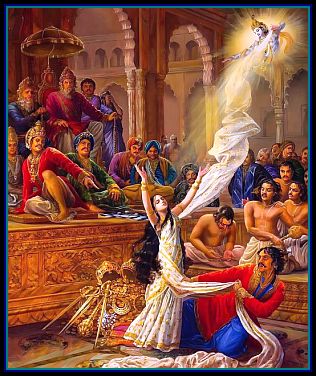
According to Abhinavagupta, a true connoisseur of arts has to learn to detach the work of art from its surroundings and happenings; and view it independently (svātantrya) .

He asserts, the “willful suspension of disbelief” (Artha-kriyākāritva) is a pre-requisite for a receptive spectator to  enjoy any art expression. The moment one starts questioning it or doubting it and looking at it objectively; the experience loses  its aesthetic charm; and, it becomes same as a mundane object.

One enjoys a play only when one can identify the character as character from the drama and not as ones friend or associate. The spectator should also learn to disassociate the actor from the character he portrays.

The Hero and Heroine  in a play are just portraying the roles assigned  to them, as best as they can. In other words; they are trying to convey certain states of emotions and the sate of being of the character-roles they are playing . They are like a pot (patra) or receptacle, which carries the emotional state of primary (real) role to the spectator. The actor merely  serves as a vessel or  a receptacle or a means of serving relish (Asvadana) ; and, that is the reason, a role is called a Patra.

The characters on the stage represent the real role ; but , are not the real ones; and, they do not completely identify themselves with the original. Hence, the Vibhava is like a cause; but, not an exact cause. The performance, the acting by the hero, heroine and other characters in a play is Anubhava, one of the several ways of bringing out the emotional states of the characters they are playing out on the stage. Such Anubhava could be called as ensuing responses.

The hero or heroines in a play don’t become the lover and beloved in real life. They understand and accept here, what their their roles are; and, try to show what might be the emotional experiences of the character , and its reactions to the given situation  . The actors  try to  resemble the character , for few hours of the play ; and, act on the stage accordingly, through which the spectators understand , grasp and enjoy  the emotional states in the play. The act of the lovers on stage is  essentially  a ‘third person’ experience

While our hearts resonate (hdaya-spanda) with the presentations of the dramatis personae, our focus is centered on understanding (tanmayī-bhavana) the interactions going on the stage . Abhinavagupta  observes that the theatrical experience is quite unlike the experience in the mundane and the real world; it is Alaukika – out of the world.

In summary; he draws a theory that the artistic creation is the expression of a feeling that is freed from localized distinctions; it is the generalization (sadharanikarana)  of a particular feeling. It comes into being through the creative genius (prathibha) of the artist. It finally bears fruit in the spectator who derives Ananda, the joy of aesthetic experience. That, he says, is Rasa – the ultimate emotional experience created in the heart of the Sahrudaya. 

He illustrates his position through the analogy of a tree and its fruit. Here, the play is the tree; performance is the flower; and spectator’s experience .

Rasa, the relish (Asvada) by the spectator, is the ultimate product (phala) of a dramatic performance, as that of a fruit borne by a tree :  “the play is born in the heart of the poet; it flowers as it were in the actor; and, it bears fruit in the delight (ananda) experienced by the spectator.” .. ”And, if the artist or poet has inner force of creative intuition (prathibha)…that should elevate the spectator to blissful state of pure joy Ananda.”

According to Abhinavagupta, the object of the entire exercise is to provide pure joy to the spectator. Without his participation all art expressions are pointless.

Thus, he brought the spectator from the edge of the stage into the very heart of the dramatic  performance and its experience.
Lotus-flower_15

14. There is a very interesting discussion about the progression in the development of a character, from the playwright’s desk (or even prior) to the theatrical stage. . Abhinava discusses the arguments, in this regard, of his predecessors (such as Sankuka, Lollota, and Bhattanayaka) and then puts forth his own views.

Let’s, for instance, take a character from history or mythology (say, Rama). No one, really, was privy to the mental process of that person. Yet, the playwright tries to grasp the essence of the character; and, strives to give a concrete form to the abstract idea of Rama, in his own way. The director, the sutradara, tries to interpret the spirit and substance of the play, and the intentions of the playwright, as he understands it. The actor in turn absorbs the inputs provided by both the playwright and the director. In addition, the actor brings in his own creative genius, skill, his experience on the stage, and his own understanding of the character in order to recreate the “idea” of Rama. All the while, the actor is also aware that he is just an actor on stage trying to portray a character. 

The actor’s emotional experience while enacting the character might possibly be similar to what the playwright and /or the director had visualized; but it certainly would not  be identical.

The actor as a true connoisseur and a skilled performer has an identity of his own; he does not merely imitate (anukarana) the character as if he were its mold (paratikrirti); but, he projects the possible responses of the character (anukirtana) to the situations depicted in the play-text (paatya), in his own way, through the portals of the character’s stated disposition (bhava) and its essential nature (svabhava) , as he has understands it (aropita-svarupa).

What is presented on stage is the amalgam, in varying proportions, of experiences and impressions derived from diverse sources.  The actor’s inspiration finds its roots in several soils. His performance on stage, thus, resembles the mythical inverted tree, with its roots in the sky and its branches spreading down towards the earth. Its roots are invisible. But, its branches and leaves spreading down in vivid forms are very alive; and, the fruits they bear are within our experience.

We see the actors on the stage; and applaud their performance. But, the whole of the dramatic production and display is the fruit (siddhi, phala) of the collective participation of all those involved with it; and, bringing it to us alive. They are like the extensions of the roots, branches, and leaves. The actors on the stage are like the, flowers and fruits, ever green, tender and fresh, inviting us to partake and enjoy. What is witnessed is the fulfillment or the fruits of the dedication and efforts of many – seen and unseen.

In so far as the spectator is concerned, he, of course, would not be aware of the contributions of either the playwright or the director or the supporting technicians; or even of the mental process of the actor in producing the artistic creation. His experience is derived, entirely, from the performance presented on the stage.

Further, there is absolutely  no way an actor or a spectator could feel and experience in exactly the same way as the “original “- on whom the character was modeled. The spectator does not obviously receive the original; instead he infers from the forms of created artistic-imitations of the original presented on the stage, sieved through the combined efforts and experiences of the playwright, the director and the actor.

Abhinava remarks, the question whether the idea of the character as received by the spectator through the performance on the stage , was identical to its “original “ historical personage, is not quite relevant. What matters, he says, is the emotional experience (rasa) inspired in the shahrudaya the goodhearted – cultured spectator. How did it impact him? That, in fact, is the essence and fulfilment of any art.

Another illustration discussed in this context is that of Chitra_turaga, a pictorial horse. Abhinava said he got it from his predecessor Sri Sankuka .  He had said: about a painted horse we can say that it is a horse and it is not a horse; and, from  the aesthetic point of view, it is real and unreal. Thus , a  painting of a horse is not a horse; but, it is an idea or the representation of a horse. One doesn’t mistake the painting for the horse. The artistic creation though not real can arouse in the mind of the spectator, the experience of the original object. Art cannot reproduce all the qualities of the original subject. The process of artistic creation is, therefore, inferential and indirect; rather than direct perception.

Mammata, a eleventh century Kashmiri aesthete, endorsed Abhinava’s views by stressing that the object in art is a virtual and not physical.

Bhattauta, another scholar from Kashmir, in his treatise called Kavya Kautuka, alo says that a dramatic presentation is not a mere physical occurrence. In witnessing a play we forget the actual perpetual experience of the individuals on the stage. The past impressions, memories, associations etc. become connected with the present experience. As a result, a new experience is created and this provides new types of pleasure and pains. This is technically known as ‘Aesthetic rapture’ (camatkāra) – rasvadana, camatkara, carvana.

Anandvardhan extended the scope of Rasa to  literature. He combines Rasa with his Dhvani theory. According to him, Dhvani is the technique of expression; and, Rasa stands for the ultimate enjoyment of poetry or drama. Suggestion (Dhvani) in abstraction does not have any relevance in an art. The suggested meaning has to be charming and it is the Rasa element which is the ultimate source of charm in drama and poetry.

A very attractive  form of ‘suggestion’ (Dhvani) is said to be when  the poem is dramatized (yāyita) by the creative imagination (bhāvakatva) so that all the signifying elements of sound, syntax, rhythm, rhyme, intonation, context and composite sense  come alive and converge on the evocation of Rasa as the  primary meaning  (Mukhyā-artha).

According to Abhinavagupta a real work of art, in addition to possessing emotive charge carries a strong sense of suggestion and the potential to produce various meanings. It can communicate through suggestions and evoke layers of meanings and emotions.

Mammaa says the simple statement “the sun sets,” can, in real life, suggest a virtually unlimited number of meanings to different listeners.

*

Abhinavgupta talks about Sadharanikarana, the generalization. He points out that while enjoying the aesthetic experience, the mind of the spectator is liberated from the obstacles caused by the ego and other disturbances. Thus transported from the limited to the realm of the general and universal, we are capable of experiencing Nirvada, or blissfulness. In such aesthetic process, we are transported to a trans-personal level. This is a process of de-individual or universalization – the Sadharanikarana.

[Anandavardhana says, the sorrow (soka) of the First Poet, which arose out of the separation of the couple of the krauncha birds, took the form of a verse (sloka).

Kavyasyatma sa evarthas tatha cadikaveh pura/ Kraunca dvandva viyogottha sokah slokatvamagatah (Dhyanyaloka.1.5)

Abhinavgupta explains; the soka which took the form of sloka is the sthayibhava of karunarasa that was experienced by the Adi Kavi Valmiki. And, that sorrow is not to be taken merely as the personal sorrow of the sage-poet (na tu muneh soka iti mantavyam ); but , it belongs to the muni and the bird alike; and, indeed, it is also the generalized (sadharinikarana) or the universal form of sorrow that is experienced and relished by the aesthetes (sahrudaya) of all the generations.]

A true aesthetic object, Abhinava declares, not merely stimulates the senses but also ignites the imagination of the viewer. With that, the spectator is transported to a world of his own creation. That experience sets the individual free from the confines of place, time and ego (self); and elevates him to the level of universal experience.  It is liberating experience. Thus art is not mundane; it is Alaukika in its nature.

lotus-purple

Please also read Bharata’s Natyasastra -some reflections
References:

Bharata: The Natyasastra by Kapila Vatsayan

Introduction to Bharata’s Natyasastra by Adya Rangacharya

 A glimpse into Abhinavagupta’s ideas on aesthetics by Geetika Kaw Kher

https://www.academia.edu/24993006/Abhinavagupta?email_work_card=interaction_paper

ALL PICTURES ARE FROM INTERNET

 
14 Comments

Posted by on September 13, 2012 in Abhinavagupta, Natya, Sanskrit


Tags: , ,

Bharata’s Natya-Shastra – some reflections

Nayana dutta2

1. Natya-Shastra is a detailed compendium of technical instructions about the performing arts. It was meant as a practical manual for  production of successful theatrical performances, which included music and dance as well as acting. It was also intended as a guide to the poet and to the performer, alike. 

As Prof. Adya Rangacharya stated in his The Natyasastra: English Translation with Critical Notes

The eminence of the Natyasastra lies not merely in the fact that it was the first book on the subject on theatrical art; but that, it was the first comprehensive treatise on Dance, Drama and Music;  and , it marks  the origin of our dramatic tradition. It laid down the essentials of the Drama as a representation of the ways of the world; the nature and attitudes of the people; their ways of behavior and manners of speech. It also provided a framework for the Drama by highlighting its essential ingredients: 

(1) a playwright who has vision to the grasp of things and has the capacity to articulate that in an interesting way, through speech and action;

(2) the story that holds the attention of the audience;

(3) a virtuoso director  who can transform a script into a dramatic performance;

(4) the set of  skilled artists with clarity of speech and endowed with talent to give form and substance to the dream of the playwright and the vision of the director;  and , not the least ,

(5) the perceptive ,  intelligent  and   cultured spectators  who appreciate and enjoy a good  performance.

1.1. The text is in the form of elaborate dialogues between the author and a group of Munis , sages who wished to know about Natya-Veda, the knowledge of the performing arts such as dance, music and dramaThe author, in response, presents a detailed inquiry in to the various facets of drama including its nature; its origin; its theories; techniques of the theater with all its components of speech, body-language, gestures, costumes, décor and the state of mind of the performers, apart from rituals, architecture of theater etc.

Written in archaic form of Sanskrit, the text consists about six thousand (5,569 – to be exact) sutras or verse-stanzas spread over thirty-six chapters. Some passages are in prose.

Because the Natyasastra has about 6,000 verses, the text is also known as Sat-sahasri. The later authors and commentators (Dhanika, Abhinavagupta and Sarada-tanaya) refer to the text as Sat-sahari; and, its author as Sat-sahasri-kara.

But, the text having 6,000 verses is said to be a condensed version of an earlier and a larger text having about 12,000 verses (dwadasha_sahasri). It is said; the larger version was known as Natya- agama and the shorter as Natya-shastra.

Please click here for The Natyasatra – A treatise on Hindu Dramaturgy and Histrionics Ascribed to Bharata Muni; Translated into English by Manmohan Ghosh;  Published by Asiatic Society of Bengal, Calcutta – 1951]

2. Though the  Natya-Shastra speaks of theater (natya), it actually encompasses all forms of art expressions. The text, in fact, claims that there is no knowledge, no craft, no lore, no art, no technique and no activity that is not found in Natya-Shastra (1.116).

न तज्ज्ञानं न तच्छिल्पं न सा विद्या न सा कला । नासौ योगो न तत्कर्म नाट्येऽस्मिन् यन्न दृश्यते ॥ ११६॥

The reason that theater-arts were discussed specifically, is that, in the ancient Indian context, drama was considered the most comprehensive form of art-expressions. Further, at the time the Nataya Shastra was compiled, the arts of poetry, dance, music and drama; and even painting, sculpture and architecture were not viewed as separate and individualized streams of art forms. Natyashastra presented  an integral vision of art, which blossomed in multiplicity.

It was only during the later periods these art-forms developed into independent art-expressions. Similarly, even the other minor forms of Drama , such as: Opera, Poetic-drama, realistic plays and so on, later evolved and grew apart, assuming independent identities.

[Vishnudharmottara (Ca. sixth century) asserted that painting and sculpture without the knowledge of the Drama and the Dance would not have much depth; and, that Drama and Dance, in turn, do require a knowledge of music and of the songs, which again is dependent on mastery over languages – both Sanskrit and Prakrit – with a thorough understanding of the elements of prose, poetry, grammar, meter, prosody etc. It thus underlines the interdependence of the arts.]

All art expressions were viewed as vehicles of beauty, providing both pleasure and education, through refinement of senses and sense perceptions. The object of the drama was to show men and women the proper way to live, a way in which one could live and behave, so that one might be a still better person.

“A play shows your actions and emotions. Neither gods nor demons are depicted as always good or always evil. Actually, the ways of the world as represented here are not only of the gods but also of yours. It gives you good advice; it gives you enlightenment and also entertainment. It provides peace of mind to those who afflicted with miseries, sorrow, grief or fatigue. There is no art, no knowledge, no yoga, and no action that is not found in Natya .”- (Natya-Shastra 1: 106=07; 112-16)

na taj jñānaṃ na tacchilpaṃ na sā vidyā na sā kalā । nāsau yogo na tatkarma nāṭye’smin yanna dṛśyate ॥ 116॥

[ Kalidasa remarked : ‘Drama, verily, is a feast that is greatly enjoyed by a variety of people of different tastes

– Natyam bhinnaruchir janasya bahuda-apekshym samaradhanam. ]

Bharatha explains: when the nature of the world possessing pleasure and pain both is depicted by means of representations through speech, songs, gestures , music and other (such as, costume, makeup, ornaments etc ) it is called Natya. (NS 1.119)

yo’ya  svabhāvo lokasya sukha dukha samanvita som gādya abhinaya ityopeto nātyam ity abhidhīyate 119

Thus, according to Bharata, the Drama is but a reflection or a representation of the actions of Men and women of various natures (Prakrti) – avastha-anikrtir natyam . That is to say; the Drama, in its various forms of art, poetry etc , strives to depict the infinite variety of human characters .

That is the reason; Bharata says, one should study the various human habits and natures (Prakrti) on which the art of Drama is based.  And, for which the world, the society we live in is the most authoritative source of knowledge (Pramana) . All those involved with the Drama should realize this truth – (NS: 25.123)

Nana-sheelah prakutyah  sheele natyam pratihitam / tasma-loka-pramane hi vigneyam natya yo krubhihi // (NS: 25.123)

Having said that; the theater was conventional; yet, imaginative. The costumes and make up were stylized and symbolic; and, not what is commonly seen on the city-streets. In any case, Natyashastra requires a performer to present much more than an external representation of the character, such as correct speech, gesture etc.  His/ her stage performance will have to go far beyond technical skill, in order to be believable and accepted by the spectators.

There is, however, not much discussion about scenery; perhaps because scenery was used sparingly.

Theater had a sacred significance. Prayers and rituals were conducted and the stage was consecrated before the commencement of the play ( Purvanga) .

*

Natyashastra (6.10) provides a comprehensive framework of the Natya-veda, in a pellet form, as the harmonious combination (sagraha) of the various essential components that contribute towards the successful production of a play.

Rasā bhāvāhya abhinayā dharmī vtti pravttaya siddhi svarās tathā atodya gāna ragaśca sagraha 6.10

Bharata also mentions the five elements of the plot (artha-prakrti) of the Drama as :

  1. the seed (Bija);
  2. the expansion or the intermediate point which links to the next (Bindu);
  3. the episode (Pataka);
  4. the incident in the episode (Prakari) and
  5. the dramatic outcome (Karya).

These are to be used according to the main Rasa of the play and the prescriptions of the Shastra.(NS: 19.21)

Bijah Bindu Pataka cha Prakari  karyameva cha / Artha-prakrutyah pancha tatva yojya tata vidihi // (NS:19.21)

As regards the success of the play (Siddhi), it is said,  the successful production (Siddhi) of a play enacted on the stage (Ranga) with the object of arousing joy (Rasa) in the hearts of the spectators involves  various  elements of the components of  the actors’ gestures, actions (Anubhava) and speech (vachika); bringing forth (abhinaya) their intent, through the medium of  theatrical (natya-dharmi) and common (Loka-dharmi) practices; in four styles of representations (Vritti-s) in their four regional variations (pravrttis) ; with the aid of  melodious songs  accompanied by  instrumental music (svara-gana-adyota).

The assembly of spectators with different tastes and levels of appreciation should all be able to enjoy the play. Therefore, Bharata instructs that a play should be such that it caters to the interests and dispositions of varied class of men and women; the young and the old, with each class looking for its own favorite type of entertainment . And, it is upon such versatile ability that the success of a play depends. The play-production, thus, was aimed to satisfy the happy, responsive spectators and enthuse them to visit the theater more often. 

Bharata, in a way, sums up the virtues and merits of Nataka , a dramatic work, that captivates the hearts of the spectators and brings glory to its playwright , producer and the actors .

The work of art that satisfies all classes of spectators ; and is a happy and enjoyable composition, which is graceful on account of being  adorned with sweet and elegant words; free from obsolete and obscure meaningless verbose ; easily grasped and understood by the common people ; skillfully arranged ; interspersed with delightful songs and dances; and,  systematically  displaying varied types of sentiments  in its plot devised into Acts, scenes, junctures etc.

mdu-lalita-padārthaha-śabdārtha-hīna ;   budha jana sukha bhogya,  yuktiman – ntta-yogyam bahu rasa kta mārga , sandhi-sandhāna-yukta  bhavati  jagati  yogya  nāaka  prekakāām 16.130

***

Bharata elaborates (NS.27.57-61) :

The young are keen on the portrayal of love; and, those after money relish scenes depicting acquisition of wealth. And, the ones who love adventure delight in the terrible and odious acts of battle and combats; whereas the old and pious always praise the enactment of well known tales and legends from the Puranas  (epics) lauding the virtues and good deeds ; the devout look for philosophical and religious aspects ; and, those disinterested in the mundane seek liberation (moksha) .  The common folks, the women, children and the dimwitted lap up with relish comic situations evoking laughter and fun, attractive costumes and make up.

Apart from these types, Bharata also mentions an elite class of appreciative spectators with refined tastes and deep interest in the technical aspects of production. Such connoisseurs were also aware of the theatrical traditions and conventions of performance on the stage. These were the well-informed class who cared more about the aptness of the techniques of performance, critically evaluated the merits (guna) , the defects (dosha)  and the success of the theatrical performance as a whole.

Then, there were also the artists specialized in different branches of music and dance; the scholars who relished subtle nuances in the rendering of speech and the lyrics of the songs; and, there were the accomplished courtesans who were experts in presenting alluring and  delectable performances .

All such elite class were the cream of spectators, for whose approval and appreciation the whole of theatrical group collectively and individually looked forward with great hope and fear.

The producer of the Drama had also the onus to please the patron who sponsored and financed the play –production and display.

Nānāśīlāḥ praktaya śīle nāya vinirmitam uttamā-adhama madhyānā vddha bāliśayo itām 57

Tuṣyanti taruā kāme vidagdhā samayātvite arthevarthaparā ścaiva moke cātha virāgia 58

Śūrāstu vīra raudreu niyuddhevāhaveu ca dharmā akhyāne  purāeu vddhā stuyanti nityaśa 59

Na śakyamadhamairjñātumuttamānā viceṣṭitam tattva bhāveu sarveu tuyanti satata budhā 60

Bālā mūrkhā striyaścaiva hāsyanaipathyayo sadā yastuṣṭo tuṣṭimāyāti śoke śokamupaiti ca 61

Abhinavagupta observes Drishta-phala [visible fruits] like banners (pataka) or material rewards do not indicate success of a play production. Real success is achieved when the play is performed with skilled precision, devoted faith and pure concentration. To succeed, the artist must immerse the spectator with pure joy of Rasa experience. The spectator’s concentrated absorption  appreciation and enjoyment is indeed the success.

Dhananjaya in his Dasarupaka remarks that responsive spectators, fired by enthusiasm and imagination, contribute to the success of the play in the manner of ‘children playing with clay elephants ‘. ” When children play with clay-elephants, etc., the source of their joy is their own utsaha (enthusiasm). The same is true of spectators watching  and almost sharing  the heroic deeds of  characters , say  like, Arjuna and other heroes on the stage.”…… 

Kridatam mrnrnayair yadvad balanam dviradadibhih / svotsahah svadate tadvac chrotrnam Arjunadibhih.

**

2.1. The text employs Natya as a generic term, which broadly covers drama, dance and  music. It does not treat dance as a separate category of art form. Bharata while dealing with Angika-abhinaya (body-language) speaks of nrtta, pure movements that carry no meaning- as compared to Abhinaya (literally meaning that which carries the meaning forward towards the audiencei. e. gestures that convey specific meaning. Nrtta was, in fact, meant to provide beauty, grace and a certain luster to the performance. The postures of the nrtta (called karanas) were classified by Bharata as tandava and sukumara, to convey vigor and grace.

[ Nandikeshwara (perhaps a later author who, for some reason, assumed the name of an ancient figure/person ?), author of Abhinaya_darpana, is believed to be the first to recognize dance as an independent art. He called it natanam; and classified it into nrtta (Pure dance), nrtya (abhinaya – expression- aspectand natya (combination of nritta and nrtya with a dramatic element to it).

Dhananjaya in his Dasarupa, while drawing a  distinction  between nrtta and nrtya , explains the term  nrtta as that which  depends on rhythm and tempo – nrttam tala-layam ashrayam (DR. 1. 13) ; and,  nrtya as  that which is dependent on emotion – Bhava-ashrayam nrtyam (DR. 1. 12).

As mentioned earlier, Nandikeshwara explained Natya as the combination of nrtta and nrtya .]

3.1. It is said that the text which we know as Natya-Shastra was based on an earlier text that was much larger. And, many views presented in Natya-Shastra are believed to be based on the works of other scholars. There are frequent references to other writers and other views; there are repetitions; there are contradictory passages; there are technical terms, which are not supported by the tradition.

[ It appears there were texts on Drama even much prior to Natyashastra. Panini (Ca.500 BCE) the great Grammarian, in his Astadhyayi (4.3.110-11), mentions two ancient Schools  –  of Krsava and Silalin – that were in existence during  his time – 

Parasarya Silalibhyam bhikshu nata-sutreyoh  (4.3.110); karmanda krushas shvadinihi  (4.3.111).

It appears that Parasara , Silalin , karmanda and Krsava were the authors of Bhikshu Sutras and Nata Sutras. Of these , Silalin and Krsava  were said to have prepared the Sutras (codes) for the Nata (actors or dancers). At times, Natyashastra refers to the performers (Nata) as Sailalaka -s  . The assumption is that the Silalin-school , at one time,  might have been a prominent theatrical tradition. Some scholars opine that the Nata-sutras of Silalin (coming under the Amnaya tradition) might have influenced the preliminary part (Purvanga)  of Natyashastra , with its elements of worship (Puja).

However, in the preface to his great work Natya-shastra of Bharatamuni (Volume I, Second Edition , 1956) Pundit M. Ramakrishna Kavi mentions that  in the Natyavarga of Amara-kosha (2.10.12) there is reference to three  schools of Nata-sutra-kara : Silalin ; Krasava; and,  Bharata .

 Amarakosha

It appears that in the later times,  the former two Schools (Silali and Krasava) , which flourished earlier to Bharata , went out of existence or merged with the School of Bharata; and, nothing much has come down to us  about these older Schools. And, it is also  said, the Bharata himself was  preceded  by  Adi-Bharata, the originator and Vriddha (senior) Bharata.  And, all the actors of whatever earlier Schools, later came to be known as Bharata-s. ]

3.2. These factors lend support to the view that Natya-Shastra might have been the work of not one single author but of several authors, spread over a long period of time.

Ms. Kapila Vatsyayan, a well known scholar, however, observes that the text projects an integrated vision and   a unity of purpose. She points out many instances of reference to later chapters in the text, and says they are indicative of the coherent and well knit organic nature of the work. 

For those reasons, she concludes, Natya-Shastra might well be considered as the work of a single author or of a single tradition.

4.1. Rasa, as discussed in Natyashastra, meant aesthetic appreciation or the joy that the spectator experiences.  As Bharata says , Rasa  should be relished  as an emotional or intellectual  experience : na rasanāvyāpāra āsvādanam,api tu mānasa eva (NS.6,31) .

The yashāstra states that the goal of any art form is to invoke  such Rasa.

[Bharata explains Rasa  as an experience that can be relished – like the taste of food – Rasyate anena iti rasaha (asvadayatva), which is associated with palate (ability to distinguish between and appreciate different flavors) . Yet ; the aesthetic senses that are primarily engaged with a theatrical presentation  are only the eye and the ear. The senses of taste, touch and smell are not , generally, associated with   the type of ones experience that Bharta talks about  while witnessing a Drama. These are personal or individual experiences. But, Rasa, the aesthetic experience enjoyed by all the spectators , in a play, in common, is mainly through two senses : the eye and the ear. That , perhaps , is the reason why Bharata says that the Rasa in a play should be relished only as an emotional or intellectual experience.]

Bharata’s theory of Rasa was crafted mainly in the context of the Drama.    After naming the eight Rasas, he says ‘these are the Rasas recognized in Drama’nāṭye rasāḥ smṛtāḥ – (N.S 6.15).  

śṛṅgāra-hāsy-akaruā raudra-vīra-bhayānakā bībhatsa-ādbhuta-sajñau cetyaṣṭau nāye rasā sm 15

In the prose-passage following the verse thirty-one of Chapter six, Bharata commences his exposition of Rasa, saying: I shall first explain Rasa; and, no sense or meaning proceeds without Rasa (Na hi rasa-adrate kaschid-arthah pravartate).

tatra rasāneva tāvadādāvabhivyākhyāsyāma na hi rasādte kaścid artha pravartate

He , then  focused on the dancer’s or actor’s performance and effort to convey the   psychological  state , which the character is experiencing , to the spectator, in order to create  Rasa – the aesthetic appreciation or enjoyment of the art – in the heart and mind of the spectator.

The famous Rasa-sutra or basic “formula”, in the Nāyashāstra, for evoking Rasa, states that   the vibhāva, anubhāva, and vyabhicāri bhāvas  together produce Rasa:  tatra vibhāvā-anubhāva vyabhicāri sayogād rasa nipatti 

Bharata elaborated the process of producing  Rasa in terms of eight Sthayi Bhavas – the principle emotional state of the character expressed by the performer  with the aid of Vibhava (the cause) and Anubhava (the enactment)  ; thirty-three Vyabhicāri (Sanchari) bhāvās – the transient emotions; and, eight  Sattivika-bhavas – the involuntary physical reactions.

Among these Bhavasthe more important  ones are said to be vibhāva and anubhāva , which  invoke the Sthāyi bhāva, or the principle emotion at the moment. Such elements that are employed to convey the psychological state of the character, thus, in all, amounted to forty-nine or more. 

[The Sattvika , the involuntary–reflexes (such as being stunned, going pale , stammering, shedding tears etc.,)  were perhaps meant to introduce a realistic style of acting – suited to the situation as also to the nature, psychological state and the social standing of the character , as compared to the purely conventional style .]

It is explained; they are called Bhavas because they happen (Bhavanti); they cause or bring about (Bhavitam); and, are felt (bhava-vanti). Bharata explains that  Bhavas  effectively bring out the dominant sentiment of the play – that is the Sthāyibhāvā – with the aid of various Bhavas , such as words (Vachika), gestures Angika), costumes ( Aharya) and bodily reflexes (Sattva) – for the enjoyment of the good-hearted spectator (sumanasaḥ prekṣakāḥ) . Then it is called the Rasa of the scene (tasmān nāṭya rasā ity abhivyākhyātāḥ).

Nānā bhāvā abhinaya vyañjitān vāg aṅga sattopetān / Sthāyibhāvān āsvādayanti sumanasaḥ prekṣakāḥ / harṣādīṃś cā adhigacchanti tasmān nāṭya rasā ity abhivyākhyātāḥ //6.31//

In brief; Abhinaya is the art of communicating bhāva (emotion) to produce Rasa (aesthetic enjoyment). In other words, it is the Bhavas that produce Rasa; and, it is not the other way.

The Rasa theory of the yashāstra is considered one of its most important contributions, with several scholars over the centuries , until today, discussing and analyzing it extensively.

Thus, Bharata’s concept and derivation of Rasa was mainly in the context of the Drama. They all are related to concrete and tangible emotions, based upon human experiences. There is no mysticism whatsoever here. That concept-of the enjoyment by the recipient spectator – as also his views on the Gunas and Dosha, relating to the  scripting and enacting the play, were later  enlarged , transported  and adopted into Kavya as well. In either case, the human element was never lost sight of ; and, the spectator or the avid reader remained  at the center of art-experience. 

*

Bharata, initially, names four Rasas (Srngara, Raudra, Vira and Bhibhatsa) as primary; and, the other four as being  dependent upon them . That is to say ; the primary Rasas, which represent the dominant mental states of humans, are the cause or the source for the production of the other four Rasas.

Bharata explains that Hasya (mirth) arises from Srngara (delightful); Karuna (pathos) from Raudra (furious); Adbhuta (wonder or marvel) from the Vira  (heroic); and, Bhayanaka (fearsome or terrible) from Bhibhatsa ( odious).

śṛṅgārāddhi bhavedd-hāsyo raudrācca karuṇo rasaḥ vīrāccaiv-ādbhuto-utpattir-bībhatsācca  bhayānakaḥ 6.39

But, effectively, the eight Rasas listed in yashāstra are well accepted. Some scholars remark that the   distinction of four basic Rasas ; and , their associate four Rasas is a mere technical detail that the spectators may not be interested in.

śṛṅgāra hāsya karuā raudra vīra bhayānakā bībhatsā adbhutasajñau cetyaṣṭau nāye rasā sm  6.15

Later, by the time of Abinavagupta Shanta rasa came into discussion; and, eventually was  recognized . Thus , concept of Navarasasa was accepted. (for more on  discussion about Shantha Rasa , please click here). Later on Vatsalya , Bhakthi and such others were also named as Rasas. Thus the number of Rasas is not mere nine or eleven , it could be more. 

**

4.2. Bharata gave a definite structure to the drama; and said every play must portray and convey a  dominant Rasa; and , each of the eight rasas providing enjoyment to the audience. A Rasa depends on the type of the story and sort of the hero. According to Dhananjaya, hero (neta), story (vastu) and rasa (artistic enjoyment) constitute the essential ingredients of a drama – Vastu neta rasas tesam bhedako .

Natya-Shastra strives with a single pointed devotion to bestow an artistic form and content to what was still then a vulgar source of entertainment. Bharata could say with pride “parents could watch a dramatic performance in company of their sons and daughters-in-law.”(Natya-Shastra24.297)

5.1. That leads us to the question who was this author? Was Bharata his name   ? Was Bharata the name of his tribe? Or, was it a clever acronym?

There are, of course, no clear answers to these questions. The author made no attempt to reveal his identity. The book, as I mentioned earlier, is in the form of dialogue between Bharata and the sages.  The author was explaining the broad parameters, the basic principles and techniques of theatrical art as they then existed. He was not expounding the text as if it were his discovery or as his personal position. He was lucidly and systematically explaining a tradition that was alive and vibrant. These factors lead us to believe that Bharata, whoever he was, might have been a practicing- well informed-leading performer of his time,  belonging to a certain tradition . Bharata perhaps   belonged to a community of artists, actors, dancers, poets, musicians who shared a common heritage and common aspirations. 

5.2. From the prologue, couched in mythological language and imagery, it appears, Bharata was also a teacher and a preceptor of a school or an academy. He had a number (100?) of sons and pupils each of them being an accomplished performer or a learned theoretician. He produced plays with their assistance; by assigning each one a specific role.

It is very unlikely there were ‘theatrical Companies’, as such . Perhaps the family of Bharatas – producers, directors  (Sutradhara) and actors, as also their disciples of various talents and ranks, managed the theater as a group, under the leadership of the senior Bharata being in charge. It does, also, appear that the actors of various ranks of importance, dancers, musicians, assistants and minor functionaries did receive a systematic training in their  craft.

Such a troupe leader (Bharata) might also have been the one who assigned roles in a play; and, taught the rules of  the art/craft to the actors and actresses. His chief function seems to have been mostly supervisory. He might also have been involved in the design and structure of the theater hall (Natya-shala)

Thus, the Bharata, whoever he might be, should have been one capable of performing all those diverse and difficult tasks, with a sense of responsibility and commitment. Besides, he should have been one  who was sensitive to human frailty; and, also conversant with the language  customs  and nature of people of different classes and regions,

The term Bharata perhaps initially referred to  such a multi-talented virtuoso; and also, a producer / director of plays. The author of the Natya-Shastra was perhaps one such “Bharata”.

5.3. Incidentally, the text – in its chapter 35 – Bhumika vikalpa – provides a sort of elaborate explanation of the term Bharata, as : one who conducts as the responsible leader of a performance – as producer , director and stage manager  – who is required to be an expert not only in acting but  also in all those arts which together constitute a performance – by acting in many roles, by playing many instruments and by providing many accessories – is called Bharata – (Natya-Shastra 35: 63-68, 69-71).

[ In this connection, I shall speak of the qualities of a Director. An enumeration of his qualities will constitute these characteristics; they are: First of all, he should possess knowledge of characteristics of everything concerning the theater, desirable refinement of speech, knowledge about the Tala, rules for timing of songs, and of the theory relating to musical notes and to the playing of musical instruments.

63-68. One who is an expert in playing the four kinds of musical instrument, well-trained in rites prescribed in the Sastras, conversant witli the practices of different religious sects and with polity and the science of wealth, expert in the manners of courtezans (kama-shastra), and in poetics(kavya-shastra) , knows the various conventional Gaits  and movements (gati-prakara), throughly appreciates all the States (bhava) and the Sentiments (rasa), is an expert in producing plays, acquainted with various arts and crafts, conversant with the rules of prosody and the metrical feet (chhandas shastra), and is clever in studying the different Sastras, acquainted with the science of stars and planets and with the working of the human body, knows the extent and customs of the earth, its continents and divisions, mountains and people, and the descendants of different royal lines (prasutivit) , is fit to attend to the Sastras relating to his works, capable of understanding them and of giving instruction [on the subjects]; should be made a teacher {acharya) and a Director (Sutradhara)

69-71. Now listen to me speaking about the natural qualities of a Director. He should be possessed of memory , intelligence and judgement; should be patient, liberal, firm in his words, poetical, free from any -disease, sweet [in his manners], forbearing, self-possessed, sweet-tongued, free from anger, truthful, impartial, honest, resourceful (pratimanta) and free from greed for praise.

– The Natyashastra –  translation by Manmohan Ghosh – 1950 – (page 546) – Chapter 35. Bhumika vikalpa – Verses 63 to 71 ]

5.4. The author of the Natya-Shastra is also often addressed, in later times, as Bharata­muni. Shri Adya Rangacharya, a noted scholar, remarks.  “The usual trappings of a muni (sage) are nowhere mentioned”. On the other hand, his sons misused their knowledge and ridiculed the sages (ṛṣīṇāṃ vyaṅgya-karaṇaṃ); and the enraged sages promptly cursed them “as due to pride  ( madonmattā ) in your knowledge you have taken to arrogance (a-vinayam) ; your corrupt-knowledge (ku-jnana) will be destroyed (nāśameṣyati )” — (Natya-Shastra 36: 32 – 38).

yasmājjñāna-madonmattā na vetthā vinayāśritāḥ । tasmād etaddhi bhavatāṃ kujñānaṃ nāśameṣyati ॥ 38

5.5. Bharata recounting this sad episode, cautions the community of artists not to overreach themselves, in arrogance, just because the art had bestowed upon them a special position in the society . The art that empowered them, he counsels, derives its strength from the society; and, the artists, therefore, have a special responsibility to cultivate discipline, self-restraint and humility (Natya-Shastra 36: 29 – 38).

5.6. Bharata refers, repeatedly, to the power that creative art is capable of wielding; and to the responses – both subtle and intense – they can evoke in the hearts of men and women. He asks his sons and disciples not to destroy drama which has its origins in the hoary past of the Vedas and their upangas (supplementary texts). He implores them to preserve the dramatic art by teaching it to their disciples ( siṣyebhyaśca tadanyebhyaḥ); and to spread the art by practicing it (prayacchāmaḥ  prayogataḥ ).

jānīdhvaṃ tattathā nāṭyaṃ brahmaṇā sampravartitam । śiṣyebhyaśca tadanyebhyaḥ prayacchāmaḥ  prayogataḥ ॥ 36.49

mā vai praṇaśyatāmetan nāṭyaṃ duḥkha-pravartitam । mahāśrayaṃ mahāpuṇyaṃ vedāṅgo-upāṅga -sambhavam ॥ 36.50

5.7. [The attempt to explain Bharata as an acronym for three syllables Bha (bhava), Ra (raga) and Ta (tala) , somehow, does  not seem convincing at all.  At the time Natya-Shastra was composed, music was discussed in terms of pada (words), svara (notes) and tala (rhythm) forming components of a certain style of music called gandharva said to have been derived from Sama. Bharata talks about structured and unstructured music: bhaddha (structured like a verse or a stanza; and with rhythm) and anibhaddha (unstructured – without rhythm, analogues to the present-day aalap). The term raga did not come to prominence  until Matanga (about sixth century), in his Brihaddesi, elucidated the categories of muchchhanas and jatis; and introduced the term raga and outlined its concept.]

5.8. Thus, the author of the Natya-Shastra, whoever he might be, comes across as a multi-talented virtuoso, a person of great learning, culture and rooted in good tradition (sampradaya, parampara). He was well grounded not merely in Vedic learning and its ethos, but also in kavya (literature) , fine arts, Ayurveda (medicine), jyothisha (astrology), ganitha (mathematics), vastu-shilpa (architecture) and  hathayoga. His understanding of the human anatomy- particularly the motor and sensory systems and the joints; the relation between the physical stimulus and psychic response; as also the relation between psychic states and expressions through physical movements  were truly remarkable.

6.1. As regards its date, it is not clear when the Natya-Shastra was initially articulated. There are, of course, a host of debates concerning the date of composition of the text. I however tend to go along with the argument that Natya-Shastra was a post Upanishad text; but, it was prior to the age of the Puranas; and certainly much earlier to the age of classic Sanskrit drama. The following, briefly, are some of the reasons:

*. Natya-Shastra describes itself as Natyaveda, the fifth Veda that would be accessible to all the four castes (1:12). It claims that the text imbibes in itself the articulated- spoken word (paatya) from Rig-Veda ; the ritual and the body-language (abhinaya) from Yajur Veda; musical sound , the sung-note, from Sama Veda; and Sattvika (understanding of the relation between mind and body-expressions) – for conveying various bhavas through expressions exuding grace and charm – from Atharva Veda . (Natya-Shastra – 1:17-19)

jagrāha pāṭhyamṛgvedātsāmabhyo gītameva ca । yajurvedādabhinayān rasānātharvaṇādapi ॥ 17॥

vedopavedaiḥ sambaddho nāṭyavedo mahātmanā । evaṃ bhagavatā sṛṣṭo brahmaṇā sarvavedinā ॥ 18॥

utpādya nāṭyavedaṃ tu brahmovāca sureśvaram । itihāso mayā sṛṣṭaḥ sa sureṣu niyujyatām ॥ 19॥

*. The text is permeated with the Vedic symbolism and the imagery. The theatrical production is compared to yajna; with the stage being the vedika,   the altar. The dramatic spectacle, just as yajna, is said to have a moral and ethical purpose.

The text might have, therefore, arisen at a time when the Vedas were not a remote theoretical fountain head, but a living-immediate experience. 

*. The text strongly recommends that puja, worship, be offered to the stage before commencement of the show. It however recognizes puja as distinct from yajna. There is, however, no reference to “image” worship.

*. The gods revered and worshiped in the text are the Vedic gods; and not the gods celebrated in the puranas. For instance, Natya-Shastra begins with a salutation to Pitamaha (Brahma) and Maheshwara. There is no specific reference to Shiva. There is no mention of Nataraja even while discussing karanas and angaharas. Ganesha and the avataras of Vishnu are conspicuously absent. There are no references either to Krishna or to the celestial raasa dance. 

*.The gifts showered by the gods on successful performance of the play are similar to the gifts received by the performer at the conclusion of the yajna.

“Indra (Sakra) gave his auspicious banner (dhwaja) , then Brahma a kutilaka (a crooked stick) and Varuna a golden pitcher (bhringara) , Surya an umbrella, Shiva success (siddhi) and Vayu a fan , Vishnu a throne (simhasana), Kubera a crown  and Saraswathi –visibility and audibility.” (Natya-Shastra-1.60-61)

brahmā kuṭilakaṃ caiva bhṛṅgāraṃ varuṇaḥ śubham । sūryaśchatraṃ śivassiddhiṃ vāyurvyajanameva ca ॥ 60॥

viṣṇuḥ siṃhāsanaṃ caiva kubero mukuṭaṃ tathā । śrāvyatvaṃ prekṣaṇīyasya dadau devī sarasvatī ॥ 61॥

*. It therefore appears; during the time Natya-Shastra was compiled the prominent gods were the Vedic gods such as Indra, Varuna and Vayu; and not the gods of the Puranas that came in to prominence centuries later.

*.The mention of the Buddhist bhiksus and Jain samanas indicate that Natya-Shastra was post –Buddha and Mahavira.

*. Natya-Shastra employs a form of Prakrit, which predates the great poet Ashvaghosha’s play (first century).

For these reasons, the scholars generally agree that Natya-Shastra might have been composed sometime between second century BCE and second century AD, but not later.

indian_aesthetic

7. 1.The questions whether or not the Natya-Shastra was compiled in a particular year by a particular person are not  very important. Whatever are the answers to those questions, the importance of the work would not be diminished nor its wisdom distracted. What is of great importance is that Natya-Shastra has provided a sustainable foundation and framework for development of theory and practice of arts in India. Just as Panini standardized the classical form of Sanskrit, Bharata standardized the classical form of drama. He gave it status and dignity; a form and an objective; a vision and finally a technique.

7.2. Bharata ensured that drama and dramatic performance is first a work of art before it is literature – drsya kavya a form of literature that could be seen and heard.

7.3. His brilliant intuition and intellect has inspired generations of artists over several centuries. It is immaterial whether or not Bharata was an individual or when he lived.

flower2

8.1. The Natyashastra consists of 36 chapters. The outer and spatial aspects, such as the stage, the theater building etc. are discussed in Chapters 1–5. Chapters 6–7 discuss the theory of rasa, i.e. the crucial question as to how to evoke a mood, while Chapters 8–13 focus on the physical acting technique. The verbal aspect, such as speech and sound, is dealt with in Chapters 14–19, while Chapters 20–21 discuss the types and structure of drama. The outer aspects of acting, such as the costume and the make-up types, are dealt with in Chapters 22–26. More general aspects are touched upon in several chapters, while Chapters 28–33 focus on music. Aspects of the theater troupe and the distribution of roles are then discussed, after which the focus returns to the very beginning, i.e. to the question of the divine origin of the art of the theater. ( Kapila Vatsyayan : Bharata, The Natyashastra, New Delhi, 1996).

*

It could be said that the Natya-shastra is broadly modeled into four sections, based on Abhinaya or modes of conveying theatrical expressions which bring pleasure, pure delight (Rasa) to the cultured spectators (sahrudaya). Such Abhinaya-s are: Sattvika (conveyed through expressions which delight the mind); Angika (natural and appropriate movements of body, limbs and face); Vachika (delivery through speech and songs); and Aharya (costume, decoration, make-up and such others to heighten the beauty or the effectiveness of the dramatic presentation).

natyashastra-4-638

The author of the Natya-shastra seems to have assigned greater importance to Sattvika elements, the expressions of which are conveyed through the aid of movements, gestures (Angika) and speech (Vachika).

Angika relates to the movement of the parts of the body, which is classified into three major parts – the Anga, Patyanga and Upānga  . Angika relates to how the emotion, thoughts and the thing  are to be expressed or represented through the  movement of the Anga (limbs), which include facial expressions. There are two types of basic Abhinayas as Pada-artha abhinaya (when the artist delineates each word of the lyrics with gestures and expressions); and, Vākyā-rtha abhinaya (where the dancer acts out an entire stanza or sentence). Āngika abhinaya uses the total body to express certain meaning. Hasta (hand) Abhinaya is an important aspect of Āngika.

Vachika abhinaya is the expression through speech. It is done with the help of speech and songs. Bharatha  deals in detail with the different meters in poetry, strong and weak points of poetic writing and diction. He  also talks about Figures of speech (Alamkara) . Nātyasāstra says that words spoken during Nātya should be full of suggested meaning.

yasāstra in its 15th -19th Chapters explains vocal movements. It recognizes the importance of expressions through the medium of voice in the presentation of a Drama; they are its   basic features; and, form the very substance of the Dramas. Other movements depend on and follow vocal movements.

Bharatha mentions three kinds of voice expressions-: 1) Mandra; 2) Madhya; and, 3) Tāra.

The sound which origins from the heart , having a quality of bass is called Mandra. The sound originating from the throat, in the normal manner is named Madhya.  And, Tāra is the high-pitched sound originating  from the head.

According to yasāstra, the vācikā-bhinayas divided into seven parts .

    • 1) Prakāsa-bhāsana– loud and clear speech;
    • 2) Ātmagata-bhāsaa– talking to self;
    • 3) Apavārita-bhāsaa (asides);
    • 4) Janāntika-bhāsaa (audiable to others);
    • 5) Sāmūhika-bhāsana – group expressions (simultaneous talk);
    • 6) Ekala- bhāsana – single expressions (monologue);
    •  7) Ākāsa- bhāsana – talking to the sky (talking to no one in particular); and,
    • 8) Rahasyakathana – stage-whisper

8.2. The Sattvika aspects are dealt in Chapters 6 and 7; followed by Angika in Chapters 8 to 13; and, Vachika in Chapters 14 to 20.  The Aharya which deals with costume, scenic presentation, movement on the stage along with music from the wings etc follow in the later Chapters.

The 23rd Chapter of  yasāstra  details the Āhārya abhinaya, which covers several aspects , such as  the make-up (Angaracanā ); costumes and ornaments  (Alankāra prasādhana); use of specific colors; hair styles;  as well as costumes suitable for particular characters. The Aharya also covers the background sceneries (Pusta), stage props and décor.

The four-fold core Chapters are supported by information and descriptions about the origin and greatness of the theatrics; different forms of the stage and the norms for construction; qualifications and desirable modes of behavior of the actors; and the rituals and prayers before and after the play etc.

Thus, the core of the theatrical art and science is dealt in 29 Chapters  – from 6 to 34.

flower2

9.1.  A question that is often asked is: why were the ancient Indian scholars and seers reluctant to disclose, in their works, details of themselves and of their times? Did they lack a sense of history? 

There is, of course, an array of explanations, in answer to that.

But, I think it had a lot to do with the way the ancients defined their relation to a school of thought, and the position, they thought, their text occupied in the tradition of that school. They always viewed themselves as a part of an ongoing tradition – parampara. Invariably, even the best known of our thinkers (say, the Buddha, Badarayana or Sri Sankara) did not claim that they propounded an absolutely new idea that was totally unknown hitherto. They always said, they were interpreting or elucidating the truth in the light of eternal pristine principles.  They did not lay claim to novelty or uniqueness. They placed their work in relation to the larger and broader river or stream of the tradition. Within that tradition, individual styles, innovative ideas or enterprising leaps of thought were surely discerned; but, they were always placed and viewed in context of the overall ongoing tradition.

9.2. As regards Natya-Shastra, as Kapila Vatsyayan  summed up beautifully:

“ it was analogous to the Gomukh demarcating the glaciers above and the rivers which flow with streams of the Alakananda and the Mandakini , the Bhagirathi and others with their manifold confluences and some divergences , but all of which we recognize as the Ganga. The analogy of streams, confluences (prayaga) and the continuous flowing and yet unchanging nature of the river is the closest approximation in which the parampara of the Natya-Shastra, the text and dramatics of inflow confluences, outflow and ultimate inflows in to the ocean, can be explained.”

9.3. The individual biological identity in terms of the physical events of the birth and the personal life of the author did not, therefore, seem to be a psychical concern. Individual effort and contribution in furthering a school of thought was, no doubt, important; but, it was viewed as an integral part of the dynamics of the flow and course of the river called parampara, characterized with its nature of continuity and change.

The attitude signified being alive to a sense of tradition rather than lack of a sense of history.

flower2

1 0. Why  was the text called a Shastra?

The term Shastra does not always carry connotations of ritual or religion. Nor does it always mean classical, as in shastriya sangeeth

The Sanskrit- English dictionary of Sir Monier-Williams describes the term as an order, a command, a rule, teaching, and instruction manual relating to religious precepts. But,  Shastra, in fact, means much more than that.

10.1.In the Indian context , Shastra is a very extensive term that takes in almost all human activities – right from cooking to horse and elephant breeding; love making to social conduct; economics to waging wars; justice system to thievery ; and of course all the arts- from archery to poetry. There  is a  Shastra – a way of doing and rationalizing — for almost everything. A Shastra binds together the theory that provides a framework for rationalizing the practice; and the practice that illustrates the theory. Shastra is, at once, the theory of practice and practice of a theory- enriching each other.

10.2. The author of Natya-Shastra prefers to call it a prayoga Shastra – a framework of principles of praxis or practice. Bharata makes a significant opening statement: “I am creating a theory and text of performance; of practice and experimentation” . He also underlines the fact that the efficacy of its formulation lies in practice (prayoga) – vibhāvayati yasmācca nānārthān hi prayogataḥNS.8.7

10.3. There is a certain flexibility built in to the structure of the text. It provides for varied interpretations and readings. The author himself encourages innovations and experimentation in production and presentation of plays. He even permits modification of his injunctions; and states the rules “can be changed according to the needs of time (kaala) and place (desha)” . The text accordingly makes room for fluidity of interpretation and multiple ways of understanding it. The intellectual freedom that Bharata provided to his readers/listeners ensured both continuity and change in Indian arts over the centuries.

tree of life

11. 1.Natya-Shastra,throughout, talks in  terms of the metaphor of the seed (bija) and the tree. It talks of the organic inter-relatedness of the parts and the whole; each branch of the text being distinct and yet inspired by the unitary source. Introduction of the core theme is the seed (bija) and its outer manifestation is like a drop of liquid or a point (bindu) that spreads and enlarges (vistara) to fill the structured space. That denotes both the process and the structure.

11.2. Bharata also explains the relationship between the structure of the drama, its plot, bhava and rasa through the imagery of a tree. The text grows like a tree and gives out shoots like the proverbial Asvattha tree.” Just as a tree grows from a seed and flowers and fruits… So the emotional experiences (rasa) are the source (root) of all the modes of expressions (bhava). The Bhavas, in turn, are transformed to rasa.”(Natya-Shastra: 6-38)

yathā bījād bhaved vṛkṣo vṛkṣāt puṣpaṃ phalaṃ yathā । tathā mūlaṃ rasāḥ sarve tebhyo bhāvā vyavasthitāḥ ॥ NS.6.38

11.3. This idea of multiplicity springing out of a unity is derived from the worldview nourished by the ancient Indians. Bhartrhari (Vakyapadiya), for instance, observes that diversity essentially pre-supposes an underlying unity (abedha-purvaka hi bhedah).  In other words, he says, where there is difference or division there must be a fundamental identity underneath it ; else, each cannot relate to the other; and , each object in the world would be independent of , or unconnected to  every other thing in existence.

Such holistic view  treats the world as a living organism, a whole with each part interrelated and inter dependent. The expanding universe is viewed as a process of sprouting from the primordial source (bija), blooming, decaying and withering away, at some time; but only to revive and burst forth with renewed vigor. The seed (Bija) is the source / origin of the tree; and, Bija is also its end product. The relationship between the universe and the human; between nature and man, too, has to be understood within the cyclical framework of the Bija– and – the tree concept.

Bharata seems to suggest that theater is an organism, just as life is an organism that re-invents itself.


flower2

12 . Let me end this in the way Bharata concluded his Natya-Shastra:

He who hears the reading of this Shastra , which is auspicious, sportful, originating from the mouth of Brahman , very holy , pure good, destructive of sins; and he who puts in to practice and witnesses carefully the performance of drama will attain  the same blessed goal which masters of Vedic knowledge and performers of yajna – attain.” (Natya-Shastra-37:26-28 )

ya idaṃ śruṇuyān nityaṃ proktaṃ cedaṃ svayambhuvā । kuryāt prayogaṃ yaścaivamathavā’dhītavān naraḥ 26

yā gatirvedaviduṣāṃ yā gatiryajñakāriṇām । yā gatirdānaśīlānāṃ tāṃ gatiṃ prāpnuyāddhi saḥ 27

 dānadharmeṣu sarveṣu kīrtyate tu mahat phalam । prekṣaṇīyapradānaṃ hi sarvadāneṣu śasyate 28

 [ http://sanskritdocuments.org/doc_z_misc_major_works/natya37.html?lang=iast]

golden-bodhi-tree-symbol-thai-style-isolate-background-vector-illustration-54289542

Please also read Abhinavabharati – an interpretation of Bharata’s Natya-Shastra


Sources and references

Bharatamuniya Natya-Shastra by prof.SKR Rao

Bharata: The Natya-Shastra by Kapila Vatsyayan

Introduction to Bharata’s Natya-Shastra by Adya  Rangacharya

An introduction to natya shastra – gesture in aesthetic arts  by  M. S. Thirumalai, Ph.D.

Translation of the Natya-Shastra verses from the Natya-Shastra by Man Mohan Ghosh

http://sanskritdocuments.org/doc_z_misc_major_works/natya36.html?lang=iast

Images are from Internet

 
12 Comments

Posted by on September 13, 2012 in Abhinavagupta, Music, Natya, Sanskrit


Tags: , , ,

Temple Architecture – Devalaya Vastu – Part Six (6 of 9)

Symbolism of the temple

Symbolism of the temple

A Temple is a huge symbolism; it involves a multiple sets of ideas and imagery.

The temple is seen as a link between man and god; and between the actual and the ideal. As such it has got to be symbolic. A temple usually called Devalaya, the abode of God, is also referred to as Prasada meaning a palace with very pleasing aspects. Vimana is another term that denotes temple in general and the Sanctum and its dome, in particular. Thirtha, a place of pilgrimage is it’s another name.

The symbolisms of the temple are conceived in several layers. One; the temple complex, at large, is compared to the human body in which the god resides. And, the other is the symbolisms associated with Vimana the temple per se, which also is looked upon as the body of the deity. And the other is its comparison to Sri Chakra.

shanka-kshetra-Copyright 2005-2010-HareKrsna-com

Let’s start with the temple complex being looked upon as a representation of Sri Chakra.

The shrine is itself an object of reverence. The icon at  the center of the temple is the image of divinity and its purity that generations after generations have revered and venerated. That image residing at the heart of the temple is its life; and is its reason. One can think of an icon without a temple; but it is impossible to think of a temple without an icon of the divinity. The very purpose of a temple is its icon. And, therefore is the most important structure of the temple is the Garbagriha where the icon resides.

There are also views that assert saying that the temple has a sanctity of its own , independent of the icon; and, the icon’s sanctity is related to that of the temple . This view is based on the premise that even before the icon is placed within it, the temple-structure , is indeed sacred as its womb (Grha-garbha); and, the sanctum becomes the Gabha-griha  (womb-house) only after the icon is installed within it. The temple  (ayatana , the abode) and the image of the divinity placed within it are, thus, mutually complimentary.

In fact, the entire temple is conceived as the manifestation or the outgrowth of the icon. And, very often, the ground-plan of a temple is a mandala. Just as the Sri Chakra is the unfolding of the Bindu at its centre, the temple is the outpouring or the expansion of the deity residing in Brahmasthana at the centre.

The temple as also the Sri Chakra employs the imagery of an all – enveloping space and time continuum issuing out of the womb. In the case of Sri Chakra the Bindu is the dimension-less and therefore imperceptible source of energy. The idol, the Vigraha, in the Garbagriha represents the manifestation of that imperceptible energy or principle; and it radiates that energy.

The devotee- both at the temple and in Sri Chakra- moves from the gross to the subtle. In the temple, the devotee proceeds   from the outer structures towards the deity in the inner sanctum, which compares to the Bindu in the Chakra. The Sri Chakra upasaka too proceeds from the outer Avarana (enclosure) pass through circuitous routes and successive stages to reach the Bindu at the centre of the Chakr, representing the sole creative principle. Similarly the devotee who enters the temple through the gateway below the Gopura (feet of the Lord) passes through several gates, courtyards and prakaras, and submits himself to the Lord residing in the serenity of garbhagrha, the very hearts of the temple, the very  representation of One cosmic Principle.

temple courtyard - Daniell, Thomas

The other symbolism is that the human body is a temple in which the antaryamin resides. The analogy is extended to explain the various parts of the body as being representations of the aspects of a temple. In this process, the forehead is said to represent the sanctum; and the top of the head, the tower. The space between the eyebrows, the ajna chakra, is the seat of the divinity. The finial of the tower is the unseen the sahasrara located above the head.

Accordingly, the sanctum is viewed as the head; and Right on top of that head is the passage through which the currents of life ascend to the tower through that stone slab Brahma-randra_shila. Around the four corners of this slab are placed the images of the vehicles or emblems that characterize the icon inside the sanctum.

devalaya symbolism

Garba Gruha Sirahapoktam; antaraalam Galamthatha;  Ardha Mandapam Hridaya-sthanam Kuchisthanam; Mandapomahan Medhra-sthaneshu; Dwajasthambam Praakaram Janjuangeecha Gopuram Paadayosketha Paadasya Angula Pokthaha Gopuram Sthupasthatha Yevam Devaalayam angam uchyathe”  – Viswakarmyam Vastu Shastra

***

Another interesting aspect is that the temple concept is a curious mixture of Vedic, Tantric and Agama principles. The Tantra regards the human body as a Mandala; and it is mobile (chara or jangama) Mandala. The Agama shastras regard a temple too as Mandala; and here it is an immobile (achala or sthavara) Mandala. The analogy of the temple with the human body finds closer relationships.

The symbolism extends to the conception of Vimana or the central part of the temple as the physical form of god. For instance, the sukanasi or ardhamantapa (the small enclosure in front of the garbhagrha) is the nose; the antarala is the neck; the various mantapas are the body; the prakaras are the hands and so on. Vertically, the garbhagrha represents the neck, the shikhara (superstructure over the garbhagrha) the head, the kalasha (finial) the tuft of hair (shikha) and so on.

The names assigned to various parts of the Vimana seem to go along with this symbolism. For instance, Pada (foot) is the column; jangha (trunk) is parts of the superstructure over the base; Gala or griva (neck) is the part between moulding which resembles the neck; Nasika (nose) is any nose shaped architectural part and so on. The garbhagrha represents the heart and the image the antrayamin (the indwelling Lord).  These symbolisms also suggest seeking the divinity within our heart.

The temple is also seen as a representation of the subtle body with the seven psychic centres or chakras. In the structure of the temple, the Brahma randra is represented in the structure erected on top of the sanctum. The flat-roof (kapota) of the sanctum is overlaid by a single square stone slab known in the texts as Brahma-ranhra-sila (the stone denoting the upper passage of life). The sanctum is viewed as the head; and right on top of the head is the passage through which the currents of life ascend to the tower through this stone slab.

Interestingly, the Kalasha placed on top of the Vimana is not imbedded into the structure by  packing it with mortar or cement. It is, in fact, placed in position by a hollow rod that juts out of the centre of the tower and runs through the vase, the Kalasha. It is through this tube that the   lanchana ‘tokens’ (cereals and precious stones) are introduced. One of the explanations is the hallow tube represents the central channel of energy the Shushumna that connects to the Sahasra, the seat of consciousness, through the Brahma randra.

The other symbolisms associated with the Sanctum and the tower above it are, that sanctum is the water (aapa) principle and the tower over it is Fire (tejas); the finial of the tower (Vimana) stands for air (vayu) and above the Vimana is the formless space (akasha). The sanctum is thus a constellation of the five elements that are basic to the universe. And fire being the active element that fuses the others, the tower becomes an important limb in the structure of a temple.

vimana

Symbolism of The Sri Vaikunta Perumal Temple at Kanchipuram 

Dr D Dennis Hudson (1938-2006) who was the Emeritus Professor of World Religions at Smith College, Northampton, Massachusetts; and one who spent a lifetime in the study of Hinduism, particularly the Bhagavata tradition, in his book The Sri Vaikunta Perumal Temple at Kanchipuram, presents the interpretation of the symbolism that the temple structured as a three-dimensional Mandala.

His interpretation is based on Tirumangai Azhwar’s poetry and the theology of the Bhagavata Purana, which illumine layers of symbolism embodied in the architecture and sculpture of this temple.

vaikunta perumal 3

According to Prof. Hudson, on the Sri Vaikunta Perumal Temple built in 770 C.E. by Nandivarman II Pallavamalla (731-796 C.E.) was , initially, given the name Parameshwara at the time of his coronation . And, it came to be known as Parameshwara-Vinnagaram (the abode of Vishnu), as sung by the Vaishnava saint, Tirumangai Azhwar.

srirangam temple

The architecture of the Sri Vaikunta Perumal Temple is unique; with three sanctums placed one over the other, on the three floors; and, a concealed staircase leading to the upper floors.

The three sanctums enshrine Vishnu in three postures – seated, reclining and standing. The walls are adorned with more than fifty sculptures, besides the panels depicting the history of the Pallavas, leading to the coronation of Nandivarman.

According to Prof. Hudson, the temple reveals a visual theology, the `four formations (chatur-vyuha) as per the doctrine of Pancharatra Agama. The Vimana is structured as a three-dimensional Mandala.

vaikunta perumal2 jpg

 He identifies the central figure in the sanctum of the ground floor as Vasudeva facing west, i.e. the Earth; Sankarshana facing north, the realm of human life; Pradyumna facing east towards heaven; and, Aniruddha facing south, the realm of ancestors.

The sculptural scheme matches the Pancharatra concept, representing the six `glorious excellences’ and the twelve murthis (dwadasa-namas). The six excellences are: the omniscient knowledge (jnana), power (bala), sovereignty (aishwarya), action (virya), brilliance (tejas) and potency (sakthi).

The Murti on the middle floor has the Vishnu is in lying pose known as Sheshashayee Vishnu, as he sleeps in the Kshirasagara. This Murti rests in a rather smaller room with plain walls. Here, the King serves Vishnu, as a disciple would serve his Guru.

The sanctum of the third floor represents the realm of space-time, depicting Vasudeva as he appeared in the human form of Krishna. The temple per se signifies the `body of God.

The staircase from behind the ground floor sanctum opens up a huge sculpture of Vishnu in sitting posture.

Vaikunta perumal vishnu staircase

***

Iconography

Before we deal with iconography per se , let’s briefly go-over some its general principles associated with it .

The Agama shastras are based in the belief that the divinity can be approached in two ways. It can be viewed as nishkala, formless – absolute; or as sakala having specific aspects.

Nishkala is all-pervasive and is neither explicit nor is it visible. It is analogues, as the Agama texts explain, to the oil in the sesame-seed, fire in the fuel, butter in milk, and scent in flower. It is in human as antaryamin, the inner guide. It has no form and is not apprehended by sense organs, which includes mind.

Sakala, on the other hand, is explicit energy like the fire that has emerged out of the fuel, oil extracted out of the seed, butter that floated to the surface after churning milk or like the fragrance that spreads and delights all. That energy can manifest itself in different forms and humans can approach those forms through appropriate means. The Agamas recognize that means as the archa, the worship methods unique to each form of energy-manifestation or divinity.

The idea of multiple forms of divinity was in the Vedas. Rig Veda at many places talks in terms of saguna, the supreme divinity with attributes. The aspects of the thirty-three divinities were later condensed to three viz. Agni, the aspect of fire, energy and life on earth; Vayu, the aspect of space, movement and air in the mid-region; and Surya the universal energy and life that sustains and governs all existence, in the heavenly region, the space. This provided the basis for the evolution of the classic Indian trinity, the Brahma, Shiva and Vishnu.

[Let me digress here for a while  …

The study of Buddhist branch of Indian Iconography is one of the most interesting and fascinating subjects. In the present period, the study of the Buddhist Iconography is carried out mostly with reference to the available sculptures, bronzes, metal and miniatures sourced from various monuments.

As is well known, the earlier phase of Buddhism was free from a pantheon and representations of any gods and goddesses. The sculptural depictions found in the ancient monuments such as – Sanchi, Amaravathi and Bharhut etc., – relate to scenes of the Buddha’s life;  and, to incidents picked up from the Jataka tales. The early representations of the Buddha were through symbols such as: the Bodhi-tree; the wheel of Dharma; the throne of exposition; sacred foot-prints; and so on.

The Buddha’s representation as a perfect human being came about much later, in the Gandhara School, perhaps through the influence of the Greek. The first image of the Buddha was fashioned in the Gandhara School, replicating the Greek Art.

The sculptures at Amaravathi are perhaps very near, in time, to the Gandhara School. That was followed by the Mathura School. Then come the sculptures of Saranath, Magadha, Bengal, Orissa, Java and Nepal (particularly in the Tantric context).

In the early Buddhism of the Pali tradition (Hinayana) , there was a marked absence of pantheon; and ritualistic worship of the idols of the Buddha or of any other deity.

But , with the birth and growth of the Mahayana ; and, particularly with the influx of  the Vajrayana (which was a direct outcome of the Yogachara School) , the theories , principles and practices of the Buddhist iconography were thoroughly transformed  into a totally different class.

The Tantric Vajrayana introduced many innovations of a revolutionary character that were alien and hitherto unknown to the Buddhist traditions.

For instance; it brought in the concept of five Dhyani Buddhas as embodiment of five Skandas or cosmic elements; and, formulated the theory of Kulas or families of the five Dhyani Buddhas, from which emerged numerous deities according to the disposition and the need of the practitioner.

Further, Vajrayana introduced the practice of worshiping the Prajna or Shakthi and a host of other gods and goddesses. It also elaborately composed articulate Sadhanas (Dhyana slokas) to enable the practitioner to visualize one’s chosen deity; and, to invoke the deity through its appropriate Mantras, Mudras, Mandalas and Yantras.

In order to heighten its psychic and emotional appeal, the Vajrayana introduced every conceivable tenet, dogma and ritual, calculated to enthuse its adherents of all classes – cultured, rustic, pious or aggressive etc. Many of those theories, worship-practices and deities were adopted from Hinduism as also from the folk traditions of Nepal and China.

As the Buddhism traveled far and beyond the Himalayas into Tibet, China and Mongolia; and, spread eastward right up to Korea and Japan, it imbibed and brought within its fold several characteristics, features and practices that were unique to each region. It is needless to say; Vajrayana, in due course, attained great fame and popularity.

Now, virtually, it is no longer possible to isolate the Buddhist iconography of India from its later Avatars in the new worlds, although they, initially, were influenced by the Buddhist Tantras of India. And, that is further complicated by the free and frequent interchange of deities and concepts among the three prominent religious systems – Hindu , Jaina and Buddhist.

I gratefully acknowledge the source , particularly the  scholarly introduction to the Second Edition of  The Indian Buddhist Iconography – mainly based on Sadhanamala by Prof. Benoytosh Bhattacharya ; Published by Firma K L Mukhopadhyay , Calcutta , 1958.]

lotus blue

The pantheon and the concept of polytheism gave tremendous impetus to all branches of Indian arts, literature and iconography. The polytheism is, in fact, the lifeblood of iconography; for it is only through a divinity with aspects one can represent and worship ones ideal with  love, adoration and earnestness. Making an image involves an understanding of its attributes, virtues, powers, characteristics, symbols and its disposition. An image is the visual and concrete form of idealism; the idioms of beauty grace and power nurtured and honed by generations after generations. It is a representation of a community’s collective aspirations.

Iconographic representations of gods and goddesses are the idioms aiming to give expression to their attributes, powers, virtues and disposition. Multiplicity of heads denotes presence of their concurrent abilities; and multiplicity of hands denotes their versatile abilities. For instance, three heads of a divinity indicates trio guna (Guna-triad: Sattva, Rajas and Tamas) or shakthi traya [iccha (will), Jnana (consciousness) and kriya (action) shakthis or powers] . Four heads represent compreneshion  or enveloping four Vedas ; or overseeing four directions . Five heads stand for five principles or elements  (pancha-bhuthas) or five divine attributes or five stages of the evolutionary process

[shristi (creation), shthithi (expansion), samhara (withdrawal),  triodhana (concealing) and anugraha (preserving  till the commencement of the next cycle  of evolution)]

Not all divine representations are made through icons. Shiva is represented usually by a conic linga or an un-carved rock ; Vishnu and Narasimha are worshipped at homes as Saligrama (a special types of smooth dark stones found on bed of the Gandaki river); Ganapathi is best worshipped in the roots of the arka plant, and he is also represented by red stones (sona shila) or turmeric cones or pieces (haridra churna). The Devi in Kamakhya temple is worshipped in a natural fissure of a rock. Yet all these divinities have specified well defined iconographic forms.

Panchayatana

According to the Agamas, icons can be constructed of stone; Kadira wood; metal; clay; precious stones; or painted on cloth. And, those made in metal are usually sculptured in wax form and then cast in metal.

 ktvā pratinidhi samyag dāru loha śilādibhi | tat sthāpayitvā mā sthāne śāstra dṛṣena vartmanā || Padma Samhita Kriya Pada 1;5


Since the very purpose of the temple structure is the image residing in it; and the temple is regarded the virtual expansion of the image, let us talk for a while about temple iconography.

Iconography, in general terms, is the study and interpretation of images in art. But, in the context of this discussion it could be restricted to the study of icons meant for worship and the images used in temple architecture. The temple iconography is more concerned with the concept, interpretation and validity of the icon in terms of the themes detailed in the scriptures or the mythological texts; and with the prescriptions of the Shilpa Shastra. There is not much discussion on the styles of architecture or the art forms, per se.

Iconology could be understood as the study of the symbolism projected by the images. Here, the symbolism is the expression of reality through aesthetically presented suggestions; it is where two realms meet:  the formless Absolute (Nikala) and the form with attributes (Sakala).

A symbol could be natural or conventional or otherwise. When we perceive a direct relationship between one orders of things with another a natural symbol develops.

[A short explanation about the term iconography. We are using it for want of a better term in English. The word icon is derived from Greek eikon; and it stands for a sign or that which resembles the god it represents.

In the Indian tradition what is worshiped is Bimba, the reflection or Prathima, the image of god, but not the god itself. Bimba means reflection, like the reflection of moon in a tranquil pool. That reflection is not the moon but an image (prathima) of the moon. In other words, what is worshiped in a temple is an idea, a conception or the mental image of god, translated to a form in stone or metal or wood; but, it is not the god itself. The principal Indian term for Iconography is therefore Prathima –lakshana, the study of images.

Various terms are used while referring to icons; such as:

  • Bera : image;
  • Mūrtī : an image with definite shape and physical features;
  • Bimba: reflection of the original or model after which it is made (the Original Being of course is God);
  • Vigraha : extension, expansion, form;
  • Pratima :  resemblance or representation;
  • Pratīka : symbol;  
  • Rūpa : form; and ,
  • Arca : object of adoration and worship.]

Apart from the Agamas, there are several texts that detail the processes involved in practicing the art; and specify the rules governing iconography and iconometry. The Brihat Samhita of Varahamihira (6th century AD) is an ancient text that provides descriptions of certain images. It refers to one Nagnajit, as the author of a contemporary work on Silpasastra – but not much is known about him or his work. Shukranithisara is another treatise which discusses aspects such as the proportions and the measurements recommended for the images of various classes and attributes. The subject he dealt with has since developed into Iconometry. Someshwara’s (a 1th century western Chalukya king) Abhilashitartha Chintamini contains interesting iconographical details of many important deities.  And, Hemadri (13th century AD) who hailed from Dakshina Kannada region authored Caturvarga_chintamini, which deals with temple architecture and construction. He is credited with introducing a method of construction that did not use lime.

In addition, there are the major and authoritative texts that deal comprehensively with all aspects of Devalaya Vastu. These include Kashyapa shilpa samhitha, Mayamata, Manasara, Shilpa rathna, Kumaratantra, Lakshana_samuchayya, Rupamanada; and the Tantrasara of Ananda Tirtha (Sri Madhwacharya) , which contains sections dealing with the study of images (iconography and iconometry).

Among the puranas, the Agnipurana details the Prathima_lakshanam (the characteristics of images), Prathimavidhi (the mode of making images), and Devagraha nirmana (the construction of places of worship).

Similarly, the Matsya Purana (dated around second century AD) has eighteen comprehensive chapters on  architecture and sculpture. This purana mentions as many as eighteen ancient architects (vastu_shatropadeshkaha): Brighu, Atri, Vashista, Vishwakarma, Brahma, Maya, Narada, Nagnajit, Visalaksa, Purandara, Kumara, Nanditha, Shaunaka, Garga, Vasudeva, Aniruddha, Shuka and Brihaspathi.

Many of these names appear to come from mythology; but quite a few of them could be historical. Sadly, the works of most of these savants are now lost. The Mathsya purana says that the best aspect of karma yoga is the building temples and installing deities; and therefore devotes several chapters to the subject of temple construction and image making.

The Vishnu purana (dated about 3rd century AD) too contains several chapters on the subjects of architecture and sculpture. Further, it includes the Vishnu_dharmotthara_purana (perhaps an insertion into the Vishnupurana at a later period), which is a masterly treatise on temple architecture, iconography and painting. This work which is in the form of a conversation between the sage Markandeya and the King Vajra is spread over 42 chapters. In part three of the text there is virtually a catalouge of the various deities with  descriptions of their features, stance and gestures (mudras) apart from their disposition and attributes.

In addition to  the Sanskrit texts, the Tamil works – Mandalapurusha’s Chintamini Nigandu and Sendanar’s Divakara nigandu, are well known and widely accepted. Besides, there is an ancient work by an unknown author, Silpam (perhaps a translation of an ancient Sanskrit text), which is popular among the shilpis.

A special mention needs to be made about iconography ‘s (prathima lakshana) relation with Natyasastra.

The Shilpa and Chitra (painting) are closely related to Natyasastra (ca. second century BCE). The rules of the iconography (prathima lakshana), in particular, appear to have been derived from the Natyasastra. The Indian sculptures are often the frozen versions or representations of the gestures and poses of dance (caaris and karanas) described in Natyasastra. The Shilpa (just as the Natya) is based on a system of medians (sutras), measures (maanas), postures of symmetry (bhangas)   and asymmetry (abhanga, dvibhanga and tribhanga); and on the  sthanas (positions of standing, sitting, and reclining). The concept of perfect symmetry is present in Shilpa as in Nrittya; and that is indicated by the term Sama.

The Natya and Shilpa sastras developed a remarkable approach to the structure of the human body; and delineated the relation between its central point (navel), verticals and horizontals. It then coordinated them, first with the positions and movements of the principal joints of neck, pelvis, knees and ankles; and then with the emotive states, the expressions. Based on these principles, Natyasastra enumerated many standing and sitting positions. These, demonstrate the principles of stasis, balance, repose and perfect symmetry; And, they are of fundamental importance in Indian arts, say, dance, drama, painting or sculpture.

The demonstrations of those principles of alignment could be seen in the sama-bhanga of Vishnu, Shiva, abhanga of Kodanda-Rama and tribhanga of Nataraja; and in the vibrant movements of dance captured in the motifs carved on the walls of the Indian temples depicting gandharvas, kinnaras, vidyadharas and other gods and demigods. If the saala bhanjikas (bracket figures) recreate the caaris(primary movements) , the flying figures recreate the karanas (larger movements).The representations of about one hundred and eight of the karanas described in the Natyasastra find expression on the walls of temples spread across the country.

It is as if the rich and overpowering passages of Natyasastra are translated in to stone and published on temple walls.

For the purpose of creating an image , initially, a square grid is divided into sixteen equal squares . These squares are grouped into six  segments : Brahma -bhaga ( the central four squares) ; Deva -kesha or Deva shiro-alankara -bhaga ( two squares on top of Brahma-bhaga for depicting the crown or elaborate hair arrangement) ;Vahana-bhaga or peeta-bhaga ( space for pedestal – two bottom squares , below the Brahma-bhaga);Bhaktha -bhaga ( two bottom sqares on either side of Peeta -bhaga for locating images of the worshipping devotees); Devi-bhaga ( two squares each on either side of Brahma-bhaga for the accompanying female deities) ; and Gandharva-bhagha (two squares in the top on either side of Shiro-bhaga for depicting the Gandarvas).

The image of the main deity along with that of the consorts and subsidiary figures are located within the square grid. The central part of the main deity is accomodated in the Brahma-bhaga; its head or crown or hair-do is figured in the Deva-shiro-bhaga, while the f eet of the deity, the pedastal and the mount (vahana) are in the lower vahana-bhaga.

The  vertical and horizontal axis of the square as also its diagonal axis of the square pass through what is known as the Brahma-bindu right at the centre of the Brahma-bhaga. It is at the Brahma-bindu the navel (nabhi) of the deity would be located. All other image parts are co-related to the Brahma-bindu.

Dhyana shlokas

Shilpa ornaments

One of the main resources for a practicing shilpi is the collection of Dhyana shlokas.

Before a shilpi starts on a project to sculpt an image, he needs to be clear in his mind on its form, its aspects, its countenance, the details of its physiognomy, its facial and bodily expressions; its posture, details of the number of arms, heads and eyes; and details of its ornaments, ayudhas (objects it holds in its hands) etc. For this purpose, the Shilpis generally refer to a wonderful collection of most amazingly articulate verses called Dhyana Shlokas, the verses in contemplation.

Prof S K Ramachandra Rao , in his The Encyclopedia of Indian Iconography , writes :

Dhyana sloka extract

Dhyana sloka extract 2

These verses culled from various texts of Shipa Shastra, the Agamas and the Puranas; and also from Buddhist and Jain texts, describe, precisely, the postures (dynamic or static, seated or standing), the Bhangas (flexions – slight, triple, or extreme bends), Mudras (hand gestures), the attitudes, the nature, the consorts and other vital details of each aspect that provides the deity with power and grace. it is said that there are about 32 aspects or forms of Ganapathi, 16 of Skanda, 5 of Brahma, 64 of yoginis, and innumerable forms of Vishnu, Shiva and Devi .Each one of those forms has a Dhyana shloka illustrating  its aspects and attributes.

[ As regards Vajrayana Buddhism, the Sadhanamala,  a highly specialized  Buddhist Tantric text, is a collection of Dhyana slokas (composed perhaps between the 5th and the 11th century), which  deals with the Vajrayana Buddhist Tantric meditative practices; and , it provides detailed instructions on how the images  of 312  Buddhist deities are to be visualized  and invoked; each with  its appropriate Mantra . The descriptions are meant to aid meditation; and, also to serve as a practical guide to the sculptors and painters. It enables the practitioner to visualize the nature, disposition, virtues and detailed iconographic features of a deity.]

Dhyana shlokas are more than prayers or hymns; they are the word-pictures or verbal images of a three-dimensional image. They help the Shilpi to visualize the deity and to come up with a line drawing of the image. It is said that there are more than 2,000 such Dhyana shlokas. How this collection came to be built up over the centuries is truly amazing. These verses have their origin in Sanskrit texts; and the scholars who could read those texts knew next to nothing about sculpture. The Shilpis who actually carved the images had no knowledge of Sanskrit and could not therefore read the texts or interpret the shlokas. This dichotomy was bridged by the generations of Shilpis who maintained their own set of personal notes, explanations and norms; as also references to shlokas; and passed them on to their succeeding generations and to their disciples.

 [ Ram Raz (Rama Raja) (1790–1830) in his remarkable  Essay on the Architecture of the Hindús  also observed that only a few Brahmins could assist him in interpreting the Shilpa Shastras but they had no idea what so ever of architecture. The active rural craftsmen he approached were ignorant of Sanskrit and were unable to read the texts, their extensive practical knowledge having been learnt through pupillary succession. There seemed to be no interdependence between theoretical treatise and practical process.]

Thus, among the many traditions (parampara) inherited in India, the tradition of Vishwakarma is unique. The  mode of transmission of knowledge of this community is both oral and practical. The rigor and discipline required to create objects that defy time and persist beyond generations of artists, has imbued this tradition with tremendous sense of purpose, and zeal to maintain purity and sensitivity of its traditions; and to carry it forward. This has enabled them to protect and carry forward the knowledge, the art and skills without falling prey to the market and its dynamics.

With the emergence of the various academies of sculpture and organized efforts to collate and publish the old texts with detailed explanations, there is now a greater awareness among the shilpis of the present day. Yet, the neglect of Sanskrit and inability to read the texts in Sanskrit is still an impediment that badly needs to be got over.

Please look at the summary of a few Dhyana shlokas.

The image of Lord Narayana must be made with ten , eight, four or two arms. His head should be in the form of an umbrella, his neck should be like counch, his ears like sukthi, he should have high nose, strong thighs and arms. His breast must bear the Srivatsa mark and be adorned with the Kaustubha gem. He should be made as dark as the Atasi (Linum usitatissimum), clad in yellow robes, having a serene and gracious countenance. He should be wearing a diadem and ear-rings. Of the eight hands the four on the right side must have the sword(nandaka), mace(kaumodaki), arrow and abhaya _hastha, mudra of assurance and protection (the fingers raised and the palm facing the devotees), and the four on the left side, the bow(saranga), buckler, discus (sudarshana) and conch (panchjanya).

South Indian, late 19th c, Vishnu

In case the image is to have only four arms, the two hands on the right side will display the abhaya mudra or lotus; and discus respectively. And, in his hands in the left, he holds the conch and mace. 

vishnu_narayana_wj94

And, in case he is made with only two arms, then the right hand bestows peace and hope (shanthi-kara-dakshina hastha) and the left holds the conch. This is how the image of the Lord Vishnu is to be made for prosperity. 

Vasudeva Perumal stands in samabhanga

When Vishnu is two armed and carries discus and mace, he is known as Loka-paala-Vishnu.

Yogasana_ murthi (yoga Narayana) is Vishnu seated in yogic posture on a white lotus, with half-closed eyes. His complexion is mellow –bright like that of conch, milk or jasmine. He has four hands with lower two hands resting on his lap on yogic posture (yoga mudra). ; And the upper two hands holding conch and discus. He is dressed in white or mild red clothes. He wears modest but pleasant ornaments. He wears an ornate head dress or a coiled mop of hair. [Yogesvara is sometimes shown with four faces and twelve hands.]

vishnu seated2

Surya, the Sun-God should be represented with elevated nose, forehead, shanks, thighs, cheeks and breast; he should be dressed in robes covering the body from breast to foot. His body is covered with armor. He holds two lotuses in both of his hands, he wears an elaborate crown. His face is beautified with ear-rings. He has a long pearl necklace and a girdle round the waist. His face is as lustrous as the interior of the lotus, lit up with a pleasant smile; and has a halo of bright luster of gems (or, a halo that is made very resplendent by gems on the crown). His chariot drawn by seven horses has one wheel and one charioteer .Such an image of the Sun will be beneficial to the maker (and to the worshipper).

The dhyana shloka preceding the middle episode of Devi Mahatmya gives the iconographic details of the Devi. The Goddess is described as  having eighteen arms,  bearing string of beads, battle axe, mace, arrow, thunderbolt, lotus, bow, water-pot, cudgel, lance, sword, shield, conch, bell, wine-cup, trident, noose and the discuss sudarsana. She has a complexion of coral and is seated on a lotus.

The Mahakali is “Wielding in her hand the sword, discuss, mace, arrow, bow, iron club, trident, sling, human head, and conch, she has three eyes and ornaments decked on all her limbs. She shines like a blue stone and has ten faces and ten feet. That Mahakali I worship, whom the lotus born Brahma lauded in order to slay Madhu and Kaitaba when Hari was asleep”.

Pancha bera

The images in the Hindu temples can be classified into three broad groups: Shaiva, Shakta and Vaishnava, representing the three cults of Shiva, Shakti and Vishnu, respectively. The images in the temple could be achala (immovable) Dhruva-bimba or dhruva-bera; and chala(movable). The chala bera, usually made of pancha loha (alloy of five metals), are meant for other forms of worship and ceremonial services.

The dhruva-bera is the immovable image of the presiding deity of the temple and resides in the sanctum and to which main worship is offered (archa-murti). It is usually made of stone. In a temple following the Vaikhanasa tradition, the immovable (dhruva-bera) represents the primary aspect of the deity known as Vishnu (Vishnu-tattva). The other images in the temple that are worshiped each day during the   ritual sequences are but the variations of the original icon (adi-murti). These other forms are emanations of the main idol, in successive stages. And, within the temple complex, each form is accorded a specific location; successively away from the Dhruva bera.

A major temple, apart from the Dhruva bera, would usually have four or five representations of the principal deity (pancha bera).They are:

Dhruvam tu grāma rakārtham; arcan artham tu Kautukam | snānārtham Snapanam proktam; balyartham Bali-berakam | Utsava cotsavartham ca Paca-Bera prakalpitā ||

:- Kautuka –bera is a mini replica of the main idol (usually madeof gems, stone, copper, silver, gold or wood and about 1/3 to 5/9 the size of the Dhruva-bera), and  is placed in the sanctum near the main idol and is connected to it by a metal string or silk thread. It receives all the daily worship(nitya-archana) including those of tantric nature.

:- The next is the Snapana-bera (usually made of metal and smaller than Kautuka) which receives ceremonial bath (abhisheka) and the occasional ritual- worship sequences(naimitta-archana).

:- The third is the shayana-bera, to which the services of putting the Lord to sleep are offered.

:- The fourth is the Uthsava (always made of metal); is meant for taking the idol out of the temple premises on ceremonial processions.

:- The fifth idol is Bali – bera ( always made of shiny metal) taken out , daily ,  around the central shrine when  food offerings are made to Indra and other devas, as well as to  Jaya and Vijaya the doorkeepers of the Lord ; and to all the elements.

To this, sometimes another icon is added for daily worship, special rituals, and processions and for food-offering, it is known as Bhoga-bera.

These five forms together make Pancha bera or Pancha murti.  But, these different icons are not viewed as separate or independent deities; but are understood as emanations from the original icon, Dhruva–bimba.

[There is also a mention of A Karma- bimba, which , in effect, is a proxy image of the main Icon; and , it  is used for a variety of practical purposes. The life force (Prana) from the main Icon is transferred into the karma bimba for a short duration for serving the particular purpose. Thereafter it is transferred back into the main Icon. These karma-bimbas have to correspond, in every way, to the iconic forms of the Mula-bimba or  the Dhruva-bera. These relate to the disposition, attributes, postures and other iconographic features of the Dhruva-bera.

karmārcā sarvathā kāryā mūla-bimba anusāriī | Viśvaksena Samhita 17; 11.

But, in terms of their size: the karma-bimbas should be either a quarter, a third or half of the height of the Mula-bimba.

Mūla-bimba samucchrāyā dvidhā vāpi tridhāpi va | caturdhā vā savibhajya eka bhāgena kalpayet || utsavārcā tad ucchrāyā dvidhā vāpi tridhāpi vā | caturdhā vā vibhajya eka bhāgena parikalpayet || īśvara Samhita 17; 242, 243 || ]

[One of the few cases (that I am aware of) where the principal deity is taken out of the sanctum for procession, is that of Lord Jagannath of Puri. Such images are regarded chala-achala (both movable and immovable)]

According to Vyuha -siddantha of the Agamas, the dhruva bera which is immovable represents Vishnu (Vishnu-tattva); and it symbolizes Para, the transcendent one (Vishnu). The kouthuka is bhoga (worship idol) representing purusha (personification of the Supreme), Dharma and Vasudeva. The snapana is ugra (fearsome aspect) represented by Pradyumna or Achutha. The uthsava bera is vaibhava (the resplendent) representing Jnana (knowledge), truth (Sathya) and Sankarshana. And, the Bali bera is antaryamin (one who resides within) representing Vairagya (spirit of renunciation) and Aniruddha.

And again it is said, Purusha symbolized by Kautuka-bera is an emanation of the Dhruva-bera. Satya symbolized by Utsava-bera emanates from Kautuka-bera. Achyuta symbolized by Snapana-bera emanates from Utsava-bera. And, Aniruddhda symbolized by Bali-bera emanates from Bali-bera.

The symbolisms associated with the four murtis (chatur-murti) are many; and are interesting. The four are said to compare with the strides taken by Vishnu/Trivikrama.  The main icon represents Vishnu who is all-pervasive, but, does not move about. When the worship sequences are conducted, the spirit (tejas) of the main idol moves into the Kautuka,-bera, which rests on the worship pedestal (archa-pitha). This is the first stride of Vishnu.Again, at the time of offering ritual bath, the tejas of the main idol moves into the Snapana-bera which is placed in the bathing-enclosure (snapana –mantapa). This is the second stride taken by Vishnu. And, the third stride is that when the Utsava-bera is taken out in processions. This is when the tejas of the Main idol reaches out to all.

In Marichi’s Vimana-archa-kalpa the five forms, five types of icons, the pancha-murti (when Vishnu is also counted along with the other four forms) are compared to five types of Vedic sacred fires (pancha-agni): garhapatya; ahavaniya; dakshinAgni; anvaharya; and sabhya. These in turn are compared to the primary elements (earth, water, fire, air, and space). And, the comparison is extended to five vital currents (prana, apana, vyana, udana and samana).

Further it is explained; the Vaikhanasa worship-tradition retained the concept of Pancha-Agni, but transformed them into five representations of Vishnu (pancha –murthi): Vishnu, Purusha, Satya, Achyuta and Aniruddha. And, that again was rendered into five types of temple deities as pancha-bera: Dhruva, Kautuka, Snapana, Utsava and Bali.

venkateswara

Let us, for instance, take the case of the idols in the shrine on the hills of Tirumala. The practices at the Tirumala temple are slightly at variance with the standard procedures, perhaps because the temple predates most of the other temples in South India and that it has a tradition of its own.

The dhruva bera at the Tirumala shrine is of course the magnificent and most adorable image of the Lord made of hard-black-stone; and has a recorded history of about two thousand years. He is addressed as Sri Venkateswara, Sri Srinivasa and by host of other names. (Let’s talk more about the dhruva bera, towards the end of this post).

It is said that around the year 614 AD, the Pallava Queen, Devi Samavai (also known as Kadavan-Perundevi), donated an almost (but not exact- as it holds the Sanka and Chakra ) replica of the dhruva bera, made of silver. In terms of the Agama texts, this image is called kouthuka bera; but in the Tirumala shrine it is called Bhoga Srinivasa., In Tirumala , the kauthuka   serves as snapana bera too  (that is, the one to which ceremonial bath service is rendered). This image has come to be  known as Bhoga srinivasa; perhaps because the other services such as the daily ceremonial bath and Ekantha seva that are due to the dhruva _bera are rendered to it. There is a six cornered Vaishnava chakra (mandala)- in the shape of two inter placed equilateral triangles –  placed at the foot of the kauthuka, representing the six virtues of knowledge (jnana), abundance (Aishvarya), power (shakthi), strength (bala), resplendence (tejas) and valor or virility (veeerya). The kauthuka is placed right in front of the Lord’s foot stool (paada pitha) and is linked to the dhruva_bera through a string with strands of gold, silver and silk. It is ever linked to the dhruva bera and is never brought out of the antarala (bangaru vakili). For that reason it is also addressed as sambhandha-sutra-kauthuka-murthy. 

The Uthsava_bera at Tirumala shrine is named Malayappan, the earliest reference to which is found in an inscription dated 1369 AD. This idol might have entered into the temple regimen with the rise of the Pancharathra School of worship. Malayappan is a very skillfully crafted, beautiful image, made of panchloha, standing three feet tall on a pedestal of fourteen inches. It does not greatly resemble the dhruva_bera. Yet, it has a very pleasing disposition and is modestly ornamented. His consorts Sridevi and Bhudevi (of about twenty-nine inches height) are on his either side. All services, processions and celebrations conducted outside the sanctum are rendered to Malayappan.

The Bali bera in Tirumala shrine is addressed as Koluvu srinivasa. After the rendering the ceremonial food service to the dhruva_bera, offerings are made to the bali_bera who accepts it on behalf of the basic elements in nature , the host of spirits guarding the temple and other minor deities. A unique feature of the bali_bera in Tirumala shrine is that, it seated on a golden throne placed in Snapana Mandapam,  presides over the formal court summoned at the commencement of the day, where the day’s almanac is read out, and where the accounts of the previous day’s collections at the Srivari hundi are submitted. This is done is Snapana Mandapam before the dusk ;and, in Ghanta Mandapam after dawn. The traditional distribution of the daily remuneration, in the form of food grains and provisions, to the temple priests and attendant staff takes place in the presence of koluvu_srinivasa. It is not clear how this practice came into being at Tirumala.

The other bera in the Tirumala temple is the Ugra Srinivasa, which apart from the dhruva bera is perhaps the oldest idol in Tirumala shrine. But, it has a rather sad history. The earliest reference to this idol is in an inscription dated 10th century. Ugra Srinivasa was used as the Uthsava murthy till about 1330 A.D, when a fire broke out in the temple; and thereafter it was replaced by Malayappan. The Ugra Srinivasa no longer serves as the uthsava bera and it is never bought out of the temple after sunrise; except on a single occasion in a year (utthana dwadasi in karthika month-Kaisika Dwadasi ) that too well before the sunrise. It is feared that if the sunrays touch the idol, it would spark fire in the temple premises.

The iconography of Sri Venkateshwara in the Tirumala temple:

There are no known descriptions or specifications of the iconography of the Sri Venkateshwara idol in any texts of the Shilpa shastra. Till about the Vijayanagar period there were no temples of Sri Venkateshwara, outside Tirumala, Tirupathi and Mangapura regions. The idol does not also fall within the interpretations of any of the known schools of architecture such as Pallava, Chalukya, and Chola etc. That might be because the image of Sri Venkateshwara predates all such schools.

The sanctum at Tirumala is eka murthy griha a sanctum housing a single deity; Sri Vekateshwara is standing alone, not accompanied by his consorts. The icon is made of hard- black – polished stone (often described as saligrama shila) .Though the precise measurements of the image of the deity cannot be ascertained, it is said,  it stands  more than  six feet in height,  with the Kirita , the crown,  measuring about twenty  inches high; and  the idol is mounted  on a pedestal of about eighteen inches. The pedestal with lotus motif is almost at the ground level. The total height of idol is estimated to be a little more than eight feet (A person of normal height with arms raised just falls short of reaching the top of the idol’s crown) .

The idol, crafted with great skill, is wonderfully well proportioned and is very pleasing to look at. It has four arms though its two upper hands are always kept covered (for whatever reason). Of the other two hands, the right hand is in Varada mudra, in a posture of benediction, blessing the devotees. The left hand is almost near the left knee in Katyavalambita mudrawith the thumb almost parallel to the waist, as if to assure that the mire of the samsara , the mundane existence , is only knee deep for those who submit to him and seek salvation.

Let’s discuss  some  specific forms of iconography in the next segment.

Khajuraho tempie

Iconography continued in the next part…>

References:

Shilpa Soundarya by KT Pankajaksha
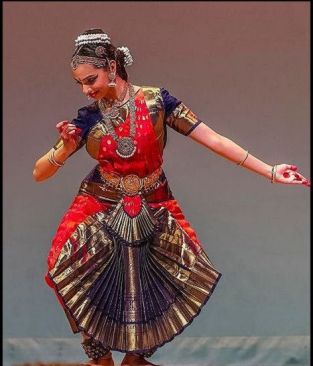
The Lord of Seven Hills by Prof. SKR Rao

Line drawings of kirita and ornaments

By the renowned Shilpi and Yogi Sri Siddalinga Swamy of Mysore

Other Line drawings are from Shilpa Soundarya

Other pictures are  from internet

 
45 Comments

Posted by on September 9, 2012 in Natya, Temple Architecture


Tags: ,