RSS

Tag Archives: Natya

Concerning the Dasarupa of Dhananjaya – Part Five

Continued from Part Four

Dasarupaka of Dhananjaya

BOOK THREE – continued

 Nataka and Prakarana

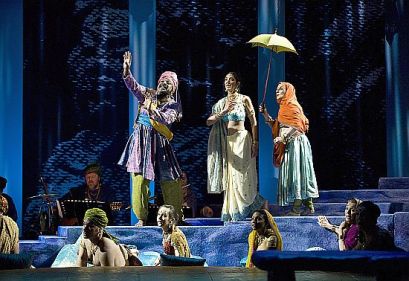
DSC_0302

As mentioned earlier, Bharata in his Natyashastra enumerates, and discusses ten forms of plays or Natya or Rupakas: 

NāṭakaPrakarana; Anka (Utsṛṣṭikāṅka); Vyāyoga; Bhāṇa; Samavakāra; Vīthi; PrahasanaḌima; and, Ihāmṛga

aka sa Prakaraam Ako Vyāyoga eva ca  Bhāa Samavakāraś ca Vīthī Prahasanaṃ Dima  20.2

Ihāmgaś ca vijñeyā daśeme nāya lakaeteā lakaamaha vyākhyāsyāmya anupūrvaśa  20.3

Dhananjaya lists the same set of plays as 

nāṭakaṃ sa prakaraṇaṃ bhāṇaḥ prahasanaṃ ḍimaḥ / vyāyoga samavakārau vīthyaṅkehā mṛgā iti // DhDaś_1.8 //

Bharata divided the ten types of plays into two broad categories.

One; the class of plays like Nataka and Prakarana: having a range of characters; portraying all the four Vrittis (styles of presentation) – Purna-vrtti-rupakas – in five or more Acts; displaying their psychological states; and, exuding the Srngara and Vira Rasas. 

And, the other eight which fall under the class which has less than five Acts; and, where all the Vrttis etc., are not present.

Therefore, of the ten forms of Rupakas, the Nataka and the Prakarana are considered more complete.

jupiterfig5

The Nataka

The Nataka is constructed as per the classic format, in accordance with all the rules prescribed and established by the tradition. The hero and the heroine are highly idealized, almost celestial, descending from a distinguished Royal lineage. Its story-line would usually be about a noble hero who resolutely overcomes many challenging obstacles; and, finally succeeds in achieving his desired objective. The message of a Nataka is that the good and the virtuous should never be defeated; and, eventually the love, truth and justice (Dharma) must triumph over untruth. And, harmony and peace should prevail over chaos and disturbance.

The Nataka is a powerful means for the moral upliftment of the society, holding out hope and faith in the goodness of life, with  illustrations of how the virtuous men and women of the past dealt with the sorrows, disappointments, trials and tribulations in their life ; how they  fought against the   confronting miseries that mounted upon them , with bravery and honesty ; and, how they eventually emerged out of the difficult situations with success , glory and dignity.

The other types of plays

The other types of plays, in contrast, tried to represent life in its varied colours, nearer to the real-life, portraying characters from lower order of the society. These types of plays depicted the good as also the not-so-good aspects of life, built around characters of varied nature: the virtuous, vagrant, weak, comic and so on. This was particularly true in the case of Dramatic forms such as Bhana, Vithi and Prahasana. The object of these other nine types was, mainly, to provide entertainment.  

Nataka – Prakarana

In short: The Nataka celebrates the accomplishments of the kings; and, how they find their fulfilment in establishing the Dharma (nāṭakān nāyako nṛpaḥ / prakhyāto dhīralalitaḥ śṛṅgāro’ṅgī salakṣaṇaḥ) . The Prakarana, as compared to Nataka, deals with the affairs of the social classes coming from a mixed milieu, such as a Brahmin, a minister, a soldier, a merchant or even a social parasite (Vita)- prakaraṇaṃ tredhā saṅkīrṇaṃ dhūrtasaṅkulam. A courtesan could also be the heroine of a Prakarana. Its story must be a fictitious one , invented by the poet. Prakarana tends to be realistic in its approach.  It attempts to depict the conditions in the society, as they are .

The Srngara, the love, and its victory, in true fashion, are the main sentiment in Prakarana. And Prakarana has in it, some elements from Bhana, Vithi and Prahasana.

While the idealism of the Ramayana and the Mahabharata are the resort of the Nataka, the social life depicted in the Brhatkatha is, generally, the source of the Prakarana.

Dr.Raghavan explains : The ideals that lie at the base of these two types, the Nataka and the Prakarana, are different; the two are distinct in a substantial manner; the aim of the poet in the Nataka is to present what has been conceived as the highest type of human personality, the sublime type, called the Dhirodatta; this is a heroic ideal. On the other hand, in the Prakarana, the poet is out to hold up the mirror to the world, to depict society as it is in its rank and file

Another important difference between Nataka and Prakarana is in regard to the extent of the Kaisiki-vrtti. In the Nataka, the Kaisiki-vrtti enjoys full scope, while in the Prakarana its scope is rather restricted.   The explanation provided for this is : too much display of Kaisiki would be out of place in the Prakarana, which is a realistic social play.

Other types

The Bhana which is a one-act monologue presented by a stand-up comedian, the  Vita , a depraved parasite,  ridiculing the so-called respectable figures in the society, and the Prahasana, the satirical comic skit, have affinity with Vithi . The Vithi is a one-act street-play, having a series of witty exchanges presented by one or two characters of mixed type. It has scope for all the Rasas; but, its distinguishing feature seems to be its resourcefulness and rich varieties of clever repartees. In fact , whenever clever repartees are found in other Rupakas, they are supposed to have been adopted from one or other of the thirteen Vithyangas, the diverse constituents of the Vithi.

The Vyayoga, Samavakara and Dima have their characters from varied class of gods, demi-gods, demons etc.; with some heroic characters taken from Mahabharata and other Puranas. The Utsṛṣṭikāka (Anka) is something like an epilogue to the heroic types of plays. It starts near about the end of action in a major play (say, depicting the consequences of a battle that just ended). The Ihamrga is all about the enticing and captivating a lovely damsel. At the end, the hero wins the lady-love; the villain loses out; but, no one dies.

These Rupakas differ from one another (rupaka bheda) according to the nature of the hero and other characters (Neta), the plot (Vastu) in both of its aspects: main (Mukhya) and subsidiary (Prasangika).There also differences in the number of Acts (Anka or Samdhi); and, in regard to sentiments (Rasa) that are displayed.

Though the lesser types of Rupakas were composed principally for providing pleasure, many of them do instruct and impart the norms of good conduct. They also reflect the contemporary social life, its pleasures and pains.  These different types of dramas provide an opportunity for the dramatists to choose their characters from among a wide range of men and women in the society.

[ We shall talk about these types of plays, in fair detail,  in the next part]

jupiterfig5

Nataka and its evolution

In the previous Part we discussed about the Nataka. In the present post let’s talk about Prakarana type of plays.

Before we go into the specifics of each of the nine forms plays (other than Nataka), let’s take a general view , just to see if there is a rationale in identifying these ten as the major types of Drama (Rupaka) ; and, whether they are related to each other , one way or the other.

When we compare the constituents of the ten types of Rupaka, a question arises, naturally, whether these are interrelated. Whether the minor varieties were evolved or derived from the two major types; or, whether the major types were created by combining elements taken from the minor ones. Some scholars, notably Dr. Raghavan and Prof. D.R. Mankad, did attempt to address these questions.

It is said; when Bharata in his Natyashastra codified the Dramatic compositions of his time, the ten kinds of dramatic performances were already in existence. However, not all of them were or could be considered as fully mature. According to Bharata, the only two drama-types, out of the ten, included in the scheme of Dasarupaka, that could be considered as well-structured and complete were: Nataka and Prakarana.

As regards the question how a more complete form like Nataka was arrived at; and what was its relation with the nine other types, the common view taken in that regard , appears to be that the Nataka  is the culmination or the final result of the  process of  growth  and development  of various  Dramatic forms.

Prof. Mankad in his ’Types of Sanskrit Drama’ while tracing the evolution of the Rupakas and the Uparupakas said that these grew from their simple to complex forms by resorting to measures, such as: additions, replication, joining various threads etc. The simple one-Act plays, in stages, over a period, developed into plays with multiple Acts. Following such growth pattern, Bhana and Vtthi would be the earliest types. Then Prahasana would come, in two Acts. Then we might have Vyayoga in three Acts.  Further, the Ihamrga and Dima reached four Acts. Thereafter, came Nataka and Prakarana with more elaborate settings, requiring more number of Acts, reaching up to five or ten. Accordingly, Nataka combined in itself and sublimated the elements seen in Vyayoga, Anka, Dima, Ihamrga and Samavakara; and, in addition, it added on its own distinctiveness, with, Srngara or Vira as a predominant Rasa.  Thus, a common thread runs through all these types.  The Nataka and Prakarana have blossomed out from the earlier types.

[The hitch in this argument appears to be the position of the Samavakara, which, considered by some as the earliest form of Drama, is constructed in three Acts, with number of special features.]

**

Dr. V Raghavan in his article ‘A note on the name Dasarupa’ (Journal of Oriental Research, Vol. VII, part III, July-Sept.1933) expressed similar views. To summarize his position:

The tendency to depict men of society, their habits and absurdities, tendencies etc., began with small if imperfect types like Bhana and Vithi; it grew into Prahasana; and, later achieved perfection as Prakarana, a social Drama.

The Bhana is a type of Rupaka in which only one character appears and carries on an imaginary dialogue through Akahabhasita. It is a monologue, narrated by one actor, though its narration refers to various characters – vividhāśrayo hi bhāo vijñeyast vekahārya śca (NS.18.108). The monologue Bhana had erotic and comic elements, lampooning the so-called respectable persons in the King’s court and in the society. The Vithi – a street play, with a sprinkling of all the sentiments , reaching the masses directly – in its initial form, was done by one actor; and, then, it adopted a display by two actors — vīthī syādekākā tathaikahāryā dvihāryā vā  (NS.18.112) . The Bhana and Vithi were related in their styles of presentation and their subject-matter.  From the Vithi rose the Prahasana, a parody in one or two Acts, with many players, ridiculing the corrupt practices of the high-and-mighty in the society.

Though the main feature of Bhana also merged into the build of the Nataka and the Prakarana, it could live separately, just like the Prahasana. The Misra or the mixed variety of the Prahasana contained, in addition, the Vithi (NS. 20.111). And the Vithi and the Prahasana were made part of the first of the three acts of the Samavakara, with various themes scattered about (samavaklryante) in it; and, having as many as twelve actors of the middling class (NS.20. 70). The remaining type in the Dasarupaka is the Utsraritikanka or simply Anka, a sort of epilogue. And, Prakarana and Nataka, in the process of gaining their full stature, assimilated various features taken from the lesser forms.  The Prakarana was not much different from Nataka, except that its hero was not a king of puranic glory, Prakhyata. And, the Nataka, in turn, got such features as the Vidusaka, for comic relief.

It could, perhaps, be said that Bhana was the earliest form to evolve amongst the Rupakas; and, it seems to fit in well with the whole scheme.

Having said this, let me add, these issues are debatable.

**

Dr. Raghavan illustrates his opinions through examples:

 “The Vithi and the Anka certainly do not represent major varieties. The Vithi is the predecessor of the Prahasana. And, the Prahasana is an independent form of drama, even though its characters and features appear, to an extent, in the Nataka; and, amply in the Prakarana. The Vithi, of course, died early; and, none of the old specimens of the Vithi has survived. Bharata’s Natyashastra actually gives, at many places, the evidences for the disappearance of the Vithi into the body of the Prahasana, the Prakarana and the Nataka, both as part of the Prastavana and of the Drama, in general.

The Anka is, so to say, an epilogue or a sequel to a Samavakara, Ihamrga, Dima or Vyayoga. These four  types of plays depict fights among gods and other Prakhyata heroes; while the Anka depicts the result of those fights, i.e., opens with the close of the fights and the wailings of the wife or wives , and of the relatives of those killed in the battle. Thus, this one-act Karuna piece called Anka also goes with the heroic class or represents the heroic dramatic thread woven into the body of Dasarupaka.

 [But, during Bharata’s time, Anka was drifting away from its theme of the after-effects of war; and, was moving towards the more popular themes.]

The Samavakara, the Ihamrga, the Dima and the Vyayoga represent the Uddhata or Aviddha types of drama, which have heroic elements in their theme. They are the early specimens of dramatic performances depicting fights amongst Devas and Asuras. The Asura Vijaya (NS.3.1.59) and the Amrta-Manthana (NS.4.2.4), described as a Samavakara, were the first dramatic performances, when Brahma took Bharata’s troupe to Shiva’s abode; and, where the theme of Tripura-dahana described as a Dima was enacted (N.S.4.10). The Samavakara, the Dima, the Ihamrga and the Vyayoga are very similar to each other. Bharata refers to the other two while describing each of this. Further, he treats the Ihamrga as similar to the Vyayoga; and, the Vyayoga as similar to Samavakara.

Dr. Raghavan further says, “The Vyayoga is also described as a one-Act Samavakara, with its hero as an epic king and not as a God (NS.20.95-96). These, by the influence of the Mahakavyas and the growing mythological legends, gradually perfected themselves into the heroic type Nataka.

**

The importance of the Vrttis

Dr. Raghavan also brings in the role and relevance of Vrttis (styles of presentation) in the process of the growth and development of Dramatic forms. In that context, he says: “Just as the dance forms, on the basis of Lalitya and Auddhatya, are differentiated into Lasya and Tandava; similarly, the Rupakas numbering ten, get divided into Lalita (delicate, refined) and Uddhata (loud, vigorous) classes.

He explains; the Arabhati-vrtti, a loud, rather noisy and energetic style, fit for exhibition of one’s anger, valour, bordering on false-pride, by screaming, shouting etc., portrays the haughty Uddhata or the vigorous Tandava aspect. Such forceful (Uddhata or Aviddha) types are more dominant in the types of Rupakas, such as Ihamrga, Dima, Vyayoga and Samavakara, depicting fights amongst Devas and Asuras

And, the Kaisiki-vrtti (graceful-style) – characterizing the tender expressions of love with graceful dances, melodious songs as also charming costumes and delicate actions  – which  is most suited to Srngara-rasa , is a representation of the Lasya aspect. Such Lasyanga is a distinguishing attribute of the advanced types of plays such as: Nataka and Prakarana.

According to Dr. Raghavan, Bharata divides the Dasarupa, the ten forms of Dramas, into two broad groups, classified on the basis of the nature of the Vrittis they portray:  either Kaisiki or Arabhati. Such two types of dramas are also called Sukumara (subtle, gentle) and Uddhata or Aviddha (haughty, loud).

In short, Dr.Raghavan seems to opine: the logical, well structured and sophisticated forms of Drama (Nataka and Prakarana) were evolved through a process of refining or eliminating the rough and uncouth elements found in the other forms of Dramas. Thus, Nataka is the hallmark of the Sukumara class; while the rest is of the Aviddha type.

**

 In any case, the ten forms of Rupakas do pre-suppose the existence of simpler types of presentations (gramya dharma), such as mimicry and mirth during local festivals or amidst friends gathered, at night, around a campfire on a river-bank. Over a long period of time, such simpler plays by their assimilations and refinements might have evolved into Rupakas, as we know them. It is, perhaps, because of this reason that we find in the Natyashastra numerous overlapping in the case of certain types of Dramas.

[There is also a view which suggests that Rupakas might have evolved out of the dance forms, the Natya, when the playwrights transplanted their themes and modes of presentations into Dramatic forms.]

It is not clear on what basis or rationale these ten forms of Drama came to be grouped together under one common head, the Dasarupa. Even this process of weeding out other forms of Drama and arriving at a set of ten varied forms, each with its own well defined and recognizable features, might have been spread over a considerably long time. It is, perhaps, because of such reasons that some earlier dramaturgical traditions refer to more than ten types of Dramas. For instance; the Natyadarpana mentions twelve forms; the Bhavaprakasa  of Saradatanaya (a work on Rasa and dramaturgy) lists as many as thirty; and, the earlier versions of Natyashastra describe eleven forms of dramas (including Natika).

It is reasonable to assume that the genre of plays included under the Dasarupa, with their individual dominant styles, had evolved from out of the varied cultural and social environments; and, were nurtured by patrons according to their tastes and inclinations. Naturally, the choice and the mode of presentation of the three cardinal factors – Vastu, Neta and Rasa – differed from one type of play to another.

*

There is also another way of looking at the issue.

At different stages, a particular variety  of drama had come into being , developed and got absorbed into a more popular or a more mature form ; or , it disappeared altogether, because , by then, it had lost its appeal and/or the other varieties of plays had taken over. There was thus much overlapping, with the different varieties running into each other. In the process, the more mature forms like Nataka and Prakarana absorbed the interesting features of the other varieties of plays.

For instance; the Nataka and Prakarana adopted the one-man-show (ekaharya abhinaya) and soliloquies (Akasha-bhasha) from Bhana; the witty dialogues and quick repartee from Vithi; illogical and ludicrous comic scenes from Prahasana; vigorous action, fighting etc., from Dima, Vyayoga and Samavakara; and, similarly, they acquired patterns and techniques of conversation (Vithyanga)  like abrupt speech (udghatya), enigma (nalika), three-way discussion (trigata) and eloquent repartee (vakakeli) etc., from others. Similarly, ten or twelve varieties of Lasyanga  related to Srngara rasa, portraying love and other softer, graceful aspects, as in Vithi and Prahasana , all walked into Nataka

Thus, over a period, all such attractive techniques and embellishments were grafted and integrated into Nataka and Prakarana.These forms grew more stylized and systematic. 

The Nataka, in turn, though it retained the traditional framework of Vastu, Neta and Rasa, its modes and styles of presentation of either the delicate (Lasya) or the vigorous (Tandava) elements of the play were influenced  not only by the features it had borrowed from other sources, but also by the changing trends and tastes. Eventually, while the Nataka got richer, more inventive, and diverse; the lesser forms of drama gradually faded out. And, that led to production of more complex varieties of Natakas.

Thus the processes of evolution and absorption were both instrumental in the growth and development of the Nataka.

**

And at the end, it  can also be said that such theories tracing the growth and development  of drama and dramatic performances are no doubt fascinating; but, there is not much  historical evidence to support these hypotheses, bordering on speculation.

jupiterfig5

Now, after having taken a broad look at the growth and the structure of the Dasarupas; lets us briefly talk about Prakarana and eight other forms of Drama.

We may start with Prakarana.

David Cooper Photography 2008

2.The Prakaraa

Atha prakarane vrttam utpadyam lokasamsrayam /amatya-vipra-vanijam ekarn kuryac ca nayakam /dhiraprasantam sapayam dharma-kama-artha tatparam/ sesam natakavat samdhi-pravesaka-rasadikam

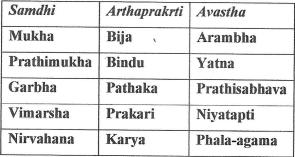
The Prakarana is a play of the principal category, in five to ten Acts. It is similar to Nataka, in regard to the numbers of Acts and the Samdhis.  The Prakarana consists of five Sandhis: Mukha, Pratinukha, Garba, Vimarsa and Samhriti. Its principal sentiment is Srngara.  

But, it differs from Nataka in a couple of  other aspects, apart from those  mentioned earlier.  The main points of departure are with regard to the story-line (which is created); the hero (not a god or a king. but a person outside the royal palace environment); and, its objective, which is to provide enjoyment to the common people. In addition, Abhinavagupta listing out the differences between Nataka and Prakarana mentions: ‘there is a slave in lieu of Kancuki (chamber maid); Vita (rouge) in place of Vidusaka (jester); and, Sresthi (merchant) instead of Amatya (minister)’.  The rest of its features are as in NatakaSesam natakavat.

Prakarana is mainly based on the story created or concocted by the playwright (Prakurute). It can also be drawn from sources like Brhatkatha and similar works of earlier poets; but, not from the Puranas. Its theme concerns the middle-class characters. And, therefore, offers a larger variety of characters to choose from. The Hero (Nayaka) or the leading character may be a Brahmin, a minister, an officer of the court, leader of a caravan or a merchant. And, sometimes, a Vita is also added to this list of heroes. Generally, the hero would be a self-controlled, calm, Dhira-prashantha type, following dharma-kama-artha. The heroine (Nayika) may be a house wife (kulastri) or could even be a courtesan (ganika).

The Prakarana is classified in three ways (prakaranam tredha) depending upon the type of heroine: ShuddhaPrakarana (where the heroine is from a noble family); Misra or Vikrta Prakarana (where a courtesan is the heroine); and Sammishra Prakarana (where both the types of heroines are figured).

Nayika tu dvidha netuh kulastri ganika tatha / kva cid ekaiva kulaja vesya kvapi dvayarn kva cit / kulaja ‘bhyantara bahya vesya natikramo ‘nayoh/ abhih prakaranam tredha samkirnam dhurtasamkulam //

The stories take place outside of the palaces and the royal circles, in the lanes and houses of the town; and, are concerned with common interests such as acquisition of money, love, legal justice, and bourgeois honour and so on.  At the same time, purity of character and chastity are respected; and, held up as noble virtues. The Prakaranas affirm the identities of the middle-class heroes, and, pay due recognition to their position in sustaining a healthy social order. 

The narration, in a Prakarana, is rendered more interesting by introducing complications of mistaken identities, petty revenge, theft, and political intrigue etc. The Prakarana plays end on a happy note, with the victory of true Love. Srngara is the predominant Rasa.

The earliest extant specimen of Prakarana is Asvaghosa’s Sariputra Prakarana.  And, Shudraka’s Mrcchakatika (Little Clay Cart) and Malatimadhava by Bhavabhuti are the well-known examples of the Prakarana class.

We shall continue in the next Part ; and, talk about the Bhana, Vithi and the Prahasana varieties of the Drama.

wayang_wong_bharata_pandawa

Continued 

In 

The Next Part

Sources and References

The Dasarupa a treatise on Hindu dramaturgy by George C. O. Haas, Columbia University press / 1912

 A Study of Abhinavabharati on Bharata’s Natyasastra and Avaloka on Dhananjaya’s Dasarupaka – by Manjul Gupta

Sahityadarpanah of Viswanathakavirajah

The Theory of the Samdhis and the Samdhyangas in Natya Shastra by T.G. Mainkar

Sanskrit Dramaturgy

http://shodhganga.inflibnet.ac.in/bitstream/10603/48454/21/21_chapter%2021.pdf

http://shodhganga.inflibnet.ac.in/handle/10603/106901

All images are from Internet

 
Leave a comment

Posted by on December 15, 2017 in Dasarupa, Natya


Tags: , , , , , , , , , , , , , , , , , , , , , , , , , , , , , , , , , ,

Concerning the Dasarupa of Dhananjaya – Part Four

Continued from Part Three

Dasarupaka of Dhananjaya

BOOK THREE

Shakuntala_201211_17 (1)

The Third Book or the Third Chapter of the Dasarupa, in its 72 verses, deals, mainly, with the ten (Dasa) varieties of Rupakas or plays. Dhananjaya’s work derives its title from the subject-matter of this Book. Obviously, Dhananjaya considered the discussion on the ten varieties of Dramas as the cream or the ultimate purpose of his work.  Of the 65 Sections in Book Three, as many as 43 Sections are devoted to Nataka, regarded as the best and the most complete form of Drama, exemplifying the rules prescribed for such class of dramatic compositions. The other nine varieties of Drama are briefly defined (in sections 44-64), mainly, by listing the points of their divergence from the Nataka. And, their other common features are simply clubbed under a single phrase – ‘the rest, as in the case of the Nataka’ (sesham natakavat).

When one looks at the structure of the text from this angle, one will appreciate that Book Three is the main purpose of the text (Dasarupa); and, within the Book Three, the Nataka, around which the entire body of discussions revolve, is the central or the pivotal point. The concepts, the definitions and the explanations of the technical terms that occupied Book One (68verses) and Book Two (72 verses) , or discussions concerning the Avastha, Samdhi, Arthaprakrti Vrttis, Vastu and Neta etc., all seem to serve as  the background material or  the preparatory work needed to arrive at the very heart or the soul of the text , the Nataka . Thus, one could say, the Nataka is the summum bonum, in which all the values of a Dramatic composition are included or from which they are derived.

*

The impetus for the Dasarupa comes mainly  from  : Chapter 20 (Dasarupa – the enumeration and descriptions of the ten kinds of play); Chapter  21 (Sandhi or segments of the plot- itivtta);  and, Chapter  22 (Vrtti or styles of presentation) of the Natyashastra .

The Chapter Twenty of Natyashastra commences with the passage:

I shall now describe the division of plays into ten classes with their names, functions and modes of production.

These ten forms of plays are known as aka, Prakaraa, Aka (Utsṛṣṭikāka), Vyāyoga, Bhāa, Samavakāra, Vīthi, Prahasana, ima, and Īhāmga. I shall describe their characteristics in detail.

aka sa prakaraam ako vyāyoga eva ca bhāa samavakāraś ca vīthī prahasana ima 2

Ihāmgaś ca vijñeyā daśeme nāya lakae eteā lakaamaha vyākhyāsyāmya anupūrvaśa 3

 I shall describe hereafter the different methods of constructing plays.

*

The Natyashastra identifies ten major types of plays: aka, Prakaraa, Aka (Utsṛṣṭikāka), Vyāyoga, Bhāa, Samavakāra, Vīthi, Prahasana, ima, and Īhāmga.

All these ten forms of Drama (Dasadhaiva) are traditionally associated with certain modes or styles (Vrtti) of representations, which are the constituent elements of all dramatic works.  Such Vrttis are said to be of four kinds (vrttis caturdha) : Kaisiki; Sattvati; Arabhati; and, Bharati.  The Vrttis are the ways of rendering a scene; or, the acting styles and the use of language, diction that different characters adopt in a play, depending upon the nature or the Bhava that relates to the character.[ For more on Vrttis please read Part Three in the series]

According to Bharata, the ten forms of Drama are classified based on the number and the types of Vrttis that are involved with it. Of the ten mentioned by him , only the two major forms – the aka and the Prakaraa – present all the variety of styles (Vrttis), for depicting different types of diverse situations. However, the other eight forms of Drama – the Bhāa, the Samavakāra, the Vīthi, the Īhāmga, the Utsṛṣṭikāka (Aka), the Vyāyoga, the ima, and the Prahasana – would not include kaiśikī-vttihī , the graceful Style.

Vīthī samavakāraśca tathehāmga eva ca utsṛṣṭikāko vyāyogo bhāa prahasana ima 8

Kaiśikīvttihīnāni rūpāyetāni kārayet ata ūrdhva pravakyāmi kāvyabandhavikalpanam 9

Bharata regards the Vrttis as the mother of all poetic works (kāvyānā mātkā vttaya), from which the ten kinds of compositions are evolved. He explains; just as the musical notes (Svara) constitute scales (Gramas) because of the Srutis coming together with their Jatis, so the varieties of plays come into existence due to combination of varied of styles (Vrttis). It is the number of Vrttis present in a play that assigns it a distinct class.

Sarveāmeva kāvyānā mātkā vttaya sm ābhyo vinista hyetaddaśarūpa prayogata

[Abhinavagupta took a dissenting view on this issue. He pointed out that though the Gramas (collection of Jaatis or melodic types), in music, might have common Svaras; yet, they differ from each other because of their internal order of arrangement (Aroha-Avaroha); the combination; and, the mutual relations of the Svaras. And, in a Jaati, within a Grama, a certain Svara might be prominent (amsa), or initial (graha) or final (nyasa), depending upon the type of the Jaati. It is because of such variations that each melodic-type gains its distinguishing character and flavour. Therefore, in all those cases, it is not the mere number of Svaras that truly matters.

In a similar manner, in a play, it is not the number of Vrttis, alone, that is significant. In certain types of plays one form of Vritti might be prominent or otherwise. The combination, the treatment and the variations of the Vrittis differs from one type of play to the other. Thus, the classification of the Rupakas is based on the treatment of the Vrttis, which might either be complete with all its angas (elements) or be lacking in some of them.]

While Bharata and Abhinavagupta laid stress on Vrtti, which, in their view, is the factor that defines the unique character of a Drama; Dhananjaya and Dhanika held Vastu (subject-matter), Neta (Hero) and Rasa (sentiment) as the elements which distinguish one form of drama from its other forms.

*

Though Bharata lists ten types of Dramas (Rupakas), which, apparently, is not exhaustive, the other ancient writers talk about, in addition, certain minor types of dramatic works (Upa-rupaka).

Perhaps, the earliest reference to Uparupaka occurs in the Kama-sutras of Vatsyayana who mentions plays such as  Hallisaka, latyarasaka and Preksanaka of the Uparupaka type, watched by men and women of taste. Ahhinavagupta’s commentary on the Natyashastra occasionally mentions Upa-rupakas; but, without defining the class. Rajashekara calls his Prakrit play Sattaka as not being a Nataka, but resembling a Natika, excepting that pravesakas (preliminary scenes), viskambhakas (intermediary or connecting scenes) and ankas (Acts) do not occur.

[Though Natyashastra enumerates, and discusses Rupakas it does not mention minor forms like Uparupakas.  However, Abhinavagupta speaks of minor categories of drama, which he terms them as Nrtta-kavya and Raga-kavya; meaning, the type of  plays that  are rendered through dance and the  plays that are sung.  Yet, it was such  Uparupakas – minor  class of drama-   based in music and dance movements  that eventually gave rise to  the now living traditions such as Kuchipudi , Bhagavata Mela Natakas and Kuravanji dance-dramas. Such forms of Uparupakas are very attractive formats, with the elements  of the music and dance  being predominant. And, most of them are based in dances accompanied by soulful songs, interpreting  the emotional contents of the song through Abhinaya or gestures.

Natyashastra does not mention all the different types of dramas. Kohala, another ancient writer, whose material is said to have got mixed up with the present version of the Natyashastra, mentions a number of minor  varieties of dramas that are lyrical in their character; and,  in which music and dance predominate. Abhinavagupta names some drama-types under these varieties as: Dombika, Bhana, Prasthana, Sidgaka, Bhinika, Ramakrida, Hallisaka and Rasaka. But, nothing much is known about these musical varieties. ]

natya-shastra2

While Rupaka seemed to be the general term used for Sanskrit Dramas, the nomenclature Upa-rupaka indicated a minor type of dramatic composition (within the general class); technically, not satisfying all the classic, dramatic requirements, even when a full theme was handled. Vishvanatha in his Sahityadarpana lists as many as eighteen minor types (Upa-Rupaka), with examples. Among these, he regards the Natika (e.g., Sri Harsha’s Ratnavali, Priyadarsika) and Trotaka (e.g., Kalidasa’s Vikramorvasiya) as more important.

[ As its name suggests; Natika is a diminutive form of Nataka.  In case, Natika is counted along with the other forms of Drama, then it would amount to eleven varieties. Bharata, however, explains that Natika is not an independent form; but, is a fusion, combining in itself (antarbhāvagatā) certain features of the Nataka and the Prakarana. And, therefore, the Rupas are only ten (ata eva daśaitāni rūpāī).

Antarbhāvagatā hyeā bhāvayorubhayoryata ata eva daśaitāni rūpāī tyuditāni vai ॥18. 61

Dhananjaya, following Bharata, also says that the pure forms of Rupas are indeed only ten (Dasadhaiva); as Natika is but a blend of two forms. Here, in Natika, the subject (vastu) is taken from the Prakarana type.  The types of principle characters are as in the Nataka (Natahavat). The hero (Nayaka), a prince, of the illustrious Dhiralalitah class, is taken from a well-known source or is newly created; and, the innocent, beautiful and exceedingly charming (mugdha divya ca ati – manohara) heroine (Nayika) is either a princess or a celestial nymph. And, the Rasa (mostly the Srngara-rasa) is also as that in the Nataka. The Natika containing an abundance of female characters is depicted in the graceful style, Kaisiki-vrtti; and, has four Acts (less than that in Nataka or Prakarana). Most of the action takes place within the Queen’s court or in the adjoining gardens – (DR.3. 46-52).

Tatra vastu prakaranan, natakan nayako nipah prakhyato dhiralalitah srngaro angi salaksanah– DR.3.47. ]

[The Natyadarpana of Ramachandra and Gunachandra offers a similar explanation about the characteristics of the Natika. The Natyadarpana says that the Angas of Srngara depicting song, dance, hum our etc., should be prominent in a Natika. And, it should have all the five Sandhis.  Here, the Natika is classified into eight types, depending upon whether the Nayika , the heroine , is well know or otherwise.]

**

[According to the renowned scholar Dr. V Raghavan, the mere number of Rupaka – either ten or eleven – is not of much significance. In his view, the number ten is symbolic; indicating ten tendencies. He points out that all the ten varieties from Nataka to Ihamrga embody these ten tendencies in various degrees.]

lotus-design

Of the ten, the Nataka is regarded as the best, most important and complete form of Rupa. Dhananjaya regards Nataka as the root (Prakrti) of other dramatic forms. Bharata, in his Natyashastra paid greater attention to Nataka and to Prakarana, than to the rest eight forms ; because, these two forms, according to him, lend abundant scope for presenting  all the four varieties of styles (Vrttis); in alluring Rasas; and, for  portraying  range of characters in diverse  types of situations.

Because of these reasons, the Nataka is spoken of  or discussed first (purvam natakam ucyate).

Prakrtitvad athanyesam bhuyo rasaparigrahat sampurna-laksanat vac ca purvam natakam ucyate   DR.3. 1

 Let’s, therefore, begin with Nataka.

texasshakuntala

  1. Nataka

[ Dr. Schroder, a German scholar, opines that Natya, also known as Rupaka is of ten types; of which, the Nataka is most important. He says: In Sanskrit literature Nataka is very ancient. Even in Vedic literature we can find descriptions about Nataka. There are also references in Ramayana and Mahabharata of actors, dancers, singers and anchors. And, therefore, many theories have been put up by the scholars while discussing the origin of drama.

Dr. Schroder thinks that Samvada-suktas that occur in the Rg-Veda are the origin of the Drama.

There are about fifteen Samvada-Suktas in the Rig Veda, which were written in the form of dialogues. For instance; the Pururava-Urvasi Sukta (RV.10.95); Yama-Yami Sukta (RV.10.10); Sarama-Pani Sukta (RV.10.108); Indrani-Indra-Vrsakapisukta (RV.10.86); Agastya-Lopamudra Samvadasukta (RV.1.170) etc. are some instances .

Some German scholars like Oldenburg, Windish, and Pishel think that initially these Samvada-suktas were the mixture of poetry and prose.  Poetry remained because it was interesting and melodious; while the prose part slowly vanished because it was descriptive.

It is also said;  that these Samvada-suktas used to be sung by a group of Udgatrus, in the Saman ; and,  enacted during specific Yajnas, to the accompaniment of  music.

Drama exactly follows this form of ancient Samvada-suktas, as they are also a mixture of prose and poetry.

Bharata in the first chapter of the Natyashastra mentions that in order to alleviate the sorrow of common people, Brahma created a Veda for Dramatics (Natya-Veda) by taking prose from  Rig-Veda; music from Samaveda; acting from Yajurveda; and , emotions from Atharvaveda.]

**

Bharata, in a passage of six verses (from 19.144 to149) virtually offers his definition of Nataka. He explains that in a Drama (ya), the wide-ranging shades of human nature (lokasya nānā-avasthā-antarātmaka) with its joys and sorrows (lokasya sukha-dukha-samudbhavā) are demonstrated through a variety of representations and actions (nānā-purua-sacārā).

Those who take part in the Drama try to present the past exploits of the gods, sages and human beings (devatānām –ṛṣīnā ca rājñāṃ), by assuming their roles. The actors enact (abhinayate) or interpret, the roles assigned to them through speech, expressions, actions, gestures and other representations. While so acting on the stage, the actors try to give up or suppress their own individual identities and nature (yasmāt-svabhāva saṃ-tyajya);and, systematically, diligently assume the nature, behaviour, gestures and the emotions of the character that they are portraying (gopāga-gati-kramaiḥ).

Bharata then remarks, the art of emulating the psychological, mental and physical state of a character calls for an exceptional and a truly dedicated effort. One should realize this truth; and, strive to achieve near-perfection.

The varieties of dramatic actions; the ways to bringing to life the essence of a character; and, the modes of presentation of actions on the stage, in an attractive manner (rūpāi kartavyāni prayoktbhiḥ), are all indeed countless (aneka-śilpa-jātāni naika-karma-kriayāi ca).

It  is essential that all those involved either in writing, producing or presenting a Drama should observe and study the ways of the common people of the world (Lokasvabhāva saprekya narāāṃ ) – their nature, their modes of behaviour (kāryaṃ) , speech patterns and modes of dress ; their strengths and weaknesses (balābalam); and, their ways of enjoyment and reasoning (sabhoga caiva yuktiṃ).

Yo’ya svabhāvo lokasya nānā-avasthāntarātmaka so’gādy abhinayairyukto nāya mity-abhidhīyate 19.144

Yasmāt-svabhāva satyajya sāgopāga-gati-kramai prayujyate jñāyate ca tasmādvai nāaka smtam 19.146

Sarvabhāvai sarvarasai sarva-karma-pravttibhinānā-avasthā antaropetaaka savidhīyate 19.147

Anekaśilpajātāni naikakarmakriayāi ca tānyaśeāi rūpāi kartavyāni prayoktbhi ॥ 19.148

Lokasvabhāva saprekya narāā ca balābalam sabhoga caiva yukti ca tata kārya tu nāakam 19.149

*

At another place, Bharata, in a way, sums up the virtues and merits of Nataka , as a dramatic work, that captivates the hearts of the spectators and brings glory to its playwright , producer and the actors .

The work of art that satisfies all classes of spectators ; and is a happy and enjoyable composition, which is graceful on account of being  adorned with sweet and elegant words; free from obsolete and obscure meaningless verbose ; easily grasped and understood by the common people ; skillfully arranged ; interspersed with delightful songs and dances; and,  systematically  displaying varied types of sentiments  in its plot devised into Acts, scenes, junctures etc.

mdu-lalita-padārtha gūha-śabdārtha-hīna ;   budha jana sukha bhogya,  yuktiman – ntta-yogyam  bahu rasa kta mārga , sandhi-sandhāna-yukta  bhavati  jagati  yogya  nāaka  prekakāām  16.130

**

Bharata, after describing Lasyangas, the graceful, fluid and charming movements; lists the four characteristics of an ideal Nataka.

He says, the playwright (kavi kuryāttu) while attempting a well constructed (suprayoga) Nataka with aptly chosen happy sounding words  (sukhāśrayam mdu-śabdā ) should ensure that it is composed of five Samdhis (pañcasandhi); four Vrttis (caturvtti); sixty-four Angas, elements  (catuḥṣaṣṭya-agasayutam); and, thirty-six Lakshanas , characteristics  (atriṃ-śallakaopetaṃ)adorned with Gunas, Alamkaras (guā-alakāra-abhūitam), many Rasas (mahārasaṃ); as also with topics concerning noble persons of sublime virtues (mahāpurua-sacāraṃ), exalted speeches (udātta-vacanā-nvitam) providing inspiration and great enjoyment (mahābhogam).

Apart from that, the Drama should also portray the lives of common people, their happiness and miseries (sukha-dukha-samudbhavā) arising out of their interactions with their fellow-beings and their multifarious deeds in the world (avasthā yā tu lokasya, nānā-purua-sacārā.) Please also see.

Pañcasandhi caturvtti catuḥṣaṣṭyagasayutam atriśallakaopeta guālakārabhūitam 139

Mahārasa mahābhogam-udāttavacanānvitam mahāpuruasacāra sādhvācārajanapriyam 140

Suśliṣṭa-sandhi-sayoga suprayoga sukhāśrayammduśabdābhidhāna ca kavi kuryāttu nāakam 141

Avasthā yā tu lokasya sukha-dukha-samudbhavā nānā-purua-sacārā nāake’sau vidhīyate 142

Viswanatha in his Sâhitya-Darpana also described Rupaka (Nataka) as the most logical and perfect theatrical composition. He says that it progresses in a systematic manner and concludes successfully, bringing joy to all. 

He mentions that according to the Dasarupa, the structure of the Rupaka consists:

five elements of the plot (Arthaprakrti), matching with the five stages of the action (KaryaAvastha), from which arise five structural divisions or sequence of events (Samdhi) of the drama;

twenty-one subdivisions (Samdhyantara), having sixty-four Samdhyanga , adorned with thirty-six Abhushanas ;

ninety numbers of music; and

four kinds of Vrttisall of  which corresponding with the elements of the plot and the actions associated with the stages in the hero’s attempts to successfully realize his purpose or objects

Yattu pancachatuh–sastiscatuh–pancaikavisatih / sattrinsatravtisca tat-Natakam.

As Dr. Sunil Kothari observes in his research paperThe principle of the two modes (dharmi) of presentation, Natya (the stylized) or Loka (the realistic) the different types of Vrittis (style), namely Kaisiki (the graceful), Sattvati (the grand), Arabhati (the energetic) and Bharati (the verbal); the full play of the four types of Abhinaya (acting) namely : Angika (gestures or movement), Vacika (the spoken word), Aharya (costume, make-up, stage props etc.) and Sattvika (relating to state of emotion) are the broad principles which govern the structure of Indian drama and its  presentations.

It is these principles, along with other related ones such as the concept of Bahya (external) and Abhyantara (inner) acting, of Pravrtti (local usage), of Samanya-abhinaya (basic representation) and Citra-abhinaya (special representation), which also govern the technique of  Drama.

[To put it simply, In Sanskrit, Nataka is the most complete form of Drama. Its structure is logical. And, its construction is also quite detailed, being composed of five or more Acts, each of which comprising number of episodes depicting various scenes of action. It also employs intermediary scenes that connect its subdivisions. The Dramatic contents of a play find their expressions, through speech, gesture, songs, dance and other representations, in highly refined and attractive forms. In its modes of depictions, the Nataka employs varied types of embellishments, sentiments, psychological states and actions. And, in case there are such matters, as are not presentable on the stage, they are suggested, indirectly, through explanatory devices.

The heroes in Nataka are generally exalted, descending from noble lineage, known far and wide, for their bravery, generosity and other good qualities. But there may also be other kinds of heroes. The heroines are beautiful; loving; pure in heart; sweet and cheerful; cultured; and, gifted with aesthetic sensibilities. The action in the play ends on an auspicious note, with the good overcoming  the evil ; and , celebrating the victory of the virtuous.  The major aim of Sanskrit Drama is to provide an unsullied and wholesome enjoyment to the spectators. And, at the same time, it is conducive to Dharma. ]

lotus-design

The three broad heads under which Dhanajaya discusses the subject of Drama are: Vastu (theme), Neta (the leading characters) and Rasa (the aesthetic sentiment it portrays).  Let’s briefly take a look at each form of Drama, with particular reference to these three criteria.

Vastu

As regards the story of a play, it could either be adopted (itivrttam) from the incidents that occur in the well-known (Prakhyatha) legends of the past; or, could be a story invented (Uthpadya) by the poet; or else, it could be a mixture (Misra) of the two.  The story could also be about gods (Divya), humans (Marthya) and the like (Divyadivya).

prakhyatam itihasader utpadyam ; kavi-kalpitam;  misram ca samkarat tabhyam divya-martyadi-bhedatah.

Whatever might be the original story, if it is not suitable for the hero or is inconsistent with the sentiment (Rasa) he represents, then the story can be modified or re-arranged in some other way. After determining the beginning and end of the play in this manner; and, after dividing it into five parts, the author should then break it up into small interrelated divisions (Samdhi).

Yat tatra-anucitam Kim cin nayakasya rasasya va viruddham tat parityajyam anyatha va prakalpayet.

The purpose of such reshaping of the story and characters by the playwright is to achieve a harmony between the theme and its main character, in order to serve the ultimate purpose of the drama , which is to provide a delightful theatrical experience (within the framework of the Dharma) for  the  enjoyment  to the cultured spectators –  the   Rasa .

There should be a sense of balance in the treatment of the subject.  The subject-matter should neither be isolated by its excessive coverage; nor, should it be cluttered or swamped with unrelated matters and needless elaborations.  

The plot should be simple, the incidents should be  consistent; and, the progression of the events should spring directly  from the story.

*

The technical divisions of a drama and the development of the plot follow a set of carefully elaborated rules.

The Natyashastra mentions that there could be between five to ten Acts (Anka) in a Nataka. A regular Nataka will have five Acts. And, a Nataka with ten Acts is called Maha-nataka – (pancankam etad avaram dasankam natakam param). An interlude (Pravesaka) must always be made been the Acts.

[ Later, there were , however, some Natakas with more than five Acts , such as : Bhaṭṭa Nārāyaṇa’s Venisamhara and Bhasa’s Avimaraka with six Acts; Rajasekhara’s Bala Ramayana and Mahadeva’s Adbhuta Darpana with ten Acts; and, Hanumant’s Maha-Nataka with fourteen Acts.]

An Act (Anka) is generally understood as a cohesive dramatization of events that occur within the course of a day.  However, the Natyashastra does not demand that these events run contiguously.  Normally, the action in a play depicts the events that occurred during the course of that day (or night). But, there are some noted exceptions where the events in the first the Act and the second Act are separated by long years. In such cases, an intermediate scene (Vishkambha) is introduced as a link and also to explain/narrate the occurrences that took place subsequent to the previous Act. (E.g. Uttararamacharita, Shakuntalam et al)

Further, there might be certain types of actions or objects that should not or cannot be presented on the stage. As per the conventions followed in the Sanskrit Drama, one should avoid showing such events as: long travel; murder; war; loss of kingdom; siege of a city; violent over throw; bloodshed; eating; taking bath; un-dressing; sex act etc.

Further, it is said; a chariot, an elephant or a horse should not be brought on the stage. Similar is the case with palaces, hills or lakes. Such animals and geographical features might be suggested or indicated through models made of cheap materials. And, in case an army has to be introduced on the stage, that should be symbolically represented by the movement (gati-vīcāra) of four to six persons dressed as soldiers.

*

In a Nataka, the number of characters that really matter to the main story should not be too many. Similarly, the supplementary or the supporting characters, such as the attenders   etc., should at most be four or five.

As the play gathers momentum, in stages, its focus of attention should, progressively, be confined to characters and actions that are directly related to the main purpose of the story.  The play is structured in such a manner that it steadily moves from the general or the diffused towards the purposeful and pointed.  Its initial Acts might, comparatively, be lengthy; but, as the action moves towards the finale the Acts should get brief and pithy. As Dhanajaya says, the Nataka, in its structure, should resemble the tip of a cow’s tail (gopuccha).

gopuccha

All the exalted situations should be placed in the concluding segment (Nirvahana), awe-inspiring (Adbhuta), and radiating joy in celebration of Dharma – the victory of the Love over loveless; the triumph of  the good over the evil.

*

The concepts of tragic catharsis or tragedy are not present in the Sanskrit Drama. The Nataka, generally, starts on a happy note (Adi-mangala); and through the trials and tribulations of the hero, a happy incident occurs in the middle (Madhya-mangala); and, the play concludes on an auspicious note (Antya-mangala). And, the whole proceeding comes to an end with the Bharatavakya , praying for the welfare and happiness of the King (Raja), his subjects (Praja) and the State (Rajya) ; and , for the peace and prosperity  (Shanthi , Samruddhi) of all the beings in the  three worlds (Trilokye) . 

nirvahana

Neta

Rama

The hero (Nayaka) the leading character of the Nātaka should be an ideal person, a worthy and exalted (Udatta) icon of virtue; descending from the noble lineage of royal seers (rājarsih) . He should be  : resolute, young, endowed with intelligence, energy, memory, and wisdom; brave, firm, graceful, charming, sweet-tempered, soft-spoken, liberal, clever, affable, popular, upright, and eloquent.

Prakhyāta-vamso rājarsih-divyo-vā yatra näyakah/ tat prakhyātam vidhātavyam vrttam-atra-adhikārikam//

The Hero should be  one endowed with noble qualities of the type known as self-controlled, and exalted (Dhirodatta) , glorious , eager for fame, of great energy , a preserver of three Vedas (Trayi) , a ruler of the world , of renowned linage , a royal seer or a god . It is, basically, his story that forms the the principal subject (Adhikarana) of the Nataka.

mahasattvo ‘tigambhirah ksamavan avikatthanah sthiro nigudhahamkaro dhirodatto drdhavratah

The noble hero  has control over his senses; does not let emotions override his actions; maintains his composure even under dire circumstances; shelters the weak and those under threat ; always wishes and strives to do good for/to others; is also wise, well versed in Shastras and is skilled in arts.

The eight virtuous qualities of an ideal hero are: nobility of character (sobha), liveliness (vilasa), sweet-temper (madhurya), poise (gambhirya), firmness (sthairya), sense of honour or brightness (tejas), grace (lalita), and magnanimity (audarya).

 Sobha vilaso madhuryam gambhiryam sthairya tejasi lalita udaryam ity astau sattvajah paurusa gunah

sri Sita Ram

Nayika

sita

Dhananjaya initially mentions and describes three kinds of Heroines (Nayika tridha) : the hero’s own (Sva) wife; another person’s (Anya) wife; and, the common-woman (Sadharana-stri) – sva anya sadharanastri ‘ti tadguna nayika tridha.

However, Bharata had presented a different classification:  divya (celestial); nrpapatni (queen); kulastri (modest house-wife); and ganika (courtesan).

The Nayika of a Nataka is usually of the first type. She would the Hero’s wife (svaya) . And, she would be either be a princess of renowned royal-heritage or a celestial beauty – virtuous (mugdha), dignified (gambhira, manini), charming (manohara) of loving-nature and devoted to her husband. (Nayika tadrsi mugdha divya catimanohara)

devi tatra bhavej jyestha pragalbha nrpavamsaja/ gambhlra maninl krcchrat tadvasan netrsamgamah

ramasita

Rasa

As regards its style of narration and depiction, Nātaka should adopt either the graceful Kaušiki Vrtti associated with the Srngara Rasa (suited for display of expressions of love, dance, song as also charming costumes and delicate actions ) ; or, the  exuberant Sattvati Vrtti  associated with  heroic Vira Rasa .

Dhananjaya, in his Dasarupaka said : a Nataka should principally portray one Rasa – either the Srngara or the  Vira; and,  in the concluding part  the Adbhuta Rasa becomes prominent

Eko rasa – angi -kartavyo virah srngara eva va / angamanye rasah sarve kuryan nivahane –adbhutam

 [But, Abhinavagupta, preferred not to lay any such restrictions. Instead, he argued that a play could be a judicious mix of several Rasas, with a major Rasa defining the tone and texture of the play. He cited Nagananda of Sri Harsha, which in its initial stages display Srngara; but , towards the end,  it is the Shantha Rasa that pervades atmosphere of  the play.  And, he explained though the play had to deal with the horrific killing of the hapless Nagas, it underplays scenes of violence; and, exemplifies the virtues of peaceful coexistence and compassion towards all beings. It is that aesthetic experience of Shanta – peace and compassion towards the fellow beings – which the spectator carries home]

***

In the next part let’s talk about Prakarana and eight other forms of the Rupaka.

nayana6

Continued

In

Part Five

Sources and References

The Dasarupa a treatise on Hindu dramaturgy by George C. O. Haas, Columbia University press / 1912

 A Study of Abhinavabharati on Bharata’s Natyasastra and Avaloka on Dhananjaya’s Dasarupaka – by Manjul Gupta

Sahityadarpanah of Viswanathakavirajah

The Theory of the Samdhis and the Samdhyangas in Natya Shastra by T.G. Mainkar

Sanskrit Dramaturgy

All images are from Internet

 
4 Comments

Posted by on December 9, 2017 in Dasarupa, Natya


Tags: , , , , , , , , , , , , , , , , , , , , , , , , , , , , , ,

Concerning the Dasarupa of Dhananjaya – Part Three

Continued from Part Two

Dasarupaka of Dhananjaya

BOOK TWO

David Cooper Photography 2008

The Second Chapter of the Dasarupa , in its 72 verses, classifies, sub-classifies and describes, in great detail, the types of characters in a play, especially the four types of Heroes (bhedais caturdha); three Kinds of Heroines (tadguna nayika tridha) with their twenty variations (strinam alamkaras tu virnsatih) according to their relations with the Hero; the opponent of the hero (Pratinayaka); the companions and those devoted to the hero; messengers of the Heroine and so on.

Hero

The term Nayaka (Hero) is derived from the root Ni, meaning to carry. The concept of Nayaka or Neta comprised not merely the hero but several other characters as well that appear in the play. Unlike Dhananjaya, Bharata did not regard Nayaka as the distinguishing element on the basis of which the ten forms of the Rupaka are classified. Bharata’s approach was broader as it covered a wide range of character-types of all classes.

Sri Rama

As per the  concept presented by Dhananjaya, the hero (Neta) the leading character of the Nātaka should be an ideal person, a worthy and exalted person of virtue; of noble lineage; resolute, young, endowed with intelligence, energy, memory, and wisdom; brave, firm, graceful, charming, sweet-tempered, soft-spoken, liberal, clever, affable, popular, upright, and eloquent. It is , basically, his story that forms the main theme of the Drama.

Prakhyāta-vamso rājarsih-divyo-vā yatra näyakah/ tat prakhyātam vidhātavyam vrttam-atra-adhikārikam//

The noble hero  has control over his senses; does not let emotions override his actions; maintains his composure even under dire circumstances; shelters the weak and threatened; always wishes and strives to do good to others; is also wise, well versed in Shastras and is skilled in arts;

netā vinīto madhuras tyāgī dakṣaḥ priyagvadaḥ / raktalokaḥ śucir vāṅmī rūḍha vaṃśaḥ sthiro yuvā // DhDaś_2.1 //

The eight qualities of an ideal hero are: nobility of character (sobha), liveliness (vilasa), sweet-temper (madhurya), poise (gambhirya), firmness (sthairya), sense of honour or brightness (tejas), grace (lalita), and magnanimity (audarya).

 Sobha vilaso madhuryam gambhiryam sthairya tejasi lalita udaryam ity astau sattvajah paurusa gunah// DhDaś_2.9 /

Dhananjaya mentions four kinds of heroes- bhedais caturdha lalita santo udatto -ddhatair ayam. :

(1) Dhira-lalita, the light-hearted hero, fond of arts, happy, gentle, free from stress – niscinto dhiralalitah kalasaktah sukhi mrduh;

(2) Dhira-shantha, the self-controlled and calm hero , possessed of generic merits of a hero – samanya-guna-yuktas tu dhirasanto dvijadikah;

(3) Dhirodatta, the self-controlled and exalted hero of great excellence , exceedingly earnest, forbearing, not boastful, resolute with self-assertion  suppressed, and firm of purpose-mahasattvo ‘tigambhirah ksamavan avikatthanah sthiro nigudhahamkaro dhirodatto drdhavratah; and,

(4) Dhiroddhata, the vehement hero, altogether dominated by pride and jealousy, wholly devoted to magic practices, and deceitful, self-assertive, fickle, irascible and boastful – darpa-matsarya-bhuyistho maya-chadma-parayanah dhiroddhatas tv ahamkarl calas cando vikatthanah..

In a play in which a Hero is endowed with noble qualities of the type known as self-control, and exalted (Dhirodatta) , glorious , eager for fame, of great energy , a preserver of three Vedas (Trayi) , a ruler of the world , of renowned linage , a royal seer or a god – in that , his characterization is to be made the principal subject (Adhikarana).

Sita Ram

 Heroine

Dhananjaya initially mentions and describes three kinds of Heroines (Nayika tridha) : the hero’s own (Sva) wife; another person’s (Anya) wife; and, the common-woman (Sadharana-stri). These , again , are classified as Mugdha (modest , shy and inexperienced) ;Madhya (between adolescence and full womanhood, enthusiastic and enterprising); and, Pragalbha (mature and well conversant with the art)

svā anyā sādhāraṇastrīti  tadguṇā nāyikā tridhā / mugdhā madhyā pragalbh eti svīyā śīlārjavādiyuk // DhDaś_2.14 //

Bharata had presented a different classification: divya (celestial); nrpa patni (queen); kulastri (modest house-wife); and ganika (courtesan). And, each one of these four types is associated with a trait : Dhira (patient); Lalitha (delicate) ; Udatta (gallant) and Nibhrta ( fearless).

*

There is also an eight-fold classification of the Heroines (Ashta Nayika), depending upon their relations with the Hero:

One who loves to dominate her husband (svadhina- bhartrka or svadhina-patika);

svadhina-patikavasaka-sajja

One who loves to dress well and to adorn herself, as she joyfully waits for her lover (vasaka-sajja);

*

One who cannot tolerate her lover being away from her (viraha-utkanthita) and is disturbed (unmanas) when he delays meeting her;

viraha-utkanthita2Khandita_Nayika

One who gets very angry (khandita) when she discovers that her lover is having an affair with another woman;

*

One who after a quarrel with her lover moves out (kalaha-antarita), and later upset with herself in righteous anger and remorse ;

lover quarrelvipralabdha

One who feels deceived and is deeply hurt (vipralabdha) when her lover fails to show up on-time at the rendezvous agreed upon;

*

One who is lonely (prosita-priya) when her lover is in a distant land because of war or business;   

lover seperationAbhisarika nayika

 And, one who, deeply in love, sets out in great hurry and anxiety to meet her lover  (abhi-sarika).

praṇayā yogayorutkā pravāse proṣitapriyā / kalahānta riterṣyāyāṃ vipralavdhā ca khaṇḍitā // DhDaś_4.62 //

[Dhanika, further divides the eight into two classes; and, by permutation comes up with 128 varieties of heroines.]

shringarbodh_navgeet indian_beauty

Dhananjaya lists as many as twenty natural graces of women in the prime of youth. These are again made into three groups.

The first three are related to expressions or manifestation of love: emotions or feeling (bhava); bodily gestures (hava); and passion (hela).

 yauvane sattvajāḥ strīṇāmalaṅkārāstu viṃśatiḥ / bhāvo hāvaśca helā ca trayastatra śarīrajāḥ // DhDaś_2.28 //

The second group of seven components are related to the inherent characteristics of the heroine: graceful beauty (sobha); lustrous loveliness (kanthi); endearing sweetness (madhurya); poise and courage (pragalbhata); generosity (audarya); and steadfastness (dhairya).

śobhā kāntiśca dīptiśca mādhuryaṃ ca pragalbhatā / audāryaṃ dhairyamityete sapta bhāvā ayatnajāḥ // DhDaś_2.29 /

The third group of ten virtues relate to her attitude and dispositions: sportive attitude (Lila); charmingly delightful (vilasa); good-taste (vicchitti); a bit of confusion (vibhrama), easily excitable (kila-kinchita); very affectionate (mottayita); pretending to be angry , in jest (kuttamita); mock-indifference (bibboka); a bit laid-back or relaxed (lalita); and, bashful (vihrta).

līlā vilāso vicchittir vibhramaḥ kilakiñcitam / moṭṭāyitaṃ kuṭṭamitaṃ bibboko lalitaṃ tathā / vihṛtaṃ ceti vijñeyā daśa bhāvāḥ svabhāvajāḥ // DhDaś_2.30 //

 [These twenty qualities are again discussed, in detail, later in the text.)

Kalamkari

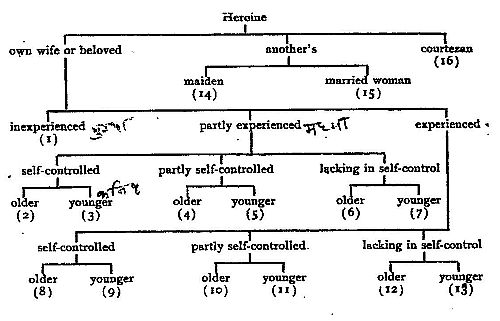
The Sanskrit Drama carefully classifies and sub-classifies the Heroine into as many as sixteen types.

 heroine b-w

Astanayika

Such fondness , bordering on obsession, for minute sub-division of almost every element of the Drama into as many theoretically possible numbers of types as possible   is a defect in the Sanskrit dramaturgy. Such stereotyped threadbare manipulation of characters, actions, styles is rather futile.  Apart from being of no practical use, they rob the playwright of his initiative and enterprise. Every aspect of Drama is typecast and pigeonholed. It is not therefore surprising that over a period, the Sanskrit Drama lost freshness ,  became too conventional and eventually losing their appeal.

jupiterfig5

[ Before proceeding further with the treatise of Dhananjaya , it would be worth reproducing ( in a summarized form) the views of Abhinavagupta  on the participation  played by the Hero , heroine and the spectators , as well.

According to Abhinavagupta, a true connoisseur of arts has to learn to detach the work of art from its surroundings and happenings; and view it independently.

He asserts, the “willful suspension of disbelief” is a pre-requisite for enjoying any art expression. The moment one starts questioning it or doubting it and looking at it objectively; the experience loses its aesthetic charm; and, it becomes same as a mundane object.

One enjoys a play only when one can identify the character as character from the drama and not as ones friend or associate. The spectator should also learn to disassociate the actor from the character he portrays.

The Hero and Heroine  in a play are just portraying the roles assigned  to them, as best as they can. In other words; they are trying to convey certain states of emotions and the sate of being of the character-roles they are playing . They are like a pot (patra) or receptacle, which carries the emotional state of primary (real) role to the spectator. The actor merely  serves as a vessel or  a receptacle or a means of serving relish (Asvadana) ; and, that is the reason, a role is called a Patra. The characters on the stage represent the role ; but , are not the real ones; and, they do not completely identify themselves with the original. Hence, the Vibhava is like a cause; but, not an exact cause. The performance, the acting by the hero, heroine and other characters in a play is Anubhava, one of the several ways of bringing out the emotional states of the characters they are playing out on the stageSuch Anubhava could be called as ensuing responses.

The hero or heroines in a play don’t become the lover and beloved in real life. They understand and accept here  , what their their roles are; and, try to show what might be the emotional experiences of the character , and its reactions to the given situation  . The actors  try to  resemble the character , for few hours of the play ; and, act on the stage accordingly, through which the spectators understand , grasp and enjoy  the emotional states in the play.

Abhinava makes a distinction between the world of drama  (Nātyadharmī) and the real but ordinary life (Lokadharmī). In the artistic process, where presentations are  made with the aid of various kinds of dramatic features such as Abhinayas and  synthetic creations  ,  we are moving from the gross  and un-stylized movements of  daily life to more subtle forms of expressions and experiences; we move from individualized experiences to general representations; and from multiplicity to unity.

He says that the feeling that might cause pain in real life is capable of providing pleasure in an art form. He explains, while viewing a performance on stage one might appreciate and enjoy the display of sorrow, separation, cruelty, violence and even the grotesque; and one may even relish it as aesthetic experience. But, in real life no one would  ever like to be associated with such experiences.

Abhinavagupta , therefore,  observes that the theatrical experience is quite unlike the experience in the mundane and the real world; it is Alaukika – out of the world.

In summary; he draws a theory that the artistic creation is the expression of a feeling that is freed from localized distinctions; it is the generalization (sadharanikarana)  of a particular feeling. It comes into being through the creative genius (prathibha) of the artist. It finally bears fruit in the spectator who derives Ananda, the joy of aesthetic experience. That, he says, is Rasa – the ultimate emotional experience created in the heart of the Sahrudaya. 

Abhinavgupta talks about Sadharanikarana, the generalization. He points out that while enjoying the aesthetic experience, the mind of the spectator is liberated from the obstacles caused by the ego and other disturbances. Thus transported from the limited to the realm of the general and universal, we are capable of experiencing Nirvada, or blissfulness. In such aesthetic process, we are transported to a trans-personal level. This is a process of de-individual or universalization – the Sadharanikarana.\

According to Abhinavagupta a real work of art, in addition to possessing emotive charge carries a strong sense of suggestion and the potential to produce various meanings. It can communicate through suggestions and evoke layers of meanings and emotions.

He illustrates his position through the analogy of a tree and its fruit. Here, the play is the tree; performance is the flower; and spectator’s experience .

Rasa, the relish (Asvada) by the spectator, is the ultimate product (phala) of a dramatic performance, as that of a fruit borne by a tree :  “the play is born in the heart of the poet; it flowers as it were in the actor; and, it bears fruit in the delight (ananda) experienced by the spectator.” .. ”And, if the artist or poet has inner force of creative intuition (prathibha)…that should elevate the spectator to blissful state of pure joy Ananda.”

At another place, Abhinava declares, a true aesthetic object,  not merely stimulates the senses but also ignites the imagination of the viewer. With that, the spectator is transported to a world of his own creation. That experience sets the individual free from the confines of place, time and ego (self); and elevates him to the level of universal experience.  It is liberating experience. Thus art is not mundane; it is Alaukika in its nature

According to Abhinavagupta, the object of the entire exercise is to provide pure  aesthetic  joy to the spectator. Without his participation , all art expressions are pointless.

Thus, he brought the spectator from the edge of the stage into the very heart of the dramatic  performance and its experience. ]

friends

Supporting characters

The section on Neta, apart from the Hero and the Heroine, includes the supporting characters, such as the companions of the hero; the  maids and messengers in service of the heroine ; and , the opponents of the Hero as well. Just mention about these briefly:

The companions of the Hero, i.e., those assisting and attending (pithamarda) and devoted to him are, usually, possessed of qualities similar to that of the Hero, though in a lesser degree. In addition, there would a fun and food loving, good-natured, but a rather incompetent jester (Vidushaka); and another, a sort of parasite (Vita).

The Heroine, usually, has in her service a set of maidens, who attend on her as maid-servant (dasi), and also serve as messengers (dutyo).  The Heroine might use any of those women, as also a foster-sister (dhatreyi), a woman skilled in crafts (silpini), a neighbour (prativesika), and a female ascetic (lingini) to pass on private messages to her lover. Some of these are also her friends (sakhi), confidants and advisors – (dutyo dasi sakhi karur dhatreyi prativesika lingini silpini svam ca netr mitra gunanvitah.)

The opponent of the hero (prati-nayaka), falling under the fourth type of the Hero (Dhiroddhata) is often depicted as avariciousness, vehement, stubborn, criminal and vicious (lubdho dhiroddhatah stabdhah papakrd vyasani ripuh)

queen and friends


Vrtti

Bharata had mentioned:  Vrttis or Styles are traditionally known as the constituent elements of all dramatic works (lit. poems).  It is said; the Vrttis have been so named because of the element or the action that is predominant in them.  the ten kinds of play are considered to have proceeded from these Vrittis.

sarveāmeva kāvyānā mātkā vttaya sm ābhyo vinista hyetad-daśarūpa prayogata 18.4

Another important element of the Drama that is discussed in Book  Two  of the Dasarupa is the concept of Vrtti  (which Bharata considered as the mother of all poetic works – kāvyānā mātkā vttaya sm), the ways of rendering a scene; or , the acting styles and the use of language , diction that different characters adopt in a play, depending upon the nature or the Bhava that relates to the character. Thus, the Vrttis get related to the four types of heroes and four kinds of representations. And, since Vrttis are also related with Rasas, they set the mood or ambiance on the stage by their distinct style of dramatic representation. In other words; the Vrttis call for the excellence of the mental, physical and vocal efforts of the actors portraying their characters.

Some other associations are also mentioned with regard to the Vrttis. For instance with : Angikam,Vacikam,Sathvikam and Aharyam. Further, Bharati with Rigveda; Sattavati with Yajurveda; Kaisiki with Samaveda; and, Arabhati with Atharva Veda.

Vrttis are said to be of four kinds (vrttis caturdha): Kaisiki; Sattvati; Arabhati; and, Bharati.

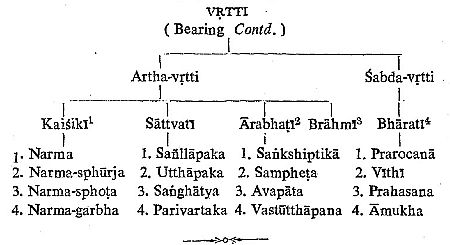
The Kaisiki-vrtti (graceful style) which characterizes the tender Lasyanga associated with expressions of love, dance, song as also charming costumes and delicate actions portrayed with care, mostly by women,   is most suited to Srngara-rasa (tatra kaisiki gita-nrtya-vilasadyair mrduh srngara-cestitaih). Kaisiki has four varieties (Bhedas): Narma (good-natured small-talk); Narmaspinja (pleasure blooms at the first meeting of lovers); Narmasphota (the lovers delighting in each other company); and, Narma-garbha (covert pleasure; incognito). The prefix Narma indicates cheer or laughter.  Kaisiki is the most charming and delightful combination of Srngara and Hasya, playful expression one’s affection or longing for union with the lover.

Sattvati Vrtti (flamboyant style) is a rather gaudy style of expressing ones emotions with excessive body-movement; exuberant expressions of joy; and, underplaying mellow or sorrow moods. It is a way of expressing ones emotions through words (mano-vyapara).  It is associated with the Vira , Adbhuta and Rauidra Rasas (vire sattvaty) – arabhati punah rase raudre ca bibhatse vrttih sarvatra bharati. The Sattvati Vritti has four varieties: Uttpatha (raising up to the conflict); Sallapaka or Samlapaka ( heroic and passionate words or challenge); Sanghatya (breach of alliance or that which breaches alliance; and, Parivartaka ( when a character abruptly changes a course of his actions).

Arabhati-vrtti is a loud, rather noisy and energetic style. It is a powerful exhibition of one’s anger, valour, bordering on false-pride, by screaming, shouting, particularly, in tumultuous scenes with overwhelming tension, disturbance and violence.  It involves furious physical movements (kaya-vyapara). It is associated with Raudra (furious) and Bhibhatsa (odious) Rasas (arabhati punah rase raudre ca bibhatse). The Arabhati has four varieties: : Sanskipta (brief, elaboration , condensed representation of the plot); Avapata ( commotion, fear, jubilation , panic, fall, puzzled behaviour, quick entrance and exit of characters); Vastu Uttahapanam (elevation of the plot, combination of all other Vrttis); and , Sampheta (conflict, fights, combats, betrayal, excitement). Arabhati is also attended with feats of jugglery, conjunction and conflicting situations, where bodily actions are prominent.

And, Bharati-vrtti is mainly related to a scene where the speech or dialogue delivery is its prominent featureBut, generally, the Bharati-vrtti, related to eloquence, is of importance in all the situations (vrttih sarvatra bharati). It is devoid of Srngara, Karuna and Nirveda (dispassion).  The Bharati-Vrtti has four varieties: Parochana (introducing the play and playwright to the spectators); Amukha or Prastavana (where the Sutradhara strikes a conversation with the Nati or Vidushaka, as a prologue to the play); Vithi (sort of monologue the Sutradhara carries on before the play proper); and, Prahasana (hilarious conversations between minor actors). Abhinavagupta suggested the terms: Kathodghata (which consists in some characters catching up with the words or intent of the Sutradhara); Pravartakam (introducing the subject), Prayogatishaya (where the director mentions the entry of a character of the drama), in place of Parochana, Amukha and Vithi. All these take place, mostly, in the Purvanga, the preliminary to the play proper.

[There is much confusion about the terms Vithi and Prahasana. They are used in different contexts carrying different meanings. The Vithi and Prahasana mentioned by Bharata as the Bhedas of Bharati Vrtti refer to the Angas of Vithi and also the two kinds of dramas. 

And, similarly , Vritti which denotes diction or style   is also used in three other senses: (1) verbal-force (Shabda-shakti), like Abhidha, Lakshana and others; (2) Alliteration, Anuprasa Alamkara; and, (3) grammatical formatives like Samasa and Taddhita  ]

vrtti

Source : Laws practice Sanskrit drama by Prof. S N Shastri

Before concluding on the Vrttis, Dhananjaya mentions : the actions that take place in a play should be an authentic portrayal of the language, the gestures, the costumes and the characteristics (Desa-bhasa-kriya-vesa-laksanah) of the people of the region, to which the plot of the play belongs. The playwright should promptly adopt such suitable details (yatha-ucityam prayojayet), as are in practice – Pravrtti (pravrttayah) among the common people (lokad) of that region. It is a way of depicting the details of a particular character (viseha- vesa-vinyasa-krama) ; to render it authentic.

 Desa-bhasa-kriya-vesa-laksanah syuh pravrttayah lokad ava-vagamyaita yatha-ucityam prayojayet.

Here, Dhananjaya introduces another division among these four Vrttis. He creates two other sub-classes: Artha-vrtti and Sabda-vritti. According to Dhananjaya, the first three (Kaisiki; Sattvati; Arabhati) which deal mainly with action fall under Artha-vrtti; while, Bharati, where language and the presentation of the speech is of importance, is brought under Sabda-vritti.

But, neither Bharata nor anyone else had made such a distinction.  Many scholars opine the sub-classification made by Dhananjaya was rather needless.

According to Bharata, of the ten forms of Drama, Nātakas and Prakaranās should contain all the four Vrttis; hence, they are called Pūrna-vrtti Rūpakas (NS.17.7). And, the other eight Rūpakas should be represented without giving prominence to Kaisiki-vrtti (NS.18.8-9).They may contain one of the other three Vrttis as the prominent one, and the three others to a lesser degree.

However, Abhinavagupta had pointed out:  it is not the number of Vrttis, alone, that is important. In certain types of plays one form of Vritti might be prominent or otherwise. The combination, the treatment and the variations of the Vrittis differs from one type of play to the other. Thus, the classification of the Rupakas is based on the treatment of the Vrttis, which might either be complete with all its Angas (elements) or be lacking in some of them. Thus, the mere number of Vrttis in a play, by itself, is not very significant.

[ The critics point out: though Bharata mentioned ten types of Drama, he discussed mainly about its two forms – Nataka and Prakarana, perhaps because these two alone fulfilled all those requirements that were necessary for Rupaka (Major type). Further, Bharata had also explained :  ‘as these two major forms alone depict varieties of situations , made up all the styles (Vrttis) and representations,  they lend  enough scope for display of Rasas (Rasapradhana or Rasabhinaya or vakya-artha-abhinaya); while the other eight forms are incomplete , as they are not presented in the graceful style, the kaisikivrtti’.

Thus, while Bharata and Abhinavagupta stressed Vrtti as the distinguishing character of a Drama; Dhananjaya and Dhanika held Vastu (subject-matter), Neta (Hero) and Rasa (sentiment) as the elements which distinguish one form of drama (Rupaka)  from its other forms  (vastu neta rasas tesam bhedako) .

For Dhananjaya, these three were pivotal points; and, he went about constructing his work, analyzing the whole of dramaturgy around these three parameters (pradhāna, netà and rasa). Therefore, while conducting a study of each class of the Drama, he does it with reference to : (1) their subject-matter or the plot (Vastu), the main theme (adhikarika), the episodes (angam) and the incidental events (prasangika);  (2) the types of characters they portray (Neta), such as the class of the hero, heroine and other supporting roles;  (3) the structural divisions of the play , the stages in their  corresponding with the elements of the plot (avastha), the actions essential for attaining the object of the play (Arthaprakrti) ,  the  sequence of  episodes (in the development of the play (Samdhi); and, (4) the Rasa , the  principal or the  dominant  sentiment of the play.]

rama sita

Dhananjaya concludes the Second Book of Dasarupa, which covered a number of essential ingredients of the Drama, with homage to Bharata and to Lord Shiva:

Who but Bharata or the crescent-crested god Shiva would have been able to enumerate , without omission, all the varieties of action (Vrttis) , the qualities (Guna) , the utterances (Vak) , and the involuntary States (sattvabhava) that are inseparable from (a-vibhinna) the ten (four types of heroes and six types of heroines) varieties of leading character (netara-dasa-vibhinnan) ?’

Cesta-guno-dahrti sattvabhavan / asesato netara-dasa-vibhinnan / ko vaktum Iso Bharato na yo va /  yo va na devah Sasi khandamaulih //

shiva

In the next Part, we shall talk about the ten forms of Drama which is the main theme of Dhananjaya’s work; and about Rasa as discussed in Book Three and Book Four of the Dasarupa.

Nayana4 crop

Continued

In

Part Four

Sources and References

The Dasarupa a treatise on Hindu dramaturgy by George C. O. Haas, Columbia University press / 1912

 A Study of Abhinavabharati on Bharata’s Natyasastra and Avaloka on Dhananjaya’s Dasarupaka – by Manjul Gupta

Sahityadarpanah of Viswanathakavirajah

The Theory of the Samdhis and the Samdhyangas in Natya Shastra by T.G. Mainkar

Sanskrit Dramaturgy

All images are from Internet

 
Leave a comment

Posted by on December 5, 2017 in Dasarupa, Natya


Tags: , , , , , , , , , , , , , , , , , , , , , , , , , , , , , ,

Concerning the Dasarupa of Dhananjaya – Part Two

Continued from Part One

Dance-Drama

As mentioned earlier, the Dasarupa of Dhananjaya is a compilation of the extracts taken from the Natyashastra of Bharata.

Dhananjaya’s work is , essentially, a collection of the rules, the terminologies, their definitions and the elements pertaining to Drama, as extracted from the Natyashastra; and, arranged under certain broad heads. The Dasarupa is a compact work, intended to serve as a manual for the use of those interested in the subject of Drama.

As its name suggests, the text is focused on the ten types or classes of Drama that were mentioned in the Natyashastra; and, on the presentation and analysis of their technical features, plot constructions along with their distinguishing characteristics.

[Let me mention, at the outset, what I have posted below is but a brief summary of the few of the selected topics described in the Dasarupa. I have tried to avoid going into various sub-classifications and too many details enumerated in the text. For the complete text, with its translation in English, please click here.]

**

Before we discuss the main subjects covered by the Dasarupa, let’s briefly take a broad look at its structure and the arrangement of its theme and topics. .

The Dasarupa which commences with a prayer submitted to Lord Ganesha has four Prakashas or sections, containing, in all, about three hundred Karika (verses).

Namas tasmai Ganesaya yatkanthah puskarayate / mada-abhoga-ghana-dhvano nilakanthasya tandave //

Homage to that Ganesha whose throat, deeply resonant in his excessive frenzy (mada-abhoga), serves as a drum in the vibrant  dance of Shiva, just as the sound of the wildly expanding thundercloud at the dance of the peacock

ganesha puja

BOOK ONE

The First Book or the First Chapter consists of 68 verses.  After paying homage to Lord Vishnu who displayed ten incarnations (Dasa-Avatara); and, to Bharata who enunciated the ten forms of Drama (Dasarupa), Dhananjaya seeks the blessings of Sarasvathi the Goddess of wisdom, arts and all learning. He says : the goddess Sarasvati graciously provides themes for literary works to persons of intelligence; and , through those works culture is spread among others.

kasya cid eva kada cid dayaya visayam Sarasvati vidusah / ghatayati kam api tam anyo vrajati jano yena vaidagdhim.

He then states the objective of his work as to give concisely and directly the import of the rules pertaining to Drama, as set down in Natyashastra, in its own words (tasyarthas tatpadais tena samksipya kriyate anjasa)

Dhananjaya then goes on to list (pratipadam laksma) the definitions of some of the fundamental technical terms that appear in the Natyashastra – (pratipadam aparam laksma kah kartum iste)

He commences by stating that Drama is an imitation of situations in life (Avastha-anikrtir natyam); and, it is called a Rupa (form), because it is, basically, a visual presentation (rupam drsyatayocyate), made by actors who assume the forms of various characters that are assigned to them (rupakam tat samaropad), such as gods, kings, men or women of various sorts.  It is said; Rupa refers to delineation, giving a concrete form to an idea. Then, he just lists the names of the ten chief varieties of Drama that are based in different Rasas (dasadhaiva rasasrayam)

natakam ca prakaranam bhanah prahasanarn dimah vyayoga samavakarau vlthyankeha imrga iti

[The phrase Avastha-anikrtir natyam, as quoted by Dhananjaya might give an  impression as though the Drama is the art of reproduction by imitation (anukriti), But, Abhinavagupta had  earlier objected to such a banal view, saying that mere imitation of other’s movements would produce the ludicrous; and, the imitation of other’s feelings and emotions is impossible.

He held the view that Drama is an artistic creation, where music, dance, acting as also the dress, colours, and the stage environment etc., all unite harmoniously in an effort to create a delightful dramatic performance. According to him, such a presentation becomes an art when its narration in the form of dialogues associated with suitable gestures, postures, movement, dance, dress and music etc., succeeds in giving expressions to sentiments and passions so as to rouse similar sentiments in the minds of the audience. Thus, Drama is an entirely a new art that aims to enliven the hearts and minds of the audience; generates in them an aesthetic joy; and, it is not an imitation in the ordinary sense of the term. ]

rose-SG

 Marga- Desi

Dhananjaya mentions the broad categories of Dance-forms as: the Marga (the pure or pristine); and, the Desi (the regional or improvised)

adyam padartha-abhinayo Margo Desi tatha param.

As regards the particular Dance forms, Dhananjaya says: the Nrtya, which, principally, is display of various emotional states (bhava-asrayam nrtyam), is a representation of the traditional Marga class. While, Nrtta, with emphasis on limb-movements, in tune with rhythm and timing (nrttam tala-laya-asrayam), belongs to the popular Desi style.

Under each of these (Nrtya and Nrtta) there is again a two-fold division: Lasya, the graceful, gentle and fluid pleasing dance; and, Tandava, the vigorous, energetic and brisk invigorating movements (lasya-tandava-rupena natakad-dyupakarakam.)

[ Here, Dhananjaya markedly deviated from Bharata . To start with, Bharata had not  classified Tandava and Lasya  as either vigorous or gentle dances . In fact , the term Lasya does not appear in the Natyashastra. Bharata had merely mentioned of these two (Tandava and Sukumara) as the types of dances  that are performed in the Purvaranga, before the commencement of the play.

And , Dhanajaya’s attempt to classify Nrtta as Desi (regional) and Nrtya as Marga (pure and traditional) was criticized as  being illogical. It was pointed out that Nrtta was the dance that Shiva taught to his disciple Tandu ; and , it was pure and pristine. And, Nrtta is indeed of the Marga class.]

*

After offering short definitions of these terms, which  are auxiliaries to Nataka and to the other varieties of Drama,  Dhananjaya moves on to the definition of such terms as are directly connected with the major theme of his work –  the Drama (Rupa).

He broadly follows Bharata , who had said : A Nātaka is having five Arthaprakrti; five kâryāvasthās; five Samdhis; four Vrittis;   sixty-four Sandhyaga; twenty-one Sandhyantārā, thirty-six Abhusanas; and, ninety music..

Yattu pancachatuh –sastiscatuh –pancaikavisatih / sattrinsatravtisca tat-Natakam

rose-SG

Vastu -Neta -Rasa

The rest of the First Chapter is devoted to the discussion of Vastu, the subject-matter, in detail, about its sub-divisions; and, also of the structural components or the elements of the plot.

He states that the three essential elements , on which the  Dramas are based and  classified,  are :

  • the Vastu (subject-matter) ;
  • the Neta (the leading character- the Hero) ; and ,
  • the Rasa (the sentiment it portrays ) . ‘

It is on the basis of these three criteria that Dramas are categorized into different types – Vastu Neta Rasas tesam bhedako.

The plot should be simple; the incidents should be consistent; and, the progression of the events should spring direct from the story. It should make an interesting presentation on the stage; and, should provide entertainment to varied class of spectator. That is the basic purpose of the Drama. The ability to please the spectators, to capture their imagination and to make them visit the theatre more often is a major indicator of the success of the play.

The Subject-matter (vastu) can be of two-folds (Vastu ca dvidha) :  the main theme  known as the principal subject (adhikarika); and,  the subordinate (angam)  as the  incidental events (prasangika)

– Tatra adhikarikam mukhyam angam prasahgikam viduh.

The major theme (Vrttam) of a Drama would, usually, be about the intense desire or the objective (Adhikara) of the principal character of the play (i.e., the Hero, the Adhikarin); and, how he goes about to realize that goal. The sequence of incidents or actions that follow during the course of the Hero’s attempts, mainly, to achieve his objective or the desired result would be its principal subject (Adhikarika); and, the related minor ones would form the incidental the subject (prasangika).

[For instance; in Ramayana, the story of Rama and Sita is Adhikarika. The stories of Sugriva and Vibhishana are Prasangika, supplementary to the main story.]

vastu2

Source : Laws practice Sanskrit drama by Prof. S N Shastri

Arthaprakrti

The action of the play expands in manifold ways (vistary anekadha), just as a seed (Bija) very small at the beginning, grows, in stages, and expands into a tree.

The process of unfolding of the story could be marked by five stages or elements of action (Arthaprakrti or Karyalakshana):

:- (1) the beginning (Bija) or the cause (hetu) giving rise to various types of actions;

:- (2) the expansion (Bindu), which like the drop of oil in water, spreads and joins the broken ends, expands and maintains the continuity (accheda-karana), till the very end of the play, in all the Acts;

:- (3) the episodes of  considerable length (Pathaka), which  carry forward  and support the main cause of the  action ;

:- (4) the incidents within the episode (Prakari), of limited duration and of minor importance , yet, serving the principal plot; 

:- (5) and, finally, the conclusion (Karya), which also sums up the whole action, starting  from the beginning  and leading up  to the ultimate gainful result  (Phala).

Bija-bidu-patakakhya prakari-karya-laksanah arthaprakrtayah panca ta etah parikirtitah.

Following the analogy of the seed and the tree, it is explained, in Arthaprakrti also, the Bija, the germinal-idea, just like a seed, is the origin. And, it goes through several stages namely:

  • appearance (Utpatti);
  • opening up (Udgnatana);
  • going forth or sprouting (Udbheda); and,
  • coming out distinctly (Nirbedha).

And, just as the seed develops gradually into a tree and bears fruit, here too the Bija develops, in stages, and finally concludes in Karya. And, thus, it succeeds in bringing the whole series of actions in the play to  a happy (mangala) desired finale  (Phala) .

Bīja bindu patākā ca prakarī kāryameva ca arthapraktaya pañca jñātvā yojyā yathāvidhi NS.19.21

 [The charge levelled against Dhananjaya and Dhanika is that they just state the Arthaprakrti and fail to discuss its importance in the play or its relation with the Avastha, another format of plot-construction.]

**

Avastha

The plot could also be structured in another manner so as to depict the successive, ordered (Yathasamkhya) stages of action (Avastha) in the Hero’s (Neta) attempts to accomplish his purpose. The actions involved in the hero’s way to success are structured into five distinct segments or stages :

:- (1) beginning of the action (Arambha) with eagerness to attain the result;

:- (2) the efforts made by the hero to move resolutely, with great haste, towards his objective, despite the odds and resistance he has to contend with (Yatna or Prayathna);

:- (3) actions leading him nearer to the objective, with hope of success mixed with fear of failure (Prathi-sambhava);

:- (4) actions or incidents that ensure certainty of realizing his goal,  as by then the dangers and risks  would have been bypassed or  eliminated (Niyatapti) ; 

(5) and, finally, the crowning glory, the complete and satisfactory achievement of his desired objective (Phala-agama or Phala-prapti or Phala-yoga)

Avasthah panca karyasya prarabdhasya phalarthibhih ararnbha-yatna-praptyasa-niyatapti-phalagamah.

The Avastha, with its five stages, is a comprehensive model which begins with eagerness and zeal; resolutely passes through strenuous efforts, overcoming several obstacles, mixed with anxiety, hope and fear; and, finally ends happily  in the total acquisition of the desired object.  Its elements, taken together, portray the physical, mental and psychological states of the hero (Neta) throughout the action of the play. 

These five stages, in their successive order (Yathasamkhya), form the essential, classic features of any type of human endeavour; not merely Drama.

The Brihadaranyaka Upanishad calls upon:

‘You are what your deep, driving desire is; as your desire is, so is your will (sa yathā-kāmo bhavati tat-kratur-bhavati); as your will is, so is your deed (yat-kratur-bhavati tat-karma kurute) ; as your deed is, so is your destiny (yat-karma kurute tad-abhi-sapadyate”- (Brhu. Up. 4.4.5).

sa yathā-kāmo bhavati tatkratur bhavati | yatkratur bhavati tat karma kurute |  yat karma kurute tad abhi-saṃpadyate || BrhUp_4,4.5 ||

 ***

Samdhi

Another way of structuring the plot (the body, the Sarira of the play) is by creating links, for connecting one scene with the other. These are the Samdhis, the segments of the plot (Artnavayavah), joined mutually or with the limbs (angaih) of the otherantaraika-artha-sambandhah samdhir ekanvaye sati. These Samdhis (junctures) are meant to knit together the various structural divisions of the Drama, consistent with the elements of the plot, and with the stages in the Hero’s struggle on his way to achieving his purpose, right from the beginning up to the successful conclusion.

The five stages of  the developments or the progressions in the action of the play in that regard are :  

:- (1) Mukha (lit. face) , the section where the action originates in a seed-form (Bija) giving rise to various purposes and sentiments (mukham bijasamutpattir nana-artha-rasa-sambhava );

:- (2) Prathimukha ,  the development of the seed – sometimes visible  and sometimes not ; but, there all the while and progressing (laksya-alaksya atayodbhedas tasya pratimukham bhavet);

:- (3) Garbha, the section of the play where the seed springs up and strives to grow despite the difficulties and challenges it is confronted with (garbhas tu drstanastasya bijasya-anvesanam muhuh);

:- (4) Vimarsa or Avamarsa, a crucial or rather testing time in the development of the seed which has now  grown into Garbha , facing troubles; and, when  one stops to reflect (avamrsed) because of getting embroiled in entanglements (aslesa), snared in temptations (vilobana), doubts, anger , or following a misleading clue, thus temporarily arresting its development (krodh en avamrsed yatra vyasanad va vilobhanat); 

(5) and, finally, the Nirvahana  or the Upasamhrti, when the scattered threads are harmonized and knit together;  when all the main incidents of the play are  meaningfully interwoven ; and , the play is brought to a successful conclusion – (bijavanto mukhadyartha viprakirna yathayatham aikarthyam uparuyante yatra nirvahanam hi tat).

Mukha-pratimukhe garbhah sa vamarsa upasarnhrtih.

 [For an exhaustive study of the Samdhis, please click here.[

gse_multipart51466

These three – Arthaprakrti, Avastha and Samdhi – could be treated as parallel methods of structuring the divisions of the play.  It is also said; they are not mutually exclusive. The five elements, that mark the stages of action, in each of these, correspond with the five elements of the other two, in an ordered sequence – Krama (yathasamkhyena jayante).

Arthaprakrtayah panca panca-avastha-samanvitah yathasamkhyena jayante mukhadyah panca samdhayah.

The structural divisions or sequence of events of the drama – Avastha; Arthaprakrti; and, Samdhi – each in its own manner,   corresponds with the elements of the plot and the actions associated with the progressive stages in the hero’s attempts to successfully realize his purpose or object.

:- Avastha are the stages of action in the progression of the events in the play

:- Arthaprakrtis are in effect, the means for attaining the desired result or success (Phala). These, again, are said to be sequenced in five stages of action (Avastha)

:- The Samdhis are junctures or the sequence of events in the development of the play; and, associated with the actions or the stages in the hero’s realization of his purpose (Phala-siddhi).

[It seems that Bharata had suggested just two parallel methods or principles of classification for projecting the development of the plot – Avastha and Samdhi – each having five steps. The Samdhi was again divided into 64 sub-sections –Samdhyangas. And, Bharata had not discussed or even suggested inter-relation between these two models.

The schemes of the Avastha (stages) and the Samdhi (junctures), both having five phases, are related to the structure of the play, the dramatic incidents, the development of the theme, and the movement of the plot. While Avastha attempts to delineate or mark the successive stages in the action of the play through various sub-divisions; the Samdhi, following the analogy of the seed and its growth, tries to combine the various types of action into meaningful whole.

When taken together, you find that the Avastha and Samdhi are closely related, with each stage of the Avastha corresponding with each juncture of the Samdhi. Both mark the divisions in the development of the plot, in five stages. Bharata had said: the Samdhis depend on the Avasthas (Samdhyo hi Avastha paratantrah)

Dr. Manjul Gupta explains: Looking at the position, we may finally say that Samdhis are the important parts of a plot. A plot is divided into five parts marking different phases of the main aim. These five Samdhis are related to each other, ‘to their limbs’. .. and, somehow or other, with the five Avasthas of the action.

Thus, the Arambha of Avastha corresponds with Mukha of Samdhi; and similarly, the Prayathna with the Prathimukha; the Prathisambhava with the Garbha; the Niyatapi with the Vimarsa; and, the Phalayoga with the Nirvahana.

 *

Dhananjaya goes further and inserts Arthaprakrti, the constituent elements in a plot, mentioned by Bharata (NS.19.21) as the third format (besides Avastha and Samdhi) for outlining the structure of the plot. And, he had said, they are found in the Itivrtta, just as the five Avasthas do.

bījaṃ binduḥ patākā ca prakarī kāryameva ca / arthaprakṛtayaḥ pañca jñātvā yojyā yathāvidhi // BhN_19.21 //

Dhananjaya suggested that the five elements of the Arthaprakrti (viz., Bija; Bimdu; Pathaka; Prakari; and Karya), corresponded with the five stages  of action as described under Avastha ; and , from these arise five junctures , the Samdhi , beginning with Mukha , the opening.

arthaprakrtayah panca panca-avastha-samanvitah yathasamkhyena jayante mukhadyah panca samdhayah // DR.1.21//

The difference between Avastha and Arthaprakrti seems to be that while the former (Avastha) pertains to the principal plot; the latter (Arthaprakrti) covers the subsidiary plots also. And, while the action of every play consists of five Avasthas, but, in the case of five Arthaprakrtis, it is not necessary that all should be present. The other difference appears to be that in the Avastha, its stages follow an ordered sequence. But, Arthaprakrti is not bound by such regulations; the sequence and the prominence of its elements might be altered to suit the needs of the plot. 

However, Bharata had not said anything about the inter-relations that might exist among the three formats of the play, viz., the Avastha, the Samdhi and the Arthaprakrti.

But the later writers (e.g. Katayavema and Dhundiraja) accepted the suggestion made by Dhananjaya for treating Avastha, Samdhi and Arthaprakrti as parallel ways of dividing or demarcating the structure of the Drama into successive ordered segments (yathasamkhyena jayante).

It could, therefore, be said that each element of Samdhi identifies; and, also leads to the corresponding elements of the Arthaprakrti and Avastha.

Arthaprakrti, Samdhi , Agama0004

It has been suggested that these three sets of five each, Pentad (panchayatam), could be taken as three ways of analyzing the structure of the plot of a Sanskrit Drama (Rupaka) from three different angles.

Summing up, Viswanatha in his Sâhitya-Darpana described Rupaka (Nataka) as the most logical and perfect theatrical composition. It progresses in a systematic manner and concludes successfully, bringing joy to all.  He says, according to the Dasarupa, the structure of the Rupaka consists: five elements of the plot (Arthaprakrti), matching with the five stages (Avastha) of the action, from which arise five structural divisions or sequence of events (Samdhi) of the drama, which correspond with the elements of the plot and the actions associated with the stages in the hero’s attempts to successfully realize his purpose or objects.

Please also read the brief study of the Dasarupaka of Viswanatha by Dr. Leena Chandra K ]

shakuntala333

[The Shakuntalam of Kalidasa  (check here for an English translation) is hailed as a classic play  that epitomizes all the virtues and characteristics of the hoary Sanskrit theatrical traditions.

We may take a look at the structure of the play in terms of the three modes of Samdhi , Arthapaprakrti and Avastha.

Kalidasa’s celebrated  play  Abhijnana Shakuntalam has seven Acts; and, the action is spread over six years. The plot is structured into series of actions , each leading to the next.

The progression of the plot of the Shakuntalam can be analyzed according to dramatic conventions set out in the Natyasastra. This may be done taking into account all the three axes : Arthaprakrti ; Avastha-s ( states of action); and, Sandhi-s (joints of action) .

Act I features the Mukha-Sandhi, in which the King Dushyanta comes upon the beautiful lass Shakuntala; it gives rise to cause (hetu) for the begining of action (Bija – Arthaprakrti), which is the King deeply falling in love with Shakuntala; and, that  opening sets the  stage for action in the play (Arambha-Avastha).

shakuntalam5shakuntalam2

Act II and Act III explore the expansion (ArthaprakrtiBindu), when the King makes effort (AvasthaYatna or Prayathna) to moves towards his objective ; and that develops into their wedding (Pratimukha-Sandhi),

But the King  and Shakuntala must urgently separate; and, they  are filled with hope of success mixed with fear of failure (Prathi-sambhava Avastha); and their love  strives to grow despite the difficulties and challenges it is confronted with (Garbha Sandhi). That gives reason to  carry forward  and support the main cause of the  action (Pathaka Arthaprakrti ) .

shakuntalam3

Acts IV and V relate to the period of separation, wherein hope of reunion is affirmed , despite absence; and this section is a continuation of the Garbha-Sandhi. This occurs when Shakuntala leaves the hermitage and also when she and the king are separated, after his rejection of her;  serving the principal plot (Prakari Arthaprakrti).

This state of uncertainty also marks  Vimarsa or Avamarsa Sandhi , when the King actually does reject Shakuntala , a crucial or rather testing time in the development of the seed (Bija) which has now  grown into Garbha , facing troubles; and, when  the charecters  stops to reflect (avamrsed) because of getting embroiled in entanglements (aslesa), snared in temptations (vilobana), doubts, anger , or following a misleading clue, thus temporarily arresting its development.

Acts V and VI bring hope of realizing the  goal (Niyatapti-Avastha), when Indra calls upon Dushyanta to join him in heaven; and, the audience knows that the King will  eventually reunite with Shakuntala.  It is followed by actions or incidents that ensure certainty of realizing the Lovers’ goal,  as by then the dangers and risks  are likely to be  bypassed or  eliminated .

The final Act VII celebrates the reunion of Shakuntala and Dushyanta; it marks the Nirvahana  or the Upasamhrti Sandhi, when all the scattered threads are harmonized and knit together;and, all the main incidents of the play are  meaningfully interwoven ; and , when the play is brought to a successful conclusion.

This final Arthaprakrti (Karya) also sums up the whole action, starting  from the beginning  and leading up  to the ultimate gainful result  (Phala). This Avastha (Phala-agama or Phala-prapti or Phala-yoga) is indeed  the crowning glory, the complete and satisfactory achievement of the desired objective  of the hero and the Leading Lady  as they joyfully reunite with their son Bharata.]

shakuntalam4

p1140060

Itivrtta

As regards the story of a play, it could either be adopted (itivrttam) from the incidents that occur in the well-known (Prakhyatha) legends of the past; or, could be a story invented (Uthpadya) by the poet; or else, it could be a mixture (Misra) of the two.  The story could also be about gods (Divya), humans (Marthya) and the like (Divyadivya).

prakhyatam itihasader utpadyam ; kavi-kalpitam;  misram ca samkarat tabhyam divya-martyadi-bhedatah.

It is also said; whatever be the original story, if it is not suitable for the hero or is inconsistent with the sentiment (Rasa) he represents, then the story can be modified or re-arranged in some other way. After determining the beginning and end of the play in this manner; and, after dividing it into five parts, the author should then break it up into small sections; the divisions called junctures (Samdhi).

[Surprisingly,even in the case of historical narrations (akhyayika), Anandavardhana (Ca.850) counseled poets to alter any received historical account that conflicted with the emotional impact they sought to achieve. Thus, according to him, one can and should change fact to suit the dominant Rasa of the work.]

The purpose of such reshaping of the story and characters by the playwright is to achieve a harmony of theme and character in order to serve the ultimate purpose of the drama ,  the Rasa – the  enjoyment by the cultured spectators concept of

 Yat tatra-anucitam Kim cin nayakasya rasasya va viruddham tat parityajyam anyatha va prakalpayet.

[The best example of this is Kalidasa’s reworking of Abijnana-shakuntalam and Vikramorvasiya, the former from the Mahabharata and the latter from the Vedas, Epics, and Puranas.]

Dhanika the commentator mentions that the Vastu is initially classified as the principal (Adhikarana) and subsidiary (Prasangika); and, each of these two are again sub-divided in three ways (Prakhyatha, Uthpadya and Misra), keeping in view of the source of the story, the characters, the portrayal and the dramatic conventions.

[But, Bharata had divided the plot (Itivrtta) into only two classes – the principal and the subsidiary; and, had not attempted their further sub-divisions. 

tivṛttaṃ tu nāṭyasya śarīraṃ parikīrtitam / pañcabhiḥ sandhibhistasya vibhāgaḥ samprakalpitaḥ // BhN_19.1 /

itivtta dvidhā caiva budhastu parikalpayet ādhikarikameka syāt prāsagikam-athāparam 19. 2

The explanation provided is that Bharata did not attempt to divide the dramatic components into tight compartments, because:  he was more concerned with the successful production of a play.  He was focused on coming up with an interesting presentation that would provide wholesome entertainment to the spectators ; and , at the same time he had to pay attention to the  playwright , the actors and the very process of production.

But, the later commentators like Abhinavagupta and Dhananjaya were basically theoreticians who relished offering  scholarly interpretations of the vast variety of technical terms , principles and concepts etc., together with illustrations of their applications by citing passages from the  great plays that preceded their times (such as the plays of Bhasa, kalidasa, Bhavabuthi, Sriharsha and others). These scholars were, however, not much concerned with the nutty gritty or practical details of play-production or the structure and management of the playhouse.]

Dhananjaya says that the chosen subject could be arranged in six ways: showing what needs to be put forth; displaying emotion; the element of surprise; representations for sustaining interest in the story; and concealing what needs to be concealed,

The task of dramatization of the underlying story (Itivrtta) calls for selection, omission and meaningful arrangement of the incidents. Some types of actions should be presented on the stage; while certain other types that are unsuitable for display might either be indicated by words or not shown at all.

There might be incidents in the play which have happened either in the past or in the distant lands; and, there might also be certain types of actions which might neither be possible nor advisable to show on stage. All such matters have to be suggested or indicated by various other clever devices (Arthopaksepaka).

[Normally, the action in a play depicts the events that occurred during the course of that day (or night). But, there are some noted exceptions to such conventions. For instance: in the Uttara-rama-charita of Bhavabhuthi, the events in the first  Act and the second Act are separated by as many as twelve years. Similarly, several years elapse between the last two Acts of the Abhijnana-shakuntalam . In such cases, an intermediate scene (Vishkambha) is introduced as a link; and, also to explain / narrate the occurrences that took place  subsequent to  the previous Act.

Further, it is said; a chariot, an elephant or a horse should not be brought on the stage. Similar is the case with palaces, hills or lakes. Such animals and geographical features might be suggested or indicated through models made of cheap materials. And, in case an army has to be introduced on the stage, that should be symbolically represented by the movement (gati-vīcāra) of four to six persons dressed as soldiers.

But, in many cases, the unity of place is not strictly observed; and, travels are undertaken, often, by aerial routes, riding the celestial rathas]

In regard to the continuity of action taking place after a lapse of time , that is achieved through  suggestions or indications   made in  one oe more of the five ways  : (1) Vishkambha, an interlude; (2) Pravesaka confined to lesser characters, which use Prakrit; (3) Culika, suggestions from behind the curtain; (4) Ankamukha, anticipatory scene, at the close of an Act a character alludes to the subject of the following Act; and, (5) Ankavatara , the seed of the subject-matter of an Act in the previous Act before it has drawn to its close, so that the following is a continuation of the one preceding it. 

arthopakṣepakaiḥ sūcyaṃ pañcabhiḥ  pratipādayet / viṣkambha cūlikā aṅgāsy āṅkāvatāra praveśakaiḥ // DhDaś_1.52 //

It is only that part of the action which is fit to be exhibited is divided into Acts and presented on the stage in an ingenious and a highly interesting manner.

[Natyashastra prescribes that in the presentation of the play , one should avoid showing such events as: long travel; murder; war; violent overthrow; bloodshed; eating; taking bath; undressing; sex act etc.

Dura-dhavanam; vadham; yuddham; rajya-dessadiviplavan/ samrodham; bhojanam; snanam ; suratam; ca-anulepanam/ amvara-grahanadini pratyakshani na nirdiset na-adhikaraivadham kvapi tyajyam – avasyakam na ca // ]

vastu

Source : Laws practice Sanskrit drama by Prof. S N Shastri

[The classical Sanskrit Drama, in its presentation, followed a traditional format.

Plays were usually presented at the spring festival. The Srngara and Vira are the usual dominant Rasas of the play. The dialogues are interspersed with lyrical stanzas and songs; and, often with dance movements. Tragedy, in the Western sense of the term, was not there, for every drama must have a happy ending.

A drama always opened with Naandi, or benediction, submitted by the well accomplished Sutradhara, stage-manager or director, to Lord Shiva, praying for successful completion of the play , for the joy (nanda) and the prosperity of the audience. It is said; the Sutradhara enters singing  in  Bhinna-panchama, the Raga that belongs to the Madhyama-grama, having Dha as its Amsha; and, Panchama as its end-note (the Nyasa).

It is said; it is called Naandi , because it pleases (Nanda) the gods –Nandati devata asyam  iti  Naandi ; and, also because , it pleases the spectators and confers blessings on them. 

Right after the Naandi, the Sutradhara  , appears in a section , preliminary to the play, called  Prarochana ,  where he would praise the literary merit and scholarship of the playwright;   laud the high quality of his play that the audience is about to watch; and, compliment the audience for their wisdom in choosing to witness such an excellent play (unmukhī karaṇaṃ tatra praśaṃsātaḥ prarocanā) .

The Prarochana would be followed by Prastavana, the prelude to  the play-proper, where the Sutradhara would strike a light-hearted conversation with a Nati , Vidusaka or a minor character regarding the play that is just about to be presented. All these take place in the Purvanga, the preliminary , before the commencement of the play .

sūtradhāro naṭīṃ brūte mārṣaṃ vātha vidūṣakam / svakāryaṃ prastutākṣepi citroktyā yat tadāmukham // DhDaś_3.7 // prastāvanā vā tatra syuḥ kathādghātaḥ pravṛttakam / prayogā tiśayaścātha vīthyaṅgāni trayodaśa // DhDaś_3.8 //

The initial scenes are always auspicious, spreading a happy–feeling (adi-mangala); and, as the story unfolds, unbearable miseries are unjustly mounted  on the virtuous hero , by the crafty villain. In the midst of all the troubles that the hero is facing, near about the mid-point of the story, something good happens to the hero (madhya-mangala).  Somewhere in the second-half of the story, amidst the trials and tribulations of the lovers,  a sort of relief  arrives  through the  clumsy attempts of the usually inept, food and fun loving sidekick, the vidushaka . 

And, after a hard fought and suspenseful struggle (in which the gentle heroine, for no fault of her, is somehow drawn in), the anti-hero falls; eventually the Good, the Love and the Dharma triumphs; and, all ends well (antya-mangala).

The play concludes with a Bharatavakya, praying for the welfare of the king with good governance, the happiness of his subjects ; and, the peace and  prosperity of all beings in all the three worlds.]

lotus offering

Numerous subdivisions

The Dasarupa goes into lot of details, enumerating the subdivisions of the various elements of action (much of it not being quite significant). For instance:

  • 12 subdivisions of the opening scene (Mukha);
  • 13 subdivisions of the progression (Prathimukha);
  • 12 subdivisions of the development (Garbha); 
  • 13 subdivisions of the pause (avamarsa) ,
  • 5 kinds of intermediate scenes (arthopaksepaka) ;
  • 14 subdivisions of the conclusion ( Nirvahana )
  • 64 types of Samdhyangas (Divisions or Limbs of Samdhis)
  • 12 limbs of Garbha
  • 13 types of Avamarsa
  • 72 types of Sandnyantaras which act as inter-links
  • And so on

 **

The First Book of Dasarupa concludes with the advice:  after examining the entire body of divisions of the subject matter presented in these and the following sections, as well as in the works like the Ramayana and Brhatkatha, one should thereupon compose a story expanded with the appropriate selection of Hero (Neta) and sentiments (Rasa) , bound together with appropriate and pleasing words (ucita-caru-vacah).’

ityady asesam iha vastu-vibhedajatam / Ramayanadi ca vibhavya Brhatkatham ca / asutrayet tad anu netrra-sanugunyac / citram katham ucita-caru-vacah-prapancaih //DhDaś_1.61 //

***

In the next part we shall talk about the types of Heroes , Heroines and the supporting charecters ; and, also about the Vrttis , which Bharata regarded as the mother of all poetic works.

Nayana5 crop


Continued

In

Part Three

Sources and References

The Dasarupa a treatise on Hindu dramaturgy by George C. O. Haas, Columbia University press / 1912

 A Study of Abhinavabharati on Bharata’s Natyasastra and Avaloka on Dhananjaya’s Dasarupaka – by Manjul Gupta

Sahityadarpanah of Viswanathakavirajah

The Theory of the Samdhis and the Samdhyangas in Natya Shastra by T.G. Mainkar

Sanskrit Dramaturgy

https://open.library.ubc.ca/media/download/pdf/831/1.0094658/2

All images are from Internet

 
Leave a comment

Posted by on December 4, 2017 in Dasarupa, Natya


Tags: , , , , , , , , , , , , , , , , , , , , , , , , , , , , , ,

Bharata’s Natya-Shastra – some reflections

Nayana dutta2

1. Natya-Shastra is a detailed compendium of technical instructions about the performing arts. It was meant as a practical manual for  production of successful theatrical performances, which included music and dance as well as acting. It was also intended as a guide to the poet and to the performer, alike. 

As Prof. Adya Rangacharya stated in his The Natyasastra: English Translation with Critical Notes

The eminence of the Natyasastra lies not merely in the fact that it was the first book on the subject on theatrical art; but that, it was the first comprehensive treatise on Dance, Drama and Music;  and , it marks  the origin of our dramatic tradition. It laid down the essentials of the Drama as a representation of the ways of the world; the nature and attitudes of the people; their ways of behavior and manners of speech. It also provided a framework for the Drama by highlighting its essential ingredients: 

(1) a playwright who has vision to the grasp of things and has the capacity to articulate that in an interesting way, through speech and action;

(2) the story that holds the attention of the audience;

(3) a virtuoso director  who can transform a script into a dramatic performance;

(4) the set of  skilled artists with clarity of speech and endowed with talent to give form and substance to the dream of the playwright and the vision of the director;  and , not the least ,

(5) the perceptive ,  intelligent  and   cultured spectators  who appreciate and enjoy a good  performance.

1.1. The text is in the form of elaborate dialogues between the author and a group of Munis , sages who wished to know about Natya-Veda, the knowledge of the performing arts such as dance, music and dramaThe author, in response, presents a detailed inquiry in to the various facets of drama including its nature; its origin; its theories; techniques of the theater with all its components of speech, body-language, gestures, costumes, décor and the state of mind of the performers, apart from rituals, architecture of theater etc.

Written in archaic form of Sanskrit, the text consists about six thousand (5,569 – to be exact) sutras or verse-stanzas spread over thirty-six chapters. Some passages are in prose.

Because the Natyasastra has about 6,000 verses, the text is also known as Sat-sahasri. The later authors and commentators (Dhanika, Abhinavagupta and Sarada-tanaya) refer to the text as Sat-sahari; and, its author as Sat-sahasri-kara.

But, the text having 6,000 verses is said to be a condensed version of an earlier and a larger text having about 12,000 verses (dwadasha_sahasri). It is said; the larger version was known as Natya- agama and the shorter as Natya-shastra.

Please click here for The Natyasatra – A treatise on Hindu Dramaturgy and Histrionics Ascribed to Bharata Muni; Translated into English by Manmohan Ghosh;  Published by Asiatic Society of Bengal, Calcutta – 1951]

2. Though the  Natya-Shastra speaks of theater (natya), it actually encompasses all forms of art expressions. The text, in fact, claims that there is no knowledge, no craft, no lore, no art, no technique and no activity that is not found in Natya-Shastra (1.116).

न तज्ज्ञानं न तच्छिल्पं न सा विद्या न सा कला । नासौ योगो न तत्कर्म नाट्येऽस्मिन् यन्न दृश्यते ॥ ११६॥

The reason that theater-arts were discussed specifically, is that, in the ancient Indian context, drama was considered the most comprehensive form of art-expressions. Further, at the time the Nataya Shastra was compiled, the arts of poetry, dance, music and drama; and even painting, sculpture and architecture were not viewed as separate and individualized streams of art forms. Natyashastra presented  an integral vision of art, which blossomed in multiplicity.

It was only during the later periods these art-forms developed into independent art-expressions. Similarly, even the other minor forms of Drama , such as: Opera, Poetic-drama, realistic plays and so on, later evolved and grew apart, assuming independent identities.

[Vishnudharmottara (Ca. sixth century) asserted that painting and sculpture without the knowledge of the Drama and the Dance would not have much depth; and, that Drama and Dance, in turn, do require a knowledge of music and of the songs, which again is dependent on mastery over languages – both Sanskrit and Prakrit – with a thorough understanding of the elements of prose, poetry, grammar, meter, prosody etc. It thus underlines the interdependence of the arts.]

All art expressions were viewed as vehicles of beauty, providing both pleasure and education, through refinement of senses and sense perceptions. The object of the drama was to show men and women the proper way to live, a way in which one could live and behave, so that one might be a still better person.

“A play shows your actions and emotions. Neither gods nor demons are depicted as always good or always evil. Actually, the ways of the world as represented here are not only of the gods but also of yours. It gives you good advice; it gives you enlightenment and also entertainment. It provides peace of mind to those who afflicted with miseries, sorrow, grief or fatigue. There is no art, no knowledge, no yoga, and no action that is not found in Natya .”- (Natya-Shastra 1: 106=07; 112-16)

na taj jñānaṃ na tacchilpaṃ na sā vidyā na sā kalā । nāsau yogo na tatkarma nāṭye’smin yanna dṛśyate ॥ 116॥

[ Kalidasa remarked : ‘Drama, verily, is a feast that is greatly enjoyed by a variety of people of different tastes

– Natyam bhinnaruchir janasya bahuda-apekshym samaradhanam. ]

Bharatha explains: when the nature of the world possessing pleasure and pain both is depicted by means of representations through speech, songs, gestures , music and other (such as, costume, makeup, ornaments etc ) it is called Natya. (NS 1.119)

yo’ya  svabhāvo lokasya sukha dukha samanvita som gādya abhinaya ityopeto nātyam ity abhidhīyate 119

Thus, according to Bharata, the Drama is but a reflection or a representation of the actions of Men and women of various natures (Prakrti) – avastha-anikrtir natyam . That is to say; the Drama, in its various forms of art, poetry etc , strives to depict the infinite variety of human characters .

That is the reason; Bharata says, one should study the various human habits and natures (Prakrti) on which the art of Drama is based.  And, for which the world, the society we live in is the most authoritative source of knowledge (Pramana) . All those involved with the Drama should realize this truth – (NS: 25.123)

Nana-sheelah prakutyah  sheele natyam pratihitam / tasma-loka-pramane hi vigneyam natya yo krubhihi // (NS: 25.123)

Having said that; the theater was conventional; yet, imaginative. The costumes and make up were stylized and symbolic; and, not what is commonly seen on the city-streets. In any case, Natyashastra requires a performer to present much more than an external representation of the character, such as correct speech, gesture etc.  His/ her stage performance will have to go far beyond technical skill, in order to be believable and accepted by the spectators.

There is, however, not much discussion about scenery; perhaps because scenery was used sparingly.

Theater had a sacred significance. Prayers and rituals were conducted and the stage was consecrated before the commencement of the play ( Purvanga) .

*

Natyashastra (6.10) provides a comprehensive framework of the Natya-veda, in a pellet form, as the harmonious combination (sagraha) of the various essential components that contribute towards the successful production of a play.

Rasā bhāvāhya abhinayā dharmī vtti pravttaya siddhi svarās tathā atodya gāna ragaśca sagraha 6.10

Bharata also mentions the five elements of the plot (artha-prakrti) of the Drama as :

  1. the seed (Bija);
  2. the expansion or the intermediate point which links to the next (Bindu);
  3. the episode (Pataka);
  4. the incident in the episode (Prakari) and
  5. the dramatic outcome (Karya).

These are to be used according to the main Rasa of the play and the prescriptions of the Shastra.(NS: 19.21)

Bijah Bindu Pataka cha Prakari  karyameva cha / Artha-prakrutyah pancha tatva yojya tata vidihi // (NS:19.21)

As regards the success of the play (Siddhi), it is said,  the successful production (Siddhi) of a play enacted on the stage (Ranga) with the object of arousing joy (Rasa) in the hearts of the spectators involves  various  elements of the components of  the actors’ gestures, actions (Anubhava) and speech (vachika); bringing forth (abhinaya) their intent, through the medium of  theatrical (natya-dharmi) and common (Loka-dharmi) practices; in four styles of representations (Vritti-s) in their four regional variations (pravrttis) ; with the aid of  melodious songs  accompanied by  instrumental music (svara-gana-adyota).

The assembly of spectators with different tastes and levels of appreciation should all be able to enjoy the play. Therefore, Bharata instructs that a play should be such that it caters to the interests and dispositions of varied class of men and women; the young and the old, with each class looking for its own favorite type of entertainment . And, it is upon such versatile ability that the success of a play depends. The play-production, thus, was aimed to satisfy the happy, responsive spectators and enthuse them to visit the theater more often. 

Bharata, in a way, sums up the virtues and merits of Nataka , a dramatic work, that captivates the hearts of the spectators and brings glory to its playwright , producer and the actors .

The work of art that satisfies all classes of spectators ; and is a happy and enjoyable composition, which is graceful on account of being  adorned with sweet and elegant words; free from obsolete and obscure meaningless verbose ; easily grasped and understood by the common people ; skillfully arranged ; interspersed with delightful songs and dances; and,  systematically  displaying varied types of sentiments  in its plot devised into Acts, scenes, junctures etc.

mdu-lalita-padārthaha-śabdārtha-hīna ;   budha jana sukha bhogya,  yuktiman – ntta-yogyam bahu rasa kta mārga , sandhi-sandhāna-yukta  bhavati  jagati  yogya  nāaka  prekakāām 16.130

***

Bharata elaborates (NS.27.57-61) :

The young are keen on the portrayal of love; and, those after money relish scenes depicting acquisition of wealth. And, the ones who love adventure delight in the terrible and odious acts of battle and combats; whereas the old and pious always praise the enactment of well known tales and legends from the Puranas  (epics) lauding the virtues and good deeds ; the devout look for philosophical and religious aspects ; and, those disinterested in the mundane seek liberation (moksha) .  The common folks, the women, children and the dimwitted lap up with relish comic situations evoking laughter and fun, attractive costumes and make up.

Apart from these types, Bharata also mentions an elite class of appreciative spectators with refined tastes and deep interest in the technical aspects of production. Such connoisseurs were also aware of the theatrical traditions and conventions of performance on the stage. These were the well-informed class who cared more about the aptness of the techniques of performance, critically evaluated the merits (guna) , the defects (dosha)  and the success of the theatrical performance as a whole.

Then, there were also the artists specialized in different branches of music and dance; the scholars who relished subtle nuances in the rendering of speech and the lyrics of the songs; and, there were the accomplished courtesans who were experts in presenting alluring and  delectable performances .

All such elite class were the cream of spectators, for whose approval and appreciation the whole of theatrical group collectively and individually looked forward with great hope and fear.

The producer of the Drama had also the onus to please the patron who sponsored and financed the play –production and display.

Nānāśīlāḥ praktaya śīle nāya vinirmitam uttamā-adhama madhyānā vddha bāliśayo itām 57

Tuṣyanti taruā kāme vidagdhā samayātvite arthevarthaparā ścaiva moke cātha virāgia 58

Śūrāstu vīra raudreu niyuddhevāhaveu ca dharmā akhyāne  purāeu vddhā stuyanti nityaśa 59

Na śakyamadhamairjñātumuttamānā viceṣṭitam tattva bhāveu sarveu tuyanti satata budhā 60

Bālā mūrkhā striyaścaiva hāsyanaipathyayo sadā yastuṣṭo tuṣṭimāyāti śoke śokamupaiti ca 61

Abhinavagupta observes Drishta-phala [visible fruits] like banners (pataka) or material rewards do not indicate success of a play production. Real success is achieved when the play is performed with skilled precision, devoted faith and pure concentration. To succeed, the artist must immerse the spectator with pure joy of Rasa experience. The spectator’s concentrated absorption  appreciation and enjoyment is indeed the success.

Dhananjaya in his Dasarupaka remarks that responsive spectators, fired by enthusiasm and imagination, contribute to the success of the play in the manner of ‘children playing with clay elephants ‘. ” When children play with clay-elephants, etc., the source of their joy is their own utsaha (enthusiasm). The same is true of spectators watching  and almost sharing  the heroic deeds of  characters , say  like, Arjuna and other heroes on the stage.”…… 

Kridatam mrnrnayair yadvad balanam dviradadibhih / svotsahah svadate tadvac chrotrnam Arjunadibhih.

**

2.1. The text employs Natya as a generic term, which broadly covers drama, dance and  music. It does not treat dance as a separate category of art form. Bharata while dealing with Angika-abhinaya (body-language) speaks of nrtta, pure movements that carry no meaning- as compared to Abhinaya (literally meaning that which carries the meaning forward towards the audiencei. e. gestures that convey specific meaning. Nrtta was, in fact, meant to provide beauty, grace and a certain luster to the performance. The postures of the nrtta (called karanas) were classified by Bharata as tandava and sukumara, to convey vigor and grace.

[ Nandikeshwara (perhaps a later author who, for some reason, assumed the name of an ancient figure/person ?), author of Abhinaya_darpana, is believed to be the first to recognize dance as an independent art. He called it natanam; and classified it into nrtta (Pure dance), nrtya (abhinaya – expression- aspectand natya (combination of nritta and nrtya with a dramatic element to it).

Dhananjaya in his Dasarupa, while drawing a  distinction  between nrtta and nrtya , explains the term  nrtta as that which  depends on rhythm and tempo – nrttam tala-layam ashrayam (DR. 1. 13) ; and,  nrtya as  that which is dependent on emotion – Bhava-ashrayam nrtyam (DR. 1. 12).

As mentioned earlier, Nandikeshwara explained Natya as the combination of nrtta and nrtya .]

3.1. It is said that the text which we know as Natya-Shastra was based on an earlier text that was much larger. And, many views presented in Natya-Shastra are believed to be based on the works of other scholars. There are frequent references to other writers and other views; there are repetitions; there are contradictory passages; there are technical terms, which are not supported by the tradition.

[ It appears there were texts on Drama even much prior to Natyashastra. Panini (Ca.500 BCE) the great Grammarian, in his Astadhyayi (4.3.110-11), mentions two ancient Schools  –  of Krsava and Silalin – that were in existence during  his time – 

Parasarya Silalibhyam bhikshu nata-sutreyoh  (4.3.110); karmanda krushas shvadinihi  (4.3.111).

It appears that Parasara , Silalin , karmanda and Krsava were the authors of Bhikshu Sutras and Nata Sutras. Of these , Silalin and Krsava  were said to have prepared the Sutras (codes) for the Nata (actors or dancers). At times, Natyashastra refers to the performers (Nata) as Sailalaka -s  . The assumption is that the Silalin-school , at one time,  might have been a prominent theatrical tradition. Some scholars opine that the Nata-sutras of Silalin (coming under the Amnaya tradition) might have influenced the preliminary part (Purvanga)  of Natyashastra , with its elements of worship (Puja).

However, in the preface to his great work Natya-shastra of Bharatamuni (Volume I, Second Edition , 1956) Pundit M. Ramakrishna Kavi mentions that  in the Natyavarga of Amara-kosha (2.10.12) there is reference to three  schools of Nata-sutra-kara : Silalin ; Krasava; and,  Bharata .

 Amarakosha

It appears that in the later times,  the former two Schools (Silali and Krasava) , which flourished earlier to Bharata , went out of existence or merged with the School of Bharata; and, nothing much has come down to us  about these older Schools. And, it is also  said, the Bharata himself was  preceded  by  Adi-Bharata, the originator and Vriddha (senior) Bharata.  And, all the actors of whatever earlier Schools, later came to be known as Bharata-s. ]

3.2. These factors lend support to the view that Natya-Shastra might have been the work of not one single author but of several authors, spread over a long period of time.

Ms. Kapila Vatsyayan, a well known scholar, however, observes that the text projects an integrated vision and   a unity of purpose. She points out many instances of reference to later chapters in the text, and says they are indicative of the coherent and well knit organic nature of the work. 

For those reasons, she concludes, Natya-Shastra might well be considered as the work of a single author or of a single tradition.

4.1. Rasa, as discussed in Natyashastra, meant aesthetic appreciation or the joy that the spectator experiences.  As Bharata says , Rasa  should be relished  as an emotional or intellectual  experience : na rasanāvyāpāra āsvādanam,api tu mānasa eva (NS.6,31) .

The yashāstra states that the goal of any art form is to invoke  such Rasa.

[Bharata explains Rasa  as an experience that can be relished – like the taste of food – Rasyate anena iti rasaha (asvadayatva), which is associated with palate (ability to distinguish between and appreciate different flavors) . Yet ; the aesthetic senses that are primarily engaged with a theatrical presentation  are only the eye and the ear. The senses of taste, touch and smell are not , generally, associated with   the type of ones experience that Bharta talks about  while witnessing a Drama. These are personal or individual experiences. But, Rasa, the aesthetic experience enjoyed by all the spectators , in a play, in common, is mainly through two senses : the eye and the ear. That , perhaps , is the reason why Bharata says that the Rasa in a play should be relished only as an emotional or intellectual experience.]

Bharata’s theory of Rasa was crafted mainly in the context of the Drama.    After naming the eight Rasas, he says ‘these are the Rasas recognized in Drama’nāṭye rasāḥ smṛtāḥ – (N.S 6.15).  

śṛṅgāra-hāsy-akaruā raudra-vīra-bhayānakā bībhatsa-ādbhuta-sajñau cetyaṣṭau nāye rasā sm 15

In the prose-passage following the verse thirty-one of Chapter six, Bharata commences his exposition of Rasa, saying: I shall first explain Rasa; and, no sense or meaning proceeds without Rasa (Na hi rasa-adrate kaschid-arthah pravartate).

tatra rasāneva tāvadādāvabhivyākhyāsyāma na hi rasādte kaścid artha pravartate

He , then  focused on the dancer’s or actor’s performance and effort to convey the   psychological  state , which the character is experiencing , to the spectator, in order to create  Rasa – the aesthetic appreciation or enjoyment of the art – in the heart and mind of the spectator.

The famous Rasa-sutra or basic “formula”, in the Nāyashāstra, for evoking Rasa, states that   the vibhāva, anubhāva, and vyabhicāri bhāvas  together produce Rasa:  tatra vibhāvā-anubhāva vyabhicāri sayogād rasa nipatti 

Bharata elaborated the process of producing  Rasa in terms of eight Sthayi Bhavas – the principle emotional state of the character expressed by the performer  with the aid of Vibhava (the cause) and Anubhava (the enactment)  ; thirty-three Vyabhicāri (Sanchari) bhāvās – the transient emotions; and, eight  Sattivika-bhavas – the involuntary physical reactions.

Among these Bhavasthe more important  ones are said to be vibhāva and anubhāva , which  invoke the Sthāyi bhāva, or the principle emotion at the moment. Such elements that are employed to convey the psychological state of the character, thus, in all, amounted to forty-nine or more. 

[The Sattvika , the involuntary–reflexes (such as being stunned, going pale , stammering, shedding tears etc.,)  were perhaps meant to introduce a realistic style of acting – suited to the situation as also to the nature, psychological state and the social standing of the character , as compared to the purely conventional style .]

It is explained; they are called Bhavas because they happen (Bhavanti); they cause or bring about (Bhavitam); and, are felt (bhava-vanti). Bharata explains that  Bhavas  effectively bring out the dominant sentiment of the play – that is the Sthāyibhāvā – with the aid of various Bhavas , such as words (Vachika), gestures Angika), costumes ( Aharya) and bodily reflexes (Sattva) – for the enjoyment of the good-hearted spectator (sumanasaḥ prekṣakāḥ) . Then it is called the Rasa of the scene (tasmān nāṭya rasā ity abhivyākhyātāḥ).

Nānā bhāvā abhinaya vyañjitān vāg aṅga sattopetān / Sthāyibhāvān āsvādayanti sumanasaḥ prekṣakāḥ / harṣādīṃś cā adhigacchanti tasmān nāṭya rasā ity abhivyākhyātāḥ //6.31//

In brief; Abhinaya is the art of communicating bhāva (emotion) to produce Rasa (aesthetic enjoyment). In other words, it is the Bhavas that produce Rasa; and, it is not the other way.

The Rasa theory of the yashāstra is considered one of its most important contributions, with several scholars over the centuries , until today, discussing and analyzing it extensively.

Thus, Bharata’s concept and derivation of Rasa was mainly in the context of the Drama. They all are related to concrete and tangible emotions, based upon human experiences. There is no mysticism whatsoever here. That concept-of the enjoyment by the recipient spectator – as also his views on the Gunas and Dosha, relating to the  scripting and enacting the play, were later  enlarged , transported  and adopted into Kavya as well. In either case, the human element was never lost sight of ; and, the spectator or the avid reader remained  at the center of art-experience. 

*

Bharata, initially, names four Rasas (Srngara, Raudra, Vira and Bhibhatsa) as primary; and, the other four as being  dependent upon them . That is to say ; the primary Rasas, which represent the dominant mental states of humans, are the cause or the source for the production of the other four Rasas.

Bharata explains that Hasya (mirth) arises from Srngara (delightful); Karuna (pathos) from Raudra (furious); Adbhuta (wonder or marvel) from the Vira  (heroic); and, Bhayanaka (fearsome or terrible) from Bhibhatsa ( odious).

śṛṅgārāddhi bhavedd-hāsyo raudrācca karuṇo rasaḥ vīrāccaiv-ādbhuto-utpattir-bībhatsācca  bhayānakaḥ 6.39

But, effectively, the eight Rasas listed in yashāstra are well accepted. Some scholars remark that the   distinction of four basic Rasas ; and , their associate four Rasas is a mere technical detail that the spectators may not be interested in.

śṛṅgāra hāsya karuā raudra vīra bhayānakā bībhatsā adbhutasajñau cetyaṣṭau nāye rasā sm  6.15

Later, by the time of Abinavagupta Shanta rasa came into discussion; and, eventually was  recognized . Thus , concept of Navarasasa was accepted. (for more on  discussion about Shantha Rasa , please click here). Later on Vatsalya , Bhakthi and such others were also named as Rasas. Thus the number of Rasas is not mere nine or eleven , it could be more. 

**

4.2. Bharata gave a definite structure to the drama; and said every play must portray and convey a  dominant Rasa; and , each of the eight rasas providing enjoyment to the audience. A Rasa depends on the type of the story and sort of the hero. According to Dhananjaya, hero (neta), story (vastu) and rasa (artistic enjoyment) constitute the essential ingredients of a drama – Vastu neta rasas tesam bhedako .

Natya-Shastra strives with a single pointed devotion to bestow an artistic form and content to what was still then a vulgar source of entertainment. Bharata could say with pride “parents could watch a dramatic performance in company of their sons and daughters-in-law.”(Natya-Shastra24.297)

5.1. That leads us to the question who was this author? Was Bharata his name   ? Was Bharata the name of his tribe? Or, was it a clever acronym?

There are, of course, no clear answers to these questions. The author made no attempt to reveal his identity. The book, as I mentioned earlier, is in the form of dialogue between Bharata and the sages.  The author was explaining the broad parameters, the basic principles and techniques of theatrical art as they then existed. He was not expounding the text as if it were his discovery or as his personal position. He was lucidly and systematically explaining a tradition that was alive and vibrant. These factors lead us to believe that Bharata, whoever he was, might have been a practicing- well informed-leading performer of his time,  belonging to a certain tradition . Bharata perhaps   belonged to a community of artists, actors, dancers, poets, musicians who shared a common heritage and common aspirations. 

5.2. From the prologue, couched in mythological language and imagery, it appears, Bharata was also a teacher and a preceptor of a school or an academy. He had a number (100?) of sons and pupils each of them being an accomplished performer or a learned theoretician. He produced plays with their assistance; by assigning each one a specific role.

It is very unlikely there were ‘theatrical Companies’, as such . Perhaps the family of Bharatas – producers, directors  (Sutradhara) and actors, as also their disciples of various talents and ranks, managed the theater as a group, under the leadership of the senior Bharata being in charge. It does, also, appear that the actors of various ranks of importance, dancers, musicians, assistants and minor functionaries did receive a systematic training in their  craft.

Such a troupe leader (Bharata) might also have been the one who assigned roles in a play; and, taught the rules of  the art/craft to the actors and actresses. His chief function seems to have been mostly supervisory. He might also have been involved in the design and structure of the theater hall (Natya-shala)

Thus, the Bharata, whoever he might be, should have been one capable of performing all those diverse and difficult tasks, with a sense of responsibility and commitment. Besides, he should have been one  who was sensitive to human frailty; and, also conversant with the language  customs  and nature of people of different classes and regions,

The term Bharata perhaps initially referred to  such a multi-talented virtuoso; and also, a producer / director of plays. The author of the Natya-Shastra was perhaps one such “Bharata”.

5.3. Incidentally, the text – in its chapter 35 – Bhumika vikalpa – provides a sort of elaborate explanation of the term Bharata, as : one who conducts as the responsible leader of a performance – as producer , director and stage manager  – who is required to be an expert not only in acting but  also in all those arts which together constitute a performance – by acting in many roles, by playing many instruments and by providing many accessories – is called Bharata – (Natya-Shastra 35: 63-68, 69-71).

[ In this connection, I shall speak of the qualities of a Director. An enumeration of his qualities will constitute these characteristics; they are: First of all, he should possess knowledge of characteristics of everything concerning the theater, desirable refinement of speech, knowledge about the Tala, rules for timing of songs, and of the theory relating to musical notes and to the playing of musical instruments.

63-68. One who is an expert in playing the four kinds of musical instrument, well-trained in rites prescribed in the Sastras, conversant witli the practices of different religious sects and with polity and the science of wealth, expert in the manners of courtezans (kama-shastra), and in poetics(kavya-shastra) , knows the various conventional Gaits  and movements (gati-prakara), throughly appreciates all the States (bhava) and the Sentiments (rasa), is an expert in producing plays, acquainted with various arts and crafts, conversant with the rules of prosody and the metrical feet (chhandas shastra), and is clever in studying the different Sastras, acquainted with the science of stars and planets and with the working of the human body, knows the extent and customs of the earth, its continents and divisions, mountains and people, and the descendants of different royal lines (prasutivit) , is fit to attend to the Sastras relating to his works, capable of understanding them and of giving instruction [on the subjects]; should be made a teacher {acharya) and a Director (Sutradhara)

69-71. Now listen to me speaking about the natural qualities of a Director. He should be possessed of memory , intelligence and judgement; should be patient, liberal, firm in his words, poetical, free from any -disease, sweet [in his manners], forbearing, self-possessed, sweet-tongued, free from anger, truthful, impartial, honest, resourceful (pratimanta) and free from greed for praise.

– The Natyashastra –  translation by Manmohan Ghosh – 1950 – (page 546) – Chapter 35. Bhumika vikalpa – Verses 63 to 71 ]

5.4. The author of the Natya-Shastra is also often addressed, in later times, as Bharata­muni. Shri Adya Rangacharya, a noted scholar, remarks.  “The usual trappings of a muni (sage) are nowhere mentioned”. On the other hand, his sons misused their knowledge and ridiculed the sages (ṛṣīṇāṃ vyaṅgya-karaṇaṃ); and the enraged sages promptly cursed them “as due to pride  ( madonmattā ) in your knowledge you have taken to arrogance (a-vinayam) ; your corrupt-knowledge (ku-jnana) will be destroyed (nāśameṣyati )” — (Natya-Shastra 36: 32 – 38).

yasmājjñāna-madonmattā na vetthā vinayāśritāḥ । tasmād etaddhi bhavatāṃ kujñānaṃ nāśameṣyati ॥ 38

5.5. Bharata recounting this sad episode, cautions the community of artists not to overreach themselves, in arrogance, just because the art had bestowed upon them a special position in the society . The art that empowered them, he counsels, derives its strength from the society; and, the artists, therefore, have a special responsibility to cultivate discipline, self-restraint and humility (Natya-Shastra 36: 29 – 38).

5.6. Bharata refers, repeatedly, to the power that creative art is capable of wielding; and to the responses – both subtle and intense – they can evoke in the hearts of men and women. He asks his sons and disciples not to destroy drama which has its origins in the hoary past of the Vedas and their upangas (supplementary texts). He implores them to preserve the dramatic art by teaching it to their disciples ( siṣyebhyaśca tadanyebhyaḥ); and to spread the art by practicing it (prayacchāmaḥ  prayogataḥ ).

jānīdhvaṃ tattathā nāṭyaṃ brahmaṇā sampravartitam । śiṣyebhyaśca tadanyebhyaḥ prayacchāmaḥ  prayogataḥ ॥ 36.49

mā vai praṇaśyatāmetan nāṭyaṃ duḥkha-pravartitam । mahāśrayaṃ mahāpuṇyaṃ vedāṅgo-upāṅga -sambhavam ॥ 36.50

5.7. [The attempt to explain Bharata as an acronym for three syllables Bha (bhava), Ra (raga) and Ta (tala) , somehow, does  not seem convincing at all.  At the time Natya-Shastra was composed, music was discussed in terms of pada (words), svara (notes) and tala (rhythm) forming components of a certain style of music called gandharva said to have been derived from Sama. Bharata talks about structured and unstructured music: bhaddha (structured like a verse or a stanza; and with rhythm) and anibhaddha (unstructured – without rhythm, analogues to the present-day aalap). The term raga did not come to prominence  until Matanga (about sixth century), in his Brihaddesi, elucidated the categories of muchchhanas and jatis; and introduced the term raga and outlined its concept.]

5.8. Thus, the author of the Natya-Shastra, whoever he might be, comes across as a multi-talented virtuoso, a person of great learning, culture and rooted in good tradition (sampradaya, parampara). He was well grounded not merely in Vedic learning and its ethos, but also in kavya (literature) , fine arts, Ayurveda (medicine), jyothisha (astrology), ganitha (mathematics), vastu-shilpa (architecture) and  hathayoga. His understanding of the human anatomy- particularly the motor and sensory systems and the joints; the relation between the physical stimulus and psychic response; as also the relation between psychic states and expressions through physical movements  were truly remarkable.

6.1. As regards its date, it is not clear when the Natya-Shastra was initially articulated. There are, of course, a host of debates concerning the date of composition of the text. I however tend to go along with the argument that Natya-Shastra was a post Upanishad text; but, it was prior to the age of the Puranas; and certainly much earlier to the age of classic Sanskrit drama. The following, briefly, are some of the reasons:

*. Natya-Shastra describes itself as Natyaveda, the fifth Veda that would be accessible to all the four castes (1:12). It claims that the text imbibes in itself the articulated- spoken word (paatya) from Rig-Veda ; the ritual and the body-language (abhinaya) from Yajur Veda; musical sound , the sung-note, from Sama Veda; and Sattvika (understanding of the relation between mind and body-expressions) – for conveying various bhavas through expressions exuding grace and charm – from Atharva Veda . (Natya-Shastra – 1:17-19)

jagrāha pāṭhyamṛgvedātsāmabhyo gītameva ca । yajurvedādabhinayān rasānātharvaṇādapi ॥ 17॥

vedopavedaiḥ sambaddho nāṭyavedo mahātmanā । evaṃ bhagavatā sṛṣṭo brahmaṇā sarvavedinā ॥ 18॥

utpādya nāṭyavedaṃ tu brahmovāca sureśvaram । itihāso mayā sṛṣṭaḥ sa sureṣu niyujyatām ॥ 19॥

*. The text is permeated with the Vedic symbolism and the imagery. The theatrical production is compared to yajna; with the stage being the vedika,   the altar. The dramatic spectacle, just as yajna, is said to have a moral and ethical purpose.

The text might have, therefore, arisen at a time when the Vedas were not a remote theoretical fountain head, but a living-immediate experience. 

*. The text strongly recommends that puja, worship, be offered to the stage before commencement of the show. It however recognizes puja as distinct from yajna. There is, however, no reference to “image” worship.

*. The gods revered and worshiped in the text are the Vedic gods; and not the gods celebrated in the puranas. For instance, Natya-Shastra begins with a salutation to Pitamaha (Brahma) and Maheshwara. There is no specific reference to Shiva. There is no mention of Nataraja even while discussing karanas and angaharas. Ganesha and the avataras of Vishnu are conspicuously absent. There are no references either to Krishna or to the celestial raasa dance. 

*.The gifts showered by the gods on successful performance of the play are similar to the gifts received by the performer at the conclusion of the yajna.

“Indra (Sakra) gave his auspicious banner (dhwaja) , then Brahma a kutilaka (a crooked stick) and Varuna a golden pitcher (bhringara) , Surya an umbrella, Shiva success (siddhi) and Vayu a fan , Vishnu a throne (simhasana), Kubera a crown  and Saraswathi –visibility and audibility.” (Natya-Shastra-1.60-61)

brahmā kuṭilakaṃ caiva bhṛṅgāraṃ varuṇaḥ śubham । sūryaśchatraṃ śivassiddhiṃ vāyurvyajanameva ca ॥ 60॥

viṣṇuḥ siṃhāsanaṃ caiva kubero mukuṭaṃ tathā । śrāvyatvaṃ prekṣaṇīyasya dadau devī sarasvatī ॥ 61॥

*. It therefore appears; during the time Natya-Shastra was compiled the prominent gods were the Vedic gods such as Indra, Varuna and Vayu; and not the gods of the Puranas that came in to prominence centuries later.

*.The mention of the Buddhist bhiksus and Jain samanas indicate that Natya-Shastra was post –Buddha and Mahavira.

*. Natya-Shastra employs a form of Prakrit, which predates the great poet Ashvaghosha’s play (first century).

For these reasons, the scholars generally agree that Natya-Shastra might have been composed sometime between second century BCE and second century AD, but not later.
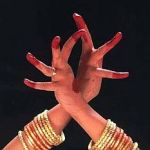
indian_aesthetic

7. 1.The questions whether or not the Natya-Shastra was compiled in a particular year by a particular person are not  very important. Whatever are the answers to those questions, the importance of the work would not be diminished nor its wisdom distracted. What is of great importance is that Natya-Shastra has provided a sustainable foundation and framework for development of theory and practice of arts in India. Just as Panini standardized the classical form of Sanskrit, Bharata standardized the classical form of drama. He gave it status and dignity; a form and an objective; a vision and finally a technique.

7.2. Bharata ensured that drama and dramatic performance is first a work of art before it is literature – drsya kavya a form of literature that could be seen and heard.

7.3. His brilliant intuition and intellect has inspired generations of artists over several centuries. It is immaterial whether or not Bharata was an individual or when he lived.

flower2

8.1. The Natyashastra consists of 36 chapters. The outer and spatial aspects, such as the stage, the theater building etc. are discussed in Chapters 1–5. Chapters 6–7 discuss the theory of rasa, i.e. the crucial question as to how to evoke a mood, while Chapters 8–13 focus on the physical acting technique. The verbal aspect, such as speech and sound, is dealt with in Chapters 14–19, while Chapters 20–21 discuss the types and structure of drama. The outer aspects of acting, such as the costume and the make-up types, are dealt with in Chapters 22–26. More general aspects are touched upon in several chapters, while Chapters 28–33 focus on music. Aspects of the theater troupe and the distribution of roles are then discussed, after which the focus returns to the very beginning, i.e. to the question of the divine origin of the art of the theater. ( Kapila Vatsyayan : Bharata, The Natyashastra, New Delhi, 1996).

*

It could be said that the Natya-shastra is broadly modeled into four sections, based on Abhinaya or modes of conveying theatrical expressions which bring pleasure, pure delight (Rasa) to the cultured spectators (sahrudaya). Such Abhinaya-s are: Sattvika (conveyed through expressions which delight the mind); Angika (natural and appropriate movements of body, limbs and face); Vachika (delivery through speech and songs); and Aharya (costume, decoration, make-up and such others to heighten the beauty or the effectiveness of the dramatic presentation).
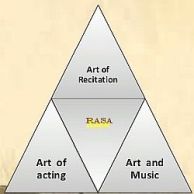
natyashastra-4-638

The author of the Natya-shastra seems to have assigned greater importance to Sattvika elements, the expressions of which are conveyed through the aid of movements, gestures (Angika) and speech (Vachika).

Angika relates to the movement of the parts of the body, which is classified into three major parts – the Anga, Patyanga and Upānga  . Angika relates to how the emotion, thoughts and the thing  are to be expressed or represented through the  movement of the Anga (limbs), which include facial expressions. There are two types of basic Abhinayas as Pada-artha abhinaya (when the artist delineates each word of the lyrics with gestures and expressions); and, Vākyā-rtha abhinaya (where the dancer acts out an entire stanza or sentence). Āngika abhinaya uses the total body to express certain meaning. Hasta (hand) Abhinaya is an important aspect of Āngika.

Vachika abhinaya is the expression through speech. It is done with the help of speech and songs. Bharatha  deals in detail with the different meters in poetry, strong and weak points of poetic writing and diction. He  also talks about Figures of speech (Alamkara) . Nātyasāstra says that words spoken during Nātya should be full of suggested meaning.

yasāstra in its 15th -19th Chapters explains vocal movements. It recognizes the importance of expressions through the medium of voice in the presentation of a Drama; they are its   basic features; and, form the very substance of the Dramas. Other movements depend on and follow vocal movements.

Bharatha mentions three kinds of voice expressions-: 1) Mandra; 2) Madhya; and, 3) Tāra.

The sound which origins from the heart , having a quality of bass is called Mandra. The sound originating from the throat, in the normal manner is named Madhya.  And, Tāra is the high-pitched sound originating  from the head.

According to yasāstra, the vācikā-bhinayas divided into seven parts .

    • 1) Prakāsa-bhāsana– loud and clear speech;
    • 2) Ātmagata-bhāsaa– talking to self;
    • 3) Apavārita-bhāsaa (asides);
    • 4) Janāntika-bhāsaa (audiable to others);
    • 5) Sāmūhika-bhāsana – group expressions (simultaneous talk);
    • 6) Ekala- bhāsana – single expressions (monologue);
    •  7) Ākāsa- bhāsana – talking to the sky (talking to no one in particular); and,
    • 8) Rahasyakathana – stage-whisper

8.2. The Sattvika aspects are dealt in Chapters 6 and 7; followed by Angika in Chapters 8 to 13; and, Vachika in Chapters 14 to 20.  The Aharya which deals with costume, scenic presentation, movement on the stage along with music from the wings etc follow in the later Chapters.

The 23rd Chapter of  yasāstra  details the Āhārya abhinaya, which covers several aspects , such as  the make-up (Angaracanā ); costumes and ornaments  (Alankāra prasādhana); use of specific colors; hair styles;  as well as costumes suitable for particular characters. The Aharya also covers the background sceneries (Pusta), stage props and décor.

The four-fold core Chapters are supported by information and descriptions about the origin and greatness of the theatrics; different forms of the stage and the norms for construction; qualifications and desirable modes of behavior of the actors; and the rituals and prayers before and after the play etc.

Thus, the core of the theatrical art and science is dealt in 29 Chapters  – from 6 to 34.

flower2

9.1.  A question that is often asked is: why were the ancient Indian scholars and seers reluctant to disclose, in their works, details of themselves and of their times? Did they lack a sense of history? 

There is, of course, an array of explanations, in answer to that.

But, I think it had a lot to do with the way the ancients defined their relation to a school of thought, and the position, they thought, their text occupied in the tradition of that school. They always viewed themselves as a part of an ongoing tradition – parampara. Invariably, even the best known of our thinkers (say, the Buddha, Badarayana or Sri Sankara) did not claim that they propounded an absolutely new idea that was totally unknown hitherto. They always said, they were interpreting or elucidating the truth in the light of eternal pristine principles.  They did not lay claim to novelty or uniqueness. They placed their work in relation to the larger and broader river or stream of the tradition. Within that tradition, individual styles, innovative ideas or enterprising leaps of thought were surely discerned; but, they were always placed and viewed in context of the overall ongoing tradition.

9.2. As regards Natya-Shastra, as Kapila Vatsyayan  summed up beautifully:

“ it was analogous to the Gomukh demarcating the glaciers above and the rivers which flow with streams of the Alakananda and the Mandakini , the Bhagirathi and others with their manifold confluences and some divergences , but all of which we recognize as the Ganga. The analogy of streams, confluences (prayaga) and the continuous flowing and yet unchanging nature of the river is the closest approximation in which the parampara of the Natya-Shastra, the text and dramatics of inflow confluences, outflow and ultimate inflows in to the ocean, can be explained.”

9.3. The individual biological identity in terms of the physical events of the birth and the personal life of the author did not, therefore, seem to be a psychical concern. Individual effort and contribution in furthering a school of thought was, no doubt, important; but, it was viewed as an integral part of the dynamics of the flow and course of the river called parampara, characterized with its nature of continuity and change.

The attitude signified being alive to a sense of tradition rather than lack of a sense of history.

flower2

1 0. Why  was the text called a Shastra?

The term Shastra does not always carry connotations of ritual or religion. Nor does it always mean classical, as in shastriya sangeeth

The Sanskrit- English dictionary of Sir Monier-Williams describes the term as an order, a command, a rule, teaching, and instruction manual relating to religious precepts. But,  Shastra, in fact, means much more than that.

10.1.In the Indian context , Shastra is a very extensive term that takes in almost all human activities – right from cooking to horse and elephant breeding; love making to social conduct; economics to waging wars; justice system to thievery ; and of course all the arts- from archery to poetry. There  is a  Shastra – a way of doing and rationalizing — for almost everything. A Shastra binds together the theory that provides a framework for rationalizing the practice; and the practice that illustrates the theory. Shastra is, at once, the theory of practice and practice of a theory- enriching each other.

10.2. The author of Natya-Shastra prefers to call it a prayoga Shastra – a framework of principles of praxis or practice. Bharata makes a significant opening statement: “I am creating a theory and text of performance; of practice and experimentation” . He also underlines the fact that the efficacy of its formulation lies in practice (prayoga) – vibhāvayati yasmācca nānārthān hi prayogataḥNS.8.7

10.3. There is a certain flexibility built in to the structure of the text. It provides for varied interpretations and readings. The author himself encourages innovations and experimentation in production and presentation of plays. He even permits modification of his injunctions; and states the rules “can be changed according to the needs of time (kaala) and place (desha)” . The text accordingly makes room for fluidity of interpretation and multiple ways of understanding it. The intellectual freedom that Bharata provided to his readers/listeners ensured both continuity and change in Indian arts over the centuries.
tree of life

11. 1.Natya-Shastra,throughout, talks in  terms of the metaphor of the seed (bija) and the tree. It talks of the organic inter-relatedness of the parts and the whole; each branch of the text being distinct and yet inspired by the unitary source. Introduction of the core theme is the seed (bija) and its outer manifestation is like a drop of liquid or a point (bindu) that spreads and enlarges (vistara) to fill the structured space. That denotes both the process and the structure.

11.2. Bharata also explains the relationship between the structure of the drama, its plot, bhava and rasa through the imagery of a tree. The text grows like a tree and gives out shoots like the proverbial Asvattha tree.” Just as a tree grows from a seed and flowers and fruits… So the emotional experiences (rasa) are the source (root) of all the modes of expressions (bhava). The Bhavas, in turn, are transformed to rasa.”(Natya-Shastra: 6-38)

yathā bījād bhaved vṛkṣo vṛkṣāt puṣpaṃ phalaṃ yathā । tathā mūlaṃ rasāḥ sarve tebhyo bhāvā vyavasthitāḥ ॥ NS.6.38

11.3. This idea of multiplicity springing out of a unity is derived from the worldview nourished by the ancient Indians. Bhartrhari (Vakyapadiya), for instance, observes that diversity essentially pre-supposes an underlying unity (abedha-purvaka hi bhedah).  In other words, he says, where there is difference or division there must be a fundamental identity underneath it ; else, each cannot relate to the other; and , each object in the world would be independent of , or unconnected to  every other thing in existence.

Such holistic view  treats the world as a living organism, a whole with each part interrelated and inter dependent. The expanding universe is viewed as a process of sprouting from the primordial source (bija), blooming, decaying and withering away, at some time; but only to revive and burst forth with renewed vigor. The seed (Bija) is the source / origin of the tree; and, Bija is also its end product. The relationship between the universe and the human; between nature and man, too, has to be understood within the cyclical framework of the Bija– and – the tree concept.

Bharata seems to suggest that theater is an organism, just as life is an organism that re-invents itself.


flower2

12 . Let me end this in the way Bharata concluded his Natya-Shastra:

He who hears the reading of this Shastra , which is auspicious, sportful, originating from the mouth of Brahman , very holy , pure good, destructive of sins; and he who puts in to practice and witnesses carefully the performance of drama will attain  the same blessed goal which masters of Vedic knowledge and performers of yajna – attain.” (Natya-Shastra-37:26-28 )

ya idaṃ śruṇuyān nityaṃ proktaṃ cedaṃ svayambhuvā । kuryāt prayogaṃ yaścaivamathavā’dhītavān naraḥ 26

yā gatirvedaviduṣāṃ yā gatiryajñakāriṇām । yā gatirdānaśīlānāṃ tāṃ gatiṃ prāpnuyāddhi saḥ 27

 dānadharmeṣu sarveṣu kīrtyate tu mahat phalam । prekṣaṇīyapradānaṃ hi sarvadāneṣu śasyate 28

 [ http://sanskritdocuments.org/doc_z_misc_major_works/natya37.html?lang=iast]

golden-bodhi-tree-symbol-thai-style-isolate-background-vector-illustration-54289542

Please also read Abhinavabharati – an interpretation of Bharata’s Natya-Shastra


Sources and references

Bharatamuniya Natya-Shastra by prof.SKR Rao

Bharata: The Natya-Shastra by Kapila Vatsyayan

Introduction to Bharata’s Natya-Shastra by Adya  Rangacharya

An introduction to natya shastra – gesture in aesthetic arts  by  M. S. Thirumalai, Ph.D.

Translation of the Natya-Shastra verses from the Natya-Shastra by Man Mohan Ghosh

http://sanskritdocuments.org/doc_z_misc_major_works/natya36.html?lang=iast

Images are from Internet

 
12 Comments

Posted by on September 13, 2012 in Abhinavagupta, Music, Natya, Sanskrit
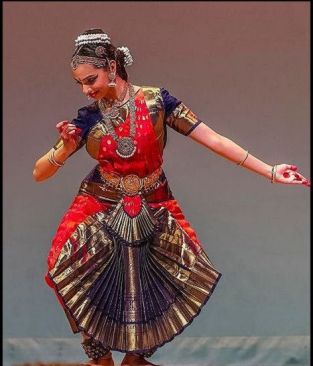
 

Tags: , , ,