RSS

Tag Archives: Marga

Music of India – a brief outline – Part Thirteen

Continued from Part Twelve – Desi Samgita  

Part thirteen (of 22 ) – Forms of Karnataka Sangita

saraswathi

The Journey

1.1. As you have seen from the articles posted so far that, over the centuries, the Music of India has passed through many significant milestones on the way to its full development. Though the several forms of Music generated over the long periods differ in their form, content and intent, they do in fact represent a continued progression of a hoary tradition, each inspiring its next format. The Music of India, just as its philosophies and branches of art-forms, follows the path of continuity blending in the changes, without compromising its fundamentals.

1.2. The journey of this rich and varied Musical tradition could symbolically said to have commenced from the Riks of the Sama Veda associated with conduct of Yajnas , which then was improved upon by the Shiksha branch of the Vedas (Vedanga). That was followed the pure and chaste form of Music Marga or Gandharva with its gentle appeal to the gods. Then came the Gana of the Natyashastra with its several song-forms to suit various sequences that occur during the course of a Drama.

2.1. Thereafter the somber and rather inflexible Marga gave place to a comparatively relaxed art-music – Desi – derived from different regions of the country, aiming to delight the hearts of men and women. The Desi in its wake established the concept of Raga which in due time revolutionized the theories and practices of Indian Music. And, Raga became the central and predominant melodic concept in Indian music.  Over a period and with the proliferation of the Raga,  the systems of classifying the various Ragas into groups (Mela)  based on the technical traits of their scales (Svaras) came into vogue.

2.2. There arose various theories of characterizing the Ragas according to the mood or the season they seemed to represent,  and the  ideal time (  day , evening or night) to sing  the Ragas. And, the Ragas even came to be personified, treating them as male or female,  each endowed with its own individual traits and appearance. A large number of music-treatises were concerned primarily with the iconography of the Raga; and, were eager to connect the Raga with a deity or a season or a mood or even an environment.

2.3. Emmie Te Nijenhuis observes : For a full understanding of the development of musical forms in India one has to consider not only the technical elements of a composition, such as: its phrasal elements (Taala, Pada, Svara, Pata, Virudu and Tena), its main musical section (Dhatu) or its poetical metre, but also its general character, its subject matter and social environment . Unfortunately the Sanskrit texts do not contain information on some these aspects.

One has to therefore go behind the texts and try to understand their cultural and social background , fathom their inspirations   as also motivations

3.1. Much before the theories and concepts of Raga were fully developed, one of the major forms of Desi Sangita that came to fore was the Prabandha, which in its myriad forms dominated the Music scene of India for more than about thousand years till the end of the seventeenth century. In between, the Persian influence remodeled the forms and the ways of singing classical Music in North India. The ancient Dhruva-pada (Dhrupad) a Desi form of Prabandha gave place to improvised lyrical Khyal and other popular modes of singing.

3.2.  In the South India, the Prabandha which was getting rather rigid gave place, by about the end of seventeen century, to varieties of musical forms that were free flowing and not unduly constrained by rules of Grammar and meter. Though the form and the presentation of the songs took new shapes, they still retained, in one way or the other, the basic elements of the ancient Prabandha. This has helped to keep alive the ancient traditions.

4.1. By the second half of the 17th century the ancient Music that figured in Natyashastra was no longer in practice. The system of 17th century was closer to the one in present day. The texts of this period usually began with the traditional description of the scales (Svara) in terms of the 22 Srutis   and associated Ragas.

4.2. The eighteenth century could be said the golden age of Karnataka Sangita. The period not merely gave birth to significant texts that re-defined Music theories (Lakshana) and practices (Lakshya) but also witnessed the flowering of various Music forms such as : Kirtana, Kriti, Daru, Varna , Padam , Javali, Thillana, Naamavali  and so on. The most fortuitous occurrence or the heavenly blessing of this period was the sublime Music created by the Trinity of Karnataka Sangita who flourished around the same time.  It is, fundamentally, their Music that has given form substance and identity to the Karnataka Sangita and all other related art-forms that are practiced today. We all owe those Great Masters a deep debt of gratitude.

Let’s try to gain brief familiarity with some of the art-music that branched out of the Prabandha. Among those forms, I reckon, Daru seems to be older. Let’s begin with Daru.

sarasvathi tanjore

Daru

Dance Drama

5.1. It is said; the Daru songs were derived from the ancient Dhruva songs (stage-songs) described in the thirty-second chapter of Bharatha’s Natyashastra.

During the times of the Nayaks of Tanjavuru the Yakshagana, Bhagavatamela Nataka and such other dance dramas were popular. And, Daru songs were widely employed in all these forms of dance dramas (geya-nataka). Some of the earliest Daru songs that have come down to us are from Vijayaraghava Nayaka’s Yakshagana Vipranarayana Charita (1633 – 1673).

Daru that is commonly used in Dance Dramas, is basically a story-song (Akhyana or a ballad) narrating an event. Therefore, lyrics (Sahitya) are an essential part of Daru song.

5.2. As regards their format, some Darus may have Pallavi, Anu-pallavi and Charanas; while some others may just have only the Pallavi and Charanas (i.e. without Anu-pallavi). All the Charanas may have the same Dhatu, the musical element. The Tempo (Laya) of a Daru is usually the Madhyama-kaala; but, some are also sung in Vilamba-kala to suit the dramatic event. As regards the Taala, the Chapu Taala is most favored in Geya Natakas (say, as in Nauka Charitram of Sri Tyagaraja).  The other Taalas used were Adi and Jampa.

5.3. The music of Daru songs is usually simple with no elaborate improvisations such as Raga Sancharas or Sangathis.  The Rakthi Ragas are mostly used to bring out the mood and emotion of the scene. The Saurastra Raga seems to have a favorite of the composers.

Classification of Darus

6.1. Darus have been classified into various types depending on their functions. For instance; Svagatha Daru is for a character musing aloud (sotto voce) or a soliloquy speaking to herself/himself softly, aside, rather in a private manner.  Pralapa Daru is for sorrowing or wailing situations. Heccarika Daru is for heralding the entry of the King, alerting the assembled courtiers. Paada-vandana Daru is for respectfully approaching the deity in a temple, as also for retreating, step by step. And, Samvada Daru is for conversations in musical form between two main characters.

6.2. Jakkini Daru has an interesting format. It commenced with Jaati-Svaras (series of notes, sol-fa); and, the words (lyrics) were in the second section of the song. Jakkini was a popular form of Daru during the time of Nayaks. And, in due time, Jakkini Daru gave raise to Tillanas.

6.3. Some Darus (like Tendral Daru, Vennila Daru and Manmatha Daru) were love-songs portraying erotic moods (Sringara Rasa).   Such Darus in lighter moods were the forerunners of the later Javali dance songs.

6.4. Sri Melatturu Venkatarama Shastry who was a senior contemporary of Sri Tyagaraja  is said to have composed as many as twelve  Dance Dramas (Bhagavatha Mela Nataka) employing the Daru-songs. And, the Kuchhipudi dance dramas also employ Daru-songs in their narratives.

6.5. Among the Trinity of Karnataka Music, Sri Tyagaraja in his Dance Drama ‘Nauka Charitram’ used Daru-songs. For instance; one of its Daru –song ‘Indu kemi’ set to Varali Raga in Chapa Taala is of Samvada Daru type. Here, two characters speak alternatively (Uttara – pratyuttara) through songs.

[Independent of the dance dramas, Sri Tyagaraja is said to have composed a Daru (Nee saathi) in Raga Sriranjani. But, its authorship is questioned.]

[And, none of Sri Tyagaraja’s disciples seem to have attempted a Daru.]

Sri Mutthuswamy Dikshitar has also composed a Daru in Sriranjani Raga ‘Na sari sati’ set to Rupaka Taala; and, it is in Telugu. It is one of Dikshitar’s rare compositions in Telugu. The Anuprasa (rhyming) is delightfully phrased in the terms valabu, solabu and kolabu etc. There is an allusion to an anecdote related to churning of the sea that gave forth Amrita (divine nectar)   in the phrase: ’vasavadi amarulella Vamri svarupametti Vasudeva garvamanji’.

Among the later composers, Sri Harikesanallur Muthayya Bhagavatar who was musician in the court of Sri Krishnaraja Wodeyar, the Maharaja of Mysore, has composed four Daru Varnas, Two of which are in Telugu; and, the other two are in Kannada. They contain Jaatis, Svaras as well as Sahitya. Here, the first passage in Svaras is followed by Jaati, which then are followed by Sahitya.

Of these, the Daru-Varna in Kannada set to Khamas Raga and Chapu Taala (Mathe Malayadwaja pandya samjate matanga vadana guha) is very highly  popular.

[The name of the Raga Khamas when sung repeatedly in succession sounds ‘Sukhama’].

[For more; Please see: Darus in Carnatic Music by Dr. Gowri Kuppuswami and Dr. M Hariharan; Published in ‘Shanmukha’, October 1986 (Vol.XII; No.4)]

**

Kirtana
602434_374833905929273_47716714_n

7.1. Until about the beginning of the eighteenth century, Prabandha was the dominant form of Music. It also played an important role in the development of dance and dance-drama. Prabandha, essentially, is a tightly structured (Nibaddha Samgita) musical composition that is governed by a set of rules. Venkatamakhin in his landmark work Chaturdandi Prakasika (ca. 1635) describes Prabandha as a composition having specific characteristics; and, that which is well composed – ‘prabandhayeti Prabandha’. However, the definition was narrowed down to include only those compositions which are made up of Six Angas or elements (birudu, pada, tenaka, pāta and tāla) and Four Dhatus or sections (Udgrāha, Melāpaka, Dhruva and Abhoga).

The structure of a Prabandha, by its very nature, had to adhere to a prescribed format. In general, the emphasis appeared to be more on the text than on the musical content. The faithfulness to the form was, at times, carried to its limits. And, the Prabandha form, in due course, grew rather rigid.

And, Prabandha, naturally, had to give place to improvised, easier and innovative (manodharma samgita) forms of music having distinctive features of their own. Yet; it is the basic elements of Prabandha that provide guidelines even to the modern composers of classical music.

[Most of the medieval Prabandha-s eventually disappeared because of the stiffness of their musical construction. Yet; it should also be mentioned that Prabandha helped the Karnataka music, enormously, in ensuring continuity of its ancient tradition.]

7.2. With the steady decline of Prabandha and rise of regional languages, a range of musical compositions and rhythmic variations began to take place. Those with lighter and attractive musical content set in simpler words easy to understand gained popularity as Kirtana-s or Padas. And, those Prabandha-s composed in high literary style and loaded with religious themes passed into realm of religion.

7.3. As said; the Kirtana form of Music that began to flourish towards the end of fourteenth century was basically devotional Music aiming to invoke Bhakthi in the hearts of common folk. Its Sahitya (lyrics) clothed in simple music abounds in Bhakthi-bhava. It usually is a prayer or a Namavali (stringing together various names and epithets of the deity) or is a song ideally suited for group singing (Samuha-gana or Bhajana).

7.4. The Kirtanas do have musical sections such as Pallavi, Anu-pallavi and usually more than two Charanas. The entire Kirtana is usually set to one traditional and melodious Raga in simple Taala; and is rendered in Madhyama-kaala.   In a Kirtana, Music per se is neither explored nor interpreted. Music, here, is but a charming, delightful vehicle to convey the devotional content of the song.

7.5. Among the Saint-poets and composers (Vak-geya-kara) who composed Kirtanas in soul-stirring music preaching devotion and submission to the Lord, the prominent were: Sri Sripadaraya (1403-1502), Tallapakkam Sri Annamacharya  (1408 to 1503), Sri Vyasaraya (1447-1539), Sri Vadiraja (1480-1600) , Sri Purandaradasa (1484-1564) , Kshetrayya (or Kshetragna) (1600–1680), Bhadrachalam Ramadasu (1620-1688)   and  Sri Raghavendra Tirtha (1623- 1671) . However, the original tunes of many of their songs are lost to us.

Kriti
sangita

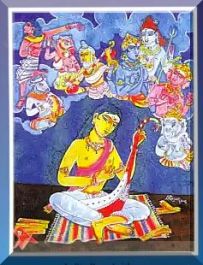
8.1. As said, Kirtana was the popular form of Music during 15-17th centuries. It was followed by the Kriti format which eventually stabilized and attained perfection by about the middle of the 18th century.

Kirtana and Kriti are often used as alternate or interchangeable terms. But, they are not the same; and, there are differences between the two. But, these two together form the major corpus of the main stream of Karnataka Sangita.

8.2. A Kriti is explained as that which is constructed (yat krtam tat kritih). It is primarily a pre-composed music (kalpitha Samgita), which aims to delineate the true nature of a Raga in all its vibrant colours.  In Karnataka Samgita, a Kriti comprising Pallavi, Anu-pallavi and Charanas, honouring the disciplines of Grammar and Chhandas, and set to appropriate Taala is the most advanced form of musical composition.

8.3. If Kirtana evokes Bhakthi Rasa, Kriti aims at perfection of Gana-Rasa. Kriti depicts shades of various emotions and Rasa-s including Bhakthi. Kriti can express even sorrow-Karuna (e.g. Evari mata–kambhoji); wonder–Adbhuta (Enta muddo– Bindumalini); frustration or disgust – Jigupsa (Chedi buddhi – Adana); resignation or despairBibhatsa (Eti Janma – Varali). And, the expansion of such emotions is more complex, subtle and technically almost perfect.

8.4. The elaboration of a Kriti is complex for other reasons too. It might involve many Kaala-pramanas (tempos). And, quite often, a Kriti may be composed in rare or untested Ragas perhaps because the composer either strives to demonstrate his technical virtuosity or to match the subject and the text of the Kriti with a Raga of an equally aesthetic quality. Many times, a Kriti assigns the Raga greater importance than to its words. It might be trying to employ the Raga with its Gamakas to express the intent (bhava) of its Sahitya more effectively. Further, Kritis are also often structured in complex Taala patterns.

And, it is up to the genius of the performer to bring out the various facets of the Kriti as well as she/he could achieve.  Therefore, a Kriti can effectively be rendered as a solo rather than as group-song (in contrast to the Kirtana).

9.1. Kriti is conceived as a well chiselled work of art; an ideal harmony of Mathu (words) and Dhatu (music-element).  In an excellently well composed Kriti, the bhava of the words has to fuse with the bhava of the Raga, and the two have to become one.  Therefore, the performer is not expected to meddle with it or deviate from the structure laid down by the composer. And yet; a Kriti provides ample scope to the performer to draw out her/his creative (Mano- dharma), innovative expressions in Raga and Laya. A gifted performer transforms a Kriti into his own inspired self-expression, investing it with his creative skill, well crafted Gamakas and Alamkaras.

9.2. Having said that let me also add there are varieties of Kritis. There is no prescribed number of sections or prescribed the length to define a Kriti. Some are short as in the case of some of Sri Dikshitar’s Kritis where the Anu-pallavi and Charanam are fused into one Samasti-charanam. Sri Tyagaraja, on the other hand, at times, adds extra Charanams. At the same time, in some of his Kritis the last two lines of the Charanam are rendered just like the Anu-pallavi.
allsah1

9.3. Kritis are set in different speeds, Ragas, Taalas, lengths and levels of proficiency. Some Kritis allow scope for elaboration while others are crisp. Some are scholarly, while some others just project sweet melody with simple words of devotion (Madhura Bhakthi).

9.4. While the Kritis in Karnataka Sangita are generally rendered in Madhyama Kaala, some of Sri Dikshitar’s Kritis commence in Vilamba Kaala, but, brisk and enlivening passages are built into the Kriti towards the end. Similarly in the case of Kritis of Shyama Shastry a performer can do justice only if she/he grasps the delicacy of Gamakas of his Ragas and renders in slow, contemplative tempo.

9.5. It is also said; A Kriti can also be sung with or without Sangathi or Niraval or Svara Kalpana. Because, it is said, a Kriti should essentially be beautiful by itself; and, should sound sweet even without elaborations and ornamentation (nirabharana saundarya).

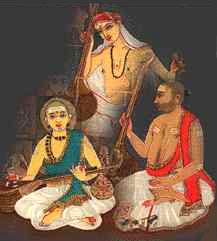
10.1. One of Sri Tyagaraja’s significant contributions to Karnataka music is the perfection of Kriti format, which was, at that time, evolving out of the shadows of the older Prabandha and its immediate predecessor Kirtana or Pada. Amazingly, Sri Tyagaraja as also Sri Dikshitar and Shyama Shastry, independent of each other, all contributed to the development of Kriti form, although they did not seem to have met or corresponded.

[Prior to the time of Sri Tyagaraja (say, 17th century) composers of great reputation such as Muthu Tandavar and Margadarsi Sesha Ayyangar had experimented with the Kriti format. And, it was the celebrated Trinity of Karnataka Samgita that, later, perfected it. ]

10.2. Sri Tyagaraja in his song Sogasuga mridanga talamu (in Raga Sri Ranjani) provides an outline of how a Kriti should be, in its form and in its content. In this song, he says that a  Kriti should be couched in words ( nija vākkulatō ) conveying the pure spirit of the Upanishads (nigama siro-arthamu) ; should have correctness of musical notes (swara śhuddhamutō)  of the ragas in which they are set; should have pleasant (sokkajeya ) rhythm that is enjoyable (Sogasuga mridanga talamu ); should be marked by beauties of alliterations and successive increases and decreases of notes and syllables , as also pauses (Yati Visrama) ; it’s  literary expressions should nurture  cultivation of true devotion (Sadbhakti ) and dispassion (virati ); and, it  should be adorned with  grace and simplicity embodying  all the nine (nava) Rasas or aesthetic moods.

10.3. In number of his other songs; he explains how Music is indeed the expression of the primordial Nada; how music originates in mind and body; and, how music should be presented. According to him, enjoying music is Sukhanubhava – a tranquil delight.

karnataka samgita

Sangathi

11.1. One of the innovations of Sri Tyagaraja to improve the aesthetic beauty of Kriti –rendering was the Sangathi.  A Sangathi (lit. putting together) is essentially a set of variations on the shades of a theme, gradually unfolding the melodic (Raga) potential of a phrase (Sahitya) in combination with Svaras. Some say that Sri Tyagaraja adopted Sangathi-rendering from dance-music where variations are done for Abhinaya and for bringing out the different shades and interpretations of the basic emotion (Bhava).

11.2. In any case, this was an outstanding contribution to the advancement of the Kriti format in particular and to the musical performances in general. Sangathi elaboration in Madhyama Kala, in the opening of a Pallavi, has enormously enriched the aesthetic beauty of Raga-bhava during Kriti-presentation in a concert.  With that, a Kriti is no longer static; but, it is a vibrant, living entity like language that is wielded with skill and dexterity. Sangathi passages also mark the virtuosity of the performer. Some of Sri Tyagaraja masterpieces open with a cascade of Sangathis (E.g.  Chakkani raja margamu; Rama ni samana; O Rangashayi; and Naa Jivadhara.)

11.3. Though the Sangathi was fundamentally a feature of Tyagaraja-Kritis, its practice (Sarasa-sangathi sandharbhamu, as Tyagaraja calls it)   has now spread to the presentation of Kritis of Dikshitar, Shyama Shastry and other composers, though they belong to a different style.  Similarly, Madhyama kaala that goes with the Sangathi has come to be the principal tempo of Karnataka Samgita [though some of Dikshitar-kritis, in Vainika style, are in slow tempo (Vilamba Kala)].

11.4. Sangathi and  Neraval (sahitya vinyasa) – where the Sahitya and its melody is spread out in various ways while keeping intact the original structure of the Pallavi or Charanam – together with Kalpana Svaras, provide depth and expansiveness to Karnataka Samgita. And, Tyagaraja-kritis, in particular, provide ample scope not only for elaboration on various phases and aspects of Raga (manodharma-samgita), but also for improvising fascinating sequences of Sangathi-s, Neraval and Kalpana –Svaras.

Raga Taana and Pallavi
16DEC_LEAD_MUSIC_AN_865178f

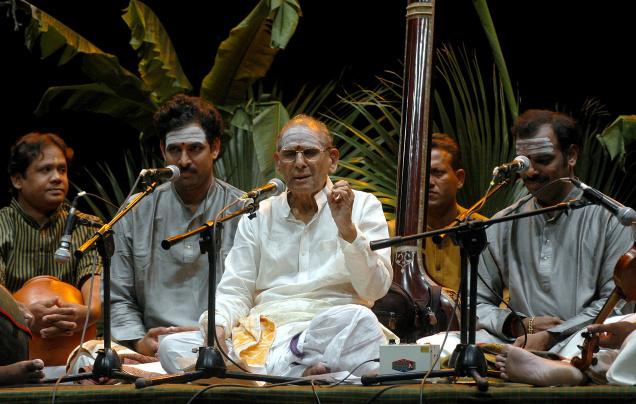
12.1. Raga Taana Pallavi is regarded the most mature form of presentation in Karnataka Sangita. Raga here stands for Alapana or elaboration, the Anibaddha Sangita. It is the Music that is not fettered by words, meters or Taala.  Its excellence is limited only by performer’s virtuosity.  The performer after a slow contemplative phases delves into the depths of the Raga explores its various dimensions through his creative endower; and, ends on a high note.

12.2. After the Alapana the performer takes up Taana (comparable to Jor –Jhala in Hindustani Dhrupad and instrumental music). This involves boundless play on meaning-less syllables such as ta, na, nom, tum or tanam, etc. Taana is unique in the sense that with the rise in tempo, the performer improvises and builds into the melody various patterns of rhythms, without, however, the element of Taala. The Veena players invariably perform Taana; and, it is most delightful.

12.3. The third part is Pallavi, which is Nibaddha, structured by words, sections and Taala. Here the percussion player join in and do enjoy a greater role. The Pallavi ends in a series of kalpanaswaras.

Varna

[The Varna or Varnam that we are about to discuss is different from the technical term Varna (special note sequences that indicate different kinds of Svara- movements) we talked about earlier. The Varna or Varnam in the following paragraphs refers to a class of musical composition in Karnataka Sangita.]

13.1. Varnam is a short, crisp and tightly knit music-piece that aims to encapsulate the main features and requirements of a Raga. These are finely crafted exquisite works of art. The creation of a Varna calls for delicate craftsmanship, thorough knowledge of the Raga, its sanchara (movements) in various Kaala (tempos) , grasp over Taala and an overall sense of beauty and balance.

13.2. Varnams have been composed, since about eighteenth century, in all the major Ragas and most of the minor Ragas, in all the principal Taalas. Many Masters of Karnataka Sangita have composed Varnas. The prominent among them are: Pachchimiriyam Adiyappayya, Sonti Venkatsubbayya, Shyama Shastri, Swati Tirunal Maharaja, Patnam Subrahmanya Iyer, Ramnad Srinivasa Iyengar and Mysore Vasudevacharya.

[Varna is unique to Karnataka Sangita. The Hindustani Music does not seem to have its counterpart.]

13.3. Varna lays out the Grammar of a Raga. That is to say, it specifies the features and rules regarding the movement of the Raga (raga-sanchara), its scale, how each note of the Raga should be stressed and so on. A Varnam is therefore a fundamental form in Karnataka Sangita. It needs to be practiced well both by the learner and the experienced performer.

14.1. A Varnam is structured in two Angas (sections) : The Purvanga ( first section) comprises  Pallavi, Anu-pallavi, Mukhayi Svara; and The Uttaranga ( the latter section)  comprises a Charana that acts as a refrain for the latter part of the Varnam and Charana-svaras (Chittasvara) that are alternated with the Charanam.  Each section of a Varnam elaborates an aspect of the Raga (raga-svarupa).

14.2. A Varna does include Sahitya (lyrics); but, its role is secondary, merely supporting the music-content of the Varnam. It provides the Lakshya and Laksana of a Raga. The focus of a Varnam is on the Raga, its individual Svaras and Svara phases of various lengths and speeds. It is said; Varnam does not need the distraction of Sahitya.

14.3. The movement of a Varnam is strictly controlled; and, it’s rendering demands discipline.  Its focus is on the Graha Svara (initial note of the Raga), the Gamakas, the Sanchara (movement) of the Raga according to the prescribed format.

14.4. The Pallavi of a Varna starts on the lower end of the scale stressing on the most important Svara (Jiva Svara) in the opening phase of the Pallavi. The Anu-pallavi deals with the higher end of the scale . And, the Mukhayi Svara and Chittasvara – consist of meandering (Sanchari) chains of Svaras that explore both the upper and lower reaches of the Raga.

14.5. The rendering of a Varna employs all the three tempos. The first Charana Svara is rendered in Vilamba kaala (slow tempo) and each Jiva Svara must be highlighted. After which, the rest is sung in Madhyama kaala (half-time). Some musicians insert their own kalpanaswara passages. In the third Charana Svara, the Svaras are short and made into groups (avartanam) of four. Thus, in Charana, there are two or three Svaras of one avartanam, one Svara of two avartanam-s and finally one Svara of four avartanam-s.
learner

15.1. As said earlier, practicing Varna is much required for the student as also for the experienced performer. For students, the Varnams that are taught at the intermediary level are useful for learning the Svaras of various Ragas, singing in multiple speeds rapidly; as well as learning the appropriate Gamakas.  Advanced students are taught Varnas in multiple Ragas or Taalas. They introduce the student to the proper combinations of Svaras for each Raga and inculcate discipline that is needed for singing.

Varna- rendering also helps to develop voice culture and in learning to maintain proper pitch and control over rhythm. The instrumentalists too can gain control over playing -techniques.

Among the early Adi Taala Varnams a student usually learns are: Ninnukori in Raga Mohana by Ramnad Sreenivasa Iyengar; Samininne in Shankara bharanam by Veenai Kuppaiyer; Evvari Bodhana in Abhogi by Patnam Subramania  Iyer;  and many others. In the later stages all student do learn to sing the celebrated Viriboni, in Bhairavi, set to Ata Taala by Pacchimirium Sri Adiyappayya.

Ariyakkudi Ramanuja Ayyangar

15.2. In the concerts, a Varnam is most often the first or the second piece to be rendered. Though some consider it as a warm-up exercise, the correct rendering of Varna requires complete knowledge of the Raga.

16.1. Varnams are of three sorts: Daru Varnam, Pada Varnam and Taana Varnam. . The theme of these Varnams is usually Bhakthi (devotion) or Sringara (love).

We just spoke about Daru Varnam in the previous paragraphs of this article. Daru Varnams are special type of Varnams in whose Mukthayi Svaras; there are first the Svara passages, followed by the jatis which are then followed by the Sahitya.

16.2. Pada Varnam (Ata Varnam): As its name indicates there it has a greater element of Sahitya (Pada or words). Pada Varnams with elaborate Sahitya are difficult to grasp especially when set to difficult Ragas and Taala. But, Pada Varnams are in greater use in Bharatanatyam. Because, it’s Sahitya, expressions and Svaras in moderately slow pace is said to be suitable for choreography.

16.3. Taana Varnam: This does not have Sahitya for Svaras. It usually is of fast tempo (Druta and Tisra Gati). It is the sort of Varna that is meant as pure music, without the intervention of words. It therefore has fewer words than the Pada Varna. The difficult Taana Varnams are commonly chosen for rending in the concerts;and, they provide the base for Mano-dharma-samgita. The artists enjoy greater elaborations of Taana Varnams studded with Kalpana-svaras to enhance to beauty of the Raga.

[ For more on Varnam ; please do read the Doctoral Research Paper : Study of varnas in dual forms music and dance by Dr. Rajashree R Warrier]
lotus red

Gitam, Svarajati and Jatisvaram

17.1. Just as the Varnam, the Gita and Svarajati have rhythm matching each syllable of the Sahitya to one Svara.

17.2. Gitam is the simplest type of composition. Taught to beginners of music, the Gitam is very simple in structure with an easy and melodious flow of music set in simple Taala.

17.3. Svarajatiis are learnt after a course in Gitams. More complicated than the Gitams, the Svarajati prepares the student for the Varnams. . It consists of three sections, called Pallavi, Anu-pallavi and Charanam. Svarajati does not offer much scope for elaboration of neraval etc since it is in a tight knit form. It bound by rules. Its Svara patterns are aligned with Sahitya in a graded manner. It was the genius of Shyama Shastry that endowed Svarajati with Raga bhava.

17.4. Jatisvaras are similar to the Svarajati in musical structure. However, – Jatisvaram-has no sahitya or meaningful words. The piece is sung with sol-fa syllables. its rhythmical excellence and the jati pattern used in it are its strength.  . This is a musical form belonging to the realm of dance music. In some Jatisvarams, the Pallavi and Anu-pallavi are sung to Jatis and the Charanas are sung to a mixture of Svaras and jatis. There are also Ragamalika Jatisvarams.]

Pada or Padam
Padam

[Pada hereunder does not merely refer to ’word’; but, it also refers to a type of song that was prevalent during 17th-18th century.]

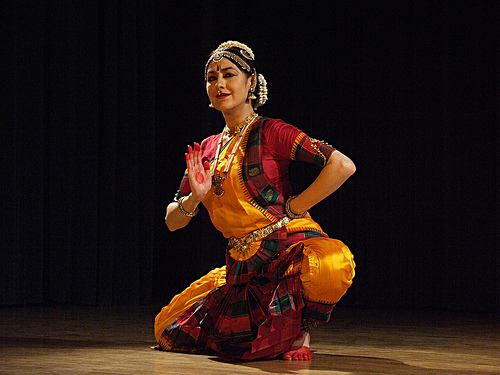
18.1.The Padams are quite similar to the Uparupaka-s of the type Srigadita and Durmllika or Durmilita. The main characters of a Padam invariably are the Nayaka (hero), Nayika (heroine) and the Sakhi (friend/maid).  The Padams narrate the emotional states of the Nayika and the Nayaka while they are separated or while enjoying the company of each other.

In the Srigadita, the Nayaki is separated; and, she recounts her Lover’s actions, virtues or his indifference to her friend/maid. The separation of the Nayaka and the Nayaki is classified as Vipralamba -Srngara.  In Durmllika, the Sakhi either carries the message to the Nayaka or enables the two Lovers to meet.

*

Some Padams are, however, in praise of a deity. In many, Srngara is depicted as Madhura-Bhakti.

Thus, the Padams, the musical monologues, provide scope for display of varied delicate shades of Srngara and other Rasas , through Nayaka-Nayaki-Bhavas.

*

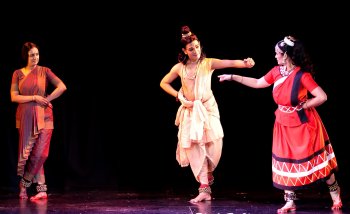
Pada or Padam were sung during Dance as they offered scope for subtle expressions through face and gestures (Abhinaya). During the times of Nayaks of Tanjavuru, Dance and Dance related music were popular because of their sweet music and aesthetic appeal. Most of the poets, musicians and Natyacharyas attached to the King’s Court were engaged in scripting songs and composing music for dance related music-forms such as Pada, Jakkini, Javali, Chintamani, Perani etc than with the art-music. Almost all forms of dance related compositions that are in vogue today are derived from this period. Its form has remained almost unchanged.

18.2. Most of the Padams were composed in regional languages, majority of them in Telugu and some in Tamil. The theme of a Padam would usually be Madhura Bhakthi devotion colored with tender love or suggestive romance. Theoretically, this sort of Bhakthi tinged with Srngara was projected in its two aspects: Antar-Srngara, the unseen sublime relation between the Universal Soul (Paramatma) and the Individual Soul (Jivatma) that is guided by the Guru, the spiritual mentor; and, the Bahir-Srngara was the explicit romantic relation between the Hero (Nayaka) and the Leading Lady (Nayika) that is aided and abetted by the Lady’s maid (Sakhi). Though all the nine Rasas (Nava-Rasa) were portrayed in a Padam, the Srinagar (erotic or romantic love) was the dominant Rasa and the theme.

[The terms Pada and Kirtana seem to be used synonymously in this period .And, later the compositions with Sringara content came to be known as Pada; and, those with element of Bhakthi as Kirtana.]

19.1. The music   of the Padam is generally slow-moving, arousing with an appeal to ones delicate sensibilities. The natural flow of music goes along with tender and evocative words of the song. The Padam aims to blend the music, the words and Abhinaya the dance expressions into a harmonious and very enjoyable art-experience.

19.2. The Padam, when sung, presents an epitome of the Raga in which it is composed. Ragas specially noted for evoking typical rasa bhava are commonly employed in Padam. They usually are the mellow and serene Ragas such as: Anandabhairavi, Sahana, Nilambari, Ahiri, Ghanta, Mukhari, Huseni, Surati, Sourashtram and Punnagavarali.

19.3. The Taala of a Padam is rather subdued, not intruding into the mood or the bhava of the song. The Sangathi too are gentle and elaborate; and, not vigorous or energetic.

A Padam also has the sections: Pallavi, Anu-pallavi and Charana.

20.1. The earliest Padams were composed by Jayadeva Kavi (12th Century) in Sanskrit and in Telugu by Kshetrayya (16th Century).

Kshetrajna- Indian Music composer

Kshetrayya or Kshetragna seems to have been a great devotee of Gopala (Krishna), the presiding deity of his village. Thus, he adopted the Ankita-mudra, Muvva Gopala, for his compositions.

The Padams of Kshetrayya composed in beautiful lyrics set to rare Ragas, describe intense longing of the Nayaki for the Lord; and varied emotions sorrow on separation. Many of his Padams begin with the Anupallavi, followed by the Pallavi.

Kshetrayya’s compositions include Padams, such as :  Ramarama (Bhairavi); Gaddari (Kalyani); Yemandu namma (Kedaragowla); and Kontegadu (Surati) , among others. Kshetrayya used only Rakthi-Ragas like: Anandabhairavi, Sahana, Nilambari, Ahiri, Ghanta, Mukhari, Huseni, Surati, Sourashtram and Punnagavarali.

The striking feature of his Padams is that he uses very few words to describe a situation; thus allowing scope for elaboration of emotions through Abhinaya in unhurried lilting gaits, to the accompaniment pleasing music. Kshetragnya’s Padams are , therefore, popular in both music and dance.

*

20.2. Some of the poets in the Maratha Court at Tanjavuru like Giriraja Kavi were also noted Padam composers. He is said to have composed many Sringara Padas employing Desi Ragas like Brindavani.  He was followed by Vasudeva Kavi, Soma Kavi and Rama Bharathi.

The Maratha kings themselves (Thulaja I, Ekoji II, Sarabhoji II and Shahaji) are said to have composed several Padas, musical operas, Kuravanji’s, Daru, Yakshagana Natakas etc.

Javali
hqdefault (2)

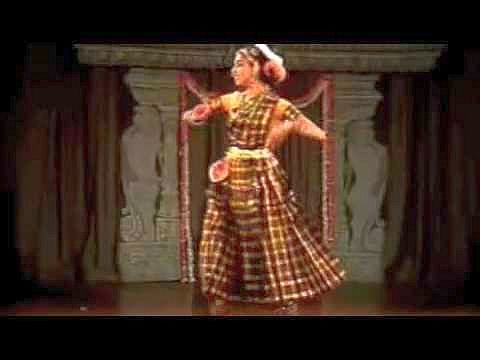
21.1. Javalis belong to the genre of light classical music. Sung both in concerts  and dance items. The Javalis are popular because of the attractive melodies in which they are composed.

[According to Dr. Jyothi Mohan:

The term Javali is said to have come from the Kannada word “Javada” which means “lewd poetry”. Javali is a musical composition often sung towards the end of a Carnatic classical concert. It is pronounced both as “Javali” and Javadi in Kannada. The Marathi word “Jhawali” means a gesture of eyes in the language of ‘love’.

According to some scholars, the structure, the contents and the technique of the Sringara Padams of Annamacharya (14th Century) closely resemble those of a Javali of the modern times.

It is only from the time of Dharmapuri Subbarayar (which is about the latter half of the 19th Century) that javali began to exist as a definite form, which has continued till today. Other well-known javali composers are Thiruppanandal Pattabhirammayya, Tatchur Singrachari, Patnam Subramanya Iyer, and Poochi Srinivasa Iyengar.]

In Javalis also, the Nayaka, Nayika and the Sakhi figure in the theme;  but, the mood is slightly playful and most times, it is meant to entertain, as its Sahitya is colloquial and earthly.  In contrast to the Padams, which portray divine love, Javalis are rather sensuous in concept and display . Unlike in Padam, there is  no symbolism here. The Srngara portrayed in Javali is overt. It is meant to titillate the patron.

miniaturepainting

21.2. They are basically dance-songs set in Madhyama kaala with attractive tunes and crisp Taala. Lighter Desi Ragas like Paraz, Kapi, Khamas, Behag, Jhinjhoti, Tilang, etc that   are simple and melodious are used in Javalis. They are not burdened with technical complexities as  alapanaineraval or kalpana-swaras; and, in a concert they are sung  towards the end as a way of relaxation.

[ For more on Javalis, please do click here for a learned article .]

Tillana
Tilana2

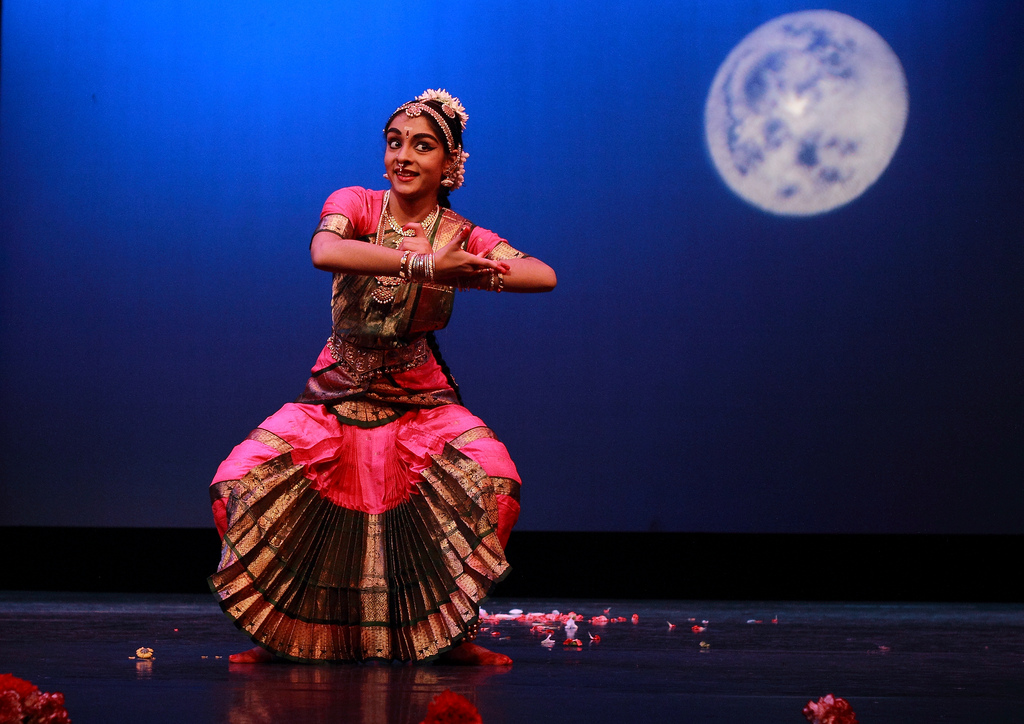
22.1. Tillana, again, is a dance oriented song format. It makes use of Mrudanga Jathis in Pallavi and Anu-pallavi. The emphasis is on brisk rhythm, lively movement and not on Sahitya or Manodharma. Percussions have greater role to play in Tillana. It is said; the life of a Tillana is in its rhythm (Laya). The composers played around music-sounds such as tha, thai, theem, thakadhimi, or kitathakatharikitathom, quite generously.

22.2. The Jathis are articulated throughout the piece. The Charanam has usually epithets (Birudu) saluting the deity or the patron. It is tight knit composition that is rendered in just the way it is composed. Tillana exude with joy, celebration or exuberance; and, it is not meant for other Rasa such as sorrow etc.

22.3. The Tillana corresponds to Tarana of Hindustani music. It is a favorite of Veena players.   In a concert Tillanas are sung towards the end, before the Mangalam (benediction), just to make up the variety.
18210719-illustration-of-Indian-classical-dancer-Stock-Vector-indian-dance-india

Form

23.1. The forms of song-formats in Indian Music, right from Sama-gaana to the present-day, are truly countless, as we have seen from this and the earlier posts in the Series. As Dr. Ramanathan observes; form is actually a codification of various musical aspects that has been abstracted from Musical structures and prescriptions as given in the texts.

23.2. To repeat; though the several forms of Music generated over the long periods differ in their form, content and intent, they do in fact represent a continued progression of a hoary tradition, each inspiring its next format. The Music of India, just as its philosophies and branches of art-forms, follows the path of continuity blending in the changes, without compromising its fundamentals

23.3. That is to say the Forms in Karnataka Sangita are the representations or the expressions of theoretical principles that governed each stage of its evolution over the centuries. The Forms and formats change to suit their adopted environment; but, the principles behind them remain true and lasting.

In the next two parts, lets briefly take a look at the various Lakshana Granthas (from Dattilam to Chaturdandi prakashika) that have defined, guided and protected Karnataka Sangita.

3689508840_acbe116319

Next

Lakshana Granthas-1

Sources and References

  1. 1. Darus in Carnatic Music by Dr. Gowri Kuppuswami and Dr. M Hariharan; Published in ‘Shanmukha’, October 1986 (Vol.XII; No.4)
  2. The charisma of composers BY T.M. Krishna http://www.thehindu.com/todays-paper/tp-features/tp-sundaymagazine/the-charisma-of-composers/article1138945.ece
  1. Form in Music by Prof. Dr. N. Ramanathan
  2. 4. Carnatic Classical Music – Centre for Cultural Resources http://ccrtindia.gov.in/carnaticclassicalmusic.php
  3. Carnatic music http://en.wikipedia.org/wiki/Carnatic_music
  4. https://shodhganga.inflibnet.ac.in/bitstream/10603/143855/4/04_preface.pdf
  5. All pictures are taken from the Internet. I gratefully acknowledge the sources.
 
5 Comments

Posted by on May 27, 2015 in Music, Sangita


Tags: , , , , , , , , , , , , , , , , , , , , ,

Music of India – a brief outline – Part Twelve

Continued from Part Eleven –Prabandha

Part Twelve (of 22 ) – Desi Samgita  

Marga – Desi

1.1. The term Desi, very often, is used along with or in contrast to another term – Marga. Both these terms – Marga and Desi – refer to the traditional systems of Music of India.

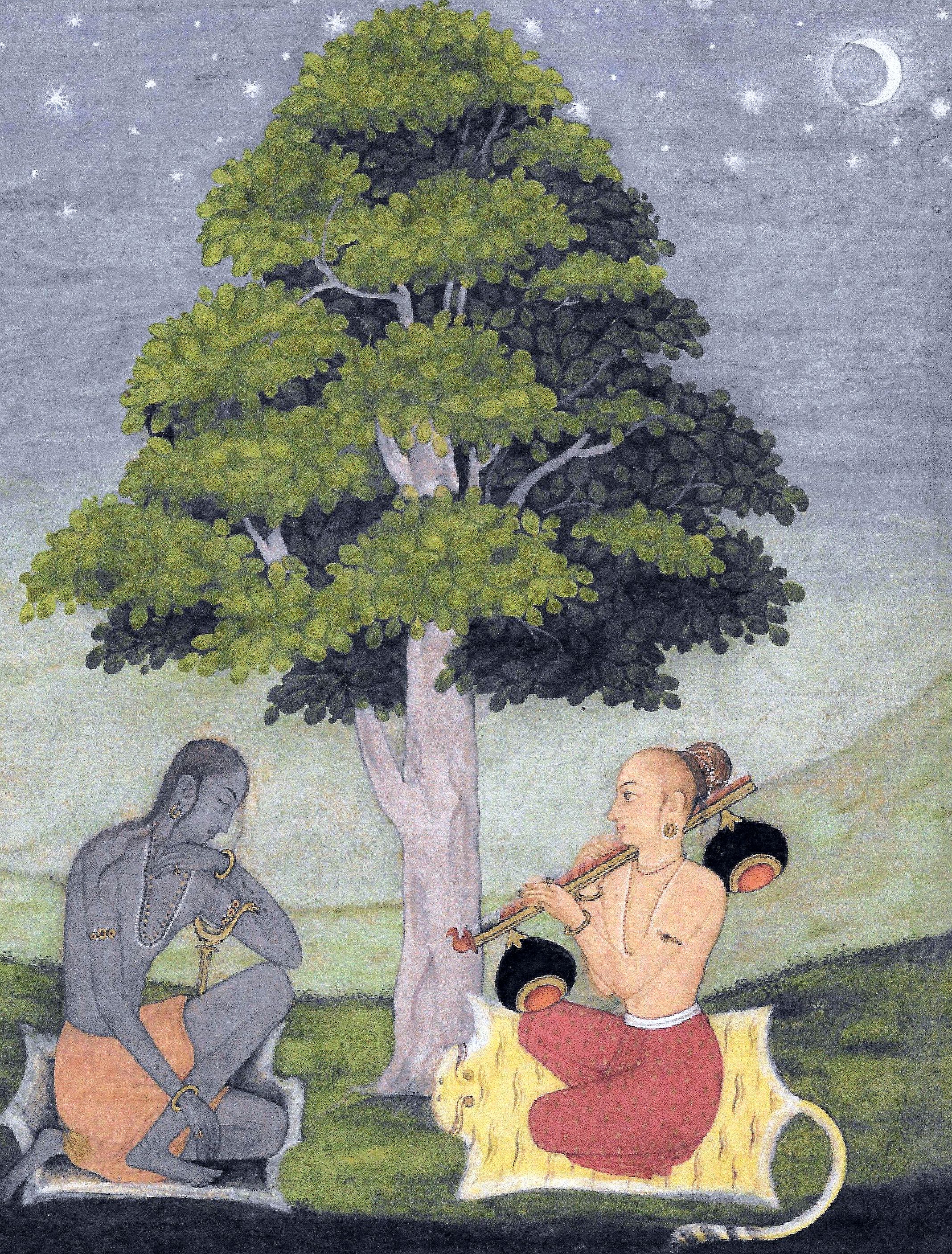
Marga or Margi or Gandharva is the ancient class of Music that precedes the time of Natyashastra (say, before second century BCE). Marga (the path or the tradition) signifies something that which is chaste and classical. And, Shiva himself is said to have taught this Marga Music, on his Veena, in his Sri Dakshinamurthy form, to the sages sitting around him.

The early Marga songs were in praise of Shiva (Shiva-stuti). And, during the times of Natyashastra, Marga songs were traditionally sung for offering worship to gods, in the preliminaries (purvanga), that is, before the commencement of the play proper. Bharatha explains Marga or Gandharva as the Music dear to gods (atyartham iṣṭa devānā), giving great pleasure to Gandharvas; and, therefore it is called Gandharva.

(atyartham iṣṭa devānā tathā prīti-kara puna | gandharvāā ca yasmād dhi tasmād gāndharvam ucyate || (NS Ch. 28, 9).

Marga Music was both sacred and well regulated (Niyata).And, by its very nature; Marga was rather somber and not quite flexible.

1.2. While Marga was the sacred Music devoted to please the gods by submitting gentle appeals, Desi was the art-Music that set out to hold a charming appeal to human beings. It was said; Desi is that which delights the hearts of humans (hrudaya-ranjaka), enchants common folks, cowherds, women, children and nobility alike; and, reflects the range of emotions and tunes springing from different regions. In other words, it was meant for ‘pleasing the hearts of the people’; its nature varied from Desha to Desha – region to region. It was basically the Music of the regions (Desha = region).

Deshe-Deshe jananam yadruchya hrudaya-ranjakam I Gitam ca vadanam nruttam tad Desi  ethyabiyate  II

Abala-bala-gopalaihi kshitipali nirjecchaya I Giyate sanuragena svadeshe Desir ucchate  II

[Sangita-ratnakara of Sarangadeva ;  Chapter One  about Svara  ; Verses 23 and 24 ;  pages 14/ 15 – edited by Pandit Subrahmanya Sastri]

[ The verse Abala bala – appears at: Brihaddeshi – First Chapter) (Desha-utpatti prakaranam) – Verse 13

https://ia601602.us.archive.org/20/items/Trivandrum_Sanskrit_Series_TSS/TSS-094_Brihaddesi_of_Matangamuni_-_KS_Sastri_1928.pdf]

Desi the music of the land was rooted in the music of the regions, capturing the unique flavors of the regions and sub-regions; and, giving expression to the moods, joys and sorrows of common people. The term Desi encompassed all forms of created songs (Gita); and even the art forms of instruments (vadya) and dance (Nŗtta).

Nana videshu deshshu jantunam sukhado bhavet Tat pratibhuti likanam narendranamydruchayat Desha desha pravratsau dwanirdeshiti sanjjnatah

As compared to Margi, Desi was relatively free, less rigid and improvised music of the countryside.

1.3. But, it would not be correct to equate Desi with folk (jaana-pada) and tribal songs.

Desi music was in strict conformity with the lakshana-s (theoretical principles) and the lakshya (practices in vogue) of the then established classical or well regulated (Niyata) Music of its times.  Desi Music was perhaps more relaxed in its approach; and its form opted for a lesser regimen of the Grammar.

Chatura Kallinatha (15th century) in his Kalanidhi, a commentary on Sangita-ratnakara, states that of the ten older types of Grama-Ragas, the Raganga, Bhashanga, Kriyanga and Upanga were regarded as Desi Ragas. He remarks that in these Desi Ragas though some liberty was taken, the rules of the Marga-Ragas were not totally disregarded.

1.4. Matanga also says that Desi is modeled after the Marga; and both allow scope for structured (Nibaddha) and un-structured (Anibaddha – like Aalapi) Music. He says, Ragas are classified according to the number of notes composing them; such as odava (pentatonic) using five notes; shadava  (hextatonic) using six notes; and, sampurna (heptatonic) using all the seven notes.No classical melody (marga) can be composed from less than five notes.

According to Matanga, no  Marga or Desi Raga can be composed of four Svaras (notes) or less. He remarks: those with less than five Svaras are used by tribes such as Savara, Pulinda, Kambhoja, Vanga, Kirata, Valheeka, Andhra, Dravida and forest dwellers. 

The exception being a class of stage songs called dhruvas, which though regarded as classical melodies, are found to be composed of four notes.

Catuh-svarat prabhrti na margah svara-pulinda-kamboja-vanga-kirata-vahlika-andhra-dravtda-vanadisu prayu;yatel /Tathacaha Bharatah:-‘shat-svarasya prayogo’sti tatha panca-svarasyaca  catuh-svara-proyage’pi hyavakrista-dhruvasvapi” //

[Thus, Raga is technically penta-tonic. And, usually there is an upper limit of seven notes. But in Hindustani Music, Ragas with nine Svaras are common; and a few mixed Ragas have even twelve Svaras (say, Basant Bahar).]

Obviously, Desi was conceived as a chaste classical music, well regulated but not too rigidly. It was the art-music of the land. It was different from the tribal or folk music of the rural mass. Sarangadeva did not also equate Desi with folk music or Loka or Jaanapada sangeet.

Padmapurana

Similarities and differences

2.1. Just as there are similarities between Marga and Desi, there are also differences. To put these in a summary form:
2.2. Marga was the classical phase of the ancient Indian music. It was basically a sacred class of music; and in theatre it was sung to offer prayers to gods during the purvanga the preliminaries before the commencement of the play per se. It was somber and also not flexible. Marga was the icon of the Higher tradition. Its songs were composed in chaste Sanskrit following the rules of Chhandas (metre) Vyakarana (Grammar).  Its music was based in the Jaati-s (melodies) and in Shadja and Madhyama Grama-s (groups of melodies).

2.3. Desi was the art-music of the regions. It represented the flowering of the Prakrit (other than Sanskrit) phase that began to flourish by around 4th century. Songs of Desi Sangita were in Sanskrit as also in Prakrit and other vernacular languages.  They were modeled upon incidental music of the early theatre. Desi music was free flowing, vigorous and attractive; appealing to ones heart (hrdaya-ranjaka); as also providing scope for improvisation.  Its melodic portfolio could be expanded to include all other types of melodies and Ragas.
2.4. One could say that the distinction of the two – Marga and Desi- is largely historical. The transmission from Marga to Desi was a progression from a regimented few towards a spectrum of wide choices. With the growth in art and art forms many styles of music sprang up in diverse regional traditions. The ways of musical expressions also diversified and grew in abundance. For instance; eighteen Jaati-s, two Grama-s and seven Grama Ragas expanded into more than 250 Ragas by the medieval times. Alongside, the varieties of rhythmic patterns, time-units and the entire system of Taala also grew very appreciably. Thus, the advent of Desi and its rapid development greatly enlarged the boundaries of ancient musical structure; opened up new horizons; and, altered and brightened the future course of Indian Music.

2.5. The classification of the Music of India into two strata – Marga Samgita and Desi Sangita – dates back to at least to the eighth or to the ninth century, mainly through the treatise Brhad-Desi by Matanga.

[I wonder whether Marga and Desi are shifting or dynamic concepts. They are not fixed. What was Desi of ancient times could as well be called Margi of the present day. Let me explain. The Karnataka Sangita as it is practiced and performed today honors the theoretical principles, rules, disciplines and the hoary traditions. It is contemplative and devotional in its nature. The chaste and pure classical music of today has taken the place of Marga. The other popular form of music – sugam-sangget, loka-sangeet and film-sangeet etc – that quickly attracts with its catchy tunes and beats is the Desi of today. This is just a muse. ]

katchery

[Classical and folk music

3.1. Before we get back to Matanga, let’s digress for a short while, and talk about classical and folk music.

(i). In all literal art forms, two conventions (dharmi) or two streams of expressions are recognized; one is the Loka-dharmi and the other is the Kavya-dharmi.  Similar conventions or forms exist in, music, dance or art. Loka-dharmi in poetry stands for a localized or an individual’s expressions of her/his experience or emotions. Kavya–dharmi is when an individual’s emotions are turned into a song or into a poem; and it is enjoyed by all as a beautiful piece of poetry. Here, an individual’s intimate emotions are shared by all as a work of art, independent of the poet’s localized circumstances that caused the poem. The poem that is enjoyed by its listeners/readers is far removed from its original Desha (location), Kaala (circumstances) and Karana (the cause that triggered the emotion). The emotional content (let’s say, love)  in the poem is no longer limited to poet’s or to one particular person’s experience , but is  generalized and shared by all as the idiom of expression of the entire gamut of  that emotion (love).

In the present context, perhaps, one could (roughly) equate the folk music with Loka-dharmi and the Classical music with Kavya–dharmi.

(ii). The folk music is essentially the outpouring of the elementary, subjective human emotions. It generally is about purely personal emotions limited to an individual. It is spontaneous; and its purpose is to fulfill an immediate need to give forth to an emotional experience that is tied to a specific incident in one’s life or to an occasion, time, and place. In other words, folk music is immediately relevant for the emotions of only a small group, a community with a shared background and emotional state.

Folk music is spontaneous and does not require training in a developed musical system.

Folk music is certainly significant and pleasing; and is a powerful emotive language of a people. It is the medium through which shared feelings are communicated and experienced by the community.  But, it is the innocent expression of basic, natural feelings, limited to the context of a particular time and situation. And, it is rather undeveloped or underdeveloped; is without structure, grammar or classifications; and does not require training in creating a song-form.

In comparison; Classical music is not the simple expression and an instant gratification of a basic human emotion. It is a highly developed and complex art form ; and its creation is involved not merely with musical genius of the composer , but also with the intellectual processes and sensitivities that determine the quality of the creation in terms of musical contents of melody , rhythm;  the structure and the Grammar  of the composition;  and its appeal.

Here, the personal impressions or feeling of the composer are sublimated into a classical form that goes beyond subjective self. The composer’s or the performer’s individual identity is left behind. The created music is universal and is for all, instead of being limited to a specific individual’s personal feelings or to an occasion.

Thus, both the folk and the classical are genuinely powerful and qualitatively rich in aesthetic value. They both aim to interact with human minds and hearts, each in its own way. One is elementary, subjective and localized; and, the other is developed, objective with its own sensitivities and is almost universal. The difference appears to be in the purpose of their creation, which defines their context and relation with the rest of mankind.

For a detailed discussion, please check:

http://citeseerx.ist.psu.edu/viewdoc/download?doi=10.1.1.125.8776&rep=rep1&type=pdf  ]

 Indian Folk music


Brhaddeshi

rishi1

4.1. Matanga or Matanga Muni or Matanga-Bharatha (as he is regarded one among the five-Pancha Bharathas: Nandikesvara, Kohla, Dattila, Bharatha and Matanga) takes a very important position between Bharatha (Ca.2nd century BCE) and Sarangadeva (Ca.13th century). It is surmised that he perhaps lived during sixth or the seventh century.

4.2. Matanga’s fame rests mainly on his outstanding treatise Brhaddeshi. It carries forward the tradition of Natyashastra and Dattilam; and at the same time it establishes the Desi Sangita on a firm pedestal. Brhaddeshi bridges the Marga and the Desi class of Music; and also provides the basis for the emergence of the Mela system of classifying the Ragas.   One could say, Brhaddeshi gave a new birth to Indian Music; and, revitalized its creative genius by bringing the concept of Raga into the very heart of the Music traditions and their sensibilities.

Brhaddeshi also serves as a reference to many earlier authors whose works are now lost, such as: Kashyapa, Kohala, Durgasakti, Maheshwara, Yastika, Vallabha, Vishvavasu   and Shardula.

4.3. The edition of Brhaddeshi, as it has come down to us, is an incomplete text. Only about five hundred of its verses are available. Those available verses and chapters deal only with Music; and conclude with the remark that the next Chapter will deal with Musical instruments (Vadya).  Sadly, that and subsequent Chapters, if any, are not available. However, some commentators of the later periods cite from Brhaddeshi the references pertaining to instruments, taala and dance.

5.1. In the available chapters, the first portion starts with the definition of Desi.  The term Desi, here, refers to all forms created of songs; and, it comprehends the three arts of Gita (song), Vadya (instruments) and Nŗtta (dance). One of Matanga’s major contributions is his scholarly focus on the regional element in music. Brhaddeshi (Brihat + Desi) is thus a masterly compilation of the music traditions of the various regions (Desha).

5.2. Next, the concept of Nada is described as the most subtle vibration which is the basis for speech, music, dance and all other forms of activities. Then, the text goes on to discuss two Grama-s: Shadja-grama and Madhyama-grama. From these, Grama-s the music elements Sruti, Svara, Murchana, Tana, Jaati and Raga are derived.

5.3. Matanga deals with Grama, Murchana and Jaati, rather briefly. According to Matanga, twenty-one Murchana-s evolved from the three main Grama-s: Shadja, Madhyma and Gandharva. Murchana were of two kinds: one, having seven Svaras and the other having twelve Svaras

(sa-Murcchana dvi-vidha; sapta-svara-Murchanat dvadasha-svara-Murchana cheti).

The Murchana with Seven Svaras  was divided into four parts: Purna, Shadava, Audava, and Sadharana, The Purna contained  seven Svaras (hexatone) ; Shadava , six Svaras (heptatone) ; Audava , five  Svaras (pentatonic) ; and the Sadharana , two displaced (vikrita} Svaras :  antara-gandhara and kakali-nishada.

And, the Murchana with Twelve Svaras manifest in three registers (Sthana): low, medium and high (Mandra, Madhya and Tara).

5.4. The text then discusses Sruti (silent intervals between Svaras), Svara intervals in the two Grama-s and other terms and concepts such as, Tana, Varna, Alamkara, Jaati, Gita and Raga. Various other aspects including the popular melodies of his time are given in the other chapters.  As the name suggests, it is a huge work and is highly informative.

5.5.  He says that the Aroha (ascending) and the Avaroha (descending) pattern of Svaras form the Murcchana of a Raga. Murcchana, in effect, describes the string of notes that, with further embellishments (Alamkaras) of thirty-three varieties, constitutes the core of a Raga. These Alamkaras are indeed the musical excellences that adorn the songs.

5.6. After allotting a chapter to the Jaati-s, Matanga devotes a special chapter to the Ragas.  Here, he deals with Grama-raga; and the Desi-ragas: Bhasa, Vibhasa and Antarabhasa. These Desi-ragas are again classified into four categories, Raganga, Bhashanga, Kriyanga and Upanga.

5.7. Indeed, it is in this chapter of the Brhaddeshi we first come across the definition of Raga as given by Matanga, and as understood by all later literature on Classical Music. In the history of the Ragas, Brhaddeshi is, therefore, a landmark text.

border_128_small 

Raga

8.1. The term Raga conveys many shades of meanings ranging from color, hue, tint, dye, love, desire, passion, emotional attachment  (as opposed to it is Viraga– detachment)  , beauty, melody and so on .

But, in the context of music it had a special connotation; and, it had been in use many centuries, even prior to Matanga. Bharatha in his Natyashastra used the term Raga in compound terms in association with Jaati raga, Grama raga. And, he perhaps meant ‘Raga’ in the general sense to suggest color or aesthetic appeal or enjoyment or pleasure. He employed the term Jaati to indicate melodies, but also used the term Grama Raga. But, somehow, he did not explain the terms Jaati and Grama-raga and their mutual relationship.

8.2. There was also the Murchana which was described in Natyashastra as the string of seven Svaras used in an order (krama) in their fixed positions. Later, in the Gandharva, Murchana came to be understood as an arrangement having a gradual Aroha (ascent) and Avaroha (descent) of the seven Svaras (notes). Different musical expressions were derived from the Murchanas by permuting the seven Svaras in any number of ways.

8.3. Further, the term and the concept of Grama-raga was in common use, as evidenced by the seventh century rock inscription at kudumiyamalai in South India. The inscription which basically was meant as lessons for the pupils mentions seven verities of melodies or Grama-ragas :

  • (1) Madahyama-grama;
  • (2) Shadja-grama;
  • (3) Sadava;
  • (4) Sadharita;
  • (5) Paricama;
  • (6) Kaisikamadhyama-grama ; and
  • (7) Kaisika.

These seven seem to correspond to the Grama-ragas in the Naradiya-shiksa the text said to belong first or second century BCE.

8.4. The term Raga seemed to have been in use even prior to 7th century. For instance; Poet Kalidasa (5th century) had suggested Raga Saranga (Madhyamadi) for rendering the introductory song to the first Act of his play Abhijnana Shakuntalam. And, in a fable appearing in the fifth volume of Panchatantra (5th century or earlier), a donkey poses as a musician and explains Gramas, Ragas etc.

8.5. Following the steps of Bharatha, Matanga also recognized Shadja-grama and Madhyama-grama as two basic Grama-s (groups or clusters). From these Grama-s he derived Sruti, Svara, Murchana, Tana, Jaati and Raga. The Aroha (ascending) and Avaroha (descending) pattern of Svaras, according to Matanga, formed Murchana of a Raga.

[It needs to be mentioned here that Bharatha’s concepts of Jaati, Murchana and Giti continued to be in use even during the time of Matanga. He uses these terms and offers his explanations with illustrations from Natyashastra.

Matanga regards Ragas as one of the seven classes of songs (gitis, melodies) current in his time: (1) Shuddha; (2) Bhinnaka; (3) Gaudika; (4) Raga-giti; (5) Sadharani; (6) Bhasha-giti; and, (7) Vibhasha—gitis.  

Of the seven classes of gitis, it is said; the Shuddha and the Bhinnaka have each five varieties; Gauda has three varieties; Ragas are of eight varieties; Sadharani is of seven varieties; Bhasha is of sixteen kinds; and, Vibhasha as of twelve kinds.

The Raga-gitis are the fourth in Matanga’s enumeration (Raga-gitis-caturthika). He defines the various classes of gitis, and describes Raga -gitis as: “Attractive note compositions, with beautiful and illuminating graces.”

He also mentions that the eight varieties of Ragas went by the name of (1) Takka, or Taku; (2) Sauvira; (3) Malava-panchama; (4) Shadava or Khadava ;(5) Votta·raga; (6) Hindolaka; (7) Takka-Kaisika; and,  (8) Malava-Kaisika

Taku-ragasca; Souviras-tatha; Malava—pancamah/ Khadavo; Votta-ragasca; tatha Hindolakah parah// Taka-kasika ityuktas tatha Malava-Kaiskah I Ete ragah samakhyata namato muni-pungavaih// 314-15//

Here then we have the first enumeration of eight of the earliest ragas known by name. Some of them may have been derived from the 18 jatis described by Bharata.

And, then he recommends the Raga-giti for singing in dramatic sequences. He quotes Bharatha and says: Madhyama-grama (Ma Grama) melodies be used in the Mukha (opening of the drama); the Shadja-grama (Sa Grama) melodies in Prati-Mukha (progression of the play); the Sadharana (mixed scales) in the Grabha (development stages); and, Panchama-Jaati melodies for the Vimarsha (pauses)- (NS: 28.41-45)

Further, even among the music-related terms of the older (Marga) Sangita that he explained, the term Raga was used]

[In the meantime:

There is a remarkable text which the scholars have neither been able to date nor understand it fully. It is titled Gitalamkara; and, is said to have been written by an author who, for some reason, called himself Bharata. The book aimed at controlling or disseminating the arguments of the rivals (Vadi-mattagaja-ankusha) . In its Chapter 14, the book cites thirty-six ‘Ragas’ (which are named here as Varna or colors).They are classified into three groups: Purusha (male); Stri (female) and Apatya (descendents). This, by a long stretch of time, foreshadows the Raga-Ragini-Purta concept that came about in later times. The scholars suggest that Varna might have been the older name of Raga (which also suggests color).

Alan Danielou suggests that the Gitalamkara might be a very ancient text, perhaps even prior to the time of Bharata , because it is  quoted by very ancient authors.  However, Emmie te Nijenhis differs ; and, observes that Gitalamkara certainly existed before 1199 CE ; but , not necessarily before Natyashastra or Brihaddesi.

The Gitalamkara treats the three ancient Gramas (Nandyavarta, Jimuta and Subhadra) in an un-usual manner. Instead of treating them as basic scales, as others did, it merely lists characteristic series of four Svaras (tetrachord) for each of them. This perhaps goes back to the period before the three Gramas: Shadja, Madhyama and Gandhara Gramas came to be recognized.

It is bit confusing to say the least. For more, please see:  Le Gitalamkara by Alan Danielou; and, Musical Literature by Emmie te Nijenhuis.]

9.1. Yes; it seems the word Raga with its multiple meanings was in use even from early times. But, it was not used in Music or in Music-theories in the way we know it and use it now.  It is, therefore, difficult to say Raga as it is understood today, had fully evolved and was recognized as such at the time of Natyashastra.

9.2. Which is to say; the notion of melodies that are created by artistic and ingenious arrangement of ascending and descending Svaras had been there for a very long time. It was a rather amorphous concept; its structure had not been determined; and, was waiting to be defined in a clear language.

That is, precisely, what Matanga did.

 border_128_small

Raga-lakshanam

10.1. The chapter titled Raga-lakshanam (characteristics of Raga) in the Brhaddeshi commences with two questions and a request: ‘What is meant by the word Raga? And, what are the lakshana-s of a Raga? You must please explain the origin and nature   of Raga clearly ’.

Kim ucchyate raga-shabdena ? kim va ragasya lakshanama  ? I  Utpatthi lakshanam-tasya yathavad vaktum arhasi     II (278)

Matanga replies:

The nature of the Raga system (Raga-margasya- lit. path) has not been explained by Bharatha and others (Bharathadi); and, it is going to be explained (Nirupayate) by us, according to theory (lakshana) and also practice (lakshya) – (279).

Raga-margasya vad rupam yannoktam Bharathadibhih I Nirupayate tasmad abhir lakshya –lakshana –samyuktam II

10.2. Then he goes on to explain: A Raga is called by the learned, as that kind of sound composition (dhwani-bhedaya), which is adorned with musical notes (Svara), in some peculiarly (visesena) , stationary (sthayi) , or ascending (aroha), or descending, (avaroha) or moving values (varna), which  are capable of affecting the mind with peculiar feelings or of colouring (Ranjyate) the hearts of men. A Raga is that which delights: Ranjana-jjayate ragau..

Svara-varna visheshena dhwani-bhedaya va punah I  Ranjyate yena yan kashichit sa ragah samsthatham   II 280

10.3. OR –  (Athava), it is that particular sound (dhwani vishesa) which is adorned by Svara and Varna (svara varna vibhushitaham); and that which delights the minds of the people (Ranjako jana-chittanam) is called Raga by the wise.

Athava-Yo asya dhwani vishesathu svara varna vibhushitaham I Ranjako jana-chittanam sah ragah kathitho vidhuv II 281

[Following Matanga, Sarangadeva in his Sangeeta-ratnakara described Raga as: ranjayati itihi rāga- that which delights  is Raga.]

10.4. After defining Raga, in two way:  as that particular  arrangement or ornamentation of Svara and movement of Varna (Svara-Varna vishesha ; vibhushitam); and as the distinction of melodic sounds (Dhwani-bhedana)  which delight the minds of people (Ranjako jana-chittanam) , Matanga takes up  the etymological  explanation  of the term Raga and its origin (Utpatthi).

Matanga says: this is how the word Raga is derived (Ithevam raga-shabdasya utpatthir abhidiyate). He explains that the word Asvakarna when it is derived from its root might literally mean the ears of a horse. But, in practice (rudi), Asvakarna is generally understood as the tree whose leaves resemble in shape the ears of a horse. Similarly, the word Pankaja literally means one that is born (ja) out of mud (panka). But, Pankaja in convention and common usage refers only to the lotus-flower.

In a like manner, he says, the word Raga has etymological as well as special conventional meaning like the word Pankaja. He explains: whatever might be its other meanings, the word Raga (derived from the root ranj = to please), effectively suggests, here, as that which generates delight: Ranjana-jjayate ragau.

Ithevam raga-shabdasya utpatthir abhidiyate I  Ranjana-jjayate  ragau utpatthih samudahrutah II 283

Ashva-karnadi vidha rude yaugikau vaapi vachakah I  Yogarudosthva raage jneyam pankaja-shabdavat II 284

[ Among the many  tools (Nyaya) employed in the olden days to extract and to explain the meaning of the words and terms ,the  Samabhirudha Nyaya derived the meaning of a word from its root;  and , Vyavaharika Nyaya  interpreted the word through conventions (rudi)  and its common usage (paddathi)  in day-to-day life (Vyavahara).

The words Asvakarna and Pankaja are common illustrations of these Nyayas. And, Matanga’s argument is based on similar lines.

There are many other similar words, such as:  Mantapa which normally is understood as an open-hall; but, its etymological meaning could be ‘one who drinks scum of boiled rice (Ganji)’. And, the term Kushala is generally used to denote an expert or a highly skilled person (pravina); but, its etymology analysis would lead to one who is ‘good at cutting grass (kush). And, similarly, Ashva-gandha is literally ‘smell of the horse; but in common usage it refers to a medicinal herb.

Bhartrhari, in his Vakyapadiya emphasizes the importance of contextual factors in the determination of the meaning of expressions. Etymology is without doubt important in its own context; but, in the day-to-day conversations the conventional meaning (Vyvaharica artha) takes precedence over the etymologically derived sense. Panini the Grammarian also recognized the fact the people who spoke the language and used it in their daily  lives were better judges in deriving, meaning of  the words

Therefore, the generally accepted rule in the Indian poetics is that the conventional meaning overrides the etymological derivation.  It is said; the conventional (rudi) meaning is grasped immediately and directly while its etymological sense has to derived indirectly through analysis. And, the essential nature of the word lies in its power (Skakthi) to signify directly. ]

10.5. Thus, the term Raga, in its etymological and technical sense, means a particular combination or sequence of Svaras and Varnas which delights, charms or colors  (in broader sense) the mind. Therefore, every Raga, while it delights also creates an emotional mood which colors or influences the mind in its own unique manner. It colors different minds in different ways. That is why a single Raga can yield divergent expressions, associations and experiences.

Padmapurana

General and Special characteristics

11.1. Along with defining Raga and explaining its concept, Matanga takes up the question of its identity. He says that the identity of Raga is conceived in two ways (dvivida matham):  through its general (Samanya) classification and through its special characteristics (vishesha lakshana). He mentions the general categories as four (Chatur vidha tu samanya); and, that the Raga’s special identity lies in Amsa and other features (vishesha cha Amshakadhikam).

Samanya cha visheshacha lakshana dvivida matham I  Chatur vidha tu samanya vishesha cha Amshakadhikam II 282

11.2. General (Samanya) classification

As regards the four broad categories (Chatur vidha tu samanya) that Matanga mentioned, some say, he, perhaps, was referring to Desi ragas that are classified into four categories, Raganga, Bhashanga, Kriyanga and Upanga. These ragas are the basis for all musical forms presented in the later Samgita traditions and forms.

[But, during the later times the connotation and interpretation of these terms underwent thorough revision. The Ragas came to be classified into Janaka and Janya. And, Janya ragas were further classified into: Sampurna — Varja; Krama- Vakra; Upanga — Bhashanga: Nishadantya, Dhaiva- tantya and Panchamantya. ]

[There is another interpretation which says that the four general categories mentioned by Matanga might refer to : Purna, Shadava, Audava, and Sadharana, The Purna contained  Svaras (hexatone ) ; Shadava , six Svaras(heptatone ) ; Audava , five  Svaras (pentatonic ) ; and the Sadharana , two displaced (vikrita} Svaras :  antara-gandhara and kakali-nishada.]

Amsa and other characteristics

11.3. Amsa was said, during the time of Matanga, to be the prominent or predominant Svara through which the Raga manifested

  • raga-janakatvad vyapakatvaccha Amsasya pradhanyam  

During his time, the term Amsa and Vadi were used alternatively. Kallinatha in his commentary has said that both Amsa and Vadi used to convey the idea of creating the pleasing sensations of the Ragas

Sa vadi tyogyatavashdt amsha syat rakti-vyanjakatvat

Along with Amsa, nine other characteristics (Dasha-lakshanam) of Jaati (melodies) were listed in Natyashastra (28.74) as also in Dattilam (55) as Graha, Amsa, Tara, Mandra, Sadava, Audavita, Aplatva, Bahutva, Apa-Nyasa and Nyasa.

These are briefly:

: – Graha – It is the initial note –Adi-Svara– used at the beginning of a song;

: – Amsa – It is the prominent note (key note) in the song. The melodic expression of the song depends on it;

: – Tara – It is the high register; the upper limit of the notes to be used. It is the fourth note from Amsa which belongs to middle sthana;

: – Mandra –It is the low register; the lower limit of the note to be used;

: – Sadavita –Six notes are used omitting one;

: – Audavita -Five note are used dropping two.

: – Alpatva – It is the use of a note or notes in small measure. It is twofold: by skipping over the particular note or notes; and by non-repetition;

:- Bahutva – It is of two kinds: by using the notes fully or by repeating it often

: – Apa-nyasa– It is before the final note (penultimate) . It is note with which a section of the song ends –Vidari;

: – and, Nyasa – It is the note with which the song ends.

[ In the introduction to his work Ragas and Raginis, Prof. O C Ganguli writes:

The starting note (graha) and the terminating note (nyasa) have now almost lost their significance. But the Amsa (predominant note) is of great importance. It is also called the Vadi (lit. the speaker, or announcer) i.e. the note which indicates, manifests, or expresses the peculiar character of the raga; and, receives the greatest emphasis in the structure of the raga. It is also called the jiva, or the soul of the raga. Just as the Vadi note determines the general character of a raga, the Vivadi or the dissonant note, distinguishes and differentiates it from other forms of ragas, by avoidance of the Vivadi note. For, this dissonant note destroys the character of the melody. The Vivadi note gives the negative element, and, the other three, the positive determining elements of a raga. Every raga has its special types of a serial of notes for ascent (aroha) and descent (avaroha) which determines its structure. The degree of insistence or importance of particular notes lends flesh, blood, color, and life to the scale and creates a Raga (Ranjayati iti ragah- ‘that which colors, is a raga).]

stock-vector-ornamental-seamless-borders-vector-set-with-abstract-floral-elements-in-indian-style

Svara, Varna and Alamkara

12.1. In the explanations offered by Matanga, he mentions Svara, Varna and Alamkara etc.

Svara

12.2. The Svara, here, indicates the arrangement of five or more ascending and descending notes. According to Matanga, Svara is the sound which has musical quality that creates melody. When the interval between the notes (Sruti) is raised or lowered, the musical quality gets altered.

Depending on their level of importance in a Raga, Svaras are classified under the four categories Vadi, Anuvadi, Samvadi and Vivadi (sonant, assonant , consonant  and dissonant). Bharatha defines these in his Natyashastra. here , the Vadi is the most important Svara to a Raga. It is repeated often and used as a fundamental note  upon which the raga sculpture is erected. Sa, shuddha ri, antara ga or pa are examples of Vadi Svaras.

When sung with the Vadi Svaras, only certain Svaras have a pleasant or concordant effect. These are Samvadi Svaras, and they generally have nine or thirteen shruti intervals between them and their corresponding Vadi Svara .

The Anuvadi Svaras help in adding substance to a Raga, and they are not emphasized.

The Vivadi Svaras are those which are discordant and create a displeasing effect when rendered with the Vadi Svara. The space between these two is usually one Svara, though it is often more than two Sruthi differences.

[ Sruthi is derived from Sru (to listen) Srunyanta iti srutayah –that which is heard is Sruti. Matanga , quoting Khohala , says – Srutis are infinite varieties of sounds in the Universe, comparable to the ceaseless waves produced when the ocean is struck by great winds.]

Varna

12.3. And, Varna refers to special note sequences that indicate different kinds of movement. The function of Varna in a Raga is to manifest a song; and, it is, therefore, known as gana-kriya. The Varna-s are said to be of four kinds, depending on the movement of Svara. They indicate the general direction of the melodic line.   When a note remains more or less at the same level it is called Sthayi-varna (stable); when the notes are ascending or descending these are known as Arohi and Avarohi. And, a mixture of the three is sanchari-varna, wandering, back-and-forth.

Alamkara

12.4. Alamkara (adornment or ornamentation) refers to graces and flourishes in the music. Alamkara contributes to enhancing the artistic beauty in the presentation of Music.  It has been a vital aspect of the creative process even from very early times. Bharatha, in a famous verse, remarks that “A song without Alamkara will be like a night without moon; a river without water; a creeper without a flower; and, a woman without any ornament.”

Shashina rahiteva nisha, Vijaleva nadee lata, Vipushpeva avibhooshitheva cha kantha, geethir-alamkara-viheena syath.

The Alamkaras are associated with Varna (appearance, color, word, and syllable). It is said; if Varna is the architecture or the structure, then the Alamkara is its decoration bringing out and enhancing its natural beauty. In Music,the term Alamkara represents the combinations of progressions and ornamentation. The harmonious blending of structure and decoration is basic to all forms of Indian art.  And, in early Music, probably, no precise distinction was  made between Varna and Alamkara.

Alamkaras, as recurring patterns of variations formed out of Svaras, were associated with each of the four Varnas. They were classified according to the Varna underlying them. Accordingly, there were four broad categories of Alamkaras:

Sthayi -Varna –Alamkara; Arohi-Varna-Alamkara; Avarohi-Varna-Alamkara; and, Sanchari-Varna –Alamkara.

12.5. Under these categories, Natyashastra had earlier listed thirty-three types of Alamkaras. But, Dattila later abridged the list to thirteen. Matanga who followed Natyashastra reckoned thirty-three Alamkaras.  However, in later times the list grew up to eighty-eight types of Alamkaras.

Dattila’s list of thirteen Alamkaras , which is  regarded as the basic contained :

  • 1. Prasanna-adi, begins with low note;
  • 2. Prasanna-anta, ends with low note;
  • 3. Prasanna-madhya, low note in the middle;
  • 4. Prasanna-adyanta, begins and ends with low note;
  • 5. Bindu, higher note touched like lightning;
  • 6. Nivrtta-pravrtta, lower note touched quickly;
  • 7. Prenkholita, even swing between two notes;
  • 8. Tara-mandra-prasanna, gradual rise followed by sudden drop;
  • 9. Mandra-tara-prasanna, sudden rise followed by gradual descent;
  • 10. Sama, even ascent and/or descent;
  • 11. Kampita, quiver in low register;
  • 12. Harita, quiver in middle register; and,
  • 13. Recita, quiver in high register

[Source: As listed in Early Indian musical speculation and the theory of melody by Lewis Rowel]

Gamaka

13.1. Karnataka Samgita has developed an intricate system of Alamkara with subtle variations.  It is celebrated as Gamaka. And, Gamaka, as such, was not mentioned in Natyashastra. But, the text does talk about different types of Alamkaras as that which add beauty and aesthetic value to Music.

13.2. Matanga, in his Brhaddeshi, however, does mention Gamaka. For in instance; while discussing about Raga-giti , one of the seven charming song-forms, he mentions that Raga-giti should be rendered with varied delicate Gamakas (lalithau–Gamakau-vichitrau); and should be adorned with Svara pronunciations, lucid, powerful and even (300); and the Vibhasha–giti should be sung blending in the Gamakas that are pleasant on the ears (Gamakau–srotra-sukhadai-lalithairasthu) and are also delicate , according to the will of the singer (yadrucchaya samyojya)   to the delight of the people (lokan-ranjathe)- (308).

13.3. Sarangadeva in Chapter three: Prakīrņaka-adhyāya of his Sangita-ratnakara treats Gamaka in greater detail. He lists fifteen types of Gamakas (Panchadasha Gamaka): the kinds of shake or oscillations that Svaras can be endowed with.

Tripa; Spurita; Kampita; Lina; Andolita; Vali; Tribhinna; Kurula; Ahata; Ullasita; Plavita;  Gumpita; Mudrita; Namita; and, Misrita.

स्वरस्य कम्पो गमकः श्रोतृचित्तसुखावहः | तस्य भेदास्तु तिरिपः स्फ़ुरितः कम्पितस्तथः ||लीन आन्दोलित वलि त्रिभिन्न कुरुलाहताः | उल्लासितः प्लावितस्च गुम्फ़ितो मुद्रितस्तथा || नामितो मिश्रितः पञ्चदशेति परिकीर्तिताः |

Sarangadeva’s descriptions are closer to our understanding of Gamaka.

  1. Tripa: Playing one of the notes of a phrase with some stress.
  2. Spurita: wherein the lower note is faintly heard and the second note is stressed.
  3. Kampita: A slight tremble oscillating between two Svaras.
  4. Lina: Merging of a note softly into another note.
  5. Andolita: A free swinging. Holding on a note for some time and then pulling the string or gliding on it so as to reveal a higher note.
  6. Vali: deflecting the string in a circling manner for producing the chhaya of two or three notes from the same Svara-sthāna.
  7. Tribhinna: Produced by placing the left-hand fingers on a Svara-sthāna so that the fingers are in contact with three strings, and then by plucking the three strings with the right hand fingers either simultaneously or successively (only in fretted instruments).
  8. Kurula: production of a note of another sthāna with force
  9. Ahata: Sounding a note and then producing another note without a separate stroke (only in Veena).
  10. Ullasita: Glide. Starting on a note and reaching a different (higher or lower) note by gliding over the intermediate notes.
  11. Plavita: This is a variety of Kampita.
  12. Gumpita: The tone is slender at the start and goes on increasing in both volume and pitch- in vocal music.
  13. Mudrita: Produced by closing the mouth and singing – in vocal Music.
  14. Namita: Singing in a slender tone –vocal Music.
  15. Misrita: Mixture of two or three of the other varieties.

[For more: please check http://music.karthiksankar.com/tag/gamaka/ ]

[Various commentators on Indian music have mentioned different numbers of Gamakas. For example:

Narada in Sangeeta Makaranda describes nineteen Gamakas;

Nanya Deva’s Bharata Bhashya gives a list of seven gamakas;

Sangita Samayasara of Parsvadeva describes seven types of Gamakas ;

Haripala in Sangeeta Sudhakar also describes seven Gamakas; and,

Sangita Parijata of Ahobala describes 17 Gamakas .

There is also a mention of Dasha-vida Gamaka, which is slightly different from that of Sarangadeva. 

Sangita Sudha of Govinda Dikshitar follows Saranga Deva and Parsva Deva, while dealing with the topic of Gamakas. The 15 Gamakas and 96 sthayavagas have been explained in the same order as in Sangita Ratnakara.

Although the Gamakas are formally listed as fifteen, Sarangadeva remarks, the Gamaks are indeed countless.

*

Please check:

https://sg.inflibnet.ac.in/bitstream/10603/173579/12/12_chapter%205.pdf

http://www.indian-heritage.org/music/gamaka.htm ]

14.1. In today’s Karnataka Samgita, Gamakas are essential aspects of Manodharma Sangita. Gamaka is much more than an ornament to Karnataka Sangita. It is a very essential constituent of its musical element and its elaboration.

Gamaka enhances the melodic beauty inherent in a plain Svara; serves  as a connecting link between two adjacent Svaras in a Raga phrase; endowing  the Svara passage with a fine touch of aesthetic beauty. This does not mean that plain notes are absent in our classical rendition.

Parsvadeva, in his ‘Sangeetha Samaya Sara’ defines Gamaka as :- “When a note produces the color of srutis other than those which are its own, it is known as Gamaka.”

4.2. Gamaka is any graceful turn, curve or cornering touch given to a single note or a group of notes, which adds emphasis to each Raga’s unique character.  Gamaka, in short, is the movement of Svaras which bounce, slide, glide, shivers, rapidly oscillates or skips. It provides movement and animates Svaras to bring out the melodic character and expression (bhava) of a Raga. Each Raga has specific rules on the types of Gamakas that might be applied to specific notes, and the types that may not. Every Raga has, therefore, to be necessarily rendered with the appropriate Gamakas. They depend on the manner of quivering, oscillations or shaking that the Svaras can be endowed with.

Of the celebrated Trinity of Karnataka Samgita, Sri Syamasastri , who is renowned  as an exponent of Viambita laya compositions,  made extensive use of Gamakas , which excel in Chowka kala (like kampita and· jaru). Other Gamakas also find their place in his compositions, appropriate to the Ragas employed. He, like none else, has explored wide and varied possibilities of Gamakas, to portray his deep and meditative frame of mind; and, for giving expressions to his emotional states.

14.3. Gamaka-rendering is a highly individualistic and a specialized skill. Not merely that the Gamakas are designed specifically for vocal music and for instrumental music, but also that each performer would, in due course, develop her/his own Gamaka-improvisations.

And therefore, two ragas with identical ascending (Aroha) and descending (Avaroha) Svaras and born out of the same parent (Janaka) Raga might sound totally different in character and expression , mainly because of the Gamakas that are employed. One could say that Karnataka Sangita is Gamaka oriented.

And, it is, perhaps, because of such extensive use of Gamakas, it has not been easy to commit Karnataka Sangita to notation system.  Gamakas can be taught and practiced only by oral method, through Guru-Shishya interactions.

[In Hindustani Music, Meend and Andolan are similar to Gamakas.]

15.1. Other Angas of Karnataka Sangita

Apart for the above mentioned,  there are certain other Angas (limbs) that are essential to the song formats in Karnataka Sangita. These are:  Pallavi, Anu-pallavi, Chjttaswaram, Mukthayiswaram  and  Charanam .

The Pallavi is a sort of introduction to the piece; and, it must establish the RagaTaala and bhava of the entire song. The Pallavi is rendered usually, in the middle octave (madhyama sthayi), though Sangathis take it to the higher and lower octaves at times. Pallavi is the counterpart of Udgraha of the Prabandha compositions.

The Anu-pallavi links the Pallavi to the Charanam.  It is analogous to Melapaka of the Prabandha. The Anu-pallavi is usually sung in the higher octave. The Charanam provides the climax of the Sahitya aspect of the song. Neraval and Kalpanaswara often resolve in the Charanam, though this is not a rule. The Charanam has a range from the lower to the middle to the higher octaves, thus having the widest range of the angas of a song.

Taala

16.1. For Indian Music, Sruthi and Laya are said to be the parents of music: ‘Shruthi Matha Laya Pitha ’ . The term  Laya  (to be one with) denotes Taala (rhythm).  Sarangadeva remaked that music, vocal , instrumental, and dance  are based on units of time-measure, or Taala:

‘gitam vaadyam thathaa nrtyam yatasthale pratishthitham.’

Bharatha said that without a sense of Taala, one could neither be called a singer or a drummer. Earler to that , Bharatha  had further elaborated on Taala in the 29th chapter of the Natyashastra, saying that it is a definite measure of time upon which Gana, or song, rests: ‘ganam talena dharyathe’.

16.2. While Raga dictates the appearance and characteristics of a melody, it is the Taala that sets the rhythm and beat of any piece in Indian music. All Taalas of Karnataka Sangita are cyclical in nature, i.e. a single unit is taken and repeated to form the Taala pattern or rhythm. There are different units of Taala. An important unit, one of the smallest, is the akshara (lit. Alphabet) . The akshara is not defined in terms of absolute duration ; but it is conceived as  a variable that changes according to the mood of the composer, the piece and the performer involved.

The akshara is further divided into Svaras. And, the Svaras are of five different measures – Tisra (3), Chatusra (4), Misra (7),Khanda (5) and Sankeerna (9). The smallest measure of Svaras is Tisra. Strangely enough, two is not taken as the smallest number, perhaps because two is too small a number to stand on its own as a beat. The number divisible by 2 that is used instead is four, in Chatusra.

These Svara divisions are made easier to remember with the help of the meaningless syllables used primarily in dance or percussion training. For Tisra, the syllables ‘Tha Kita’ are used. Chatusra is denoted by the syllables ‘Thakadhimi’; Khanda – ‘Thaka Thakita’; Misra -‘Thakita Thakadhimi’; and , Sankeerna – ‘Thakadhimi Thaka Thakita’.

16.3. The means and materials of Taala according to Bharatha in his Natyashastra are ‘laya, yati and pani’. The Laya, or tempo, is divided into fast, medium and slow speeds, i.e. Druta, Madhya and Vilambita.  And, Yati is a kind of method of application of laya. It is of many kinds; the three of which are sama, srotogata and gopuccha. The sama-yati possesses three units of tempo: one in the beginning, one in the middle and one in the end. The srotogata contains three units of tempo, as well: the first is slow (vilambita), the second is medium (Madhya) and the third is fast (druta). The gopuccha-yati consists of three units of tempo, where in the beginning of the song the tempo is fast, then it becomes medium and in the end it becomes slow.

16.4. The present day Karnataka Sangita has a Taala System based on the scheme of Sapta Taala (seven Taala). In order to facilitate easy and accurate methods of reckoning these Taalas, the shadangas (six parts) are used. There are symbols to denote these angas. Except for the anga known as ‘laghu,’ the others have fixed time measures.

[For more, please check A Brief Overview of the Evolution of Indian Music https://sites.google.com/site/chitrakoota/Home/carnatic-music]

border_128_small

Raga

 17.1. It is very essential to understand that Raga is not merely a scale or a mode. To limit a Raga to the confines of a scale might not be quite correct. A Raga has dimensions that go beyond its scales, such as swaroopalakshana and bhava. One might ordinarily,   even, say, a Raga is not a tune, nor is it a ’modal’ scale, but rather a continuum with scale and tune as its extremes. But, Ragas are actually more complex than this limited definition. How the musical sounds are conjured up and configured in such a way as to produce that tender or powerful but indescribable feeling in the listener is truly a very complex process.  The artistic transformation of a scale into Raga is a phenomenon that is unique to the Music of India,

17.2. Indeed, Raga is basically a feeling, an emotional experience shared by the performer and the listener. The expression of the Raga is essentially  through the combination of certain notes and twists of melody. But, Raga is more than its structure. Raga is an icon. It is  indeed a living, fluid, organic entity.

The raga bhava is visualization of the Raga in a seemingly tangible form that draws the listener into the music.

In the introduction to his work Ragas and Raginis, Prof. O C Ganguli writes:

According to Matanga, an ancient authority, : A Raga is called by the learned, as that kind of sound composition (dhwani-bhedaya), which is adorned with musical notes (Svara) , in some peculiarly (visesena) , stationary (sthayi) , or ascending (aroha), or descending, (avaroha) or moving values (varna), which are capable of affecting the mind with peculiar feelings or of colouring ( Ranjyate ) the hearts of men. A Raga is that which delights: Ranjana-jjayate ragau.

If the combinations, growing out of the component members or elements (svaras) of a raga-composition, have any significant qualities, or functions, the ensemble of the raga-form must spell and express some particular states of feelings and emotions.  Indeed, they are believed to represent particular moods, association, or atmosphere of the human mind, or of nature, and to be able to call up and invoke a distinctive kind of feeling answering to the state of the mind, or its physical environment, for the time being.

 Ragas have, therefore, the power of producing certain mental effects and each is supposed to have an emotional value, or signification which may be called the ethos of the raga. Ragas may be said to stand for the language of the soul, expressing itself variously, under the stress of sorrow, or the inspiration of joy, under the storm of passion, or the thrills of the expectation, under the throes of love-longing, the pangs of separation, or the joys of union.

17.3. Ragas keep changing shape; their rendering vary from time to time ; and, new ones are born while others are forgotten. They gain full status when they are repeatedly played and heard. Their main features have to be established and tested by experienced performers whose knowledge and interpretation contributes to the very  understanding  of the raga-bhava. In this context, Indian musicians often speak of a ‘raga grammar’, sets of rules and patterns that determine the selection of intervals and characteristic melodic movements. This practical knowledge is orally transmitted ; it  guides the melodic development of every performance; and,  it also forms the  essential framework for the manifestation of each raga’s personality as developed by the performer.

While Raga lakshana is the Grammar of a Raga, the theoretical that define the characteristics of a Raga, Raga Prayoga is movement of the Raga through Aroha (upward sequence of Svaras) and Avaroha (downward sequence of Svaras) that give its identity along with the application of Gamakas

17.4. Each raga has its own definite personality; and can easily be recognized.  A musician may compose in the same Raga many number of times; and, yet it is possible that new tunes can be composed using that Raga. That is to say, though a given Raga has certain melodic phrases, their forms and expressions are truly unlimited. And yet, a Raga can be recognized in the first few notes, because the feelings produced by the musician’s execution of these notes are intensely strong. The effect of Indian music is cumulative rather than dramatic. As the musician develops his discourse in his Raga, it eventually colors the thoughts, elevates and delights the listeners.

18.1. The term Raga typically representing ‘color’ (rañj) has the innate power to influence or colour the connoisseur’s mind in countless ways (even if one  might  be incapable of identifying its specific notes or even recalling its name); be it tranquility, love whether in separation or union, pathos, ecstasy, devotion, or a combination of these and so on (but hardly ever with disgust, fear or  anger) . Each Rāga does have its own unique personality and emotional flavor, regardless of the composition, singer, instrument, style etc.

18.2. Many a Rāga readily lends itself to varied treatment so as to communicate several Rasas even while retaining its distinct individuality. But when the Rāga becomes the soul of a composition, it takes on the very spirit (jivita) of the lyrics to suggest distinct sentiments and finely picture the   nuances that the mere words by themselves would not have refined felicity  to capture the essential sensibility of the song.

The Indian singer keeps repeating the lines (Sangathi) with variations in micro-tones and speeds (Sruti, Laya, Gati) and ornamentation (Alamkara), so as to derive and create a wide range of transient moods and delicate hues from the underlying emotional tone of the lyric (Sahitya).

For example:

in Karnataka Samgita, the rare Rāga Mukhārī par excellence creates a somber ambiance; sweetness characterizes Raga Mohana, the equivalent of the Hindustani Bhūpāli.

The energetic Natta, that often opens a Southern concert, lends itself readily to the heroic sentiment; while Raga Revatī is considered the most sublime Rāga, because its notes correspond to the Vedic chant.

Instrumentalists who improvise on the popular composition Raghuvaśasudhā in the Rāga Kadhana Kutūhala  do enjoy  their  enthusiastic , competitive rendering adorned with elements of playfulness, astonishment and even humor; and,

the delightful pentatonic Raga Malkauns (Hindola) is of course is an all-time favorite for most of the listeners.

The modes of   rendering a particular Rāga vary not only with the  temperament (Mano-dharma) of the performer , but also with the one’s attitude towards the Raga that is taken up for elaboration (Aalap); and, the structure of the Kriti (composition) that is to follow. Sometimes,  the Rāgas sharing the same scale (for example, Darbārī Kāaa hovering in the lower and Aāna in the upper register) are to be treated and elaborated in entirely different ways.

The same melodic mode (Rāga) or rhythmic cycle (Taāla) might give forth contrasted  high (Mārga) and the   popular (Deśīya) styles of rendering.

18.3. There is also a School of Music – Ragamala, which associates a Rāga with a particular Rasa (emotional state) or a season (Ritu) of the year.

For instance:

the Ragas Megh and Malhār are associated  with the onset of the monsoon;

Ragas Bahār and Vasant  exude with the joy  of welcoming the life-giving spring season ;

the Raga Bhūpāla evocative of dawn, is  permeated with the peace and tranquillity of early morning;

another morning Rāga Miyan-kī-Toī, with its characteristic sliding of the Gandhara note, evokes the  rolling thunders ;

with the dawn, the Raga Pahāī reminds one of the sprawling landscape of the mountains or rolling foothills; and,

there is faith that Raga Dīpak miraculously lights up your entire nature that surrounds you.

A systematic analysis might elucidate such affinities in other Rāgas as well.

**

19.1. Raga is the central and predominant melodic concept in Indian music. Raison d’être of a classical music performance is projecting the entity of a Raga in its fullest splendor, so as to offer to the listeners an aesthetic experience which only that Raga can generate ( that is, Raga–specific) .

19.2. Raga-bhava-rasa is a continuum. The Raga ambiance creates a mood that binds together the performer and the listener. The elaboration of the idyllic tender passages manifests or becomes (Bhava) the emotive world; and, it creates is an experience shared by the creator and the enjoyer (rasika). In that we, somehow, touch the very core of our being. And, that out-of-the world (alaukika) subjective ultimate aesthetic experience (ananda) is not a logical construct. As Abhinavagupta says, it is a wondrous flower; and, its mystery (Chamatkara) cannot really be unraveled.

Singing

20.1. The advent of Raga changed the whole phase of Indian Music.  With its coming, the ancient music-terms and concepts such as Jaati, Grama, and Murchana etc no longer are relevant in the Music that is practiced since say, fourteenth century. Since then Raga has taken the center stage; and, it is the most important concept in music composition, music performances and even in music-listening.

20.2. The proliferation of Ragas led, in the South, to systematic ways of classifying or grouping (Mela) them based on the technical traits of their scales (Svaras). In North India, Ragas are classified according to such characteristics as mood, season, and time of the day or night. Classification of Ragas plays a major role in Indian Music theories.

Though the present-day system is evolved from the structure suggested by Venkatamakhin, it has many differences.

For example, Venkatamakhin did not believe that the parent melakarthas must contain  Sampoorna (complete) Aroha and Avaroha as long as they contained the seven notes in some form or the other.

The idea that they should have these seven notes in their complete form in the ascending and descending sequences of Svaras is attributed to Govindacharya, who, in the late 18th century, re-organized the Mela-kartas making them all Sampoorna so that a certain mathematical elegance could be maintained

[We shall talk about Mela-system later in the series]

In the next segment of this series

let’s take a look at the various forms of Karnataka Samgita.

veena_23140

Next:

Forms of Karnataka Sangita

Sources and References

  1. Third Quarterly Report – SIPA Textbook Committee

http://citeseerx.ist.psu.edu/viewdoc/download?doi=10.1.1.125.8776&rep=rep1&type=pdf

  1. Rāga-s in Bṛhaddēśī: English translation of the verses and the prose passages describing the Rāga-s, in the Bṛhaddēśī of Mataṅga by Dr. Hema Ramanathan
  2. Brhaddasehi of Matanga by Dr. N . Ramanathan
  3. History of Indian Music by Swami Prajnananda
  4. Music and Musical Thought in Early India by Lewis Eugene Rowell
  5. Comparative Musicology and Anthropology of Music: Essays on the History of … By Bruno Nettl, Philip V. Bohlman
  6. Essays on Indian Music by Raj Kumar
  7. Emergence of the Desi tradition by T.M. Krishna
  8. Raga:  http://www.ragaculture.com/raga.html
  9. http://www.indian-heritage.org/music/gamaka.htm
  10. http://music.karthiksankar.com/tag/gamaka/
  11. A Brief Overview of the Evolution of Indian Music https://sites.google.com/site/chitrakoota/Home/carnatic-music
 
4 Comments

Posted by on May 21, 2015 in Music, Sangita


Tags: , , , , , , , , , , , , , , , , ,

Music of India – a brief outline – Part Six

Continued from Part Five  – Akhyana – Ramayana

 Part Six ( of 22)-  Gandharva or Marga Music

8240b7b2c1f23d80fab238c9c54f9b19

Gandharva – Svara, Taala and Pada

After Saman and Akhyana, let’s take a look at the Gandharva or Marga Music.

1.1. The term Gandharva by itself means Music in general (Gandharva-shastra) and the Gandharva form of Music in particular. Gandharva Music regarded as Marga signifies something that which is chaste or classical. Marga, by its very nature, is rather sombre and not quite flexible.  Gandharva was said to be the Music performed for worship of gods since the ancient times. It is both sacred and well regulated (Niyata).

The early Gandharva songs were in praise of Shiva (Shiva-stuti). And, Shiva himself is said to have taught this Marga Music, on his Veena, in his Sri Dakshinamurthy form, to the sages sitting around him.

Chandogya Upanishad (7.1.2) calls the Gandharva-vidya as Devajana -vidya ( the art of the Devas). And, it is said : Ganat parataram na hi – nothing is higher than that music. 

[According to Naradiya-shiksha, the term Gandharva is composed of three elements: Ga (Gayana-singing); Dha (Dhatu, words/lyrics); and, Va (Vadhya – instrumental accompaniment)

When Gandharva-s are referred to as bards or the singers of praise-songs (Stuthi),  the Taittiriya Pratishakha classifies Gandharva-s into two broad classes: Deva-Gandharva and Manushya-Gandharva.

The former, residing in the skies or in water , in company of the Apsaras; being divine, graceful and extremely handsome demi-gods. Some of them were musicians in the court of Indra, the King of gods.

And, the latter, the Manushya-Gandharva, being human in form and approach; characterized by devotion.

Gandharva

As regards the Deva-Gandharva-s, some of the famed Gandharva-s were: Vishvavasu, Parvat, Narada and Tumburu. It is said; Narada played Vallari and Mahathi type of Veenas.  And, of the two, he used to hang around his neck the Mahati-Veena while he wandered around the three worlds.

The Gandharva figures are depicted in the Buddhist tradition also. The pairs of Gandharvas are shown as playing Veena, standing on either side of the Buddha; as can be seen from the paintings in the Ajanta; and in the sculptures at Mathura, Amaravati and Nagarjuna-Konda]

Gabdhara Buddha

Design Pieter Weltevrede

1.2.  Gandharva or Marga is a sort of counterpart to Saman; and yet, the two are different types of Music. The Svaras in the early Saman were arranged in descending order (Avaroha); and, the concept of Grama –Vibagha (classification as per Gramas) was also not there.

The Gandharva Music, in contrast, is based in Gramas and in the ascending and descending order of Svaras (Aroha-Avaroha).

In fact, the term Gandharva, either as a class of Music or of musicians, does not appear in Rig-Veda. Similarly, plying of cymbals and marking of Taala also does not appear in conduct of Yajna or in Sama singing. 

Further, while the Saman singing was in the context of a Yajna; the Gandharva, on the other hand, seemed to be the singing by trained singers on other worship-occasions (Puja). Taittiriya Aranyaka (1.9.30) mentions a group of eleven Gandharva-singers (eti ekadasha gandharva-ganah) who sang songs in praise of gods.

1.3. Abhinavagupta, commenting on Natyashastra , strikes a conciliatory note; and, remarks : Although there is no structural similarity between Saman and Gandharva, the fruit (Phala) of rendering the two is indeed the same – bestowing bliss and leading towards Moksha. Such Music is a worthy offering to gods.  And, the gods would be delighted with sublime Music than with reading Puranas or lecturing on Yoga exercises.

In support of his observation, Abhinavagupta quotes verses (26,27 and 28 of Chapter 36) of the Naytashastra :

The recital of poetry, performance of dance (drama) along with songs and instrumental music are equal in merit to the recitation of Vedic hymns.

pāṭhyaṃ nāṭyaṃ tathā geyaṃ citravā aditrameva ca । veda-mantrārtha-va-canaiḥ samaṃ hyatad bhaviṣyati ॥ 26॥

I have heard from the god of gods (Indra) and even from Shankara (Shiva) that music (vocal and instrumental) is indeed purer and superior to taking a ceremonial dip in a river and repeating a mantra (Japa) a thousand times.

śrutaṃ mayā devadevāt tattvataḥ śaṅkarāb-ddhitam । snāna japya saha srebhyaḥ pavitraṃ gīta vāditam ॥ 27॥

Whichever places that reverberate with the auspicious sounds of songs and music of Natya will forever be free from inauspicious happenings.

yasmin nātodya nāṭyasya gīta pāṭhya dhvaniḥ śubhaḥ । bhaviṣyatya śubhaṃ deśe naiva tasmin kadācana ॥ 28॥

***

 2.1. Historically, Gandharva occupies an important position in the Music of India. It acts as a bridge between the Music of Saman and the Music of the later generations that has come down to us through series of transformations. In the Gandharva, the original descending Sama Veda scales were recast into new ascending and descending seven Svara (note) structures. 

These seven notes of the Gandharva – Sa, Ri, Ga, Ma, Pa, Dha, and Ni –  were adopted in Natyashastra and in Dattilam  (Svara-saptaka); and ,more importantly, they  are in use even today.

[The Gandharva music is significant, in another way too; because, it moved away from Yajna (offering havis to Agni, the fire); and, adopted the approach of prayers and Puja – worship, adoration. It became a counterpart to Sama  which was chanted at the Yajna. Since then, worship through or with music has remained at the center of most Puja or Seva activities, with flower and other offerings.]

Therefore, getting to know Gandharva might help to gain a historical perspective of our Music.

3.1. Bharatha explains the term Gandharva as the Music dear to gods (atyartham iṣṭa devānā), giving great pleasure to Gandharvas; and, therefore it is called Gandharva.

(atyartham iṣṭa devānā tathā prīti-kara puna | gandharvāā ca yasmād dhi tasmād gāndharvam ucyate || (NS Ch. 28, 9).

3.2. Following Bharata who said : Gandharvam trividham vidyath Svara-tala-padat-makam (NS.28.11), in Verse three of the Dattilam , its author  Dattila explains Gandharva as a collection of notes (Svara) which is based in words (Pada- thatha–Svara sanghtah); which is  measured by  time-units (Taala) ; and, which is  performed with diligence (prayukthas savadhenena) is known by the name of Gandharva .(Gandharvam abhijayate) .

Pada – thatha- Svara sanghtah Talena sumitas thatha  I Prayukthas savadhenena Gandharvam  abhijayate  II

Another ancient scholar Vishakilacharya (?) also describes  Gandharva in  similar terms; as that which is the confluence of Svara, Pada and Tala (Svara-pada-Tala samavaye tu Gandharvam)

And, Naradiyashiksha (1.4.12) gives the etymology of the term Gandharva by splitting it into three parts. It explains Gandharva as made of: Ga – the song (giti geyam vidhuhu); Dha – playing on the Veena by skilful use of fingers (karupya vadanam); and , Va – other instruments and gestures (veti vadhyasya sanjnya)  ; and says ‘ this indicates Gandharva (ye Gandharvasya nirochanam).

3.3. Abhinavagupta , in his Abhinava-bharathi (a commentary on Natyashastra), remarks that Gandharva which is sung from time immemorial bestows both evident or seen (Drsta) and not-evident or unseen (A-Drsta) benefits (Phala).  It is pleasant to the ears and to the mind; and, it also brings merit paving way towards liberation .

(anāditvād dṛṣṭā-adṛṣṭa-phalatvāc ca pradhāna gāndharvam… | gāna hi prīti-kārye vartate | tena tādātmya tāvad ayuktam |).

Music Dhrupad

3.4. The terms and concepts of the Gandharva musical tradition were described, mainly, in Bharatha’s Natyashastra and in the Dattilam of Dattila.  Natyashastra devotes about nine chapters to Gandharva Music – vocal and instrumental.

And, a major part of 243 verses of Dattilam is about Gandharva. The Verse Six of Dattilam mentions that the text aims to discuss, mainly: Sruti (micro tone intervals), Svara (notes) , Grama (systems), Murchana (scales) consisting series of notes (Tana) , Sthana (voice registers) , Vritti (styles) , Suska or A-gita (playing on Veena following vocal style but without singing) and Sadharana (two ways of over lapping).

Svara, Taala and Pada

4.1. Gandharva is said to be governed by the combination of Svara (tonal structure); Taala (time-units); and, Pada (text), in association with various musical instruments (Gaandharvam trividham vidhaat svara-tala-pada-atmakam).

Thus, song, Veena and flute all contributed to Gandharva. Dattilam explains it in a similar manner, calling it Avadhana, conscious (samyag baddha) melodic employment of Svara, Taala and Pada. And yet, the scholars reckon the Gandharva Samgita was essentially vocal. The objective of the Gandharva songs (Stuti pada-s) was to praise of Shiva (Shiva-stutau prayojani) and to please the gods (atyartham iṣṭa devānā).

4.2. In Gandharva, the Svara, Taala and Pada had hierarchical positions

– (Gāndharva yan mayā prokta svara-tāla-padātmakam).

Svara and Taala enjoyed prominence.  However, Svara and Taala do need the substance (vastu) or the form of Pada – the text – as their base.  Bharata, therefore, says that Pada serves as an aid to Svara and Taala (Pada tasya bhaved vastu svara-tālānubhāvakam).  Padas were, perhaps, modified to suit Svara and Taala. In other words, lyrics of a song were subject to Svara (melody) and Taala patterns.

Specific examples of modifications of Pada are listed in Dattilam: changing Agne to Ognayi; disjoining syllables – Viyate to Vo Yi to Ya Yi; stretching a syllable – Ye to Ayi; repetition of words – Ya YiYa Yi; unwarranted break in Pada – Gunano havyadataye to GunanohaVyadataye; and insertion of meaningless sounds – Au, Ho, Va, Ha, U, Eha, Aho-i, Oha-i etc. These were the practices carried forward from Saman singing.

4.3. However, between Svara and Taala, Gandharva assigned a secondary position (angāngi-bhāva) to Taala; and the prime position to Svara. Taala was governed by rigid rules measured by time-units (matra), having a fixed number of delineations, by the strikes of hand-held cymbals (Ghana).  In Gandharva, no deviation was allowed from the set pattern. The main task of Taala was to provide fixed measurement of time to the notes; and, to maintain Saamya (coming together) a point of resolution that provides a sense of balance. (It could perhaps be akin to Sam of Hindustani Music..!)

5.1. According to Matanga, Svara is the sound which has musical quality that creates melody. When the interval between the notes (Sruti) is raised or lowered, the musical quality gets altered. And, such musical sound is different from other sounds. Thus, Sruti and Svara-s are vital elements of a song. The difference between the two is that the former has no resonance, while the latter has it.

5.2. Abhinavagupta explains the term Svara as derived from the root Sva of the expression Svabhavadi-gana. And, Svara has both Sabda (sound) and Upa-taapa (warmth of feeling) – śabdopa-tāpayo. He goes on to say; the mind ordinarily grasps plain sounds. But, a Svara has the power to infuse various emotions into the sounds and to influence the mind. And, thus, the Svara has resilience to assert itself over mundane noises and stray thoughts.

5.3. Dattilam , as in Natyashastra (28.24) , says Svaras are seven starting with Shadja (Dattilam .11) ; and they are  of four types:  Vadi (sonant); Samvadi (consonant); Anuvadi (assonant) and Vivadi (dissonant).

chaturvidha tva meteṣāṃ vijñeyaṃ gānayoktṛbhiḥ । vādī caivātha saṃvādī vivādī cā anuvādyapi ॥ NS.88. 22॥

Vadin is the note that produces the melody. As Vadin is repeated often, the other notes are used in relation to it . For instance; the two Svara-s,  with an interval of eight or twelve Sruti-s between them, are called Samvadi of each other. Ni and Ga are Vivadi (discordant) to other Svaras. The Svara following a Vadi Svara is called Anuvadi.

Svarah shadja adayah sapta gramau dvau shadja madhyamau / kechid gandharam apy ahuh sa tu nehopalabhate //  (Dattilam .11) //

Dattila explains these terms: “Vadin is the king (Swamin); Samvadin is the minister who follows him (Amatya); Vivadin is like the enemy who disrupts (Satru), and should be sparingly employed; and, Anuvadi denotes the retinue of follower (Parijana).”

Abhinavagupta adds a word of caution; and remarks that Dattila’s analogy just as any other analogy is rather brittle; and, should not be pressed very hard.

design

Sruti

6.1. Before going into the other elements of Gandhara Music we may talk a bit about its concept of Sruti.

Bharata refers to Sruti in his statement: Jatibhih Srutibhiscaiva svara gramatva-amagatah (NS 18, 5-6) – through Jaatis and Sruti-s the Svara attains the state of Grama.

6.2. Dattilam (9) mentions that the notes in the higher register (Tara) are on the upper end of the Veena (Uttarottara-taras tu venayam); and the notes in lower register are on its lower end (adharottarah). The difference in sounds (dvani visesha) so produced is understood as Sruti (Sruti samjnitah); and, that difference can be perceived only through practiced listening (iti dvani visesas te sravanah). ‘And, with these Sruti-s one sings all the songs’ (Dattilam.10)

Uttarottara-taras tu venayam adharottarah / iti dhvani visesa te  svara varna ca chrutisamjnitah//9// te bhyah kamscid upadaya giyante  svara giti su / adriyante ca ye tesu svaratvam upalabhya te //10//

6.3. Prof. Dr. Ramanathan explains that Sruti, here, is the unit of measure (pramana) of Svara-s, and also the basis on which Svara-s were classified into Gramas. Thus, what is important in a Grama is the number of Sruti-s that link the Svara.

6.4. Abhinavagupta points out :  In fact it is for the very purpose of classifying the Gramas that the concept of Sruti was formulated (Grama-vibhagarthm eva Sruti-kirtanam); else, it had no existence in performance .

(evam gramadvayam tadupayoge ca Sruti; sadbhave svaranam Sruti niyama pramanya bhidhaya)

6.5. Dr. Ramanathan explains: In the ancient system, Svara was conceived not merely as a sound of fixed pitch position, but also as comprehending the entire tonal range between itself and its previous svara.  The interval which separated one Svara from another was measured in terms of Sruti-s.

6.6. Sruti is, thus, a distinctly cognizable, audible sound-interval (not a precise mathematical or physical measure) that separates one Svara from its next. The listening acumen of the musician is the sole guide to measure the rise or fall in Sruti. And, this is achieved only by diligent practice (Sad-abhyasa) , as  Abhinavagupta says –  Sruteh Sabdasya Srotragr -Ahyasya utka.

[Naradiyashiksha remarks: one who is not able to distinguish between the Srutis cannot be called a teacher – Srutinam yo visheshajno na sa acharya uchyate – (Nar,Shi 1.7.9) ]

6.6. According to Bharatha, Sruti is basically an interval. And, Svara is measured in terms of Sruti. When you call a Svara as Dvi-srutika, it means that two Sruti-s are separating a Svara from its previous Svara. Similarly, the terms Tri-srutika and Chatus-srutika mean that there are three and four Sruti intervals, respectively, between a Svara and the previous Svara. Let’s say; when one speaks of Tri-srutika in relation to Ri  it would mean that it is the third distinctive sound from Sa ; and also that it is three Srutis away from Sa.

Bharatha adds that the lowering or raising could be done by loosening or tightening of the strings in the case of stringed instruments.

[Dr. Ramanthan comments : While Bharatha explains Sruti as the unit of interval, Dattila (9-10) understands it as the pitch positions or sounds that can be distinguished from one another.]

6.7. Abhinavagupta explains the term Sruti, in his unique manner, as the sound (sabda) produced (prabhavita) when struck at appropriate position (śruti-sthāna-abhighāta) on the Veena. And, the note produced afterwards continuously by resonance is Svara. And says, when the Sruti is exact (anuraana) it transforms into resonant sweet flow of sound pleasing to the ears and to the heart (snigdha-madhura). Here, Anuraana is the physical aspect of Sruti; while snigdha-madhura is its aesthetic beauty.

Gandharva depivtion in art

***

Gandharva – Music elements – Jaati, Murchana and Grama

Jaati

8.1. The Gandharva songs were rendered in melody-forms or modes called Jaatis, which perhaps, did not allow much scope for elaboration.

The Jaati-s were formed by Svaras which in turn were made of measurable units of intervals (Sruti).

8.2. Natyashastra mentions eighteen Jaati-s. Of these, seven are called Shuddha Jaati-s. These are the Jaati-s which have the Svaras (notes) after which they are named, such as: Graha, Amsa and Nyasa. To this, Dattila adds Apa-nyasa. The Nyasa of Shuddha Jaati is Mandra.

The Shuddha–Jaati had all the seven Svaras. When any one or more of these were dropped, excepting the Nyasa (final note),  the Shuddha Jaati would become Vikrta (modified).

śuddhā vikṛtāścaiva hi samavāyājjātayastu jāyante । punarevāśuddhakṛtā bhavantyathaikādaśānyāstu ॥ 46॥

[It is also said: When a Svara leaves its own place and or the Sruti-s specified for it assumes another place or contains other Sruti-s, it becomes Vikrta. For instance; When Rsbha assumes the four Sruti-s of Shadja it becomes Vikrta.]

By the combination of the two or more Jaatis the eleven Samsargaja–Vikrta would be formed.

(In Ramayana only seven Jaatis were mentioned .They, perhaps, were derived from Ga Grama).

8.3. Natyashastra (28.66) lists ten characteristics of a Jaati:

: – Graha – It is the initial note –Adi-Svara– used at the beginning of a song;

: – Amsa – It is the prominent note (key note ) in the song ( According to some, it is another name for Vivadi Svara). The melodic expression of the song depends on it;

: – Tara – It is the high register; the upper limit of the notes to be used. It is the fourth note from Amsa which belongs to middle sthana;

:- Mandra –It is the low register; the lower limit of the note to be used;

: – Nyasa – It is the note with which the song ends;

:- Apa-nyasa– It is before the final note (penultimate) . It is note with which a section of the song ends –Vidari;

:- Alpatva – It is the use of a note or notes in small measure. It is twofold: by skipping over the particular note or notes; and by non-repetition;

:- Bahutva – It is of two kinds: by using the notes fully or by repeating it often;

:- Sadavita –Six notes are used omitting one;

:- and, Audavita -Five note are used dropping two.

daśakaṃ jātilakṣaṇam – grahā aṃśau tāra mandrau ca nyāso’ apanyāsa eva ca । alpatvaṃ ca bahutvaṃ ca ṣāḍava auḍuvite tathā ॥ 66॥

*

[Dattilam (55) also lists the ten characteristic of Jaati as: Graha, Amsa, Tara, Mandra, Sadava, Audavita, Aplatva, Bahutva, Apa-Nyasa and Nyasa

Graha amsau tara mandarau ca sabda baudubite kramat / alpatvam ca bahutvam ca nyaso apanyasa eva ca //55//]

**

[Later, Sangita-ratnakara (1.7.29-53) adds three more lakshana-s : Samnyasa, Vinyasa and Antara-marga.

Samnyasa the final note of the first part (Vidari) of a song is described as ‘a note which is not dissonant (Vivadi) with the dominant note (Amsa); and, which concludes (samapti-krt) the first part (Vidari) of a song.

Vinyasa, the final note of the pada (a division of a song) is explained as a note that is not dissonant (Vivadin) with regard to the dominant note (Amsa). And, it stands at the end of the verbal-theme (Vidari-bhaga-pada-pranthe).

Antara-marga is an intermediate note which occurs in the midst of the notes practiced rarely (madhye-madhye alpatva yujam). It brings in variety (vichitratva-kariny) and is practiced without repetition and with isolated omissions. And, as a rule it occurs in the modified (Vikrta) Jaati (krta sa antara-margah syat prayo vikrta Jaatishu).]

The Amsa being the prominent (key) note in the Jaati was often used in combination with its Samvadi (consonant) and Anuvadi (assonant) Svaras.

[In the later times, the music of the Jaatis with its many varieties gave rise to the Raga system.]

Murchana and Grama

9.1. Murchana is described as the ordered or the sequential arrangement of the seven Svaras. The term Murchana is derived from Murch – to increase or to pervade. Natyashastra says that Murchanas are so called because seven notes are used in order (kramayutah) in their fixed positions. Narada in his  Shiksha  said: tana-raga-svara-grama- murcchana tu lakshanam- (II. 1) – Murcchana  is that which comprises – tana, raga,svara and grama

Later, in Gandharva, Murchana came to be understood as an arrangement having a gradual Aroha (ascent) and Avaroha (descent) of the seven Svaras (notes). Different musical expressions were derived from the Murchanas by permuting the seven Svaras in any number of ways. Of such rearrangements, the one where the seven Svaras were placed in their sequential order was called Krama. And, the one where the Svara-sequence was not in the order was called Kutatana. The logical method of computing Krama and Kutatana was called Prastara.

9.2. As said earlier; it was on the basis of Sruti-s that the intervals of the Svaras in a Jaati were measured. Abhinavagupta explains Grama as jaati-samudaya (collection of Jaatis). Jaati, again, refers to class of melodic types, which were constructed out of Murchanas.

It is also said that Grama is the resort  in which the Murchana-s reside.

9.3. A scale of notes starting on a particular note is said to be Grama Gramaha swara samuhaha syaath.

In the Gandharva, the Murchana arrangement was under two parent scales or Gramas: Madhyama (Ma) and Shadja (Sa) – Jatibhih Srutibhis chaiva Svara-Gramatvam agatah- NS.28.24-26. ‘Here there are 22 Sruti intervals’.

The Jaati-s were, initially, grouped under three Grama-s (group or cluster) known as Gandhara (Ga); Madhyama (Ma) and Shadja (Sa).  The Ga Grama, it appears, went out of use quite early. And, out of the other two Gramas (Sa and Ma), fourteen Jaatis were formed.

Natyashastra also talks about two Gramas : Shadja Grama or Sa-grama ; and , Madhyama Grama or Ma-grama.

9.4. The term Shadja means ‘giving birth to six’. And, it refers to the first defining note of the Grama – Sa. Once this note is fixed, the placement of other six notes is determined. The Shadja Grama is the collection of the seven Svara-s namely:  Shadja (Sa), Rsabha (Ri), Gandhara (Ga), Madhyama (Ma), Panchama (Pa), Dhaivata (Dh) and Nishadha (Ni).

Desiya Ragas were  said to be a result of Sa-grama: Deshee ragascha sakalaha shadja grama samud-bhavaha . The notes in Sa-grama were called Shuddha swaras .

*

The Madhyama Grama also has seven Svaras (Sa, Ri, Ga, Ma, Pa, Dha, and Ni) ; but , the sequence or the order of the two Gramas differ.

Under each Grama, the intervals between two consecutive Svaras (measured by Sruti) also differ.  For instance ; Sa Grama has Srutis as : Sa (4), Ri (3), Ga (2) , Pa(4) , Dha (3) and Ni(2). And, the  Ma Grama has :  Sa(4) , Ri(3) , Ga (2), Ma (4) , Pa (3), Dha (4) and Ni(2).  And, therefore the Murchana obtained from one Grama differs from that of the other.

[You may notice: the Pa note of Ma Grama is one Sruti lower. Therefore, the interval between Pa and Dha of Ma-Grama becomes longer, that is four Srutis. ]

As can be seen; the interval of two Srutis is the smallest; then, there are intervals of three Srutis and four Srutis. Natyashastra gives the number of Srutis in the Grama as 22. But, they were not named. Dr. Ramanathan remarks: Though the number of Sruti-s is said to be 22; this number has no sanctity attached to it. What is important in the Grama system is the number of Sruti-s within a Svara.

Murchanas

10.1. It is said; there were four types of Murchanas: Purna (full), the heptatonic with all the seven Svaras; Shadava (hexatonic) with six Svaras; Audava (Pentatonic) with five Svaras; and, Tanas or Sadharani-krta (including overlapping notes, like Kakili Nishada).

kramayuktā svarā sapta mūrcchanetyabhisajñitā apañ ca svara kāstānāḥ, āavau uvitāśrayā 28.32 sādhāraaktāś caiva kākalī samalak antara svara sayuktā mūrcchanā grāmayordvayo NS.28.33

Natyashastra mentions: The variety of Tanas and Murchanas, thus arising, provide enjoyment to the listeners and to the musicians, as well. They do help the singer in improving his voice registers (sthana-prapti).

As said earlier; the Svaras of the Murchanas of the Shadja Grama are seven (Sa, Ri, Ga, Ma, Pa, Dha, and Ni). If the commencing Svara (initial note – Graha) is changed, but the intervals between the Svara (Sruti)  is kept unchanged, it then is called Graha–Bedha. It was through this method, it is said, Murchanas were derived from Gramas.

Each of the seven Murchanas of the Shadja Grama is called by a name. They are:(Uttaramandra; Rajani; Uttara-ayata; Shuddha-Shadja; Matsarikruta; Ashvakranta ;  and, Abhirudgata).

aje cottaramandrā syādṛṣabhe cābhirudgatā aśvakrāntā tu gāndhāre madhyame matsarīk 28.29

Sa-Ri-Ga-Ma-Pa-Dha-Ni Uttaramandra
Ri-Ga-Ma-Pa-Dha-Ni-Sa Rajani
Ga-Ma-Pa-Dha-Ni-Sa-Ri Uttarayata
Ma-Pa-Dha-Ni-Sa-Ri-Ga Shuddha-Shadja
Pa-Dha-Ni-Sa-Ri-Ga-Ma Ashvakrantha
Dha-Ni-Sa-Ri-Ga-Ma-Pa Matsyakrantha
Ni-Sa-Ri-Ga-Ma-Pa-Dha Abhirudgata

The Murchanas of the Madhyama Grama were also seven (Sauviri; Harinasva; Kalopanata; Shuddha-madhyama; Margi; Pauravi; and, Hrsyaka).

atha madhyamagrāme -sauvīrī hariāśvā ca syātkalopanatā tathā śuddhamadhyā tathā mārgī pauravī hṛṣyakā tathā madhyamagrāmajā hyetā vijñeyā saptamūrcchanā 28.31

Ma-Pa-Dha-Ni- Sa-Ri-Ga Sauviri
Pa-Dha-Ni-Sa- Ri-Ga-Ma Harinasva
Dha-Ni-Sa-Ri- Ga-Ma-Pa Kalopanata
Ni-Sa-Ri-Ga- Ma-Pa-Dha Shuddha-Madhya
Sa-Ri-Ga-Ma- Pa-Dha-Ni Margavi
Ri-Ga-Ma-Pa- Dha-Ni-Sa Pauravi
Ga-Ma-Pa-Dha- Ni-Sa-Ri Hrsyaka

The Murchanas of the two Gramas add up to fourteen.

The Gandhara Grama also gave rise to seven Murchanas. However, it was obsolete by the time of Natyashastra.

**

[The explanations by about the seventh century seemed to be slightly different.

Matanga (7th century), in his Brhaddeshi, described   Murcchana as  the elaboration of ‘the seed form of the raga’ (murcchamoha-samucchrayayoh) . And, he said , such elaboration is  possible when the seven Svara-s  of a Raga manifest in the processes of  ascent (aroha) and descent (avaroha).

The Murcchana-s , according to Matanga,  evolved from the Gramas as their base. And, twenty-one Murcchana-s evolved from the three main Gramas-Shadja, Madhyma and Gandharva. Each Murcchana possessed a special unit of aesthetic sentiment.

Matanga said: Murcchana were of two kinds: one, having seven Svaras and the other having fourteen Svaras (sa-Murcchana dvi-vidha; sapta-svara-Murchanat  dvadasha-svara-Murchana cheti).

The Murcchana with Seven Svaras  was divided into four parts: Purna, Shadava, Audava, and Sadharana, The Purna contained  Svaras (hexatone ) ; Shadava , six Svaras (heptatone ) ; Audava , five  Svaras (pentatonic ) ; and the Sadharana , two displaced (vikrita} Svaras :  antara-gandhara and kakali-nishada.

The Murcchana with Twelve Svaras manifest in three registers (Sthana): low, medium and high (Mandra, Madhya and Tara).]

*

[As regards the Gandharva Grama which went out of use quite early, Naradiyashiksha and Sangitaratnakara mention the names of its seven Murchanas as: Nandi, Visala, Sumukhi, Chitra, Chitravati, Sukha and Aalapa.

According to Shri KV Ramachandran the noted music-critic of yester years, the high pitched Ga Grama was used for gods and heavenly beings, Narada, Urvashi etc. That perhaps explains why Ga Grama came to be associated with heaven in the later works.

And, in a similar manner the Jaati, Grama, Murcchana etc system of Music based in two Gramas (Sa and Ma) came to an end by the time of Sarangadeva (13th century). Thereafter,  the scholar-composers derived the Ragas only from Sa Grama ; and discarded the Ma Grama . It was said; Ma Grama had become defunct as its Panchama was but a mere variety of Madhyama.

For instance; Ramamatya (16th century) derived all the Desi Ragas from Sa Grama.  Pundarika Vittala (16th century) also said that all Ragas are derived from Shadja-Grama . And, Venkatamakhin (17th century) who followed him said that Ma Grama does not seem to exist. And, he recognized only the Sa Grama. According to Venkatamakhin, all the Desi Ragas originate from Sa Grama.]

10.2. In the Gandharva Music, it is said, the Murchana of one Grama could be derived from the other. Thus, if the Panchama (Pa) of the Shadja Grama is lowered by one Sruti, it would result in Madhyama Grama. In a similar manner, Murchana of Madhyama Grama could be converted into Shadja Grama by lowering its Daivata (Dha) by two Srutis.

[The Daivata that is so lowered is now named Gandhara (Ga). Then Nishadha (Ni) and Shadja (Sa) would be called Madhyama (Ma) and Panchama (Pa), respectively.]

Abhinavagupta comments: In Gandharva, dropping of notes in two Gramas, as also on the basis of Amsa notes, was governed by definite rules. For instance; Daivata (Dha) was indispensible in Shadja Grama; and, in Madhyama Grama, Panchama (Pa) could never be dropped from any Jaati.

10.3. In addition, there was also the practice of using one or two Svaras more (in addition to the seven) in a Murchanas. Such additional (overlapping) Svaras were called Sadharana Svaras.

[It’s too cold in winter and too hot in summer. But, there is also a comfortable season which is neither cold nor hot; it is neither summer nor winter.  It is between the two seasons. And, this is the Sadharana Kaala – the common season. And, so are the Sadharana Svaras.]

In the Murchana, the additional Svaras between two Svaras – (Sadharana Svara) are not separate individual Svaras, but are chosen from among the seven. They are resorted to only when the respective Grama-Svaras are weak. And, Sadharana-Svara is weaker than the Grama-Svara, and therefore it cannot become the commencing Svara of a Murchana.

[It is said; there would also be Murchanas with Sadharana Svaras (with Antara Ga and Kakili Ni) of two scales.]

Taana

11.1. Apart from the Seven-Svara Murchanas and Murchanas with Sadharana Svaras, there were also some Murchanas which had only six Svaras (Shadava) or five Svaras (Audava). And, these were called Taanas (from the root tan = to spread out), which formed the basis for various musical forms.

For instance; Sa Grama will have four Taanas when Sa, Ri, Pa and Ni are dropped successively. Similarly, there will be three Taanas in Ma Grama when Sa, Ri and Ga are dropped successively.

As regards Audava Taanas, Sa-Pa, Ri-Pa and Ga-Ni are dropped in Sa Grama; and Ga-Mi and Ri-Dha are dropped in Ma Grama.

Matanga says that the five-note Audava Taana could be obtained generally by omitting the Samvadi (consonant) Svara; and, in some cases it may be obtained by omitting the Anuvadi (assonant) Svara also.

In all, the Murchanas of the two scales would be 35.

[Taana-s are said to be twofold: Shuddha and Kuta. when Svaras are sung in a regular order it is Shuddha; and. when sung in an irregular order it is Kuta.

Matanga explains the difference between Murchana and Taana as the difference in the order (karma): the former has an ascending order while the latter has descending order. The purpose of both the Murchanas and the Taanas are was to provide pleasure to the listener as also to the performer. Perhaps, I think, these (Murchana and Taana) variations related to Veena plying than to human voice. ]

11.2. How the notes are to be omitted for the sake of Taana is given in Taana-kriya on the Veena (Dattilam. 36). The Taana-kriya, the technique is twofold (Taana-kriya dvidha tantryam) – Pravesika and Nigraha.  Pravesika (entering) is raising the lower note or lowering the higher note. Nigraha (abstaining) is not touching the string (asamsparka tu nigrahat) , i.e.  , not producing the middle note as the middle note would denote Murchana. The Ma-note of the Veena may never be omitted as it was essential for indication of Murchana-s of the two Grama-s.

(Taana-kriya dvidha tantryam praveshena nigrahat tatha I tatra pravesho dhvanyaikyam asamsparka tu nigrahat II)

Veena

[The scanty information posted here about Murchanas, Gramas and Jaatis was, roughly, according to Natyashastra and Dattilam. In the later centuries, just before  the time of Matanga‘s Brihad-desi ( 6th  to 8th century) , the concept and the method of deriving Murchana, as also the  connotation of Jaati and its further evolution  had changed much.

And, by the time of Brihad-desi, the concepts of Grama, Murchana and Jaati had all but gone. After this period, the Ragas came to be regarded as the melodic-base of the songs. Initially, the Ragas were treated as janya-s (derivatives) of the Jaatis. But, in due course the relation between Ragas and Jaatis tapered out, and then ceased. Similarly, the Svaras that gave form to Ragas came to be described in terms of Shuddha or Vikrta Svaras; and, the relation between Svaras and Gramas of the past was also lost.]

gobo(1)

Gandharva – Music forms

12.1. The following were said to be the song- formats of the Gandharva Music (Giti): Gitaka; Nirgita; Jaati-gita; Kapala-gana; and, Kambala-gana. Of course, all these forms vanished long ago. And, even historically, the scholars are not sure of their origins. Each of the four forms seemed to have come from a different tradition. The relation or the link between the forms is also rather hazy or uncertain.

12.2. Among these, Gitaka and Nirgita type were said to be songs with definite structure. The Jaati-gita, on the other hand, was said to be a song-type with no specified format. Kapala-gana and Kambala-gana were said to be simpler songs.

[In another context, it is said: the relationship between the Gana and the Veena playing is called Giti (when Veena playing is not accompanied by singing, it is A-giti). Abhinavagupta explains: every type of Giti can be played on Veena, And, there are three types of Giti:   Tatva , Anugata and Ogha. When the Gana is prominent and the Veena follows Gana completely , it is Tatva; When the Veena follows Gana in some part and then shows its own craftsmanship , it becomes Anugata; and , when the playing techniques becomes A-nibaddha and the Karanas become more prominent  and the Gana becomes secondary then the Giti becomes Ogha . Thus in the rendering of the Giti, Veena performs an important role.]

Gitaka

13.1. As said; Gitaka is a well structured song format. There were major divisions or groups of Gitaka-s, each group having seven song-forms. The seven forms of the first Division were (Sapta-rupa): Madraka; Aparantaka; Ullopyaka; Prakari; Ovenaka; Rovindaka; and, Uttara. And, the seven forms under the second Division were: Asarita; Vardhamana; Chandaka; Panika; Rik; Gatha; and, Sama.

13.2. Every Gitaka, in turn, had two sections: Vastu and Anga. The different forms of Gitaka were classified according to the variations of their Vastu (section of the text) and Anga (styles of rendering the texts). The other distinguishing features were: Svara; Taala; and, Pada.

13.3. The ways of rendering the Gitaka had components (Anga) such as: Upavartana:– the end portion of a section of the text rendered in double speed; Prastara :- the concluding portion of one  section is repeated as the opening of the following section; and, Shakha-Pratishaka:-  certain sections are to be rendered twice – each in a different style- the first rendering is called Shakha and the other was called  Prati-shakha.

14.1. In the Gitaka, the terms such as Svara; Taala; and, Pada have their own connotation. And, they do not carry the meaning that we now associate with those terms.

For instance; Taala in a Gitaka does not mean rhythmic patterns or beats; but, it is the measure of time-span (duration) of the Gitaka. The sections of the Gitaka were divided into smaller time-units, marked by specific action by hands (kriya), either by making sound (Sa-sabda) or without sound (Ni-sabda). These were said to be four-fold, each.

Nishabda: (a) Avapa: contracting fingers with the palm turned upwards; (b) Niskrama: spreading the fingers with the palm turned downwards; (c) Viksepa: moving hands swiftly as in Niskrama; and, (d) Pravesha: taking back the hand pointing downwards.

Sa-sabda: (a) Samaya: clapping by the right hand; (b) Taala: clapping by the left hand; (c): Sannipata: clapping with both hands together; and, (d) Dhruva : movement of the hand with the snapping of the fingers according to threefold Kaala.

[It is said; cymbal plying with its neutral yet audible sound, usually, accompanied the hand gestures during Gandharva, for attainment of Saamya (the moment of precise coordination of Taala, Svara and Pada).]

14.2. Similarly, Svara was not mere notes. It is, here, related to Taala (as explained above). The melodic-lines of the song were broken into segments to match the Taala (time-units) or the duration assigned to that section..

14.3. Pada, the verbal elements of the song were also important. The object of the songs was to praise Shiva (Shiva-stutau prayojani). The duration of each section of the Gitaka and that of the meaningless syllables (jham, tum, tha, ka etc) employed were also prescribed.

Nirgita

15.1. Nirgita, also called Bahirgita or Shska, too had elements of Svara, Taala and Pada.  The Nirgita was a song form (Gita) suitable for dance (Nrtta) consisting vocal part (Dhruva) and instrumental part (Vadya). The instrumental part of the song (Veena- vadya-prayoga) was more prominent as compared to the verbal part (Dhruva-prayoga).The Vadya part was characterized by specific strokes (Karana) on the Veena.  According to Abhinavagupta, the Svaras that are produced by striking (praharavishesha janyah) the strings of Veena in a specific manner is called Dhatu.

15.2. The Dhatu-s had four elements: Vistara (high pitched), Karana (low pitched), Aviddha (duration of the note) and Vyanjana (different ways of employing each finger), each of which had its variations. Such variations depended on whether the stroke was made on the upper end (uttaramukha) or lower end (adhara) of the Veena; the number of strokes made on the strings; the time span (guru and laghu); and, their sequences.

Pada, here, meant both the verbal text (Dhruva-prayoga) and the passages of instrumental play (Vadya-prayoga).

15.3. As regards Taala in Nirgita, it has the same connotation as in Gitaka. The entire time-span of the verbal composition (Dhruva) is broken into smaller segments; and each is measured in time –units (kaala pramana). The instrumental part of Nirgita was, however, free from restrictions of Taala.

Jaati-gita

16.1. Jaati-gita seemed to be simple songs with no marked division or refrain ( in contrast to Gitaka) . Jaati-gita songs were based in one or the other Jaati, class of melodies. They were perhaps illustrative representation of a Jaati group.  For instance; a Gita based in Shadja-jaati represented the Shuddha variety of the Jaati.

Jaati-gita too had elements of Svara, Taala and Pada.

16.2. The Svara aspect of Jaati-gita-s exhibited the characteristics of the jaati-s to which they pertained. The Tala organisation (time-management) of the Jaati-gita was not as complex as that of the Gitaka and Nirgita. The Pada aspect of the Jati-gita-s was also fairly simple. The text consisted of Stuti pada-s addressed to Siva.

Kapala-ganas

17.1. Kapala-ganas were simple songs just as the Jaati-gitas, without any sectional organisation. They were based on melodic structures called Kapala-s. The seven Kapala-s were derived from Shuddha variety of seven Jaati-s.

The Pada of Kapala-ganas were all in praise of Shiva, particularly the Kapala adorned form of Shiva; and were interspersed with loud Hoonkara and sounds such as : Hum, Ha, Hu , Avu etc.

The Kambala–gana

18.1. The Kambala–gana, just as the Kapala-gana, was based in derivatives of Jaati known as Kambala. The Kambala-gana were said to be derived from Panchami-jaati. And, in their structure they resembled the Kapala-ganas.

 rangoli

19.1. The Gana of the Natyashastra had its roots in Gandharva Music. Several of the Gandharva – songs were adopted into Drama. For instance; in the Purvanga, that is during the preliminaries before the commencement of the Drama per se, the Gandharva songs of the type Nirgita were sung , to the accomniment of instruments, offering prayers to Shiva. This was flowed by a song in Gitaka format ; and by a Tandava dance of Shiva or a Lasya of Shiva and Devi to another Gitaka-song. Thereafter, the Sutradhara (Director and Stage-Manager) and his troupe enter the stage move in a rhythmic  dance like steps   and sing Gandharva-songs praying to the gods for successful enactment and completion of the play. However, during the entry and exit or at important junctures Dhruva  songs were sung.

Tandava2 lasya

Some say that Gandharva or the sacred Music Marga performed during worship, in due course, gave place to Gana, the songs that were not so rigidly bound and were meant to entertain.

But, Abhinavagupta strongly refutes such a view; and, asserts that Gandharva and Gana flourished side by side even during later times. Though Gana owed to the Gandharva, there were differences between the two. In his commentary on the 33rd chapter of Natyashastra, Abhinavagupta draws a four-fold distinction between Gandharva and Gana Music-s.

According to Abhinavagupta , the two differ in their : in Svarupa –  structure and ways of employing Svara, Taala and Pada; in Phala –  the  benefits or the objectives ;  the one is in praise of Shiva and pleasing gods  while the other strives to gladden the hearts of  the audience in a theatrical performance;  in Kaala – the context or the occasions of their rendering , one is for worship and the other is for entertainment; and , in Dharma – in their distinctive nature and functions.

[Gāndharvasya ki lakaam? uktam adhyāyacatuṣṭayeu muninā |tathāpy anusandhāna-vandhyam mahā-bhāgam bodhayitum anusandhīyate |svara- tāla-pada-viśeātmaka pravtti-nivtti-pradhāna-dṛṣṭādṛṣṭa-phala-sāma-veda-prabhavam anādi-kālavttim anyonyoparañjanā-guatā-vihīna gāndharvam iti svarūpa-phalāt kālād dharmāc ca bhidyamānam avaśyam gāna-vailakaya bhedaika-sampādanam]

lotus

In the next part of this series,

Let’s talk of Gana with particular reference to

 The Music of Natyashastra.


References and Sources:

I gratefully acknowledge the following

Wonderfully well researched works:

Grama – Murchana – Jaati by Dr. Premalatha Nagarajan

Gandharva Form by Prof. Dr. N. Ramanathan

Abhinavagupta’s contribution to the solution of some problems in Indian Musicology by Shri Jaideva Singh

And

Dattilam: A Compendium of Ancient Indian Music edited by Emmie te Nijenhuis

Studies in the Nāyaśāstra: With Special Reference to the Sanskrit Drama in performance By Ganesh Hari Tarlekar

Sonic Liturgy: Ritual and Music in Hindu Tradition by Guy L. Beck

Sruti in Ancient, Medieval and Modern Contexts by Prof. Dr. N. Ramanathan

http://carnatic2000.tripod.com/sruthi.htm

Dattilam: A Compendium of Ancient Indian Music  edited by Emmie te Nijenhuis

 Pictures are from Internet

Next

… Music in Natyashastra

 
Leave a comment

Posted by on April 24, 2015 in Music, Sangita


Tags: , , , , , , , , , , , , , , , ,

Music of India – a brief outline – Part Five

Continued from Part four – Music of Sama Veda

Part Five (of 22) –Music in Ramayana


Sri Rama Pattabhishekam -Shri SRajam (1) 


Ramayana

1.1. After the Music of Sama comes the singing of Akhyana or ballads, narrating a story in musical forms. Of all the Akhyana-s, the Ramayana of the Adi Kavi Valmiki is the most celebrated one. It is a divine ballad (Akhyanam Divyam) narrating history of ancient times (Itihasam puratanam).

1.2. It is believed; the Ramayana had its origins in folk lore; and was preserved and spread as an oral epic (Akhyana), for a very long-time. It is suggested that poet Valmiki rendered the folk lore into a very beautiful, sensitive and lyrical epic poem by about 7th century BCE. Thereafter, in age after age, the Suthas narrated and sang the glory of Rama and Sita, in divine fervour; and spread the epic to all corners of the land and beyond. Even to this day , the tradition of devote groups of listeners gathering around a Sutha to listen to the ancient story of chaste love between Rama and his beloved, and their unwavering adherence to Dharma amidst their trials and tribulations; is still very  alive. What characterize the Dharma in Ramayana are its innocence, purity and nobility. The Indian people prefer listening with joy, the rendering of Ramayana as musical discourse, to reading the epic themselves.

Ramayana recitation

1.3. Ramayana of Valmiki is a renowned Kavya, an Epic poem in classic style. It is also the Adi-Kavya, the premier Kavya; the most excellent among the Kavyas (Kavyanam uttamam); and, the best in all the three worlds (Adikavyam triloke).

The Epic of Valmiki is at the very core of Indian consciousness; and is lovingly addressed variously as: Sitayasya-charitam-mahat; Rama-charitam; Raghuvira-charitam; Rama-vrttam; Rama-katha; and Raghu-vamsa-charitam.

1.4. The Great scholar-philosopher Abhinavgupta (Ca.11th century) hailed Valmiki as Rasa Rishi one who   created an almost perfect epic poem adorned with the poetic virtues of Rasa, Soundarya (beauty of poetic imagery) and Vishadya (lucid expression and comfortable communication with the reader) ; all charged and brought to life  by Prathibha , the ever fresh intuition.


Music

clip_image0115

2.1. Ramayana is more closely associated with music than other epics. That might be because Ramayana is rendered in verse; and, its poetry of abiding beauty melts into music like molten gold, with grace and felicity. Further, the epic has a certain lyrical lustre to it. The epic itself mentions that the Rama tale was rendered in song by two minstrels Kusi and Lava to the accompaniment of Veena, Tantri- laya-samanvitam (I.20.10), during the Asvamedha.

Clipboard01

2.2. There are innumerable references to Music in Ramayana. Music was played for entertainment and in celebration at the weddings and other auspicious occasions; (II.7.416-36; 48.41.69; III.3, 17; 6.8; IV 38.13; V.53.17; VI.11.9; 24.3; 75.21 etc.)  . Music was also played in palaces and liquor parlors (IV 33.21; V.6.12; X.32; 37.11.4; Vi.10.4). Soulful songs were sung to the accompaniment of instruments, at religious services and in dramas. Music was played in the festivities; to welcome and see off the guests. The warriors fighting on the battlefield were lustily cheered and enthused by stout drum beats;   and piercing blow of conchs, horns and trumpets. There is also mention of those who took to music as a profession. Besides, there were court (state) sponsored musicians. Music was thus a part of social fabric of the society as described in Ramayana.

2.3. There are numerous events narrated in Ramayana where Music was sung or played. The word Samgita in Ramayana is a composite term covering Gana (vocal), Vadya (instrumental) and Nritya (dance). Samgita or Music was referred to as Gandharva-vidya. There is also a mention of Karna sung to the accompaniment of Veena (R. VII. 71.5). Samgita was also Kausika (kaisika) the graceful art of singing and dancing (gana-nrtya-vidya), the delightful  art of singing and dancing in groups (kausika-charya) to the accompaniment of instruments.

 For instance:

:– The sage Valmiki, the author of the Epic, at the commencement says that the Ramayana he composed is well suited to musical rendering in melodious (madhuram) tunes (Jatis) having all the seven notes (Svaras) in three registers (vilambita, Madhyamaand Drita) with proper rhythm (laya) to the accompaniment of string instruments (tantrī laya samanvitam)

– pāhye geye ca madhuram pramāai tribhir anvitam | jātibhisaptabhi yuktam tantrī laya samanvitam (R.1-4-8)

:- Describing the glory and the beauty of Ayodhya, it is said the city resounding with the rhythmic  drum beats of Dundubhi, Mrudanga and Panava; with the melodious tunes of string instruments like Veena , the city , indeed, was unique ; and undoubtedly the best city on earth

– dundubhībhi mdangai ca vīābhi paavai tathā | nāditām   bhśam atyartham pthivyām tām anuttamām (R.1.5.18)

: – And, in the hermitage of Rishyasrnga the girls sent by King Lomapada sang and danced – tāḥ citra veṣāḥ pramadā gāyaṃtyo madhura svaram  (R.I .10.11 ).

 :- When  Sri Rama and his three brothers took birth, the Gandharvas in great jubilation  sang cheerfully; the celestial nymphs Apsaras danced with great delight, the Devas played on the drums enthusiastically, while the heavens showered flowers ; and,  with that there was a great festivity in Ayodhya among its joyous people who had  thronged in celebration

– jagu kalam ca Gandharvā nantu ca Apsaro gaā | deva dudubhayo nedu pupa vṛṣṭi ca khāt patat  utsava ca mahān āsīt ayodhyāyām janākula (R. 1-18-17 )

: – Sri Rama himself is said to have been proficient in Music (Gandharve Ca bhuvi Sresthah).

: – As Lakshmana enters the inner court  of the Vanara King Sugriva, he hears singing and ravishing strains of the music of the Veena and other string instruments.

: – As Hanuman flew over the sea towards Lanka he heard a group of musicians singing sons (kausika-charya).

:-  Hanuman , as he entered the city of Lanka, while going from one building to another,  heard a sweet song which was decorated by sound from the three svaras – MandraMadhya and Tara of love lorn women like Apsara women in heaven.

:-Hanuman while wandering at night through the inner courts of Lanka heard melodious and sweet  songs adorned with Tri-sthana and Svara; and, the songs had regular Taala (sama-taala) and aksara (words) – (R.V.4.10)

– Śuśrāva madhuram gītam tri sthāna svara bhūitam | strīām mada samddhānām divi ca apsarasām iva  (R . 5-4-10 )

:-  Hanuman heard musical notes coming from stringed instruments which were comforting to ears: 

Tantrīsvanāh karasukhā pravttā | svapanti nārya patibhisuvttā (R. 5-5-9 )

:-  Hanuman found the huge palace of Ravana, vast like the legendary mansions of Kubera, encircled by many spacious enclosures; filled with hundreds of best women; and, resounding with the sounds of percussion on Mrudangas with deep sound

– mdanga tala ghoai ca ghoavadbhir vināditam ( R.5-6-43)

:- Silently wandering through the inner courts of Ravana, in the middle of the night, the bewildered Hanuman came upon sleeping groups of women, adorned with rich and sparkling ornaments (R 5.10-37-44) . These women who were skilled in dance and music, tired and fast asleep, lying in various postures, was each clutching or hugging to a musical instrument ; such as

VeenaMadduka; pataha; Vamsam ; Vipañchi; Mridanga ;Paava; Dindima;  and, Adambar. 

Hanuman  sees a lady of the court, tired and asleep, clutching to her Veena,  like a cluster of lotuses entwining a boat moored on the banks of a stream

 kācid vīām parivajya prasuptā samprakāśate | mahā nadī  prakīrā iva nalinī potam āśritā (R. 5-10-37)

There was one woman with black eyes sleeping with an instrument called Maddukaunder arm pit shone like a woman carrying an infant boy with love

 Maḍḍukena asita īkaā | prasuptā bhāminī bhāti bāla putrā iva vatsalā  (5-10-38).

A woman with beautiful body features and with beautiful breasts slept tightly and hugged instrument called Pataha as though hugging a lover, getting him after a long time

– paaham cāru sarva angī pīya śete śubha stanī | cirasya  ramaam labdhvā parivajya iva kāminī (5-10-39)

Another woman with lotus like eyes hugging a  vaśam (flute  ) slept like a woman holding her lover in secret

 kācid vaśam parivajya suptā kamala locanā | rahapriyatamam ghya sakāmeva ca kāminī (R. 5-10-40 )

Another woman skilled in dance obtained sleep getting  Vipanchi an instrument like Veena and being in tune with it like a woman together with her lover

– vipañcaiim parighyānyā niyatā nttaśālinī | nidrā vaśam anuprāptā saha kāntā iva bhāminī (R.5-10-41)

Another woman with lusty eyes slept hugging a percussion instrument called Mridanga 

– Anya kanaka … mdangam paripīya angai prasuptā matta locanā (R. 5-10-42 )

Another tired woman slept, clutching an instrument called Panava between her shoulders and reaching arm pits

– bhuja pārśva antarasthena kakagena krśa udarī | paavena saha anindyā suptā mada krta śramā (R. 5-10-43 )

Another woman with an instrument called Dindima near her slept in the same way as a woman hugging her husband and also her child

 iṇḍimam parigrhya anyā tathaiva āsakta iṇḍimā | prasuptā  taruam vatsam upagūhya iva bhāminī (R. 5-10-44)

And, Another woman with eyes like lotus petals slept making the instrument called Adambara pressing it by her shoulders

– kācid āambaram nārī bhuja sambhoga pīitam |ktvā kamala patra akī prasuptā mada mohitā (R. 5-10-45)

Some excellent women slept hugging strange instruments 

– ātodyāni vicitrāi parivajya vara striyaḥ (6.10.49)

:-Some versions of Ramayana mention that Ravana was a reputed Saman singer; and music was played in his palace. He, in fact, suggests to Sita, she could relax like a queen listening to music in his palace, instead sitting tensely under the tree

– mahārhaṇi ca pānāni śayanānyāsanāni ca | gītam nṛttaṃ ca vādyaṃ ca labha maṃ prāpya maithili (R. 5-20-10 )

:- According to some versions of the Ramayana , Ravana was a well known player of Veena  called Ravana-hastaka (an instrument played with a bow).

:- As Ravana’s soldiers prepare for the war, they hear the sounds of the Bheri played by Rama’s monkey –army. Sarama asks Sita to listen and rejoice the Bheri sounds resembling the thundering rumbles of the clouds

– Samanahajanani hesya bhairava bhiru bherika / Bherinadam ca gambhiram srunu toyadanihsvanam – (6-33-22)

:- Ravana  compared the battlefield to a music stage; bow (weapon for firing arrows) to his Veena; arrow to his musical bow; and the tumultuous noise of the battle to music

– jyā śabda tumulām ghorām ārta gītam ahāsvanām | nārā catalasam nādām tām mamā hita vāhinīm | avagāhya maha raṅgam vādayiṣyāntagan raṇe – ( R. VI: 24:43-44)

:- As the battle ended with victory to Rama, the  Apsaras danced to the songs of Gandharvas, such as Narada the king of Gandharvas (Gandharva-rajanah), Tumbura, Gopa, Gargya, Sudhama, Parvata, and Suryamandala (R.6.92.10). Tumbura sang in divine Taana (divya-taaneshu).

:-The triumphant Rama, the foremost among men, on his return, was greeted and loudly cheered by the people of Ayodhya accompanied by sounds of conchs  (shankha) buzzing in the ears and tremendous sounds of Dundhubi  

– Śankha śabda praādaiśca dundubhīnān ca nisvanai | prayayū puruavyāghrastā purīn harmyamālinīm (R. 6-128-33)

:- Rama drove to his palace, surrounded by musicians cheerfully playing on the cymbals, Swastika and such other musical instruments singing auspicious (mangalani) songs

– Sa purogāmi abhistūryaistālasvastikapāibhi | pravyāharadbhirmuditairmagalāni yayau vta ( 6-128-37 )

:- On that auspicious and most joyous occasion of the coronation of the noblest Sri Rama, the Devas, the Gandharva sang gracefully ;and , the troupes of Apsaras  danced with great delight

– Prajagur deva-gandharvā nantuśc āpsaro gaā | abhieke  tadarhasya tadā rāmasya dhīmata (6-128-72 )

rama kodanda

Music terms

3.1. Ramayana is not a thesis on music; it is an epic poem rendering the story of chaste love between a husband and his wife. The music or whatever musical elements mentioned therein is incidental to the narration of the story. And, yet, Valmiki accorded importance to music and elements of music in his work. He crafted situations where music could be introduced naturally. More importantly, his verses have a very high lyrical quality; and, can be rendered into music quite easily. All these speak of Valmiki’s   love for music and his aesthetic refinement.

3.2. Many Music-terms are mentioned in Ramayana, indicating the state of Music obtaining during the time of its composition – (not necessarily during the event-period).

: –  Valmiki mentions that Kusi–Lava sang in Marga style – Marga-vidhana-sampada – (R. I.4.35); in seven melodic modes called Jatis (jatibhih saptabhiyuktam) that were pure (shuddha) ; to the accompaniment of the musical instrument like veena-  tantri – laya – samanvitam (R. I.4.8.34 );

:-  Valmiki endorsed use of sweet sounding words, with simple and light syllables; and advises against harsh words loaded with heavy syllables (R. IV.33.21).

: – The music of Kusi-Lava was Baddha, structured into stanzas – with apt rhythm (Taala), tempo (Laya) and words (Pada); and with alamkaras – pathye geye cha madhuram” (R.I.4.8).

: –  Valmiki mentions, Kusi-Lava were well-versed with Murchana and Tri- Sthana (sthana-murcchana-kovidau); the art of Gandharva (tau tu gandharva – tattvajnau) and (bhrataran svara – sampannau gadharva viva- rupinam); as also with the rhythmic patterns – Laya, Yati – in three-speeds. Tri-Sthana might either refer to three voice registers (Mandra, Madhyama and Tara) or three tempos (Vilamba, Madhyama and Druta).

: – Lava and Kusi were said not to fall away from Raga. Here, the term Raga is said to mean sweetness of voice (kanta-madhurya).

:- Lava and Kusha used to sing Ramayana gana with the application of kaku (variations of the vocal sound for expressing aesthetic rasas) –Tam sa shushrava kakusthah purvacharya vinirmitam | Apurvam pathyajatim cha geyena samalamkritam 1 1

From these it is evident that Lava – Kusa were well trained in in the Gandharva type of music; sung with the seven shuddha jati-raga (like like shadji arshabhi, gandhdri, madhyami, panchami, dhaivati and naishadi) having seven svaras, murcchana, sthana or register, rhythm and tempo, and aesthetic ornamentation (alamkara) and mood (rasa and bhava} – rasair-yuktam kavyametadgayatam

music

Here are some terms that perhaps need short explanations:

: – Marga or Gandharva is regarded the music fit for gods.  It is said to have been derived from Sama Veda; and constituted of Pada (the text), Svara (notes) and Taala (rhythm). Marga was rather somber and not quite flexible too. Marga or Gandharva in the later centuries gave place to free flowing Desi, the Music derived from the folk and the regions.

: – Baddha is a song format that is well structured into stanzas. It contrasts with Anibaddha unstructured Music without restrictions of Taala. It is analogous to the present-day Aalap, and rendering of Ragamalika, Slokas etc. The Baddha – Anibaddha distinction is observed even today, just as in Valmiki’s time.

: – Grama (group) was the basic gamut of notes employed in the early music-tradition. The ancient tradition is said to have employed three Grama-s beginning from ShadjaMadhyama, or Gandhara note. Later, the third Grama, based on Gandhara reportedly went out of vogue as it required moving in a usually high range of notes.

: – Jaati refers to the classification of musical compositions as per the tones. Svaras and Jaati-s were seven primary notes such as Shadja, Rshabha etc of the octaves – patya-jati. Ana is said to be a drag note generally called ekasruti.

It means Kusi Lava rendered the verses in several melodies. However, since the raga concept was, then, yet to be evolved, there might not have been much depth and variation in their rendering.

:-   Murchhana was the ancient mode of extending available tonal frameworks by commencing ascents and descents, ranging over (purna) seven notes, every time from a new note. This mode gave place to the Mela system around the 15th -16th century.

sri rama durbar

Instrumental Music

4.1. Valmiki’s Ramayana mentions varieties of musical instruments. The term Atodhya denoted instrumental music. The musical instruments, of the time, were categorized, broadly, as those played by hand (hastha-vadya); and as those played by mouth (mukha- vadya) (R. II.65.2). The string and percussion instruments came under the former category; while the wind instruments were among the latter category.  Instrumental Music was primarily individualistic; not orchestrated. It appears instruments were used mainly as accompaniments (not solo) and depended on vocal music. Group music- vocal with instruments –appeared to be popular.

String instruments

4.2. Among the string instruments, Ramayana mentions two kinds of Veena: Vipanchi (fingerboard plucked ones with nine strings like the Veena as we know) ;Vana or Vallaki (a multi stringed harp); and, Kanda-Veena (made by joining reeds). 

 In fact, till about 19th century, string instruments  of all kinds were called Veena: harps like the Chitra; fingerboard plucked ones like  the Vipanchi,  Rudra Veena, the Saraswati Veena and the Kacchapi Veena; bowed ones such as the Ravana hastaveena and the Pinaki Veena.

Percussion instruments

4.3. As regards the percussion instruments, the Epic refers to quite a large number of them:

    • Mrudanga;
    • Panava (a kind of Mridanga which had a hole in the middle with strings were laid from one side to another);
    • Aataha;
    • Madduka ( a big drum of two faces having twelve and thirteen angula- finger lengths );
    • Dundubhi (Nagaara);
    • Dindima (resembling Damaru but smaller in size);
    • Muraja ( a bifacial drum, the left one of eight fingers and right one of seven fingers);
    • Adambara ( a sort of kettle drum made of Udambara wood);
    • Bheri (two faced metal drum in a conical shape , the leather kept taut by strings; the right face was struck by a Kona and the left one by hand, striking terror in the heart of the enemy 
    • Pataha (resembling Dholak); and
    • Dundubhi (drums made of hollow wood covered with hide) played during wedding ceremonies as also for welcoming the winning-warriors .

Gargara was another drum used during the wars. 

All these were leather or leather bound instruments. They were played with metal or wooden drum-sticks with their ends wrapped in leather.

There is also a mention of BhumiDundubhi where the lower part of a huge drum is buried in a pit while the exposed upper part covered with animal hide is beaten with big sized metal or wooden drum-sticks to produce loud booming sounds. It was played during battles to arouse the warriors; to celebrate victory; or in dire emergency. BhumiDundubhi was also played at the time of final offering (Purna-Ahuthi) at the conclusion of a Yajna.

The other instruments to keep rhythm (Taala) were: Ghatam and cymbals. Aghathi was a sort of cymbal used while dancing.

Wind instruments

4.4. The instruments played by mouth (mukha- vadya) , that is the wind instruments, mentioned in Ramayayana include :

    • Venu or Vamsa (flute) ,
    • Shankha (conch) blown on auspicious occasions and at the time of wars ;
    • Tundava (wind instrument made of wood);
    • Singa (a small blower made of deer horns to produce sharp and loud sounds); and,
    • kahale or Rana-bheri (long curved war- trumpet).

The flute was also used for maintaining Aadhara- Sruthi (fundamental note). [Tambura or Tanpura did not come into use till about 15th-16th century.]

State of Music

5.1. It is evident that during the period in which Ramayana was composed (say 7th century BC) , the Music was fairly well developed ; and the basic concepts were, in place. However, a full-fledged musicology and elaborate theories on music were yet to develop. Marga system was prevalent; and, Desi with its Ragas was yet centuries away.

5.2. The Singing of well known texts of poetry, in public, appeared to be the standard practice.  Instruments were used for accompaniment and not for solo performances. Group singing with instrumental support appeared to be popular. Music was very much a part of the social and personal life.

ramayana-

***

Mahabharata

As compared to Ramayana, there is relatively less information about Music in Mahabharata. Yet; Music (Gandharva) did occupy an important place in the life of its people. There are references to Music played on various occasions, including welcoming and seeing off the guests.  Along with singing (Gita) such Musical instruments as Panav, Vansa and Kansya Tala etc., were played. The Music instruments were broadly covered under the term Vaditra, denoting the four-fold group of Tata, Vitata, Ghana and Sushira -Vadyas.

In Shanti-parva, there are references to Veena and Venu.  The string instrument (Tantri-Vadya) Veena, was played during religious ceremonies like Yajnas; and, for relaxation by the ladies of the Queen’s court-

 vīṇā-paṇava-veṇūnāṃ svanaś cāti manoramaḥ / prahāsa iva vistīrṇaḥ śuśruve tasya veśmanaḥ – 12,053.005

In Dronaparva, there are references to Drum class instruments like: Mridanga, Jharjhara, Bheri, Panava, Anaka, Gomukha, Adambara, and Dundubhi (paṇavānaka-dundubhi-jharjhar-ibhiḥ – 07,014.037).

Andin Virata-parva, there is a reference to Kansya (solid brass instrument), the cymbal; Shankha (conch) and Venu (flute), the wind instruments Sushira -Vadyas. And, Gomukha was perhaps a cow-faced horn or trumpet – śaṅkhāś ca bheryaś ca gomukhā-ḍambarās tathā – 04,067.026.

The known Musical Instruments of the Mahabharata Period could be grouped as under:

Muscial instruments in Mahabharata

elepphant carriage

Continued in Part Six

Gandharva or Marga Music


Sources and References

Ramayanadalli Sangita (Kannada)  by Prof. Dr. R Satyanarayana

Origin of Indian Instrumental Music…

http://shodhganga.inflibnet.ac.in/bitstream/10603/13634/8/08_chapter%202.pdf

http://www.4to40.com/discoverindia/index.asp?article=discoverindia_musicalinstruments

Musical Instruments

http://www.hvk.org/articles/1098/0000.html

Telling a Ramayana

www.srinivasreddy.org/summer/History%20Notes.doc

Music of India

http://www.nadsadhna.com/glossary.html

Glossary of music terms

The Music and Musical Instruments of North Eastern India by Dilip Ranjan Barthakur
Painting by Shri S Rajam

 
7 Comments

Posted by on April 22, 2015 in Music, Sangita


Tags: , , , , , ,

Music of India – a brief outline – Part One

carnatic_music

Part One (of 22)

Overview

Samgita

1.1. It is said; Music and musical thoughts are the expressions of a range of diverse emotions that co-exist within the hearts or in the inner worlds of a community. It has its roots in its total cultural context, in its traditions, in its philosophy of life and in its aspirations. A  Music can truly be understood and appreciated only when it is viewed as part of the integral experience of that community.

1.2. That is particularly true with regard to India where Music had been woven into the fabric of its various philosophical, religious, cultural and literary traditions for over long ages, stretching back to the forgotten periods of its un-recorded History. Apart from this, a special branch of study devoted to the theory and practice of Music (Samgita-shastra) was developed and enlarged, in stages.  Samgita-shastra, right from the ancient times, is deemed as an integral part of the broad framework of ideas that systematically explain the philosophical basis of sound (Nada); the Grammar and language of Music; and, the aesthetics of Music,

Thus, Music and its study have flourished in all the intellectual traditions of India. Here, Music was valued not only as a delightful sensory experience but also as a vision (Darshana) providing a glimpse of the reality that is beyond the reach of the senses. It is, therefore, held in high esteem and invested with an aura of spiritual pursuit (Sadhana) leading to liberation from earthly-attachments. It is said; for both the performer and the good-hearted listener (sah-hrudaya), pure-music (Samgita) can be a fulfilling blessed experience. Some traditions even elevate Music to the level of sacred lore, the Vedas; calling it as the fifth Veda (Panchama-veda).

1.3. Sage Yajnavalkya (Yajnavalkyasmrti-III-4-115) describes Samgita as the most sublime of all the fine-arts that pleases and has the potential to convey all shades of emotions .  It is a Vidya that, if practiced diligently, can lead the aspirant towards liberation- mokṣamārgaṃ niyacchati

vīṇāvādanatattvajñaḥ śrutijātiviśāradaḥ / tālajñaś cāprayāsena mokṣamārgaṃ niyacchati // Yj_3.115 //

gītajño yadi yogena nāpnoti paramaṃ padam /rudrasyānucaro bhūtvā tenaiva saha modate // Yj_3.116 //

As regards the virtues of the Samgita : Abhinavagupta quotes verses (26,27 and 28 of Chapter 36) of the Naytashastra :

The recital of poetry, performance of dance (drama) along with songs and instrumental music are equal in merit to the recitation of Vedic hymns.

pāṭhyaṃ nāṭyaṃ tathā geyaṃ citravā aditrameva ca । veda-mantrārtha-va-canaiḥ samaṃ hyatad bhaviṣyati ॥ 26॥

I have heard from the god of gods (Indra) and even from Shankara (Shiva) that music (vocal and instrumental) is indeed purer and superior to taking a ceremonial dip in a river and repeating a mantra (Japa) a thousand times.

śrutaṃ mayā devadevāt tattvataḥ śaṅkarāb-ddhitam । snāna japya saha srebhyaḥ pavitraṃ gīta vāditam ॥ 27॥

Whichever places that reverberate with the auspicious sounds of songs and music of Natya will forever be free from inauspicious happenings.

yasmin nātodya nāṭyasya gīta pāṭhya dhvaniḥ śubhaḥ । bhaviṣyatya śubhaṃ deśe naiva tasmin kadācana ॥ 28॥

Later, the Kalyana Chalukya King Someshwara III (1127-1139 AD ) in his Manasollasa (also called Abhjilashitarta-Chintamani)  describes chaste Music as that which educates (Shikshartham), entertains (Vinodartham), delights (Moda-Sadanam) and liberates (MokshaSadahanam)

– ShiksharthamVinodartham Cha, Moda-Sadanam, MokshaSadhaanam Cha.

1.4. Rabindranath Tagore speaking of the Music of India said: “To me it seems that Indian Music concerns itself more with human experience in its relation to God and nature, than with the day-to-day world of common living. The mystic world of Indian Music, like the starry night, has certain serenity, pure, deep and tenderness about it. The Indian Ragas stir our imagination and move us away from mundane towards the ideal. For us, Music has a transcendental significance. ”

lotus-flower-and-bud

Evolution

2.1. The Music of India, over the centuries, has evolved in several stages. Samgita in the ancient context was a composite art comprising Gita (singing), Vadya (instruments) and Nrtya (limb movements) – Gita, Vadya , Nrtyam trayam Natyam Tauratrikam ca tat Samgitam (Hemachandra) .

It was only much later that Nrtya began to develop independently. And, in Music, Gita (singing) had importance over Vadya (instrumental music); and, instrumental music generally follows the vocal styles and nuances. 

Ahobala Pandita   in his Samgita Parijata pravashika (17th century) says it is because of that reason the singing itself came to be known as Samgita

  • Samgita, Gita-vadhittra nrityanama trayam samgitam uccyate; Ganasytra pradhanatvat samgita mitiriyam

[Even the instrumental styles were defined with reference to their relation with singing .

It was said; when one plays on the Veena (following the vocal style) but without singing it was then known as Suska or A-gita . And, when one plays on the Veena; and, sings the song as he plays ,  it is known as Giti

Abhinavagupta explains: every type of Giti can be played on Veena. And, there are three types of Giti: Tatva,Anugata and Ogha.

When the Gana (singing)  is prominent and the Veena follows  Gana completely, it is Tatva; when the Veena follows Gana in some part and then shows its own craftsmanship, it becomes Anugata.

And, when the playing techniques become A-nibaddha; the Karanas become more prominent; and,when the Gana becomes secondary, then the Giti becomes Ogha .

Thus , in the rendering of the Giti, Veena performs an important role.]

The earliest form of singing  that we know about is the Sama-gana or the Saman, the musical way of rendering Sama Veda. That was followed by Gandharva or Marga, an ancient type of sacred music making a pleasant appeal to the gods. Gandharva or Marga or Margi, tended to be rather intellectual; leaving little room for flexibility and imagination.

These limitations had to necessarily bring in several changes. Gandharva, therefore, underwent considerable transformation. And, more importantly, it gave place to Gana, a form of art-music (laukika) that aimed to entertain the spectators at the theater.

2.2. Gana was the Music of the songs – Dhruva Gana – sung during the course of play by the actors on the stage as also by the musicians behind the curtain to the accompaniment of instrumental music. Natyashastra deals elaborately with the theoretical and practical aspects of the Dhruva Gana – its various types, structures, grammar, as also the type of songs to be sung in various contexts in a play.

2.3. Desi  category of music that flourished from around 5th century onwards , in contrast to Margi, was essentially a music springing out of inspiration derived  from various regional musical forms and tones , each having a unique flavour of the sub-culture in which it was rooted. Desi, which is enjoyed by all, is said to be the music of the people, as it is, relatively, free from strict adherence to rules. Desi Music flowered in various ways; it initiated or refined the concept of Raga; developed it further; classified Ragas according to the system of Mela or Melakarta (basic Raga) and its derivatives; and, it introduced new sets of instruments into musical performances.

2.4. For about a thousand years thereafter, which is till about the 17th century, the musical scene of India as also the dance-drama (geya-nataka) was dominated by a class of regulated (Nibaddha) Music called Prabandha, in its various forms. Prabandha is a variety of Khandakavya bound by certain specified elements (Dhatu and Anga). It is a tightly structured (Nibaddha Samgita) song format having specific characteristics that are governed by a set of rules. At times, the faithfulness to a prescribed format was carried to its limits. And, the Prabandha form, in due course, grew rather rigid; and, had to give place to improvised, easier and innovative (manodharma samgita) forms of music, such as Kriti and Dhruvapada (Drupad).

2.5. In the Music of South India, the churning of the Prabandhas and the Padas gave rise to a music format called Kriti (sometimes also called Kirtana, though there is a subtle difference between the two). Though several composers of repute prior to 17th century experimented with the Kriti format, it was the celebrated Trinity of Karnataka Samgita that, later, perfected it during the 18th century.  A Kriti which is explained as that which is constructed (yat-krtam tat-kritih) is primarily a pre-composed music (kalpitha Samgita), comprising pallavi, anu-pallavi and charanas, set to Taala.  And, it is the most advanced form of musical composition in Karnataka-samgita.

A Kriti is also the ultimate test of a composer. The Raga of Kriti should be in harmony with its structure, its lyrics and its musical content. Generally, a Kriti should strikes a good   balance between its words, its structure and its music (Mathu and Dhathu). A good Kriti should succeed in not only capturing the essence of its Raga, but also in aptly bringing out the inner meaning, the Bhava, of its lyrics (Sahitya).

Such a Kriti provides ample scope to the performer to delineate the true nature of a Raga in all its vibrant colours and also to draw out his creative (Mano- dharma), innovative expressions in Raga and Laya. The Musical performances of the present day are dominated by Kriti-rendering along with expanding on Raga-Alapa and Laya vinyasa (Taala or rhythmic patterns).

Along with the Kriti several other song formats with special reference to dance (Varna, Svarajit, and Javali etc) have come into being.

flower

Raga

3.1. A landmark step towards the evolution of the Raga was taken when the concept of Raga was introduced into Music of India by Matanga and others. The music-treatises of the second half of the 17th century were concerned primarily with the iconography of the Raga and were eager to connect the Raga with a deity or a season or a mood or even an environment.

3.2. The Music of Ragas, as we know it today, is the culmination of a long process of development in musical thinking that aimed to meaningfully organise melodic and tonal material. During the earlier times, Sama-gana gave way to Gandharva – gana as the mainstream of the sacred music. And, by the second half of the 17th century the ancient Gandharva Music that figured in Natyashastra was no longer in practice. The system of 17th century was closer to the one we have in the present day.

A familiarity with the traditions within the larger canvas of musical changes over centuries will help us to gain a better understanding of our Music.

musical instruments

Lakshana-granthas

4.1. As said before, the evolution of Music of India in all its forms, including the sacred music, art music, dance music, opera, instrumental music and other recognized forms (Gita-prabandha, Vadya- prabandha, Nritya-prabandha and Lakshana-prabandha) is a long process spread over many centuries. It took a long time for music to come to its present-day form. What we have today is the result of a long unbroken tradition and the fruit of accumulated heritage of centuries, stretching from the notes (Svara) of Sama-gana to the Mela-kartas of Govindacarya.

4.2. What is remarkable about the Music of India is its systematic way of developing musical thinking that aimed to organize and arrive at a golden mean between melody (Raga) and the structure of the compositions (Sahitya). This has lent our music an inner-strength and an identity of its own.

4.3. There followed a very long period stretching over a thousand years – from Natyashatra to Chaturdandi-prashika – which produced most wonderful texts providing substance , structure and a sense of identity to what we now call as Classical Music. These texts on Samgita-shastra (Musicology), classified as Lakshana-granthas, brought together the various strands of the past Music traditions; established a sound theoretical basis for the structural framework Music, its related issues and practice.  Each genre of these texts also provided a model for the subsequent treatises to elaborate on music-theories and practices (Samgita Shastra).

4.4. The authors of ancient Indian musical texts seemed to be concerned with precise ways to describe Music as it should be; how it should be taught, learnt and performed; and, how it should be experienced and enjoyed.  It was an evolutionary process cascading towards greater sophistication.

5.1. The most notable among the texts of ancient and medieval India that deal with Music, briefly , are:

: – Bharatha’s Natya-shastra (Ca.200 BC) – though it treats Music as ancillary to theatre production;

: – Dattilam (around first century), which follows Bharatha closely, ascribed to Dattila marks the transition from Sama-gana to Gandharva, describing musical elements of Svara (scales), Sthana (base notes) and Grama (tonal framework) in terms of Sruti (micro-tonal intervals);

:- Brihadesi ascribed to Matanga (around 5th century) , a landmark text, that established the concept of Raga , dealt with Raga as a special subject,  spoke of Nada as (sound) in metaphysical terms , recognized Desi Music and established it in place of Margi , and became the source-text for the musicologists of the later periods for developing Mela-karta (parent scale) system of classifying Music;

: – Sangeeta Makaranda by Narada (11th century), is virtually a compendium which enumerates 93 Ragas and classifies them into  Raga (masculine) and Ragini ( feminine)  species;

: – Manasollasa (also called Abhjilashitarta-Chintamani) ascribed to the Kalyana Chalukya King Someshwara III (12th century) covers a wide range of subjects related to Music (e.g. the desired qualities of a singer, voice culture, ways of elaborating a song etc) besides clearly stating the structure and the components of a class of Music called Prabandha which dominated Indian Music till about the end of 17th century;

: – Sangita-Cudamani of Jagadekamalla (1138 to 1150 AD ) –   son of king Someshwara ,  author of Manasollasa –  covers many topics related to music , such as  : Alapana  and Gamaka;   the desired qualities of a singer, of a composer; the voice culture; design of  the auditorium, and so on .

:- Sangita-Samarasya of Prasavadeva, a Jain (monk?) of 12-13th century, which discusses various topics relating to Nada (sound), Dhvani (pitch), Shaarira  ( resonating musical voice) , Gita (song), Alapti ( free flowing elaboration of Raga), Sthaya (phrases), Varna ( lines) , Taala (rhythm) and Alamkara (ornamentation)  . It is said; Prasavadeva explained Gamaka as: “When a note produces the colour of Sruthis other than those which are its own, it is known as Gamaka.”

:- the 13th century monumental text Samgita-ratnakara of Sarangadeva ( perhaps the last of the integral Music texts of India before the distinctions of North and South appeared) , which brought together various strands of the past music traditions, defined almost 264 Ragas, established a sound theoretical basis for music and provided a model for the later musicology (Samgita Shastra);

:- Swaramela-Kalanidhi  by Ramamatya (Ca.1550) a poet-scholar in the court of Vijayanagar , which laid the foundation for the theoretical framework for classifying Ragas according to 19  Mela (parent scale) and 166 Janya (derived ) Ragas – this is said to be an improvement over Sage Vidyaranya’s  (1320 – 1380)  initiative  , in his Sangita-sara , to group (Mela ) about 50 Ragas according to their parent scale;

:- Raga-vibodha of Somanatha (1609 A.D) pays special attention to Alamkara (ornamentation) or Vadana-bedha – the techniques of plying on stringed musical instruments (Veena) – such as deflections, slides and others. His exposition of Vadana-bedha (finger-techniques), emphasizing the subtleties of the instrument, is said be based mainly on the vocal techniques of Gamaka-s and Sthaya-s (components of a raga) as described in Sangita-Ratnakara of Sarangadeva (13th century). He is also said to have brought into vogue the practice of writing notations (Raga-sanchara).

:- the fundamental treatise of present Music, Chaturdandi-Prakasika  by Venkatamakhin (ca. 1635) corrected Ramamatya’s Mela system from 19 to 17  and  , more importantly , in its appendix (anubandha) introduced the  possibility of classifying Ragas (Kanakangi to Rasikapriya) under a  72 Mela-karta scheme made into two groups of 36 each (Shuddha Madhyama and Prathi Madhyama)  ;

:- Sangraha-Chudamani  by Govindacharya (late 17th – early 18th century),  which  expanding on Venkatamakhi’s  Chaturdandi-Prakasika introduced the  Sampoorna-Melakarta scheme as well as delineating  Lakshanas for 294 janya  ragas, many of which were till then unknown, with their Arohana and  Avarohana , and also refined the Katyapadi prefixes  by linking the Mela Ragas to their first two syllables;

:- and, the voluminous  Sangita Sampradaya Pradarshini by Sri Subbarama Dikshitar (1839-1906) , the grandson of Sri Mutthuswami Dikshitar , running into about 1700 pages is a source-book on Music of India , tracing the history of Music from Sarangadeva to the 20th century through a series of biographies of noteworthy musicians and music-scholars ; and also providing exhaustive details on 72 Melas  as also tables of Ragas, Ragangas, Upanga-s, Bhashangas with their Murcchanas, Gamakas, in addition to details of the  Taalas.

In addition, there were numbers other Lakshana-granthas of great merit that were written by musician-scholars spread over long periods.

5.2. These works, with the exception of Sangita-parijata, follow the Mela system of classifying the Ragas. For this reason, these texts are closer to the present day than those that were rooted in Murchanas, the important Amsa and the final note Nyasa (which is followed in Sangita-ratnakara).

{We will briefly talk about each of these texts, separately, later in the series]

6.1. As can be seen; the 16th and 17th centuries were of great importance for Music-texts of India. Several important texts touching upon the Music of North India were also written during this period. Of these, the Raga-tarangini of Lochana Kavi (?); Sad-raga-chandrodaya and other works of Pundarika Vittala; Hrdaya-kautaka and Hrdaya-prakasha of Hrdaya–Narayana (Ca.1660) and Sangita-parijata of Ahobala (Ca.1665) are considered important for their bearing on the present day music.

Continued in Part Two

–  Overview (2) continued

lotus-flower-buddha

Sources and References


Music and Musical Thought in Early India by Lewis Rowell

The Traditional Indian Theory and Practice of Music and Dance-  Edited by Jonathan Katz

Early Indian musical speculation and the theory of melody by Lewis Rowell

Abhinavagupta’s theory of musical transcendence

http://pages.pathcom.com/~ericp/Bansuri13Slawek.pdf

Important Treatises on Carnatic Music by Harini Raghavan

http://www.nadasurabhi.org/articles/39-important-treatises-on-carnatic-music

Lakshanagranthas

http://www.indian-heritage.org/music/grandhas.htm

http://www.srinivasreddy.org/summer/Early%20Music.pdf

http://sitardivin.globat.com/seminar2013/017BisakhaGoswamiPoske.pdf

 
3 Comments

Posted by on April 21, 2015 in Sangita


Tags: , , , , , , , , ,

The state of music in the Ramayana

My friend Shri DSampath posted a delightful blog weaving the Ramayana tale with colourful strands of lines of great charm set   in catchy tunes, chosen from popular Hindi movie songs. It was enterprising and highly entertaining too. Naturally, the blog was well received and was hugely popular. I enjoyed the sparkle of wit and wisdom.

That set me to think about Ramayana and music.

Ramayana

anjan7bRajam

After the Music of Sama comes the singing of Akhyana or ballads, narrating a story in musical forms. Of all the Akhyana-s, the Ramayana of the Adi Kavi Valmiki is the most celebrated one. It is a divine ballad (Akhyanam Divyam) narrating history of ancient times (Itihasam puratanam).

It is believed; the Ramayana had its origins in folk lore; and was preserved and spread as an oral epic (Akhyana), for a very long-time. It is suggested that poet Valmiki rendered the folk lore into a very beautiful, sensitive and lyrical epic poem by about 7th century BCE. Thereafter, in age after age, the Suthas narrated and sang the glory of Rama and Sita, in divine fervor; and spread the epic to all corners of the land and beyond. Even to this day , the tradition of devote groups of listeners gathering around a Sutha to listen to the ancient story of chaste love between Rama and his beloved, and their unwavering adherence to Dharma amidst their trials and tribulations; is still very  alive. What characterize the Dharma in Ramayana are its innocence, purity and nobility. The Indian people prefer listening with joy, the rendering of Ramayana as musical discourse, to reading the epic themselves.

Ramayana of Valmiki is a renowned Kavya, an Epic poem in classic style. It is also the Adi-Kavya, the premier Kavya; the most excellent among the Kavyas (Kavyanam uttamam); and, the best in all the three worlds (Adikavyam triloke).

The Epic of Valmiki is at the very core of Indian consciousness; and is lovingly addressed variously as:

  • Sitayasya-charitam-mahat;
  • Rama-charitam;
  • Raghuvira-charitam;
  • Rama-vrttam;
  • Rama-katha; and
  • Raghu-vamsa-charitam.

The Great scholar-philosopher Abhinavgupta (Ca.11th century) hailed Valmiki as Rasa Rishi one who   created an almost perfect epic poem adorned with the poetic virtues of Rasa, Soundarya (beauty of poetic imagery) and Vishadya (lucid expression and comfortable communication with the reader) ; all charged and brought to life  by Prathibha , the ever fresh intuition.

The Adi Kavi states that his Epic poem  (Kavyam)  Ramayana , adorned with Srngara,  Karuna, Hasya, Raudra, Bhayanaka and Vira Rasas is sung by Kusi – Lava – 

 rasaiḥ śṛṃgāra karuṇa hāsya raudra bhayānakaiḥ | virādibhī rasair yuktam kāvyam etat agāyatām (R.1-4-9 )

Music

Ramayana is more closely associated with music than other epics. That might be because Ramayana is rendered in verse; and, its poetry of abiding beauty melts into music like molten gold, with grace and felicity. Further, the epic has a certain lyrical lustre to it. The epic itself mentions that the Rama tale was rendered in song by two minstrels Kusi and Lava to the accompaniment of Veena, Tantri- laya-samanvitam (I.20.10), during the Asvamedha.

There are innumerable references to Music in Ramayana. Music was played for entertainment and in celebration at the weddings and other auspicious occasions; (II.7.416-36; 48.41.69; III.3, 17; 6.8; IV 38.13; V.53.17; VI.11.9; 24.3; 75.21 etc.)  . Music was also played in palaces and liquor parlours (IV 33.21; V.6.12; X.32; 37.11.4; Vi.10.4). Soulful songs were sung to the accompaniment of instruments, at religious services and in dramas. Music was played in the festivities; to welcome and see off the guests. The warriors fighting on the battlefield were lustily cheered and enthused by stout drum beats;   and piercing blow of conches, horns and trumpets.

There is also mention of those who took to music as a profession. Besides, there were court (state) sponsored musicians. Music was thus a part of social fabric of the society as described in Ramayana.

There are numerous events narrated in Ramayana where Music was sung or played. The word Samgita in Ramayana is a composite term covering Gana (vocal), Vadya (instrumental) and Nritya (dance). Samgita or Music was referred to as Gandharva-vidya. There is also a mention of Karna sung to the accompaniment of Veena (R. VII. 71.5). Samgita was also Kausika (kaisika) the art of singing and dancing (gana-nrtya-vidya), the art of singing and dancing in groups (kausika-charya) to the accompaniment of instruments.

 For instance:

:- The sage Valmiki, the author of the Epic, at the commencement says that the Ramayana he composed is well suited to musical rendering in melodious (madhuram) tunes (Jatis) having all the seven notes (Svaras) in three registers (vilambita, Madhyama and Drita) with proper rhythm (laya) to the accompaniment of string instruments (tantrī laya samanvitam)

– pāhye geye ca madhuram pramāai tribhir anvitam | jātibhi saptabhi yuktam tantrī laya samanvitam (R.1-4-8)

:- Describing the glory and the beauty of Ayodhya, it is said the city resounding with the rhythmic  drum beats of Dundubhi, Mrudanga and Panava; with the melodious tunes of string instruments like Veena , the city , indeed, was unique ; and undoubtedly the best city on earth

dundubhībhi mdangai ca vīābhi paavai tathā | nāditām   bhśam atyartham pthivyām tām anuttamām (R.1.5.18)

: – And, in the hermitage of Rishyasrnga the girls sent by King Lomapada sang and danced

tāḥ citra veṣāḥ pramadā gāyaṃtyo madhura svaram  (R.I .10.11 ).

 :- When  Sri Rama and his three brothers took birth, the Gandharvas in great jubilation  sang cheerfully; the celestial nymphs Apsaras danced with great delight, the Devas played on the drums enthusiastically, while the heavens showered flowers ; and,  with that there was a great festivity in Ayodhya among its joyous people who had  thronged in celebration

jagu kalam ca Gandharvā nantu ca Apsaro gaā | deva dudubhayo nedu pupa vṛṣṭi ca khāt patat  utsava ca mahān āsīt ayodhyāyām janākula (R. 1-18-17 )

: – Sri Rama himself is said to have been proficient in Music (Gandharve Ca bhuvi Sresthah).

: – As Lakshmana enters the inner court  of the Vanara King Sugriva, he hears singing and ravishing strains of the music of the Veena and other string instruments.

: – As Hanuman flew over the sea towards Lanka he heard a group of musicians singing sons (kausika-charya).

:-  Hanuman , as he entered the city of Lanka, while going from one building to another,  heard a sweet song which was decorated by sound from the three svaras – Mandra, Madhya and Tara of love lorn women like Apsara women in heaven.

:-Hanuman while wandering at night through the inner courts of Lanka heard melodious and sweet  songs adorned with Tri-sthana and Svara; and, the songs had regular Taala (sama-taala) and aksara (words) – (R.V.4.10)

– Śuśrāva madhuram gītam tri sthāna svara bhūitam | strīām mada samddhānām divi ca apsarasām iva  (R . 5-4-10 )

:-  Hanuman heard musical notes coming from stringed instruments which were comforting to ears:

Tantrīsvanāh karasukhā pravttā | svapanti nārya patibhi suvttā (R. 5-5-9 )

:-  Hanuman found the huge palace of Ravana, vast like the legendary mansions of Kubera, encircled by many spacious enclosures; filled with hundreds of best women; and, resounding with the sounds of percussion on Mrudangas with deep sound

mdanga tala ghoai ca ghoavadbhir vināditam ( R.5-6-43)

:- Silently wandering through the inner courts of Ravana, in the middle of the night, the bewildered Hanuman came upon sleeping groups of women, adorned with rich and sparkling ornaments (R 5.10-37-44) . These women who were skilled in dance and music, tired and fast asleep, lying in various postures, was each clutching or hugging to a musical instrument ; such as Veena,  Madduka; pataha; Vamsam ; Vipañchi; Mridanga ; Paava; Dindima;  and, Adambar. 

Hanuman  sees a lady of the court, tired and asleep, clutching to her Veena,  like a cluster of lotuses entwining a boat moored on the banks of a stream

kācid vīām parivajya prasuptā samprakāśate | mahā nadī  prakīrā iva nalinī potam āśritā (R. 5-10-37  )

There was one woman with black eyes sleeping with an instrument called Madduka under arm pit shone like a woman carrying an infant boy with love

Maḍḍukena asita īkaā | prasuptā bhāminī bhāti bāla putrā iva vatsalā  (5-10-38).

A woman with beautiful body features and with beautiful breasts slept tightly and hugged instrument called Pataha as though hugging a lover, meeting him after a long time

paaham cāru sarva angī pīya śete śubha stanī | cirasya  ramaam labdhvā parivajya iva kāminī (5-10-39)

Another woman with lotus like eyes hugging a  vaśam (flute  ) slept like a woman holding her lover in secret

kācid vaśam parivajya suptā kamala locanā | raha priyatamam ghya sakāmeva ca kāminī (R. 5-10-40 )

Another woman skilled in dance obtained sleep getting  Vipanchi an instrument like Veena and being in tune with it like a woman together with her lover

vipañcaiim parighyānyā niyatā nttaśālinī | nidrā vaśam anuprāptā saha kāntā iva bhāminī (R.5-10-41)

Another woman with lusty eyes slept hugging a percussion instrument called Mridanga

Anya kanaka … mdangam paripīya angai prasuptā matta locanā (R. 5-10-42 )

Another tired woman slept, clutching an instrument called Panava between her shoulders and reaching arm pits

bhuja pārśva antarasthena kakagena krśa udarī | paavena saha anindyā suptā mada krta śramā (R. 5-10-43 )

Another woman with an instrument called Dindima near her slept in the same way as a woman hugging her husband and also her child

iṇḍimam parigrhya anyā tathaiva āsakta iṇḍimā | prasuptā  taruam vatsam upagūhya iva bhāminī (R. 5-10-44 )

And, Another woman with eyes like lotus petals slept making the instrument called Adambara pressing it by her shoulders

kācid āambaram nārī bhuja sambhoga pīitam |ktvā kamala patra akī prasuptā mada mohitā (R. 5-10-45 )

Some excellent women slept hugging strange instrumentsātodyāni vicitrāi parivajya vara striya(6.10.49)

: – Some versions of Ramayana mention that Ravana was a reputed Saman singer; and music was played in his palace. He, in fact, suggests to Sita, she could relax like a queen listening to music in his palace, instead sitting tensely under the tree

– mahārhaṇi ca pānāni śayanānyāsanāni ca | gītam nṛttaṃ ca vādyaṃ ca labha maṃ prāpya maithili (R. 5-20-10 )

:- According to some versions of the Ramayana , Ravana was a well known player of Veena  called Ravana-hastaka (an instrument played with a bow).

:- As Ravana’s soldiers prepare for the war, they hear the sounds of the Bheri played by Rama’s monkey –army. Sarama asks Sita to listen and rejoice the Bheri sounds resembling the thundering rumbles of the clouds

Samanahajanani hesya bhairava bhiru bherika / Bherinadam ca gambhiram srunu toyadanihsvanam – (6-33-22)

:- Ravana  compared the battlefield to a music stage; bow (weapon for firing arrows) to his Veena; arrow to his musical bow; and the tumultuous noise of the battle to music

– jyā śabda tumulām ghorām ārta gītam ahāsvanām | nārā catalasam nādām tām mamā hita vāhinīm | avagāhya maha raṅgam vādayiṣyāntagan raṇe – ( R. VI: 24:43-44)

:- As the battle ended with victory to Rama, the  Apsaras danced to the songs of Gandharvas, such as Narada the king of Gandharvas (Gandharva-rajanah), Tumbura, Gopa, Gargya, Sudhama, Parvata, and Suryamandala (R.6.92.10). Tumbura sang in divine Taana (divya-taaneshu).

:-The triumphant Rama, the foremost among men, on his return, was greeted and loudly cheered by the people of Ayodhya accompanied by sounds of conchs  (shankha) buzzing in the ears and tremendous sounds of Dundhubi

 – Śankha śabda praādaiśca dundubhīnān ca nisvanai | prayayū puruavyāghrastā purīn harmyamālinīm (R. 6-128-33)

:- Rama drove to his palace, surrounded by musicians cheerfully playing on the cymbals, Swastika and such other musical instruments singing auspicious (mangalani) songs

– Sa purogāmi abhistūryaistālasvastikapāibhi | pravyāharadbhirmuditairmagalāni yayau vta ( 6-128-37 )

:- On that auspicious and most joyous occasion of the coronation of the noblest Sri Rama, the Devas, the Gandharva sang gracefully ;and , the troupes of Apsaras  danced with great delight

– Prajagur deva-gandharvā nantuśc āpsaro gaā | abhieke  tadarhasya tadā rāmasya dhīmata (6-128-72 )

 Ramapattabhishekam

Music terms

Ramayana is not a thesis on music; it is an epic poem rendering the story of chaste love between a husband and his wife. The music or whatever elements mentioned therein is incidental to the narration of the story. And, yet, Valmiki accorded importance to music and elements of music in his work. He crafted situations where music could be introduced naturally. More importantly, his verses have a very high lyrical quality; and, can be rendered into music quite easily. All these speak of Valmiki’s   love for music and his aesthetic refinement.

Many Music-terms are mentioned in Ramayana, indicating the state of Music obtaining during the time of its composition – (not necessarily during the event-period).

:-  Valmiki mentions that Kusi–Lava sang in Marga style – Marga-vidhana-sampada – (R. I.4.35); in seven melodic modes called Jatis (jatibhih saptabhir) that were pure (shuddha) – (R. I.4.8 ).

:-  Valmiki endorsed use of sweet sounding words, with simple and light syllables; and advises against harsh words loaded with heavy syllables (R. IV.33.21).

: – The music of Kusi-Lava was Baddha, structured into stanzas – with apt rhythm (laya), tempo (sthana) and words (Pada)-  (R.I.4.8).

:-  Valmiki mentions, Kusi-Lava were familiar with Murchana and Tri- Sthana; as also with the rhythmic patterns – Laya, Yati – in three-speeds. Tri-Sthana might either refer to three voice registers (Mandra, Madhyama and Tara) or three tempos (Vilamba, Madhyama and Druta).

: – Lava and Kusi were said not to fall away from Raga. Here, the term Raga is said to mean sweetness of voice (kanta-madhurya).

Here are some terms that  might need short explanation:

: – Marga or Gandharva is regarded the music fit for gods.  It is said to have been derived from Sama Veda; and constituted of Pada (the text), Svara (notes) and Taala (rhythm).Marga was rather sombre and not quite flexible too. Marga or Gandharva in the later centuries gave place to free flowing Desi the Music derived from the folk and the regions.

:- Baddha is a song format that is well structured into stanzas – with apt rhythm (laya), tempo (sthana) and words (Pada). It contrasts with Anibaddha unstructured Music without restrictions of Taala. It is analogous to the present-day Aalap, and rendering of Ragamalika, Slokas etc. The Baddha – Anibaddha distinction is observed even today, just as in Valmiki’s time.

: – Grama (group) was the basic gamut of notes employed in the early music-tradition. The ancient tradition is said to have employed three Grama-s beginning from ShadjaMadhyama, or Gandhara note. Later, the third Grama, based on Gandhara reportedly went out of vogue as it required moving in a usually high range of notes.

: – Jati refers to the classification of musical compositions as per the tones. Svaras and Jatis were seven primary notes such as Shadja, Rshabha etc of the octaves – patya-jati. Ana is said to be a drag note generally called ekasruti.

It means Kusi Lava rendered the verses in several melodies. However, since the raga concept was, then, yet to be evolved, there might not have been much depth and variation in their rendering.

:-   Murchhana was the ancient mode of extending available tonal frameworks by commencing ascents and descents, ranging over (purna) seven notes, every time from a new note. This mode gave place to the Mela system around the 15th -16th century.

Instrumental Music

Valmiki’s Ramayana mentions varieties of musical instruments. The musical instruments were collectively mentioned as Atodya The term also  denoted instrumental music. The musical instruments, of the time, were categorized, broadly, as those played by hand (hastha-vadya); and as those played by mouth (mukha- vadya) (R. II.65.2).

The string and percussion instruments came under the former category; while the wind instruments were among the latter category. Instrumental Music was primarily individualistic; not orchestrated.

It appears instruments were used mainly as accompaniments (not solo) and depended on vocal music. Group music- vocal with instruments –appeared to be popular.

In another manner , the musical instruments were  classified under four broad categories : Tatha which included all stringed instruments; Anaddha which included all that  were covered or were struck like drums; Sushira which included all wind  instruments like the flute and the Shanka; and, Ghana which included all  solid cymbal-like resonators.

String instruments

Among the string instruments (Tatha), Ramayana mentions two kinds of Veena: Vipanchi (fingerboard plucked ones with nine strings like the Veena as we know) ;Vana or Vallaki (a multi stringed harp); and, Kanda-Veena (made by joining reeds). In fact, till about 19th century, string instruments  of all kinds were called Veena: harps like the Chitra; fingerboard plucked ones like  the Vipanchi,  Rudra Veena, the Saraswati Veena and the Kacchapi Veena; bowed ones such as the Ravana hastaveena and the Pinaki Veena.

Percussion instruments

As regards the percussion instruments, the Epic refers to quite a large number of them:

    • Mrudanga; Panava (a kind of Mridanga which had a hole in the middle with strings were laid from one side to another);
    • Aataha; Madduka (a big drum of two faces having twelve and thirteen angula- finger lengths);
    • Dundubhi (Nagaara); Dindima (resembling Damaru but smaller in size);
    • Muraja (a a bifacial drum, the left one of eight fingers and right one of seven fingers);
    • Adambara (a sort of kettle drum made of Udambara wood);
    • Bheri (two faced metal drum in a conical shape , the leather kept taut by strings; the right face was struck by a kona and the left one by hand, striking terror in the heart of the enemy 
    • Pataha (resembling Dholak);  and
    • Dundubhi (drums made of hollow wood covered with hide) played during wedding ceremonies as also for welcoming the winning-warriors .

Gargara was another drum used during the wars.

 All these were leather or leather bound instruments. They were played with metal or wooden drum-sticks with their ends wrapped in leather.

There is also a mention of BhumiDundubhi where the lower part of a huge drum is buried in a pit while the exposed upper part covered with animal hide is beaten with big sized metal or wooden drum-sticks to produce loud booming sounds. It was played during battles to arouse the warriors; to celebrate victory; or in dire emergency. BhumiDundubhi was also played at the time of final offering (Purna-Ahuthi) at the conclusion of a Yajna.

The other instruments to keep rhythm (Taala) were: Ghatam and cymbals. Aghathi was a sort of cymbal used while dancing.

Wind instruments

The instruments played by mouth (mukha- vadya) , that is the wind instruments, mentioned in Ramayayana include :

    • Venu or Vamsa (flute) ,
    • Shankha ( conch) blown on auspicious occasions and at the time of wars ;
    • Tundava (wind instrument made of wood);
    • Singa ( a small blower made of deer horns to produce sharp and loud sounds); and,
    • kahale or Rana-bheri (long curved war- trumpet).

The flute was also used for maintaining Aadhara- Sruthi (fundamental note). [Tambura or Tanpura did not come into use till about 15th-16th century.]

State of Music

It is evident that during the period in which Ramayana was composed (say 7th century BC) , the Music was fairly well developed ; and the basic concepts were, in place. However, a full-fledged musicology and elaborate theories on music were yet to develop. Marga system was prevalent; and, Desi with its Ragas was yet centuries away.

Singing well known texts of poetry, in public, appeared to be the standard practice.  Instruments were used for accompaniment and not for solo performances. Group singing with instrumental support appeared to be popular. Music was very much a part of the social and personal life.

Mahabharata

As compared to Ramayana, there is relatively less information about Music in Mahabharata. Yet; Music (Gandharva) did occupy an important place in the life of its people. There are references to Music played on various occasions, including welcoming and seeing off the guests.  Along with singing (Gita) such Musical instruments as Panav, Vansa and Kansya Tala etc., were played. The Music instruments were broadly covered under the term Vaditra, denoting the four-fold group of Tata, Vitata, Ghana and Sushira -Vadyas.

In Shanti-parva, there are references to Veena and Venu.  The string instrument (Tantri-Vadya) Veena, was played during religious ceremonies like Yajnas; and, for relaxation by the ladies of the Queen’s court- vīṇā-paṇava-veṇūnāṃ svanaś cāti manoramaḥ / prahāsa iva vistīrṇaḥ śuśruve tasya veśmanaḥ – 12,053.005

In Dronaparva, there are references to Drum class instruments like: Mridanga, Jharjhara, Bheri, Panava, Anaka, Gomukha, Adambara, and Dundubhi (paṇavānaka-dundubhi-jharjhar-ibhiḥ – 07,014.037).

Andin Virata-parva, there is a reference to Kansya (solid brass instrument), the cymbal; Shankha (conch) and Venu (flute), the wind instruments Sushira -Vadyas. And, Gomukha was perhaps a cow-faced horn or trumpet – śaṅkhāś ca bheryaś ca gomukhā-ḍambarās tathā – 04,067.026.

The known Musical Instruments of the Mahabharata Period could be grouped as under:

Muscial instruments in Mahabharata

elepphant carriage

References:

Ramayanadalli Sangita (Kannada) by Dr. R Satyanarayana

Origin of Indian Instrumental Music Music is found …

http://shodhganga.inflibnet.ac.in/bitstream/10603/13634/8/08_chapter%202.pdf

http://www.4to40.com/discoverindia/index.asp?article=discoverindia_musicalinstruments

Musical Instruments

http://www.hvk.org/articles/1098/0000.html

Telling a Ramayana

www.srinivasreddy.org/summer/History%20Notes.doc

Music of India

http://www.nadsadhna.com/glossary.html

Glossary of music terms

The Music and Musical Instruments of North Eastern India by Dilip Ranjan Barthakur

Painting by Shri S Rajam


16 Comments

Posted by on September 15, 2012 in Music, Rigveda, Sanskrit


Tags: , , , ,