RSS

Author Archives: sreenivasaraos

Helped by known and Unknown- friends


Over the years, I received help from many people ; known and unknown to me. Even those known were not my mates. Those unknown have remained unknown. Yet, I prefer to call both as, friends. Those who helped were neither heroes; nor were they looking for glory. The help they rendered was not the kind that is flashed  across the TV screens as ‘Breaking News’. They did not exactly jump into suburban railway trench to pull somebody out from in front of a moving train; nor did they jump into an inferno to save a kid; nor did they beat up a dozen goons to rescue a damsel in distress. What they did was more on the level of common decency than heroism. Each one of them was just a selfless stand-up person in a time of need. It was not the size of their good deed; it was not how small or big it was; but, it was their kindness that mattered.

Bombs do not bust every day; deluge does not inundate the city every day; but , every minute every day somewhere someone needs help. It is not often you see people help each other. That , sadly,  says something about the society we live in. Therefore, when  an ordinary person living a  dreary life takes a step  and helps another ordinary person in need, it stands out as an idiom of  kindness.

In the early sixties, most of us went to Bombay  driven not merely by the need to earn a living , but also  by the impatience to escape from the confines of claustrophobic small towns; and to move on to a broader arena that provided scope and opportunities to discover and to realize our potential or dreams. There was an urge to achieve; burning desire to become something in life; or to find a meaning for your existence.  That was a forerunner to the migration of today’s youth to the West. I realize it may sometimes be important where you are placed; that certainly is not as important as who you are and what you aspire to become.
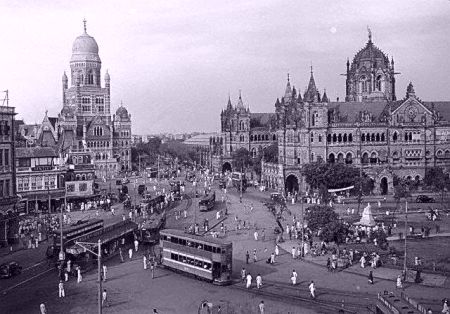
Bombay Victoria station

All of us were without resources of any sort. Only a few among us were blessed with some talent. The rest were run of the mill, untrained and unskilled; yet, each nurtured a dream to come good. We were strangers in a big city enclosed in an unfriendly neighborhood.

The big cities like New York and Bombay share certain characteristics. A large section of its population comes from other towns and countries. Every other person there, is virtually a stranger, busily pursuing his own short listed agenda.  The shroud of anonymity the city throws on its clueless strangers is often a perverted blessing. It lets you the freedom to degenerate; to be rid of shame; and throw away the yardstick of decency that until then caned you into submission. You live as you can afford to or as you are allowed to; and not as expected of you by the standards set by your elders.  The lonely freedom the city lets you wander into is like being lost in vacant space without purpose. It is a burden that weighs on your shoulders that cry out for a hug. Being alone in a crowd, to stray away into these forests drear / Alone, without a peer (John Keats), is a pain. It is one of those phases in life when you crave for love, hoping desperately it would rescue you from loneliness and shame.

As you find your feet, you discover the city has a heart, hidden in its  folds. As Didier said, “Every city has at its heart a village; and that village has a heart.” You will never understand the city unless you understand the village in it. You come across that face of the city in strange ways , like suddenly coming upon a dazzling smile or a pair of bewitching eyes set in a scarred face.
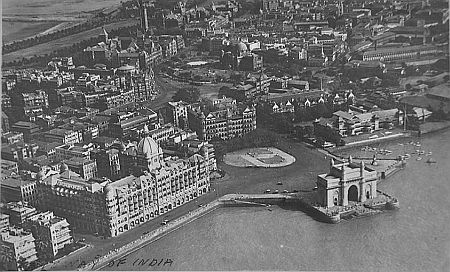
Bombay 1920

*

Four of us shared a nondescript chawl in Girgoan, central Bombay. Two of us had minimum wage jobs in Dalal Street area. By about the third week of the month we would usually be broke, besides being behind on rent and the utilities.

On one rainy evening in the last week of June, when the lower areas of Bombay were inundated by storm waters and  backlash from high tides at the Worli sea, we were trying to figure out, rather loudly, ways to find the next meal. A Bihari who recently moved into the adjoining room overheard us; introduced himself and wanted to help. We went through a range of emotions. We were skeptic, embarrassed, ashamed, and slightly irritated; and did not know how to respond. He insisted ; and took me to a near by kirana (grocery) store owned by his gaon _wala (village mate);  and got us, on credit , a week’s grocery, on his guarantee. We had a hot and a full meal after a long time, thanks to Bihari babu.

It may now look only a small gesture but it really meant a lot to me. The credit arrangement helped us get past a very rough patch. I send my thanks to Bihari wherever he might be.
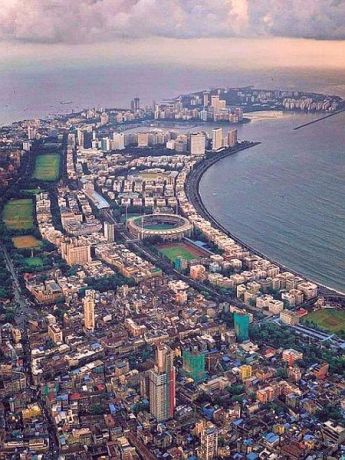
Bombay Marine drive 2

Monsoon months of June-July do strange things to Bombay and its people. It is the worst season to commute but it sometimes brings the best out of its people, even from its scum.

On one late evening when heavy down pour and high tides in the Worli Sea coincided, I was stranded in Lower Parel, a low laying area, flooded more than knee high deep. I took shelter near a modest apartment building. Even at 9 in the night the rains did not subside ; and, the street continued to be choked. There was no way I could reach anywhere in that rain, deluge and darkness. I later heard that tracks in Parel station were submerged ; and, the train services  were stranded.  

The Durwan (security guard) of the building came up to me and said that Dastur Sahib was calling me in. I did not know any Dastur. I hesitated a while ; but followed the guard as he kept insisting. Dastur Sahib turned out to be a Parsi gentleman of middle age; a perfect stranger. He handed me a towel, inquired about me; and, instructed his cook to serve me only vegetarian food. He asked me to stay for the night. I gratefully accepted all that he offered.

I often think of Mr. Dastur and wonder whether I would have trusted a stranger; invited him home, at the dark hour of the night; and, offered  food and shelter, as he did.

I heard of similar stories of help and generosity, during the recent deluge in Bombay. Some women formed groups in order to serve food to the stranded commuters. Only a city (however messy be it) with a large heart is capable of such acts.
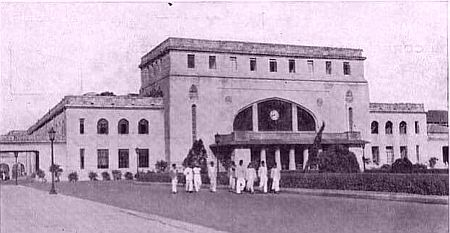
Bombay Central ststion

Once, while traveling from New Delhi to Bombay by train I lost my brief case (square, hard and black box called, at that time, as James Bond box) at Bombay Central. I do not know how I lost it. Whoever took it, must have been a very smooth operator. After I realized the box was gone, I wandered for a while on the railway platform aimlessly, bemused and sheepish; and , finally gave it up as lost. There was some money in the box; but more importantly, it contained some office papers and other documents of value related to  discussions I had with the officials in  the Ministries at New Delhi .

On way to my apartment in Prabhadevi, I talked to my self “Ok. Old boy, tomorrow is your last day at the office. Start looking for another job. Take heart and have your last good sleep”. After reaching the apartment, I did exactly that; I ate well and slept well, convinced I was beyond help.

Next day I set out to office in a suicidal mood. On the way near the main gate, facing Siddhi_Vinayaka, the Durwan – Waghmare, greeted me and as he usually does, started some small talk. Then I mentioned to him about my bag and how it was lost etc. He asked me what I proposed to do now. I said, I cannot think of doing anything and if the office asks me to quit I will do just that and go home; period.

He seemed pensive and thoughtful for while; and said ‘ you could go to the office late today; but, now come with me right now’. He took me by my arm and led me to a taxi. We reached a small suburban railway station on the outskirts of Bombay along the Harbor line.

The station looked almost deserted at that time. He hailed someone and asked for Karim Lala. After a few minutes, Mr. Karim Lala materialized, followed by a couple of his sidekicks. My friend , Waghmare explained the details of the case and the predicament of his Sahib.

The result of the esteemed conversation was that after a while, I was staring , in disbelief,   at my sad looking black box which I had given up as lost and grieved that I would never again see in my life.

I was politely instructed that I should not expect to find any money in the box ; and should be thankful for getting back the box with all papers intact. I checked the box; the papers were all there. We both thanked Mr. Lala profusely which he accepted royally.

On the way back, I offered some substantial money to Waghmare , as reward and as a sign of my gratitude. He said all payments are to be made to his Boss;  and,  he would not dare risk displeasing the Boss, a hard task master. We drove back to Prabhadevi and reached our apartment. 

Waghmare ,  took me to his Boss who resided just opposite to the main entrance  to our apartment building , across the street . Then, Waghmare instructed me to drop the money , I intended to give him, in to the Hundi of Sri Siddhivinayaka.  We both profusely thanked his Boss Lord Siddhivinayaka, in reverence and humility. That was how Waghmare and his Boss saved me and  my job.
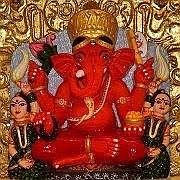
                                                    siddhivinayaka

The claim that love pervades this world may not sound real; not because it isn’t true but because we haven’t learned to pay much attention to countless moments of love, kindness, and care that surround us each day

 

lotus offering


      There are two ways to live your life.
      One is as though nothing is a miracle.
      The other is to live as though
      Everything is a miracle.

      -Albert Einstein
 
6 Comments

Posted by on August 31, 2012 in Story


Tags: ,

Good friends are like stars…


For those who have forgotten that they have had this before

 He was tired and aching and on his way home from a long day at work, so he almost didn’t see the old lady stranded on the side of the road, but even in the dim light of day he could see she needed help.  Therefore, he pulled up in front of her Mercedes and got out.  His old Pontiac was still sputtering as he approached her.   

Even with the smile on his face, she was worried. No one had stopped to help for the last hour or so. Was he going to hurt her? He did not look safe; he looked poor and hungry.

He could see that she was frightened, standing out there in the cold. He knew how she felt. It was chill. It was that chill which only fears can put in you.

He said, “I’m here to help you, ma’am. Why don’t you wait in the car where it’s warm? By the way, my name is Bryan Anderson.”

Well, all she had was a flat tire, but for an old lady, that was bad enough. Bryan crawled under the car looking for a place to put the jack, skinning his knuckles a time or two. Soon he was able to change the tire.

As he was tightening up the lug nuts, she rolled down the window and began to talk to him. She told him that she was from St. Louis and was only just passing through. She couldn’t thank him enough for coming to her aid.
 
Bryan just smiled as he closed her trunk. The lady asked how much she owed him. Any amount would have been all right with her. She already imagined all the awful things that could have happened had he not stopped. Bryan never thought twice about being paid. This was not a job to him. This was helping someone in need, and God knows there were plenty, who had given him a hand in the past. He had lived his whole life that way, and it never occurred to him to act any other way.
 
He told her that if she really wanted to pay him back, the next time she saw someone who needed help, she could give that person the assistance they needed, and Bryan added, “Pass it on.”
 
He waited until she started her car and drove off. It had been a cold and depressing day, but he felt good as he headed for home, disappearing into the twilight.

A few miles down the road the lady saw a small cafe. She went in to grab a bite to eat, and take the chill off before she made the last leg of her trip home. It was a dingy looking restaurant. Outside were two old gas pumps. The whole scene was unfamiliar to her. The waitress came over and brought a clean towel to wipe her wet hair. She had a sweet smile, one that even being on her feet for the whole day couldn’t erase. The lady noticed the waitress was nearly eight months pregnant, but she never let the strain and aches change her attitude. The old lady wondered how someone who had so little could be so giving to a stranger. Then she remembered Bryan ..

After the lady finished her meal, she paid with a hundred dollar bill. The waitress quickly went to get change for her hundred dollar bill, but the old lady had slipped right out the door. She was gone by the time the waitress came back. The waitress wondered where the lady could be. Then she noticed something written on the napkin.

There were tears in her eyes when she read what the lady wrote: “This isn’t a tip, it’s a gift.  You don’t owe me anything. Somebody once helped me out and if you feel you want to pay me back, don’t let this chain of love end with you, pass it on.”
 
Under the napkin were four more $100 bills.
 
Well, there were tables to clear, sugar bowls to fill, and people to serve, but the waitress made it to closing time.  

That night when she got home from work and climbed into bed, she was thinking about the money and what the lady had written. How could the lady have known how much she and her husband needed it?  With the baby due next month, it was going to be hard….

She knew how worried her husband was, and as he lay sleeping next to her, she gave him a gentle kiss and whispered soft and low, “Everything’s going to be all right. I love you, Bryan Anderson.”

There is an old saying “What goes around comes around.” 

Good friends are like stars…You do not always see them, but you know they are always there.

Today I sent you this story and I am asking you to pass it on; not necessarily the same story. It could be your story or any story that conveys the message. Let this light keep shining. 

Please read


Leave a comment

Posted by on August 31, 2012 in Story


Tags:

Hellenic influence on Buddhism


Buddha in conversation

Hellenic influence on Buddhism

The interaction between Hellenistic Greece and Buddhism started with Alexander’s expedition into India during 334 BCE. Following Alexander’s death in 323 BCE his empire fragmented with each of his generals assuming charge of a portion of the empire. In the process, Seleucus became the king of the land that stretched into India. In the succeeding periods, spread over three hundred years, this kingdom again split into smaller ones. However, Buddhism flourished all along under these Indo-Greek kings. The friendly relations between Greek and Buddhist cultures continued until about 5th century.

During these long years, just as Buddhism spread its influence in the Hellenistic world particularly around Alexandria , the Greek culture in turn exerted its influence on Buddhism.

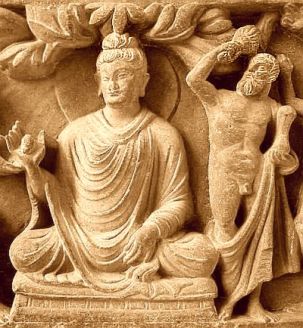
Some scholars opine that Greek-Buddhist interaction lead to evolution of Mahayana branch of Buddhism, introducing the “man-god” treatment of the Buddha as is done with Hellenic gods. Further, the representation of Buddha in human form also appeared to be an offshoot of Hellenic influence on Buddhism.

Buddha with hercules Procter

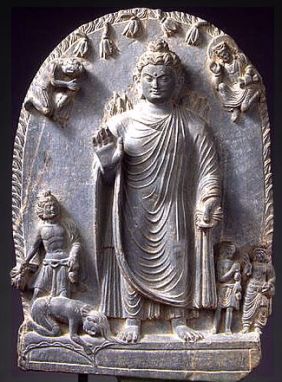
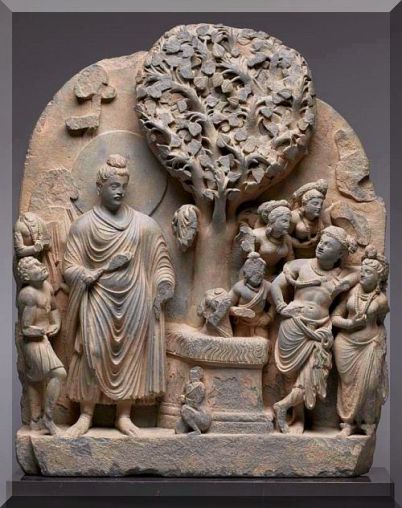
Until around the first century, the Buddha was represented by a pair of footprints .The human image of the Buddha was not projected either in sculptures or in paintings. It was only after the advent of Ghandhara art (of Greco-Roman origin that flourished largely during the Kushan dynasty) the image of the Buddha as we know today took shape. Those artists, while retaining their classical conceptions of the human form presented to the world a Greek-featured Buddha, dressed in a toga and seated in yoga pose. Thus, the Gandharan style represented a union of classical Indian and Hellenic elements

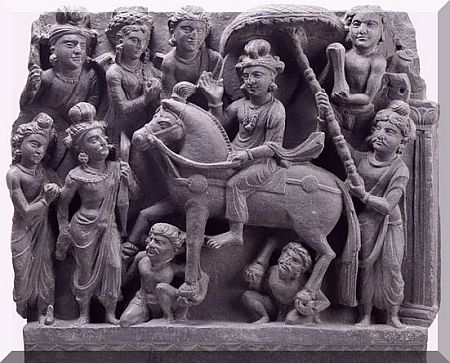
Apart from this ,while interpreting the Buddhist legends (Jathaka tales), the Gandhara School incorporated many motifs and techniques from classical Roman art, including vine scrolls, cherubs bearing garlands, tritons, and centaurs. The Gandhar craftsmen thus made a significant contribution to Buddhist art in their depiction of events in Buddha’s life. The basic iconography, however, remained Indian

Albert Gruenwedel (1856 -1935), a German Indologist, thought that Hellenic deities were traceable in Ghandara art. According to him, Apollo served as the model for Buddha images. The Gandhara school , he said , drew upon the anthropomorphic traditions of Roman religion and represented the Buddha with a youthful Apollo-like face, dressed in garments resembling those seen on Roman imperial statues .He also remarked that the types of Ghandara school were traceable in Buddhist religious paintings of Tibet , China and Japan.

Buddha gandhara 3 to 5 bce

[ There is a counter point to this argument.

Ananda K. Coomaraswamy (1877–1947) in his relentless search for the non-derivative or ‘original’ nature of Indian art is typified in the debate on the Indian origin of the Buddha image, where he also establishes its development from early Indian yakña prototypes, as a counterpoint to Foucher’s thesis that accorded an exclusive Gandharan (and hence Greco-Roman) derivation to the Buddha image .

https://arthistoriography.files.wordpress.com/2011/12/indian-art-history.pdf  ]

Buddha on horse

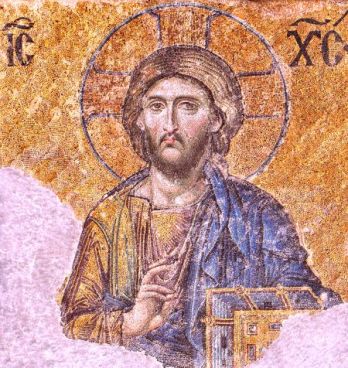
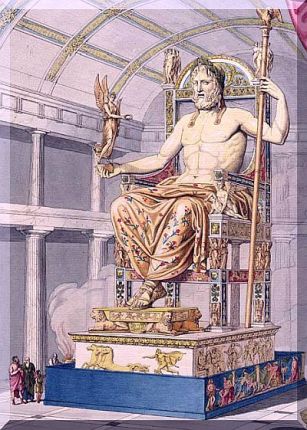
There is interesting similarity here, though not directly related to the Buddha subject. Until Christianity took root in Greece , there was no representation of Christ in human form. The early Christian scrolls etc. indicated Christ with the figure of a fish. Some scholars (LaTourette 1975: 572) consider the mage of Christ Pantocrator (“Christ, Ruler of All”) is modeled after the great statue of Zeus enthroned at Olympia and it remains a central icon of the Eastern Orthodox Church.

Christ Pantocrator

Statue of Zeus at Olympia

 
4 Comments

Posted by on August 31, 2012 in Buddhism, History


Tags: , ,

Time and the Individual

Time and the Individual

Indian texts – Hindu and Buddhist – say time is an illusion .Yet the illusion persists. Man needs to break up time into fragments because he has to understand, monitor and manage his life and of his fellow beings. Therefore, “time” is important in man’s life. But, is man important in time?

In the shorter time-spans, say in day-to-day life, decade or in a century the individual takes the center stage. Changes that occur during this time-span are centered round him and become immediately relevant to his life and that of his fellow beings. History tries to record activities, changes, unrest etc. of this period. However, it often fails to project it in the perspective of human history.

When you stretch the time-span to centuries, the perspective is diffused. Individuals become less important than events .And isolated incidents get lost in the general sweep of broad appraisals.

When you stretch the time-span to million years or more, you can only talk of survival of human species on this planet

 
Leave a comment

Posted by on August 31, 2012 in Speculation


Tags: ,

Good history of one generation can be bad history of the next

Edmund Leach once said, “Bad” history is seldom constructed out of fantasy; it is simply that we tend to accept as good history whatever is congenial to our contemporary way of thinking. The good history of one generation becomes the bad history of the next

At one level, history of the present day as chronicled by those that matter today may not entirely be a product of fantasy. They may convincingly rationalize the conflicts of the present day to suit their political or religious point-of-view. They may possibly succeed in carrying the day with them. However, it is the succeeding generations, which have the benefit of a perspective view of things, who can judge whether what was accepted in the past was really a good piece of history.

Ideally, Good history tries to be as objective as possible. It tries to describe what happened, with the kind of detail that creates an honest, dispassionate and accurate, although imperfect picture. It is not confined to whatever is congenial to contemporary way of thinking. It is also not a tract to propagate an “ism.

We can impulsively draw up a checklist of what a Good history is not. However, those who live through it can seldom judge it

 
Leave a comment

Posted by on August 31, 2012 in History


Tags:

Books and Meditation

Books and Meditation

You have a beautiful discussion in progress .I enjoy following it. Please keep it going.

You were discussing about books and meditation. I cannot help mentioning a delightful story about the relative value of books and meditation.

..
When the scholar rNa of sPar- Phu went to meet the meditation master hGro-mGon (1110-1170) at pHag –Mo –gru monastery, the master presented him an imprint of a beautiful lotus flower in brown sugar. The scholar admired the imprint but could not bring himself to eat it. There upon the master took the imprint, broke it into pieces, gave it back to rNa and asked him to eat it. The scholar ate the pieces and enjoyed.

The master explained” your studies are like this imprint of lotus flower. You can hold it and admire it but you cannot enjoy it until you break it and put it in your mouth. Scholarship is a form and it should be brought into your experience by meditation. The purpose of all learning is to help meditation.

 
Leave a comment

Posted by on August 31, 2012 in Buddhism


Tags:

Can Ancient Vishnu Idol Change View on Russian History?

 
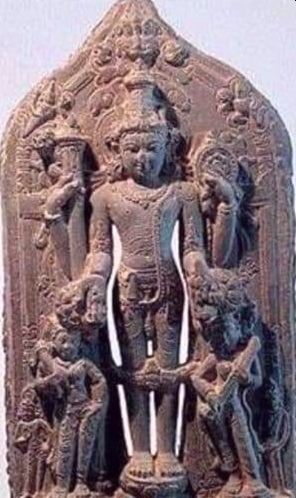
2. There were some speculations that the discovery of an ancient Vishnu idol in the Staraya Maina village , in the Volga region , on the banks of Samara, region may cause the history of Ancient Russia to be re written.

Vishnu Idol in Staraya Maina

I think such statements are shrill and exaggerated. 

3. The discovery of the idol may only suggest that there were links between the two old countries. Most likely the links were through trade than through political  relation/domination.

4. Around the 6th century, Russia still had an open religious environment. The social structure was also more open. Serfdom was yet to become a part of the feudal structure. The peasants were free to move about the country side in search of farm lands and work. The links with the other parts of the old world were still active and alive. 

5. It was only by 966 AD under Prince Vladimir that Russia accepted Christianity ; and all other religious practices were banned. In the periods thereafter Russia  went into a virtual isolation and was cut off from Asia/India for a very long time.

6. The period 6-7th century-also marked flourishing trade ventures by Indian rulers. Palas in the North and Cholas in the South were enterprising dynasties.During their times the Indian influence through trade spread to Far East and to regions beyond the mountainous borders.

7. The links between India and Russia  are definitely far older than the 6th Century; deep into the unrecorded historic past .The discovery of the idol only suggests that even during 6-7th centuries there were trade links between the two ancient lands. The Indian traders/travelers could have had their own place of worship in the Staraya Maina (as they did have in old Iraq , Afghanistan , Central Asia , Baku etc.) because they had to be stationed there for fairly long spells .This is quite possible since Staraya Maina was a major centre for trade and culture in the old times. It is unlikely there were direct political connections between Mid Volga region and North / 

8. A call to rewrite pre Christine Russian history on the basis of this discovery alone, to say the least, is rather unrealistic; unless further more compelling evidences – say , in the form of edicts , records , excavations etc, – come up.

9. But definitely, there is a need for further serious study.

A request to all other subscribers and members

 
1. Are there any details of coins, artifacts etc. found on the site? Has any study been made? 
2. Is there an update about the proposed ”International Conference “?
3. Can anyone please enlighten if such a conference was held. If so what was the outcome of it?
4. Is there a link on the Web detailing further developments on the issue of proximity between India and Russia?
 
3 Comments

Posted by on August 31, 2012 in History


Tags:

Hello world!

Welcome to WordPress.com! This is your very first post. Click the Edit link to modify or delete it, or start a new post. If you like, use this post to tell readers why you started this blog and what you plan to do with it.

Happy blogging!

 
4 Comments

Posted by on August 9, 2012 in Uncategorized