RSS

Category Archives: Rigveda

Origins of Ganesha worship

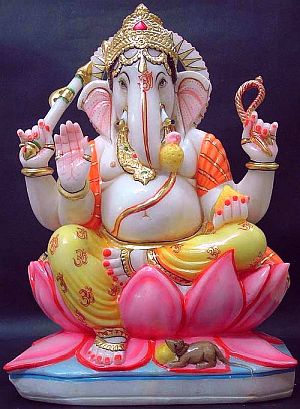
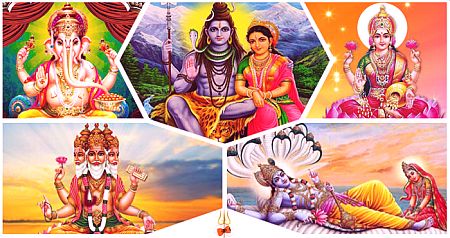
Ganesha

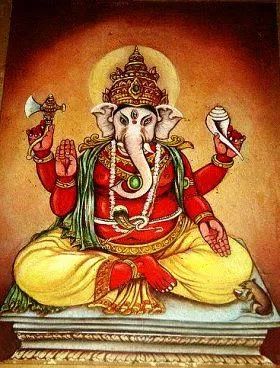
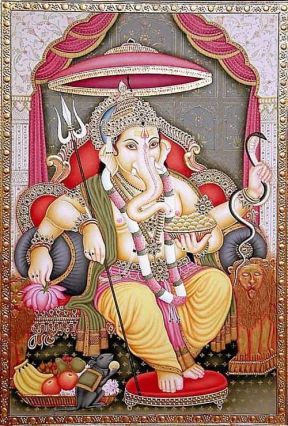
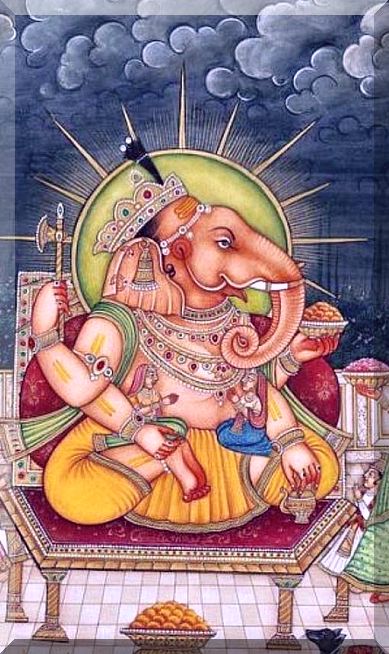
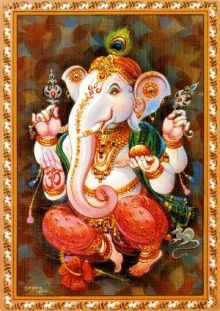
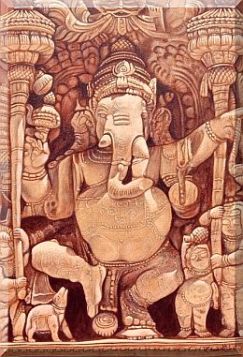
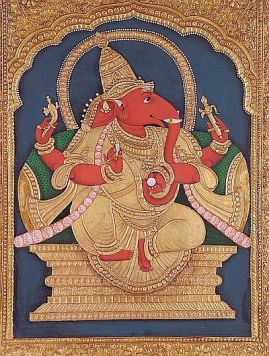
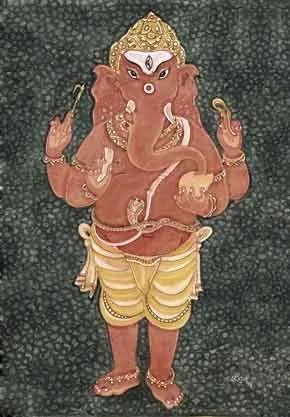
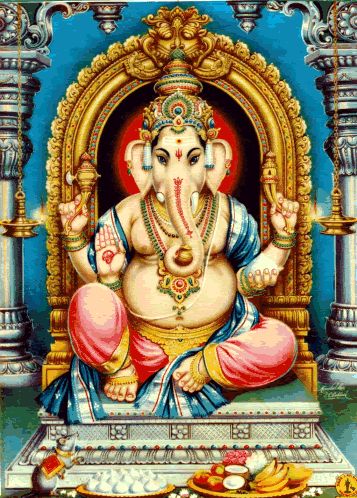
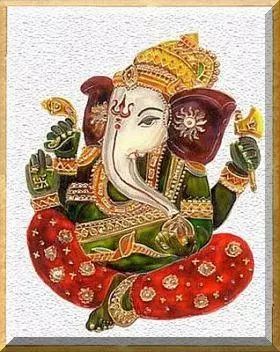
Ganesha or Ganapathi, undoubtedly, is the most popular among the Hindu gods. His popularity and worship extends also to Buddhism and Jainism. He is worshiped not merely in India but in other parts of the world too. He is an ancient god.  His origins are not certain. It is also not certain when the Ganesha worship began.

1. Vedic origin

1.1. The earliest reference to Ganapathi appears in the second book of the Rig Veda in the rik starting with Gananam tva Ganapati Gum Havamahe (RV 2.23.1). The Ganapathi invoked here, is the Chief of the Ganas, the leader of the group, a superb seer among seers, and the lord of the mantras. It is explained that Ganapathi in this rik refers to Brahmanaspati, a Vedic divinity of the highest order, the leader of the heavenly bands and a sage (kavi) among sages (Jyeshta Rajam Brahmanam, Brahmanaspata).

Gaṇānāṃ tvā gaṇapatiṃ havāmahe kaviṃ kavīnām upamaśravastamam |  jyeṣṭharājam brahmaṇām brahmaṇas pata ā naḥ śṛṇvann ūtibhiḥ sīda sādanam ||RV_2,023.01||

1.2. In the Rig Veda, Brahmanaspati is the lord of all sacred prayers and lord of Satya mantra. He is the destroyer of enemies; and no sacrifice is complete without invoking him. Brahnanaspati was a partner with Brahma in creation. Brahmaņaspathi was also the middle term that once linked the Vedic Brahma and Brihaspathi’. They are the names “of a deity in whom the action of the worshipper upon the gods is personified”.

1.3. Brihaspathi is the personification of piety, purity and knowledge. He is called `the father of the gods,’ and a widely extended creative power is ascribed to him. He is also `the shining’, `the gold-colored,’ and `having the thunder for his voice.” Other epithets of Brihaspati are Jiva – the living, Didivis – the bright, Dhishana – the intelligent, and  for his eloquence, Gishpati– the lord of speech.

There are over one hundred riks in praise of these two deities, giving a picture of their powers and personalities.

ganesha 2

1.4. The Gaņapathi in Rig-Veda is the lord of gaņas or hosts. In the Rig-Veda, the gaņās or hosts of Bŗihaspathi—Brahmaņaspathi are the chants, the riks and the stomas, the words of praise (RV. 4.50.5). They have little to do with the lower vital levels.

sa suṣṭubhā sa ṛkvatā gaṇena valaṃ ruroja phaligaṃ raveṇa | bṛhaspatir usriyā havyasūdaḥ kanikradad vāvaśatīr ud ājat ||RV_4,050.05 ||

1.5. The term Gana also denotes a host of angles (Devas). Indra is referred to as Ganapathi in the tenth book of the Rig Veda (RV. 10.112.9); Indra is the Lord of the companies (Maruts).

 ni ṣu sīda gaṇapate gaṇeṣu tvām āhur vipratamaṃ kavīnām | na ṛte tvat kriyate kiṃ canāre mahām arkam maghavañ citram arca ||RV_10,112.09||

1.6. The mantra ‘namo Ganebhyo ganapathibyasha vo namo’ (16-25) that occurs in Shukla Yajurveda samhita refers to ganas, in plural, and says: salutations to you, Ganas and to the Lord of the Ganas. This mantra appears also in the Rudra prasnam (4.1.5) and in the Maitrayani-Samhita (2,9.4). Gana  in these contexts signifies a group of people as also a collection of mantras. 

namo gaṇebhyo gaṇapatibhyaś ca vo namo namo vrātebhyo vrātapatibhyaś ca vo namo namaḥ kṛchrebhyaḥ kṛchrapatibhyaś ca vo namo namo virūpebhyo viśvarūpebhyaś ca vo namo namaḥ senābhyaḥ senānībhyaś ca vo namo namo rathibhyo varūthibhyaś ca vo namo namaḥ kṣattṛbhyaḥ saṃgrahītṛbhyaś ca vo namo namo bṛhadbhyo ‘rbhakebhyaś ca vo namo namo yuvabhya āśīnebhyaś ca vo namo namaḥ //MS_2,9.4//

1.7. The Taittiriya samhita interprets Ganas as pashus (the beasts of Shiva). They are the Ganas of Shiva — Rudrasya Ganapathyam .There were also Bhuta ganas, the weird and grotesque looking guards of Shiva. Thus, Shiva the Pashupathi; and Shiva the Bhoothnath was also a Ganapathi.

1.8. At a much later period, when the Puranas came to be compiled, the virtues and powers of all the Ganapathis of the past were transferred to the Ganapathi as we are familiar with; that is to our Ganapathi. He became the Lord of Ganas in every sense of the term. Not only that, he became much larger than the sum of the parts.

1.9. It is not significant what shades of meanings the term carried in the past; but it is very important for us that our Ganapathi, the Lord of Ganas, whom we worship with love and adoration, is the embodiment of all the grace, virtues and powers that we admire in any god. He is the inheritor of the combined wisdom and glory of all the gods; and is much more than the sum. He is Maha Ganapathi.  That is what really matters.

2. Elephant god

ganesha 3

2.1. It is not certain how the Ganapathi-elephant association came into being. The earliest reference in that regard is in the Atharva Veda which alludes elephantine countenance (hasthi –varchas) to the Vedic god Brihaspati who was one of the forerunners of our Ganapathi. Our Ganapathi seems to have inherited his features from the descriptions of Brihaspati.

2.2. The other early references are in Maitrayani samhita (2.9.1) and Taittiriya Aranyaka (10.1.5) which appeal to an elephant faced (hasthi-mukha) , single-tusked (dantin) deity with a curved trunk (vakra tunda).He is also described as holding a corn-sheaf, a sugarcane and a club. Those features became the characteristics of our Ganapathi, the Ganesha.

tat karāṭāya vidmahe hastimukhāya dhīmahi /  tan no dantī pracodayāt //MS.2.91//

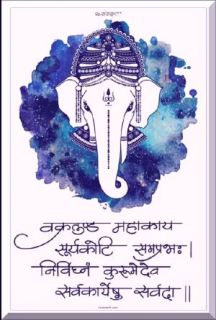
Vakratunda

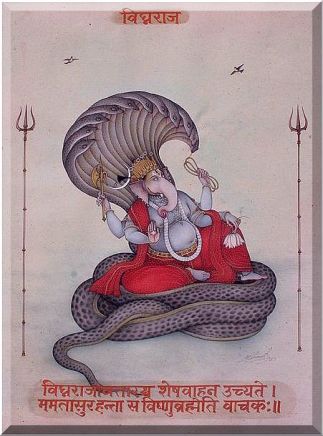
2.3. Amarakosha the Sanskrit lexicon (say 4th century AD), lists eight synonyms of Ganesha : Vinayaka, Vighnaraja, Dvai-matura (one who has two mothers), Gaṇadhipa (equivalent to Ganapati and Ganesha), Ekadanta (one who has one tusk), Heramba, Lambodara (one who has a pot belly, or, literally, one who has a hanging belly), and Gajanana having the face of an elephant). It seems by then the Ganapathi and his half- elephant form were quite well established.

vināyako vighnarāja dvaimātura gaṇādhipāḥ / apy ekadanta heramba lambodara gajānanāḥ ( 1.1.93 -94)

ganapthi 31

2.4. Vishnudharmottara, a text dated around 5-6th century, while detailing how to make images of various deities, describes, among others, how the image of Vinayaka should be made (Part Three; Ch 71; verses 13-16). Sage Markandeya explains:

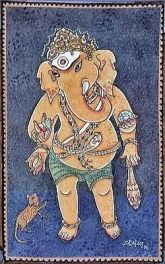
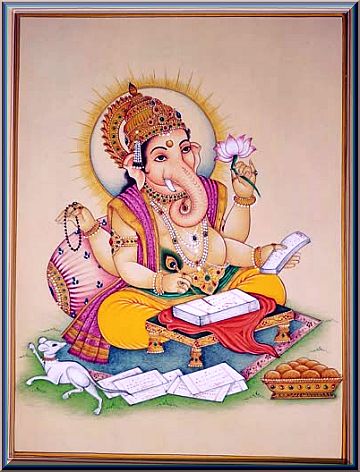
Vinayaka should have the face of an elephant and four hands .He should have a big belly; stiff pair of ears; wearing a tiger skin around his waist and a sacred-thread across his left shoulder down his belly. He should have snake as belt.  a trident and rosary should be placed in right hands; an axe and a pot full of sweets in the left ones. The sweet-pot should be placed near the tip of his trunk. His left tusk should be left un-represented. Vinayaka should be provided a foot-stool; and his one foot should be placed on it.

  • Vinayakasthu kartayo Gaja-vakthra-Chatur-bhujaha / Shukalam cha Aksha-malam cha tasya Dakshina-hasthayoh //13//
  • Paathram Modaka-purnam tu Parashu chaiva Vamataha / Dantascha-sya  na karthavyo Vamo ,  Ripu-nishodana //14//
  • Paada-pitai krutaha Paadaha Eka Asanago bhaveth / Purna-Modaka-patram tu karagre tasya karayeth //15//
  • Lambodaras-tattha karyaha Sthabdha-karnascha-yadava /Vyagra-charmam-bhara-dharaha Sarpa-yajnopavithiman //16//

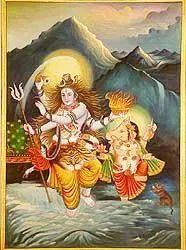
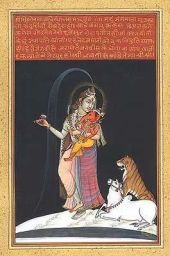
Gauri Ganesha

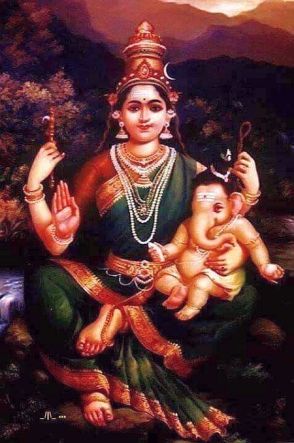
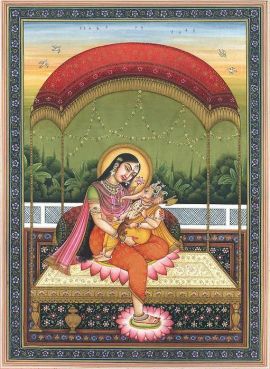
 2.5. Before I end this segment let me add, the Tamil language, one of the oldest languages in the world, fondly addresses Ganapathi as Pille or Pilleyar, meaning the little darling or a small child. Some scholars say that term pille also meant, in old Tamil, a young elephant. Incidentally, the Pali word pillaka also means a young elephant. The association of a sweet looking child with the innocent countenance of a young elephant could also have had its origins in tribal lore.

Parvathi and Ganesh

3. Destroyer of obstacles

Ganesh

3.1. Brahmanaspati of the Rig Veda was the divine being who led the aspirant along the path of wisdom and facilitated his progress by removing the obstacles in his path. It is said, this aspect of Brahmanaspati was later expanded in to the role of  Ganapathi as Vinayaka, the destroyer of obstacles. But Ganapathi is also the lord of obstacles (Vighnaraja).But, why would a benevolent god cause obstacles? It is explained that Ganapathi does not cause obstacles but controls obstacles. It is therefore prudent to pray to him before launching on any venture – big or small.

Ganesha Vignaraja

3.2. He intercedes with gods on behalf of humankind and protects them from the wicked influences.

Thus, Ganapathi as the destroyer of obstacles had taken root by about first century AD.

4. God of learning and wisdom

ganesha 4

4.1. Ganapathi is also associated with mental agility and learning. He is akin to Brihaspathi of Rig Veda, the personification of piety, purity and knowledge. He is known for his intelligence, and for his eloquence. He is Gispati – the lord of speech- bṛhaspatiḥ surācāryo gīṣpati rdhiṣaṇo guruḥ (1.3.223)

4.2. Siddham was in the distant past one of the names given to the collection of Sanskrit alphabets. Patanjali explained the term as “that which is established” (pūrvatrāsiddham). The beginners would commence their learning of the alphabets with the chant: ”Om namo Siddham”. Even the scribes of the epigraphs would etch an inscription starting with the words “siddham or Swasthi”. Since Ganapathi evolved also into the god of wisdom and learning the terms Siddham and Swasthi too came to be associated with him.

4.3 Ganapathi is the patron god of wisdom and all branches of learning; not merely spiritual or of art or music or literature but of all human endeavours.

5. Ganapathi worship

belief-04-boxed

ganapathi worship

5.1. I reckon the Ganapathi worship has a history of about two thousand years. The ancient Grihya sutras and Dharma sutras do not mention about praying to Ganapathi at the commencement of a worship-ritual. Natyasastra, dated around second century BCE, too, does not refer to Ganapathi.

5.2. Perhaps the first reference to Ganapathi worship occurs in the Gobhila Grhya Sutra, which belongs Sama Veda. It recommends praying to Ganapathi and to Matrikas at the commencement of a ritual, seeking blessings and support for a smooth and successful completion of the ritual process. Gobhila Grhya Sutra is dated around first century AD. From then Ganapathi has carried on famously.

ganapathi 11a Ganesha Lambodara

5.3. Baudhayana Grihya Sutra which described Ganapathi as Vigneshwara, Bhootha-natha and Gajamukha, too recommended similar worship of Ganapathi. It also prescribed offering apupa and Modakas to propitiate him. The date of this text is disputed; it could perhaps be around the same time as the other Sutras.

ganesha standing

5.4. Another text of first century, Gatha-saptha-shati, sings the praise of Ganadhipathi. The Puranas, which came about around that period too carry detailed references to Ganapathi  and to his worship (e.g. Varaha PuranaVamana Purana and Brahmaiva-vartha purana).

5.6. The Yajnavalkya Smriti (dated around third century AD) mentions Vinayaka as the Lord of the Ganas, appointed by Brahmna and Rudra. Here he is described as one who causes obstacles as well as one who removes them. Yajnavalkya gives four names of Vinayaka the son of Ambika as: Mita, Sammita, Salakantaka and Kusumandarjaputra .Vinayaka here is worshiped as a Tantric deity.

6. Emergence of Ganesha

ganesha 5

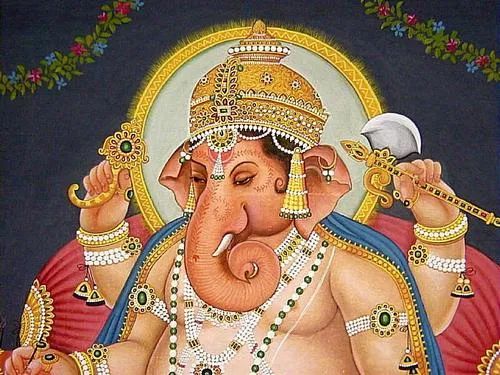
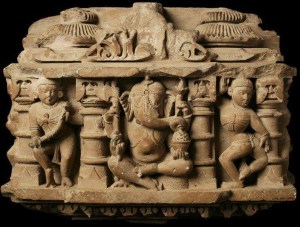
6.1. Ganesha appeared in his classic form as a clearly-recognizable deity with well-defined iconographic attributes in the early 4th to 5th centuries. Ganesha images thereafter became prevalent in all parts of India and in many parts of the world.

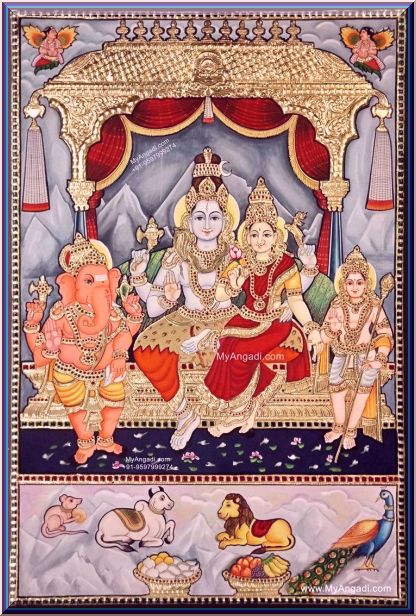
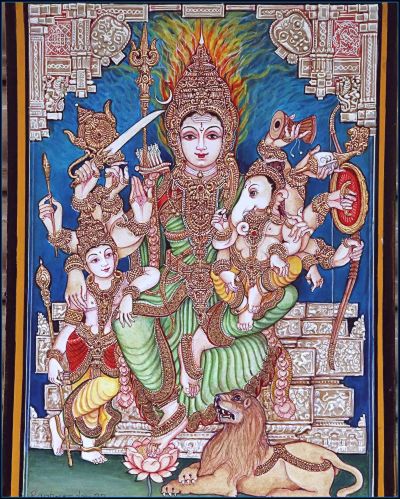
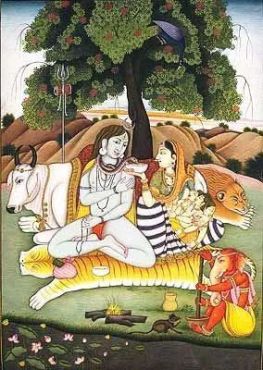
6.2. Ganesha emerged as a distinct deity in clearly recognizable form in the fourth and the fifth centuries during the Gupta period. His popularity rose quickly. The son of Shiva and Parvati; Ganesha with an elephantine countenance, a curved trunk, pair of big ears and a pot-bellied body of a human is now the Lord of success; and destroyer of evils and obstacles. He is the god of education, knowledge, wisdom and wealth. Ganesha also became one of the five prime Hindu deities (Surya, Vishnu, Shiva and Durga being the other four) worshiped in the panchayatana puja. A new tradition called Ganapathya thereafter came into existence.

Tantric Ganesha

heramba-ganapati

Perhaps no other god , either in Hindu or any other religion, been depicted in as many varieties of forms as Ganesha has been. He has been depicted in every conceivable form.

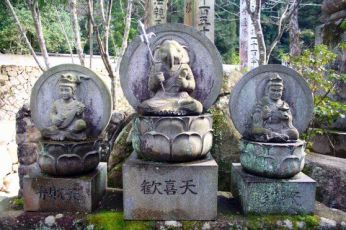
 Ganesha riding elephant Cambodia, 10th century6.3. With the spread of Indian trade to the Far- East, by around the tenth century, Ganesha a favorite with the traders and merchants reached the shores of Bali, Java, Cambodia, Malaya, Thailand, Vietnam and other islands. In Indo-china, where Hinduism and Buddhism were practiced side by side and influenced each other, Ganesha was the God acceptable and dear to all. Even to today, the people in Burma, Vietnam, Cambodia and Thailand worship Ganesha as the destroyer of obstacles and as the god of success.

**

According to Wikepedia

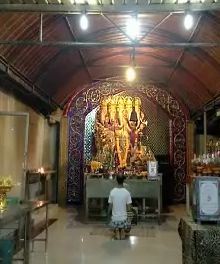
In Thailand, Ganesha is called Phra Phikanet or Phra Phikanesuan and is worshiped as the deity of fortune and success, and the remover of obstacles. He is associated with arts, education and trade. Ganesha appears in the emblem of the Department of Fine Arts in Thailand. As lord of business and diplomacy, he sits on a high pedestal outside Bangkok’s Central World (formerly World Trade Center), where people offer flowers, incense and a reverential sawasdee Thai Cuisine.

With regards to Indonesia, Ganesha is called the ‘Indonesian God of Wisdom’. Bandung boasts a Ganesha Street. A Ganesha statue from the 1st century AD was found on the summit of Mount Raksa in Panaitan Island, the Ujung Kulon National Park, West Java. While there are not temples dedicated specifically to Ganesha, he is found in every Shiva shrine throughout the islands. An 11th-century CE Ganesha statue was found in eastern Java, Kediri is placed in The Museum of Indian Art (Museum fur Indische Kunst), Berlin-Dahlem. The 9th century statue of Ganesha resides in western cella (room) of Prambanan Hindu temple.

Ganesha_statue_at_Sanggar_Agung_Temple,_Surabaya-Indonesia

Ganesha statue at Sanggar Agung Temple, Surabaya-Indonesia, worshiped by the Chinese, Hindus, Buddhist and even the Kejawen

As regards Thailand, William Jones and Ruchi Agarwal write in ‘ Ganesa and his cult in contemporary Thailand’

Ganesa has long been familiar to the people of Thailand but increasingly evident are the Ganesa cults flourishing in Bangkok. In the process, the deity appears to be acquiring new roles and functions. Ganesa now serves in a number of capacities for some; he is a “fixer,” a deity of last resort that can help devotees to over come obstacles in their lives. Not surprisingly, the growing popularity of the deity is reflected in a rapidly expanding trade in Ganesa images and icons, displayed in shopping mall exhibitions in a variety of forms, colours, shapes and sizes. Readily available at most of Bangkok’s major retail outlets, Ganesa icons are traded online via social media. This phenomenon, both by shifting belief practices associated with Ganesa locally and by evolving trade in Ganesa iconography, is indeed growing . Considering both together, one can say that Ganesa cult is presently the focal point for a number of people, each with its own unique approach to the deity, powers and representation.
Ganesha temple Thailand

**

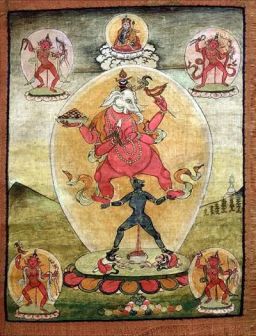
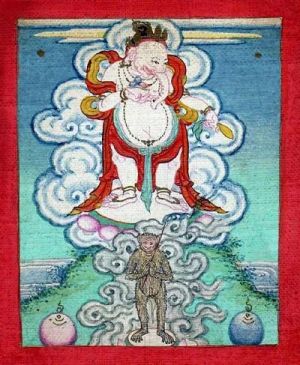
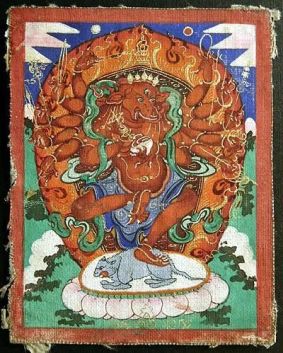
Bhutan Ganesha Tibet Ganesha

Bhutan Ganesha                                                          Tibet Ganesha

sakya ganesha Tibet  Tantric Gneswha Tibet

Sakya Ganesha Tibet                                         Tantric Ganesha Tibet

6.4. Ganesha appears in Jainism too. A fifteenth century Jain text provides procedures for the installation of Ganapathi images. Images of Ganesha appear in the Jain temples of Rajasthan and Gujarat; the earliest of which is dated around eighth century.

Ganesha in Jainism

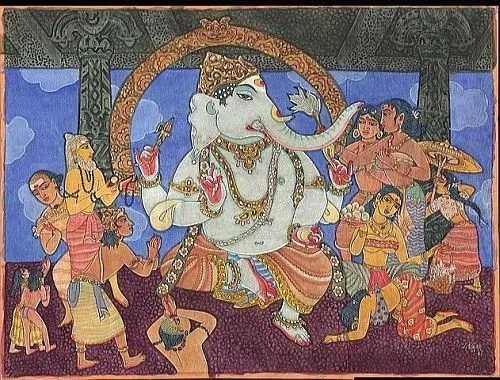
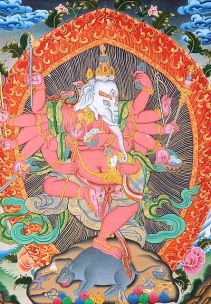
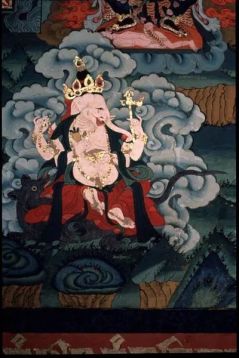
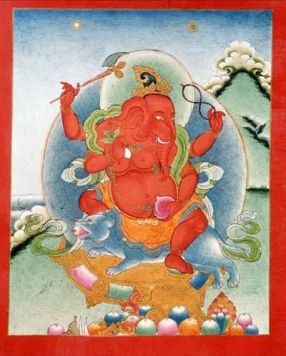
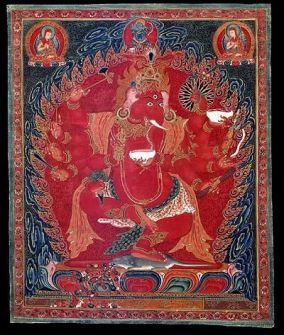
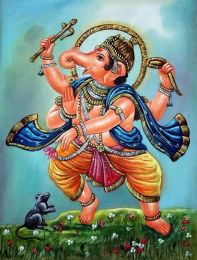
7.5. In Buddhism, Ganesha appears not only in the form of the Buddhist god Vināyaka, but also as a Hindu demon form with the same name (Vināyaka). As the Buddhist god Vināyaka, he is the dancing Nritta Ganapathi. Worship of Ganesha is popular also in Tibet.

Buddhist Ganesha Mangolia Buddhist Ganesha Mangolia 2

Buddhist Ganeshas of Mangolia

According to another version, Ganesha as siddhidata (bestower of success) is Buddha himself revealing Ganesha’s powers to his disciple.

7.6. Ganesha traveled to other countries along with Buddhism. In northern China, the earliest known stone statue carries an inscription dated to 531AD.In Japan the Ganesha cult was first mentioned in 806 AD; and is still flourishing. Here, Buddha and ganesha are worshiped together.

ganesha_japan

[Scholars say, artifacts from excavations in Luristan and Harappa and an old Indo-Greek coin from Hermaeus, present images that remarkably resemble Ganesha”. (“Robert Brown in his Book “Ganesha: Studies of an Asian God”: State University of New York Albany).]

8. Whatever might have been his origins, The Ganapathi -Ganesha that we know and adore represents the combination and culmination of the virtues and powers of all the Ganapathis  that preceded him. He is the sum and substance of all the preceding Ganapathis .He is the embodiment of all their grace and wisdom .He is adored by one and all; by all segments of the society and of all ages.

Ganesha in lap Ganesha in lap 2

Children, particularly, love Ganesha as a playful mate and as the best friend. The little Ganesha is a darling.

ganesha child ganesha child2

ganesha dance ganesha dance 2

ganesha as child

Parvathi with sons

Amazing Facts of Ganesha

amazingThere are 250 temples of Ganesha in Japan.
In Japan, Ganesha is known as ‘Kangiten’, the God of fortune and the harbinger of happiness, prosperity and good. Young Japanese worship Ganesha to win in love whereas the old worship the deity to get success in business.

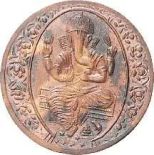
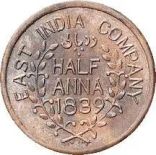
East India Company issued a Ganesha coin in 1839

The British East India Company in 1839 issued a copper ½ Anna coin measuring 32mm with reeded edge and weighing 12.81 grams. The coin carried the Ganesha image on the obverse.

coin 1 coin 2

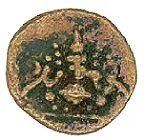
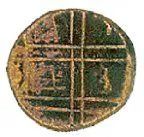
Another bronze coin weighing 3.4 grams and measuring 16.4 x 15.5mm; the obverse depicts Ganesha seated facing, while the reverse has a lattice design that is rather common to certain areas of India.  But,  I am unable to say  to which state  or era the coin belongs.

coin 3coin 4

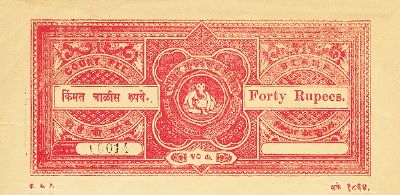
Kurundwad –court Fee stamp with Ganesha motif .

Kurundwad (Senior Branch) in Kolhapur District the erstwhile British Bombay Presidency issued a Court Fee paper of Rupees Forty featuring Ganesha at its centre.

stamp paper

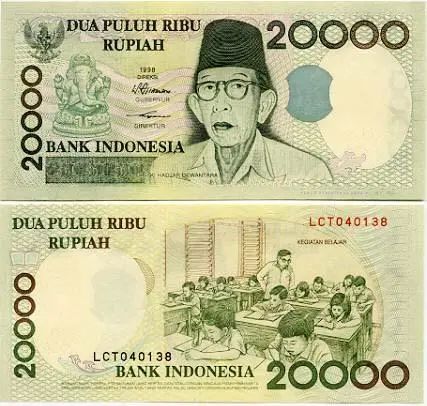
Indonesia Currency notes

One of the Indonesian currency notes carries the picture of Ganesha.

indonesia

Silicon Valley in USA selects Ganesha as the presiding Deity of cyberspace technology
“Ganesha is the God of knowledge and Ganesha’s vehicle is the mouse .Hence the computer industry association selected Ganesha as the presiding Deity of Silicon Valley.

Source :  Colin Bruce

krishna ganesha

References:

Ganesha : http://en.wikipedia.org/wiki/Ganesha

Historical development of Ganesha: http://en.wikipedia.org/wiki/Historical_development_of_Ganesha

Posted by Colin : Ganesha, Hinduism€™s favorite representation of God
Origins of worship of Ganesha  http://www.hindunet.com/forum/showflat.php?Cat=15,44&Number=4892&Main=4892


33 Comments

Posted by on September 17, 2012 in Indian Philosophy, Rigveda, Temple worship


Tags: , , , ,

Music in Sama Veda

Following my post the state of music in Ramayana, there was some discussion about Sama and its relation to music. I was asked to say a little more about the music in Sama Veda; hence this post.

  1. Sama Veda Samhita

1.1. The earliest form of organized Music that we know about is the Music of Sama Veda or the Saman. Sama Veda is linked to music through Yajna.

The Yajna-s, were at the very heart of the Vedic way of living. During the Yajna-s, it was customary to invoke and invite devas (gods) by singing hymns dear to them or dedicated to them ; and to recite the mantras while submitting to them offerings (havish) through Agni, the carrier (havya-vahana). The group of priests who sang (Samaga or Chandoga) the Mantras, initially, compiled a text for their use by putting together selected Mantras from Rig-Veda (the oldest known text) that could be sung during the performance of a Yajna or a Soma Yaga. That collection of lyrical Mantras came to be known as Sama Veda Samhita; and was regarded as one of the three Vedas(Trayi)..

1.2. Out of the 1,549 mantras in Sama Veda Samhita, as many as 1,474 mantras are taken from Rig Veda (mainly from the eighth and the ninth Mandalas). Most of the mantras are in Gayatri chhandas (metre), while some are in Pragatha. It is said; the term Sama is composed of: SA, which stands for Rik (Vedic Mantra); and AMA, meaning various notes (Brihad Up: 1-3-22).

eṣa u eva sāma | vāg vai sāmaiṣa sā cāmaś ceti tat sāmnaḥ sāmatvam | yad v eva samaḥ pluṣiṇā samo maśakena samo nāgena sama ebhis tribhir lokaiḥ samo ‘nena sarveṇa tasmād v eva sāma | aśnute sāmnaḥ sāyujyaṃ salokatām | ya evam etat sāma veda || BrhUp_1,3.22 ||

Sama Veda is thus, virtually, a musical rendering of the selected mantras from Rig Veda. In other words, Sama took maathu (words) from Rig Veda; and provided dhathu ,  the musical substance to those words. Sama Veda is perhaps the earliest known musical literature.

1.3. The Sama Veda Samhita has two segments. The first segment is called Sama – Yoni (adhara) mantra Samhita, meaning that it is the basic text. This segment contains the selected mantras as they appear in the Rig Veda . This, virtually, is the source book.

The second segment called Sama–gana text. Here, the mantras are not in the order they originally appear in Rigveda. But, the selected mantras are rearranged to suit the sequence of rituals during the Yajna; or according to the meters (chhandas) or the gods to whom mantras are addressed.

2.Sama-gana

2.1. While rearranging the text for the purpose of singing, the selected mantras are converted to Saman by turning, twisting, elongating its syllables; and, by inserting various modulations, rests, and other modifications.  The musical effect or the ‘floating form’ of the Sama-gana is enhanced by interpolation of Svaras and meaningless sounds called Stobha (which resemble shouts of joy) such as: Hoyi, Hoi, Hova, Hai, Haw, Oi, Ai, Ha, Ho, Uha, Tayo, etc. This is the text for singing; expanding each mantra with notations and instructing how mantras are to be sung. This is the Sama Veda as it is generally understood and sung.

2.2. Sama-singing (Sama-gana) was an integral part of a Yajna. Sama, thus, represents the earliest known instance of deep relationship between religious life and Music. There were numerous styles of singing Sama. Patanjali in his Mahabhashya remarks that there were a thousand recessions (shakhas) or ways of singing Sama – sahasra-vartma samvedah.  That perhaps was a poetic manner of suggesting there were a range of styles of rendering Sama.  

[Some texts speak of thirteen Samaga-charyas – ways of singing Sama. But names of about only eleven are mentioned:  Ranayaniya; Chatyamugra; Kaleya; Kalvala; Mahakaleya; Langalayana; Mahakalvala; Sardula; Langala; Kouthuma; Jaiminiya]

2.3.  In any case, of the many, only three recessions (shakhas) Viz. Kauthumiya, Ranayaniya and Jaiminiya, have survived. The Kauthumiya and Ranayaniya carry the same set of mantras; but, their internal grouping differs; and there are also variations in their svaras (accent). The Jaiminiya is said to be different from the other two, in both the aspects. Of the three shakhas, Kauthumiya is regarded the prominent one.

  1. Archika

3.1. Throughout, Sama Veda is arranged in two streams of classification. And, the two often   interrelate. One is Arcika, the way in which Sama Veda text is structured and the way its Riks (stanzas) are grouped. The other is Gana, the musical aspect which details the manner of singing the Sama Riks.

First, Archika (group of Riks sung in adoration), is essentially the collection of the texts (yoni) of individual Riks adopted from Rigveda. Here, the selected Riks from Rigveda are put together under several chapters (prapathakas). And, under each prapathaka; the Riks are bunched into sets of ten (dasasti) or less.

3.2. The Sama Veda text is broadly made into two Arcikas.

The first Arcika (Purvarchika or Shadarchika) is made of six chapters (prapathakas) together with an Appendix.  The Purvarchika consists about 650 Riks selected from Rigveda that  are grouped partly according to meters (chhandas) and partly according the gods  (devatha) that are propitiated. The first five prapathakas have about 585 Riks to be sung in honour of Agni, Indra and Soma-Pavamana.  The sixth prapathaka having 55 Riks is called Aaranya or Aranyakanda.  There is also an Appendix consisting 10 Riks attached to Purvarchika; and is called Mahanamani (or Sakravayah) to be sung in honour of Indra the Great (Mahan).

3.3. The second Arcika, Uttararcika (that which follows the first) is made up of nine prapathakas, divided into number of segments (khandas). Under these Khandas, about 900 Riks are grouped into about 300 songs of three Riks each. The Riks, here, are arranged according to the sequence of events that occur in the course of the performance of the Yajna. It is presumed that the Uttararcika is, comparatively, of a later origin. And, it is regarded as an essential supplement to the Purvarchika.

  1. Gana

4.1. As regards the Gana, the musical element of the Sama Veda, the Riks included in the first five chapters (prapathakas) of the first Arcika (Purvarchika) and those under Mahanamani are known as Grama-geya-gana – that is , the songs meant to be sung in homes and in the villages – praying to gods (devatha) Agni, Indra Soma and Visvedevah – during the course of domestic functions such as Brahmayajna (teaching of Vedas), Upakarma and other worships.

The Riks included under the sixth chapter (prapathaka) of the Purvarchika – that is Aaranya or Aranyakanda – are meant to be sung in the solitude of forests. Hence, they are named Aranya gana. The singing is of contemplative nature; and, it is deemed as sacred-music.

The Purvarchika way of singing (both the Grama and the Aranya gana) is deemed Prakrti-gana, the natural way of rendering a song.  And, it appears that the hymn-melodies for the Soma-yaga performed at homes in the villages (Grama) were different from those performed by the hermits living in the forests (Aranya).

4.2. As regards the singing (Gana) of the Riks included under the second Arcika (Uttararcika), it basically consisted two kinds of songs: Uha-gana (numbering 936) sung during the Soma Yajna; and Uhya-gana (numbering 209) singing within oneself.

The texts (yoni Riks) of most of the songs were adopted from Purvarchika. But, here, the singing style is improvised with unusual variations; and, therefore it is named Vikrti-gana (not the straightway of singing). It is also said; the same Rik can be sung in different tunes, producing different Samas. The number of such Samas can vary from one to eighteen..!

[It is also said; Uha and Uhya were composed for the purpose of indicating the order of rituals in the Yajna. And, that Uha is related to Grama-gana; and , Uhya to Aranya –gana.]

*

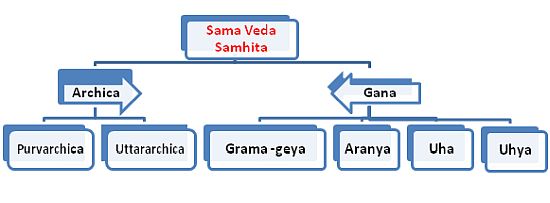
In summary; The Sama Veda Samhita, is arranged in two primary sections – the verse books (Archica) and melody books (Gana). The Archica is divided in two parts: Purvarchica and Uttararchica.  And, as regards melody (Gana) there are four styles of singing hymns: Grama-geya-gana; Aranya-gana; Uha-gana; and; Uhya-gana.  There is a mutual relation between the Riks contained in Arcika and the Gana books.

Sama Veda 4

*

  1. Sama-chanting

5.1. The priests who sing the Mantras at the Yajna are designated as Udgathru-s (derived from udgita – to sing ’high’ or loud).

Chandogya Upanishad (1.3.6) explains the term Udgita by splitting it into three syllables ud-gī-tha: Ud meaning breath (Prana) in high pitch (utti shati); Gir refers to speech (vag gī); and, tha : in which all this is established (sthita )

atha khalū-udgīthākarāy upāsīta ud-gī-tha iti | prāa evot |prāena hy uttiṣṭhati | vag gī | vāco ha gira ity ācakate | anna tham | anne hīda sarva sthitam || Ch.Up_1,3.6 ||

The Sama Veda Samhita came to be compiled, essentially, for the use and guidance of Udgathru-s .  They were usually a group of three singers (Prasthothru, Udgathru and Prathiharthra). And, the group, together, rendered the Sama in five stages.

Prasthava: The initial portion of the mantra is sung by an Udgathru designated as Prasthothru.  And, he starts with a deep Huuum sound (Hoon- Kara).

Udgita: Prasthothru is followed by the chef Ritwik (designated the chief Udgathru) who sings his portion of the Rik. He commences with an elongated Om Kara.

Prathihara: the mid-portion is sung loudly by Prathiharthra. This adulates the Devatha to whom Rik is addressed.

Upadrava: The chief  Udgathru sings again; and

Nidhana: the final portion is sung by all the three together, commencing with prolonged Om-kara.

When a mantra, as per the above format, is sung three times, it is then a stoma. Some texts describe the set of these five stages (Prasthava, Udgita, Prathihara, Upadrava and Nidhana) as Bhakthi. Its number is extended to seven by adding Hoon- Kara and Om Kara.

  1. Elements of chanting

6.1. Shiksha, a branch of Veda lore (vedanga), deals with elements of chanting and phonetics. According to Taittiriya Upanishad (1. 2), the elements of chanting includes six factors: Varna (syllable); Svara (accent); Maatra (duration); Balam (stress); Sama (even tone) ; and Santana (continuity) . The first four deal with correct pronunciation of individual syllables; and the last two with the recitation of the entire line or the verse.

oṃ śīkṣāṃ vyākhyāsyāmaḥ | varṇaḥ svaraḥ | mātrā balam | sāma santānaḥ | ityuktaḥ śīkṣādhyāyaḥ ||

Briefly, Varna is the correct pronunciation of every isolated syllable, combination of consonants and ovals and compound letters. Svara is how a syllable has to be pronounced in one of the three accents (udatta, anudatta and svarita). Maatra is the time duration for pronouncing a syllable. There are of four types: hrasva– a short one – duration for short ovals; dhirga –  two unit-duration for long vowels; plutam– longer than two–unit duration; and, the fourth is ardha- maatra, half unit, meant for consonants not accompanied by vowels.

Sama Svaras

6.2. In the beginning, Sama-gana employed only three notes called Udatta, Anudatta and Svarita. The lyre (Vana-Veena) accompanying the singing had only three strings, one for each note. The songs were perhaps like Ga Ga -Re Re -Sa Sa Sa. This kind of singing might have suited for chanting hymns.

The three notes were differentiated depending on whether it was produced from above or below the palate (taalu).

Udatta refers to sound produced from above the palate; and is acutely accented (uchchaih).

Anudatta was gravely accented (nichaih); produced from below the palate.

Svarita is a combination of udatta and anudatta, with udatta in the first-half. It is called a circumflexed accent.

[It is also explained that in context of Sama Veda , Udatta meant the highest Svara; Anudatta , just lower; and Svarita is the summation of the two.]

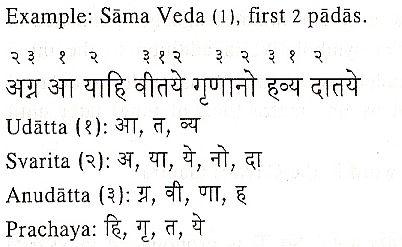
In the written/printed texts of the Rig Veda, Udatta is not indicated by any symbol; Anudatta is indicated by underlining the syllable; and Svarita is indicated by a vertical line above the syllable.

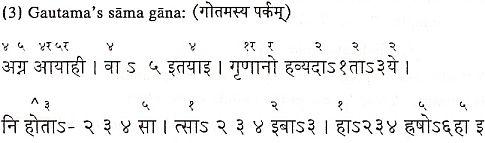
The Sama–gana texts, however, indicate Udatta by writing the Sanskrit numeral –one above the letter; Anudatta by writing the numeral–three above the letter; and Svarita by writing the numeral–two above the letter. In the Sama text, the syllables that have no symbols are called prachaya.

Please see the following example:

  1. Sama Svara and Venu Svara

7.1. Dr. Lalmani Misra, a noted scholar, explained the (Rig) Vedic priests used a single or two notes. The Sama singers improved on that and used at least three notes. “The singers explored further and discovered more notes. M G R S D has been determined to be the basic set of notes used in this order by Sāmik singers” , he said, “Sāmik notes were exactly those followed in Shadja grāmik tradition.”

7.2. As Sama-gana originated from the Yajna, its purpose, at least in the initial stages, was limited to chanting by the Udgathrus. Later, as the Sama Music developed, the number of notes increased from three to four, then five (which continued for a very long time), then six and finally seven. With that, the number of strings of the lyre too increased. Thus, over a period, the Sama scales expanded from three to seven notes. (It is not clear when or at what stage seven notes were introduced into Sama).

7.3. Naradiya Shiksha is a text that deals mainly with the musical notes and the pronunciation of the words in the Vedic language. Some believe it might pre-date Bharata’s Natyashastra. Narada Shiksha explaining the Sama music states that there were three Gramas (Sadja, Madhyama and Gandhara). It also mentions that each Grama has seven Murchanas (a total of 21 Murchanas). (But, it does not define Grama or Murchana). The set Murchanas related to Gandhara Grama are meant to please Devas; and the other two to please Pitris and Rishis. In addition, it mentions 49 Taanas.

[According to some other texts (Samavidhana Brahmana and Arseya Brahmana), Sama-Gana employed seven Svaras (notes): 1. Prathama; 2. Dvitiya; 3. Tritiya; 4. Chaturtha; 5. Panchama or Mandra (low); 6. Shasta or Krusts (high); and, Antya or Atiswara (very high)]

7.4. Naradiya Shiksha relates the Sama Svaras to the notes on the flute (Venu) as: Ma, Ga, Ri, Sa, Dha, Ni, and Pa.

Sama svara Venu svara
01 Prathama Madhyama Ma
02 Dwithiya Gandhara Ga
03 Trithiya Rishabha Ri
04 Chathurtha Shadja Sa
05 Panchama Nishadha Ni
06 Shasta Daiwatha Dha
07 Sapthama Panchama Pa
       

7.5. In the later Sama texts, it became customary to write the numerals (one to seven) on top of the Sama mantras to indicate their note-delineations (Sama vikara).

  1. Derivation of Svaras

8.1 . Naradiya Shiksha (1.5.3; 1.5.4) explains that each Sama-svara was derived from the sounds made by a bird or an animal in its appropriate season. For instance, bulls roar was Rishabha; kraunchaka’s (heron) cry was Madhyama; elephant’s trumpet was Nishadha; and koel’s (cuckoo) melodious whistle was Panchama and so on. Please see the table below.

Name in SamaMusic Symbol Sama VedaSvara Bird/animalSound associated
Madhyama Ma svarita heron
Gandhara Ga udatta goat
Rishabha Ri anudatta bull
Shadja Sa svarita peacock
Nishadha Ni udatta elephant
Daiwatha Dha anudatta horse
Panchama Pa svarita koel
  1. Descending order of Sama Svaras

8.1. As can be seen, the Sama notes were of Nidhana prakriti (diminishing nature) or Vakragati, following Avaroha karma, a descending order (uttarottaram nicha bhavanthi).

The order of the Svaras in Sama-music was: Ma, Ga, Ri, Sa, Ni, Dha, and Pa. The order of the svaras was revised in the later texts to: Sa, Ri, Ga, Ma, Pa, Dha and Ni ; as we are familiar with it today.

[Another Shiksha text, the Yajnavalkya Shiksha gives the names of the seven Svaras as SA-RI-GA-MA-PA-DA-NI; and says that the seven Svaras belonged to Aranya-gana.]

Dr. Misra says  that the ancient musical scale using notes in descending order can be translated into modern Shadja grām by considering the Madhyam  to be Shadja and moving up the scale.

8.2. Even then, since the Sama notes were in a descending order there was not much flexibility in music. Dr. Misra remarks “In those times there were no microphones or loudspeakers. Sam was sung in large, wide, open or canopied spaces, with the intention that all present should be able to hear it. In such a condition if the song has notes M G R S D (as in Sama) it would be audible at best in a single room, but if the notes, S N D P G starting from Tār-saptak are sung they would be loud enough for all to hear. So, from this angle of usage too, S N D P G seems more appropriate than M G R S D. “

Further since the Raga concept was, then, yet to be evolved, there might not have been much depth and variation in the rendering of Vedic or Sama music.

As Dr. N.Ramanathan, a noted musicologist remarked, Sama music was to acquire the rhythmic-time- patterns. That is to say, the taala system was yet to evolve.

  1. Development of Sama music

9.1. The Sama music, in its later stages, was just ripe; and it was also eager to grow and expand both in scope and content.

Historically, the Sama chanting is recognized by all musicologists as the basis for the Indian Music. The roots of Sangita, the traditional (classic) Indian Music are firmly founded in Sama- gana.

9.2. The Saman initially gave rise to a body of devotional songs called Marga or Gandharva sung in Jati. No matter who sang and in which region it was sung, the Sama and the Marga music had to follow the traditional approved format.

As a result of the disciplines evolved over the ages, a well structured system of music could be erected during the Gupta period on the foundations of the Sama–gana. It was during this period that Indian music started gaining the form with which we now are familiar.

9.3. From Marga, the devotional music (Vaidika) , was born the Art music (laukika) Desi,  the Music of Ragas. Desi, the one derived from regions, sprang from the common people; and, it varied from region to region. Desi was inspired from life, spontaneous and fluid.

9.4. Then for over a thousand years the Music scene was dominated by a structured Music (Nibaddha-samgita) format called Prabandhas (a type of Khandakavya). Since Prabandha grew rigid it had to give place, by about 17th century, to varieties of free flowing (Manodharma-samgita) such as Padas,  Kritis or Kirtanas, Varnas, Javalis etc.

9.5. Of late, the Marga and Desi; the classical folk and other improvised forms Of Music are coming together, enriching and inspiring each other. It is wonderfully delightful development.

  1. Music and spiritual progress

10.1.  Music in the Vedic times was sung and played for entertainment. Its other main use was during the performance of the Yajna; and it was here that Sama-gana was born. The concept of Nada-Brahman does not appear in Rigveda or in the early Upanishads. The metaphysical concept of Nada – Brahman is not discussed either in Sama Veda or its recitations (shakhas).  It seems to have come from Yoga or Agama.  Similarly, the notion  that music would lead to spiritual development did not seem to have existed then.

10.2. It was only in the later texts, say of 4th to 6th century AD, such as Brihaddeshi, Vayupurana and Naradiya shiksha assigned the musical taanas, names of the various Yajnas; and said that the benefits of those yajnas could be obtained by singing the relative taanas. It seems , at that stage, the idea that music was a way to liberation (moksha sadhana) was yet to get established .

[ In the later times,  Music was elevated to the status of a Veda ; and , came to be reckoned as the fifth Veda (Panchama Veda).  It was, therefore, held in high esteem and invested with an aura of spiritual pursuit (Sadhana),  leading to liberation from earthly-attachments. It is said; for both the performer and the good-hearted listener (sah-hrudaya), pure-music (Samgita) can be a fulfilling blessed experience. 

For instance ; Yajnavalkya (Yajnavalkyasmrti-III-4-115) describes Samgita as the most sublime of all the fine-arts that pleases ; and , has the potential to convey all shades of emotions . It is a Vidya that, if practiced diligently, can lead the aspirant towards liberation- mokamārga niyacchati

āvādanatattvajña śrutijātiviśārada / tālajñaś cāprayāsena mokamārga niyacchati // Yj_3.115 //

gītajño yadi yogena nāpnoti parama padam /rudrasyānucaro bhūtvā tenaiva saha modate // Yj_3.116 //

And much later, Abhinavagupta, commenting on Natyashastra, remarked that Gandharva bestows bliss and leading towards Moksha. Such Music , he said, is a worthy offering to gods.  And, gods would be delighted with sublime Music than with reading Puranas or lecturing on Yoga exercises.

In support of his observation, Abhinavagupta quotes verses (26,27 and 28 of Chapter 36) of the Naytashastra :

The recital of poetry, performance of dance (drama) along with songs and instrumental music are equal in merit to the recitation of Vedic hymns.

hyaya tathā geya citravā aditrameva ca  veda-mantrārtha-va-canai sama hyatad bhaviyati 26

I have heard from the god of gods (Indra) and even from Shankara (Shiva) that music (vocal and instrumental) is indeed purer and superior to taking a ceremonial dip in a river and repeating a mantra (Japa) a thousand times.

śruta mayā devadevāt tattvata śakarāb-ddhitam  snāna japya saha srebhya pavitra gīta vāditam 27

Whichever places that reverberate with the auspicious sounds of songs and music of Natya will forever be free from inauspicious happenings.

yasmin nātodya nāyasya gīta pāhya dhvani śubha  bhaviyatya śubha deśe naiva tasmin kadācana 28॥ ]

***

  1. Musical instruments

We may make a brief mention about the musical instruments mentioned in Rig Veda,.  The following musical instruments find reference in the Rig Veda. These instruments later developed into vana (lyre), veena, Venu or vamsha (flute) and mridanga (drums).

Karkari (RV 2.43.3) and Tunabha were veena –like string instruments. In fact, all string instruments were called veena.

Vana (RV 1.85.10; 6.24.9 etc.) was a lyre; a plucked string instrument like a harp. Rig Veda (10.32.4) mentions the seven tones (varas0 of the vana (vanasya saptha dhaturit janah).

Naali (RV 10.135.7) was a wind instrument similar to flute.

Dundhubhi (RV 1.28.51; 6.47.29 etc.) was a drum to keep betas and rhythm.

Adambarara was also a drum made from udambara tree.

Shanka vadya blowing of conch is also mentioned.

Musical instruments were basically used as accompaniments to singing and dancing. There are no references to playing them solo.

(*)While on the subject of swaras, let me append here the wonderful explanation of the swaras in Indian music offered by Shri S Rajam the renowned artist and musician. He says:  The Seven swaras have twelve swara divisions:

Carnatic System Syllable Hindustani System Western
Shadja SA Shadj C
Suddha Ri R1 Komal Rishab D Flat Db
Chatusruti Ri R2 Thivra Rishab D
Sadarana GA G1 Komal GA E Flat Eb
Antara GA G2 Thivra GA E
Suddha MA M1 Komal MA F
Prati MA M2 Thivra MA F Sharp F+
Panchama PA Pancham G
Suddha Da D1 Komal Da A Flat Ab
Chatusruti Da D2 Thivra Da A
Kaisiki NI N1 Komal NI B Flat Bb
KakaliNI N2 Thivra NI B


SA & PA are constant. Others have two levels (sthanas). Thus there exist twelve swara sthanas. Four more having shades of other swaras – Suddha Gandharam, Shatsruti Rishaba, and Suddha Nishada  & Shatsruti Dhaivata – make up a total of sixteen.

72 Sampoorna Ragas having all seven swaras both in ascending (arohana) & descending (avarohana) emerge as Mela ragas. Each mela has all the seven swaras but drafts varying swarasthana formulations.

Each mela raga applied to permutations & combinations of swara sthanas gives scope to 484 janya (sub) ragas. 72 mela ragas have thus a potential to give the colossal 34776 janya ragas. Of course, this is only an arithmetical projection & not a melodic feasibility.

Of 72 melas, the first 36 have M1 & the second 36 have M2.

http://www.indian-heritage.org/music/Melakartha%20Raga%20Booklet%20-%20new.pdf

Sources and References

http://www.omenad.net/page.php Dr. Lalmani Mishra

Sama-gana : http://en.wikipedia.org/wiki/Samagana

http://www.ragaculture.com/history.html

The tradition of Indian art music (a historical sketch)   by Acharya Chintamani Rath

Sama Veda & its Music by R L Kashyap

 Vaidika sahithya Charithre by Dr, NS Anantharanga Char

*

*
Painting by Shri S Rajam

http://rkmathbangalore.org/Books/Vedanta%20Kesari/%282007,%20September%29.pdf

 
30 Comments

Posted by on September 15, 2012 in Music, Rigveda, Sanskrit


Tags: , , ,

The state of music in the Ramayana

My friend Shri DSampath posted a delightful blog weaving the Ramayana tale with colourful strands of lines of great charm set   in catchy tunes, chosen from popular Hindi movie songs. It was enterprising and highly entertaining too. Naturally, the blog was well received and was hugely popular. I enjoyed the sparkle of wit and wisdom.

That set me to think about Ramayana and music.

Ramayana

anjan7bRajam

After the Music of Sama comes the singing of Akhyana or ballads, narrating a story in musical forms. Of all the Akhyana-s, the Ramayana of the Adi Kavi Valmiki is the most celebrated one. It is a divine ballad (Akhyanam Divyam) narrating history of ancient times (Itihasam puratanam).

It is believed; the Ramayana had its origins in folk lore; and was preserved and spread as an oral epic (Akhyana), for a very long-time. It is suggested that poet Valmiki rendered the folk lore into a very beautiful, sensitive and lyrical epic poem by about 7th century BCE. Thereafter, in age after age, the Suthas narrated and sang the glory of Rama and Sita, in divine fervor; and spread the epic to all corners of the land and beyond. Even to this day , the tradition of devote groups of listeners gathering around a Sutha to listen to the ancient story of chaste love between Rama and his beloved, and their unwavering adherence to Dharma amidst their trials and tribulations; is still very  alive. What characterize the Dharma in Ramayana are its innocence, purity and nobility. The Indian people prefer listening with joy, the rendering of Ramayana as musical discourse, to reading the epic themselves.

Ramayana of Valmiki is a renowned Kavya, an Epic poem in classic style. It is also the Adi-Kavya, the premier Kavya; the most excellent among the Kavyas (Kavyanam uttamam); and, the best in all the three worlds (Adikavyam triloke).

The Epic of Valmiki is at the very core of Indian consciousness; and is lovingly addressed variously as:

  • Sitayasya-charitam-mahat;
  • Rama-charitam;
  • Raghuvira-charitam;
  • Rama-vrttam;
  • Rama-katha; and
  • Raghu-vamsa-charitam.

The Great scholar-philosopher Abhinavgupta (Ca.11th century) hailed Valmiki as Rasa Rishi one who   created an almost perfect epic poem adorned with the poetic virtues of Rasa, Soundarya (beauty of poetic imagery) and Vishadya (lucid expression and comfortable communication with the reader) ; all charged and brought to life  by Prathibha , the ever fresh intuition.

The Adi Kavi states that his Epic poem  (Kavyam)  Ramayana , adorned with Srngara,  Karuna, Hasya, Raudra, Bhayanaka and Vira Rasas is sung by Kusi – Lava – 

 rasaiḥ śṛṃgāra karuṇa hāsya raudra bhayānakaiḥ | virādibhī rasair yuktam kāvyam etat agāyatām (R.1-4-9 )

Music

Ramayana is more closely associated with music than other epics. That might be because Ramayana is rendered in verse; and, its poetry of abiding beauty melts into music like molten gold, with grace and felicity. Further, the epic has a certain lyrical lustre to it. The epic itself mentions that the Rama tale was rendered in song by two minstrels Kusi and Lava to the accompaniment of Veena, Tantri- laya-samanvitam (I.20.10), during the Asvamedha.

There are innumerable references to Music in Ramayana. Music was played for entertainment and in celebration at the weddings and other auspicious occasions; (II.7.416-36; 48.41.69; III.3, 17; 6.8; IV 38.13; V.53.17; VI.11.9; 24.3; 75.21 etc.)  . Music was also played in palaces and liquor parlours (IV 33.21; V.6.12; X.32; 37.11.4; Vi.10.4). Soulful songs were sung to the accompaniment of instruments, at religious services and in dramas. Music was played in the festivities; to welcome and see off the guests. The warriors fighting on the battlefield were lustily cheered and enthused by stout drum beats;   and piercing blow of conches, horns and trumpets.

There is also mention of those who took to music as a profession. Besides, there were court (state) sponsored musicians. Music was thus a part of social fabric of the society as described in Ramayana.

There are numerous events narrated in Ramayana where Music was sung or played. The word Samgita in Ramayana is a composite term covering Gana (vocal), Vadya (instrumental) and Nritya (dance). Samgita or Music was referred to as Gandharva-vidya. There is also a mention of Karna sung to the accompaniment of Veena (R. VII. 71.5). Samgita was also Kausika (kaisika) the art of singing and dancing (gana-nrtya-vidya), the art of singing and dancing in groups (kausika-charya) to the accompaniment of instruments.

 For instance:

:- The sage Valmiki, the author of the Epic, at the commencement says that the Ramayana he composed is well suited to musical rendering in melodious (madhuram) tunes (Jatis) having all the seven notes (Svaras) in three registers (vilambita, Madhyama and Drita) with proper rhythm (laya) to the accompaniment of string instruments (tantrī laya samanvitam)

– pāhye geye ca madhuram pramāai tribhir anvitam | jātibhi saptabhi yuktam tantrī laya samanvitam (R.1-4-8)

:- Describing the glory and the beauty of Ayodhya, it is said the city resounding with the rhythmic  drum beats of Dundubhi, Mrudanga and Panava; with the melodious tunes of string instruments like Veena , the city , indeed, was unique ; and undoubtedly the best city on earth

dundubhībhi mdangai ca vīābhi paavai tathā | nāditām   bhśam atyartham pthivyām tām anuttamām (R.1.5.18)

: – And, in the hermitage of Rishyasrnga the girls sent by King Lomapada sang and danced

tāḥ citra veṣāḥ pramadā gāyaṃtyo madhura svaram  (R.I .10.11 ).

 :- When  Sri Rama and his three brothers took birth, the Gandharvas in great jubilation  sang cheerfully; the celestial nymphs Apsaras danced with great delight, the Devas played on the drums enthusiastically, while the heavens showered flowers ; and,  with that there was a great festivity in Ayodhya among its joyous people who had  thronged in celebration

jagu kalam ca Gandharvā nantu ca Apsaro gaā | deva dudubhayo nedu pupa vṛṣṭi ca khāt patat  utsava ca mahān āsīt ayodhyāyām janākula (R. 1-18-17 )

: – Sri Rama himself is said to have been proficient in Music (Gandharve Ca bhuvi Sresthah).

: – As Lakshmana enters the inner court  of the Vanara King Sugriva, he hears singing and ravishing strains of the music of the Veena and other string instruments.

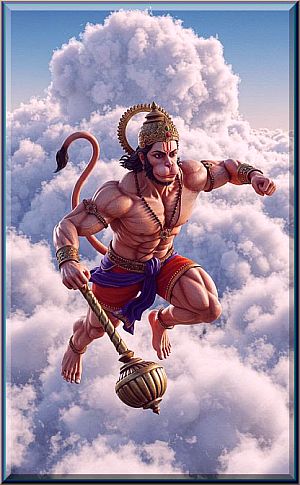
: – As Hanuman flew over the sea towards Lanka he heard a group of musicians singing sons (kausika-charya).

:-  Hanuman , as he entered the city of Lanka, while going from one building to another,  heard a sweet song which was decorated by sound from the three svaras – Mandra, Madhya and Tara of love lorn women like Apsara women in heaven.

:-Hanuman while wandering at night through the inner courts of Lanka heard melodious and sweet  songs adorned with Tri-sthana and Svara; and, the songs had regular Taala (sama-taala) and aksara (words) – (R.V.4.10)

– Śuśrāva madhuram gītam tri sthāna svara bhūitam | strīām mada samddhānām divi ca apsarasām iva  (R . 5-4-10 )

:-  Hanuman heard musical notes coming from stringed instruments which were comforting to ears:

Tantrīsvanāh karasukhā pravttā | svapanti nārya patibhi suvttā (R. 5-5-9 )

:-  Hanuman found the huge palace of Ravana, vast like the legendary mansions of Kubera, encircled by many spacious enclosures; filled with hundreds of best women; and, resounding with the sounds of percussion on Mrudangas with deep sound

mdanga tala ghoai ca ghoavadbhir vināditam ( R.5-6-43)

:- Silently wandering through the inner courts of Ravana, in the middle of the night, the bewildered Hanuman came upon sleeping groups of women, adorned with rich and sparkling ornaments (R 5.10-37-44) . These women who were skilled in dance and music, tired and fast asleep, lying in various postures, was each clutching or hugging to a musical instrument ; such as Veena,  Madduka; pataha; Vamsam ; Vipañchi; Mridanga ; Paava; Dindima;  and, Adambar. 

Hanuman  sees a lady of the court, tired and asleep, clutching to her Veena,  like a cluster of lotuses entwining a boat moored on the banks of a stream

kācid vīām parivajya prasuptā samprakāśate | mahā nadī  prakīrā iva nalinī potam āśritā (R. 5-10-37  )

There was one woman with black eyes sleeping with an instrument called Madduka under arm pit shone like a woman carrying an infant boy with love

Maḍḍukena asita īkaā | prasuptā bhāminī bhāti bāla putrā iva vatsalā  (5-10-38).

A woman with beautiful body features and with beautiful breasts slept tightly and hugged instrument called Pataha as though hugging a lover, meeting him after a long time

paaham cāru sarva angī pīya śete śubha stanī | cirasya  ramaam labdhvā parivajya iva kāminī (5-10-39)

Another woman with lotus like eyes hugging a  vaśam (flute  ) slept like a woman holding her lover in secret

kācid vaśam parivajya suptā kamala locanā | raha priyatamam ghya sakāmeva ca kāminī (R. 5-10-40 )

Another woman skilled in dance obtained sleep getting  Vipanchi an instrument like Veena and being in tune with it like a woman together with her lover

vipañcaiim parighyānyā niyatā nttaśālinī | nidrā vaśam anuprāptā saha kāntā iva bhāminī (R.5-10-41)

Another woman with lusty eyes slept hugging a percussion instrument called Mridanga

Anya kanaka … mdangam paripīya angai prasuptā matta locanā (R. 5-10-42 )

Another tired woman slept, clutching an instrument called Panava between her shoulders and reaching arm pits

bhuja pārśva antarasthena kakagena krśa udarī | paavena saha anindyā suptā mada krta śramā (R. 5-10-43 )

Another woman with an instrument called Dindima near her slept in the same way as a woman hugging her husband and also her child

iṇḍimam parigrhya anyā tathaiva āsakta iṇḍimā | prasuptā  taruam vatsam upagūhya iva bhāminī (R. 5-10-44 )

And, Another woman with eyes like lotus petals slept making the instrument called Adambara pressing it by her shoulders

kācid āambaram nārī bhuja sambhoga pīitam |ktvā kamala patra akī prasuptā mada mohitā (R. 5-10-45 )

Some excellent women slept hugging strange instrumentsātodyāni vicitrāi parivajya vara striya(6.10.49)

: – Some versions of Ramayana mention that Ravana was a reputed Saman singer; and music was played in his palace. He, in fact, suggests to Sita, she could relax like a queen listening to music in his palace, instead sitting tensely under the tree

– mahārhaṇi ca pānāni śayanānyāsanāni ca | gītam nṛttaṃ ca vādyaṃ ca labha maṃ prāpya maithili (R. 5-20-10 )

:- According to some versions of the Ramayana , Ravana was a well known player of Veena  called Ravana-hastaka (an instrument played with a bow).

:- As Ravana’s soldiers prepare for the war, they hear the sounds of the Bheri played by Rama’s monkey –army. Sarama asks Sita to listen and rejoice the Bheri sounds resembling the thundering rumbles of the clouds

Samanahajanani hesya bhairava bhiru bherika / Bherinadam ca gambhiram srunu toyadanihsvanam – (6-33-22)

:- Ravana  compared the battlefield to a music stage; bow (weapon for firing arrows) to his Veena; arrow to his musical bow; and the tumultuous noise of the battle to music

– jyā śabda tumulām ghorām ārta gītam ahāsvanām | nārā catalasam nādām tām mamā hita vāhinīm | avagāhya maha raṅgam vādayiṣyāntagan raṇe – ( R. VI: 24:43-44)

:- As the battle ended with victory to Rama, the  Apsaras danced to the songs of Gandharvas, such as Narada the king of Gandharvas (Gandharva-rajanah), Tumbura, Gopa, Gargya, Sudhama, Parvata, and Suryamandala (R.6.92.10). Tumbura sang in divine Taana (divya-taaneshu).

:-The triumphant Rama, the foremost among men, on his return, was greeted and loudly cheered by the people of Ayodhya accompanied by sounds of conchs  (shankha) buzzing in the ears and tremendous sounds of Dundhubi

 – Śankha śabda praādaiśca dundubhīnān ca nisvanai | prayayū puruavyāghrastā purīn harmyamālinīm (R. 6-128-33)

:- Rama drove to his palace, surrounded by musicians cheerfully playing on the cymbals, Swastika and such other musical instruments singing auspicious (mangalani) songs

– Sa purogāmi abhistūryaistālasvastikapāibhi | pravyāharadbhirmuditairmagalāni yayau vta ( 6-128-37 )

:- On that auspicious and most joyous occasion of the coronation of the noblest Sri Rama, the Devas, the Gandharva sang gracefully ;and , the troupes of Apsaras  danced with great delight

– Prajagur deva-gandharvā nantuśc āpsaro gaā | abhieke  tadarhasya tadā rāmasya dhīmata (6-128-72 )

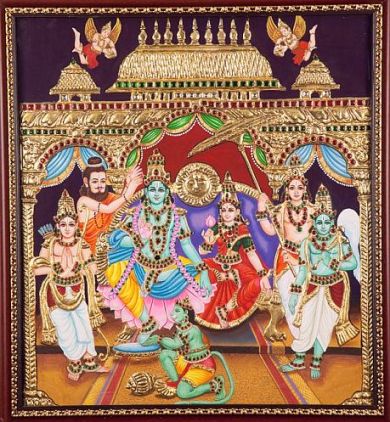
 Ramapattabhishekam

Music terms

Ramayana is not a thesis on music; it is an epic poem rendering the story of chaste love between a husband and his wife. The music or whatever elements mentioned therein is incidental to the narration of the story. And, yet, Valmiki accorded importance to music and elements of music in his work. He crafted situations where music could be introduced naturally. More importantly, his verses have a very high lyrical quality; and, can be rendered into music quite easily. All these speak of Valmiki’s   love for music and his aesthetic refinement.

Many Music-terms are mentioned in Ramayana, indicating the state of Music obtaining during the time of its composition – (not necessarily during the event-period).

:-  Valmiki mentions that Kusi–Lava sang in Marga style – Marga-vidhana-sampada – (R. I.4.35); in seven melodic modes called Jatis (jatibhih saptabhir) that were pure (shuddha) – (R. I.4.8 ).

:-  Valmiki endorsed use of sweet sounding words, with simple and light syllables; and advises against harsh words loaded with heavy syllables (R. IV.33.21).

: – The music of Kusi-Lava was Baddha, structured into stanzas – with apt rhythm (laya), tempo (sthana) and words (Pada)-  (R.I.4.8).

:-  Valmiki mentions, Kusi-Lava were familiar with Murchana and Tri- Sthana; as also with the rhythmic patterns – Laya, Yati – in three-speeds. Tri-Sthana might either refer to three voice registers (Mandra, Madhyama and Tara) or three tempos (Vilamba, Madhyama and Druta).

: – Lava and Kusi were said not to fall away from Raga. Here, the term Raga is said to mean sweetness of voice (kanta-madhurya).

Here are some terms that  might need short explanation:

: – Marga or Gandharva is regarded the music fit for gods.  It is said to have been derived from Sama Veda; and constituted of Pada (the text), Svara (notes) and Taala (rhythm).Marga was rather sombre and not quite flexible too. Marga or Gandharva in the later centuries gave place to free flowing Desi the Music derived from the folk and the regions.

:- Baddha is a song format that is well structured into stanzas – with apt rhythm (laya), tempo (sthana) and words (Pada). It contrasts with Anibaddha unstructured Music without restrictions of Taala. It is analogous to the present-day Aalap, and rendering of Ragamalika, Slokas etc. The Baddha – Anibaddha distinction is observed even today, just as in Valmiki’s time.

: – Grama (group) was the basic gamut of notes employed in the early music-tradition. The ancient tradition is said to have employed three Grama-s beginning from ShadjaMadhyama, or Gandhara note. Later, the third Grama, based on Gandhara reportedly went out of vogue as it required moving in a usually high range of notes.

: – Jati refers to the classification of musical compositions as per the tones. Svaras and Jatis were seven primary notes such as Shadja, Rshabha etc of the octaves – patya-jati. Ana is said to be a drag note generally called ekasruti.

It means Kusi Lava rendered the verses in several melodies. However, since the raga concept was, then, yet to be evolved, there might not have been much depth and variation in their rendering.

:-   Murchhana was the ancient mode of extending available tonal frameworks by commencing ascents and descents, ranging over (purna) seven notes, every time from a new note. This mode gave place to the Mela system around the 15th -16th century.

Instrumental Music

Valmiki’s Ramayana mentions varieties of musical instruments. The musical instruments were collectively mentioned as Atodya The term also  denoted instrumental music. The musical instruments, of the time, were categorized, broadly, as those played by hand (hastha-vadya); and as those played by mouth (mukha- vadya) (R. II.65.2).

The string and percussion instruments came under the former category; while the wind instruments were among the latter category. Instrumental Music was primarily individualistic; not orchestrated.

It appears instruments were used mainly as accompaniments (not solo) and depended on vocal music. Group music- vocal with instruments –appeared to be popular.

In another manner , the musical instruments were  classified under four broad categories : Tatha which included all stringed instruments; Anaddha which included all that  were covered or were struck like drums; Sushira which included all wind  instruments like the flute and the Shanka; and, Ghana which included all  solid cymbal-like resonators.

String instruments

Among the string instruments (Tatha), Ramayana mentions two kinds of Veena: Vipanchi (fingerboard plucked ones with nine strings like the Veena as we know) ;Vana or Vallaki (a multi stringed harp); and, Kanda-Veena (made by joining reeds). In fact, till about 19th century, string instruments  of all kinds were called Veena: harps like the Chitra; fingerboard plucked ones like  the Vipanchi,  Rudra Veena, the Saraswati Veena and the Kacchapi Veena; bowed ones such as the Ravana hastaveena and the Pinaki Veena.

Percussion instruments

As regards the percussion instruments, the Epic refers to quite a large number of them:

    • Mrudanga; Panava (a kind of Mridanga which had a hole in the middle with strings were laid from one side to another);
    • Aataha; Madduka (a big drum of two faces having twelve and thirteen angula- finger lengths);
    • Dundubhi (Nagaara); Dindima (resembling Damaru but smaller in size);
    • Muraja (a a bifacial drum, the left one of eight fingers and right one of seven fingers);
    • Adambara (a sort of kettle drum made of Udambara wood);
    • Bheri (two faced metal drum in a conical shape , the leather kept taut by strings; the right face was struck by a kona and the left one by hand, striking terror in the heart of the enemy 
    • Pataha (resembling Dholak);  and
    • Dundubhi (drums made of hollow wood covered with hide) played during wedding ceremonies as also for welcoming the winning-warriors .

Gargara was another drum used during the wars.

 All these were leather or leather bound instruments. They were played with metal or wooden drum-sticks with their ends wrapped in leather.

There is also a mention of BhumiDundubhi where the lower part of a huge drum is buried in a pit while the exposed upper part covered with animal hide is beaten with big sized metal or wooden drum-sticks to produce loud booming sounds. It was played during battles to arouse the warriors; to celebrate victory; or in dire emergency. BhumiDundubhi was also played at the time of final offering (Purna-Ahuthi) at the conclusion of a Yajna.

The other instruments to keep rhythm (Taala) were: Ghatam and cymbals. Aghathi was a sort of cymbal used while dancing.

Wind instruments

The instruments played by mouth (mukha- vadya) , that is the wind instruments, mentioned in Ramayayana include :

    • Venu or Vamsa (flute) ,
    • Shankha ( conch) blown on auspicious occasions and at the time of wars ;
    • Tundava (wind instrument made of wood);
    • Singa ( a small blower made of deer horns to produce sharp and loud sounds); and,
    • kahale or Rana-bheri (long curved war- trumpet).

The flute was also used for maintaining Aadhara- Sruthi (fundamental note). [Tambura or Tanpura did not come into use till about 15th-16th century.]

State of Music

It is evident that during the period in which Ramayana was composed (say 7th century BC) , the Music was fairly well developed ; and the basic concepts were, in place. However, a full-fledged musicology and elaborate theories on music were yet to develop. Marga system was prevalent; and, Desi with its Ragas was yet centuries away.

Singing well known texts of poetry, in public, appeared to be the standard practice.  Instruments were used for accompaniment and not for solo performances. Group singing with instrumental support appeared to be popular. Music was very much a part of the social and personal life.

Mahabharata

As compared to Ramayana, there is relatively less information about Music in Mahabharata. Yet; Music (Gandharva) did occupy an important place in the life of its people. There are references to Music played on various occasions, including welcoming and seeing off the guests.  Along with singing (Gita) such Musical instruments as Panav, Vansa and Kansya Tala etc., were played. The Music instruments were broadly covered under the term Vaditra, denoting the four-fold group of Tata, Vitata, Ghana and Sushira -Vadyas.

In Shanti-parva, there are references to Veena and Venu.  The string instrument (Tantri-Vadya) Veena, was played during religious ceremonies like Yajnas; and, for relaxation by the ladies of the Queen’s court- vīṇā-paṇava-veṇūnāṃ svanaś cāti manoramaḥ / prahāsa iva vistīrṇaḥ śuśruve tasya veśmanaḥ – 12,053.005

In Dronaparva, there are references to Drum class instruments like: Mridanga, Jharjhara, Bheri, Panava, Anaka, Gomukha, Adambara, and Dundubhi (paṇavānaka-dundubhi-jharjhar-ibhiḥ – 07,014.037).

Andin Virata-parva, there is a reference to Kansya (solid brass instrument), the cymbal; Shankha (conch) and Venu (flute), the wind instruments Sushira -Vadyas. And, Gomukha was perhaps a cow-faced horn or trumpet – śaṅkhāś ca bheryaś ca gomukhā-ḍambarās tathā – 04,067.026.

The known Musical Instruments of the Mahabharata Period could be grouped as under:

Muscial instruments in Mahabharata

elepphant carriage

References:

Ramayanadalli Sangita (Kannada) by Dr. R Satyanarayana

Origin of Indian Instrumental Music Music is found …

http://shodhganga.inflibnet.ac.in/bitstream/10603/13634/8/08_chapter%202.pdf

http://www.4to40.com/discoverindia/index.asp?article=discoverindia_musicalinstruments

Musical Instruments

http://www.hvk.org/articles/1098/0000.html

Telling a Ramayana

www.srinivasreddy.org/summer/History%20Notes.doc

Music of India

http://www.nadsadhna.com/glossary.html

Glossary of music terms

The Music and Musical Instruments of North Eastern India by Dilip Ranjan Barthakur

Painting by Shri S Rajam


16 Comments

Posted by on September 15, 2012 in Music, Rigveda, Sanskrit


Tags: , , , ,

Who were the Vratyas – the searching wanderers?

[This article attempts to trace the meaning that the term Vratya acquired  at various stages in the unfolding of Indian history; and, wonders how well that meaning mirrored the state of Indian society at that  given stage.]

Every civilization has certain unique features, which differentiate it from the rest. Indian civilization is distinguished by its resilience; continuity with change; and its diversity. The composite fabric of Indian civilization is woven with strands and shades of varying textures and hues.

Rig Veda repeatedly refers to the composite character of its society and to its pluralistic population. It mentions the presence of several faiths, cults and languages; and calls upon all persons to strive to become noble parts of that pluralistic society.

The pluralistic character of that society was characterized not merely by its composition but also by the divergent views held by its thinkers. There were non -conformists and dissenters even among the Vedic philosophers. In addition, there were individuals and groups who were outside the pale of the Vedic fold; and who practiced, the pre-Vedic traditions; and rejected the validity of the Vedas and its rituals.

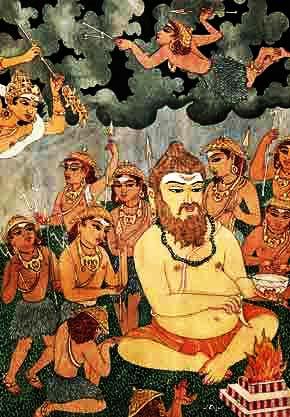
The prominent among such dissenters and rebels were the Vratyas. They were an atrociously heterogeneous community; and defied any definition. Even to this day, the meaning of the term Vratya is unclear; and is variously described. The amazing community of the Vratyas included magicians, medicine men, shamans, mystics, materialists, vagrant or mendicant (parivrajaka), wandering madmen, roaming- footloose warriors, mercenaries, fire eaters, poison swallowers , libidinous pleasure seekers and wandering swarm of austere ascetics.

Some of them were violent and erotic; while some others were refined and austere; and a lot others were just plain crazy. It was a random assortment of nuts and gems.

[ Even in the later times , Vratya was used as derogatory term. For instance ; in the Drona parva of the Mahabharata (07,118.015) the Vrishni-s and Andhaka-s were branded Vratyas – uncouth and uncultured

vrātyāḥ saṃśliṣṭakarmāṇaḥ prakṛtyaiva vigarhitāḥ / vṛṣṇy andhakāḥ kathaṃ pārtha pramāṇaṃ bhavatā kṛtāḥ]

The Rig Veda mentions Vratyas about eight times (e.g. 3:26:6; 5:53:11; 5:75:9; 9:14:2); and five groups of the Vratyas are collectively called pancha-vrata (10:34:12).

The Atharva Veda (15th kanda) devotes an entire hymn titled vratya- suktha (AVŚ_15,3.1 to AVŚ_15,18.5) to the “mystical fellowship” of the Vratyas.

The Pancavimsa-brahmana Tandya and Jaiminiya Brahmanas too talk about Vratyas; and, describe a sacrifice called Vratya-stoma, which is virtually a purification ritual.

*

The Rig Veda, generally, employs the term Vratya  to denote: breakaway group or an inimical horde or a collection of men of indefinite number; living in temporary settlements.

The Atharva-Veda too, uses the word in the sense of a stranger or a guest or one who follows the rule; but, treats it with a lot more respect. Apparently, the perceptions changed a great deal during the intervening period.

The Jaiminiya Brahmana (2:222) describes  Vratyas   as ascetics roaming about themselves in an intoxicated state; and speak impure speech (Vacha hy avratam amedhyam vadanti) .

The Tandya (24:18.2) , however, addresses them as divine-Vratyas (daivā vai vrātyāḥ sattram āsata budhena).

The Vajasaneyi-samhita refers to them as physicians and as guardians of truth. They seem to have been a community of ascetics living under a set of strange religious vows (Vrata).

Interestingly, Shiva-Rudra is described as Eka –Vratya* (AV 10.8.1.9.1). Shatha-rudriya celebrating the glory of one- hundred-and-eight forms of Rudra hails Rudra as Vrata-pathi, the chief of the Vratyas (TS.4.5.6.1)

[ The Atharva-veda (AV: 15. 1-7) speaks of seven attendants of the exalted Eka Vratya, the Vratya par excellence  :

Bhava of the intermediate space in the East;  Sarva in the South; Pashupati in the West; Ugra of the North; Rudra of the lower region; Mahadeva of the upper region ; Asani of  lightening ; and, Ishana of all the intermediate regions.

It is said; though they are named differently they in truth are the varying manifestations of the one and the same Eka Vratya.

While Rudra, Sarva, Ugra and Asani are the terrifying aspects, the other four: Bhava , Pashupathi, Mahadeva and Ishana are peaceful aspects.

Of these, Bhava and Sarva, by virtue of their rule over sky and earth, protect the devote against calamities, contagious diseases and poisonous pollution.

sa ekavrātyo ‘bhavat sa dhanur ādatta tad evendradhanuḥ ||6||nīlam asyodaraṃ lohitaṃ pṛṣṭham ||7||nīlenaivā priyaṃ bhrātṛvyaṃ prorṇoti lohitena dviṣantaṃ vidhyatīti brahmavādino vadanti ||8|| (AVŚ_15,1.6a to 8a)]

[*  However, Dr.RC Hazra in his work Rudra in the Rg-veda (page 243) remarks that Eka-Vratya is to be identified with Prajapathi ; and , not with Rudra,  as some scholars seem to think.]

The Atharva Veda (15.2.1-2) makes a very ambiguous statement: “Of him in the eastern quarter, faith is the harlot, Mitra the Magadha, discrimination is the garment, etc…..” in the southern quarter Magadha is the mantra of the Vratya; in the other two quarters Magadha is the laughter and the thunder of the Vratya. (Mitra, maAtm, hasa and stanayitnur).  It is not clear what this statement implies. But it is taken to mean that the Magadha tribes were friends, advisers and thunder (strong supporters) of the Vratyas.

tasya prācyāṃ diśi śraddhā puṃścalī mitro māgadho vijñānaṃ vāso ‘har uṣṇīṣaṃ rātrī keśā haritau pravartau kalmalir maṇiḥ  – (AVŚ_15,2.1[2.5]e) ; tasya dakṣiṇāyāṃ diśy uṣāḥ puṃścalī mantro māgadho vijñānaṃ vāso ‘har uṣṇīṣaṃ rātrī keśā haritau pravartau kalmalir maṇiḥ – (AVŚ_15,2.2[2.13]e) ; tasya pratīcyāṃ diśīrā puṃścalī haso māgadho vijñānaṃ vāso ‘har uṣṇīṣaṃ rātrī keśā haritau pravartau kalmalir maṇiḥ -(AVŚ_15,2.3[2.19]e); tasyodīcyāṃ diśi vidyut puṃścalī stanayitnur māgadho vijñānaṃ vāso ‘har uṣṇīṣaṃ rātrī keśā haritau pravartau kalmalir maṇiḥ – (AVŚ_15,2.4[2.25]e)

The implication of this is rather interesting. The breakaway group from among the Vedic people (including the Pre-Vedic tribes), that is, the Vratyas left their mainland and roamed over to the East; and ultimately settled in the regions of Magadha, where they found friends and supporters. The reason for that friendly reception appears to be that the Magadha tribes in Eastern India were not in good terms with the Vedic people in the Indus basin; and saw no difficulty in accommodating the Vratyas. And, more importantly, the Magadhas did not follow or approve the Vedic religion; and they, too, just as the Vratyas, were against the rites, rituals and sacrifices of the Vedic community.

The Vedic people too did not seem to regard the Brahman of the Magadha region. They were considered not true Brahmins, but only Brahmins by birth or in name (brahma-bandhu Magadha-desiya)- (Latyayana Srauta sutra . 8.6)

The Vratyas roamed about, mostly, in the regions to the East and North-west of the Madhya-desha, that is, in the countries of Magadha and Anga . That is to say; the Vratyas were more in the East.  But, that does does not mean that they were confined only to the East. The Atharva Veda confirms that they traveled to all directions. However, their movements were restricted by the Himalayas in the North; Vindhyas in the South; and , by the unfriendly tribes in the West. But, in the East , they were free to roam about , without hindrance

They spoke the dialect of Prachya, the source of the languages of Eastern India. It is also said ; the Vratyas  also spoke  the language of the initiated (dīkṣita-vācaṃ vadanti) , though not themselves initiated (a-diksita), but as’ calling that which is easy to utter (a-durukta)  ‘ (Panchavimsa Brahmana, 17.1.9 aduruktavākyaṃ duruktam ) . This may mean that the Vratyas were familiar and comfortable both in Sanskrit and Prakrit.

garagiro vā ete ye brahmādyaṃ janyam annam adanty aduruktavākyaṃ duruktam āhur adaṇḍyaṃ daṇḍena ghnantaś caranty adīkṣitā dīkṣitavācaṃ vadanti ṣoḍaśo vā eteṣāṃ stomaḥ pāpmānaṃ nirhantum arhati yad ete catvāraḥ ṣoḍaśā bhavanti tena pāpmano ‘dhi nirmucyante

They lived alone or in groups, away from populated areas. They followed their own cult-rules and practices. They drifted far and wide; roamed from the Indus valley to banks of the Ganga. They were the wandering seekers.

 [According to Mahamahopadhyay Haraprasad Sastri,the vast territory to the South of the Ganga and North of the Vindhya ranges extending from Mudgagiri (Monghyr) in the East to the Charanadri (Chunar) in the West was called the land of Magadha tribes. The Anga region was around Bhagalpur area.]

The Kesi-suktha  of Rig Veda (10:13:6); Latyayana- sruta-sutra (8.6-7); Bahudayana –sruta- sutra (26.32); Panchavimsati Brahmana (17. 1.9-15) and vratya-sukta of Atharva Veda (15th kanda), provide graphic descriptions of these magis, the Vratyas. 

These descriptions, when put together, project a truly impressive, colorful and awe-inspiring image of the wandering Vratyas.

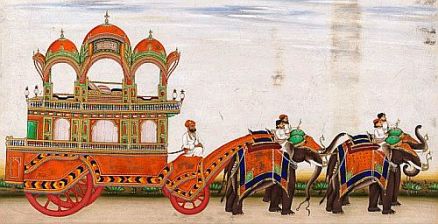
The Pancavimsa Brahmana of Sama Veda describes them as hordes , who rode open rickety chariots / carts, with planks (amargagamirthah) tied together with strings, suitable for rough roads (vipatha) drawn by  horses or  mules (LSS 8:6,10-11). The Vipatha was said to be in greater use in the Eastern regions (Prachyartha)

vipatha-vāhau vātaḥ sārathī reṣmā pratodaḥ kīrtiś ca yaśaś ca puraḥsarau – (AVŚ_15,2.2[2.14]f)

They carried lances (Pra-toda) , bows (AV 15.2.1)  and a goad (pratoda) .

They were distinguished by their black turbans (krishnam ushnisham dharayanti),  with flutters at the ends , worn in a slanting manner (LSS 8.6-7); wearing  garments with fringes of red (valukantani damatusam), two fringes on each side; a white blanket thrown across the shoulders (BSS 26.32); displaying long matted hair (kesi); a set of round ornaments for the ears (pravartau); jewels (mani) hanging by the neck;  rows of long necklaces of strange beads  (Kalmali) swinging across the chest ; two (dvi) deer-skins /sheepskins folded double (dvisamhitany ajinani) , tied together, for lower garment; and, footwear (Upanah) of black hide , with flaps, for the feet (upanahau).

 valūkāntāni dāmatūṣāṇītareṣāṃ dve dve dāmanī dve dve upānahau dviṣaṃhitāny ajināni – (PB 17.1.15) – etad vai vrātyadhanaṃ yasmā etad dadati tasminn eva mṛjānā yānti

The Panchavimsati Bralhmana (17.1.9-15) further states that the Vratya leader (Grhapati) was distinguished by brown robes ; and, silver ornaments for the neck.  He wore a turban (Usnisa), carried a whip (Pratoda), a kind of bow (Jyahroda*), was clothed in a black (krsnasa) garment and two skins (Ajina), black and white (krisna-valaksa), and owned a rough wagon (Viratha) covered with planks (phalakastirna). He also wore garment lined of silver coins (Niska). His shoes were black and pointed.

uṣṇīṣaṃ ca pratodaś ca jyāhṇoḍaś ca vipathaś ca phalakāstīrṇaḥ kṛṣṇaśaṃ vāsaḥ kṛṣṇavalakṣe ajine rajato niṣkas tad gṛhapateḥ  – (PB 17.1.14)

[* The descriptions of the Jya-hroda, a sort of arms carried by the Vratya, occur in the Pancavimsa Brahmana (17.1.14) as also in the Katyayana (22.4.2) and Latyayana (8.6.8) Sutras. It is described as a ‘bow not meant for use’ (ayogya’ dhanus); and also as a ‘bow without an arrow’ (dhanushka anisu). It obviously was a decorative-piece meant to enhance the impressive look of the Chief.]

**

Vratyas used a peculiar type of reclining seats (asandi)
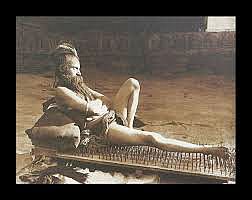
Vratya Asandi

[A-sandi is a generic term for a seat of some sort  , occurring frequently in the later Samhitas and Brahmanas, but not in the Rig-Veda.  In the Atharvaveda (AV. 15.3.2) the settle brought for the Vratya is described at length. It had two feet, lengthwise and cross-pieces, forward and cross-cords. It had a seat (Asada) covered with a cushion (Astarana) and a pillow (Upabarhana), and a support (Upasraya)

āsandīm āruhyodgāyati devasākṣya eva tad upariṣadyaṃ jayat.

so ‘bravīd āsandīṃ me saṃ bharantv iti ||2||tasmai vrātyāyāsandīṃ sam abharan ||3||tasyā grīṣmaś ca vasantaś ca dvau pādāv āstāṃ śarac ca varṣāś ca dvau ||4||bṛhac ca rathantaraṃ cānūcye āstāṃ yajñāyajñiyaṃ ca vāmadevyaṃ ca tiraścye ||5||ṛcaḥ prāñcas tantavo yajūṃṣi tiryañcaḥ ||6||veda āstaraṇaṃ brahmopabarhaṇam ||7||sāmāsāda udgītho ‘paśrayaḥ ||8||tām āsandīṃ vrātya ārohat ||9||(AVŚ_15,3.1a- 9a)

The Satapatha Brahmana (Sat.Brh.5.4.4.1) also describes the Asandi as an elaborate low seat, with diminutive legs; and, of some length on which a man could comfortably stretch himself, if he chose to. And, more than one person could sit on such a seat. It was said to be made of Khadira wood, perforated (vi-trinna), and joined with straps (vardhra-yukta). It perhaps meant a long reclining chair/ rest. The Asandi is described in the Satapatha Brahmana, as a seat for a king or a leader.

maitrāvaruṇyā payasyayā pracarati | tasyā aniṣṭa eva sviṣṭakṛdbhavatyathāsmā āsandī māharant yuparisadyaṃ vā eṣa jayati yo jayatyantarikṣasadyaṃ tadena muparyāsīnamadhastādimāḥ prajā upāsate tasmādasmā āsandī māharanti saiṣā
khādirī vitṛṇā bhavati yeyaṃ vardhra -vyutā bharatānām ]

[ Please check here for more on Asandi , in the context of the evolution of the Yogic-practices.]

**

They moved among the warriors (yaudhas), herdsmen and farmers.  They did not care either for the rituals or for initiations (adhikshitah); and not at all for celibacy (Na hi brahmacharyam charanthi) . They did not engage themselves in agriculture (Na krshim) or in trade (Na vanijyam). They behaved as if they were possessed (gandharva grithaha) or drunk or just mad.

hīnā vā ete hīyante ye vrātyāṃ pravasanti na hi brahmacaryaṃ caranti na kṛṣiṃ vaṇijyāṃ ṣoḍaśo vā etat stomaḥ samāptum arhati – (PB 17.1.2)

The scholars generally believe, what has come down to us as Tantra is, in fact, a residue of the cult-practices of the Vratyas. The Tantra, even to this day, is considered non-Vedic, if not anti-Vedic.

The Atharva Veda (Vratya Kanda) mentions that Vratyas were also a set of talented composers and singers. They found they could sing a lot better- and probably hold the notes longer – if they practiced what they called pranayama, a type of breath control. They even attempted relating their body-structure to that of the universe. They learnt to live in harmony with nature. There is, therefore, a school of thought, which asserts, what came to be known as Yoga in the later periods had its roots in the ascetic and ecstatic practices of the Vratyas. And, the Vratyas were, therefore, the precursors of the later ascetics and yogis.

It is said, the theoretical basis for transformation of cult-practices into a system (Yoga) was provided by the Samkhya School. Tantra thus yoked Samkhya and Yoga. Over a long period, both Samkhya and Yoga schools merged with the mainstream and came to be regarded as orthodox (asthika) systems, as they both accepted the authority of the Vedas. Yet, the acceptance of Samkhya and Yoga within the orthodox fold seemed rather strained and with some reservation, perhaps because the flavor -the sense of their non-Vedic origin rooted in the Vratya cult practices of pre  Vedic period –  still lingers on.

The German scholar and Indologist Jakob Wilhelm Hauer (1881 –1962) – who had made the beginnings of Yoga in India the theme for his doctor’s thesis –   in his Der Yoga als Heilweg  (Yoga as a way of salvation) traces the origin of Yoga to the wandering groups of the Vratyas.

JW Hauer, who represented the leading commentators on Eastern thought in the days of CG Jung, mentions that many of the groups that had roots in the Vratya tradition (such as: Jaiminiyas, Kathas, Maitrayaniyas and Kausitakins) were eventually absorbed into the orthodox fold. He also remarks that Chandogya and Svetasvatara Upanishads are closer in spirit to the Vratya- Samkhya ideologies.

It is the Svetasvatara Upanishad which declares Rudra as the Supreme, matchless and one without a second – eko hi rudro na dvitiiyaaya tasthu – SV.3.2. It establishes Rudra as the Absolute, the ultimate essence, not limited by forms and names

– na tasya pratima asti yasya nama mahadyasha – SV.4.19)

eko hi rudro na dvitīyāya tasthe ya imāṃl lokān īśata īśanībhiḥ / pratyaṅ janās tiṣṭhati saṃcukocāntakāle saṃsṛjya viśvā bhuvanāni gopāḥ // SvetUp_3.2 // 

nainam ūrdhvaṃ na tiryañcaṃ na madhye parijagrabhat / na tasya pratimā asti yasya nāma mahad yaśaḥ // SvetUp_4.19 // ]
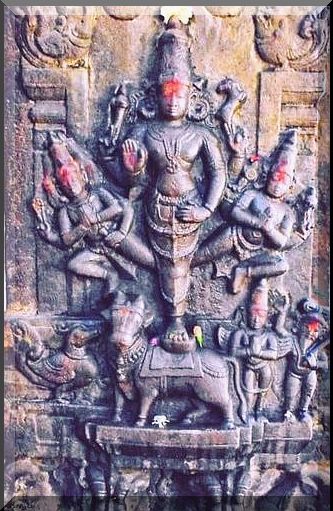
Shiva Ekapada 2

The Samkhya school, in its earlier days, was closely associated with two other heterodox systems, i.e., Jainism and Buddhism. In a historical perspective, Samkhya-Yoga and Jainism – Buddhism were derived from a common nucleus that was outside the Vedic tradition. And, that nucleus was provided by the Vratya movement.

Interestingly, Arada Kalama, the teacher of Gotama who later evolved in to the Buddha, belonged to Samkhya School. Gotama had a teacher from the Jain tradition too; he was Muni  Pihitasrava a follower of Parsvanatha. The Buddha later narrated how he went around naked, took food in his palms and observed various other rigorous restrictions expected of a Sramana  ascetic. The Buddha followed those practice for some time and gave them up, as he did not find merit in extreme austerities.

The Buddha, the awakened one, was a Yogi too. His teachings had elements of old-yoga practices such as askesis (self-discipline), control, restraint, release and freedom. The early Buddhism, in fact, preserved the Yogi – ideal of Nirvana.

Thus, the development of religions and practices in Eastern regions of India, in the early times, was inspired and influenced – directly or otherwise – by the Vratyas.

The contribution of the Vratyas, according to my friend Prof. Durgadas Sampath, was that they gave a very time and space based approach to the issues.  They were the initial social scientists with rationality as the anchor, he says.

Some of the characteristics of the Vratya-thought found a resonant echo in Jainism and Buddhism. Just to mention a few:

Man and his development is the focal interest;

his effort and his striving is what matters, and not god’s grace;

the goal of human endeavor is within his realm;

a man or a woman is the architect of one’s own destiny ; and

there is nothing supernatural about ones  goals and ones attainments.

There was greater emphasis on contemplation, introspection, pratikramana  (back-to-soul);

and, a deliberate shift away from exuberant rituals and sacrifices seeking health, wealth and happiness.

The Vratya was neither a religion, nor was it an organized sect. It was a movement seeking liberation from the suffocating confines of the establishment and searching for a meaning to life and existence. The movement phased out when it became rather irrelevant to the changed circumstances and values of its society.  The Vratyas, the searching wanderers, the rebels of the Rig Vedic age, faded in to the shadowy corners of Vedic religion, rather swiftly; yet they left behind a lingering influence on other systems of Indian thought.

*****

The Jain tradition claims that it existed in India even from pre- Vedic times and remained unaffected by the Vedic religion. It also says, the Jain religion was flourishing, especially in the North and Eastern regions of India, during the Vedic times.

Because of the basic differences in their tenets and practices, the two traditions opposed each other. As a part of that ongoing conflict, certain concepts and practices appreciated by one religion were deprecated by the other. The term Vratya was one such instance.

The term Vratya has a very long association with Jainism; and its connotation in Jainism is astonishingly different from the one implied in the Vedic tradition where it is employed to describe an inimical horde. On the other hand, Vratya in Jainism is a highly regarded and respected term. The term Vratya, in the Jaina context, means the observer of vratas or vows.

Thus, while the Vedic community treated the Vratyas as rebels and outcasts, the tribes in the eastern regions hailed Vratyas as heroes and leaders (Vratya Rajanya).

The Vedic and the Jain traditions both glorify certain Kings who also were great religious Masters. In the Hindu tradition, Lord Rsabha – son of King Nabhi and Merudevi, and the ancestor of Emperor Bharata (after whom this land was named Bharatavarsha) is a very revered figure : 

ततश्च भारतं वर्षमेतल्लोकेषुगीयतेभरताय

The Rig Veda and Yajur Veda, too, mention Rishabhadeva and Aristanemi.

According to the Jain tradition Rishabhadeva is the first Tirthankara of the present age (avasarpini); and, Aristanemi is the twenty-second Tirthankara.

The Jain tradition refers to Rishabhadeva as Maha-Vratya, to suggest he was the great leader of the Vratyas.

Further, the Mallas, in the northern parts of the present-day Bihar, with their capital at  the city of Kusavati or Kusinarawere a brave and warlike people; and were one of the earliest independent republics (Samgha). The Jaina Kalpasutra refers to nine Mallakis as having formed a league with nine Lichchhavis, and the eighteen Ganarajas of Kasi-Kos’ala.They were also said to be  a part of a confederation of eight republics (atthakula)  until they were vanquished and absorbed into the Magadha Empire, at about the time of the Buddha. The Mallas were mentioned as Vratya – Kshatriyas.

Similarly, their neighboring tribe, the Licchhavis who played a very significant role in the history and development of Jainism were also called as the descendants of Vratya-Kshatriyas. Mahavira was the son of a Licchhavi princess; and he had a considerable following among the Licchhavi tribe. In the Jaina Kalpa Sutra, Tris’ala, the sister of  Chetaka – the Lichchhavi chief of Vesali, is styled Kshatriyani  .

[The Licchhavis continued to be one of the major Ganas (Non-monarchical – Independent states). Even later in the 4th century AD, Chandragupta I of the Gupta dynasty married a Licchhavi princess, Kumāradevi, and, this marriage was commemorated on gold coins. Their son, Samudra Gupta, was called Lichchhavi-dauhitra (grandson of the Licchhavis) in inscriptions. The Licchhavis, therefore, were still a political force.]
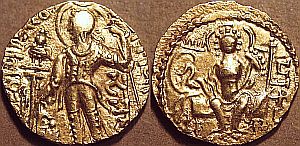
samudragupta

The Buddha too visited Licchhavi on many occasions; and had great many followers there. The Licchhavis were closely related by marriage to the Magadhas.

The Buddhist tradition has preserved the names of eminent Lichchhavis like prince Abhaya, Otthaddha, Mahali, general Siha, Dummukha and Sunakkhatta. The Mallas, like the Lichchhavis , were ardent champions of Buddhism. In the Mahaparinibbana Suttanta they are sometimes called Vasetthas

Pundit Sukhlalji explains,  the two ethnic groups of ‘Vratva’ and ‘Vrsala’ followed non-Vedic tradition; and both believed in non‑violence and austerities.  He suggests that both the Buddha and Mahavira were Kshatriyas of Vrsala group. He also remarks that the Buddha was known as ‘Vrsalaka’.

It is not surprising that the Lichchavi, Natha and Malla clans of Eastern India proved fertile grounds for sprouting of non-Vedic religions such as Jainism and Buddhism.

Thus, both Buddhism and Jainism were in tune with  the philosophic atmosphere prevailing in Magadha, around sixth century BCE. Apart from his philosophical principles, the Buddha’s main contribution was his deprecation of severe asceticism in all religions and acceptance of a sensible and a rational approach to life.

The nucleus for development of those non Vedic religion was, reputedly, the ideas and inspiration derived for the Vratya movement.

pto5pe6ac

In the mean time Vedic perception of Vratyas had undergone a dramatic sea- change.

Latyayana –srauta-sutra (8.6.29) mentions that after performing Vratya-homa the Vratya should Tri-vidya-vrti the threefold commitment to study of Vedas, participating in the performance of Yajnas; and giving and accepting gifts. These three were the traditional ways of the priestly class.

Apasthamba (ca. 600 BCE), the Lawgiver and the celebrated mathematician who contributed to development of Sulbasutras, refers to Vratya as a learned mendicant Brahmin, a guest (athithi) who deserves to be welcomed and treated with respect. Apasthamba, in support of that, quotes sentences to be addressed by the host to his guest from the passages in Atharva Veda (15:10 -13).

According to Atharva Veda, Vratya is a srotriya, a student of the scriptures, (of at least one recession), and a learned person  (Vidvan) faithful to his vows (vratas). In summary, the passages ask:

” Let the king , to whose house the Vratya who possesses such knowledge comes as a guest , honor him as superior to himself, disregarding his princely rank or his kingdom.

Let him, to whose house the Vratya possessing such knowledge comes as a guest, rise up of his own accord to meet him, and say “Vratya, where didst thou pass the night? Vratya, here is water; let it refresh thee .Vratya let it be as thou pleasest. Vratya, as thy wish is so let be it done.”

[From Hymns of the Atharva Veda, by Ralph T.H. Griffith…Hymn x and xi of Book 15]
http://www.sacred-texts.com/hin/av/av15011.htm

[ tád yásyaiváṁ vidvān vrā ́tyo rājñó ’tithir gṛhān āgáchet  // – 15.10.1

Śréyāmsam enam ātmáno mānayet táthā kṣatrāya  nā ́ vṛścate táthā rāṣṭrāya nā ́ vṛścate // -1510.2

tád yásyaiváṁ vidvān vrā ́tya úddhṛteṣv agníṣu ádhiśrite agni hotré ’tithir gṛhān āgáchet // – 1`5.12.1

tád yásyaiváṁ vidvān vrā ́tya ékāṁ  rā ́trim átithir gṛhé vásati  / yé pṛthivyā ́ṁ púnyā lokā ́s tān evá ténā ́va rundhe// — 15.13.1 ]

There is, thus, a gulf of difference between the perception of the early and later Vedic periods. This amazing transformation seems to have come about as a result of sustained and successful contacts between the Upanishads and the systems of Samkhya and Yoga. There was a healthy interaction between the two streams of the Indian tradition. The Samkhya-Yoga ideas found a place in the Upanishads. At the same time, the Upanishads brought its impact on Buddhism and Jainism. The savants of orthodox tradition such as Kumarila Bhatta (ca.6th century AD) accepted the Buddhist schools as authoritative because they had their roots in the Upanishads. (Tantra vartika)

The ideologies of the two traditions moved closer during the period of Upanishads. It was a period of synthesis.

shamrock-small

The term Vratya acquired a totally different meaning by the time of the Dharma Shastras. Manu Smruti (dated around third or second century BCE) states that, if after the last prescribed period, the twice-born remain uninitiated, they become Vratyas, fallen from Savitri. (Manusmriti: verse II.39)

Manusmriti (verse X.20)  also informs that those whom the twice-born  ( Brahmin , Kshatriya and Vaishya ) beget from  wives of equal caste, but who, not fulfilling their sacred duties, are excluded from the Savitri (initiation), must also designate by the appellation Vratyas.

The samskara of initiation or upanayana (ceremony of the thread) was considered essential for the dvijas (the twice-born). Manusmriti mentions the recommended age for upanayana and for commencing the studies. It also mentions the age before which these should take place.

In the eighth year after conception, one should perform the initiation (Upanayana ceremonies of sacred thread) of a Brahmana, in the eleventh year after conception (that) of a Kshatriya, but in the twelfth year that of a Vaisya. (MS: II.36)

The initiation of a Brahmana who desires proficiency in sacred learning should take place in the fifth year after conception, that of a Kshatriya who wishes to become powerful in the sixth, and that of a Vaisya who longs for success in his business in the eighth.(Ms: II.37)

The time for the Savitri initiation of a Brahmana does not pass until the completion of the sixteenth year (after conception), of a Kshatriya until the completion of the twenty-second, and of a Vaisya until the completion of the twenty-fourth. (MS: II.38)

After those (periods men of) these three (castes) who have not received the sacrament at the proper time, become Vratyas (outcastes), excluded from the Savitri (initiation) (MS. II.39)

garbhāṣṭame’bde kurvīta brāhmaasyaupanāyanam | 
garbhādekādaśe rājño garbhāt tu dvādaśe viśa || 36 ||

brahmavarcasakāmasya kāryo viprasya pañcame | 
rājño balārthina aṣṭhe vaiśyasyaihārthino’ṣṭame || 37 ||

ā odaśād brāhmaasya sāvitrī nātivartate | 
ā dvāviśāt katrabandhorā caturviśaterviśa || 38 ||

ata ūrdhva trayo’pyete yathākālamasask | 
sāvitrīpatitā vrātyā bhavantyāryavigarhitā || 39 ||

Oddly, the insistence on upanayana and making it compulsory seems to have come into vogue in the post-Upanishad period. During the Atharvana period, initiation was regarded as second-birth; and was associated with commencement of studies or as a requirement for performing a sacrifice. The significance of the second birth in the Vedic time was, therefore, largely, religious and not social. Not everyone was required to obtain the Upanayana samskara. The upanayana was a voluntary ceremony for those who wished to study or perform a sacrifice.

It was only after the Grihya-sutras crystallized, upanayana turned into a samskara, as a recognition of ones position in the social order. Some scholars , however , suggest, Vratya does not necessarily denote a person who has not undergone upanayana samskara; but, it refers to one who does not offer Soma sacrifice or keep the sacred fire(agnihotra).

(http://www.sanathanadharma.com/samskaras/edu1.htm)
upanayana

 [ Dr. Ananat Sadashiv Altekar  ( 1898-1960)- who was the Professor and Head of the Department of Ancient Indian History and Culture at Banaras Hindu University –  (in his Education in Ancient India, 1934) explains that it was in the times of the Upanishads that the Upanayana ceremony gained greater importance. Upanayana literally meant taking a young boy to a teacher in order to hand him over to the latter for his education in the Vedas.  Thus, the Upanayana occasion  marked the entry of a student, as an inmate (Antevasin), into Guru-kula to pursue Vedic studies. The Upanayana was thus primarily linked to pursuit of studies; and, it was not compulsory for all.

And, again, an Upanayana had to be performed every time a student approached a new teacher; or, when he embarked upon a new branch of study. Dr. Altekar mentions that there were occasions when even married men had to undergo Upanayana while approaching a renowned teacher for learning a new subject (Br. Up.6.2.4). And, such a ceremony that was so often repeated, Dr. Altekar opines, could not have been an elaborate one. It was, by its very nature, a domestic and simple performance. The student had to approach the Teacher, holding the sacred fuel (Samitt), and indicating his complete willingness to learn and to serve the Teacher, as also to tend his sacred Agni-s (Ch.Up.6.5.5 and 5.11.7; and Mu. Up. 1.2.12).

An ardent young student entering a new phase of life after Upanayana was said to be born a second time – Dvija. (A similar notion of a ‘second-birth’ came into vogue in Buddhism when lay person was admitted into the Sangha)

According to Dr. Altekar,  for several centuries, Upanayana was not regarded as a Samskara ritual. And, it seems to have become a popular Samskara – ceremony only in the later times. In the earlier times, one was called a Vratya if he was not offering Soma sacrifice or if one was not tending to sacred fires. But, in the later times, the one who had not undergone a Upanayana Samskara came to labelled a Vratya. Subsequently, such a Vratya was re-admitted into the orthodox fold (even if his past three ancestors had failed to undergo Upanayana altogether- Vratya pita pitamaho va na Somam priveshya Vratyah – Sri Madhava’s commentary on Parasara Smriti), provided he underwent the purification ritual of Vratya –stoma (Paraskara Grihya Sutra 2.5)

In course of time, Upanayana came to be regarded as an essential bodily Samskara (Sarira samskara) for all the three classes. And, the non-performance of Upanayana would disqualify one from entering into a valid wedlock.

Although Manu prescribed 8th, 11th and 12th year as suitable for performance of the Upanayana for the Brahmana, Kashtriya and Vaishya boys, it was not taken by the later Law-givers as an absolute norm. For instance; Baudhayana considered anytime between 8 and 16 years of age, for all classes, as suitable. The change in the norm perhaps came about because of the change in the conception and the nature of the Upanayana. In the earlier times, Upanayana marked the commencement of Vedic education ; and, therefore, the child had to start learning at a quite young age. But when Upanayana became a bodily Samskara, any age between 8 and 16 was considered good enough. In any case, commencement of  Vedic studies after the age of 16 was discouraged, perhaps because it was thought that the boy’s capacity to absorb and learn a new subject might have by then gone rather slow.
*

Since the Upanayana ceremony was linked to commencement of education, the Upanayana of girls was as common as that of boys. There is ample evidence to show that such was the case. The Atharvaveda (XI. 5. 18) expressly refers to maidens undergoing the Brahmanharya discipline (brahmacaryeṇa kanyā yuvānaṃ vindate patim ) ; and, the Sutra texts of the 5th century B. C. supply interesting details in its connection. Even Manu includes Upanayana among the sanskaras (rituals) obligatory for girls (II. 66).

After about the beginning of the Christian era, the Upanayana for girls went out of vogue. But, Smriti writers of even the 8th century A. D. like Yama admit that in the earlier times the girls had the privilege of Upanayana and Vedic studies.

The discontinuance of Upanayana was disastrous to the educational and religious status of women. The mischief caused by the discontinuance of Upanayana was further enhanced by the lowering of the marriageable age. In the Vedic period girls were married at about the age of 16 or 17; but by Ca. 500 B. C. the custom arose of marrying them soon after the attainment of puberty. Later writers like Yajnavalkya (200 A. D.), Samvarta and Yama, vehemently condemn the guardian who fails to marry a girl before the attainment of the puberty. Therefore, the Smritis written by 11th century began to glorify the merits of a girl’s marriage at the age of 7, 8, or 9, when it was regarded as an ideal thing to celebrate a girl’s marriage at so young an age, female education could hardly prosper. ]

***

In any case, during the period of Dharma sastras, those who did not adhere to the prescriptions of the sastras and did not perform the prescribed rites and ceremonies were termed Vratyas.There were, obviously, many people who didn’t bother to follow the rules.

The smritis therefore, provided a provision for purification of the errant persons through a ritual (vratya stoma); and created a window for taking them back into the fold; and for rendering them eligible for all rites and rituals.

[ In the Puranas , the Sisunaga kings are mentioned as Kshattra -bandhus, i. e., Vratya Kshatriyas.]

The object of the entire exercise undertaken by the sastras, seemed to be to build and preserve a social order, according to its priorities .But, in the later periods these smaskaras lost their social significance, entirely. The social conditions deteriorated rapidly during the medieval period.  Even in the religious life, upanayana remained just a routine ritual, often meaningless. Agnihotra vanished almost entirely.

In a way of speaking , almost all of us are Vratyas, in terms of the smritis.

[.. Let me digress, here, for a little while.

In the Vedic era, women were initiated into the thread ceremony. It was essential for both sexes who wished to study [Atharva Veda 11.5.18a, Satpatha Brahmana.1.2.14.13, and Taittariya Brahamana II.3.3.2-3]

Yama, a Law-giver even prior to Manu, upheld education for women, but stipulated the female students should not engage in begging their meals, wearing deer-skins or growing matted hair (as male students might do) [VirS.p.402]

All that changed radically, for worse, during the period of Dharma sastras. The woman lost the high status she once enjoyed in Vedic society. She lost some of her independence.  She became an  object to be protected.

The harsh prescriptions of the Dharma shatras have to be placed in the context of its times, in order to understand why such changes came about.

The period after 300 B.C witnessed a succession of invasions and influx of foreigners such as the Greeks, the Scythians, the Parthian, the Kushans and others. The political misfortunes, the war atrocities followed by long spells of anarchy and lawlessness had a disastrous effect on the society. Fear and insecurity haunted the common people and householders.

Sons were valued higher than the daughters because of the increased need for fighting males, in order to survive the waves of onslaughts. It was   imperative to protect women from abductors. The then society deemed it advisable to curtail women’s freedom and movements. The practice of early marriage perhaps came in as a part of those defensive measures. The education of the girl child was no longer a priority. The Sastras compromised by accepting marriage as a substitute for Upanayana and education. The neglect of education, imposing seclusion and insecurity that gripped their lives, had disastrous consequences upon the esteem and status of women .The society in turn sank into depravity.

The Manusmruti and other Dharmasastras came into being at the time when the orthodox society was under dire threat and when it was fighting for survival. The society had entered in to self preservation – mode. The severity of the Dharma Shastras was perhaps a defensive mechanism, in response to the threats and challenges thrown at its society.

Its main concern was preserving the social order and to hold the society together. Though the sastras pointed out the breaches in observance of the prescribed code of behavior, it was  willing to condone the lapses, purify the wayward and naughty; and admit them back into the orthodox fold. Further, It even readily took  under its fold the alien hordes such as Kushans, Yavanas (Ionians or Greeks), Sakas (Scythians) and others; and recognized them as Vratya – Kshatriyas…]

logo_header_lg

To sum up, Vratya in the early Rig Veda denoted an amorphous collection of heterogeneous groups of pre- Vedic tribes and  the dissenters from among the Vedic community, who rejected the Vedic concepts and extrovert practices of rites, rituals and sacrifices seeking from the gods gifts of health, wealth and glory. The Vratyas turned in to nomads and drifters. The wandering seekers roamed the land and finally settled down in the Magadha region, in the East, where they found acceptance.

The Vratyas appeared to be a set of extraordinarily gifted and talented people, who brought fresh perspectives to life and existence; to the relations between man and nature and between nature and universe. Their innovative ideas spawned the seeds for sprouting of systems of thought such as samkhya and Yoga. Those systems in turn inspired and spurned the movement toward rationalism and man -centered – non Vedic religious systems Jainism and Buddhism.

What the Vratyas did, in effect, was they deliberately moved  away from the extrovert and exuberant rites and rituals; brought focus on man and his relation with the nature and his fellow beings. Their scheme of things was centered round reason (not intuition). They turned the mind inwards, contemplative and meditative.

It is clear that in the ancient times, the two religious systems – one in the Indus valley on the west and the other along the banks of the Ganga in the east- developed and flourished independent of each other. Their views on man – soul –world – god relationships, differed significantly. Because of the basic differences in their tenets and practices, the two traditions opposed each other. They seemed to have even stayed away from each other. That, in a manner, explains why the Saraswathi is referred over fifty times in the Rig Veda, while the Ganga hardly gets mentioned.

Towards the later Vedic era something magical (chamathkar) appears to have taken place. By the time of Atharvana period, the concepts and perceptions of the two traditions seemed to have moved closer.The later Vedic traditions recognized and and accorded Vratyas a place of honor. That was  the result of  sustained and successful contacts between the Upanishads and the systems of Samkhya and Yoga; and the impact that Upanishads brought  on Buddhism and Jainism. It was the age of understanding and  synthesis.

The interaction between the two systems heightened during the period of the Buddha and Mahavira. In the later centuries, the texts of the orthodox school (e.g. Brahma sutras, Yoga Sutra, Panini’s grammar, Anu Gita etc.) devoted more attention and space for discussing the Buddhist principles, especially the theories relating to cognition.

The shift towards East was symbolized by the transfer of the intellectual capital of ancient  India from Takshashila (Taxila) to Pataliputra (Patna) and Nalanda, when Taxila was overrun by the invading Persians (third century BCE).That provided an impetus not merely for fresh activity within the orthodox schools , but also for greater interaction with the heterodox religions.

Both the traditions inspired, influenced and enriched each other over the centuries; absorbing and complementing each other’s principles and practices; and finally synthesizing into that fabulous composite culture, the Indian culture.

That synthesis was symbolized when the post Vedic tradition hailed and worshipped its god Ganapathy with the joyous chant Namo Vratapataye – salutations to the chief of the Vratyas.( Ganapaty-atharva-shirsha)

The Dharmasastras mark a period of degeneration in the orthodox society, as it reeled under the onslaught of hordes of successive invaders and plunderers. The concerns of security and survival took precedence over innovation, development and expansion. It became an inward looking society seeking for right answers and remedies to preserve its form and structure. It’went in to a self-preservation mode. Its society metamophasized and shrank into a pupa:  cautious and ultra conservative.

Vratya then meant someone naughty and unmanageable ( It appears , it is only the Marathi language that still retains such meaning of the term). Yet, the society could ill afford to abandon him to his whims and wayward manners. It was willing to pardon, purify and welcome him back in to its fold, clasping him dearly to its bosom. It was ready to accept even   the foreigners as its own.For instance ;  the medieval Rajput families descended from immigrant races from West in the distant past were treated Vratya-Kshatriyas ; and given pedigrees going back to Rama, Yadu, Arjuna and such other heroes of the mythologies

Thereafter, for a long period of time, the term Vratya went off the radar screen of the Indian religious life; because the samskaras and their associated disciplines had lost their sanctity and significance.
Shivaji Coronation

The only other occasions when Vratya came in to play , were in the context of the vratya stoma purifying ceremonies.

*. Vratya stoma ceremonies were performed before anointment and coronation of kings, in the middle ages. For instance, Shivaji went through Vratya stoma and upanayana ceremonies, on May 29, 1674, before he was crowned.(For details , please refer to Malhar Ramarao Chitnis – Siva chatrapathiche charitra Ed by K N Sane , 1924 – based on the reports of eyewitnesses and court officials – page 197 of the Book / page 228 of the link )

*. Even as late as in the 19th and early 20th centuries, the Hindus returning from foreign lands were purified through Vratya stoma.

*. Dr. S. Radhakrishnan stated that individuals and tribes were absorbed in to Hinduism through vratyastoma.(The Hindu View of Life)

*. Satguru Sivaya Subramuniyaswami cites many instances of people forcibly converted to other faiths  re -admitted to Hinduism and issued Vratya stoma certificates.

lotus-design

At each stage in the evolution of Indian History, Vratya was accorded a different meaning; and that meaning amply mirrored the state of Indian society at that stage.

The obscure term Vratya, in a strange manner, epitomizes and conceals in its womb the tale of unfolding of Indian thought through the ages.
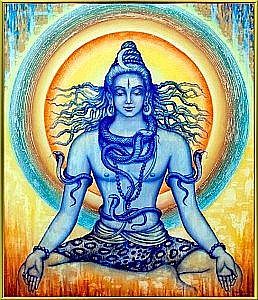
rudra

Sources and references:

 Early Indian Thought by prof.SK Ramachandra Rao

http://www.jainworld.com/jainbooks/Books/ARHAT.htm

‘The Path of Arhat: A Religious Democracy’ by Justice T. U. Mehta

http://www.jainworld.com/jainbooks/life%20&legacy%20of%20mahavira/CHAPTER%20I.pdf

Jaina Tradition and Buddhism:

http://jainsamaj.org/literature/atharvaveda-171104.htm

Rsabha in the Atharvaveda by Dr. Satya Pal Narang

http://www.bihar.ws/info/History-of-ancient-Bihar/Mention-of-Magadha-in-vedic-literature.html

Mention of Magadha in Vedic Literature

http://www.sanathanadharma.com/samskaras/sources.htm

SanatanaDharma –sources

http://www.sanathanadharma.com/samskaras/edu1.htm#Vratya

Sanathana Dharma – Vratya

http://www.sacred-texts.com/hin/av/av15011.htm

Hymns of the Atharva Veda, by Ralph T.H. Griffith…Hymn x and xi of Book 15

http://www.himalayanacademy.com/resources/books/hbh/hbh_ch-5.html

Does Hinduism Accept Newcomers? Satguru Sivaya Subramuniyaswami

http://www.fortunecity.com/greenfield/tree/21/pplmanu.htm 

The Vratyas and their references in the Brahmanical  and Buddhist Literature by Prof . L . B. keny  (proceedings of the Indian History Congress Vol.9 (1946); pages 106 to 113

https://www.jstor.org/stable/44137045?read-now=1&seq=1#page_scan_tab_contents

https://www.academia.edu/30983941/Inquiries_into_Vr%C4%81tya_phenomenon_an_introduction by Prof. Tiziana Pontillo

ALL IMAGES ARE FROM INTERNET
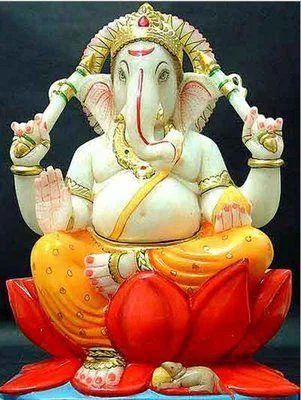
 
23 Comments

Posted by on September 13, 2012 in History, Indian Philosophy, Rigveda, Vratya


Tags: , , ,

Rishis of the Rig Veda and oral traditions of the Vedas

This post is in response to comments and queries from Kaveriyamma. Those related to the Rishis of the Rig Veda, their linage, the female Rishis and the oral tradition.

RISHI

A Rishi in Rig Veda is an author of a Rik, a mantra.  It is not a product of his reasoning or intellect; but , of an intuitive perception. He envisioned the entities beyond the range of human senses; conceived the self evident knowledge (svatah pramana) ; and , realized the Truth by direct intuition. Vamadeva , a Rishi in one of his hymns (RV 4.3.16) describes himself as the illumined one , expressing the Truth reveled to him (ninya vachasmi).

The term Rishi is defined as “rishati jnānena samsāra-pāram” – meaning one who goes beyond the mundane world by means of knowledge. Further, some scholars think the root ‘drish‘ (sight) might have given rise to root ‘rish‘ meaning ‘to see’ .

Rishi is therefore a wise seer, a drastara, one who visualizes a mantra – ṛsīnām mantra dṛṣṭayo bhavanti – 7,3 . He is also the one who hears. The seers were the “hearers of the Truth” (kavayaha sathya srutah) . Sri Aurobindo described Shruthi as “divine recordings of cosmic sounds of truth” heard by the Rishis. The Vedas are thus Shruthis , revealed scriptures. That is the reason , the Vedas are Apaurusheya , not authored by any agency.

Amarakosha, the Sanskrit lexicon, gives the synonym for the term Rishi as :  ṛṣayaḥ satyavacasaḥ (2.6.900), the one who speaks truth. A Rishi in the Rig Veda is a sage who realized the truth. However all sages are not Rishis; just as not all Rishis are Kavis.

(For more on Kavis, please see Kavi, Rishi and the Poet ).

Yasca_charya makes a significant  classification even among the Rishis. He draws a clear distinction between a Sakshath_krutha_Rishi , the seer who has the direct intuitional perception; and , the Srutha_rishi , the one heard it from the seers and remembered what he heard

–  sākṣāt.kṛta.dharmāṇa.ṛṣayo.babhūvuḥ – 1,20

The Srutha_rishi is like the mirror or the moon that basks in the glory of the sun . The moon and the mirror both take in the glory of the sun and put forth the shine to the world in their own way. Similarly, the Srutha_rishi obtained the knowledge by listening to the Sakshath_ Krutha_ Rishi, and more importantly by remembering what he heard. The bifurcation of the Vedas/Upanishads on one hand (as Shruthi, as heard) ; and the Vedangas, Shastras, Puranas, Ithihasa etc. on the other (as smriti, as remembered) , stems from the above concept.  Smriti, in general, is secondary in authority to Shruti .

Rig Veda mentions about four hundred Rishis; and, about thirty of them were women. Before going into their names and other details, let us, briefly, talk about the mantras.

*

In another manner, the Rishis were classified into three divisions.(1) Satarcinah – the Rishis of the first mandala, where  each of whom, seems to have contributed a hundred or more Riks; (2) Madhyamah – the Rishis in  Mandalas two to seven; and.(3) Ksudrasuktah and Mahasuktah – the other Rishis of shorter and longer hymn.

In the Rig Veda, two to seven mandalas are homogeneous in character as they present a collection of hymns belonging to a particular family. These mandalas are , therefore, known as Kulamandalas

MANTRA

Poetry raised to its sublime heights is mantra to which a Rishi gives utterance. The Rishi visualizes a magnificent idea, through intuitive perception, crystallizes it and gives it an expression. . One cannot be a sublime poet unless one is a Rishi (naan rishir kuruthe kavyam).  Badarayana Sutra (244:36) says Rishi not only lives the mantra but also is the essence of it.

A mantra is usually prefaced by a segment made of three components, mentioning the Rishi who visualized the mantra, the Deva or the Devatha who inspired the mantra or to whom the mantra is addressed; and the metrical form of the mantra. Every time, one meditates on the deity uttering its mantra with devotion; one recalls its Rishi with reverence and gratitude.

For instance, the most celebrated Gayatri   mantra which appears in Rig Veda at RV_3,062.10a is prefaced by a short description, Vishvamitra risihi; Savitha devatha; Gayatri chandaha, which says that the mantra was revealed to Rishi Vishwamitra; the illuminating spirit behind the mantra was Savitha Devatha from whom everything comes into being ; and it was conveyed to the Rishi in Gayatri chhandas (a metrical form having three lines of 8 syllables each, a total of 24 syllables). Before one meditates on goddess Gayatri uttering her mantra, one submits salutations to its Rishi, Vishwamitra.

Yaska_charya also mentions that mantras have three layers of meaning (traye artha)

– yadi mantra artha  pratyayāya anarthakam bhavati- 1,15

The essential power of the mantras are to transport us to the world of ideas beyond the ordinary and to experience the vision that the Rishi had.

VEDAS

It is said; Kṛṣṇa – dvaipāyana or Vedavyāsa divided the extant material  of the Vedas  into four groups; and taught them to his four chief disciples : Paila; Vaiśampāyana; Jaimini and , Sumantu . The disciples of each of these further rearranged their portions of the Vedic text.And, such modified forms came to be known as Shakhas or branches.

As regards Rig Veda , it is said to have had 21 such Shakhas. Out of these only five Shakhas have survived : Śākala; Bāskala; Āśvalāyana; Sāñhhāycma; and,  Māridukeyct.

BOOKS of Rig Veda

The Rig Veda Samhita is a collection of 1,028 Suktas (hymns); divided into ten Mandalas (books).  These 1,028 Suktas include eleven Valakhilya Suktas. The number of mantras in a Suktas varies from just one (1-99) to 58 (IX-97). The total number of mantras is 10,462. Thus , the average number of mantras per hymn is ten. These hymns are as envisioned by various seers

There are , in fact, two methods of classifying the Rigveda Samhita. The one is the Mandala system ; and the other is the Astaka method .

In the former,  the entire Rig Veda text is divided into Ten Books (Mandalas). This classification is based upon  its authors (Rishis) and also on its subject.  But, the size of each Mandala  is not the same; because, the number of  Suktas and the number of  Mantras  in each Mandala varies. Yet;  the Mandala – Sukta method is more popular.

Mandala Method

Maṇdalas Anuvākas Suktas Mantras
1 24 191 2006
2 4 43 429
3 5 62 617
4 5 58 589
5 6 87 727
6 6 75 765
7 6 104 841
8 10 103 1716
9 7 114 1108
10 12 191 1754
Total 85 1028 10,552

The other method is that of the Ashtaka – where the entire text of the Rigveda is divided into eight segments- Ashtaka ; and , each Ashtaka is made up of eight sections (Adhyaya). And, each Adhyaya has almost the equal number of Vargas (sub-sections); each having almost the equal number of Mantras.  The Ashtaka classification is intended, mainly, for the use of the student .  Its designed to help the learner to memorize the text, by apportioning more or less equal number of mantras under  each section .

In either of the schemes , the total number of Mantras is the same, viz., 10, 552.

Aṣtaka Method

Astakas Adhyāyas Vargas Mantras
1 8 265 1370
2 8 221 1147
3 8 225 1209
4 8 250 1289
5 8 238 1263
6 8 331 1730
7 8 248 1263
8 8 246 1281
Total 64 2024 10,552

( Source : http://www.hindupedia.com/en/%E1%B9%9Agveda#Organization_of_.E1.B9.9Agveda_Samhit.C4.81)

***

As mentioned earlier, The Mandalas are of uneven size. These mantras are authored by about 400 Rishis of whom about 30 are women. Each Rishi is identified by two names – his/her personal name and the name of his/her father or teacher or lineage. For instance, the first Sukta of Rig Veda was revealed to Madhuchhanda Vishwamitra meaning that he was the son or the disciple of Vishwamitra; the Gayatri mantra was revealed to Vishwamitra Gathin meaning Vishwamitra was the son of Gatha. It also indicates whether the Rishi was a man or a woman; for instance, Ghosha Kakshivali (RV 10.39-40) was the wife of kakshivan another Rishi.

A   Rishi could be a man or a woman, could be a celibate or a householder or unmarried.

As mentioned, each hymn of the Rig Veda is attributed to a Rishi.

Of the ten Mandalas (Books) six Mandalas, numbering from 2 to 7 are homogeneous in character and are considered the oldest parts of the Rig Veda. Each of these six books was composed by a Rishi and by members of his family / disciples and of his Gotra. These Mandalas (2-7) are therefore often called Family Books.

On the other hand, the books 1, 8 and 10 were not each composed by a distinct family of Rishis but by different individual Rishis. The Books #1 and 8 are almost Family Books as a majority of their hymns are composed by the family of Kanvas and many hymns are found in both the Books.  

The Book # 9 is different from the rest; all the hymns therein are addressed to Soma (while not a single hymn is addressed to Soma in the Family Books) and by groups of Rishis.

The tenth Book is a collection of various earlier and later hymns.Book # 10 appears to be of a later origin and of a supplementary character.

The Books # 1 and 10 are the latest and the longest Books together accounting for about 40 percent of the bulk of the Rig Veda.

The following chart indicates the number of Suktas , Mantras, in each Mandala,  ascribed to a Rishi or his family  or his disciples

( http://www.voiceofdharma.com/books/rig/ch2.htm )

http://vedicheritage.gov.in/samhitas/rigveda/

***

RISHI-linage

There are certain texts called Anukramani (also called Anukramanika) which serve as Index to the Rig Veda and provide basic information about each hymn of the Rig Veda. The most well-known of the Aukramani is Katyayana’s sarvanukramani and is dated around the second century. The entries in the texts mention about each hymn specifying, the name of the Rishi who   authored the hymn; the Devatha who inspired or to whom the hymn is addressed; and the Chandas or the metre of the hymn. They are extremely useful in historical analysis of the Rig Veda.For more on Anukramanis, please see

http://www.bharatvani.org/books/rig/ch1.htm .

For more on the Rishis, their  Gotra lineage , please check the pdf  document

The following table indicates the number of hymns in the rig Veda, attributed to some main families.

Family No. of


Hymns

Angirasa 3,619
Kanva 1,315
Vasistha 1,267
VIshwamitra 0,983
Atri 0,885
Brighu 0,473
Kashyapa 0,415
Grtsamanda 0,401
Agasthya 0,316
Bharata 0,170

( http://en.wikipedia.org/wiki/Rigveda )

As regards female Rishis (Rishikas), about 30 of them are named in the Rig Veda. To name some of them: : Ghosha Kakshivati , Dakshina Prajapathya ,Vishvavara Atreyi,  Godha, Apala Atreyi, Yami Vivasvathi, Lopamudra, Romasha Svanya, Aditi Dakshayeni, Ratri Bharadwaja , Vasukra Pathni , Surya Savitri, Indrani, Sarma Devasuni ,   Urvashi, Shashwati Angirasi, Sri Laksha and others .

Lopamudra , a great Rishika in her own right , was the wife of Rishi Agasthya and Ghosha Kakashivati was the wife of another Rishi kakashivan . Daughters of the Rishis Bharadwaja , Angirasa and Atri were also Rishikas.Vishvavara, Romasha and Vach Ambrini stood out as other Rishikas of merit.

Please check this link for more on Rishikas 

Please click here for “The Female Rishis and Philosophers in the Veda

ORAL TRADITIONS

Tradition accepts that Rishi Veda_Vyasa categorized and compiled four Vedas by splitting the primordial single Veda and rendered the Vedas more amenable to study and to memorize. The task of preserving and perpetuating each  branch of the Veda, in its entirety and purity , was assigned to a specified Shakha (meaning branch).The followers of each Shakha ,  identified as Shakins  of that particular Vedic school, were responsible for preserving their assigned part of the Veda. Followers of each Shakha would learn and preserve one the four Veda Samhitas along with their associated Brahmana, Aranyaka, Upanishads and the Sutras such as Grhyasutra and Shrautasutra. Only a small number of these Shakhas have survived; the prominent among them are Sakala and Baskala. For more on Shakas, please see:

http://en.wikipedia.org/wiki/Shakha

It is astounding that large bodies of Vedic texts have been preserved in oral traditions for over thousands of years, safeguarding their purity and entirety. How our ancients could successfully achieve such an unbelievable task, is truly remarkable.

In order to achieve this difficult task, an elaborate and a meticulous systems of recitations were devised. These systems of discipline with their  checks and balances , ensured the correctness of a text including the correct sequence of its words; purity of the language; exact pronunciation of the words; precise stress on syllables ; measured pause between syllables; appropriate tone, accent, modulation  and pitch of recitation; proper breath control etc. Shiksha one of the six Vedangas (limbs of Veda) that dealt with phonetics and phonology of Sanskrit, laid down rules for correct pronunciation of Vedic hymns and mantras.

http://en.wikipedia.org/wiki/Shiksha

Along with this, several patterns of Vedic chants were devised to ensure complete and perfect memorization of the text and its pronunciation including the Vedic pitch accent. These patterns called Pathaas ensured correct recital of the Veda mantra by weaving the mantras into various patterns and complex combinations of patterns. There are eleven acknowledged patterns or Patahaas Viz. Samhitha or vakhyaa, padaa, krama, jataa, maala, Sikhaa, rekhaa, dhvajaa, dandaa, rathaa and Ghana.

( http://en.wikipedia.org/wiki/Samhitapatha )

The salient features of a few main Paathas are as under:

Vakhya Pathaa or Samhitaa Pathaa: To recite the mantras in a straight sentence.

Pada Paathaa: to recite the mantras, word by word, instead of joining the words; to acquaint the student with the words in the text.

Krama Paathaa: the first word of the mantra is added to the second, the second to the third, the third to the fourth and so on, until the whole sentence of the mantras is completed. The order of words will be 1-2; 2-3; 3-4; 4-5 and so on. This helps to fix the words in their proper position and sequence. It also helps the students to understand changes occurring in swara in such a combination. The person who is well versed in reciting the Krama Paathaa is known as “Krama Vit.”.

Jata Paathaa: the first two words are recited together and then the words are recited in a reverse order and then again in the original order. Jata Paathaa is a play by twisting the Krama Paatha:   Krama + Inverse of Krama + Krama = jataa. The order will be 1-2-2-1-1-2, 2-3-3-2-2-3, 3-4-4-3-3-4, 4-5-5-4-4-5 and so on

Ghana Paathaa: This is one of the most popular form of recitations and requires years of learning and practice. A scholar proficient in recitation in this format is honored as Ghana_ paathi. In Ghana Paathaa the combination will be: 1-2-2-1-1-2-3-3-2-1-1-2-3  2-3-3-2-2-3-4-4-3-2-2-3-4, 3-4-4-3-3-4-5-5-4-3-3-4-5 and so on till last pada ends in that sentence. This is a complex combination of Jata Paatha and Pada Paatha in the following order:   jataa + 3rd Padaa + Inverse of 3 Padaas + 3 Padaas in Straightway = Ghana Paathaa.

The Samhita Paathaa and Pada Paathaa are called Prakrithi (or natural) Paathaas, as the words of the mantras occur in normal sequence. The rest are called Vikrithi (or artificial and not natural) Paathaas. Recently mathematical series have been devised to work out the Krama, Jata and Ghana Paatha patterns. For more on this and for greater details on Paathas please visit

http://pvkalathur.blogspot.com/2007/08/v-e-d-s.html

By applying these stringent methods  of learning and complicated patterns of recital, each generation committed to memory long passages of its assigned texts through incessant practice spread over a number of  years, retained the form and content of the texts in their pristine condition and transmitted, orally, to the next generation. This was how the Vedic texts were retained in oral form, uncorrupted, over the centuries.

[ please view this video where Vidwan Shri Suresh  explains and demonstrates  the various Paatha recitations. with particular illustration of the Gayatri Mantra]

Pipal


Tags: , , ,

Rig Veda – Position of women (2/2)

The following is the second part of the article Rig Veda – Position of women (1/2)posted on Oct, 09 2007. The first part dealt comprehensively with the position of women in the Rig Vedic period; and , also discussed a comment posted on an earlier post. It was considered, that instead of imposing a later day’s priorities and prejudices on a society of a bygone era, it would be apt to take a holistic and an independent look and examine from the angles of (a) fair and equitable treatment of women ; and , (b) empowerment of women in the Vedic society.

Part one concluded that the social life portrayed in Rig Veda reveals a tolerant and moderately unbiased society characterized by the sanctity of the institution of marriage; domestic purity; patriarchal system;  equitable position in the society for men and women and high honor for women. The women did receive a fair and an equitable treatment ; and, they were empowered to deal with issues that mattered in the life around them.

The second part discusses the views of the Rig Veda on certain specific issues such as the status of the girl child; her education; her marriage;  married life’ her right to property; widowhood ; and, remarriage.

Read on..

Girl child

Many hymns in Rig Veda do  express the desire to beget heroic sons. There are no similar prayers wishing for a girl child. This perhaps reflected the anxiety of a society that needed a larger number of male warriors to ensure its survival. Sons were preferred to daughters; yet, once a daughter was born, she was raised with tender care, affection and love.

For instance; Ushas’s mother decorated her daughter with much love and care; made her look Radiant like a little bride; before she took the girl out on a stroll.

su-sakāśā | mātmṛṣṭāiva | yoā | āvi | tanvam | kṛṇue | dśe | kam | bhadrā | tvam | Ua | vi-taram | vi | uccha | na | tat | te | anyā | Uasa | naśanta  / RV.1.123.11/

In the Rig-Veda, there is no instance where the birth of a girl was considered inauspicious. The celebrations and others samskaras were conducted with enthusiasm. In a particular case, the twin daughters were compared to heaven and earth. The daughters were not unpopular. They were allowed Vedic studies; and , were entitled to offer sacrifice to gods. The son was not absolutely necessary for this purpose.

There is a reference to the birth of an only daughter, who was assigned the legal position of a son; she could perform funeral rites of her father; and, she could also inherit the property. It indicates that the position of a girl in Rig Vedic times was not as low as it was to become in medieval times. (Shakuntala Rao Shastri, Women in the Vedic Age– : Bharatiya Vidya Bhavan, 1954).

Kerry Brown in her book ‘Essential Teachings of Hinduism’ explains: “In ancient India a woman was  looked after not because she is inferior or incapable; but, on the contrary, because she is treasured. She is the pride and power of the society.  Just as the crown jewels should not be left unguarded, neither should a woman be left unprotected.  If there are costly jewels, we do not throw them here and there like brass vessels. Costly material is protected”.

Education

Education was an important feature in the upbringing of a girl child. Education was considered essential for girls and was therefore customary for girls to receive education. The girls with education were regarded highly.

The Vedic literature praises a scholarly daughter and says: “A girl also should be brought up and educated with great effort and care” (Mahanirvana Tantra). The importance of a girl’s education is stressed in the Atharva Veda which states,” The success of woman in her married life depends upon her proper training during the BrahmaCharya  (student period)”

The Rigvedic Society recognized the power of knowledge; and, prepared their women to face the life in most of its aspects. They taught them Music, Dancing and art of self-defense, apart from the traditional learning.

Family by S Rajam

Family by Sri S Rajam

According to Prof. A.S. Altekar (Education in Ancient India; Published by Nand Kishor & Brothers, Benaras – 1944), since the Upanayana ceremony was linked to the  commencement of education, the Upanayana of girls was as common as that of boys. The girls were entitled to Upanayana (to receive sacred thread); and, to the privilege   of studying Vedas, just as the boys.

The Atharvaveda (XI. 5. 18) expressly refers to maidens undergoing the Brahmacharya discipline; and, the Sutra works of the 5th century B. C. supply interesting details in its connection. Even Manu includes Upanayana among the sanskaras (rituals) obligatory for girls (II. 66).

brahmacaryeṇa kanyā yuvānaṃ vindate patim | anaḍvān brahmacaryeṇāśvo ghāsaṃ jigīṣati ||AVŚ_11,5[7].18||

amantrikā tu kāryeyaṃ strīṇām āvṛd aśeṣataḥ / saṃskārārthaṃ śarīrasya yathākālaṃ yathākramam // Mn_2.66 //

Women performed religious rites after completing their education under a Guru. They were entitled to offer sacrifices to gods. The son was not absolutely necessary for this purpose.

There is ample and convincing evidence to show that women were regarded as perfectly eligible for the privilege of studying the Vedic literature and performing the sacrifices enjoined in it. The Rigveda contains hymns composed by twenty different poetesses, such as:  Visvavara, Sikata Nivavarl, Ghosha, Romasa, Lopamudra, Apala and Urvasi.

For instance; Ghosa (Rv. 1-117; X-39-40); Lopamudra (Rv.1.179); Mamata (Rv. VI-10-2); Apala (Rv. VIII-91); Surya (RV.X-85); Indrani (Rv. X-86); Saci (Rv. X-24), Sarparajni (Rv. X-88) and Visvavara (Rv.V-28)

The woman seer Visvavara not only composed mantras, but also performed the functions  of a Rtvik (priest) at a sacrifice. Another seer Apala composed a hymn in honor of Indra, and offered to him Soma-juice herself.

women rigveda

Even later in her life, a man could perform the Vedic sacrifices only if he had his wife by his side. According to Shrauta and Grihya Sutras, women chanted mantras along with their husbands while performing rituals.  And, the housewife was expected to offer oblations in the household (grihya) fire unaided by the husband, normally in the evening and sometimes in the morning also. In the Srattararohana ritual of the Agrahayaga ceremony, the wife used to recite a number of Vedic hymns ; and , the harvest sacrifices could be performed by women alone, ‘because such was the long-standing custom’.

Women sometimes used to accompany their husbands in the battles against their rivals. the warrior queen Vispala, the wife of the king Khela, had lost her leg in a war; and in which place an iron (ayasi) one was implanted by the  Asvins. And, thereafter , she continued to fight on.

yu̱vaṁ dhe̱nuṁ śa̱yave̍ nādhi̱tāyāpi̍nvatam aśvinā pū̱rvyāya̍ |
amu̍ñcata̱ṁ varti̍kā̱m aṁha̍so̱ niḥ prati̱ jaṅghā̍ṁ vi̱śpalā̍yā adhattam || RV_1,118.08

Mudgalani or Indrasena, wife of the sage Mudgala helped her  husband in the pursuit of robbers who had stolen their cows; drove the chariot for her husband when he was put in a tight corner. Further, Nalyani Indrasena taking up husband’s bow and arrow, fought the robbers; defeated them;  recovered and brought home her herd of cows.

ut sma vāto vahati vāso ‘syā adhirathaṃ yad ajayat sahasram | rathīr abhūn Mudgalānī gaviṣṭau bhare kṛtaṃ vy aced Indrasenā ||R.V.10.102.2||

There were eminent women in the field of learning and scholarship. These highly intelligent and greatly learned women, who chose the path of Vedic studies and, lived the ideal life of spirituality were called Brahmavadinis. And the women who opted out of education for married life were called ‘Sadyovadhus’. Co-education seems to have existed in this period; and,  both the sexes got equal attention from the teacher.

As many as about thirty Brahmavadins of great intellect and spiritual attainment are immortalized in the Rig Veda and are credited with hymns. They participated in philosophical debates with men and were highly respected. To name a few of those  significant women rishis   (rishikā)  who figure in the Rig Veda Samhitā:  Goshā Kakshivati, Lopamudra, Romasha, Sarama Devasuni , Yami Vaivasvathi , Rathir Bharadwaja , Apala, Paulomi and others. Needless to say, they were held in high esteem  for their work to be included in the important religious text of the era. 

[ Dr. Rukmani Trichur (Distinguished Emeritus Professor, Concordia University)  in her paper Empowerment of Women Based on Sanskrit Texts’, while on the subject of Brahmavadini-s writes:

 Gargi, as a learned woman, could have remained content as a composer of hymns like the 27 Risikas mentioned as composers of hymns. But, Gargi is not content with the ordinary, and is looking for answers to fundamental questions. Gargi can be called an extraordinary Brahmavadinī.  

The term Brahmavadinī   looks as though it was applied to both the composer of hymns, as one can surmise from the Brhad-devata, classifying Risikas like Lopamudra, Romasa and so on as Brahmavadinī s, as also to those who chose to remain unmarried, pursuing a life of learning, to which category Gargi would belong.

Harti-Smrti (ca 6thBCE) classifies women as being of two kinds i.e., Brahmavadinī and Sadyovadhū. It is generally understood that the term Brahmavadini implies a Kumari, who is unmarried. And, even in case a Brahmavadini was married, she could yet choose to continue to lead a life devoted to study; and, that would again indicate her exercising her own choice. Similarly, when Maitreyi opts for being educated in the Upanishad lore, she is exercising her choice; and, there is no indication whatsoever that Yajñavalkya tried to dissuade her from her decision.

Thus, Brahmavadinī is a woman of learning; whether within or outside of marriage. She is one who can make up her mind and can speak with confidence in an assembly of scholars; just as Gargi questioned even the learned Yajñavalkya.

The image of the Brahmavadinī was a powerful one, which exerted perpetual influence; and, it never faded away from the cultural memory. Thus, even when male offspring are prized, the Brhadarayaka Upanishad does not forget to remind us that there is a mantra , which can ensure the birth of a pandita or learned daughter (6.4.17).

In the Grhya-sūtras of Asvalayana and Sankyayana, three Brahmavadini-s:  Gargi Vachaknavi; Vadava Pratitheyi; and, Sulabha Maitreyi are celebrated.

It is generally acknowledged that the Vedic period was not unfair to women; and, therefore,  the achievements of the Risikas and Brahmavadini-s need not surprise us.

The subsequent period of subjugation of women and her low educational status would naturally lead to her lack of agency. But again, that is not entirely true, for women continued to exercise their choice in adopting a life of learning, in times that were not so favorable

Panini’s Astadhyayi and the subsequent grammatical literature provide evidence of women who were Acharyaa-s and Upadhyayi-s. Bhattoji Dikshita in his Varittika on Panini’s Astadhyayi explains these terms as referring to those ladies who themselves were teachers (yatu svayameva upadhyayika).

While Panini refers to women belonging to Vedic Shakas, cites the instance of Kathi as being a student of Katha-shakha (PA 4.1.53). The Amara-kosha, the Sanskrit Dictionary, also makes a distinction between the female -teachers and the wives of male -teachers.]

Incidentally, let me mention that, later, the Shatapatha Brahmana lists some 52 generations of teachers, of which some 42 are remembered through their mothers. The teachers were males. This list acts like a bridge between the end of the Rig-Veda time and the Shatapatha Braahmana time. It is remarkable that a patriarchal society should remember its teachers through their mothers. The preference over the names of their fathers indicates the important position of women as mothers in Vedic society. Their mothers were considered that valuable, as their sons were recognized through their names.

 http://www.surichat.nl/forum/index.php?topic=14696.65;wap2

wedding

Marriage

There is very little evidence of child (or infant) marriage in the Rig Veda. A girl was married at 16 or more years of age, when her physical development was complete. Marriage was solemnized soon after wedding ceremony. The Vedic rituals presuppose that the married pair was grown up enough to be lovers, man and wife, and parents of children (marriage hymn). These go to show that a girl was married after she attained puberty. Surya, the daughter of Surya (the Sun), was married to Soma (the Moon), only when she became youthful and yearned for a husband.

[ Prof. A L Basham , in his ‘The Wonder That was India” , writes :

The marriage of boys, whether before or just after puberty, is no¬ where suggested, but the idea) of a rigorous period of studentship before marriage is always maintained. The child-marriage of both parties, which became common in later times among well-to-do families, has no basis at all in sacred literature, and it is very doubtful whether the child-marriage of girls was at all common until the late medieval period. The heroines of poetry and fiction are apparently full grown when they marry, and the numerous inscriptions which throw much light on the customs of the time give little or no indication  of child-marriage. Ancient Indian medical authorities state that the best children are produced from mothers over sixteen, and apparently recognize the practice of child-marriage as occasionally occurring, but disapprove of it.]

The Rig-Veda (5, 7, 9) refers to young maidens completing their education as Brahmacharinis and then gaining husbands. The Vedas say that an educated girl should be married to an equally educated man  “An unmarried young learned daughter should be married to a bridegroom who like her is learned. Never think of giving in marriage a daughter of very young age’”

ā dhenavo dhunayantām aśiśvīḥ sabardughāḥ śaśayā apradugdhāḥ  (RV 3.55.16).

Young women of the time could exercise their choice in the matter of their marriage. “The woman who is of gentle birth and of graceful form,” so runs a verse in the Rig Veda, “selects among many of her loved one as her husband. The term for the bridegroom was vara, the chosen one. ”The happy and beautiful bride chooses (vanute) by herself (svayam) her own husband” – (bhadrā vadhūr bhavati yat supeśāḥ svayaṃ sā mitraṃ vanute jane cit – RV 10. 27.12). The swayamvaram of the princesses are of course well documented.

kiyatī yoṣā maryato vadhūyoḥ pariprītā panyasā Vāryeṇa | bhadrā Vadhūr-bhavati yatsupeśāḥ svayaṁ sā mitraṁ vanute jane cit || RV.10.027.12 ||

Many marriages, as in the later day Hindu society today, involved the intercession of the families on either side, but a maiden was consulted and her wishes taken into account when the matrimonial alliance was discussed. The marriage hymns 139 in the Rig-Veda and the Atharvaveda indicate that the parties to marriage were generally grown up persons competent to woo and be wooed, qualified to give consent and make choice.

Young girls had the freedom to go out to attend fairs, festivals and assemblies’; the seclusion of women was not practiced. There is a reference to certain occasional festivals or gatherings called Samanas organized to help young boys and girls to get together. Rig Veda described Samana as where:

Wives and maidens attire themselves in gay robes and set forth to the joyous feast; youths and maidens hasten to the meadow when forest and field are clothed in fresh verdure to take part in dance. Cymbals sound and seizing each other lads and damsels whirl a about until the ground vibrates and clouds of dust envelop the gaily moving throng.

A girl often chose one of the suitors whom she met in these Samanas as her husband.

*

Dr. Bhagwat Saran Upadhya in his extensive work ‘Women In Rgveda‘ (Published by Nand Kishore and Brothers, Benares – 1941) writes :

daughter in Rigveda

**

Dr. Rukmani Trichur writes :

Vedic society was one which valued marriage very highly. If then, in a society that prized marriage as very high, a woman decided not to go through marriage, that would be a decision expressing not only her choice but also indicating her resolve to stand up to the  pressure of society to go against its norms. That involves agency and power to take an independent decision. In Vedic society, we do find such women like Gargi. 

Even in the Epics Ramayana and Mahabharata one finds women (like Damayanti, Savitri and Rukmini) who had the freedom to choose their spouse. And, Kuni-Garga (Shalya-parva- 52.3-25) refused to get married because she did not meet anyone suitable and up to her expectations. Similarly, Sulabha (mentioned in the Ashvalayana Grihya Sutra) refused marriage; for none of her suitors could match her in learning. She is celebrated in Mahabharata (Shanthi-parva-320) as a learned recluse who defeated King Janaka, in his own court.

** 

The older texts talk of the seven steps  around the Agni ; and , the vows taken based on mutual respect, taken during marriage

Sakaa -Sapthapadha -bhava Sakaayov -Saptha padhaa -Bhaboova
Sakyam -the’ -Ghame’yam Sakyaath -the’ Maayosham -Sakyan me’
Maayosta -Samayaava -Samayaava Sangalpaavahai -Sampriyov
Rosishnu -Sumanasyamanov Ishamoorjam – abhi -Savasaanov
Managhumsi -Samvrathaas smu Chiththaani -Aakaram -Sathvamasi
Amooham -Amoohamasmi saa -Thvam -dhyowraham
Pruthivee thvam -Retho’ aham -retho’ Bhruthvam -Manohamasmi
-vak thvam -Saamaa ham asmi -Rukthvam -Saamaam
Anuvradhaa -bhava Pumse’ Pumse’ -Puthraaya -Veththavai
Sriyai -Puthraaya -Veththavai ehi -Soonrurute’||

By these seven steps that you have taken with me, you have become my best friend. I will never move out of this relationship. God has united us in this bondage. We shall perform all activities together with love and affection and with good feelings. Let us be friendly in our thoughts. Let us observe our duties and rituals together. If you are the lyrics, I am the music. If you are the music I am the lyrics. If I am the heavenly body you are the earthly world. While I am the life source and you are the carrier of the same. I am the thoughts and you are the speech. When you are like the words, you work with me who is like the meaning of it. With your sweet words, come with me to lead a prosperous life begetting our progeny with children.

(Source: Taittiriya Ekagnikanda, I iii, 14. ; Sastri, 1918.)

It  appears that the bride was given by her parents gold, cattle, horses, valuables , articles etc. which she carried to her new home .She had a right to deal with it as she pleased. No doubt the dowry a girl brought with her did render her more attractive. “How much a maiden is pleasing to the suitor who would marry for her splendid riches? If the girl be both good and fair of feature, she finds, herself, a friend among the people. “(Rig-Veda X .27.12)

kiyatī yoṣā maryato vadhūyoḥ pariprītā panyasā vāryeṇa |bhadrā vadhūr bhavati yat supeśāḥ svayaṃ sā mitraṃ vanute jane cit ||

There were also the woes of a father,” When a man’s daughter hath been ever eyeless, who, knowing, will be wroth with her for blindness? Which of the two will lose on him his anger-the man who leads her home or he who woos her?” (RV 10.27.11)

yasyānakṣā duhitā jātv āsa kas tāṃ vidvāṃ abhi manyāte andhām |kataro menim prati tam mucāte ya īṃ vahāte ya īṃ vā vareyāt ||

Marriage was an established institution in the Vedic Age. It was regarded as a social and religious duty; and not a contract. The husband-wife stood on equal footing and prayed for long lasting love and friendship. At the wedding, the bride addressed the assembly in which the sages too were present. [Rig Veda (10.85.26-27)]

pūṣā tveto nayatu hastagṛhyāśvinā tvā pra vahatāṃ rathena |gṛhān gaccha gṛhapatnī yathāso vaśinī tvaṃ vidatham ā vadāsi ||iha priyam prajayā te sam ṛdhyatām asmin gṛhe gārhapatyāya jāgṛhi |enā patyā tanvaṃ saṃ sṛjasvādhā jivrī vidatham ā vadāthaḥ ||

[The term Kanya-daan or the concept of the father gifting away his daughter does not appear in Rig-Veda. She is treated with much dignity , honor and Love]

Marriage was not compulsory for a woman; an unmarried who stayed back in the house of her parents was called Amajur, a girl who grew old at her father’s house. An unmarried person was however not eligible to participate in Vedic sacrifices.

A woman, if she chose, could marry even after the child bearing age. For instance Ghosa a well known female sage married at a late stage in her life (her husband being another well known scholar of that time Kaksivan) , as she had earlier suffered from some skin ailment. And, late in her life (vadhramatya), with the blessings of the Asvins, Ghosa gave birth to a son , who was named as Hiranyahastha.

yuvam ǀ narā ǀ stuvate ǀ kṛṣṇiyāya ǀ viṣṇāpvam ǀ dadathu ǀ viśvakāya ǀ Ghoāyai ǀ cit ǀ pit-sade ǀ duroe ǀ patim ǀ jūryantyai ǀ aśvinau ǀ adattam ǁ 1.117.07 ǁ

ajohavīt ǀ nāsatyā ǀ karā ǀ vām ǀ mahe ǀ yāman ǀ puru-bhujā ǀ puram-dhi ǀ śrutam ǀ tat ǀ śāsu-iva ǀ vadhri-matyā ǀ hiraya-hastam ǀ aśvinau ǀ adattam ǁ1.117.24 ǁ

**

Monogamy normally prevailed but polygamy was also in vogue . Some scholars say that polyandry and divorce were also common. There are no direct references to that. I am not therefore sure of that.

[Polygamy, in ordinary circumstances, was not encouraged by the earlier legal literature. One Dharma Sutra  definitely forbids a man to take a second wife if his first is of good character and has borne him sons. Another later source states that a polygamist is unfit to testify in a court of law.  The Arthasastra  lays down various rules which discourage wanton polygamy, including the payment of compensation to the first wife. The ideal models of Hindu marriage are the hero Rama and his faithful wife Slta, whose mutual love was never broken by the rivalry of a co-wife. However, polygamous marriages are so frequently mentioned that wc may assume that they were fairly common among all sections of the community who could afford them .

 Polyandry, was not wholly unknown, though it was impossible for ordinary people of respectable class in most parts of India – Prof. A L Basham]

[ Prof. A L Basham (The Wonder That Was India) mentions :

Though the religious law books leave no room for divorce, the Arthasastra shows that it was possible in early times, at least in marriages not solemnized by religious rites. In this case divorce was allowed by mutual consent on grounds of incompatibility ; and one party might obtain divorce without the consent of the other if apprehensive of actual physical danger from his or her partner. The Arthasastra would allow divorce even after religious marriage to a wife who has been deserted by her husband, and lays down waiting periods of from one to twelve years, which vary according to circumstances and class. These provisions, however, do not appear in later law books, and were probably forgotten by Gupta times, when divorce became virtually impossible for people of the higher classes.]

Widows were allowed to remarry if they so desired, particularly when they were childless; and , faced no condemnation and ostracization socially.

Married life

A girl when she marries moves into another household where she becomes part of it. Her gotra changes from that of her father into that of her husband. She participates in performances of yagnas for devas and pitrs of her husband’s family. The bride takes charge of her new family that includes her husband, his parents, brothers and sisters; and others who lived there for some reason.

The Rig Veda hymn (10, 85.27) , the wedding prayer , indicates the rights of a woman as wife. It is addressed to the bride sitting next to bridegroom. It touches upon few other issues as well.

“Happy be you (as wife) in future and prosper with your children here (in the house): be vigilant to rule your household in this home (i.e. exercise your authority as the main figure in your home). Closely unite (be an active participant) in marriage with this man, your husband. So shall you, full of years (for a very long life), address your company (i.e. others in the house listen to you, and obey and care about what you have to say).” (Rig Veda: 10, 85.27)

iha priyam prajayā te sam ṛdhyatām asmin gṛhe gārhapatyāya jāgṛhi |enā patyā tanvaṃ saṃ sṛjasvādhā jivrī vidatham ā vadāthaḥ ||

The famous marriage hymn (10.85.46 ) calls upon members of the husband’s family to treat the daughter in law (invited into the family ‘as a river enters the sea’) as the queen samrajni.

samrājñī śvaśure bhava samrājñī śvaśrvām bhava I nanāndari samrājñī bhava samrājñī adhi devṛṣu ||

She is welcomed in many ways:

” Come, O desired of the gods, beautiful one with tender heart, with the charming look, good towards your husband, kind towards animals, destined to bring forth heroes. May you bring happiness for both our quadrupeds and bipeds.” (Rig Veda 10.85.44)

aghoracakṣur apatighny edhi śivā paśubhyaḥ sumanāḥ suvarcāḥ | vīrasūr devakāmā syonā śaṃ no bhava dvipade śaṃ catuṣpade ||                                                                       

Over thy husband’s father and thy husband’s mother bear full sway. Over the sister of thy lord , over his brothers rule supreme”(Rig Veda 10.85.46)

samrājñī śvaśure bhava samrājñī śvaśrvām bhava |nanāndari samrājñī bhava samrājñī adhi devṛṣu ||

“Happy be thou and prosper with thy children here; be vigilant to rule thy household, in this home ‘. (Rig-Veda 10.85.27)

iha priyam prajayā te sam ṛdhyatām asmin gṛhe gārhapatyāya jāgṛhi |enā patyā tanvaṃ saṃ sṛjasvādhā jivrī vidatham ā vadāthaḥ ||

The idea of equality is expressed in the Rig Veda: “The home has, verily, its foundation in the wife”,” The wife and husband, being the equal halves of one substance, are equal in every respect; therefore both should join and take equal parts in all work, religious and secular.” (RV 5, 61. 8)

uta ghā nemo astutaḥ pumāṃ iti bruve paṇiḥ |sa vairadeya it samaḥ |

She was Pathni (the one who leads the husband through life), Dharmapathni (the one who guides the husband in dharma) and Sahadharmacharini (one who moves with the husband on the path of dharma).

To sum up, one can say that the bride in the Vedic ideal of a household was far from unimportant and weak. She did have an important position in the family and yielded considerable influence.

http://groups.msn.com/hindu-history/rawarchives.msnw?action=get_message&mview=0&ID_Message=181


Property –rights

The third chapter of Rig-Veda , considered its oldest part (3.31.1) commands that a son-less father accepts son of his daughter as his own son i.e. all properties of a son-less father shall be inherited by son of his daughter.

śāsad vahnir duhitur naptyaṃ gād vidvāṃ ṛtasya dīdhitiṃ saparyan |pitā yatra duhituḥ sekam ṛñjan saṃ śagmyena manasā dadhanve ||

 Rik (3.31.2) commands that if parents have both son and daughter, son performs pindadaan (after death of father) and daughter be enriched with gifts.

na jāmaye tānvo riktham āraik cakāra garbhaṃ sanitur nidhānam |yadī mātaro janayanta vahnim anyaḥ kartā sukṛtor anya ṛndhan ||

 Rik (2.17.7) also attests share of a daughter in property of her father .

amājūr iva pitroḥ sacā satī samānād ā sadasas tvām iye bhagam |kṛdhi praketam upa māsy ā bhara daddhi bhāgaṃ tanvo yena māmahaḥ ||

Married women inherited and shared properties. A Widow too was entitled to a share in the properties of the dead husband.

Widowhood and Remarriage:

Rig-Veda does not mention anywhere about the practice of the burning or burial of widows with their dead husbands. Rig Veda commands the window to return to her house, to live with her children and grand children; and confers on her the right to properties of her deceased husband. Rig Veda clearly approves marriage of the widow. Such women faced no condemnation or isolation in the household or society. They had the right to property inherited from the dead husbands. There are riks blessing the woman and her new husband, with progeny and happiness. Rig-Veda praises Ashwin gods for protecting widows.(X.40.8)

yuvaṃ ha kṛśaṃ yuvam aśvinā śayuṃ yuvaṃ vidhantaṃ vidhavām uruṣyathaḥ | yuvaṃ sanibhya stanayantam aśvināpa vrajam ūrṇuthaḥ saptāsyam ||

Ambassador O P Gupta, IFS has made an excellent presentation of the status of widows in Rig Vedic times

 (http://sify.com/news/othernews/fullstory.php?id=13170729 )

According to him:

None of the Riks in Rig Veda calls for the burning or burial of widow with body of her dead husband.

A set of 14 Riks in 18th Mandala of the 10th book deal with treatment of widows.

Rik (X.18.8) is recited by the dead man’s brothers and others, requesting the widow to release her husband’s body for cremation. The Rik also commands the widow to return to the world of living beings, return to her home and to her children and grand children, “Rise, woman, (and go) to the world of living beings; come, this man near whom you sleep is lifeless; you have enjoyed this state of being the wife of your husband, the suitor who took you by the hand.”

ud īrṣva nāry abhi jīvalokaṃ gatāsum etam upa śeṣa ehi |hastagrābhasya didhiṣos tavedam patyur janitvam abhi sam babhūtha ||

This rik also, confers upon her full right on house and properties of her deceased husband. [It was only in the year 1995 the Supreme Court of India interpreted Section 14(1) of the Hindu Succession Act to allow Hindu widow full ownership rights over properties she inherits from her deceased husband]

Rig-Veda not only sanctions survival of a widow and her right to property; but also approves her marriage with the brother of her dead husband; and to live with full dignity and honor in the family. Rig Veda therefore expressly sanctions widow-marriage. Some scholars say the widow could marry any person, not necessarily the brother of the deceased husband or a relative.

Rik (x.18.8) blesses a woman at her second marriage, with progeny and prosperity in this life time:: Go up, O woman, to the world of living; you stand by this one who is deceased; come! to him who grasps your hand, your second spouse (didhisu) ,you have now entered into the relation of wife to husband.

In rik (X.18.9) the new husband while taking the widow as his wife says to her: let us launch a new life of valor and strength begetting male children overcoming all enemies who may assail us.

dhanur hastād ādadāno mṛtasyāsme kṣatrāya varcase balāya | atraiva tvam iha vayaṃ suvīrā viśvā spṛdho abhimātīr jayema ||

AV(XVIII.3.4) blesses the widow to have a happy life with present husband ::O ye inviolable one ! (the widow) tread the path of wise in front of thee and choose this man (another suitor) as thy husband. Joyfully receive him and may the two of you mount the world of happiness.

prajānaty aghnye jīvalokaṃ devānāṃ panthām anusaṃcarantī |ayaṃ te gopatis taṃ juṣasva svargaṃ lokam adhi rohayainam ||4||

**

[Prof. A S Altekar  in his celebrated work ‘The Position of women in Hindu civilization’ , mentions under the Chapter –  Position of the widow Part II ; Section II (Widow remarriage – Page 177) mentions :

https://archive.org/details/in.ernet.dli.2015.56806/page/n195/mode/1up

 The widow re-marriage prevailed in Vedic Society. The suggestion that the proposal for a re-marriage was made to the at the funeral of her husband is preposterous. It is based upon a wrong interpretation of a Vedic stanza –RV.5.10.18.8

udīrva nāryabhi jīvaloka gatāsumetamupa śea ehi | hastagrābhasya didhiostaveda patyurjanitvamabhi sa babhūtha || 10.018.08 //

The Verse in question merely seeks to dissuade the widow from taking extreme steps. It aims to encourage the widow to come back to the living society and lead a purposeful life.

 The Verse, in fact reads: ‘Oh Lady, get up; come back to the world of the living.  As far as your wife-hood to your husband I, who had seized your hand in marriage, is concerned you have lived it out completely’.

*

At another place ,  Atharva Veda , referring to a woman marrying a second time, prescribes a ritual to secure the union of the new couple in heaven.

yā pūrva pati vittvā ‘thānya vindate ‘param | pañcaudana   ca tāv aja dadāto na vi yoata ||AV.9.5.27// samānaloko bhavati punarbhuvāpara pati |  yo ‘ja pañcaudanam dakiājyotia dadāti |AV.9.5. 28//

*

The Widow-re marriage, was however going out of practice by about the first century of the common era. Nevertheless, the opponents of the widow remarriage were not against the remarriage of the child-widows. But, by about 600 AD, the prejudice against widow remarriage began to get deeper and harder.]

******

During the post-Vedic period, woman lost the high status she once enjoyed in society. She lost some of her independence. She became a subject of protection.

The period after 300 B.C witnessed a succession of invasions and influx of foreigners such as the Greeks, the Scythians, the Parthian, the Kushans and others. The political misfortunes, the war atrocities followed by long spells of anarchy and lawlessness had a disastrous effect on the society. Fear and insecurity haunted the common people and householders. Sons were valued higher than the daughters because of the need for more fighting males, in order to survive the waves of onslaughts. It was also imperative to protect women from abductors. It therefore became necessary to curtail women’s freedom and movements’ . Early marriage was perhaps employed as a part of those defensive measures. The education of the girl child was no longer a priority. Sastras too compromised by accepting marriage as a substitute for Upanayana and education.

After about the beginning of the Christian era, the Upanayana for girls went out of vogue. The discontinuance of Upanayana was disastrous to the educational and religious status of women. The mischief caused by the discontinuance of Upanayana was further enhanced by the lowering of the marriageable age. In the Vedic period girls were married at about the age of 16 or 17; but by Ca. 500 B. C. the custom arose of marrying them soon after the attainment of puberty. Later writers like Yajnavalkya (200 A. D.), Samvarta and Yama, vehemently condemned the guardian who failed to get his daughter married before she attained puberty. Therefore, the Smritis written by 11th century began to glorify the merits of a girl’s marriage at the age of 7, 8, or 9, when it was regarded as an ideal thing to celebrate a girl’s marriage (Ashta varsheth bhaveth Kanya) . It is not surprising that with marriage at such a tender age, female education could hardly take off or  prosper.

The neglect of education, early marriage ,  imposing seclusion and insecurity that gripped their lives, had disastrous consequences upon the esteem and status of women . The society in turn sank into depravity.

The social conditions deteriorated rapidly during the medieval period.

For nearly 2000 years from 300 B.C. to A.D. 1800, truly the dark ages of India, the development of woman steadily stuttered though she was affectionately nurtured by the parents, loved by the husband and cared by her children.

Now, it is the time of reawakening. Women of India are beginning to get opportunities to establish their identity and be recognized for their potential, talent and capabilities. That is a good rebeginning. The process must improve both in terms of its spread and quality. The ancient principles of equal opportunities for learning and development, equitable position in place of work and right to seek out her destiny, with honor; that guided the Vedic society must soon find a place in all segments of the society. It may sound like asking for the moon. But, that is the only option India has if it has to survive as a nation.

img_lotus

References

 
24 Comments

Posted by on September 4, 2012 in Indian Philosophy, Rigveda


Tags: ,

Rig Veda – Position of women (1/2)

I had not planned a segment exclusively on the position of women in Rig Veda. I assumed I covered it briefly and adequately under Rig Veda – its society (1/7). However, after reading a comment posted by Amused666, which said, among other things, that “the condition of women was no less different in rig Vedic times to the times to the modern time. Female are weak and preferred to accept male dominance and males accepted and treated them as such” I thought I should say a little more on the subject and clarify the position.

As azygos in his comment addressed to Amused666 pointed out,” extrapolating the present to the past, so very often leads to spurious exegesis. The historian is not a moral eunuch but he cannot absolutely rationalize the past, based on understanding of the present. Whenever, we come across verses like 9.32, they are to be interpreted in the positive sense and context.”

I thank azygos for his response and agree with him. I am incapable of putting it across as picturesquely and as strongly as azygos did; yet let me try to explain. The events in an ancient text have to be interpreted in the context of its times and in the light of its ethos. What Amused666 did, instead, was to impose his views on the prejudice of gender bias on a generation that had an unbiased world view and a unique self perception.

There is a field of study called Hermeneutics that deals with cultivating the ability to understand a text by placing it in context of its times and the society in which it was located; and to appreciate the cultural and social forces that might have influenced its outlook. The spirit of Hermeneutics is essential to understand and appreciate an ancient text. Sadly, a lot of times comments are ejected either without reading a text or quoting it out of context or just driven by a whim, whatever. I presume the comment of Amused666 is somewhere in this region.

The verse “Yea, many a woman is more firm and better than the man who turns away from Gods, and offers not.” (Rig-Veda, 5.61.6) that Amused 666 referred to, actually means: a woman who is devoted to God is more highly regarded than a man who has no such devotion.

 uta tvā strī śaśīyasī puṃso bhavati vasyasī |  adevatrād arādhasaḥ ||5.61.6||

And, it does not mean what Amused 666 chose to deduce.

The basic idea seems to be that a pious woman is highly regarded than a male who does not respect gods and who is miserly. Stephen Knapp calls this verse, a kind of equality that is rarely found in any other religious scripture. It is also an indication that in matter of dharma, in the days of Vedic culture, women stood as a decisive force in spirituality and the foundation of moral development. 

In the Rig Veda, the idea of the family as the hub of religious worship is found. In this context, women were at the heart of the family structure, as wives and mothers who brought worship into the center of the household activities. Even in the current era, women in the house are in charge of the family rituals and prayers.

.[For more on Hermeneutics you may visit riverine’s blog

http://riverine.sulekha.com/blog/post/2007/08/hermeneutics.htm ]

It might perhaps be more appropriate to take an objective and a holistic view rather than impose present day’s priorities and prejudices on a society of a bygone era. Accordingly, it is better we examine the women’s position in Vedic period, independently, from angles of (a) fair and equitable treatment of women and (b) empowerment of women.

*****

To come back to the subject, I propose to state the position in an abstract and then briefly cite views of Rig Veda on certain issues concerning women of its society.

Abstract

There are numerous hymns in the Rig-Veda indicating, women were assigned a high place in the Vedic society. In many aspects the present-day Indian woman had to wait a long time to regain some of the rights the Vedic women enjoyed. Further, they enjoyed a kind of liberty that actually had societal sanctions, on certain issues, which are not available to today’s Indian women.

The Vedic times were free from many of the social evils that harmed the Indian society in the later eras. Child marriage and a harsh dowry did not then exist. Widows were free to marry. They inherited rights to the dead husbands’ properties. Seclusion of women or Sati was not practiced; nor was untouchability. No man or woman was locked into a trade by birth. Members of the same family took to different crafts and trades. The Rig Veda (IX, 112) says: “A bard I am, my father a leech / And my mother is a grinder of corn / Diverse in means, but all wishing wealth/ Equally we strive for cattle.”

Women were generally not discriminated against merely on grounds of gender. Men and women had equal status in matters of education, marriage, Re-marriage, in managing the household, right to property, intellectual pursuit, participation in public debate and some women even participated in battles along with their men folk. There is a mention of a certain warrior Queen Vishpla who lost her leg in battle and was fitted with a metallic prosthesis; she returned to battle and continued to fight.

Women shared an equal standing with their men. There were women teachers, scholars, Brahmavadins and highly respected rishis. There were women warriors with bows. There were also the prostitutes who made a living and followed certain regulations.

They inherited and possessed property; they took share in scarifies and religious ceremonies; they attended the assemblies and state occasions; they also distinguished themselves as intellectual companions of their husbands, as friends and partners in their religious duties

No male was considered complete without his spouse, she was his ardangini. No auspicious ritual could be conducted or a submission made to family deities without accompanied by the wife. Why! The dead body of the husband could not be taken out for cremation without the permission of wife .

Let me also say, Rig Vedic society was not a perfect society. I wonder if there ever was a perfect society. Even Plato’s idealized Utopia was not perfect. Rig Vedic society too suffered from poverty, destitution; slavery and exploitation of the weak. There are references in Rig Veda to women rendered poor and destitute by their husbands’ addiction to gambling and liquor. There are poems sung by luckless gamblers in their drunken stupor lamenting the fate of their helpless wives and aged parents. The drunken gambler, poor and ever thirsty sinks deeper into debt as a stone into a ditch. The destitute wife of the gambler is distressed and so too is the mother of a son, not knowing where her wayward son had gone. There are scenes of roguish creditor pestering the wife of an insolvent gambler. The debtor in meanwhile with trepidation sneaks around a house under cover of darkness dreading his creditor. Does it not sound very modern?!

Other men make free with the wife of a man

Whose money and goods the eager dice have stolen.

His father and mother and brothers all say,

“He is nothing to us. Bind him, put him in jail!”

Abandoned, the wife of the gambler grieves.

Grieved too, is his mother as he wanders to nowhere.

Afraid and in debt, ever greedy for money,

He steals in the night to the home of another.


The sorrows and suffering that women endure in their day to day living do not subjugate and suppress women into weakness or male domination. They have an inherent strength. The inequalities the women of that age were subjected to were not directed against them for mere reason they were women. What you read just now was about depravity, social evil and injustice you find in any society, modern or otherwise. These do exist in all societies; just as the strong, affluent, educated, enlightened, independent and liberated women do .It would be wrong to generalize that all Vedic female were weak and preferred to accept male domination. It would be equally wrong to deduce that men treated them with equal disdain. The Vedic society was as good as any other society.

Nonetheless, the social life portrayed in Rig Veda reveals a tolerant and moderately unbiased society characterized by sanctity of the institution of marriage, domestic purity, a patriarchal system, an equitable position in the society for men and women and high honor for women. The women did receive a fair and an equitable treatment and they were empowered to deal with issues that mattered in the life around them.

Women enjoyed far greater freedom in the Vedic period than in later India. She had more to say in the choice of her mate than the forms of marriage might suggest. She appeared freely at feasts and dances, and joined with men in religious sacrifice. She could study, and like Gargi, engage in philosophical disputation. If she was left a widow there was no restrictions upon her remarriage.” Will Durant – Story of Civilization: Our Oriental Heritage

“Among the many societies that can be found in the world, we have seen that some of the most venerating regard for women has been found in Vedic culture. The Vedic tradition has held a high regard for the qualities of women, and has retained the greatest respect within its tradition “-Stephen Knapp- Women in Vedic Culture.

“Women were held in higher respect in India than in other ancient countries, and the Epics and old literature of India assign a higher position to them than the epics and literature of ancient Greece. Hindu women enjoyed some rights of property from the Vedic Age, took a share in social and religious rites, and were sometimes distinguished by their learning. The absolute seclusion of women in India was unknown in ancient times.” R. C. Dutt – The Civilization of India

Continued

In

Part Two

***

References

http://www.stephen-knapp.com/women_in_vedic_culture.htm

http://www.vedah.com/org/literature/essence/women&Rishikas.asp

http://www.geocities.com/nemhasekka/statusofindianwomen.htm

 
7 Comments

Posted by on September 4, 2012 in Indian Philosophy, Rigveda


Tags: ,

Rig Veda -The gods that faded away(7/7)

Some of the major Rig Vedic gods have virtually disappeared today. They are no longer worshipped as  gods  in the sense that there are no temples built or services conducted  or worship offered to them regularly.  Let us talk about a few of such gods.

1. Bŗihaspathi, Brahmaņaspathi and Brahma

In the Rig-Veda, Brihaspathi, Brahmaņaspathi and Brahma are the three gods to whom the rishi Vāmadeva addresses his mystic hymn of praise.

Brahmanaspati/Bŗihaspati  is a God of a very high order in Rig Veda. The two deities are closely connected to each other. Their names alternate. They are names “of a deity in whom the action of the worshipper upon the gods is personified”. There are over one hundred riks in praise of these two deities, giving a picture of their powers and personalities.  However, the statuses of these Gods undergo a huge change in the Puranas.

Brahmanaspati is the lord of all sacred prayers and lord of Satya mantra. He is the destroyer of enemies; and no sacrifice is complete without invoking him. Brahnanaspathi is a partner with Brahma in creation. Brahmaņaspathi was the middle term that once linked the Vedic Brahma and Brihaspathi’ he was as also the forerunner of Ganapathi.  But, he has now virtually has disappeared from prayers and rituals; and is altogether forgotten.

 Brihaspathi is the personification of peity, purity and knowledge. He is called `the father of the gods,’ and a widely extended creative power is ascribed to him. He is also `the shining’, `the gold-colored,’ and `having the thunder for his voice.” Other epithets of Brihaspati are Jiva- the living, Didivis -the bright, Dhishana – the intelligent, and  for his eloquence, Gishpati- the lord of speech.

He intercedes with gods on behalf of men and protects humankind from the wicked influences. .

His position in Puranas gets rather complicated. Tara his wife is seduced by Soma (moon) and a son Budha is born to them. Tara accepts and announces that Soma is the father of Budha.

Brihaspathi is also mentioned as the father of Bharadwaja. He is the designated “Vyasa of the fourth Dwapara” age.

The Vedic Brihaspathi is reduced in the Puranas to become the preceptor of Devas and guardian of the planet Jupiter (Guru). In the present day, worship is offered to Brihaspathi because he is one among the nine planets and he is a benevolent planet.

Brahma: Brahma later became rather important in Brahmanas. Satapatha Brahmana says: “He (Brahma,) created the gods. Having created the gods, he placed them in these worlds: in this world Agni, Vayu in the atmosphere, and Surya in the sky.”

In puranas Brahma becomes the Creator, and one of the Trinity. But he is not prominent as the other two; he is rather in the shades. He is also denied worship. There are no temples built in his honor, except perhaps in Pushkar and one another place.

**

2. Indra : Indra is the most important Rig Vedic god, the first among the gods , described as “Yo jata eva prathamo manasvan; “ he who, from his very birth, is the first (of the deities)’, the lord of the universe etc.

As deity of the atmosphere, he governs the weather and dispenses the rain; he sends forth his lightning and thunder and he is continually at war with Vritra the demon of drought or inclement weather, whom he overcomes with his thunderbolts and compels to pour down the rain. Indra protects humans from evil forces.

He is frequently represented as destroying the “stone-built cities” of the Asuras or atmospheric demons. In his warfare he is sometimes represented as escorted by troops or Maruts, and attended by his younger brother Vishnu. More hymns are addressed to Indra than to any other deity in the Rig Veda, with the exception of Agni .For; he was revered for his beneficent character, as the bestower of rain and the cause of fertility. He was feared as the awful ruler of the storm and wielder of lightning and thunder.

Later, in Puranas all the virtues, attributes and power of Indra are  transferred to Vishnu.

Indra is demoted in Puranas to the level of a satrap. He is always in danger of losing his throne and is ever busy devising schemes to survive fresh attacks from asuras. He is scared of not only the villainous but also the most virtuous as he fears they might usurp his throne. It is a steep fall.

**

3.Mitra: Mitra, a friend invoked very often in the Rig-Veda along with Varuna has a separate identity.

He is one of the six Major Sovereign Principles, or the 12 Adityas – offspring of Aditi, the mother of the gods. Mitra is the divinity of contracts, of pledges. He represents Friendship and Solidarity.  He is comforting, benevolent, protecting.  He is opposed to quarreling, violence and encourages right action.  

His main influence is to make men abide by their promises and associate together. Mitra is the complement of Varuna, the favor of the gods.  Mitra and Varuna work together to rule the earth and sky.  They both encourage virtue and piety. Mitra-Varuna is basically the cosmic law, relation of man with man and man with gods.

He is the counter part of the Avestan Mithra.

Mitra today is virtually forgotten in Hinduism.

**

4.Agni: Agni is one of the most ancient and most sacred gods of the Rig Veda and great numbers of the hymns are addressed to him, more indeed than to any other god. He is one of the three great deities: Agni, Vayu (or Indra) and Surya who respectively preside over earth, air, and sky, and are all equal in dignity. Agni appears in three phases: in heavens as the sun, in mid-air as lightning, on earth as fire.

Agni is the Outer Expression of the Cosmic Whole, the bahiscara—the outer impulse.  Devouring and being devoured is the transformation of life, the very essence of the universe.  The entire universe is made of fire (Agni) and offering (soma).  He is the enjoyer, the digester, the consumer: sun, heat, stomach, lust, and passion.  The nature of Agni is to spread, to take over and rule.

He is also the mediator between men and gods, as protector of men and their homes, and as witness of their actions; hence his invocation at all solemn occasions, at the nuptial ceremony, etc.

Today, Agni has ceased to be an object of worship, but is honored during sacrifices.

**

5.Varuna : Varuna  one of the oldest deities in Rig Veda , was a major celestial Deva considered equal in status to Indra and was the guardian of the cosmic order (rta). Hence, the hymns addressed to Varuna are more devout and ethical in tone.

Varuna, in Rig Veda, is personification of the all-investing sky, the maker and upholder of heaven and earth. As such he is king of the universe, king of gods and men, possessor of illimitable knowledge, the supreme deity to whom special honor is due. He is also the chief among the Adityas.

By his laws the moon shines and the stars appear in the night sky, only to disappear mysteriously the next day.  Nothing happens without his knowledge; no creature can move without him.  He observes truth and duplicity in human beings.  He has unlimited control over the fate of human beings, knows the answer to everything, and is merciful even to sinners.  He is a wise guard of immortality.  The characteristics and functions that are ascribed to Varuna raise him far above all other Vedic gods.

In Rig Veda, Varuna is not specially connected with water, but there are passages in which he is associated with the element of water both in the atmosphere and on the earth. He is associated with Mitra. Varuna is also addressed as Asura and has his counterpart in Ahur Mazda the supreme god in the Avestha.

Today, Varuna is reduced to the guardian of water element. Varuna is no longer worshiped but is sometimes propitiated before voyages.

**

6.Vayu : The Rig Veda calls the presiding deity of the wind as Vata  or Vayu. The god conceived as the element (vata) moves wherever he wants, at his pleasure. Describing him as the soul and indweller of other gods, a sukta in the tenth mandala says: ‘the soul of the gods, the germ of the world, this divinity moves according to his pleasure; his voices are heard, his form is not (seen); let us worship that Vata with oblations.’ The wind god, Vayu, is ‘the messenger of gods’.

In Rig Veda , Vayu is  often associated with Indra, and rides in the same chariot  with him, Indra being the charioteer. According to the Nirukta, there are three gods specially connected with each other. “Agni, whose place is on earth; Vayu or Indra, whose place is in the air; and Surya whose place is in the heaven.” In the hymn Purushasukta, Vayu springs from the breath of Purusha. He is regent of the north-west quarter, where he dwells.

The Vayu later becomes a mere element in the Puranas. The Dwaita sect however elevated Vayu to a higher-level and Hanuman became mukhya_prana.

**

7.Visvedevas: They are referred often in Rig Veda (Rig Veda 1.3. 7-9).They are a group of Devas that include Agni , Varuna , Vayu,Surya , Mitra et al. They are the nature’s bounties. They represent intellectual and spiritual aspects in the universe. They are offered Soma in the Yagnas “O Visvedavas! The benevolent, eternal and omniscient gods, bears of riches accept our offerings” (RV 1.3.9)

Visvedeas were major gods and were worshipped for many boons. They do not now figure directly in daily prayers.

**

8.Parjanya: Parjanya, one of the Adityas, is the god of rains and rain clouds was an important deity in Rig Veda. He is also associated with Varuna and an overseer of rta , the cosmic order. Riks 5.63 and 7.101 are dedicated to him. He is  described as thunderstorm and torrential rain ; as a gift from heavens, feeding plant and animal life, and “liberating the streams. He is represented in Rig Veda as a Bull and sometimes as Indra.

Sing forth and laud Parjanya, son of Heaven,

Who sends the gift of rain
May he provide our pasturage.

 Parjanya is the God, who forms in kine,

in mares, in plants of earth,
And womankind, the germ of life.

 Offer and pour into his mouth oblation rich in savory juice:
May he forever give us food.

Parjanya, today, is sometimes worshipped; but only during severe droughts.

**

 9.Savitir: Savitir one of the Adityas, is a younger member of the Vedic pantheon; the most handsome of the Vedic gods with raised arms that were golden (hiranya hasta) is the embodiment of gold. Savitir is the great inspirer. He dispels darkness. The Sun just before he arises is Savitir, according to Sayana. The most celebrated Gayathri mantra (Rig Veda 3.62.10) belongs to him

tat Savitur varenyam bhargo devasya dhimahi dhi_yoyonah prachodayath

**

10. Pushan: Pushan (one who nourishes) is a solar deity who is the keeper of herds and one who brings prosperity. Yaska says that when Sun appears with his rays he is Pushan. He has a charming appearance. He has immense wealth and has always at his command a chariot ready to ride. He is the greatest of the charioteers. Pushan wards off calamities that might occur on the road; so pray to him.
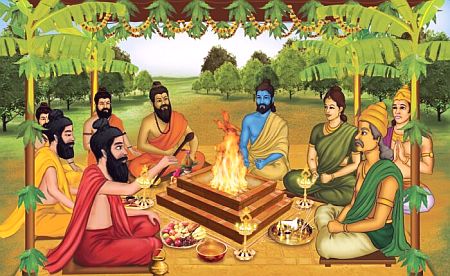
Pushan is the lord of marriages, journeys and roads. Hymns in Rig Veda, appeal to him to guard livestock and to find lost livestock. He is a supportive guide, a good god, leading his adherents towards rich pastures and wealth.

This celebrated rik is addressed to Pushan: ‘By the lid of the golden orb is your face hidden. Please remove it, O nourisher of the world, so that I may see you, I who am devoted to Truth.’
Hiranmayena patrena satyasyapihitam mukham
Tat tvam pusan apavrnu satya sharmaya drstaye

**

11.Asvins :   twin sons of the sun and Ushas.. They are ever young and handsome, bright and of golden brilliance, agile, swift as falcons, and possessed of many forms; and they ride in a golden chariot drawn by horses or birds, as harbingers of Ushas, their mother, the dawn. “They are the harbinger s of light in the morning sky, who in their chariot hasten onwards before the dawn and prepare the way for her.”
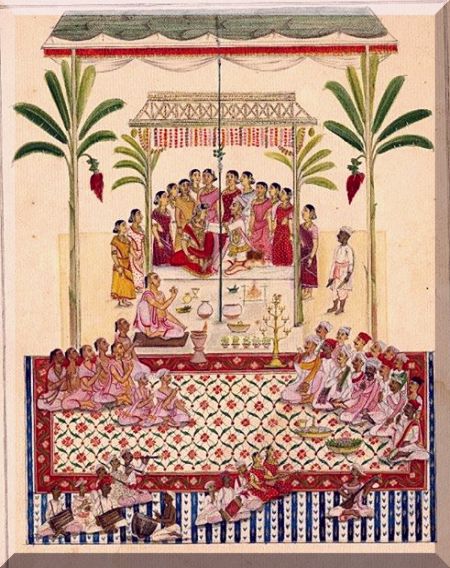
Rig Veda praises the Asvins for protecting the widows.

They are horsemen. They are the doctors of gods and are the Devas of Ayurvedic medicine. Their attributes are numerous, and relate mostly to youth and beauty, light and speed, duality, the curative power, and active benevolence. The number of hymns addressed to them testifies to the enthusiastic worship they received. They were called Das and Nasatyas, Gadagadau and Swarvaidyau; or one was Dasra and the other Nastya.

According to Yaska_charya, the Asvins represent the transition from darkness to light, when the intermingling of both produces that inseparable duality expressed by the twin nature of these deities.. It agrees with the epithets by which they are invoked, and with the relationship in which they are placed. They are young, yet also ancient, beautiful, bright, swift, etc.; and their negative character, the result of the alliance of light with darkness, is expressed by dasra, the destroyer, and also by the two negatives in the compound nasatya (na + satya) ; though their positive character is again redeemed by the ellipsis of ‘enemies, or diseases’ to dasra, and by the sense of nasatya, not untrue, i.e., truthful.

References

http://www.mythfolklore.net/india/

http://www.karma2grace.org/encyclopedia/index.html

 
1 Comment

Posted by on September 4, 2012 in Indian Philosophy, Rigveda


Tags: , ,

Rig Veda-origin of our popular gods in Rig Veda(6/7)

This is the sixth in a series of articles on certain aspects of Rig Veda.

***

Most of our popular gods of today have their origin in the Rig-Veda. It would be interesting to trace the origin of a few of our popular gods.

When I say gods, I am not referring to the God the Supreme principle the substratum of all existence but to the gods who represent different aspects, powers and glory of the God.  Each Vedic god has a distinct power and personality, but he or she also carries the presence of the Supreme, “That one.”  

The puranas tried to convey the esoteric truths of the Veda in a popular manner. In the process Puranas elevated some Vedic gods by endowing them  with virtues, which they loved to see; while at the same time they relegated some other Vedic gods to secondary status. I am not sure why the exercise of weeding out many and glorifying a few deties became necessary. I am clueless.

For instance, Bŗihaspathi, Brahmaņaspathi and Brahma were the three major gods of Rig-Veda; a large number of riks are in honor of these gods. In the Rig-Veda, Brahmaņaspathi/Bŗihaspathi is god of a very high order. There are over one hundred riks in praise of these two deities, giving a picture of their powers and personalities. However, the statuses of these Vedic Gods underwent a huge change in the Puranas; when new set of gods that emerged by the permutation and combination of their own (Vedic gods) powers replaced them. The new gods took over and the old gods were virtually forgotten.

ganapathi 3

Ganapathi : The elephant-faced god Gaņapathi emerged out of some aspects of the Vedic god Brahmaņaspati. Ganapathi is therefore evoked by the Vedic rik associated with Brahmaņaspati (Jestha rajam brahmanaam Brahmanaspathi…). The word Gaņapathi means the lord of gaņas or hosts. In the Rig-Veda, the gaņās or hosts of Bŗihaspathi/Brahmaņaspathi are the chants, the riks and the stomas, the words of praise (RV. 4.50). They have little to do with the lower vital levels. However, in the purāņas, the hosts (gaņas) are the beings of the vital world and Gaņapathi is their lord. Ganapathi thus initially appeared on the scene as a tāntrik god of a lower order.

Ganesha emerged as a distinct deity in clearly recognizable form in the fourth and the fifth centuries during the Gupta period. His popularity rose quickly. The son of Shiva and Parvati; Ganesha with an elephantine countenance, a curved trunk, pair of big ears and a pot-bellied body of a human is now the Lord of success and destroyer of evils and obstacles. He is the god of education, knowledge, wisdom and wealth. Ganesha also became one of the five prime Hindu deities (Surya, Vishnu, Shiva and Durga being the other four) worshipped in the panchayatana puja. A new tradition called Ganapathya thereafter came into existence. With the spread Indian trade to the Far- East, by around the tenth century, Ganesha a favorite with the traders and merchants reached the shores of Bali, Java, Cambodia, Malaya, Thailand and other islands.

Ganesha appears in Jainism too. A fifteenth century Jain text provides procedures for the installation of Ganapati images. Images of Ganesha appear in the Jain temples of Rajasthan and Gujarat; the earliest of which is dated around eighth century.

In Buddhism, Ganesha appears not only in the form of the Buddhist god Vināyaka, but also as a Hindu demon form with the same name (Vināyaka). As the Buddhist god Vināyaka, he is the dancing N ṛ tta Ganapati. Ganesha traveled to other countries along with Buddhism. In northern China, the earliest known stone statue of Ganesha carries an inscription dated 531 CE. In Japan, the Ganesha cult was first mentioned in 806 CE.

Brahma

Brahma: The concept of Brahma as the creator in the purāņa is derived from the Brahmaņaspati/Bŗhaspati of the Rig Veda where they are the creators through the power of the Word. Puranas however denied  Brahma proper worship.

Between these two stages, Brahma is associated with the power to give a verbal identity to a thought. He is the creator and gives form to the formless. He represents Word. That word reaches sublime heights and becomes an intelligent tool for communication when it is associated with intellectual purity and excellence of Vac– the speech.

Sarasvathi7

Vac (Sarasvathi). How the Vedic goddess Vac (speech) transformed into Sarasvathi the Puranic goddess of learning, wisdom, culture and intellect; is very interesting.

In Rig Veda, Vac is the goddess associated with speech, a concept of central importance to the Vedas. Vac, the speech gives a sensible expression to ideas by use of words and is the medium of exchange of knowledge. She gives intelligence to those who love her. She is the power of the rishis. “She is the mysterious presence that enables one to hear, see, grasp and then express in words the true nature of things. She is the prompter of and vehicle of expression for visionary perception, and as such she is intimately associated with the rishis and the rituals that express or capture the truths of their visions.” (Rig Veda).

In a passage of the Rig Veda, Vac is praised as a divine being. Vac is omnipotent, moves amongst divine beings, and carries the great gods, Mitra, Varuna, Indra and Agni, within itself. “All gods live from Vac, also all demigods, animals and people. Vac is the eternal being; it is the first-born of the eternal law, mother of the Vedas and navel of immortality.” The reason, the Vedic rishis paid such glowing tributes to Vac was perhaps because they attached great importance to intelligent communication through speech and to its purity.

In the later parts of the Rig Veda, Brahman (one of the three distinct voices in the Soma sacrifices) is associated with word without which speech is not possible. Brahma (word) and Vac (speech) are partners working towards good communication, spread of knowledge and for the fulfillment of the devotees’ aspirations. If word is flower, speech is the garland. If Vac is the weapons, it is Brahman that sharpens them. In Rig Veda the Vac-Brahman relation is a “growing partnership” (RV 10.120.5, and 9.97.34)

http://www.vedavid.org/diss/dissnew5.html#246

In the early Rig Veda, Sarasvathi is the river vital to their life and existence. Sarasvathi is described as ‘nadinam shuci; sacred and pure among rivers. It was, however, in Krishna Yajurveda, that Vac (speech personified, the vehicle of knowledge) for the first time is called Sarasvathi. The Aitreya Aranyaka calls her mother of Vedas. From here on, the association of Vac with Sarasvathi gets thicker.

Sarasvathi is invoked with Ida and Bharathi. The three, Ida, Bharathi and Sarasvathi are manifestation of the Agni (Yajnuagni) and are tri_Sarasvathi. The goddess Sarasvathi is also the destroyer of Vrta and other demons that stand for darkness (Utasya nah Sarasvati ghora Hiranyavartanih / Vrtraghni vasti sustuition).

As the might of the river Sarasvathi tended to decline, its importance also lessened during the latter parts of the Vedas. Its virtues of glory, purity and importance gradually shifted to the next most important thing in their life – speech, excellence in use of words and its purity. Emphasis shifted from the river to the Goddess With the passage of time, Sarasvathi’s association with the river gradually diminished. The virtues of Vac and the Sarasvathi (the river) merged into one divinity-  Sarasvathi; and she was recognized and worshipped as goddess of purity, speech, learning, wisdom, culture and intellect. The Rig Vedic goddess Vac thus emerged and shined gloriously as Vac-devi, Vedamatha, Vani, Sharada, Pusti, Vagishvari, Veenapani , Bharathi and Sarasvathi.

( http://orissagov.nic.in/emagazine/Orissareview/febmar2005/englishpdf/saraswati.pdf )

The association of the intellect and purity (Vac, Sarasvathi) with the word (Brahma) acquired a physical representation in the Puranas.

Vishnu 4

Vishnu: (the pervader) Vishnu initially had a lower position to that of Indra. He is the younger brother of Indra. In the Rig-Veda Vishnu is described as living and wandering on the mountains. He is one of the celestial gods and one of the Adithyas. He resembles Surya and has rays in his appearance.

He later evolved into the most signifificant God and Godhead. The ‘Vishnu Sukta‘ of the Rig Veda (1.154) mentions the famous three strides of Vishnu. It said that the first and second of Vishnu’s strides (those encompassing the earth and air) were visible and the third was in the heights of heaven (sky). The second mantra of the ‘Vishnu Sukta‘ says that within the three vast strides of Vishnu all the various regions of the universe live in peace.

Yaskacharya, in his Nirukta, defines Vishnu as ‘Vishnu vishateh; one who enters everywhere’, and ‘yad vishito bhavati tad vishnurbhavati; that which is free from fetters and bondages is Vishnu.’ Vishnu is also characterized, as ‘veveshti vyapnoti vishvam yah; the one who covers the whole universe, or is omnipresent. In other words, Vishnu became the omnipresent dimension of the supreme Lord.

With the advent of the golden age of the puranas in the Gupta period, the transformation of Vishnu into a supreme Godhead was complete. The virtues and glory of the Vedic Indra and Surya were transferred to puranic Vishnu. At the same time, the Indra was demoted to a demigod, stripped of his power and glory. Indra’s status in puranas is pathetic and he is flawed by envy, greed and other human failings. How sad!

In this process, Vishnu, in place of Indra, became the lord of the universe. The attributes and titles that once applied to Indra were now employed to describe Vishnu. Now, Vishnu (not Indra) is the omniscient and omnipresent Godhead; he is ‘ashrutkarna; whose ears hear all things; and “Svayambhuva” meaning ‘Self-existent’ or ‘Self manifested’

The Bhagavata Purana states that Yajna (Indra) took incarnation as Svayambhuva Manu. That Indra was Vishnu (as Svayambhuva). Vishnu in turn becomes Dhanvantri the divine healer, Prithu the King and the Rishis such as Kapila. His later Avatars are celebrated in various Puranas. On his association with Narayana, he is The Supreme Lord of the universe.

Rudra

Rudra: In Rig Veda, Rudra is one of the intermediate level gods (antariksha devata) and is celebrated in three or four hymns and described as a fierce, armed with bow and arrows. He is endowed with strong arms, lustrous body and flowing golden hair. He is not purely benefic like other Rig Vedic gods, but he is not malevolent either. He punishes and at the same time rescues his devotees from trouble. He is the Shiva the auspicious one.

In Puranas, he becomes one of the Trinity and is the destroyer. He is the Lord of the universe, the cosmic dancer, the Supreme yogi and master of all yogis.

Vedic Rishi Vamadeva merges into to become one of five faces of Lord Shiva and the aspect of Vama or “preserver” associated with the element of water.

He is at his benevolent best when his consort Uma accompanies him. He is Sowmya (sa uma)

Shiva Sauma skanda

***

“The Indian mythology was (is) not a static affair, neither was it a luxury.  It was linked with the vital spiritual urges and needs of the people, who projected their most haunting dreams, hopes and cravings into their mythys.The changes were not wrought overnight nor was it easily. From the earliest times, the pantheon is the product of a continual clash and friction, not only with gods of other ethnic groups, but among those of various clans and families of the Indian society. Each family seems to have had its preferences for its own set of gods. Those gods who could represent larger segments of life and experiences, who could mobilize greater strength and significance, and later, who could annex other gods by virtue of their greater potentialities grew, while others faded out.

The very fact of the gods changing – growing or diminishing in significance – is a proof of the continual influx of new ideas and a creative conflict with existing ideas.

…..In this period of transition, popular sectarian gods were gradually replacing the older Vedic gods. This new approach to the gods remodeled their characters. The gods which adopted themselves best to the changing needs of times survived. One way they did was by shedding their Vedic characteristics   which were rather unsuitable. And, another was by aligning with tutelary gods that were already being worshipped.

Only those gods could adapt themselves who had been ‘minor’ in Rig-Veda, who did not have a detailed profile, i.e. those whose personalities were rather sketchy and suggestive, and could be filled and enriched with suitable traits. Gods like Asvins whose characters , functions and achievements had been too vividly described in Rig Veda  to afford introduction of new traits were found unsuitable and quietly dropped by the Purana (epic) literature. On the other hand, gods who were too transparently the personification of natural phenomena could not be transformed into popular powerful gods. Thus, Agni, Vayu, Mitra, Varuna, Parjanya, Surya, Soma, Savitr and Ushas had to give place to the new gods. Similarly, gods whose profile was too dim and had little potential for growth just faded out:  E.g. Pushan, Bhaga, Aryaman, Daksha, Amsha, Dayus, and Vivastvat etc.

Only those Vedic gods whose characters were not explicitly known, and who offered significant traits to be developed into rich and complex mythology survived and flourished.  For instance; Vishnu and Rudra were minor gods, but their profile indicated traits which could be expanded and enriched veraciously. Let’s take the case of Vishnu; he had the nucleus of ‘tri-pada-vikrama’ the collasal figure of measuring the universe with his three enormous strides; his solar nature; lustrous body; his friendship with Indra; vague references to his unparallel valor;– all these were excellent material for developing him into concrete mythological supreme god…From Indra he imbibed the demon-killing valor; from Surya and Savitr the brilliance and sheen associated with gold; from Mitra the kindly  , compassionate and benevolent attitudes towards all existence; and , from Bhaga the fortune bestowing generosity. From solar gods in general he inherited associations with Devayana; and consequently his roles as a savior……The component Vedic gods disappear one after another, after bequeathing their virtues to their successor. They last only so long as their living trait remains relevant to the spiritual needs or material aspirations of the society. “

Excerpts from ‘The Indian Theogony’ by Dr. Sukumari Bahttacharji (Cambridge University Press, 1970)

*****

Hindu mythology

Reference

The concept of gods in Vedas:

http://www.eng.vedanta.ru/library/prabuddha_bharata/May2005_the_concept_of_God_in_the_Vedas.php

http://www.eng.vedanta.ru/library/prabuddha_bharata/June2005_the

***

Next

The gods that faded away

-The for gotten gods of Rig Veda (7/7)

 
Leave a comment

Posted by on September 3, 2012 in Indian Philosophy, Rigveda


Tags: ,

Rig Veda – Female deities in the Rig Veda (5/7)

This is the fifth in a series of seven articles on certain aspects of the Rig Veda, written in simple language and avoiding technical terms. I aim posting an instalment each day.

*****

Rig Veda mentions many female deities but none of them is central to the text. Ushas  is the most celebrated goddess along with Aditi, Prithvi, Rathri, Sarasvathi and Vac. It does not however mean that Rig Veda is unimportant in understanding the Hindu goddesses. The female deities  in  Rig Veda form the basis for the emergence of the later Hindu goddesses such as Shakthi, Devi and other mother goddesses glorified in the puranas. In the Vedic lore the female power Shakthi was not seen as independent but as a force residing within the gods. They are treated with curiosity and love for the powerful natural phenomena and abstract forces they represent.

Ushas:

Ushas is the most important goddess in Rig Veda (sometimes viewed as representing several goddesses). She is celebrated in twenty hymns and mentioned more than three hundred times. She is delicate, shy, luminous and beautifully adorned. Ushas is compared to a graceful dancer. Daughter of sky (Dayus), consort of Sun and mother of Ashwins. She arrives each day in a chariot drawn by her sons. She leads Surya and reveals to the world his brilliance and fire.

She is identified with dawn; praised for driving away Rathri the darkness. She rouses life and sets life in motion. She bestows strength and fame; and like Prithvi is called the mother.  She is associated with bounty and gifts that are  given away at the time of sacrifices, though she has no part in sacrificial rituals.

 udu śriya uṣaso rocamānā asthurapāṃ normayo ruśantaḥ
 kṛṇoti viśvā supathā sugānyabhūdu vasvī dakṣiṇāmaghonī
bhadrā dadṛkṣa urviyā vi bhāsyut te śocirbhānavo dyāmapaptan
 āvirvakṣaḥ kṛṇuṣe śumbhamānoṣo devi rocamānāmahobhiḥ  (RV-6.64.1-2)

The radiant Dawns have risen up for glory,
in their white splendor like waves of water;

She maketh paths all easy, fair to travel and rich;
hath shown herself benign and friendly.

We see that thou art good; far shines thy luster;
thy beams, thy splendor have flown up to heaven.

Decking thyself, thou makest bare thy bosom,
shining in thy majesty, thou Goddess Morning.

(RV-6.64.1-2 Griffith)

Sri Aurobindo describes her as “medium of awakening, the activity and growth of other gods; she is the first condition of the Vedic realization. By her illumination, the nature of man is clarified; through her, he arrives at the Truth and through her he enjoys beatitude”. Ushas also symbolizes each person’s awakening to truth.  Ushas is the principle operating each time we connect, realize, or gain some insight into our life.

She is referred to as one “who sees all” and is invoked to drive away and punish enemies. She is also a skilled hunter who “wastes away peoples’ lives. “Perhaps there is in Ushas a hint of a goddess both nurturing and fierce.

Despite her importance in Rig Veda, she is rather forgotten later in the epics where Aditi gains more importance as the Mother principle and mother of gods.

Aditi:

Aditi is the mother principle. In Rig Veda she is the mother of all the gods and all creation. Her name stands for “boundlessness and freedom”. As one who unbinds, her role is similar to that of her son Varuna as the guardian of rta, the cosmic moral order. She is the supporter of all creatures. She is invoked for protection and wealth. Aditi is mentioned about sixty times in the Rig Veda; yet, no hymn is exclusively addressed to her. She is usually mentioned with other gods and goddesses. It is difficult to get a clear picture of her nature. She is not a consort of any god. She is also not related to a natural phenomenon. Physically, she is rather featureless. Unlike Ushas and Prithvi her nature is undefined. She appears to be an ancient deity whose original function and nature are forgotten in later Rig Veda.

aditirdyauraditirantarikṣamaditirmātā sa pitā sa putraḥ
viśve devā aditiḥ pañca janā aditirjātamaditirjanitvam –RV_01.089.10.1-2

Perhaps the most outstanding feature of Aditi is her Motherhood. She is Devamatri. She is the mother of Adityas. She is the mother of Indra, the mother of kings and of all the gods. She is also the mother of Vamana  an incarnation of Vishnu. She is the source of the entire manifested reality-the past, the present and the future; “all that has been and will be born”.

She bestows safety, wealth and abundance. She is sometimes compared to a cow that provides health, nourishment and holiness. Her milk is compared to redemptive, invigorating drink Soma.

Sri Aurobindo addresses her as the goddess of infinity and the infinite consciousness.

Aditi guard our herd by day, Aditi, free from guile, by night,

Aditi, ever strengthening, save us from grief!

And in the day our hymn is this: May Aditi come nigh to help,

With loving-kindness bring us weal and chase our foes.

  Aditi is Heaven, Aditi is the Atmosphere,
Aditi is Mother (Mata), Father and the Son (putra) .
Aditi is the Universal Deities, Aditi is the Five Races,
Aditi is all that has been and will take birth.

Rig Veda.I.89.10

Prithvi:

Prithvi the earth principle is the mother while sky is as a father. The earth and Dyaus the sky principles are together referred to as Dyava-prithvi. She is the basis of all existence on the planet, of all beings animate or otherwise. She protects, she shelters and feeds. Without her support no existence is possible. She is the mother, warm, nurturing and protective. Prithvi is stable, fertile and benign forgiving our trespasses. She is sarvam saha. She is also Vasundhara, one who has in her womb all the riches.

O Mother, auspicious be thy woodland,
thy snow-clad mountains and thy ever-running streams.

May the Earth pour out her milk for us,
a mother unto me her son.”

Prithvi Sukta,AV-12.1-63

Prithvi manifests herself in the scent of women and men,. She is the luck and light in men and splendid energy of maids.

Prithvi, along with Dyaus in the Rig Veda is praised for her supportive nature. She is frequently called ‘firm’, ‘she who upholds and supports all things’. She encompasses  all things, is broad and wide, and is motionless. The waters they produce together are described as ‘fat, full, nourishing and fertile’. They protect people from danger, to expiate sin and to bring happiness. Together they represent a wide, firm realm of abundance and safety, a realm pervaded by the order of Rta, which they strengthen and nourish. They are un-wasting, inexhaustible and rich in gems.

Vishnu strides over her, and Parjanya.  Prajapati and Vishwakarma  all protect her,. Agni pervades her. She is the source of all plants, crops, and nourishes all creatures that live upon her.

Prithvi is also known as Indrani in Prithvisukta of Rig Veda, and Lakshmi or Shri or Bhoodevi  etc.

In a funeral hymn the dead one is asked to go now to the lap of his mother earth, Prithvi the gracious and kind. She is requested not to press down too heavily upon the dead but to cover him gently as a mother covers her child with her garment.

Approach thou now the lap of Earth, thy mother,
The wide-extending Earth, the ever-kindly;
A maiden soft as wool to him who comes with gifts,
She shall protect thee from destruction’s bosom.

“Open thyself, O Earth, and press not heavily;
Be easy of access and of approach to him,
As mother with her robe her child,
So do thou cover him, O Earth!”

(421. 31).

http://www.jaimaa.org/articles/prithvi-sukta-hymn-to-the-earth-atharva-veda/

***

Sarasvathi:

There are numerous references to the Sarasvathi in the Rig Veda. She is the mighty river. She is a haven -sent stream to bless the earth and the celestial regions. She is bountiful, fertile and brings fruitfulness to earth. She is the best of mothers; the source of vigor and strength. She personifies  purity, healing, life giving  maternal divinity.

And as the river began to decline , the virtues and attributes of Sarasvathi merged with the goddess Vac. The flow of the river Sarasvathi came to be associated with the flow of speech. In later times both Vac and Saravathi became identical to represent wisdom, learning, intellect and culture.

Vac  :

In Rig Veda, Vac is the goddess associated with speech, a concept of central importance to the Vedas. Vac, the speech gives a sensible expression to ideas by use of words and is the medium of exchange of knowledge. She gives intelligence to those who love her. She is elegant, embellished in gold. She is the mother who gave birth to things by naming them. She is the power of the rishis. “She is the mysterious presence that enables one to hear, see, grasp and then express in words the true nature of things. She is the prompter of and vehicle of expression for visionary perception, and as such she is intimately associated with the rishis and the rituals that express or capture the truths of their visions.”.

The power of speech is honored in several hymns.


Where, like men cleansing corn-flour in a cribble,
the wise in spirit have created language,
Friends see and recognize the marks of friendship:
their speech retains the blessed sign imprinted

In hymn 125 of the tenth mandala Vac or speech is praised having penetrated earth and heaven, holding together all existence.

In another passage of the Rig Veda, Vac is praised as a divine being. Vac is omnipotent, moves amongst divine beings, and carries the great gods, Mitra, Varuna, Indra and Agni, within itself. “All gods live from Vac, also all demigods, animals and people. Vac is the eternal being; it is the first-born of the eternal law, mother of the Vedas and navel of immortality.” The reason, the Vedic rishis  paid such glowing tributes to Vac was perhaps because they attached great importance to intelligent communication through speech and to its purity.

In the later parts of the Rig Veda, Brahman (one of the three distinct voices in the Soma sacrifices) is associated with word without which speech is not possible. Brahma (word) and Vac (speech) are partners working towards good communication, spread of knowledge and for the fulfillment of the devotees’ aspirations. If word is flower, speech is the garland. If Vac is the weapons, it is Brahman that sharpens them. In Rig Veda the Vac-Brahman relation is a “growing partnership” (RV 10.120.5, and 9.97.34)

http://www.vedavid.org/diss/dissnew5.html#246

In the early Rig Veda, Sarasvathi is the river vital to their life and existence. Sarasvathi is described as ‘nadinam shuci; sacred and pure among rivers. It was, however, in Krishna Yajurveda, that Vac (speech personified, the vehicle of knowledge) for the first time is called Sarasvathi. The Aitreya Aranyaka calls her mother of Vedas. From here on, the association of Vac with Sarasvathi gets thicker.

Sarasvathi is invoked with Ida and Bharathi. The three, Ida, Bharathi and Sarasvathi are manifestation of the Agni (Yajnuagni) and are tri_Sarasvathi. The goddess Sarasvathi is also the destroyer of Vrta and other demons that stand for darkness (Utasya nah Sarasvati ghora Hiranyavartanih / Vrtraghni vasti sustuition).

As the might of the river Sarasvathi tended to decline, its importance also lessened during the latter parts of the Vedas. Its virtues of glory, purity and importance gradually shifted to the next most important thing in their life – speech, excellence in use of words and its purity. Emphasis shifted from the river to the Goddess. With the passage of time, Sarasvathi’s association with the river gradually diminished. The virtues of Vac and the Sarasvathi (the river) merged into one divinity- Sarasvathi; and she was recognized and worshipped as goddess of purity, speech, learning, wisdom, culture and intellect. The Rig Vedic goddess Vac thus emerged and shined gloriously as Vac-devi, Vedamatha, Vani, Sharada, Pusti, Vagishvari, Veenapani , Bharathi and Sarasvathi.

Click to access saraswati.pdf

(https://magazines.odisha.gov.in/Orissareview/febmar2005/englishpdf/saraswati.pdf )

The association of the intellect and purity (Vac, Sarasvathi) with the word (Brahma) acquired a physical representation in the Puranas.

Next:

Origin of our popular gods in Rig Veda (6/7)

 
4 Comments

Posted by on September 3, 2012 in Indian Philosophy, Rigveda


Tags: ,