RSS

Monthly Archives: July 2024

Who Was Dhirgatamas – Part SIX

Continued from Part Five


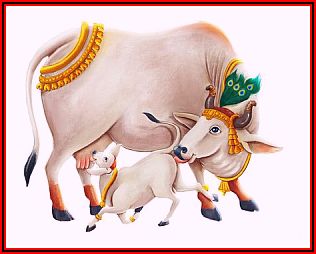
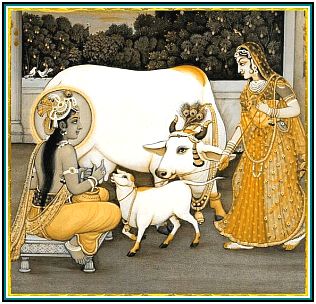
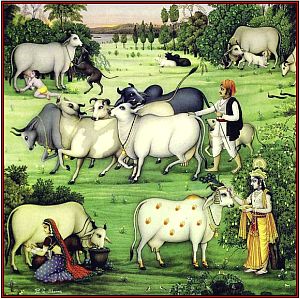
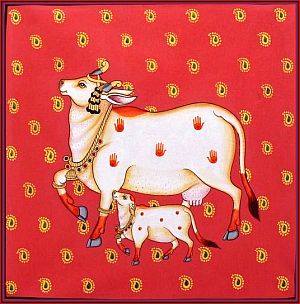
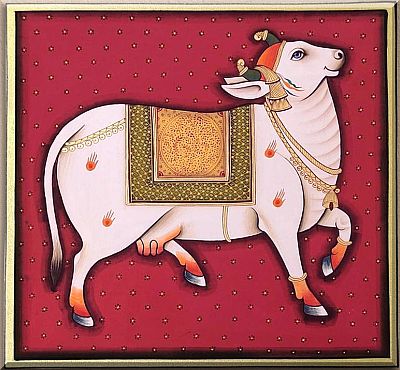
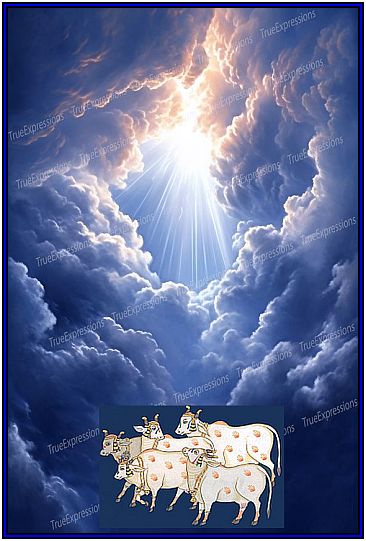
The following four verses (26 to 29) employ the symbol of the cow which gives plenty of nourishing milk ; and  compares it  with the clouds that shower life-giving rains.

Verse 26

उपह्वये सुदुघाम्धेनुम् एताम्सुहस्तःगोधुक् उतदोहत्एनाम्श्रेष्ठम्सवम् सवितासाविषत्नःअभिइद्धःघर्मःतत्ऊँ इतिसुप्रवोचम् 1.164.26

upa | hvaye | su-dughām | dhenum | etām | su-hasta | go–dhuk | uta | dohat | enām | śreṣṭham | savam | savitā | sāviat | na | abhi-iddha | gharma | tat | o iti | su | pra | vocam

I invoke the cow that is easily milked, that the handy milker may milk her; may Savitr accept this our excellent libation, that his heat may (thereby) increase; it is for this, verily, that I earnestly invoke him.

*

Here, in these verses, the symbol of cow (धेनुम्) is projected in many ways; as:

  • The Mother-nature, an icon of Motherhood.
  • The cow yielding plenty of milk (सुदुघाम् धेनुम्)
  • The clouds that send down the rains on to the earth.

The symbolisms with regard to Milk-man here are:

  • The Milk-man (गोधुक्) who milks (दोहत्) the cow
  • The Adhvaryu, the officiating priest in a Soma-Yaga (श्रेष्ठम्सवम्)
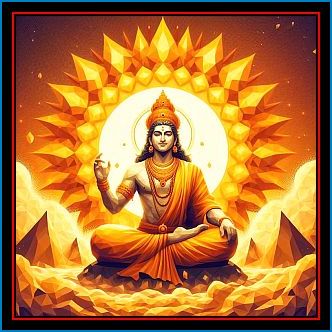
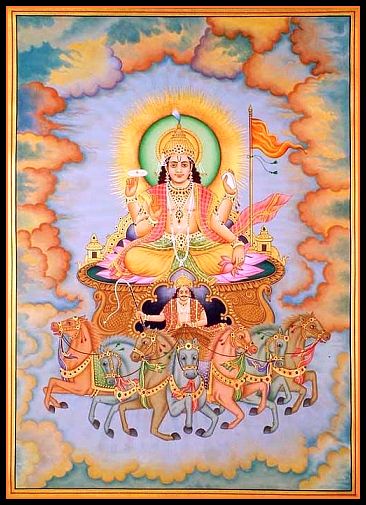
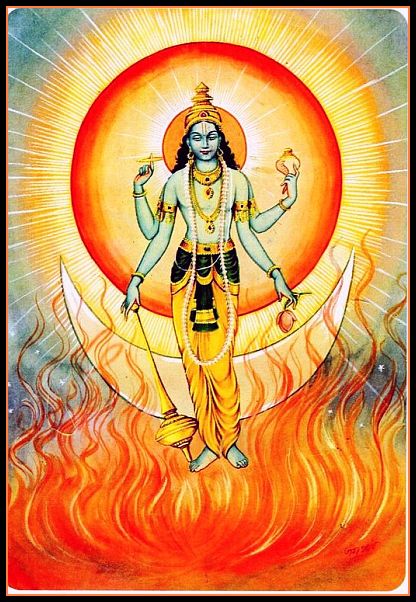
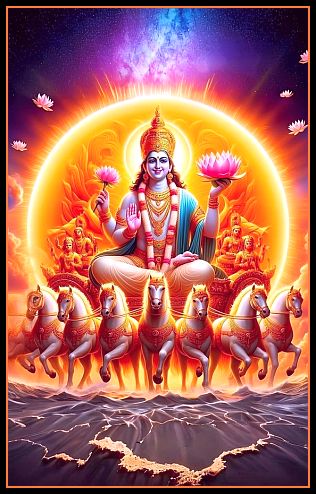
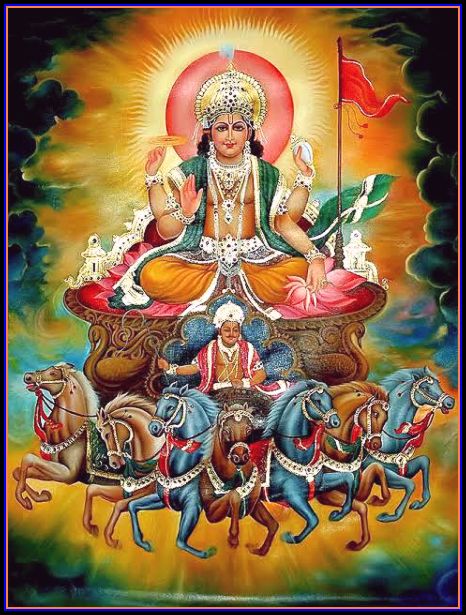
  • Aditya, सविता the inspirer, the sun god, the one with bright rays (deft hands – सुहस्तः) who sends down the rains.

All the devotees are earnestly invoking (उप ह्वये) the blessings of such a cow for securing the best in Life – both in Mind and Body.
The symbolisms adopted here, and their mutual relations, in short, are:

As mentioned earlier, the term धेनुम् stands for Cow as also for the clouds.

The Cow, as Mother-Nature, shining with divine splendor, sustains with her milk, all of mankind. She is truly the Vishva-Matha.

The rains make the world happy just as the milch cow makes its master happy by giving plenty of milk.

Milk-man (गोधुक्) with deft hands (सुहस्तः) is the Adhvaryu, the officiating priest in a Soma Yaga (श्रेष्ठम् सवम्), the one who lights up (अभिइद्धः) Pravarga, as a part of Soma Yaga.

This and the next verse employ the symbol of the cow for milking in a Yaga.

Milk-man is Aditya, the one who with his bright rays creates the rains.
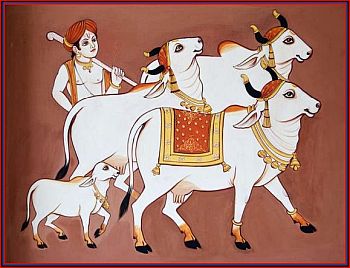
Each one on this earth who is benefitted by the cow, which equates to the rains and to the gods, earnestly prays (सु प्र वोचम्) for the blessings of such a cow; for securing the best of Manas (Mind), Prana (Life) and Vak or Prakrti (physical body) .

[I invoke this milch cow which gives plenty of milk when the milk-man milks her with his deft hands. I earnestly pray, May Savitar grant us this excellent milk for our Soma Yaga when Pravarga-Agni is lighted.]
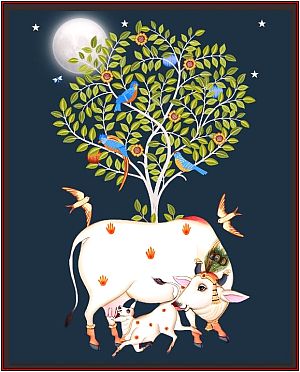
Sri Sayanacharya explains:

The poet welcomes wisdom conceived as cow.

The oven is used for heating the milk; and. here it is for preparing the wisdom for one’s enlightenment.

*

Other explanations are:

The cow is the cloud, the milk is the rain. Vayu or wind, is the milker.

The metaphor is continued in the following three hymns, where the calf is the world or mankind anxious for the rain, as the cause of abundance.

Again, the milk of the cow is the food which produces the energy for living.

And, Savitri and Sarasvathi are one among the many names of the Universal Cow (Viraj).
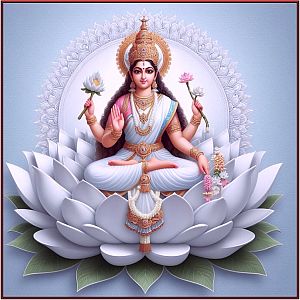
As regards Savitar; in the Samhitas, Savitr is variously identified with Agni, Soma, Prajapati, Visvedevas and Surya; or with their aspects.

Savitar is associated with the clouds, the rains, the earth and the mind; and, he holds afloat the sky (akashbhane) without visible support (aalambanam tad-rahite).

At another level, Savitr is identified with one’s mind, consciousness and with one’s own self (Antaryamian).  

[Savitar, in Rigveda, is conceived as an aspect of Sun before daylight (udayat purvabhavi); and, after daybreak the Sun is called Surya (Surya-iti). Thus, Surya is the later form of Savitr.

Some say, Savitr is Surya when present below the horizon, but not quite visible.  Savitr is also called Bhaga (Savita Bhagaha: RV 5.82.3) in a sense of the ‘early (proto)’ Surya.

Savitr, thus, comes after night (tamas) and before light (Jyothi): (tamasya kirna rashmir bhavathi). It is also said; the night comes at his command sending all beings to rest. Savitr is the bridge between night and light. Night is un-manifest; and light is manifest. Savitr in this sense is both un-manifest (A-vyakta) and manifest (Vyatka) ]
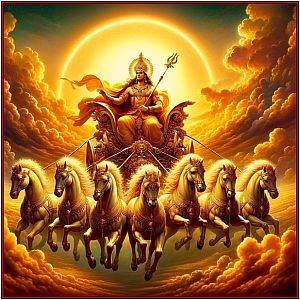
According to Yaska-charya, Savitr prompts (su-preraka), inspires and guides all to engage in good thoughts and right actions; and to tread on the right path

Savitr, here, is the inner-light that illumines, enlivens, prompts and inspires all our thoughts, speech and deeds.

With the sight of Savitr, the Sun-God, one begins to attain the wisdom referred to here.

Such wisdom is symbolized by Cow in this verse.

Verse 27

हिङ्कृण्वतीवसुपत्नी वसूनाम्वत्सम् इच्छन्तीमनसाअभिअगात्दुहाम् अश्विभ्याम्पयःअघ्न्याइयम्सावर्धताम्महतेसौभगाय 1.164.27

hi-kṛṇvatī | vasu-patnī | vasūnām | vatsam | icchantī | manasā | abhi | ā | agāt |duhām |aśvi-bhyām | paya | aghnyā | iyam | sā | vardhatām | mahate | saubhagāya

Making a bellowing sound she has come hither, the Mistress of wealth and plenty, yearning for her calf in heart; may this cow (what shall not be hurt) yield milk for the Ashvins, may she prosper for the sake of immense happiness.

**
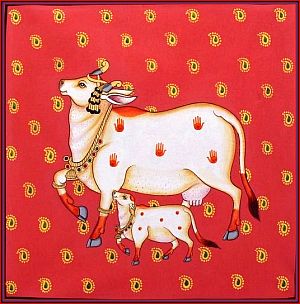
 [ It is said; the nature speaks through its created objects. It is its own language; the language of symbols (Nidana-vidya). The language of symbols is elastic; suggesting multiple interpretations. We all strive to retrieve their meaning closeted at the core of such symbols, shrouded in mystery (Bhuteshu -Bhuteshu vichitya dhirah – KU.2.5).

Our ancients, recognized the infinite tolerance and the loving quality of the Motherhood in the Earth, which supports and sustains the whole of this existence. They again related the generative potency of the Mother Nature to the Cow, which feeds and nurtures all of us, with patience. The Cow, in turn, was seen as the symbol of the language, giving forth to limitless forms, sounds, words and meanings (Dhenur Vac asman upa sushtutaitu – RV. 8.100.11).

The Universal-Cow-principle (Gauh-tattva) was,thus, seen as a symbol of the Thousand-syllabled speech (Vag va idam Nidanena yat sahasri gauh; tasya-etat sahasram vachah prajatam – SB.4.5.8.4).

Similarly, the fleeting quality of the Gayatri Meter (Chhandas) was said to reflect the flaming glow of Agni, the fire-principle (Yo va atragnir Gayatri sa nidanena – SB.1.8.2.15).

And, even here, the words are mere symbols of the ideas; trying to manifest the un-manifest subtle thoughts and feelings. The words belong to the physical world; but they radiate from a much deeper transcendental, inspirational source that is ever innovative (Pratibha).

*

Following the concept of Nidana-vidya, in the early texts, the cow is compared to Earth as an exemplary symbol of Motherhood. She is the life-giving, nourishing Mother par excellence, who cares for all beings and nature with selfless love and boundless patience. The Mother goddesses such as Aditi, Prithvi, Prsni (mother of Maruts), Vac, Ushas and Ila all are represented by the cow-symbolism.

Further, the nourishing and life-supporting rivers too are compared to cows (e.g. RV. 7.95.2; 8.21.18). For instance; the Vipasa and the Sutudri the two gentle flowing rivers are said to be  like two loving mothers who slowly lick their young-lings with care and love (RV . 3,033.01)  – gāveva śubhre mātarā rihāe vipā chutudrī payasā javete 

The cow in her universal aspect is lauded in RV.1.164.17 and RV. 1.164.27-29. She manifests herself together with her calf; she is sacrosanct (aghanya), radiant, the guardian mother of Vasus.  She created the whole of existence by her will.

Sri Aurobindo explains: in many of these hymns, milk (literally, that which nourishes) represents the pure white light of knowledge and clarified butter the resultant state of a clear mind or luminous perception, with bliss, symbolized by the honey (or Soma), as the essence of both. ]

**

She comes bellowing (हिङ्कृण्वती), abounding in wealth (वसूनाम्), loving her calf (वत्सम्) in her mind (इच्छन्ती मनसा). May this cow (अघ्न्या) grant her milk (पयः/अगात्दुहाम्) to the Aśvins. May she prosper (सौभगाय). May she grow (वर्धताम्) for the long wellbeing of all of us (महतेसौभगाय).

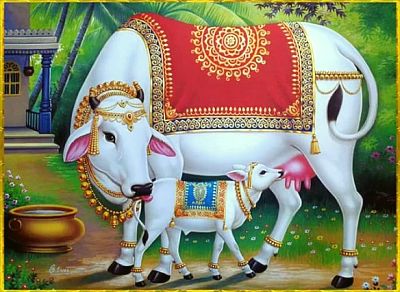
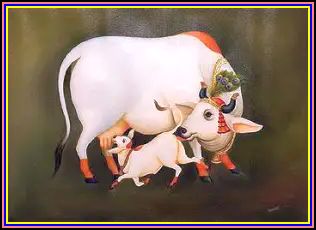
The picture of the mother cow and the calf is really beautiful here.

There is a poetic allusion to the cow and the calf.

  • Cow is the protector or the mother of Vasus
  • Her heart is full of love for her calf
  • She produces milk for two Ashvins
  • She enhances prosperity for all who come to her.

*

The milk-drawn for the sake of the Ashvins must be sweet in so far as the Ashvins are fond of Madhu (honey). Certainly, he himself is the calf in this context.
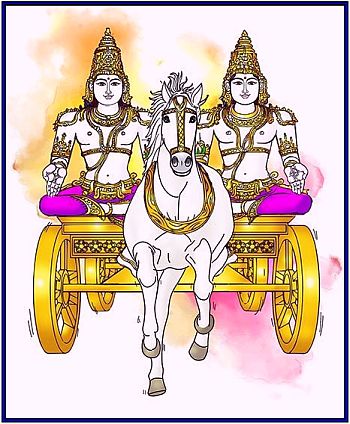
Swami Amritananda explains:

In this verse the term अघ्न्येयं can have two meanings – one as the Cow; and the other as the Clouds. 

The cow bellows, loves and protects its child (वत्सम्); and, gives the nourishing milk to all.

While the cloud thunders during the rainy seasons; sends down the  rain-water;  protects and nourishes  the crops, cows and humans (वसूनाम्[-वसुपत्नी) as if they were all her calves (वत्सम्).

**

The other interpretation could be that of the Ashvin – twin deities (अश्विभ्याम्), one has the water; while the other has light. They together pervade the universe.

  • aśvinau.yad.vyaśnuvāte.sarvam.rasena.anyas.jyotiā.anyah (Nirukta .12.1 )

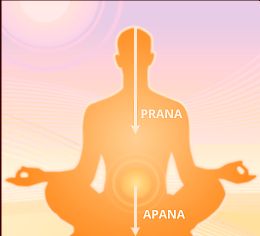
The Ashvin twins can also be understood as the pair of two vital breaths Prana and Apana, – in-breath and out-breath – which sustain the body functions, including assimilation of food, which provides energy to physical, mental and vital activities and their well-being.
Verse 28

गौःअमीमेत्अनुवत्सम्मिषन्तम्मूर्धानम्हिङ्अकृणोत्मातवैऊँ इतिसृक्वाणम्घर्मम्अभिवावशानामिमातिमायुम्पयतेपयःभिः 1.164.28

gau | amīmet | anu | vatsam | miantam | mūrdhānam | hi | akṛṇot | mātavai | o iti | skvaaam | gharmam | abhi | vāvaśānā | mimāti | māyum | payate | paya-bhi

The cow bellows for her calf, (who stands) with winking eyes, and lows as (she proceeds to lick his forehead; she utters a cry, as, anxious, she sees the moisture in the corners of his mouth, and nourishes him with her milk

**

There is the beautiful imagery of the cow with the calf, making a bellowing sound, licking the calf; and yielding milk.

The cow (गौः) bellows (हिङ्कृण्वती) for her calf (वत्सम्), which stands close to her and looks at her mother with blinking eyes (मिषन्तम्). The mother cow, full of love for her child, moves forward (अनु वत्सम्) to lick (मातवै) its forehead (मूर्धानम्) She yells out of affection (अमीमेत्),on seeing foam (घर्मम्) collected at the corners of the calf’s mouth (सृक्वाणम्). She then lovingly (वावशाना) nourishes the calf with her milk (पयतेपयःभिः).

Swami Amritananda says:

This Rik, verse, is chanted at the time of milking the cow during the Pravargya (also known as ‘Ashvina-pravaya’, an introductory or preliminary ceremony to the Soma Yajna.)

*

Here also, the term गौःcould be interpreted either as a Cow or as the Cloud.

In case it is taken to mean Clouds, then the term (मिषन्तवत्सम् – seeing the calf) could imply that on seeing the parched earth (as if it were a starved calf), the clouds would thunder (cry out in anguish); fondle the earth; and send down the life-giving rains, to quench its thirst and hunger.

*

As regards blinking by the calf, it is symbolic of the rhythmic cycles in life-swinging both ways.
Verse 29

अयम्सःशिङ्क्तेयेनगौःअभिवृतामिमातिमायुम्ध्वसनौअधिश्रितासाचित्तिभिःनिहिचकारमर्त्यम् विद्युत्भवन्तीप्रतिवव्रिम्औहत1.164.29

ayam | sa | śikte | yena | gau | abhi-vṛṭā | mimāti | māyum | dhvasanau | adhi | śritā | sā | citti-bhi | ni | hi | cakāra | martyam | vi-dyut | bhavantī | prati | vavrim | auhata

He, too, bellows, and the cow utters inarticulate sounds, as, comprehended by him, she repairs to her stall; (influenced) by her instrumental acts, she acts like a human being, and, radiant, manifests her nature.

**

The calf makes an inarticulate sound (शिङ्क्ते) on seeing its mother, indicating its joy. The cow (गौः) is covered by the calf. She goes back to her shed (ध्वसनौ); and, makes bellowing sound. The mother cow by expressing her natural love and affection towards her child. In comparison the human affection looks very small (चकार मर्त्यम्).  

Shining brilliantly (विद्युत् भवन्ती), the mother cow revealed her true form (प्रति वव्रिम् औहत).

*

Dr. Raja explains:

The general idea is that though the calf waxed and overtook the mother cow, the mother stood on the heights; and she along with the calf made a bellowing sound. She remained above the mortals; and becoming the lightning, she threw back the garment of darkness.

*

This verse extols the natural motherly love of a cow towards its calf. It reveals the brighter side of a cow’s nature (वव्रिमौहत् रुपं प्रकाशयत्).

*

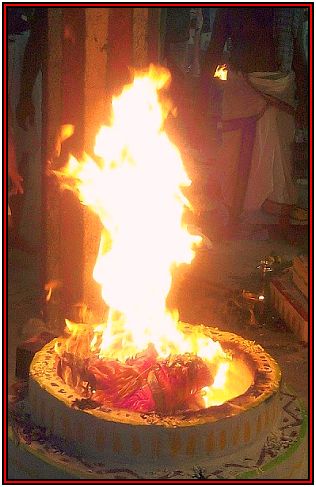
It is said; the three Riks 26,27and 28 of Asya Vaasa Sukta are chanted during the Pravargya (प्रवर्ग) – a ceremony preliminary to the Soma-Yaga, at which fresh milk is poured into a heated vessel called, mahā-varri or gharma.

But, this Pravargya is a preliminary or an introductory ritual or an application in Soma-Yaga; and, is not an independent one.  Yet, it is given much importance in the कर्मकांड Sruti.

*

Dr. Venkata Chaganti, President, Vedas World Inc., Atlanta, USA, explains: Pravargya as a Thermodynamic process that boosts immunity and reduces pollution:

Pravargya is another Vedic and scientific process usually takes place along with the yajna. In Pravargya, a combination of fresh cow and goat milk is poured into the boiling cow ghee pot, the water part (about 87%) vaporizes instantly due to high heat quantity. The change from liquid to vapor expands water present in the milk to several hundred times and pushes the fire produced by the combustion of ghee in all directions that spontaneously produces the fireball. The fatty acids from the cow ghee, organic compounds and minerals present in cow and goat milk are responsible for high heat and emission spectra with different colors.

The process creates vapors of many particles that have great kinetic energies. These vapors are capable of rapidly increasing immunity in the human beings, reduce organic particulate pollution, air pollution and water pollution in and around the vicinity.
The verse 29 gives raise to many questions which have no clear answers.  There is some difficulty in clearly understanding the intent of the poet. This has led to several endless arguments concerning issues such as:

  • What is that which has encompassed the cow?
  • Is it the light of wisdom? Does the idea relate to the Sun born of the Dawn?
  • What is the significance of the shrilling cries or sneezing of the cow?
  • Why should humans be considered inferior to a Cow? Which is such a cow?
  • What is the meaning of throwing back the garments?
  • What is the idea of the Cow transforming into lightening (Vidyut)?
  • Does Vidyut merely mean ‘shining or brilliance’

*

Dr. Raja also remarks:

There is some difficulty in interpreting verse 29. What is this which has encompassed the cow. Is it the light of wisdom? Does the idea relate to the Sun born of the Dawn? The picture is not quite clear.

The inner meaning is the dawning of wisdom; but there is some difficulty in understanding how this encompasses the cow.

Verse 30

अनत्शयेतुरगातुजीवम्एजत्ध्रुवम्मध्येपस्त्यानाम्जीवःमृतस्यचरतिस्वधाभिःअमर्त्यःमर्त्येनसयोनिः1.164.30

anat | śaye | tura-gātu | jīvam | ejat | dhruvam | madhye | ā | pastyānām | jīva | mtasya | carati | svadhābhi | amartya | martyena | sa-yoni

The life, breathing, moving fast, is at rest; rushing, it is firm in the middle of habitations. The immortal Self of the Dead, having the same birth-place with the mortal, wander? about at his own will.

**

Jiva (जीवम्) with Pranas, breathing (अनत्) going about briskly (तुरगातु) for carrying out his external functions remains still in the midst of residences in the form of bodies(पस्त्यानाम्). Jiva moves in the world associated with the mortal body (मृतस्य चरति), born with mortal frame from the same source (मर्त्येनसयोनिः). Himself (अमर्त्यः) being immortal and sustained by offerings made by his sons (स्वधाभिः)Svadhābhi Putra ktaiḥ (ष्व्अध्आभ्इः पुत्रा क्रुताह्).

[Dr. Raja surmises: The first half refers to the contrast between the condition of embodiment and the condition when the Self is separated from the body.

The second half also may refer to the same condition, enjoying free movement in heaven.]

**

The three signs of a living organism are said to be:  Prana/Jiva (Life); Manas /Buddhi (Mind); Deha (Body).

The terms Prana (प्राण) and Jiva (जीव) are very proximate. They are at times used alternatively. For instance; in the ancient tests the term for indicating the soul or the living principle (Appa, Jiva) bears almost the same sense as Mahidasa’s term Prana or Uddalaka’s term Jivatma.

*

At the same time, there are other explanations as well.

Prana literally means “life-force.” It is a subtle, pervasive energy that powers various aspects of our being.  Prana is essential for our vital activities like breathing, talking, moving, thinking, digesting, breathing, and so on. Hence, we call it vital life-force energy

Jiva -individual soul – coordinates the various powers and faculties of the mortal body (Sarira); and moves by its Pranic and paranormal powers.

*

Prana -Living principle, is what is really existent in the universe. The functions of the mind die out with the body. Mind is joined to life, and that sleep results from the absorption of the mind into Prana. Mind is linked to Prana which is its abode (ayatana) or resting place (upasraya), i.e., substratum. While a person sleeps, his mind subsides in and is tied to the Prana, just as a string-bound bird finding no other shelter, stays put at last knotted to the chain itself.

Jiva- Jjlvatma (Life) endowed with breath and eager to discharge its functions, stays within a body for a limited time. It then flies away.  Jiva is with reference to an individual being.
The three verses – from 23 to 25 – dealt with Chhandas, the metrical structures of poetic verses. And, the next four verses – 26 to 29 – were in celebration of wisdom.

But, the following four verses – 30 to 33- are again obscure, suggesting the mystery of the embryo in mother’s womb, birth and the embodiment of the Self.

*

Verses 30 and 31 together put forward the ancient doctrine known as Amrita-Mritya-Vada, according to which the immortal and mortal exist together at every level.

Similarly, the Svadha (स्वधा) principle also links the immortal and mortal. The immortal and the mortal are kins from the same source. And, the immortal Jiva moves with the mortal body, by virtue of its intrinsic power (स्वधाभिहिSvadhabhih). Life-principle is said to established firmly in mortal bodies, in which Agni has also a seat.

That is to say:  both the mortal body (मर्त्येन-Martya) and Amartya (अमर्त्यः) the Self or the Jiva, life principle (जीव) which is immortal, are united like brothers; and have a common origin.

*

A living body is a organised mechanism; and, has the vital principle (Prana) to energize its capabilities in order to function methodically. A living body (शरीरSarira) must be clearly distinguished from a lifeless body or corpse (म्रुतदेह​), which for all purposes is dead.

A body that is alive and functioning, is a self- working natural system; a physical entity, which is composed of several members skillfully joined together or united into a complete whole; and functioning as a living organism.

**

This Rik (30) states that the Jiva (Life-principle) has this body only in this life. Body is impermanent, while the Jiva is eternal.

Jiva though housed in a body, it is separate and has its own independent characteristics. Body is alive so long as the Jiva resides in it. The moment it leaves the body is dead.

Jiva moves about when it is residing and associated with the body. But, when it is not so associated with body elements, it stays motionless. It is said; Jiva by its very nature is still.

So long as the Jiva, in the form of Prana, is located in the body, the sense organs perform their respective functions.

The Jiva, after it leaves the body, can travel either by the path of Pitris (ancestors) or that of gods

When it follows the path of the Pitris it is supported by Shraddhas – the offerings made by its decedents or sons- Svadhābhi Putra ktai (ष्व्अध्आभ्इः पुत्रा क्रुताह्).

Verse 31

अपश्यम् गोपाम् अनिपद्यमानम् परा पथिभिः चरन्तम् सः सध्रीचीः सः विषूचीः वसानः वरीवर्ति भुवनेषु अन्तरिति R.V. 1.164.31 ॥

apaśyam | gopām | ani-padyamānam | ā | ca | parā | ca | pathi-bhi | carantam | sa | sadhrīcī | sa | viūcī | vasāna | ā | varīvarti | bhuvaneu | antariti

I have seen the protector of the universe, who never falters in his steps nor get tired, who wanders hither and away; , travelling upwards and  downwards by various paths; going all around; invested with brilliant and diffusive radiance revolves in the midst of the regions of the world.

*

In case the term गोपाम् is understood as the Sun:

I have seen (अपश्यम्) the protector of the universe (गोपाम् Sun), who never falters in his steps nor gets tired (अनिपद्यमानम्); who travels (चरन्तम्) along various paths (पथिभिः) in the sky. Up to noon approaching the world (परा); then going away from it in the afternoon.  He, the sun, with rays collected(सध्रीचीः) at the centre, and radiating (वसानः) towards worlds, enlivening them with light and life. He thus, rising and setting, revolves amidst all the regions of the world (भुवनेषु अन्तरिति).

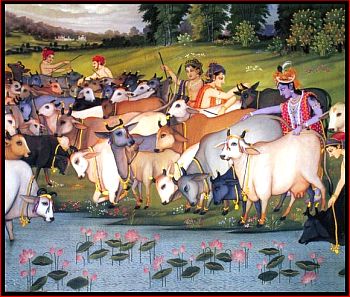
In case the term गोपाम् is taken to mean cowherd, then the verse will project a beautiful poetic imagery of a cow-herd. He is ever steady; never falters in his steps. He goes along this path and that path. He, with the herd of cows, goes around all the pastures.

The Cowherd moves out with his cows in the morning; returns home by evening (Godhuli-lagna); and, retires in the night.
There is another question. Who indeed is He (Isa Vai- ईषा वै), the Cowherd (protector- गोपा) Is he .. ?:

  • Surya, the Gopa, who rules and protects all the worlds
  • Isa Vai Gopa ya Suryatapati – ईषा वै गोपा या ईषा सूर्यस्तपति
  • Agni, the master, indeed is the divine Cowherd
  • Agni Vai Devanam Gopaha – अग्नि वै देवानम् गोपा
  • Indra the ruler, indeed is the excellent protector of all the Devas
  • Indra Vai Gopaha; इन्द्रा वै गोपह​
  • Prana truly is the eternal Life-principle the one who protects
  • Prano Vai Gopaha प्राणो वै गोपह​

Verse 32

यः । ईम् । चकार । न । सः । अस्य । वेद । यः । ईम् । ददर्श । हिरुक् । इत् । नु । तस्मात् । सः । मातुः । योना । परिवीतः । अन्तः । बहुप्रजाः । निःऋतिम् । आ । विवेश ॥ R.V.1.164.32

ya | īm | cakāra | na | sa | asya | veda | ya | īm | dadarśa | hiruk | it | nu | tasmāt | sa | mātu | yonā | pari-vīta | anta | bahu-prajā | nitim | ā | viveśa

He who created this, does not know this; from him who saw this, verily this is indeed hidden. He is shrouded within the womb of the mother; he who has many off-springs enters suffering.

**

The following verses focus on the rather elusive themes such as mysterious seed of life, the embryo in the womb, which has gone through many births (बहुप्रजाः bahu-prajā); Mother-principle; Father-principle etc. The poet employs a number of imageries, which again could be in number of ways.

The poet makes a rather brazen   statement wherein he asserts that the Creator who brought into existence all the worlds may himself not know what he has created.

When such is the case, what to speak of mere mortals who just witnesses, as in a puppet-show. They suffer much because many things are hidden from them (हिरुक्); and they do not know what they are doing.

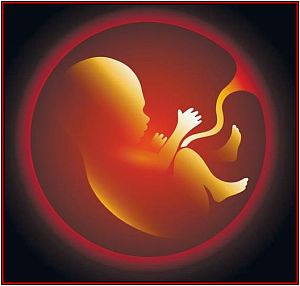
The greatest mystery is how in a mother’s womb a life is created by cells to form a living and active foetus (योना), which takes form and grows. The wonder is that the mother (मातुः) who creates (चकार), nurtures and brings forth her offspring, surely does not know ( सः अस्य वेद) from where the life growing within her entered (विवेश); and what is within her (अन्तः); not knowing ( ददर्श) what is surrounding her (परिवीतः).

And, embryo enveloped in mother’s womb also does not know how and where it came from. It may also be not aware that it has taken many births (बहुप्रजाः).

This is greatest mystery of Motherhood.

*

Similarly, the father who deposits his germ into a female, may not know how he carries within him the potency to create life.
The metaphors of Mother and Father principles as extended to Earth are dealt in the next verse.

**

Verse 33

द्यौः मे पिता जनिता नाभिः अत्र बन्धुः मे माता पृथिवी मही इयम् उत्तानयोः चम्वोः योनिः अन्तः अत्र पिता दुहितुः गर्भम् अधात् R.V. 1.164.33

dyau | me | pitā | janitā | nābhi | atra | bandhu | me | mātā | pthivī | mahī | iyam | uttānayo | camvo | yoni | anta | atra | pitā | duhitu | garbham | ā | adhāt

The heaven is my parent and progenitor; the navel (of the earth) is my kinsman; the spacious earth is my mother. The womb (of all beings) lies between the two uplifted ladles, and in it the parent has deposited the germ (of the fruitfulness) of the daughter.
The heaven (Sky) above is my father (द्यौः मे पिता), the ancestor(जनितृ). This vast earth (पृथिवी- मही) is my mother (माता). And, in between, the navel (नाभिः॑) of the earth is my relative (बन्धुः॑ मे॒), my friend. The womb (of all beings) lies between the two vessels held upside (उत्तानयोः).  It is my place of birth. Here the father has deposited the germ of fruitfulness into the daughter of Indra (योनिः अन्तः अत्र पिता दुहितुः गर्भम् आ अधात्

**

Mata (मातुः),the mother in this verse, can also be taken to mean the Mother-Earth (Mahi-Mata-Prithvi).

The poet says:

To me the heaven is the protector. He is the one who creates the sap of the earth.

This vast earth is my mother. Between the father above and the mother below are the source of all life. Aditya, the Sun, sends down rains, light and energy to the earth and enables her to create, nourish and sustain various forms of life, including vegetation. Prithvi indeed is the mother of all that exists in this world.
Sri Sayanacharya explains:

Here, the term – नाभिःअत्र बन्धुः nābhir atra bandhu– stands for ‘my-parent’.

And, Nabhi is related to me (पिता जनिता Pitā-Janita) i.e. the moisture of the earth, as derived from the rain sent down by the sun (Aditya). It is by the help of that sap, corns and various other food crops are grown abundantly. That food keeps a person alive, strong; and produces seminal fluid.  It is from that fluid again another person is born. Thus, eventually, it is the Aditya who is the parent and progenitor of man.

The term बन्धुः (Bandhu/ Bandhikā) binding or supporting; this world is an epithet of पृथिवी (Prithivi) the earth. The two uplifted ladles – उत्तानयोः चम्वोः योनिः अन्तः: – (uttānayos’ camvor yonir antar) are heaven and earth.

And, the womb of all beings between them is the space, the region of the rain, which the parent has deposited. The father, the heaven, may be regarded as identical with either Aditya or Indra. The daughter is the earth, whose fertility depends upon the rain deposited as a germ in the firmament.
CONTINUED

IN

THE NEXT PART

REFERENCES

  1. History of Pre-Buddhist Indian Philosophy by Dr. Beni-madhab Barua -Motilal Banarsidas-1921
  2. Tagore Law Lectures 1930 – The History Of Hindu Law by Prof Radha Binod Pal; University of Calcutta – 1958
  3. Vision in long darkness by Prof. Vasudeva Agrawala
  4. https://who.rocq.inria.fr/Ramakrishna.Upadrasta/Veda/Asya_Vamiya/AVMS/AVMS_1-100.pdf
  5. https://www.youtube.com/watch?v=r86l_TF9XWc
  6. https://archive.org/details/in.ernet.dli.2015.226346
  7. https://istore.chennaimath.org/products/rig-vedic-suktas-asya-vamiya-suktam/1309294000102324374
  8. pdf (archive.org)
  9. https://religion.fandom.com/wiki/Dirghatamas
  10. ऋग्वेदः सूक्तं १.१६४ – विकिस्रोतः (org)
  11. org/mirrors/rigveda/sanskrit03/RV0310noaccent.html
  12. ALL IMAGES ARE FROM INTERNET
 
Leave a comment

Posted by on July 27, 2024 in Dhirgatamas, Rigveda


Tags: , , , , , , , , , , , , , , , , , , , , , , , , , , , , , , , , , , , , , , , , , ,

Who Was Dhirgatamas – Part Five

Verses 21 and 22, here-under, are in continuation of the rather complicated obscure concepts encased in riddles. There is also glorification of wisdom; lauding one who can clearly see and understand what lies beneath seemingly obvious elements in the nature surrounding us.

Verse 21

यत्र सुपर्णा अमृतस्य भागम् अनिमेषम् विदथा अभिस्वरन्ति इनः विश्वस्य भुवनस्य गोपाः सः मा धीरः पाकम् अत्र विवेश 1.164.21

yatra | su-parā | amtasya | bhāgam | animeam | vidathā | abhi-svaranti | ina | viśvasya | bhuvanasya | gopā | sa | mā | dhīra | pākam | atra | ā | viveśa

Where the birds ceaselessly sing forth about their virtue of immortality, before their learned assembly, there the lord of all, the protector of the world, allowed me to enter, though I am immature.

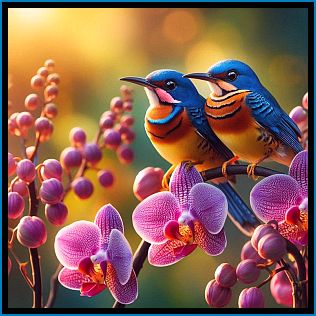
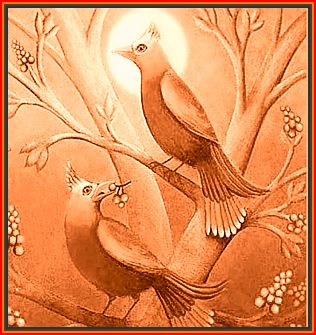
Here, two birds are depicted as resting on a tree, in evening as also in morning; and chirping away pleasantly. The tree, into which sun rays enter during daytime, is amidst waters; and, bears sweetest fruits (Svadu), sweeter than any other fruit.

The birds ceaselessly sing before the learned assembly about glory of  immortality.

The birds are compared to learned men of wisdom, participating in an assembly of the scholars, eloquently expressing their views; and glorifying the virtues of that Immortal One.

In the assembly of the learned, where the wise people sing of that Immortality, there I had the vision of the  magnificence of the Father

Those who doesn’t know the virtues and the glory of the Protector who confers immortality, will not realize their identity with Him.

Sri Sayanacharya explains: 

Here, the birds can also be understood as Suparna (the smooth gliding, beautiful and graceful rays of the Sun) , the Aditya – सुपतानह शोबना गमन रश्म्याह  supatana śobhana gamana raśmaya.

They absorb water; and send it to the Sun. And, in turn, the Sun, the lord and steadfast protector of all beings, sends it back to the earth as rains. Ultimately, the sun and water are one.

*

The birds, here, are projected as metaphors for wise and realized-souls (विदथाVidatha), reciting hymns in chorus, in an assembly, praising the Great Lord Aditya, the protector of the Universe (विश्वस्य भुवनस्य गोपाः). They pray for immortality (अमृतस्य).

Those who don’t diligently study (उपासना); and fail to realize this Truth about the Protector of all, will not get the fruits of wisdom leading to the Eternal One.

Thus, there is a clear distinction between those who know the Truth and those who know only the outside, the external world, without enjoying the fruits of wisdom.

Sri Sayana offers another explanation, according to which, the Suparna, the birds, represent the human senses (इन्द्रिया). Each of them efficiently grasps its own sense object. They are like birds gliding smoothly in their territory. They aim to get their own feed; their nectar. Until they come out of their limited, restraining area they will not realize the beauty and grandeur of the wide-world.

**

Verse 22

यस्मिन् वृक्षे मधुअदः सुपर्णाः निविशन्ते सुवते अधि विश्वे तस्य इत् आहुः पिप्पलम् स्वादु अग्रे तत् उत् नशत् यः पितरम् वेद   1.164.22

yasmin | vke | madhu-ada | su-parā | ni-viśante | suvate | ca | adhi | viśve | tasya | it | āhu | pippalam | svādu | agre | tat | na | ut | naśat | ya | pitaram | na | veda

Upon which tree, honey-drinkers, the birds rest in peace, and all inspire (themselves) ; on the top of it, they say, is verily the sweet berry. One does not reach up to it, who does not know the father.

**

This verse carries forward the theme of glorifying wisdom.

In verse 20 above, it was said that there are two birds resting on the same tree (two classes of men in similar ambiance) .

The reference here is about that class of birds that suck the honey (मधुअदः) in the tree (sweet berries). And, it could be extended to persons also.

They find repose there; but it is not a rest of inaction; it is the calm of those who have reached.

The sweet-fruit is on the top of that tree, which the two classes of people desire. And, the wise people eat the sweet berry (पिप्पलम् Pippalam).

However, all cannot get the sweet berry; only those who are wise can get that sweet berry.

Dr. Raja explains:

The tree is the Tree of Universe, bearing sweet berries of wisdom on its top. The wise people eat the sweet berries of wisdom; and they find tranquillity and also inspiration in this Universe. Only those who know the father (Aditya, protecter of the Universe) can get these sweet berries.

**

Swami Amritananda comments:

One should realize that Aditya (Father) is the protector of the Universe. The rays take refuge in him during night. And, at day-break, they emerge out of him; and spread his light over the whole world.

*

When one takes Aditya as Paramatma; and equates the sun-rays (honey-suckers) with the senses (इन्द्रिया), the verse could be interpreted in another manner.

Paramathma is the Tree. During the times when one is awake and alert, the senses (Suparna) go out and gather the knowledge of the surrounding objects.

But, during sleep they withdraw themselves from the objects; and, merge in Him. And, during waking state, they again get attached to the objects.

Realisation of the Paramathma is the sweetest fruit that one could aspire for.

But, for one who does not know Him, this fruit is not available.

**

There is also an alternate explanation, according to which:

If Aditya is taken as the Tree, those who take recourse to it, do get the fruits of the tree, which are the best of the fruits – very sweet, tasty. But, for enjoying such elevating experience, one has to necessarily appreciate and respect the Great protector, Aditya.

The others, who do not understand or realize the glory and greatness of the Father , will not get such fruits.


Verse 23

यत् गायत्रे अधि गायत्रम् आहितम् त्रैस्तुभात् वा त्रैस्तुभम् निःअतक्षत यत् वा जगत् जगति आहितम् पदम् ये इत् तत् विदुः ते अमृतत्वम् आनशुः 1.164.23

yat | gāyatre | adhi | gāyatram | āhitam | traistubhāt | vā | traistubham | ni-atakata | yat | vā | jagat | jagati | āhitam | padam | ye | it | tat | vidu | te | amta-tvam | ānaśu

They who know the place of Agni upon the earth; the place of Vayu that was created in the firmament; and that place of the Sun in heavens attain immortality.

*

The set of Seven Verses from 16 to 22 dealt with various shades of Wisdom. And, as usual, in the manner that is characteristic to Dhirgatamas, they were worded in rather obscure and flexible terms projecting varied imageries that could be interpreted in more than one way.

In the previous verses Dhirgatamas described two Suparnas (Dua-Suparna) – the beautiful-winged birds. Here, he switches over to Tri-Suparna doctrine, in which three form of Chhandas – Gayatri, Trishtup and Jagati – are picturized as three birds, whose flight leads to immortality.

Following upon this, there is a glorification of poetry in three Verses -from 23 to 25. These verses specifically relate to the Sanskrit prosody or Chandas (छन्दस्); the metre meant to maintain the rhythm of a well-constructed verse.

The exaltation and glorification of poetry are celebrated in three verses (23 to25).

Before we get into these three verses of Asya Vamasya Sukta, let us, for a short while, talk about Chandas.

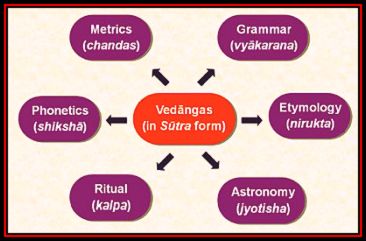
There is a classic collection of six essential disciplines, which must be studied in order to properly understand the Vedic verses. These six disciplines together are known as Vedangas.

The Six branches of the Vedanga are:

Shiksha: Phonetics and phonology, which establish the rules of pronunciation and syllable sounds to fix the parameters of Vedic words

Chhanda: Metrics, which help appreciate the composition of Vedic hymns by studying their poetic structures

Vyakarana: Grammar

Nirukta: Exposition of words and etymology

Jyotisha: Astronomy, which helps determine auspicious times for rituals and ceremonies

Kalpa: Social thought, which focuses on the procedures and ceremonies associated with Vedic ritual practice 

As regards Chandas (छन्दस्), which is one among the six branches of Vedanga, it is said; one cannot truly comprehend a Vedic mantra without a good understanding of its Chhandas, its metrical form. Chhandas is the very basis of the structure and of the import of Vedic hymns (Chandah paadau tu vedasya– Paniniya Shiksha – 41).

 The knowledge  of Chhandas is very necessary  in order to  compose or to study any  of the metrical structures of other compositions, apart from the Vedas.

A proper understanding  of  Chhandas becomes  essential , particularly when one attempts to construct a classic verse in Sanskrit.  

It is said; Chhanda-Shastra, the science of meters, was refined and improved upon  by Pingalacharya, a brilliant mathematician ; and the younger brother the Great Grammarian Panini (@ 750 BC)

**

The term Chanda (छन्द चैदः/चैदस्, चैदाआसि) derived from the root (dhatu) चदि, giving rise to Ahlade (आह्लादे,) joy or delight – indicates that which is pleasing, alluring, graceful, lovely, delightful or charming; and, that which nourishes, pleases or celebrates the joy of poetry.

And, Chhandas (छन्दस्) is also the delight in organizing the syllables and words of the mantra (chhandayati ahlada-dayani chhandas – Amara Kosha 3.20).

It also sets the rhythm for chanting of the mantra.  Chhandas ; enlivens and articulates the meaning of the mantra.

And, one has to unravel, untie the covering of Chhandas (chandaamsi chhadanaath – Nirukta – 8.3.11) in order to fathom the true intent of the mantra. (11,5candraś. candate. kānti. karmaah / candanam. ity .apy. asya. bhavati)

In studying the Rigveda, the ancients prescribed it as a preliminary necessity that one should know the Rishi who composed the mantra;  the Devata (the deity to which it is submitted) ; and the Chandas (the metre).

*

Chhandas deals with the analysis of the types of meters used in the construction of various Vedic hymns. The unit of a mantra is called as ‘Pāda’ (one line; lit. foot). Each Pāda has a specific number of syllables. Sanskrit meters are based on a fixed number of syllables (akharas) per Pāda. The measurement is made in terms of the number of syllables used; or by a number of syllabic measures (mātrās)

*

According to Chando-Vidya; there are 26 types of Chandas, or poetic meters, in Sanskrit that are identified by the number of syllables in each line of a poem .

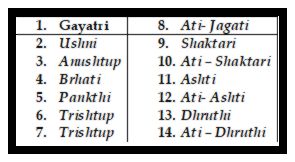
Of these, the fourteen types of Chhandas employed in Vedic texts are listed as:

Among the above said fourteen types of Chhandas, the following are particularly prominent in constructing Vedic verses; and are known as classic meters.

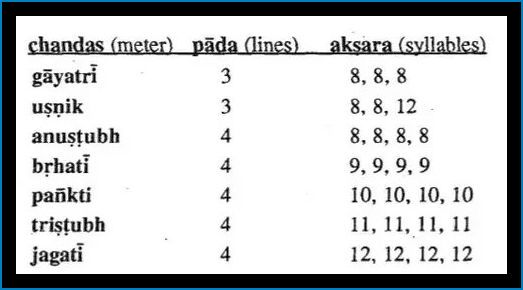
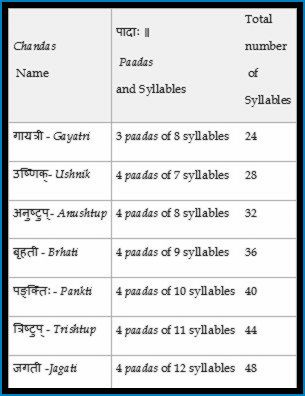
1.गायत्री (Gayatri); 2. उष्णिक् (Ushni); 3. अनुष्टुभ्, (Anustup) ; 4. बृहती (Brhati); 5. पंक्ति (Pankthi); 6.  त्रिष्टुभ् (Trishtup); and 7. जगति (Jagati)

These seven main Chandas, as developed and organized by the Vedic schools, are particularly prominent in Vedic uses, and are also known as classic meters. Each of these has its own rhythm, movements and aesthetics.

Of the seven types of Chhandas, mentioned above; according to the tradition in Vedic prosody, Gayatri (8-syllable), Tristubh (11-syllable) and Jagati (12 syllables) are the most commonly used meters in  poetic compositions.

Dhirgatamas, in his poem, talks with reference to these three types of Chhandas in order to illustrate his concepts concerning the structure of the Universe.

The shortest and the most sacred of Vedic meters is the Gayatri Chhandas. It consists of three lines/feet-(pada), each with eight syllables (3×8), with a total of 24 syllables.

Trishtubh meter (four padas of eleven syllables each) with a total of 44 syllables, is the most prevalent meter of the Rigveda, accounting for roughly 40 percent of its verses.

Jagati meter consists of four padas, each of twelve syllables; with a total of 48 syllables.

As can be seen, Gayatri Chhandas has twenty-four syllables; and, the six other Chhandas that follow thereafter has each four syllables more than it’s preceding one (e.g. Jagati the seventh Chhandas has 4×12 = 48 syllables)

*

The Gayatri Chhandas is referred to in Rig-Veda (1.12.11) as ‘Gayatra’ or ‘Gayatram’. 

It is said; that out of 10,552 mantras in Rig-Veda Samhita as many as 2,456 are in Gayatri Chhandas.

But, the largest numbers of mantras (4,251) in Rig-Veda are in Trishtubh Chhandas. And, the rest (1,346) are in Jagati Chhandas.

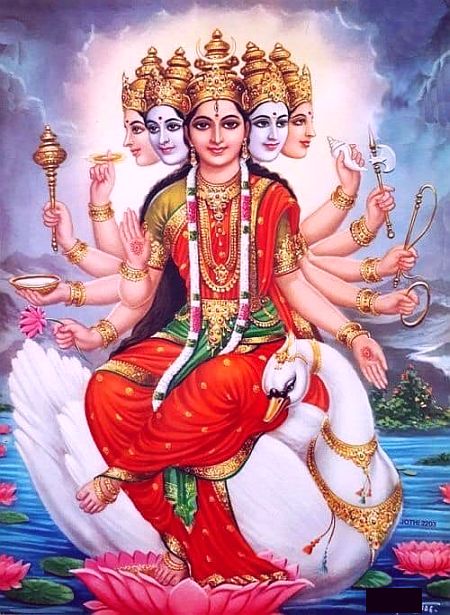
Among the fourteen types of Chhandas used in the Vedic texts, Gayatri is the shortest (with twenty-four matras). It is regarded the first (head: atah shirah) and the basic metrical form. And, it is the best. 

Taittiriya-Aranyaka (10.34) regards Gayatri as the Mother of all the Chhandas (gayatrimchhandasaam mata); born of Brahman (Brahma-yoini); and, as one that signifies Brahman in three letters (tri-akshare Brahma-vaadini).

Almost all the Samhitas (excepting Krishna Yajurveda) begin in Gayatri Chandas.

[Most of the notable scriptures follow some specific Chhandas. For instance, in the Bhagavad Gita, the majority of the verses are set in the Anuṣṭup-Chhandas, which is essentially a Chhandas of eight syllables in each quarter of the verse. The remaining verses are presented in the Trihup-Chhandas, which has eleven syllables in each line. These metrics make it a musical text and hence the name Gītā.]

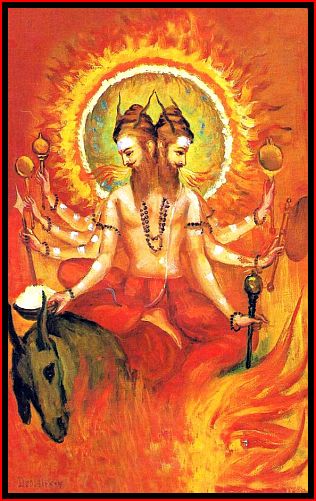
Gayatri- Agni

It is said; Gayatri is the prana; and, in prana reside all the Devata-s, the energies and activating faculties. And thus; all knowledge, action and the consequences thereof become united in Gayatri. Being prana, Gayatri is the very self of all existence (jagatah atman)

Gayatri is that which protects the one who recites it mindfully (gayantam trayate yasmad gayatri smarata budhaih) .

Gayatri Chhandas , adorned with eight letters, is associated with Agni (aṣṭākarā vai gayatri gāyatram agneś-chando – Sp.Br.5.2.1.5). Agni is the first and the foremost of the Vedic deities without whom no ritual is possible. 

Rigveda commences with Agni Sukta, composed in Gayatri Chhandas. Because of that, Gayatri Chhandas is invested with great sanctity; and, all the other mantras in this Chhandas are of special significance.

The Satapatha Brahmana (6.1.3.19) declares the mantra in Gayatri Chhandas is Agni himself (Gayatri va Agnihi; and Agnir vai Gayatri). And, that Agni, indeed, is the face (mouth) of Gayatri (tasya Agni-reva mukham).

That is the reason, it is explained, the opening mantras of all the Yajna-s are in Gayatri Chhandas.

It is explained that the term Gayatri is derived from the root ‘traing’ (paalana) which means ‘to protect’. Expanding on that explanation, Chandogya Upanishad says: ‘This mantra called Gayatri in Gayatri-chhandas protects one who chants it. That is why it is called Gayatri’ (Gayatri trayate cha– Ch. Up.) 

It is also said; the line of Gayatri Chhandas having eight letters in association with Pranava (Aum) as the ninth letter (navakshara vai), by itself forms the first half of the Yajna (purvardha vai yajnasya Gayatri-SB : 3.4.1.15)

– navākarā vai gāyatryaṣṭau tāni yānyanvāha praavo navama pūrvārdho vai yajñasya gayatri

Trishtubh Chhandas is associated with Indra; and, Jagati Chhandas with Visvedevas.

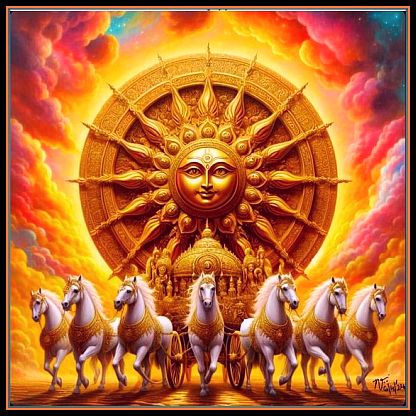
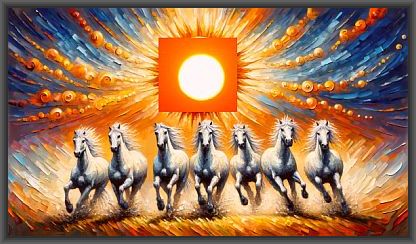
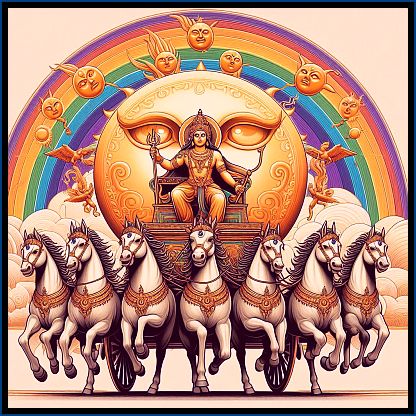
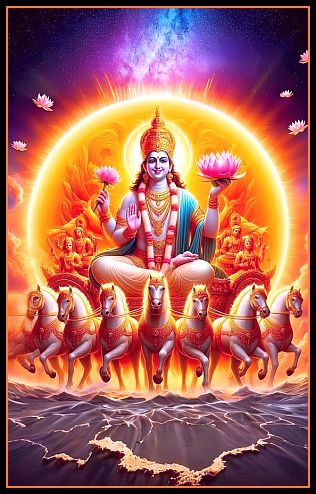
Incidentally, the seven horses yoked to Sun-god’s chariot are named as: 

  • Gayatri, Brhati, Ushnik, Jagati, Trishtup, Anushtupand Pankthi (SB: 5.21.16.)

*

Verse 23 is translated by Dr. Raja as;

Those who know, say that the Gayatra is placed upon the Gayatra, or that one has constructed what is in Trishtup from what is in Trishtup, or that the Jagat quarter is placed in the Jagat. They verily who have known this, attain immortality.

*

There is mention of three metres named Gayatra (Gayatri), Trishtubh and Jagati. They are also the names of the lines (Padas) of which the verses are composed.

Here, a Gayatra {Gayatri) quarter is placed in a Gayatra {Gayatri) verse.

Trishtup verse (relating to Trishtup) is constructed from a Trishtup quarter (relating to Trishtup); a Jagat (Jagati) quarter is placed in a Jagat Jagati) verse.

The word Paada (quarter of a verse) must be taken to mean the first and second lines also, though it is found only in the third line. One who knows this becomes immortal.

[Dr. Raja observes:

From this verse, there is something said by the poet about poetry. To know that a Gayatri verse is made up of Gayatri quarters is a simple affair. There must be something more in this than what appears outside in the actual words.

These names do not seem to mean the metres in the Rigveda, known by the names in later times.

According to the tradition in Vedic prosody, the metres in the Veda can be classified under three headings, those with lines of 8, 11 and 12 syllables.

And it is these three types, according to latter day nomenclature, that are given here. That indicates some relation between the verse and the three metres with these names.]

*

Sri Sayana explains:

  • On the immortal Gayatra is placed the mortal Gayatra.
  •  From the immortal Trishtup crafted the mortal Trishtup.
  • The mortal Jagati is based upon the immortal Jagati.
  • Those who know this truth enjoy immortal life.

Here, Gayatra is derived from Gayatri, the base or the station of Agni – the Earth. Trishtup is to be taken to mean firmament, the place of Vayu. And, Jagat is identified with the sun, in the solar region (Taittirīya Samhita 2.2.9.5-6).

All beings are on Earth, which is the place of Agni. And, Gayatri and Agni are identical.

Vayu who roams in the space (Akasha) – above, below and sideways – is closely related with Akasha, the realm of Aditya.

And, Aditya is Jagat, as he keeps moving constantly. He is the source of heat, water and energy.

In this verse, the first Gayatra refers to the manifest world (matter); and the second Gayatra  to the unmanifest Prana, that which brings manifest into existence.

Similarly, Trishtup, is the Vayu that enlivens the world (Trishtup-prana)

And, Jagati is entity that enlivens mind (Manas)


Verse 24

गायत्रेण प्रति मिमीते अर्कम् अर्केण साम त्रैस्तुभेन वाकम् वाकेन वाकम् द्विपदा चतुःपदा अक्षरेण मिमते सप्त वाणीः ॥1.164.24

gāyatrea | prati | mimīte | arkam | arkea | sāma | traistubhena | vākam | vākena | vākam | dvi-padā | catu-padā | akarea | mimate | sapta | vāī

He constructs the prayer with the Gayatri metre; with the prayer (he constructs) the Soma; and with the Trishtup metre the couplet (or triplet); with the couplet (or triplet) he constructs the hymn with (verses of) two or four lines of verse; and with the syllable they construct the seven metres.

With Gayatra he composes Arka; with Ark the Soma; and, with Trishtup he makes Vak.

Mantra is explained as mananat trayate mantrah; the contemplation of which liberates. It is the harmonious and powerful union of mind (Manas) and word (Vac). It is the living sound, transcending beyond the mental plane.

Sri Sayanacharya explains:

They compose mantras for praise (अर्कArka), one-by-one, for worship (प्रतिमिमीते) with Gayatri Chhandas (गायत्रेण);

With prayers / mantras for worship they compose Sama (अर्केणसाम);

With the mantras in Trishtup Chhandas they compose Sukta portions having two (Dvi-pada) or four lines (Chatush-pada) of poetry;

With those lines they construct a hymn of two or four lines (वाकम् वाकेन वाकम्द्विपदाचतुःपदा); and,

With the power of Vak (Speech/words-अक्षरेण) they construct all the seven speeches / Chhandas – सप्त वाणीः

Thus, the letters (अक्षरेण) are at the base of sentences (वाकम्), as also of meters (छन्दस्); of Rks, Vargas, Suktas and Anuvaks.

This verse is in appreciation and celebration of syllables / letters (अक्षरप्रशंसा)

Dr. Raja adds:

In verse 24, there is a reference to seven speeches (speech forms) and in verse 3, the seven names of the cow are concealed therein, in the chariot. One cannot miss some close relation among the position of the gods, the  Gayatri and other song forms, the cow and the chariot. There is the beautiful imagery of the cow with the calf, making a bellowing sound, licking the calf, yielding milk and so on (verses 26 to 29, and40 and 41). Along with the mention of the concealed position of the bird, there is a reference to the cow and the calf (verse 7)

Verse 25

जगता सिन्धुम् दिवि अस्तभायत् रथम्तरे सूर्यम् परि अपश्यत् गायत्रस्य सम्इधः तिस्रः आहुः ततः मह्रा प्र रिरिचे महित्वा 1.164.25

jagatā | sindhum | divi | astabhāyat | ratham-tare | sūryam | pari | apaśyat | gāyatrasya | sam-idha | tisra | āhu | tata | mahrā | pra | ririce | mahi-tvā

With the hymns in the Jagati metre, he fixed the rain in heaven, and surveyed the Sun in the Rathantara. They have declared three divisions of the Gayatri metre, whence it surpasses (all the rest) in force and majesty.

*

This is a very complex verse, the intent or the meaning of which cannot be clearly understood.

Dr. Raja candidly states:

The meaning of many of the words used there, like the names of metres and the kinds of poems, are unknown to us. We do not know what they exactly mean. There is the composition of particular kinds of songs with particular metres and there is also the reference to the “establishment of the river in the heaven and the vision of the sun.” (verse 25).

The river established in the heaven must be the Saptha-sindhu or the seven rivers, very familiar in the Rigveda. We do not know what the three kinds of fuel, of the Gayatra are. It is on account of them that it excels the others. What excels must be the Gayatra, and perhaps it is over the other kinds of metres mentioned here and in the previous verses.

**

The Jagat-Sama or Jagat is called Rk-Sama (stanzas in Jagati meter), which is related to rainy season.

*

It is said; according to Sama-Vidya; Surya is the Father-principle; while Prithvi (Earth) is the Mother.  

Surya and Prithvi each have their own Saman-chant. The one of Surya is called Brihat (ब्रिहत्); while that of Prithvi is called Rathantara(रथन्तर्).

[Different methods of singing are followed. The Bruhathi Saman is sung with force, rather loudly; in contrast to Rathantara Saman.]

Brihat-Sama of Surya moves (अपश्यत्) towards the Earth (दि॒वि). And, the Rathnatara-Sama of Prithvi goes out to meet the solar radiation (सूर्य॑म् परि॑).

That is to say that the two versions of Sama- Brihat and Rathnatara – are brought closer to each other. 

And, there is an accord and unison between the two entities.

[The Samhita of Samaveda is an anthology taken from the Rigveda-Samhita. The difference is in the refinement and application of arts such as melody, meters of music, and literary composition.

Thus, the root hymn that later became the Rathantara (Excellent Chariot) mantra chant is found in both Rigveda and Samaveda-Samhitas.

The purpose of arranging the Sama verses in Gayatri and Jagati formats is to render the chanting more melodious ]

*

Aitereya Brahmana at several places speaks about Rathantara and Brihat-Samans; and extols the close relation between the two:

At the beginning, there were Brihat and Rathantara; through them there were Speech and Mind. Rathantara is Speech, Brihat is Mind.

In the form of the Rathantara Saman, this earth is wedded to heaven; and , in the form of the Brihat Saman, heaven is wedded to the earth. (A.B. 5,30)

The night belongs to the Rathantara, the day to the Brihat. Agni is the Rathantara; and, Aditya is the Brihat

*

The relation between Sun and Earth is extended through other symbolisms too.

The Sun in the sky is the protector, who gives light, warmth to the Earth. He also takes away moisture from the earth; and, later sends it back to earth as rains.

Thus, there is a mutual coordination between the Sun (Father) and Earth (Mother).

The ocean (सिन्धुम्) mentioned in the verse is said to represent the Un-manifest source of creation.

The Brihat-Sama of Surya is compared to waves of the ocean; and, Rathnatara -Sama of Earth (सिन्धुम् दिवि), moving like a chariot, meets the Sun. They are ever in harmony.

[At the same time, it also said that Rathantara – Saman helps to visualize the glory of Surya. – रथन्तरे सूर्य​​ पर्यपश्यत्. They are identical. ]

**

However, some commentators try to explain; and say: This verse describes the mutual relation that Gyatri and Jagati Chandas have.

Three divisions of Sama (सम्इधः तिस्रः) are composed in Gayatri chhandas (गायत्रस्य). Other Chhandas used in Sama are derived from Gayatri.

Gayatri chhandas here has three forms: 8 lettered Gayatri; 11 lettered Trishtup; and, the 12 lettered Jagati.

It is indeed Gayatri that  excels in glory and power over all other forms.

CONTINUED

IN THE

NEXT PART
References


Leave a comment

Posted by on July 21, 2024 in Dhirgatamas, Rigveda


Tags: , , , , , , , , , , , , , , , , , , , , , , , , , , , , , , , , , ,

Who Was Dhirgatamas – Part Four

Continued From Part Three

 It is said; the Verses 11 to 15 give a mystic description of the Year and the Seasons. Let us commence with verse 11

Verse 11

द्वादशअरम् । नहि । तत् । जराय । वर्वर्ति । चक्रम् । परि । द्याम् । ऋतस्य । आ । पुत्राः । अग्ने । मिथुनासः । अत्र । सप्त । शतानि । विंशतिः । च । तस्थुः॥.१६४.११

 dvādaśa-aram | nahi | tat | jarāya | varvarti | cakram | pari | dyām | ṛtasya | ā | putrāḥ | agne | mithunāsaḥ | atra | sapta | śatāni | viṃśatiḥ | ca | tasthuḥ II 11 II

The wheel of Law, with twelve spokes goes round and round the heaven; it is not indeed to be decayed Here stand, O Agni, the seven hundred and twenty sons in pairs.

The theme of Aditya and the Time-element, as in verses 8 to 10, is continued here. And, the imagery of Wheel, in particular, is much repeated and described in many verses; such as: Verses of the poem: 2,3,12,13, 14 and 48.

It emphasizes the unchanging, age-less (नहि-तत् -जराय – Nahi-tat-jarāya), decay-less nature of the revolving wheel of time (वर्वर्तिचक्रम्- varvarti-chakram); moving endlessly on its own, without friction.

The twelve-spoked wheel (द्वादशअरम्चक्रम् dvadasaram-chakram) of Truth (ऋत) goes round the heaven; and never tends to wear out. It might be seen as though moving on the manifest plane; but, it, indeed, derives its momentum and dynamic energy from the unmanifest Eternal Universal Principle (Rta).

The rhythmic or the cyclic motion of all entities in the space is governed by the Time-Wheel principle.

This Time-Wheel is said to symbolize Aditya: Surya, the Sun.

The Sun is at the center of the well-regulated Cosmic system.

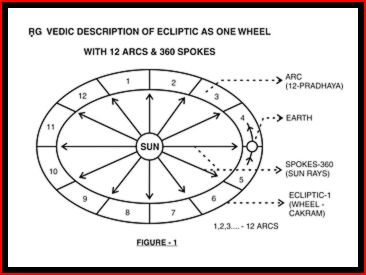
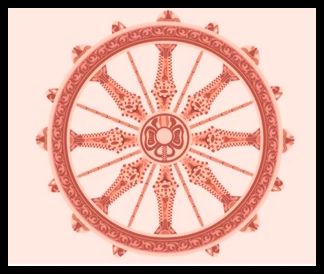
The twelve-spoked Aditya-mandala is compared to a wheel; having twelve spokes, which in turn, represent twelve months in a year (Samvathsara).

It is said; Seven-hundred and twenty (सप्त शतानि विंशतिः sapta-satani-vimsati) sons in pairs (मिथुनासः mithunasah), abide in it. These sons are said to represent the two halves (day and night) of the three hundred and sixty days of the year.

A day and a night form a pair मिथुनासः -. The wheel with the twelve spokes is the year divided into twelve months. This goes on rotating for ever; and there is no deterioration for this wheel.

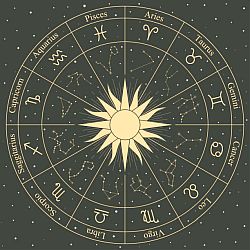
[ Some suggest; the term Twelve-spoked-wheel might possibly mean the twelve signs of the zodiac.]

Here, Rta is the Eternal Moral Law of the world, represented by  the Sun , who is addressed as Agni, who in turn is identified with Fire, Vayu and Aditya, who constantly moves about

(Dr. Raja remarks:  I am not sure why this is addressed to Agni, the Fire . Perhaps , Agni here stands for Aditya.)

Another explanation says:

Agni is Aditya; he is Prajapathi – the Lord; and, he in his dual nature of heat and cold (Grishma-Hima) – the Day and Night (अहोरात्रAhoratra)- manifests in succession. It is like the going up and coming down movement of the wheel (Udgarbha-Nigarbha). One could even say: it is an epitome or a representation in miniature of the Cosmic Cycle.

Dr. M .L. Raja interprets the verse 11 , reading as under to suggest it actually represents a Zodiac wheel

The arcs are twelve, the wheel is one and three are the axles. Who indeed knows it?  Within it are collected three hundred and sixty spokes, which are as it were movable and immovable

Verse 12

पञ्चपादम् पितरम् द्वादशआकृतिम् दिवः आहुः परे अर्धे पुरीषिणम् अथ इमे अन्ये उपरे विचक्षणम् सप्तचक्रे षट्अरे आहुः अर्पितम् १.१६४.१२

pañca-pādam | pitaram | dvādaśa-ākṛtim | divaḥ | āhuḥ | pare | ardhe | purīṣiṇam  atha | ime | anye | upare | vi-cakṣaṇam | sapta-cakre | ṣaṭ-are | āhuḥ | arpitam II 1.164.12 II

Father with five feet and twelve forms, they say, dwells in higher half of the heaven full of waters. Others say, he is the clear-seeing one who dwells below in the sevenfold wheel that has six spokes.

**

They call him the father, having five feet, having twelve forms, full of water, in the far side of heaven.

Then, there are others who call him as the all-seeing one, riding high in his chariot, which is having seven wheels and six spokes.

Sri Sayanacharya explains: the poet speaks of two alternative views.

One is that:  Aditya, the primary cause (Purisa), when he is in the far side (Para-Ardha) of the sky (दिवः Dyu-Loka), is termed as –पञ्चपादम्पितरम्द्वादशआकृतिम् the five-footed, twelve-faced parent, Puriin – rich in water (the sun, as the source of rain). He is the God, placed high on the chariot, clearly seeing the world.

The five feet are the five seasons in a year (the dewy and cold seasons treated as one); the twelve forms are the twelve months, or the twelve Adityas (suns)-meaning the climatic appearances witnessed from month to month during the course of a year.

While, some others have termed him as अर्-पिताArpita, when he is in the hither or nearer part of the sky (Apara-Ardha) riding in his seven-wheeled chariot (सप्तचक्रे), each wheel having six spokes (षट्अरे), clearly viewing the whole world.

Here the term Arpitaadhīnam or parāyattam– is understood as one who is dependent upon; or is influenced by the course of the year; or by the recurrence of the solstices; moving quick or slow according to his southern or northern declination.  

Father is the year (Samvathsara), with five seasons, each of seventy-two days, regulating his movement.  And, the seven wheels are the seven rays, or the seven days of the week; the six spokes are the six seasons.

These are two conflicting views.

  1. In one, Aditya, in his divine form, is the Lord of all the three worlds. This is his higher form.
  2. In the other, he is under the control of Time; and is seen by the world as being subject to the rotation of seasons. This is his lower form.

**

The distinguished scholar David Frawley comments:

The five feet of the Father or the Sun are the five planets or five elements that these often refer to (which the Vedic thought associates five sense organs and five motor organs in human body).

His twelve forms are the twelve zodiac signs.

The sun in the higher half of the heaven with water is the signs of Leo with Cancer (ruled by the moon), with other five planets being the five feet, each ruling two signs. In Vedic thought, Sun is the abode of waters, which we can see in the Zodiac with the Proximity of Cancer and Leo.

The sevenfold wheel is the Zodiac moved by seven planets. The six spokes are the six double signs through which the planets travel

Verse 13

पञ्चअरे चक्रे परिवर्तमाने तस्मिन् तस्थुः भुवनानि विश्वा तस्य अक्षः तप्यते भूरिभारः सनात् एव शीर्यते सनाभिः 1.164.13

pañca-are | chakre | pari-vartamāne | tasmin | ā | tasthuḥ | bhuvanāni | viśvā | Tasya na | akṣaḥ | tapyate | bhūri-bhāraḥ | sanāt | eva | na | śīryate | sa-nābhiḥ 1.164.13

In that wheel having five spokes, which rolls on, all the beings stand out. Its axle, bearing immense load, does not get heated. Having its navel, it does not break, from the beginning itself.

The imagery of the Chariot (रथ​), Time-wheel (चक्र​), axel (अक्षः), nave (नाभिः) etc.  is continued in this verse.

In the previous verse, the father had five feet and the chariot had seven wheels and six spokes. Here the wheel has five spokes. The beautiful poetic fancy of a chariot not breaking down even with immense load and not decaying in course of time is continued here.

In the man-made chariot, the nave and the axel cannot bear over weights; and, might even break down.

But, the eternal Time-chariot is beyond such limitations.

All the beings of the worlds rest in this five-spoked revolving wheel (पञ्चअरे चक्रे परिवर्तमाने pañca-are -chakre- pari-vartamāne). The axel of the wheel though overburdened (भूरिभारः), with the heavy load of the cosmos, is never heated hot because of friction; it does not suffer any strain. Its lone compact nave, though ancient, does not wear out (शीर्यते)- (tasthu– Bhuvan ani -Visva -Tasya na- aka – tapyate)

The nave does not go through any alterations; nor does the axel. Only its limbs; such as year – (सम्वत्सर​, परिवत्सर​) etc. revolve; and appear again and again.

**

Dr. David Frawley says: The five-spoked wheel is again the Zodiac ruled by five planets and the five elements and their various internal and external correspondences.

Verse 14

सनेमि । चक्रम् । अजरम् । वि । ववृते । उत्तानायाम् । दश । युक्ताः । वहन्ति । सूर्यस्य । चक्षिः । रजसा । एति । आवृतम् । तस्मिन् । आर्पिता । भुवनानि । विश्वा ॥ ॥1.164.14

sa-nemi | cakram | ajaram | vi | vavṛte | uttānāyām | daśa | yuktāḥ | vahanti | sūryasya | cakṣiḥ | rajasā | eti | āvṛtam | tasmin | ārpitā | bhuvanāni | viśvā 1.164.14

The wheel with the felly rolls on without decaying. The ten, yoked, draw it on the upward region. Like the Sun’s eye, it goes along, covered with the space. In it are all beings placed

This verse carries on with the symbolism of the revolving (विववृतेVivarta) Cosmic Wheel, described as that which never decays (अजरम्Ajara)

The wheel (circle), with its circumference, revolves without any deterioration – सनेमि चक्रम् अजरम्विववृते.

The ten yoked to the upper extension draw it. The eye of the sun moves along, laden with water; and, in it all beings reside.

The world rests on the Wheel of Time. Sun is the embodiment of all knowledge.

Sri Sayana explains:

The Ten, here, stands for ten organs of sense. Else, it might refer to five Lokapalas (Guardians of the world) together with five classes of human beings.

The upper extension may refer to the upper surface of the earth (uttānāyām) or the earth spread above (uparī vistta bh-myām) the Pole.

The orb or the eye of the Sun (sūryasya cakus) may suggest either the display of the nature or radiance of the sun, or his orb. The Solar orb is the eye of all of us – sarvasya caku sthānīyam vā maṇḍalam. It is through this we see everything.

Swami Amritananda observes:

The imagery of the chariot, wheel, axel, nave etc. is commonly used in the Upanishads in the context of the discussions on the Time-principle. Here also, neither the nave nor the axel undergoes any change.

Only the limbs, such as संवत्सर (Samvathsara -year), परिवत्सर​ (Parivatsara-seasons) revolve; and appear again and again.

**

Dr. David Frawley suggests:

This may again refer to the ten zodiac signs ruled by five planets, with each planet ruling two signs.

The eye of the Sun may be the sign Leo through which the solar influence pervades the Zodiac or just the Sun itself. The upward extension may be the polar region.

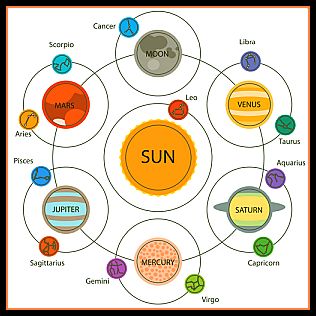
In astrology, the five personal planets are the Sun, Moon, Mercury, Venus, and Mars. Here are some zodiac signs that are ruled by more than one planet:

    • Taurus and Libra: Both signs are ruled by Venus
    • Gemini and Virgo: Both signs are ruled by Mercury
    • Scorpio: In traditional astrology, Mars rules Scorpio, but in modern astrology, Pluto rules it
    • Aquarius: In traditional astrology, Saturn rules Aquarius, but in modern astrology, Uranus rules it
    • Pisces: In traditional astrology, Jupiter rules Pisces, but in modern astrology, Neptune rules it 

Verse 15

साकम्जानाम् । सप्तथम् । आहुः । एकजम् । षट् । इत् । यमाः । ऋषयः । देवजाः । इति । तेषाम् । इष्टानि । विहितानि । धामशः स्थात्रे । रेजन्ते । विकृतानि । रूपशः ॥ 1.164.15

sākam-jānām | saptatham | āhuḥ | eka-jam | ṣaṭ | it | yamāḥ | ṛṣayaḥ | deva-jāḥ | iti | teṣām | iṣṭāni | vi-hitāni | dhāma-śaḥ sthātre | rejante | vi-kṛtāni | rūpa-śaḥ 1.164.15

They say of the seventh among what are born together, that he is born as one, that the six verily are twins, the wise, born of gods. What are coveted by them, placed according to (their proper) position, move, changing in form, for the sake of him who stands by.

**

This verse is about seasons in a year.

Of the seven seasons, six are born together; the seventh is born singly. The other six, each of two-month duration, are twins (यमलYamala). They are sages born of gods. These Divine born Rishis are capable of movement. They are placed in their proper positions; and are endowed with desirable virtues, each according to its nature. Particularly made for their creator, they move in different forms. They revolve for the benefit of that which is stationary.

Sri Sayana explains:

Six are twins: six seasons, made of two months each.  The seventh is the extra month; the thirteenth month in an अधिकमास​ (Adhika-masa).  It is not born out of the Sun (Aditya) or any other gods.

It is the seventh season.; born alone (एकजम्), as compared to other six seasons, which form a cluster.

The sets of these six seasons are differentiated by their class, character, temperature, produce etc (स्थात्रेरेजन्ते) .

It is these six seasons, which appear and disappear, giving place to the next; and which are having varied forms (विहितानिविकृतानिरूपशः) , benefitting the world that are truly desired by all (इष्टानि). चलन्ति जगत व्यवहाराय पुनः पुनरावर्तन्ते

According to Dr. David Frawley:

The Six born together are twins. These are the twelve signs; the two of which are ruled by one planet (considering sun and moon as a single planetary influence). The seven that is singly born is the single light that illumines all the planets. Elsewhere, Rig-Veda (10.64.3) speaks of Sun and Moon as twins (Yama) in heaven.

The planets are often associated with Rishis in Vedic thought, particularly Rishi Brihaspathi (Jupiter), Shukra (Venus) and Kashyapa (Sun) which became common names for the planets. The ordainer or the stabilizer may be the Polar star (polar point).

The 7 verses (16 to 22) speak of  very obscure concepts, rather not possible  to understand easily. These could be interpreted in any number of ways.

Here a new topic starts. There is some glorification of wisdom, enabling one to see and to know. One is not sure what they are. Though they are women, they are declared to be men.

Dhirgatamas poses the questions through dramatic doubts. He plays the drama of doubt through conflicting terms. He poses questions not because he does not know the answers. But, he does it just to dramatize his answers; by constructing riddles; spurring the reader to arrive at his own answers, which he might come to believe to be true.

In asking enigmatic questions, Dhirgatamas seems not to expect a simple or direct answer. Rather, he wants to make a point: that all the phenomena in the world are bound together by the pervasive relationship where each one is related to many.

Dhirgatamas did not present easy and ready answers to his riddle-like queries. He, instead, presented another enigma:

Even when Dhirgatamas supplies an answer to his questions, his answer could be interpreted in any number of ways.

Let us try.

Verse 16

स्त्रियः सतीः तान् ऊँ इति मे पुंसः आआहुः पश्यत् अक्षण्वान् वि चेतत् अन्धः कविः यः पुत्रः सः ईम् चिकेत यः ता विजानात् सः पितुः पिता असत् 1.164.16

striyaḥ | satīḥ | tān | oṃ iti | me | puṃsaḥ | āāhuḥ | paśyat | akṣaṇ-vān | na | vi | cetat | andhaḥ | kaviḥ | yaḥ | putraḥ | saḥ | īm | ā | ciketa | yaḥ | tā | vi-jānāt | saḥ | pituḥ | pitā | asat 1.164.16

Them, being -women, they verily declare to me as men. One with eyes sees; the blind knows not. The son who is a poet, he knows this well. He who knows them well, they became the father of father.

**

They told me these were males; though they truly are virtuous females. He who has the eyes can see this.; the blind however cannot.

The son who is a sage can comprehend this truth. He, in wisdom, is indeed the father of his father; he discriminates and understands it all very well.

The verse brings up a very complicated and an interesting concept of Androgyny. It basically says, there exists in every individual the male as also the female characteristics. A person is truly an interplay of these two principles, which cohabit within everyone harmoniously.

The Vedic texts speak of another such interactive relation; as that between Agni and Soma.  It is said; the nature of the Agni is that of existence, as well as that of its source and symbol. It is said; Agni is not merely Agni; he is also Soma. So also, is Soma.  There is a constant interplay between Agni and Soma. In a way, both are two forms of Agni.

Agni is the warm outward breath; Soma is the cool inward breath. Agni (fire) is life, Soma is activity; Agni is the enjoyer, Soma is that which is enjoyed.

At times Agni becomes its own Soma, just as the Sun burns itself to radiate energy. When a substance has spread to its maximum size, it has to contract. Hence, Agni becomes Soma at each stage of its contraction. Soma falling into Agni itself is transformed into Agni.

The alternation of Agni and Soma provides the impetus for growth; for all beings which procreate, grow and perish in the yajna, the ritual of life. Soma and Agni together sustain and carry forward the life.

*

Rigveda also speaks about the One appearing as many; and the single egg splitting into Bhuta and Prana.

 ‘He, who is described as male, is as much the female; and the penetrating eye does not fail to see it’.

The male is only so much male as much he is female; and the female is only as much female as much she is male. The maleness and femaleness are the attributes contained within one frame.

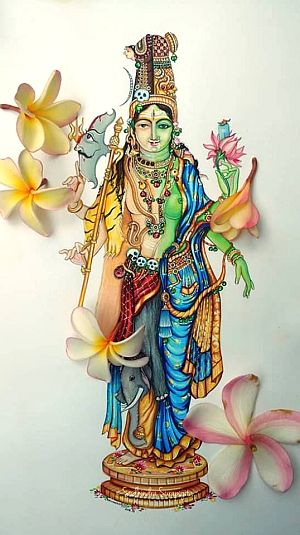
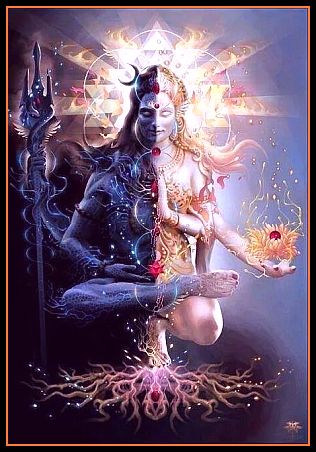
ardhanari

Ardhanarishvara “the Lord Whose Half Is Woman” represents a transgendered being created by the union of Shiva (male) and Shakti (female). The Ardhanari form illustrates how the female principle of God-Shakti is inseparable from the male principle of God – Shiva. The Ardhanarishvara, above all, represents the totality that lies beyond duality.

Ms. Ellen Goldberg observes: The image of Ardhanarishvara does not merely present a synthesis of masculine and feminine gender traits, but rather attempts to portray a fundamental belief in the possibility of personal transcendence, usually understood as the attainment of non dual consciousness

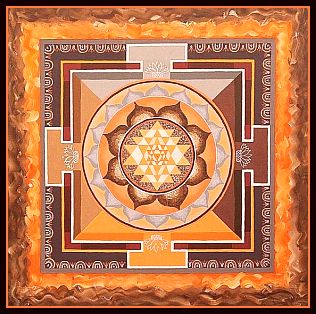
The followers of Sri Vidya who worship the Sri Cakra too envision the deity as Mother Goddess.

It is explained the Sri Chakra is itself androgynous by its very nature . Bindu is Kameshwara, the ground of the universe; the Trikona is Kameshwari the mother of the universe. The union of the two is Sri Chakra, which in its androgynous form symbolizes the underlying unitary principle in all existence.

The Samayin school of Sri Vidya regards Shiva and Shakthi as one; Shiva becomes Kameshwara and Kameshwari becomes Shiva. The identity of Shiva and Shakthi is the foundation of phenomenal manifestation in order to create (srusti), preserve (sthithi) and withdraw (samhara).

In both the Shakta and Shaiva traditions of Tantra school, the Ultimate Reality is conceived as the Unity of Shakti and Shiva They are regarded as one.

Central to Tantra-faith is the concept of duality that culminates in unity; as being essentially non-dual (abheda). The one cannot be differentiated from the other. The Tantra ideology explains that Shiva-Shakthi are essentially two aspects of One principle. In reality, the whole of existence, the range of manifold experiences in the world are but the expressions of Shiva-Shakthi combine. 

 Following that principle , the Tantra  believes that at the relative plane no one is just male; and, no one is just female. The elements of both sexes are present in each of us.

The Ardha-narishvara, in a way, represents this concept. Now, modern psychology, depth psychology particularly, also says that man is both man and woman.

*

Similar ideas appear in other cultures and other religions too. According to Zohar, considered the most important work of kabbalah or Jewish mysticism, the oneness of God is perceived in androgynous terms as the pairing of male and female; the former characterized as the capacity to overflow and the latter as the potential to receive.

The principle of Animus and Anima (half-male and half-female) is at the root of biological manifestation.

This phenomenon is now as widely accepted by modern scientists and Psychologists.

In order to illustrate this androgynous concept, Dhirgatamas employs the metaphors of the Sun and the Sun rays.

Many scholars have offered comments on the androgynous principle suggested in this verse.

*

Dhirgatamas noted that people whose vision lacked clarity had described some deities as masculine when they were actually feminine.

  • Truly they are feminine; but people say to me that they are male.
  • He who has eyes can see this; the blind one does not understand.
  • The son who is a skillful poet has understood this.
  • He who truly comprehends would be his father’s father.

The Sun (Aditya), considered as the father, gives birth to all this existence. He is the father of rays which emit light and also cause rains. The Sun rays pervade all life with their essence; generate, protect and sustain life.

The rays of the Sun have the male nature of impregnating life; and the female nature of nourishing life.

Beauty is associated with female; and strength with male. The sun rays are brilliant and beautiful; and they are also powerful.

Sun delights with rains in the season. He is the life and light. He is the father and the mother of all creation.

The Supreme Divine is neither female nor male; rather, it encompasses and transcends all gender distinctions.

One cannot see with the physical eyes. One needs to introspect and visualize this Truth through the discerning eyes.

Some might call the rays of the Sun (स्त्रियः सतीः Rashmi) as a male; though they are in fact females (स्त्रियः सतीः). Having said that, it also true that they could be both male and female at the same time.

The verse says: those who are called males are, in fact, females too. This is true the other way also

As females, they carry water in their womb. And, as males (पुंसः), they impregnate the earth with water.

The Sun gives birth to his rays; which, in turn, fathers the life on earth. The sun, therefore, is the father of the father.

The poet speaks of the contrast between those who know and those who do not know the principles that govern our universe.

One who know those transcendental principle is wise. The one who doesn’t know is blind. He who knows is greater than anyone. He is the father of his father, meaning, he is wiser than his father.

स्त्रियःसतीःतान्ऊँ इतिमेपुंसःआआहुःपश्यत्अक्षण्वान्विचेतत्अन्धःकविःयःपुत्रःसःईम्चिकेतयःताविजानात्सःपितुःपिताअसत्

Verse 17

वः । परेण । परः । एना । अवरेण । पदा । वत्सम् । बिभ्रती । गौः । उत् । अस्थात् । सा । कद्रीची । कम् । स्वित् । अर्धम् । परा । अगात् । क्व । स्वित् । सूते । नहि । यूथे । अन्तरिति ॥1.164.17

avaḥ | pareṇa | paraḥ | enā | avareṇa | padā | vatsam | bibhratī | gauḥ | ut | asthāt | sā | kadrīcī | kam | svit | ardham | parā | agāt | kva | svit | sūte | nahi | yūthe | antari ti 1.164.17

Beneath of what is above, above of this that is beneath, the cow has stood up, bearing the calf with the foot.  In which direction and to which half of the sky has she gone away? Where did she give birth? Not within the herd.

**

The cow, holding her calf underneath with her fore-feet, and then above with her hind-feet, has risen up; whither is she gone; to whom has she turned back when half-way; where does she bear young; it is not amidst the herd .

*

Some scholars opine that the intent of the verse is about the dawning of wisdom concerning the mysteries of the universe, its creation and progression. It is expressed through the allegories of Cow, Calf. Milk etc.

It could also be interpreted in any number of other ways.

*

The dawn is the cow, between sky (above) and earth (below). Cow has her calf at her heels as she kicks him away; she is alone because she has abandoned him.

*

The cow is the offering at the Yajna (हविस्); Calf is the Agni, beneath her fore-feet.

Sri Sayanacharya explains:

This verse could be interpreted in two ways:

    1. Cow (गौः) is the offering (हविस् / हवन) made into the Yajna-vedi (sacrificial-altar). Or
    2. Cow here represents the Sun-rays (सूर्यरश्मी).

When the cow (गौः) means the offerings submitted into the sacrificial-fire (अग्नि-Agni), the performer of the Yajna (यजमान) is the calf (वत्सम् child).

When the burnt offerings reach the Sun, they are transformed into his rays.

It might also mean the fruits of the Yajna that the performer gets (क्वस्वित्सूते).

*

And, if the Cow is identified with the Sun’s rays, then, the Agni ( अग्नि) is the calf. That is because, he is nourished by the offerings made into the sacrificial fire, just as a calf is fed by its mother – the cow.

It might also mean here that the performer of the Yajna –यजमान is the calf; because, he is the one who reaps the benefits of the Yajna – क्वस्वित्सूते; and, by the virtue of which he attains the higher worlds.

Verse 18

अवः परेण पितरम् यः अस्य अनुवेद परः एना अवरेण कवियमानः कः इह प्र वोचत् देवम् मनः कुतः अधि प्रजातम् 1.164.18

avaḥ | pareṇa | pitaram | yaḥ | asya | anu-veda | paraḥ | enā | avareṇa | kavi-yamānaḥ | kaḥ | iha | pra | vocat | devam | manaḥ | kutaḥ | adhi | pra-jātam 1.164.18

One who knows the protector of this world (Agni), who is below; as being associated with the Sun, who is above, is indeed a sage. But, who in this world can expound it ? Where is such fortunate mind that can contemplate on God and realize the Truth ? !

This verse describes the ongoing relation between Agni, who is with us on the Earth (अवः – below) and Aditya, the Sun, the father, shining brilliantly in the Sky (परः-above), protecting the world (परेणपितरम्).

Agni might glow at the night, while the Sun shines during the day.

Though they are located in different positions (above and below), they indeed are the two aspects of the same principle. They share between them the functions of protecting and sustaining the Universe.

It is, of course, not easy to understand(अनुवेद) this Truth. Only a fortunate, enlightened seer (कवियमानः) can realize and experience this inspirational Truth, in all earnestness.

But, where in this world can one find such a fortunate mind that can contemplate on God and realize the Truth  ?!

–  कः इह प्र वोचत् देवम् मनः कुतः अधि प्रजातम्

Verse 19

ये अर्वाञ्चः तान् ऊँ इति पराचः आहुः ये पराञ्चः तान् ऊँ इति अर्वाचः आहुः इन्द्रः या चक्रथुः सोम तानि धुरा युक्ताः रजसः वहन्ति 1.164.19

ye | arvāñcaḥ | tān | oṃ iti | parācaḥ | āhuḥ | ye | parāñcaḥ | tān | oṃ iti | arvācaḥ | āhuḥ | indraḥ | ca | yā | cakrathuḥ | soma | tāni | dhurā | na | yuktāḥ | rajasaḥ | vahanti 1.164.19

They who are recent, them they call ancient; they who are ancient, them they call recent. O Soma, them which Indra and thou have done, them carry they that look like being yoked to the pole of space.

**

He who knows the protector of this world as the inferior associated with the superior, and the superior associated with the inferior, he is, as it were, a sage; but who in this world can expound it; whence is the divine mind in its supremacy engendered 

*

Who recognizes the father as beneath of what is above, as above of that is beneath — who, behaving like a poet, has explained this here? Whence has sprung up the god-mind?

*

Those who know, the sages, termed the descending (sun rays) as ascending. They also called the ascending as descending.

You, Soma and Indra together created the revolving planets. Those orbits go around the world like two horses yoked (धुरा) to a cart.

Indra or Aditya is the symbol of Father-principle; and also, of the heaven. Soma is like the Mother-principle, relating to Earth. They move together (वहन्ति) like two oxen drawing a wagon– धुरायुक्ताःरजसःवहन्ति.

The planets, rotating in their orbits, do change their relative positions. In time, what was above does come down; and; similarly, what was below comes up above. They are revolving round like a wheel.

So also do the Sun rays. They spread upwards (पराञ्चः); and, again they spread downwards (अर्वाचः). Thus, the rays of light change their relative position when they revolve as in a wheel (चक्रथुः).

This is the Law which regulates the rhythmic movement of the Time-Wheel; as also that of the individual life-cycles.  It could also be compared to the mythical tree with its roots above [and the branches hanging down below.

It is important to recognize moving in opposite direction does not necessarily mean moving backwards; but, onwards on its own way, in accordance with their assigned routes and positions.

Dr. Raja remarks:

This verse is in continuation of the riddles (as in verses 15,17 and 18).

In this verse to there is a reference to some mystery.

What exactly the poet had in his mind when he speaks of ancients and modern and of above and beneath, we do not know.

This has to be related to the reference to father and son, sometimes the son being wiser than the father (verse 16). In this verse also the mention of Indra and Soma indicate the close connection of this philosophical hymn with ritualism.

Verse 20

द्वा सुपर्णा सयुजा सखाया समनम् वृक्षम् परि सस्वजाते इति तयोः अन्यः पिप्पलम् स्वादु अत्ति अनश्नन् अन्यः अभि चाकशीति 1.164.20

dvā | su-parṇā | sa-yujā | sakhāyā | samanam | vṛkṣam | pari | sasvajāteiti | tayoḥ | anyaḥ | pippalam | svādu | atti | anaśnan | anyaḥ | abhi | cākaśīti 1.164.20

Two birds – of graceful flights, looking alike and united to each other by close friendship – take refuge in the same tree. Of the two, one eats the tasty berry; the other, without eating, merely looks on.

**

This verse brings up again the well-known doctrine of Suparna-Vidya, which is picturesquely described in Rigveda as also in the Upanishads and the Samkhya texts.

Two inseparable-companion-birds (द्वा सुपर्णा) rest on the branch of the same tree(सयुजासखायासमनम्); They look alike (समानरव्यनौ) and are always together (सहैवसर्वदायुकतौ); and can fly gracefully. Of the two, one enjoys eating the tasty berry; the other, without eating, merely looks on (अभि चाकशीति).

*

The same verse and the same metaphor appear in Mundaka Upanishad (3:1:1) and the Svetashvatara Upanishad (4:6). They also present the metaphor of two birds (Dva Suparna) perched on the same tree; one active and enjoying the fruits; the other bird merely looking on and doing nothing.

  • द्वा सुपर्णा सयुजा सखाया समानं वृक्षं परिषस्वजाते। तयोरन्य: पिप्पलं स्वाद्वत्त्यनश्नन्नन्यो अभिचाकशीति॥
  • समाने वृक्षे पुरुषों निमग्नोऽनाशया शोचति मुह्यमान:।जुष्टं यदा पश्यत्यन्यमीशमस्य महिमानमिति वीतशोक:॥
  • यदा पश्य: पश्यते रुक्मवर्णं कर्तारमीशं पुरुषं ब्रह्मयोनिम्।तदा विद्वान्पुण्यपापे विधूय निरंजन: परमं साम्यमुपैति॥
  • Mundaka Upanishad

In the Upanishads, the active bird represents a self-involved and identified with the world; the inactive bird represents that other mode of being human that neither claims nor rejects the world, remaining ever aloof and hence always free.

In the Brihadaranyaka Upanishad (3:7:23) Uddalaka Aruni calls the on -looking bird as:

The unseen Seer, the unheard Hearer, the un-thought Thinker, the un-understood Understander…the Self (atman), the Inner Controller (Antaryamin), the Immortal (Amrta)

ya pthivyā tiṣṭhan pthivyā antaro ya pthivī na veda yasya pthivī śarīra ya pthivīm antaro yamayaty ea ta ātmāntaryāmy amta || BrhUp_3,7.3 ||

**

Each School of Indian thought has interpreted the metaphor of two such birds, each according to its inclinations. For instance, the Bhagavad Gita (13: S) identifies the bird that eats and enjoys as the field (kshetra) and the other as the filed-knower, the foundation (kshetrajna).

The relation between the unseen seer (kshetrajna) and the field (kshetra) forms an important issue in the Samkhya Darshana, the Samkhya way of seeing. 

*

Sri Sayanacharya coments:

The tree is the Tree of Existence. The two inseparable-companion-birds bound together (समानयोग​) by friendship (सयुजासखाया) represent the supreme spirit-परमात्म​ Paramāthmā, and the vital spirit- जीवात्म​ Jivāthmā.

These principal entities are graphically picturised using the metaphor of the two friendly birds resting on the branch of the same tree (समनम्वृक्षम्).

Both Jivathma and Paramathma dwell in the same body. The former enjoys the fruits-rewards of action; while the other is a mere passive spectator. The Jiva, which is attached to the world (Samsara) is subject to delusion (मोह​); while the Soul (आत्मन्) flies freely, without any attachment.

The bird represented as the vital-spirit eats the sweet fig (पिप्पलम्स्वादुअत्ति pippalam-svādu-atti), enjoying the rewards of acts- dvau-pratiṣṭhitau-suktau dharmakartārau.

The other merely looks on, passively, without eating (अभि चाकशीति).

Dr. Raja explains:

This verse is accepted as the foundation of the Vedanta Philosophy dealing with the nature of the Soul, both individual and supreme and their relation mutually. The individual souls eat (enjoy and suffer) while the supreme soul just shines. But this is not supported by the general trend of thought in the Rigveda. There is no hint of a Supreme Self in contrast to the individual souls, in the Rigveda.

Geldner says that the reference is to the two kinds of seekers after knowledge, some enjoying wisdom while others simply look on without knowing. In Vedanta, the tree is the Universe. But Geldner takes it to mean Wisdom. The meaning would then be,

 “Two sets of people resort to wisdom; one of them realise it and enjoys it, while the other, does not realize it and simply stares.”

I accept the contrast between two sets of people in this Universe, those who know and those who do not know. Those who know enjoy, while the others who do not know, simply look on in amazement.

But the tree can be only the Universe. The contrast between those who know and those who do not, is found elsewhere in this poem; see verses 5,6 and 16 above. The point is found in verse 22 below, also.

***

The term Suparna literally means -one who has strong wings.; and, flies gracefully. It could be a strong-winged bird like Garuda; or it may also mean Surya, who moves rhythmically across the sky.

CONTINUED

IN THE

NEXT PART

References

 
Leave a comment

Posted by on July 13, 2024 in Dhirgatamas, Rigveda


Tags: , , , , , , , , , , , , , , , , , , , , , , , , , , , , , , , , , , ,

Who Was Dhirgatamas – Part Three

Continued From Part Two

Asya Vamasya sukta forms section 164 in Book 1 of Rig Veda, and, it consists 52 hymns. It is dedicated to several deities; and is composed in different meters.

The author’s name is Dhirgatamas-Auchatya (दीर्घतमस् उचथ्य) *; so, says the text at the beginning of this section as codified by Sri Sayanacharya, who lived in the 15th century as a minister in the Vijayanagar kingdom. His compilation and interpretation are the definitive and authoritative text-sources for most of the later translations. Even the recent translation and commentary by Swami Amritananda is based upon Sri Sayana’s Bashya.  *[At times, he is also called Dhirgatamas-Mamateya-ढीर्गतमस् ममतेय ]

Dr. Kunhan Raja’s translation is based upon these two commentaries.

The Text is assigned its title using its commencing words

अस्यवामस्यपलितस्यहोतुस्तस्यभ्रातामध्यमोअस्त्यश्नःतृतीयोभ्राता घृतपृष्ठो अस्यात्रापश्यं विश्पतिं सप्तपुत्रम्  

asya vamasya palitasya hotus tasya bhrata madhyamo asty asnah trtiyo bhrata ghrtaprsAo asyatrapasyam vispatim saptaputram

Asya Yamasya Hymn: Dr C Kunhan Raja: Free Download, Borrow, and Streaming: Internet Archive

Dr. Kunhan Raja explains:

On the whole, Dhirgatamas and his real inspired vision had a very great role in shaping Indian philosophy. His commendable knowledge in spirituality, and his extreme talent in poetry; and his inspired gift of vision stand unparalleled even to this day. No doubt that is why he is confident that none other than a wise poet can even hope to interpret his poems. To date, none has been able to fully decode his poems; at least the Asya vaamasya poem (RV 1.164).

Even his Ashvamedha poem is one of a kind; – perhaps a pun (स्लेशSlesha), a satire of a ritual. His poems on Ribhus (ऋभु,) are another masterpiece. Even his metaphor poem on the horse-sun is much exquisite and unparalleled in its beauty.

[ Ribhu (ऋभु) in Sanskrit, broadly means Skilful, clever, prudent (as an epithet of Indra, Agni, Aditya) ऋभुमृभुक्षणो रयिम् (bhum bhukao rayim) Rigveda 4.37. In early stages of the Vedic literature, it referred to Sun- deity.]

Now; let us commence with the famous hymns presented in the text Asya Vamasya Sukta. Please also refer to its translation and commentary by Dr. Kunhan Raja.

Verse 1

The poet starts with the mention of “a beloved invoker grown grey, with his two brothers, who is the Lord, and father of seven children” (verse 1).

अस्य । वामस्य । पृषतस्य । होतुः । तस्य॑ । भ्राता । मध्यमः । अस्ति । अशनः | ततीयः । श्रातं । धृतऽपुष्ठः । अस्य॒ । अत्रं । अपर्यम्‌ । विदपतिम्‌ । स्तऽपुत्रम्‌ ॥

Of this beloved invoker, grown grey — of him there is the middle brother, the all-pervading; his third brother is the one who bears ghee on his back. In them I saw the Lord of the People with seven sons.

The poem concludes with a prayer to “the swift-moving divine bird, the majestic bird (Sun), producer of water, which gives life to the herbs; he who brings happiness with timely rains,” for protection, (verse 52).

दिव्यम्‌ । सुऽपर्णम्‌ । वाय॒सम्‌ । बृहन्तम्‌ । अपाम्‌ । ग्मम्‌ । ददतम्‌ । ओष॑धीनाम्‌ । अभीपतः । वृष्टिऽभिः । त॒पै्यन्तम्‌ । सरसन्तम्‌ । अवसे | जोहवीमि ॥ .१६४.५२

The divine bird, the great bird, the child of waters, of herbs, worthy to be seen, who brings satisfaction with rams in the rainy season, that Sarasvati I invoke again and again for protection.

Dr. Raja remarks:

The one supports the six regions; the one stands upright and supports three mothers and three fathers: those who have eyes can see this underlying truth.

I do not find in this philosophical hymn merely some anticipations of philosophy. These are not loose ends of broken threads.

One can trace a continuous stream of thoughts. I see a beginning and a conclusion in the poem, consistent with each other, and with a continuity in the current of thought. The poet has presented a full picture of things that are hidden from the understanding of the ordinary people.

**

The first Mantra pictures the symbolism of the three brothers, the three luminaries in the regions; the three forms of fire : Agni, Vayu (Air) and Aditya (Sun).

Yaskacharya explains that there is indeed only One Deity; and, that Deity manifests in the three worlds as Surya (Sun) in heaven (Dyu-Loka); Indra or Vayu (wind) in the middle region (Antariksha); and, fire on the earth (Bhu-Loka). They are the basic foundations of our existence.

Of these three brothers; Aditya (Sun) shining in the sky, the protector (पलितस्य) of the Universe, who is worshipped by all (वामस्य), is the Supreme.  He is accompanied by seven sons (सप्तपुत्रम्), who are not different from himself (his seven rays of seven colours).

The three brothers or the three aspects of Agni (Agni-traya) form the Tripod of Life.  They exist and function together.; and, are the basic factors of our existence.

Verses 2 and 3

Immediately after referring  to the “beloved invoker grown grey” in verse 1, the imagery of a chariot has been presented; perhaps suggesting movement or the progression of the world emerging out of the first cause.

It brings in many terms having symbolic connotations: Chariot (Ratha); Chariot with single wheel (Eka-chakra) and having three naves (Tri-Nabhi); the seven who yoke it; and, a Horse with seven names.

These metaphoric imageries have been discussed by many scholars and interpreted in various ways; each according to the ideologies of the School of thought to which he is affiliated.

**

सप्त । युञ्जन्ति । रथम् । एकचक्रम् । एकः । अश्वः । वहति । सप्तनामा । त्रिनाभि । चक्रम् । अजरम् । अनर्वम् । यत्र । इमा । विश्वा । भुवना । अधि । तस्थुः॥ १.१६४.०२ II

sapta | yuñjanti | ratham | eka-cakram | eka | aśva | vahati | sapta-nāmā | tr i-nābhi | cakram | ajaram | anarvam | yatra | imā | viśvā | bhuvanā | adhi | tasthu  II 2 II

The seven yoke the one-wheeled chariot; one horse having seven names draws it. The wheel has three navels, never gets old, is never overcome, in which have been remaining all these beings

 इमम् । रथम् । अधि । ये । सप्त । तस्थुः । सप्तचक्रम् । सप्त । वहन्ति । अश्वाः। सप्त । स्वसारः । अभि । सम् । नवन्ते । यत्र । गवाम् । निहिता । सप्त । नाम ॥॥ १.१६४.०३ II

imam | ratham | adhi | ye | sapta | tasthu | sapta-cakram | sapta | vahanti | aśvā | sapta | svasāra | abhi | sam | navante | yatra | gavām | ni-hitā | sapta| nāma

Which seven have been remaining on this chariot with seven wheels, those seven horses draw it. The seven sisters utter forth songs together, where are concealed the seven names of the cows.

**

They yoke (युञ्जन्ति) seven horses to the one-wheeled chariot (रथमेकचक्रमेको); and, one horse having seven names (सप्तनामा) draws it along. The wheel has three naves, never gets old, is never overcome. And, in it all the beings and regions of the universe abide.

The chariot is said to represent the cosmos, wherein all the worlds reside; as also the human body, which is conceived as a moving chariot.

Again, it is also said; the chariot represents the universe and its creative process, symbolized by its movement. Its wheel is the symbol of its mobility (Gati). The one horse with seven names is the Time (Kaalo Ashvo vahathi sapta-rasmihi – AV.19.53.1). Its passage provides movement to the creative process.

The sun is compared to a chariot wheel; so is the sky. And, elsewhere the body is compared to a chariot, with the mind as the rein; the sense-organs as the horses; and, the Self as the charioteer.

The single-wheel of the chariot is said to symbolize the basic unity that is essential for propelling along the diverse creative processes of the universe.

[Yaskacharya compares the wheel to the Year (Samvathsara), which rotates endlessly. It may have three distinct periods of Time; Past(भुत​)-Present(वर्तमान)-Future (भविस्यत्). Thus, the Time shines in a threefold manner-Trida Nabhati.]

Seven horses, having seven names, are yoked to the chariot. These seven horses are really the same, the difference being only in their names.

Seven sisters ride in it. These seven sisters could either be the seven solar rays , which move in unison like sisters; or the seven portions of a year: Ayana (solstice season), month, fortnight, day, night, hour; seven horses. It might even refer to seven types of speech.

Or, if the term Gavām (गवां) is used in the sense of water, it might mean the seven divine rivers (sapta-sinddhuva) of the Vedic region.

The seven horses could also be compared to the seven rays of the Sun. It may also mean Seven seasons in a year [as per Sri Sayana -six regular seasons and one extra month in the year (अधिक मासAdhika-masa)].

There is no beginning and there is no end; but there surely is a constant change or transformation that can be felt. Each season has distinctive patterns of weather changes; plant and animal activities; each period with its own special purpose.

The seven rays of the Sun are indeed its seven limbs. And, the seven seasons of the year are the imagined divisions of the invisible Time. The Sun and the seasons are in fact One.

The Sun regulates the time, in which all its movements are encased.

Dhirgatamas uses the extended metaphor of human life span in terms of wheel imagery. This illustration is repeated in the later texts.

The hymn is composed as a riddle (Brahmodya)* with the answer phrased in pun (Slesha-alankara). It describes the ageless cosmic wheel of order, Rta, revolving continuously across the firmament. It is also harmonized with time, involving three naves (three seasons- summer, rainy and winter- through which cycle –Samvatsara-Chakra– the years rotate) and twelve spokes (months).

[ * Brahmodya class of poetry is speculation clothed in riddles and allegories about the wonder of nature, human life, time, language and their interplay. Here, Brahman refers to the statement of truth concerning the symbolic (hidden) connection of things; and the homogeneous net-works established by Yajna.]

The speculative attribute of this wheel is that though it revolves ceaselessly since the times unknown, it is not destined to age, break up or decay (Ajara). Thus, it is faultless (Anarva), devoid of destruction and end.  Its aspect is that of subtle unmanifest principle, which is eternal (Sukshma-deham-ashtriyokam).

The world mounted on the cosmic wheel is also subject to rotations. But it is conditioned by aging and decay. Its relation to death and disease is expressed through its mortal aspect – mruthu-bandhu – bound to death- (Sthula-deham-ashritya).

Prof. Wendy Doniger, in her book The Rig Veda An Anthology (Penguin Books) explains:

Working with the implicit and explicit patterns woven into the hymn, it might be possible to decode the hymn.

The sun is often identified with Agni, who is mentioned in the hymn at several points: he is explicitly identified with the One (46); he appears in three forms (1); and he has names that are like long hair (44).

Agni lurks behind other images: he is, like the sun, the first-born child of Order (11, 37, 47) or Truth (cf. 10.5.7) ; and is born of the waters (52).

The interaction of the sun and the waters makes sense of a number of obscure references to a Vedic theory of the rain cycle: the rays of the sun (cows) drink up earthly waters with the lowest point of the ray (the foot) and then give back rain (milk) from their top (head) after they carry the moisture back up to the sun (7, 47, 51, 52). The sun is thus clothed in the waters (7, 31).

The relationship between the sun and the sacrifice (through the concept of the yearly solar renewal and yearly sacrifice) is present in the number symbolism linking the chariot (of the sun) with the sacrifice (as in the extended metaphor of 10.135, the opening verse of which is echoed in verse 22 of the present hymn).

The seven horses or sons or embryos are seven priests or offerings, the three or six or have naves or spokes are seasons (variously enumerated in different sacrificial reckonings), the twelve are the months, the 360 the days of the years (the 720 the days and nights in pairs), and so forth.

Verse 4

In the first three Riks (verses) the Sun and the Time-element are described as being responsible for the sustenance of all the worlds. The next verse goes back to the period before the creation. It poses a series of questions.

This verse is in the Brahmodaya format, posing questions; and, encouraging the student to introspect, to explore and to arrive at credible answers.

कः । ददर्श । प्रथमम् । जायमानम् । अस्थन्वन्तम् । यत् । अनस्था । बिभर्ति । भूम्याः । असुः । असृक् । आत्मा । क्व । स्वित् । कः । विद्वांसम् । उप । गात् । प्रष्टुम् । एतत् ॥ ॥ १.१६४.०४ II

ka | dadarśa | prathamam | jāyamānam | asthan-vantam | yat | anasthā | bibharti | bhūmyā | asu | ask | ātmā | kva | svit | ka | vidvāsam | upa | gāt | praṣṭum | etat II 4 II

Who has been seeing the first-born possessing bones, which what has no bones has been bearing? Where then is the life, the blood, the self of the Earth? Who went near the wise to ask this?Who has seen him at the time of his being born (को ददर्श प्रथमं)?

    • Who was there even before creation?
    • Who has seen the first formation of all that exists around us?
    • Where then is the life, the blood, the self of the Earth?
    • Who went near the wise to ask this?
    • Has any inquisitive person, desirous of knowing the origin of the world, approached a true -knower of the cause of all this existence?

*

The latter part of the verses concerns the three fundamental elements of living:  Blood (असृक् Ask); Life (असुः Asu); and Spirit (आत्माAtmā).

The verse also talks about that which is endowed with substance; that which having bones, having a form (body); and, about that which is bone-less, form-less (sprit) – asthanvantam yad anasthā bibharti.

The question is about the source of these subtle and gross bodies, which are related with the Earth Bhumi), a symbol of Motherhood, which supports us.

The breath and blood may be from the Earth. But, where does the soul come from?

Who seeks and answer to these questions?

Where is the teacher who knows; whom one may approach, ask him questions?

कः । विद्वांसम् । उप । गात् । प्रष्टुम् । एतत्

Verse 5

पाकः । पृच्छामि । मनसा । अविजानन् । देवानाम् । एना । निहिता । पदानि । वत्से । बष्कये । अधि । सप्त । तन्तून् । वि । तत्निरे । कवयः । ओतवै । ऊँ इति ॥ १.१६४.०५ II

pāka | pcchāmi | manasā | avi-jānan | devānām | enā | ni-hitā | padāni | vatse | bakaye | adhi | sapta | tantūn | vi | tatnire | kavaya | otavai | o iti

I the unripe, without knowing by my mind, ask about these positions of the gods that are concealed. Over this young calf the poets have spread the seven threads, aye to weave

**

Immature (पाकः) as I am, I ask (पृच्छामि) questions to one who knows the Truth (अत्र॑क॒वीन् पृ॒च्छा॒मि॒ वि॒द्मने॑) about things that are hidden even from the gods. what are the seven threads (सप्त तन्तू), which the sages have spread to envelop the sun, in whom all abide?”

  • Here, Surya is called a calf.
  • The sages spread seven threads woven upon the young calf.
  • Which is this calf?
  • What are the seven threads?

It is suggested that these threads might refer to seven forms of the soma sacrifice, or the seven metres  (chhandas) of the Vedas.

*

The Sun is said to be at the center of a well-arranged Cosmic System; and the whole world is a garment that envelops the center. This is conceived a as a cloth woven with Seven-threads.

The purpose of the poet is to bring together,  in a compact set of verses, a number of Vedic Doctrines concerning the Universe, Cosmology and the Time-principle.

The Universe and the individual are interrelated.

It is also said: As per the ancient practice, a cloth of seven threads is woven year after year. And, each year a new Calf is brought altar for worship. This practice may have roots in the mythical tales, where the sun is rejuvenated each year.

Why is Surya called a calf? Dr. Agrawala explains:   Surya is the son of Viraj, the universal Mother Cow; and , when the Cow comes to mortals , she always brings the Calf with her (RV.1.164.17).

But Sri Sayana says:  the cow may typify the solar rays collectively and the calf the worshipper.

*

Dhirgatamas cries out:  I earnestly desire to know the Truth (पृच्छामि विद्मने.) I seek a teacher who can unveil the Truth.

Verse 6

अचिकित्वान् । चिकितुषः । चित् । अत्र । कवीन् । पृच्छामि । विद्मने । न । विद्वान् । वि । यः । तस्तम्भ । षट् । इमा । रजांसि । अजस्य । रूपे । किम् । अपि । स्वित् । एकम् ॥ १.१६४.०६॥

acikitvān | cikitua | cit | atra | kavīn | pcchāmi | vidmane | na | vidvān | vi | ya | tastambha | a | imā | rajāsi | ajasya | rūpe | kim | api | svit | ekam II 6 II

Not having seen, I ask the poets who have seen, for the sake of knowing, not having known. Who has held apart firm these six regions, what then is that One, in the form of the unborn?

*

This is in continuation of the questions raised in verse 5, where the poet speaks about the beginnings of the formation of the six regions of the physical world from the unborn ultimate reality. He employed the imagery of seven threads that hold the young calf.

They all refer to the emergence and formation of the physical world from out of the unmanifest ultimate reality.

Not having seen, not having known; and, for the sake of knowing, I ask the sages (Kavis) who know the Truth and who have seen:  Who is this mysterious unborn one; the One that   has established and held firm these six regions.  What then is it?

[Sri Sayanacharya explains: The tradition counts seven regions (Lokas); the seventh being the Sathya-Loka, which is beyond the uninitiated, tied to the mundane world of rituals. The other six Lokas (shad-rajamsi) which are said to be created by the movement of the Rajo-Guna are: Bhu (Earth); Bhuvaha (Mide-region); Followed by Four types of Heavens: Suvaha (Heaven); Mahaha; Janaha; and Tapaha.]

As regards the phrase अ॒जस्य॑ । रू॒पे । किम् । अपि॑ । स्वि॒त् । एक॑म्, Sri Sayana says term Ajasya (Aja- the unborn) refer to Aditya, the eternal one, who has created seasons according to the period of the year

*

This and the previous Mantras wonder about the formation of the existence from out of the unborn, non-existent, ultimate reality.

Verse 7

इह । ब्रवीतु । यः । ईम् । अङ्ग । वेद । अस्य । वामस्य । निहितम् । पदम् । वेरिति वेः । शीर्ष्णः । क्षीरम् । दुह्रते । गावः । अस्य । वव्रिम् । वसानाः । उदकम् । पदा । अपुः॥१.१६४.०७॥

iha | bravītu | ya | īm | aga | veda | asya | vāmasya | ni-hitam | padam | veri tive | śīrṣṇa | kīram | duhrate | gāva | asya | vavrim | vasānā | udakam | padā | apu II 7 II

Let him declare here who surely knows this—the con[1]cealed position- of this lovable bird. From his head the cows draw milk; they have been drinking the water with their foot, wearing the vesture

**

Let him, who surely knows the Truth, declare here (इह ब्रवीतु)— the concealed position of this lovable bird (वेदा॒स्यवामस्य). From his head the cows draw milk; they have been drinking the water with their foot, wearing the vesture.

The Sun, Aditya, who is constantly moving has an attractive luminous form.   His rays emanating from his shining abode, concealed (निहितं) in the high skies (शी॒र्ष्णः), pour rains on to the earth. And, the same rays (गावः॑) absorb back those waters (उदकं) through the very path (पदा) they poured the rains.

[ Dhirgatamas employs here the imagery of cow (गावो) and milk (क्षीरं) to suggest sun-rays and rains that sustain life on this planet.  The rays of the Sun (cows) absorb fluids from all sources, including vegetation; and, convert them into life-giving milky substance (rains) that generates and protects life.

Similarly, the ordinary cow too drinks water; and converts it into the precious life-nurturing milk.

The Earth too is also a sort of Mother Cow. It absorbs rains and gives life to vegetation, which sustains our lives.

Similar is the sun-rays, they shine, give light and heat; take away moisture from the Earth; and then send back life through rains.

This analogy is extended to the relation between the senses and human body. The physical body consumes food, which nourishes the mind (brain); which again controls the body mechanism

Thus, the metaphors of cow-water-milk seems to hold good in a number of cases.]

**

The Universal-Cow-principle (Gauh-tattva) was seen as a symbol of the Thousand-syllabled speech

Vag va idam Nidanena yat sahasri gauh; tasya-etat sahasram vachah prajatam –4.5.8.4.

Vac (speech) is depicted as a milch-cow that provides nourishment; and one which is accompanied by her calf. She constantly cuddles her calf with great love, and lows with affection for her infant

In the traditional texts, Vac, which expresses the wonders and mysteries of the Universe, was compared to the wish-fulfilling divine cow

dhenur vagasman, upasustutaitu –RV. 8.100.11.

Thus, Gauh-Vac is symbolically portrayed as cow.  It is hailed in the Rig-Veda (8.101.15) as the mother principle, the source of nourishment (pusti) of all existence; and bestowing immortality (amrutatva).

[ Commenting upon verses 4-7, Dr. Kunhan Raja explains:

These four verses form a unit. Who has seen this mystery of the first formation of the universe? Who can go and ask about this? And where is the location of that mystery? This is the general idea in verse 4, after describing the chariot and the wheel and the various things concealed in the chariot or its wheel (in verses 2 and 3). The same question is repeated in the next verse.

The poet changes over to the first person. He asks about the concealed position of the gods. The poets have woven some mystery (verse 5). Poets know who gave form to the universe (verse 6). The milk drawn from the head, and the drinking of water with the foot are also puzzles in verse 7.

 Here there is a mention of the concealed position of “this lovable” bird. The same words, used as in verse 1, show that there is some relation between that of which there are the brothers (verse 1) and the bird whose position is concealed (verse 7).

The close relation of ideas must also be noted as: where all these beings stood (verse 2), the incorporeal bears the corporeal (verse 4), and who has held firm the six regions in the form of the unborn (verse 6).

 Then there are the parallels like: one horse with seven names draws the chariot (verse 2), where the seven names of the cows are concealed (verse 3), and these concealed names of the gods (verse 6).

There is also the antithesis of the poet who is the author and who does not know and the poets who know, mentioned in verse 5 and verse 6. Certainly, the poet had been thinking of some mystery of the universe, its origin and the distinction between the formed and the formless. The cows draw milk from its head (verse 7), the secret names of the cows (verse 3); in the young calf (verse 5). Here also there are indications of some common idea about cows.]

Verse 8

माता । पितरम् । ऋते । आ । बभाज । धीती । अग्रे । मनसा । सम् । हि । जग्मे । सा । बीभत्सुः । गर्भरसा । निविद्धा । नमस्वन्तः । इत् । उपवाकम् । ईयुः॥ .१६४.०८

mātā | pitaram | te | ā | babhāja | dhītī | agre | manasā | sam | hi | jagme | sā |bībhatsu | garbha-rasā | ni-viddhā | namasvanta |it| upa-vākam | īyu II 8 II

The mother has been giving the father the share in the Rta indeed, she has been coming together with thought and with mind, in the beginning. She is timid, having the juice within, being hit into. There they came bearing adorations, to address nearby.

*

The mother, (माता -earth), worships (बभाज) the father, (पितरम् -Sun), with holy rites (Yajnas), for the sake of water; but he, in his mind, has anticipated (her wants); whereupon desirous of progeny, she is penetrated by the dews of impregnation (गर्भरसा), and, (all) expectant of abundance, exchange words (of congratulation).”

The earth is usually the mother; and the heaven is the father. The term Dhiti (धीती) is Dhyana– intense contemplation. Manas (मनसा) is thought. The mother went close to the father. She was shy (बीभत्सुः) and full of joy.

The earth is drenched (उपवाकम्) by the rain-waters, enabling it to produce crops and also to generate and sustain life.

[Sri Sayana opines that in this verse, a conjugal relation between the Earth and the Sun is imagined. Mother Earth desires water for production; approaches the Sun, who satisfies her with heat, light and rains. These elements unite the Earth  (उपवाक)with the Sun.]

Verse 9

युक्ता । माता । आसीत् । धुरि । दक्षिणायाः । अतिष्ठत् । गर्भः । वृजनीषु । अन्तरिति । अमीमेत् । वत्सः । अनु । गाम् । अपश्यत् । विश्वरूप्यम् । त्रिषु । योजनेषु .१६४.०९

yuktā | mātā | āsīt | dhuri | dakiāyā | atiṣṭhat | garbha | vjanīu | antariti |amīmet | vatsa | anu | gām | apaśyat | viśva-rūpyam | triu | yojaneu II 9 II

The mother was tied on to the yoke of the right side; the womb has been remaining within the water-cloud. The calf lowed, looked towards the cow having all forms, in the three expanses of space.

The Dyu-Loka, the mother of all creations, (sky), was engaged in her duty of sustaining and protecting the earth, which fulfils all her desires (युक्तामाताआसीत्). The embryo (water) rested within the womb of the clouds. And, as soon as it was delivered, the calf (water) bellowed (made sounds while raining), and beheld the cow (earth) with its forms (अनुअपश्यत्), in its three combinations (त्रिषु योजनेषु) of the clouds, the   wind and the Sun-rays.

Dr. Raja writes: The idea of a union of the mother (माता) and the formation of a Garbha (गर्भः – womb or pregnancy), is clear in the first half. In the second half, there is mention of the calf (वत्सः) that bellowed (अमीमेत्) and looked (अपश्यत्) at the Great Mother Cow (दक्षिणाया), which had countless manifestations (विश्वरूप्यम्). There upon the clouds thundered.

It may perhaps mean: the rains (calf) met the Mother- Earth in its various forms, textures and colors; producing countless varieties of crops and vegetations, with the help of the clouds, the wind, and the rays of the sun.

[Sri Sayana comments: The calf bellowed; the cloud thundered; the all-protecting cow: viśvarūpyam gām triu yojaneu = the earth diversified by various crops in consequence of the co-operation of the cloud, the wind, and the rays of the sun.

in the early texts, the cow is compared to Earth as an exemplary symbol of Motherhood. She is the life-giving, nourishing Mother par excellence, who cares for all beings and nature with selfless love and boundless patience.

Further, the nourishing and life-supporting rivers too are compared to cows (e.g. RV. 7.95.2; 8.21.18). For instance; the Vipasa and the Sutudri the two gentle flowing rivers are said to be  like two loving mothers , who slowly lick their young-lings with care and love (RV . 3,033.01

– gāveva śubhre mātarā rihāe vipā chutudrī payasā javete ]

*

[ The symbolisms associated with Father and Mother; Cow and the calf; keep changing.

The terms are context-sensitive. And, it is not easy to decode. To say the least; it is often confusing too.

 For instance, in the previous verse: Father (पितरम्) stood for the sky; while the Earth meant the mother (माता). And, in the verse 9, the Sky (Dyu-Loka) is referred to as the mother of all creations.

Here, the clouds are the mother; and, water is its calf. It says, the calf, which was in the womb (गर्भः), as soon as it was delivered, bellowed; looked at (अपश्यत्) and met the Great Mother Cow (Earth), in her varied forms. All were happy.]

Verse 10

तिस्रः । मातॄः । त्रीन् । पितॄन् । बिभ्रत् । एकः । ऊर्ध्वः । तस्थौ । न । ईम् । अव । ग्लपयन्ति । मन्त्रयन्ते । दिवः । अमुष्य । पृष्ठे । विश्वविदम् । वाचम् । अविश्वमिन्वाम् .१६४.१०

tisra | mātṝḥ | trīn | pitn | bibhrat | eka | ūrdhva | tasthau | na | īm | ava | glapayanti | mantrayante | diva | amuya | pṛṣṭhe | viśva-vidam | vācam | aviśva-minvām II 10 II

Bearing the three mothers, the three fathers. One has been standing upright; they do not fatigue him down. Behind of that heaven they utter in a low voice the word that com[1]prehends all, that does not move all –aviśva-minvām

**

The three verses (8 to 10) form a group. They speak about the father and the mother; and of the womb and the calf. It is explained that the Three mothers( तिस्रः मातॄः ) and three fathers  (त्रीन् पितॄन् ) refer to the three worlds, Earth, Sky, Heaven; and to the three deities presiding over them (ऊर्ध्वः तस्थौ ) :  Agni, Vayu, Surya, who are the protectors of the three worlds.

The gods (दिवः) chant (ग्लपयन्ति मन्त्रयन्ते) the glories of Aditya (Sun), Aja, the one who stands above all (ऊर्ध्वः-तस्थौ), in a language that can be understood by all (viśvavidam vācam aviśvaminvām); and also, in a language that many may not even know (a-sarvavyāpinīm).

*

It is explained: Aditya, on the summit of the sky, alludes here to the Time-element, which is eternal and indivisible. Everything is born and dies in Time.

Aditya, the Time, is perpetual and inseparable. It is absolute. The year (Samvathsara) is a unit of Time. The events such as: birth, growth and death are measured in the sub-elements of the year, such as: the months, weeks, days, Mahurtha, Kshna (seconds) , and Lava ( sub-units of a second).

Perhaps the main idea is continued in the following verses also.

The first ten verses are said to deal with zodiac- astrophysical – questions and the related speculations.

Many scholars have surmised that, in a way, these verses have cosmological implications. And the numbers – 3,5,7 and 12- mentioned there in; as also the references to horses, chariots, wheels and yokes are symbolic references to planetary positions and movements. 

They also serve as code-symbols of metaphysical principles at several levels of this universe.

The meaning or the intent underlying these are elastic, amenable to be interpreted in any number of ways.

The celebrated scholar David Frawley, in his article on the Vedic origins of the zodiac hymns of Dhirgatamas explains: (the following are a few extracts)

The hymns of Dhirgatamas speak clearly of a zodiac of 360 degrees, divided in various ways, including by three, six and twelve, as well as related numbers of five and seven.

In regard to the planetary rulership of the twelve signs, Dhirgatamas shows the mathematical basis of such harmonic divisions of a zodiac of 360 degrees.

If we examine the verse, we see that a heavenly circle of 360 degrees and 12 signs is known, along with 7 planets. It also has a threefold division of the signs which can be identified with that of fire, wind and Sun (Aries, Sagittarius and Leo)  ; and a sixfold division that can be identified with planets each ruling two signs of the Zodiac. This provides the basis for the Zodiac and the signs we have known historically. We have all the main factors for the traditional signs of the Zodiac, except for the names and symbols of each individual sign.

The number 3 (in verse 1) is said to refer to the Triad of three brothers – Agni on Earth; the wind (Vayu) in the mid region; and Sun (Surya), the symbol of Supreme Light, in the heavens. 

The heavenly space has 7 astronomical bodies: the sun, moon and five planets.

The twelve signs of Zodiac are also divided in a similar manner. Aries or Mars ruled by the principle of Fire; then Sun or Leo; and Sagittarius the atmospheric wind ruled by Jupiter the god of rains.

The Vedic horse (Ashva) is the symbol of energy or propulsive force.

*

There is a mention to The Father with five feet and twelve forms. He dwells in the higher half of heaven full of waters.

It is surmised that it refers to Sun (father) and the five planets or the five elements. And, his twelve forms are the twelve Zodiac signs.

The Sun in the higher half of heaven is with the other five planets – being his five feet, each ruling two signs.

In Vedic thought, the Sun is the abode of the waters, which we can see in the zodiac by the proximity of the signs Cancer and Leo.

*

There is another reference to number 5. The poem says: Revolving on the five-spoked wheel all beings stand. Though it carries a heavy load, its axle does not over heat or break.

 The five-spoked wheel is again the zodiac ruled by five planets and five elements and their various internal and external correspondences.

*

There are many places where the number seven occurs, alone and in combination.

The poem say that the seven yokes of the chariot have a single wheel (Eka-chakra). One horse that has seven names caries it. The wheel has three naves. It is un-decaying and never overcome, where all these beings are placed.

The Zodiac is the single wheeled chariot or circle yoked by seven planets which are all forms of sun or sunlight. It is the wheel of time on.

*

The sevenfold wheel is the zodiac moved by the seven planets. The six spokes are the six double signs through which the planets travel.

According to Dhirgatamas, the sun has ‘seven heroes’ for sons, and he rides ‘seven yoked chariot, one wheeled’,

The verse 14 says: The un-decaying wheel (circle) together with its felly (circumference), ten yoked to the upward extension carry it. The eye of the Sun moves encompassing the region. In it are placed all beings.

This may again refer to the ten signs ruled by the five planets, with each planet ruling two signs. The eye of the Sun may be the sign Leo through which the solar influence pervades the zodiac or just the Sun itself. The upward extension may be the polar region.

*

Verse 48 mentions a wheel having three naves. They are held together by 360 spokes, moving and non-moving

This perhaps refers to the zodiac of twelve signs and three hundred and sixty degrees.

 The circle of the zodiac has twelve signs. It has 720 half degrees or twins, making 360 total.

The 360 spokes are the 360 degrees which revolve in the sky but remain in the same place in the zodiac. This may mean the 360 subdivisions within the 720:360 octave matrix.

The wheel is the year; the twelve spokes are the twelve months; the seven hundred and twenty children of Agni are 360 days and 360 nights of solar year.

The twelve spokes are twelve tones of an octave tonal-zodiac. The three naves may the three prime numbers ,2,3, and 5, each rotating in the sense of its own speed, correlated with the terminating number which includes all three along its factors.

In the subsequent instalments of this series,

let us briefly go through the remaining Verses of

Asya-Vamiya-Sukta 

CONTINUED

IN THE

NEXT PART

References


Leave a comment

Posted by on July 6, 2024 in Dhirgatamas, Rigveda


Tags: , , , , , , , , , , , , , , , , , , , , , , , , , , , , , , , , , ,