RSS

Yearly Archives: 2016

MN Roy: brief outline of life-events and thoughts- Part 06

MN Roy: brief outline of life-events and thoughts- Part 06

Continued from Part 05

Mexico years – Part Two

Apart from circulating in the Mexican high society, Roy began to frequent the meetings of various Socialist groups in Mexico City. He came in contact with many Socialist thinkers, journalists and party-worker. And, that re-kindled his interest in Socialism.

Among the Socialists he met, during his initial months in Mexico, was Ignazio Santibanez – an elderly lawyer and a noted Marxist of his time; and, also the leader of the local Socialist Party.  He had read and liked Roy’s articles published on El Pueblo.  Santibanez invited Roy to the meeting of the executives of his small Socialist party; and, also introduced him to the Party members.

Another socialist with whom he got close was the American, Charles Francis Phillips. He and his wife Elsinore had escaped to Mexico after evading arrest for organizing pacifist demonstrations on the campus of the Columbia University. Charles Francis Phillips was working in Mexico, posing himself  as Manuel Gomez. He, as Manuel Gomez, was the editor of the English language section of the Spanish newspaper El Heraldo de Mexico; and. under his influence, the paper acquired a socialist tinge. Some of the material was taken directly from Soviet books and articles. Later in 1920, under the alias Frank Seaman, he attended the Second World Congress of the Communist International held in Russia.  And, in 1964 Phillips under the name of Gomez, he published a detailed interview in the Survey, in which , among other matters, he gave his recollections of Roy and Borodin in Mexico.

At the invitation of Ignazio Santibanez, Roy joined the Mexican Socialist Party; and, was appointed as its propaganda secretary. The Party was still small. Manuel Gomez, one of its members, described it as ‘Cinco gatos ‘ (a bunch of five cats) , meaning it was just nothing and of no consequence.

Roy resolved to apply himself wholeheartedly to his new task; and worked hard for expansion of the Party. He was successful in augmenting its membership. He took an active part in the Mexican social revolutionary movement; and,  soon was in the front. This was his first experience in practical politics.

Mexico and its social environment sprinkled with socialists and radicals renewed his conviction in bringing about a social revolution. He began to associate himself actively with socialist groups, newspapers and propaganda work. For the first time in his life, Roy got involved in the political process of organizing a party; making speeches; educating the aspiring members; writing books and articles; and, editing magazines and periodicals. His latent organizational skills and literary talent found a new impetus and expression in Mexico.

Roy enjoyed his new experiences; and, threw himself wholeheartedly into the pool of political activity and social revolution in Mexico. His acquaintances of this busy period described Roy as “tall, slim, elegant and somber, deadly serious…, very brilliant, a fascinating personality (Charles Phillips); and, a person of boundless energy’ (Carleton Beals) .

Roy took the initiative to hold   First Conference of the Socialist Party of Mexico in December 1917. And, Roy, the al companero Indio (the Indian comrade), was nominated as the General Secretary of the New Party, which was re-named as the  El Partido Socialista Regional Mexico – Regional Socialist International. He not only offered to bear the entire costs of the conference, but also bought the Socialist party a printing press so that its organ, La Lucha de los clases (of which he was named the Editor) could be converted into a regular Weekly of eight pages.

At the conference, it was decided to draw up a programme to protect the labour class. The task of drafting the programme was entrusted to Roy. It was also decided to convene an International Conference to which delegates were to be invited from the different States of the Mexican Republic; and also from a number of Latin American countries.

**

In the meantime , the Mexican President Venustiano Carranza, ( 29 December 1859 – 21 May 1920)   who had been following Roy’s articles on El Pueblo was impressed with Roy’s stand on the Munroe Doctrine , criticising  the imperialist ambitions and its scramble for domination over colonies that caused the  War, which had  just ended.
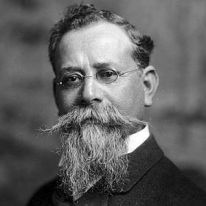
Venustiano Carranza

Venustiano Carranza who became the President in 1915, after the revolution, had to contend with varied sorts of opposition from within and from outside his country. Public corruption was another major problem of Carranza’s presidency. A popular saying that was going around was : “The Old Man doesn’t steal; but he lets them steal”; and a new verb, carrancear  (to-let-steal) was coined.

Carranza an ardent nationalist was not a radical or a socialist. But, he was sincere about alleviating the problems of the working class; and made provisions in the draft constitution to protect the interests of the wage earners; and, to guarantee minimum wages. The Constitution he proposed was, of course, a mere intent than anything else, since its enforcement required a strong and committed government, which Carranza did not possess. For that, he asked for support from the Socialists.

Roy, who then was at the forefront of the Socialist movement in Mexico, was eager to offer support to the Carranza Government, with the hope that the radical principles of the constitution would be brought into practice. He initially met Elena Torres the young Editor of La Mujer Moderna (The Modern Woman) , who had been a Secretary to Carranza even before he became the President of the Mexican  Republic. She was now the President of the Women’s Club of Mexico.

Roy discussed with Elena Torres, the future of Socialist Party in Mexico. He also met in her residence, Don Manuel, the Speaker of the Chamber of Deputies. And, through Don Manuel Roy met Carranza; and persuaded him to support the socialist movement ; and, to agree to “a programme of legislation for the protection of labour, particularly against exploitation by foreign imperialist capital”.

Roy also succeeded in gaining the support of Plutarco Elias Calles, a popular socialist leader, who later in 1924 was to be elected as the President of the Mexican Republic.

Roy had also suggested that a Latin American League should be formed as an opposition to the Pan-American conference sponsored by the U.S.A. The idea appealed to President Carranza.

Roy then suggested to Don Manuel, the setting up of a working class organization; and, followed it up by submitting an outline of the labour policy for consideration of the President.

In the meantime, Roy, at the instance of General Alvarado, began writing a series of articles in the English section of the Daily El Heraldo de Mexico , edited by his friend Charlie Phillips. Roy used the columns of the Daily to put forth the socialist view, and to highlight the evils of American Imperialism in Latin American countries. His articles were later brought out in book-form under the title  El Camino.

He now turned to the socialists and other radicals to organize a broad-based movement which would oppose the U.S. and support the Carranza Government. For that purpose, Roy drafted a manifesto for the proposed socialist conference to which delegates were to be invited from the different States of the Republic, and from a number of Latin American countries.

**

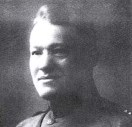
Then, in the summer of 1919 , came Michael Borodin. He was a huge influence on Roy’s life; thoroughly changed his ways of thinking; his life; and his political career. The two grew into great friends; helped each other; and, at crucial points they saved each other’s life.

[Mikhail Markovich Borodin (July 9, 1884 – May 29, 1951) was a prominent Agent of the Communist International (abbreviated as Comintern and also known as Third International (1919–1943)
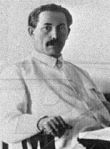
Borodin1Michael Borodin, the Bolshevik leader whose original name was Mikhail Markovich Gruzenberg, born into a Jewish rabbinical family in Yanovichi, near Vitebsk in Byelorussia, in 1884, had joined the Bolsheviks in 1903. And, he became a close associate and follower of Vladimir Lenin in his various revolutionary activities. Borodin, besides being a revolutionary was an exceptional intellectual with wide experience. He had certain charm and sophistication about him.  Borodin also possessed a striking physical appearance (he was, according to one description, ‘a man with shaggy black hair brushed back from his forehead, a Napoleonic beard, deep-set eyes, and a face like a mask’)

During his Bolshevik underground activities in 1905, Borodin escaped from Switzerland, avoiding arrest, and moved on to London; and, from there to USA. There in America, Borodin, it is said, studied law;  and,  with  his wife lived in Chicago as Mr. and Mrs. Gruzenberg posing as English teachers for immigrant children. They had two children.  While in Chicago, he became a member of the American Socialist Party.  Borodin returned to Russia after the October Revolution of 1917 and worked for the Comintern, in the foreign relations department. But, his wife and family continued to stay in Chicago. During Lenin’s period, Borodin rose in the Party hierarchy; and, also engaged himself in translating Lenin’s ‘Communism: a Left-Wing Disorder’ into English. Lenin had also asked Borodin to organize communist activities in the U.S. and Latin America.

After his return to Russia, Borodin was sent back to America, in 1919, on a secret mission, to assist the Russian trade delegation. Moscow had sent him with Tsarist Crown jewels worth about One Million Rubles to sell them in America ; and,  to use the sale proceeds for the maintenance of the Trade Mission in Washington  as also for  the development of the Communist movement in America.

Borodin had sewed the crown jewels in the bottom of two suit cases. On the journey, at Vienna, he befriended a young former Officer of the defeated Imperial Army of Austria.  He was disillusioned and embittered; and was sailing to the New World in search of new life and fortune. The two had, in fact, boarded a trans-Atlantic cargo ship bound for West Indian Island of Curacao  . On the way, at Haiti, the ship was raided by American Custom officials and searched. The ‘passengers’ were off-loaded as ‘undesirable aliens’; and, held in custody pending investigation. And, Borodin promptly slipped away after entrusting the suit cases to the care of the former Army Officer of Austria, with instructions to deliver them to Borodin’s wife in Chicago. Borodin, somehow, managed to reach Jamaica; and from there escaped into New York.

That left Borodin stranded in New York searching for the missing suit cases. The New York Police got suspicious of Borodin’s movements. Borodin fearing arrest, escaped into Mexico and strayed into Mexico City under an assumed name (Mr. Brantwein), without the jewels, without any money and without any friends.

There in Mexico, while in hiding, he learnt of the Socialist Party and its Hindu Secretary. He sought out Roy and met him. That meeting and the mutual acquaintance proved to be very crucial in the lives of the both.

After his sojourn in Mexico, Borodin returned to Russia; and, was again sent on a mission to Britain.   In 1922, he was arrested in Glasgow. He was sentenced to six months’ imprisonment for incitement; and, was then deported.

From 1923 to 1927 Borodin was an adviser to Sun Yat-Sen, leader of the Central Committee of the Kuomintang, in China, where he was held in high esteem. When , in 1927 , the Kuomintang came under the domination of its right wing, led by Chiang Kai-Shek, Borodin was arrested and forced to leave the country.

He went back to Russia to become the Deputy Commissar for labour.  But after 1932, he spent most of his time working as a journalist. He successively served as the Deputy Director of the Tass news agency, Editor–in-chief of the Soviet Information Bureau, and as the Editor of Moscow News.

Finally, in the anti-Semitic repression campaigns conducted under Stalin’s and Beria’s leadership, during 1949, Borodin and the entire editorial staff of the paper, including the American journalist  Anna Louise Strong, were arrested by the secret police . Anna Louise Strong, was accused of espionage and expelled from the USSR.

Borodin fell victim to Stalin’s reign of terror and his program of anti-semantic–repression. And, in the early 1950’s, Borodin was arrested and sent to the infamous Lefortovo, a prison in Moscow used by NKVD for interrogations with torture of political prisoners.

It is said that later on 29th May, 1951 Borodin died , following torture, at the Siberian  Prison in  Yakutsk* ,  the coldest town on earth by the river Lena , where over half a million prisoners of war and political dissidents  perished.

However, in the early 1960’s, under Leonid Brezhnev, Borodin along with other victims of Stalinist repression was posthumously rehabilitated.]

[* While speaking of the the Siberian  Prison in  Yakutsk*  it reminds me that, Interestingly, on October 17, 1970, Dr Satyanarayan Sinha, in his deposition  before the Khosla Commission, constituted by Indira Gandhi, (which investigated the reports about the death of Netaji Subhas Chandra Bose), stated  that Netaji did not die in the plane crash ; but, was imprisoned by the Soviets in Siberia. Dr Satya Narayan Sinha testified that in 1954, he met a certain Kozlov in Moscow, who told him that Netaji, was lodged in Cell No. 45 at Yakutsk Prison in Siberia.  However, the Commission, in its wisdom, chose to ignore Dr. Sinha’s testimony. Please click here. ]

**

Borodin , after he lost the Tsarist Crown jewels, and after escaping from American police, found shelter in Mexico City. While he was hiding there, Borodin came across articles criticizing Manuel Mendez in Gale’s Magazine, as also those written by Manuel Mendez in El Heraldo de Mexico. When he contacted Manuel Gomez, the Editor of El Heraldo de Mexico, Borodin learnt that Manuel Mendez was in fact the Hindu General Secretary of the Socialist Party.

And, through Gomez, Borodin met MN Roy in the summer of 1919, posing as Mr. Brantwein, a commercial agent. He then slowly revealed his identity; and narrated his sad story and his escapades; and, how he was hiding in Mexico stranded without money, without shelter and without friends. Borodin assured Roy and Gomez that he was their friend.

Roy was exited at meeting a Bolshevik who participated in Russian revolution along with legends like Lenin, Trotsky, et al and getting first-hand information of the Russian revolution.

After he learnt about Borodin’s plight, Roy invited Borodin to stay in his house and also gave him money for his expenses. Thereafter, he also sent some money to Borodin’s wife in Chicago; as also to the Trade Centre in Washington.

(Later, Roy wrote:  my involvement with Bolshevism started with a donation to the cause).

He also arranged for the search of the missing Austrian Army Officer and the two suit cases. The Officer could not be traced. But, the suit cases, it is said, eventually reached Borodin’s wife at Chicago.

[The story that unfolded after Borodin’s flight from Haiti was:  the Army Officer, who was investigated by the American Customs and released, continued to live in Haiti; but, as a hermit, in a hut on the beach. And, when he left Haiti, after some time, he left behind the suit cases as, by then, he had lost interest in all worldly possessions. Thus, the suit cases were misplaced; and, their track was lost for some time. But, again the Ex-Army Officer came back, picked up his belongings along with   Borodin’s two suit cases and reached New York. Since he was looking like a ‘total nut’, no one bothered to question him or check his baggage. Eventually, he delivered the suit cases to Mrs. Gruzenberg at Chicago.

Later, after Borodin reached Moscow, the Party charged him with theft and misappropriation of Crown Jewels. He was likely to be convicted. But, Roy, who then was also in Moscow, testified on behalf of Borodin; explained the circumstances ; and, pleaded for clearing the charges made against Borodin. Mrs. Gruzenberg was forthwith summoned to Moscow along with the precious cargo. Fortunately, their contents were intact. But, the question whether Borodin intended to defraud; and, let his wife retain the jewels was still hanging.

And, based on the supporting evidence provided by Roy, which established his honesty, Borodin was cleared of the charges; and, his life was saved. Their friendship thickened further. Roy wrote in his Memoirs that was his ‘second contribution to the cause of revolution’]

***

Roy took a strong liking to Borodin who was charming, intelligent, articulate and sophisticated. Borodin stayed with the Roys’ at their house in Colonia Roma, till his departure from Mexico in November 1919.  Roy and Borodin became good friends.  

[And later they worked together in Moscow and China. Despite differences on some policy issues from time to time, the two continued to be great friends throughout Roy’s association with Comintern.

Later in 1929 during the regime of Stalin, when Roy incurred the wrath of Stalin and was in danger of being arrested, Borodin saved Roy’s life by arranging for Roy’s escape from Moscow to Germany. Borodin repaid his debt by saving Roy from certain imprisonment and execution.]

While Borodin was staying with Roys’ ,  they spent long nights, after dinner, discussing the theory and practice of Communism; and the philosophical aspects of Marxism. At times, Roy sought to resist Borodin’s arguments with a defense of cultural nationalism. And; Borodin would argue back saying that Roy was attempting to defend a faith in which he  no longer firmly believed

Borodin was greatly responsible for Roy’s conversion to Communism. Borodin was a very learned and a cultured intellect. And Roy was a willing student. Roy learnt from him not only the intricacies of dialectical materialism ; but also the greatness of European culture.

He said of Borodin: “He initiated me into the intricacies of Hegelian Dialectics and its materialist version, as the key to Marxism (Memoirs p.195).

And, that broke his resistance to the materialism of the Marxist thought. Roy now became a materialist in his philosophical thought. Borodin had also helped Roy to outgrow his cultural parochialism. It was a leap from die-hard nationalism to communism’.

Till he met Borodin, Roy still believed, though waveringly, in the necessity of armed insurrection. But from Borodin he ‘learned to attach greater importance to an intelligent understanding of the idea of revolution. The propagation of the idea was more important than arms’.

It was Borodin who convinced Roy that the old methods of insurgence do not lead anywhere; and, what is needed is a revolution that is born out of the urge and out of the hearts of the common people. Roy then was gripped by the idea of an Indian revolution that brings together all classes exploited by British Imperialism. Borodin taught him about universal implications of class struggle and of the dialectical processes of history.  Roy thereafter envisioned not mere national independence,  but a social revolution with a viable economic structure that takes care of the interests of all the oppressed classes.

Roy also learnt from Borodin the need for a worldwide social revolution; and the tactics and strategies for organizing such an order. He, thus, began to grasp the Universal implications of class struggle and of the dialectical processes of history.

From Borodin, Roy learnt Marxism as a philosophy of life. What impressed Roy most was Marx’s famous Eleventh Thesis of Feuerbach, wherein Marx enunciates that philosophy should no longer confine itself to interpreting the world, but should try to change it.

This interpretation of the object of philosophy assumed profound significance for Roy. All the Schools of the Indian Philosophies discussed about freedom from sorrow and the ultimate release of Man from every sort of bondage. They were rather indifferent to the world we live in ;  because, the world (Samsara) that holds back should eventually be renounced.  Roy never thereafter laid faith on renunciation of the world; and totally rejected it as vain and selfish.  He developed a conviction that changing the world is within the human capability; and, building an equitable, just and moral order that guarantees individual liberty in the society as the greatest good that one can hope to achieve.

Even during his later years, Roy continued to believe:  “A revolutionary is one who has got the idea that the world can be remade, made better than it is to-day ; and, that it was not created by a supernatural power, therefore, could be remade by human efforts.”

[Please  do check here for more]

 **

Evelyn, Borodin and the Biblioteca Nacional were the source of his education.  Borodin also helped Roy in his discovery of   European civilization and culture; and Roy’s liberation from ‘cultural parochialism’.  He said: My lingering faith in the special genius of India faded as I learnt from him the history of European Culture”

Roy, later, said: I acquired a new outlook on life; there was a revolution in my mind – a philosophical revolution. It was more than a change in his political and revolutionary ideas. It transcended the frontiers of culture and nationalism.

Roy felt that he was free and heir to the entire human heritage; not hampered by national loyalties or boundaries.   He equated the two years in Mexico City with a life “through a couple of centuries of cultural history.”

By the time he left Mexico, Roy’s views about revolution had undergone a sea change. He wrote: I left the land of my re-birth as an intellectually free man, though with a new faith. I no longer believed in political freedom without the content of economic liberation and social justice. And. I had also realized the intellectual freedom from the bondage of all tradition and authority was the condition essential for any effective struggle for social emancipation.

Indeed, Borodin changed the course of Roy’s life. Later, in his Memoirs, Roy described the months the he spent with Borodin as the most memorable period of his life. It was at this time, he wrote, the foundations of my subsequent intellectual development were laid.

 **

Roy then introduced Borodin to Carranza the Mexican President, to the important officials in the Government and to the members of the Socialist Party. Carranza was impressed with Borodin. At the banquet hosted in his honour, Borodin declared that ‘the new regime in Russia fully sympathized with the struggles of the Latin American people against Imperialism. With that purpose a Latin American Bureau of the Communist International should be established in Mexico’.

 And, at Borodin’s request, President Carranza allowed facilities for the Russian Government and the Communist Party to operate in Mexico; and  also to contact the West European Bureau of the Communist International through the Mexican Legion in  Holland.  Further, Mexico became the first nation to accord de facto recognition the Communist Government in Russia.  Thus with Roy’s assistance, the Bolsheviks were able to get a foothold in the New World. Borodin informed the Comintern about the help he received from Roy in various ways; and,  said his task of Party work would not have been possible without Roy’s help and generosity.

President Carranza also assured Roy of his Government’s support for conducting Socialist conference to which delegates from the different States of the Republic, and from a number of Latin American countries are to be invited.

**

The whole of Mexico was thrilled with the success of the Russian revolution. The Socialist groups in Mexico City were exited when they learnt of the presence in their midst of a Bolshevik emissary.

As the various leftist groups began talking about forming a new Socialist Party , Roy financed a small paper El Socialista, run by Francisco Cervantes Lopez , leader of a Marxist group.

There was a demand to affiliate the Mexican Socialist Party to the Communist International. With his conversion into the new-found-faith, Roy sought to gain control of the Mexican Socialist Party of which he was the Secretary; and convert it into a Communist organization. Linn A. E. Gale, however, was against Roy’s nomination; and , called Roy as ‘ an agent provocateur and a spy’.

 Borodin sprang to the defense of Roy saying ‘ Roy , who is an Indian  and has worked for over ten years among natives who possibly have more in common with the Mexican peons , is perhaps right in  trying to link up with masses  through the existing unions’.  Roy eventually succeeded in easing out his most serious rival,  the American, Linn A. E. Gale. But, Gale promptly named his own group as the Communist Party of Mexico.

From August, 25, 1919 to September 4 1919, Roy organized a marathon session of the National Congress of the Socialist Party of Mexico. Roy and Evelyn chaired most of the sessions.  Having failed to persuade the remaining members of the Socialist Party to change its name and its principles, Roy and his small band of six followers broke from the Socialist Party and formed a second Communist Party of Mexico

In a session presided over by Roy, it was declared that the Mexican Socialist Party would henceforth be the Communist Party of Mexico. And the session adopted the manifesto of the issued by the Comintern. The new found Communist Party of Mexico (Partido Comunista Mexicano- PCM) with its small membership was humorously described as ‘six members and a calico cat’. But, Roy’s group, more importantly, had the blessing of Borodin; and that greatly helped, later, in gaining affiliation with the Communist International. This was the first recognized Communist Party formed outside Russia

It was also decided to send a Mexican delegation to the Second Congress of the Comintern that was scheduled to take place in Russia during the following year, 1920. 

In the meantime, Borodin had been regularly sending to reports to Communist International (Comintern) about the developments in Mexico and about Roy’s role. Borodin was also anxious that Roy should attend the Second Congress and meet the leaders of the Russian revolution. And, Lenin, in appreciation of Roy’s efforts and help, invited him to attend the Second Congress of the Communist International to be held in Moscow during Spring of 1920.

Roy later attended the Congress representing the Communist Party of Mexico. That was a big turning point in the life of M.N. Roy. The invitation opened to Roy entry into a fascinating world of his heroes like Lenin, Trotsky and other leaders of the revolution.

**

The world witnessed great changes during and after the First World War. Russia saw the first revolution launched by the Bolsheviks in 1917, which saw the overthrow of the Czar and the capture of power by Lenin. And, starting from Mexico, the Russian Communist Party established contacts with revolutionaries throughout the world; and, got busy in setting up of the Communist Party outside Russia. M N Roy was very much a part of the expansion of the Communist Party.

Yet; it was not easy for Roy to decide to leave Mexico to which he had developed a strong attachment. Mexico had been very kind and hospitable to him. It had given him a new life, new perspective and new opportunities. It had transformed him from a wandering fugitive to a recognized and respected leader of a Political Party. For the first time in his life he had the support of people in high places, including the President of the country. He had felt safe among his friends, followers and the common people of Mexico. He knew that many would be unhappy at his decision to go away.

Borodin persuaded Roy to accept Lenin’s invitation, with the argument that revolutionary movements, whether in Mexico or in India, was parts of a global struggle which constituted the programme of the Communist International. Roy too was fascinated by the idea of working with the most celebrated revolutionary leaders that the world had ever known.  There was also a hope that Moscow, with the backing of Comintern, would provide him an opportunity to work more effectively towards Indian independence.

 [Further, after the end of the war and the defeat of Germany, Roy had no option but to turn to a new source of support for the revolutionary activities in India.]

***

Carranza had found in Roy a friend in need; and, perhaps wanted him to stay in Mexico as his friend till the end. Thus, when Roy begged for leave, Carranza, with a heavy heart gave his permission.  The Mexican friends and party men were not willing to him let go, either.

In his Memoirs, Roy paid rich tribute to Mexico and his gratefulness for its kindness and hospitality. He wrote with grace and affection for that country which he called as the land of his re-birth.

“As the day of my departure drew nearer, the feeling of loss grew heavier. I had been in Mexico for two and a half years. But it seemed to as if I had lived there since my childhood. I never had many personal friends. Mexican exuberance, heavily tinged with conventionality, though not always hypocritical, was incompatible with my temperament. Nevertheless, I could not possibly help being moved by the fact that it was an extremely hospitable country; the Government friendly beyond expectation and out of proportion for the little service I could render out of gratitude. And, a large number of highly placed individuals treated me with kindness, consideration and affection.

On the whole, it was a rich and a gratifying experience. In a sense, Mexico was the land of my re-birth.

It is true that before coming to Mexico, I had grown dissatisfied with ideas and ideals of my earlier life. But it was during my stay in Mexico that the new vision became clear and the dissatisfaction with the sterile past was replaced by conviction to guide me in a more promising future.

It was more than a change of political ideas and revolutionary ideas. I acquired a new outlook for life; there was a revolution in my mind – a philosophical revolution , which knew no finality. That fundamental change in the outlook of life enabled me to overcome the emotional attachment to the land of my re-birth.

It dawned on me that Nationalism, whether revolutionary, constitutional, cultural or political, relied mostly on emotion; because, it was intellectually weak. Its appeal, at home as well as at abroad, was not to the head, but to the heart. It tries to move, but not to convince.

I left the land of my re-birth , as an intellectually freeman, though with a new faith. The philosophical solvent of faith was inherent in itself. I no longer believed in political freedom without the content of economic liberation and social  justice. But, I had also realized the intellectual freedom – freedom from the bondage of tradition and authority – was the essential condition for any effective struggle for social emancipation.”

***

When Roy and Evelyn decided to accept the invitation from Lenin and travel to Moscow, the Mexican President Venustiano Carranza promptly arranged for issue of diplomatic passports to Roy and Evelyn as his special emissaries to travel to Moscow. The Mexico’s representatives in Europe were instructed to render any type of assistance that Roy and Evelyn might need.

In the Mexican diplomatic passports, provided by the President, their names were given as Senor and Senora Roberto Alleny Villa Garcia. Roy’s new alias was borrowed from the name of Jose Allen’s brother (Jose Allen had just then taken over as General Secretary of the new Communist Party of Mexico).  The Roys’ continued to use these passports in Europe , till their break-up in 1925-26.

It was decided that, for reasons of their safety, the Roys’ would not travel directly to Moscow; but, would reach Moscow via Cuba, Spain, and Germany. They would also spend more time in Berlin to gain good experience. It was also decided that Borodin would first leave for Europe along with Charles Phillips (under the name of Jesus Ramirez).  And, the departure of Roys’ would follow shortly afterwards: they were all to meet in Berlin , before going to Moscow.

Their departure from the house in CoIonia Roma was kept secret for a while by getting Carleton Beals to come and live there during the months of November and December, as a sort of decoy. The precaution was necessary to escape the attention of the British Secret Service.

At Carranza’s last meeting with Roy, the old man put his hand on Roy’s shoulder and with suppressed emotion, said, ”You are still very young. Don’t gamble with fate.” Carranza thereupon turned on his heels abruptly and walked away. And Roy’s dalliance with fate was only just about to begin.

(But, as the fate would have it ; in the 1920 Elections , Venustiano Carranza was  overthrown . And, he was later ambushed and treacherously murdered, while trying to escape. That was just a few months after the Roys’ departure from Mexico.)

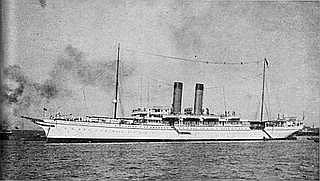
Finally, in November 1919, after two and a half years in what he later called ‘the land of my rebirth’, Roy left with Evelyn from the port of Veracruz, Mexico’s oldest and largest port on the Eastern edge of the state of Veracruz along the Gulf of Mexico, on board the Spanish transatlantic liner, Alfonso XIII, carrying  Mexican diplomatic passports provided by the President, in which their names were given as Senor and Senora Roberto Alleny Villa Garcia.
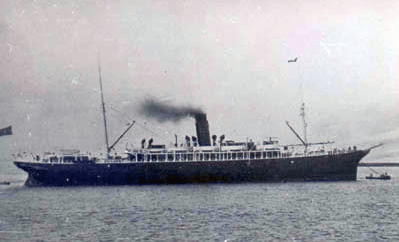
Alfonso_XIII_de_1889


***

1. Please see the interesting page “The awesome story behind the name of Mexico City´s wildest nightclub, M.N. Roy” which briefly presents the life of M N Roy in the form of Comic Strip. .. ” This is an attempt, through comics, to find resonance with a deeply unusual man and his ideas. It is, of course, a playful interpretation of his work rather than a scholarly analysis”.

http://hellodf.com/the-story-behind-the-name-of-the-infamous-mexico-city-nightclub-m-n-roy/

2.Ten years after M.N. Roy had left Mexico, Sergei Mikhailovich Eisenstein (1898-1948), a Soviet film director and film theorist, a pioneer in the theory and practice of montage, visited Mexico, studied the society and made a film QUE VIVA MEXICO. At the outset, M.N. Roy was shown as one of the main builders of Mexican society. As , by then, Stalin had lost interest in Eisenstein and in Roy,  the picture was not released . Later, after the death of both Stalin and Eisenstein the picture was released in USA during November 1979 . And, it also earned an award.

 3. Another picture that was made on the life of M N Roy was Le Brahmane Du Komintern, a 128 minute film by French Director Vladimir Leon during 2006. The documentary focused on the period of Roy’s life, in Russia (intermittently leading a Comintern delegation in China). I wonder why its title carried the term Brahmin, because, by then, Roy had given up caste and religious affiliations. The film was released in France during 2007 (The documentary received a special award at the film festival at Marseille). The film was later dubbed into English, Spanish and Russian. The English version – ‘The Comintern Brahmin -The Untold Story of M.N.Roy – was released in India International Centre, New Delhi in March 2013.

Please check    http://www.insafbulletin.net/archives/1737

an extract from The Brahmin In the Comintern, a 2007 French documentary on M.N. Roy.

From Mexico to Russia, Germany, India, Vladimir Leo goes in search of a great adventurer-philosopher-revolutionary of Bengal: MN Roy. In the countries he visited, his memory seems to have almost completely vanished today, despite the important political role he could play. Founder of a communist party in Mexico for Zapata, leader of the Communist International in the early years of Soviet Russia, anti-Stalinist and anti-Nazi activist in Germany pre-war politician, philosopher and atheist in India independence, the official histories of these countries have preferred to delete the trace. Was it too loose? Was it too lonely? Vladimir Leon chronicles the life of this singular and modest hero who crossed all major milestones of our twentieth century. For this, he takes us on three continents, filming carefully the world as it is, echoing the story of this turbulent political past. In meetings of witnesses, direct or indirect, takes shape the fantastic geographical and philosophical trajectory of MN Roy, if humanly fragile, so farsighted.

Continued

In

Next Part

Sources and References

  1. M.N. Roy: A Political Biography by Samaren Roy; Oriental Longman ; 1997
  2. M N Roy by V.B. Karnik; National Book Trust; 1980
  3. Communism and Nationalism in India: M.N. Roy and Comintern Policy, 1920-1939 by John Patrick Haithcox; Princeton University Press; 2015
  4. Encyclopaedia of Eminent Thinkers, Volume 10by K. S. Bharathi; Concept Publishing Co; 1998
  5. Many pages from Wikipedia
  6. Pictures are from Internet
 
7 Comments

Posted by on January 13, 2016 in M N Roy


Tags: , , , , , , , , , , , , , , , , , , , , , , ,

MN Roy: brief outline of life-events and thoughts- Part 05

MN Roy: brief outline of life-events and thoughts- Part 05

Continued from Part 04

 Mexico years – Part One

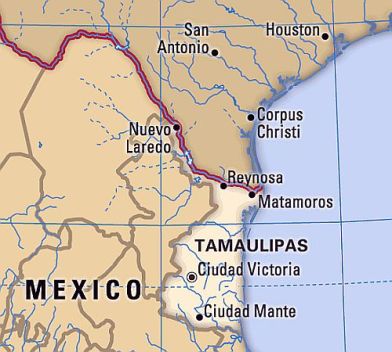
 After jumping bail and escaping from the American police, Roy along with Evelyn slipped into Mexico by crossing the border at Laredo (one of the oldest crossing points along the U.S.-Mexico border). They entered into Mexico by crossing over the bridge across the Rio Grande and reached the town of Nuevo Laredo in the Mexican state of Tamaulipas, in the last week of March 1917.

Nuevo Laredo

They had entered Mexico under their assumed names of Senorita and Senora Evelyn and Manuel Mendez. They stayed in Nuevo Laredo for a few days. And, from Nuevo Laredo, they travelled long (about 1,200 Kms) to reach Mexico City.

When Roy escaped into Mexico in the late March of 1917, he was a fugitive, scared, without money and without friends. The only credential he had was the letter of Introduction to General Salvador Alvarado, the Governor of the Eastern State of Yucatan which was far away from Mexico City. His immediate and utmost concern was to survive and be away from the clutches of British and American Secret Services. . 

Ever since the Chingripota (Bengal) political robbery at the age of twenty he had been a fugitive on the run, frequently changing his hiding places, working as an utterly poor underground revolutionary.  During his escapades he was mostly working alone; and did not have trusted friends. Haunted by police and spies,  he drifted  dangerously , crossing thousands of miles by land and sea in South-East and East Asia and the United States , under different aliases, sustained by a single passion and his extraordinary daring, intelligence and perseverance .  All along he was haunted by fear, sense of insecurity and acute poverty.

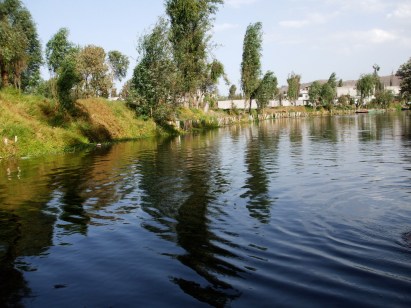
During his early months in Mexico his local friends used to call him “the melancholy philosopher from India” who was impervious even to the charm and festive atmosphere of Las Chinampas or to the floating gardens on Lake Xochimilco and Lake Chalco.

All that changed in a happy way during the next few months. The brief period in Mexico brought several significant changes and developments in the life of Roy.

**

While Roy was entering Mexico, its civil war had just ended. Though freedom had been achieved, parts of the country were still in disturbed state. Mexico now had a new President who brought in a new constitution, which sought to give more rights to the common people and to the working class. The new Government was generally popular; but, there were also groups actively opposed to the President. There was some unrest in the air.

And by then, the Russian Revolution had just completed and the Bolsheviks had captured power in Russia. The whole of Mexico was thrilled in excitement, as ‘faint echo of that revolution blew across the Atlantic’. All of Mexico’s left wing socialists were in an exuberant mood; and breathed a fresh air charged with great expectations. Roy also was overtaken by the success of the Bolshevik revolution; he was engulfed and sucked up in the electrical atmosphere that charged the whole of Mexico.

It began to dawn on Roy that the old methods of insurgence were not leading anywhere. The socialist concept of revolution appealed to him better. And, it began to dull his keenness to secure arms help from Germans. Yet; at this stage, he still had not entirely given up in the necessity of armed insurrection, to secure India’s freedom.

***

Upon reaching Mexico City, they were desperate to present the letter of introduction provided by Dr. Jordan of the Stanford University, at Palo Alto, to General Salvador Alvarado, the Governor of the Sate of Yucatán.  Since Mérida, the capital of Yucatán was located on the eastern edge of the Yucatán peninsula and was about 1,300 Kms away from Mexico City, they decided to first approach the government officials at Mexico City. They were successful in getting an interview with the Minister of War (Afinisterio de la Guerra) who happened to be the son-in-law of General Salvador Alvarado. He accepted the letter of introduction the Roys’ presented; and assured that they were safe in Mexico; and were among friends. He also informed them that they need not have to travel all the way to Mérida for the mere purpose of meeting his father-in-law.

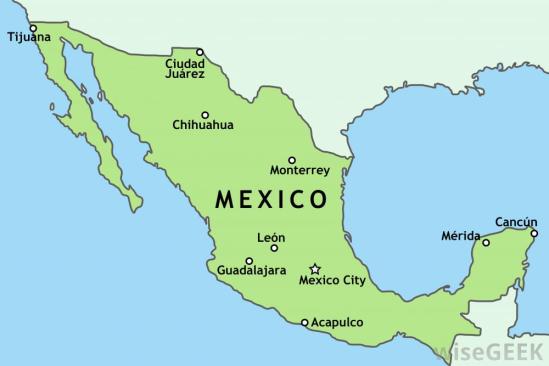
mexico-on-map

During the war, Mexico, technically, was neutral. But, its sympathies were with Germany. Further, the then Mexican President had an aversion towards Britain the ’big bad bully of the world’; and shared a sort of romantic sympathy for ‘Indians’ that the Mexicans always had. And. Mexico’s relation with its big neighbour USA was also rather tense, following Mexican Government’s opposition, in 1915, to U.S. concessions in Mexico. Earlier, in April 1914, the Mexican President Venustiano Carranza had opposed the U.S. occupation of Venezuela. Many American radicals; draft-dodging drifters; ‘slackers’ (as pacifists were called); and, those with weird ideas had taken shelter in Mexico assuming various aliases. And, that Mexico was, in a way, a safe haven for all those who in some way or other had problems with the British and the American spy networks.

Even after Roy and Evelyn crossed over to Mexico, the British and the American intelligence continued to be after Roy. Soon after they arrived in Mexico City and met the Minister of Defense, the British agents informed their American counterparts. The Americans promptly demanded extradition of the Roys’. But, the Mexican Government refused to oblige; and Roy with Evelyn continued to stay in Mexico. Thus, Roy and Evelyn were helped immensely by Mexican Government’s attitude towards Britain and America, as also by the then existing political equations.

Soon after their interview with the Minister of Defense, they rented a house at Calle Córdoba 33 in Mexico City.  On the next day, Roy and Evelyn received an invitation from the Editor of El Pueblo (The People), the almost the official daily of the Mexican Government.  The Editor requested the Roys’ to contribute series of articles on British Rule in India. The two promptly took lessons in Spanish from Enrique Guardiola, a teacher of Spanish. And, in about two months time they had learnt enough Spanish not only to write articles and pamphlets in Spanish but also to speak it fluently.

**

[Roy translated into Spanish his earlier article The way to durable peace that was an open letter addressed to Woodrow Wilson, President of the United States of America: and published in America on 17 April , 1917. Its Spanish translation was published in El Pueblo with the title El Camina Para La Paz Duradera del Mundo with insertion of extra passages criticizing the Monroe Doctrine which made Mexico a virtual colony of the USA. The name of its author was given as Manuel Mendez.

This article criticized the economic domination of USA over the countries of South and Central America. It gave a call to the oppressed countries to regain their independence by putting an end to the U.S. dominance. It thus marked the beginning of Roy’s commitment to a revolution which went beyond the confines of the Indian context.

During 1918, Roy published several books, articles and pamphlets in Spanish. One of those was La Voz de la India, which besides the translation of the “the way to durable peace” also included two other pieces — a detailed critique of a book El Despertar de la India (The Awakening of India) by an anonymous author who had sought in it to justify the British rule in India; and the other was a shorter essay to answer the question “Why do the Indian soldiers fight for England?” (Por que los soldados Indios luchan por Inglaterra?)

But, Roy’s more notable work published in December 1918 (by which time Roy was already involved in Mexican politics) was La India: su pasado, su presente y su porvenir (India: her Past, Present and Future). The book running into more than two hundred pages discussed the cultural and political history of India over the centuries. It spoke about : “ India’s unity in diversity and briefly explained how from a fusion of Dravidian and Aryan cultures India developed a tradition which was tolerant and non-aggressive, which respected differences while believing in the unity of the universe, which offered alternative ways of realizing within individual consciousness the ultimate identity of the microcosm and the macrocosm, and which dealt with repeated invasions and conquests by gradually integrating the invaders and conquerors.”

As regards the India in modern times; Roy gave a brief account of the Indian nationalist movement indicating why the hope of the Moderates to achieve India’s freedom through piecemeal reforms with the consent of India’s alien rulers was altogether unrealistic, and why radical nationalists like himself believed that “the only way out was a bloody revolution even though it appears almost hopeless in the present circumstances”.

The  concluding chapter explained how the British had been trying to defeat the nationalist movement by playing the Muslims against the Hindus and how neither the earlier Morley-Minto reforms nor the recently published Montagu-Chelmsford Report offered anything of substance to the Indians; and it reaffirmed the conviction that “India will be free, whether the English liked it or not”. India’s freedom would “assure true liberty to the whole world, putting an end to the attitude of superiority assumed by Europe”.

The La India showed hardly any influence of Marx. There was no reference to Marx’s thesis regarding the “Asiatic mode of production”. And there was also no discussion about conflict of class interests within Indian society. ]

**

The day after the Roys’ called on the Editor of El Pueblo,  two Germans (one of them, possibly, was Vincent Kraft) whom he knew in Batavia ( Indonesia) contacted Roy and tried to revive the earlier plan of buying  arms from the Chinese rebel groups  and smuggling into India  across the Burmese border. They soon put him in touch with Von Eckhardt and the visiting German privy-councillor, and a fresh scheme to help the Indian revolutionaries was soon devised. It was suggested that a Chinese businessman with good connections in French Indo-China would soon leave for Japan with Roy’s letter for Rashbehari Bose, while a German officer would proceed to East Asia ahead of Roy to do the preliminary work.

 But, this time Roy did not seem enthusiastic about the plan.  By then, he had begun to doubt the possibility of an armed revolution in India with German help. Further, was getting more involved  in the revolution that  was going on in Mexico itself.

But, he had to go along with the German plan. He agreed to go along the German venture. Large sum of money was provided by Germans for purchase of arms from the Chinese.

The Mexican Government too got involved by getting Roy a Mexican passport and a letter of introduction to the Mexican Consul General in Yokohoma, Japan, who would help Roy in completing the financial transaction with the Chinese rebel groups  ( with the mediation  of Dr. Sun Yat-sen, who then was taking shelter in Japan) .

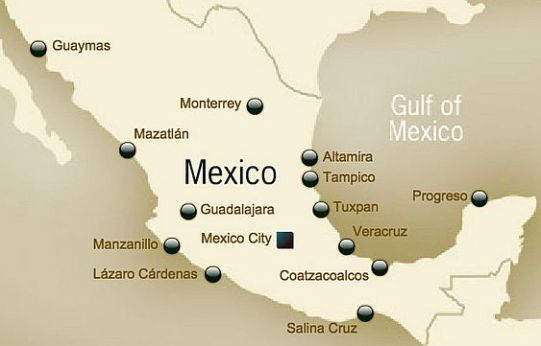
Roy soon made preparations for his voyage back to Japan. But, because he was wanted by the American Police, he had to wait for a Japan-bound ship that would not touch any port in U.S.A. He was therefore asked to go first to the Pacific port of Manzanillo and then to Salina Cruz.

According to the plan, Roy reached the deserted  western port of Manzanillo, and from there on travelled to the port of Salina Cruz (about 300 miles to the South), situated near the mouth of the Río Tehuantepec, on the open coast of the Isthmus of Tehuantepec on the Gulf of Tehuantepec . Roy was the only person to land at that little port from that ship, which left southwards after a few hours’ stop. Salina Cruz was at that time a small native village, deserted, almost haunted place; not a pretty place; and, its population was largely composed of labourers. 

mexican-ports

After Roy had waited at Salina Cruz for several days, news came that the expected ship was not calling at Salina Cruz, carrying a full load from Chile; she had left Panama directly from Honolulu. The next sailing was due after a mouth. Roy writes in his Memoirs: To wait that long was out of the question. The alternative was to take the south-bound boat due in a week or so, go all the way to Valparaiso and return on the same. It was an annoying and disappointing experience; but it was also a relief.

Thus the plan  of smuggling arms into India fell though, as ever, because the Japanese vessel failed to show up. And, Roy  after having waited at the port for several days,  returned to Mexico with the money that Germans gave him.

*

The failure of this attempt to smuggle arms into India to fight the British, made Roy think about the absurdity and futility of the whole plan. Earlier, in his talks with the Consul General of Germany, in Mexico, he realized that the aim of Imperial Germany was to replace the British Imperialism in India. He pondered that all the Imperialist powers were alike and vied with each other for dominating backward countries.

Roy wrote in his Memoirs: “ It suddenly dawned on me that I really did not want to go again on a wild goose chase. Mexico called me back; there I had made new friends, found new interests and planned to begin a new political career … the way back to old adventures was practically closed”.

 Roy thus decided to stay back in Mexico and get involved in the Socialist politics of Mexico.

**

Their meeting with German officers and agents in Mexico benefitted Roy and Evelyn to a very great extent.  Through the influence of the Germans, they gained access to the top officials in Mexican Government and to the powerful politicians in Mexican political circles. And, they also came in possession of a large sum of money, thanks to the aborted German scheme of smuggling Chinese arms to India. These helped Roy and Evelyn to lead a secure and a very sumptuous and rich life in Mexico. A part of the money was later used to support and develop the Socialist Party of Mexico; for supporting Bolsheviks and the Russian trade mission in Washington to promote Communist movement in USA; for financing Rash Behari Bose who was marooned in Japan; and, for helping many needy persons.

The money had also paved way of Roy’s cultural reformation and political rehabilitation.

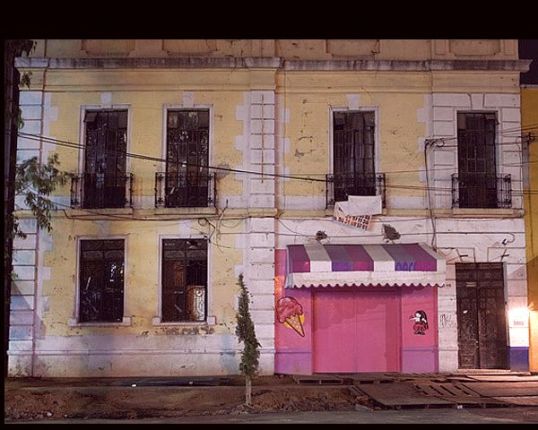
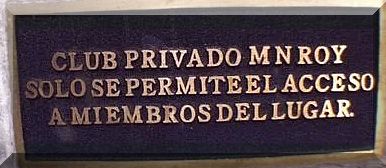
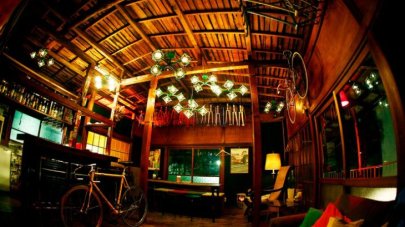
The Roys’ moved into a more spacious house at Merida 186, Colonia Roma (which now had been remodeled and converted into a trendy nightclub bearing the name M.N ROY – 

Roys' house was redesigned by the French architects Emmanuel Picault and Ludwig Godefroy

MN Roy club Mexico

It then came to be guarded by a former transsexual model, actress and singer , with lovely long lingering eyes).

180694_175647035809738_765982_n m_n_roy_mexico_l190711_r5 (1)

The mansion like house, from its balcony provided magnificent view of the distant twin peaks of the dormant volcanic mountains Popocatepetl and Iztaccíhuatl. The view of Iztaccíhuatl peak partly covered with snow and resembling a reclaiming woman, in particular, fascinated Roy.  And years later, in his Memoirs, he fondly recalled the memory of the ‘Sleeping Woman’ that haunted him.

Iztaccíhuatl peak

The house was tastefully furnished with green satin covered Louis XIV furniture. Their housekeeper Maria ‘a healthy and handsome pure-blooded Mexican woman’ assisted by a muchacho (boy) who performed odd jobs around the house managed the household. By then, Roy had also acquired a beard and “a splendid brown Alsatian … who slept on the floor by my bed just across the open door.” Charles Phillips, an American socialist with a string of aliases, remembered Roy during his Mexican years as “tall, slim, elegant and somber, deadly serious…, very brilliant, a fascinating personality”. Another of Roy’s acquaintance in Mexico City during this period, was Carlton Beals, who described Roy as: tall, with long, slim expressive hands and black-white eyes that flashed out of his dark face; and as person with boundless energy who mastered enough Spanish in a few months to write pamphlets and speak from platform”.

images (2)

Maria was an excellent cook and entertained their guests with tasty Mexican dishes.  The guests at his parties included intellectuals; journalists; writers; artists; actors; musicians; German and Mexican officials and diplomats some of whom were close to president Carranza; American radicals escaping from draft; and,  a number of socialist and leftwing thinkers and workers.  Roy and Evelyn were very good hosts. They did greatly enjoy hosting such parties at their home; and were captivated by the warmth and friendliness of the Mexicans who were remarkably free from racial prejudice.

**

Mexico, its social environment and Evelyn brought about remarkable changes in the personal life, the habits, the interests and the general outlook of Roy.

In Mexico for the first time he had a home of his own where a woman who adored him and shared his ideals, brought him new insights and experience of happiness.  Roy who all along had been bogged down by poverty led in Mexico a sumptuous and rich life. Roy who earlier was a lone fugitive, enjoyed in Mexico  the support and friendship of common people as also of those in high places including the President of the Republic and the Rector of the University. All these were strange and unbelievably real experiences for him.

The period of about two and a half years (March 1917 – November 1919) that Roy and Evelyn lived in Mexico were perhaps the most wonderfully delightful  and magical years in their life.  It was in Mexico Roy, acquired a love for life and a new set of friends and acquaintances who exerted a lasting influence on his life and his ways of thinking.  It was his life and experiences as also the environment in Mexico that totally transformed Roy into the person that the world later came to know.

The Mexican experience was for Roy a sort of liberation from pre-conceived notions of culture, nationalism etc. When he had left India he was a political ascetic with strong puritanical taboos and an intense distrust of Western civilization. But, while in Mexico, outgrowing his ‘cultural nationalism’, he entered into a whole new world of painting, art, music; discovered European civilization and culture; learnt European languages of Spanish, German and French.  As his interests grew, he acquired and developed a fairly intimate knowledge of literature, art and western music. He learnt to socialize with groups of friends, among whom were socialists, intellectuals as also men-of-the world; and listen, in their company, to the great Cellist Pablo Casals’s music and the majestic voice of Enrico Caruso the renowned Italian operatic tenor, who then was touring Mexico. The singer wife of Pablo Casals taught him music appreciation. Maestro Cassas, the Rector of the University, introduced him to the world of European literature. And, the artist wife of a German merchant (who is said to have done a portrait of Roy) gave him lessons on art and art-appreciation.   Evelyn and his friends introduced him to the subtleties of the game of Chess. Another German, Dr. Gramatsky, a philologist, and his wife who came to in their house in CoIonia Roma taught them French and German.  With encouragement of his friends, Roy discovered the rich intellectual and literary heritage of modern Europe reflected in the works of Cervantes, Kant, Voltaire and such others.  Later, Roy wrote: with each passing day, it became painfully clear how uneducated and how ignorant I had been.

Along with appreciation of music, fine arts and literature, Roy learnt to appreciate and enjoy the good things of life, from rare European wines to Chinese menu. He also learnt to enjoy the beauty of the landscape and the delights of refined recreational activities, stimulating conversations and intellectual pursuits.  The external world, the influence of friends and the sensory stimulant  – food he had not tasted before;  the works of art, music which he had not heard of ; and,  body of literature that was unknown to him- – enlarged Roy’s interaction with the people around him. All these were totally new and enthralling experiences to Roy who most of his life, till then, was a lone puritan fugitive in a hurry chasing an eluding dream.

[Even after he returned to  India , joined Congress and began wearing Khaddar , Roy  continued to love good food and drinks; enjoying evenings with friends and admirers drinking and narrating anecdotes of the famous persons he met while he was in Europe . His narrations were laced with humor, understanding and without bitterness.]

The newly developed Epicureanism did not corrupt Roy either mentally or physically. Because, as he saw it, neither did socialism nor radicalism preclude enjoyment of life’s gifts and its many refinements.

It was Mexico and Evelyn that intellectually liberated Roy; broadened his attitude and outlook towards life; and, transformed him into a truly cosmopolitan person with a new cultural sensitivity. He developed a more open approach and a new outlook to life. Much credit must be given to Evelyn in transforming Roy’s sensibility while in Mexico.

That formative period in Mexico was a very important phase in his life. It molded him as a person and as an intellectual with a perceptive understanding of life.

I am rather surprised that many of his biographies skip or gloss over the magical years that Roy and Evelyn lived and enjoyed in Mexico.  This was the period that made the personality of MN Roy. As far as I know, only Sibnarayan Ray in Volume I of his “In Freedom’s Quest: a Study of the Life and Works of M.N. Roy (1887-1954)” has devoted a chapter to Roy’s life in Mexico.  This part of my article is mainly based on that Chapter.


**

When Roy left India during 1915 in search of arms to fight the British in India, his views about revolution and international relations were still naïve. It was mainly his life, his experiences and his learning in Mexico that dispelled many of his old ideas and transformed him into an articulate theoretician.

The Mexican years brought about huge changes in Roy’s political philosophy and the methods which he regarded as effective in ushering a new social order , just and equitable, paving way for Man’s freedom.

After his experiences in USA and Mexico, Roy was a thoroughly changed person. His ideas about revolution were drastically revised. He also had lost the urge to return to India forthwith. Now, he believed that revolutions are brought about by social forces. His perspective of the process of revolution in India was in terms of social reformation.

Thus, Roy’s stay in Mexico was of great significance in his intellectual and political development. He wrote:

“My ideas of revolution and political activity changed during my stay in the United States of America. But the sojourn there was too short for me to put the new ideas into practice. In Mexico, I got the opportunity. For the first time I came in contact with a mass revolutionary movement.”

 “Mexico was the land of my rebirth. It is true that before coming there I had begun to feel dissatisfied with ideas and ideals of my earlier life. But it was during my stay in Mexico that the new vision became clear and the dissatisfaction with a sterile past was replaced by a conviction to guide me in a more promising future. “

He later said: I left the land of my re-birth an intellectually freeman, though with a new faith.

It is no wonder then that M N Roy called Mexico as the land of his re-birth; and cherished a longing and a love for that country till his last days. 

En_Xochimilco

Continued

In

 Next Part


Sources and References

  1. M.N. Roy: A Political Biography by Samaren Roy; Oriental Longman ; 1997
  2. M N Roy by V.B. Karnik; National Book Trust; 1980
  3. Communism and Nationalism in India: M.N. Roy and Comintern Policy, 1920-1939 by John Patrick Haithcox; Princeton University Press; 2015
  4. Encyclopaedia of Eminent Thinkers, Volume 10by K. S. Bharathi; Concept Publishing Co; 1998
  5. Many pages from Wikipedia
  6. Pictures are from Internet
 
4 Comments

Posted by on January 13, 2016 in M N Roy


Tags: , , , , , , , ,

MN Roy: brief outline of life-events and thoughts- Part 04

MN Roy: brief outline of life-events and thoughts- Part 04

Continued From Part 03

 In the United States of America

After series of disappointments, failures and aimless wandering as a fugitive over the whole of South East for about eighteen months, Narendra Nath set sail to USA in pursuit of his  incomplete mission to secure German arms to fight the British in India, which he termed  it as the pursuit  of the elusive Golden Fleece.

Narendra Nath, thus, traveled to America primarily to negotiate an Arms deal ; and, to secure funds from Germany to fuel the Indian revolutionaries. The Germans had promised that arms would be routed to India through the resident Indians in California. During those days, the West Coast of USA was an active hub for revolutionary activities attempting to secure Indian Independence through armed uprising against the British Rule. The Germans also provided support to the revolutionaries.

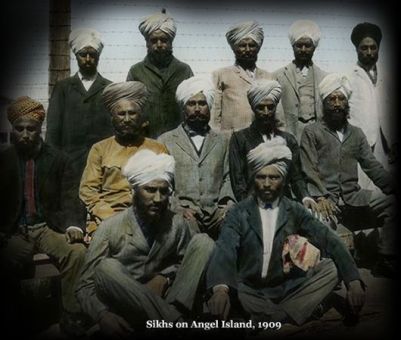
early Indian immigrants to USA 1909

Courtesy Janos

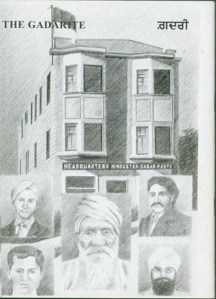
[The core of the revolutionaries in California was allied with Ghadar Party founded by Punjabi Indians resident in the United States and Canada (Ghadar = revolt or rebellion). The Ghadar Party, initially named as the Pacific Coast Hindustan Association, was formed in San Francisco  during 1913  under the leadership of  Lala Har Dayal, Sant Baba Wasakha Singh Dadehar, Baba Jawala Singh, Santokh Singh and with Sohan Singh Bhakna as its president. The members of the Party were Indian immigrants mainly from Punjab; and, many among them were students, traders and farmers. The Party enjoyed wide support among the large Indian community residing in California, including the prosperous Sikh cotton growers in the Imperial Valley. Though predominantly Sikh, the party included members and leaders of many religions desiring to work for Indian Independence. The party quickly gained support from Indian expatriates, even from outside the United States, such as:  Canada, East Africa and Asia.

gardar01

After the outbreak of World War I, many Ghadar party members in USA and Canada returned to Punjab to agitate for rebellion alongside the Babbar Akali Movement. The Party was eventually dissolved in 1919.]

With the help of Japanese intelligence, on 25 May 1916, Naren boarded the ship named Nippon Maru departing from Yokahoma (Japan) in Tokyo Bay, South of Tokyo and destined to San Francisco, California.

He had used the French-India passport given to him by the Germans in China. And, with the help from Japanese, he had obtained an American Visa to travel to USA on his way to Paris, France.

The passport was issued in the name of Martin Charles Allen; and, it described its holder as a 25 years male, single, Roman Catholic missionary;  Bengali by birth, a native of Chandernagore, as such a French citizen, and lived at Pondicherry only for a few years with the object of coming closer to France ; Nationality: French. Permanent address: Church, Pondicherry, India; height 6 foot. Dark, brown eyes, beard; Place of birth: Haites; City: Ionainis. Final destination: Paris.

The purpose of the Visa was to travel to Paris (Via USA) for advanced theological studies in Notre Dame University.

roy-mn as Father Rev Martin

The bearded Roman Catholic priest Rev. Father Charles Martin Allen, clutching thick Morocco bound Bible and posing as a seminary student landed in San Francisco on 15 June 1916. (Naren at that time was about 28 years old although his passport mentioned his age as 25 years). Nippon Maru was scheduled to land at San Francisco on 14 June 1916, but was delayed by one day.

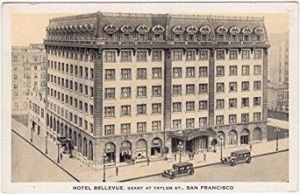
On his arrival, Rev. Charles Martin Allen stayed in Bellevue hotel in San Francisco.  

The British Secret Service (particularly, Mr. GC Denham, an Intelligence Officer of the Central Criminal Intelligence Department) perhaps had an inkling of his flight to USA. It is believed that throughout his stay in USA, Narendra Nath was shadowed by British Intelligence. The morning after he landed in San Francisco, the local newspaper carried the headline screaming: ‘Mysterious Alien reaches America. Famous Brahmin Revolutionary or Dangerous German Spy !  ?’.

At the same time, there were also other reports in the local press.

The local Press The San Francisco Examiner that called on him at Bellevue hotel, reported: “Rev C.A. Martin, a native of Pondicherry, India, is at Bellevue. The visitor who is a Roman Catholic has spent the last two years as a missionary and a student in China. He is en route to Paris where he will enter one of the Seminaries. He describes the condition in China as one of “unlimited chaos”

hotel-bellevue-in-san-francisco

Any sort of publicity was not welcome to Naren. Therefore, after a couple of days in Bellevue, he quickly moved out to meet his contacts in USA. And , there on the campus of the Stanford University, Palo Alto , he met the young Dhan Gopal Mukerji (younger brother of the revolutionary Jadugopal Mukherjee  and  a contact for Bengali revolutionaries) ; the ‘young and attractive’  Evelyn Trent (his future wife) a graduate student at Stanford University; Prof  Arthur Upham Pope a professor of Philosophy at U C Berkeley;  and Dr. David Starr Jordan(1851–1931), Chancellor and the Founding President  of the Stanford University.

[ Before we go further , let me digress for a while and talk about Dhan Gopal Mukerji , briefly:

Dhan Gopal Mukerji

Dhan Gopal Mukerji (July 6, 1890 – July 14, 1936), is regarded as the first successful Indian man of letters in the United States; and, the first Indian winner of Newbery Medal 1928. He studied at Duff School (now known as Scottish Church Collegiate School, a constituent unit of Scottish Church College, Calcutta); the University of Calcutta, in India; Tokyo University in Japan; and , at the University of California, Berkeley ; and , at the Stanford University in the U.S.

After his graduation from Stanford University in 1914, he taught for a short time at Stanford as a lecturer in the field of comparative literature.

It is said; Dhan Gopal throughout his life strove to complete the task he had set himself: to emancipate India from foreign rule; and win for her culture and philosophy the respect he felt it deserved. In America he associated with fellow exiles like M.N. Roy, to whom he is said to have suggested adopting the pseudonym ‘Manabendra‘.

In June 1918 he married Ethel Ray Dugan (aka. Patty), an Irish American , who hailed from Hazleton , Pennsylvania. She had entered Stanford University in the fall of 1914 to pursue Masters Degree in History. It is said; Mukerji and Patty made a handsome, lovely and vivacious couple. And, they were quite active in the literary circles of California. Not long after Mukerji left Stanford, the couple moved to Los Angles. Thereafter, they moved on to the East Coast of the USA, which, then, had a fairly considerable number of persons pursuing literary careers, reflecting the intellectual vibrancy of American intellectual life of the early Twentieth Century.   

The Mukerjis stayed in Boston for a while; and, then moved to New York. The couple had a son, Dhan Gopal II (Jr), their only child .He was born in New Bedford, Massachusetts, in August 1919.

*

Over the years, Mukerji published plays and collections of poetry. He wrote, with Mary Carolyn Davies, Chintamini: A Symbolic Drama (1914), adapted from a play by Girish C. Ghose; the play Layla-Majnu (1916); the poetry collections Rajani: Songs of the Night (1916) and Sandhya: Songs of Twilight (1917); and the play The Judgment of India (1922).

In the 1920s and 1930s, Mukerji published a number of works about India and Hinduism, including My Brother’s Face (1924), the novel The Secret Listeners of the East (1926), A Son of Mother India Answers, (1928), and The Path of Prayer (1934).

He wrote numerous books and stories for children, most of which describe the animal life of India and the Indian lore and beliefs. In 1923 he released his second children’s book, Jungle Beasts and Men, a series of short stories that give a realistic view of the jungle and its inhabitants. His Hari, the Jungle Lad, published in 1924, is about a young Indian boy who goes with his father on hunting expeditions and encounters wild buffalo, a panther, and other jungle creatures.

Mukerji is also well known for his autobiography Caste and Outcast, which tells the story of his life in India and America.

*

Dhan Gopal Mukerji is probably the first popular Indian writer in English. He pre-dates G.V. Desani and Mulk Raj Anand by some ten or twenty years. 

In spite of his many friends he felt deeply isolated and marginalized in America, as he could do very little, beyond raising funds and entertaining visiting celebrities, to further the cause of Indian liberty.

The restless couple – Mukerji and Patty – traveled to India in the summer of 1922. It was Mukerji’s first visit back to India in twelve years; and, he was eager to acquaint himself with the current political situation and the national movement for gaining India’s freedom. He met and discussed with number of prominent leaders and intellectuals. Politically he was a member of the Indian independence movement.

After the visit lasting several months, Mukerjis returned to New York; and, settled in Greenwich Village, where they resided for   the next two years.

After Mukerji returned from India, he dedicated himself to promoting greater awareness of his country’s many different cultures. He, among other things, tried to raise funds to support Rabindranath Tagore’s educational efforts in India.

The mid and late 1920s  were the most productive period in the lives of the Mukerjis. The years following  his return from India witnessed Mukerji as a busy and successful author and speaker on wide ranging subjects , such as literature, philosophy , history, nationalism etc. The well reputed Universities in the USA eagerly welcomed him.

This period also marked the publication of his much acclaimed book Caste and Outcaste (1923) , which is said to have marked a turning point in America’s understanding of India , its culture and ethos.

In 1926, Mukerji and Patty moved to Geneva, where they lived for about two years ; ostensibly to be near to their son who was enrolled in a Boarding School there. While at Geneva, Mukerji took keen interest in the working of the United Nations; and, also befriended many leaders and intellectuals.

After Dhan and Patty returned to the United States in 1928, they moved to a comfortable Apartment in New York’s Upper East Side. Patty was busy with her own career, working at Children’s Universities and Schools. Dhan Gopal was also busy and successful.

Despite his growing success; Mukerji was troubled by events both at home and in India; disrupting his emotional and intellectual life. He also got into a bitter and angry debate with the infamous Katherine Mayo who had published her Mother India (1927), disparaging India’ and, which Gandhi called it as a ‘drain pipe study’.

The stock market crash during the 1930s exacerbated Mukerjis problems and mounting frustration.

The choices he had made in life prevented him from ever returning permanently to India.

During 1935, Dhan Gopal suffered a severe breakdown.

 Following a six-month nervous breakdown, Mukerji committed suicide by hanging himself in his New York City apartment on 14 July of 1936.

 (Please do read the Introduction – titled Life and Death of  Dhan Gopal Mukerji- by Gordon H Chang to Caste and Outcaste by Dhan Gopal Mukerji ( Stanford University Press, 2002)

**

Stanford was also the place where Lala Har Dayal had lived and established contacts with the Anarchists. And, Dhangopal had also come under his influence for a while. And, Prof. Arthur Upham Pope who had met Har Dayal in 1911 had become an ardent advocate of India’s freedom; and, had also developed links with Indian revolutionaries.

It was there on the Campus of the Stanford University, Palo Alto in 1916 that, on the suggestion of Dhan Gopal, Narendra Nath Bhattacharya formally assumed the name Manabendra Nath Roy; and, that name stuck to him for the rest of his life.

It said; the surname Roy was chosen since it did not signify a caste –name such as Bhattacharya; and that it would also help cover his tracks as an exile. And, yet Manabendra Nath sounded almost similar to Narendra Nath.

 [MN Roy in his Memoirs said that the change in name enabled him to turn back on a futile past and look forward to a new life of achievements. And yet, he could not give up his mission of securing arms for revolution in India. It continued to haunt him even while he was in USA and Mexico. It was only after he found that Germans were really not earnest about broad-based revolution; and more particularly on his realization of the power of the ideas over arms that he finally gave up the search for arms. And, he had also lost faith in arms uprising.

Even in case he had succeeded in despatching arms to India it would have been futile. Because, by about 1917-18 the struggle for Independence had taken political turn; and, the police repression had almost driven out insurgent outfits. ]

Soon thereafter, Roy rented a house nearby and stayed there for about six months at Ramona, Palo Alto.  

While in Palo Alto, Roy found that there were some American intellectuals and academicians in the Universities who had considerable interest and sympathy for India. At the University of California, Berkley, there were at that time several such academiciansHe also gained friends among the pacifists who were opposed to imperialism. For the first time, Roy came in contact with persons free from nationalism and its obligations.

At the time that Roy was staying at Ramona, Palo Alto, he was not aware that his landlady Mrs. Noble was the mother of the Police Chief of Palo Alto. In the beginning the police did not know who Roy was; but they had begun to suspect.

Lala_Lajpat_Rai_photo_in_Young_India

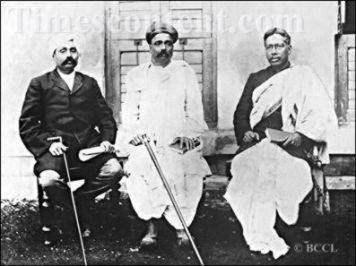
Following that alarm bell,  Roy and Evelyn Trent  together hurriedly moved to New York , in January 1917 , where they met Lala Lajpat Rai  ( 1865 -1928) * the legendary Indian freedom fighter and revolutionary, renowned as  Punjab Kesari (the Lion of Punjab) and one among the famous Lal Bal Pal trio ( Lala Lajpat Rai; Bala Gangadhar Tilak ; and  Bipin Chandra Pal ).

* [Lala Lajpat Rai lived in USA for about twelve years from 1907; and, returned to India in 1919. On his return, he actively participated in Freedom Movement and in bringing about social reforms. He founded the Servants of the People Society, which worked for social reform and for India’s freedom. And, Lala was also active in the Labour movement. He presided over the first session of the All India Trade Union Congress in 1920. He went to Geneva to attend the eighth International Labour Conference in 1926 as a representative of Indian Labour.

He was not only a good orator but was also a prolific writer. His journal Arya Gazette was devoted mainly to subjects related to the Arya Samaj.  His other magazines: Bande Mataram and The People, carried articles regarding the Freedom movement.

And, while he was leading a non-violent protest against the Simon Commission, he sustained serious injuries in a police-action on 30 October 1928. Though he recovered for a while, he eventually succumbed to the injuries; and, died three weeks later on 17 November 1928.]

Lala Lajpat Rai-Lokmanya Bal Gangadhar Tilak-Bipin Chandra Pal

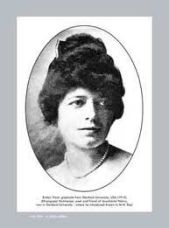
Roy’s visit to New York was significant in many ways: he fell in love with Evelyn Leonora Trent (1892 – 1970) and married her; he came in contact with many Socialists and he himself became a socialist; and it was in the New York City public library that he gained acquaintance with writings of Karl Marx and his doctrine; learnt about Marxism and began to develop a deep interest in its doctrine.

Evelyn fell in love with dark, thin tall, handsome, bright, dark eyed and very poor Indian; and, asked him to marry her. Roy and Evelyn got married in 1917 at New York.  And, they resided, for some months, at 2116, Daley Avenue.

[

Evelyn  Trent  Roy

Evelyn was a great asset to Roy, supporting and moulding him.  She later became his political collaborator; and accompanied him to Mexico and Russia. She co-authored with Roy a couple of books; and, she edited and wrote from time to time in Leftist journals under the pen-name Shanti Devi. Socialism and Marxism together with Evelyn Trent’s influence totally changed the further course of his life. Roy and Evelyn, the two worked closely for some years. And, Evelyn, along with Roy played an important role in the formation of the Mexican Communist Party; the exile communist party of India in Tashkent; and in the International Communist movement.

Roy and Evelyn lived together for about eight years before they parted ways silently in 1925.  But, strangely, Roy did not mention even a word about Evelyn in his Memoirs. Several years later; when the house of Evelyn Trent was burnt down in 1963,  in its  remains was found a photograph of Roy with an inscription on its back: To my Goddess from her  loving worshipper“]

Evelyn had, in fact, married Roy, a Hindu revolutionary and a fugitive, much against the wishes of her family. They did not accept Roy or their daughter’s marriage with him. There was therefore no support from Evelyn’s family.Her brother in particular who strongly opposed her marriage with Roy made it difficult for them to live in one place.  The Hindu groups too despised Roy for having married a foreigner and a non-Hindu. Life in New York had become very difficult because of lack of money, bad relations with Indian nationalists and constant scrutiny and survey by American and British Intelligence agencies. The Roys’ had to move from place to place to avoid harassment. After their house on Daley Avenue   , they stayed in 239 E 19th St. and later rented an apartment in 19th West 44th St. in New York. Roy had given the Ceylon Restaurant as his care of address (672, 8th Ave) to receive his mail. And, sometimes they had to stay apart to avoid police-attention. And, at the end, they had to seek shelter in the residence of Lala Lajpath Rai.

Lajpath Rai later wrote that Roy and Evelyn, in particular, had to face much hostility and humiliation both from Hindu nationalists and Evelyn family. Lajpath Rai sympathized with their plight and allowed them to live in his house. He also helped them with $ 350, out which $50 was payment to Roy for some work he did for Lajpath Rai.  He had also Evelyn as secretary for a short period  and paid her some amount as a token help.

***

It is said; at a meeting of socialists, Lala Lajpath Rai spoke eloquently about the poverty of Indian peasants. One of the audience remarked: what difference does it make if Indian farmers are exploited by native capitalists or by foreign imperialists? Rai replied, saying: it does make a difference whether one is kicked by ones brother or by a foreign robber. Roy who was present at the meeting was not impressed with Lajpat Rai’s reply.

The questions asked by the audience in these meetings made Roy wonder whether exploitation and poverty would cease in India with the attainment of independence. He realized that revolutions take place out of the necessity of the times and its urges. He came to believe that India needed a social revolution not mere national Independence. It began to dawn on him that the old methods of insurgence were not leading anywhere. Further, he began to ponder that the aim of Imperial Germany was to replace the British Imperialism in India; and, all the Imperialist powers are alike and vie with each other for dominating backward countries.  He began to doubt the scheme of armed revolution in India with German help. And, it dulled his keenness to secure arms from Germans. The socialist concept of revolution appealed to him better. He began to think of revolution as an international social necessity. And, it strengthened his resolve to go deeper into socialism.

Although Roy was in contact with some Indian revolutionaries who were in league with Germans, his stay in New York helped him in forging association with American socialists..

His gaining familiarity with socialism started with his coming into contact with many American socialists and other radicals.  He took keen interest in the study of socialism; and came to accept it wholeheartedly. While in New York, Roy wrote an essay ‘A Critique of Pacifism’ which basically said that colonization was the cause of the war and the liberation of the subject peoples was the way to durable peace. He, among other things, analyzed the economic causes of war. Roy’s essay appealed to American Radicals; and it paved his way to into their organization

 Roy did not suddenly leap on to socialism. He went through several phases of experiences. Roy, in fact, began his study of socialism, with the intention of combating it; but, at the end, he discovered that he had himself become a socialist. The change came about gradually and painfully.

In a way, Roy continued to be revolutionary even after conversion to Socialism. The revolution he now came to envision was the re-structuring of the Indian society and ushering in a new social order. It went beyond overthrowing British Rule in India. The social revolution, in his vision, involved all segments of the society, not merely a band of some inspired brave fighters.

The transition from nationalism to socialism was a big leap. It marked his departure from the ideals that he cherished in the past, inspired mostly by the writings of Bankimchandra. Yet, it could be said that his nationalist phase – romantic, adventurous, idealistic and constricted – did not go in vain. It later helped Roy in a gaining a perspective of a near-ideal political order that was away from nationalism, dictatorship and the sort of parliamentary democracy that was then in practice. 

The socialist way of thinking helped Roy in getting over his outlook as a nationalist. Communism, to him, seemed to offer effective means for achieving the goals of Socialism. He developed an interest in the works of Marx and his doctrine through his studies in New York Public Library. However, at this time, his conversion to communism was far from complete. That had to wait till his indoctrination by Michel Borodin in Mexico.

His transformation into a Communist under the tutorship of Borodin was rather quick, though, initially, he had some difficulty in accepting the materialism of Marx. It was only after Borodin explained the intricacies of Hegelian dialectics as the key to Maxims that he could accept the doctrine.

***

By about mid February 1917, America was seriously gearing up to join the war against Germany. The American and British intelligence as also the local police in several parts of USA (particularly in California, New York and Chicago) intensified their vigil against pro-German activities. On April 4, 1917, the U.S. Senate voted in support of the measure to declare war on Germany. The House concurred two days later. On April 6, 1917, the Congress declared war against Germany.

After America’s entry into War, any type of pro-German activity or links with Germans became virtually impossible. Roy thereafter went underground to escape arrest and a possible deportation to India. It was during this period that Roy re-wrote his famous easy; ’ An open letter to His Excellency Woodrow Wilson, President of the United States of America: The way to durable peace’. This letter was afterwards published on April 17, 1917 when Roy and Evelyn had already crossed over to Laredo on Mexican side of the border. 

 [The letter was later translated into Spanish and published in Mexico as El Camina Para La Paz Duradera del Mundo with insertion of extra passages criticizing the Monroe Doctrine which made Mexico a virtual colony of the USA.]

In his  letter to President  Woodrow Wilson , Roy had  compared Indian revolutionaries to the American revolutionaries of the eighteenth century ; and in doing so, tried to justify the seeking of German assistance by certain, mainly militant, section of the Indian nationalists. He compared their efforts to that of La Fayette who secured French help in the American Revolutionary War. Roy pleaded that whatever efforts that Indian revolutionaries made either through Germans or others was for securing independence of their Motherland from foreign rule; and, it certainly was not against the interests of the American nation, in any manner.

The British Intelligence and the American police were keeping a watch on Roy’s movements.  The net was closing in over USA -Pro German revolutionaries and also on the revolutionaries of Indian origin. They were systematically were rounded up.  Things came to a head when the British spies broke into Roy’s room while he was away and seized some letters and papers.  On the next day that is on 7 March 1917 Roy was eventually arrested.  Roy, at that time, was on the Campus of the Columbia University to where he had gone after attending a meeting addressed by Lala Lajpath Rai.

Roy had to spend a few hours of the night (7 Mar 1917) before he was released in the early hours of the morning and asked to appear before the Grand Jury in the Town Hall, a few hours later. The Grand Jury indicted him for violating the immigration Laws of the USA and pending trial released him on bail on his personal surety.

Roy however had no intention of returning to the trial. Roy left the court determined not to return. He was desperate to escape attention and arrest. He knew that he would be taken to San Francisco and tried there as a conspirator. But, his worse fear was deportation to India for standing trial which would result in long imprisonment or death sentence for the many acts of terror he had committed in India until 1915.

Roy had to choose between Canada and Mexico. It was then, prompted by Evelyn, that he seriously considered escaping to Mexico. He had heard from his socialist friends about Mexico; the social revolution brewing there; and establishment of socialism in one its parts Yucatan. Mexico, to him, appeared as the Land of Promise.

Evelyn and Roy soon travelled by train from New York to San Francisco, a distance of about 3,300-miles. And, during 1917 the journey might have taken nearly a week’s time.  

Prof._David_Starr_Jordan

Evelyn Trent then approached her teacher and friend, Dr. David Starr Jordan, President of the Stanford University, at Palo Alto, for help. Dr, Jordan was prepared to make it easy for Roys to find a refuge in the neighboring Mexico; and, he readily gave them a letter of introduction to the Governor of the  State of Yucatan , General Salvador Alvarado  , a powerful person in Mexican politics . That indeed was an immense, immeasurable help. Roy’s biographers wonder, there is no reason why Dr, Jordan , a President of an University,  would have anything to do with a dangerous Indian fugitive who had violated American laws and was still at large evading both British and American police , and helped him to escape , had  he  not been impressed with young Roy and his mission.

It is likely that Dr. Jordan was primarily trying to rescue his favorite student from a bad situation that was getting worse.

 The Mexican border was just about thousand miles away from San Francisco; and was not closely watched. Roy and Evelyn gave a slip to the police; and took the train from San Francisco to Laredo, Texas, a distance of about 1,800 miles. Evelyn Trent and M N Roy crossed the border at Laredo (one of the oldest crossing points along the U.S.-Mexico border) and entered Mexico by crossing over the bridge across the Rio Grande and reached the town of Nuevo Laredo in the Mexican state of Tamaulipas, in the last week of March 1917 (distance of about 13 Kms across the border).  They entered Mexico under their assumed names of Senorita and Senora Evelyn and Manuel Mendez. From Nuevo Laredo, they travelled long (about 1,200 Kms) to reach Mexico City.

***

The ten months that Roy spent in America were very tense and hurried. He also had to face poverty and suffer contempt and distrust from the Hindu nationalist groups in USA. Roy and Evelyn had also to endure harassment from Evelyn’s brother. Further, they were closely watched by the British and American Intelligence. The couple grew more anxious and tense by each passing day.  They realized that they no longer were safe in America. That fear was confirmed after Roy was arrested along with several other Indian freedom fighters.

Roy later said that his stay in USA was too brief and too hurried to react to that country.

But, his stay in America had a brighter side too. It was here that he acquired a new identity that stayed with him for the rest of his life. He gained good friends who helped him in his distress and even rescued him from utmost danger. He transformed from a diehard nationalist to a socialist; and also gained familiarity with Communist doctrine, in which he later became an acknowledge authority. It was in America that Roy realized the power of ideas over that of arms. It transformed him into a catalyst for social change and political re-alignment. That was a huge change, because Roy had come to America basically to secure arms and money from Germany to fight against the British Rule in India.

And, above all, the biggest good that happened to Roy in America was falling in love and marrying Evelyn Leonora Trent, bright, intelligent and full of love. Evelyn became Roy’s trusted friend, ardent supporter, political collaborator and a guide.  She accompanied Roy to Mexico and Russia; and was of great help to him in his political and literary work. The collaboration continued until they separated in 1925. Socialism and Marxism together with Evelyn Trent were the greatest influences in Roy’s life; they together totally changed the course of his life and the ways of his thinking.

***

However, an unfortunate victim of being Roy’s friend while he was in America was Prof Arthur Upham Pope, a professor of Philosophy at UC Berkley. Roy and Prof. Pope became friends while Roy was in Palo Alto. And, they continued to be friends even after Roy’s escape to Mexico.  Prof. Pope remained his main contact in USA.

Prof. Pope had to pay a heavy price for his sympathy and support to MN Roy. After  the Hindu-German-Conspiracy case  was instituted in San Francisco , Prof Pope was investigated ;  and , he came under severe criticism for his relation with the ‘ a Hindu revolutionary, a ruthless man steeped in crime, and one of the most violent revolutionaries that India had ever produced’. The prosecution Attorney for the Northern California District wondered why a professor in a prestigious University should have had connection of any sort with such a person.

Prof. Pope was interrogated during the San Francisco trial. He was pressurized to resign from his Professorship in UC Berkley and later from his teaching job in Amherst College. He had also to give up his next job in the War Department because of his connections to MN Roy who was in league with the enemies, the Germans and Japanese.

divider1

Before ending this part, let me say a few words about the The Hindu–German Conspiracy (also known as the Indo German plot or US Vs Bopp, Ram Chandra et al) – described, at that time, as the longest and most expensive trial ever held in the United States.

As said earlier, following America’s entry into the War, all types of activities that had links with Germany came under severe scrutiny. The British Intelligence was also hugely interested in blocking anti British activities launched from America and such other places. They were also keen on arresting and deporting those terrorists who had escaped from India and taken shelter in America.

**

The Hindu–German Conspiracy  was a series of plans formulated between 1914 and 1917 to initiate a rebellion against the British Raj during World War I. That was considered an opportune time to attack the British rule in India. It was planned as a multi-pronged attack centered on the nationalist rebel groups in India. The other Indian groups based outside India that were involved in the plan were mainly the Ghadar Party in the California region of USA and the Indian independence committee in Germany. The attack plan which came to be labeled as conspiracy had the support of foreign forces such as the Irish Republican movement, the German Foreign Office, and the German Consulate in San Francisco. The Ottoman Turkey was also involved to some extent.

The ambition of the plot was to foment unrest and trigger a Pan-Indian mutiny in the British Indian Army from Punjab to Singapore . It was planned to be executed in February 1915 with the hope of overthrowing the British Raj from the Indian sub-continent. 

The mutiny  that was planned in February was thwarted when British intelligence infiltrated the Ghadar movement; and, arrested key figures. Mutinies in smaller units and garrisons within India were also crushed.

The other segments of the plot were also busted. Such failed plots included the 1915 Singapore Mutiny ; the Jugantar-German plot led by Bagha Jatin; the German mission to Kabul; and,  the mutiny of the Connaught Rangers in India. The efforts to subvert the British Indian Army in the Middle-Eastern theatre of World War I did not also come through.

The British intelligence having an efficient and a wide network spread over its vast empire successfully thwarted several plots and sub-plots of the Indo-Irish-German conspiracy. It also had the support of the American intelligence agencies which arrested key figures in the aftermath of the Annie Larsen affair in 1917.

The criminal cases filed against the conspirators were tried at Lahore in India and in San Francisco in USA as the Hindu German Conspiracy Trial.

The trial at San Francisco was brought mainly due to pressure from the British Government. It presented over two hundred witnesses brought from several parts of the world. It is said; the trial cost the British Indian Government over $ 2.5 Million. The US government had also to incur substantial expenditure of $ 450,000.

**

[The trial which lasted 155 days, was a media spectacle; and, was covered widely in Washington Post, The San Francisco Examiner and other papers. Even after the trial was over the Case continued to be discussed in America: The Hindu Conspiracy, 1914-1917,” The Pacific Historical Review 17 (1948): 308-09; Karl Hoover, “The Hindu Conspiracy in California, 1913-1918,” German Studies Review 8 (1985): 258-59. Please also click here.

On the Indian side, Lajpat Rai, N.S. Hardiker, Mrinalini Sen, and Ananda Coomaraswamy, later wrote articles in the monthly journal titled Young India.

On December 5, 1917, Marshall Woodworth an Attorney sent his poem (Weaving the Noose) on the trial to John Preston, the lead prosecutor in the case:

It looks as if the noose were tied
The sword of Justice at their side

All that’s to come will knit the knot
And bring to light a devilish plot

As fear can neither fight nor fly
What they’ve contrived is doomed to die

When whispering conspirators are noosed
The days of vengeance are unloosed

Now some are seen to look behind
And not a few will change their mind

The Bard of Avon truly said,– where death doth dwell,
A perjured refuge is a living hell]

**

 In the trial which commenced in the District Court , Northern District ,  California in San Francisco on November 12, 1917, charges were framed against one hundred and six defendants (including thirty-six Indians) , German Consulate officials besides American businessmen and professionals. The Note presented by John Preston , the lead prosecutor , Northern District Court of California, First Division cited three basic violations of the neutrality law    : providing and preparing means for a military expedition against the state or territory or the colony with whom the United States was at peace; twenty-eight counts of conspiracy to violate neutrality law; and, violations of the military expedition law prohibiting enlistment to fight against a foreign army with which the United States is at peace.

The Indian Nationalists – centered in San Francisco, Chicago and New York, in contact with each other and with German Consul and agents – were accused of taking “advantage of American neutrality to plot on American soil against the allies” at “the expense of the laws and hospitality of the United States. The charge also mentioned that in a nationwide conspiracy financed by the Kaiser and promulgated through the Berlin Foreign Office to ferment rebellion  and revolt in India  and to aid Germany in the prosecution of war by compelling Great Britain to divert essential troops from Europe in order to put don  insurgence elsewhere.

MN Roy was also listed as one of the co-accused. The charges framed against him included his attempts to procure  arms through SS Maverick to fight British in India ; his illegal entry into San Francisco under a false name , his contacts with the German agencies and Hindu conspirators and so on.  The charges against Roy also mentioned that he had attempted to flee to Germany by the submarine Deutschland to obtain a big deal in arms with a South China party. The scheme fell through when Federal authorities took action against conspirators in New York.

 But, by the time the trial commenced, MN Roy had fled USA and slipped into Mexico. Nevertheless, Roy was indicted on the charges framed against him.

The accused Indians presented their position in terms of the ideals of the American Revolution. The defence attorneys attempted to argue in favour of the accuseds’ beliefs by placing them squarely within American ideals; and quoted from liberty appeals in the writings of by Patrick Henry, George Washington, Abraham Lincoln, and President Woodrow Wilson.

On the last day of the trial on 23 April, 1918, the court room witnessed a bizarre scene. Ram Singh, one of the accused belonging to a faction of the Ghadar Party shot dead another co-accused Ram Chandra belonging to the rival faction of the Ghadar Party on the grouse that Ram Chandra was misusing the Party funds and diverting the funds to his own use. Ram Singh too was promptly shot and killed by the US Federal Marshal present in the court room.

This unfortunate incident contributed to marring the defence position. A week later, the judge found the defendants guilty of violating the neutrality of the United States. Of the twenty-nine Indians found guilty, there were “students and revolutionists, several of them highly educated”. They were sentenced to serve from twenty-two months to sixty days.

The Presiding District Judge Rudkin, while announcing the verdict against the convicts observed: if your propaganda continues after you are released you will doubtless be deported and disposed of the hated British Government, as you term it.

The British felt that the sentences were absurdly light; and were outraged. The Calcutta High Court thereafter ruled that the San Francisco defendants could still be tried under the Indian Penal Code on their return to India.

80px-Ghadar_di_gunj


Continued In

 Next Part

Sources and References

1, M N Roy by V B Karnik, National Book Trust, 1980

  1. M N Roy, A Political Biography by Samaren Roy
  2. Haj to Utopia: by Maia Ramnath
  3. Trials that Changed History: From Socrates to Saddam Hussein by M.S. Gill
  4. Political Philosophy of M.N. Roy by Dr. Prakash Chandra, Sarup & Sons, 1992
  5. Numerous pages from Wikipedia
  6. All pictures are from Internet
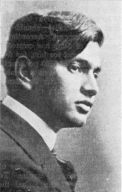


2 Comments

Posted by on January 13, 2016 in M N Roy


Tags: , , , , , , , , , , , , , , , ,

MN Roy: brief outline of life-events and thoughts- Part 03

MN Roy: brief outline of life-events and thoughts- Part 03

Continued From Part 02

In search of the Golden Fleece

Fleece of Jason

As the tension between England and Japan mounted following the dispute over the Korean Peninsula in 1910; and later as the war clouds were gathering  over Europe by 1913, a new fervor seized the revolutionary outfits operating within India as also the groups  of exiles striving from outside India , particularly in Europe and California (USA) . And, the insurgency within India took on a new dimension and a different orientation.  These developments led all the groups of revolutionaries to look towards Germany and Japan with hopes of securing their help and support for fighting the British, the common enemy of all the three.

One of the earliest attempts made to secure Japan’s support to fight the British in India was in May 1910 by Virendranath Chattopadhyaya (brother of Sarojani Naidu) and his associates. The response from Japan was rather tepid. With the worsening political instability, the apprehensions of an impending war began to look more ominous. And, eventually with the assassination of Archduke Ferdinand of Austria on 28 June 1914 a war did break out. The Great War, which later was named the World War I, struck the globe on 28 July 1914 and spread like wild fire; and, it did not subside until 11 November 1918.

[As the war began to engulf more and more countries, term “First World War” coined by the German biologist and philosopher Ernst Haeckel, first came into use by September 1914. Ernst Haeckel claimed that “there is no doubt that the course and character of the feared ‘European War’ … will become the First World War in the full sense of the word.]

As Germany invaded neutral Belgium and Luxembourg, before moving towards France, the United Kingdom declared war on Germany.  As Germany and Britain came into direct conflict,   Virendranath Chattopadhyaya along with his friend Dr. Abinash Bhattacharya  (who was said to be close to Kaiser’s inner circle) and other Indian nationalist formed  , at Berlin, in September in 1914 “German Friends of India Association”. The group soon thereafter met the brother of the belligerent German Emperor William II. The Group (representing India) and the Germans signed a treaty agreeing on German help to oust the British from India. With the help of Baron Max von Oppenheim, who was an expert on Middle Eastern affairs in the German Foreign Office, Virendranath drafted further plans; and, informed Indian students in thirty-one German universities and the rebel groups operating from France  about the Association’s future plans.

Following that treaty, by about the end of September 1914, the German Ambassador in USA Von Bernstorff ordered   Gen. Von Papen, his Military Attaché, to arrange for steamers, and purchase arms and ammunition, to be delivered on the Eastern Coast of India. The news of these developments was conveyed to Jatin Mukherjee (Bagha Jatin) the leader of the insurgent movement in India.

Even much before these developments took place; Jatin Mukherjee accompanied by Narendra Nath had met Wilhelm, the German Crown Prince during his visit to Calcutta in 1912. The Indian group had obtained from the Crown Prince an assurance that arms and ammunition would be supplied to them to fight the British Rule in India.

Later, on receipt of the message from Virendranath in Sept 1914, Jatin Mukherjee began re-organizing his group; and, asked Rash Behari Bose  (another prominent Jugantar member  and an insurgent leader operating underground in UP and Punjab ) to expedite preparations for the an  armed uprising.

Jatin Mukherjee, Narendra Nath, the Germans in Berlin and the German Counsel in Calcutta were in contact; and, drew plans, which sounded fantastic.

The initial plan was to use German ships interned in a port at the northern tip of Sumatra, to storm the Andaman Islands and free the prisoners there. The escaped prisoners from the internment camp were to be formed into a Liberation Army. The Army was to be moved by big armored vessels (as many big German vessels usually were) ready for warfare. The warships were to be loaded with several hundred guns, rifles and other small arms with an adequate supply of ammunition. These arms were to be procured through Chinese smugglers who would get then on board the ships….The Liberation Army was to land on the Orissa coast.

As said , the plan looked great; but , it just did not work,  At the last minute, money for  purchase of arms from the Chinese and for the conduct of the operation failed to materialize and the German Consul General “mysteriously disappeared on the day when he was to issue orders for the execution of the plan.”

Then, again, by the end of 1914, the Germans asked the Bengal revolutionaries to send their reprehension to Batavia in the Dutch East Indies (now known as Jakarta in Indonesia) identified as suitable neutral place for delivery of arms and money. Batavia lies on the north coast of Java, in a sheltered bay, over a flat land consisting of marshland and hills, and crisscrossed with canals.  

Batavia-

Narendra Nath was chosen by Jatin Mukherjee to negotiate the arms deal with Germans. In April 1915, Narendra Nath left for Batavia under the false name of Charles A Martin a representee of M/S. Harry & Sons (a fake company set up under Harikumar Chakravarthy, a close friend on Naren). This was Narendra Nath’s first trip abroad.

Through the German Consul at Java, Naren met Theodore Helfferich, brother of Karl Helfferich (German politician, economist, and financier) who assured him that a cargo of arms and ammunition was already on its way, “to assist the Indians in a revolution.”   It was agreed that a cargo ship, an oil steamer ,  S.S. Maverick would deliver 30,000 rifles with 400 rounds of ammunition of for each, at Rai Mangal, a remote island in the wilderness of Sunderbans   in South Bengal. In addition a sum of Rs. Two lakhs was promised. Martin (Naren) wired to Harry & Sons “Sugar business helpful” . And again, he messaged:” Business good. Sugar contracted shipment after two weeks .Anxious for affairs there”.

Narendra Nath, after spending about two months in Java returned home with some money; and to make arrangements for receiving and unloading arms , for dispatching them to different parts of India. He did make the necessary arrangements. Between June and August 1915, Helfferich wired a total of Rs. 43, 000 to M/S. Harry & Sons of Calcutta. Naren had returned to India by the middle of June 1915; and was waiting for the shipment  Maverick which was said to reach the estuary of the Rai Mangal in Khulna District by the end of June 1915.

But, the promised cargo of arms failed to show up.  Naren thereafter ruefully remarked: the coveted cargo of Golden Fleece was after all a wild goose chase’.

Thereafter, a new plan was drawn up by the Berlin committee, according to which the German arms were to be delivered at two or three places like Hatia on Chittagong coast, Rai-mangal in the Sunderbans and Balasore in Orissa. The plan included organizing guerrilla forces to start uprising in several parts of the country, backed by a mutiny among the Indian Armed Force.

Naren again had to go to Java to work out the details of the arms delivery. Before going out on his second mission, in August 1915, Naren met Jatin Mukherjee who then was hiding is a safe place at Mohandia, near Balasore in Orissa; and, promised Jatin not to return this time without the arms. Jatin, it is said, told Naren in his farewell meeting “Come back with or without arms”. That, sadly, turned out to be Naren’s last meeting with Jatin.

Unfortunately the whole plot got leaked, through a Czech counter-revolutionary E. V. Voska who was in touch with his network of minority -Czech patriots in USA engaged in espionage and spying on the activity of the Germans. The British Intelligence came to know of the plot through their counterparts in USA.  The German plot thus was busted.

[Emanuel Viktor Voska, (1875-1960) of Czechoslovakia was a triple secret agent based in USA during the periods of the First and the Second World Wars.  When the First War broke out in 1914, Voska  was running the intelligence network of minority Czech patriots. And,  with the advice of President Woodrow Wilson, Voska took up the task of monitoring the anti-British espionage activities of the Germans and Austrian diplomats. (He later narrated the activities of his group in his book Spy and Counter-Spy published from London in 1941)

Soon after Voska got wind, through his pro-British, pro-American and anti-German   network operating in India, of the German plans to supply arms and to fund the revolutionary group headed by Bagha Jatin, he passed on the information to T G Masaryk, the Czech leader and a friend of President Woodrow Wilson (Masaryk – 1850 to 1937 – later in November 1918 became the first President of Czechoslovakia). Masaryk rushed the intelligence he gained to President Wilson, who alerted the British. And, eventually the Bagha-German plot was busted by the British police in India.

Thus a distant Czech spy-master Voska is held indirectly responsible for the fall of Bagha Jatin and for the end of militant revolutionary movement in India. Voska is also credited with the exposure of the Hindu–German Conspiracy; and, similarly for smashing the German efforts to supply arms to the Irish nationalist groups, both in Ireland and in USA. Voska’s network is also said to have uncovered spy activities by the German Ambassador in Washington and caught an American journalist doubling as a German agent .  Voska also helped in frustrating the efforts of German agent Franz von Rintelento restore Victoriano Huertato the Mexican presidency during World War I.

Voska-portrait-square

Thus, E V Voska had a highly successful career as a spymaster; but, his later years were miserable.

Voska returned to his country after the end of the Second War. And, soon thereafter in 1948, the Communists staged a coup and took over Czechoslovakia. Voska was arrested and put on trial for treason. Even though he was now an old man of 75, he fought hard against the charges, arguing that being then an American citizen, nothing he might have done could have been considered treasonous. Voska spent the next ten years in prison. Some satisfaction did come to him during show trials, when a number of the communist leaders who had persecuted Voska were themselves tried and executed for treason. What clinched their guilt were the bunch of  old letters found in Voska’s files showing that they had met with him to discuss anti-Franco operations in Spain.

In 1960, the communists finally released the 85-year-old Voska; and,  he died, a few days later, as a free man. ]

Balasore.10

As soon as the British got the tip, the whole of the Ganges Delta and the all the sea approaches on the eastern coast from the Noakhali–Chittagong side up to Odisha were sealed off. And, New Emporium a branch of the Harry & Sons in Balasore was raided. The raid yielded the clue to Jatin’s hiding place at Kaptipada a nearby village. The British forces, in a military action, stormed Jatin’s hiding place.  The prolonged gun battle between the Police and the revolutionary fighters ended in “unrecorded number of casualties on the Government side and on the revolutionary side”. Jatin and his close associate Jatish were seriously wounded and captured. The others – Manoranjan Sengupta and Niren were also captured after their ammunition ran out. Bagha Jatin died in Balasore hospital on 10 September 1915. 

BaghaJatin12

 [In an article titled Jatin Mukherjee (Independent India, 27 Feb 1949) MN Roy talked about Jatin with great affection; and, described his meeting with Jatin as the turning point in life. He wrote: ‘At that time, I did not know what the attraction was. Later on, I realized, it was his personality. Since then, I have had the privilege of meeting outstanding personalities of our time. These were great men. Jatinda was a good man; and, I still have to find a better… Good men are seldom given a place in the galaxy of the great.  It will continue to be so until goodness is recognised as the measure of genuine greatness”. “I admired Jatinda because he personified, perhaps without himself knowing it, the best of mankind” .. “Jatinda’s death would be avenged if I worked for the ideal of establishing a social order in which the best in man could be manifest”.

Jatin was a true revolutionary; he expressed his motto in simple words: “Amra morbo, jagat jagbe“- “We shall die to awaken the nation”. Even his adversaries respected his courage and valor.  It is said; Charles Tegart a British Police Officer involved in hunting down Jatin remarked: “Had Jatin Mukherjee been an Englishman, the English would have erected his statue at Trafalgar Square, by the side of Nelson’s”.  During a conversation with Charles Tegart on 25 June 1925, Gandhi qualified Jatin Mukherjee as “a divine man.” Interestingly, Ross Hedvicek an author of Chez origin remarked: had he not been killed in that encounter , the Father of Indian Nation would have been Bagha Jatin and not Gandhi”.

The 10 September 2015 marked the Centenary of the   martyrdom of Jatindra Nath Mukherjee, described as one of India’s most fearless sons and the pride of every Bengali.  It was celebrated both in Bengal and in Bangladesh.]

***

Naren left for Batavia in August 1915 to make fresh arrangements; this time under the name of Hari Sing (Little did he know then that he would not see his homeland again for 16 years) .

The alternate plan , this time , was to bring arms into India  from China by overland , through the North-Eastern Frontiers of Assam (NEFA) , where the local rebellious independent tribe Abors had risen in revolt against the British. The plan, among other things, was also to help the armed revolt of Abors.

This time, Naren found to his surprise, the German diplomats in Java were not very enthusiastic; they were not even cooperating. The German Consul complained that Indians lacked discipline and organization; and, were bad at keeping secrets. He also said that Germans had no men to spare ; and were not also willing to risk their vessels. Naren had three or four meetings with the German Consul but found he was making no impression or progress.

He made another attempt to secure arms from Indonesia; but, the Germans were reluctant to fund the venture.

Naren was disappointed and disgusted. But, he had resolved not to return to India without arms. It was while he, in desperation, was wandering aimlessly in, Manila, Philippines that he learnt about the death of his Mentor and ideal Jatin Mukherjee in a shootout at Balasore. His immediate resolve was that ‘Jatin’s death must be avenged’.

He was now more determined than ever to secure arms and funds to carry on armed struggle against the British Rule in India. For about one and a half years he wandered about in the Far East, pursuing his mission by contacting various groups of revolutionaries in Malaysia, Indonesia, Indo-China, the Philippines, Korea and Japan.

Naren went to Japan as Mr White; and in Tokyo ( during the middle of December 1915 ) he met Rashbehari Bose (25 May 1886 – 21 January 1945) his co-revolutionary of the Jugantar days. Rashbehari Bose was then on the ‘run’, hunted by British Police, following his failed attempt on the life of Lord Hardinge while he was returning from the Delhi Darbar of King George V on 12 December 1912.  Rash Behari managed to escape British intelligence and reached Japan in 1915.  There, in Japan, Bose hiding from the British Police, found shelter with various Pan-Asian groups.

Rashbehari Bose advised Naren to defer the armed struggle for Indian independence till such time as Japan was ready to take over the Asian leadership. Rashbehari Bose, however, put Naren in touch with other Asian revolutionaries taking shelter in Japan. It was then that Naren met the exiled Chinese President Dr Sun Yat-Sen   (12 November 1866 – 12 March 1925) who had escaped to Japan following the failure of the July 1913 uprising in Nanking.

When Naren approached San Yat-Sen for help in his task of organizing anti-British revolution in India, he pleaded  his inability to get involved , directly  , in such ventures, mainly because of the British control of Hong Kong,  which then was  Sun’s base of operations in South China.

By then, that is by the end of 1915, an armed revolt against Yuan Shi-Kai’s plan to restore monarchy in China was brewing in the two Chinese provinces of Yunan and Szechuan, bordering Burma and India. The rebels had more than adequate supply of arms. Naren requested San Yat-Sen whether he could help in diverting some of those arms to Indian revolutionaries across the border. Sun Yat Sen approved the idea; and suggested that Naren could approach the German Ambassador in Peking for a sum of Five Million Dollars for purchase of arms from the Chinese rebels. Sun Yat Sen also said he would first send his emissary to Yunan to brief the rebel groups; and Naren could later follow up that with the German Ambassador.

As suggested by Sun Yat-Sen, Naren (Mr. White) reached Hankow (now called as Hankou), early in January 1916, to meet Admiral Paul Von Hintz, the German Ambassador in China. The Ambassador agreed that from the military point of view Naren’s plans was worth trying. But, he rued that the amount involved was too huge; and he had no authority to sanction such sums of expenditure. He, however, suggested that Naren could submit his plans for consideration of the German Supreme War Authority and the General Staff, in Berlin.

 It is, however said, the real reason was that the German Ambassador suspected Dr. Sun of pro-British sympathies; and was not prepared to   trust Narendranath with such a huge loan.

It was decided that Narendranath  should go to Germany with Prince Hatzfield by the submarine, Deutschland; and,  try to persuade the German Government there to sanction the necessary amount for this project. Unfortunately, these negotiations took much time;  Naren was arrested shortly thereafter ; and, could not go to Germany .

[MN Roy later wrote that the Germans never meant to give us any substantial help; and the whole German plan of giving arms to Indian revolutionaries was a mere hoax, a veritable swindle.]

**

Since Naren was determined to take his plan for German funding to the German Ambassador in the United States, before heading to Germany itself,  the German embassy  in Peking put him   as a stowaway aboard an American ship with a German crew, bound for San Francisco. It also provided him with a fake French – Indian Passport.

The understanding was that the offer of German arms would be routed through the resident Indians in California, which is located midway between Japan and Europe (The Axis).  Narendra Nath, thus, traveled to America primarily to negotiate an Arms deal and to secure funds from Germany to fuel the Indian revolutionaries.

On the way, the British raided vessel in international waters; but were unable to track down Naren who was hidden in a secret compartment. When the ship next landed at Kobe, Japan, Naren stealthily disembarked and escaped into Japan.

And there in Japan, with the help of Japanese Intelligence, he obtained an American Visa on the ground that he was travelling to Paris by way of USA. He used a fake French – Indian passport given to him by the Germans in China. He (as Martin Charles Allen) boarded a ship named Nippon Maru that set sail to San Francisco, California from Yokohama (Japan) in Tokyo Bay, South of Tokyo, on 25 May 1916.

After series of disappointments, failures and aimless wandering as a fugitive over the whole of South East for about eighteen months, Narendra Nath set sail to USA in pursuit of his  incomplete mission to secure German arms to fight the British in India.

As Roy had earlier remarked;   the coveted cargo of Golden Fleece was after all a wild goose chase.  And, it continued to elude.

Nippon_Maru_1898


Continued

In

Next Part

Sources and References

 1, M N Roy by V B Karnik, National Book Trust, 1980

2.M N Roy, A Political Biography by Samaren Roy

3.Political Philosophy of M.N. Roy by Dr. Prakash Chandra, Sarup & Sons, 1992

4. Numerous pages from Wikipedia


3 Comments

Posted by on January 12, 2016 in M N Roy


Tags: , , , , , , , , ,

MN Roy: brief outline of life-events and thoughts- Part 02

MN Roy: brief outline of life-events and thoughts- Part 02

Continued From Part 01

Early years

The person whom we know and refer to as MN Roy or Manabendra Nath Roy was born as Narendra Nath Bhattacharya  on 21 March 1887 at  Arbella or Urbalia, then a village not far from Calcutta, in the Eastern part of  24 Parganas,  Bengal.

He was the son of Dinabandhu Bhattacharya and Basantha Kumari Devi. The couple had eight children; and, Narendra was the fourth. The Bhattacharya-s were traditional Shaktha Brahmins following the hereditary profession of priests at the temple of Kseputeswari Devi located in Ksheput of Midnapore District.

Narendranath’s mother , Basantha Kumari Devi, was the niece of Dwarakanath Vidhubhushan (1820 – 1886), a Sanskrit scholar, who was  the editor as also the publisher of the trend-setting  Bengali-weekly-newspaper Somprakash . He was an associate of the legendary social reformer Iswar Chandra Vidyasagar. Dwarakanath Vidhubhushan was active in promoting women’s education.  And, he established an English school called Harinavi Anglo-Sanskrit School , sometime before 1866 , in his hometown, in South 24 Pargana .

Harinavi AS School

Another uncle of Basantha Kumari Devi was Pandit Shivnath Shastri, a rebellious scholar who tore off his sacred-thread to join the reformist Brahmo Samaj movement. He , along with Rajnarain Basu (grandfather of Aurobindo Ghosh), made one of the early attempts at forming a secret revolutionary group to fight against the British in Bengal. In 1861, they established an organization named Jatiya Gourab Sancharini Sabha for promoting ‘the sense of nationalism and self-reliance among the educated youth of Bengal’. Rajnarain Basu in his pamphlet, Anusthan Patra outlined the aims and objects of the organization. And, that led to establishment of Jatiya Mela in 1861.

It is said; Shivnath Shastri and Rajnarain Basu’s Anustan Patra provided the inspiration for Nabagopal Mitra (1840–1894) to launch Jatiya Sabha an organization dedicated for the social and cultural upliftment of Bengali youth. Later, the Jatiya Mela and  the Jatiya Sabha came together, (renamed as Hindu Mela, in 1867), in order ‘to promote the national feeling, sense of patriotism, and a spirit of self-help among the Hindus; promotion of vernacular education and physical health’.  It is said; the Hindu Mela had also its roots in the twin ideals of promoting a distinctive identity and self-reliance articulated in poet Isvarachandra Gupta’s (1812 – 1859)  magazine  Sambad Prabhakar ; and,  his Bengali poetry composed in medieval style  carrying multiple meanings.

Shivnath Shastri, naturally,  exerted considerable influence on the younger members of Basantha Kumari Devi’s family.

Dinabandhu Bhattacharya, because of the family-circumstances, had to give up the priestly profession and take up the job of Sanskrit teacher at an English school in Arbella. It was in Arbella that Narendra Nath was born in 1887. The family  then moved on to Chingripota during 1898 . And thereafter , it moved on to the nearby village Kodalia in Hooghly District during 1899. Dinabandhu Bhattacharya died in 1905 when Narendra Nath was about eighteen years of age.  

Narendra Nath had his early schooling in Arbella where he attended the Jnan Vikasini School and the Harinavi Anglo-Sanskrit School. At home, he was tutored in Sanskrit by his father. It is said; Narendra Nath, after his schooling (when he about fourteen years), moved to Calcutta where he joined the newly established National University (started by Aurobindo Ghosh).

Calcutta National Collage bowbazar street 1906 Sri Aurobindo 1908

After passing   the Entrance Examination from National University, he  is said to have studied Engineering and Chemistry in the Bengal Technical Institute. (But, the precise details , dates  and veracity in this regard are not confirmed).

[ On 11th March, 1906, the National Council of Education, Bengal, or Jatiyo Siksha Parishad was founded to provide a platform for ‘a system of education – literary, scientific & technical – on national lines. 

The institution started to work from 15th August, 1906 in a rented house on 191/1, Bowbazar Street with Sri Aurobindo Ghosh as Principal and Sri Satish Chandra Mukherjee as an Hon. Superintendent.

It is said; the Society for Promotion of Technical Education in Bengal, was later  set up at the instance of Sri  Taroknath Palit under patronage of Maharaja Manindra Chandra Nandy, Bhupendra Nath Bose, Nilratan Sircar and others who laid stress on the technical education alone. Under its management the Bengal Technical Institute was establish on July 25, 1906 with the objectives of spreading technical education among the masses. In 1910 the two societies merged.]

Calcutta Loll Bazaar and Portuguese Chapel - 1826

Before we move on further, let us take a look at the times when Narendra Nath was growing up.

The years after the failed upraise of 1857 plunged the whole of North India and Bengal in particular into ferment or a vortex. There was confusion, anarchy and oppression all around. The British, in their anger, went about ruthlessly  crushing any idea or an activity with  even a distant semblance of revolt or nationalism.

The long and severe fighting left indelible marks. The over-confident liberalism of the British, who had believed that they were bestowing the blessings of civilization on a grateful India quickly evaporated. India had proved to be ungrateful and hostile. 

Calcutta council house and The Writers' Buildings 1807

Calcutta New Buildings at Chouringhee - 1787 by Thomas Daniell

As a part of their repression, the British systematically crippled the domestic economy by destroying the handicraft and village industries; and , they deliberately  restricted the growth of agriculture and domestic industries. The British attempted reorienting the entire Indian economy to serve as a supplier of raw material to their industries in England.  That resulted in impoverishment and desperation of the Indian peasantry. That pain and frustration was exacerbated by the increased burden of land revenue.

Lord Curzon , who took over as the Governor General and Viceroy of India in January 1899 , began his rule by introducing number of repressive measures and unpopular enactments , with a view to curtailing the already meager rights of the common  people ; and , to  effectively nip any  budding political movement .

Born out of disillusionment, poverty, unemployment and humiliation, the mass unrest and fermenting of rebellion was the inevitable.

Calcutta Victoria Memorial 2

In order to assert the establishment of the supremacy of the British Monarchy in in India, Lord Curzon caused to erect a magnificent Memorial (between 1906 and 1921) in honor of the deceased Queen Empress Victoria. He declared :

“Let us, therefore, have a building, stately, spacious, monumental and grand, to which every newcomer in Calcutta will turn, to which all the resident population, European and Native, will flock, where all classes will learn the lessons of history and see revived before their eyes the marvels of the past.”

Calcutta Victoria Memorial

**

Amidst such encircling chaos, the elite, the intelligentsia and social reformers of Bengal were forming their own groups and societies. At the other end, were the groups of revolutionaries inspired by the writings of Bankimchandra Chattopadhyaya   and Swami Vivekananda. They ignited the ideals of self –respect, nationalism and self-rule , free from oppression. 

Calcutta Bishop collage 1882

[Prof. Hermann Kulke and Prof. Dietmar Rothermund in their A History of India (Rutledge, London, Third Edition 1998) write:

The challenge of imperial rule produced India’s nationalism, which raised its head rather early in the nineteenth century. Among the new educated elite there were some critical intellectuals who looked upon foreign rule as a transient phenomenon. As early as 1849 Gopal Hari Deshmukh praised American democracy in a Marathi newspaper and predicted that the Indians would emulate the American revolutionaries and drive out the British. Such publications, for which the author would have been prosecuted for sedition, only a few decades later, were hardly taken note of by the British at that time. Similarly, the political associations in Bombay, Calcutta and Madras submitted lengthy petitions to Parliament in 1853 when the renewal of the charter of the East India Company was due; these did not attract much attention either, although they contained, among other things, strong pleas for democratic rights and a reduction of the land revenue.

The Mutiny of 1857 then alarmed both the British and the Indian educated elite. The British became cautious, suspicious and conservative; the Indian elite lapsed into a prolonged silence

Liberal nationalists of the educated elite revived vocal political activity in the 1870s. They belonged to a new generation for whom the Mutiny of 1857 was only a vague childhood memory, whereas their experience in England— where many of them had gone for higher studies—had stirred their political consciousness. The old and long dormant associations of the 1850s were now superseded by new organizations of a more vigorous kind. Chief among them were the Indian Association established in Calcutta in 1876 and the Poona Sarvajanik Sabha which was founded in 1870, by . S. H. Chiplunkar and  Mahadev Govind Ranade. The latter,  Mahadev Govind Ranade, the young judge posted in Pune in 1871, emerged as the leading spirit of the Sarvajanik Sabha.

[ This organization  is said to be a precursor to the Indian National Congress, which started with its first session from Maharashtra . In 1875 , the Sabha sent a petition to the House of Commons demanding India’s direct representation in the British Parliament. The Pune Sarvajanik Sabha provided many of the prominent leaders of national stature to the Indian freedom struggle including Bal Gangadhar Tilak.]

Mahadev Govinda Ranade

Vedanta philosophy was certainly an inspiration for the national revolutionaries, but it had one major disadvantage: it was originally aimed at the liberation of the soul by meditation and by the renunciation of worldly preoccupations. Therefore it was necessary to emphasize the concept of Karma yoga, which implies that action as a sacrifice—as an unselfish quest for right conduct—is as good as renunciation. The crucial proviso is that one should not expect any reward or benefit from such action and must remain completely detached. In this way active self-realization rather than passive contemplation could be propagated as the true message of Vedanta philosophy.

Swami Vivekananda was the prophet of this new thought. He impressed the Western world when he propounded this message at the World Parliament of Religions in Chicago in 1894; on his return to India in 1897 following his spiritual conquest of the West, he greatly stimulated Indian nationalism. The British rulers had usually looked down on Hinduism as a ragbag of superstition; Vivekananda’s rehabilitation of Hindu thought in the West was therefore considered to be a major national achievement.

Vedanta philosophy and Karma yoga were, of course, of importance only to members of the educated elite who had looked for a new identity and found that borrowed British liberalism was not enough of an inspiration for Indian nationalism.

The monism of Vedanta philosophy also provided these elite with an ideological justification for assuming the leadership of the masses in the spirit of national identity. For political mobilization this imputed identity was, of course, insufficient and attempts were therefore made to communicate with the masses by way of the more popular symbols of folk religion.

Calcutta Kali Ghat 1798

 In Bengal the cult of the goddess Kali or the ecstatic mysticism of the Vaishnava saints provided symbols for an emotional nationalism.

The hymn of the Bengali national revolutionaries, ‘Bande Mataram’ (‘Bow to the Mother’), alluded to an identification of the mother goddess with the motherland.

 In Maharashtra, Bal Gangadhar Tilak organised festivals in honor of the popular god Ganapati, as well as of the great hero Shivaji, whose fight against the Great Mughal was taken as analogous to the fight against British foreign rule.

And, in Punjab the Baishaki festival , in a similar manner, was used to mobilize  the Sikhs and Hindus .]

Durga procession

Bankimchandra Chattopadhyaya raised Nationalism to the level of religion by identifying the Motherland with the Mother-Goddess. The tremendous impact and thrilling upsurge that Anandamath and Bandemataram had on the Indian National Movement is indeed legendary. Bankimchandra’s immortal song Bande Mataram (Hail to the Mother) set to music by the young Rabindra Nath became India’s national song, and the voice of the Indian people fighting against colonial rule.

Aurobindo Ghosh and other revolutionaries acknowledged Bankimchandra as their political Guru. And, Aurobindo, in turn, wrote pamphlet Bhawani Mandir (Temple of Goddess Bhavani) , outlining the ideals and methods of the impending revolution. That was followed by Bartaman Rananiti (Rules of Modern Warfare),  detailing the tactics ,  particularly of the guerrilla type . The whole of India and Bengal revered Bankimchandra; and, following his ideal, regarded him as ‘the inspirer, a new spirit leading the nation towards resurgence and independence’. Anandamath created, in its wake, a class of patriots who willingly vowed to sacrifice their life for the cause of Motherland. The women accepted the idea of their men renouncing their worldly life and turning Sadhus in service of Motherland.

Narendra Nath even as child growing up in the villages of Changripota, Kodalia and surrounding areas known as the breeding ground of revolution had been exposed to the ideas of nationalism and freedom. His mother’s uncles were active reformists and nationalists. Their zeal did rub-off on the young Naren. 

Samaren Roy in his M.N. Roy: A Political Biography mentions a certain Sivnarain Swami (believed to have been a fugitive of the failed revolt of 1857) trying to enroll and train young men to fight the British with arms.

It is said; Sivnarain Swami taught his young wards Yoga, revolutionary ideals as also lathi and sword-play. Naren was one of his ardent disciples and a fast learner.

It is believed that Naren, his cousin Avinash Bhattacharya and friend Harikumar Chakravarti along with Satcowri Banerjee; the brothers – Saileshvar and Shyamsundar Bose; and, two other cousins of Naren  , viz. Phani and Narendra Chakravarti, formed their own small group at Changripora. (This group later took a bigger role in organizing an armed uprising in the wake of World War One.)

It is said; a mysterious Mokshadacharan Samadhyayi (Mokshada Charan Bhattacharji  or Khasnabis), a resident of the neighboring Field and Academy Society (founded by Brahmabandhab Upadhyay); and,  an active organizer of a secret organization started frequenting  Naren’s group. This group consisting, apart from Naren, Harikumar Chakravarti, Saileshwar Bose, Satkari Banerji and Phani Chakravarti (Naren’s cousin) had started a powerful association. And, some of them had earlier worked in Barin Ghosh’s bomb-factory at Deoghar.

[About his early years as a boy growing up in rural Bengal, Roy wrote in in Memoirs:

When I began my political life, which may end in nothing, I wanted to be free. .. In those days, we had not read Marx. We did not know about the existence of the proletariat. Still, many spent their lives in jail and went to the gallows. There was no proletariat to propel them. They were not conscious of class struggle. They did not have the dream of Communism. But they had the human urge to revolt against the intolerable conditions of life under colonial rule. They did not know how those conditions could be changed, but they tried anyhow. I began my political life with that spirit, and I still draw my inspiration from it rather than from the three volumes of Capital or three hundred volumes by Marxists.]

Calcutta Chitpore Bazaar 1848

Calcutta Chitpore road 1867

Calcutta- Chitpore Road-1848/1867

Calcutta – the years of Insurgency (1905 – 1915)

Calcutta Race course Road 1904

1905 was an eventful year in Narendranath’s life. He lost his father Dinabandhu Bhattacharya in that year. It was the year in which he became active in Calcutta. It was also the year in which Lord Curzon took the ill-fated decision to partition Bengal into two halves. The whole of Bengal vehemently opposed Curzon‘s ploy of ‘divide and rule’; and rose up in revolt. The resistance to the idea of partition took on the forms of Nationalism and Terrorism, which almost shook the foundation of the British Empire in India. The British had to eventually shelve the idea of partitioning Bengal.

[Curzon’s imperious and autocratic character, however, created conflicts. His resignation in 1905 resulted from an internal political dispute in which he ultimately refused to follow orders from his superior in London, the secretary of state for India. His arrogance and racism made him contemptuous of English-educated Indians—he once called the Indian National Congress an “unclean thing”—and his government took a number of actions that antagonized elite Indians,including reducing the number of Indians on the municipal boards of cities and passing the Universities Act in 1904, a series of measures that tightened government controls over universities and their affiliated colleges in order to control student protests.

But, Curzon’s most provocative government action, however, was undoubtedly the partition of Bengal.]

But, the revolt against partition of Bengal had awakened the common people and ignited in their hearts the zeal for achieving a Free India. It inspired the younger generation of Bengal to take up armed struggle against the British rule. The  groups of young men, organized or otherwise, began to strike blow after blow against the established authority.

Narendra Nath was caught up in both the phases of the uprising. It is said; while he was in school at Kodalia (1904 ?)  he tried to organize a meeting to protest against the proposed partition Bengal. On being denied permission for holding the meeting within the School premises, Naren and his seven friends including Harikumar Chakravarti and Saileswar Bose addressed a small gathering outside the school. For which act of indiscipline , they all were punished; but, later were allowed to appear for their examinations.

calcutta Dalhousie Square 2, Calcutta - 1878

After he moved to Calcutta in 1905 and took active part in the Anti-partition movement, Naren was drawn into the very core of the revolutionary movement.

While in Calcutta, Naren and Harikumar used to attend the discourses on the Bhagavad-Gita given by Swami Saradananda (born as Sarat Chandra Chakravarty) of Sri Ramakrishna Mutt at Belur.

Dakshineshwar Kali belur mutt

There , they were introduced to Satish Bose who was said to be the Secretary of the Anushilan Samithi , a revolutionary body established in Calcutta during 1902 for ‘ the physical ,  mental and moral re-generation of the Bengali youth’. Naren and Harikumar, thereafter, became active members of the Anushilan Samithi; and , during the next two years – 1905 and 1906 – lived in the Central Office of the Samithi at NO. 49 Cornwallis Street, Calcutta (now named Bidhan Sarani, Kolkata). 

Anushilan_Samiti_office_at_48,_Cornwallis street

There at the Samithi, Naren came in close contact with a leader popularly known as Barin Ghosh. He was Barindra Ghosh or Barindranath Ghose (5 January 1880 – 18 April 1959) younger brother of Sri Aurobindo Ghosh. Barin Ghosh was a journalist publishing and editing a   Bengali weekly Jugantar (New Era); and, a revolutionary heading a group also named Jugantar. The revolutionary outfit Jugantar was, in fact, formed out of the inner circle of the Anushilan Samithi; and was actively involved in terrorist activities. It appears, the code-name that Barin Ghosh used for his revolutionary operations was ‘Golghar‘ (a monument in Patna, Bihar).

Emblem of 'Yugantar' (or 'Jugantar') - Revolutionary Bengali Newspaper -

It is said; Naren helped Barin Ghosh in looking after the magazine Jugantar; and , he also wrote articles for the magazine. One of his articles was Bharater Raja Ke ? (Who rules India?). The article, it is said, concluded with the assertion ‘it is only the people of India who can choose their ruler. British rule in India was established by force and is maintained by force, therefore, it can and will be overthrown only by a violent revolution. We are not in favor of resorting to violence if it can be helped; but for self-defense, the people of India must adopt violent means without which the foreign domination based upon violence cannot be ended.” 

Naren also wrote a pamphlet in Bengali, titled Mayer Dak (Mother’s call), which later was classified by the Bengal police as ‘seditious’.

In the initial stages, the Samithi asked Naren and Harikumar to engage themselves in organizational work and social-service. On being satisfied of their performance, they were admitted into the inner circle of Anushilan Samithi. Thereafter , they were trained in pistol shooting and bomb-making.

  Bagha Jatin It was during his training period that Narendra Nath came to know Jatindranath Mukherjee (7 December 1879 – 10 September 1915) , fondly called Bagha Jatin (Tiger Jatin – as he was  said to have  killed  a tiger in close combat). He was the principal leader of the  Jugantar ,  the central association of revolutionaries fighting the British rule in India. He was at that time working as a shorthand clerk in the office of Finance Secretary, Bengal Government. But, Jatin was deeply involved in the revolutionary movement. He was affectionate by nature; had an attractive personality and could make friends easily. He gathered around him number of young and enthusiastic revolutionaries. Naren , who also was drawn to Jatin, came to like him immensely; and, he  accepted Jatin as his leader. Later, the two worked together in a number of revolutionary ventures.

***

[I think we should digress here; and, talk a bit about Anushilan Samithi and Jugantar before going further.

Anushilan Samithi and Jugantar

Anushilan_samiti_symbol

Anushilan Samithi, just as any other organization, was a product of its times. It was largely inspired by Swami Vivekananda’s call for  developing a strong spine in Hindu community. And, it was also helped by a growing sense of Indian identity among the young student fraternity in Calcutta. Encouraged by  Sister Nivedita and  Swami Saradananda of Sri Ramakrishna Mutt , Satish Chandra Basu founded the Anushilan Samiti in early 1902. Pramathanath Mitra (30 October 1853-1910) was one of the earliest founding members of the Samiti. Another major initiator of this association was Chittaranjan Das. He and  Aurobindo Ghosh became vice-presidents ; and, Surendranath Tagore was the treasurer of Anushilan Samiti.

Swami Saradananda of Sri Ramakrishna MuttSatish Chandra BasuPramathnath Mitra

Its office was set up on 24th March 1902 , at 12 Madan Mitra Lane, Calcutta.

Anushilan

Its name was inspired by the term Anushilan-Tattva (The principle of discipline) used by Bankim Chandra Chattopadyaya as a title to one of his works. The basic theme of Anushilan was discipline; physical and moral regeneration of Bengali youth. The early Anushilan Samiti drew its members largely from the young student fraternity in Calcutta. It initially started as a sort of school (akhadas) for teaching lathi and swordplay, boxing, wrestling, and other exercises, apart from inculcating moral and spiritual values. 

Anushilan 2

In a short while, it grew into a cross between a society for rendering social service and a secret outfit teaching the forbidden art of bomb-making. It developed into an inner or underground wing which became the center of the revolutionary activities carried out all over Bengal.  Rigorous rules of admission were observed; strict discipline was enforced; and , utmost secrecy was maintained in its operations.

In course of time , many other branches of the Samiti were set up in other parts of India. The branches functioned mostly as independent bodies, pursuing their own targets; and, employing their own strategies and tactics.

The most active of such units was the Anushilan Samithi of Dacca in East Bengal. Organizationally, the Dhaka unit of the Anushilan Samiti was an independent organization under the management of Pulinbihari Das. But, it had good connections with Pramathanath Mitra of the Calcutta-Anushilan Samiti. Due to the organizational skills of Pulinbihari Das, the Dhaka Anushilan Samiti spread rapidly and was in a leading position.

Pulin Behari Das

However, because of  personal prejudices among the leaders of the Samiti-s , a sort of jealousy and distrust about each other’s motives spread among the Samiti-s. Its relation with the Jugantar Dal  became rather weak. Even the Calcutta wing suffered setback following misunderstandings between its leaders: Barin Ghosh and Jatindranath Bannerjee.

The Samiti-s were fairly active; and the Bengal Police , suspicious of their nefarious activities,  kept a watch over them. But, they could not carry out any arrests because  , outwardly and noticeably , they were engaged in social service; and , also because respectable leaders like Chitta Ranjan Das were associated with the Samitis.

By about 1908, the Bengal Police had gathered enough evidence to charge the Samiti-s with terrorist activities like dacoity, looting and murder. The Samiti offices and other work places were raided; arrests were made ; and, the outfits were declared unlawful. The Calcutta Samiti was declared illegal in 1908; and , the Dacca Samiti was closed down in the following year.

Barindra Kumar GhoshIn the meanwhile, Barin Ghosh (younger brother of Aurobindo Ghosh) , around 1906, began organizing volunteers in support of agitations to be carried out  as a part  of  the  Freedom movement .  His efforts drew those youth  who were highly motivated and fired  by the desire to secure Indian independence.   The volunteers were   trained in physical exercise, sword and lathi play; and were instilled with devotion towards the Mother land.

Aurobindo  had returned to Bengal in 1906; and, in 1907 he,  with the help of his brother Barin and the leader Bipin Chandra Pal, started a radical Bengali nationalist publication called Jugantar (the Change) ,  along  with its English counterpart Bande Mataram . The journals gradually grew to acquire a mass appeal in Bengal through their radical approach and message of revolutionary programs .Another publication, Mukti Kon Pathe (Which way lies Salvation?), exhorted the Indian soldiers to   participate in revolutionary activities. 

bande_mataram_weekly_newspaper Muraripukur garden house

Later, the inner group of the Calcutta unit of the Anushilan Samithi adopted the name Jugantar to carry out acts of political terrorism. Barin Ghosh  had also set up a bomb-factory at a garden house in Manicktolla, a suburb of Calcutta.

Among the early recruits were Rash Behari Bose, Jatindranath Mukherjee, and Jadugopal Mukherjee, all of whom later emerged as major freedom- fighters and leaders.

 [ It appears , during those days, there were similar such other Samiti-s like the Swadesh Bandhub Samiti, the Barathi Samiti,  and  Surhid Samiti etc.]

On December 1907, an attempt was made on the life of Sir Andrew Fraser, Lieutenant Governor of Bengal.

Calcutta Belvedere, Calcutta. The Lieut Governor of Bengal's official residence - 1878

And, in December 1907, C C Allen , District Magistrate of Dacca was killed

The major act of terrorism carried out by Jugantar was the attempted murder of Kingsford, the-then District Judge of Muzaffarpur, on 30 April 1908. But, sadly, the carriage in which Mr. Kingsford was supposed to be travelling  had actually in it Mr. and Mrs. Kennedy who were returning home from the club.  That misadventure led to the arrest of Kudhiram Bose and others who were tried in what came to be known as the Alipore Bomb Conspiracy Case.

**

Khudiram_Bose_1905_croppedThe bomb used by the young Kudhiram Bose at Muzaffarpur was traced to the bomb-factory set up at the Muraripukur garden house  in the Manicktolla suburbs of Calcutta. In the FIR filed by the police , Barin Ghosh and Aurobindo Ghosh  , along with thirty-two others, were  named as accused in the conspiracy.  The historical trial  started on  21 May 1908 . Among those accused who were found guilty, Kudhiram Bose , who just had turned 18, was sentenced to death ; and, was executed  on 11 Aug 1908  . Another accused , Prafulla shot himself dead.

And,  Barin Ghosh was deported for life to the Cellular Jail in Andaman, where he remained until  declaration of a general amnesty in 1920. His elder brother, Aurobindo Ghosh was acquitted of charges (along with 16 others); and, he developed a new outlook of life and grew spiritual.

Aurobindo

In retaliation to the outcome of the Alipore Bomb Case, the Jugantar carried out series of political assassinations of those zealous Indian officers  involved in the investigations pertaining to  the cases ; or  those assisting the prosecution;  or those who had turned into approvers ; and, as also  those helping the police.

calcutta old court house

In Nov 1908, Nandalal Banerjee, an officer in the Intelligence Branch of Bengal Police, who arrested Kshudiram Bose, was shot dead.

On February 10, 1909, Ashutosh Biswas, who conducted the prosecution of Kanai Lal Datta and Satyen Bose for the murder of Naren Gosain (a revolutionary turned approver), was shot dead by Charu Basu in the Calcutta High Court premises.

Calcutta High Court

Samsul Alam, Deputy Superintendent of Police, who conducted the Alipore Case was shot and killed by Biren Dutta Gupta on the stairs of Calcutta High Court building on January 24, 1910.  

Thereafter, Charu Basu and Biren Dutta Gupta , who were arrested  and tried , were hanged to death.

Calcutta High court 1878

[It is said; about 112 dacoities , involving nearly seven lakhs of Rupees , were carried out during the years 1907-1910  .The more adventurous of those was  the dacoity at Barha, where the revolutionaries escaped in boats with Rs.25,000. The other  was the one committed with the help of a taxi in Calcutta, in broad daylight, robbing Rs.18,000  from a Hackney carriage. And, another was the robbing Rs. 23,000 from a train.]

With the deportation of Barin Ghosh and the retirement of Aurobindo Ghosh from politics, followed by ban on Anushilan Samiti, there was considerable disruption in the revolutionary movement  ; and, it fell into deep disarray.

Bagha Jatin  who had escaped arrest in the Alipur case,  took over the leadership of the Jugantar Party; and,   tried to revitalize the links between the central organization in Calcutta and its  branches in Bengal, Bihar, Orissa and  in United Provinces. He also tried to locate  hideouts (safe-houses) in the Sunder-ban swamps  for members who had gone underground. However,  with the heightened vigilance of  the government  agencies, the  Jugantar group and the Dhaka Anushilan group  had to lie low. The revolutionary activities  in Western Bengal , practically , came to a stop  from 1910 . And, thereafter, the  center of revolutionary activities shifted to Eastern Bengal.

But with the arrest and deportation of Pulin Bihari  Das , even the the Dhaka Samiti had to go underground. Later, Narendra Mohan Sen, Trilokinath and Parul Chandra tried to re-group the Dhaka Samiti. But, nothing much came of their efforts. Eventually, the Dhaka Samiti decided not to collaborate  even in what came to be known as the Indo-German plot.

By 1920, Samiti was struggling to remain relevant in the face of challenges like British crack down; condemnation of its violent ways by Gandhi-controlled Congress; loss of leaders like Sri Arobindo Ghosh and CR Das; and, its own infighting and competition with a splinter group, Jugantar.

Jatin Mukhejee ,along with a number of fellow-revolutionaries was killed in a fire-fight with Police forces at Balasore, in present day Orissa. This effectively brought Jugantar to an end during the first war. The passage of the Defence of India Act 1915 led to widespread arrest, internment, deportation and execution of members of the revolutionary movement. By March 1916, widespread arrests helped Bengal Police crush the Dacca Anushilan Samiti in Calcutta. Eventually the Samiti dissolved, before the Second World War, into the Revolutionary Socialist Party.

BaghaJatin12  BaghaJatin13

Before ending on this note on the Samiti, I would like to mention two interesting sidelines that emerged as the outcome or the by-product its revolutionary activities.

Many militant revolutionaries were arrested and thrown into prison following crack down on the Anushilan Samiti-s and the Jugantar. The prison inmates were disgusted with the approach of the Congress and Gandhi. They found Gandhi’s non-violent ways deplorable while the British continued with repression. Many started wondering whether the mass appraisal as in Russia would be a more viable option to secure India’s freedom. Many were attracted to Bolshevik ideology and found the Marxism as new road dearer to their heart.

The British authorities in Calcutta were, of course, not amused with this new development. However, later, they could see in it a window of opportunity to wean away the revolutionary from the path of terrorism.  It dawned on them that the communist ideology (as practiced then) did not approve of terrorist violence; but aimed for a mass revolution that would succeed   in the long run. The British surmised that the communist ideology might come in handy to leave the British in India out of the harm’s way until the revolution, if any, materializes (hoping that such an eventuality might never occur). The revolutionary prisoners were then fed with Marxist literature.

The British ploy did succeed to an extent. A number of prisoners who went in as terrorists came out as communists. And some of them joined MN Roy after he set up the Communist Party of India in 1921. Thus, one could possibly  say that, historically, the Communist movement in India grew out of national environment and disillusionment  of the youth with Congress ; followed by  disappointment over Gandhi’s sudden withdrawal of the non-cooperation movement in 1922.

While some joined MN Roy’s, there was also a group   among those released from long jail sentences that did not like to join Roy. That group called itself as: Anushilan Marxists. They also had sharp political differences with the Communist Party in India.

The Anushilan Marxists, not left with many options, joined the Congress Socialist Party (CSP) , but keeping a separate identity within the Congress party,  with a resolve to transform the Indian National Congress into an anti-imperialist front.

The Anushilan Marxists were soon disappointed by developments inside the CSP.  The differences came to a head when at the Tripura session of the Indian National Congress (1939) the Anushilan Marxists  of the CSP  failed to expressly support Subash Chandra Bose  against the resolution to  give Gandhi  the veto over the formation of the Congress Working Committee, although  the Anushilan Marxists had earlier  supported Bose in the presidential election . This was seen as an act of ‘betrayal perpetuated by the CSP leadership. The rank and file of the Anushilan Marxist faction of CSP resigned in protest against the act of bad faith by the party leadership.

Soon after the Tripura session, Bose resigned as Congress president and formed the Forward Bloc. Bose wanted the Anushilan Marxists to join his Forward Bloc. But the Anushilan Marxists, although supporting Bose’s anti-imperialist militancy, considered that Bose’s movement was nationalistic and too eclectic.

The CSP dropped ‘Congress’ from its nomenclature in February-March 1947; and formally severed its connections with the Congress in 1948.

RSS_meeting_1939

The other interesting sidelight is that the Rastriya Swayamsevak Sangha (RSS) that caused much heart-burn among leftist intellectuals (some of them are offended by its very existence) actually had its root in Anushilan Samiti.  RSS’s founder Guru, Dr. Keshava Baliram Hedgewar (April 1, 1889 – June 21, 1940) was, at one time, a member of Anushilan Samiti and Jugantar .

Dr. KB Hedgewar after successful completion of Medical degree (L.M. &S) from the National Medical College, Calcutta, in June 1914, was drawn towards the secret revolutionary organisations like the Anushilan Samiti and Jugantar that were then active in Bengal. He joined the Samiti; and, was its member for several years.  

calcutta Medical College Hospital , Calcutta - 1865

After returning to Maharashtra in 1916, Dr. Hedgewar decided to renounce both married-life and medical practice; and, to dedicate himself unequivocally to the freedom movement. In 1920 he worked tirelessly in Gandhi’s noncooperation campaign, and was sent to prison for his efforts. Dr. Hedgewar occupied his time in jail with spinning and reading the Bhagavad Gita, the book of choice among imprisoned Indian freedom fighters. Released in 1922, he gradually withdrew from the Indian National Congress. Dr. Hedgewar came to believe that only Hinduism could motivate the population to achieve independence and reform society.

Dr. Hedgewar founded the RSS in Nagpur, Maharashtra in 1925, with the intention of promoting the concept of the Hindu nationThe RSS  (Rastriya Svayam-sevak Sangha) was, thus, born as a child of the Freedom Movement.

[Even prior to the founding of RSS , there existed a close collaboration between the militant nationalist  groups of Bengal and that of Maharashtra. On April 2, 1908 Anderson the Assistant Collector of Pune was assaulted. The revolutionary movement in Maharashtra reached its height  in 1909, when  on November 13, two bombs were thrown at the Viceroy while he was in Ahmedabad; but, the bombs failed to explode.  And again , on December 21, 1909 Jackson , District Magistrate of Nasik, was shot dead by Ananat Lakshman Kanhere . In this Nasik Conspiracy Case , Kanhere along with  his associates – Karve and Deshpande  – was sentenced to death.

But, the movement in Maharashtra suffered because of the lack of a central controlling agency; and want of funds. Different unorganized groups carried out sporadic unplanned attacks. ]

The basic theme of RSS, just as Anushilan was, devotion and dedication to Mother land; discipline; physical and moral regeneration of the Indian youth. His ideals were born out of his reading of the Gita; which were briefly : Each person has a divinely implanted dharma, a set of duties and responsibilities; To act in accordance  with that Dharma contributes to the well-being of society; To act according to Krishna’s teaching of Nishkama karma (action without desire) ,with detachment and humility.  

And, just as Anushilan Samiti, the RSS too drew its members largely from the young student fraternity. It also tried to impart to its followers training in lathi and swordplay, boxing, wrestling, and other exercises, apart from inculcating moral and spiritual values; and, above all devotion and dedication to Motherland.  For Dr. Hedgewar, the path of karma yoga is best when combined with the discipline of devotion. Dr. Hedgewar designed RSS training to engage its members  in both physical and moral cultivation that would make them effective karma yogins.

It is said; Dr. Hedgewar’s own involvement with the Anushilan Samiti   helped RSS in maintaining secretiveness, in carrying out its operations and in forging its method of communication through personal emissaries rather than paper documents.

Thus , the two extremes of the Indian politics – the right wing RSS and the Left wing Marxists- both sprouted of the same gun- barrel primarily to secure India’s freedom. Later, the focus of both the organizations diffused and their interests strayed away into other fields.]

Anushilan-Samiti

To return to Narendra Nath, he committed his first dacoity on 6 Dec 1907 at the Chingripota Railway Station to secure funds for his revolutionary outfit   led by Jatin Mukherjee. It is said the attack was carried out under the leadership of Mokshadacharan Samadhyayi. The Station Master was assaulted and the money in the safe was taken away. Naren absconded from the scene; but was later arrested when he came home to visit his mother who was in sick bed. (She died , thereafter, in early 1908).

At the time he was arrested, Naren was carrying with him a copy of Barin Ghosh’s Bartaman Rananiti (strategy for the present-day warfare) as also his own manuscript titled Mayer Dak (Mother’s call) . When the case came to trial, the social activities he had undertaken helped him to secure bail. In his bail petition filed before the Police Magistrate of Sealdah, Calcutta, his lawyer (appointed by Jatin) Babu Promotho Nath Mukherjee, stated: ‘the youth was a student of the Bengal Technical Institute; and passed the Entrance Examination* of the National Collage and got a medal”. (* which is equivalent to the present-day SSC or the tenth standard)

After his release, he found the situation of the Samiti and Jugantar had changed a great deal. With the deportation  and long imprisonment of Barin Gosh ; the withdrawal  of Aurobindo Ghosh from all types of political activities; with the ban imposed on the Anushilan Samiti  ; and, with the imprisonment or disappearance of the revolutionaries , the entire movement had come to a virtual halt. It was at this time, Naren and Jatin Mukherjee began re-building the group and try to secure funds for the group’s activities. It was then that Naren and Jatin came closer; and developed strong friendship. From here on , Naren rose in the hierarchy of leadership; and began working hard to re-group and co-ordinate the party workers.

In the process, Naren set up two fake units to rise and distributes funds. The one was a welfare organization called Saramajibi Samabhaya that was headed by Amarendra Nath Chattopadyaya. And, the other was Business Company M/s. S.D. Harry and Sons from where Harikumar Chakravarthy (Naren’s close friend) operated.

Apart from that, Naren resumed his political dacoity. It is said; following 1907, Naren committed several robberies; but, no specific information is available about them.  One, about which some information is available, is the robbery he committed on 25 April 1909 at Neera, near the Diamond Harbour. And, that yielded about Rs.2, 000.

It is suspected that it was in fact Naren who, in November 1908, shot dead Nandalal Banerjee an officer of the Intelligence Branch of Bengal Police, who arrested Kshudiram Bose. But, his name, somehow, did not figure in the charge sheet.

But , Naren, Jatin Mukherjee  and 45 others were arrested on the charges of committing murder of Shamsul Alam , an Intelligence Officer , who was preparing to link up all the robberies and murders committed by the revolutionary groups, consolidate the charges,  and bring them all to trial in a single case. It is said; the murder was actually committed, on January 24, 1910, by Biren Datta Gupta, a follower of Jatin Mukherjee.

Calcutta Howrah station 1910

The case gained notoriety as Howrah-Sibpur-Conspiracy. The case was framed fairly quickly; and, as many as 47 accused were arrested on 29 Jan 1910.  And,  the trial commenced on 4 Mar 1910. The case again came up before the Special Tribunal of the High Court on 20 July 1910. The prosecution tried to cover under a single case varieties crimes committed against the Government of His Majesty the King Emperor in different parts of British India. It attempted to bring under one case heterogeneous gangs of thieves, murders, motivators, advisers, leaders, ordinary members, supporters and such others. But, the prosecution was unable to link, beyond doubt, the activities of the various Samiti-s and other outfits operating in different parts of India.

Because of that and because of Jatin Mukherjee’s tactic of decentralizing the Samiti structure, the case fell through for want of clinching evidence. Of the 47 accused, 33 were acquitted; and had to spend just over a year in jail. Naren and Jatin were one among them.

After the case was over,  the newly appointed Viceroy Lord Hardinge wrote :

“As regards prosecution, I (…) deprecate the net being thrown so wide; as for example in the Howrah Gang Case, where 47 persons are being prosecuted, of whom only one is, I believe, the real criminal. If a concentrated effort had been made to convict this one criminal, I think it would have had a better effect than the prosecution of 46 misguided youths.”

Following the Howrah-Sibpur case, charges were framed against Narendra Nath in six cases of dacoities committed during 1908 and 1909. The Chief Justice did not think adequate evidence was not produced to prove the involvement of the accused.

While in prison during the trial of Howrah-Sibpur case, Jatin, Naren and others of the group drew up plans for armed insurgence.

As directed by Jatin the leader, Naren wandered about the country in the guise of a Sanyasin. It is said; he visited places like Varanasi, Allahabad, Mathura and Agra. The familiarity with the country helped him in his organizational work; because, by then the revolutionary activities had spread to other parts of India as well.  Young men trained in Bengal were sent for action to the distant regions of Maharashtra, Punjab Madhya Pradesh and Madras. They were even supplied with pistols and bombs. Attempts were also made to contact rebel groups in Canada, France, USA, Burma and Far East.

Wider network and expanded range of activities demanded more arms and abundant funds. The task of raising these resources was entrusted to Naren by Jatin Mukherjee who had since been elected as the Supreme Commander. The obvious means of securing funds and arms was of course series of robberies. Many political dacoities were carried out under the supervision of Naren in various parts of Calcutta. The series of such dacoities, for some reason, came to called as Taxicab Dacoities and Boat Dacoities.

Of such numerous dacoities, the two are worth mentioning.

On 26 Aug 1914, ten cases of arms containing 50 Mauser pistols of large size 300 bore and 46,000 rounds of Mauser ammunition were looted from Rodda & Company, a firm of gun-makers in Calcutta.  This was one of the biggest revolutionary crimes committed in Bengal. It is said; Naren took active part in execution of this action. The looted arms were quickly distributed among nine different revolutionary groups in Bengal. According to the Sedition Committee  report of 1918  , Mauser pistols were used in as many as 54 dacoities or murders or attempted dacoities and murders committed in Bengal since August 1914.

Calcutta Garden House Garden Reach 1798

On 12 Feb 1915, Naren with two others looted the cash of Bird & Company in broad daylight in the Garden Reach area of Calcutta.

Calcutta view of culcutta from garden Reach 1810

It gained notoriety as the sensational Garden Reach Political Dacoity. The operation was precisely planned and carried out coolly and efficiently. The whole action was completed within few minutes, at gun point, without having to fire a shot.

Naren was arrested a day or two later for his part in the dacoity. Soon thereafter, Jatin Mukherjee requested Purna Das, leader of the Faridpur outfit, to ask one of his men who had taken part in the dacoity and who also were arrested in the case to take the blame and plead guilty. Jatin convinced the Government lawyer Tarak Sadhu not to contest the bail petition of Naren. It is said; immediately after release on bail, Naren promptly committed some more dacoities and went underground.

By about this time, the war had broken out in Europe; and its reverberations were felt in the East. The outbreak of the First World War lent a different turn and twist to the activities of the revolutionary groups in India. They began looking towards Germany with hope and expectation for material and financial support to fight the British in India. The leaders of the revolution groups such as Jatin Mukherjee began discussions with the German Counsel General in Calcutta, as early as in 1913, about the possibilities of armed insurrections and guerilla warfare against the British with German support.

[By about 1915-16, Germany’s involvement with the Indian nationalist movement reached its climax; and , it also  got massively involved in Afghanistan. Under the leadership of Baron Openheimer, the German Foreign office opened a special committee for the Orient (Turkey) and India.  ]

Until the break of the War, the terrorist groups were securing funds and arms from within India. But, with the outbreak of the war , their efforts went global.

Let’s talk of such efforts and the special role that Narendra Nath played therein, in the next part.

Continued

In

Next Part

Calcutta St John's Church, 1844

 Sources and References

1, M N Roy by V B Karnik, National Book Trust, 1980

  1. M N Roy, A Political Biography by Samaren Roy
  2. Political Philosophy of M.N. Roy by Dr. Prakash Chandra, Sarup & Sons, 1992
  3. Numerous pages from Wikipedia
  4. All images are from Internet

 
8 Comments

Posted by on January 12, 2016 in M N Roy


Tags: , , , , , , , , , ,

MN Roy: brief outline of life-events and thoughts- Part One

[For Dr.DMR Sekhar]

MN Roy: brief outline of life-events and thoughts

Part One

Introduction and Overview

M N Roy, Communist leader with signatures, in New Delhi on September 30, 1967


Several years back, I posted an article about   Mahapandita Rahula Sankrityayana (1893–1963) one of the stormy petrels of India’s recent past; the restless drifter who from the Vedic Arya Samaj moved into Buddhism, then leaped on to communism and back again to Buddhism.

I had written, in fair detail, about his travels in Tibet collecting copies of ancient texts; his association with the Communism and setting up the Communist Party of Bihar ; his Party work in Russia; his expulsion from the Communist Party and the USSR following his differences with Josef Stalin; and on his eventual disillusionment with Communism. On his return to India, he resumed his Buddhist work. He again took to travel ; and, visited Sri Lanka (where he taught Sanskrit), Japan, Korea, China, and Manchuria. He saw a fire temple in Baku and discovered an inscription in Devanagari script. From there he went to Tehran, Shiraz and Baluchistan and finally returned to India.

During his life-time Sankrityayana wrote about one-hundred-and-fifty books and dissertations covering a variety of subjects. Apart from travelogues, he wrote extensively on a range  of subjects such as sociology, history, philosophy, Buddhism, Tibetology, lexicography, grammar, textual editing, folklore, science, drama, and politics. He also produced two huge dictionaries, one Tibetan – Sanskrit; and the other Russian – Sanskrit. He prepared a glossary of Hindi terms for administrative use. He also collected and wrote about the ecstatic songs (Doha) in Apabramsha dialect spoken by the eccentric Siddha saints of Bihar and Bengal.

In that context, I had mentioned, in passing, his similarities with MN Roy, another stormy petrel of India, the son of a village teacher who meteoroed into an intellectual at the international level ; who traveled across the globe ; participated in , as also  influenced the growth and spread of communism in various parts of the world; and, who wrote a large number of books on politics, political philosophy, sociology, history etc.

rahul_sankrityayanmn-roy-after-release-from-jail-19360002

In many ways; the life-events of Sankrityayana and Roy were similar. Both were brilliant intellectuals, great travelers, versatile linguists and voracious writers. Both coming from orthodox middle class families, started as ardent Nationalists with a burning zeal to secure India’s freedom; both came into contact with Marxist principles rather incidentally; both grew into ardent communists working actively along with eminent leaders of the party in USSR; later, both were disillusioned with Communist regimes in USSR;  both incurred the displeasure of Stalin; and predictably, both  were promptly expelled from the party. Both, in their later years, grew into philosophers and thinkers.  Both married western women, settled down in India; and, died while in India.

[Although Sankrityayana and Roy both incurred the wrath of Joseph Stalin they could, yet, said to be fortunate. While Sankrityayana was exiled, Roy lingered on the outer fringe of the Central Party for sometime, before he was expelled. He eventually returned to India.

But, the other Indian Left intellectuals –Virendranath Chattopadhyaya (brother of the well known freedom fighter and poetess Sarojani Naidu) and Abaninath Mukherjee one of the co-founders (along with Roy and Evelyn Trent) of the Indian Communist Party launched from Tashkent in 1921 — were not so lucky. Their disagreement with Joseph Stalin made them victims of the Great Purge. Virendranath Chattopadhyaya was arrested on in July 1937; and , was executed on 2 September 1937. And, Abaninath Mukherjee was arrested in June 1937 ; and, was executed by the firing squad on 28 October 1937.]

I share with DR. DMR Sekhar, a special fascination for the life and thoughts of MN Roy. He, undoubtedly, is without a peer in the present era. There is hardly anyone comparable to Roy. His approach to politics, philosophy and life was much different. He led an adventurous and eventful life; and, his experience was vast. Roy’s intellectual odyssey took him from militant Hindu nationalist to communist and then on to radical democrat and humanist. MN Roy could be described as a global Indian and an international communist positioned between  the German Opposition communist fringe and Soviet orthodoxy; and, between the Indian National Congress and Radical Socialism; and , a sustained critique of Gandhian  notions of Brahmacharya, ascetic ideals  and food-culture. His thoughts were quite original. He adopted unorthodox means of separating religion from philosophy for realizing his ideals.

And yet he was not a mass-leader. Towards the end of his life, he was a lonely person.  He was a sort of romantic who envisioned, with hope, that ‘Man has created something great and is destined to create something greater’. He had the courage of conviction and honesty of ideas to stand alone amidst hostile criticism.

I wondered; it is strange that such fiery figures- like Roy and Sankrityayana – have almost disappeared from scenes of the present-day-world. No longer do you come across, either in India or anywhere else, such colorful, rebellious, brilliant and larger-than life intellectual personalities, passionate about their beliefs, living and spreading their influence in various parts of the globe at an enormous risk to their person and to their acceptance in organized groups.

The rarity of such intellectual odysseys  bordering on adventurism  in the present times  may perhaps have a lot to do with the ephemeral nature of things and the depleted sense of values of the world we live in, dominated by faceless corporations chasing after virtual curves on electronic screens, week after week . Even the leaders of the so-called revolutionary parties, bereft of commitment to their original principles, have gone soft, corrupt and rotting from within.

Dr. DMR Sekhar, the Scholar Scientist, had then inquired whether I had written about MN Roy. I had by then written, briefly, some pages about MN Roy’s views on political structures, economic theories as also about his views on  religion, philosophy, science and their inter relations. But, I had not written much either about his life-events or about his intellectual life; especially,  about the later part of his life. However, the thoughts about MN Roy had been floating around in my mind whenever questions on history, religion, democracy etc; and, particularly those about Humanism came up in one context or the other.

*

I was drawn to MN Roy as he was a multifaceted personality: a revolutionary, political activist and theoretician and a philosopher-thinker whose sphere of influence spread beyond India into far distant lands. I was fascinated by his thoughts on the relationships, as he saw, between philosophy and religion; philosophy and science.

The task of philosophy , according to him is not merely “to know things as they are and to find the common origin of the diverse phenomena of nature and, nature itself; to understand Man and his Universe…To explain existence as a whole”; “but, more importantly, it is its power or the force to change  and  reform  the world we live in, for a much better place where  all  can live with  freedom and dignity”.

This was in contrast to the Indian perception of philosophy as a means to attain  liberation  from the earthly coils which hold back Man from his true destiny .

As regards Religion, Roy thought that “Faith in the super-natural does not permit true understanding of the nature of the Universe. Therefore, rejection of orthodox religious ideas and theological dogmas is an essential precondition for philosophy”. He was highly appreciative of democratic and egalitarian character of Islam and Islamic teachings. However, when he lauded the role of Islam, I wonder, had been alive today whether he would have continued to hold such views.

Roy grasped the intimate relationship between science and philosophy. With the ascendancy of science, he said, philosophy can now exist only as ‘the science of sciences — a systematic coordination, a synthesis of all positive knowledge’.

Vajra

I realize I do not have much time left ahead of me. Before it is too late, let me dwell briefly on one of our forgotten heroes who I wish had lived a little longer and been little more active in his later life. Perhaps his active and involved presence could have brought sanity, in some measure, into the course of events that overtook India and Bengal in particular. On Roy’s death (Jan 25, 1954), the Socialist Leader Jayaprakash Narayan (11 October 1902 – 8 October 1979) wrote: Roy was perhaps never more needed than just when he died.

I propose to write a series of articles touching , in main, upon his early life adventurous events, his  busy career in Mexico , USSR and China as a Marxist  intellect and theoretician ; his contacts with the other leftist intellectuals while wandering adrift in the west;  his association with the western women engaged in  Leftist movement and the freedom movement of India; his involvement in developing and guiding the communist , trade union and peasant movements in India;  his attempts to indirectly influence the Freedom movement in India  and the economic programs of  the Indian National Congress; and,  his prison years followed by  his political  career in Indian National Congress.  I would also try to discuss his ideas on politics, philosophy, religion, history and science, as reflected in the vast body of his works.

[ I have tried to use the life-story of MN Roy as a sort of thread to talk about the series of changes or developments that overtook India, ranging over diverse phases of extreme nationalism; socialism; colonial rule; and parliamentary democracy. Roy’s life-events also help to chronicle the national movement for freedom of India, sphere-headed by the Indian National Congress but involving number of other parties and groups operating from within and outside India; as also   the birth, development and decay of communism in India . Roy’s concern for the Post-Independence India away from the steamrolling Communist dictatorship and away from the corrupt parliamentary system of party politics ; and, his Plans  for  Economic  Development  of  India and the Draft  Constitution  of  Free  India ; his vision for a party-less , country-wide network of Peoples’ Committees having wide powers such as initiating legislation, expressing opinions on pending Bills, recalling representatives and referendum on important national issues etc are truly interesting and very relevant to the times we live-in. They indeed could serve as pointers to our future world-view. ]

I trust this will find at least a handful of avid readers.

Blackmoon

Compared to Sankrityayana, Roy led a more varied and a more adventurous life. He started as a starry-eyed nationalist revolutionary believing in violence (in the present-day terms, ‘a terrorist’) wandering across the Far East in search of German arms and fund to fight the British in India. That search for German arms led Roy on to the West coast of the United States of America where he came in contact with Socialists and also the theories of Karl Marx.

But, it was in Mexico that Roy underwent a thorough transformation from a conservative nationalist to cosmopolitan Communist believing staunchly in the Marxist doctrine. Roy soon emerged as an acknowledged authority on Marxian doctrine. And, he worked closely with the esteemed international leaders of the Bolshevik movement and Communist Party at its highest level , such as Lenin, Stalin, Trotsky , Bukharin , Borodin and  others , who later became legendary figures. While in the company of the elite of the International communist movement, Roy was closely associated in drafting its policies and its working methods

Roy became the founder member of the Communist Party of India in 1920 at Tashkent; and, was also the Chief Adviser of the Communist Party of China. He, earlier to that, had come in contact with Dr. Sun Yat Sen , Chiang Kai Shek  and Ho Chin min (who was , at one time, a student of Roy at Moscow)  and later with  Mao Tse-tung.

After the exit of his mentor, Lenin, Roy was sidelined in the Communist party following his disagreements with Joseph Stalin, the dictator of the USSR. Roy was further distraught and dismayed as Stalin went on to systematically liquidate the old-guards of the Bolshevik movement and his comrades in the Party, one after the other. He was particularly saddened by the expulsion and execution of Bukharin,  considered as the brain behind Lenin. Roy wrote articles in the German Communist–Opposition-leader Thalheimer‘s journal criticizing Russia’s foreign policy, which angered the Stalin group. And, Roy was promptly expelled from the Party.

Roy returned to India in 1930 (after about fifteen years) knowing full well of the grave risks it involved. He was arrested and thrown into prison for six years on the charges that were framed against him in 1924, while he was away from India.  After release from Jail, Roy became a member of the Indian National Congress; and worked closely with Nehru, Subash Bose, JP Narayan and other leaders. And, he also had differences with Gandhi and the right-wing of Congress. 

During those four years in Congress, Roy tried to radicalize the Congress; and, turn it into a United Front or a common platform for all shades and sections of the Indian politics, coming together in the struggle for attaining political and economic Independence of India. He, of course, failed thoroughly. And, finally, he was asked to resign from Congress. Disillusioned with traditional politics, Roy turned into a political philosopher.

The later years of his life brought about his transition from one who believed in Marxism to the one who advocated ‘integral scientific humanism’ ; and , then he went on to formulate Radical Democracy, which he put forth as the guiding philosophy of decentralized ‘radical democracy’ that could serve as an alternative to parliamentary democracy, after rejecting both communism and capitalism .

The Radical Democracy as conceived by Roy is a highly decentralized system of democracy based on net-work of groups of people through which citizens wield an effective democratic control over the State.

And then came his New Humanism or Radical Humanism; it is radical because it rejected many of the traditional political and philosophical assumptions, and its ‘humanism’ is because of its focus entirely on the needs and situation of human beings. The Radical Humanism which is neither materialism, nor idealism, but a scientific philosophy, insisting upon the freedom of the individual brought in a new dimension to political philosophy.

As Kanta Katatia explains in  M N Roy’s  conception of New Humanism :

Humanism is derived from the Latin word Humanus, meaning a system of thought concerned with human affairs in general . Humanism is an attitude which attaches primary importance to Man and his faculties, affairs and aspirations . Humanism had to pass through a process of development and change , but its main idea was that Man must remain the supreme being. Humanism means respect for man as Man and not only because of his individual achievements. The essence of Humanism is the importance placed on human being , the individual as the center of all aspirations of  human activities. And, there should no dogmatic authority over life and thought.

Humanism must be an ethical philosophy. It must insist that Man alone is responsible for what he is. Human values in the last analysis must be human; and must keep pace with the growth of Man , his knowledge about nature and  himself .

The critics of Humanism maintain that it is a kind of Utopia. But, Roy insists it is not an abstract philosophy or theory;  but,  is a set of principles which are relevant to all aspects of human life  including the social existence. It is not a closed system; but it grows and evolves with development of human knowledge and with Man’s experiences in life.

maze

Roy’s ideas , just as the traditions of India, are a series of changes while maintaining continuity. India had always prominently figured in every phase of Roy’s revolutionary, political and intellectual life, no matter whether he was in India or outside of it or even in prison. In order to understand Roy’s mature phase of thought concerning humanism etc., it might be necessary to learn of the nature and evolution of his earlier ideas.

At least four phases of Roy’s life and thoughts may be seen distinctly.

The first of these began at the turn of the nineteenth century and the early part of the twentieth century, with Roy as a young terrorist inspired by patriotic zeal under the guidance of his hero Jatin Mukherjee. That phase ended with his conversion to Marxism in 1919 under the tutelage of Mikhail Markovich Borodin when the two came together in Mexico.

The second phase of his life and thinking covers his eminent career in the Communist Party (1919-1929) . That phase began in Mexico and ended with his expulsion from the Communist Party in December 1929.

The third phase began with his return to India in 1930 and his imprisonment for six years commencing from 1931; his brief flirtation with Indian National Congress for four years ( 1936-1940) ; and his subsequent formation of the Radical Democratic Party (RDP) as an alternative to Congress and the Communist Parties.

The final phase of his life, till his death in 1954, was that of a philosopher expounding principles of Humanism and launching the Humanist Movement.

Ellen Roy (MN Roy’s wife) explained:

It should not be thought that the phases mentioned above were sharply separated from one another or that there were any violent mutations in life.  Rather, they led logically and naturally from one to another; and were but stages in a process of organic growth and development. Roy never disowned his past; and to the end he acknowledged Jatin Mukherjee and Karl Marx as his guides and mentors – next in importance only to the greatest mentor of all, life itself

Ever testing his thoughts in the light of his experiences and chastening his experiences in the crucible of reason ,  he moved from terrorism to virulent Nationalism to Marxism and Communism , then on to Radical Humanism ; he moved from formal democracy to humanist democracy in action; from internationalism to cosmopolitanism . He blazed a new trial for those yet to tread the long path.

Freedom for Roy was a huge concept. He did not equate freedom either with national Independence or with cession of oppression. It was a progressive disappearance of all that binds an individual and restricts his innate immense potential as a human being”.

In the wealth of experiences that went into shaping his thoughts and outlook later in his life, he was truly unique; and, in one lifetime he lived the lives of many, spread across three continents and a dozen countries. Although these stages are distinctly marked, they run along a continuum like a thread, in the organic growth of his thought process.

maze

Throughout his life Roy had pursued the quest for human freedom. He wrote:

“when as a schoolboy of about fourteen I began my political life, which may end in nothing. I always wanted to be free. In those days we had not read of Marx; we did not know the meaning of proletariat; we were not aware of class struggle; nor were we intent on realizing an ism. And still, there was a vague desire or hunger for freedom; and an urge to revolt against the intolerable conditions of life. We did not know exactly how the conditions could be changed. I began my life with that dream and spirit; and I still draw my inspiration from that spirit, in search of that elusive freedom many spent years in jail and went to gallows,  than from the three volumes Capital or the three hundred volumes of the Marxists”( New Orientation, 1946 , p.183)

Roy took to Marxism because it appeared to be the right philosophy that could change the world for better.  To Roy, Marxism appealed as a more convincing explanation for his innate desire for freedom. The driving force of his Marxism was his Humanism. Freedom for him was not an abstract ideal but something that has to be lived and experienced by each individual.

While in the Comintern, Roy learnt and witnessed that Marxism in theory was quite different from Marxism in practice. Roy could not agree with a system that survives and thrives on oppression, under a dictatorship in the grab of democracy – as was the case in Russia under Stalin. He could not compromise with the new developments in the Stalin era, which degenerated into an instrument of enslavement of Man. And, that marked his breakaway from Communism as it was then practiced in Russia.

Roy returned to India, to participate , directly , in the Indian National movement. Soon after he landed in India, Roy was imprisoned for almost six years. The prison experience had a most profound impact upon his thoughts. Just as Aurobindo, Nehru and Philip Spratt;  during his isolation in the prison , Roy also had ’ all his sensitivity in a continuous state of tension’ ; and, experienced the effect of a ‘psychological hothouse’,  where one tends to overwhelmingly brood , leading to ‘  concentration of emotion upon itself’. Roy’s deep introspection led him to different modes and forms of thoughts.

Roy did not experience a ‘mystical revelation’’ as did Sri Aurobindo; yet, he was a different person after release from prison. There was a marked change in Roy’s thought, personality and general approach to life.

After his release, he began to discover the limitations of Marxism; and, the needs to ‘revise certain fundamental conceptions of classical Materialism’. He began to ponder over application of Marxism with special reference to India: ‘the modern Marxist cannot literally follow the line predicted by Marx. We cannot say that developments in India must necessarily follow the same line as Marx predicted for European developments’.

Roy came to believe that India needs a philosophical revolution; and, that without a philosophical revolution, no social revolution is possible. That was a clear departure from Marxism. He recognized the present predicament of modern society as a moral crisis that desperately needs a complete reorientation of social philosophy and political theories. He was convinced what India needed for its full and healthy development was a Party-less system with abiding values of humanity; and, moved by the ideal of human freedom.  Freedom , according to him, was the ultimate reality in human life; it defines and qualifies every other human experience.  “Call this an idealistic deviation, if you please” he said “I would plead guilty to the charge”.

In the subsequent elaboration of his idea of freedom, he projected it as a sort of spiritual freedom — the ultimate value of radical humanism and the key motivating force of human actions.

maze

When he was in the Indian National Congress, he was disappointed to discover that it  hardly was a democratic body. The right-wing of the Congress led by Gandhi throttled every other shade of view and opinion. Roy disagreed with Gandhi on several fundamental issues. Gandhi advised his followers to completely ignore Roy as if he did not exist politically; for, Roy appeared to him too dangerous a man even to be criticized. And, when Roy tried to push through his radical ideas, Gandhi bitingly advised him to stay out of Indian politics, and just “render mute service to the cause of Indian freedom.” Roy’s views were turned down every time; and, eventually he was asked to resign from the Party.

Roy’s main critique of Gandhi , as a leader of Congress  , was that he and his inner circle imposed their tactics from above on the rank and file; and, that they had turned Congress Working Committee  into  an “authoritarian dictatorial” ‘High-Command’ of Gandhi’s handpicked followers . Roy found it akin to the inner working coterie of the Comintern. Roy kept asking: Why is it that Gandhi did not like to consult people outside his circle, even when intellectuals including his friends advised him to do so?  Why did Gandhi summarily reject such advice?

Roy also could not appreciate Gandhi’s views on celibacy (Brahmacharya), shunning alcohol, and advocating total non-violence.  Gandhi’s stand on un-touchability, according to Roy, was also suspect (this was also the view of Dr. Ambedkar). Roy remarked that sermons might have some propaganda value; but beyond that they hardy were of any use. Roy pointed out that Gandhi’s programs of similar nature were, basically, verbal, couched in sentiments rather than effective programs involving masses and appealing to their immediate interests.

As regards untouchability, what was required, he said, was ‘constant campaign coupled with modes and changes in personal relationships by challenging unhealthy prejudices’.

He was also against Gandhi’s insistence of compulsory Charka (home-spun) movement. Roy pointed out that ‘sentiments can keep a movement going for a certain limited length of time, but it cannot last longer unless fed with more substantial factors’. Gandhi’s Charka movement, Roy observed, was based on hollow economic logic; it was not economically viable; and , therefore Charka’s fate was sealed.  

Roy also did not agree with Gandhi’s theory of ‘Trusteeship’; he said, it was neither realistic nor practical. Capitalism, he said, will not collapse because of the sentiments; but, will fall because of its own contradictions.

He attached greater importance to individual and his liberty. He envisaged a system of governance in which the individual citizen would exercise effective control over the people‘s representatives controlling the machinery of the state.

Roy rejected both Communism and capitalism; and, put forth a philosophy of decentralized Radical Democracy as an alternative to Parliamentary Democracy. He also rejected both the state ownership as well as unbridled capitalism, as being destructive to democracy. He believed that economic democracy would be suffocated if there is no political democracy. The truly democratic economic order can only be built around the principle of co-operation where there is also the participation of workers as co-owners

He said: “the defects of a parliamentary democracy result from uncontrolled delegation of power. To make the democracy effective and functional , the real power must always vest in the people ; and there must be ways and means for the people to wield their power not once in a five years or periodically but on a day to basis” (New Humanism p.55)

Roy’s most important prediction was that the Parliamentary form of Democracy in India would breed corruption. His lecture to the University Institute in Calcutta on February 5, 1950 warned of this.

“The future of Indian democracy is not very bright, and that is not due to the evil intentions on the part of politicians, but rather the system of party politics. Perhaps in another Ten years, demagogy will vitiate political practice. The scramble for power will continue, breeding corruption, caste-ism and inefficiency. People engaged in politics cannot take a long view. Laying foundations is a long process for them; they want a short-cut. The short-cut to power is always to make greater promises than others, to promise things without the competence or even the intention to implement them.”

In another lecture on January 30, 1947, also at Calcutta, Roy had said:

“When political power is concentrated in the hands of a small community, you may have a facade of parliamentary democracy, but for all political purposes it will be a dictatorship, even if it may be paternal and benevolent.”

“To make democracy effective power must always remain invested in the people – not periodically, but from day to day. Atomized individuals are powerless for all practical purposes”

At the same time , he was cautious and conceded that  it was too early for the Indian common men to understand the meaning and value of participatory democracy propagated by him  because they were  ’ seeped in the feudal tradition of monarchic hierarchy as well as in the customs of a religious patriarchal society’.

Roy advanced the idea of a new social order based on direct participation of the people through People’s Committees and Gram Sabhas. Its culture would be based in minimum control and maximum scope for scientific and creative activities. The new society of India that Roy envisioned was a democratic, political, economic, as well as cultural, entity with the freedom of the individual as its core.

Roy, thus, envisaged formation of people’s local cooperative organizations as the nuclei of a new system of economy. He was convinced of the innate goodness and dignity of man.

*

[Prof. Sunil Khilani , in the introduction to the 2012 edition of his The Idea of India (Penguin , 2013)  writes:

Although the founders saw political freedom as their great goal, decades on, what that freedom has delivered measures up poorly for many. For India’s business leaders eager to compete with China, for the middle classes who are fed up by corruption, for radicalisant   intellectuals, for desperate citizens who have taken up arms against the state, democracy in India is a story of deflating illusions, of obstacles and oppression. Democratic politics itself is seen as impeding the decisive action needed to expand economic possibilities

It’s a troubling irony: political imagination, judgement, and action – the capacities that first brought India it into existence – seem to have deserted both the air-conditioned hallways of power as well as the dusty streets of protest, just when India needs them. The distinctive source of modern India’s legitimacy has, to many, become an agent of the country’s ills.

Democracy’s singular, rather astonishing achievement has been to keep India united as a political space. And now that space has become a vast market whose strength lies in its internal diversity and dynamism. It’s a market considerably attractive to global capital, and one that makes India a potential engine of the global economy.

*

The idea of India is not homogenous and univocal. In fact, no single idea can possibly hope to capture the many energies, angers, and hopes of one billion Indians; nor can any more narrow ideas –  based on a single trait – fulfil their desires. It may seem obtuse, even hubristic, in these circumstances, to speak of the  idea of India. But one purpose of my book is to excavate the conception that provided the intellectual and practical underpinnings of modern India, that gave it its distinctive identity over the past half-century, and that kept it, unlike so many other new states, democratic, tolerant, and open-minded. Of the many possible ideas of India, The Idea of India  makes the case for one in particular, because it is the only one that can enable other ideas to emerge, and allow them to learn to live alongside one another.]


maze

MN Roy was perhaps among the earliest few to realize the dangers of Marxism on one side and the inadequacies of Parliamentary Democracy on the other. He recognized the need for a new kind of socio-economic philosophy, a practical-theory of life (not speculation) that is guided by humanism which would re-organize social life. By humanism he meant respect for man as Man; and, essentially, where the individual is at the center of all spheres of human activities (unlike in Marxism). 

Marx had said that a good society is necessary to have good individuals. Roy, on the other hand, asserted ’it is important to have good individuals to have a good society’.  His main concern, as he said, was freedom for himself and for all others. His dream was’ to make every Indian realize her/his human dignity and make her/his own destiny’.   And for that, he said, they will have to give up many of the traditional beliefs that tie them down; but, to develop a ‘liberating philosophy of life’.

MN Roy maintained that a philosophical revolution must precede a social revolution. Although his critics pointed out that his New Humanism was ethereal and Utopian, he asserted that it was a flexible philosophical structure that has relevance to all branches of human life and existence.

In 1944, Roy and his associates had drafted, with great dedication and hard work , two basic documents, namely, People’ s  Plan  for  Economic  Development  of  India and the Draft  Constitution  of  Free  India. These documents contained Roy’s original contributions to the solution of the country’s economic and political problems.

In the Draft Constitution that Roy proposed, the Indian State was to be organized on the basis of country-wide network of Peoples’ Committees having wide powers such as initiating legislations, expressing opinions on pending Bills, recalling representatives and referendum on important national issues.

He strongly believed that the greatest good of the greatest number can be attained only when members of the government are accountable in the first place to their respective conscience . He , therefore, urged for direct elections for the post of State Governors. He advocated election to be held on non-party basis to form Constituent Assembly, which would frame the constitution of Independent India on a federal basis.  He had also built in safety measures , like fixing accountability on the elected representatives; and the power to re-call the erring such elected members. But, his Draft Constitution for Free India was conveniently assigned to the dustbin.

He paid a heavy price, without regret or rancor, for his uncompromising stand on various social,   national and international problems. He remained something of an enigma even in the Leftist political history. Although he had fought for India’s independence, in his own manner, his contribution was never recognized. He was sidelined even by his former colleagues and mates.  He came to be viewed more as a critic than as a constructive partner. It was pointed out that he analyzed various elements of thought in great detail; but, at the end, failed to come up with an integrated system or plan that would work.

The sort of Independence that India gained and the truncated look of ‘free-India’ , sliced into pieces based on religion, sorely disappointed Roy. He was hurt disillusioned and isolated. His political activity came to an end as India crawled towards freedom in the dead of a dark night.

Roy is said to have remarked: I am not quite satisfied any longer with political activities. I can now do other work according to my inclinations…I feel my leaving the party will be good for me and to the party.

His later years were spent in writing series of Books on various political and social issues as also on the events in Marxist history.  These writings show that Roy was not satisfied with a primarily economic explanation of historical processes. He studied and tried to assess the role of cultural and ideological factors in traditional and contemporary India. Roy tried to reformulate materialism in the light of latest developments in the physical and biological sciences. He was convinced that without the growth and development of a materialist and rationalist outlook in India, neither a renaissance nor a democratic revolution would be possible. He attempted his Memoir; but , could not complete it. He became engaged in educating the young and in spreading the message of New Humanism across the world.

And, towards the end of his life, Roy  grew rather indifferent to either fame or success. The long years of self-exile stretching over fifteen years followed by incarceration for six years had distanced him from the ground realities of the volatile India, which  through its varied conflicting ways was struggling to assert itself. He was isolated in more than one sense.

The reasons for his isolation could be many. He was away from India for about fifteen years; and, thereafter , was behind bars for six years. During these long years, Roy had lost direct contact with the ordinary people of India. He communicated with his followers through his writings.  And, in the political circumstances of his period, his ideas went beyond a certain class of people and did not percolate to the masses. The language of his ideas and theories was such that it would not appeal to common man.

Another reason could be that, in India, he did not enjoy the benefit of support from any major political party or group. Though he was in the Indian National Congress for a period of four years, he could not get on well with its leaders (Gandhi in particular); and, could not agree with  its approach to major problems and issues ( such as the support or otherwise to the British during the second War). As regards the Communist Party with which he was associated closely for a considerable period, he no longer had any association with it after he was expelled from the Party in 1929. And, the Indian communist party under the aegis of Joseph Stalin was markedly hostile to him. As regards the other socialist groups they were scattered and ill organized; and, had no effective leadership.

In the later years, MN Roy did not remain a man of action. He was  engaged in writing and developing streams of thoughts on politics, history, social development,  modern crisis in human affairs, science, economics , schemes for world peace and organization and such other subjects.

He also did not get an opportunity to put his ideas into practice. Since his later theories of humanism and individual freedom seemed to be tinged with idealism, many including the political activists took it as rather utopian or simply daydreaming.

Ho Chi Minh , who was at one time Roy’s student in Moscow, successfully put into practice Roy’s theory of turning the national struggle into a social revolution, with the Communist Party in the lead. And, that was exactly the kind of movement in India , and the kind relationship between the Indian National movement and the Indian National Congress that Roy had been advocating all along. Ho Chi Minh got the opportunity and Roy did not. And , that made all the difference ]

maze

M N Roy the person who always looked ahead did not fail to foresee his own bleak future. He had admitted long before, that he was practically doomed to fail, because he was ‘politically isolated’ in India. He had, however, the conviction that his isolation was indeed the isolation of pioneers, which might not be pleasant but ‘historically necessary’. Roy exhorted his followers to have ‘the courage of pioneering’. Like Sri Aurobindo who was an extremist in politics and later chose to be a philosopher; Roy too seemed to have lost interest in traditional politics; and , with the dawn of Independence he emerged wholly as a political philosopher.

While Roy and his wife Ellen were resting in the hill station of Mussoorie, Roy met with a serious accident on June 11 1952. He fell fifty feet down while walking along a hill track. He was moved to Dehra Dun for treatment. On the 25th of August, he had an attack of cerebral thrombosis resulting in a partial paralysis of the right side. The accident prevented the Roys’ from attending the inaugural congress of the International Humanist and Ethical Union (IHEU) , which was held in August 1952 at Amsterdam. The congress, however, elected M.N. Roy, in absentia, as one of its Vice-Presidents and made the Indian Radical Humanist Movement one of the founder members of the IHEU.

On August 15 1953, Roy had the second attack of cerebral thrombosis, which paralyzed the left side of his body. Roy’s last article dictated to Ellen Roy for the periodical Radical Humanist was about the nature and organization of the Radical Humanist Movement. This article was published in the Radical Humanist on 24 January 1954. On January 25 1954, ten minutes before midnight, M.N. Roy died of a heart attack. He was nearly 67 at that time.

The Amrita Bazaar Patrika in its obituary described him as the ‘lonely lion who roamed about the wilderness called the world’.

Roy was not a successful person in the ordinary sense of the term, as Samaren Roy writes, by the time he died in January 1954, he was a forgotten man , sitting alone at the edge ; and , looking into the unknown.

Brink

About twenty years after the demise of M N Roy, that is in 1974, the Socialist leader Jayaprakash Narayan tried to revive ideas outlined in Roy’s Draft Constitution of Free India . Narayan  in his program of ‘Total Revolution’   talked of forming ‘People’s Committees’ at the grass-root level, giving them power to legislate, opine and vote on issues of personal and national importance as well as to recall the erring members of legislatures, thus, tempering political parties. Though he could arouse the curiosity of the youth and generate some debate, Narayan could not win the Election. The power politics of Congress took charge again.

Roy and Narayan had somewhat similar political background. Both had at one time affinity with Communism; and both had later rejected Communism and Nationalism. For them, Marxism remained an ideal; but, one that was not practiced in its purity anywhere in the world.  Both tried to overcome in their revised programs the noteworthy defects of Marxism in theory and in practice. Following that, both had a short association with the Indian National Congress. And, both were sorely  disappointed with its lack of internal democracy and a broad vision for the future ;  and, when they tried to put forward their views , they were virtually driven out of the party. 

Both Roy and Narayan placed the individual and his freedom at the core of their programs. But, the emphasis of each differed.

While Narayan’s concept of Radical Democracy revolved around popular movements of the Communities at the grass-roots level, Roy’s concept rested on individuals at grass-roots politics.

The experts point out that each of those programs, by itself, is incomplete. And, both their programs do not give adequate credit to the crucial and un-avoidable role of the State. And both placed undue or excessive faith in the persuasive force of moral and intellectual elite; and, therefore, have an amorphous or nebulous unrealistic air about them.  Both seemed to have taken for granted the liberal notions of equality and liberty.

Though the Radical Humanism and Total Revolution were well meant, rising idealistic visions of the importance of the individual , they could not stand up to the challenges of the powerful Party  politics of the Present-day India. Total Revolution and Radical Humanism were very quickly cast aside. That is very sad.

jp

[Jayaprakash Narayan (1902-1979) returned to India from the US, in late 1929 as a Marxist. And soon after that, he joined the Indian National Congress at the invitation of Jawaharlal Nehru. Mahatma Gandhi became his mentor in the Congress. During the Indian independence movement he was arrested and jailed several times, particularly during the Quit India movement of 1942. Upon release, he took a leading part in the formation of the Congress Socialist Party, a left-wing group within the Congress Party. In 1946, he tried to persuade the Congress leaders to adopt a more militant policy against British rule.

After independence, Pundit Nehru offered Jayaprakash Narayan the post of a minister in the Union Cabinet; but, he refused the offer preferring to walk along the socialist path of nation-building.

In 1948, Jayaprakash Narayan, together with most of the Congress Socialists, left the Congress Party; and, in 1952 formed the Praja Socialist Party (PSP). But again, he became dissatisfied with party politics; and, announced in 1954 that he would thenceforth devote his life exclusively to the Bhoodan Yajna Movement, founded by Acharya Vinoba Bhave, which aimed to distribute land gifted by the rich among the landless.

In 1959, Jayaprakash Narayan, following the idealism of M N Roy, in an attempt to find an alternative to the modem state, argued for a ‘reconstruction of Indian polity’ as a ‘party-less democracy,’ with decentralization of power, village autonomy and a more representative legislature, by means of a four-tier hierarchy of village, district, state, and union councils. He advocated a program of social transformation which he termed Sampoorna kraanti,’ total revolution’.

In the mid1970s, he led a student -movement   against government corruption in Bihar. Prime Minister Indira Gandhi promptly branded Narayan a reactionary fascist. And, after the Allahabad High Court found Indira Gandhi guilty of violating electoral laws, Narayan called upon her to resign. Instead, Gandhi, immediately, proclaimed a National Emergency on the midnight of 25 June 1975. Narayan, the 600 other opposition leaders, and dissenting members of her own party (the ‘Young Turks’) were arrested that day.

Narayan was detained at Chandigarh Jail even after he asked for one month parole to mobilise relief in flooded parts of Bihar. After five months in prison, his health broke down; and, suddenly deteriorated on 24 October 1975, and he was released on 12 November 1975.  The diagnosis at Jaslok Hospital, Bombay, revealed kidney failure; he would be on dialysis for the rest of his life. He never regained his health.

In 1977, Narayan led united opposition forces; and, Indira Gandhi was defeated in that very crucial election. Then, Narayan advised the victorious Janata party in its choice of leaders to head the new administration.

Jayaprakash Narayan popularly referred to as JP or Lok Nayak succumbed to the ill effects of diabetes and of heart ailments; and, died   in Patna, Bihar, on 8 October 1979, three days before his 78th birthday.]

design star

While everywhere multitudes cried for bread, the leaders of the nation made a great feast and praised the gods of gold, and of  silver, of brass, and of iron.

In the same hour, came forth five fingers of a hand and wrote on the wall; and the leaders of the nation saw a part of the hand that wrote.

Then their countenances were changed and their thoughts troubled them.

The leaders of the nation cried aloud to bring in the astrologers and the soothsayers.

Then came in all the wise men; but, they could not read the writing, nor make known to the leaders of the nation the interpretation thereof.

And no one with light and understanding and excellent wisdom could be found to read the writing; and, make known the interpretation and dissolve the doubts.

    • VED MEHTA, 1970

design star

Beginning with the Next Part, let’s look into the life-events of M N Roy; and at the end let’s get to learn about his philosophical thoughts.

Let’s start with his Early Years, in Part Two.

17th MySt MN Roy (1)

Continued

In

Part Two

Sources and References

  1. M N Roy by V B Karnik
  2. M N Roy – A Political Biography by Samaren Roy
  3. The Political Thoughts of M N Roy by KS Bharathi
  4. Marxism and Beyond in Indian political thought: J. P. Narayan and m. N. Roy’s concepts of radical democracy by Eva-Maria Nag

http://etheses.lse.ac.uk/1709/1/U183143.pdf

  1. M N Roy’s New Humanism and Materialism by Ramendra Nath
  2. M N Roy’s conception of New Humanism by Kanta Katatia
  3. Many pages of Wikipedia

Illustrations are taken from Internet
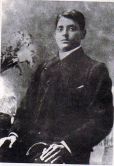
 
11 Comments

Posted by on January 11, 2016 in M N Roy


Tags: , , , , , , , ,