RSS

Tag Archives: Pranava OM

Who Was Dhirgatamas – PART NINE

Who Was Dhirgatamas – PART NINE
Continued from Part Eight

Verse 43

शकमयम् । धूमम् । आरात् । अपश्यम् । विषुवता । परः । एना । अवरेण । उक्षाणम् । पृश्निम् । अपचन्त । वीराः । तानि । धर्माणि । प्रथमानि । आसन् ॥ R.V. 1.164.43 ॥

śaka-mayam  dhūmam|ārāt|apaśyam|viu-vatā|para|enā | avarea | ukāam| pśnim | apacanta | vīrā | tāni | dharmāi | prathamāni | āsan R.V. 1.164.43

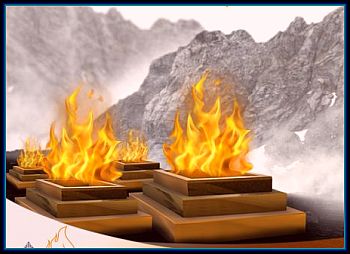
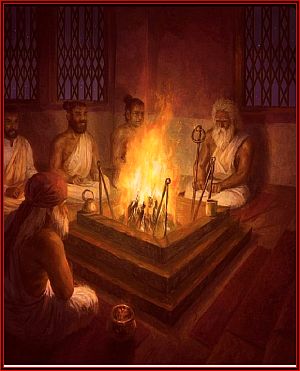
I beheld near (me) the smoke of burning cow-dung; and by that tall-pervading mean (effect, discovered the cause (fire); the priests have the Soma ox, for such are their first duties

**

I see (विषुवता) near (आरात्) me the smoke of cow-dung burnt (शकमयम् धूमम्) that is spreading (अवरेण). I know this smoke is caused by the fire. the priests (वीराः -Ritviks) have the white (पृश्निम्) Soma ox, for such are their rituals (तानिधर्माणि).

*

This verse is said to be about the ritual. One of the explanations is that the white Soma-bull (पृश्निम्) confers on the devotees the desired fruits of action (उक्षाणम्फलस्य सेक्त्तIरं). The Ritviks who are good in carrying out the rituals (वीराः विविधेरण् कुशलाह) move about and chant loudly. The covering of the smoke spreads wide (विषुवताव्यप्तिमता) like a cloud (शक).

**

It is also said; the term पृश्निम्pśnim – though some take it to mean Soma, it normally refers to Surya. Then, the Verse would be about the Sun, a kind of Agni, Apam Napatu, (अपांनपातु) the raging fire, emerging out of the ocean-waters.

**

Dr. Raja has an alternate explanation:

The meaning of the second half is that the heroic ancestors prepared Soma for drink at the Rituals, and this became the earliest Dharma or religious practice.

 I am not sure what is meant by the cow-dung and smoke.

**

Verse 44

त्रयः। केशिनः।ऋतुथा ।वि ।चक्षते।सव्ँम्वत्सरे । वपते।एकः। एषाम् ।विश्वम्। एकः। अभिI चष्टे । शचीभिः। ध्राजिः।एकस्य।ददृशे । न । रूपम् R.V. 1.164.44

traya | keśina | tu-thā | vi | cakate | savatsare | vapate | eka | eām | viśvam | eka | abhi | caṣṭe | śacībhi | dhrāji | ekasya | dadśe | na | rūpam R.V. 1.164.44

The three, with beautiful tresses, look down in their several seasons upon the earth; one of them, when the year is ended, shears (the ground); one, by his acts, overlooks the universe; the course of one is visible, though not his form

**

Three (त्रयः) deities with long beautiful stresses, long matted locks (केशिनःKeshin), appear according to seasons (ऋतुथा). One of them (एषाम्) when the year (सव्ँम्वत्सरे) is ended sheers (वपते) the earth. Of the other one (एकस्य​), the course (ध्राजिः) of his sweep is seen; but not his form (रूपम्) . One of them has a vision of the universe (विश्वम्) and oversees (विचक्षते) with his powers (अभिI चष्टे).

*

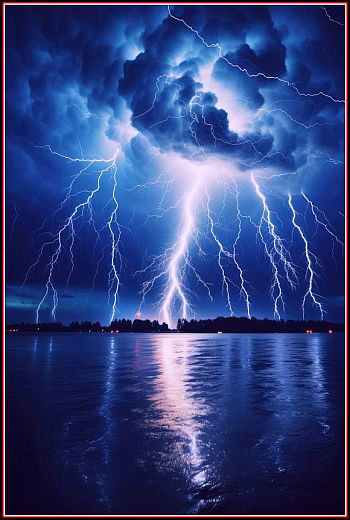
Agni, on earth, has flame-like tresses (केशिनः-Keshin) . Vayu, who occupies the mid-regions (अन्तरिक्ष्-Antariksha) has flashes of lightning as his curls. Adiya, the Lord of the Dyu-Loka (skies) shines with his brilliant rays. These – the flames; the flashes of lightning; and the rays- enhance their glory. Therefore, they are the Keshins (केशिनः).
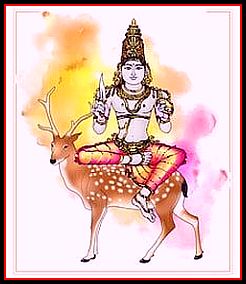
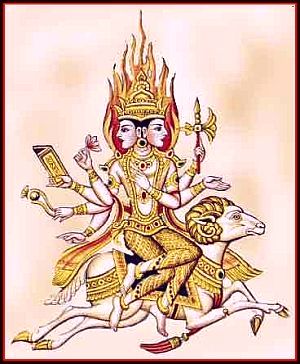
   

Here, the three forms of the Supreme are mentioned. Each has its own functions. Yet, they are not independent; they are aspects of One Absolute Being.

The three deities referred to in this Verse are Agni, Vayu and Surya.

Sri Sayana explains the three are the three forms of Agni, who burns up the earth; the Sun, who revives it by his light and by the rain which he sends down; and Vayu, the wind, who contributes to the showers of rain.

Yaskacharya had also earlier explained that there is indeed only One Deity; and, that Deity manifests in the three worlds as Surya (Sun) in heaven (Dyu-Loka); Indra or Vayu (wind) in the middle region (Antariksha); and, Fire on the earth (Bhu-Loka). They are the basic foundations of our existence.

In the opening Verse of Asya Vamasya Sukta, similar ideas were expressed. There, the three luminaries in three regions were called as three brothers; who indeed are the three forms of Fire: Agni, Vayu (Air) and Aditya (Sun).

अस्य । वामस्य । पलितस्य । होतुस्तस्य । भ्राता । मध्यमो । अस्त्यश्नः। तृतीयो । भ्राता । घृतपृष्ठो । अस्यात्रापश्यं । विश्पतिं सप्तपुत्रम् ॥ १.१६४.०१ ॥

The three brothers or the three aspects of Agni (Agni-traya)- The Sun, the Lightning and the Fire – form the Tripod of Life.  They exist and function together.; and, are the basic factors of our existence

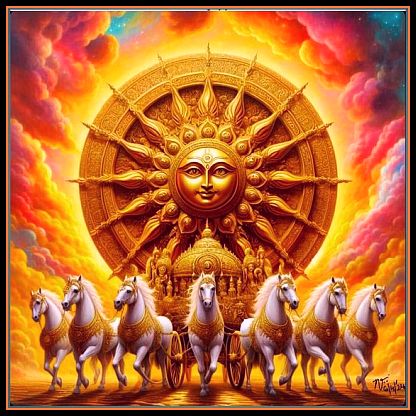
Of these three brothers; Aditya (Sun) shining in the upper regions – parastat, the protector (पलितस्य) of the Universe, who is worshipped by all (वामस्य), is the Supreme.

There, Dhirgatamas had said that the Sun, blazing with dazzling radiance and warmth, is the oldest of the three; and is the first cause. This Sun, held up and propelled by its inherent force (स्वध Svadha), clad in its own splendor, travels in all the worlds, without stoppage.

अनत् शये तुरगातु जीवम् एजत् ध्रुवम् मध्ये पस्त्यानाम् जीवः। मृतस्य। चरति स्वधाभिः अमर्त्यः मर्त्येन सयोनिः .१६४.३० 

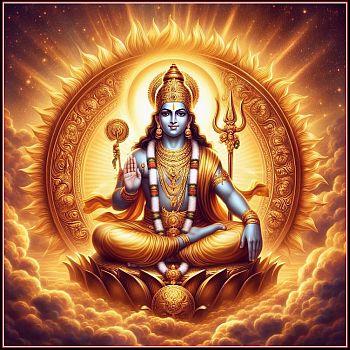
In the hymns of the Rigveda, Sun (Surya) is celebrated as the Soul (Atman) of all that moves or is immoveable; enlivening the heaven, the earth, and all the surrounding space –

अप्राः द्यावापृथिवी इति अन्तरिक्षम् सूर्यः आत्मा जगतःतस्थुषः  – Rig Veda 1.115.1 .

He is the Divine power in the heavens; the Lightening in the atmosphere; and the Fire on Earth. These are the three main manifestations of light in our visible world.

Sun moves in its orbit, which itself is moving. Earth and other bodies move around sun due to the force of attraction (आकर्षण) 
**

Verse 45

चत्वारि वाक् परिमिता पदानि तानि विदुः ब्राह्मणाः ये मनीषिणः गुहा त्रीणि निहिता इङ्गयन्ति तुरीयम् वाचः मनुष्याः वदन्ति R.V. 1.164.45

catvāri | vāk | pari-mitā | padāni | tāni | vidu | brāhmaā | ye | manīia | guhā | trīi | ni-hitā | na | igayanti | turīyam | vāca | manuyā | vadanti |

Four are the definite grades of speech; those who are wise know them; three, deposited in secret, indicate no meaning; men speak the fourth grade of speech

**

Speech (वाक्) is graded (पदानि) as four regulated levels (चत्वारि परिमिता) ; the seers or the poets who have intuition know (विदुः) them. Three of them (त्रीणि), not clearly known (निहिता इङ्गयन्ति), concealed in the cave (गुहा), do not move; the fourth of the speech (वाचः तुरीयम्), men speak (मनुष्याः वदन्ति).

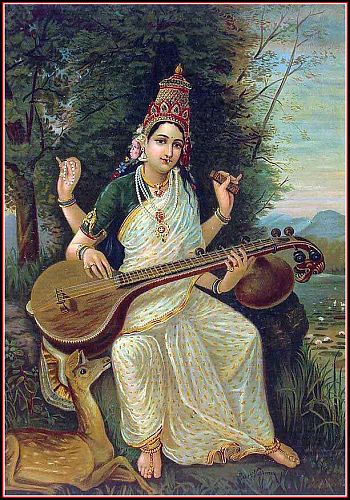
**

This theory of the four-fold division of speech or the four stages in the development of sounds – three being internal and the fourth one external uttered sound – is much discussed by a number of scholars of various Schools of though. Each scholar, according to his inclination, has offered his own explanation.

**

One of the explanations is that While the Grammarians, generally, speak about three levels of speech, the philosophers identify four levels or stages of speech (Vac): Para, Pashyanti, Madhyama and Vaikhari. 

Of these four forms of Vac, Para and Pashyanti are the subtle forms of Vac; while Madhyama and Vaikhari are its gross forms.

While Para Vac is pure consciousness; the three other forms are its transformations. The three lower forms of speech viz. Pashyanti, Madhyama and Vaikhari which correspond to intention, formulation and expression are said to represent its powers, such as:

 Iccha Shakthi (power of intent or the will), Jnana-Shakthi (power of knowledge) and the power of becoming (bhuti-shakthi) or the power of action (Kriya-Shakthi). 

Thus, out of the transcendent Para, the three phases of its power (Shakthi) emanate.

**

The notion that there are four quarters or four levels of existence; and of which, only one quarter is within the experience of mortals also appears in the Purusha-sukta (Rig-Veda 10.90.3) ascribed to Rishi Narayana – Paadosya Vishva Bhutaani Tri-Paada-Asya-Amrtam Divi.

There are similar notions with regard to Pranava-Om where the three syllables A, Vu, and Ma (मा) are normally visible. But it is its fourth element the Anusvara (Brahma-Bindu) that leads from being to non-being; and, from the word to the silence beyond it.

svarena samdhayed yogam asvaram bhävayet param asvarena hi bhävena bhävo näbhäva  isyate Brahma Bindu Upanishad

The Maitrayaniya (Maitri) Upanishad (1, 11.5), of Krishna-Yajur-Veda, mentions the four quarters of speech as those belonging:  to the upper region – the heavens (Divi); to the intermediate space (Antariksha); and, to the region of earth (Prithvi) as spoken by the humans (Manusi); and, to the animals (Pashu)

– vāk sṛṣṭā caturdhā vyabhavad eu lokeu trīi turīyāi paśuu turīya yā pthivyā sāgnau sā rathantare yāntarike.

The Atma-vadins (mainly those belonging to Nyaya and Vaisesika Schools) say: the four-fold speech can be found in the animals; in musical instruments (such a flute); in the beasts; and, in the individuals (Atmani)

–  pasusu tunavesu mrgesu atmani ca iti atmavadinah

The Shatapatha Brahmana (1.3.16) categorizes the speech into four kinds: as that of the humans; of animals and birds (vayamsi); of reptiles (snakes); and, of small creeping things (kshudram sarisrpam)

– varā vā ia iti hi varā io yadida kudra sarīspa 1.5.3.11

Similarly, those who believe in myths and legends say that – the serpents; birds; evil creatures; as also the humans in their dealings with the rest of the world – all use speech of their own.

Sarpanam vagvayasam ksudrasarispasya ca caturthi vyavaharika-ityaitihasikah

The Jaiminiya-Upanishad-Brahmana (1.40.1)  deals with the four levels of speech in a little more detail.

In a verse that is almost identical to the one appearing in Rig-Veda Samhita – 1.164.45, it mentions that the discriminating wise know of four quarters of speech.  Three of these remain hidden; while the fourth is what people ordinarily speak.

Chatvaari vaak parimitaa padaani / taani vidur braahmaanaa ye manishinaah. Guhaa trini nihita nengayanti / turiyam vaacho manushyaa vadanti //

Then, the text goes on to explain that of the four quarters of speech: mind is a quarter, sight is another quarter, hearing is the third quarter; and, speech itself is the fourth quarter. 

 tasya etasyai vaco manah padas caksuh padas srotram pado vag eca caturtah padah

Further, it says: what he thinks with the mind, that he speaks with speech; what he sees with the sight, that he speaks with the speech; and, what he hears with hearing, that he speaks with speech.

 tad yad vai manasa dyayanti tad vaco vadati; yac caksus pasyati tad vaca vadati; yac srotrena srunoti tad vaco vadati /

Thus, finally, all activities of senses unite (Sam) into speech. Therefore, speech is the Saman.

Nagesh Bhatta (Ca. 1670 to 1750), in his commentary on Patanjali’s Mahabhashya, accepts the four forms of Vac; and, explains the expression ‘Catvari padjatani namakhyato-upasargani-patah ‘as referring to Para, Pashyanti, Madhyama and Vaikhari:

 Bhashya padajatani Para-Pashyanti-Madhyama- Vaikhari rupani / ata evagre nipatah  ceti cakarah sangacchate 

**

Sri Sayana in his Rig-Bhashya   deals with the subject of four levels of speech in a greater detail.

The various ancient texts speak of the levels of speech, which, generally, are taken to be four. Each School – Grammarians, Mimamsa, Upanishads, Tantra, Yoga, mythology etc – offers its own understanding and explanation of the four levels of speech.

These levels are variously explained as the varieties of speech that are said to be spoken either in four regions of the universe; or spoken by divine beings and humans; or as speech of the humans, animals, birds and creatures. 

 These four are even explained as four levels of consciousness.

He says, people use speech in a variety of ways to fulfil their roles and responsibilities in life. And, similarly, the animals, birds, creatures and objects in nature do use their own sort of speech to serve their needs.  

**

च॒त्वारि॒वाक्परि॑मिता प॒दानि॑ Catvāri vākparimitā padāni: –

The four types relate to the language of the Vedic mantras; the Kalpas; the Brahmana texts; and laukika, or current day-to-day speech (Taittirīya Samhita 1.31.2).

मन्त्र कल्पो ब्राह्मणं चतुर्था व्य्वहरिकीति यग्निक

Here, मन्त्र कल्पो ब्राह्मणं are Vedic speech. The fourth one is used by humans in worldly transactions – तुरीयं वाचो मनुष्य वदन्ति

*

Only those Yogis, mystics or the wise who are acquainted with the Shabda-Brahma, the ultimate Vac, know the fourth level of speech. It is only such realized wise seers speak both languages, that of the gods and that of men-

तस्माद् ब्राह्मणं उभयो वाचम् वदन्ति वा देवानामं वा मनुस्यनाम् –  tasmād brāhmaā ubharyo vācam vadanti yā ca devānām yā ca manuyāam (Nirukta 13.9)

Vac: speech, was created fourfold, three kinds of which are in the three regions, the fourth amongst the mortals.

  • The form on earth, associated with Agni is in the Rathantara;
  • the form in the firmament, associated with Vayu, is in the Vāmadevya mantras;
  • that which is in heaven, with Aditya, is Bhatī, or in the thunder (stanayitnau);
  • whatever else was placed amongst the humans and animal-life

*

He then, while explaining these four levels or quarters of speech (ani tani catwari itya atra bahavah), remarks that each School offers explanations (bahudha varnayanti) according to its own tenets (sva- sva-mantanu-rodhena).

  Next, he briefly mentions what those explanations are:

: – According to Vedantins, the four levels of speech could be the Pranava (Aum) – which is the sum and substance of all the Vedic terms (sarva-vaidika-vag-jalasaya), followed by three Vyahritis (Bhu-Bhuh -Suvah). Thus, the Pranava along with three Vyahritis form the four quarters of speech.

: – According to Nirukta (Etymology), the language of the three Vedas (Rik, Yajus and  Saman ) and the speech commonly used  for dealings in the world , together make the four quarters of speech – (Rg-yajuh-samani-caturdhi vyavharikiti nairuktah – 13,8 )

: – The four levels of speech could also be related to four regions representing four deities: on the Earth as Agni (yo prthivyam sa-agnau); in the mid-air as Vayu (Ya-antarikshe sa vayau); and, in the upper regions as Aditya (Ya divi saditye). And, whatever that remains and transcends the other three is in Brahman (Tasya-mad-brahmana).

: – The speech, though it is truly indivisible, is measured out or analyzed in the Grammar as of four kinds or four parts-of-speech (akhandayah krtsnaya vacah caturvidha vyakrtattvat).  Accordingly, the four divisions of speech are named by the followers of the various Schools of Grammar (vyakarana-matanus-arino) as: Naaman (Nouns), Akhyata (Verbs), Upasarga (prepositions or prefixesand Nipata (particles)

: – According to the wise who are capable of exercising control over their mind; the Yogis who have realized Sabdabrahman; and, others of the Mantra (Tantra) School, these four levels of speech (Evam catvari vacah padani parimitani)  are classified as : Para, Pashyanti, Madhyama and Vaikhari.

Manisinah manasah svaminah svadhinamanaska brahmana vacyasya sabdabrahmani dhigantaro yoginah paradicatvari padani viduh jananti 

Apare-mantrkah-parkarantarena-pratipadanti-Para-Pasyanthi-Madhyama-Vaikari Chatvari
**

 Verse 46

इन्द्रम् मित्रम् वरुणम् अग्निम् आहुः अथो इति दिव्यः सः सुपर्णः गरुत्मान् एकम् सत् विप्राः बहुधा वदन्ति अग्निम् यमम् मातरिश्वानम् आहुः R.V. 1.164.46

indram | mitram | varuam | agnim | āhu | atho iti | divya | sa | su-para |garutmān| ekam | sat | viprā | bahu-dhā | vadanti | agnim | yamam | mātariśvānam | āhu |

Truly there is only One. They may call Him by any names.  They call him, as Indra, Mitra, Varuna, and he is the celestial, winged-bird (Sun); names as they speak of Agni, Yama, Mātariśvan. The learned priests call the One and the only one by many names

**

The One Aditya (आहुः) is called by various names as: Indra, Mitra, Varuna and Agni (इन्द्रम् मित्रम् वरुणम् अग्निम्). And, again (अथो इति), he is also the beautiful-winged celestial bird Garutman (गरुत्मान्), Garuda (सुपर्णः Suparna) of graceful flight.  The wise ones (विप्राः) speak of in many ways (बहुधा वदन्ति); call (आहुः) the One (Supreme Being (एकम् सत्) in many names as Agni, Yama, Matarisvan. (अग्निम् यमम् मातरिश्वानम्)

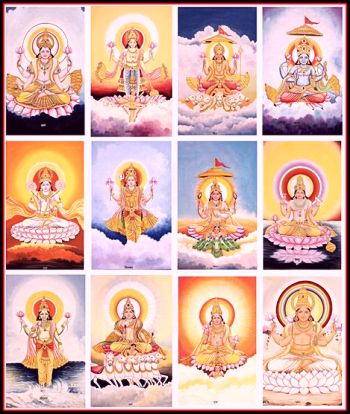
This verse is a thread that ties together the Deva-Vidya with Brahma-Vidya. It celebrates the essential unity of celestial beings (Devas) as various manifestations of One and the Only One Supreme Principle (Parama-tattva). All the gods are different forms of the same Paramatman. The worship offer ed to different gods is indeed the worship of That One.

Sri Sayana identifies that supreme Being as Surya; while, earlier, Yaska had described him as Agni.

But, again, it also said the Agni and Aditya are indeed one.

In any case, all the divinities are the manifestations of One and Only One Supreme Principle (Parama-tattva)
**

Verse 47

कृष्णम् नियानम् हरयः सुपर्णाः अपः वसानाः दिवम् उत् पतन्ति ते अववृत्रन् सदनात् ऋतस्य आत् इत् घृतेन पृथिवी वि उद्यते R.V. 1.164.47

kṛṣṇam | ni-yānam | haraya | su-parā | apa | vasānā | divam | ut | patanti | te | ā | avavtran | sadanāt | tasya | āt | it | ghtena | pthivī | vi | udyate |

The smooth-gliding waters (of the rain, the solar rays), clothing the waters with a dark cloud, ascend to heaven; they come down again from the dwelling of the rain, and immediately the earth is moistened with water.

**

The smooth gliding rays (सुपर्णाः) carry water(हरयः). They cover(वसानाः) the dark clouds (कृष्णम्) moving steadily(नियानम्) carrying water (अपः). They spread upward (उत् पतन्ति) towards the heaven (दिवम्). They return from the Sun ( अववृत्रन्), the home of all waters (सदनात् ऋतस्य). Immediately (आत्इत्) the Earth(पृथिवी) is awash with water (घृतेन उद्यते).

**

According to Sri Sayana  : Rigveda Sayana Bhashya

The Aditya has two courses: उत्तरायण (Uttara Yana) and दक्षिणायन (Dakshina Yana) . The former is also called शुक्ल (Shukla); and, the latter as कृष्णं (Krishna).

The night of the gods is दक्षिणायन. And, when the Sun follows the उत्तरायण course , his rays spread over the universe absorb water from all sources; and reach back Aditya by night – that is – by दक्षिणायन. This is the rainy season for the earth. There will be plenty of rains during this season.

यद्वा कृष्णं नियाम नियमनम्‌ रात्रिः  / देवानां हि रात्रिहि दक्षिणायनम् / तत्प्र  तस्मिं वर्षकाले इयर्थः

ऋतस्य सदनात् – उदकस्य स्थानदादि आदित्य मण्डलात्
    

Yaska-charya in his Nirukta chose to relate tis verse to Agni.  

He said Agni ascends to the sky in the form of smoke; it becomes a cloud; pours down the rain, while returning from the solar region, in the form of rays

Either facing up or moving downward, he rays are indeed called Suparna  (सुपर्णाः), moving with grace.

vavtrant.sadanād.tasya.āt.it.ghtena.pthivī.vyudyate 7,24:   ”

ksnam.nirayanam.rātrir.ādityasya,.haraya.suparā.haranā.āditya.raśmayah,.te.yadā.amuto.arvāñca.paryāvartante.saha.sthānād.udakasya.ādityād,.atha.ghtena.udakena.pthivī.vyudyate/[820]

 yatra.suparā.supatanā.āditya.raśmaya.amtasya.bhāgam.udakasya.animisantas.vedanena.abhisvaranti.iti.vā.abhiprayanti.iti. vā

vayo.ver.bahuvacanam.suparā.supatanā.āditya.raśmi1.upasedur.indram.yācamānāh
Verse 48

द्वादश । प्रधयः। चक्रम् । एकम् । त्रीणि । नभ्यानि । कः । ऊँ इति । तत् । चिकेत । तस्मिन्। साकम् । त्रिशताः । न । शङ्कवः । अर्पिताः । षष्टिः । न । चलाचलासः R.V. 1.164.48

dvādaśa | pra-dhayaḥ | cakram | ekam | trīṇi | nabhyāni | kaḥ | oṃ | iti | tat | ciketa | tasmin | sākam | tri-śatāḥ | na | śaṅkavaḥ | arpitāḥ | ṣaṣṭiḥ | na | calācalāsaḥ

The fellies are twelve; the wheel is one; three are the axles; but who knows it? within it are collected 360 (spokes), which are, as it were, moveable and immoveable
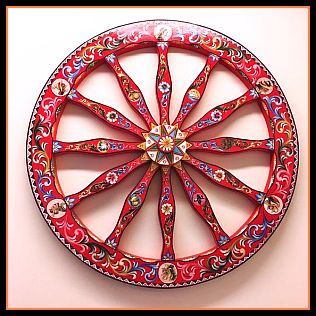
The spokes (प्रधयः) are twelve (द्वादश); the wheel (चक्रम्) is one(एकम्); three are the axles (त्रीणिनभ्यानि); but who indeed has known this? (तत्चिकेत)? within it (तस्मिन्) are revolving (चलाचलासः) 360 (त्रिशताः षष्टिः spokes), which are, as it were, moveable and immoveable; not in the least shaking joined together (साकम् अर्पिताः).
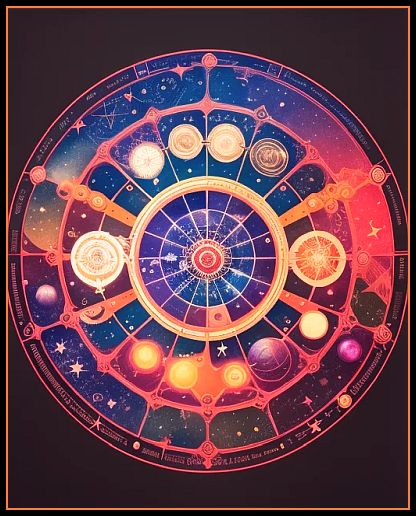
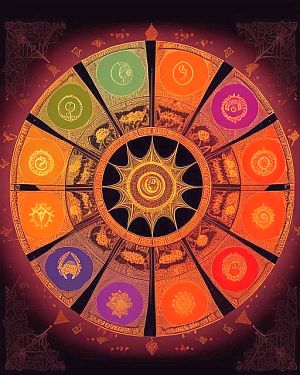
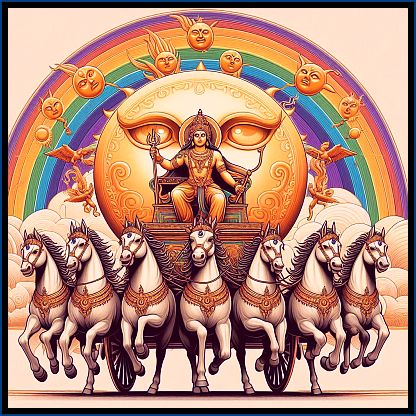
This verse , again, describes Aditya picturized as a Time-wheel (Samvathsara Chakra) , whose one revolution makes a year. . It has twelve spokes, three axels, hold together 360 spokes joined to them

-द्वादश । प्रधयः परिधय तत् स्थानीया द्वादश मासाह

The twelve spokes represent twelve months in a year or the twelve Rashis (Zodiac signs). , with 360 pairs of day and night.-

त्रीणि- नभ्यानि – नभ्याश्रयIणी फलकानि तत् स्थानियानि ग्रीष्म वर्षा हेमन्त ख्यायश्रितानि

The three Nabhis indicate here , the three seasons (Ritus)  -summer , rains and winter (ग्रीष्म वर्षा हेमन्त ).

Or, it might be the three junctions (सन्ध्याहः) in time – past, present and future tenses 

Well, who is there to that  truly knows the secretकः तत्  चिकेत कोपि महान जानति ?  !!

Sri Sāyaa in his  gveda-bhāya says that 360 moves on and on ; revolves; repeats itself – चलI चलIसह

**

Verse 49

यः ते स्तनः शशयः यः मयःभूः येन विश्वा पुष्यसि वार्याणि यः रत्नधाः वसुवित् यः सुदत्रः सरस्वति तम् इह धातवे करिति कः R.V. 1.164.49

ya | te | stana śaśaya | ya | maya-bhū | yena | viśvā | puyasi | vāryāi | ya | ratna-dhā | vasu-vit | ya | su-datra | sarasvati | tam | iha | dhātave | karitika  |

Sarasvati, that retiring breast, which is the source of delight, with which you bestow all good things, which is the container of wealth, the distributor of riches, the giver of good (fortune); that (boon) do you lay open at this season for our nourishment

**

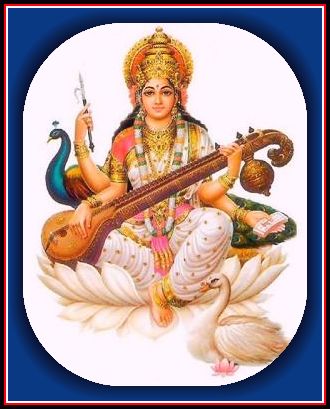
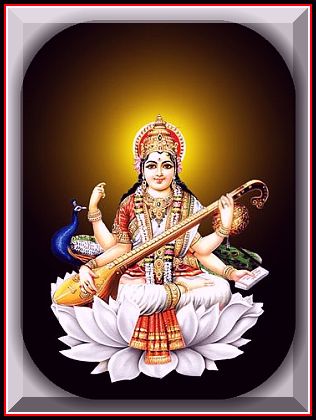
The Deity here is Sarasvati. Here, Goddess Sarasvathi is described as a mother. We had some reference to mother and child in previous verses (5, 7, 8, 9, 0, 11, 26, 27, 28). Mother, cow, water and many ideas refer more or less to the same thing.
**

There are four kinds of references to Vac in Rig Veda:

  • Vac is speech in general;
  • Vac also symbolizes cows that provide nourishment;
  • Vac is also primal waters prior to creation; and,
  • Vac is personified as the goddess revealing the word.

Commencing with the Brahmana-texts, Vac gets identified with Sarasvathi the life-giving river; the goddess of learning and wisdom; as also with Vac.

**

The name Saraswati (सरस्वती) indicates one who is associated water (सरस्) or that which is fluid Salila (सलील). When the term is taken as a composite word of Sarasu-ati (सरसु+अति) it also means one with plenty of water (उदकम्).

In the Nighantu (1.12), Sarah is one of the synonyms for water. That list of synonyms for water, in the Nighantu, comes immediately next to that of the synonyms for speech (Vac).

Yaska also confirms that the term Sarasvathi primarily denotes the river (Sarasvathi Sarah iti- udakanama sartes tad vati –Nirukta.9.26). Thus, the word Sarasvathi derived from the word Sarah stands for Vagvathi (Sabdavathi) and also for Udakavathi

*

Vac is sometimes identified with waters, the primeval principle for the creation of the Universe.

In the Vak Suktha or Devi Suktha  of Rig Veda (RV.10. 10.125), Apah, the waters, is conceived as the birth place of Vac. And, Vac who springs forth from waters touches all the worlds with her flowering body and gives birth to all existence. She indeed is Prakrti.  Vac is the creator, sustainer and destroyer. In an intense and highly charged superb piece of inspired poetry Vac declares “I sprang from waters there from I permeate the infinite expanse with a flowering body. I move with Rudras and Vasus. I walk with the Sun and other Gods. It is I who blows like the wind creating all the worlds”.

*
In initial passages of the Rigveda, the word Sarasvati refers to the river “Best of mothers, the best of rivers, best of goddesses” (अम्बितमे नदीतमे देवितमे सरस्वतिRigveda 2.41.16)

In the Rig-Veda, Sarasvathi is the name of the celestial river par excellence (deviyā́m), as also its personification as a goddess (Devi) Sarasvathi, filled with love and bliss (bhadram, mayas).

And Sarasvathi is not only one among the seven sister-rivers (saptásvasā), but also is the dearest among the gods (priyā́ deveu).

Again, it is said, the Sarasvathi as the divine stream, has filled the earthly regions as also the wide realm of the mid-world (antárikam)

  • āpaprúī pā́rthivāni urú rájo antárikam | sárasvatī nidás pātu |  RV_6,061.11)

Invoked in three full hymns (R V.6.6.61; 7.95; and 7.96) and numerous other passages, the Sarasvathi, no doubt, is the most celebrated among the rivers.

*

In the Aitareya Brahmana (3.37) Vac is directly identified with the life-giving Sarasvathi (vag vai Sarasvathi).

The Vac-Sarasvathi in the form of river (Sarasvathi-nadi-rupe) is the generous (samrudhika) loving and life-giving auspicious (subhage) splendid Mother (Mataram sriyah), the purifying (pavaka) source of great delight (aahladakari) and happiness (sukhasya bhavayitri) which causes all the good things of life to flourish.
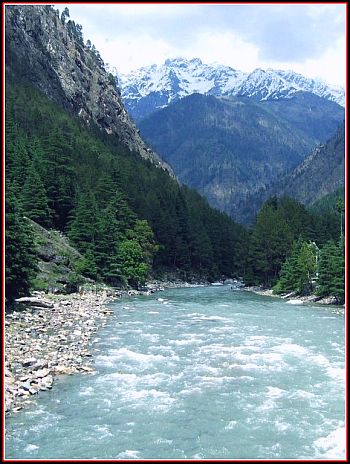
There are abundant hymns in the Rig-Veda, singing the glory and the majesty of the magnificent Sarasvathi that surpasses all other waters in greatness, with her mighty (mahimnā́mahó mahī́) waves (ūrmíbhir) tearing away the heights of the mountains as she roars along her way towards the ocean (ā́ samudrā́t). She is the swiftest among the speediest- vegavatinam vegavattama .

Sarasvathi is loud and powerful flood who roars like a bull and can­not be controlled.

She is the one bursting the ridges of the hills (paravataghni) with mighty waves – yásyā anantó áhrutas tveáś cariṣṇúr aravá | ámaś cárati róruvat | (RV_6,061.08

 Pra-ya-mahimna-mahinasu-cekite-dyumnebhiranya-apasamapastama – the one whose powerful limitless (yásyā anantó) , unbroken (áhrutas) swiftly flowing (cariṣṇúr aravá) impetuous  resounding current and  roaring (róruvat) floods,  moving with rapid force , like a chariot (rathíyeva yāti), rushes  onward towards the ocean (samudrā́t)  with tempestuous roar; ..  and so on.

Rishi Gtsamada adores Sarasvathi as the divine (Nadinam-asurya), the best of the mothers, the mightiest of the rivers and the supreme among the goddesses (ambitame nadltame devitame Sarasvati).   And, he prays to her:  Oh, Mother Saraswati, even though we are not worthy, please grant us merit.

Ámbitame nádītame dévitame sárasvati apraśastā ivasmasi praśastim amba naskdhi – (RV_2,041.16)

Sarasvathi is the most sacred and purest among rivers (nadinam shuci). Prayers are submitted to the dearest (Priya tame) seeking refuge (śárman) in her – as under a sheltering tree (śaraá vr̥kám). She is our best defence; she supports us (dharuam); and, protects us like a fort of iron (ā́yasī pū́). She is most liberal to her friends (Uttara sakhibhyah).

The Sarasvathi, the river that outshines all other waters in greatness and majesty is celebrated with love and reverence; and, is repeatedly lauded with choicest epithets, in countless ways:

The Sarasvathi, most beloved among the beloved (priyā́ priyā́ su) is the ever-flowing bountiful (subhaga; vā́jebhir vājínīvatī) energetic (balavati) stream of abounding beauty and grace (citragamana citranna va) which purifies and brings fruitfulness to earth, yielding rich harvest and prosperity (Sumrdlka). She is the source of Vigor and strength.

Her waters which are sweet (madhurah payah) have the life-extending (ayur-vardhaka) healing (roga-nashaka) medicinal (bhesajam) powers – (aps-vantarapsu bhesaja-mapamuta prasastaye – RV_1,023.19).

She is indeed the life (Jivita) and also the nectar (amrtam) that grants immortalitySarasvathi, our mother (Amba! yo yanthu) the life giving maternal divinity, is dearly loved as the benevolent (Dhiyavasuh) protector of the Yajna – Pavaka nah Sarasvathi yagnam vashtu dhiyavasuh (RV_3,003.02).

She personifies purity (Pavaka). Sarasvathi is depicted as a purifier (pavaka nah sarasvathi) – internal and external. She purifies the body, heart and mind of men and women- viśva hi ripra pravahanti devi-rudi-dābhya śucirāpūta emi | (10.17.20); and inspires in them pure, noble and pious thoughts (1.10.12). Sarasvathi also cleanses poison from men, from their environment and from all nature –

  uta kitibhyo, avanīr avindo viam ebhyo asravo vājinīvati (RV_6,061.03).

Prayers are submitted to Mother Sarasvathi, beseeching her:  please cleanse me and remove whatever sin or evil that has entered into me. Pardon me for whatever evils I might have committed, the lies I have uttered, and the false oaths I might have sworn.

Idamapah pravahata yat kimca duritam mayi, yad vaaham abhi dudroha, yad va sepe utanrtam (RV.1.23.22)

The beauty of Sarasvathi is praised through several attributes, such as: Shubra (clean and pure); Suyanam, Supesha, Surupa (all terms suggesting a sense of beauty and elegance); Su-vigraha (endowed with a beauteous form) and Saumya (pleasant and easily accessible). Sri Sayana describes the beauteous form of Sarasvathi: “yamyate niyamytata iti   yamo vigrahah, suvigraha…”

Sarasvathi is described by a term that is not often used: ’ Vais’ambhalya’ , the one who brings up, nurtures and protects the whole of human existence – visvam prajanam bharanam, poshanam – with abundant patience and infinite love.

 Sri Sayana, in his Bhashya (on Taittiriya-Brahmana, 2. 5.4.6) explains the term as: Vlsvam prajanam bharanam poshanam Vais’ambham tatkartum kshama vaisambhalya tidrsi.

Thus, the term Vais’ambhalya, pithily captures the nature of the nourishing, honey-like sweet (madhu madharyam) waters of the divine Sarasvathi who sustains life (vijinivathi); enriching the soil ; providing abundant food (anna-samrddhi-yukte; annavathi)  and nourishment (pusti) to all beings; causing overfull milk in cows (kshiram samicinam); as  Vajinivathi enhancing vigour  and strength  in horses ( vahana-samarthyam)  ; and , blessing all of existence with happiness  (sarvena me sukham ) – (Sri Sayana’s  Bhashya on  Taittiriya-Brahmana).
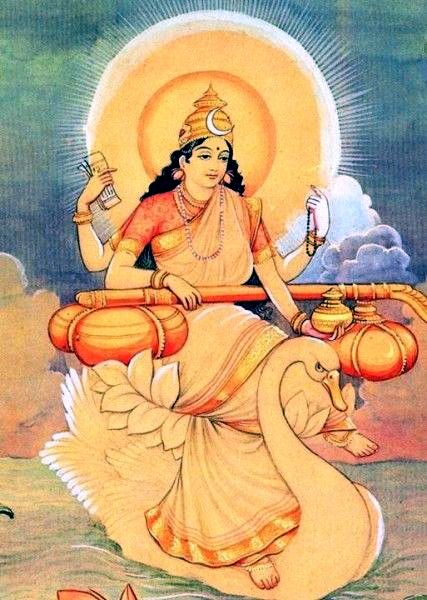
Yaska mentions that Sarasvathi is worshipped both as the river (Nadi) and as the goddess (Devata) –

vāc.kasmād, vaceh / tatra. sarasvatī. ity. etasya. nadīvad. devatāvat . ca . nigamā. bhavanti. tad. yad. devatāvad. uparistāt. tad .vyākhyāsyāmah / atha . etat. nadīvat/ /– Nirukta.2.23 

Thus, Sarasvati is a river at first; and, later conceived as a goddess

Sarasvathi, the best of the goddesses (Devi-tame) and the dearest among the gods (priyā́ deveu) is associated with Prtri-s (departed forefathers svadhā́ bhir Devi pitŕ̥bhir; sárasvatī yā́m pitáro hávante) as also with many other deities and with the Yajna.

She is frequently invited to take seat in the Yajnas along with other goddesses such as: Ila, Bharathi, Mahi, Hotra, Varutri, Dishana Sinivali, Indrani etc.

She is also part of the trinity (Tridevi) of Sarasvathi, Lakshmi and Parvati.

Sarasavathi as Devata, the Goddess is also said to be one of the three aspects of Gayatri (Tri-Rupa-Gayatri): Gayatri, Savitri and Sarasvathi.

Here, while Gayatri is the protector of life principles; Savitri of Satya (Truth and integrity of all Life); Sarasvathi is the guardian of the wisdom and virtues of life.

Among these Tisro Devih, Sarasvathi, the mighty, illumines with her brilliance and brightness, inspires all pious thoughts – cetantī sumatīnām (RV.1.3.12 ;).

Her aspects of wisdom and eloquence, which enlighten all this world (dhiyo viśvā vi rājati), are praised, sung in several hymns. She evokes pleasant songs, brings to mind gracious thoughts; and she is requested to accept our offerings (RV.1.3.11)

codayitrī sūntānā cetantī sumatīnām | yajña dadhe sarasvatī ||maho ara sarasvatī pra cetayati ketunā  | dhiyo viśvā vi rājati ||RV.1.3.11-12 

Story pin image

According to Sri Sayana, Sarasvathi – Vac is depicted as a goddess of learning (gadya-padya rupena–prasaranmasyamtiti–Sarasvathi- Vagdevata).

Sarasvathi as Vac is adored as the power of truth, free from blemishes; inspiring and illuminating noble thoughts (chetanti sumatim).

 In the Taittariya Brahmana, the auspicious (subhage), the rich and plentiful (vajinivati) Vac is identified with Sarasvathi adored as the truth speech ‘Satya-vac’.

 Sarasvathi subhage vajinlvati satyavachase bhare matim. idam te havyam ghrtavat sarasvati. Satyavachase prabharema havimsi- TB. II. 5.4.

The Vac-Sarasvathi, the power of speech, is hailed as the mother of Vedas – Veda Mata. She is the abode of all knowledge; the vast flood of truth (Maho arnah); the power of truth (Satya vacs); the guardian of sublime thoughts (dhinam avitri); the inspirer of good acts and thoughts; the mother of sweet but truthful words; the awakener of consciousness (chodayitri sunrtanam, chetanti sumatinam); the purifier (Pavaka); the bountiful blessing with vast riches (vajebhir vajinivati); and the protector of the Yajna (yajnam dadhe)

Vac- Sarasvathi is regarded the very personification of pure (pavaka) thoughts, rich in knowledge or intelligence (Prajna or Dhi) – (vag vai dhiyavasuh)

Pavaka nah sarasvatl yajnam vastu dhiyavasur iti vag vai dhiyavasuh – AB. 1.14.

In the Shata-patha-Brahmana (5. 2.2.13-14) , Vac as Sarasvathi is first taken to be her  controlling power, the mind (manas), the abode of all thoughts and knowledge,  before they are expressed through speech.

sarasvatyai vāco yanturyantriye dadhāmīti vāgvai  sarasvatī tadena vāca eva yanturyantriye dadhāti – 5. 2.2.13

Again, the Shata-patha-Brahmana (I.4.4.1; 3.2.4.11) mentions the inter-relations among mind (manas), breath (prana) and Speech (Vac). The speech is evolved from mind; and put out through the help of breath. The speech (Vac) is called jlhva Sarasvati i.e., tongue, spoken word. Vac-Sarasvathi is also addressed as Gira, one who is capable to assume a human voice.

Taittirlya Brahmana refers to Sarasvathi as speech manifested through the help of the vital breath Prana; and, indeed even superior to Prana

  • (vag vai sarasvatl tasmat prananam vag uttamam – Talttirlya Brahmana, 1.3.4.5).

The Tandya Brahmana identifies Sarasvathi with Vac, the speech in the form of sound (sabda or dhvani).  Here, Sarasvathi is taken to be sabdatmika Vac, displaying the various form of speech (rupam) as also the object denoted by speech (vairupam): vag vai sarasvati, vag vairupam eva’smai taya yunakti – TB. 16. 5.16.

By the time of the later Vedic texts, the identity of Vac with Sarasvathi becomes very well established. The terms such as ‘Sarasvathi –Vacham’, ‘Vac- Sarasvathi’ etc come into use in the Atharva-Veda. Even the ordinary speech was elevated to the status of Vac

Story pin image

**

Verse 50

यज्ञेन यज्ञम् अयजन्त देवाः तानि धर्माणि प्रथमानि आसन् ते नाकम् महिमानः सचन्त यत्र पूर्वे साध्याः सन्ति देवाः R.V.1.164.50

yajñena | yajñam | ayajanta | devā | tāni | dharmāi | prathamāni | āsan | te | ha | nākam | mahimāna | sacanta | yatra | pūrve | sādhyā | santi | devā

The gods performed a sacrifice for such are their first duties; those mighty ones assemble in heaven, where the divinities who are to be propitiated (by sacred rites) abide

**

The gods(देवाः) performed(अयजन्त) a sacrifice(यज्ञम्) ; with that  they became greater (महिमानः); the first of  the Dharmas (तानि धर्माणि प्रथमानि). Lo, these greatness’s resorted to the heaven, where the ancient Sadhyas, the gods, are (yatra-pūrve -sādhyā– santi -devā).

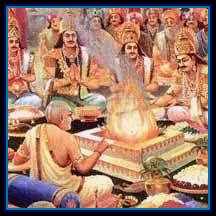
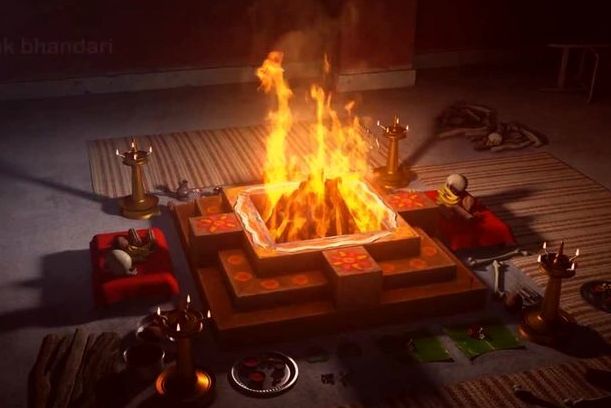
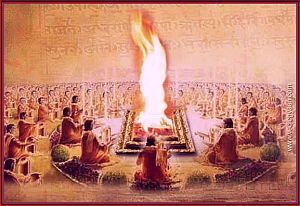
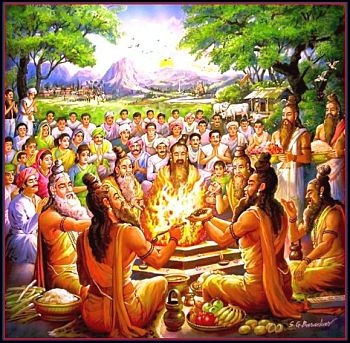
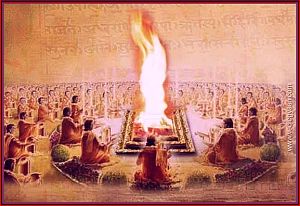
Yajnas bring gods and humans together to achieve their common goals and participate in God’s eternal duties as active participants in the sacrifice of creation. The source of Yajna is God himself.

This verse is in praise of the Yajna (यज्ञ). A great Yajna rewards immensely in the heavens ( ते नाकम् महिमानः सचन्त). There is no place for grief there.

*

Commentary by Sāyaa: gveda-bhāya

Where the divinities: yatra pūrve sādhyā santi devā: sādhyā = karma-deva, divinities presiding over or giving effect to religious acts, yajñādi sādhanavanta; or, the term may mean those who have obtained the portion, or the condition of gods, by the former worship of Agni, or the sādhyās = ādityas, or the agirasas, or deities presiding over the metres, chando abhimānina; sādhyās are named among the minor divinities in Amarakośa
Verse 51

समानम् । एतत् । उदकम् । उत् । च । एति । अव । च । अहभिः । भूमिम् । पर्जन्याः । जिन्वन्ति । दिवम् । जिन्वन्ति । अग्नयः ॥ R.V.1.164.51 I

samānam | etat | udakam | ut | ca | eti | ava | ca | aha-bhi | bhūmim | parjanyā| j invanti | divam | jinvanti | agnaya |

This water comes up and down alike day by day. The Parjanyas enliven the earth; the Fires enliven the heaven.

**

The same water goes upward and downward in course of days. The clouds give joy to the earth. The Fire pleases the gods in the Dyu-Loka, the upper worlds.

Dr. Raja explains:

The first half of the verse states that the water goes up and down day by day alike, without any difference. The similarity is in its going up and down. This is explained in the second half. Water here is only some kind of transcendental joy, which migrates from earth, from men to the gods in heaven and from heaven, from the gods, to men on earth. Both the courses are alike. This has close resemblance with the idea found in the Bhagavad-Gita that men must propitiate the gods with sacrifices and that the gods will make men happy in return (ग).

Here also we   find the harmony between the ritual mentioned in this verse and the value of knowledge that is the main topic in the poem.

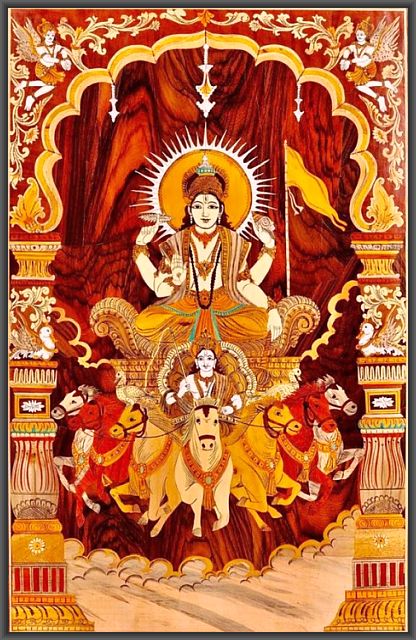
The Deity here is Surya, Parjanya or Agni.
**

The same form (समानम्) of water (एतत् -उदकम्) during certain days (summer अहभिः ) ascend upward to the sky (उच्चैति ). And, goes downward during rainy season (अव-च ). The clouds (पर्जन्याः), whose nature is to please (जिन्वन्ति )the earth  (भूमिम्) come down. The Fires (अग्नयः – आहवनीया) please the upper worlds ( दिवम् द्द्युल्लोके जिन्वन्ति ) .

The clouds make the people of the earth happy by helping them to grow rich food  crops  .

The fires of the Yajnas carry the oblations to the gods in Dyu-Loka ; and make them happy.
Therefore, Parjanya and Agni together take care of the welfare of the people on earth and in the upper regions. These two are interdependent. They also bring together, the humans on earth and gods in the heavens. It is by virtue of their mutual cooperation, the universe progresses safely and  happily.

Verse 52

दिव्यम् । सुपर्णम् । वायसम् । बृहन्तम् । अपाम् । गर्भम् । दर्शतम् । ओषधीनाम् । अभीपतः। वृष्टिभिः । तर्पयन्तम् । सरस्वन्तम् । अवसे । जोहवीमि R.V.1.164.52 II

divyam | su-param | vāyasam | bhantam | apām | garbham | darśatam | oadhīnām | abhīpata | vṛṣṭi-bhi | tarpayantam | sarasvantam | avase | johavīm i

I invoke for our protection the celestial, well-winged, swift-moving, majestic (Sun); who is the germ of the waters; the displayer of herbs; the cherisher of lakes replenishing the ponds with rain

***

The divine bird, the great bird, the child of waters, of herbs, worthy to be seen, who brings satisfaction with rains in the rainy season, that Sarasvat I invoke again and again for protection.

*

Again and again, I invoke for our protection, the celestial beautiful-winged, swift moving, majestic, graceful, Lord, who is the protector of waters. He is the guardian of herbs, filled with water. It is he who protects and enlivens the world by sending down timely rains.

*

 Born in the Dyu-Loka (दिव्यम्‌), Suparna (सुपर्णम्) of graceful flights, always moving (वायसम्), covered with glory and majesty (बृहन्तम्‌), produces waters (अपाम् गर्भम्), of herbs (ओषधीनाम्), reveller (दर्शतम्) , favorable with rains (वृष्टिभिः) ,pleases the worlds (तर्पयन्तम्), full of waters (सरस्वन्तम्), for protection (अवसे ) , I invoke again and again (जोहवीमि)
The Sun may not have waters in him, but, he moves in celestial waters.; and he produces waters. Therefore, he is Sarasvan. This Rik can be interpreted both with reference to the Sun and Sarasvan..

*

The poet Dhirgatamas starts with the mention of “a beloved invoker grown grey, with his two brothers, who is the Lord, and father of seven children” (verse 1).

अस्य वामस्य पृषतस्य होतुः तस्य॑ भ्राता मध्यमः अस्ति अशनः | ततीयः श्रातं धृतऽपुष्ठः अस्य॒ अत्रं अपर्यम्‌ विदपतिम्‌ स्तऽपुत्रम्‌

Of this beloved invoker, grown grey — of him there is the middle brother, the all-pervading; his third brother is the one who bears ghee on his back. In them I saw the Lord of the People with seven sons.

The poem concludes with a prayer to “the swift-moving divine bird, the majestic bird (Sun), producer of water, which gives life to the herbs; he who brings happiness with timely rains,” for protection, (verse 52).

दिव्यम्‌ सुऽपर्णम्‌ वाय॒सम्‌ बृहन्तम्‌ अपाम्‌ ग्मम्‌ ददतम्‌ ओष॑धीनाम्‌ अभीपतः वृष्टिऽभिः त॒पै्यन्तम्‌ सरसन्तम्‌ अवसे | जोहवीमि  १.१६४.५२

The divine bird, the great bird, the child of waters, of herbs, worthy to be seen, who brings satisfaction with rams in the rainy season, that Sarasvati I invoke again and again for protection.

The first Mantra pictures the symbolism of the three brothers, the three luminaries in the regions; the three forms of fire: Agni, Vayu (Air) and Aditya (Sun).

Yaskacharya explains that there is indeed only One Deity; and, that Deity manifests in the three worlds as Surya (Sun) in heaven (Dyu-Loka); Indra or Vayu (wind) in the middle region (Antariksha); and, fire on the earth (Bhu-Loka). They are the basic foundations of our existence.

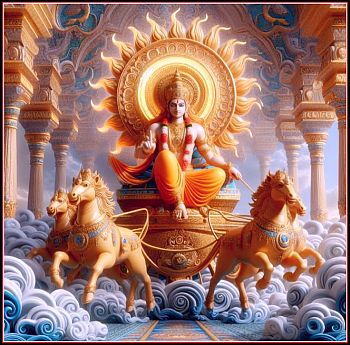
Of these three brothers; Aditya (Sun) shining in the sky, the protector (पलितस्य) of the Universe, who is worshipped by all (वामस्य), is the Supreme.

He is accompanied by seven sons (सप्तपुत्रम्), who are not different from himself (his seven rays of seven colours).

The three brothers or the three aspects of Agni (Agni-traya) form the Tripod of Life.  They exist and function together.; and, are the basic factors of our existence.
REFERENCES

  1. History of Pre-Buddhist Indian Philosophy by Dr. Beni-madhab Barua -Motilal Banarsidas-1921
  2. Tagore Law Lectures 1930 – The History Of Hindu Law by Prof Radha Binod Pal; University of Calcutta – 1958
  3. Vision in long darkness by Prof. Vasudeva Agrawala
  4. https://who.rocq.inria.fr/Ramakrishna.Upadrasta/Veda/Asya_Vamiya/AVMS/AVMS_1-100.pdf
  5. https://www.youtube.com/watch?v=r86l_TF9XWc
  6. https://archive.org/details/in.ernet.dli.2015.226346
  7. https://istore.chennaimath.org/products/rig-vedic-suktas-asya-vamiya-suktam/1309294000102324374
  8. pdf (archive.org)
  9. https://religion.fandom.com/wiki/Dirghatamas
  10. ऋग्वेदः सूक्तं .१६४ – विकिस्रोतः (org)
  11. org/mirrors/rigveda/sanskrit03/RV0310noaccent.html
  12. ALL IMAGES ARE FROM INTERNET
 
Leave a comment

Posted by on August 20, 2024 in Dhirgatamas, Rigveda


Tags: , , , , , , , , , , , , , , , , , , , , , , , , , , , , , , , , , , , , , , ,

Who Was Dhirgatamas – Part Eight

Continued from Part Seven

Verse 40

सुयवसअत् भगवती हि भूयाः अथो इति वयम् भगवन्तः स्याम अद्धि तृणम् अघ्न्ये विश्वदानीम् पिब शुद्धम् उदकम् आचरन्ती R.V.1.164.40

suyavasa-at | bhaga-vatī | hi | bhūyā | atho iti | vayam | bhaga-vanta | syāma | addhi| tṛṇam | aghnye | viśva-dānīm | piba | śuddham | udakam | ācarantī

Cow (अघ्न्ये) you will not be hurt. May you be rich in milk through abundant fodder; that we also may be rich (in abundance); eat grass at all seasons, and, roaming (at will), drink pure water.

*

O Cow (अघ्न्ये) may you be (भूयाः) happy (भगवती) always (विश्वदानीम्) eating good grass. You will be rich in milk (भगवती). After that (अथो इति) we also (वयम्) live in abundance (भगवन्तः). O Cow, you shall not be hurt (सुयवसअत्); always eat (अद्धि) grass (तृणम्), drink (पिब) clear water (उदकम्), wander about (आचरन्ती) happily (भगवती).

*

This Rik is usually sung while milking the Cow for the Agnihotra and other rituals

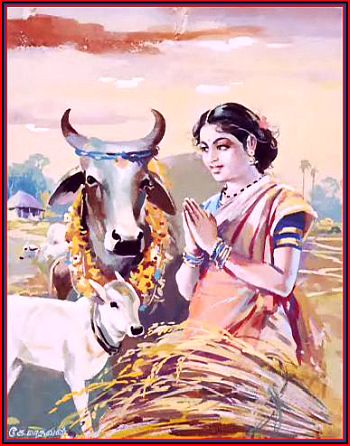
When the cow, the symbol of Motherhood, is happy, we too will be happy. The cow will be happy when there is plenty of nourishing grass, good fodder (Suvyasa) and clear water. The grass would grow; and there will be water in plenty, when the sun rays and water-bearing clouds send down sufficient timely rains in proper seasons. With good milk, plenty of water and rich crops we too will always be happy.

Dr. Raja adds:

After the glorification of wisdom, the illumination of a poet, and after drawing the distinction between one who knows and one who knows not, here is an address to a Cow.

Word or speech is always conceived of as a Cow, and the word Gau, meaning a cow, has also the meaning of speech.

**

The term गौ is also used to denote Madhyamika Vac

It is said; this verse is about the doctrine of Vak, put in terms of the Cow.

***

The ancient philosophers identified four levels or stages of speech (Vac): Para, Pashyanti, Madhyama and Vaikhari

Of these four forms of Vac, Para and Pashyanti are the subtle forms of Vac; while Madhyama and Vaikhari are its gross forms.

The process of manifestation of speech is compared to the evolution of the Universe. And, that process is said to take place in four stages.

First, in the undifferentiated substratum of thought, an intention appears. This first impulse, the self-radiant consciousness is Para-vac (the voice beyond).

This latent, un-spoken, un-manifest, silent thought (Para) unfolds itself in the next three stages as Pashanti (thought-visualized), Madhyama  (intermediate); and as Vaikhari (explicit audible speech).

The Madhyama Vak, a sequenced but a pre-vocal thought – described as the voice of silence; perhaps is best understood as internal speaking. Here, there is no perceptible sound (Nada). The Madhyama Vak is in an inaudible wave or vibratory (spandana) form.

And, the Madhyama, when it is put out explicitly through uttered words and sentences; and, when it comes out of the speaker’s mouth in sequenced and verbalized speech-form, it is called Vaikhari Vak. For the purpose of putting out the Vaikhari Vac, the speaker employs a sentence comprising words uttered in a sequence. The word itself comprises letters or syllables (varnas) that follow one after the other in space and time.


Here, this verse is said to be addressed as a prayer to the Goddess of the mid-region- Sarasvathi (Madhyama Vac)- for sending down rains by bursting clouds.

Following Yaska, Sri Sayana also regarded Sarasvathi as a divinity of the mid-region- ‘madhyama-sthana hi Vak Sarasvathi’; and as a personification of the sound of thunder.

Sarasvathi is regarded as a deity of the atmosphere, associated with clouds, thunder, lightning, rains and water.

***

Verse 41

गौरीः मिमाय सलिलानि तक्षती एकपदी द्विपदी सा चतुःपदी ष्टापदी नवपदी बभूवुषी सहस्रअक्षरा परमे विओमन् R.V.1.164.41

gaurī | mimāya | salilāni | takatī | eka-padī | dvi-padī | sā | catu-padī | aṣṭāpadī | nava-padī | babhūvuī | sahasra-akarā | parame | vi-oman

The sound (of the clouds) has been uttered, fabricating the waters, and being one-footed, two-footed, four-footed, eight-footed, nine-footed, or infinite in the highest heaven.

***

The Verses 40 and 41 are about Vac.

Before going specifically into verse 41, let’s talk briefly about Vac as in the ancient texts.

There are elaborate discussions on the subject of Vac in the Vedas and the related texts spread over long periods.

As regards Rigveda, broadly, there are five kinds of references to Vac:

  • Vac is speech in general;
  • Vac also symbolize Mothers represented by cows that provide nourishment;
  • Vac is also primal waters prior to creation;
  • Vac is represented by rain-bearing clouds; and,
  • Vac is personified as the goddess revealing the word.

And, at a later stage, commencing with the Brahmanas, Vac gets identified with Sarasvathi the life-giving river, as also with the goddess of learning and wisdom.

According to Sri Sayana, Sarasvathi – Vac is depicted as a goddess of learning (gadya-padya rupena–prasaranmasyamtiti–Sarasvathi- Vagdevata).

Yaska categorizes Sarasvathi as the goddess of mid-region – Madhya-sthana striyah.

Following Yaska, Sri Sayana also regarded Sarasvathi as a divinity of the mid-region- ‘madhyama-sthana hi Vak Sarasvathi’; and as a personification of the sound of thunder.

Thus, Sarasvathi, a deity of the atmosphere is associated with clouds, thunder, lightning, rains and water.  As Sri Aurobindo said; the radiant one has expressed herself in the forming of the flowing Waters. 

The concept of Vac was extended to cover oral and aural forms such as: expressions, sayings, phrases, utterances, sentences, and also the languages of all sorts including gesture (ingita).

Yaska says that all kinds of creatures and objects created by God speak a language of their own, either articulate or in-articulate

  • (devastam sarvarupah pasavo vadanti, vyakta vac-ascha- avyakta- vacacha – Nir. 11.29).

Even the rumbling of the clouds, the thunder of the lightening and the rippling sounds of the streams are said to be the forms of Vac

(praite vadantu pravayam vadama gravabhyo vacam vadata vadadbhyah – RV. 10.94.1)

It was said; the extant of Vac is as wide as the earth and fire. Vac is even extolled as having penetrated earth and heaven, holding together all existence. As Yaska remarks: Vac is omnipresent and eterna1 (vyaptimattvat tu Sabdasya – Nir.I.2)

Vac belongs to both the worlds – the created and un-created.  It is both the subject of speech and the object of speech.

And, Vac goes beyond speech. Vac is indeed both speech and consciousness (Chetana), as all actions and powers are grounded in Vac. It is the primordial energy out of which all existence originates and subsists. Vac is also the expression of truth.

Yajnavalkya in the   Brhadaranyaka Upanishad explaining the relation between Vac and consciousness says that Vac (speech) is a form of expression of consciousness. And, he argues, there could be no speech without consciousness. However, Consciousness does not directly act upon the principle of speech; but it operates through intermediary organs and breath to deliver speech.

Sri Sayana says that the Vac as Shabda-Brahmatmika-Vac resides in the inner space; and manifests itself with various names and forms.

Rishi Dhirgatamas goes far beyond; and, exclaims: Vac is at the peak of the Universe (Agre paramam); She is the Supreme Reality (Ekam Sat; Tad Ekam); She resides on the top of the yonder sky; She knows all; but, does not enter all.

  • Mantrayante divo amuya pṛṣṭhe viśvavida vācam aviśvaminvām – RV.1.164.10)

Vac, he says, is the ruler of the creative syllable Ra (Akshara); it is with the Akshara , the chaotic material world is organized meaningfully; “what will he, who does not know Ra will accomplish anything.! “. 

co akare parame vyoman yasmin devā adhi viśve niedu | yas tan na veda kim cā kariyati ya it tad vidus ta ime sam āsate |RV.1.164.39|

That is because, Dhirgatamas explains, the whole of existence depends on Akshara which flowed forth from the Supreme Mother principle Vac – 

  • tata karaty akara tad viśvam upa jīvati |RV.1.164.42 |

According to Dhirgatamas: “When I partake a portion of this Vac, I get the first part of truth, immediately- 

  • (maagan-prathamaja-bhagam-aadith-asya-Vac)”-(RV. I.164.37.)

But he also says: “Vac has four quarters; only the wise that are well trained, endowed with intelligence and understanding know them all. For the rest; the three levels remain concealed and motionless. Mortals speak only with the fourth (RV. 1.164.45).”

Chatvaari vaak parimitaa padaani / taani vidur braahmaanaa ye manishinaah. Guhaa trini nihitaa neaengayanti / turiyam vaacho manushyaa vadanti. (Rigveda Samhita – 1.164.45)

Yaska also mentions about the the four groups of parts of speech (Catvari padajatani) such as:  Noun (Naman), Verb (Akhyata), Preposition (Upasarga), and Particle (Nipata)Of these, the first two are established by definition; and, the remaining two by enumeration.

Catvāri pada jātāni nāma ākhyāte ca upasarga nipātāś ca tāni imāni bhavanti ...Nir .l.l iti imāni catvāri pada jātāni anukrāntāni  nāma ākhyāte ca upasarga nipātāś ca tatra nāmāny ākhyātajāni iti śākaāyano nairukta samayaś ca – Nir. 1, 12/

Dhirgatamas, states that the ultimate abode of language (Vak) is Brahman. It is at the core and apex of the Universe. Three quarters of the language remains hidden in the cave, while the fourth part is visible in the created world (Rig Veda: 1.164 – 10, 41, and 45).

This may contain: the sun shining through clouds in the sky  This may contain: a river flowing through a lush green forest filled with lots of plants and rocks at night

The verse 41 is again about Vac- the speech principle (Vac tattva).

Two meanings are said to be assigned to the term Vac in this verse.

  • One as the Madhyamika Vac of the mid-region; and
  • the other as the Shabda-Brahman (Shabda-Brahmathmika-Vac) the ultimate principle and the source of all inarticulate sounds as also of articulate speech.

**

Now, if the term Gauri (गौरीः) is understood as Madhyamika Vac, then it would read:

The Madhyamika Vac in the sky makes bellowing sounds producing waters. She is One-footed; Two-footed; Four-footed; Eight-footed; Nine-footed; or is the infinite in the highest heaven.

This may contain: lightning strikes in the sky over a street   This may contain: the night sky is filled with stars and bright lights, as if they were falling down

 The Nirukta of Yascacharya also says:

Gauri (गौरी), the subtle sound behind the thundering clouds in the sky, is indeed the Madhyamika-Vacगौरी गरणाशीला माध्यमिक वाक – making sounds and producing rain-waters.

गोरी रोचते ज्वेलति कर्मणो अयम पीतरो गोरों वर्ण एतस्मादेव प्रशस्यो भवाति तस्या एपा भवाति ॥३९

gaurī.rocater.jvalati.karmaah/ayam.api.itaro.gauro.vara.etasmād.eva/praśasyo. Bhavati / Tasya. eā. bhavati / (Nirukta – 11,39)

*

The ancient philosopher Prajapati Paramesthin (परमेष्ठिन्)  asserted that Water (Salila) is the fundamental Principle. It is from Water, all things are formed; and, Water is the original substance of all that exists.  It was the unfathomable depth of water (gahanam gambhiram). And, there was nothing but water. Water is the elementary matter or abiding original ground of things. Water is the original substance of all that exists.

This may contain: the ocean is blue and clear with some clouds  This may contain: the water is very blue and there are no waves

Then the verse goes on to speak in terms of numbers of Padas (feet or motions), which again are symbolic 

Here Dr. Raja remarks:

The cow is the speech conceived of as a cow in the previous verses and in many places elsewhere. The waters are some kinds of transcendental happiness; it is that happiness that was prayed for in the previous verse. In the world, that speech appeared as having one foot etc. But in the supreme heaven, which is its natural position, it has a thousand syllables. The pada is certainly the quarters of a verse. Why verses of these quarters are mentioned, we cannot say. There are found in the Rigveda, verses even up to eight quarters; but there is no meter with nine quarters. Gayatri has three quarters; but such a verse is not mentioned here. Nor is there a mention of verses with seven quarters. In the ultimate state, in the supreme heaven, it appears only as having infinite syllables. In this verse, the metre is Jagati, four lines of twelve syllables. Up to this, the Deity is All gods, gods in general, without any Deity in particular:

**

This contains an image of:   This may contain: a large cloud filled with lightning in the sky above trees and water on a cloudy day

According to Sri Sayanacharya, the interpretation of the verse by ascribing the meaning of cloud or the thunder in the mid-region, to the term Gauri (गौरी Madhyamika Vac) is as under:

One-footed-एकपदी – The Madhyamika Vac is one footed. It stays in the clouds and moves with the winds. It refers to the principle of rest or Statis (Sthithi)

Two footed – द्विपदी – When it stays with the clouds and with Aditya, the Sky-God

Four-footed – चतुष्पदी – When she moves about in four cardinal directions.

Eight-footed – अष्टापदी -When it resides in four cardinal directions as also in the four intermediate directions – (दिक् विदिक्)

Nine-footed – नवपदी – When it she stays in eight places as above and also with the Sun

**

Yaskacharya also interprets in a similar manner

गोरोामिमाय सलिकानि (तक्षत्येकपदी छिपदी सा चतुष्पदी अष्टापदी नवपदी बम्ूडपी सहस्ा-. क्षरा परमे व्योमन्‌ /गौ रीरनोमिमाय सलिलानिं तक्षती कवेत्येकपदी मध्यमेन, छिपदी मध्यमन चादित्पेन ,चतुष्पदी दिग्मिरष्टापदी दिग्मिश्वावान्तरादिग्मिश्व,नवपदी दिग्मिश्रावान्तरादिग्मिश्रादित्येन , सहसाक्षरा बहुदका परमे व्यवने तस्था एपा परा भंवातेि ४0

**

Then the poet Dhirgatamas exclaims: What is the use of just counting numbers?  … !

The Madhyamika-Vac Goddess (Vac Devatha) is of infinite nature, spreading everywhere in every direction. She occupies the highest sky, which is source of celestial waters. And, she pours down plenty of water over vast areas over all the regions. She shines in the sky in all directions, making the worlds happy.

But then, all elements are enveloped within the sky (Akasha)

Sky is the greatest protector spreading over and uniting all regions.

In the Brihadaranyaka Upanishad (Verse 3.6.1) Gargi-Vachaknavi, a scholarly Brahmavadini – a person with knowledge of Brahma-Vidya– questions the Sage  Yajnavalkya – if all this is pervaded by water, by what is water pervaded?

कस्मिन्नु खल्वाप ओताश्च प्रोताश्चेति; वायौ गार्गीति; कस्मिन्नु खलु वायुरोतश्च प्रोतश्चेति; अन्तरिक्शलोकेषु गार्गीति;

kasminnu khalvāpa otāśca protāśceti; vāyau gārgīti; kasminnu khalu vāyurotaśca protaśceti; antarikśalokeu gārgīti;

The Sage replies: All the worlds exist in water – as warp and woof of creation- water in air- and air in the Sky.

This may contain: the sun shines brightly through some clouds  This may contain: an airplane is flying through the blue sky with white clouds in the backround

Sri Sayana mentions when the term Gauri (गौरी – Madhyamika Vac) is taken to mean speech (Vac) then:

One-footed: Gauri, as articulate speech, is a single term

Two-footed: The term has two forms – as declension and conjugation

Four-footed: four parts of speech as: Naaman (Nouns), Akhyata (Verbs), Upasarga (prepositions or prefixesand Nipata (particles)

Eight-footed: eight cases including the vocative case

Nine-footed: eight as above with the addition of exceptions (Apavada- visesha) to a rule; and which are more powerful that the General-rules (Samanya- Lakshana / Utsarga)

**

When the term Gauri is assigned the meaning of Shabda-Brahmatmika-Vac:

 [Before going into this interpretation, let us briefly talk about Shabda-Brahmatmika-Vac.

The Shabda-Brahmatmika vac is at times called as Para -the one that is beyond.

As mentioned earlier, the traditional texts enumerate four levels of speech (Chatvari-Pada Jatani} as Para, Pashyanti, Madhyama and Vaikharii

It is said, there are three stages in the manifestation of Vac: Para (highest); Sukshma (subtle- Pashyanti and Madhyama); and (gross Vaikhari).

Of these four, Para is the highest level of Vac.  Para and Pashyanti are inaudible; they are beyond the range of the physical ear; and so is Madhyama which is an internal dialogue. And, Vaikhari is the audible uttered speech.

Para-Vani or Para Vac, the Supreme Word, which is non-dual (Abheda) and identified with Supreme consciousness, often referred to as Shabda-Brahma, is present in all the subsequent stages; in all the states of experiences and expressions as Pashyanti, Madhyama and Vaikhari.

The four forms of Vac (Para-Pashyanti-Madhyama-Vaikhari) as per Yoga, are said to be arising from  Muladhara; Nabi (navel); Hridaya (heart-region) and Kanta (throat)

Paravac

Para, the transcendent sound, is beyond the perception of the senses; and, it is all pervading and all encompassing. Para is pure and un-manifest. It resides within all of us, in our innermost core (Hrudaya-akasha).

**

Bhartrhari (c. 5th century CE), at the commencement (Granta-aaramba or Grantha-mukha) of Brahmakanda, the first chapter of his renowned work the Vakyapadiya, asserts the identity of the Shabda tattva (the Word principle) with the Absolute Reality, the Brahman (Vāg Vai Brahmeti) which is without a beginning (Anadi), without an end (Nidana) and is imperishable (Aksharam). 

That Brahman, he avers, is One (Ekam-eva) and is the essence of Shabda from which the whole of existence is derived. And, it transforms (Vivartate) itself into speech; as words, their meanings (Artha) and also the universe (jagato yataha).

 (Anadi-nidhanam Brahma sabda-tattvam yad-aksharam/ vivartate artha-bhavena prakriya jagato yatah – VP. 1.1)

The first four karikas in the First Khanda (Brahmakanda) of Vakyapadiya sum up Bhartrhari’s philosophy of language. It asserts the identification of Shabda-brahman with the Brahman, the Absolute.

1.1 anādinidhana Brahma śabdatattva yad akaram/ vivartate+arthabhāvena prakriyā jagato yata

1.2.ekam-eva-yad-āmnāta-bhinnaśaktivyapāśrayāt/ apthaktve+api-śaktibhya pthaktveneva   vartate

1.3 adhyāhitakalā yasya kālaśaktim upāśritā/ janmādayo vikārā a bhāvabhedasya yonaya

1.4 ekasya sarvabījasya yasya ceyam anekadhā/ bhoktbhoktavyarūpea bhogarūpea ca sthiti

[The ultimate reality, Brahman, is the imperishable principle of language, without beginning and end, and the evolution of the entire world occurs from this language-reality in the form of its meaning.

 Though this language-reality is, ultimately, only one and indivisible, it seems as if it is differentiated through its manifold powers 

The indestructible powers of which functioning through the powers of Time become the six transformations, namely, birth and the rest — the sources of all (these) manifold objects,

 Through these powers, this single language reality becomes the seed for all multiplicity and exists in the form of the one who experiences, the experienced and the experience.

 – Translation of Dr. Madhav M. Deshpande]

*

Thus, according to Bhartrhari, Shabda Brahman is the ultimate ground of all existence; and, the Shabda tattva is the first principle of the universe.

For Bhartrhari, Vac or speech is the means to all knowledge and is the essence of consciousness. He regards speech as the verbal expression of a thought that arises in a person’s consciousness. If there is no consciousness, he argues, there would be no speech. Speech (Vac) is indeed an outward form (Vargupta) of consciousness (Chetana or Samjna).

Thus, Vac is the word principle that gives expression to the latent or un-manifest thoughts, feelings and impulses. And at the same time, for Bhartrhari, all forms of awareness imply the presence of words. That is to say; language is an integral part of our consciousness.

**

Later, Abhinavagupta (c. 950 – 1016 CE)  describes Parā-vāk as a luminous vibration (sphurattā) of pure consciousness in an undifferentiated (Abheda), unrestricted (Swatrantya) state – (paramam vyomam). 

According to him, The Devi, as Parā-Vāc, the vital energy (Prana-Shakthi) that vibrates (Spanda) is the foundation of all languages, thoughts, feelings, and perceptions; and, is, therefore, the seat of consciousness (Chit, Samvid).]

This may contain: there is a woman with many arms in the air surrounded by other women and flowers

Gauri – गौरी गरणाशीला शब्दब्रह्मत्मिक वाक् – the most sublime is indeed the subtlest sound – शब्दब्रह्मन्. It is unmanifest as also manifest. This Vac creates (तक्षती) and gives names to countless objects in this world. All things and persons are identified by their names.

*

When this Vac is unmanifest it is One (एकपदी) – all by itself.

It is two-footed (द्विपदी) in its division as Names (नाम​) and Verbs (आख्यात​​)

It is four-footed (चतुःपदी) in its four forms of parts-of-speech as: Nouns (Namaनाम​पद); Verbs (Akyathaआख्यात​​); prepositions (Upasargaउपसर्ग​) and particles (Nipathaनिपात)

This Vac could be said to eight-footed (अष्टापदी) when you count eight cases (विभक्ति Vibhathi) including the vocative case (सम्बोधन विभक्ति).

  • प्रथमा Nominative ; द्वितीयाAccusative ; तृतीयाInstrumental ;चतुर्थी Dative ; पंचमीAblative; षष्ठीPossessive; सप्तमीLocative  ; and, सम्बोधन् vocative case

It would be nine-footed (नवपदी) when the above mentioned eight forms of speech are combined with the अव्यय (Avyaya– words that do not change form based on gender, number, or case)

Sri Sayana relates the term नवपदी to Gauri (गौरीः) to the nine parts of the human body.  He says Vac is produced from nine places in the body, such as:  navel, chest, throat etc.; and then it spreads to Sahasrakshara Vac (सहस्र्राक्शरा वक्) – the infinite.

The highest heaven is Hdaya akasha or Daharakasha, the ethereal space in the heart, is the bae of Shabda Brahman.

Sri Sayana concludes by saying, this Shabda-Brahmatmika Vac resides in Hdaya akasha;

Verse 42

तस्याः समुद्राः अधि वि क्षरन्ति तेन जीवन्ति प्रदिशः चतस्रः ततः क्षरति अक्षरम् तत् विश्वम् उप जीवति R.V.1.164.42  

tasyā | samudrā | adhi | vi | karanti | tena | jīvanti | pra-diśa | catasra | tata | karati | akaram | tat | viśvam | upa | jīvati

From her, the clouds shed abundant rain, and thence the people of the four quarters live. Then the moisture spreads to the crops. And the entire world live upon that.

**

The theme of the Madhyamika Vac is continued in this Verse. It is she in the form of clouds showers rains on this planet and feeds it’s all forms of life.

From Her (तस्याः) that Madhyamika Vac, the clouds (समुद्राः) shed rain (विक्षरन्ति) in abundance (अधि). From those rains (तेन) the people of all the regions in four (चतस्रः) directions (प्रदिशः) live (जीवन्ति). Then (ततः) the waters (अक्षरम्) spread to the crops (क्षरति). It is by the support of those crops (तत्) the entire world (विश्वम्) lives and survives (उपजीवति).

 Yaska in his Nirukta , interprets the term समुद्राः as clouds (भेधा) that send down the rains in abundance.तस्याः ससुद्रा आधिविक्षरन्ति वर्षम्ति भेधास्तेन जीवन्ति.

And, again, the term अक्षरम् is interpreted to mean Waters that never disappears or decays- अक्षरमुदकं.

And, that which flows ceaselessly is water- क्षरतिसंचलने स्रवणेच च​. Thus, अक्षरम् is water.

This may contain: an image of the hindu goddess in blue and white with her hands on her chest

Another interpretation is that अक्षर here indicates the supreme Madhyamika Vac as Gauri, who stands in the midst of the depthless (गहनम् गभीरम्आसीत्) ocean.

She is the Mother-principle who nurtures and protects all her children, spread in all the directions.

This contains an image of: Luân xa

Dr. Raja, however, offers a different explanation:

The doctrine that poetry is the life, that poetry is the real light, has continued in the history of literary criticism in India. From that ultimate speech, the syllables have first appeared as oceans and from that ocean appear the syllables that we hear. The ocean is perhaps the language that we speak, the total vocabulary.

In this verse, the Deity is Samudra, the ocean. ‘That means the ocean of poetic knowledge, or the ocean of the vocabulary of language.

CONTINUED

IN

THE NEXT PART

REFERENCES

  1. History of Pre-Buddhist Indian Philosophy by Dr. Beni-madhab Barua -Motilal Banarsidas-1921
  2. Tagore Law Lectures 1930 – The History Of Hindu Law by Prof Radha Binod Pal; University of Calcutta – 1958
  3. Vision in long darkness by Prof. Vasudeva Agrawala
  4. https://who.rocq.inria.fr/Ramakrishna.Upadrasta/Veda/Asya_Vamiya/AVMS/AVMS_1-100.pdf
  5. https://www.youtube.com/watch?v=r86l_TF9XWc
  6. https://archive.org/details/in.ernet.dli.2015.226346
  7. https://istore.chennaimath.org/products/rig-vedic-suktas-asya-vamiya-suktam/1309294000102324374
  8. pdf (archive.org)
  9. https://religion.fandom.com/wiki/Dirghatamas
  10. ऋग्वेदः सूक्तं .१६४ – विकिस्रोतः (org)
  11. org/mirrors/rigveda/sanskrit03/RV0310noaccent.html
  12. ALL IMAGES ARE FROM INTERNET
 
Leave a comment

Posted by on August 9, 2024 in Dhirgatamas, Rigveda


Tags: , , , , , , , , , , , , , , , , , , , , , , , , , , , , , , , , , , , , , , ,

Who Was Dhirgatamas – Part Seven

Continued from Part Six

Of the 52 verses of the Asya Vamasya Sukta, we have so far covered 33 verses.

The initial ten verses speculated on the structure and the nature of the cosmos by relating it to the powers, splendours and virtues mainly of Aditya, the celestial winged-bird Suparna (Surya -Sun), who is said to be at the centre of a well-organized Cosmic System

And, the Sun is related to other ancient Vedic deities   such as: Agni (Mātariśvan), Vayu, Varuna, Indra, Soma (Moon), Mitra and Vac (speech).  And, yet, the verses here are not addressed to any particular god.

Unlike in the other Vedic texts, there are not many prayers addressed to gods in Asya Vamasya Sukta. It is mainly concerned with raising of doubts, questions; suggesting answers; apart from glorification of knowledge and the Ultimate. Truth (Sat).

Dhirgatamas adopted the phenomena of physical Nature as figurative reflections (symbolisms) of the   functioning of Man’s inner life.  He employed several categories and objects, which stand out as eloquent epithets in the expressions of Nature: -such as – the Ocean, Sky, Earth (Prithvi), Air, Water, Sun, Moon, Mountains, Rivers, Forests, Trees, Animals, Rains, Clouds, Cow, Calf, Milk etc.

He tries to build a harmonious relation between the objects and elements of Nature.

He also brings in many objects and terms having symbolic connotations: Chariot (Ratha); Chariot with single wheel (Eka-chakra) and having three naves (Tri-Nabhi); the seven who yoke it; Seven-horses, a Horse with seven names, Father, Mother, Child etc.

In the process of his inspired response to the wonders of Nature and of Human Life and of Cosmos beyond, the poet has brought together a number of Vedic Doctrines about the Universe, its creation and its progression.

*

This is followed by the mystic descriptions of the Time-principle (Kaala), which is eternal and indivisible. Everything is born and dies in Time. Aditya, on the summit of the sky, the Lord of all the three worlds, Master of the Time-element, which, is perpetual and inseparable. It is absolute. All the events in a person’s life such as: birth, growth and death are measured in the sub-elements of the year (Samvathsara).

What follows thereafter , verses (16 to 22) , is a series of  very obscure concepts, rather not possible  to understand easily. These could be interpreted in any number of ways.

Dhirgatamas poses the questions through dramatic doubts. He plays the drama of doubt through conflicting terms. He poses questions not because he does not know the answers. But, he does it just to dramatize his answers; by constructing riddles; spurring the reader to arrive at his own answers, which he might come to believe to be true.

Dhirgatamas did not present easy and ready answers to his riddle-like queries. He, instead, presented another enigma:

Even when Dhirgatamas supplies an answer to his questions, his answer could be interpreted in any number of ways.

Here a new topic starts. There is some glorification of wisdom, enabling one to see and to know. One is not sure who or what they are. Though they are women, they are declared to be men.

The verses bring up a very complicated and an interesting concept of Androgyny. It basically says, there exists in every individual the male as also the female characteristics. A person is truly an interplay of these two principles, which cohabit within everyone harmoniously.

The Supreme Divine too is neither female nor male; it encompasses and transcends all gender distinctions.

**

The dawning of wisdom concerning the mysteries of the universe, its creation and progression, is expressed through the allegories of Cow, Calf. Milk etc

While glorifying wisdom, the poet brings in (through a series of metaphors of tree, fruits, birds) a clear distinction between those who know the Truth and those who know only the outside, the external world, without enjoying the fruits of wisdom.

**

Following upon this, there is a glorification of poetry in three Verses -from 23 to 25. These verses specifically relate to the Sanskrit prosody or Chhandas (छन्दस्); the metre meant to maintain the rhythm of a well-constructed verse.

*

The four verses thereafter (26 to 29) employ the symbol of the cow which gives plenty of nourishing milk; and compares it with the clouds that shower life-giving rains.

Aditya, the one who with his bright rays creates the rain, is compared to the Milk-man

But, the following four verses – 30 to 33- are again obscure, suggesting the mystery of the embryo in mother’s womb, birth and the embodiment of the Self. The greatest mystery of Nature is the creation of the embryo and the Motherhood.

Verses 30 and 31 together put forward the ancient doctrine known as Amrita-Mritya-Vada, according to which, both the mortal body (मर्त्येन-Martya) and Amartya (अमर्त्यः) the Self or the Jiva, life principle (जीव) which is immortal, are united like brothers; and have a common origin.

*

Now, let’s come to Verses 34 and 35, which pose four questions in one and the corresponding answers in the next.

Verse 34

पृच्छाe 34मि त्वा परम् अन्तम् पृथिव्याः पृच्छामि यत्र भुवनस्य नाभिः पृच्छामि त्वा वृष्णः अश्वस्य रेतः पृच्छामि वाचः परमम् विओम R.V.1.164.34

pcchāmi tvā param antam pthivyā pcchāmi yatra bhuvanasya nābhi | pcchāmi tvā vṛṣṇo aśvasya reta pcchāmi vāca parama vyoma

I ask you about the farthest limit of the earth, I ask you where is the centre of the universe. I ask thee of the semen of the stallion, I ask of the ultimate abode of speech -Vak.

Verse 35

इयम्वेदिःपरः  अन्तः पृथिव्याःअयम्यज्ञःभुवनस्यनाभिःअयम्सोमःवृष्णःअश्वस्यरेतःब्रह्माअयम्वाचःपरमम्विओम R.V.1.164.35

iya vedi paro anta pthivyā aya yajño bhuvanasya nābhi | aya somo vṛṣṇo aśvasya reto brahmāya vāca parama vyoma

The altar is the ultimate limit of the earth. This sacrifice is the navel of the world. This Soma is the semen of the strong horse. This Brahman is the ultimate abode of speech.

In these verses there is a sudden change of subject-matter.

In the poems 34 and 35, the intellectual side is indeed very strong. Yet here we see the prominence given to the ritual’s aspects of worship.

In these two verses there is a glorification of the Soma-Yaga. And, the speech (Vac) here is not the ordinary language that is heard in everyday life; it is rather the inaudible basic Truth, known only to the great poets or seers.

Yajnavalkya in the   Brhadaranyaka Upanishad explaining the relation between Vac and consciousness says that Vac (speech) is a form of expression of consciousness.

Vac is the word principle that gives expression to the latent or un-manifest thoughts, feelings and impulses.

And, Vac is indeed both speech and consciousness (Chetana), as all actions and powers are grounded in Vac. It is the primordial energy out of which all existence originates and subsists. Vac is also the expression of truth.

Dhirgatamas goes far beyond; and, exclaims: Vac is at the peak of the Universe (Agre paramam); She is the Supreme Reality (Ekam Sat; Tad Ekam); She resides on the top of the yonder sky; She knows all; but, does not enter all”- 

मन्त्रयन्ते दिवः अमुष्य पृष्ठे विश्वविदम् वाचम् अविश्वमिन्वाम्  ( RV.1.164.10)

 mantrayante|diva|amuya|pṛṣṭhe|viśva-vidam|vācam|aviśva-minvām

**

The verses 34 and 35 are composed in the question-answer mode, concerning the nature of Brahman (ब्रह्मोद्यःBrahmodya). It expounds the ideology of Yagna, which aims to bring about the unity of the universe; and of all creation.

These two verses are chanted, just as a discourse or dialogue, during an Ashva-Medha-Yaga.

Four questions are posed and answers are sought (पृच्छामित्वा) in verse 34; to which answers are provided in Verse 35.

  • Which is the farthest end (परम्अन्तम्) of the earth (पृथिव्याः)?
  • Ans: The यज्ञ वेदिYajna-Vedi – the altar of the Yajna (इयम्‌ वेदिःपरःअन्तः पृथिव्या)
  • Which is the center – नाभि Nabhi -of the Universe (यत्र भुवनस्यनाभिः)?
  • Ans: The Yajna – the sacrificial ritual (अयम्‌य्न: भुवनस्यनाभिः)
  • What is the seed (रेतः)of the stallion (वृष्णःअश्वस्यरेतः)?
  • Ans:  The Soma is the seed (सोमः वृष्णः अश्वस्यरेत॑ः)
  • Which is the highest or sublime abode of speech -Vak (वाचः परमम् विओम)?
  • Ans: Brahma is the source of Vedic –Vak (ब्रह्मा अयम् वाचः परमम् विओम).

According to Sri Sayanagveda-bhāya:

एतावती वे प्रथिवी यावती वेदिःetāvatī vai pthivī yāvātī vedi . This altar (वेदिः -Vedi) is indeed the earth – This altar is the essence of the whole of Prthvi, including Antariksha (Mid-region) and other Lokas (worlds). There is no Prithvi other than the Vedi — हि बेधतिरिक्ता भूमिरस्ति.

अयम्यज्ञोभुवनस्यनाभिः what is it that unites all creatures on the earth, in a bond of relationship? The navel of the world: नाभिः संनष्टनम्‌ Nābhi-sannahana is the binding together of man with the means of subsistence or the crops that spring from the rain, which falls as the consequence of sacrifice or of oblations- यज्ञो. Its Vedi is the centre of the Earth – (bhuvanasya Nabhi)

This may contain: a large field with grass and flowers in the foreground, lightning is coming behind it

अयम् सोमो वृष्णो अश्वस्यरेतः।Soma (सोमश्सः) is the seed of all creation – सोमोः रसासम्का:, Soma is at the centre of Aditya; and, Agni is at the centre of Soma. The Soma juice offered as oblation in the Yagna reaches Adiya; and returns to earth in the form of rains. सोमश्सः आदित्य प्राप्य वृस्त्यादिफलम् .

ब्रह्मायम् वाचम् परमम् व्योमः –  the speech of the  Vedic texts, of which Brahma, or the priest, is the author, he is the expounder.

[This Hymn describes the Universe as a Deva-yajna. The Hotar is offering oblations into the Yajna.

The all-knowing priest who presides over, and directs the course and conduct of the Soma sacrifice is designated as Brahma; while the three other sets of priests who chant the mantras are named as Hotar, Adhvaryu, and Udgatru.

Here, Brahman  the definitive voice (final-word), is taken to be Vac. Brahma (word) and Vac (speech) are said to be partners working closely towards the good (Shreya) and fulfilment of the aspirations (kamya) of all.  And, Brahma, the one who presides and   controls the course of the Yajna, is accorded a higher position over the chanters of the mantras. Vac (chanting) extends so far as the Brahma allows (yaávad brahma  taávatii vaák– RV_10,114.08) – यावत् ब्रह्म विस्थितम्तावती वाक् .

It is also said; Vac in the form of Mantras resides Prajapathi (Brahman). He is the source as also the culmination of Vac— ब्रह्मा प्रजापतिरेव वाचः मन्त्रादिरुपाय: – ]

**

According to Dr. Raja:

The questions refer to the created world. There is a clear ritualistic bias in this context and it is a glorification of the ritual of Soma Sacrifice with its pavement which is spoken of as the farthest limit of the earth, the pivotal point of the world being the Sacrifice, the Soma being the seed for the procreation of humanity and Brahman being the scat of speech.

Verse 36

सप्त अर्धगर्भाः भुवनस्य रेतः विष्णोः तिष्ठन्ति प्रदिशा विधर्मणि ते धीतिभिः मनसा ते विपःचितः परिभुवः परि भवन्ति विश्वतः R.V.1.164.36

sapta | ardha-garbhā | bhuvanasya | reta | viṣṇo | tiṣṭhanti | pra-diśā | vi-dharmai | te | dhīti-bhi | manasā | te | vipa-cita | pari-bhuva | pari | bhavanti | viśvata

The seven (sustaining), the embryo (rain) for half a year, the fecundating (element) of the world, abide, by appointment, in the various functions of Visnu. By their intelligence they pervade in thought all around (them), for they are intelligent and diffusive.

*

Many commentators, in exasperation, have remarked that the Verse 36 here, is one of the most unintelligible verses in the Vedas. The main point here is rather obscure.

Dr. Raja comments:

In the following verse (36) there is mentioned a seven-fold seed for the creation of the world; and this may be compared to the seventh of those who were born together, stated in verse 15 above. These seeds are spoken of as wise and encompassing the world.

We do not know the exact significance of the seven-fold scheme in the origins of the world and in some of the hidden facts in this universe.

****

Swami Amritananda has translated the verse as:

The seven (सप्त) rays of the Sun, in the mid-region of the universe contain water, in the form of embryo (अर्धगर्भाः). They indeed are the essence of the world (भुवनस्य रेतः). They abide in their respective positions (तिष्ठन्ति प्रदिशा) to help the Sun (विष्णोः), who pervades the world, in his function of sustaining all the regions (विधर्मणि). Those rays (ते) are intelligent (धीतिभिः) and diffusive (सप्त). They, by their intelligence and a sense of duty (मनसा), pervade (परिभुवः) all around. (परि-भवन्ति-विश्वतः).

The rays of the Sun bear water in their womb during the rainy season (middle of the year) The seasons appear at their assigned periods; and follow the command of their master, the Sun, and, help in his task to sustain the world.

**

Sri Sayana explains:

The seven: the solar rays, saptārdhagarbhā; either retaining the rains for half a year, i.e. during the dry months, or abiding in a part or half of space, or in the mid-heaven or firmament.

The rays of the Sun are a form of rain -water, as they are responsible for shedding rain. They themselves could be called as rain.

Vishnu- the supreme Lord अधिदैवत​ is the pervading sun; vyāpakasya Ādityasya, in whose various duties of cherishing the world, the solar rays are, by direction, pradiśā, especially employed.

Verse 37

वि जानामि यत्इव इदम् अस्मि निण्यः सम्नद्धः मनसा चरामि यदा मा अगन् प्रथमजाः ऋतस्य आत् इत् वाचः अश्नुवे भागम् अस्याः R.V.1.164.37

na | vi | jānāmi | yat-iva | idam | asmi | niya | sam-naddha | manasā | carāmi | yadā | mā | ā | agan | prathama-jā | tasya | āt | it | vāca | aśnuve | bhāgam | asyā

I do not understand this, what am I. And, I roam about in hiding, enwrapped in thought, perplexed. When there came to me the first born off-springs of the Rta (insight of what is True), then, immediately after that I enjoyed a portion (the meaning) of that sacred word

*

I have not inquired nor have I realized ( वि जानामि) what I am or all of this (यत्इव इदम् अस्मि). I am wrapped in ignorance (निण्यः); bound by sense-objects (सम्नद्धः); perplexed and wandering in mind (मनसाचरामि).  When I do realize(प्रथमजाः) the real Truth(ऋतस्य) behind all this existence, then I will truly understand the meaning of the Upanishad statements. (आत् इत् वाचः)

A similar experience of one having realized the Truth is described in the Mundaka Upanishad .

Having attained Him (not by any external means), free from faults of desire, etc., the seers gratified with their knowledge; having accomplished their purpose with full composure, realize the Truth that The Brahman itself, The One without a second, is their own Atman.

संप्राप्यैनमृषयो ज्ञानतृप्ताः कृतात्मानो वीतरागाः प्रशान्ताः ते सर्वगं सर्वतः प्राप्यधीरा युक्तात्मानः सर्वमेवाविशन्ति III.2.5

saprāpyainamṛṣayo jñānatptā ktātmāno vītarāgā praśāntā | te sarvaga sarvata prāpyadhīrā yuktātmāna sarvamevāviśanti || 3.2. 5 ||

*

[The two verses (37 and 38) refer to the condition in which the poet finds himself in the world after he has attained the poetic vision. ]

Dr. Raja remarks

The poet is not able to see anything in the world of which he could feel — “I am like this”. This sort of a feeling of solitariness is quite natural to a poet. He is shrouded in his own thoughts and he moves about in loneliness. When there was the light of the mystery of the beginnings of this world of creation, he was in possession of the true significance of speech that has been mentioned in various places as concealed. Here also there is the contrast between one who has known and one who has not yet known the truth.

*

Commentary by Sayana: Ṛgveda-bhāṣya

The philosophical implication here is that the individual is seeking identity with the universal spirit.

The eagerness to secure knowledge; and to realize the Truth; and sadness caused when the efforts are not successful, are described in this Rik.

The verse is an expression of anguish, desperation and regret of a person who earnestly seeks knowledge in order to erase ignorance (अविद्या).

He moans: I am bound by ignorance, desire and attachments. I do not have the clarity of mind for introspection. I am an outward-bound; and I suffer.

I shall truly be liberated when I grasp true knowledge and experience the Truth.

All this is Brahman, is the True knowledge.

अविद्याकामकमेभिः सम्यग्बद्धो वेष्टितः अत एव भ्मनसा युक्तो मावनासहिष्णुना विमुखेन विक्षिप्तेन चेतसा युक्तः संचरामि संसारे  – इन्द्रियपरवशः एव सन्‌ संसारे दु:खमनुभवामि / सार्वासम्यं जानामीति परिदेवते

Verse 38

अपाङ् प्राङ् एति स्वधया गृभीतः अमर्त्यः मर्त्येन सयोनिः ता शश्वन्ता विषूचीना वियन्ता नि अन्यम् चिक्युः नि चिक्युः अन्यम् R.V.1.164.38

apā | prā | eti | svadhayā | gbhīta | amartya | martyena | sa-yoni | tā | śaśvantā | viūcīnā | vi-yantā | ni | anyam | cikyu | na | ni | cikyu | anyam

The immortal shares a common womb with the mortal. And, affected by desire for enjoyment, goes forward and backward. The two, moving around ceaselessly, go in different directions .. They see the one; and the other is unseen.

*

The immortal Atman (अमर्त्यः) is associated (सयोनिः)with the mortal body (मर्त्ये). He is entrapped (गृभीतः) blinded by the desire for enjoyment; and, goes (एति) downward (अपाङ्) and upward (प्राङ्). The two -body and Atman- always (शश्वन्ता) move together in this world (विषूचीना) and the other world(वियन्ता). Of these, the body is seen (निचिक्युः); and the other, the Atman, is not seen ( निचिक्युः).

in this verse, three actions are mentioned about the two opposite entities- mortal and immortal.

  • they move (वियन्ता Viyanta) ;
  • they move in opposite directions (विषूचीना Vishuchina); and
  • the movement is ceaseless (शश्वन्ता Sasvanta)

 There are four facts stated here:

  • The immortal (अमर्त्यः) is associated with the mortal (मर्त्ये)
  • अमर्त्यः undergoes the cycle of repeated births and rebirths
  • One can be seen; while
  • The other cannot be seen, though the two are together

This again brings to the fore the relationship that binds together the immortal and the mortal- the Atman and the physical body. Svadha is the mysterious inherent energy that infuses life into the matter. It is the inherent power Svadha that brings the immortal Prana into contact with the body (Sarira or Bhuta). These two, moving around, go in different directions. They see the one; they do not see the other.

Jiva and Sarira have same origin; and, are bonded together for a time. Of these, the body can be seen, while the other is unseen. The body can look at the outside world; but cannot see the Jiva within it. While the body is perishable, the Jiva moves from body to body, up and down. As it moves from birth to birth, the Jiva carries with it the desires, fruits of action and burdens of its gross bodies across its journey. Its future path is influenced by the cumulative effects of its past desires and acts.

Dr. Raja remarks:

In this verse also, there is the contrast between the one who has seen the truth and who has not seen the truth. One who knows becomes really immortal, though he was one among the mortals till then. They go in different directions; one goes forwards for ever and the other goes round and round without proceeding. People understand only the common man; they cannot understand the one who has had the vision of truth.

Sri Sayana explains:

Affected by the desire for enjoyment by its body, the Jiva is born in various bodies depending upon the Karma-Phala it has gathered. Good and desirable actions lead one to higher worlds; while, bad and undesirable actions lead to lower world.

प्राडं ऐतिअप्राडं ऐति । प्राडं ऐति उर्ध्व स्वर्गदिलोकं प्र्रापनोति । अप्राडं ऐति अशुलक्लकर्म क्रुत्व अदोगच्छति

Verse 39

ऋचः अक्षरे परमे विओमन् यस्मिन् देवाः अधि विश्वे निसेदुः यः त् वेद किम् ऋचा। करिष्यति ये इत् तत् विदुः ते इमे सम् आसते R.V.1.164.39

ca | akare | parame | vi-oman | yasmin | devā | adhi | viśve | ni-sedu | ya | tat| na | veda | kim | cā | kariyati | ye | it | tat | vidu | te | ime | sam | āsate

All the gods have taken their seats upon this supreme heaven, the imperishable (text) of  the Veda; what will he, who knows not this, do with the Veda? but they who do know it, they are perfect.

**

All the gods reside in Him (यस्मिन् विश्वे देवाः अधि निसेदुः) who is immortal (अक्षरे परमे); and who is the Supreme protector (परमे विओमन्).  The purpose of study of all the Vedas (ऋचः) and other scriptures is only to know Him (तत्). For One who does not understand this ( वेद तत्), what use is any study? What can anyone gain by mere reading (किम् करिष्यति), without understanding?

And, whoever knows this Truth attains True knowledge (ये इयत् तत् विदुः ते इमे सम् आसते)

Dr. Raja explains:

Here also there is the contrast between those who know the truth and those who do not know the truth.

There are the syllables and their bare meanings; then there are the secret meanings of the syllables, the nature of the gods.

All the gods really have their abode in these syllables. But all the people do not know this. To those who can know, there is the real fruit in so far as they can sit along with the gods. They are in real communion with the gods.

Much has been said by renowned scholars like Bhartrhari, Yaskacharya and others about the texts and their study. For instance:

The celebrated philosopher Bhartrhari (11th century) lauds the study of the traditional texts; and deems it essential for an earnest seeker of Truth.

He draws attention to the fact that perception, at times, could be erroneous because of weakness or improper functioning of sensory organs. As regards inference, he points out that inference, by itself, is an inadequate of source reliable of knowledge (Pramana). He argues that inference alone, without the steadying influence of the scriptures is an improper Pramana

In his scholarly work Vakyapadiya (1.34), Bhartrhari remarks: ‘whatever is inferred with great effort through clever reasoning can easily be put aside by a much cleverer reasoning or argument (kuśalair anamorphic)’-यत्नेनानुमितोऽप्यथः कुशलैरनुमातृभिः ॥३४॥

And he then asserts, the traditional knowledge (Agama) which consists of the revealed (Sruti) or remembered (Smrti) scriptures cannot be set aside by inference, since they are more dependable than inference.

According to Bhartrhari, it is not justifiable to replace scriptures (Shabda) with inference, particularly in non- empirical matters. He also says that philosophical views (Vada) cannot be independent of the scriptures.

*

Yaskacharya , the renowned Etymologist (Niruktakara) of ancient times (Ca.5th century B C E), in work, the Nirukta, praised the study of the Vedas; and , at the same time he added a word of caution.

Yaskacharya believed that every Vedic word has an expressive power to denote a certain sense. And, as a signifier (vacaka), every word is eternal (vyaptimattvat tu sabdasya – Nir.I.2); and, it performs a critical function in helping to arrive at an unerring, definitive meaning of a statement

Yaska, therefore, remarks that it is essential that one should realize this truth.  And, in the absence of such realization, a person, who merely recites the Vedas, without comprehending its meaning, would be like a pillar (sthaanu) or a mere load-bearer (bhara-haara).

And, it is only he, who fully grasps and appreciates the meaning of what he is reciting (arthajña), that will attain the good – both here and hereafter (sakalam bhadram-aśnute-nākam); having been purged of all impurities by the power of knowledge (jñāna vidhūta pāpmā

स्थात्णुर् अयम् भार​-हारः किल अभूद् अधीत्य वेदम् विजानाति यो अर्थम् यो अर्थज्ञ इत् सकलम् भद्रम् अशनुते नाकम् एति ज्ञान विधूतपाप्मा Nir.1. 18)

sthāur ayam bhāra-hāra kila abhūd adhītya vedam na vijānāti yo artham / yo arthajña it sakalam bhadram aśnute nākam eti jñāna vidhūta pāpmā (Nir.1. 18)

*

Sri Sayana shares the views of Yaskacharya; and cautions against mere routine reading of the Vedic texts.

Here Sri Syana offers four meanings to the term ऋक्: 1. The Vedas, starting with the Rigveda; 2.the Solar orb; 3. The Jiva; and, Pranava – .

As regards the study of the Vedas (ऋक् or अपराविद्या) Sri Sayana instructs that the only means to attain realization of Brahman, the Eternal One, is through the Vedas.

And, he also advises that mere study of these texts alone does not lead to the immortal principle (अक्षर– Brahman). It only leads to the means to understand the Truth.

The space –Akasha आकाशः– is unbound, formless and eternal; and is of the nature of Brahman. It envelops the whole of the universe.

ऋक् अक्षरे परमे व्योमणि इव्युत् लक्षणे ब्रह्मणि Rik akare parame vyomani ithyuth lakshane Brahmani.

येनक्षरं पुरुषं वेद सत्यम् -yenākaram puruam veda satyam (Muṇḍaka Upaniṣad 1.2.13)

It is under the rule of this अक्षर that the Sun, Moon, Stars, Day, Night and all the phenomena are governed and regulated.

All the Jivas are established in Paramatman– the अक्षर. It is only when one realizes this highest Truth that one can attain liberation.

अक्षरे परमे व्योमन्‌ यस्मिन्‌ परमात्मणि सरवे देवा गमनवन्तो  वा इन्द्रियसंज्नक​ विश्वे सर्वोपि अधिनिषैदु:

**

As regards Pranava , Sri Sayana regards it as the symbol of Nirguna-Brahman; and no Mantra is greater than . All the Devas reside in .

In the present verse (39), Sri Sayana opines that the terms ऋक्: / अक्षर should be taken to mean Pranava , as the path and also the goal .

CONTINUED

IN 

THE NEXT PART

REFERENCES

  1. History of Pre-Buddhist Indian Philosophy by Dr. Beni-madhab Barua -Motilal Banarsidas-1921
  2. Tagore Law Lectures 1930 – The History Of Hindu Law by Prof Radha Binod Pal; University of Calcutta – 1958
  3. Vision in long darkness by Prof. Vasudeva Agrawala
  4. https://who.rocq.inria.fr/Ramakrishna.Upadrasta/Veda/Asya_Vamiya/AVMS/AVMS_1-100.pdf
  5. https://www.youtube.com/watch?v=r86l_TF9XWc
  6. https://archive.org/details/in.ernet.dli.2015.226346
  7. https://istore.chennaimath.org/products/rig-vedic-suktas-asya-vamiya-suktam/1309294000102324374
  8. pdf (archive.org)
  9. https://religion.fandom.com/wiki/Dirghatamas
  10. ऋग्वेदः सूक्तं .१६४ – विकिस्रोतः (org)
  11. org/mirrors/rigveda/sanskrit03/RV0310noaccent.html
  12. ALL IMAGES ARE FROM INTERNET

 
Leave a comment

Posted by on August 5, 2024 in Dhirgatamas, Rigveda


Tags: , , , , , , , , , , , , , , , , , , , , , , , , , , , , , , , , , , , , , , ,