RSS

Category Archives: Mahidasa

Who was Dhirgatamas …? – Part One

Some of the main concerns of the early Rishis, the Kavis, of the Rigveda, were the speculations on the elusive questions, such as:

How does the world originate? In what manner are men created? By what manner are they united with the existence?  Who creates; and, who ordains? From what does this world spring up; and, to what does it ultimately return?

The immediate background to the Indian Philosophy is to be found in the Ukthas (hymns) and Udgithas (recitations) ascribed, in this regard, to the ancient sages (Kavis) of the Rigveda.

The initial philosophic reflections received impetus from the daily experience of things; such as: one changing into another; and, reappearing at the appropriate seasons.

Such constant mutation of things of one’s experience must have roused a sense of wonder and amazement in persons who were lively; and were keen observers of life; and, who were at home with the nature around them.

Prof. Beni-madhab Barua remarks that in ancient India, there was indeed no specific term for what we now call as “philosophy” other than Ukthas or Udgitha; (though its Kavis were erudite theoreticians and truth-seekers).

Thus, the hymns of the Rig Veda (Uktha) and its recitation (Udgitha) itself came to be known as philosophizing. That was perhaps because they did not regard ‘knowing’ (vid) as separate from other aspects of’ ‘being’.

And, it continued to be so until such epithets as Darshana, Brahma-vidya etc. came up in the later periods. By the time of the Upanishads, ‘philosophy’ was a well-recognized branch of study. Most of philosophers and thinkers of the Upanishads were scholars in the traditional mold. Many of them were teachers of great repute.

In contrast; a Kavi in Rig Veda was an inspired Rishi who could see the un-seen. He is the sublime poet who envisioned the mantras (mantra drastaraha); and who conceived the self-evident knowledge (Svatah Pramana) by intuition. A Kavi is also ‘the hearer of the Truth’ (kavayah Satya-srurtah). That is the reason the Vedas are regarded as Surtis, revealed scriptures; and thus A-paurusheya, not authored by any physical agency.
Philosophy in the Vedic ages was generally understood as the search carried on by the Kavis, the Rishis, within their heart , for discovering the relation between the existence (Vyakta) and the distant primordial cause (Avyakta) – Sato bamdham asati  (सतो बन्धुमसति RV.10.129.4).

Some even considered what we might call philosophy as Samprasnam; the honest and earnest enquiry; the questioning; or the true doubt – as distinguished from that of a sceptic or the suspicion of an agnostic.

The search for the Ultimate Reality; and the essence that underlies all existence was the explicit quest of the Kavis of the Rigveda.

It is generally accepted; if the object of philosophy is to present a regular system with regard to the essential conditions of knowledge and of the existence of things, then these Vedic Rishis were the foremost philosophical thinkers of our age.

*

Another philosopher Mahidasa pointed out that the task of philosophy is to explain one’s experience. And, all philosophical investigations should be kept within the bounds of experience.  By ‘experience’ he perhaps meant a person’s relation and interaction with the rest of the world and with himself. The maxim that Mahidasa laid down for himself was:

“I know the universe and myself as far as I know the gods; and I know the gods as far as I know the universe and myself” (Aitareya Aranyaka-2.1 .7. 3-7;  2.1.8.2).  

The term ‘gods’ in his statements is taken to mean the hymns (uktha) or the elements (Bhutani).

*

The redoubtable philosopher Dhirgatamas, in his unique manner, preferred to call philosophy as sheer ‘ignorance seeking knowledge’. The knowledge, according to him, consisted in ascertaining the true nature of one, single original cause, from which the plurality of all this existence emanated.

अअचिकित्वान् । चिकितुषः । चित् । अत्र । कवीन् । पृच्छामि । विद्मने । न । विद्वान् । वि । यः । तस्तम्भ । षट् । इमा । रजांसि । अजस्य । रूपे । किम् । अपि । स्वित् । एकम् ॥॥ १.१६४.०६ ॥

For one who does not know the true meaning of the Vedas, of what use are they for him ?

ऋचः । अक्षरे । परमे । विओमन् । यस्मिन् । देवाः । अधि । विश्वे । निसेदुः । यः । तत् । न । वेद । किम् । ऋचा । करिष्यति । ये । इत् । तत् । विदुः । ते । इमे । सम् । आसते ॥ 1.164.39

**

His question to all the great and wise thinkers was :

What is that one original abiding element which, manifested in the form of the unborn sun; and has established and upholds this world-system?

That Great Question (Samprasnam) has continued to engage generations after generations of philosophers in varied forms and in all the regions of the earth.

As mentioned earlier; some of the main concerns of the early Rishis, the Kavis, of the Rigveda were the speculations on the elusive questions, such as:

  • How does the world originate?
  • In what manner are men created?
  • By what manner are they united with the existence? 
  • Who creates; and, who ordains?
  • From what does this world spring up; and, to what does it return?

Thus, the desire to determine the first cause of the universe was indeed very keen among the Vedic sages; and, it grew keener when sages like Aghamarsana, Prajapathi, Dhirgatamas, attempted to trace this first cause to some primal material substance; and went on to press the enquiry further; at the same time, doubting at each stage, whether pursuing further with such enquiry would indeed lead to any credible result or reliable conclusion.

The First period of the Rigveda could perhaps be called as its creative or reflective phase.

The wise ones were in awe of nature. They marveled at the steady rising and setting of the sun, cycles of season – particularly the rainy one – so essential for agriculture, appearance and disappearance of the moon, the starry sky and the milky way. They wondered how all of this came about.
They seemed to believe that it is difficult to understand the real nature of anything unless we know when and how it was born. The true nature of things really lies in their genesis.

He who knows the father below by what is above, and he who knows the father who is above by what is below is called the poet / sage (कवियमानः).”

अवः परेण पितरम् यः अस्य अनुवेद परः एना अवरेण कवियमानः कः इह प्र वोचत् देवम् मनः कुतः अधि प्रजातम् 1.164.18

**

Dhirgatamas stands at the apex of all, wondering and asking questions to all the great and wise thinkers; such as:

“What is that one original abiding element which, manifested in the form of the unborn Sun; and has established and upholds this world-system?”

अचिकित्वान् । चिकितुषः । चित् । अत्र । कवीन् । पृच्छामि । विद्मने । न । विद्वान् । वि । यः । तस्तम्भ । षट् । इमा । रजांसि । अजस्य । रूपे । किम् । अपि । स्वित् । एकम् ॥ || ||

Who saw the universe when it first came into existence? Who can tell? what is the source of creation?

कः । अद्धा । वेद । कः । इह । प्र । वोचत् । कुतः । आजाता । कुतः । इयम् । विसृष्टिः । अर्वाक् । देवाः । अस्य । विसर्जनेन । अथ । कः । वेद । यतः । आबभूव ॥॥१०.१२९.०६  ॥

”Where is the Teacher, knowing the solution? Where is the pupil, coming to the Teacher seeking revelation of the mystery? Who has seen the First Cause, from which emanated the creation? How have the elements (Bhutas) come into existence?

कः । ददर्श । प्रथमम् । जायमानम् । अस्थन्वन्तम् । यत् । अनस्था । बिभर्ति । भूम्याः । असुः । असृक् । आत्मा । क्व । स्वित् । कः । विद्वांसम् । उप । गात् । प्रष्टुम् । एतत् ॥ 1.164.04

पृच्छामि । त्वा । परम् । अन्तम् । पृथिव्याः । पृच्छामि । यत्र । भुवनस्य । नाभिः । पृच्छामि । त्वा । वृष्णः । अश्वस्य । रेतः । पृच्छामि । वाचः । परमम् । विओम ॥ 1.164.34॥

The Cauldron is boiling, so I say, whether we know the mystery of its Heat or not. If there be one who claims to know, let him declare it here and now. The one who can expound this secret I will accept him as the teacher.

अचिकित्वान् । चिकितुषः । चित् । अत्र । कवीन् । पृच्छामि । विद्मने । न । विद्वान् । वि । यः । तस्तम्भ । षट् । इमा । रजांसि । अजस्य । रूपे । किम् । अपि । स्वित् । एकम् ॥Rig Veda 1.164.6

 इह । ब्रवीतु । यः । ईम् । अङ्ग । वेद । अस्य । वामस्य । निहितम् । पदम् । वेरिति वेः । शीर्ष्णः । क्षीरम् । दुह्रते । गावः । अस्य । वव्रिम् । वसानाः । उदकम् । पदा । अपुः ॥ 1.164.7 ॥

Which is the tree (wood) – किम् स्वित् वनम् – out of which the visible universe was fashioned?

किम् । स्वित् । वनम् । कः । ऊँ इति । सः । वृक्षः । आस । यतः । द्यावापृथिवी इति । निःततक्षुः । मनीषिणः । मनसा । पृच्छत । इत् । ऊँ इति । तत् । यत् । अधिअतिष्ठत् । भुवनानि । धारयन् ॥Rig Veda 10.81.4 ॥

*

And , Dhirgatamas writes in his First Mandala, 140th Sukta, 12th mantra, that our whole life is not a journey in a single boat, we go in one boat, we finish the task, then take another boat, and do another task, then third boat, and so on. These are the voyages of the spirit, searching for Truth.

रथाय । नावम् । उत । नः । गृहाय । नित्यअरित्राम् । पत्वतीम् । रासि । अग्ने । अस्माकम् । वीरान् । उत । नः । मघोनः । जनान् । च । या । पारयात् । शर्म । या । च ॥ १.१४०.१२

He seems to lay much store by self-knowledge which, according to him, is the primary basis of all cognition. The sage indeed discards the evidence gathered by senses, because they are not always true witnesses; and are not infallible. The senses have a tendency to move ceaselessly in opposite directions. Men mark the one and fail to mark the other.

सतः । बन्धुम् । असति । निः । अविन्दन् । हृदि । प्रतीष्या । कवयः । मनीषा ॥अपाङ् । प्राङ् । एति । स्वधया । गृभीतः । अमर्त्यः । मर्त्येन । सयोनिः । ता । शश्वन्ता । विषूचीना । वियन्ता । नि । अन्यम् । चिक्युः । न । नि । चिक्युः । अन्यम् ॥१.१६४.३८

What things I am, I truly know not clearly. Mysterious, fettered in my mind, I wander aimlessly.

न । वि । जानामि । यत्इव । इदम् । अस्मि । निण्यः । सम्नद्धः । मनसा । चरामि । यदा । मा । आ । अगन् । प्रथमजाः । ऋतस्य । आत् । इत् । वाचः । अश्नुवे । भागम् । अस्याः ॥१.१६४.३७


The desire to determine the first cause of the universe was indeed very keen among the Vedic sages; and, it grew keener when sages like Aghamarsana, Prajapathi-Paramestin, Dhirgatamas, Brihaspathi attempted to trace this first cause to some primal material substance. Such enquiries bordering on skepticism were soon thereafter followed by mysticism

Prof. Beni-madhab Barua, in his monumental work: A History of Pre-Buddhistic Indian Philosophy (Motilal-Banarsidass-Delhi-1998) discusses the views, theories and speculations attributed to some Vedic seers; such as: Aghamarsana; Prajapati Paramesthin; Brahmanaspati; and, Dhirgatamas. Among these Kavis, the last mentioned – Dhirgatamas – is regarded as the most eminent thinker.

And, each of those thinkers came up with his own theory or speculation about the creation, evolution and development of the universe.

For instance:

  • Aghamarsana declared the Year (Samvatsara – the time-principle, the natural seasons) as the origin of all existence. 
  • Prajapathi Paramesthin suggested Water (Salila) as elementary matter or the abiding ground of all things.
  • Another philosopher, Brahmanaspati called Air (Anila), the friend of water- as the first born, endowed with the generating principle.
  • Dhirgatamas maintained that all living beings rest and depend, ultimately, on the Sun.

 As Prof. Radha Binod Pal observes:  The one common feature in the Philosophy of these Rishis is that each one of them traces the evolution of this universe to some primal substance; to a substance that is active, self-causal; and that which is not determined by anything but by itself. This substance is the Natura Naturans (self-causing activity) ; and, this Universe is Natura Naturata (acted upon).

***

And, just to summarize Dr. Beni-madhab Barua’s elaborate discussions spread over many chapters:
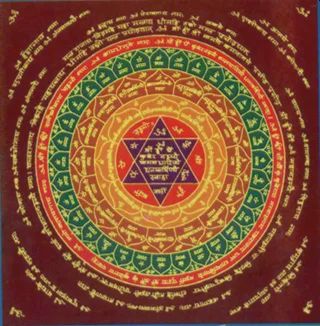
Aghamaraa (अघमर्षण)

Aghamaraa (अघमर्षण) was the son of Madhucchandas, who was the son of Rishi Vishwamitra. He was renowned as a great hermit of austerity; as one who had observed the duties pertaining to Vanaprastha (the third of the four stages of life—forest hermit). (Mahabharata, Shanti Parva, Chapter 244, Stanza 16)

Aghamaraa is the seer of the Rig Veda hymn 10.190, which is famed as Bhava -Brita Sukta. It is said to endow purity and prosperity. It projects the Universe and Time as recurring cycles. He recognizes a reality, which is beyond Time and change.  It is the Truth (Rita), which existed before Time.

ऋतं सत्यं चाभीद्धात्तपसोऽध्यजायत ततो रात्र्यजायत ततः समुद्रो अर्णवः समुद्रादर्णवादधि संवत्सरो अजायत अहोरात्राणि विदधद्विश्वस्य मिषतो वशी I सूर्याचन्द्रमसौ धाता यथापूर्वमकल्पयत् दिवं पृथिवीं चैवान्तरिक्षमथो स्वः

According to Aghamarsana, fervor (enthusiasm or dedication- तपसः) is the first creative principle from which the eternal order, harmony and truth were born (ऋतम्सत्यम् Rita and Sathya).

ऋतम् सत्यम् अभीद्धात् तपसः अधि अजायत ततः रात्री अजायत ततः समुद्रः अर्णवः Rig.10.190.1

And, Ṛta (ऋतं), the well-structured principle of the Universe, existed, in the opinion of Aghamarsana, even prior to diversity; just as the whole exists prior to its divisions. It is eternal; beyond time and change. The universe is a succession of events dotted along the time-less Rita.

It is said; the appearance of sun and moon; of day and night, is regulated; and this harmony, this ordering of everything in the universe is what the ancients named as Ṛta (ऋतं), the universal ordering principle.

It is also the principle of natural order that regulates and coordinates the operation of the universe on the natural, moral and sacrificial levels.

From Ṛta (ऋतं) and Sathya originated the night, which in its turn produced water; and from water originated Samvatasara or the Time principle.
Rishi Aghamarsana laid down a theory of creation, involving what is now known as the Doctrine of Time.

He speaks of the Year (Time-principle) as being the Lord, the Great Creator, Preserver and Destroyer of all things. He tells us that warmth (तपसः Tapas) is the first creative principle from which the Eternal Law and Truth (ऋतं च सत्यं) were born. From these was produced the Night (Tamas).

The Night produced water; and, from water originated the Year (Samvatsara) or the Time-principle. The Year formed, in due order, the sun and the moon; the heaven and the earth; the firmament and light; and ordained the days and nights. The year is the Lord of life and of death’.

समुद्रात् अर्णवात् अधि सव्वँत्सरः अजायत अहोरात्राणि विदधत् विश्वस्य मिषतः वशी Rig.10.190.2

Time is the highest, the Lord of all. Time is the eternal substance out of which all things are formed; and in which everything lives, moves and has its being. Time is indeed supreme.

**

Bhartrhari (11th century) in his celebrated work Vakyapadiya talks about the power of Time, the Kaala-Shakthi, the creative power (karaka-Shakthi) of the One unchanging Absolute (Shabda-Brahman) manifesting itself as the dynamic diversity that is experienced as the created world (Jagat).

He considers Shabda-tattva or Shabda Brahman as the foundation of the Universe; and, it is eternal.

The essence of Bhartrhari’s viewpoint is that Time (Kaala) is not different from Shabda Brahman which is identical with Para Brahman. The power of Time is an independent power (svtantra shakthi) of Shabda Brahman which allows sequences to come into being. Through Time, durations are perceived; the things come to be and pass away. Yet, Time has no divisions. Time is the efficient cause by which Brahman controls the cycles of the Universe.

When that Time sequence appears as differentiated objects, then Time as a power seems to be different from Brahman; but, really it is not so (Vakyapadiya 1.2).

एकमेव यदाम्नातं भिन्नशक्तिव्यपाश्रयात् अपृथक्त्वेऽपि शक्तिभ्यः पृथक्त्वेनेव वर्तते

ekam-eva-yad-āmnāta-bhinnaśaktivyapāśrayāt/apthaktve+api-śaktibhya-pthaktveneva-vartate

Prof. Radha Binod Pal writes:

The Aghamarshana Sukta, by giving us the genesis of the universe, imparted an idea of a supreme governing order of Truth and Truthfulness (ऋतम् सत्यम्), reigning all over; and, encouraged man to follow the right and true path of virtue.

ऋतम् सत्यम् अभीद्धात् तपसः अधि अजायत ततः रात्री अजायत ततः समुद्रः अर्णवः ॥ (RV.10.190.1)

But; his is an exceedingly short thesis from which nothing, by way of a clear statement, can be elicited. It is difficult to clearly ascertain his own philosophical position. Nor do we know either what led him to speak of the Year as being the Lord, Great creator, Preserver and Destroyer of all things.

It is said; for this purpose, we need to look through some of the older Cosmogonic Hymns. which may have constituted the immediate background for Indian philosophy; and, as well as through some of the latter Brahmana-texts.

*

But; Aghamarsana plainly tells us that warmth (Tapas) – Creative Fervour – the first creative impulse (which in the later came to be named as Kama, the intense motive force changing universe), — is the first creative principle from which the eternal law and truth (Rita) were born. From these was produced the Night (Tamas), which in its turn produced water; and, from water originated Samvatasara or the Time principle.

This Samvatsara produced in due order: the Sun, the Moon, the heaven, the earth, the firmament and light. And then originated, what we call, the days and nights. This Samvatsara is the Lord of Life and Death.

[Prof. Radha Binod Pal remarks :  Though Rishi Aghamarṣaṇa declared Samvatsara, the Time-principle, as the eternal substance out of which all things are formed; he did recognize a reality beyond time and change. And, this reality is Rta – the order, harmony and truth that governs the Universe. ऋतम् – Rta existed before ‘Time’.

The appearance of sun and moon, of day and night, is regulated; and this harmony, ordering of everything in the Universe is by  ऋतम् .

The Rishi seems to be running round in circles.]
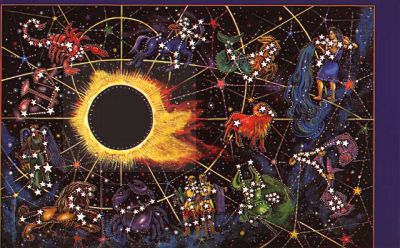
[ In the hymns of the Atharva Veda, the Year (Samvathsara) was replaced by the general term Kala, the Time. But, the basic doctrine of Time was retained. Further it was glorified by saying: Time is the endless cycle of existence. It is the eternal substance out of which all things are formed, and in which everything lives, moves and has its being. Time is indeed God supreme.

Time is described as a thousand-eyed and ageless; an eternal observer, unbound by the constraints of impermanence; and ceaselessly growing across manifold universes.

A profound infinite expansiveness, generating multiple realities.  How can anyone and decipher its enigmatic nature ?

*

Time is compared to a horse:

कालो अश्वो वहति प्तरश्मिः सहस्राक्षो जरो भूरिरेताः तमा रोहन्ति वयो विपश्चितस्तस्य क्रा भुवनानि विश्वा AV. 19.53.1

Kaala, or Time is a horse that carries seven rays, a thousand-eyed, ageless entity brimming with abundant Vigor. The wise continually seek to ascend it. Its wheels are the entire cosmos, containing all the worlds.

Time again is compared to a chariot having seven wheels:

प्त क्रान्वहति का प्तास्य नाभीमृतं न्वक्षः॑। मा विश्वा भुवनान्यञ्जत्कालः यते प्रथमो नु देवः AV. 19.53.2

Time, carrying the seven wheels, has seven naves and an immortal axle. It generated all these different worlds. Time, the first among deities, moves forward.

Time’s ever flowing dynamic nature is depicted through the analogy of full pot (Purna-kumbha) that never empties.  It is a lively, ever-shifting entity, much like a pot filled with swirling water.

पूर्णः कुम्भोऽधि का आहिस्तं वै पश्यामो बहुधा नु सन्तः॑। मा विश्वा भुवनानि प्रत्यङ्कालं तमाहुः मे Yaमन्  AV. 19.53.3

Time is placed in the full pot (cosmos). We observe it from various perspectives. It has produced all these different worlds. Time, they say, is situated in the highest heaven.

Time is seen as the ultimate power, unrivalled by any other force, emphasizing its crucial role in the structure, function, and very existence of the universe. It invites us to envision Time as a metaphysical concept that surpasses conventional human understanding of past, present, and future.

सं भुवनान्याभत्स सं भुवनानि पर्यैत् पिता सन्नभवत्पुत्र षां तस्माद्वै नान्यत्परमस्ति तेजः AV. 19.53.4

Time alone upheld all the worlds, and it alone encircles them. It became the father, yet is the child of these worlds. Therefore, indeed, there is no energy greater than it.

Time governs everything; and envelops within it everything it administers .

काले मनः काले प्राणः काले नाम माहितम् कालेन सर्वा नन्दन्त्यागतेन प्रजा माः AV. 19.53.7

Within Time is the mind; within Time is the breath; within Time is all names gathered. By Time, all these beings rejoice as they arrive.

Time directs all existence, growth, and enlightenment. Time was there even before gods, wisdom or seers.

कालः प्रजा सृजत कालो अग्रे प्रजापतिम् स्वयंभूः श्यपः कालात्तपः कालादजायत AV. 19.53.4

Time created life. Time was there before the gods. Knowledge and austerity were born from Time.]
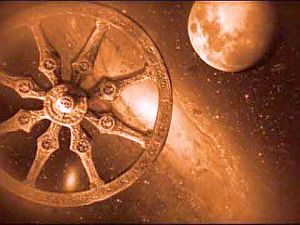
Prajapati Paramesthin (परमेष्ठिन्)

Another ancient philosopher Prajapati Paramesthin (परमेष्ठिन्) – a much respected spiritual master and teacher – according to Dr. Beni-Madhab Barua (A History of Pre-Buddhist Indian Philosophy- pages 12 to 16 – Motilal Banarsidas-1921), theorized that in the beginning ,  Being came out of Non-Being (Asatah sad ajyata). He said; That original matter or primitive substance comes neither under the definition of Being nor under that of Non-Being

Further, he asserted that Water (Salila) is the fundamental Principle. It is from Water, all things are formed; and, Water is the original substance of all that exists.  It was the unfathomable depth of water (gahanam gambhiram). And, there was nothing but water. Water is the elementary matter or abiding original ground of things. Water is the original substance of all that exists.

***

[Paramesthin started his inquiry with water; but, did not extend it beyond water.  He insisted that it was From Water all things are formed; Water is the original substance of all that exists. He took a rigid stand; and did not push his investigation beyond water.]

He asserted that whether one knows it, or does not know it (Veda-yadi va na-Veda), when there was neither Non-existence nor Existence; when there was neither death nor immortality; and, when there was no visible sign to distinguish between days and nights, (that is to say, between light and darkness) — Nasid rajo no vyoma na tarhi na ratrya ahna asith praketah – then there was Water, the unfathomable depth of water (Gahanam Gambhiram); and, there was nothing but water.

न । असत् । आसीत् । नो इति । सत् । आसीत् । तदानीम् । न । आसीत् । रजः । नो इति । विओम । परः । यत् । किम् । आ । अवरीवरिति । कुह । कस्य । शर्मन् । अम्भः । किम् । आसीत् । गहनम् । गभीरम् ॥ १०.१२९.०१

“Water was that one thing, breathless; breathed by its own nature (Anidavatam svadhaya tad ekam, tasmad-dhyanan na parah kimcan nasa ).  There was darkness (Tamas); and, concealed at first in this darkness was Water in its indiscriminate or unmanifested form (apraketam). Water was all that existed (sarvama idam).”

तमः । आसीत् । तमसा । गूळ्हम् । अग्रे । अप्रकेतम् । सलिलम् । सर्वम् । आः । इदम् । तुच्छ्येन । आभु । अपिहितम् । यत् । आसीत् । तपसः । तत् । महिना । अजायत । एकम् ॥१०.१२९.०३

[ Mahidasa says: The material cause of the world is water. All this was water indeed. It was the root; and, world was the shoot. He is the father, the earth, fire, &c. are the sons. Whatever there is belonging to the son, belongs to the father; whatever there is belonging to the father, belongs to the son. AA.2.8.2)

Prajapathi causes the world; the world causes water; the water causes life; life begets herbs and living creatures; the manas is the heart of thinking creature; it causes thinking mind; the thinking mind expresses through thoughtful speech; the thoughtful speech leads to thoughtful action; and the thoughtful action is in reality the man (Purusha), the abode of Brahman” (AA 1.3.4.9)]

*

Water, according to Prajapati Paramesthin, transformed itself into particular things by some inherent principle to which he gave the name Kama, the Cosmic Desire (or, the will to create or the will to be).

Kama, the Cosmic-urge, according to him, was the motivator of the movement or development that is inherent in matter itself; and, it is integrated into the endless progressions and processes of nature.

While everything was void and shapeless; by the power of Warmth , was born that longing called Kama. And; Kama was the motive force of the changing universe — the first germ of Mind (manaso retah), and this Mind was no other than the Sun “whose eye controls this world in highest heaven,”

Accordingly, for him, the principle of movement or development is inherent in matter itself; and involved in this is the vast processes of nature.

Water then transformed itself into particular things by the inherent principle – Kama, the Cosmic Desire. The sages having meditated in their hearts, discovered, by their wisdom, the relation of the existent with the non-existent. And, they said, this Mind of the Supreme Being was no other than the Sun “whose eye controls this world in highest heaven. ”

कामः । तत् । अग्रे । सम् । अवर्तत । अधि । मनसः । रेतः । प्रथमम् । यत् । आसीत् । सतः । बन्धुम् । असति । निः । अविन्दन् । हृदि । प्रतीष्या । कवयः । मनीषा ॥१०.१२९.०४

Prajapati Paramesthin gives his theory of creation; thus:

There was nothing in the beginning; neither Sat nor A-Sat; neither the existent nor the non-existent, neither the being nor non-being; nothing beyond the great One, the pure abstract immovable being having no beginning nor end, but always indivisible and perfect.

असत् आसीत् नो इति सत् आसीत् तदानीम् आसीत् रजः नो इति विओम परः यत् किम् अवरीवरिति कुह कस्य शर्मन् अम्भः किम् आसीत् गहनम् गभीरम् Rig.10.129.1

Death was not then; nor was there immortality: no sign was there of the days and nights; That One Thing, breathless, breathed by its own nature: apart from it was nothing whatsoever.

मृत्युः आसीत् अमृतम् तर्हि रात्र्याः अह्नः आसीत् प्रकेतः आनीत् अवातम् स्वधया तत् एकम् तस्मात् अन्यत् परः किम् चन आस Rig.10.129.2

There was darkness covered by darkness in the beginning, all this (world) was undistinguishable water; that empty united (world) which was covered by a mere nothing, was produced through the power of austerity

तमः आसीत् तमसा गूळ्हम् अग्रे अप्रकेतम् सलिलम् सर्वम् आः इदम् तुच्छ्येन आभु अपिहितम् यत् आसीत् तपसः तत् महिना अजायत एकम् Rig.10.129.3

Thereafter arose the intense desire (कामः – Kama), the first seed of the mind  {manaso retah), the germ of the spirit or the first creative impulse. The sages who searched within their hearts discovered, by their wisdom, the relation that binds the existent with the Non-existent.

कामः तत् अग्रे सम् अवर्तत अधि मनसः रेतः प्रथमम् यत् आसीत् सतः बन्धुम् असति निः अविन्दन् हृदि प्रतीष्या कवयः मनीषा Rig.10.129.4

Who truly knows; and who can here declare it, when this creation came into being. it was born and whence comes this creation? The gods, that we know, are later than this world’s creation. When such is the case, who then knows, with certainty, when all of this first came into being; from what material cause, and from what creative cause, did it arise?

कः अद्धा वेद कः इह प्र वोचत् कुतः आजाता कुतः इयम् विसृष्टिः अर्वाक् देवाः अस्य विसर्जनेन अथ कः वेद यतः आबभूव Rig.10.129.6

He, from whom we believe this creation arose, whether he formed it all or did not form it? No one knows. Whether he knows or perhaps even he may not know at all. If he knows not no one else does.

इयम् विसृष्टिः यतः आबभूव यदि वा दधे यदि वा यः अस्य अधिअक्षः परमे विओमन् सः अङ्ग वेद यदि वा वेद Rig.10.129.7

Prof. Radha Binod Pal explains:

The Sage Paramesthin not only differs from Aghamarṣaṇa but even goes a step further. He does not rest content with describing merely the process of creation, but sings of the force impelling towards the same. He said; It was Kama the impulse behind everything that followed.

The difference between the two sages is indeed fundamental. They disagreed as to where to seek for the root principles of the things and of knowledge: Aghamarṣaṇa sought for it in the object, something extraneous; while Paramesthin found it in the mind, in the world of thought.

Paramesthin declared : there was nothing in the beginning; neither Sat nor A-sat; neither the existent nor the non-existent; there was nothing beyond the great the pure abstract immovable being having no beginning nor end, but always indivisible and perfect.

The sage seems at times to be given to skepticism; and yet we find him already conscious of the need of faith and as such tending to mysticism. The position assumed by him is indeed that of a naturalist, and his conception of nature was entirely dynamic. To him the principle of movement for development is inherent in matter itself.

The world evolves from this immanent energy of nature – स्वधया, and the movement as a whole is self-determined.

Yet; the problem must remain unsolved: the origin must remain unknown.

But is it knowable at all?  ! !

यो अस्याध्यक्षः परमे व्योमन्त्सो अङ्ग वेद यदि वा वेद

In the philosophy of this Rishi, again, we can trace the Vedic conception of evolution. Progress in the universal evolution of entities is the divergence from the simple to the complex, from formless homogeneity to varied heterogeneity, accompanied by the greatest similarity and profoundest correlation of parts.

The philosopher expresses this by saying that from the one, the complete whole, before the existence of any sub-divisions of the great unit, there came a division and separation of parts, which tend to develop into distinct and concrete units or wholes developed to their fulness. The philosophy of this Rishi indeed evinces that noble illumination of human soul which brought into religion a perception of the unity of God and of the consequent brotherhood of mankind.
Brahmaaspati (ब्रह्मणस्पति)

Brihaspati is mentioned in the Vedas as ‘Lord of prayer or the Vedas’; a Vedic deity. Subsequently he became one of the nine planetary deities (Navagraha) representing the planet Jupiter (Guru). He is also known by other names, such as:  Jiva, Dhishanaand, Animisha-acharya, Brahmanaspati, Purohit, Angirasa, etc. He is also said to control the clouds and rain; and thus help the world by bringing to life and protecting vegetation. Some to believe that Brahmaaspati is another name for Brhaspati, the preceptor of the gods (Deva-Guru).

Dr. Barua states : Brahmaaspati , the author of Riks in Rigveda .10.72 , stated his views about the origin of the world. However, the hymn must be considered as one of the most unintelligible; and it would be vain to attempt to bring out anything very definite from it.

It is indeed difficult to understand Brahmaaspati’s theory of the birth of Sat (Being) from A-sat (Non-Being).

Yet; it could be said that he set himself the task to inquire into the nature of the world; and its condition prior to the generation of heavenly beings and all the elemental forces.

Generally, he tells that Being was born out of Non-Being. But he does not clearly explain what he meant by Being or Non-Being. We may, however, surmise that Brahmaaspati meant to mean Non-Being as the fundamental principle (Rita) that governs the universe.

As per the philosopher Brahmanaspati; The universe was at first non-existent. There was neither the heaven nor the earth, nor the mid-air. What we call as the Existence originally sprang from the Non-existent; and, evolves further on its own accord. That was his fundamental proposition.

देवानाम् पूर्व्ये युगे असतः सत् अजायत तत् आशाः अनु अजायन्त तत् उत्तानपदः परि Rig.10.72.3

He argued that the principle of movement or development is inherent in matter itself; and, it is part of the vast processes of nature.

In other words, the world evolves from its inherent energy (स्वधयाSvadhaya); the movement as a whole is self-determined and self-regulated.

Brahmaaspati begins with the promise that he would give us the particulars of the origin of gods, who are much praised in hymns of the Vedas.

देवानाम् नु वयम् जाना प्र वोचाम विपन्यया उक्थेषु शस्यमानेषु यः पश्यात् उत्तरे युगे Rig.10.72.1

Before the gods were born, the existent emerged out of the non-existent

देवानाम् पूर्व्ये युगे असतः सत् अजायत  Rig. 10.72.2

The earth sprang out of the productive power moving upwards. The regions (quarters) came to be recognized with reference to the earth

भूः जज्ञे उत्तानपदः भुवः आशाः अजायन्तRig.10.72.4

There is much discussion about Aditi. The scholars surmise that the term Aditi, in a way, stands to symbolize the Infinite – the source of all that came into being – the endless expanse beyond the earth, beyond the clouds, beyond the sky.

Prof. Radha Binod Pal explains:

Aditi is an ambiguous term of which we have not a precise explanation from Brihaspati. It is not possible to say with certainty what really was Brihaspati’s Aditi. There is a great deal of controversy over the real meaning of this term and it must be confessed, it is difficult to ascertain the import which he wanted to assign to it. Aditi could perhaps be the earliest name invented to express the visible Infinite, beyond our reach.
Then comes the concept of Anila (Air, Vayu).

Rishi Brahmanaspati, said : In the beginning, there was darkness covered by darkness. All this world was then was void and formless. And, by the great power of warmth was born the world.

He called Air (Anila) as the monarch or ruling force of the universe (Bhuvanasya-raja). He called Air the friend of water; अपाम्सखाप्रथमजाः— the first born, endowed with the generating principle.

He said; that the Anila travels, without rest or sleep, on the paths of the firmament. Air is the soul or vital spirit of the gods; in air lies the origin of the Universe; Air wanders ever as it lives.’

आत्मा । देवानाम् । भुवनस्य । गर्भः । यथावशम् । चरति । देवः । एषः । घोषाः । इत् । अस्य । शृण्विरे । न । रूपम् । तस्मै । वाताय । हविषा । विधेम ॥ Rig.10.168.4

Air has no visible form ( रूपं तस्मै वाताय हविषा विधेम). But it has a voice that whispers and gently breezes. it roars as thunder. Its voice is heard; and, by its touch, its existence is made known to us.

अन्तरिक्षे पथिभिः ईयमानः नि विशते कतमत् चन अहरिति अपाम् सखा प्रथमजाः ऋतवा क्व स्वित् जातः कुतः बभूव Rig.10.168.3

 [Mahidasa says:  A whispered voice is just breath; but when it is aloud it acquires a distinct form or a body (sarira). The whispered speech is the latent or the underdeveloped form of clear speech. Going further backward, the whispered speech is loud breath which in turn is an expression of formless breath. When spoken aloud, the formless breath transforms into clear perceptible speech.

Speech in this case is a kind of form. Breath is the root of speech. Similarly, going backward, breath is a form of air. Thus, going backward in successive steps we may arrive at the first or pure matter which may be entirely be devoid of form, indeterminate or in- cognizable by itself.

It is said; the Vedas describe more than 45 kinds of winds.]
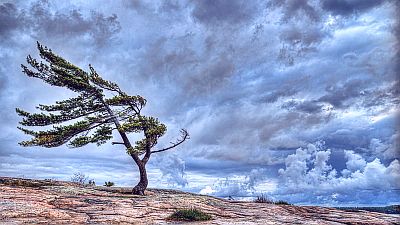
Brahmanaspati said that the Vital breath (Vata or Prana) is the controlling power of all that we perceive. It is the Lord of all; and, in it resides everything. On the vital breath everything rests. Pranoha sai vasyeavaro yaera praniti yacca na.

The vital breath, clothes all the creatures, as a father his dear son.

Pranaya namo yasya sarvain idam vaso, yo bhuta sarvasyesvaro yasmin sarvah prathistitam.” Athavva-veda, XI. 6. 1.

In the context of the Universe, it could be called as Air (Vata) or wind (Matarisvan, Air in motion).

It is in obedience to the thundering voice of the Vital breath that the plants are fertilized, that they conceive and multiply. When the season arrives, the vital breath causes the rejoicing of whatever is upon the earth.  It is when the vital breath waters the earth with rain that the plants and all kinds of herbs spring forth. The vital breath clothes the creatures, as a father his dear son. The vital breath, indeed, is the Lord of all, — of all that is animate or inanimate.

It is the guiding power (Virat destri), it is the sun and moon, and the Lord of beings (Prajapati).
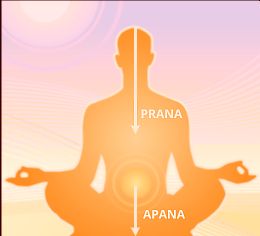
But, as to a human, it denotes in-breathing (Prana); the opposite of which is called down-breathing (Apana).

[ Mahidasa recognizes that spirit or the agent which continually causes changes, as prana, or the living principle of the universe, the pure vital energy and activity. He regards that vital principle (prana) by which virtue of which we keep changing and function as living organisms, as the soul (atman). The organisms are kept alive by the vital air.

Therefore, the central or the fundamental function of an organism is breathing or respiration. For, even during sleep when all sensations and mental activities cease, the process of life, its vital air (prana) goes on all the while.]

Without doubt, Air is the substance that a man breathes in (inhales) and also breathes out (exhales) even while in the womb, and it is when the vital breath quickens the embryo that it is delivered forth.

While a man sleeps, the function of breathing is carried on ceaselessly. It is therefore said that a man sleeps while the breath keeps guard over his vitality without sleep or rest. All that is (Bhuta) and all that will be (Bhavishya), truly, are supported upon the vital breath. But; the vital breath is also death; it is fever (takman).

Death occurs when the vital breath (prana) departs from the body. Indeed, it is the vital breath that is the Lord of all, — of all that is animate or inanimate.

*

[ But, from where does this “Anila ” come forth? What is its source? However, Brahmanaspati did not attempt-to offer a solution to this main problem. He merely said -the Air by itself came into being.]
[For more on these and other issues, please do read Dr. Beni-madhab Barua’s great work (A History of Pre-Buddhist Indian Philosophy- pages 8 to 30 -Motilal Banarsidas-1921)

And

Tagore Law Lectures 1930 – The History Of Hindu Law by Prof Radha Binod Pal; University of Calcutta – 1958]

***

 In the subsequent instalments of this series , let us talk a little more about Dhirgatamas  and his  Asya-Vamiya-Sukta , which is one the most philosophical , but  rather enigmatic Suktas (hymns) of Rig Veda ,deserving greater attention.
CONTINUED

IN THE

NEXT PART

REFERENCES

  1. History of Pre-Buddhist Indian Philosophy by Dr. Beni-madhab Barua -Motilal Banarsidas-1921
  2. Tagore Law Lectures 1930 – The History Of Hindu Law by Prof Radha Binod Pal; University of Calcutta – 1958
  3. Vision in long darkness by Prof. Vasudeva Agrawala
  4. https://who.rocq.inria.fr/Ramakrishna.Upadrasta/Veda/Asya_Vamiya/AVMS/AVMS_1-100.pdf
  5. https://www.youtube.com/watch?v=r86l_TF9XWc
  6. https://archive.org/details/in.ernet.dli.2015.226346
  7. https://istore.chennaimath.org/products/rig-vedic-suktas-asya-vamiya-suktam/1309294000102324374
  8. pdf (archive.org)
  9. https://religion.fandom.com/wiki/Dirghatamas
  10. ऋग्वेदः सूक्तं .१६४विकिस्रोतः (org)
  11. org/mirrors/rigveda/sanskrit03/RV0310noaccent.html
  12. ALL IMAGES ARE FROM INTERNET


Tags: , , , , , , , , , , , , , , , , , , , , , , , , , , , , , , , ,

Who was Mahidasa Aitareya – Part Two

Continued from Part One

11.1. As mentioned earlier, Aitareya Aranyaka and Aitareya Brahmana are fairly lengthy texts. The concepts and explanations therein do not also proceed in an order. We may not be able to discuss Mahidasa’s works thoroughly. But, we can attempt to glance at his views on certain subjects.

There are no clear-cut divisions or grouping of his doctrines. But, we can attempt to classify his views under some broad heads. Those classifications are our own; but, the concepts are of Mahidasa.

11.2. The main problems that Mahidasa tried to grapple were the origin of life and the development of consciousness.

Before we get to that, let’s briefly see a few other subjects discussed by Mahidasa.

The task of philosophy

12.1. To begin with, Mahidasa pointed out that the task of philosophy is to explain ones experience. By ‘experience’ he perhaps meant a person’s relation and interaction with the rest of the world and with himself. The maxim that Mahidasa laid down for himself was : “I know the universe and myself as far as I know the gods; and I know the gods as far as I know the universe and myself”(Aitareya Aranyaka-2.17.7; 11.1.8.2).  

The term ‘gods’ in his statements is taken to mean the hymns (ukta) or the elements (bhutani).

12.2. How does one explain such experiences ? According to Mahidasa, there are two methods of understanding or two levels of experience: objective and subjective. These could be termed as conventional (vyavaharika) and philosophical (paramarthika).

Mahidasa and the world

13.1. In a philosophical perspective (paramarthika), Man is conceived as the miniature universe. Man is a microcosm just as the visible world is universal man (yadvad brahma vistitam tatvati vagiti; yatra ha kva ca brahma tad vaag, yatra va vak tad va brahmatiAA 1.3.8.9). Every individual is like an egg, very similar to the oval shaped spherical universe (Brahmanda); curvilinear , bending around itself with no distinct boundaries.  . Both are complete in themselves. What is in one is in the other :

“whatever there is belonging to the son belongs to the father; whatever there is belonging to the father belongs to the son” (Aitareya Aranyaka: 2.3.1.1).

What is true in respect of man is also true of the universe. The whole of nature is a purposive-order, a system of ends. The finite thing of experience is not only a part of the whole but is, in essence, the whole itself.

“I as a living nomad am the universe”.

But that does not mean, he says, that the universal completely explains the particular. Obviously, there are differences. But those differences are not of kind but of intensity and degree.

The physical world

14.1. As regards the conventional (vyavaharika) or the physical world, Mahidasa considered it as a combination of the visible world, the organic world and the man. By visible world Mahidasa meant the physical world as whole. The organic world included vegetable kingdom and the animal world, as also the Man.

14.2. Of these, the visible world is a living thing and man is a living being; and connecting the two is the organic world. He believed, ‘If we know one, we know the rest’. For, there is no difference, in principle, between the physical world and the organic world; or between the organic world and the man. The fundamental difference, if any, would be in the intensity or the degree of growth. That is to say; as a naturalist Mahidasa perceived the difference subsisting between things of experience; but as a philosopher he realized the unity underlying all existence (AA 2.3.8.2)

14.3. According to Mahidasa’s classification, all those shining gods – the sun , lightening, the moon, the planets, and the stars; and all the five great elements (maha-bhutani) – the earth, water , fire, air and the sky – belong to the physical world. Mahidasa regarded nature as a living form, an interconnected whole, having a unity in the midst of all changes.

As regards the organic world, it included vegetable and the animal kingdoms. And, man naturally belongs to the animal world; and is classed among the animals (prani– the living).

According to Mahidasa, the distinction between the physical world and the organic could roughly be termed as that between the dead-matter and living-matter. As said earlier, the differences among them are in the intensity or the degree of their growth.

14.4. If one extends Mahidasa’s explanation, a so-called non-living thing is in fact an undeveloped life, in the same way as man could be taken as a developed thing. Because, according to him, what takes place in the world continuously is not creation or manifestation (prakatatvam), but it is the evolution (avistarah avirbhava) of life. He described it as the ceaseless flowering of the hidden potential in all matter.

Evolution – the rope of life

15.1. Mahidasa understood evolution (avistarah avirbhava) as an ongoing process, a continuing relation between a series of causes and effects. He regards evolution of life alone as the real process in the world. He views evolution as the unfolding of life; a transition from the hidden to the manifest; from potential to the actual. Each step in evolution comes from something and becomes something. Each step is the seed (bija) of the next.

15.2. Mahidasa visualized evolution as a series of knots on a rope; each knot representing a stage in evolution (AA .2.1.6.1). Such a rope or a chain has two extremities –  two ends  – two ultimate knots , either way , between which all other knots fall ; and which therefore determine the length of the rope ( duration of the evolutionary process). Each knot (stage) is the seed of the next. Therefore what we recognize as two separate knots are essentially two aspects of one and the same reality. If we take the first cause as Brahman or God the final cause too is God; and so is whatever that falls in-between.

[In the process of evolution, a living individual is one of the many knots on the rope of life. He is one of the developed stages which matter assumes or is capable of assuming.]

15.3.  In Mahidasa’s terminology, in the Universe the first and the last knots are termed Prajapathi (the efficient cause) and Brahman (the final cause or end). In the case of the individual they are termed prana and Prajna.

Prajapathi causes the world; the world causes water; the water causes life; life begets herbs and living creatures; the manas is the heart of thinking creature; it causes thinking mind; the thinking mind expresses through thoughtful speech ; the thoughtful speech leads to thoughtful action; and the thoughtful action is in reality the man (Purusha), the abode of Brahman”( AA 1.3.4.9)

16.1. Each stage is the seed (bija) of the next. A seed (effect) is developed from a seed (cause) through a process of series of changes or natural transformation. That process of change from one seed to the next is at once both a destroyer and a creator. Let’s take the example of a real plant: when a seed moves into its next stage or when it becomes a whole plant, the essence of the seed is transformed into a wholly different object. The seed and its form would no longer be there.  But a plant would not have come into existence without the presence of the seed.

16.2. In the series of changes that take place, each stage (seed) gives place to the next stage. The seed is never inactive. When the seed (cause) becomes a shoot (effect) it is no longer continuing as a seed; but its nature has altered to that of a shoot. The seed series is transformed into shoot-series, when suitable conditions prevail. But one series is in as much a flux as another. The fully grown plant , in turn, puts out the seeds. That is the cycle of life.

The ultimate product of the seed is again the seed. Regeneration and perpetuation is the theme of life

16.3. Thus, according to Mahidasa, a higher form often presupposes the lower. The process that causes development of a seed from a seed must itself undergo a certain form of change; or itself must enter into motion. In order to attain a higher form, a seed is bound to lose its own form but not necessarily its substance.

That is to say, the root and shoot (cause and effect) are, for practical purposes, distinguishable from each other; but logically they are identical in substance or in essence (AA 2.1.8.1). 

Mahidasa in his picturesque language asserts: ‘no one possess that which he does not eat or the things that do not eat him…the eater and the food are in reality the food. The food is that which feeds and is fed. What we call this moment as eater may later be the food’. That is to say, the food (cause) and eater (effect) are correlated. Each stage in development is the destroyer of its predecessor.

[The same reasoning is applied to show that no extraneous causes are needed for destroying a thing. The germs of destruction are inherent in every object. If a thing does not annihilate itself, nothing else can do it.]

[In these texts, food (anna), the eater (annada); seed (bija); or root (mula) or shoot (tula) were all meant to denote ‘cause’ or ‘effect’ depending on the context.]

16.4. The relationship that binds each successive stage  is, thus, akin to the relation between the food (anna) and the eater (annada); the material and the individual; the potential and the actual; the indeterminate and the determinate. A developed seed (the effect) is more individual (independent), more actual, and more determinate and more of an object of nature than that from which it developed (AA 2.3.6.15).

Matter

17.1. Mahidasa did not look upon changes from one stage to the other as unrelated or isolated events. In his view, the evolution has a unity of its own; and that unity implies identity and continuity of a common substratum of change, that is the matter. Thus matter is the ground of all plurality of forms, just as speech is the ground for all plurality of names.

17.2. Matter, according to Mahidasa, is that out of which a thing becomes; and that from which a form (murti) or a purposeful order is brought forth (AA.2.4.3.1). Form is related to matter as shoot (tula) to its root (mula); as that which manifests it (AA.2.1.8.1). Matter and form are thus conceived by him as transition from something hidden or potential to something manifest and actual or express. That is to say, there is no transition from nothingness to being; but it is derived from that which is not- yet or the potent.  The more evolved the matter is the more manifest or recognizable or better defined it becomes. (This applies also to evolution of human from primitive forms.)

17.3. Mahidasa provides an illustration “A whispered voice is just breath; but when it is aloud it acquires a distinct form or a body (sarira) . The whispered speech is the latent or the underdeveloped form of clear speech. Going further backward, the whispered speech is loud breath which in turn is an expression of formless breath. When spoken aloud, the formless breath transforms into clear perceptible speech.

Speech in this case is a kind of form . Breath is the root of speech. Similarly, going backward, breath is a form of air. Thus , going backward in successive steps we may arrive at the first or pure matter which may be entirely be devoid of form,  indeterminate or in- cognizable by itself.

On the other hand, going forward from matter to form, root to shoot, we may proceed towards forms that are better defined.

Mind – Speech

18.1. Mind is that faculty in an organized body which thinks, wills and feels (A 2.4.3.6). All desires dwell in mind because it is with the mind that man conceives all desires (AA 1.3.2.2). A thought conceived in the mind is expressed through speech. Thus, logically thought is prior to speech (AA 1.3.2.5). At another place, Mahidasa states that thought and speech are interdependent (van me manasi pratistitha; mano me vaci prathistam AA 2.7)

18.2. Like matter or mind, speech is conceived as a continuous structure. It also is compared to a rope or a chain with many knots. As the rope or chain that runs along, it has a first and a last knot, representing the first and the final forms. The knots or links that lie in between are the names or concepts corresponding to their existent forms (vak tanti namani daamaani -AA 2.6.2).

Prana

19.1. Matter according to Mahidasa is neither being nor non-being. And, the principle of motion or the energy that brings about changes in it  is  something other than matter itself.

Mahidasa recognizes that spirit or the agent which continually causes changes as prana, or the living principle of the universe, the pure vital energy and activity. He regards that vital principle (prana) by which virtue of which we keep changing and function as living organisms, as the soul (atman). The organisms are kept alive by the vital air. Therefore, the central or the fundamental function of an organism is breathing or respiration. For, even during sleep when all sensations and mental activities cease, the process of life, its vital air (prana) goes on all the while.

[It is not clear whether or not Mahidasa conceived the vital air (Prana) as a principle separate from the elements. At one place he says that in so far as the living beings are concerned the vital principle has no separate existence from the five elements (AA 2.3.1.1). At another place he considers Prana as a principle by itself, a principle which is not altogether dependent on body or material conditions (AA 2.1.8.12-13) :  “the immortal dwells in the mortal”]

Consciousness

20.1. Mahidasa says consciousness (prajnana) resides in and is a function of the soul. What is consciousness? He asks and says:

“The faculty by which we see form , that by which we hear sound, that by which we perceive odors, that by which we utter speech, that by which we taste food and all that which comes from the heart and the mind, namely , appreciation , comprehension, understanding, cognition, intellect, insight, retention, judgment, reflection, receptivity, remembrance, conceiving, willing, breathing, loving, desiring – bear in varying degrees the name of consciousness (prajnanasya namadheyyani)” — (AA.2.6.2)

20.2. He recognized   prajna as pure intelligence, the eternally active self-conscious –reason (prajnana).He said ; the whole realm of change is led the self-conscious reason (prajna – netra). He declared; you could call that consciousness as God, the deity which is ‘the best and without flaw’ –Prajnanam Brahma- (AA 1.3.3.6).

20.3. As between soul and consciousness, he asks:

Who is this self on whom we meditate? Is it the self by which we hear, see, smell and taste; and through which we speak in words? Is self the mind by which we perceive, direct, understand, know remember, think, will, desire and love? No, these are but the servants of the self who is pure consciousness. It is Prajna which guides all. The world rests on Prajna; and, Prajna is Brahman.

Soul

21.1. Mahidasa seems to have conceived soul as the compliment of a living body. The soul is, in essence, just the vital principle (prana) by virtue of which we exist as living beings.

From a metaphysical position, Mahidasa understood soul as a part of change or the process; as the agent of all changes. It is directly connected with the mode of cognition and indirectly with the object cognized. He did not seem to make a serious distinction between abstract reasoning and sense perception.

21.2. According to Mahidasa, the development in a living being is not merely physical but is psychological as well. He considers sense perception and reasoning – mental functions –as not different in kind but only in the degree or the intensity. They develop gradually, stage – by- stage.  Those mental functions ranging from bare sensations to comprehension have the name of reason (prajna-nasya namdheyyani -AA 4.1.3).

21.3. According to Mahidasa, we should try to understand HOW we know, rather than what we know. Gargyayana, another philosopher of those times, took the alternate view saying what we know is more important than worrying about HOW we came to know.

21.4. An interesting aspect of the soul, as per Mahidasa, is its graduated scales of function. According to Mahidasa, the whole of nature is a system of ends; and that the self develops gradually in living world (prana-bhritsu). ‘As there are infinite gradations of types of existence, so there is a graduated scale of functions of soul.’  Its primary function is nutritive, desire for food and sensations of hunger and thirst. The next function is sense perception and other body -functions. And, the third function is that of ‘heart and mind’, meaning those relating to understanding and reason. All these are merely the stages of its existence; and do not mean different kinds of existence. Similarly, the various functions of the soul do not vary in kind, but only in their degree or intensity. Mahidasa relates these concepts to the growth of life in the world.

[Mahidasa’s ideas of graded existence of the soul perhaps were the nucleus or the seed-ideas from which the later concepts of Annamaya, Pranamaya and vijnanamaya were developed.]

Mahidasa’s biology

22.1. A fascinating feature of Mahidasa’s biology is his view that the intelligence principle (chitta or chidrupa) in the living world (prana-bhritsu) develops or evolves gradually – (AA.3.2.2). He asks:

‘understand the gradual unfolding of individual things’ – (atmanam avistaram veda). Materials (what we call as life-less) do have a sense of touch or feel.  In the herbs and trees, for instance, the sap (Rasa – life) has its own intelligence.

22.2. But, chitta (consciousness or thought) in the widest sense is seen in the higher form of life. Among the latter again, some show vitality and intelligence, while others are devoid of intelligence. Among all the animals, man alone has the capacity for acquiring higher wisdom; yet in him too the soul develops gradually.

22.3. Man differs from lower animals in these respects:  

“He says what he has known. He knows what is to happen tomorrow. He knows heaven and hell. By means of the mortal he desires the immortal – thus he is endowed (A 1.5.1.9). With other animals, on the contrary, hunger and thirst (instincts and impulses) only are a kind of sensation; they possess voice but no speech; mind but not prudence (AA 2.2.1-5). Animals may possess rudimentary reason but not reasoned knowledge”.

Classification of living beings

23.1. His classification of living beings includes earth, water, fire, air, and heaven (space). According to him, the matter too has one fundamental sense that of touch or ‘feel’. In a way, matter is an ‘organic-thing’ as distinguished from plants and herbs which are ‘organic beings’.

[But, Sri Sayana differed from Mahidasa. He considered earth, stone and such others as unconscious objects .They merely exist and, they do not come under the strict definition of organic beings].

23.2. Mahidasa mentions Plants and herbs in general as distinct from things. For, they can be distinguished by the sap (rasa) or moisture (ardratvam) which exhibits its peculiar intelligence (AA 2.3.2.3). It has faculty that takes sunlight, absorbs water and essece from soil and converts that into plant energy. Plants are alive ; and  are endowed with sense of light, sensations of thirst and hunger. According to Mahidasa, that sense itself is developed into reason; and, a plant becomes a man by the gradual process of evolution. But like the’ organic things ’, the plants too are immovable (sthavara) lacking the freedom to move around (AA. 2.6.1.6).

23.3. But, those that are higher in the scale of development can move from place to place at their will – (jangama) and are also capable of experiencing other sensations and reasoning. Physically and mentally humans are the best of all such created things. But, again, the differences among the species are the mere question of degree.

23.4. Mahidasa explains the graded signs of freedom. The sign of freedom is the power of bodily movement, the power which the stones, herbs etc (sthavara as distinguished from jangama) are deprived.The second test of freedom is the power of the thighs (uru) or the power of regeneration by means of separate sexes, that is to say maithuna.The next higher test is by the stomach (udara) , that is to have  choice of food and  the power to assimilate  etc. The last test is that of the head (sirasah) or the power of heart and mind (hridayam manasa) by which human is endowed with knowledge. A human says what he has known; sees what he has known; knows what is to happen tomorrow; knows heaven and hell; and desires the immortal by means of the mortal.

Thus, the highest in the scale of development is man who alone is endowed with the faculty of reason (prajnanam sampannatama).

Whither Man

25.1. The continual advance of life is from mere existence   towards reason (prajna); from bondage to freedom of action. That is the story of evolution. Mahidasa maintained that the intelligence principle develops or evolves gradually. Among the higher animals the two footed man surpasses the four-footed. Therefore the quadrupeds though physically stronger obey man.

25.2. All the forms of life eat and drink. All lower animals propagate the species. Even the plants, when grown up, bear fruits and seeds  (A 1.2.4.14). This alone cannot be the whole duty of human being who is endowed with the extraordinary faculty of reason, by cultivating which he acquires wisdom, builds his moral self and perfects his conduct.

25.3. It is his sense of duty and his performance of duty that distinguishes the human from the rest.  The highest duty of human is to attain perfection. And, his principle means is prajnana. That is, in order to realize the full freedom, a wise person must transcend in his thought all material conditions of existence and limitations . He should aspire to attain the immortal by means of the mortal (martyena amritam ipsa). The ultimate aim of man’s life and of all life is to attain perfection which consists knowledge (Prajna or prajnana), bliss (nandana) and immortality (amritatva).

Mahidasa’s views on Art

26.1. Mahidasa regards all human arts including art of generation as an imitation, in some way, of the works of nature, the living arts.  “The creations of the divine (daiva shilpa) in nature are indeed great works of art. All human arts (manusha shilpa ) such as brass work, garment, works in gold and such toys as elephants, mule and chariot are but a reproduction (anukarana) of nature” (AB .6.5.1) . All the skillful works that appear in this light (sense) are to be regarded as arts. 

Sri Sayana explains that self-development is also an aim of those arts. He says that by practicing art, the Yajamana ( the aspirant) would improve his awareness; he becomes chandomaya – harmonious with nature; he grows  in tune with the whole of nature ;  and ,  becomes  vedamaya,  endowed with intelligence .

(The generation of offspring and bringing up a healthy and well educated young generation is also regarded an art).

26.2. Gargyayana, also , at times, known as Citra Gargyayani, a sage–king , who appears in the Kausitiki Upanishad (and, said to be one of the teachers of Uddalaka Aruni), who followed Mahidasa, did not, however, entirely agree with Mahidasa’s view of art. He did acknowledge the existence of the divine order in nature ; but maintained that all art creations are products of human mind. He questioned ; if all art is an imitation or a reproduction of nature, where is the scope for free play of one’s expressions or imagination. According to Gargyayana, art is how the human mind conceives and experiences the nature and the surrounding life (maanasi pratirupa chaksusi) ; how it expresses that experience in its own way; and how it imposes its own forms and interpretations on nature.

26.3. Centuries later, the Buddha improved upon Gargyayana‘s view of art. The Buddha precluded all ideas of the divine as being external to man. He regarded art as a product of human experience and imagination, a representation of ideas that take birth in human mind- (caranam cittam citten^ eva cintitam Samyukta Nikaya, 5.8 quoted in the Atthasalini-204.). In addition, the Buddha brought in psychological aspect of art as influenced by the diversity of forms of life and human experiences.

26.4. Buddhagosha the Buddhist commentator explaining the Buddha’s view said “In drawing the finest pictures the thought arises in the mind of the painter: such and such figures are to be drawn in this picture. By this thought the drawing of the outline, colouring, polishing and other details follow in consequence whereupon a wonderful picture emerges on the canvas – (Saratthappakasini, Sri Lankan edition)

lotus

References and sources:

1. The History of the Pre-Buddhistic Indian Philosophy (1921); Calcutta University by Dr. Benimadhab Barua (Reprinted by Motilal Banarsidass, 1970)

2. A Course in Indian Philosophy; by Prof. AK Warder; Motilal Banarsidass, 1998

3. The Essence of Aitareyopanishad by Swami Sivananda

http://www.sivanandaonline.org/public_html/?cmd=displaysection§ion_id=587

4. .Aitareya Aranyaka

http://www.interfaith.org/hinduism/aitareya-aranyaka-2/

 
11 Comments

Posted by on October 12, 2012 in Mahidasa, Upanishads


Tags: , , , , , ,

Who was Mahidasa Aitareya – Part One

The post Vedic period

1.1. The post Vedic period is generally reckoned as the one that fell between the end of Rig Veda and the commencement of Buddhism. And more particularly, it covered the period of the Aitareya and Taittairiya texts, Brahmana Schools and the early Upanishads. In regard to its teachers, it is the period encompassed by Mahidasa Aitareya and Yajnavalkya Vajasaneya. It is an obscure but a highly important period of thought- evolution that preceded the rise of Jainism, Buddhism and other later systems of Indian thought.

1.2. The period closed with Yajnavalkya whose philosophical teachings epitomized   the logical trend of the entire post Vedic thought tending towards the psycho-ethical. Yajnavalkya’s psychological speculations about the waking, the dreaming and the sleeping states of consciousness  ; and his theories of rebirth, death and birth laid the foundations of many of the Jaina, the Buddhist and the Hindu doctrines.

The discussions of this period form the basis for development of many psychological theories of the senses, the mind and the soul; and speculations of their functions and inter relations that are characteristic of the Buddhist traditions.

Shift in emphasis

2.1. The locale of the post Vedic period shifted from the Vedic  land of seven- waters (saptha-sindhavah) in the Punjab-Sindh region to Madhyadesha , which at those times meant the country lying to the east of Vinashana ( the region where the Saraswathi disappeared) stretching eastward up to Kalakavana or Black Forest , a tract somewhere near Prayaga.

2.2. The shifting of the knowledge-base from west to east must have taken place gradually. There is a long interval separating the last sage of the Rig-Veda from the first thinkers or the philosophers of the Post Vedic period.

During that long period  not only did the manner and the objective of life change but the aspirations of life too changed. It moved from a desire for a long and a cheerful life on earth to a will to secure release from the chain of births. The escape from Dukkha and delusions of the world took precedence over enjoying earthly fruits.

The gods too were steadily and slowly changing from their Vedic characteristics and functions of granting longevity, cattle, children, wives, victory, health and happiness and prosperity on earth to sage- like counsellors bestowing the knowledge that liberates. In the post Vedic texts the gods were approached with reverence for gaining an understanding of the nature of Man and his Universe.

2.3. The chief interest of the Vedic sages was centred upon the physical world as a whole. The thinkers of Aranyakas and Upanishads were, on the other hand, more concerned with the organic world and man, and his inner urges, culture of faith and intellect. While the Vedic hymns look outward in reverence and awe at the phenomena in nature, the post Vedic texts tend to look inward attempting to interpret the powers of nature as varied expressions of human consciousness.  In the post Vedic stage, logic and dialectics formed two wings of the discussions that were carried on; and, yet   the intellectual aspect was as much important as the contemplative. The shift in emphasis was gradual and natural.

2.4. Although the early hymns of Rig Veda are full of inquisitive questions as to the what, the whence, the how and the whither of things, they are not philosophical in approach. Those exclamations and wonderment were turned in to philosophical expositions in the Post Vedic era by Aghamarshana and other thinkers that followed him.

2.5. The highest aspiration of the thinkers of the post Vedic times was to approach and be one with what one looked up to as the Supreme. That soaring aspiration found its expression in hymns, verses, speculative thoughts, and the deeply absorbing discussions of the Aranyaka texts and the Upanishads. 

The question that mainly came up in the Post Vedic texts was ‘Who am I? ‘, which brought in its trail the other questions such as:’ ’Who is He?’; and ‘How shall I be one with Him?’ The thinkers of those times tried answering those questions in varieties of ways until it led them to the realization that  the questions seemingly separate were in fact two aspects of the same problem. On that, they exclaimed in amazement and joy:  ‘If I know Him, I know myself; If I know myself, I know Him’.  That finally led to the pithy aphorism  ‘So hum’ – I am He.

Mahidasa Aitareya

3.1. All such conceptions charged either by intellect or by intuition was in currency during the post-Vedic times. The earliest of its philosophers was Mahidasa Aitareya.  He is revered as the forerunner who showed the way to thinkers that succeeded him. Mahidasa is therefore recognized as the Father of Indian Philosophy, though many regard Aghamarshana as the first one to clearly state and put forward a definite explanation of his belief that Samvatsara (year) , time-principle which governs life and death was the essence of all things.

3.2. According to Sri Sayana-charya, Mahidasa was the son of a sage (identified by Dr. Radha Kumud Mookerji as Sage Visala) who had many wives, among whom was Mahidasa’s mother Itara. She came from a lower caste. Itara   named her son after her chosen deity Goddess Mahi , the Mother Earth.

Mahidasa , the neglected one , was gifted with a natural aptitude for study and learning. By dint of his sheer genius , Mahidasa, years later, rose to eminence. Mahidasa called himself Aitareya , the son of Itara; and, named the texts compiled by him – Aitareya Brahmana and Aitareya Aranyaka – in fond memory and in honor of his mother Itara.

[ Dr. Benimadhab Barua , in his “A History of pre-Buddhistic Indian Philosophy”, places Mahidasa in the post-Vedic period, which is the transition period from Vedas to Brahmanas.

Dr. Barua treats Mahidasa as the founder of the Aitereya tradition after Dhirgatamas ; but, before Gargargayana, Pratardana; and, much before Uddalaka (of Chandogya Up). He regards Mahidasa as the father of Indian Philosophy, because he was the first to systematically endeavor to understand, explain and suggest solutions to the questions concerning the origin of life, and development of consciousness. He paved way for all most all the thinkers who succeeded him.

• The Aitareya Brahmana (3.44) of Mahidasa says: “The Sun does never set nor rise. When people think the Sun is setting it is not so. For after having arrived at the end of the day it makes night to what is below and day to what is on the other side. Having reached the end of the night, it makes day to what is below and night to what is on the other side. In fact, the Sun never sets.”

The principle subject of interest among the thinkers of Mahidasa’s time appeared to be the primacy of Prana (vital energy or Life) OR Brahman (intelligence or consciousness). While Suravira, Mandukeya, Sakalya the senior and Raivaka argued for Prana; Badhva and Shandilya went for Brahman. It is said; whenever the arguments got into a tie, Mahidasa seemed to favor Prana.

Dr. Barua mentions that The Buddha regarded the Aitereya, Taittiriya and a few other Brahmana Schools as being among the oldest. Panini the Grammarian mentions (V.1.2) Aitareya and Kaushitaki Brahmanas. Similarly, Yaska also speaks of the two Brahmanas in his Nirukta (vi.8) . Thus, Aitareya of Mahidasa is of great antiquity.

A B Keith in his “Rigveda Brahmanas: the Aitareya and Kausitaki Brahmanas of the Rigveda”, after a lengthy discussion (from page 42 to page50) , places the texts around 800 BCE. He also says Aitareya is, doubtless, one of the oldest Brahmanas; older than Jaiminiya or Shatapatha.

Of course, given the state of chronology in Indian History, the dates are always open to debate.]

**

3.3. Nothing specific is known about Mahidasa’s life. The only definite information about him comes from Chandogya Upanishad and Jaiminiya Upanishad, both of which mention that Mahidasa lived a long life of 116 years. It is said; the first 24 years of his life were spent as a student; the next 44 years as householder; the remaining 48 years as hermit or forest dweller free from illness and weaknesses.

3.4. Mahidasa compared the life of a person to a Yajna. According to him, the first 24 years of life are the morning libation connected with the Vasus. The next 44 years of life are the midday libations connected with the Rudras. And, the next 48 years are the third libation connected with the Adityas.

Aitareya

4.1. Aitareya is an important name in the Vedic literature . The Rig-Veda supposedly had an Aitareya recession. Mahidasa was perhaps the founder of a Shakha or a School of the Aitareyins  whose philosophies were incorporated into the Aitareya Brahmana. To Aitareya Brahmana belongs the Aitareya Aranyaka , which includes Aitareya Upanishad. Even as early as in the sixth century BCE, the Buddha regarded the Aitareya along with Taittareya as being the oldest among the post – Vedic texts.

4.2. The Aitareya Brahmana and the Aitareya Aranyaka , omitting the Upanishad portions, together represent a homogeneous body of doctrines which may be regarded as the system of a particular school of thought , say that of Mahidasa Aitareya or of the Aitareya School. The case of the Upanishad is, however, different, as it contains the views of many individuals and schools other than of Aitareya clan.

4.3. Aitareya Aranyaka (appended to Aitareya Brahmana of the Rig Veda) consists five books each of which is treated as a separate Aranyaka. The Books One to Three are attributed to Mahidasa Aitareya; the Book Four to Asvalayana; and , the Book Five to Saunaka , the teacher of Asvalayana.

The status of householder

5.1. One of the moot questions that perhaps were in serious debate during those times was: whether one can coordinate or harmonize earnest spiritual quest with discharge of responsibilities as of a social being, a householder.

Mahidasa replied that with a very emphatic ‘yes’. There  is no reason, he said, why a righteous person should forego   the legitimate pleasures of the senses, in so far as these are in harmony with the purpose of the whole of nature. That is to say, in so far as these serve the real end for which these are meant , and no other.

5.2. He asserted that Marriage is a sacred human institution which must be respected by all human beings. Mahidasa believed, life is altogether imperfect and bitter without marriage and children (AA1.3.4.12-13). According to him, a happy life is one which is lived for a hundred years in health, strength and brightness (indriye, viryye, and tejasi) , in company with the loved ones..

5. 3. The householder, he said, is the pivot of social system; all stages and segments of life, either in family or in society, revolve around him. Just as all beings depend on air to exist, the other three stages in life (childhood, hermit and recluse) depend on the householder. He feeds, protects and clothes all. The householder generates life, nurtures, protects, educates and strengthens life for the well-being of the present and of the future society. The order, safety and governance in the society all come from the householder.  The values and virtues in life such as love, generosity, commitment, tolerance, prudence, right judgment, purity etc., all emanate from the family. The peace of the departed ancestors too depends on the householder. The gods and the Dharma too are maintained by the householder. Thus, the past, present and future all depend on the householder. All stages of life originate from, prosper in, and merge into the householder.

The art of Life

6.1. As regards the life in general, Mahidasa Aitareya advised: Live the life of nature. The art of self-building or the art of conduct should be based upon the art of the Divine, that is to say, to be in complete accord with the laws of nature. Nothing is bad in its right place; and everything is useless when it is out of its place. Even a precious diamond is a mere speck of dust when it falls into ones eye . Everything gains in value and significance so long as it discharges its proper functions and in proportion to  its contribution  to the general wellbeing of the whole system of which it is an integral , organic part .The eye for instance is good so long as it discharges its functions of seeing for which it is intended and remains an integral part of the organism. ” The eye cannot hear; the ear cannot see; the stomach cannot think ;and, the mind cannot digest and so on (AA 2.4.3.2.3).” Anything out of its  place and out of context is useless.

6.2. Mahidasa said; the greatest virtue of man is truth (satya) , the flower and fruit of speech. The tongue that utters what is not truth dries up and perishes like an uprooted tree (AA. 2.3.6.9-13).

The term truth had a far wider connotation with him than with us. Truth meant a perfect harmony in conduct between ones thought, speech and deed (manasa, vacha, kaya). It is the integrity in life. And, in philosophy, it is the harmony  that should exist between knowledge and reality.

The interconnected Systems

7.1. While Mahidasa accepted that all systems – state, society and family – are independent in their own context. He pointed out that it is only when each system is connected with the others in a meaningful manner that all systems together can perform as a harmonious unity. He also said; the family or the society or the state, though independent in a limited sense, should be so constituted within a super-system that each is harmoniously related and interconnected with the others, just as the organs in a human body. It is only then that all system-parts can together enable the organism to function purposefully and meaningfully.

7.2. Mahidasa extended the analogy of the ‘body-principle’ to explain the relationships that should exist between the State, the Society and Family. He said; each member in the society and each member in the family should have a free scope for a proper discharge of his or her functions or for the proper use of his or her capacities.

7.3. Mahidasa further extended that principle to explain the order prevailing in the universe. Mahidasa meant that all systems are independent, just as a living body is a inter connected whole – an order as the universe itself.

Thus, Mahidasa Aitareya and his school left many inferences relating to the practical life drawn from their study of human organism or of the constitution and nature of working of the physical universe.

*

The living and the dead

8.1. Mahidasa explained, a living organism is a system that is divisible into a number of component systems. Each member is perfect in its place; but, it is useless while out of place (AA 1.5.1.7). Besides, each member has a distinct place, function or purpose of its own. It is so peculiar to it that no other member can take its place. Each member in a living body exercises its own functions independently; and also in harmony and co-operation with other members (AA 2.4.3.6).

8.2. And, yet all their functions are of relevance only when the unity of the whole organization is maintained by the vital principle Prana. The term Prana, air or breath connotes that the working of the systems depend ultimately on the vital breath. He seems to suggest that the functions of the body such as eating, digestion etc all need the presence of air (AA 2.1.4.9-15).  Mahidasa also says all members of an organization are not absolutely essential for its mere existence so long as there is Prana.

8.3. He pointed out that a living organism must be sharply distinguished from a dead body because a body without life joined to it is but a decaying corpse (sarira), whereas a living body is a self generating mechanism of nature. It is born perpetually, replacing the dead particles (anu) all the while  (AA. 2.1.4.11). Thus , according to Mahidasa, in order to participate in what is called ‘life’ the relation between members in a living organism should not only be that of mere physical contact but should also be that of physiological connection. That is to say, each member of the organization must be animated by the same principle (Prana) and stimulated into activity by the same motive.

Man and Universe

9.1. Mahidasa conceived Man as a microcosm, a miniature universe: “whatever there is belonging to the son belongs to the father; whatever there is belonging to the father belongs to the son” (Aitareya Aranyaka: 2.3.1.1). What is true in respect of man is also true of the universe. The finite thing of experience is not only a part of the whole but is in essence the whole itself. ‘I as a living nomad am the universe’.   (More of that in the next part)

9.2. The main concern of Mahidasa was the search for the central essence of Man; as also the essence of the Universe. The two independent streams of thought – one driven by the desire to realize the true nature of man; and , the other, to understand the objective world – became fused. The blending of the two apparently dissimilar concerns led him to his outlook. He tried to understand and express the world in terms of the individual and his place in it.

9.3. The major problems that Mahidasa tried to grapple were the origin of life and the development of consciousness.  The following explanation on the Aitareya Upanishad is said to be based on his teachings:

‘This which is known as the heart, this mind, mastering knowledge of arts, comprehension, power of retaining import of scriptures, perception, fortitude, reflection, independent power of thinking, distress of mind caused by diseases, etc., memory, volition, application, any pursuit for maintenance of life, desire for the company of women, all these are, indeed, names of Consciousness’.

‘This Brahman; this Indra; this creator; all these gods; these five great elements; all these small creatures; these others; the seeds of creation, these egg-born, the womb-born, sweat-born, sprout-born, horses, cows, men, elephants, whatever else which breathes and moves and flies, or is immovable, all these are guided by Consciousness and are supported by Consciousness. The universe has Consciousness for its guide. Consciousness is the basis or stay of all.

‘Verily, consciousness is Brahman: Prajnanam Brahma’.

बीजानीतराणि चेतराणि चाण्डजानि च जारुजानि च स्वेदजानि चोद्भिज्जानि चाश्वा गावः पुरुषा हस्तिनो यत्किञ्चेदं प्राणि जङ्गमं चपतत्रि च यच्च स्थावरं सर्वं तत्प्रज्ञानेत्रं प्रज्ञाने प्रतिष्ठितं प्रज्ञानेत्रो लोकः प्रज्ञा प्रतिष्ठा प्रज्ञानं ब्रह्म ॥ ऐतरेय उपिनषत् ३.३ ॥

**

9.3. Mahidasa was not given to flights of fantasy. He was analytical in his approach. That is commendable when one considers that Indian ‘philosophy’ was then just passing out of infancy. He preceded the Buddha by at least 600 to 800 years.

The scholars from west too recognize that Mahidasa compares favorably with Aristotle. The problems they point out with Mahidasa are in his use of ‘nomenclatures’ or terms that are not quite easy to follow; and lack of methodical treatment to his subjects. But, all acknowledge that his concepts and his understanding of nature and life were brilliant; and, Mahidasa was far ahead of his times.

His vision of treating Man as miniature universe; assertion that something can only come out of something and not out of nothing; bridging relations between root and shoot, cause and effect; notions of perpetual change and motion; the proposition that the motion or the energy that brings about changes in the matter is something other than matter; and his belief that ‘organic things’ too are endowed with life and sensations – all these found place in the doctrines of Samkhya and other Schools of thought (including Buddhism) centuries after his time. Mahidasa was without doubt a pioneer in the development of Indian thought.

draft_lens19135557module156995806photo_1329348026aa-aa-a-

Next

10.1. Aitareya Aranyaka and Aitareya Brahmana are fairly large texts. The concepts and explanations do not also proceed in an order. There are no clear-cut divisions or grouping of his doctrines. We may not be able to discuss his works thoroughly. But we can attempt to glance at some of his views on few other subjects.

That we shall attempt in the next part

Continued in Part Two

References and sources:

1. The History of the Pre-Buddhistic Indian Philosophy (1921); Calcutta University by Dr. Benimadhab Barua (Reprinted by Motilal Banarsidass, 1970)

2. A Course in Indian Philosophy by Prof. AK Warder; Motilal Banarsidass, 1998

3. The Essence of Aitareyopanishad  by Swami Sivananda

http://www.sivanandaonline.org/public_html/?cmd=displaysection§ion_id=587

4. Aitareya Aranyaka

http://www.interfaith.org/hinduism/aitareya-aranyaka-2/

 
19 Comments

Posted by on October 12, 2012 in Mahidasa, Upanishads


Tags: , , , ,