
Verse 40
सुयवसअत् । भगवती । हि । भूयाः । अथो इति । वयम् । भगवन्तः । स्याम । अद्धि । तृणम् । अघ्न्ये । विश्वदानीम्। पिब । शुद्धम् । उदकम् । आचरन्ती ॥ R.V.1.164.40 ॥
suyavasa-at | bhaga-vatī | hi | bhūyāḥ | atho iti | vayam | bhaga-vantaḥ | syāma | addhi| tṛṇam | aghnye | viśva-dānīm | piba | śuddham | udakam | ācarantī ॥
Cow (अघ्न्ये) you will not be hurt. May you be rich in milk through abundant fodder; that we also may be rich (in abundance); eat grass at all seasons, and, roaming (at will), drink pure water.
*
O Cow (अघ्न्ये) may you be (भूयाः) happy (भगवती) always (विश्वदानीम्) eating good grass. You will be rich in milk (भगवती). After that (अथो इति) we also (वयम्) live in abundance (भगवन्तः). O Cow, you shall not be hurt (सुयवसअत्); always eat (अद्धि) grass (तृणम्), drink (पिब) clear water (उदकम्), wander about (आचरन्ती) happily (भगवती).
*
This Rik is usually sung while milking the Cow for the Agnihotra and other rituals

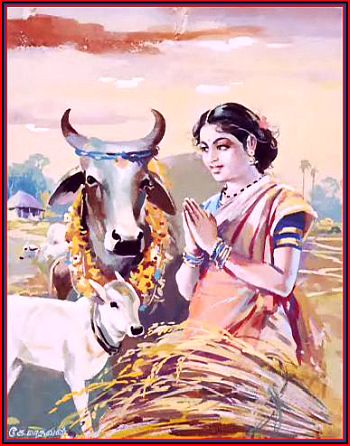
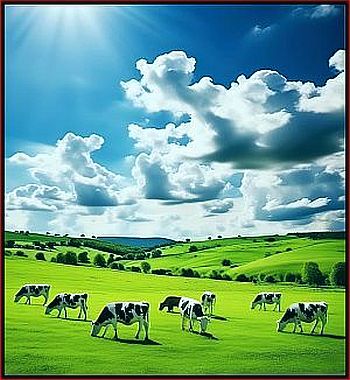
When the cow, the symbol of Motherhood, is happy, we too will be happy. The cow will be happy when there is plenty of nourishing grass, good fodder (Suvyasa) and clear water. The grass would grow; and there will be water in plenty, when the sun rays and water-bearing clouds send down sufficient timely rains in proper seasons. With good milk, plenty of water and rich crops we too will always be happy.
Dr. Raja adds:
After the glorification of wisdom, the illumination of a poet, and after drawing the distinction between one who knows and one who knows not, here is an address to a Cow.
Word or speech is always conceived of as a Cow, and the word Gau, meaning a cow, has also the meaning of speech.
**
The term गौ is also used to denote Madhyamika Vac
It is said; this verse is about the doctrine of Vak, put in terms of the Cow.
***
The ancient philosophers identified four levels or stages of speech (Vac): Para, Pashyanti, Madhyama and Vaikhari.
Of these four forms of Vac, Para and Pashyanti are the subtle forms of Vac; while Madhyama and Vaikhari are its gross forms.
The process of manifestation of speech is compared to the evolution of the Universe. And, that process is said to take place in four stages.
First, in the undifferentiated substratum of thought, an intention appears. This first impulse, the self-radiant consciousness is Para-vac (the voice beyond).
This latent, un-spoken, un-manifest, silent thought (Para) unfolds itself in the next three stages as Pashanti (thought-visualized), Madhyama (intermediate); and as Vaikhari (explicit audible speech).
The Madhyama Vak, a sequenced but a pre-vocal thought – described as the voice of silence; perhaps is best understood as internal speaking. Here, there is no perceptible sound (Nada). The Madhyama Vak is in an inaudible wave or vibratory (spandana) form.
And, the Madhyama, when it is put out explicitly through uttered words and sentences; and, when it comes out of the speaker’s mouth in sequenced and verbalized speech-form, it is called Vaikhari Vak. For the purpose of putting out the Vaikhari Vac, the speaker employs a sentence comprising words uttered in a sequence. The word itself comprises letters or syllables (varnas) that follow one after the other in space and time.
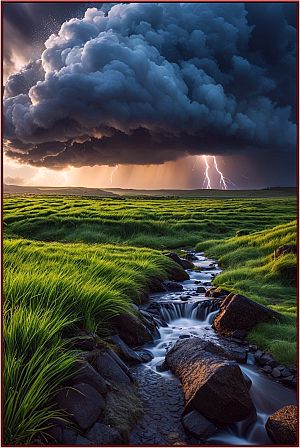
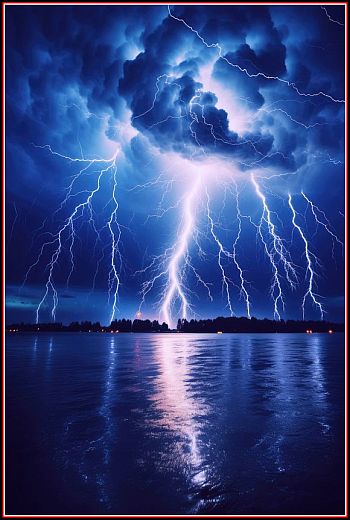
Here, this verse is said to be addressed as a prayer to the Goddess of the mid-region- Sarasvathi (Madhyama Vac)- for sending down rains by bursting clouds.
Following Yaska, Sri Sayana also regarded Sarasvathi as a divinity of the mid-region- ‘madhyama-sthana hi Vak Sarasvathi’; and as a personification of the sound of thunder.
Sarasvathi is regarded as a deity of the atmosphere, associated with clouds, thunder, lightning, rains and water.
***
Verse 41
गौरीः । मिमाय । सलिलानि । तक्षती । एकपदी । द्विपदी । सा । चतुःपदी । अष्टापदी । नवपदी । बभूवुषी । सहस्रअक्षरा। परमे । विओमन् ॥ R.V.1.164.41 ॥
gaurīḥ | mimāya | salilāni | takṣatī | eka-padī | dvi-padī | sā | catuḥ-padī | aṣṭāpadī | nava-padī | babhūvuṣī | sahasra-akṣarā | parame | vi-oman ॥
The sound (of the clouds) has been uttered, fabricating the waters, and being one-footed, two-footed, four-footed, eight-footed, nine-footed, or infinite in the highest heaven.
***
The Verses 40 and 41 are about Vac.
Before going specifically into verse 41, let’s talk briefly about Vac as in the ancient texts.
There are elaborate discussions on the subject of Vac in the Vedas and the related texts spread over long periods.
As regards Rigveda, broadly, there are five kinds of references to Vac:
- Vac is speech in general;
- Vac also symbolize Mothers represented by cows that provide nourishment;
- Vac is also primal waters prior to creation;
- Vac is represented by rain-bearing clouds; and,
- Vac is personified as the goddess revealing the word.
And, at a later stage, commencing with the Brahmanas, Vac gets identified with Sarasvathi the life-giving river, as also with the goddess of learning and wisdom.
According to Sri Sayana, Sarasvathi – Vac is depicted as a goddess of learning (gadya-padya rupena–prasaranmasyamtiti–Sarasvathi- Vagdevata).
Yaska categorizes Sarasvathi as the goddess of mid-region – Madhya-sthana striyah.
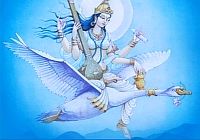
Following Yaska, Sri Sayana also regarded Sarasvathi as a divinity of the mid-region- ‘madhyama-sthana hi Vak Sarasvathi’; and as a personification of the sound of thunder.
Thus, Sarasvathi, a deity of the atmosphere is associated with clouds, thunder, lightning, rains and water. As Sri Aurobindo said; the radiant one has expressed herself in the forming of the flowing Waters.
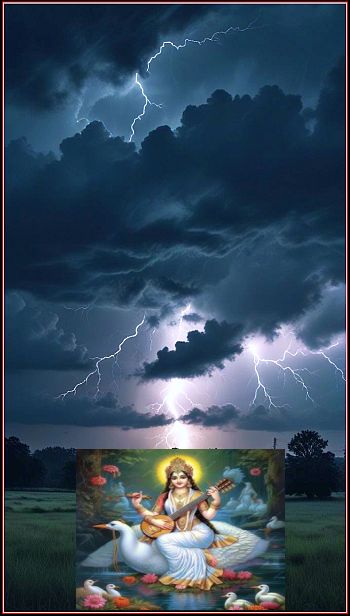
The concept of Vac was extended to cover oral and aural forms such as: expressions, sayings, phrases, utterances, sentences, and also the languages of all sorts including gesture (ingita).
Yaska says that all kinds of creatures and objects created by God speak a language of their own, either articulate or in-articulate
- (devastam sarvarupah pasavo vadanti, vyakta vac-ascha- avyakta- vacacha – Nir. 11.29).
Even the rumbling of the clouds, the thunder of the lightening and the rippling sounds of the streams are said to be the forms of Vac
(praite vadantu pravayam vadama gravabhyo vacam vadata vadadbhyah – RV. 10.94.1)
It was said; the extant of Vac is as wide as the earth and fire. Vac is even extolled as having penetrated earth and heaven, holding together all existence. As Yaska remarks: Vac is omnipresent and eterna1 (vyaptimattvat tu Sabdasya – Nir.I.2)
Vac belongs to both the worlds – the created and un-created. It is both the subject of speech and the object of speech.
And, Vac goes beyond speech. Vac is indeed both speech and consciousness (Chetana), as all actions and powers are grounded in Vac. It is the primordial energy out of which all existence originates and subsists. Vac is also the expression of truth.
Yajnavalkya in the Brhadaranyaka Upanishad explaining the relation between Vac and consciousness says that Vac (speech) is a form of expression of consciousness. And, he argues, there could be no speech without consciousness. However, Consciousness does not directly act upon the principle of speech; but it operates through intermediary organs and breath to deliver speech.
Sri Sayana says that the Vac as Shabda-Brahmatmika-Vac resides in the inner space; and manifests itself with various names and forms.
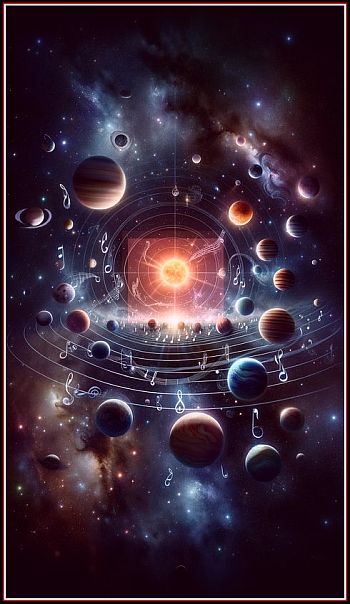
Rishi Dhirgatamas goes far beyond; and, exclaims: Vac is at the peak of the Universe (Agre paramam); She is the Supreme Reality (Ekam Sat; Tad Ekam); She resides on the top of the yonder sky; She knows all; but, does not enter all.
- Mantrayante divo amuṣya pṛṣṭhe viśvavidaṃ vācam aviśvaminvām – RV.1.164.10)
Vac, he says, is the ruler of the creative syllable Ra (Akshara); it is with the Akshara , the chaotic material world is organized meaningfully; “what will he, who does not know Ra will accomplish anything.! “.
ṛco akṣare parame vyoman yasmin devā adhi viśve niṣeduḥ | yas tan na veda kim ṛcā kariṣyati ya it tad vidus ta ime sam āsate |RV.1.164.39|
That is because, Dhirgatamas explains, the whole of existence depends on Akshara which flowed forth from the Supreme Mother principle Vac –
- tataḥ kṣaraty akṣaraṃ tad viśvam upa jīvati |RV.1.164.42 |
According to Dhirgatamas: “When I partake a portion of this Vac, I get the first part of truth, immediately-
- (maagan-prathamaja-bhagam-aadith-asya-Vac)”-(RV. I.164.37.)
But he also says: “Vac has four quarters; only the wise that are well trained, endowed with intelligence and understanding know them all. For the rest; the three levels remain concealed and motionless. Mortals speak only with the fourth (RV. 1.164.45).”
Chatvaari vaak parimitaa padaani / taani vidur braahmaanaa ye manishinaah. Guhaa trini nihitaa neaengayanti / turiyam vaacho manushyaa vadanti. (Rigveda Samhita – 1.164.45)
Yaska also mentions about the the four groups of parts of speech (Catvari padajatani) such as: Noun (Naman), Verb (Akhyata), Preposition (Upasarga), and Particle (Nipata). Of these, the first two are established by definition; and, the remaining two by enumeration.
Catvāri pada jātāni nāma ākhyāte ca upasarga nipātāś ca tāni imāni bhavanti ...Nir .l.l iti imāni catvāri pada jātāni anukrāntāni nāma ākhyāte ca upasarga nipātāś ca tatra nāmāny ākhyātajāni iti śākaṭāyano nairukta samayaś ca – Nir. 1, 12/
Dhirgatamas, states that the ultimate abode of language (Vak) is Brahman. It is at the core and apex of the Universe. Three quarters of the language remains hidden in the cave, while the fourth part is visible in the created world (Rig Veda: 1.164 – 10, 41, and 45).


The verse 41 is again about Vac- the speech principle (Vac tattva).
Two meanings are said to be assigned to the term Vac in this verse.
- One as the Madhyamika Vac of the mid-region; and
- the other as the Shabda-Brahman (Shabda-Brahmathmika-Vac) the ultimate principle and the source of all inarticulate sounds as also of articulate speech.
**
Now, if the term Gauri (गौरीः) is understood as Madhyamika Vac, then it would read:
The Madhyamika Vac in the sky makes bellowing sounds producing waters. She is One-footed; Two-footed; Four-footed; Eight-footed; Nine-footed; or is the infinite in the highest heaven.


The Nirukta of Yascacharya also says:
Gauri (गौरी), the subtle sound behind the thundering clouds in the sky, is indeed the Madhyamika-Vac –गौरी गरणा–शीला –माध्यमिक वाक – making sounds and producing rain-waters.
गोरी रोचते ज्वेलति कर्मणो अयम पीतरो गोरों वर्ण एतस्मादेव प्रशस्यो भवाति तस्या एपा भवाति ॥३९
gaurī.rocater.jvalati.karmaṇah/ayam.api.itaro.gauro.varṇa.etasmād.eva/praśasyo. Bhavati / Tasya. eṣā. bhavati / (Nirukta – 11,39)
*
The ancient philosopher Prajapati Paramesthin (परमेष्ठिन्) asserted that Water (Salila) is the fundamental Principle. It is from Water, all things are formed; and, Water is the original substance of all that exists. It was the unfathomable depth of water (gahanam gambhiram). And, there was nothing but water. Water is the elementary matter or abiding original ground of things. Water is the original substance of all that exists.


Then the verse goes on to speak in terms of numbers of Padas (feet or motions), which again are symbolic
Here Dr. Raja remarks:
The cow is the speech conceived of as a cow in the previous verses and in many places elsewhere. The waters are some kinds of transcendental happiness; it is that happiness that was prayed for in the previous verse. In the world, that speech appeared as having one foot etc. But in the supreme heaven, which is its natural position, it has a thousand syllables. The pada is certainly the quarters of a verse. Why verses of these quarters are mentioned, we cannot say. There are found in the Rigveda, verses even up to eight quarters; but there is no meter with nine quarters. Gayatri has three quarters; but such a verse is not mentioned here. Nor is there a mention of verses with seven quarters. In the ultimate state, in the supreme heaven, it appears only as having infinite syllables. In this verse, the metre is Jagati, four lines of twelve syllables. Up to this, the Deity is All gods, gods in general, without any Deity in particular:
**


According to Sri Sayanacharya, the interpretation of the verse by ascribing the meaning of cloud or the thunder in the mid-region, to the term Gauri (गौरी – Madhyamika Vac) is as under:
One-footed-एकपदी – The Madhyamika Vac is one footed. It stays in the clouds and moves with the winds. It refers to the principle of rest or Statis (Sthithi)
Two footed – द्विपदी – When it stays with the clouds and with Aditya, the Sky-God
Four-footed – चतुष्पदी – When she moves about in four cardinal directions.
Eight-footed – अष्टापदी -When it resides in four cardinal directions as also in the four intermediate directions – (दिक्– विदिक्)
Nine-footed – नवपदी – When it she stays in eight places as above and also with the Sun
**
Yaskacharya also interprets in a similar manner
गोरोामिमाय सलिकानि (तक्षत्येकपदी छिपदी सा चतुष्पदी । अष्टापदी नवपदी बम्ूडपी सहस्ा-. क्षरा परमे व्योमन् /गौ रीरनोमिमाय सलिलानिं तक्षती कवेत्येकपदी मध्यमेन, छिपदी मध्यमन चादित्पेन च,चतुष्पदी दिग्मिरष्टापदी दिग्मिश्वावान्तरादिग्मिश्व,नवपदी दिग्मिश्रावान्तरादिग्मिश्रादित्येन च, सहसाक्षरा बहुदका परमे व्यवने । तस्था एपा परा भंवातेि ॥ ४0 ॥
**
Then the poet Dhirgatamas exclaims: What is the use of just counting numbers? … !
The Madhyamika-Vac Goddess (Vac Devatha) is of infinite nature, spreading everywhere in every direction. She occupies the highest sky, which is source of celestial waters. And, she pours down plenty of water over vast areas over all the regions. She shines in the sky in all directions, making the worlds happy.

But then, all elements are enveloped within the sky (Akasha)
Sky is the greatest protector spreading over and uniting all regions.
In the Brihadaranyaka Upanishad (Verse 3.6.1) Gargi-Vachaknavi, a scholarly Brahmavadini – a person with knowledge of Brahma-Vidya– questions the Sage Yajnavalkya – if all this is pervaded by water, by what is water pervaded?
कस्मिन्नु खल्वाप ओताश्च प्रोताश्चेति; वायौ गार्गीति; कस्मिन्नु खलु वायुरोतश्च प्रोतश्चेति; अन्तरिक्शलोकेषु गार्गीति;
kasminnu khalvāpa otāśca protāśceti; vāyau gārgīti; kasminnu khalu vāyurotaśca protaśceti; antarikśalokeṣu gārgīti;
The Sage replies: All the worlds exist in water – as warp and woof of creation- water in air- and air in the Sky.


Sri Sayana mentions when the term Gauri (गौरी – Madhyamika Vac) is taken to mean speech (Vac) then:
One-footed: Gauri, as articulate speech, is a single term
Two-footed: The term has two forms – as declension and conjugation
Four-footed: four parts of speech as: Naaman (Nouns), Akhyata (Verbs), Upasarga (prepositions or prefixes) and Nipata (particles)
Eight-footed: eight cases including the vocative case
Nine-footed: eight as above with the addition of exceptions (Apavada- visesha) to a rule; and which are more powerful that the General-rules (Samanya- Lakshana / Utsarga).
**
When the term Gauri is assigned the meaning of Shabda-Brahmatmika-Vac:
[Before going into this interpretation, let us briefly talk about Shabda-Brahmatmika-Vac.
The Shabda-Brahmatmika vac is at times called as Para -the one that is beyond.
As mentioned earlier, the traditional texts enumerate four levels of speech (Chatvari-Pada Jatani} as Para, Pashyanti, Madhyama and Vaikharii
It is said, there are three stages in the manifestation of Vac: Para (highest); Sukshma (subtle- Pashyanti and Madhyama); and (gross Vaikhari).
Of these four, Para is the highest level of Vac. Para and Pashyanti are inaudible; they are beyond the range of the physical ear; and so is Madhyama which is an internal dialogue. And, Vaikhari is the audible uttered speech.
Para-Vani or Para Vac, the Supreme Word, which is non-dual (Abheda) and identified with Supreme consciousness, often referred to as Shabda-Brahma, is present in all the subsequent stages; in all the states of experiences and expressions as Pashyanti, Madhyama and Vaikhari.
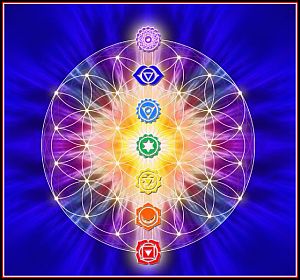
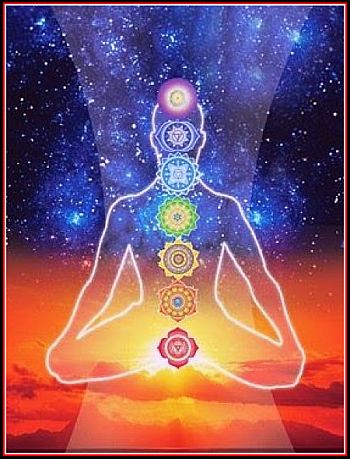
The four forms of Vac (Para-Pashyanti-Madhyama-Vaikhari) as per Yoga, are said to be arising from Muladhara; Nabi (navel); Hridaya (heart-region) and Kanta (throat)

Para, the transcendent sound, is beyond the perception of the senses; and, it is all pervading and all encompassing. Para is pure and un-manifest. It resides within all of us, in our innermost core (Hrudaya-akasha).
**
Bhartrhari (c. 5th century CE), at the commencement (Granta-aaramba or Grantha-mukha) of Brahmakanda, the first chapter of his renowned work the Vakyapadiya, asserts the identity of the Shabda tattva (the Word principle) with the Absolute Reality, the Brahman (Vāg Vai Brahmeti) which is without a beginning (Anadi), without an end (Nidana) and is imperishable (Aksharam).
That Brahman, he avers, is One (Ekam-eva) and is the essence of Shabda from which the whole of existence is derived. And, it transforms (Vivartate) itself into speech; as words, their meanings (Artha) and also the universe (jagato yataha).
(Anadi-nidhanam Brahma sabda-tattvam yad-aksharam/ vivartate artha-bhavena prakriya jagato yatah – VP. 1.1)
The first four karikas in the First Khanda (Brahmakanda) of Vakyapadiya sum up Bhartrhari’s philosophy of language. It asserts the identification of Shabda-brahman with the Brahman, the Absolute.
1.1 anādinidhanaṃ Brahma śabdatattvaṃ yad akṣaram/ vivartate+arthabhāvena prakriyā jagato yataḥ
1.2.ekam-eva-yad-āmnātaṃ-bhinnaśaktivyapāśrayāt/ apṛthaktve+api-śaktibhya pṛthaktveneva vartate
1.3 adhyāhitakalāṃ yasya kālaśaktim upāśritāḥ/ janmādayo vikārāḥ ṣaḍ bhāvabhedasya yonayaḥ
1.4 ekasya sarvabījasya yasya ceyam anekadhā/ bhoktṛbhoktavyarūpeṇa bhogarūpeṇa ca sthitiḥ
[The ultimate reality, Brahman, is the imperishable principle of language, without beginning and end, and the evolution of the entire world occurs from this language-reality in the form of its meaning.
Though this language-reality is, ultimately, only one and indivisible, it seems as if it is differentiated through its manifold powers
The indestructible powers of which functioning through the powers of Time become the six transformations, namely, birth and the rest — the sources of all (these) manifold objects,
Through these powers, this single language reality becomes the seed for all multiplicity and exists in the form of the one who experiences, the experienced and the experience.
– Translation of Dr. Madhav M. Deshpande]
*
Thus, according to Bhartrhari, Shabda Brahman is the ultimate ground of all existence; and, the Shabda tattva is the first principle of the universe.
For Bhartrhari, Vac or speech is the means to all knowledge and is the essence of consciousness. He regards speech as the verbal expression of a thought that arises in a person’s consciousness. If there is no consciousness, he argues, there would be no speech. Speech (Vac) is indeed an outward form (Vargupta) of consciousness (Chetana or Samjna).
Thus, Vac is the word principle that gives expression to the latent or un-manifest thoughts, feelings and impulses. And at the same time, for Bhartrhari, all forms of awareness imply the presence of words. That is to say; language is an integral part of our consciousness.
**
Later, Abhinavagupta (c. 950 – 1016 CE) describes Parā-vāk as a luminous vibration (sphurattā) of pure consciousness in an undifferentiated (Abheda), unrestricted (Swatrantya) state – (paramam vyomam).
According to him, The Devi, as Parā-Vāc, the vital energy (Prana-Shakthi) that vibrates (Spanda) is the foundation of all languages, thoughts, feelings, and perceptions; and, is, therefore, the seat of consciousness (Chit, Samvid).]

Gauri – गौरी गरणा–शीला– शब्दब्रह्मत्मिक वाक् – the most sublime is indeed the subtlest sound – शब्दब्रह्मन्. It is unmanifest as also manifest. This Vac creates (तक्षती) and gives names to countless objects in this world. All things and persons are identified by their names.
*
When this Vac is unmanifest it is One (एकपदी) – all by itself.
It is two-footed (द्विपदी) in its division as Names (नाम) and Verbs (आख्यात)
It is four-footed (चतुःपदी) in its four forms of parts-of-speech as: Nouns (Nama–नाम–पद); Verbs (Akyatha–आख्यात); prepositions (Upasarga–उपसर्ग) and particles (Nipatha–निपात)
This Vac could be said to eight-footed (अष्टापदी) when you count eight cases (विभक्ति Vibhathi)– including the vocative case (सम्बोधन विभक्ति).
- प्रथमा Nominative ; द्वितीया–Accusative ; तृतीया–Instrumental ;चतुर्थी Dative ; पंचमी–Ablative; षष्ठी–Possessive; सप्तमी–Locative ; and, सम्बोधन् vocative case
It would be nine-footed (नवपदी) when the above mentioned eight forms of speech are combined with the अव्यय (Avyaya– words that do not change form based on gender, number, or case)
Sri Sayana relates the term नवपदी to Gauri (गौरीः) to the nine parts of the human body. He says Vac is produced from nine places in the body, such as: navel, chest, throat etc.; and then it spreads to Sahasrakshara Vac (सहस्र्राक्शरा वक्) – the infinite.
The highest heaven is Hṛdaya akasha or Daharakasha, the ethereal space in the heart, is the bae of Shabda Brahman.
Sri Sayana concludes by saying, this Shabda-Brahmatmika Vac resides in Hṛdaya akasha;
Verse 42
तस्याः । समुद्राः । अधि । वि । क्षरन्ति । तेन । जीवन्ति । प्रदिशः । चतस्रः । ततः । क्षरति । अक्षरम् । तत् । विश्वम् । उप । जीवति ॥ R.V.1.164.42 ॥
tasyāḥ | samudrāḥ | adhi | vi | kṣaranti | tena | jīvanti | pra-diśaḥ | catasraḥ | tataḥ | kṣarati | akṣaram | tat | viśvam | upa | jīvati ॥
From her, the clouds shed abundant rain, and thence the people of the four quarters live. Then the moisture spreads to the crops. And the entire world live upon that.
**
The theme of the Madhyamika Vac is continued in this Verse. It is she in the form of clouds showers rains on this planet and feeds it’s all forms of life.
From Her (तस्याः) that Madhyamika Vac, the clouds (समुद्राः) shed rain (वि–क्षरन्ति) in abundance (अधि). From those rains (तेन) the people of all the regions in four (चतस्रः) directions (प्रदिशः) live (जीवन्ति). Then (ततः) the waters (अक्षरम्) spread to the crops (क्षरति). It is by the support of those crops (तत्) the entire world (विश्वम्) lives and survives (उप–जीवति).

Yaska in his Nirukta , interprets the term समुद्राः as clouds (भेधा) that send down the rains in abundance. – तस्याः ससुद्रा आधिविक्षरन्ति वर्षम्ति भेधास्तेन जीवन्ति.
And, again, the term अक्षरम् is interpreted to mean Waters that never disappears or decays- अक्षरमुदकं.
And, that which flows ceaselessly is water- क्षरति– संचलने स्रवणेच च. Thus, अक्षरम् is water.

Another interpretation is that अक्षर here indicates the supreme Madhyamika Vac as Gauri, who stands in the midst of the depthless (गहनम्– गभीरम्–आसीत्) ocean.
She is the Mother-principle who nurtures and protects all her children, spread in all the directions.

Dr. Raja, however, offers a different explanation:
The doctrine that poetry is the life, that poetry is the real light, has continued in the history of literary criticism in India. From that ultimate speech, the syllables have first appeared as oceans and from that ocean appear the syllables that we hear. The ocean is perhaps the language that we speak, the total vocabulary.
In this verse, the Deity is Samudra, the ocean. ‘That means the ocean of poetic knowledge, or the ocean of the vocabulary of language.
CONTINUED
IN
THE NEXT PART
REFERENCES
- History of Pre-Buddhist Indian Philosophy by Dr. Beni-madhab Barua -Motilal Banarsidas-1921
- Tagore Law Lectures 1930 – The History Of Hindu Law by Prof Radha Binod Pal; University of Calcutta – 1958
- Vision in long darkness by Prof. Vasudeva Agrawala
- https://who.rocq.inria.fr/Ramakrishna.Upadrasta/Veda/Asya_Vamiya/AVMS/AVMS_1-100.pdf
- https://www.youtube.com/watch?v=r86l_TF9XWc
- https://archive.org/details/in.ernet.dli.2015.226346
- https://istore.chennaimath.org/products/rig-vedic-suktas-asya-vamiya-suktam/1309294000102324374
- pdf (archive.org)
- https://religion.fandom.com/wiki/Dirghatamas
- ऋग्वेदः सूक्तं १.१६४ – विकिस्रोतः (org)
- org/mirrors/rigveda/sanskrit03/RV0310noaccent.html
- ALL IMAGES ARE FROM INTERNET
 sreenivasarao's blogs